• Trade
  • Markets
  • Copy
  • Contests
  • News
  • 24/7
  • Calendar
  • Q&A
  • Chats
Trending
Screeners
SYMBOL
LAST
BID
ASK
HIGH
LOW
NET CHG.
%CHG.
SPREAD
SPX
S&P 500 Index
6846.50
6846.50
6846.50
6878.28
6827.18
-23.90
-0.35%
--
DJI
Dow Jones Industrial Average
47739.31
47739.31
47739.31
47971.51
47611.93
-215.67
-0.45%
--
IXIC
NASDAQ Composite Index
23545.89
23545.89
23545.89
23698.93
23455.05
-32.22
-0.14%
--
USDX
US Dollar Index
99.000
99.080
99.000
99.000
99.000
+0.050
+ 0.05%
--
EURUSD
Euro / US Dollar
1.16356
1.16386
1.16356
1.16365
1.16322
-0.00008
-0.01%
--
GBPUSD
Pound Sterling / US Dollar
1.33213
1.33264
1.33213
1.33213
1.33140
+0.00008
+ 0.01%
--
XAUUSD
Gold / US Dollar
4189.70
4190.14
4189.70
4218.85
4175.92
-8.21
-0.20%
--
WTI
Light Sweet Crude Oil
58.555
58.807
58.555
60.084
58.495
-1.254
-2.10%
--

Community Accounts

Signal Accounts
--
Profit Accounts
--
Loss Accounts
--
View More

Become a signal provider

Sell trading signals to earn additional income

View More

Guide to Copy Trading

Get started with ease and confidence

View More

Signal Accounts for Members

All Signal Accounts

Best Return
  • Best Return
  • Best P/L
  • Best MDD
Past 1W
  • Past 1W
  • Past 1M
  • Past 1Y

All Contests

  • All
  • Trump Updates
  • Recommend
  • Stocks
  • Cryptocurrencies
  • Central Banks
  • Featured News
Top News Only
Share

SPDR Gold Holdings Down 0.11%, Or 1.14 Tonnes

Share

On Monday (December 8), In Late New York Trading, S&P 500 Futures Fell 0.21%, Dow Jones Futures Fell 0.43%, NASDAQ 100 Futures Fell 0.08%, And Russell 2000 Futures Fell 0.04%

Share

Morgan Stanley: Data Center ABS Spreads Are Expected To Widen In 2026

Share

(US Stocks) The Philadelphia Gold And Silver Index Closed Down 2.34% At 311.01 Points. (Global Session) The NYSE Arca Gold Miners Index Closed Down 2.17%, Hitting A Daily Low Of 2235.45 Points; US Stocks Remained Slightly Down Before The Opening Bell—holding Steady Around 2280 Points—before Briefly Rising Slightly

Share

IMF: IMF Executive Board Approves Extension Of The Extended Credit Facility Arrangement With Nepal

Share

Trump: Same Approach Will Apply To Amd, Intel, And Other Great American Companies

Share

Trump: Department Of Commerce Is Finalizing Details

Share

Trump: $25% Will Be Paid To United States Of America

Share

Trump: President Xi Responded Positively

Share

[Consumer Discretionary ETFs Fell Over 1.4%, Leading The Decline Among US Sector ETFs; Semiconductor ETFs Rose Over 1.1%] On Monday (December 8), The Consumer Discretionary ETF Fell 1.45%, The Energy ETF Fell 1.09%, The Internet ETF Fell 0.18%, The Regional Banks ETF Rose 0.34%, The Technology ETF Rose 0.70%, The Global Technology ETF Rose 0.93%, And The Semiconductor ETF Rose 1.13%

Share

Trump: I Have Informed President Xi, Of China, That United States Will Allow Nvidia To Ship Its H200 Products To Approved Customers In China

Share

Argentina's Merval Index Closed Up 0.02% At 3.047 Million Points. It Rose To A New Daily High Of 3.165 Million Points In Early Trading In Buenos Aires Before Gradually Giving Back Its Gains

Share

US Stock Market Closing Report | On Monday (December 8), The Magnificent 7 Index Fell 0.20% To 208.33 Points. The "mega-cap" Tech Stock Index Fell 0.33% To 405.00 Points

Share

Pentagon - USA State Dept Approves Potential Sale Of Hellfire Missiles To Belgium For An Estimated $79 Million

Share

Toronto Stock Index .GSPTSE Unofficially Closes Down 141.44 Points, Or 0.45 Percent, At 31169.97

Share

The Nasdaq Golden Dragon China Index Closed Up Less Than 0.1%. Nxtt Rose 21%, Microalgo Rose 7%, Daqo New Energy Rose 4.3%, And 21Vianet, Baidu, And Miniso All Rose More Than 3%

Share

The S&P 500 Initially Closed Down More Than 0.4%, With The Telecom Sector Down 1.9%, And Materials, Consumer Discretionary, Utilities, Healthcare, And Energy Sectors Down By As Much As 1.6%, While The Technology Sector Rose 0.7%. The NASDAQ 100 Initially Closed Down 0.3%, With Marvell Technology Down 7%, Fortinet Down 4%, And Netflix And Tesla Down 3.4%

Share

IMF: Review Pakistan Authorities To Draw The Equivalent Of About US$1 Billion

Share

President Trump Is Committed To The Continued Cessation Of Violence And Expects The Governments Of Cambodia And Thailand To Fully Honor Their Commitments To End This Conflict - Senior White House Official

Share

[Water Overflows From Spent Fuel Pool At Japanese Nuclear Facility] According To Japan's Nuclear Waste Management Company, Following A Strong Earthquake Off The Coast Of Aomori Prefecture Late On December 8th, Workers At The Nuclear Waste Treatment Plant In Rokkasho Village, Aomori Prefecture, Discovered "at Least 100 Liters Of Water" On The Ground Around The Spent Fuel Pool During An Inspection. Analysis Suggests This Water "may Have Overflowed Due To The Earthquake's Shaking." However, It Is Reported That The Overflowed Water "remains Inside The Building And Has Not Affected The External Environment."

TIME
ACT
FCST
PREV
France Trade Balance (SA) (Oct)

A:--

F: --

P: --
Euro Zone Employment YoY (SA) (Q3)

A:--

F: --

P: --
Canada Part-Time Employment (SA) (Nov)

A:--

F: --

P: --

Canada Unemployment Rate (SA) (Nov)

A:--

F: --

P: --

Canada Full-time Employment (SA) (Nov)

A:--

F: --

P: --

Canada Labor Force Participation Rate (SA) (Nov)

A:--

F: --

P: --

Canada Employment (SA) (Nov)

A:--

F: --

P: --

U.S. PCE Price Index MoM (Sept)

A:--

F: --

P: --

U.S. Personal Income MoM (Sept)

A:--

F: --

P: --

U.S. Core PCE Price Index MoM (Sept)

A:--

F: --

P: --

U.S. PCE Price Index YoY (SA) (Sept)

A:--

F: --

P: --

U.S. Core PCE Price Index YoY (Sept)

A:--

F: --

P: --

U.S. Personal Outlays MoM (SA) (Sept)

A:--

F: --

P: --
U.S. 5-10 Year-Ahead Inflation Expectations (Dec)

A:--

F: --

P: --

U.S. Real Personal Consumption Expenditures MoM (Sept)

A:--

F: --

P: --
U.S. Weekly Total Rig Count

A:--

F: --

P: --

U.S. Weekly Total Oil Rig Count

A:--

F: --

P: --

U.S. Consumer Credit (SA) (Oct)

A:--

F: --

P: --
China, Mainland Foreign Exchange Reserves (Nov)

A:--

F: --

P: --

Japan Trade Balance (Oct)

A:--

F: --

P: --

Japan Nominal GDP Revised QoQ (Q3)

A:--

F: --

P: --

China, Mainland Imports YoY (CNH) (Nov)

A:--

F: --

P: --

China, Mainland Exports (Nov)

A:--

F: --

P: --

China, Mainland Imports (CNH) (Nov)

A:--

F: --

P: --

China, Mainland Trade Balance (CNH) (Nov)

A:--

F: --

P: --

China, Mainland Exports YoY (USD) (Nov)

A:--

F: --

P: --

China, Mainland Imports YoY (USD) (Nov)

A:--

F: --

P: --

Germany Industrial Output MoM (SA) (Oct)

A:--

F: --

P: --
Euro Zone Sentix Investor Confidence Index (Dec)

A:--

F: --

P: --

Canada National Economic Confidence Index

A:--

F: --

P: --

U.K. BRC Like-For-Like Retail Sales YoY (Nov)

--

F: --

P: --

U.K. BRC Overall Retail Sales YoY (Nov)

--

F: --

P: --

Australia Overnight (Borrowing) Key Rate

--

F: --

P: --

RBA Rate Statement
RBA Press Conference
Germany Exports MoM (SA) (Oct)

--

F: --

P: --

U.S. NFIB Small Business Optimism Index (SA) (Nov)

--

F: --

P: --

Mexico 12-Month Inflation (CPI) (Nov)

--

F: --

P: --

Mexico Core CPI YoY (Nov)

--

F: --

P: --

Mexico PPI YoY (Nov)

--

F: --

P: --

U.S. Weekly Redbook Index YoY

--

F: --

P: --

U.S. JOLTS Job Openings (SA) (Oct)

--

F: --

P: --

China, Mainland M1 Money Supply YoY (Nov)

--

F: --

P: --

China, Mainland M0 Money Supply YoY (Nov)

--

F: --

P: --

China, Mainland M2 Money Supply YoY (Nov)

--

F: --

P: --

U.S. EIA Short-Term Crude Production Forecast For The Year (Dec)

--

F: --

P: --

U.S. EIA Natural Gas Production Forecast For The Next Year (Dec)

--

F: --

P: --

U.S. EIA Short-Term Crude Production Forecast For The Next Year (Dec)

--

F: --

P: --

EIA Monthly Short-Term Energy Outlook
U.S. API Weekly Gasoline Stocks

--

F: --

P: --

U.S. API Weekly Cushing Crude Oil Stocks

--

F: --

P: --

U.S. API Weekly Crude Oil Stocks

--

F: --

P: --

U.S. API Weekly Refined Oil Stocks

--

F: --

P: --

South Korea Unemployment Rate (SA) (Nov)

--

F: --

P: --

Japan Reuters Tankan Non-Manufacturers Index (Dec)

--

F: --

P: --

Japan Reuters Tankan Manufacturers Index (Dec)

--

F: --

P: --

Japan Domestic Enterprise Commodity Price Index MoM (Nov)

--

F: --

P: --

Japan Domestic Enterprise Commodity Price Index YoY (Nov)

--

F: --

P: --

China, Mainland PPI YoY (Nov)

--

F: --

P: --

China, Mainland CPI MoM (Nov)

--

F: --

P: --

Italy Industrial Output YoY (SA) (Oct)

--

F: --

P: --

Q&A with Experts
    • All
    • Chatrooms
    • Groups
    • Friends
    Connecting
    .
    .
    .
    Type here...
    Add Symbol or Code

      No matching data

      All
      Trump Updates
      Recommend
      Stocks
      Cryptocurrencies
      Central Banks
      Featured News
      • All
      • Russia-Ukraine Conflict
      • Middle East Flashpoint
      • All
      • Russia-Ukraine Conflict
      • Middle East Flashpoint
      Search
      Products

      Charts Free Forever

      Chats Q&A with Experts
      Screeners Economic Calendar Data Tools
      Membership Features
      Data Warehouse Market Trends Institutional Data Policy Rates Macro

      Market Trends

      Market Sentiment Order Book Forex Correlations

      Top Indicators

      Charts Free Forever
      Markets

      News

      News Analysis 24/7 Columns Education
      From Institutions From Analysts
      Topics Columnists

      Latest Views

      Latest Views

      Trending Topics

      Top Columnists

      Latest Update

      Signals

      Copy Rankings Latest Signals Become a signal provider AI Rating
      Contests
      Brokers

      Overview Brokers Assessment Rankings Regulators News Claims
      Broker listing Forex Brokers Comparison Tool Live Spread Comparison Scam
      Q&A Complaint Scam Alert Videos Tips to Detect Scam
      More

      Business
      Events
      Careers About Us Advertising Help Center

      White Label

      Data API

      Web Plug-ins

      Affiliate Program

      Awards Institution Evaluation IB Seminar Salon Event Exhibition
      Vietnam Thailand Singapore Dubai
      Fans Party Investment Sharing Session
      FastBull Summit BrokersView Expo
      Recent Searches
        Top Searches
          Markets
          News
          Analysis
          User
          24/7
          Economic Calendar
          Education
          Data
          • Names
          • Latest
          • Prev

          View All

          No data

          Scan to Download

          Faster Charts, Chat Faster!

          Download App
          English
          • English
          • Español
          • العربية
          • Bahasa Indonesia
          • Bahasa Melayu
          • Tiếng Việt
          • ภาษาไทย
          • Français
          • Italiano
          • Türkçe
          • Русский язык
          • 简中
          • 繁中
          Open Account
          Search
          Products
          Charts Free Forever
          Markets
          News
          Signals

          Copy Rankings Latest Signals Become a signal provider AI Rating
          Contests
          Brokers

          Overview Brokers Assessment Rankings Regulators News Claims
          Broker listing Forex Brokers Comparison Tool Live Spread Comparison Scam
          Q&A Complaint Scam Alert Videos Tips to Detect Scam
          More

          Business
          Events
          Careers About Us Advertising Help Center

          White Label

          Data API

          Web Plug-ins

          Affiliate Program

          Awards Institution Evaluation IB Seminar Salon Event Exhibition
          Vietnam Thailand Singapore Dubai
          Fans Party Investment Sharing Session
          FastBull Summit BrokersView Expo

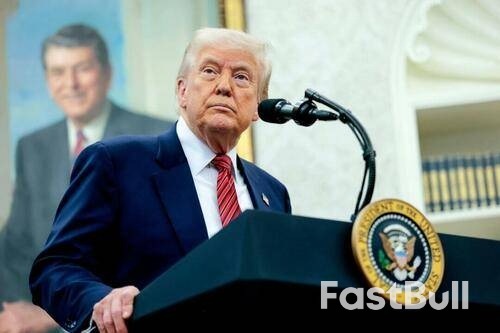
          Trump's Gulf Visit May Redraw Middle East Map: AI Chips, Oil, and a Renamed Sea?

          Gerik

          Economic

          Summary:

          As Donald Trump prepares for a politically charged trip to the Gulf, wide-ranging deals on oil, AI, nuclear energy, and Middle East diplomacy are in motion—potentially reshaping U.S. alliances...

          Strategic Stakes Behind Trump’s Gulf Tour

          Set to begin on May 13, Donald Trump’s visit to Saudi Arabia, UAE, and Qatar could be the most geopolitically consequential Middle East engagement by a U.S. president in years. The trip is expected to yield announcements across several key domains: energy, artificial intelligence, trade, weapons sales, and diplomacy.
          One symbolic yet provocative move reportedly under consideration is Trump referring to the “Persian Gulf” as the “Arabian Gulf,” aligning with the nomenclature favored by Arab states. While merely semantic to some, the shift would carry deep geopolitical undertones, particularly amid stalled U.S.-Iran nuclear talks and hardening regional blocs.

          AI and Technology: A Silicon Valley–Gulf Convergence

          Coinciding with Trump’s arrival in Riyadh is a high-profile U.S.–Arab investment forum featuring CEOs from BlackRock, Palantir, Qualcomm, Alphabet, and Citigroup. Washington’s recent relaxation of AI export controls—replacing Biden-era restrictions on sensitive chip technology with a “simplified” regulatory framework—is widely expected to boost Gulf ambitions to become global tech hubs.
          UAE’s G42, previously scrutinized for its ties with China, has pivoted to align with U.S. standards, even drawing a $1.5 billion investment from Microsoft. This move signals a new era of U.S.–Gulf tech collaboration—centered not just on capital, but on access to frontier innovation.

          Oil Diplomacy and Budgetary Constraints

          Oil remains the cornerstone of U.S.–Gulf cooperation. Trump is expected to negotiate supply adjustments with OPEC members, notably Saudi Arabia, to keep global prices stable. While Riyadh currently maintains production levels, a sustained low-price environment could pressure the kingdom’s fiscal position and delay Vision 2030 megaprojects.
          Meanwhile, Gulf nations have committed to substantial U.S. investments. Saudi Arabia's earlier pledge to channel $600 billion into U.S. industries under Trump’s term may resurface in discussions—though this time Riyadh is seeking reciprocal capital to finance its expansive domestic agenda.

          Nuclear Energy and the Iran Equation

          The UAE and Saudi Arabia are pushing for U.S. support on peaceful nuclear development. Trump’s administration appears willing to revisit earlier conditions—possibly dropping the normalization-with-Israel prerequisite tied to previous proposals. A civilian nuclear agreement with Saudi Arabia could be among the headline announcements, reflecting shifting U.S. calculations.
          Simultaneously, backchannel talks with Iran are reportedly underway. Both sides are keen to avoid military escalation, especially as the Gaza conflict dominates headlines.

          Gaza, Ceasefires, and Contested Real Estate

          On Gaza, Trump seeks a temporary ceasefire and a potential 21-day truce to enable hostage exchanges. His controversial suggestion that the U.S. could “administer” Gaza as strategic real estate has drawn outrage across the Arab world, though few concrete alternatives have emerged from Arab capitals.
          Israel continues to expand military operations, with little clarity on post-war governance. Trump's proposals may spark new diplomatic initiatives—or exacerbate tensions depending on how Arab leaders respond.
          Trump’s Gulf tour appears less about mending old frameworks and more about crafting new ones—from redefining maritime geography to reshaping technology alliances and nuclear norms. While critics warn of volatile symbolism and blurred ethics, others view this as a pragmatic recalibration of U.S. influence in a fragmented, multipolar Middle East.

          Source: CNBC

          To stay updated on all economic events of today, please check out our Economic calendar
          Risk Warnings and Disclaimers
          You understand and acknowledge that there is a high degree of risk involved in trading. Following any strategies or investment methods may lead to potential losses. The content on the site is provided by our contributors and analysts for information purposes only. You are solely responsible for determining whether any trading assets, securities, strategy, or any other product is suitable for investing based on your own investment objectives and financial situation.
          Add to Favorites
          Share

          Indonesia Cuts Oil Imports from Singapore to Zero in Strategic Pivot Toward U.S. Ahead of Tariff Talks

          Gerik

          Economic

          Strategic Realignment Amid Shifting Global Trade Tensions

          Indonesia announced it will gradually eliminate imports of refined petroleum products from Singapore—its largest fuel supplier—and source oil instead from the United States and Middle Eastern countries. This decision, confirmed by Energy Minister Bahlil Lahadalia on May 9, reflects Jakarta's dual motivations: securing more competitive prices and rebalancing trade relationships in light of intensifying geopolitical volatility.
          Singapore, despite lacking domestic crude oil production, has long served as a regional refining hub. It currently supplies over 50% of Indonesia’s refined fuel imports, totaling approximately 290,000 barrels per day, largely consisting of gasoline and diesel. However, this dependency is set to end.

          Political Calculus Behind Energy Diversification

          Minister Lahadalia made it clear that the shift is not solely economic. “It’s not just about price,” he stated. “It’s also about geopolitical balance—we need to adjust our position with other global powers.” His remarks suggest Indonesia is strategically pivoting toward the U.S. in a bid to gain favor before entering potentially high-stakes trade negotiations, especially under the looming threat of punitive tariffs from the Trump administration.
          The move follows a broader trend across the Global South, where nations are seeking to diversify trade partnerships to reduce reliance on traditional suppliers and preempt the fallout of escalating U.S. protectionism. Jakarta has already proposed increasing imports of U.S. crude oil and liquefied petroleum gas (LPG), signaling clear intent to deepen energy ties with Washington.

          Operational Shifts and Market Disruption Risks

          Indonesia's state oil firm Pertamina is currently investing in new port infrastructure to accommodate larger crude carriers, facilitating direct imports from distant suppliers. According to Sentosa Shipbrokers, this transition could begin within the next six months and may significantly disrupt regional tanker traffic and trade flows, given Singapore's central role in maritime fuel logistics.
          Sentosa’s analysts predict volatility in tanker chartering rates and regional supply chains if Singapore’s export volumes contract sharply. The restructuring of Indonesia’s import profile will also test the operational agility of refineries in the U.S. and Gulf states, which may see a short-term spike in demand.

          Implications for Singapore and Regional Energy Flows

          For Singapore, the decision signals a potential decline in its long-standing role as a fuel re-export hub in Southeast Asia. While the city-state's advanced refining infrastructure remains world-class, its vulnerability to geopolitical shifts and competitive sourcing strategies is becoming increasingly apparent.
          Indonesia’s decision is emblematic of a broader recalibration happening across Asia-Pacific supply chains. From energy to agriculture, countries are no longer viewing proximity or historic trade patterns as sufficient, instead factoring in diplomatic alignment and trade security in a more fragmented global order.
          By aligning its energy procurement strategy with broader geopolitical objectives, Indonesia is signaling its readiness to play a more sophisticated game in global trade diplomacy. As tariff threats loom, the country is leveraging its import portfolio not only to reduce vulnerability but to gain strategic leverage with Washington.

          Source: Reuters

          To stay updated on all economic events of today, please check out our Economic calendar
          Risk Warnings and Disclaimers
          You understand and acknowledge that there is a high degree of risk involved in trading. Following any strategies or investment methods may lead to potential losses. The content on the site is provided by our contributors and analysts for information purposes only. You are solely responsible for determining whether any trading assets, securities, strategy, or any other product is suitable for investing based on your own investment objectives and financial situation.
          Add to Favorites
          Share

          Vietnam and the U.S. Seek to Strengthen Agricultural Trade Amid Tariff Pressures

          Gerik

          Economic

          U.S.–Vietnam Agricultural Trade: A Critical Economic Pillar

          On May 9, the Vietnamese Ministry of Industry and Trade and the Ministry of Agriculture and Environment co-hosted a high-level conference focused on fostering trade in agricultural, forestry, and aquatic products with the United States. This comes at a sensitive time, as the U.S. contemplates imposing retaliatory tariffs of up to 46% on certain imports, placing significant pressure on Vietnamese exports.
          The United States remains Vietnam’s largest export market for agricultural, forestry, and aquatic products, with bilateral trade in these sectors reaching $13.8 billion in 2024—accounting for over 21% of the country’s total agri-export turnover. China followed closely at $13.6 billion. The strategic nature of this trade partnership underscores the urgency with which Vietnam is seeking collaborative solutions.

          Balancing Immediate Needs with Long-Term Strategy

          Minister of Agriculture and Environment Đỗ Đức Duy emphasized that the Vietnamese government has been proactive, engaging in consultations and negotiations with the U.S. to safeguard mutual interests. Meanwhile, Minister of Industry and Trade Nguyễn Hồng Diên stressed the dual benefits of increasing U.S. agricultural imports—not only to satisfy domestic demand and ease trade tensions in the short term but also to build a foundation for deeper, more technologically advanced, and sustainable bilateral cooperation.
          The Minister urged the removal of trade barriers and the implementation of strong, practical policies—such as tax incentives, credit support, and logistics facilitation—to energize two-way trade and support the private sector.

          Business Engagement and Policy Synergy

          The conference further highlighted the role of industry stakeholders. Minister Diên called on Vietnamese businesses and industry associations to proactively engage with American partners, not only to secure new sourcing contracts but also to explore collaboration opportunities for building a green, high-value, and sustainable agricultural system in Vietnam.
          Through enhanced production standards, circular agriculture models, and advanced processing technologies, Vietnam aims to align its agricultural sector more closely with global expectations—especially from high-standard markets like the U.S.

          Administrative Simplification and Technical Barrier Reform

          Vietnam is also accelerating efforts to dismantle technical trade barriers. The ministries committed to simplifying customs procedures and opening access for U.S. agricultural goods. The intention is to reduce transaction costs and enhance business confidence, ensuring that companies on both sides can maintain and expand operations under a more predictable and supportive policy framework.
          The risk of escalating tariffs underscores a broader transformation in global trade dynamics, and Vietnam views its relationship with the United States as a stabilizing force. The government's commitment to policy reform, combined with industry readiness and cross-sectoral cooperation, signals that Vietnam is not only responding to immediate threats but also positioning itself as a reliable, forward-looking trading partner.
          To stay updated on all economic events of today, please check out our Economic calendar
          Risk Warnings and Disclaimers
          You understand and acknowledge that there is a high degree of risk involved in trading. Following any strategies or investment methods may lead to potential losses. The content on the site is provided by our contributors and analysts for information purposes only. You are solely responsible for determining whether any trading assets, securities, strategy, or any other product is suitable for investing based on your own investment objectives and financial situation.
          Add to Favorites
          Share

          China’s Expanding Footprint at Over 30 European Ports Triggers EU Security Scrutiny

          Gerik

          China–U.S. Trade War

          Economic

          A Wake-Up Call for European Maritime Security

          Chinese companies—namely COSCO, China Merchants, and Hong Kong-based Hutchison—currently hold stakes in over 30 port terminals across the European Union. While these investments were once viewed through a commercial lens, they are now being reinterpreted as strategic vulnerabilities in light of shifting global dynamics and geopolitical tensions.
          On May 8, EU Transport Commissioner Apostolos Tzitzikostas called for a comprehensive review of foreign ownership in European seaports, urging leaders to consider new regulations to bolster strategic infrastructure oversight. His remarks follow the publication of a new EU defense white paper proposing tighter restrictions on foreign ownership of transportation assets considered critical to security.
          Though no country was explicitly named, the subtext was clear—concerns are mounting over China’s state-coordinated economic influence.

          Strategic Penetration in Key Ports Across Europe

          Chinese port investments extend from Belgium’s Antwerp-Bruges to Greece’s Piraeus, with holdings in Rotterdam, Valencia, and Gdynia. According to Belgian defense scholar Simon Van Hoeymissen, these are not isolated cases of capital investment but rather a deliberate strategy by Beijing to secure long-term maritime access.
          Portuguese MEP Ana Miguel Pedro from the European People’s Party underscored the risks: “These are not market-driven actors. COSCO, for instance, follows directives from the Chinese Communist Party.” Her warning, shared increasingly by EU policymakers, is that deep Chinese involvement in seaport operations poses both economic and security threats.

          Case in Point: Poland’s Gdynia Port

          The port of Gdynia in Poland encapsulates the strategic dilemma. Operated in part by Hutchison for over 20 years, it lies adjacent to naval bases, shipyards, and NATO special forces hubs. The presence of a Chinese operator in such proximity to EU and NATO military logistics has triggered new layers of concern.
          Poland has since classified Gdynia as critical infrastructure, requiring its operators to work closely with national security authorities. Hutchison had been in talks to sell its global port portfolio—worth $23 billion, including 14 European terminals—to a BlackRock-MSC consortium. However, the deal was halted in March following political pushback from Beijing.

          EU's Growing Strategic Awareness

          A recent report by Poland’s Center for Eastern Studies (OSW) linked China’s ambiguous support for Russia in the Ukraine conflict to increased fears over port security. The EU is now reconsidering not just future Chinese investments but also existing ownership structures.
          Calls for regulatory reform are growing louder within the European Parliament. A draft resolution from the Socialists and Democrats (S&D) group calls for stricter foreign investment screenings as part of the next legislative cycle. The overarching message: Europe can no longer afford fragmented responses while foreign actors pursue coordinated, long-term strategies.

          Geopolitics Meets Infrastructure: A Critical Inflection Point

          The shift in EU attitudes reflects a broader recognition that maritime infrastructure is no longer just about commerce—it’s about sovereignty and strategic leverage. As MEP Pedro warned, “If a vulnerability is exploited in one European port, the whole EU is at risk.”
          With rising geopolitical uncertainty and global power rivalries intensifying, Europe is being urged to act not just reactively, but preemptively. The question now is whether the EU can reform fast enough to safeguard its critical infrastructure before those vulnerabilities become liabilities.

          Source: Politico

          To stay updated on all economic events of today, please check out our Economic calendar
          Risk Warnings and Disclaimers
          You understand and acknowledge that there is a high degree of risk involved in trading. Following any strategies or investment methods may lead to potential losses. The content on the site is provided by our contributors and analysts for information purposes only. You are solely responsible for determining whether any trading assets, securities, strategy, or any other product is suitable for investing based on your own investment objectives and financial situation.
          Add to Favorites
          Share

          First Chinese Goods Hit With 145%-plus Tariffs Arriving At U.S. Ports

          Damon

          Economic

          A total of seven vessels which left China after the announcement of the 145%-plus tariffs are currently at the nation's two busiest ports for container traffic from Asia, according to vessel arrivals tracked and aggregated by MarineTraffic. An additional five freight ships are expected to arrive in the coming days.

          Amazon, Home Depot, Ikea, Ralph Lauren and Tractor Supply are among the companies with Chinese goods in these containers, spanning a wide range of consumer items.

          In addition to housewares, apparel, and furniture, Amazon imported a wide variety of products on behalf of sellers, including refrigerators, deep fryers, mousepads, bookshelves and living room sofas.

          Tractor Supply shipments include portable drum fans, garden tools, and men's work boots.

          Lamps and ceiling fans have been processed through Customs for Home Depot.

          A Tractor Supply spokesperson referred CNBC to its recent earnings call on April 24 when the company pointed to "notable uncertainty" as a results of the tariffs. "Tractor Supply is actively working with its vendor and supply chain partners to navigate the impact of recently announced tariffs, while also monitoring the broader macroeconomic factors impacting its customers," the spokesperson said.

          Ikea furniture; Speedo swim goggles and swim caps; Procter & Gamble tissue holders; Samsung printed circuit boards, microwaves and refrigerator parts; Ralph Lauren sweaters, cashmere, and blazers; Dr. Martens Airwair footwear; Samsung microwaves and refrigerator parts; LG washing machines, air conditioners, ranges, refrigerators and dishwashers; Bauer Hockey sporting goods; Lenovo computer parts; auto parts for Valeo North America; and headsets and computer keyboards for Polaris, were all among the Chinese container goods.

          For many of the companies, products categories deemed as essential to replenish are brought in despite concerns about consumer demand and an economic slowdown.

          Amazon said in a statement sent by email that it is working with its "broad, varied range of valued selling partners in our store to support them in adapting to the evolving environment while maintaining broad selection and low prices for customers."

          Home Depot is in a quiet period ahead of announcing its quarterly results, and referred CNBC to an existing statement citing "a fluid environment."

          "We, together with our vendors, are monitoring developments and will work closely to manage with the goal of being our customers' advocate for value," a Home Depot spokesperson said.

          Chinese freight container traffic decline

          Trump suggested on Friday ahead of key trade talks that he was willing to lower tariffs on China to 80%, a rate many businesses would likely still consider to be extremely high.

          "80% Tariff on China seems right! Up to Scott B," Trump said in a Truth Social post, referring to a planned meeting between Treasury Secretary Scott Bessent and counterparts from China in Switzerland this weekend.

          Brian Bourke, global chief commercial officer at SEKO Logistics, tells CNBC clients continue to struggle in understanding how all of the various tariff provisions are stacked, or in some cases cancel each other out.

          "This confusion has led them to continually alter and update their scenario planning, freezing any other decisions for the business they would be making," said Bourke. "Many of our clients priced and sold their products or projects prior to the tariff amounts being announced, and with the speed and severity as well as the quantity of new tariff provisions being announced, they are not able to change the pricing on items that have already sold and are arriving in May and June, or beyond."

          The number of freight vessels and shipping containers headed to the U.S. from China has plummeted since the tariffs announcement in early April.

          Across the Asia-North America West Coast and Asia-North America East Coast trades, there was a total of 90 blank sailings across April and May, according to Sea-Intelligence. The Ocean Alliance (a freight consortium including Chinese-owned and operated COSCO and OOCL, Taiwan-based Evergreen, and French-owned CMA) accounted for 48 of those canceled sailings.

          Bookings are down from 30% to 50%, according to logistics providers and ocean carriers.

          In addition to decreased vessel sailings as a result of paused manufacturing orders from shippers and fewer container to fill, ocean carriers are using smaller vessels to move trade. MSC, the largest ocean carrier in the world, along with the Gemini Alliance (comprised of Maersk and Hapag Lloyd), are among the freight companies using smaller vessels between the Asia-North America West Coast routes.

          MSC has reduced its container capacity by 28% year over year, according to Sea-Intelligence data analyzing the impact of canceled sailings and vessel changes, while Ocean Alliance container capacity is down by 26% year over year.

          Bourke said once shippers have finished bringing in what they consider essential stocks, they are in various degrees of "wait-and-see" mode with their supply chains, and continuing to cancel orders from China, which has led to widespread fears about product shortages and the potential for empty shelves. "What happens when safety stocks that had been built up disappear?" Bourke said.

          Source: CNBC

          To stay updated on all economic events of today, please check out our Economic calendar
          Risk Warnings and Disclaimers
          You understand and acknowledge that there is a high degree of risk involved in trading. Following any strategies or investment methods may lead to potential losses. The content on the site is provided by our contributors and analysts for information purposes only. You are solely responsible for determining whether any trading assets, securities, strategy, or any other product is suitable for investing based on your own investment objectives and financial situation.
          Add to Favorites
          Share

          U.S.–China Trade War Disrupts Global Supply Chains and Investment Flows

          Gerik

          Economic

          China–U.S. Trade War

          Container Shipping Routes Severely Affected

          Major shipping companies such as MSC, ZIM, Cosco, and OOCL have suspended at least six weekly container routes between China and the U.S. since April 2025. These routes typically transport over 25,600 forty-foot containers per week, amounting to more than 1.3 million annually. The cargo includes consumer goods, automotive parts, and industrial inputs essential to U.S. manufacturing.
          Simon Sundboell, CEO of Danish maritime data firm eeSea, noted that this isn’t just a warning sign—it’s proof of real-time economic contraction. According to Drewry, capacity between Asia and the U.S. West Coast dropped by 20% in April and another 12% in early May. The U.S. East Coast was similarly affected, with capacity down 22% in April and 18% in May.
          MSC, the world’s largest container shipping firm, canceled 30% of its scheduled trans-Pacific voyages in April. Meanwhile, Premier Alliance (ONE, HMM, Yang Ming) reported a 20% blank sailing rate in May. Even Maersk and Hapag-Lloyd, while maintaining operations, have downsized vessels due to declining demand.

          WTO Warns of Up to 80% Collapse in U.S.–China Trade

          WTO Director-General Ngozi Okonjo-Iweala issued a stark warning: escalating tariffs could cut U.S.–China bilateral trade by as much as 80%. She emphasized that the trade war not only threatens both economies but also jeopardizes the global trading system and overall economic recovery.
          Shipping analyst John McCown echoed the concern, predicting that U.S. container imports could plunge by 25% or more by July 2025 due to the prolonged impact of Trump's tariffs.

          UNCTAD: Investment Paralysis and Risks to Vulnerable Economies

          UNCTAD Secretary-General Rebeca Grynspan warned that retaliatory tariffs between the world’s two largest economies have caused a “paralysis” in global investment decision-making. She stressed that frequent policy changes and economic unpredictability make it nearly impossible for businesses and governments to plan ahead.
          Ironically, the countries most harmed by this trade war are not the ones responsible for the U.S. trade deficit. Least developed countries (LDCs) and small island developing states, which account for just 1.6% and 0.4% of the U.S. trade gap respectively, are disproportionately affected by global trade disruptions and declining investor confidence.
          These economies now face an escalating triple threat: external volatility, unsustainable debt, and slowing domestic growth.

          Call for Cooperative Reform, Not Escalation

          UNCTAD concluded that while global trade reform is necessary, it must come through predictable, inclusive, and development-oriented dialogue—not unilateral tariff escalation. Existing trade rules must evolve to address 21st-century challenges, but without abandoning the principle of protecting the most vulnerable.
          “Now is the time for cooperation, not confrontation,” said Grynspan, urging global leaders to prioritize dialogue and fairness over disruption.

          Source: UNCTAD

          To stay updated on all economic events of today, please check out our Economic calendar
          Risk Warnings and Disclaimers
          You understand and acknowledge that there is a high degree of risk involved in trading. Following any strategies or investment methods may lead to potential losses. The content on the site is provided by our contributors and analysts for information purposes only. You are solely responsible for determining whether any trading assets, securities, strategy, or any other product is suitable for investing based on your own investment objectives and financial situation.
          Add to Favorites
          Share

          Trump Calls For 30-day Cease-Fire In Russia-Ukraine War

          Damon

          Political

          President Donald Trump on May 8 urged Russia and Ukraine to enter into a 30-day unconditional cease-fire while U.S.-led peace negotiations are ongoing.

          Trump stated that the temporary cease-fire must “ultimately build toward a peace agreement” between the two nations and warned that the United States would impose sanctions if the cease-fire wasn’t respected.

          “Talks with Russia/Ukraine continue,” he stated in a Truth Social post.

          “Hopefully, an acceptable ceasefire will be observed, and both countries will be held accountable for respecting the sanctity of these direct negotiations.”

          Trump also said that he would “stay committed” to ending the war in Ukraine, despite his administration officials having previously indicated that the United States may abandon mediation efforts if there are no clear signs of progress toward a peace agreement.

          “It can all be done very quickly, and I will be available on a moment’s notice if my services are needed,” the president stated.

          “Thousands of young soldiers are dying on a weekly basis, and everybody should want it to STOP. I do, and the United States of America does, also.”

          Ukrainian President Volodymyr Zelenskyy told Trump during a May 8 phone call that Ukraine is ready to enter into a temporary cease-fire with Russia and is willing to “engage in talks in any format.”

          However, Zelenskyy said that Russia must first demonstrate its readiness to end the war, “starting with a full, unconditional ceasefire.” This would involve ending missile and drone strikes and halting offensive assaults along the front lines.

          “Ukraine is ready for a full ceasefire starting right now, from this very moment—a 30-day silence. But it must be real,” he said in a video address.

          “Thirty days that could become the beginning of years of peace.”

          On April 30, the Kremlin said that Russian President Vladimir Putin remains open to a cease-fire and eventual peaceful settlement to the conflict, but there are still issues need to be resolved.

          Secretary of State Marco Rubio has previously warned that the U.S. government may abandon efforts to mediate an end to the three-year-long war if Russia and Ukraine fail to make a peace agreement.

          “I think they’re closer in general than they’ve been any time in the last three years but it’s still not there,” Rubio said in an interview with NBC News on April 27.

          Rubio said that the United States may opt to take measures against those resisting efforts to end the war, but emphasized that it would “prefer not to get to that stage yet because we think it closes the door to diplomacy.”

          The war in Ukraine has been ongoing since Putin sent thousands of troops for a full invasion in February 2022. Putin declared an “Easter truce” with Ukraine on April 19, directing his forces to halt all military operations until midnight of April 20.

          Both sides later accused each other of violating the truce. The Russian military eventually resumed the “special military operation” after the truce ended.

          On April 28, Putin unilaterally declared a three-day ceasefire from May 8–May 10 to mark the 80th anniversary of victory over Nazi Germany in World War II. Zelenskyy later dismissed the move as yet “another attempt at manipulation” by Russia.

          “The cease-fire should not be just for a few days, only to return to killing afterward,” Zelenskyy said in an April 28 address.

          “It must be immediate, full, and unconditional, for at least 30 days, to ensure it is secure and guaranteed. This is the foundation that could lead to real diplomacy.”

          Ukrainian Foreign Minister Andriy Sybiha alleged that Russia violated the three-day cease-fire 734 times between midnight and midday on May 8, including 464 attacks involving heavy weapons and 176 drone strikes.

          The Russian Defense Ministry said that Ukraine, in turn, had carried out 488 attacks on Russian targets and twice tried to break through the border in the Kursk region.

          Source: Zero Hedge

          Risk Warnings and Disclaimers
          You understand and acknowledge that there is a high degree of risk involved in trading. Following any strategies or investment methods may lead to potential losses. The content on the site is provided by our contributors and analysts for information purposes only. You are solely responsible for determining whether any trading assets, securities, strategy, or any other product is suitable for investing based on your own investment objectives and financial situation.
          Add to Favorites
          Share
          FastBull
          Copyright © 2025 FastBull Ltd

          728 RM B 7/F GEE LOK IND BLDG NO 34 HUNG TO RD KWUN TONG KLN HONG KONG

          TelegramInstagramTwitterfacebooklinkedin
          App Store Google Play Google Play
          Products
          Charts

          Chats

          Q&A with Experts
          Screeners
          Economic Calendar
          Data
          Tools
          Membership
          Features
          Function
          Markets
          Copy Trading
          Latest Signals
          Contests
          News
          Analysis
          24/7
          Columns
          Education
          Company
          Careers
          About Us
          Contact Us
          Advertising
          Help Center
          Feedback
          User Agreement
          Privacy Policy
          Business

          White Label

          Data API

          Web Plug-ins

          Poster Maker

          Affiliate Program

          Risk Disclosure

          The risk of loss in trading financial instruments such as stocks, FX, commodities, futures, bonds, ETFs and crypto can be substantial. You may sustain a total loss of the funds that you deposit with your broker. Therefore, you should carefully consider whether such trading is suitable for you in light of your circumstances and financial resources.

          No decision to invest should be made without thoroughly conducting due diligence by yourself or consulting with your financial advisors. Our web content might not suit you since we don't know your financial conditions and investment needs. Our financial information might have latency or contain inaccuracy, so you should be fully responsible for any of your trading and investment decisions. The company will not be responsible for your capital loss.

          Without getting permission from the website, you are not allowed to copy the website's graphics, texts, or trademarks. Intellectual property rights in the content or data incorporated into this website belong to its providers and exchange merchants.

          Not Logged In

          Log in to access more features

          FastBull Membership

          Not yet

          Purchase

          Become a signal provider
          Help Center
          Customer Service
          Dark Mode
          Price Up/Down Colors

          Log In

          Sign Up

          Position
          Layout
          Fullscreen
          Default to Chart
          The chart page opens by default when you visit fastbull.com