Markets
News
Analysis
User
24/7
Economic Calendar
Education
Data
- Names
- Latest
- Prev


Signal Accounts for Members
All Signal Accounts
All Contests


U.K. Trade Balance Non-EU (SA) (Oct)A:--
F: --
P: --
U.K. Trade Balance (Oct)A:--
F: --
P: --
U.K. Services Index MoMA:--
F: --
P: --
U.K. Construction Output MoM (SA) (Oct)A:--
F: --
P: --
U.K. Industrial Output YoY (Oct)A:--
F: --
P: --
U.K. Trade Balance (SA) (Oct)A:--
F: --
P: --
U.K. Trade Balance EU (SA) (Oct)A:--
F: --
P: --
U.K. Manufacturing Output YoY (Oct)A:--
F: --
P: --
U.K. GDP MoM (Oct)A:--
F: --
P: --
U.K. GDP YoY (SA) (Oct)A:--
F: --
P: --
U.K. Industrial Output MoM (Oct)A:--
F: --
P: --
U.K. Construction Output YoY (Oct)A:--
F: --
P: --
France HICP Final MoM (Nov)A:--
F: --
P: --
China, Mainland Outstanding Loans Growth YoY (Nov)A:--
F: --
P: --
China, Mainland M2 Money Supply YoY (Nov)A:--
F: --
P: --
China, Mainland M0 Money Supply YoY (Nov)A:--
F: --
P: --
China, Mainland M1 Money Supply YoY (Nov)A:--
F: --
P: --
India CPI YoY (Nov)A:--
F: --
P: --
India Deposit Gowth YoYA:--
F: --
P: --
Brazil Services Growth YoY (Oct)A:--
F: --
P: --
Mexico Industrial Output YoY (Oct)A:--
F: --
P: --
Russia Trade Balance (Oct)A:--
F: --
P: --
Philadelphia Fed President Henry Paulson delivers a speech
Canada Building Permits MoM (SA) (Oct)A:--
F: --
P: --
Canada Wholesale Sales YoY (Oct)A:--
F: --
P: --
Canada Wholesale Inventory MoM (Oct)A:--
F: --
P: --
Canada Wholesale Inventory YoY (Oct)A:--
F: --
P: --
Canada Wholesale Sales MoM (SA) (Oct)A:--
F: --
P: --
Germany Current Account (Not SA) (Oct)A:--
F: --
P: --
U.S. Weekly Total Rig CountA:--
F: --
P: --
U.S. Weekly Total Oil Rig CountA:--
F: --
P: --
Japan Tankan Large Non-Manufacturing Diffusion Index (Q4)--
F: --
P: --
Japan Tankan Small Manufacturing Outlook Index (Q4)--
F: --
P: --
Japan Tankan Large Non-Manufacturing Outlook Index (Q4)--
F: --
P: --
Japan Tankan Large Manufacturing Outlook Index (Q4)--
F: --
P: --
Japan Tankan Small Manufacturing Diffusion Index (Q4)--
F: --
P: --
Japan Tankan Large Manufacturing Diffusion Index (Q4)--
F: --
P: --
Japan Tankan Large-Enterprise Capital Expenditure YoY (Q4)--
F: --
P: --
U.K. Rightmove House Price Index YoY (Dec)--
F: --
P: --
China, Mainland Industrial Output YoY (YTD) (Nov)--
F: --
P: --
China, Mainland Urban Area Unemployment Rate (Nov)--
F: --
P: --
Saudi Arabia CPI YoY (Nov)--
F: --
P: --
Euro Zone Industrial Output YoY (Oct)--
F: --
P: --
Euro Zone Industrial Output MoM (Oct)--
F: --
P: --
Canada Existing Home Sales MoM (Nov)--
F: --
P: --
Euro Zone Total Reserve Assets (Nov)--
F: --
P: --
U.K. Inflation Rate Expectations--
F: --
P: --
Canada National Economic Confidence Index--
F: --
P: --
Canada New Housing Starts (Nov)--
F: --
P: --
U.S. NY Fed Manufacturing Employment Index (Dec)--
F: --
P: --
U.S. NY Fed Manufacturing Index (Dec)--
F: --
P: --
Canada Core CPI YoY (Nov)--
F: --
P: --
Canada Manufacturing Unfilled Orders MoM (Oct)--
F: --
P: --
Canada Manufacturing New Orders MoM (Oct)--
F: --
P: --
Canada Core CPI MoM (Nov)--
F: --
P: --
Canada Manufacturing Inventory MoM (Oct)--
F: --
P: --
Canada CPI YoY (Nov)--
F: --
P: --
Canada CPI MoM (Nov)--
F: --
P: --
Canada CPI YoY (SA) (Nov)--
F: --
P: --
Canada Core CPI MoM (SA) (Nov)--
F: --
P: --


No matching data
Latest Views
Latest Views
Trending Topics
Top Columnists
Latest Update
White Label
Data API
Web Plug-ins
Affiliate Program
View All

No data
Nvidia faces a $5.5B write-down and billions in lost revenue due to Trump’s China chip ban. Middle East deals offer partial relief, but margin pressure and trade volatility cloud the outlook.
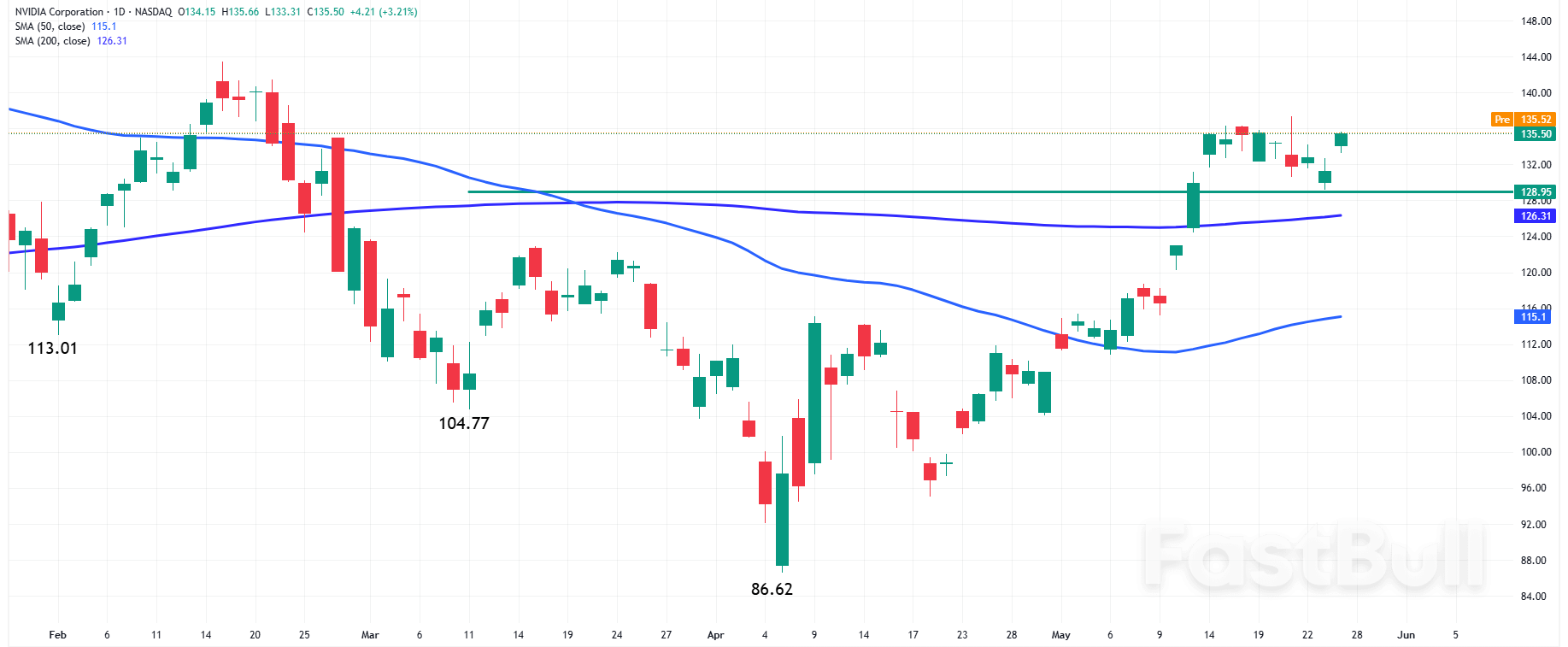
Daily NVIDIA CorporationSterling was steady against the dollar on Wednesday, hovering near Monday's three-year high, as it continued to be supported by favourable economic data last week as well as Britain's recent trade deals.
Investors also looked towards a multi-year spending review by finance minister Rachel Reeves in two weeks which will set the budgets for public services.
Sterlingwas little changed at $1.3511 but stayed close to the three-year high of $1.3593 it touched on Monday.
It was little changed against the euro, with the euro broadly flat at 83.86 pence in its seventh week of losses against the pound.
"Sterling's done pretty well recently," Rabobank strategist Jane Foley said, pointing to stronger-than-expected inflation and slightly stronger retail sales data last week and trade deals that Britain struck with both India and the U.S. as reasons for the currency's resilience.
However, the spending review is pushing attention back onto the challenges that Reeves faces around the fiscal situation in the country, Foley said, as the government, which had pledged not to increase taxes and keep spending tight while still fuelling economic growth, seems to be prepared to pour more money into defence and health, among other issues.
Reeves is due to set out budgets for individual government departments for the next three years in a spending review on June 11, after the overall total was outlined in October.
"There's obviously a bit of a conundrum for her to face, and that could create perhaps a few headwinds for sterling, given that it has had a reasonably good run for now," Foley said.
Sterling has risen by 8% against the dollar so far this year, and has regained ground against the euro in the past weeks from its April lows at 87.38 pence.
Last week's data showed that British retail sales jumped in April, while the inflation print erased market expectations for a cut at the Bank of England's next meeting in June.
"The BoE is still trying to manage these dual elements of sticky inflation and sluggish growth," said Paul Hollingsworth, head of developed markets economics at BNP Paribas, during a call presenting the French bank's global economic outlook.
Despite optimism around the "green shoots" from consumer spending data, Hollingsworth warned of supply-side woes and the prospect of further fiscal consolidation measures over the coming months.
Strategy, a major Bitcoin holder, is reducing its Bitcoin purchases due to declining stock premiums and intensifying market competition.
This decision highlights changing market dynamics and potential impacts on Bitcoin's institutional appeal.
The decision to slow down Bitcoin acquisitions stems from a shrinking stock premium and increasing competition. Strategy's prior success fueled large Bitcoin investments, now reassessed due to market changes. This is in part due to the establishment of the Strategic Bitcoin Reserve, enhancing the competitive landscape.
Strategy, holding substantial Bitcoin, aims to adapt to these new realities. This move reflects strategic shifts as market conditions alter investment dynamics.
The slowdown in purchases affects Bitcoin's market valuation and industry stakeholders. Financial markets watch closely as this decision influences institutional investments.
Potential long-term financial and political consequences arise as major holders like Strategy reassess their positions amid a competitive landscape.
Similar shifts occurred during past market fluctuations, causing significant impact on Bitcoin's value and institutional confidence. Strategy’s Executive Leadership stated: "As part of our commitment to maximizing returns for our shareholders, we are adjusting our Bitcoin yield targets to reflect evolving market conditions and opportunities."
Experts suggest this could lead to diversified strategies, focusing on resilience against market volatility, matching previous trends during financial uncertainties.
Those searching for evidence of the Trump administration’s tariffs on imported goods in the economic data have been left wanting.
Inflation in April as measured by the Consumer Price Index was under control, rising 0.22% overall and 0.24% when excluding food and inflation. Both were in line with economists’ estimates and roughly consistent with the Federal Reserve’s targets. On a three-month annualized basis, inflation was 1.6% overall and 2.1% for the core rate.
The White House and defenders of its trade strategy celebrated the results as evidence there will be little to no economic hardships from tariffs. To be sure, it’s way too early to declare victory. Let’s give the economy a few more months before we pop the champagne.
Even before the temporary trade détente earlier this month with China, I was slightly less pessimistic of the effect of tariffs on the economy than many observers who were calling for a recession to start this year while also staying sober about the risks. That said, it may take several months to see the fuller impact of tariffs in the data, which is often reported with a lag.
Not since the 1930s has the effective tariff rate been as high as it is now at 18% implied by current policy, so the US has little recent experience to draw on when it comes to high overall tariffs. We do know, however, based on experience over the last decade with tariffs on individual products that it can take months for the effect to show up in economic data. In January 2018, the first Trump administration announced levies on imported washing machines ranging from 20% to 50%. Spending on such goods immediately surged 3.6%, as consumers tried to beat the tariffs, but it wasn’t until April that the CPI for laundry equipment rose substantially, more than two months after the tariff was announced.
There is reason to believe that might happen again. Especially with durable goods, retailers will often burn through pre-tariff inventory first before turning to higher-cost, post-tariff inventory. Consumers try to front-run tariffs, increasing purchases before they go in effect and reducing them just after tariffs hit. New orders made after the tariff may take weeks due to shipping times. All these factors lead to delays to the levies being reflected in new data.
Another is because tariffs often don’t typically ramp up to full strength immediately, due to delays in the collection of levies or pauses tied to pending trade talks. This is currently the case. Based on actual federal tariff revenue, the average effective rate in April was about 4.5% and preliminary data for May suggests it was around 6.5%. Current tariff policy, even after the China “pause,” suggests an average rate of 16% to 18% (and 21% to 22% if President Donald Trump follows through on his threat of 50% tariffs on the European Union). In other words, tariffs weren’t biting at full strength in April or May, which means it will likely still be hard to see signs of the effect of tariffs in the May economic data.
Nevertheless, we have seen some signs in the data consistent with tariffs, if not dispositive yet.
First, the CPI was more of a mixed bag with regards to tariffs rather than a solid rebuttal. Apparel prices fell by 0.2% in April, which is telling given how much apparel the US imports, from China in particular. But electronics and furniture prices — goods also highly exposed to tariffs — rose 0.75% and 1.5%, which are unusually big increases for those categories.
Tariffs are likely also showing up in more high frequency price data. Findings scraped from large US online retailers and compiled by economists Alberto Cavallo, Paola Llamas, and Franco Vazquez suggest that domestic-origin goods prices are up roughly half a percent since early March, while foreign-origin goods prices are up more than two percent. The timing of these price increases lines up almost exactly with White House tariff announcements in March and April.
The potential presence of tariffs in the economic data is not limited to prices. Inflation-adjusted retail sales jumped 1.9% in March but fell 0.1% in April. Industrial production meanwhile has been weak, falling 0.25% in March and then coming in essentially flat for April. New orders for manufactured durable goods plunged 6.3% in April, their biggest slide since January 2024, after spiking 7.6% in March.
Monthly data are volatile so neither of these are dispositive. The first estimate of real gross domestic product growth for the first quarter was weak at negative 0.3%, though this was mainly due to timing shifts of consumers and businesses around tariffs rather than any direct effects.
It's tempting to draw sweeping conclusions from the first few months of data, but history and economics both call for patience. Tariffs have a way of creeping into the numbers with a lag, and we haven’t seen policy like this in almost 100 years. For now, the prudent approach is to watch the data unfold, remain humble about what we know, and resist the urge to draw conclusions.

Oil edged higher in a choppy session as the market juggled the outlook for more OPEC+ supply and the risk of additional US sanctions on Russia.
Brent traded above $64 after closing 1% lower on Tuesday. OPEC+ will gather online on Wednesday to review production quotas for this year and next, before eight key members decide at the weekend whether to bolster output again in July.
Members held preliminary talks last week on making a large production hike for a third consecutive month, according to delegates.
President Donald Trump, meanwhile, warned in a social media post on Tuesday that Russian leader Vladimir Putin was “playing with fire” as the US weighed whether to target Moscow with additional sanctions.
The ramp up of idled production by OPEC and its allies has stoked fears about oversupply and added to the pressure on prices. Parts of the futures curve for Brent are in contango — a bearish structure that signals ample supply.
“From a macro perspective, it is a wait and see game in terms of risk appetite, with oil hesitant to follow higher equities even as long-dated US and Japanese yields came down,” said Harry Tchilinguirian, group head of research at Onyx Capital Group. “Right now there are downside fundamentals to the flat price, with the possibility of another voluntary cut unwind from OPEC.
Oil has trended lower since mid-January, with sweeping tariffs from the Trump administration and retaliatory measures from targeted countries adding to bearish headwinds, raising concerns over an economic slowdown. However, there has been some signs recently of easing trade tensions.
White Label
Data API
Web Plug-ins
Poster Maker
Affiliate Program
The risk of loss in trading financial instruments such as stocks, FX, commodities, futures, bonds, ETFs and crypto can be substantial. You may sustain a total loss of the funds that you deposit with your broker. Therefore, you should carefully consider whether such trading is suitable for you in light of your circumstances and financial resources.
No decision to invest should be made without thoroughly conducting due diligence by yourself or consulting with your financial advisors. Our web content might not suit you since we don't know your financial conditions and investment needs. Our financial information might have latency or contain inaccuracy, so you should be fully responsible for any of your trading and investment decisions. The company will not be responsible for your capital loss.
Without getting permission from the website, you are not allowed to copy the website's graphics, texts, or trademarks. Intellectual property rights in the content or data incorporated into this website belong to its providers and exchange merchants.
Not Logged In
Log in to access more features

FastBull Membership
Not yet
Purchase
Log In
Sign Up