• Trade
  • Markets
  • Copy
  • Contests
  • News
  • 24/7
  • Calendar
  • Q&A
  • Chats
Trending
Screeners
SYMBOL
LAST
BID
ASK
HIGH
LOW
NET CHG.
%CHG.
SPREAD
SPX
S&P 500 Index
6827.42
6827.42
6827.42
6899.86
6801.80
-73.58
-1.07%
--
DJI
Dow Jones Industrial Average
48458.04
48458.04
48458.04
48886.86
48334.10
-245.98
-0.51%
--
IXIC
NASDAQ Composite Index
23195.16
23195.16
23195.16
23554.89
23094.51
-398.69
-1.69%
--
USDX
US Dollar Index
97.950
98.030
97.950
98.500
97.950
-0.370
-0.38%
--
EURUSD
Euro / US Dollar
1.17394
1.17409
1.17394
1.17496
1.17192
+0.00011
+ 0.01%
--
GBPUSD
Pound Sterling / US Dollar
1.33707
1.33732
1.33707
1.33997
1.33419
-0.00148
-0.11%
--
XAUUSD
Gold / US Dollar
4299.39
4299.39
4299.39
4353.41
4257.10
+20.10
+ 0.47%
--
WTI
Light Sweet Crude Oil
57.233
57.485
57.233
58.011
56.969
-0.408
-0.71%
--

Community Accounts

Signal Accounts
--
Profit Accounts
--
Loss Accounts
--
View More

Become a signal provider

Sell trading signals to earn additional income

View More

Guide to Copy Trading

Get started with ease and confidence

View More

Signal Accounts for Members

All Signal Accounts

Best Return
  • Best Return
  • Best P/L
  • Best MDD
Past 1W
  • Past 1W
  • Past 1M
  • Past 1Y

All Contests

  • All
  • Trump Updates
  • Recommend
  • Stocks
  • Cryptocurrencies
  • Central Banks
  • Featured News
Top News Only
Share

US Envoy John Coale Says Around 1000 Remaining Political Prisoners In Belarus Could Be Released In Coming Months

Share

US Defense Secretary Hegseth: Attacker Was Killed By Partner Forces

Share

Pentagon Says Two USA Army Soldiers And One Civilian USA Interpreter Were Killed, And Three Were Wounded In Syria

Share

Israel Says It Kills Senior Hamas Commander Raed Saed In Gaza

Share

Ukraine's Navy Says Russian Drone Attack Hit Civilian Turkish Vessel Carrying Sunflower Oil To Egypt On Saturday

Share

Israeli Military Says It Put Planned Strike On South Lebanon Site On Hold After Lebanese Army Requested Access

Share

Norwegian Nobel Committee: Calls On The Belarusian Authorities To Release All Political Prisoners

Share

Norwegian Nobel Committee: His Freedom Is A Deeply Welcome And Long-Awaited Moment

Share

Ukraine Says It Received 114 Prisoners From Belarus

Share

USA Embassy In Lithuania: Maria Kalesnikava Is Not Going To Vilnius

Share

USA Embassy In Lithuania: Other Prisoners Are Being Sent From Belarus To Ukraine

Share

Ukraine President Zelenskiy: Five Ukrainians Released By Belarus In US-Brokered Deal

Share

USA Vilnius Embassy: USA Stands Ready For "Additional Engagement With Belarus That Advances USA Interests"

Share

USA Vilnius Embassy: Belarus, USA, Other Citizens Among The Prisoners Released Into Lithuania

Share

USA Vilnius Embassy: USA Will Continue Diplomatic Efforts To Free The Remaining Political Prisoners In Belarus

Share

USA Vilnius Embassy: Belarus Releases 123 Prisoners Following Meeting Of President Trump's Envoy Coale And Belarus President Lukashenko

Share

USA Vilnius Embassy: Masatoshi Nakanishi, Aliaksandr Syrytsa Are Among The Prisoners Released By Belarus

Share

USA Vilnius Embassy: Maria Kalesnikava And Viktor Babaryka Are Among The Prisoners Released By Belarus

Share

USA Vilnius Embassy: Nobel Peace Prize Laureate Ales Bialiatski Is Among The Prisoners Released By Belarus

Share

Belarusian Presidential Administration Telegram Channel: Lukashenko Has Pardoned 123 Prisoners As Part Of Deal With US

TIME
ACT
FCST
PREV
U.K. Trade Balance Non-EU (SA) (Oct)

A:--

F: --

P: --

U.K. Trade Balance (Oct)

A:--

F: --

P: --

U.K. Services Index MoM

A:--

F: --

P: --

U.K. Construction Output MoM (SA) (Oct)

A:--

F: --

P: --

U.K. Industrial Output YoY (Oct)

A:--

F: --

P: --

U.K. Trade Balance (SA) (Oct)

A:--

F: --

P: --

U.K. Trade Balance EU (SA) (Oct)

A:--

F: --

P: --

U.K. Manufacturing Output YoY (Oct)

A:--

F: --

P: --

U.K. GDP MoM (Oct)

A:--

F: --

P: --

U.K. GDP YoY (SA) (Oct)

A:--

F: --

P: --

U.K. Industrial Output MoM (Oct)

A:--

F: --

P: --

U.K. Construction Output YoY (Oct)

A:--

F: --

P: --

France HICP Final MoM (Nov)

A:--

F: --

P: --

China, Mainland Outstanding Loans Growth YoY (Nov)

A:--

F: --

P: --

China, Mainland M2 Money Supply YoY (Nov)

A:--

F: --

P: --

China, Mainland M0 Money Supply YoY (Nov)

A:--

F: --

P: --

China, Mainland M1 Money Supply YoY (Nov)

A:--

F: --

P: --

India CPI YoY (Nov)

A:--

F: --

P: --

India Deposit Gowth YoY

A:--

F: --

P: --

Brazil Services Growth YoY (Oct)

A:--

F: --

P: --

Mexico Industrial Output YoY (Oct)

A:--

F: --

P: --

Russia Trade Balance (Oct)

A:--

F: --

P: --

Philadelphia Fed President Henry Paulson delivers a speech
Canada Building Permits MoM (SA) (Oct)

A:--

F: --

P: --

Canada Wholesale Sales YoY (Oct)

A:--

F: --

P: --

Canada Wholesale Inventory MoM (Oct)

A:--

F: --

P: --

Canada Wholesale Inventory YoY (Oct)

A:--

F: --

P: --

Canada Wholesale Sales MoM (SA) (Oct)

A:--

F: --

P: --

Germany Current Account (Not SA) (Oct)

A:--

F: --

P: --

U.S. Weekly Total Rig Count

A:--

F: --

P: --

U.S. Weekly Total Oil Rig Count

A:--

F: --

P: --

Japan Tankan Large Non-Manufacturing Diffusion Index (Q4)

--

F: --

P: --

Japan Tankan Small Manufacturing Outlook Index (Q4)

--

F: --

P: --

Japan Tankan Large Non-Manufacturing Outlook Index (Q4)

--

F: --

P: --

Japan Tankan Large Manufacturing Outlook Index (Q4)

--

F: --

P: --

Japan Tankan Small Manufacturing Diffusion Index (Q4)

--

F: --

P: --

Japan Tankan Large Manufacturing Diffusion Index (Q4)

--

F: --

P: --

Japan Tankan Large-Enterprise Capital Expenditure YoY (Q4)

--

F: --

P: --

U.K. Rightmove House Price Index YoY (Dec)

--

F: --

P: --

China, Mainland Industrial Output YoY (YTD) (Nov)

--

F: --

P: --

China, Mainland Urban Area Unemployment Rate (Nov)

--

F: --

P: --

Saudi Arabia CPI YoY (Nov)

--

F: --

P: --

Euro Zone Industrial Output YoY (Oct)

--

F: --

P: --

Euro Zone Industrial Output MoM (Oct)

--

F: --

P: --

Canada Existing Home Sales MoM (Nov)

--

F: --

P: --

Euro Zone Total Reserve Assets (Nov)

--

F: --

P: --

U.K. Inflation Rate Expectations

--

F: --

P: --

Canada National Economic Confidence Index

--

F: --

P: --

Canada New Housing Starts (Nov)

--

F: --

P: --

U.S. NY Fed Manufacturing Employment Index (Dec)

--

F: --

P: --

U.S. NY Fed Manufacturing Index (Dec)

--

F: --

P: --

Canada Core CPI YoY (Nov)

--

F: --

P: --

Canada Manufacturing Unfilled Orders MoM (Oct)

--

F: --

P: --

Canada Manufacturing New Orders MoM (Oct)

--

F: --

P: --

Canada Core CPI MoM (Nov)

--

F: --

P: --

Canada Manufacturing Inventory MoM (Oct)

--

F: --

P: --

Canada CPI YoY (Nov)

--

F: --

P: --

Canada CPI MoM (Nov)

--

F: --

P: --

Canada CPI YoY (SA) (Nov)

--

F: --

P: --

Canada Core CPI MoM (SA) (Nov)

--

F: --

P: --

Q&A with Experts
    • All
    • Chatrooms
    • Groups
    • Friends
    Connecting
    .
    .
    .
    Type here...
    Add Symbol or Code

      No matching data

      All
      Trump Updates
      Recommend
      Stocks
      Cryptocurrencies
      Central Banks
      Featured News
      • All
      • Russia-Ukraine Conflict
      • Middle East Flashpoint
      • All
      • Russia-Ukraine Conflict
      • Middle East Flashpoint
      Search
      Products

      Charts Free Forever

      Chats Q&A with Experts
      Screeners Economic Calendar Data Tools
      Membership Features
      Data Warehouse Market Trends Institutional Data Policy Rates Macro

      Market Trends

      Market Sentiment Order Book Forex Correlations

      Top Indicators

      Charts Free Forever
      Markets

      News

      News Analysis 24/7 Columns Education
      From Institutions From Analysts
      Topics Columnists

      Latest Views

      Latest Views

      Trending Topics

      Top Columnists

      Latest Update

      Signals

      Copy Rankings Latest Signals Become a signal provider AI Rating
      Contests
      Brokers

      Overview Brokers Assessment Rankings Regulators News Claims
      Broker listing Forex Brokers Comparison Tool Live Spread Comparison Scam
      Q&A Complaint Scam Alert Videos Tips to Detect Scam
      More

      Business
      Events
      Careers About Us Advertising Help Center

      White Label

      Data API

      Web Plug-ins

      Affiliate Program

      Awards Institution Evaluation IB Seminar Salon Event Exhibition
      Vietnam Thailand Singapore Dubai
      Fans Party Investment Sharing Session
      FastBull Summit BrokersView Expo
      Recent Searches
        Top Searches
          Markets
          News
          Analysis
          User
          24/7
          Economic Calendar
          Education
          Data
          • Names
          • Latest
          • Prev

          View All

          No data

          Scan to Download

          Faster Charts, Chat Faster!

          Download App
          English
          • English
          • Español
          • العربية
          • Bahasa Indonesia
          • Bahasa Melayu
          • Tiếng Việt
          • ภาษาไทย
          • Français
          • Italiano
          • Türkçe
          • Русский язык
          • 简中
          • 繁中
          Open Account
          Search
          Products
          Charts Free Forever
          Markets
          News
          Signals

          Copy Rankings Latest Signals Become a signal provider AI Rating
          Contests
          Brokers

          Overview Brokers Assessment Rankings Regulators News Claims
          Broker listing Forex Brokers Comparison Tool Live Spread Comparison Scam
          Q&A Complaint Scam Alert Videos Tips to Detect Scam
          More

          Business
          Events
          Careers About Us Advertising Help Center

          White Label

          Data API

          Web Plug-ins

          Affiliate Program

          Awards Institution Evaluation IB Seminar Salon Event Exhibition
          Vietnam Thailand Singapore Dubai
          Fans Party Investment Sharing Session
          FastBull Summit BrokersView Expo

          Trump Announces his First Trade Deal With the UK. Here's What's in it.

          Manuel

          Economic

          China–U.S. Trade War

          Summary:

          The announcement was enough to push US stocks higher on Thursday as investors turned optimistic that Trump's trade war may be easing.

          President Trump announced his first deal on Thursday since launching a global trade war. He unveiled a limited pact with the United Kingdom that would lower barriers on some goods, such as automobiles and agriculture, while leaving many details yet to be worked out.
          It's a "tremendous trade deal for both countries," Trump said Thursday in the Oval Office. "This is a fantastic, historic day," added UK Prime Minister Keir Starmer, who joined the event over the phone.
          "The final details are being written up" and will be concluded in the coming weeks, Trump added.
          One key change not in the offing is any adjustment to the 10% baseline tariffs that Trump imposed on goods from nearly every country in the world. Those duties are set to stay in place, with the president reiterating Thursday that he views 10% as the minimum and that other countries will face far higher duties.
          The core of the deal is essentially a trade where the UK will get a lowering of US duties on key sectors. Most in focus are steel — US duties on UK-made steel will drop from 25% to 0% — and car exports, where duties are set to be reduced from 27.5% to 10% according to a release from the UK.
          In return, Prime Minister Starmer is offering concessions to open the UK markets more to things like US autos, ethanol, machinery, and agricultural products, as well as ongoing negotiations on so-called digital service taxes that hit US tech companies.
          In one example, the UK will remove the tariff on ethanol completely.
          In a fact sheet, the White House claimed "unprecedented" new access to the UK market, which it said represents a $5 billion opportunity for new exports.
          Trump also said the deal includes provisions for streamlined customs procedures for US exports and new economic national security measures. Secretary Lutnick added that Boeing is set to make new purchases of British airport engines as part of the deal.

          Unanswered questions

          Yet the unanswered questions were abundant.
          In one example, Trump focused heavily on US beef exports in his opening remarks but then acknowledged that the UK wouldn't be changing its beef standards, which have been a far bigger hangup than other issues like tariffs.
          "I think they'll take what they want," Trump said of beef exports.
          "There will be no weakening of UK food standards on imports," added the release from London, describing the deal as focused on new reciprocal market access, including a new tariff-free quota for UK farmers.
          The deal to reduce US car tariffs to 10% will also only apply to the first 100,000 vehicles imported into the US by UK car manufacturers annually. That figure, the UK government noted, is approximately equal to the total exported last year.
          Another piece of the negotiations was around a digital services taxes (DSTs) that impact American tech companies operating in the UK and elsewhere. The issue was mentioned briefly during the announcement but Trump trade counselor Peter Navarro clarified to reporters later in the day that the issue is "still in negotiations" but remains a "very big deal to President Trump."
          "Work will continue on the remaining sectors — such as pharmaceuticals and remaining reciprocal tariffs," the UK government added.
          The announcement was enough to push US stocks higher on Thursday as investors turned optimistic that Trump's trade war may be easing.
          But others were more cautious about the import of the announcement.
          "I think it is going to be underwhelming as an opening salvo," Henrietta Treyz of Veda Partners predicted during a Yahoo Finance Live appearance.
          She noted it was good for groups like UK automakers but said, "There are much bigger pieces of this pie," pointing to still-outstanding deals on partners like South Korea, Japan, Canada, Mexico, and India, where deals could be weeks or months away.
          Overall, the UK has been spared the most intensive actions from Trump. A recent Yale Budget Lab report found that the UK economy is likely to be 0.2% bigger in the long run as a result of tariffs imposed to date, while other nations like Canada and China are set to take a hit and turn negative.
          Today's announcement was the second trade win for Starmer, who inked a new trade agreement with India earlier this week.

          'A baby step'

          Other reactions to the announcement from some in the financial community included skepticism about how far-reaching the agreement will end up being.
          Dan Ives of Wedbush called the announcement "a baby step start of getting some deals/framework on the table," adding that "the reality is that the market and especially tech investors will view this announcement as a yawner ... with the laser focus being China negotiations, India, and Vietnam."
          Terry Haines of Pangaea Policy added that, for markets, "the existence of today's deal matters more than any detail, because it confirms for jittery and impatient markets fundamental things," most importantly that Trump will move forward on deals.
          Indeed, markets will have another round of trade talks to watch this weekend when two top Trump aides travel to Switzerland to begin those talks with China.
          Trump also looked ahead to this weekend's talks on Thursday, predicting, "I think we will have a very good weekend." He offered optimism that progress would be possible in the days ahead, and regarding tariffs, if those talks go well, "you can't get any higher, so you know it's coming down."

          Source: Yahoo Finance

          To stay updated on all economic events of today, please check out our Economic calendar
          Risk Warnings and Disclaimers
          You understand and acknowledge that there is a high degree of risk involved in trading. Following any strategies or investment methods may lead to potential losses. The content on the site is provided by our contributors and analysts for information purposes only. You are solely responsible for determining whether any trading assets, securities, strategy, or any other product is suitable for investing based on your own investment objectives and financial situation.
          Add to Favorites
          Share

          Stablecoin Bill Fails to Clear key Hurdle in U.S. Senate

          Manuel

          Cryptocurrency

          Legislation that would create a regulatory framework for U.S. dollar-pegged cryptocurrency tokens known as stablecoins faced a setback on Thursday as the bill failed to clear a key hurdle in the U.S. Senate.
          The setback is a blow to the crypto industry, which has long pushed for lawmakers to pass legislation creating new rules for digital assets. The sector spent more than $119 million backing pro-crypto congressional candidates in last year's elections and had tried to paint the issue as bipartisan.
          Stablecoins, a type of cryptocurrency designed to maintain a constant value, usually a 1:1 dollar peg, are commonly used by crypto traders to move funds between tokens.
          Their use has grown rapidly in recent years, and proponents say that they could be used to send payments instantly. Analysts and lobbyists had once considered stablecoin legislation almost certain to pass this year, but the bill - dubbed the GENIUS Act in the Senate - has faced pushback from Democrats as frustration has grown over President Donald Trump's various crypto ventures.
          In a vote on Thursday, only 49 senators voted to advance the bill to a full vote, falling short of the 60 votes needed to formally end debate on the bill. Notably, two Republican senators - Senator Josh Hawley and Senator Rand Paul - voted alongside Democrats against moving forward with the bill.
          "While we've made meaningful progress on the GENIUS Act, the work is not yet complete, and I simply cannot in good conscience ask my colleagues to vote for this legislation when the text isn't finished," said Senator Mark Warner, a Democrat who earlier voted to advance the bill out of the Senate Banking Committee, in a statement.
          A group of Democrats, including Warner, that initially supported the legislation said on Saturday that Republicans had failed to negotiate on stronger provisions related to foreign stablecoin issues and anti-money-laundering protections.
          Senate Democrats more broadly have expressed concerns about the bill especially after Trump's crypto business World Liberty Financial announced last week that its stablecoin would be used by an Abu Dhabi investment firm for its $2 billion investment in crypto exchange Binance.
          In a speech on the Senate floor after the vote to move the bill toward a full vote failed, Senate Majority Leader John Thune expressed disappointment with Democrats, accusing them of denying the White House a bipartisan win.

          Source: Reuters

          Risk Warnings and Disclaimers
          You understand and acknowledge that there is a high degree of risk involved in trading. Following any strategies or investment methods may lead to potential losses. The content on the site is provided by our contributors and analysts for information purposes only. You are solely responsible for determining whether any trading assets, securities, strategy, or any other product is suitable for investing based on your own investment objectives and financial situation.
          Add to Favorites
          Share

          Trump Castigates Fed's Powell for not Cutting Rates, Downplays Inflation

          Manuel

          Central Bank

          Economic

          U.S. President Donald Trump renewed his criticism on Thursday of Federal Reserve Chair Jerome Powell, calling him a "fool" and complaining that the Fed is refusing to lower interest rates.
          Trump has been on a virtual war path against Powell in recent weeks, threatening to fire him -- and then backing away from that threat. He has repeatedly lashed out at Powell in posts on his social media site, calling him "a major loser" in one post.
          Trump, speaking one day after the Fed, as financial markets had widely expected, kept its key borrowing rate unchanged, said cutting interest rates would be "like jet fuel" for the economy, "but he doesn't want to do it." He said Powell is "not in love with me."
          Early last week, in remarks suggesting that he is more knowledgeable about interest rates than Powell, Trump said he was not "a huge fan of" Powell.
          The Fed this week kept short-term borrowing costs in the 4.25%-4.50% range, where they have been since December. While the big tariffs imposed by Trump are likely to increase both inflation and unemployment, the economy so far has shown little sign of either, Powell said on Wednesday, giving the central bank time to wait until there is more clarity on where tariffs actually end up and assess their effect on prices and jobs. At that point the Fed can act as needed, and potentially aggressively, he said.
          Trump had a different view. "'Too Late' Jerome Powell is a FOOL, who doesn't have a clue," he wrote in a post on Truth Social on Thursday morning. "Oil and Energy way down, almost all costs (groceries and 'eggs') down, virtually NO INFLATION ..."
          Cutting interest rates typically boosts the economy, but in a time of above-target inflation, doing so could also unleash an upward spiral of price pressures that Powell has said must be avoided.
          Trump named Powell as the Fed chair in 2018, during his first term in the White House, and Democratic President Joe Biden appointed Powell to a second four-year term in 2022.
          Trump and British Prime Minister Keir Starmer on Thursday announced a "breakthrough deal" on trade, the first since Trump announced steep import levies on most U.S. trading partners on April 2 before subsequently pausing some of them to allow time to reach country-by-country deals.
          That first glimmer of certainty amid what had been an increasingly foggy outlook makes the Fed actually less likely to cut rates aggressively. That was the read from financial markets, as traders pulled back Thursday from what had been overwhelming bets on a July start to interest rate reductions, with any more than three rate cuts by year's end seen as increasingly unlikely.
          Trump has made no secret of his dissatisfaction with Powell's conduct of monetary policy ever since shortly after picking him as Fed chair early in his first term. Trump's suggestion last month that he would like Powell gone sent stocks and bonds both down as investors priced in the chance the Fed could lose its independence and thereby its ability to restrain inflation.
          Powell, asked about Trump's criticisms in his news conference on Wednesday, declined to comment. He has said he intends to complete his term as chair, which ends in about a year.
          Powell met a total of three times with Biden. Powell's calendars also show he had a 90-minute dinner with Trump at the White House during his first stint there, as well as several other shorter encounters, but has not spoken with him since 2019.
          Powell said on Wednesday that he never has sought and never would seek a meeting with a president. "It's always been the other way," he said Wednesday.

          Source: Reuters

          To stay updated on all economic events of today, please check out our Economic calendar
          Risk Warnings and Disclaimers
          You understand and acknowledge that there is a high degree of risk involved in trading. Following any strategies or investment methods may lead to potential losses. The content on the site is provided by our contributors and analysts for information purposes only. You are solely responsible for determining whether any trading assets, securities, strategy, or any other product is suitable for investing based on your own investment objectives and financial situation.
          Add to Favorites
          Share

          Market recession indicators: dissecting the signal from the noise

          Adam

          Economic

          Global recession risks have shot back up markets' worry list, but the readout from economic data and key financial indicators is not as clear cut as it first appears.
          A 90-day pause on most reciprocal tariffs unveiled by U.S. President Donald Trump in April has eased investors' worst fears, but the damage to business and consumer confidence is expected to hurt.
          "Recession risks have risen markedly even if there are some deals struck on tariffs," said Guy Miller, chief markets strategist at Zurich Insurance Group. "The risk of a U.S. recession is 50-50, it's that close."
          Here's a look at what some closely-watched indicators say about global recession risks.

          HARD VS SOFT

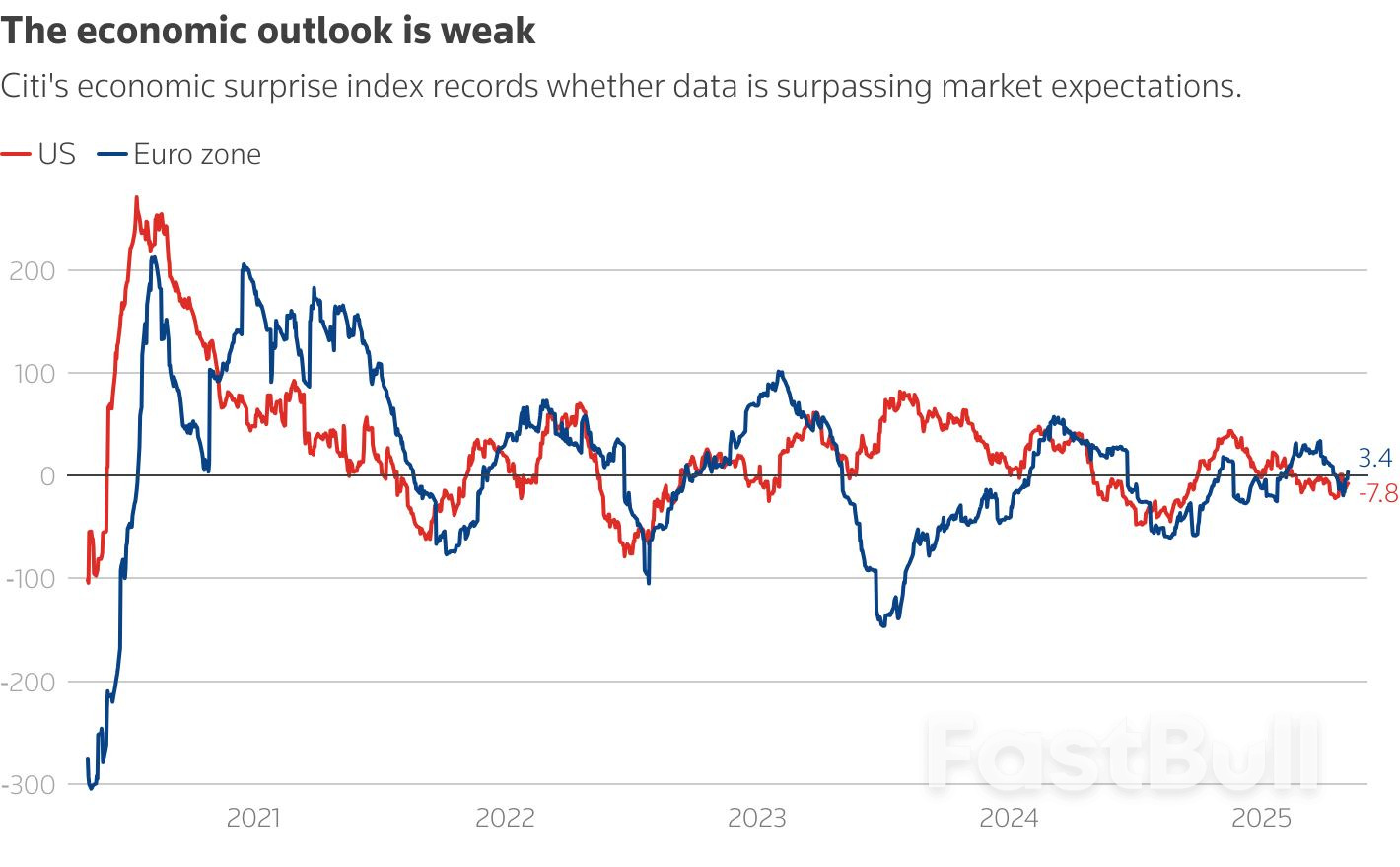
          A disconnect between so-called soft economic numbers such as sentiment indicators and hard data, for instance jobs figures, makes it hard to decipher recession risks.
          Latest U.S. jobs numbers point to a resilient economy, while a first quarter economic contraction in the United States and an expansion in the euro zone have both been explained away by pre-positioning by companies ahead of the reciprocal tariffs.
          Business and consumer confidence indicators meanwhile have deteriorated, a sign for some that weaker growth will materialise soon.
          U.S. consumer confidence slumped to a nearly five-year low in April. Consumer spending is key because it accounts for more than two-thirds of U.S. economic activity. A euro zone investor morale index has rebounded after nose-diving in April, opens new tab but remains in negative territory.
          "We assume that any contraction in the euro area would be short lived and relatively mild," said MUFG senior economist Henry Cook.
          Zurich's Miller said he was watching initial weekly jobless claims as the most timely indicator of what's happening in the U.S. economy.
          Market recession indicators: dissecting the signal from the noise_1

          Citi's economic surprise index records whether data is surpassing market expectations.

          CHANGE YOUR MIND

          There's no getting away from slashed growth forecasts.
          Economists polled by Reuters indicate high risks of a recession this year, having forecast strong growth just three months ago.
          Barclays reckons the picture is one of a meaningful global slowdown, combined with mild U.S. and euro area recessions.
          Yet a recession is not a done deal, economists say. If the U.S. can arrange trade deals soon or deliver on tax cuts, the risks would fall, while the euro zone economy will likely be buffered by lower rates and fiscal stimulus.
          "A recovery of consumer spending due to higher wages and a more dovish than expected central bank, at least in the euro area, are the main factors helping to avoid a deep recession," said BofA economist Ruben Segura-Cayuela.
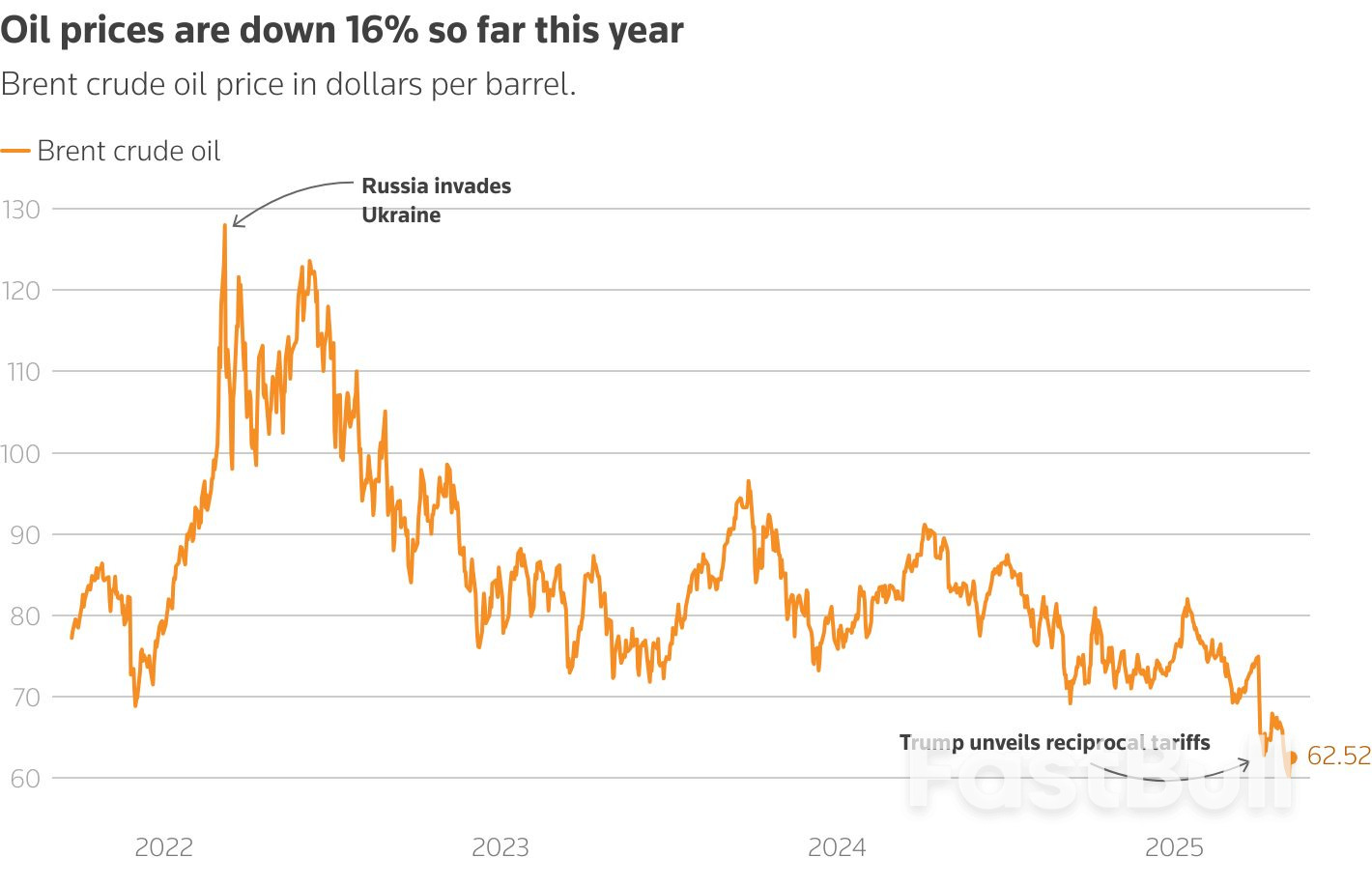
          3/ WHERE'S THE DEMAND? The signal from commodity markets points to a sharp growth slowdown.
          Oil prices are down around 16% so far this year to around $60 a barrel . If that's sustained, 2025 would mark the worst year for crude since 2020's COVID crisis.
          For sure, they also reflect expectations for more supply from OPEC, but the price falls fit into the broader picture of weaker demand as global growth slows, analysts say.
          Copper, dubbed "Dr Copper" for its track record as a boom-bust indicator, has recovered from roughly one-year lows hit in early April but remains below a March peak .
          Citi is bearish over the next three to six months as physical copper consumption and manufacturing activity slow due to U.S. tariffs, especially the 145% levy on manufacturing hub China.
          Market recession indicators: dissecting the signal from the noise_2

          Brent crude oil price in dollars per barrel.

          TRUST MR BOND?

          Government bond markets reflect concern about a U.S. tariff-induced slowdown, but no heightened recession risk, as markets assume central banks will respond swiftly with rate cuts.
          China on Wednesday cut rates to help soften the blow of a trade war and traders have increased European Central Bank rate cut bets since March. They anticipate 60 basis points of further ECB easing by December.
          Traders expect roughly 80 bps of U.S. Federal Reserve cuts by December and 115 bps by mid-2026, after paring back more aggressive expectations since the tariff pause. The Fed on Wednesday left rates steady and said the risks of higher inflation and unemployment had risen.
          "In recent years they (Fed funds futures) have consistently overestimated how dovish the Fed would be," said Deutsche Bank macro strategist Henry Allen.
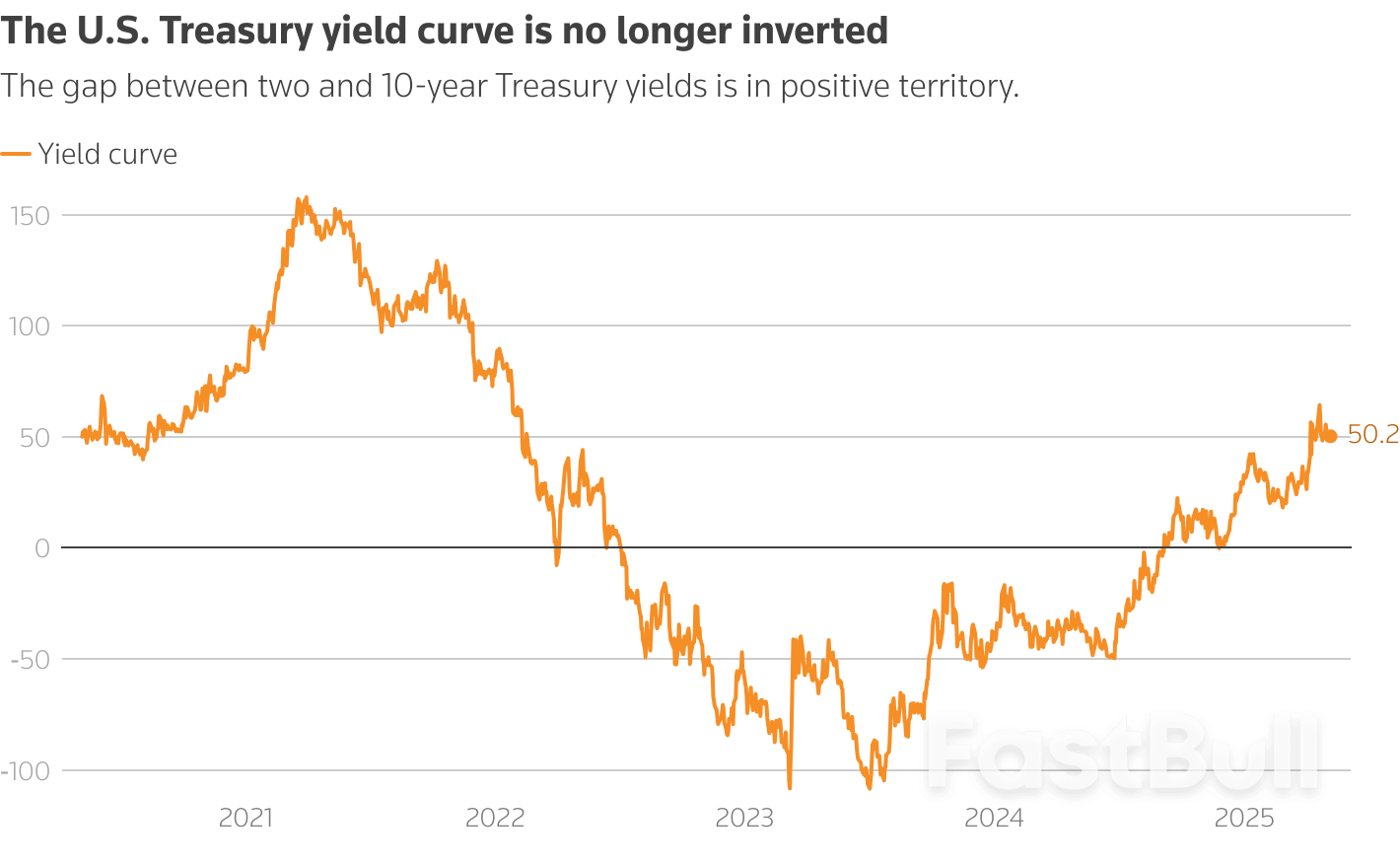
          Also watch yield curves, although their reliance as a recession indicator has been called into question recently.
          The gap between 10-year and 2-year Treasury yields has been positive since last year. While yield curve inversion has historically been seen as a recession predictor, the curve tends to revert back to normal as recession nears.
          "In recent cycles, the recession didn’t begin when curves were inverted, but when they un-inverted as central banks rapidly cut rates leading short-dated yields to fall more quickly than the long-dated ones," said Allen.
          Market recession indicators: dissecting the signal from the noise_3

          The gap between two and 10-year Treasury yields is in positive territory.

          STOCKS, TOO UPBEAT

          A rebound in stocks suggests recession fears have faded. German shares are near record highs, New York and Tokyo have jumped more than 15% each from lows hit last month .
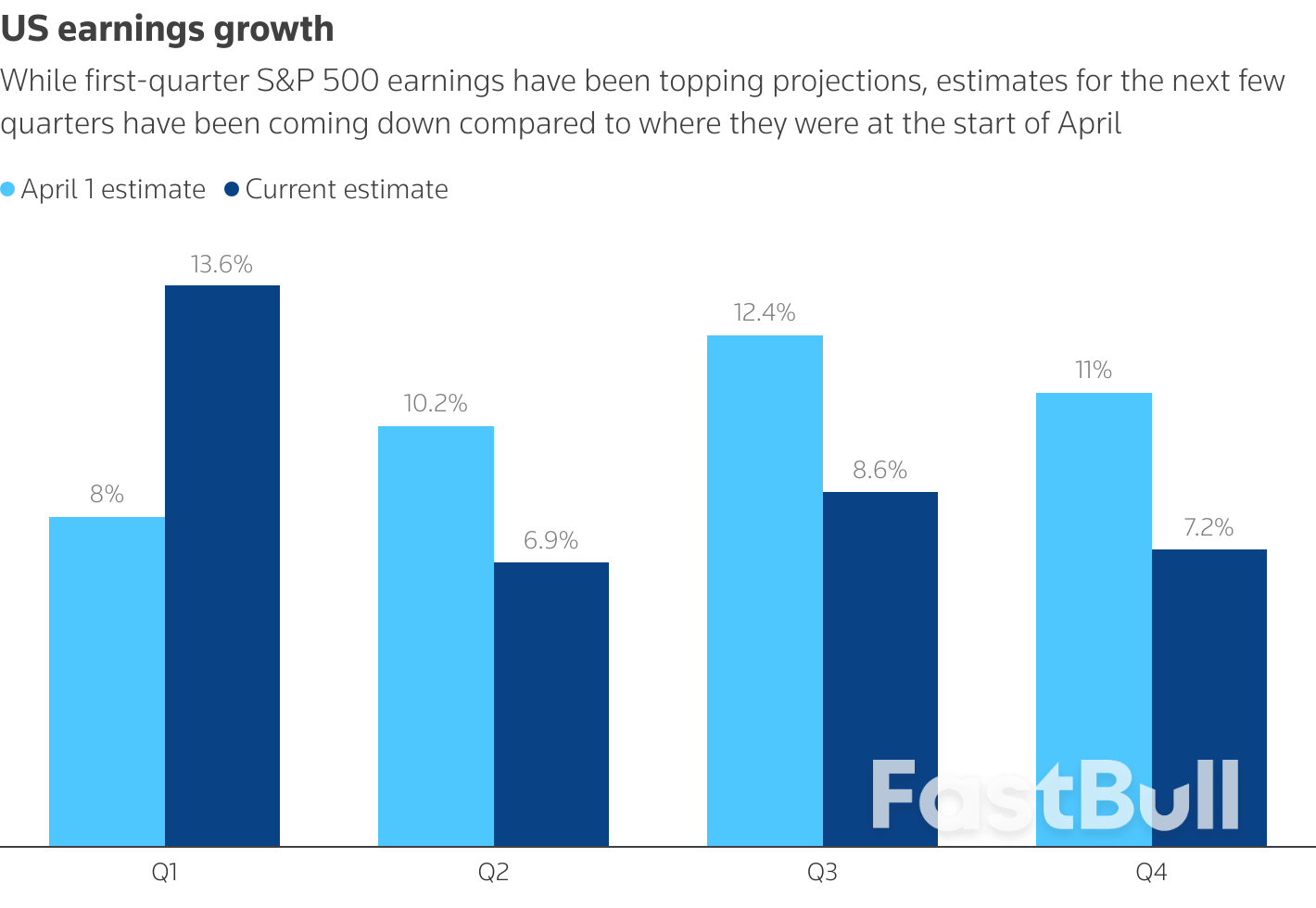
          But pay attention to company earnings.
          Sweden's Electrolux , slashed its outlook while Volvo Cars, computer gadget maker Logitech, and drinks giant Diageo, abandoned their targets due to uncertainty. General Motors , pulled its forecast for the year even as it reported strong results.
          "Q1 was perhaps the last of the unaffected earnings quarters, with tariffs a factor from Q2 onwards," said Zurich's Miller. "Given the uncertainty, I would have thought valuations should reflect at least some of this. So far, they do not."
          Market recession indicators: dissecting the signal from the noise_4

          S&P 500 earnings projections in 2025

          Source: reuters

          To stay updated on all economic events of today, please check out our Economic calendar
          Risk Warnings and Disclaimers
          You understand and acknowledge that there is a high degree of risk involved in trading. Following any strategies or investment methods may lead to potential losses. The content on the site is provided by our contributors and analysts for information purposes only. You are solely responsible for determining whether any trading assets, securities, strategy, or any other product is suitable for investing based on your own investment objectives and financial situation.
          Add to Favorites
          Share

          Trump, Starmer Herald Limited US-UK Trade Deal, but 10% Duties Remain

          Manuel

          Economic

          China–U.S. Trade War

          U.S. President Donald Trump and British Prime Minister Keir Starmer on Thursday announced a limited bilateral trade deal that leaves in place Trump's 10% tariffs on British exports, modestly expands agricultural access for both countries and lowers prohibitive U.S. duties on British car exports.
          The preliminary agreement is the first of dozens of tariff-lowering deals that Trump is trying to land in coming weeks after blitzing the global economy with steep new import taxes in a bid to reshape global trade in U.S. favor and shrink a $1.2 trillion U.S. goods trade deficit.
          Trump downplayed the UK deal as a template for other negotiations, saying that Britain "made a good deal" and that many other trading partners may end up with much higher final tariffs because of their large U.S. trade surpluses.
          In April, Trump imposed reciprocal duties of up to 50% on goods from 57 trading partners including the European Union, pausing them days later to allow time for negotiations. At the same time, he heaped new 25% tariffs on auto imports and ended all exemptions on steel and aluminum duties, announcing new tariff probes on pharmaceuticals, copper, lumber and semiconductors.
          At a White House press conference with Starmer patched in on a speaker phone, the two leaders heralded the plan as a "breakthrough deal" that lowers average British tariffs on U.S. goods to 1.8% from 5.1%.
          "It opens up a tremendous market for us," Trump said.
          "This is a really fantastic, historic day," Starmer said by teleconference. "This is going to boost trade between and across our countries, it's going to not only protect jobs, but create jobs, opening market access."
          The United States has been under pressure from investors to strike deals to de-escalate its tariff war after Trump's often chaotic policymaking upended global trade with friends and foe alike, threatening to stoke inflation and start a recession.
          His biggest challenge, however, is resolving a virtual trade embargo between the U.S. and China, with tariffs of 145% and 125%, respectively on each side. U.S. and Chinese officials are due to hold talks in Switzerland on Saturday. Trump said these talks would be substantive -- more than an ice-breaker -- and that he knows that those tariff levels will be "coming down."

          WARM RELATIONSHIP

          Britain's ambassador to the U.S., Peter Mandelson, said the deal was only a first step in efforts by the two countries to reduce tariffs and trade barriers, adding: "It's not a still picture here. It's a movie. It continues."
          With the British economy struggling to grow, the tariffs had added to the pressure on his government.
          Jaguar Land Rover (TAMO.NS) paused its shipments to the U.S. for a month and the government was forced to seize control of British Steel to keep it operating.
          The deal will reduce U.S. tariffs on British auto imports to 10% from the current 27.5% according to a UK statement. The lower rate will apply to a quota of 100,000 British vehicles, almost the total exported to the U.S. last year.
          U.S. tariffs on imports from the struggling UK steel industry will fall to zero from 25%, while British tariffs on U.S. ethanol will fall to zero from 19%.
          Both sides have agreed to new reciprocal market access on beef, with UK farmers given a tariff-free quota for 13,000 metric tonnes. There will be no weakening of UK food standards on imports.
          Crucially there will be no weakening of UK food standards on U.S. beef imports, which was an election manifesto pledge for the Labour government. That means U.S. beef bred with growth hormones still won't be allowed in.
          U.S. Agriculture Secretary Brooke Rollins said the deal would "exponentially increase" U.S. beef exports to Britain.
          But much depends on whether American beef could compete with the British beef on price and find favor with British consumers.
          Currently 100% of the fresh beef sold by Britain's two biggest supermarket chains Tesco (TSCO.L) and Sainsbury's (SBRY.L), which is British and Irish.

          AIRCRAFT RELIEF

          Commerce Secretary Howard Lutnick said that the deal would create $5 billion in potential new annual export opportunities for American producers, while the new tariffs that stay in place would generate $6 billion in annual U.S. revenue.
          Lutnick said that Britain is expected to announce a purchase of $10 billion worth of U.S.-assembled Boeing aircraft, although a White House graphic referred to "aircraft parts." In turn, Lutnick said that the U.S. will allow duty-free imports of Rolls-Royce (RR.L) jet engines. Rolls-Royce shares jumped 3.6% in London.
          Details were scant on tariffs on UK pharmaceuticals imports, which could damage AstraZeneca (AZN.L) and GSK (GSK.L), although a White House fact sheet said the deal would create a secure pharma supply chain.
          The U.S. agreed to give Britain preferential treatment in any further tariffs imposed under Section 232 national security investigations, which include ongoing probes of pharmaceutical and semiconductor imports.
          Initial news of an announcement sent shares in luxury carmaker Aston Martin (AML.L) up 10%, while British retailers with operations in the U.S., including JD Sports (JD.L) and Primark owner AB Foods (ABF.L), also rose.

          TRADE TIGHTROPE

          Starmer's government has been seeking to build new trading relationships post-Brexit with the U.S., China and the EU without moving so far towards one bloc that it angers the others.
          Economists and one FTSE 100 chief executive said the immediate economic impact of a tariff deal was likely to be limited, but that trade agreements in general would help long-term growth. Britain struck a free trade agreement with India this week.
          There are also domestic political risks.
          Polling shows the government remains deeply unpopular, making any move to cut taxes on multi-national tech companies a big risk.
          Britain's digital service tax, levied at 2% of UK revenue for online marketplaces, would continue unchanged.

          Source: Reuters

          To stay updated on all economic events of today, please check out our Economic calendar
          Risk Warnings and Disclaimers
          You understand and acknowledge that there is a high degree of risk involved in trading. Following any strategies or investment methods may lead to potential losses. The content on the site is provided by our contributors and analysts for information purposes only. You are solely responsible for determining whether any trading assets, securities, strategy, or any other product is suitable for investing based on your own investment objectives and financial situation.
          Add to Favorites
          Share

          Standard Chartered analyst apologizes for $120,000 bitcoin price call, says target ‘may be too low’

          Adam

          Cryptocurrency

          A Standard Chartered analyst who predicted bitcoin
          hitting $120,000 by the second quarter now says his price call is “too low.”
          “I apologise that my USD120k Q2 target may be too low,” Geoffrey Kendrick, head of digital assets at Standard Chartered, said in a tongue-in-cheek comment shared with clients via email Thursday.
          Last month, Kendrick wrote a note saying that he expects bitcoin to reach an all-time high of around $120,000 in the second quarter of 2025 on the back of a “strategic asset reallocation away from US assets” and “accumulation by ‘whales’ (major holders).”
          “We expect these supportive factors to push BTC to a fresh all-time high around USD 120,000 in Q2,” Kendrick said at the time. “We see gains continuing through the summer, taking BTC-USD towards our year-end forecast of 200,000.”
          On Thursday, Kendrick said his $120,000 bitcoin price call now “looks very achievable” and that this may even be too low a target.
          “The dominant story for Bitcoin has changed again,” the Standard Chartered analyst said. “It was correlation to risk assets ... It then became a way to position for strategic asset reallocation out of US assets.”
          “It is now all about flows. And flows are coming in many forms,” he added.
          His comments come as bitcoin once again topped the $100,000 level. The price of the cryptocurrency was last trading up by 4.5% at $$100,511.22, according to Coin Metrics.
          In recent years, analysts have picked up on a pattern that shows bitcoin trading in a similar way to risk assets such as U.S. technology stocks — the rationale being that increased inflows of more institutional capital into bitcoin makes it more prone to the same market risks equity markets face.
          Kendrick — who has long held a bullish position on the cryptocurrency — said that U.S. spot bitcoin exchange-traded funds have seen $5.3 billion of inflows in the past three weeks, suggesting more institutional money is piling in.
          He pointed to several examples of large investors allocating part of their portfolios to bitcoin, including software firm MicroStrategy
          ramping up bitcoin purchases, the Abu Dhbai sovereign wealth fund holding BlackRock’s IBIT bitcoin ETF, and the Swiss National Bank buying shares of MicroStrategy.
          MicroStrategy is widely considered a proxy for bitcoin.

          Source: cnbc

          Risk Warnings and Disclaimers
          You understand and acknowledge that there is a high degree of risk involved in trading. Following any strategies or investment methods may lead to potential losses. The content on the site is provided by our contributors and analysts for information purposes only. You are solely responsible for determining whether any trading assets, securities, strategy, or any other product is suitable for investing based on your own investment objectives and financial situation.
          Add to Favorites
          Share

          Why the Fed Isn’t Ready to Join Other Central Banks in Cutting Rates

          Adam

          Economic

          Central Bank

          Federal Reserve Chair Jerome Powell played down any impressions Wednesday that the central bank was looking ahead to cushion economic weakness from President Trump’s tariffs by cutting rates.
          At a news conference, he used some version of the word “wait” 22 times to underscore how the Fed isn’t in a rush. “The costs of waiting to see further are fairly low, we think, so that’s what we’re doing,” Powell said.
          Powell’s comments, delivered after the Fed agreed to extend its pause on interest rates, laid bare how Trump’s unpredictable and mercurial trade announcements have opened up a divide in monetary policy between the U.S. and its rich-country peers.
          The reason for the divergence is straightforward. Those other economies haven’t imposed large tax increases on imported goods. As a result, they are seeing the effects of softening demand and weaker labor markets but without the effects of higher prices that Fed policymakers could grapple with later this year.
          Moreover, because the economy has just been through a wrenching period of high inflation, Fed officials don’t think they can risk cutting rates pre-emptively to support a slowdown in hiring lest it add to hotter price pressures in the short run.
          That’s different from 2019, when the Fed cut rates three times to shore up the economy from deteriorating sentiment after Trump’s first trade war with China. “It’s not a situation where we can be pre-emptive because we actually don’t know what the right response to the data will be until we see more data,” Powell said Wednesday.
          The upshot is the Fed is in a different position from its peers in Europe, Canada and the U.K. Powell suggested the Fed would cut—potentially quickly—only after it saw evidence that the economy was slowing sharply.
          The Fed cut its benchmark short-term rate by 1 percentage point in the second half of 2024 as inflation declined and the unemployment rate drifted up. It has held the federal-funds rate steady, at around 4.3%, since December.
          The European Central Bank, meanwhile, has cut its benchmark rate seven times in the last year by a combined 1.75 percentage points, to 2.25% last month. The Bank of England on Thursday cut its benchmark rate to 4.25% from 4.5%. It was the bank’s fourth cut since last summer.
          In Europe, “their economy wasn’t particularly strong to start with, so they have even more runway to just worry about the effects on growth,” said Neil Dutta, head of economic research at Renaissance Macro Research.
          Just before last month’s ECB rate cut, Trump sharply criticized Powell for being too slow to cut rates. He said the Fed should follow the example of the ECB.
          Trump’s frustration over differing courses by the Fed and the ECB suggests that “no one has told him that tariffs affect them differently than they do us, because they don’t have to worry about the inflation consequence of the tariff. The Fed does,” Dutta said.
          On Thursday, Trump chided Powell again: “‘Too Late’ Jerome Powell is a FOOL, who doesn’t have a clue. Other than that, I like him very much!”
          Some Fed officials have highlighted concerns that cutting rates to pre-empt economic weakness could amplify price pressures in the short run.
          For the Fed to cut, “we’re just waiting for companies to lay people off,” said Dutta. He said he feared tariff-induced inflation risks had made the Fed too complacent about risks to the labor market.
          Economists at JPMorgan Chase expect the Fed to cut in September. Goldman Sachs thinks the Fed will lower rates three times this year beginning in July. They see the ECB continuing to cut rates in quarter-point increments through September, which would leave its target rate at 1.5%.
          Inflation was 2.2% in April for the euro area. It was 2.3% in the U.S. in March. The ECB and the Fed target 2% inflation.
          Jan Hatzius, Goldman’s chief economist, said it is possible the ECB will cut even more than the bank forecasts because U.S. tariffs on China could lead to a larger glut of exports from China to Europe. That could reduce European core inflation, which excludes volatile food and energy prices, by 0.5 percentage point.
          “That’s a pretty big number because it is sort of the difference between being moderately above 2% and being moderately below 2%,” he said. If inflation in Europe ends up running below 2%, “then you could persuade a lot of the hawkish members of the committee…to deliver more cuts.”

          Source :finance.yahoo

          To stay updated on all economic events of today, please check out our Economic calendar
          Risk Warnings and Disclaimers
          You understand and acknowledge that there is a high degree of risk involved in trading. Following any strategies or investment methods may lead to potential losses. The content on the site is provided by our contributors and analysts for information purposes only. You are solely responsible for determining whether any trading assets, securities, strategy, or any other product is suitable for investing based on your own investment objectives and financial situation.
          Add to Favorites
          Share
          FastBull
          Copyright © 2025 FastBull Ltd

          728 RM B 7/F GEE LOK IND BLDG NO 34 HUNG TO RD KWUN TONG KLN HONG KONG

          TelegramInstagramTwitterfacebooklinkedin
          App Store Google Play Google Play
          Products
          Charts

          Chats

          Q&A with Experts
          Screeners
          Economic Calendar
          Data
          Tools
          Membership
          Features
          Function
          Markets
          Copy Trading
          Latest Signals
          Contests
          News
          Analysis
          24/7
          Columns
          Education
          Company
          Careers
          About Us
          Contact Us
          Advertising
          Help Center
          Feedback
          User Agreement
          Privacy Policy
          Business

          White Label

          Data API

          Web Plug-ins

          Poster Maker

          Affiliate Program

          Risk Disclosure

          The risk of loss in trading financial instruments such as stocks, FX, commodities, futures, bonds, ETFs and crypto can be substantial. You may sustain a total loss of the funds that you deposit with your broker. Therefore, you should carefully consider whether such trading is suitable for you in light of your circumstances and financial resources.

          No decision to invest should be made without thoroughly conducting due diligence by yourself or consulting with your financial advisors. Our web content might not suit you since we don't know your financial conditions and investment needs. Our financial information might have latency or contain inaccuracy, so you should be fully responsible for any of your trading and investment decisions. The company will not be responsible for your capital loss.

          Without getting permission from the website, you are not allowed to copy the website's graphics, texts, or trademarks. Intellectual property rights in the content or data incorporated into this website belong to its providers and exchange merchants.

          Not Logged In

          Log in to access more features

          FastBull Membership

          Not yet

          Purchase

          Become a signal provider
          Help Center
          Customer Service
          Dark Mode
          Price Up/Down Colors

          Log In

          Sign Up

          Position
          Layout
          Fullscreen
          Default to Chart
          The chart page opens by default when you visit fastbull.com