• Trade
  • Markets
  • Copy
  • Contests
  • News
  • 24/7
  • Calendar
  • Q&A
  • Chats
Trending
Screeners
SYMBOL
LAST
BID
ASK
HIGH
LOW
NET CHG.
%CHG.
SPREAD
SPX
S&P 500 Index
6827.42
6827.42
6827.42
6899.86
6801.80
-73.58
-1.07%
--
DJI
Dow Jones Industrial Average
48458.04
48458.04
48458.04
48886.86
48334.10
-245.98
-0.51%
--
IXIC
NASDAQ Composite Index
23195.16
23195.16
23195.16
23554.89
23094.51
-398.69
-1.69%
--
USDX
US Dollar Index
97.950
98.030
97.950
98.500
97.950
-0.370
-0.38%
--
EURUSD
Euro / US Dollar
1.17394
1.17409
1.17394
1.17496
1.17192
+0.00011
+ 0.01%
--
GBPUSD
Pound Sterling / US Dollar
1.33707
1.33732
1.33707
1.33997
1.33419
-0.00148
-0.11%
--
XAUUSD
Gold / US Dollar
4299.39
4299.39
4299.39
4353.41
4257.10
+20.10
+ 0.47%
--
WTI
Light Sweet Crude Oil
57.233
57.485
57.233
58.011
56.969
-0.408
-0.71%
--

Community Accounts

Signal Accounts
--
Profit Accounts
--
Loss Accounts
--
View More

Become a signal provider

Sell trading signals to earn additional income

View More

Guide to Copy Trading

Get started with ease and confidence

View More

Signal Accounts for Members

All Signal Accounts

Best Return
  • Best Return
  • Best P/L
  • Best MDD
Past 1W
  • Past 1W
  • Past 1M
  • Past 1Y

All Contests

  • All
  • Trump Updates
  • Recommend
  • Stocks
  • Cryptocurrencies
  • Central Banks
  • Featured News
Top News Only
Share

Iranian Media Says 18 Crew Members Of Foreign Tanker Seized In Gulf Of Oman Over Carrying 'Smuggled Fuel' Detained

Share

Regional Governor: Two Killed In Ukrainian Drone Strike On Russia's Saratov

Share

Chinese Foreign Ministry - China Foreign Minister Met With United Arab Emirates Counterpart On Dec 12

Share

China's Central Financial And Economic Affairs Commission Deputy Director: Will Expand Export And Increase Import In 2026

Share

Thai Leader Anutin: Landmine Blast That Killed Thai Soldiers 'Not A Roadside Accident'

Share

Thai Leader Anutin: Thailand To Continue Military Action Until 'We Feel No More Harm'

Share

Cambodian Prime Minister Hun Manet Says He Had Phone Calls With Trump And Malaysian Leader Anwar About Ceasefire

Share

Cambodia's Hun Manet Says USA, Malaysia Should Verify 'Which Side Fired First' In Latest Conflict

Share

Cambodia's Hun Manet: Cambodia Maintains Its Stance In Seeking Peaceful Resolution Of Disputes

Share

Nasdaq Companies: Allergan, Ferrovia, Insmed, Monolithic Power Systems, Seagate Technology, And Western Digital Will Be Added To The NASDAQ 100 Index. Biogen, CdW, GlobalFoundries, Lululemon, ON Semiconductor, And Tradedesk Will Be Removed From The NASDAQ 100 Index

Share

Witkoff Headed To Berlin This Weekend To Meet With Zelenskiy, European Leaders -Wsj Reporter On X

Share

Russia Attacks Two Ukrainian Ports, Damaging Three Turkish-Owned Vessels

Share

[Historic Flooding Occurs In At Least Four Rivers In Washington State Due To Days Of Torrential Rains] Multiple Areas In Washington State Have Been Hit By Severe Flooding Due To Days Of Torrential Rains, With At Least Four Rivers Experiencing Historic Flooding. Reporters Learned On The 12th That The Floods Caused By The Torrential Rains In Washington State Have Destroyed Homes And Closed Several Highways. Experts Warn That Even More Severe Flooding May Occur In The Future. A State Of Emergency Has Been Declared In Washington State

Share

Trump Says Proposed Free Economic Zone In Donbas Would Work

Share

Trump: I Think My Voice Should Be Heard

Share

Trump Says Will Be Choosing New Fed Chair In Near Future

Share

Trump Says Proposed Free Economic Zone In Donbas Complex But Would Work

Share

Trump Says Land Strikes In Venezuela Will Start Happening

Share

US President Trump: Thailand And Cambodia Are In A Good Situation

Share

State Media: North Korean Leader Kim Hails Troops Returning From Russia Mission

TIME
ACT
FCST
PREV
U.K. Trade Balance Non-EU (SA) (Oct)

A:--

F: --

P: --

U.K. Trade Balance (Oct)

A:--

F: --

P: --

U.K. Services Index MoM

A:--

F: --

P: --

U.K. Construction Output MoM (SA) (Oct)

A:--

F: --

P: --

U.K. Industrial Output YoY (Oct)

A:--

F: --

P: --

U.K. Trade Balance (SA) (Oct)

A:--

F: --

P: --

U.K. Trade Balance EU (SA) (Oct)

A:--

F: --

P: --

U.K. Manufacturing Output YoY (Oct)

A:--

F: --

P: --

U.K. GDP MoM (Oct)

A:--

F: --

P: --

U.K. GDP YoY (SA) (Oct)

A:--

F: --

P: --

U.K. Industrial Output MoM (Oct)

A:--

F: --

P: --

U.K. Construction Output YoY (Oct)

A:--

F: --

P: --

France HICP Final MoM (Nov)

A:--

F: --

P: --

China, Mainland Outstanding Loans Growth YoY (Nov)

A:--

F: --

P: --

China, Mainland M2 Money Supply YoY (Nov)

A:--

F: --

P: --

China, Mainland M0 Money Supply YoY (Nov)

A:--

F: --

P: --

China, Mainland M1 Money Supply YoY (Nov)

A:--

F: --

P: --

India CPI YoY (Nov)

A:--

F: --

P: --

India Deposit Gowth YoY

A:--

F: --

P: --

Brazil Services Growth YoY (Oct)

A:--

F: --

P: --

Mexico Industrial Output YoY (Oct)

A:--

F: --

P: --

Russia Trade Balance (Oct)

A:--

F: --

P: --

Philadelphia Fed President Henry Paulson delivers a speech
Canada Building Permits MoM (SA) (Oct)

A:--

F: --

P: --

Canada Wholesale Sales YoY (Oct)

A:--

F: --

P: --

Canada Wholesale Inventory MoM (Oct)

A:--

F: --

P: --

Canada Wholesale Inventory YoY (Oct)

A:--

F: --

P: --

Canada Wholesale Sales MoM (SA) (Oct)

A:--

F: --

P: --

Germany Current Account (Not SA) (Oct)

A:--

F: --

P: --

U.S. Weekly Total Rig Count

A:--

F: --

P: --

U.S. Weekly Total Oil Rig Count

A:--

F: --

P: --

Japan Tankan Large Non-Manufacturing Diffusion Index (Q4)

--

F: --

P: --

Japan Tankan Small Manufacturing Outlook Index (Q4)

--

F: --

P: --

Japan Tankan Large Non-Manufacturing Outlook Index (Q4)

--

F: --

P: --

Japan Tankan Large Manufacturing Outlook Index (Q4)

--

F: --

P: --

Japan Tankan Small Manufacturing Diffusion Index (Q4)

--

F: --

P: --

Japan Tankan Large Manufacturing Diffusion Index (Q4)

--

F: --

P: --

Japan Tankan Large-Enterprise Capital Expenditure YoY (Q4)

--

F: --

P: --

U.K. Rightmove House Price Index YoY (Dec)

--

F: --

P: --

China, Mainland Industrial Output YoY (YTD) (Nov)

--

F: --

P: --

China, Mainland Urban Area Unemployment Rate (Nov)

--

F: --

P: --

Saudi Arabia CPI YoY (Nov)

--

F: --

P: --

Euro Zone Industrial Output YoY (Oct)

--

F: --

P: --

Euro Zone Industrial Output MoM (Oct)

--

F: --

P: --

Canada Existing Home Sales MoM (Nov)

--

F: --

P: --

Euro Zone Total Reserve Assets (Nov)

--

F: --

P: --

U.K. Inflation Rate Expectations

--

F: --

P: --

Canada National Economic Confidence Index

--

F: --

P: --

Canada New Housing Starts (Nov)

--

F: --

P: --

U.S. NY Fed Manufacturing Employment Index (Dec)

--

F: --

P: --

U.S. NY Fed Manufacturing Index (Dec)

--

F: --

P: --

Canada Core CPI YoY (Nov)

--

F: --

P: --

Canada Manufacturing Unfilled Orders MoM (Oct)

--

F: --

P: --

Canada Manufacturing New Orders MoM (Oct)

--

F: --

P: --

Canada Core CPI MoM (Nov)

--

F: --

P: --

Canada Manufacturing Inventory MoM (Oct)

--

F: --

P: --

Canada CPI YoY (Nov)

--

F: --

P: --

Canada CPI MoM (Nov)

--

F: --

P: --

Canada CPI YoY (SA) (Nov)

--

F: --

P: --

Canada Core CPI MoM (SA) (Nov)

--

F: --

P: --

Q&A with Experts
    • All
    • Chatrooms
    • Groups
    • Friends
    Connecting
    .
    .
    .
    Type here...
    Add Symbol or Code

      No matching data

      All
      Trump Updates
      Recommend
      Stocks
      Cryptocurrencies
      Central Banks
      Featured News
      • All
      • Russia-Ukraine Conflict
      • Middle East Flashpoint
      • All
      • Russia-Ukraine Conflict
      • Middle East Flashpoint
      Search
      Products

      Charts Free Forever

      Chats Q&A with Experts
      Screeners Economic Calendar Data Tools
      Membership Features
      Data Warehouse Market Trends Institutional Data Policy Rates Macro

      Market Trends

      Market Sentiment Order Book Forex Correlations

      Top Indicators

      Charts Free Forever
      Markets

      News

      News Analysis 24/7 Columns Education
      From Institutions From Analysts
      Topics Columnists

      Latest Views

      Latest Views

      Trending Topics

      Top Columnists

      Latest Update

      Signals

      Copy Rankings Latest Signals Become a signal provider AI Rating
      Contests
      Brokers

      Overview Brokers Assessment Rankings Regulators News Claims
      Broker listing Forex Brokers Comparison Tool Live Spread Comparison Scam
      Q&A Complaint Scam Alert Videos Tips to Detect Scam
      More

      Business
      Events
      Careers About Us Advertising Help Center

      White Label

      Data API

      Web Plug-ins

      Affiliate Program

      Awards Institution Evaluation IB Seminar Salon Event Exhibition
      Vietnam Thailand Singapore Dubai
      Fans Party Investment Sharing Session
      FastBull Summit BrokersView Expo
      Recent Searches
        Top Searches
          Markets
          News
          Analysis
          User
          24/7
          Economic Calendar
          Education
          Data
          • Names
          • Latest
          • Prev

          View All

          No data

          Scan to Download

          Faster Charts, Chat Faster!

          Download App
          English
          • English
          • Español
          • العربية
          • Bahasa Indonesia
          • Bahasa Melayu
          • Tiếng Việt
          • ภาษาไทย
          • Français
          • Italiano
          • Türkçe
          • Русский язык
          • 简中
          • 繁中
          Open Account
          Search
          Products
          Charts Free Forever
          Markets
          News
          Signals

          Copy Rankings Latest Signals Become a signal provider AI Rating
          Contests
          Brokers

          Overview Brokers Assessment Rankings Regulators News Claims
          Broker listing Forex Brokers Comparison Tool Live Spread Comparison Scam
          Q&A Complaint Scam Alert Videos Tips to Detect Scam
          More

          Business
          Events
          Careers About Us Advertising Help Center

          White Label

          Data API

          Web Plug-ins

          Affiliate Program

          Awards Institution Evaluation IB Seminar Salon Event Exhibition
          Vietnam Thailand Singapore Dubai
          Fans Party Investment Sharing Session
          FastBull Summit BrokersView Expo

          Trump Allies Target Fed Chair Powell Over Renovation Costs in Broader Push for Control

          Gerik

          Economic

          Summary:

          President Trump and his allies have intensified their criticism of Federal Reserve Chair Jerome Powell, focusing on a $2.5 billion renovation of the Fed’s headquarters as potential grounds for dismissal...

          Renovation Costs Spark Political Backlash

          Federal Reserve Chair Jerome Powell is facing heightened scrutiny from President Trump’s administration over a multi-billion-dollar renovation of the Fed’s historic headquarters. The project, which has seen cost estimates climb from $1.9 billion in 2023 to $2.5 billion in 2025, is being portrayed by the White House and conservative allies as wasteful and disconnected from the economic concerns of everyday Americans.
          Although the Fed argues that the renovations will reduce long-term costs by consolidating operations, Trump and his allies have used the project to question Powell’s leadership beyond monetary policy. The president has framed the spending as emblematic of broader mismanagement and used it to reignite his public campaign against Powell, calling for his resignation and suggesting he has failed in both fiscal oversight and interest rate strategy.

          Legal and Political Strategy Behind the Criticism

          The criticism appears to be part of a broader strategy to build a legal case that could justify Powell’s removal from the Federal Reserve Board of Governors. While Trump has consistently expressed dissatisfaction with Powell for resisting pressure to lower interest rates, the legal standard for dismissal defined as inefficiency, neglect of duty, or malfeasance does not allow removal based solely on policy disagreements.
          By reframing the issue around alleged fiscal mismanagement, Trump officials are attempting to construct a rationale that would meet this threshold. Former Fed Governor Kevin Warsh, a possible replacement for Powell, echoed these sentiments, calling for “regime change” at the Fed and denouncing the renovation as extravagant and unaccountable.
          A letter from White House budget director Russ Vought demanded detailed disclosures from Powell and criticized the Fed for being “out of touch.” Similarly, newly appointed NCPC officials, including Trump deputy chief of staff James Blair, have pledged to review the construction project for potential legal and procedural violations.

          Fed Pushes Back Against Mischaracterizations

          The Fed has responded by defending the project, launching a public FAQ page to address misconceptions and emphasizing its commitment to transparency and fiscal responsibility. Powell, in Senate testimony, directly refuted claims of opulence, stating that there are no luxury features such as VIP dining rooms, rooftop gardens, or beehives in the design. He acknowledged the cost overruns but attributed them to inflationary pressures and competitive bidding in key trades like mechanical and electrical systems.
          Fed officials have also pointed out that the renovations are being reviewed by external architects and engineers, who have not advised that design changes require reapproval by the National Capital Planning Commission.

          Power Dynamics at the Federal Reserve

          Underlying this controversy is the broader battle over monetary policy. Trump has made it clear he plans to replace Powell when his chairmanship ends in May 2026 with someone more aligned with his push for lower interest rates. However, Powell’s term as a Fed governor extends through 2028. If Powell chooses to stay on after losing the chair position, he could still influence Federal Open Market Committee decisions and block Trump from filling another governor seat.
          Legal experts and former Fed officials argue that Powell’s actions related to the renovation fall far short of the legal justification required for removal. They suggest the White House’s aggressive posture toward Powell reflects an attempt to manufacture a cause for dismissal that circumvents the Fed’s protected status as an independent institution.

          Credibility at Stake Amid Political Interference

          The intensifying focus on the Fed’s renovation has raised alarms among economists and legal scholars who view the controversy as a proxy for political interference in central banking. Columbia University professor Kathryn Judge warned that the administration’s narrative risks eroding public trust in the Fed by framing it as an elitist institution misusing public funds.
          Judge also noted that if the real motivation is to force Powell out due to rate policy disagreements, then invoking the renovation as a justification undermines transparency and accountability. This could have long-term consequences for the credibility of U.S. monetary policy and the perceived independence of the Federal Reserve.
          While the dispute centers on a construction project, the stakes are far greater. The confrontation marks an effort by Trump and his allies to assert greater control over the Federal Reserve, using the renovation as a political wedge. As markets watch closely for implications on rate policy and institutional integrity, the outcome could redefine the balance of power between the executive branch and America’s central bank. The months ahead will determine whether Powell’s position can withstand this pressure or whether the Fed itself will be drawn deeper into political turbulence.

          Source: Bloomberg

          To stay updated on all economic events of today, please check out our Economic calendar
          Risk Warnings and Disclaimers
          You understand and acknowledge that there is a high degree of risk involved in trading. Following any strategies or investment methods may lead to potential losses. The content on the site is provided by our contributors and analysts for information purposes only. You are solely responsible for determining whether any trading assets, securities, strategy, or any other product is suitable for investing based on your own investment objectives and financial situation.
          Add to Favorites
          Share

          Malaysia Tightens Oversight on U.S.-Origin AI Chip Exports Amid Geopolitical Pressures

          Gerik

          Economic

          New Controls Signal Regulatory Shift on Sensitive Technologies

          Malaysia’s Ministry of Investment, Trade and Industry (MITI) announced on Monday that it will now require trade permits for the handling of high-performance artificial intelligence chips originating from the United States. The regulation, effective immediately, covers exports, transshipments, and transit operations involving such components. Firms and individuals must notify the authorities at least 30 days in advance for items not currently listed under the country's Strategic Trade Act.
          This move signals a significant step by Malaysia to tighten control over the movement of sensitive technology and reflects the growing global effort to monitor dual-use goods amid the rising geopolitical tension between the US and China. The regulation aims to plug loopholes in the country’s existing export control framework as Malaysia evaluates the addition of advanced AI chips to its strategic items list.

          Pressure Mounts from Washington Over Chip Diversions to China

          Malaysia’s decision follows ongoing diplomatic and regulatory pressure from the United States to block indirect flows of critical AI-related technology to China. The US government has made it a priority to prevent circumvention of export controls targeting AI chips and semiconductor technologies deemed essential to national security and military competitiveness.
          The Financial Times reported earlier this year that Washington has urged Southeast Asian nations, including Malaysia, to increase oversight in response to suspicions that U.S.-designed chips have reached restricted Chinese firms via third-country re-routing. The scrutiny has intensified following investigations into suspicious technology shipments, including servers tied to a Singapore-based fraud case that may have contained advanced chips covered by U.S. export restrictions.

          Legal Enforcement and Industry Implications

          Malaysia’s trade ministry emphasized that any attempt to bypass export controls would face “strict legal action,” underscoring its commitment to international compliance. By requiring preemptive notification for items not explicitly listed in its strategic list, the government is creating a catch-all framework to prevent technology leakages while its strategic list is revised.
          The policy will likely affect a range of businesses engaged in cross-border server assembly, chip testing, and logistics services. Malaysia, a global hub for semiconductor packaging and electronics manufacturing, plays a crucial role in the international chip supply chain, making regulatory clarity and enforcement essential for maintaining international trust.

          A Proactive Response in a Tightening Geopolitical Climate

          Malaysia’s move to impose a permit system for U.S.-origin AI chips represents a proactive shift in regulatory posture, aligning itself with broader Western efforts to curtail sensitive technology exports to China. The measure aims to balance Malaysia’s economic interests in remaining a global semiconductor hub with its geopolitical obligation to uphold multilateral export controls.
          As Malaysia tightens enforcement and revisits its strategic goods classification, it is likely to see closer scrutiny from both its partners and affected industries. Whether this regulatory tightening is sufficient to allay Washington’s concerns will depend on how effectively Malaysia implements and enforces the new rules in the months ahead.

          Source: Reuters

          To stay updated on all economic events of today, please check out our Economic calendar
          Risk Warnings and Disclaimers
          You understand and acknowledge that there is a high degree of risk involved in trading. Following any strategies or investment methods may lead to potential losses. The content on the site is provided by our contributors and analysts for information purposes only. You are solely responsible for determining whether any trading assets, securities, strategy, or any other product is suitable for investing based on your own investment objectives and financial situation.
          Add to Favorites
          Share

          Thailand Weighs Zero Tariff Offer on U.S. Goods as Tariff Deadline Approaches

          Gerik

          Economic

          Strategic Trade Concessions Aimed at Averting Heavy U.S. Tariff

          Thailand’s Finance Minister and Deputy Prime Minister Pichai Chunhavajira announced on Monday that the government is evaluating a potential offer of zero tariffs on more American imports. This policy shift is part of a broader effort to ease escalating trade tensions with Washington, which has threatened to impose a 36% tariff on Thai exports if negotiations fail before the August 1 deadline.
          Speaking at a business seminar in Bangkok, Minister Pichai also revealed that Thailand is preparing 200 billion baht approximately $6.1 billion in soft loans to support domestic firms and exporters who may be affected by the new U.S. tariff regime. These funds would likely be directed toward export-dependent sectors, including electronics, automotive components, and agricultural processing.

          Economic Cushioning and Diplomatic Calculations

          Thailand's twin-track approach pursuing both tariff concessions and domestic economic cushioning illustrates the urgency with which Bangkok is addressing the potential fallout. While the proposed tariff relief for U.S. goods may appear to tilt the trade balance in America’s favor, Thai officials may view it as a necessary move to preserve broader market access for key industries.
          With the Thai economy still recovering from pandemic-related disruptions and external demand playing a central role in GDP growth, the risk of losing U.S. market share under a 36% tariff scenario is significant. The government’s soft loan package suggests an acknowledgment that even if a deal is reached, uncertainty alone could strain supply chains and financing conditions.

          Avoiding Escalation Through Strategic Flexibility

          As Thailand negotiates under pressure, its consideration of unilateral tariff reductions highlights a broader regional strategy of accommodating U.S. trade demands to avoid deeper economic retaliation. This mirrors the behavior of other emerging markets also targeted in President Trump’s recent tariff wave, many of which are scrambling to secure exemptions or bilateral adjustments.
          The success of Thailand’s approach will depend not only on U.S. receptiveness to its offers, but also on whether such moves are sufficient to avert broader protectionist measures. With less than three weeks to go before the proposed tariffs are enacted, Thailand’s economic diplomacy is entering a critical phase. The coming days will determine whether Bangkok’s concessions lead to a reprieve or signal the beginning of more aggressive trade realignments in Southeast Asia.

          Source: Reuters

          To stay updated on all economic events of today, please check out our Economic calendar
          Risk Warnings and Disclaimers
          You understand and acknowledge that there is a high degree of risk involved in trading. Following any strategies or investment methods may lead to potential losses. The content on the site is provided by our contributors and analysts for information purposes only. You are solely responsible for determining whether any trading assets, securities, strategy, or any other product is suitable for investing based on your own investment objectives and financial situation.
          Add to Favorites
          Share

          Trump Escalates Global Trade War, Allies Fight Back Collectively

          FastBull Featured

          Daily News

          [Quick Facts]

          1. Trump proposes 200% tariffs, sending Japan's pharma industry into panic.
          2. Iran warns three European Nations: Sanctions snapback could 'End' Europe's role in nuclear issue.
          3. U.S. issues "Tariff Ultimatums" to EU and Mexico, allies fight back hard.
          4. Timiraos: Fed independence under renewed threat, no rate cut expected this month.
          5. Ukrainian lawmaker: U.S. partially resumes aid to Ukraine, but total amount slashed by 90%.
          6. Trump's proposed 50% tariff on copper to include refined copper, sources say.
          7. Gaza Ceasefire Talks enter critical stage after a week; Hamas warns, Israeli PM takes hardline stance.

          [News Details]

          Trump proposes 200% tariffs, sending Japan's pharma industry into panic
          U.S. President Donald Trump has announced plans to impose tariffs as high as 200% on imported pharmaceuticals and raw materials, the highest rate among all known U.S. tariff categories. This has triggered significant alarm in Japan's pharmaceutical sector. Data shows that Japan's pharmaceutical exports to the U.S. exceeded 400 billion yen (approximately 19.65 billion Chinese Yuan) last year, accounting for 35.5% of its total pharmaceutical exports, making the U.S. Japan's largest export market for pharmaceuticals. In April, the Japan Pharmaceutical Manufacturers Association established a dedicated task force to assess the potential impact of U.S. tariff policies on the industry. The association fears that if the new tariffs take effect, Japanese pharmaceutical companies could face steep profit declines, forcing them to slash R&D budgets. This, in turn, could delay new drug development projects and have long-term repercussions across the supply chain.
          Iran warns three European Nations: Sanctions snapback could 'End' Europe's role in nuclear issue
          On July 12th, the European Press reported that Iranian Foreign Minister Abbas Araghchi issued a warning to the three European powers (Germany, France, and the UK) involved in the currently suspended Iran nuclear talks: if these countries reinstate sanctions on Iran, they will automatically be excluded from any future dialogue on the issue. He stated that a so-called snapback of UN sanctions could end Europe's role in the issue of Tehran's nuclear program.
          U.S. issues "Tariff Ultimatums" to EU and Mexico, allies fight back hard
          On July 12th, U.S. President Donald Trump sent two tariff threat letters, announcing 30% tariffs on imports from the EU and Mexico starting August 1st. The EU, the U.S.'s largest trading partner, immediately vowed to retaliate if necessary. With this move, Trump has now imposed tariff conditions on 24 countries and all 27 EU member states. Analysts warn that the trade turmoil sparked by these measures will ultimately be paid for by U.S. consumers.
          Timiraos: Fed independence under renewed threat, no rate cut expected this month
          Nick Timiraos wrote in a recent article that the dispute over building renovations has emboldened a faction within the Trump administration that has long sought to challenge the Federal Reserve's independence. Treasury Secretary Bessent and other economic advisors generally advocate preserving the Fed's autonomy. For instance, Bessent recently declined to criticize Trump over the renovation issue in a Fox Business interview. However, other advisors and external allies have been exploring legal avenues to remove Powell since before the election.
          In testimony last month, Powell stated, "No one wants to do a major renovation of a historic building during their term in office. Much prefer to leave that to your successors, and this is a great example why – let alone two historic buildings." Previously, Trump had pushed for broader interest rate cuts to reduce government borrowing costs. The Fed is not expected to cut rates at its upcoming meeting later this month, but Powell has hinted at potential cuts later this year if inflation remains stable or the labor market weakens. Trump aims to lower the federal deficit's debt servicing costs, though his tax cuts may widen the deficit. Outside extreme circumstances like war, central banks in developed economies resist such pressures, believing stable inflation is crucial to maintaining confidence in their currencies.
          Ukrainian lawmaker: U.S. partially resumes aid to Ukraine, but total amount slashed by 90%
          Ukrainian lawmaker Oleksandr Dubinsky (currently detained in a pre-trial detention center on treason charges) revealed in an interview that the U.S. has allocated only 300 million (less than 10% of the agreed 3.8 billion). In a Telegram post, Dubinsky stated: "Look at how the 'victory' of US military aid works. First, cutting off aid forced Zelensky to accept America's views on further negotiations with Russia. After receiving the relevant signals, $300 million in aid was unfrozen, while the total amount of military aid previously agreed upon was $3.8 billion." The lawmaker noted that the restored aid amounts to less than 10% of the potential total, effectively a 90% reduction.
          Trump's proposed 50% tariff on copper to include refined copper, sources say
          U.S. President Donald Trump’s plan to impose a 50% tariff on copper imports will cover all refined copper, signaling broad measures to boost U.S. production of the widely used material. Trump announced the tariffs would take effect on August 1st but provided few details. However, sources familiar with the matter, who requested anonymity due to private discussions, confirmed refined copper will be included.
          Gaza Ceasefire Talks enter critical stage after a week; Hamas warns, Israeli PM takes hardline stance
          As of July 13, the latest round of Gaza ceasefire talks in Doha, Qatar, has entered its seventh day. Amid ongoing Israeli military operations and heavy civilian casualties in Gaza, conflicting statements emerged from the warring parties and the U.S. Hamas described negotiations as reaching a "critical stage," while Israel's prime minister vowed not to abandon any objectives. The U.S. Middle East envoy expressed optimism, but whether the talks will end the current conflict remains uncertain.

          [Today's Focus]

          UTC+8 15:30 ECB Governing Council Member Vujcic Delivers Speech
          Pending U.S. President Trump Plans to Make "Major Announcement" on Russia
          Risk Warnings and Disclaimers
          You understand and acknowledge that there is a high degree of risk involved in trading. Following any strategies or investment methods may lead to potential losses. The content on the site is provided by our contributors and analysts for information purposes only. You are solely responsible for determining whether any trading assets, securities, strategy, or any other product is suitable for investing based on your own investment objectives and financial situation.
          Add to Favorites
          Share

          US Stock Futures Dip as Tariff Fears and Earnings Season Trigger Investor Caution

          Gerik

          Economic

          Stocks

          Futures Slip as Trade Concerns Collide with Earnings Season

          US equity futures opened the week under pressure, as a combination of geopolitical friction and corporate earnings uncertainty unsettled investor sentiment. Dow futures dropped by roughly 0.4%, with the S&P 500 and Nasdaq 100 futures following suit, each slipping around 0.4%. The modest decline reflects growing investor nervousness ahead of a packed economic and earnings calendar.
          The immediate catalyst for this retreat was President Donald Trump’s weekend declaration that the US will impose 30% tariffs on imports from the European Union and Mexico beginning August 1. These measures arrive on top of existing inflationary concerns and threaten to disrupt transatlantic and North American trade flows. Officials from both the EU and Mexico have expressed willingness to continue negotiations, but markets are now pricing in the risk that these tariffs will materialize in full.

          Market Weakness Follows Break in Winning Streak

          Sunday’s futures downturn comes on the heels of a losing week for Wall Street, with all three major indexes the S&P 500, Nasdaq, and Dow ending their three-week winning streaks. While the broader indexes remain close to all-time highs, momentum appears to be faltering as policy risk resurfaces and economic signals become increasingly mixed.
          The timing of the tariff escalation also coincides with heightened anticipation around June’s Consumer Price Index (CPI) data. Investors will be scrutinizing inflation figures for clues on how past rounds of tariffs are flowing through to consumer prices. Elevated readings may complicate the Federal Reserve’s path toward potential rate cuts, with the next policy decision expected in just over two weeks.

          Political Interference Clouds Monetary Outlook

          Markets are also contending with the renewed tension between the White House and the Federal Reserve. National Economic Council Director Kevin Hassett stated over the weekend that President Trump could remove Fed Chair Jerome Powell “if there’s cause,” intensifying speculation about the independence of the central bank. Such public pressure on the Fed adds another layer of uncertainty for investors attempting to forecast interest rate policy amid already fragile market conditions.
          Amid this volatile backdrop, the second-quarter earnings season begins in earnest. Major US banks are first in line to report, including Wells Fargo, which recently emerged from a decade of strict regulatory oversight. Investors are also closely watching M&A activity and IPO performance, which could offer insight into broader capital market health.
          Key tech and consumer giants will also be in focus. Netflix will kick off earnings for US tech firms, while Taiwan Semiconductor and ASML are expected to provide updates on the AI-driven semiconductor boom. PepsiCo, United Airlines, and American Express are among the other high-profile names reporting this week, with analysts looking for signs of resilience in consumer spending and corporate margins.
          The convergence of escalating trade barriers, inflation concerns, central bank uncertainty, and critical earnings reports presents a complex challenge for markets this week. Investors appear cautious but not panicked, with futures falling modestly in response to the evolving risk landscape. The degree to which Trump’s tariffs are enforced, the clarity provided by CPI data, and the strength of corporate earnings will collectively shape whether markets regain upward momentum or shift into a more defensive posture in the weeks ahead.

          Source: Yahoo Finance

          To stay updated on all economic events of today, please check out our Economic calendar
          Risk Warnings and Disclaimers
          You understand and acknowledge that there is a high degree of risk involved in trading. Following any strategies or investment methods may lead to potential losses. The content on the site is provided by our contributors and analysts for information purposes only. You are solely responsible for determining whether any trading assets, securities, strategy, or any other product is suitable for investing based on your own investment objectives and financial situation.
          Add to Favorites
          Share

          Japan Election Could Further Hamper BOJ's Drive To Raise Rates

          Liam Peterson

          Japan's central bank may face political pressure to keep interest rates low for longer than it wants, as opposition parties favouring tax cuts and loose monetary policy are expected to gain influence after a July 20 election.

          Opinion surveys suggest Prime Minister Shigeru Ishiba's coalition may lose its majority in the upper house of parliament, forcing it to court an array of smaller parties pushing for easier fiscal and monetary policy.

          The governing bloc led by Ishiba's Liberal Democratic Party is already a minority in the more powerful lower house, so a stalemate in both chambers could give opposition parties outsized influence in policy decisions.

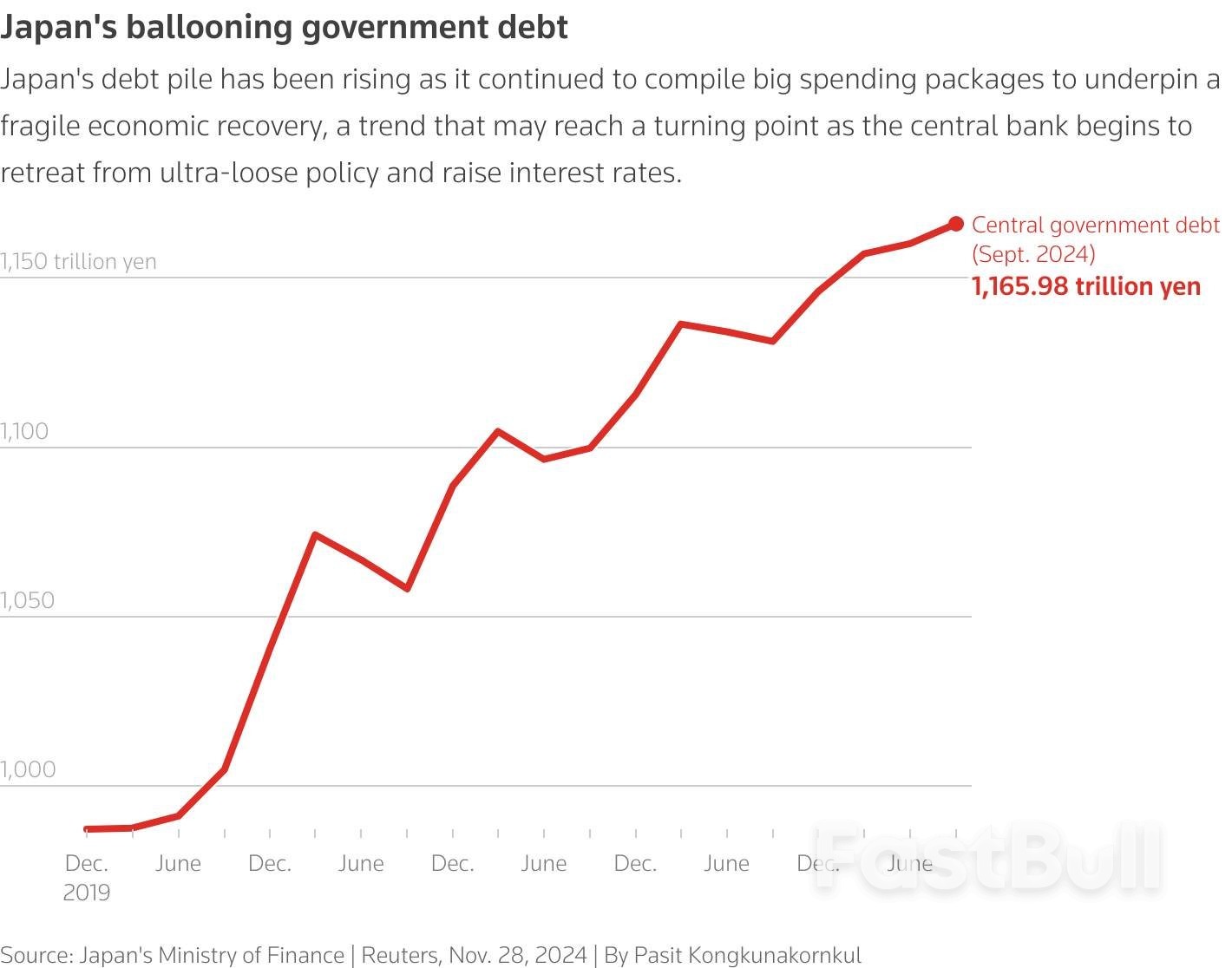
          Ishiba has supported the Bank of Japan's policy of gradually lifting interest rates from near zero as inflation picks up in the world's fourth-biggest economy, while trying to curb the biggest government debt burden in the industrial world.

          But if opposition groups gain traction with their pressure on the BOJ to avoid rate hikes and for the government to cut the sales tax, that could boost bond yields and complicate the bank's efforts to normalise monetary policy, some analysts say.

          The BOJ declined to comment on the potential impact of the election on monetary policy.

          "There's a 50% chance the ruling coalition could lose its majority in the upper house, which could lead to increased debate about cutting Japan's consumption tax rate," said Daiju Aoki, chief Japan economist at UBS SuMi Trust Wealth Management.

          "That would push up Japan's long-term interest rates by stoking concern over the country's finances," he said.

          DEBT SET TO RISE

          Sohei Kamiya, head of the upstart right-wing party Sanseito, has criticised the BOJ for slowing its bond buying when the economy remains weak.

          "The Ministry of Finance and BOJ should work hand in hand in taking aggressive steps for a few years to boost domestic demand," Kamiya told a press conference this month.

          Another small group, the Japan Innovation Party, wants the BOJ to go slow in raising rates to restrain the cost of interest on the government's debt.

          Yuichiro Tamaki, head of the Democratic Party for the People, a party seen as a strong candidate to join Ishiba's coalition, has urged the BOJ to loosen, not tighten, monetary policy to keep the yen from rising and hurting the export-reliant economy.

          Even if the coalition keeps its majority, Ishiba may need to ditch his hawkish fiscal tilt and boost spending to cushion the economic blow from threatened U.S. tariffs and rising costs of living.

          "There's a good chance the government will compile an extra budget to fund another spending package to the tune of 5 to 10 trillion yen ($35 billion-$70 billion). That would push up bond yields further," said former BOJ board member Makoto Sakurai, who expects the central bank to avoid raising rates at least until March.

          Japan's public debt is equal to 250% of gross domestic product, far above that of Greece at 165%. The government spends nearly a quarter of its budget to finance a 1,164-trillion-yen ($7.9-trillion) debt pile, with the cost expected to rise steadily as the BOJ exits zero-interest rates.

          'NEED TO BRACE'

          To be sure, inflation - above the BOJ's 2% target for three years - boosts nominal tax revenues, which can help the government avoid ramping up bond issuance to fund further spending.

          But cutting the sales tax rate, an idea Ishiba has ruled out for now, would leave a bigger hole in Japan's finances. Once a fringe idea, cutting the 10% sales tax is now among Japan's most popular economic policy proposals.

          In a recent poll by the Asahi newspaper 68% of voters thought a sales tax cut was the best way to cushion the blow from rising living costs, compared with 18% who preferred cash payouts.

          If the sales tax is on the chopping block after the election, it is the kind of vital issue that could prod Ishiba to dissolve the lower house and call a snap election - a move that would prolong political uncertainty.

          If Ishiba were to step down, an LDP race to replace him could revive market attention to candidates like Sanae Takaichi, an advocate of aggressive monetary easing whom Ishiba narrowly beat in the party's leadership race last year.

          Unlike Ishiba, who gave a quiet nod to BOJ policy normalisation, Takaichi has said it would be "stupid" for the central bank to raise rates.

          All this would mean the BOJ's rate hikes, already on pause due to uncertainty over U.S. tariffs, could be put on hold even longer.

          "We may need to brace for a long period of political uncertainty and market volatility," said Naomi Muguruma, chief bond strategist at Mitsubishi UFJ Morgan Stanley Securities.

          "That would just give the BOJ another reason to sit on the sidelines and wait for the dust to settle."

          Source: Reuters

          Risk Warnings and Disclaimers
          You understand and acknowledge that there is a high degree of risk involved in trading. Following any strategies or investment methods may lead to potential losses. The content on the site is provided by our contributors and analysts for information purposes only. You are solely responsible for determining whether any trading assets, securities, strategy, or any other product is suitable for investing based on your own investment objectives and financial situation.
          Add to Favorites
          Share

          Sovereign Wealth Funds Embrace Active Strategies and China Focus Amid Global Volatility

          Gerik

          Economic

          Active Management Gains Traction in a Fragmented Market

          In a world of rising economic fragmentation and unpredictable market cycles, sovereign wealth funds are showing a clear shift in asset allocation strategy. According to the 2025 Invesco Global Sovereign Asset Management Study, large institutional investors particularly those overseeing more than $100 billion are increasingly turning to active management to better manage volatility and exploit selective opportunities. This move contrasts with the previous era of stability, during which passive strategies dominated due to their cost efficiency and market predictability.
          Rod Ringrow, Invesco’s head of official institutions, underscored that the decline of “predictable” markets has forced funds to become more tactical. The move to active management is framed not as a temporary adjustment, but as a long-term recalibration in response to structural shifts, including inflation volatility, geopolitical risk, and policy uncertainty.
          Wealth funds generated average returns of 9.4% in 2024, marking their joint second-best performance in the survey’s history. However, this outperformance does not appear to have diminished concerns about future challenges, including rising sovereign debt burdens and climate change risks over a 10-year horizon.

          Dollar Still Dominates, But Long-Term Confidence Slips

          Despite their evolving portfolio strategies, central banks remain cautious on currency diversification. While over 70% of the 58 central banks surveyed expressed concern about the long-term impact of growing US debt on the dollar, most remain skeptical that a credible alternative will emerge soon. Nearly 80% believe it would take more than two decades for another reserve currency to rival the greenback a notable increase from 58% just a year ago.
          This cautious consensus suggests that while the dollar's long-term dominance is under scrutiny, the lack of viable alternatives, such as the euro or yuan, continues to anchor it as the global reserve standard. Only 11% of respondents viewed the euro as gaining momentum, compared to 20% last year, pointing to fading confidence in Europe’s ability to expand its influence in reserve portfolios.

          Chinese Innovation Drives Strategic Investment Urgency

          Perhaps the most striking finding from the survey is the growing enthusiasm among sovereign wealth funds for Chinese assets, particularly in innovation-led sectors. Nearly 60% of respondents intend to increase exposure to China over the next five years, with the number climbing to 73% among North American funds despite escalating tensions between the US and China.
          This signals a reconfiguration of long-term portfolio strategies, where Chinese technology sectors such as artificial intelligence, semiconductors, cloud computing, electric vehicles, and green energy are now viewed with the same strategic urgency once reserved for Silicon Valley.
          Ringrow attributed the trend to a sense of “FOMO” or fear of missing out, driven by China’s rapid technological progress and its positioning as a critical engine of future innovation. By contrast, only 13% of European funds expressed intentions to increase allocations to China, indicating regional disparities in risk appetite and geopolitical tolerance.

          Private Credit and Digital Assets Emerge as New Frontiers

          In the quest for income resilience and diversification, sovereign wealth funds are expanding into private credit. The proportion of funds allocating to this asset class has risen from 65% to 73% year-over-year, with half of them actively increasing their positions. The report highlights private credit as one of the most decisive and consistent trends in sovereign allocation strategies, driven by higher yields and lower correlation with public markets.
          Simultaneously, digital assets are carving out a role in reserve management, particularly among emerging market wealth funds. While Bitcoin remains the most commonly considered asset, with 75% of respondents expressing interest, nearly half now also view stablecoins typically pegged to the US dollar as a viable investment vehicle. This marks a cautious but growing exploration of blockchain-based financial instruments within sovereign portfolios, particularly for liquidity and hedging use cases.

          Strategic Realignment Amid Volatility

          The 2025 Invesco report illustrates a significant strategic pivot among sovereign wealth funds and central banks toward active management, China-centric investment themes, and alternative asset classes. While the US dollar remains dominant, there is a widening recognition of its vulnerabilities. Meanwhile, the embrace of Chinese tech and private credit reflects a shift toward sectors and strategies deemed better suited to a more volatile and fragmented global landscape.
          As uncertainty deepens around fiscal sustainability, inflation trajectories, and geopolitical realignments, these funds are reshaping their approach not to chase returns, but to fortify resilience. The next few years will determine whether these recalibrations serve as successful hedges against the seismic shifts currently defining the global financial order.

          Source: Reuters

          To stay updated on all economic events of today, please check out our Economic calendar
          Risk Warnings and Disclaimers
          You understand and acknowledge that there is a high degree of risk involved in trading. Following any strategies or investment methods may lead to potential losses. The content on the site is provided by our contributors and analysts for information purposes only. You are solely responsible for determining whether any trading assets, securities, strategy, or any other product is suitable for investing based on your own investment objectives and financial situation.
          Add to Favorites
          Share
          FastBull
          Copyright © 2025 FastBull Ltd

          728 RM B 7/F GEE LOK IND BLDG NO 34 HUNG TO RD KWUN TONG KLN HONG KONG

          TelegramInstagramTwitterfacebooklinkedin
          App Store Google Play Google Play
          Products
          Charts

          Chats

          Q&A with Experts
          Screeners
          Economic Calendar
          Data
          Tools
          Membership
          Features
          Function
          Markets
          Copy Trading
          Latest Signals
          Contests
          News
          Analysis
          24/7
          Columns
          Education
          Company
          Careers
          About Us
          Contact Us
          Advertising
          Help Center
          Feedback
          User Agreement
          Privacy Policy
          Business

          White Label

          Data API

          Web Plug-ins

          Poster Maker

          Affiliate Program

          Risk Disclosure

          The risk of loss in trading financial instruments such as stocks, FX, commodities, futures, bonds, ETFs and crypto can be substantial. You may sustain a total loss of the funds that you deposit with your broker. Therefore, you should carefully consider whether such trading is suitable for you in light of your circumstances and financial resources.

          No decision to invest should be made without thoroughly conducting due diligence by yourself or consulting with your financial advisors. Our web content might not suit you since we don't know your financial conditions and investment needs. Our financial information might have latency or contain inaccuracy, so you should be fully responsible for any of your trading and investment decisions. The company will not be responsible for your capital loss.

          Without getting permission from the website, you are not allowed to copy the website's graphics, texts, or trademarks. Intellectual property rights in the content or data incorporated into this website belong to its providers and exchange merchants.

          Not Logged In

          Log in to access more features

          FastBull Membership

          Not yet

          Purchase

          Become a signal provider
          Help Center
          Customer Service
          Dark Mode
          Price Up/Down Colors

          Log In

          Sign Up

          Position
          Layout
          Fullscreen
          Default to Chart
          The chart page opens by default when you visit fastbull.com