• Trade
  • Markets
  • Copy
  • Contests
  • News
  • 24/7
  • Calendar
  • Q&A
  • Chats
Trending
Screeners
SYMBOL
LAST
BID
ASK
HIGH
LOW
NET CHG.
%CHG.
SPREAD
SPX
S&P 500 Index
6827.42
6827.42
6827.42
6899.86
6801.80
-73.58
-1.07%
--
DJI
Dow Jones Industrial Average
48458.04
48458.04
48458.04
48886.86
48334.10
-245.98
-0.51%
--
IXIC
NASDAQ Composite Index
23195.16
23195.16
23195.16
23554.89
23094.51
-398.69
-1.69%
--
USDX
US Dollar Index
97.950
98.030
97.950
98.500
97.950
-0.370
-0.38%
--
EURUSD
Euro / US Dollar
1.17394
1.17409
1.17394
1.17496
1.17192
+0.00011
+ 0.01%
--
GBPUSD
Pound Sterling / US Dollar
1.33707
1.33732
1.33707
1.33997
1.33419
-0.00148
-0.11%
--
XAUUSD
Gold / US Dollar
4299.39
4299.39
4299.39
4353.41
4257.10
+20.10
+ 0.47%
--
WTI
Light Sweet Crude Oil
57.233
57.485
57.233
58.011
56.969
-0.408
-0.71%
--

Community Accounts

Signal Accounts
--
Profit Accounts
--
Loss Accounts
--
View More

Become a signal provider

Sell trading signals to earn additional income

View More

Guide to Copy Trading

Get started with ease and confidence

View More

Signal Accounts for Members

All Signal Accounts

Best Return
  • Best Return
  • Best P/L
  • Best MDD
Past 1W
  • Past 1W
  • Past 1M
  • Past 1Y

All Contests

  • All
  • Trump Updates
  • Recommend
  • Stocks
  • Cryptocurrencies
  • Central Banks
  • Featured News
Top News Only
Share

Incoming Czech Prime Minister Babis: Czech Republic Will Not Take On Guarantees For Ukraine Financing, European Commission Must Find Alternatives

Share

Turkey President Erdogan: Hopes To Discuss Ukraine-Russia Peace Plan With Trump After Meeting With Putin

Share

Turkey President Erdogan: Peace Is Not Far Away, Black Sea Should Not Be Used As A Battleground, Safe Navigation Needed

Share

IAEA: Ukraine's Znpp Temporarily Lost All Offsite Power Overnight Due To Widespread Military Activities Affecting The Electrical Grid

Share

Iranian Media Says 18 Crew Members Of Foreign Tanker Seized In Gulf Of Oman Over Carrying 'Smuggled Fuel' Detained

Share

Regional Governor: Two Killed In Ukrainian Drone Strike On Russia's Saratov

Share

Chinese Foreign Ministry - China Foreign Minister Met With United Arab Emirates Counterpart On Dec 12

Share

China's Central Financial And Economic Affairs Commission Deputy Director: Will Expand Export And Increase Import In 2026

Share

Thai Leader Anutin: Landmine Blast That Killed Thai Soldiers 'Not A Roadside Accident'

Share

Thai Leader Anutin: Thailand To Continue Military Action Until 'We Feel No More Harm'

Share

Cambodian Prime Minister Hun Manet Says He Had Phone Calls With Trump And Malaysian Leader Anwar About Ceasefire

Share

Cambodia's Hun Manet Says USA, Malaysia Should Verify 'Which Side Fired First' In Latest Conflict

Share

Cambodia's Hun Manet: Cambodia Maintains Its Stance In Seeking Peaceful Resolution Of Disputes

Share

Nasdaq Companies: Allergan, Ferrovia, Insmed, Monolithic Power Systems, Seagate Technology, And Western Digital Will Be Added To The NASDAQ 100 Index. Biogen, CdW, GlobalFoundries, Lululemon, ON Semiconductor, And Tradedesk Will Be Removed From The NASDAQ 100 Index

Share

Witkoff Headed To Berlin This Weekend To Meet With Zelenskiy, European Leaders -Wsj Reporter On X

Share

Russia Attacks Two Ukrainian Ports, Damaging Three Turkish-Owned Vessels

Share

[Historic Flooding Occurs In At Least Four Rivers In Washington State Due To Days Of Torrential Rains] Multiple Areas In Washington State Have Been Hit By Severe Flooding Due To Days Of Torrential Rains, With At Least Four Rivers Experiencing Historic Flooding. Reporters Learned On The 12th That The Floods Caused By The Torrential Rains In Washington State Have Destroyed Homes And Closed Several Highways. Experts Warn That Even More Severe Flooding May Occur In The Future. A State Of Emergency Has Been Declared In Washington State

Share

Trump Says Proposed Free Economic Zone In Donbas Would Work

Share

Trump: I Think My Voice Should Be Heard

Share

Trump Says Will Be Choosing New Fed Chair In Near Future

TIME
ACT
FCST
PREV
U.K. Trade Balance Non-EU (SA) (Oct)

A:--

F: --

P: --

U.K. Trade Balance (Oct)

A:--

F: --

P: --

U.K. Services Index MoM

A:--

F: --

P: --

U.K. Construction Output MoM (SA) (Oct)

A:--

F: --

P: --

U.K. Industrial Output YoY (Oct)

A:--

F: --

P: --

U.K. Trade Balance (SA) (Oct)

A:--

F: --

P: --

U.K. Trade Balance EU (SA) (Oct)

A:--

F: --

P: --

U.K. Manufacturing Output YoY (Oct)

A:--

F: --

P: --

U.K. GDP MoM (Oct)

A:--

F: --

P: --

U.K. GDP YoY (SA) (Oct)

A:--

F: --

P: --

U.K. Industrial Output MoM (Oct)

A:--

F: --

P: --

U.K. Construction Output YoY (Oct)

A:--

F: --

P: --

France HICP Final MoM (Nov)

A:--

F: --

P: --

China, Mainland Outstanding Loans Growth YoY (Nov)

A:--

F: --

P: --

China, Mainland M2 Money Supply YoY (Nov)

A:--

F: --

P: --

China, Mainland M0 Money Supply YoY (Nov)

A:--

F: --

P: --

China, Mainland M1 Money Supply YoY (Nov)

A:--

F: --

P: --

India CPI YoY (Nov)

A:--

F: --

P: --

India Deposit Gowth YoY

A:--

F: --

P: --

Brazil Services Growth YoY (Oct)

A:--

F: --

P: --

Mexico Industrial Output YoY (Oct)

A:--

F: --

P: --

Russia Trade Balance (Oct)

A:--

F: --

P: --

Philadelphia Fed President Henry Paulson delivers a speech
Canada Building Permits MoM (SA) (Oct)

A:--

F: --

P: --

Canada Wholesale Sales YoY (Oct)

A:--

F: --

P: --

Canada Wholesale Inventory MoM (Oct)

A:--

F: --

P: --

Canada Wholesale Inventory YoY (Oct)

A:--

F: --

P: --

Canada Wholesale Sales MoM (SA) (Oct)

A:--

F: --

P: --

Germany Current Account (Not SA) (Oct)

A:--

F: --

P: --

U.S. Weekly Total Rig Count

A:--

F: --

P: --

U.S. Weekly Total Oil Rig Count

A:--

F: --

P: --

Japan Tankan Large Non-Manufacturing Diffusion Index (Q4)

--

F: --

P: --

Japan Tankan Small Manufacturing Outlook Index (Q4)

--

F: --

P: --

Japan Tankan Large Non-Manufacturing Outlook Index (Q4)

--

F: --

P: --

Japan Tankan Large Manufacturing Outlook Index (Q4)

--

F: --

P: --

Japan Tankan Small Manufacturing Diffusion Index (Q4)

--

F: --

P: --

Japan Tankan Large Manufacturing Diffusion Index (Q4)

--

F: --

P: --

Japan Tankan Large-Enterprise Capital Expenditure YoY (Q4)

--

F: --

P: --

U.K. Rightmove House Price Index YoY (Dec)

--

F: --

P: --

China, Mainland Industrial Output YoY (YTD) (Nov)

--

F: --

P: --

China, Mainland Urban Area Unemployment Rate (Nov)

--

F: --

P: --

Saudi Arabia CPI YoY (Nov)

--

F: --

P: --

Euro Zone Industrial Output YoY (Oct)

--

F: --

P: --

Euro Zone Industrial Output MoM (Oct)

--

F: --

P: --

Canada Existing Home Sales MoM (Nov)

--

F: --

P: --

Euro Zone Total Reserve Assets (Nov)

--

F: --

P: --

U.K. Inflation Rate Expectations

--

F: --

P: --

Canada National Economic Confidence Index

--

F: --

P: --

Canada New Housing Starts (Nov)

--

F: --

P: --

U.S. NY Fed Manufacturing Employment Index (Dec)

--

F: --

P: --

U.S. NY Fed Manufacturing Index (Dec)

--

F: --

P: --

Canada Core CPI YoY (Nov)

--

F: --

P: --

Canada Manufacturing Unfilled Orders MoM (Oct)

--

F: --

P: --

Canada Manufacturing New Orders MoM (Oct)

--

F: --

P: --

Canada Core CPI MoM (Nov)

--

F: --

P: --

Canada Manufacturing Inventory MoM (Oct)

--

F: --

P: --

Canada CPI YoY (Nov)

--

F: --

P: --

Canada CPI MoM (Nov)

--

F: --

P: --

Canada CPI YoY (SA) (Nov)

--

F: --

P: --

Canada Core CPI MoM (SA) (Nov)

--

F: --

P: --

Q&A with Experts
    • All
    • Chatrooms
    • Groups
    • Friends
    Connecting
    .
    .
    .
    Type here...
    Add Symbol or Code

      No matching data

      All
      Trump Updates
      Recommend
      Stocks
      Cryptocurrencies
      Central Banks
      Featured News
      • All
      • Russia-Ukraine Conflict
      • Middle East Flashpoint
      • All
      • Russia-Ukraine Conflict
      • Middle East Flashpoint
      Search
      Products

      Charts Free Forever

      Chats Q&A with Experts
      Screeners Economic Calendar Data Tools
      Membership Features
      Data Warehouse Market Trends Institutional Data Policy Rates Macro

      Market Trends

      Market Sentiment Order Book Forex Correlations

      Top Indicators

      Charts Free Forever
      Markets

      News

      News Analysis 24/7 Columns Education
      From Institutions From Analysts
      Topics Columnists

      Latest Views

      Latest Views

      Trending Topics

      Top Columnists

      Latest Update

      Signals

      Copy Rankings Latest Signals Become a signal provider AI Rating
      Contests
      Brokers

      Overview Brokers Assessment Rankings Regulators News Claims
      Broker listing Forex Brokers Comparison Tool Live Spread Comparison Scam
      Q&A Complaint Scam Alert Videos Tips to Detect Scam
      More

      Business
      Events
      Careers About Us Advertising Help Center

      White Label

      Data API

      Web Plug-ins

      Affiliate Program

      Awards Institution Evaluation IB Seminar Salon Event Exhibition
      Vietnam Thailand Singapore Dubai
      Fans Party Investment Sharing Session
      FastBull Summit BrokersView Expo
      Recent Searches
        Top Searches
          Markets
          News
          Analysis
          User
          24/7
          Economic Calendar
          Education
          Data
          • Names
          • Latest
          • Prev

          View All

          No data

          Scan to Download

          Faster Charts, Chat Faster!

          Download App
          English
          • English
          • Español
          • العربية
          • Bahasa Indonesia
          • Bahasa Melayu
          • Tiếng Việt
          • ภาษาไทย
          • Français
          • Italiano
          • Türkçe
          • Русский язык
          • 简中
          • 繁中
          Open Account
          Search
          Products
          Charts Free Forever
          Markets
          News
          Signals

          Copy Rankings Latest Signals Become a signal provider AI Rating
          Contests
          Brokers

          Overview Brokers Assessment Rankings Regulators News Claims
          Broker listing Forex Brokers Comparison Tool Live Spread Comparison Scam
          Q&A Complaint Scam Alert Videos Tips to Detect Scam
          More

          Business
          Events
          Careers About Us Advertising Help Center

          White Label

          Data API

          Web Plug-ins

          Affiliate Program

          Awards Institution Evaluation IB Seminar Salon Event Exhibition
          Vietnam Thailand Singapore Dubai
          Fans Party Investment Sharing Session
          FastBull Summit BrokersView Expo

          Stocks Slide Ahead of Powell Speech as U.S.-China Tensions and Jobs Data Cloud Outlook

          Adam

          Stocks

          Summary:

          Markets slid as investors await Powell’s speech amid rising U.S.-China tensions and weak jobs data. Powell is expected to stay cautious, but trade risks and political pressure complicate the Fed’s path.
          Powell Poised to Reaffirm Caution as Tariff Tensions Rattle Markets

          Federal Reserve Chair Jerome Powell is set to deliver a closely watched speech today at 17:00 GMT, with markets on edge over renewed U.S.-China trade tensions, a weakening global outlook, and escalating political pressure on Fed policy. Powell is expected to stick to the Fed’s “wait-and-see” message, but the timing of his remarks—amid deteriorating economic diplomacy and rising recession concerns—raises the stakes for investors.

          Fed Holds Line as Trump Escalates Pressure

          Despite a personal meeting last week with President Trump, during which Trump pushed Powell to begin cutting interest rates, the Fed chair is likely to reaffirm that the current 4.25%–4.50% rate range remains appropriate. Powell has consistently emphasized the Fed’s independence and commitment to data-driven policy, underscoring that rate decisions will hinge on inflation and labor data rather than political pressure. However, Powell now faces a tougher balancing act, as Trump’s newly revived tariff threats against China risk tightening financial conditions and potentially stalling growth.

          U.S.-China Trade Rift Reopens

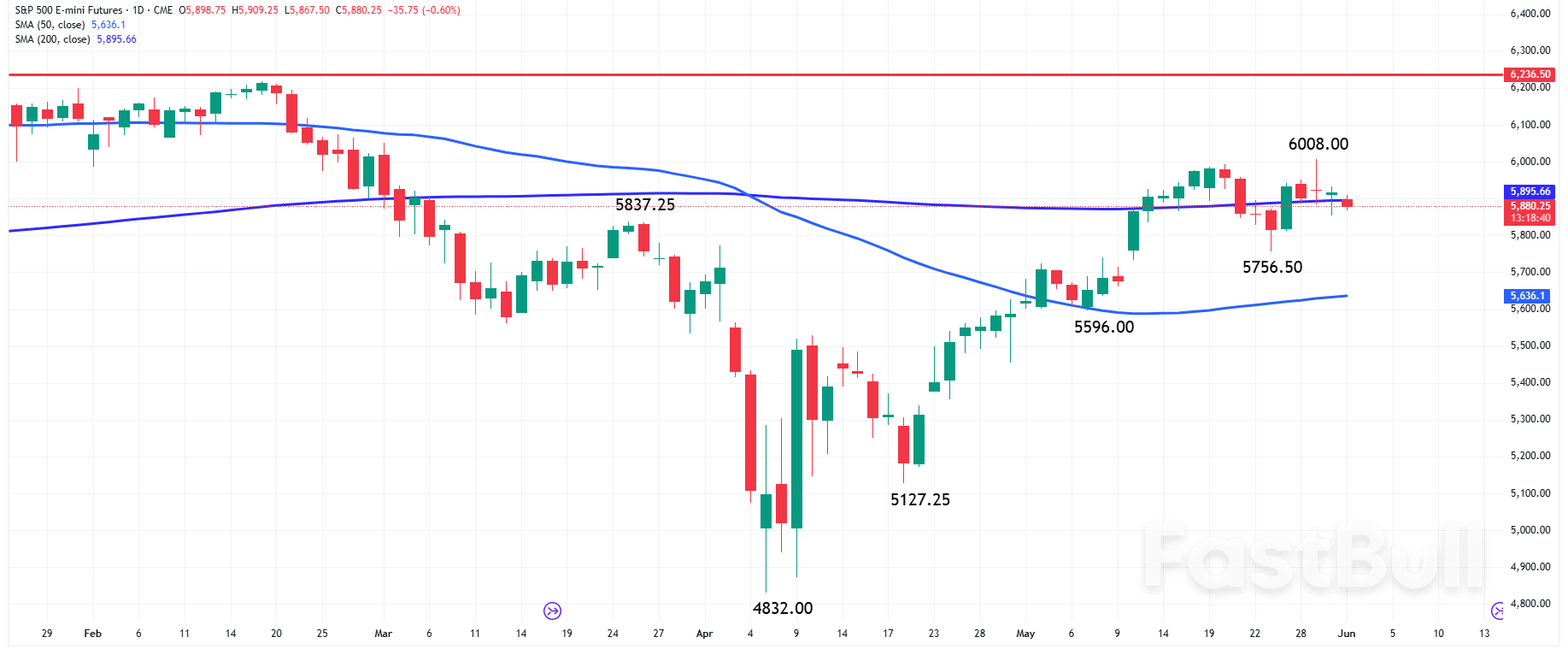
          Stocks Slide Ahead of Powell Speech as U.S.-China Tensions and Jobs Data Cloud Outlook_1Daily E-mini S&P 500 Index

          The positive tone following last month’s tariff ceasefire between the U.S. and China has quickly unraveled. Beijing has accused Washington of violating the Geneva trade agreement, prompting fears of retaliatory measures. Stock index futures dropped sharply in response: S&P 500 futures are down 0.53%, Nasdaq futures off 0.68%, and Dow futures lower by 174 points. With the White House now fast-tracking import levies, markets are pricing in potential disruptions to trade flows, corporate margins, and global supply chains.

          Jobs Data Critical to Fed Path

          Markets are also bracing for Friday’s May nonfarm payroll report. Expectations are for job growth around 130,000, with the unemployment rate holding at 4.2%. A soft print could shift market expectations toward a rate cut as early as Q3. Several labor indicators this week—including job openings, ADP payrolls, and weekly claims—will serve as key signals. Powell is unlikely to preempt the jobs data but may highlight labor market trends as a pivotal input for upcoming decisions.

          Market Forecast: Bearish Bias Ahead of Powell

          Given escalating geopolitical stress, downward pressure on risk assets, and uncertainty around Fed responsiveness, the near-term outlook turns bearish. Equity markets are likely to remain under pressure unless Powell surprises with dovish language. The U.S. dollar could see a bid as risk-off sentiment rises, while Treasury yields may decline on safe-haven flows.
          For traders, today’s speech is less about what Powell says—and more about whether he signals flexibility in a rapidly tightening economic environment.

          source : fxempire

          Risk Warnings and Disclaimers
          You understand and acknowledge that there is a high degree of risk involved in trading. Following any strategies or investment methods may lead to potential losses. The content on the site is provided by our contributors and analysts for information purposes only. You are solely responsible for determining whether any trading assets, securities, strategy, or any other product is suitable for investing based on your own investment objectives and financial situation.
          Add to Favorites
          Share

          London Midday: Stocks Flat After Data Slew; Defence Firms Rally

          Warren Takunda

          Stocks

          London stocks had pared earlier small losses to trade flat by midday on Monday as investors digested a raft of UK data releases amid renewed trade tensions between the US and China.
          The FTSE 100 was steady at 8,770.75.
          Sentiment took a hit after Trump said on Friday that he was planning to double tariffs on steel and aluminium imports to 50% from this week. He also said that China had violated the Geneva trade agreement.
          China hit back, accusing the Trump administration of "seriously violating" its trade deal with the US, saying that it had introduced multiple "discriminatory restrictive" measures.
          These include issuing guidance on AI chip export controls, stopping sales of chip design software to China and revoking visas for its students.
          China’s Commerce Ministry said: "The US government has unilaterally and repeatedly provoked new economic and trade frictions, exacerbating uncertainty and instability in bilateral economic and trade relations.
          "If the US insists on its own way and continues to damage China’s interests, China will continue to take resolute and forceful measures to safeguard its legitimate rights and interests."
          Russ Mould, investment director at AJ Bell, said: "Donald Trump has upset markets once again.
          "Doubling import taxes on steel and aluminium, and aggravating China once again, mean we face a situation where uncertainty prevails. Trump’s continuous moving of the goal posts is frustrating for businesses, governments, consumers and investors.
          "Equity markets were down across Europe and Asia, with futures prices implying a similar pattern when Wall Street opens for trading on Monday. Unsurprisingly, gold got a boost as investors returned to safe-haven assets."
          On home shores, a survey showed the manufacturing sector continued to struggle in May, weighed down by faltering client confidence, higher costs and ongoing trade uncertainties.
          The S&P Global UK manufacturing PMI rose to a three-month high of 46.4 last month, from 45.4 in April and above the flash estimate of 45.1.
          However, the sector remains in contraction. A reading above the neutral 50.0 benchmark indicates growth but one below it suggests contraction.
          Elsewhere, figures from the Bank of England showed that mortgage approvals fell sharply in April after changes to stamp duty thresholds came into effect.
          According to the latest money and credit report, net mortgage approvals for house purchases - an indicator of future borrowing - fell for the third consecutive month, by 3,100 to 60,500 in April.
          Analysts had been expecting a more modest decline to 63,000.
          Net borrowing of mortgage debt also tumbled, sliding £13.7bn to -£0.8bn and reversing March’s £9.6bn net increase.
          Changes to stamp duty thresholds came into effect on 1 April, leading to a spike in deals as home buyers rushed to complete ahead of the deadline.
          Earlier, data from Nationwide showed that house priced edged higher in May despite wider economic uncertainties.
          In equity markets, defence firms were among the top performers, with Babcock, BAE Systems, Rolls-Royce and Qinetiq all up sharply after the UK government pledged to build up to 12 attack submarines as part of AUKUS programme.
          Russ Mould said investors were targeting "an industry with a clear earnings tailwind".
          Silver and gold miner Fresnillo and gold miner Endeavour Mining both shone as the price of the yellow metal rose.
          Aberdeen rallied after an upgrade to ‘buy’ from 'neutral’ at Goldman Sachs, which said the recent investor focus has centred disproportionately on the underperforming asset management unit.
          Vodafone edged lower after it and CK Hutchison Holdings said the merger of telecoms firms Vodafone UK and Three UK successfully completed on 31 May.

          Source: Sharecast

          Risk Warnings and Disclaimers
          You understand and acknowledge that there is a high degree of risk involved in trading. Following any strategies or investment methods may lead to potential losses. The content on the site is provided by our contributors and analysts for information purposes only. You are solely responsible for determining whether any trading assets, securities, strategy, or any other product is suitable for investing based on your own investment objectives and financial situation.
          Add to Favorites
          Share

          The OPEC+ Production Boost May Have A Bigger Bark Than Bite

          Michelle

          Commodity

          Oil ministers from OPEC+ members agreed on another big increase in production targets for July. But is there room for those barrels without crashing prices?

          A third straight boost of 411,000 barrels a day will see the group adding a combined 1.37 million barrels to supply between March and July — at least in theory.

          Not everyone agrees there’s enough room for this extra oil, even within the group itself. Russia wanted to pause the increases to assess the impact of the hikes already made.

          Moscow saw the price of its key Urals export grade tumble below $50 a barrel in early May, recovering to slightly above that level in the second half of the month. And, unlike Saudi Arabia, it doesn’t benefit from big increases in its production target.

          While the kingdom’s allowance will rise by 556,000 barrels a day during the period, Russia’s increases by just 150,000 barrels after taking into account the deeper compensation cuts it promised to offset past overproduction.

          But the real cumulative increase in group production is likely to be much smaller than the headline figure, with perhaps as little as half actually reaching global markets.

          Some of the nations permitted to produce more are already pumping as hard as they can and, in the case of Kazakhstan, are already well above their July allocation.

          Much of the extra expected from Saudi Arabia will be used locally to generate electricity for the summer surge in air conditioning, which could soak up more than 80% of its new allocation.

          South Sudan, where production is recovering after a key export pipeline was repaired, and Libya, which is under threat from rising internal unrest, create other supply uncertainties.

          Analysts at the Organization of the Petroleum Exporting Countries see the market short of about 1 million barrels a day of supply in the third quarter — even with Kazakhstan’s cheating — and say their counterparts at the International Energy Agency underestimate demand.

          That view was given some credence last month when the Paris-based agency increased historical demand estimates, wiping out all the stockbuilds it had previously seen for the past three years.

          Analysts outside OPEC, including Goldman Sachs Group Inc. and Morgan Stanley, see the group continuing to raise output targets aggressively, keeping Brent crude at, or below, $60 a barrel in the second half of this year.

          --Julian Lee, Bloomberg News

          Gold surged on revived demand for safer assets as the US and China accused each other of reneging on a recent trade deal, while a dramatic series of attacks clouded the prospects for peace between Russia and Ukraine. Meanwhile, US President Donald Trump vows to double import tariffs on foreign steel and aluminum. Goldman Sachs predicts gold will remain a hedge against inflation.

          Oil advanced after a weekend that saw OPEC+ increase production by less than some expected, Ukraine attack Russian air bases and Iran criticize a report it’s adding enriched uranium.

          The Trump administration is moving to repeal Biden-era curbs blocking drilling across most of the mammoth petroleum reserve in Alaska that’s home to an estimated 8.7 billion barrels of recoverable oil.

          Source: Bloomberg Europe

          Risk Warnings and Disclaimers
          You understand and acknowledge that there is a high degree of risk involved in trading. Following any strategies or investment methods may lead to potential losses. The content on the site is provided by our contributors and analysts for information purposes only. You are solely responsible for determining whether any trading assets, securities, strategy, or any other product is suitable for investing based on your own investment objectives and financial situation.
          Add to Favorites
          Share

          Morning Bid: Dollar slides on trade and tax fears

          Adam

          Forex

          Economic

          The U.S. dollar plunged anew (.DXY), opens new tab to its lowest level in six weeks on Monday as June got underway, with U.S. tariff concerns back on the boil after last week's legal confusion and military tensions rising across the globe.
          The euro led the charge, undaunted by the prospect of another interest rate cut from the European Central Bank on Thursday. Germany's new chancellor, Friedrich Merz, will travel to Washington to meet U.S. President Donald Trump on Thursday as trade talks between Europe and America are watched closely.
          With markets still on edge about elements of the U.S. fiscal bill going through the Senate that give the administration the option of taxing companies and investors from countries deemed to have 'unfair foreign taxes', the dollar is vulnerable to worries about foreign capital flight.
          But the attention on Monday seemed back on the tariff push, with an assumption President Donald Trump will push through levies one way or another despite the legal pushback last week.
          The greenback was hit after the weekend by Trump's plan to double duties on imported steel and aluminum to 50% from Wednesday and as Beijing hit back against accusations it violated an agreement on critical minerals shipments.
          It was also a weekend of significant geopolitical tensions and bellicose warnings. Gold crept higher.
          U.S. Defense Secretary Pete Hegseth warned on Saturday that the threat from China was real and potentially imminent as he pushed allies in the Indo-Pacific to spend more on their own defence needs. The Ukraine-Russia war continued to rage, with Ukrainian drones hitting dozens of Russian bombers deep inside Russian territory. The Gaza conflict shows no sign of ending.
          Major countries are building armaments at pace. Britain will expand its nuclear-powered attack submarine fleet as part of a defence review, one designed to prepare the country for modern war and counter the Russian threat.
          Oil prices jumped by about 3% on Monday after producer group OPEC+ kept output increases in July at the same level as the previous two months.
          In a big week for U.S. labor market data, there was some encouragement on the interest rate front.
          Federal Reserve Governor Christopher Waller said on Monday that rate cuts remain possible in the second half of the year. Given that a rise in inflation pressures tied to Trump's import tax increases is unlikely to be persistent, "I support looking through any tariff effects on near term-inflation when setting the policy rate," Waller told a gathering in South Korea.
          Elsewhere, China's manufacturing activity shrank for a second month in May, as expected.
          Stocks in Poland .WIG20 fell 1.4%, after nationalist opposition candidate Karol Nawrocki won the second round of the country's presidential election.
          Ahead of Monday's bell, U.S. stock futures were down about half a percent, with stocks in Europe and Japan down too. U.S. Treasury yields nudged back higher.
          Today's column looks at the week's big monetary decision in Europe, with the European Central Bank widely expected to lower rates for the eighth time in the cycle and the euro rising regardless.
          ECB FACES SURGING EURO CONUNDRUM
          While the European Central Bank keeps cutting interest rates, the euro keeps rising, as a transatlantic capital reversal upends relative rate shifts and threatens to force the ECB into further easing.
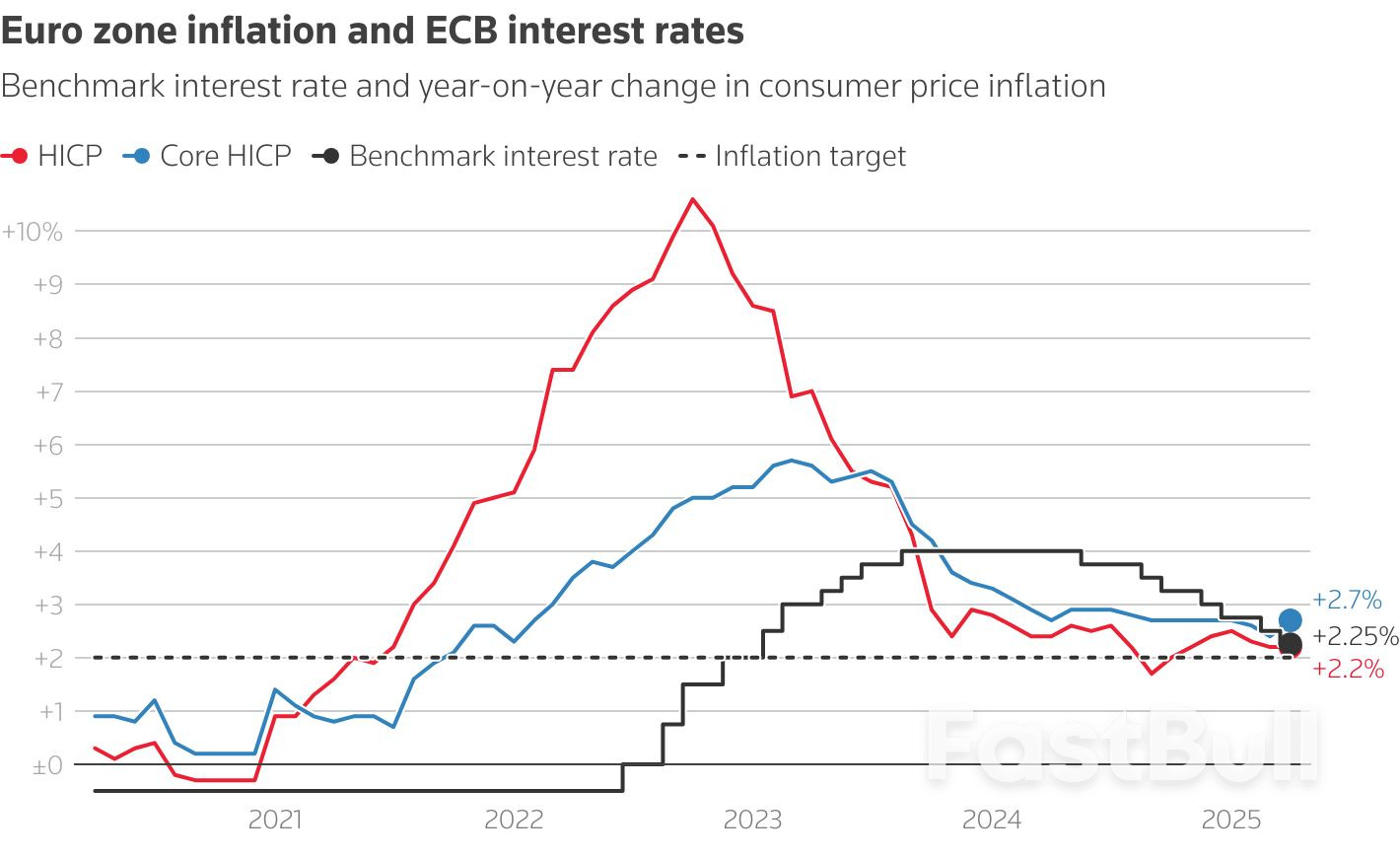
          The ECB is widely expected to lower its main borrowing rate on Thursday to 2%, half what it was at its peak a year ago and less than half the Federal Reserve equivalent. It's also back to what the central bank broadly considers a 'neutral' level, meaning it neither spurs nor reins in the economy.
          Real, or inflation-adjusted, ECB rates will be back to zero for the first time in almost two years.
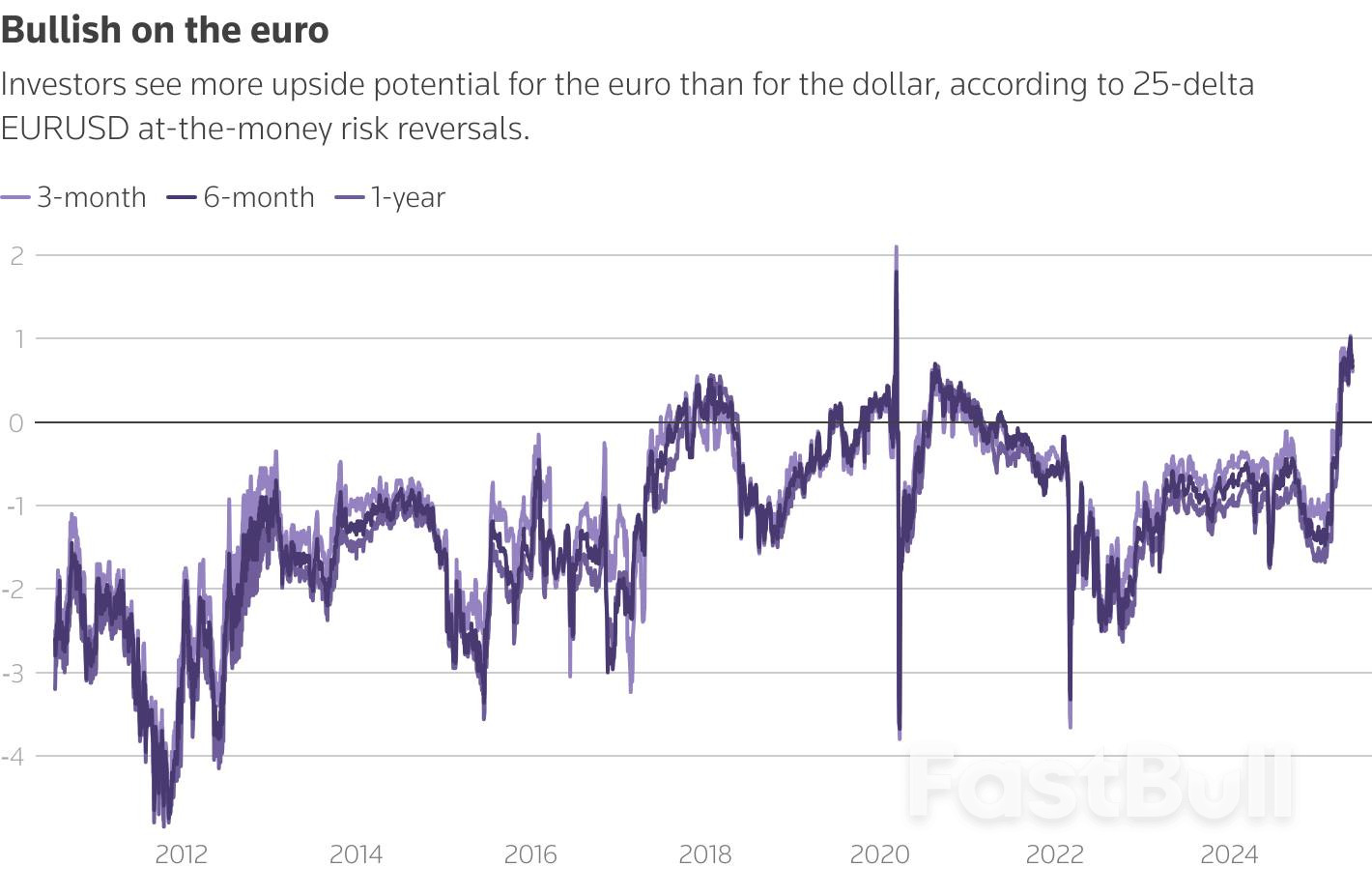
          What's remarkable is that after eight consecutive ECB cuts and with the prospect of zero or even negative real rates ahead, the euro has surged more than 10% against the dollar in just four months and 5% against a trade-weighted currency basket of the euro zone's major trading partners.
          That nominal effective euro index is now at record highs, with the 'real' version at its strongest level in more than 10 years.
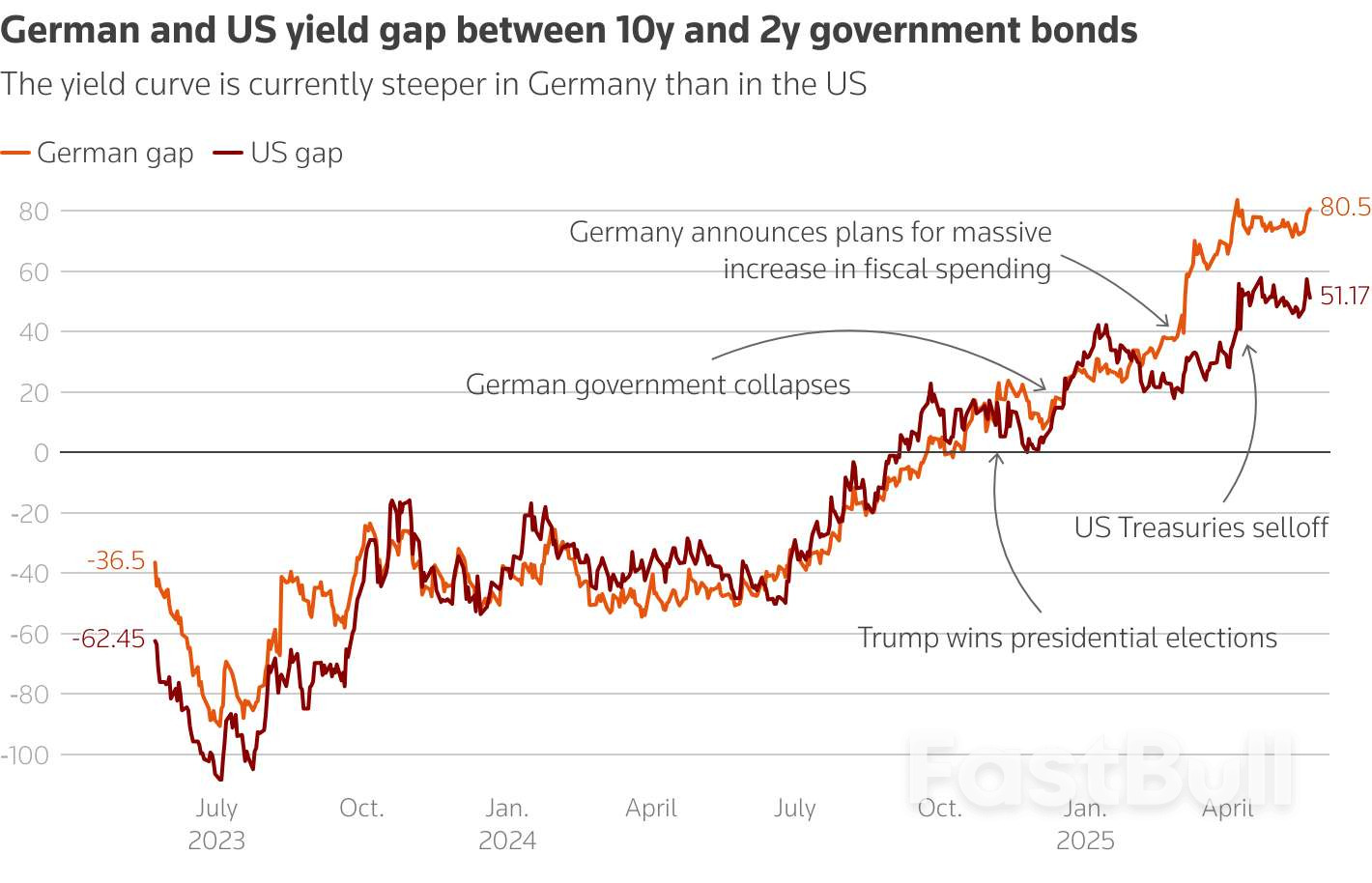
          The currency has surged even though there has been no net change in the gap between two-year government bond yields on either side of the Atlantic - usually a reliable indicator of shifts in the euro/dollar exchange rate.
          The culprits behind this trend are pretty clear: Donald Trump's tariff wars, fears of capital flight from dollar assets due to a host of concerns about U.S. policies and institutions, and Germany's historic fiscal boost that has transformed the continent's outlook.
          indeed coming back home as many suspect, the ECB has a curious conundrum ahead. How does it handle both the disinflationary effects of such a rapid currency rise alongside the domestic demand it could catalyse?
          Lower rates with the prospect of further easing ahead are clearly having little impact on the euro. Most ECB watchers expect one or two more cuts after Thursday while money markets have a 'terminal rate' around 1.75%, the low end of the ECB's estimated range of 'neutral'.
          Morning Bid: Dollar slides on trade and tax fears_1

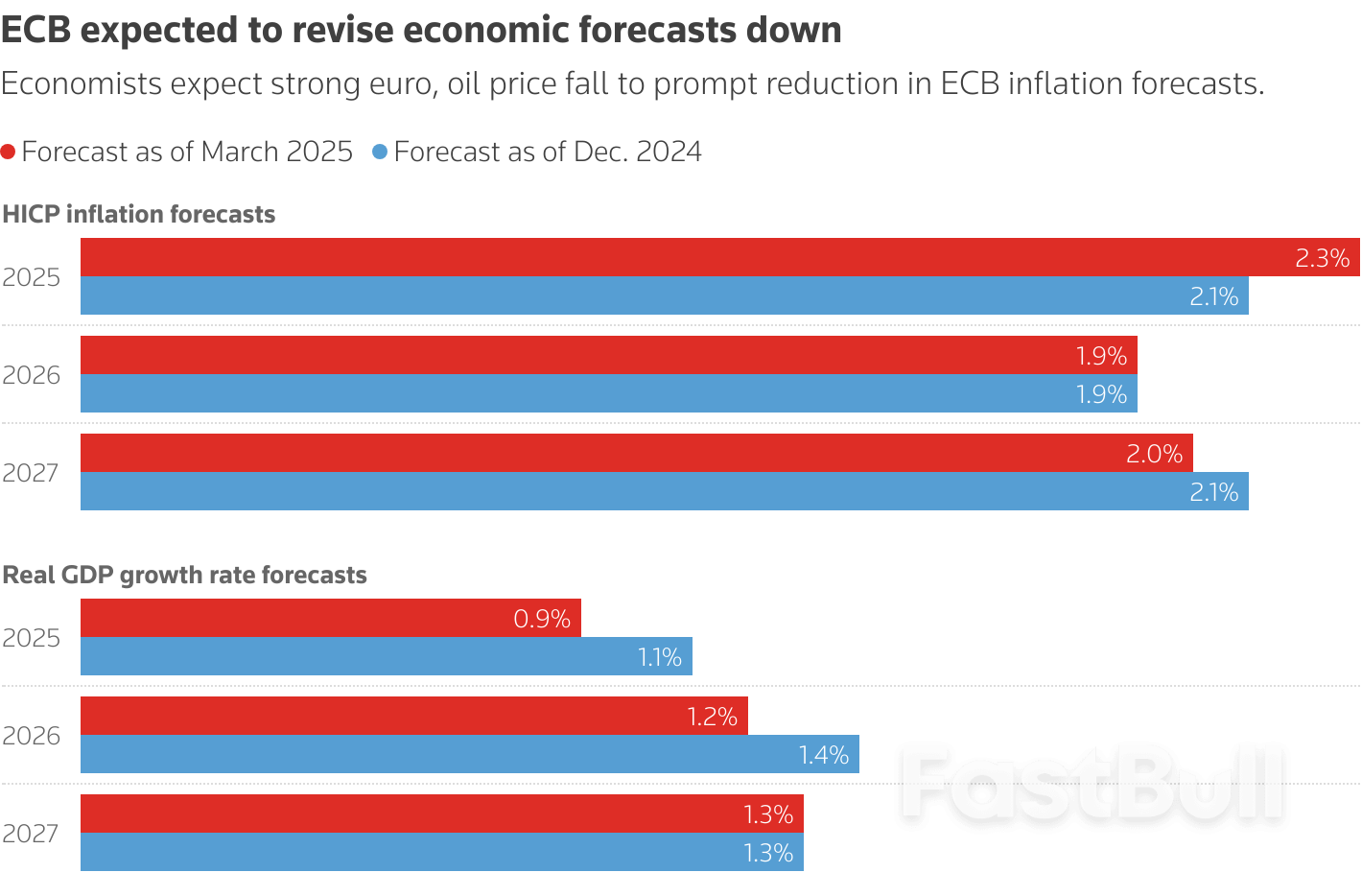
          The horizontal bar charts show European Central Bank inflation and real GDP forecasts for the next three years made in Dec. 2024 and March 2025 in blue and red respectively.

          ndeed, if much of the capital repatriation from overweight U.S. holdings is in equity investments, then lower ECB rates may even accelerate the outflows from the U.S. by lifting growth prospects for cheaper stocks in Europe.
          Morning Bid: Dollar slides on trade and tax fears_2

          A line chart comparing inflation metrics over the past five years.

          The prospect of higher German and pan-European borrowing should sustain longer-term fixed income returns as well, expanding the pool of 'safe' investments.

          'GLOBAL EURO MOMENT'

          The ECB could revert to protesting about 'excessive' euro gains, although the impact might be limited unless it is prepared to back its words with action, and there is a risk it could backfire for the reasons just mentioned.
          If anything, the ECB appears to be encouraging the investment shift and the euro's role as a reserve currency - in part to help with the bloc's massive capital needs in retooling its military, digital and energy sectors.
          In a pointed speech in Berlin last week, ECB chief Christine Lagarde insisted there was an opening for a "global euro moment", where the single currency becomes a viable alternative to the dollar, earning the region immense benefits if governments can strengthen the bloc's financial and security architecture.
          The scenario may be seen as a nice problem to have, but there will be more than a little disquiet among the region's big exporting nations about a soaring exchange rate in the middle of a trade war.
          ECB hawks and doves will also have to thrash out whether continued easing to offset disinflationary currency risks only stokes domestic inflation over the longer term - not least with a fiscal lift coming down the road into next year.
          What seems clear is that the ECB's new economic forecasts due for release on Thursday will have taken into account the 7% euro/dollar gain and near 10% drop in global oil prices since its last set of projections in early March.
          Morgan Stanley economists reckon that even if the central bank tweaks its core inflation forecasts higher, the new outlook could well show headline inflation undershooting its 2% target from mid-2025 to early 2027 - even while nudging up 2025's GDP growth view.
          Morning Bid: Dollar slides on trade and tax fears_3

          Lin chart showing Investors see more upside potential for the euro than for the dollar, according to 25-delta EURUSD at-the-money risk reversals.

          In truth, any forecasts at this point are fingers in the wind with few central banks or major investors having a clue where U.S. tariffs or retaliatory trade war actions will end up.

          Morning Bid: Dollar slides on trade and tax fears_4

          The chart shows the gap between 10-year and 2-year yields for German Bunds and US Treasuries

          But while global trade and investment nerves abound, the ECB may be relatively powerless to cap the euro. Whether that argues for stasis or even more easing is the big headache it faces.

          Chart of the day

          U.S. gross domestic product readings have been bamboozled this year by tariff-related import skews. Again last week, models tracking GDP inputs were jarred by a sharp contraction in the goods trade deficit for April as front-running of imports to beat tariffs in the first quarter faded. With many tariffs in place, imports plunged and helping to compress the goods trade deficit by 46% to $88 billion, according to the Commerce Department's Census Bureau. Imports fell $68 billion to $276 billion while exports rose $6.3 billion to $188.5 billion. The shrinking goods deficit, if sustained, suggests the net trade component of GDP calculations will spur a significant rebound in growth this quarter, much like it sliced a record 4.9 percentage points from Q1 GDP - leading to a headline contraction in the overall economy. Flattered by the trade numbers, the Atlanta Federal Reserve's 'GDPNow' tracker now sees a whopping Q2 real GDP rebound of 3.8%. However, there is caution. Businesses do not appear to be restocking, with wholesale inventories unchanged last month and stocks at retailers down 0.1% and there is concern stockpiles may well drop sharply over the remainder of the quarter.

          Source : reuters

          To stay updated on all economic events of today, please check out our Economic calendar
          Risk Warnings and Disclaimers
          You understand and acknowledge that there is a high degree of risk involved in trading. Following any strategies or investment methods may lead to potential losses. The content on the site is provided by our contributors and analysts for information purposes only. You are solely responsible for determining whether any trading assets, securities, strategy, or any other product is suitable for investing based on your own investment objectives and financial situation.
          Add to Favorites
          Share

          Eurozone Bank Lending Shows Resilience Despite Tariff Concerns

          Glendon

          Economic

          Forex

          Amid ongoing tariff uncertainty, the Eurozone’s credit growth continued its recovery in April, according to a report by UBS on Monday.

          The report examined the newly released monetary and credit data for April, revealing that private sector credit growth is on the rise compared to the same period last year, up 0.1 percentage points to 2.7% year-on-year.

          This includes loans to households and non-financial corporations (NFCs), which both increased by 0.2 percentage points to 1.9% and 2.6% year-on-year, respectively.

          The growth rate of M3, a measure of money supply, also saw an increase of 0.2 percentage points to 3.9% year-on-year. Meanwhile, growth in total credit by Monetary and Financial Institutions (MFI) was up by 0.1 percentage points to 1.8% year-on-year in April.

          Public sector credit remained unchanged at 0.5% year-on-year, while overall private sector lending, adjusted for loan sales and securitization, also saw a 0.1 percentage point increase to 2.7% year-on-year.

          In terms of household sector lending, mortgages saw a 0.2 percentage point increase to 1.9% year-on-year, while consumer loans were up 0.1 percentage points to 4.3% year-on-year.

          Sequential momentum in credit growth remained steady across the board, with the three-month moving average of month-on-month private credit growth, NFC credit and household credit all at 0.2%.

          UBS also highlighted that Eurozone bank lending rates for new corporate loans fell by 19 basis points month-on-month to 3.93%, down 135 basis points from the peak in October 2023, but still up 257 basis points from the low in December 2021.

          The highest corporate lending rates were found in Ireland and the Baltic nations, while the lowest were in Luxembourg and the Netherlands.

          The loan-to-deposit ratio in the Eurozone rose by 0.1 percentage points to 93.3% in April, still well below the 104.5% mark seen in early 2020. Private sector deposit growth remained unchanged at 3.2% year-on-year in April.

          UBS noted that private sector credit growth was particularly strong in Greece and Estonia, and weak in Finland and Luxembourg, as well as Austria, Germany, and Italy.

          The growth rate of M3, a measure of money supply, increased by 0.2 percentage points to 3.9% year-on-year in April. The growth in M1, which includes the most liquid components of M3, such as currency in circulation and overnight deposits, was up by 0.8 percentage points to 4.7% year-on-year.

          Source: Investing

          To stay updated on all economic events of today, please check out our Economic calendar
          Risk Warnings and Disclaimers
          You understand and acknowledge that there is a high degree of risk involved in trading. Following any strategies or investment methods may lead to potential losses. The content on the site is provided by our contributors and analysts for information purposes only. You are solely responsible for determining whether any trading assets, securities, strategy, or any other product is suitable for investing based on your own investment objectives and financial situation.
          Add to Favorites
          Share

          UK Consumer Spending Shows Resilience Amid US Trade War

          Glendon

          Economic

          Forex

          According to April’s money and lending figures, UK consumers’ willingness to borrow and spend remains unhindered despite the ongoing US trade war and a weakening jobs market.

          Capital Economics suggests that this resilience may lead to a healthy 0.4% quarter-on-quarter growth in consumer spending in Q2 of 2025.

          In April, there was a £3.0bn increase in households’ bank deposits, a figure smaller than the average £8.0bn gain observed over the past six months.

          However, a record £14.0bn rise in cash ISA deposits was noted, possibly due to speculation of the Chancellor contemplating a reduction in the cash ISA tax-free allowance.

          Furthermore, consumer credit in April saw a £1.6bn rise, slightly more than the £1.1bn increase in March and the average £1.2bn growth over the past six months.

          This rise in consumer credit indicates that the uncertainty surrounding US tariffs did not deter consumers from borrowing last month. It also suggests that the boost in retail sales in April did not negatively affect non-retail spending.

          On the other hand, net mortgage lending, calculated as gross advances minus repayments, saw a significant drop from +£13.0bn in March to -£0.8bn in April.

          This decline is likely a reversal of the surge in March when buyers advanced purchases before the stamp duty became more burdensome from April 1st.

          The third consecutive monthly decrease in mortgage approvals, from 63,603 in March to 60,463 in April, implies that the recent slowdown in house price growth may not be entirely due to temporary timing effects related to the stamp duty increase.

          This could potentially increase the downside risks to Capital Economics’ prediction of a 3.5% rise in house prices in the year to Q4 2025.

          Despite a blow to consumer confidence, Capital Economics reports little evidence of global tariff uncertainty making households more cautious with their borrowing and spending.

          This finding offers some optimism that the UK economy might steer clear of a contraction in Q2.

          Source: Investing

          To stay updated on all economic events of today, please check out our Economic calendar
          Risk Warnings and Disclaimers
          You understand and acknowledge that there is a high degree of risk involved in trading. Following any strategies or investment methods may lead to potential losses. The content on the site is provided by our contributors and analysts for information purposes only. You are solely responsible for determining whether any trading assets, securities, strategy, or any other product is suitable for investing based on your own investment objectives and financial situation.
          Add to Favorites
          Share

          USD/JPY Declines for The Third Consecutive Day As Safe-Haven Demand Rises

          Blue River

          Technical Analysis

          The USD/JPY pair fell to 143.58, marking its third consecutive day of losses. The Japanese yen continues to gain ground as demand for safe-haven assets rises amid escalating global trade tensions.

          Trade risks boost yen demand

          Demand for safe-haven currencies surged after US President Donald Trump threatened to double tariffs on steel and aluminium imports to 50% from 4 June. This announcement weighed on Japanese steelmakers, with JFE Holdings and Kobe Steel potentially facing headwinds. Nippon Steel may fare better, thanks to Trump’s favourable comments regarding its planned merger with US Steel.

          Meanwhile, tensions between the US and China escalated further as Beijing rejected Trump’s accusations of breaching the recently negotiated trade agreement in Geneva.

          Domestic data supports the yen

          Japan’s latest data revealed stronger-than-expected capital expenditure growth in Q1. Investment activity increased across both the manufacturing and non-manufacturing sectors, reinforcing domestic fundamentals amid global headwinds.

          With uncertainty lingering and market preference shifting towards defensive assets, the yen continues to show resilience and may remain firm if current conditions persist.

          Technical analysis of USD/JPY

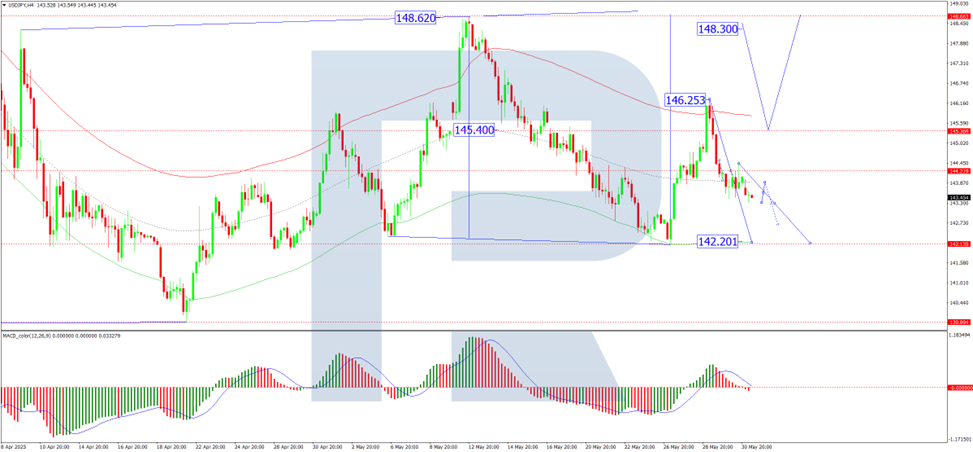
          On the H4 chart, USD/JPY formed a narrow consolidation range around 144.22, which the market broke below earlier today. This breakout opens the way for a continued move down towards 142.20. After reaching this level, a corrective rebound to 144.22 is possible. The MACD indicator confirms this scenario, with its signal line below zero and pointing steeply downwards, indicating strong bearish momentum.

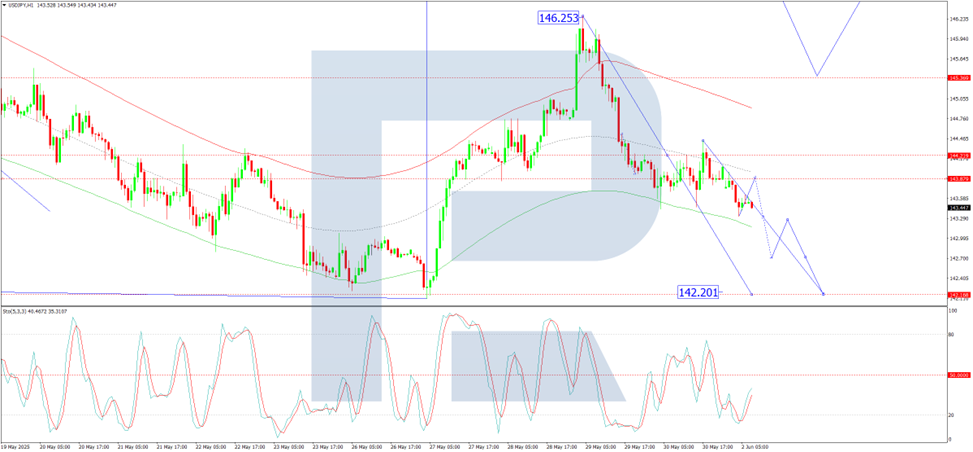
          On the H1 chart, the pair is forming the fifth wave of the current downtrend, targeting 142.20. A temporary rebound to 143.88 is expected today, followed by a continuation of the decline to 142.70, with the potential for further movement down to 142.20. The Stochastic oscillator supports this outlook, with its signal line rising above 20 towards 50, suggesting a brief corrective move before further downside.

          Conclusion

          The USD/JPY pair remains under pressure due to heightened trade-related risk and growing demand for safe-haven assets such as the Japanese yen. Technically, the pair is poised for further decline, with 142.20 as the next key target. While a short-lived rebound may occur, broader sentiment continues to favour yen strength as long as global trade concerns persist.

          Source: ACTIONFOREX

          Risk Warnings and Disclaimers
          You understand and acknowledge that there is a high degree of risk involved in trading. Following any strategies or investment methods may lead to potential losses. The content on the site is provided by our contributors and analysts for information purposes only. You are solely responsible for determining whether any trading assets, securities, strategy, or any other product is suitable for investing based on your own investment objectives and financial situation.
          Add to Favorites
          Share
          FastBull
          Copyright © 2025 FastBull Ltd

          728 RM B 7/F GEE LOK IND BLDG NO 34 HUNG TO RD KWUN TONG KLN HONG KONG

          TelegramInstagramTwitterfacebooklinkedin
          App Store Google Play Google Play
          Products
          Charts

          Chats

          Q&A with Experts
          Screeners
          Economic Calendar
          Data
          Tools
          Membership
          Features
          Function
          Markets
          Copy Trading
          Latest Signals
          Contests
          News
          Analysis
          24/7
          Columns
          Education
          Company
          Careers
          About Us
          Contact Us
          Advertising
          Help Center
          Feedback
          User Agreement
          Privacy Policy
          Business

          White Label

          Data API

          Web Plug-ins

          Poster Maker

          Affiliate Program

          Risk Disclosure

          The risk of loss in trading financial instruments such as stocks, FX, commodities, futures, bonds, ETFs and crypto can be substantial. You may sustain a total loss of the funds that you deposit with your broker. Therefore, you should carefully consider whether such trading is suitable for you in light of your circumstances and financial resources.

          No decision to invest should be made without thoroughly conducting due diligence by yourself or consulting with your financial advisors. Our web content might not suit you since we don't know your financial conditions and investment needs. Our financial information might have latency or contain inaccuracy, so you should be fully responsible for any of your trading and investment decisions. The company will not be responsible for your capital loss.

          Without getting permission from the website, you are not allowed to copy the website's graphics, texts, or trademarks. Intellectual property rights in the content or data incorporated into this website belong to its providers and exchange merchants.

          Not Logged In

          Log in to access more features

          FastBull Membership

          Not yet

          Purchase

          Become a signal provider
          Help Center
          Customer Service
          Dark Mode
          Price Up/Down Colors

          Log In

          Sign Up
          Position
          Layout
          Fullscreen
          Default to Chart
          The chart page opens by default when you visit fastbull.com