• Trade
  • Markets
  • Copy
  • Contests
  • News
  • 24/7
  • Calendar
  • Q&A
  • Chats
Trending
Screeners
SYMBOL
LAST
BID
ASK
HIGH
LOW
NET CHG.
%CHG.
SPREAD
SPX
S&P 500 Index
6827.42
6827.42
6827.42
6899.86
6801.80
-73.58
-1.07%
--
DJI
Dow Jones Industrial Average
48458.04
48458.04
48458.04
48886.86
48334.10
-245.98
-0.51%
--
IXIC
NASDAQ Composite Index
23195.16
23195.16
23195.16
23554.89
23094.51
-398.69
-1.69%
--
USDX
US Dollar Index
97.950
98.030
97.950
98.500
97.950
-0.370
-0.38%
--
EURUSD
Euro / US Dollar
1.17394
1.17409
1.17394
1.17496
1.17192
+0.00011
+ 0.01%
--
GBPUSD
Pound Sterling / US Dollar
1.33707
1.33732
1.33707
1.33997
1.33419
-0.00148
-0.11%
--
XAUUSD
Gold / US Dollar
4299.39
4299.39
4299.39
4353.41
4257.10
+20.10
+ 0.47%
--
WTI
Light Sweet Crude Oil
57.233
57.485
57.233
58.011
56.969
-0.408
-0.71%
--

Community Accounts

Signal Accounts
--
Profit Accounts
--
Loss Accounts
--
View More

Become a signal provider

Sell trading signals to earn additional income

View More

Guide to Copy Trading

Get started with ease and confidence

View More

Signal Accounts for Members

All Signal Accounts

Best Return
  • Best Return
  • Best P/L
  • Best MDD
Past 1W
  • Past 1W
  • Past 1M
  • Past 1Y

All Contests

  • All
  • Trump Updates
  • Recommend
  • Stocks
  • Cryptocurrencies
  • Central Banks
  • Featured News
Top News Only
Share

USA Embassy In Lithuania: Maria Kalesnikava Is Not Going To Vilnius

Share

USA Embassy In Lithuania: Other Prisoners Are Being Sent From Belarus To Ukraine

Share

Ukraine President Zelenskiy: Five Ukrainians Released By Belarus In US-Brokered Deal

Share

USA Vilnius Embassy: USA Stands Ready For "Additional Engagement With Belarus That Advances USA Interests"

Share

USA Vilnius Embassy: Belarus, USA, Other Citizens Among The Prisoners Released Into Lithuania

Share

USA Vilnius Embassy: USA Will Continue Diplomatic Efforts To Free The Remaining Political Prisoners In Belarus

Share

USA Vilnius Embassy: Belarus Releases 123 Prisoners Following Meeting Of President Trump's Envoy Coale And Belarus President Lukashenko

Share

USA Vilnius Embassy: Masatoshi Nakanishi, Aliaksandr Syrytsa Are Among The Prisoners Released By Belarus

Share

USA Vilnius Embassy: Maria Kalesnikava And Viktor Babaryka Are Among The Prisoners Released By Belarus

Share

USA Vilnius Embassy: Nobel Peace Prize Laureate Ales Bialiatski Is Among The Prisoners Released By Belarus

Share

Belarusian Presidential Administration Telegram Channel: Lukashenko Has Pardoned 123 Prisoners As Part Of Deal With US

Share

Two Local Syrian Officials: Joint US-Syrian Military Patrol In Central Syria Came Under Fire From Unknown Assailants

Share

Israeli Military Says It Targeted 'Key Hamas Terrorist' In Gaza City

Share

Rwanda's Actions In Eastern Drc Are A Clear Violation Of Washington Accords Signed By President Trump - Secretary Of State Rubio

Share

Israeli Military Issues Evacuation Warning In Southern Lebanon Village Ahead Of Strike - Spokesperson On X

Share

Belarusian State Media Cites US Envoy Coale As Saying He Discussed Ukraine And Venezuela With Lukashenko

Share

Belarusian State Media Cites US Envoy Coale As Saying That US Removes Sanctions On Belarusian Potassium

Share

Thai Prime Minister: No Ceasefire Agreement With Cambodia

Share

US, Ukraine To Discuss Ceasefire In Berlin Ahead Of European Summit

Share

Incoming Czech Prime Minister Babis: Czech Republic Will Not Take On Guarantees For Ukraine Financing, European Commission Must Find Alternatives

TIME
ACT
FCST
PREV
U.K. Trade Balance Non-EU (SA) (Oct)

A:--

F: --

P: --

U.K. Trade Balance (Oct)

A:--

F: --

P: --

U.K. Services Index MoM

A:--

F: --

P: --

U.K. Construction Output MoM (SA) (Oct)

A:--

F: --

P: --

U.K. Industrial Output YoY (Oct)

A:--

F: --

P: --

U.K. Trade Balance (SA) (Oct)

A:--

F: --

P: --

U.K. Trade Balance EU (SA) (Oct)

A:--

F: --

P: --

U.K. Manufacturing Output YoY (Oct)

A:--

F: --

P: --

U.K. GDP MoM (Oct)

A:--

F: --

P: --

U.K. GDP YoY (SA) (Oct)

A:--

F: --

P: --

U.K. Industrial Output MoM (Oct)

A:--

F: --

P: --

U.K. Construction Output YoY (Oct)

A:--

F: --

P: --

France HICP Final MoM (Nov)

A:--

F: --

P: --

China, Mainland Outstanding Loans Growth YoY (Nov)

A:--

F: --

P: --

China, Mainland M2 Money Supply YoY (Nov)

A:--

F: --

P: --

China, Mainland M0 Money Supply YoY (Nov)

A:--

F: --

P: --

China, Mainland M1 Money Supply YoY (Nov)

A:--

F: --

P: --

India CPI YoY (Nov)

A:--

F: --

P: --

India Deposit Gowth YoY

A:--

F: --

P: --

Brazil Services Growth YoY (Oct)

A:--

F: --

P: --

Mexico Industrial Output YoY (Oct)

A:--

F: --

P: --

Russia Trade Balance (Oct)

A:--

F: --

P: --

Philadelphia Fed President Henry Paulson delivers a speech
Canada Building Permits MoM (SA) (Oct)

A:--

F: --

P: --

Canada Wholesale Sales YoY (Oct)

A:--

F: --

P: --

Canada Wholesale Inventory MoM (Oct)

A:--

F: --

P: --

Canada Wholesale Inventory YoY (Oct)

A:--

F: --

P: --

Canada Wholesale Sales MoM (SA) (Oct)

A:--

F: --

P: --

Germany Current Account (Not SA) (Oct)

A:--

F: --

P: --

U.S. Weekly Total Rig Count

A:--

F: --

P: --

U.S. Weekly Total Oil Rig Count

A:--

F: --

P: --

Japan Tankan Large Non-Manufacturing Diffusion Index (Q4)

--

F: --

P: --

Japan Tankan Small Manufacturing Outlook Index (Q4)

--

F: --

P: --

Japan Tankan Large Non-Manufacturing Outlook Index (Q4)

--

F: --

P: --

Japan Tankan Large Manufacturing Outlook Index (Q4)

--

F: --

P: --

Japan Tankan Small Manufacturing Diffusion Index (Q4)

--

F: --

P: --

Japan Tankan Large Manufacturing Diffusion Index (Q4)

--

F: --

P: --

Japan Tankan Large-Enterprise Capital Expenditure YoY (Q4)

--

F: --

P: --

U.K. Rightmove House Price Index YoY (Dec)

--

F: --

P: --

China, Mainland Industrial Output YoY (YTD) (Nov)

--

F: --

P: --

China, Mainland Urban Area Unemployment Rate (Nov)

--

F: --

P: --

Saudi Arabia CPI YoY (Nov)

--

F: --

P: --

Euro Zone Industrial Output YoY (Oct)

--

F: --

P: --

Euro Zone Industrial Output MoM (Oct)

--

F: --

P: --

Canada Existing Home Sales MoM (Nov)

--

F: --

P: --

Euro Zone Total Reserve Assets (Nov)

--

F: --

P: --

U.K. Inflation Rate Expectations

--

F: --

P: --

Canada National Economic Confidence Index

--

F: --

P: --

Canada New Housing Starts (Nov)

--

F: --

P: --

U.S. NY Fed Manufacturing Employment Index (Dec)

--

F: --

P: --

U.S. NY Fed Manufacturing Index (Dec)

--

F: --

P: --

Canada Core CPI YoY (Nov)

--

F: --

P: --

Canada Manufacturing Unfilled Orders MoM (Oct)

--

F: --

P: --

Canada Manufacturing New Orders MoM (Oct)

--

F: --

P: --

Canada Core CPI MoM (Nov)

--

F: --

P: --

Canada Manufacturing Inventory MoM (Oct)

--

F: --

P: --

Canada CPI YoY (Nov)

--

F: --

P: --

Canada CPI MoM (Nov)

--

F: --

P: --

Canada CPI YoY (SA) (Nov)

--

F: --

P: --

Canada Core CPI MoM (SA) (Nov)

--

F: --

P: --

Q&A with Experts
    • All
    • Chatrooms
    • Groups
    • Friends
    Connecting
    .
    .
    .
    Type here...
    Add Symbol or Code

      No matching data

      All
      Trump Updates
      Recommend
      Stocks
      Cryptocurrencies
      Central Banks
      Featured News
      • All
      • Russia-Ukraine Conflict
      • Middle East Flashpoint
      • All
      • Russia-Ukraine Conflict
      • Middle East Flashpoint
      Search
      Products

      Charts Free Forever

      Chats Q&A with Experts
      Screeners Economic Calendar Data Tools
      Membership Features
      Data Warehouse Market Trends Institutional Data Policy Rates Macro

      Market Trends

      Market Sentiment Order Book Forex Correlations

      Top Indicators

      Charts Free Forever
      Markets

      News

      News Analysis 24/7 Columns Education
      From Institutions From Analysts
      Topics Columnists

      Latest Views

      Latest Views

      Trending Topics

      Top Columnists

      Latest Update

      Signals

      Copy Rankings Latest Signals Become a signal provider AI Rating
      Contests
      Brokers

      Overview Brokers Assessment Rankings Regulators News Claims
      Broker listing Forex Brokers Comparison Tool Live Spread Comparison Scam
      Q&A Complaint Scam Alert Videos Tips to Detect Scam
      More

      Business
      Events
      Careers About Us Advertising Help Center

      White Label

      Data API

      Web Plug-ins

      Affiliate Program

      Awards Institution Evaluation IB Seminar Salon Event Exhibition
      Vietnam Thailand Singapore Dubai
      Fans Party Investment Sharing Session
      FastBull Summit BrokersView Expo
      Recent Searches
        Top Searches
          Markets
          News
          Analysis
          User
          24/7
          Economic Calendar
          Education
          Data
          • Names
          • Latest
          • Prev

          View All

          No data

          Scan to Download

          Faster Charts, Chat Faster!

          Download App
          English
          • English
          • Español
          • العربية
          • Bahasa Indonesia
          • Bahasa Melayu
          • Tiếng Việt
          • ภาษาไทย
          • Français
          • Italiano
          • Türkçe
          • Русский язык
          • 简中
          • 繁中
          Open Account
          Search
          Products
          Charts Free Forever
          Markets
          News
          Signals

          Copy Rankings Latest Signals Become a signal provider AI Rating
          Contests
          Brokers

          Overview Brokers Assessment Rankings Regulators News Claims
          Broker listing Forex Brokers Comparison Tool Live Spread Comparison Scam
          Q&A Complaint Scam Alert Videos Tips to Detect Scam
          More

          Business
          Events
          Careers About Us Advertising Help Center

          White Label

          Data API

          Web Plug-ins

          Affiliate Program

          Awards Institution Evaluation IB Seminar Salon Event Exhibition
          Vietnam Thailand Singapore Dubai
          Fans Party Investment Sharing Session
          FastBull Summit BrokersView Expo

          Stocks are back near record highs. Investors still aren't buying this rally.

          Adam

          Stocks

          Summary:

          Despite stocks nearing record highs, investor sentiment remains cautious due to economic and geopolitical uncertainty. Low equity exposure and risk appetite may actually support further gains, suggesting the rally still has room to run.
          Stocks came under pressure Tuesday but continue to hover near record highs, staging a ferocious comeback since their April lows.
          But despite the rally, investor sentiment remains cautious as markets contend with a wave of uncertainty ranging from Trump’s tariff rollout and its inflationary ripple effects to the Fed’s murky rate-cutting path and, most recently, renewed geopolitical tensions in the Middle East.
          Even as consumer sentiment has begun to rebound from its early-year lows, investor positioning tells a different story.
          Data from market research firms SentimenTrader, Ned Davis Research, and Vanda, cited by Charles Schwab, show that equity exposure remains below historical averages, with mutual funds, hedge funds, and retail traders slowly rebuilding their risk positions.
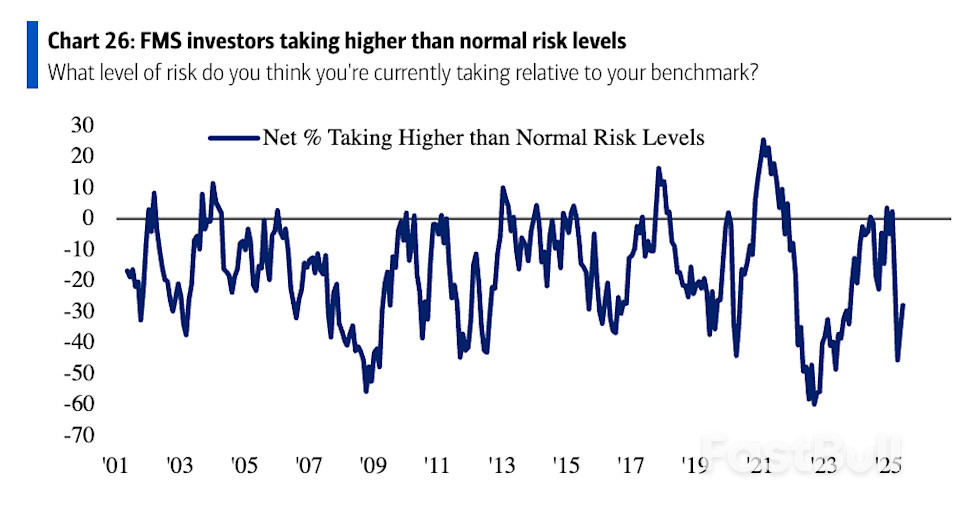
          That caution was echoed in Bank of America’s latest Global Fund Manager Survey released Tuesday, which showed a sharp drop in risk appetite with a net 28% of investors taking a more-cautious-than-normal level of risk in their portfolios.
          Stocks are back near record highs. Investors still aren't buying this rally._1
          The survey also revealed that equity allocations remain well below average, currently sitting one standard deviation below their long-term norm.
          However, that caution, some strategists argue, may be more of a tailwind than a headwind for stocks.
          "Sentiment can still be negative even with stocks back at all-time highs," Kevin Gordon, senior investment strategist at Charles Schwab, told Yahoo Finance.
          Gordon described the recent rally as "definitely still hated," but a dynamic that's not unusual following sharp, unexpected sell-offs.
          Tom Lee, head of research at Fundstrat, wrote in a recent client note that investors may be overlooking a stronger investment backdrop compared to early 2025, with more clarity on trade and tax policy and a potentially more dovish Fed.
          "We’re so close to all-time highs, and yet investors are mostly negative still," he said. "This remains one of the most-hated rallies."
          Strategists across Wall Street have also grown more bullish on stocks in recent weeks.
          No fewer than 11 Wall Street firms lowered their S&P 500 targets amid the market sell-off in April, but at least eight of those have since raised their bets on where the index ends 2025.
          The median S&P 500 target now sits at 6,100, signaling further upside potential.
          While investors are participating in the rebound, Schwab's Gordon said the gains have been concentrated in sectors outside of Big Tech, which has led the bull market over the past two years. He called out strength in commercial services like logistics and airlines, while more economically sensitive sectors like freight and goods production continue to lag.
          According to Gordon, that points to a more selective rally and could be a contrarian signal that stocks still have room to run.
          "The pain trade," he added, "is probably still supportive for the equity market to go a little bit higher."

          Source: finance.yahoo

          Risk Warnings and Disclaimers
          You understand and acknowledge that there is a high degree of risk involved in trading. Following any strategies or investment methods may lead to potential losses. The content on the site is provided by our contributors and analysts for information purposes only. You are solely responsible for determining whether any trading assets, securities, strategy, or any other product is suitable for investing based on your own investment objectives and financial situation.
          Add to Favorites
          Share

          IEA Doubles Down on Peak Oil Demand Forecast

          Glendon

          Commodity

          • The International Energy Agency forecasts global oil demand to peak and plateau by the end of this decade, with China's demand peaking earlier than previously anticipated.

          • While oil supply is expected to outpace demand growth, geopolitical risks and trade tensions introduce significant uncertainties to the oil market.

          • There is a notable divergence in viewpoints between the IEA and OPEC regarding future oil demand, with OPEC predicting continued growth beyond the current decade.

          A peak in global oil demand is still on the horizon, the International Energy Agency (IEA) said on Tuesday, doubling down on its forecast that demand will plateau by the end of the decade.

          China’s oil demand, which increased by a cumulative 6 million barrels per day (bpd) in the decade to 2024, is set to peak earlier than previously expected, the agency said in its annual Oil 2025 report for the medium term.

          While China – the world’s top crude oil importer – accounted for 60% of the global increase in oil consumption in 2015-2024, “the picture to 2030 looks very different,” the IEA said.

          China’s demand is on track to peak in 2027 – two years earlier than previously thought – amid “an extraordinary surge in EV sales, the continued deployment of trucks running on liquefied natural gas (LNG), as well as strong growth in the country’s high-speed rail network, along with structural shifts in its economy.”

          Global oil demand is forecast to rise by 2.5 million bpd from 2024 to 2030, reaching a plateau around 105.5 million bpd by the end of the decade, per the agency’s latest estimates.

          Annual global growth will slow from about 700,000 bpd in 2025 and 2026 “to just a trickle over the next several years, with a small decline expected in 2030, based on today’s policy settings and market trends,” the IEA said.

          The agency expects below-trend economic growth, weighed down by global trade tensions and fiscal imbalances, and accelerating substitution away from oil in the transport and power generation sectors.

          At the same time, the increase in global oil supply is “set to far outpace demand growth in coming years,” according to the agency.

          “Based on the fundamentals, oil markets look set to be well-supplied in the years ahead – but recent events sharply highlight the significant geopolitical risks to oil supply security,” IEA Executive Director Fatih Birol said.

          If no major supply disruptions occur, the oil market will be comfortably supplied through 2030, the agency reckons, but warned that “significant uncertainties remain, especially given rising geopolitical risks and heightened trade tensions.”

          The IEA’s “peak demand on the horizon” narrative once again clashes with OPEC’s view of growing oil demand at least into the 2040s.

          Just last week, OPEC Secretary General, Haitham Al Ghais, said that oil demand would continue growing over the coming decades as the world’s population increases.

          “Simply put, there is no ‘peak in oil demand’ on the horizon,” Al Ghais said at The Global Energy Show Canada in Calgary, Canada.

          Source: Zero Hedge

          Risk Warnings and Disclaimers
          You understand and acknowledge that there is a high degree of risk involved in trading. Following any strategies or investment methods may lead to potential losses. The content on the site is provided by our contributors and analysts for information purposes only. You are solely responsible for determining whether any trading assets, securities, strategy, or any other product is suitable for investing based on your own investment objectives and financial situation.
          Add to Favorites
          Share

          Wall Street Fears Hawkish Fed Will Trigger Stock Market Selloff

          Adam

          Economic

          Stocks

          Not much seems to faze the stock market these days even as risks abound, from war in the Middle East, to trade tensions, to slowing growth. But Wall Street’s biggest fear arrives today when the Federal Reserve meeting ends and Chair Jerome Powell explains the central bank’s outlook.
          There’s pretty much no expectation that the Fed will reduce interest rates at this meeting after holding steady in the past three instances. But between the so-called dot plot, which outlines where central bankers think the fed funds rate is headed, and Powell’s press conference after the meeting, traders expect to have a much clearer idea of what they’re thinking.
          Wall Street’s hope is that the Fed see cuts coming in the fall, with swaps traders pricing roughly 56% odds of a reduction in September. The fear is that it doesn’t — and that a hawkish tone from Powell will be the trigger that sends equities prices tumbling from near all-time highs.
          “If Powell signals the Fed is going to keep playing the ‘wait-and-see’ game before cutting rates, the market will hate that and stocks will likely sell off,” said Dennis Dick, head of markets structure and a proprietary trader at Triple D Trading. “His tone is crucial. Trade wars. Geopolitics. Growth. No one knows how all of this will play out. Any signals cuts are coming would ignite a rally.”
          It’s been a wild 2025 for the stock market. The S&P 500 Index is up 1.7% for the year and stands less than 3% from a record. It almost slammed into a bear market in April after President Donald Trump unveiled his sweeping global tariffs, but it immediately took off a week later when he delayed most of his levies.
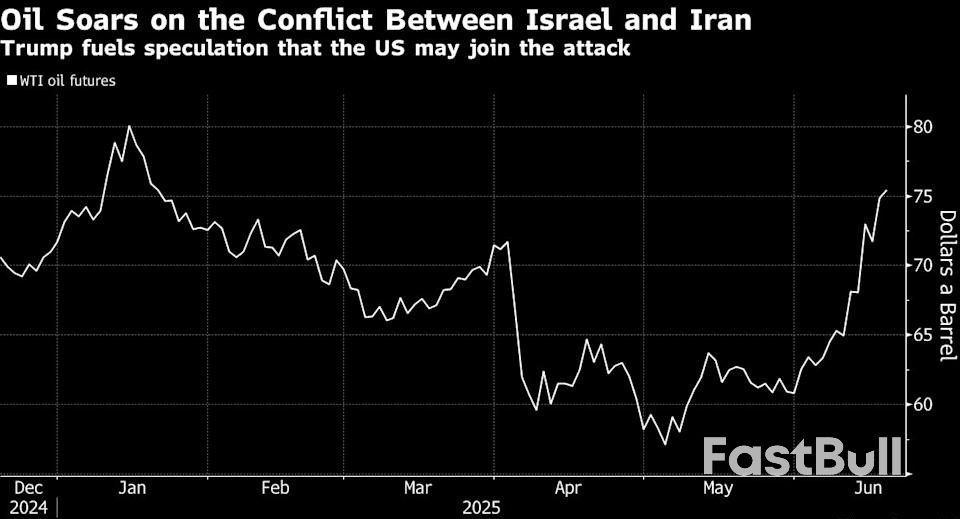
          The S&P 500 has traded sideways for the last five weeks, rising 0.7% since May 20. Even the fighting between Israel and Iran hasn’t really knocked the market off its pins, with the S&P 500 down just 1% since Israel launched its bombing campaign last Thursday, even as oil soars to its highest level since January. But at the same time, optimism on global trade, resilient inflation data and solid corporate earnings are already largely priced in, leaving little fuel to power stocks higher.
          “If the conflict in the Middle East turns into a full-scale war leading to a lasting rise in oil prices, it’s going to be a long slog for stocks this summer if inflation pressures pick up,” said Seth Merrill, chief investment officer at Crewe Advisors. He’s betting that bond proxy shares like utilities and real estate will be more susceptible to swings today, given their sensitivity to the rates outlook.
          Hawkish Fear
          That’s why investors will pore over the Summary of Economic Projections, the formal name of the dot plot, and carefully parse Powell’s remarks. The central bank’s announcement is scheduled at 2 p.m. in Washington, with Powell’s press conference 30 minutes later.
          Wall Street is largely bracing for the Fed to take a hawkish stance.
          Bloomberg Intelligence chief US economist Anna Wong thinks the central bank “won’t flinch” because of policy uncertainty tied to the Trump administration’s trade, tax and regulatory policies. Mark Cabana, head of US rates strategy at Bank of America, wrote in a note to clients Monday that he and his team see the Fed remaining “comfortably in wait-and-see mode,” with just one rate cut planned for 2025. And Andrew Tyler, head of global market intelligence at JPMorgan Chase & Co., sees heightens potential for a pullback creating a buy-the dip moment.
          Other money managers like Jim Worden, chief investment officer at the Wealth Consulting Group, have argued for Powell to shift the focus back to the employment part of the Fed’s dual mandate.
          Indeed, inflation pressures have improved after the Fed last cut rates in December, with US consumer prices rising in May by less than forecast for the fourth month in a row. But this comes at a time when other parts of the economy are showing signs of weakness in the aftermath of tariffs, including a plunge in May retail sales and reduced US services and manufacturing activity, along with slowing private payrolls growth.
          “If Powell acknowledges the labor market is softening while inflation is cooling — that’s a buy signal for stocks because it means he is open to rate cuts later this year,” Worden said. “But if he pours cold water all over that idea, or even alludes to no cuts the rest of year, markets will be rattled. Traders will wonder ‘What does he know that we don’t? Does he expect inflation to pick in the second half of the year?’”
          Betting On Calm
          That leaves options pros betting on a calmer than normal Fed day, with the S&P 500 projected to move 1% in either direction, according to data compiled by Piper Sandler & Co. That’s the smallest implied swing ahead of a Fed day since January and just below the average realized move of 1.1% over the past 18 months.
          That said, Wall Street pros see an upside if the market falls on hawkish chatter. Triple D Trading’s Dick is using any selloffs to pile into high-flying technology shares tied to the artificial-intelligence boom. While, the Wealth Consulting’s Worden is looking to buy cheaper big tech shares like Broadcom Inc. and Marvell Technology Inc., although he’ll wait until the dust settles if the market gets too volatile after the Fed chief’s presser.
          Powell has repeatedly described the economy as “solid.” But US job expansion moderated in May while private payrolls growth slowed. Yet the stock market has been blowing all of this off as economists and sell-slide strategists lower their odds that trade wars will rekindle what traders fear most: stagflation.
          The bottom line is at this point so much is unknown, from the Fed’s rate path, to earnings growth, to how White House policy is implemented and affects Corporate America. So just about any interpretation of where we are has validity.
          Jamie Cox, managing partner at Harris Financial Group, is running counter to the consensus and betting that Powell may open the door to cutting rates as early as July.
          “Markets have things priced all wrong thinking cuts will come even further out beyond September,” Cox argued, who plans to pile into US tech shares if the market sells off, or rallies on Wednesday. “I’m hoping to hear him say ‘inflation data has come in better-than-expected,’ which to me signals they’re not as fearful of stagflation.”

          Source: Bloomberg

          To stay updated on all economic events of today, please check out our Economic calendar
          Risk Warnings and Disclaimers
          You understand and acknowledge that there is a high degree of risk involved in trading. Following any strategies or investment methods may lead to potential losses. The content on the site is provided by our contributors and analysts for information purposes only. You are solely responsible for determining whether any trading assets, securities, strategy, or any other product is suitable for investing based on your own investment objectives and financial situation.
          Add to Favorites
          Share

          FOMC Preview: Fed in Wait-And-See Mode As Powell Faces Barrage of Uncertainty

          Michelle

          Forex

          Economic

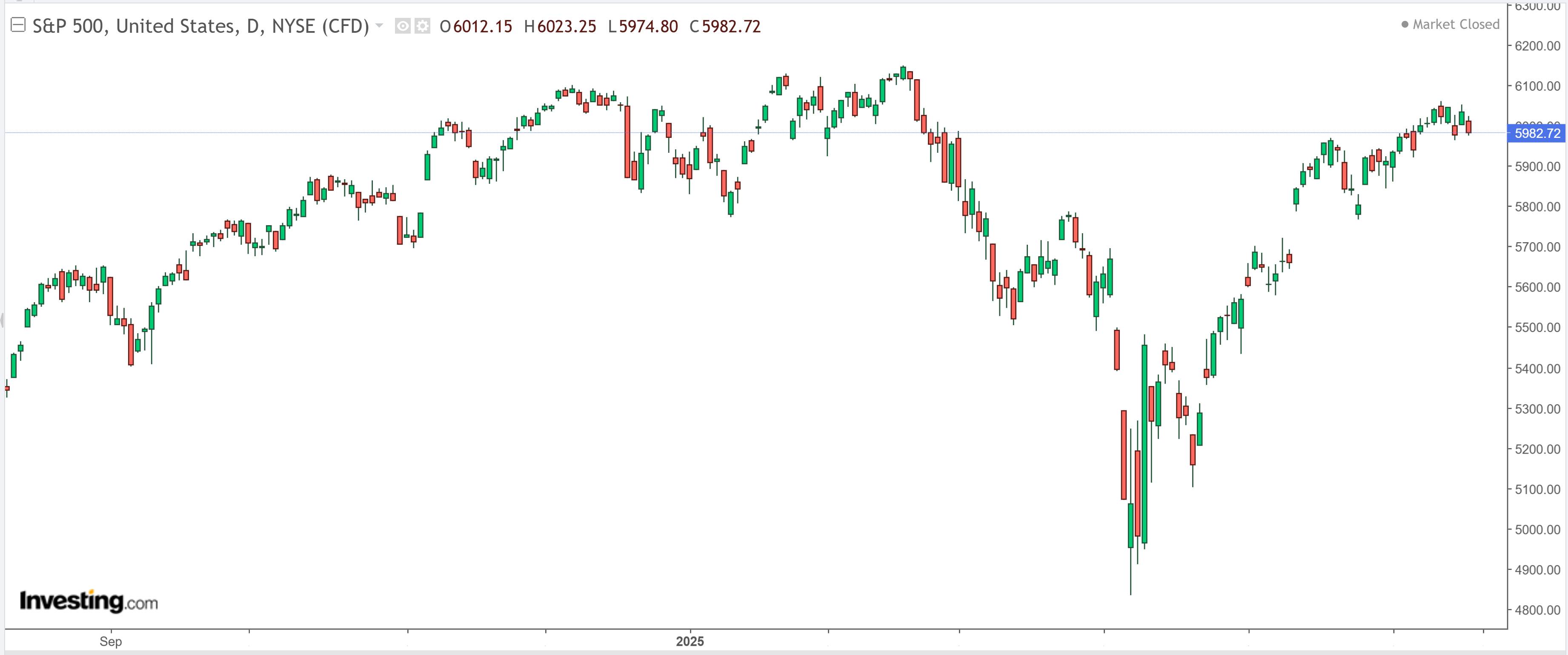
          The Federal Reserve’s June policy meeting arrives at a critical moment for the stock market, with the benchmark S&P 500 sitting around 3% below its February record high despite a barrage of lingering uncertainty, including persistent trade war fears and fresh geopolitical headwinds between Israel and Iran.FOMC Preview: Fed in Wait-And-See Mode As Powell Faces Barrage of Uncertainty_1

          Source: Investing.com

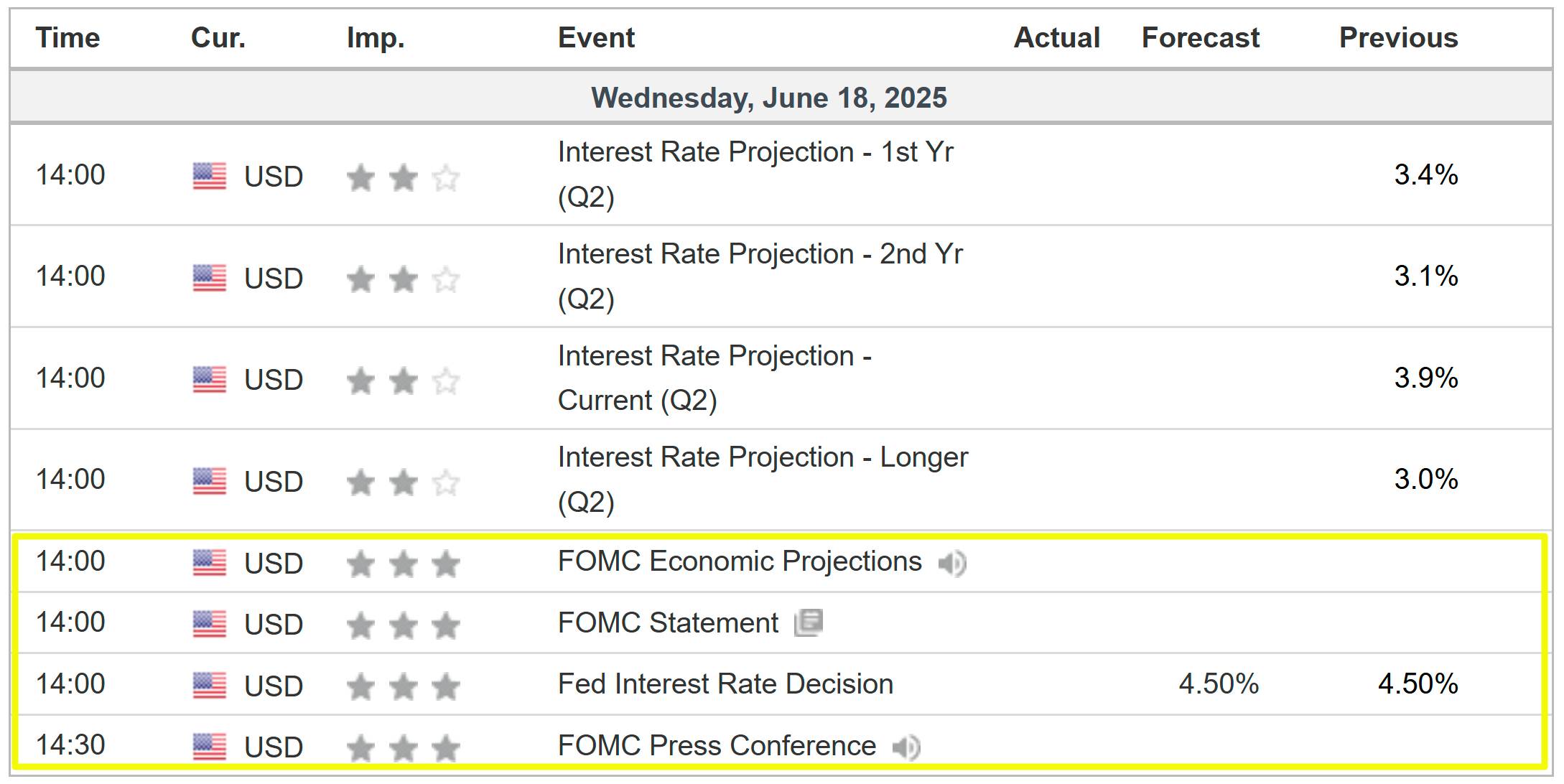
          As such, a lot will be on the line when the Fed delivers its latest interest rate decision at 2:00 PM ET on Wednesday. While the US central bank is widely expected to hold rates steady at 4.25%-4.50%, investors are eager for any hints about whether it might be poised to lower borrowing costs in the coming months.

          Markets currently expect two rate cuts by the end of this year, with the next one likely in September, as per the Investing.com Fed Rate Monitor Tool.

          Alongside the rate decision, Federal Open Market Committee (FOMC) officials will also release their new quarterly economic projections for interest rates, inflation, and unemployment, known as the ‘dot plot’.

          The last dot plot, released in March, revealed a consensus among Fed officials for two cuts in 2025.

          If FOMC policymakers stick with that forecast, it could reinforce bullish sentiment—especially since recent economic data shows some softening. But if the outlook shifts to just one cut (or pushes the timeline further out), expect a market recalibration and possible pressure on stocks and risk assets.FOMC Preview: Fed in Wait-And-See Mode As Powell Faces Barrage of Uncertainty_2

          Source: Investing.com

          Post-meeting comments from Fed Chair Jerome Powell at 2:30 PM ET will be closely watched and could move the market as his words often carry as much weight as the policy decision itself. Powell is likely to emphasize a data-dependent approach, citing the need for further clarity on the economic and inflationary impact of President Donald Trump’s trade tariffs before adjusting rates.

          Speaking of Trump, the president’s repeated public calls for rate cuts and criticism of Powell could complicate the Fed’s messaging, though Powell is expected to reaffirm the central bank’s independence.

          Market Implications

          Financial markets may see muted initial reactions to a widely anticipated hold, but equities, bonds, gold, and the US Dollar could move based on the updated dot plot and Powell’s comments.

          If the Fed signals a dovish pivot—hinting at potential rate cuts in the near future due to confidence in declining inflation—equity markets could rally, as lower borrowing costs typically support corporate earnings and valuations. Growth stocks, particularly in technology, which are sensitive to interest rates, would likely see the most benefit.

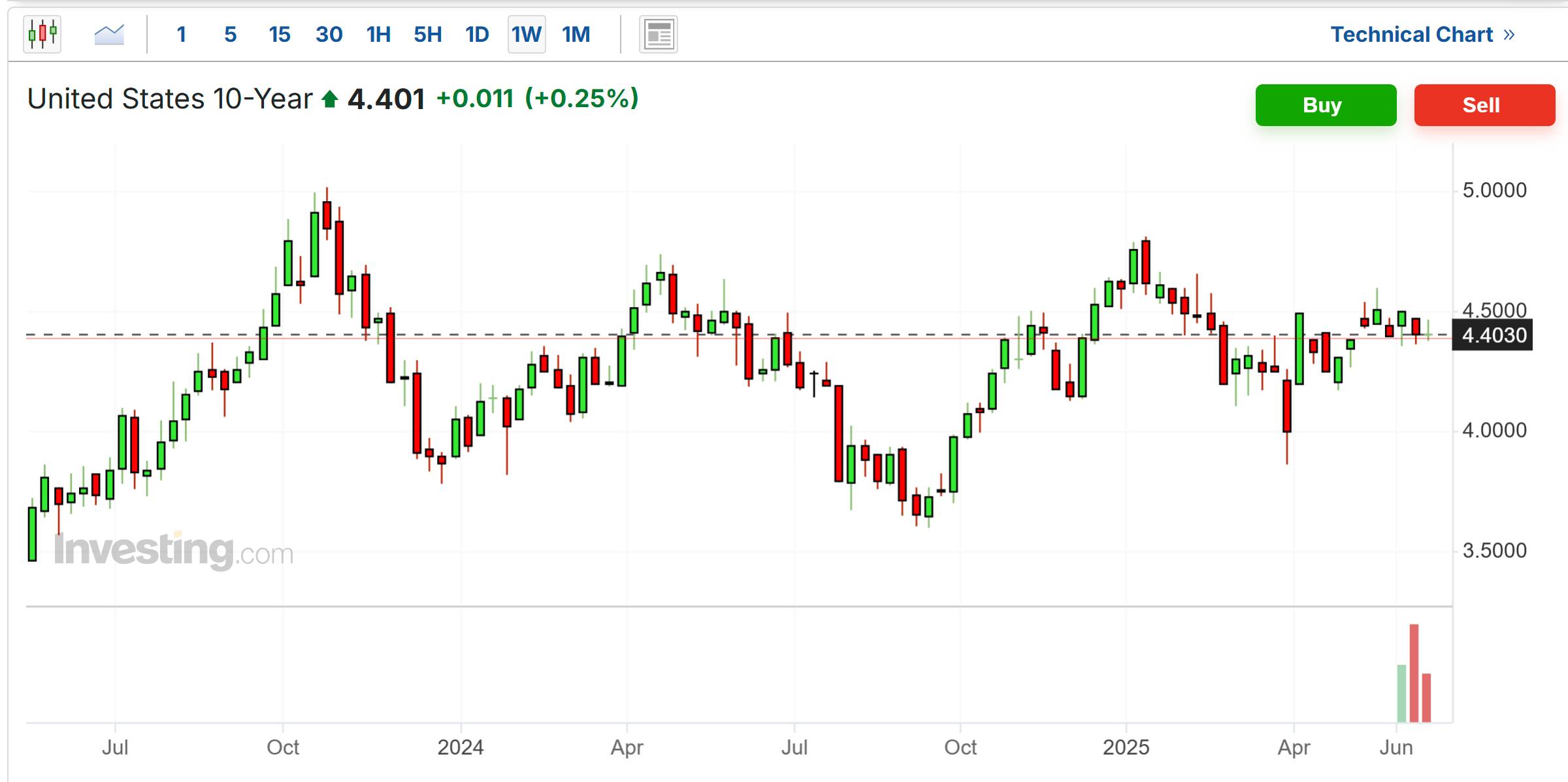
          Bond yields, such as those on the 10-year Treasury, could decline in anticipation of looser monetary policy, boosting fixed-income assets.FOMC Preview: Fed in Wait-And-See Mode As Powell Faces Barrage of Uncertainty_3

          Source: Investing.com

          Conversely, a hawkish stance—suggesting that rates will remain higher for longer to combat stubborn inflation—could pressure risk assets like stocks, as higher interest rates increase borrowing costs and dampen economic growth prospects.

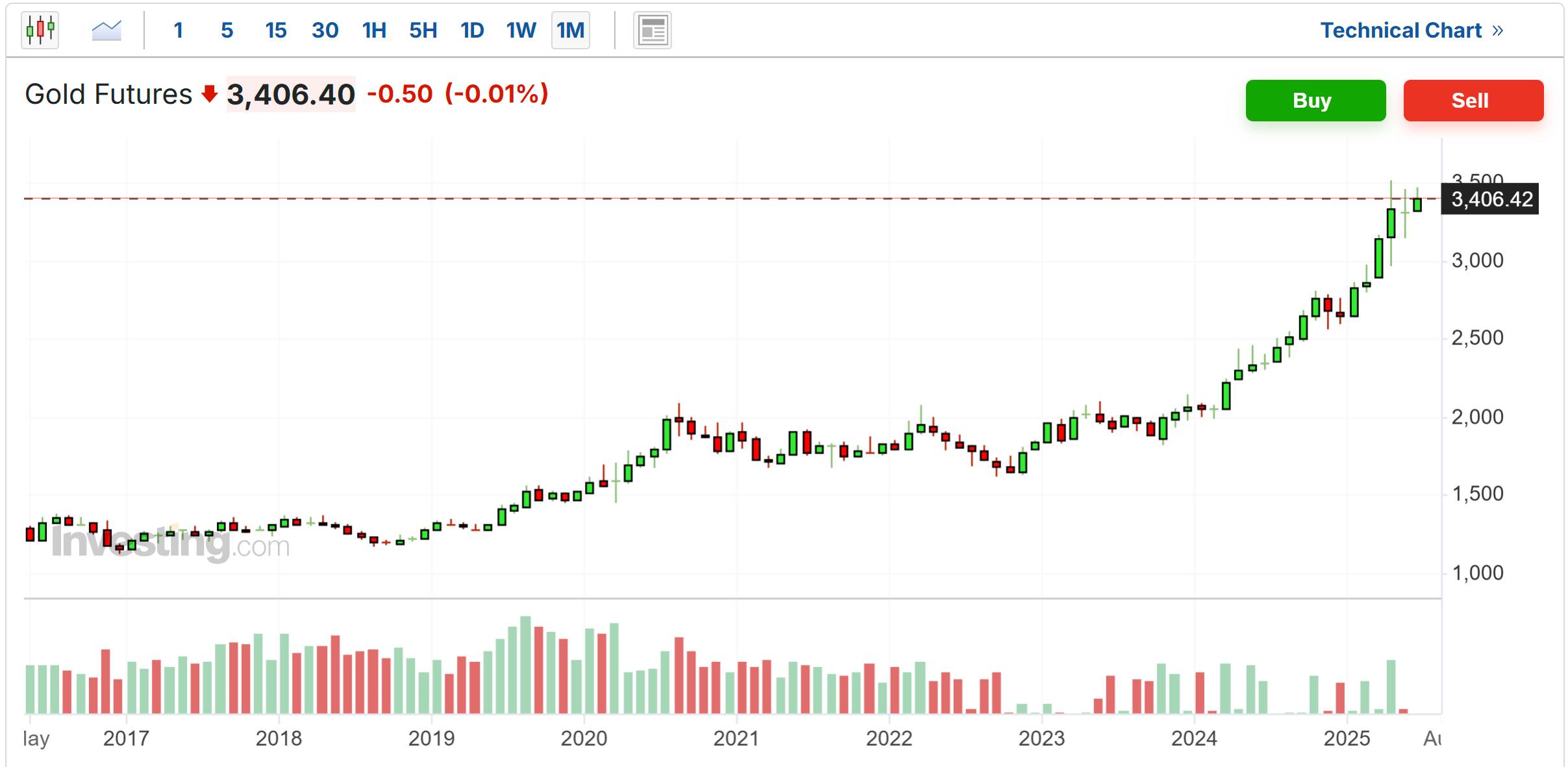
          In this scenario, the US dollar might strengthen, as elevated rates attract capital inflows, while commodities like gold could face headwinds due to a stronger currency and higher opportunity costs.FOMC Preview: Fed in Wait-And-See Mode As Powell Faces Barrage of Uncertainty_4

          Source: Investing.com

          Source: Investing

          To stay updated on all economic events of today, please check out our Economic calendar
          Risk Warnings and Disclaimers
          You understand and acknowledge that there is a high degree of risk involved in trading. Following any strategies or investment methods may lead to potential losses. The content on the site is provided by our contributors and analysts for information purposes only. You are solely responsible for determining whether any trading assets, securities, strategy, or any other product is suitable for investing based on your own investment objectives and financial situation.
          Add to Favorites
          Share

          Borrowers Looking for Lower Costs Will Have to Wait as the Fed Is Unlikely to Cut Rates

          Warren Takunda

          Economic

          China–U.S. Trade War

          The inflation-fighters at the Federal Reserve are expected to keep their key interest rate unchanged Wednesday for the fourth straight time. That’s likely to shift attention to how many interest rate cuts they forecast for this year.
          It’s widely expected that the 19 Fed officials that participate in the central bank’s interest-rate decisions will project two rate cuts for this year, as they did in December and March. But some economists expect that one or both of those cuts could be pushed back to 2026.
          The Fed will almost certainly keep the short-term rate it controls at about 4.3%, economists say, where it has stood since the central bank last cut rates in December. Since then, it has stayed on the sidelines while it evaluates the impact of President Donald Trump’s tariffs and other policy changes on the economy and prices.
          Inflation has been cooling since January, and many economists say that without the higher import taxes, the Fed would likely be cutting its rate further. According to the Fed’s preferred measure, inflation dropped to just 2.1% in April, the lowest since last September. Core inflation — which exclude the volatile food and energy categories — was 2.5%.
          Those figures suggest inflation is largely coming under control, for now. Yet the Fed’s short-term interest rate remains at an elevated level intended to slow growth and inflation. Some economists argue that with inflation cooling, the Fed could resume its rate reductions.
          When the Fed reduces its rate, it often — though not always — leads to lower costs for consumer and business borrowing, including for mortgages, auto loans, and credit cards. Yet financial markets also influence the level of longer-term rates and can keep them elevated even if the Fed reduces the shorter-term rate it controls.
          But Fed officials have said they want to see whether Trump’s tariffs boost inflation and for how long. Economists generally believe a tariff hike should at least lead to a one-time increase in prices, as companies seek to offset the cost of higher duties. Many Fed officials, however, are worried that the tariffs could lead to more sustained inflation.
          “While theory might suggest that (the Fed) should look through a one-time increase in prices, I would be uncomfortable staking the Fed’s reputation and credibility on theory,” Jeffrey Schmid, president of the Fed’s Kansas City branch and a voting member of the Fed’s interest-rate setting committee, said earlier this month.
          The Trump White House has sharply ramped up pressure on Powell to reduce borrowing costs, with Trump himself calling the Fed chair a “numbskull” last week for not cutting. Other officials, including Vice President JD Vance and Commerce Secretary Howard Lutnick, are also calling for a rate reduction.
          Pushing the Fed to cut rates simply to save the government on its interest payments typically raises alarms among economists, because it would threaten the Fed’s congressional mandate to focus on stable prices and maximum employment.
          One of Trump’s complaints is that the Fed isn’t cutting rates even as other central banks around the world have reduced their borrowing costs, including in Europe, Canada, and the U.K. On Tuesday, the Bank of Japan kept its key short-term rate unchanged at 0.5%, after actually raising it recently.
          But the European Central Bank, Bank of Canada, and Bank of England have reduced their rates this year in part because U.S. tariffs are weakening their economies. So far the U.S. economy is mostly solid, with the unemployment rate low.
          The Bank of England has cut its rate twice this year but is expected to keep it unchanged at 4.25% when it meets Thursday.

          Source: AP

          To stay updated on all economic events of today, please check out our Economic calendar
          Risk Warnings and Disclaimers
          You understand and acknowledge that there is a high degree of risk involved in trading. Following any strategies or investment methods may lead to potential losses. The content on the site is provided by our contributors and analysts for information purposes only. You are solely responsible for determining whether any trading assets, securities, strategy, or any other product is suitable for investing based on your own investment objectives and financial situation.
          Add to Favorites
          Share

          Oil Swings in Volatile Market as Trump Spurs War Escalation Fear

          Adam

          Commodity

          Oil swung sharply between gains and losses on speculation the US may join the Middle East conflict, with traders focused on flows through the region’s vital shipping chokepoint.
          Brent futures (BZ=F) traded above $76 a barrel, about $7 higher than they were before the attacks. Iran’s Supreme Leader Ayatollah Ali Khamenei said his country won’t surrender to Israel after US President Donald Trump called for the Islamic Republic’s capitulation as the conflict enters its fifth day.
          Trump demanded Iran’s “UNCONDITIONAL SURRENDER” and warned of a possible strike against the country’s leader in social media posts on Tuesday. The US is also moving more military assets into the region, including the USS Nimitz aircraft carrier strike group, which is sailing to the Middle East ahead of schedule.
          Oil Swings in Volatile Market as Trump Spurs War Escalation Fear_1
          The oil market’s main concern is the threat to vessel traffic in the Strait of Hormuz, through which about a quarter of the world’s crude shipments flow, and to supplies from Iran itself. However, early data from TankerTrackers.com Inc. show that Iran has actually increased its exports significantly in the days since attacks began, and there’s been no major disruption to Hormuz.
          The risks to prices have permeated across the oil derivatives market. Bullish options are fetching their biggest premiums in over a decade and volatility has surged to a three-year high. The cost of shipping crude from the Middle East to China is also up more than 50% since the attacks began.
          The hostilities have also rattled wider markets, with investors seeking havens in assets like gold.
          “Oil remains on edge and the worst case scenario is the closure of the Strait of Hormuz,” said Keshav Lohiya, founder of consultant Oilytics. “There is a huge fat tail risk in the oil and shipping world.”
          Israel launched surprise airstrikes on Iran’s nuclear sites late last week, but American weapons are seen as crucial to achieving a more complete destruction of Tehran’s atomic program than anything it can do alone.
          Oil could break above $80 a barrel on headlines of US involvement, said Chris Weston, the head of research at Pepperstone Group Ltd. The shape of the futures curve suggests that traders are pricing in a much tighter market, he added.
          The gap between Brent’s two nearest December contracts — a key indicator on long-term balances — has significantly widened since the attacks and was almost $3 a barrel in a bullish backwardation structure. Prior to the conflict, it was in a bearish contango pattern, signaling expectations of ample supply.
          Meanwhile, US industry figures showed the nation’s crude inventories fell by more than 10 million barrels last week. That would be the biggest decline since last summer if confirmed by official data later on Wednesday.

          Source :Bloomberg

          Risk Warnings and Disclaimers
          You understand and acknowledge that there is a high degree of risk involved in trading. Following any strategies or investment methods may lead to potential losses. The content on the site is provided by our contributors and analysts for information purposes only. You are solely responsible for determining whether any trading assets, securities, strategy, or any other product is suitable for investing based on your own investment objectives and financial situation.
          Add to Favorites
          Share

          Australian Dollar Faces Tariff Deadline Headache: CBA

          Warren Takunda

          Economic

          The Australian Dollar faces renewed downside pressure as tariff risks tied to U.S. trade policy re-emerge, with key deadlines in July and August posing significant volatility threats, Commonwealth Bank of Australia (CBA) says in a new note.
          CBA says, "U.S. tariff policy is far from settled" and highlights the July 9 deadline for a series of trade agreements. If progress stalls, CBA expects the U.S. to "lose patience and reinstate unilateral tariffs," either broadly or against specific countries, in a move that markets have not yet priced in.
          "AUD/USD could slump by several cents over a few days around 9 July as it did in early April," FX researchers at the Australian lender say.
          CBA also points to August 12 as the expiry date of a second pause on tariffs affecting Chinese imports, a critical factor given Australia's heavy trade reliance on China.
          CBA cited a recent post from U.S. President Donald Trump indicating that China could apply a 10% tariff on U.S. goods, while the U.S. may counter with a punitive 55% rate.
          "That high tariff rate remains a major weight on the global economy, and by extension is a downside risk to AUD/USD," CBA says.
          The call comes amidst a spell of mixed AUD outperformance, with the currency holding an advance against the U.S. Dollar and half of its G10 currency peers over the past month.
          Australian Dollar Faces Tariff Deadline Headache: CBA_1

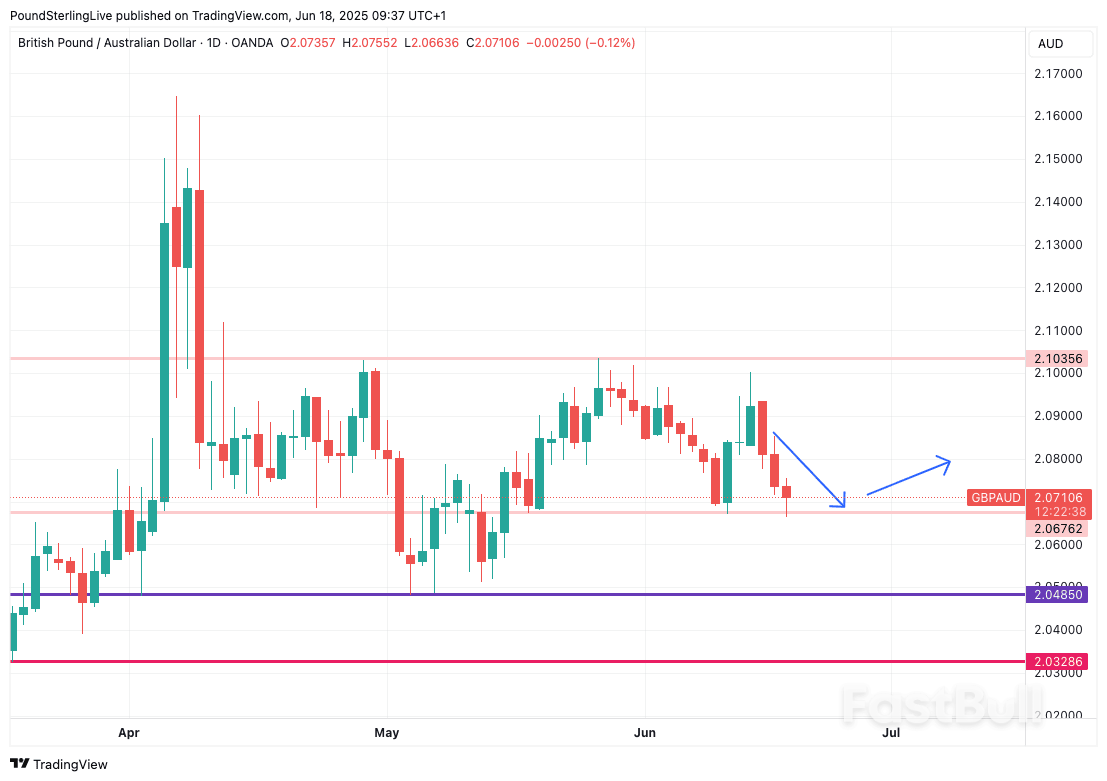
          Above: GBP/AUD at daily intervals. The annotations are part of our Week Ahead Forecast from Monday, showing an expectation for weakness, followed by a potential rebound. The setup remains promising.

          However, if we recall early April price action, the currency is very sensitive to negative trade developments.
          Analysts at Barclays say Australia's exposure to Chinese trade leaves AUD especially vulnerable, even as recent de-escalations between Washington and Beijing provide some relief.
          Yet, with tariff rates still "almost six times higher than before Trump re-entered office," structural headwinds to global growth and commodity-linked currencies like the AUD persist, say researchers at Barclays.
          CBA’s trade warning also comes at a critical time for monetary policy.
          Morgan Stanley raises the July Reserve Bank of Australia (RBA) meeting as potentially consequential for AUD performance. With a 19bp rate cut priced in, a policy hold could provide a short-term boost to the currency.
          However, the RBA’s path is increasingly influenced by global developments beyond its control.
          While domestic data has been mixed, with Q1 GDP disappointing but household spending showing resilience, the AUD’s high-beta status leaves it exposed to global shocks.
          Nomura's strategists highlight the AUD’s correlation to global equity markets, underscoring how quickly risk sentiment can shift on geopolitical developments.

          Source: Poundsterlinglive

          To stay updated on all economic events of today, please check out our Economic calendar
          Risk Warnings and Disclaimers
          You understand and acknowledge that there is a high degree of risk involved in trading. Following any strategies or investment methods may lead to potential losses. The content on the site is provided by our contributors and analysts for information purposes only. You are solely responsible for determining whether any trading assets, securities, strategy, or any other product is suitable for investing based on your own investment objectives and financial situation.
          Add to Favorites
          Share
          FastBull
          Copyright © 2025 FastBull Ltd

          728 RM B 7/F GEE LOK IND BLDG NO 34 HUNG TO RD KWUN TONG KLN HONG KONG

          TelegramInstagramTwitterfacebooklinkedin
          App Store Google Play Google Play
          Products
          Charts

          Chats

          Q&A with Experts
          Screeners
          Economic Calendar
          Data
          Tools
          Membership
          Features
          Function
          Markets
          Copy Trading
          Latest Signals
          Contests
          News
          Analysis
          24/7
          Columns
          Education
          Company
          Careers
          About Us
          Contact Us
          Advertising
          Help Center
          Feedback
          User Agreement
          Privacy Policy
          Business

          White Label

          Data API

          Web Plug-ins

          Poster Maker

          Affiliate Program

          Risk Disclosure

          The risk of loss in trading financial instruments such as stocks, FX, commodities, futures, bonds, ETFs and crypto can be substantial. You may sustain a total loss of the funds that you deposit with your broker. Therefore, you should carefully consider whether such trading is suitable for you in light of your circumstances and financial resources.

          No decision to invest should be made without thoroughly conducting due diligence by yourself or consulting with your financial advisors. Our web content might not suit you since we don't know your financial conditions and investment needs. Our financial information might have latency or contain inaccuracy, so you should be fully responsible for any of your trading and investment decisions. The company will not be responsible for your capital loss.

          Without getting permission from the website, you are not allowed to copy the website's graphics, texts, or trademarks. Intellectual property rights in the content or data incorporated into this website belong to its providers and exchange merchants.

          Not Logged In

          Log in to access more features

          FastBull Membership

          Not yet

          Purchase

          Become a signal provider
          Help Center
          Customer Service
          Dark Mode
          Price Up/Down Colors

          Log In

          Sign Up
          Position
          Layout
          Fullscreen
          Default to Chart
          The chart page opens by default when you visit fastbull.com