Markets
News
Analysis
User
24/7
Economic Calendar
Education
Data
- Names
- Latest
- Prev


Signal Accounts for Members
All Signal Accounts
All Contests


U.K. Trade Balance Non-EU (SA) (Oct)A:--
F: --
P: --
U.K. Trade Balance (Oct)A:--
F: --
P: --
U.K. Services Index MoMA:--
F: --
P: --
U.K. Construction Output MoM (SA) (Oct)A:--
F: --
P: --
U.K. Industrial Output YoY (Oct)A:--
F: --
P: --
U.K. Trade Balance (SA) (Oct)A:--
F: --
P: --
U.K. Trade Balance EU (SA) (Oct)A:--
F: --
P: --
U.K. Manufacturing Output YoY (Oct)A:--
F: --
P: --
U.K. GDP MoM (Oct)A:--
F: --
P: --
U.K. GDP YoY (SA) (Oct)A:--
F: --
P: --
U.K. Industrial Output MoM (Oct)A:--
F: --
P: --
U.K. Construction Output YoY (Oct)A:--
F: --
P: --
France HICP Final MoM (Nov)A:--
F: --
P: --
China, Mainland Outstanding Loans Growth YoY (Nov)A:--
F: --
P: --
China, Mainland M2 Money Supply YoY (Nov)A:--
F: --
P: --
China, Mainland M0 Money Supply YoY (Nov)A:--
F: --
P: --
China, Mainland M1 Money Supply YoY (Nov)A:--
F: --
P: --
India CPI YoY (Nov)A:--
F: --
P: --
India Deposit Gowth YoYA:--
F: --
P: --
Brazil Services Growth YoY (Oct)A:--
F: --
P: --
Mexico Industrial Output YoY (Oct)A:--
F: --
P: --
Russia Trade Balance (Oct)A:--
F: --
P: --
Philadelphia Fed President Henry Paulson delivers a speech
Canada Building Permits MoM (SA) (Oct)A:--
F: --
P: --
Canada Wholesale Sales YoY (Oct)A:--
F: --
P: --
Canada Wholesale Inventory MoM (Oct)A:--
F: --
P: --
Canada Wholesale Inventory YoY (Oct)A:--
F: --
P: --
Canada Wholesale Sales MoM (SA) (Oct)A:--
F: --
P: --
Germany Current Account (Not SA) (Oct)A:--
F: --
P: --
U.S. Weekly Total Rig CountA:--
F: --
P: --
U.S. Weekly Total Oil Rig CountA:--
F: --
P: --
Japan Tankan Large Non-Manufacturing Diffusion Index (Q4)--
F: --
P: --
Japan Tankan Small Manufacturing Outlook Index (Q4)--
F: --
P: --
Japan Tankan Large Non-Manufacturing Outlook Index (Q4)--
F: --
P: --
Japan Tankan Large Manufacturing Outlook Index (Q4)--
F: --
P: --
Japan Tankan Small Manufacturing Diffusion Index (Q4)--
F: --
P: --
Japan Tankan Large Manufacturing Diffusion Index (Q4)--
F: --
P: --
Japan Tankan Large-Enterprise Capital Expenditure YoY (Q4)--
F: --
P: --
U.K. Rightmove House Price Index YoY (Dec)--
F: --
P: --
China, Mainland Industrial Output YoY (YTD) (Nov)--
F: --
P: --
China, Mainland Urban Area Unemployment Rate (Nov)--
F: --
P: --
Saudi Arabia CPI YoY (Nov)--
F: --
P: --
Euro Zone Industrial Output YoY (Oct)--
F: --
P: --
Euro Zone Industrial Output MoM (Oct)--
F: --
P: --
Canada Existing Home Sales MoM (Nov)--
F: --
P: --
Euro Zone Total Reserve Assets (Nov)--
F: --
P: --
U.K. Inflation Rate Expectations--
F: --
P: --
Canada National Economic Confidence Index--
F: --
P: --
Canada New Housing Starts (Nov)--
F: --
P: --
U.S. NY Fed Manufacturing Employment Index (Dec)--
F: --
P: --
U.S. NY Fed Manufacturing Index (Dec)--
F: --
P: --
Canada Core CPI YoY (Nov)--
F: --
P: --
Canada Manufacturing Unfilled Orders MoM (Oct)--
F: --
P: --
Canada Manufacturing New Orders MoM (Oct)--
F: --
P: --
Canada Core CPI MoM (Nov)--
F: --
P: --
Canada Manufacturing Inventory MoM (Oct)--
F: --
P: --
Canada CPI YoY (Nov)--
F: --
P: --
Canada CPI MoM (Nov)--
F: --
P: --
Canada CPI YoY (SA) (Nov)--
F: --
P: --
Canada Core CPI MoM (SA) (Nov)--
F: --
P: --


No matching data
Latest Views
Latest Views
Trending Topics
Top Columnists
Latest Update
White Label
Data API
Web Plug-ins
Affiliate Program
View All

No data
Wall Street futures edged lower Monday as trade uncertainty clouded a packed week of major earnings and economic data, with Domino’s slipping on weak sales and Deliveroo rallying on a DoorDash takeover bid.

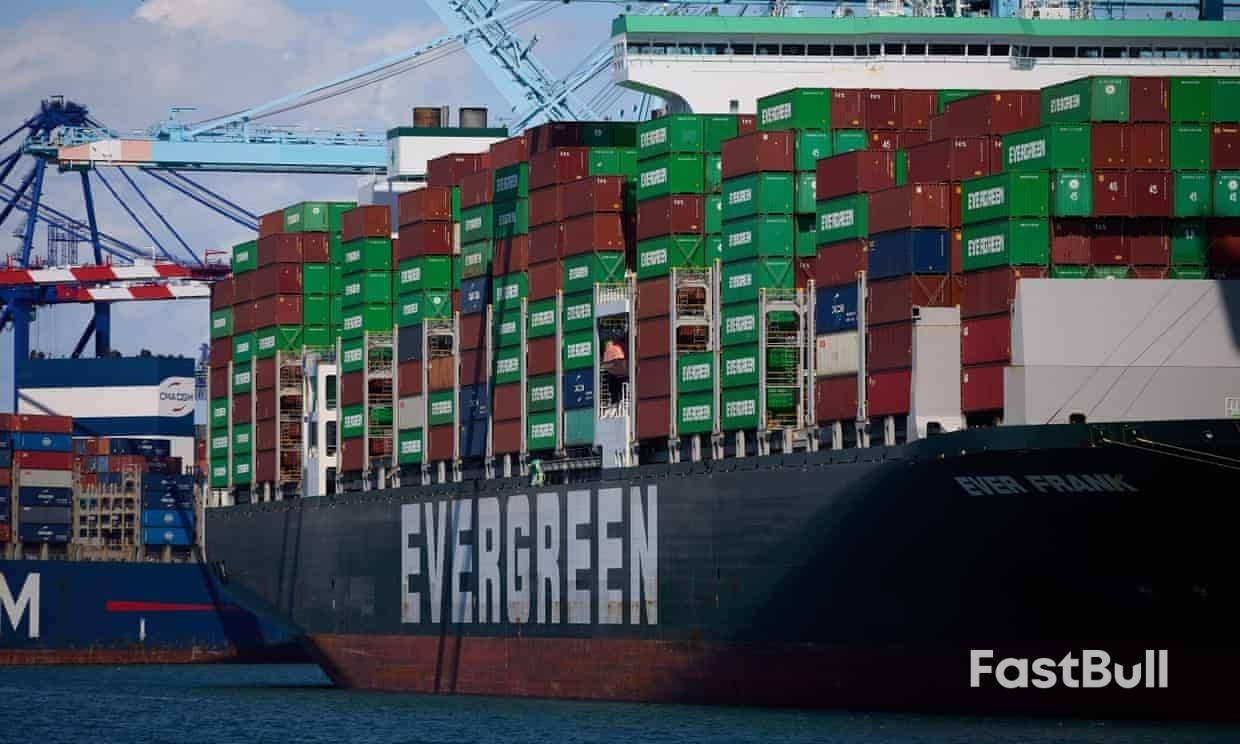
Donald Trump’s increasingly erratic trade war has triggered a slump in container shipments to the US’s most important ports, amid the growing risk of a recession in the world’s largest economy.
In the latest sign of the US president’s tariff policies rattling the economy, figures show the number of vessels scheduled to arrive at the Port of Los Angeles next week is down by almost a third from the same period a year earlier.
According to the data compiled from ocean carrier manifest records by Port Optimizer, the number of arrivals this week is on track to be down by about 11% from the same week last year. Separate figures reported by the Financial Times from Vizion, a data provider, show container bookings from China to the US fell 45% by mid-April compared with a year earlier.
Economists have warned that Trump’s trade battles will lead to a significant slowdown in global trade and come with a cost for US consumers by pushing up prices and raising the chances of a recession. Washington has imposed a 145% tariff on Chinese imports and a blanket 10% border tax on all other countries, barring some exemptions.
Over the weekend, the US treasury secretary, Scott Bessent, suggested there was a potential “path” to a deal with China on tariffs after speaking with his Chinese counterparts on the sidelines of the International Monetary Fund and World Bank spring meetings.
Analysis by the US private equity group Apollo Global Management showed new business orders have fallen sharply since Trump’s “liberation day” announcement on 2 April.
Torsten Sløk, the asset manager’s chief economist, said: “For companies, new orders are falling, capex [investment] plans are declining, inventories were rising before tariffs took effect, and firms are revising down earnings expectations.
“For households, consumer confidence is at record-low levels, consumers were front loading purchases before tariffs began, and tourism is slowing, in particular international travel.”
Growing numbers of US company chief executives have voiced alarm at the impact from Trump’s tariff policies. The bosses of Walmart and Target, two of the country’s largest retailers, have warned the president that his plans could disrupt supply chains, raise prices and lead to empty shelves.
Analysts said the latest shipping figures, which are updated on a daily basis, indicated the fallout was escalating. However, some of the decline will also be down to a lull in activity after US companies rushed to import goods before Trump’s inauguration in anticipation of his tariff policies.
The US trade deficit widened to a record high in January as companies front-loaded imports before tariffs were imposed.
Kathleen Brooks, the research director at the trading platform XTB, said: “Already, port authorities in the US and logistics firms are expecting Chinese shipments to fall sharply.
“Demand for goods from China has plummeted since mid-April, suggesting that US businesses have been quick to adjust to the tariffs.”
Brooks said the fall in container bookings would have a “major impact” on Chinese businesses. However, the vice head of China’s state planner, Zhao Chenxin, said on Monday he was “fully confident” that the world’s second-largest economy would achieve its economic growth target of about 5% for 2025.
The San Pedro Bay ports of LA and Long Beach handle almost a third of all containerised seaborne trade in the US, and act as the main gateway for goods from China. As the busiest port in the western hemisphere, cars, computers and smartphones are the top imports to the port of LA.
Highlighting that it typically takes between 20 and 40 days for a sea container to travel from China to the US, Sløk said there would be a knock-on impact on demand for US trucking from the middle of next month, which could lead to empty shelves and layoffs in the distribution and retail industries.
This could lead to a recession by the summer, he added.
Paul Krugman, the US Nobel-winning economist, said the collapse in trade was “reminiscent of what happened during and after the Covid pandemic” amid growing uncertainty for companies over the president’s policies.
“But this time a virus won’t be responsible. It will all be about Donald Trump,” he wrote on Substack. “This time there won’t be a vaccine coming to our rescue. We’re stuck with this chaos agent for three years and three months.”
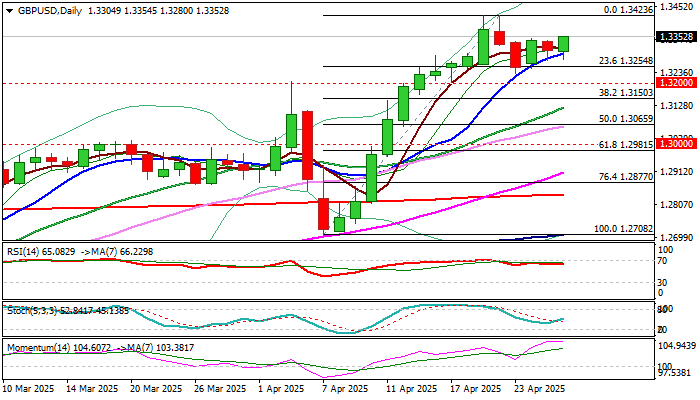
Cable edged higher early Monday and pressure pivotal barrier at 1.3350 (Fibo 61.8% of 1.3423/1.3232 pullback / former recovery peak of Apr 24).
Series of higher lows since 1.3232 correction low, with fresh recovery being tracked by ascending 10DMA add to near term bullish bias, with sustained break of 1.3350 needed to confirm that corrective phase is over, and larger bulls look for fresh attack at key 1.3434 barrier (2024 top).
On the other hand, sharp drop in confidence in the UK economy (at the historical low) and signal that already fragile economy may weaken further, add to warnings that larger bulls may stall on approach to 1.3434.
Growing optimism on fading threats from the negative impact from US trade tariffs and initial signals of Ukraine war peace talks may offer fresh support to US dollar and push sterling in defensive.
The notion is supported by overbought weekly studies, fading bullish momentum and strong upside rejection last week (weekly candle with long upper shadow).
Also, momentum is overstretched and turned sideways on daily chart, along with RSI being close the border of overbought zone, although daily studies are overall still bullish.
Expect prolonged consolidation while the price action remains limited by 1.3423 (recent recovery peak) and 1.3254 (Fibo 23.6% of 1.2708/1.3423 upleg / correction low).
Loss of 1.3254/ 1.3200 to weaken near term structure and risk deeper correction towards 1.3150 (Fibo 38.2%) and 1.3121 (20DMA).
Res: 1.3400; 1.3434; 1.3515; 1.3588
Sup: 1.3298; 1.3254; 1.3200; 1.3150

Global markets were mostly higher on Monday as investors watched to see what may come of negotiations over U.S. President Donald Trump’s tariffs.
The future for the S&P 500 dropped 0.3% while that for the Dow Jones Industrial Average slid 0.2%.
Germany’s DAX added 0.2% to 22,294.34 and the CAC 40 in Paris gained 0.4% to 7,568.75. Britain’s FTSE 100 advanced 0.3% to 8436.78.
Shares in China slipped despite more efforts by Beijing to boost the economy, as the status of talks between Washington and Beijing remained unclear.
Trump has said he’s actively negotiating with the Chinese government on tariffs — while the Chinese and U.S. Treasury Secretary Scott Bessent stated that talks have yet to start.
Hong Kong’s Hang Seng was nearly unchanged at 21,971.96, while the Shanghai Composite Index fell 0.2% to 3,288.41.
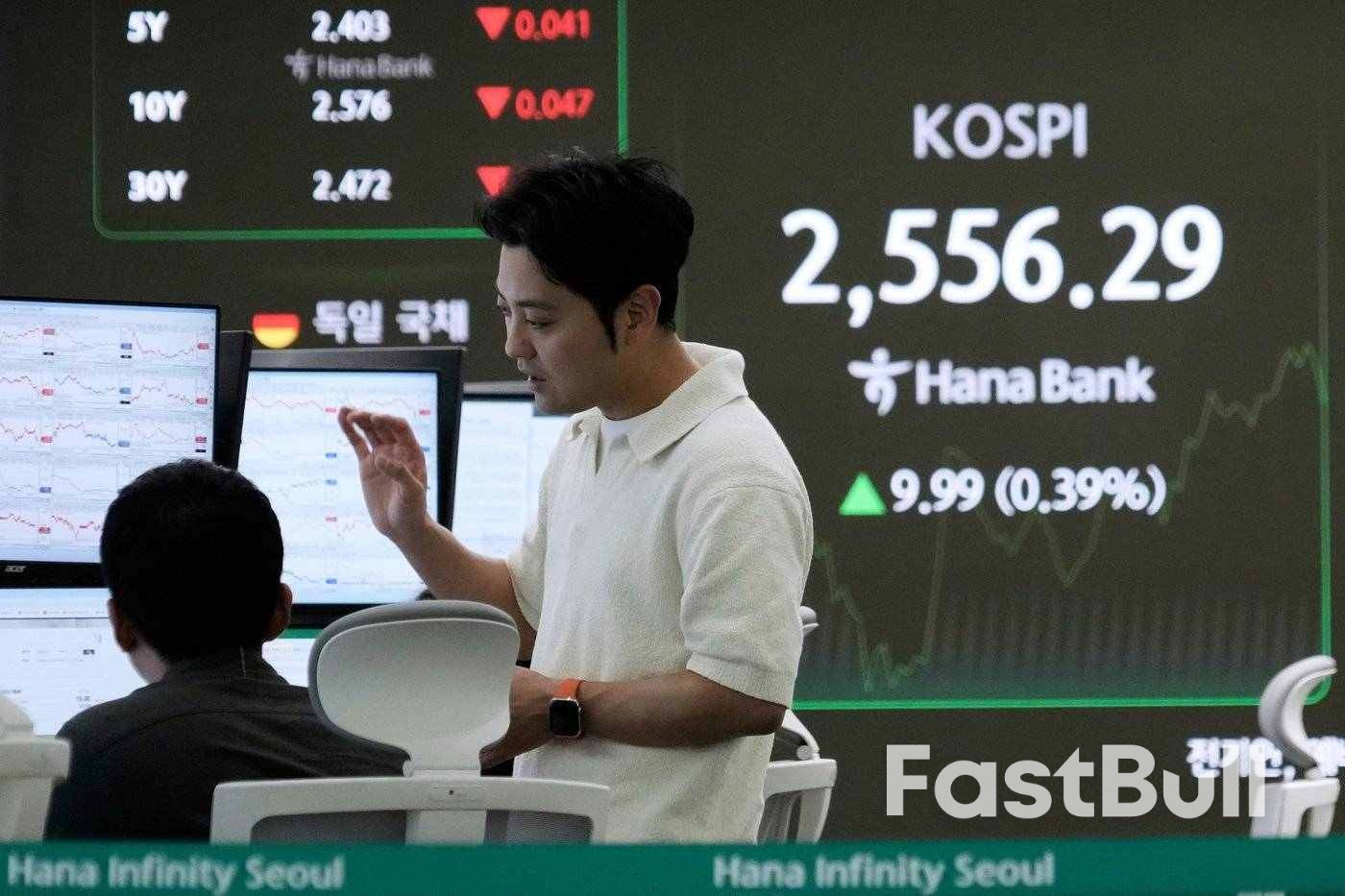
Tokyo’s Nikkei 225 picked up 0.4% to 35,839.99 and the Kospi in South Korea was nearly unchanged at 2,548.86.
Australia’s S&P/ASX 200 advanced 0.4%, closing at 7,997.10. Taiwan’s Taiex gained 0.8%
On Friday, Big Tech stocks helped Wall Street close a winning, roller-coaster week, one that saw markets swing from fear to relief and back to caution because of Trump’s trade war.
The S&P 500 rose 0.7%, capping a big three-day rally. It’s within 10.1% of its record set earlier this year. Spurts for Nvidia and other influential tech stocks sent the Nasdaq composite up a market-leading 1.3%, while the Dow Jones Industrial Average added only a modest 0.1%.
Alphabet climbed 1.7% in its first trading after Google’s parent company reported late Thursday that its profit soared 50% in the beginning of 2025 from a year earlier, more than analysts expected.
Another market heavyweight, Nvidia, was also a major force pushing the S&P 500 index upward after the chip company rose 4.3%.
They helped offset a 6.7% drop for Intel, which fell even though its results for the beginning of the year also topped expectations.
Despite last week’s rally, as talk of Trump firing Federal Reserve Chair Jerome Powell receded and hints emerged of a selective softening of his stance on tariffs, not much has changed, Stephen Innes of SPI Asset Management said in a commentary.
“But let’s not kid ourselves: this isn’t a clean pivot. It’s hope and narrative management, plain and simple. What’s really driving the bounce isn’t hard policy action — it’s the perception of de-escalation,” Innes said.
Trump says he’s on a path to cut several new trade deals in a few weeks — but has also suggested it’s “physically impossible” to hold all the needed meetings.
Companies across industries have increasingly been saying the uncertainty created by Trump’s tariffs is making it difficult to give financial forecasts for the upcoming year.
The hope is that if Trump rolls back some of his stiff tariffs, he could avert a recession that many investors see as otherwise likely because of his trade war.
But the on-again-off-again tariffs may be pushing households and businesses to alter their spending and freeze plans for long-term investment because of how quickly conditions can change, sometimes seemingly by the hour.
A report Friday said sentiment among U.S. consumers sank in April, though not by as much as economists expected. The survey from the University of Michigan said its measure of expectations for coming conditions has dropped 32% since January for the steepest three-month percentage decline seen since the 1990 recession.
In other dealings early Monday, U.S. benchmark crude oil lost 2 cents to $63.00 per barrel in electronic trading on the New York Mercantile Exchange.
Brent crude, the international standard, inched 8 cents lower to $65.72 per barrel.
The U.S. dollar declined to 143.59 Japanese yen from 143.60 yen. The euro fell to $1.1353 from $1.1366.
Standard Chartered (StanChart) revised its forecast for the US dollar, anticipating a weaker performance than previously expected.
The Asia-focused bank now projects that the EUR/USD exchange rate will reach 1.16 by the end of the second quarter of 2025, up from its earlier forecast of 1.06, and will maintain that level through the end of 2025, an increase from the prior estimate of 1.04.
According to StanChart, this revision reflects a broader trend of dollar weakness against other G10 currencies. The bank also indicated a moderate "risk-on" bias for G10 currencies, suggesting that higher-beta currencies might outperform safe havens in the upcoming months.
StanChart’s baseline expectation is that the dollar will be slightly weaker compared to its current spot but will remain essentially stable through the end of the year. Despite recent positive developments from the U.S. administration regarding tariffs and encouraging equity market gains, the dollar has not shown significant strength.
This leads the bank to believe that the adjustment in dollar positions is ongoing and could result in a further decline in the dollar’s value.
The bank also acknowledges uncertainty surrounding its baseline forecast. It notes that President Trump has an incentive to maintain a stable policy environment as the new fiscal package becomes a focal point. Trump may aim for quick tariff deals to support the argument that tariff revenues will positively contribute to the projected revenues in the upcoming fiscal bill.
Economic advisors are likely cautioning that adding a risk premium to U.S. assets could be detrimental without offering any benefits.
StanChart suggests that if the unwinding of aggressive policy takes precedence, the dollar could see an appreciation beyond the bank’s current baseline projections.
White Label
Data API
Web Plug-ins
Poster Maker
Affiliate Program
The risk of loss in trading financial instruments such as stocks, FX, commodities, futures, bonds, ETFs and crypto can be substantial. You may sustain a total loss of the funds that you deposit with your broker. Therefore, you should carefully consider whether such trading is suitable for you in light of your circumstances and financial resources.
No decision to invest should be made without thoroughly conducting due diligence by yourself or consulting with your financial advisors. Our web content might not suit you since we don't know your financial conditions and investment needs. Our financial information might have latency or contain inaccuracy, so you should be fully responsible for any of your trading and investment decisions. The company will not be responsible for your capital loss.
Without getting permission from the website, you are not allowed to copy the website's graphics, texts, or trademarks. Intellectual property rights in the content or data incorporated into this website belong to its providers and exchange merchants.
Not Logged In
Log in to access more features

FastBull Membership
Not yet
Purchase
Log In
Sign Up