• Trade
  • Markets
  • Copy
  • Contests
  • News
  • 24/7
  • Calendar
  • Q&A
  • Chats
Trending
Screeners
SYMBOL
LAST
BID
ASK
HIGH
LOW
NET CHG.
%CHG.
SPREAD
SPX
S&P 500 Index
6827.42
6827.42
6827.42
6899.86
6801.80
-73.58
-1.07%
--
DJI
Dow Jones Industrial Average
48458.04
48458.04
48458.04
48886.86
48334.10
-245.98
-0.51%
--
IXIC
NASDAQ Composite Index
23195.16
23195.16
23195.16
23554.89
23094.51
-398.69
-1.69%
--
USDX
US Dollar Index
98.000
98.080
98.000
98.070
97.920
+0.050
+ 0.05%
--
EURUSD
Euro / US Dollar
1.17288
1.17295
1.17288
1.17447
1.17280
-0.00106
-0.09%
--
GBPUSD
Pound Sterling / US Dollar
1.33630
1.33641
1.33630
1.33740
1.33546
-0.00077
-0.06%
--
XAUUSD
Gold / US Dollar
4340.70
4341.11
4340.70
4347.21
4294.68
+41.31
+ 0.96%
--
WTI
Light Sweet Crude Oil
57.450
57.480
57.450
57.601
57.194
+0.217
+ 0.38%
--

Community Accounts

Signal Accounts
--
Profit Accounts
--
Loss Accounts
--
View More

Become a signal provider

Sell trading signals to earn additional income

View More

Guide to Copy Trading

Get started with ease and confidence

View More

Signal Accounts for Members

All Signal Accounts

Best Return
  • Best Return
  • Best P/L
  • Best MDD
Past 1W
  • Past 1W
  • Past 1M
  • Past 1Y

All Contests

  • All
  • Trump Updates
  • Recommend
  • Stocks
  • Cryptocurrencies
  • Central Banks
  • Featured News
Top News Only
Share

Reuters Calculation - India's Nov Services Trade Surplus At $17.9 Billion

Share

India Trade Secretary: Reduction In Imports In November Due To Fall In Gold, Oil And Coal Shipments

Share

India Trade Secretary: Gold Imports Have Declined In Nov By About 60%

Share

India Trade Secretary: Exports In Sectors Such Engineering, Electronics , Gems And Jewellery Aided November Figures

Share

India's Nov Merchandise Trade Deficit At $24.53 Billion - Reuters Calculation (Poll $32 Billion)

Share

India's Nov Merchandise Imports At $62.66 Billion

Share

India's Nov Merchandise Exports At $38.13 Billion

Share

Stats Office - Swiss November Producer/Import Prices -1.6% Year-On-Year (Versus-1.7% In Prior Month)

Share

Stats Office - Swiss November Producer/Import Prices -0.5% Month-On-Month (Versus-0.3% In Prior Month)

Share

Thailand To Hold Elections On Feb 8 - Multiple Local Media Reports

Share

Taiwan Dollar Falls 0.6% To 31.384 Per USA Dollar, Lowest Since December 3

Share

Stats Office - Botswana November Consumer Inflation At 0.0% Month-On-Month

Share

Stats Office - Botswana November Consumer Inflation At 3.8% Year-On-Year

Share

Statistics Bureau - Kazakhstan's Jan-Nov Industrial Output +7.4% Year-On-Year

Share

Fca: Sets Out Plans To Help Build Mortgage Market Of Future

Share

Eurostoxx 50 Futures Up 0.38%, DAX Futures Up 0.43%, FTSE Futures Up 0.37%

Share

[Delivery Of New US Presidential Aircraft Delayed Again] According To The Latest Timeline Released By The US Air Force, The Delivery Of The First Of The Two Newly Commissioned Air Force One Presidential Aircraft Will Not Be Earlier Than 2028. This Means That The Delivery Of The New Air Force One Has Been Delayed Once Again

Share

German Nov Wholesale Prices +0.3% Month-On-Month

Share

Norway's Nov Trade Balance Nok 41.3 Billion - Statistics Norway

Share

German Nov Wholesale Prices +1.5% Year-On-Year

TIME
ACT
FCST
PREV
U.K. Trade Balance Non-EU (SA) (Oct)

A:--

F: --

P: --

France HICP Final MoM (Nov)

A:--

F: --

P: --

China, Mainland Outstanding Loans Growth YoY (Nov)

A:--

F: --

P: --

China, Mainland M2 Money Supply YoY (Nov)

A:--

F: --

P: --

China, Mainland M0 Money Supply YoY (Nov)

A:--

F: --

P: --

China, Mainland M1 Money Supply YoY (Nov)

A:--

F: --

P: --

India CPI YoY (Nov)

A:--

F: --

P: --

India Deposit Gowth YoY

A:--

F: --

P: --

Brazil Services Growth YoY (Oct)

A:--

F: --

P: --

Mexico Industrial Output YoY (Oct)

A:--

F: --

P: --

Russia Trade Balance (Oct)

A:--

F: --

P: --

Philadelphia Fed President Henry Paulson delivers a speech
Canada Building Permits MoM (SA) (Oct)

A:--

F: --

P: --

Canada Wholesale Sales YoY (Oct)

A:--

F: --

P: --

Canada Wholesale Inventory MoM (Oct)

A:--

F: --

P: --

Canada Wholesale Inventory YoY (Oct)

A:--

F: --

P: --

Canada Wholesale Sales MoM (SA) (Oct)

A:--

F: --

P: --

Germany Current Account (Not SA) (Oct)

A:--

F: --

P: --

U.S. Weekly Total Rig Count

A:--

F: --

P: --

U.S. Weekly Total Oil Rig Count

A:--

F: --

P: --

Japan Tankan Small Manufacturing Outlook Index (Q4)

A:--

F: --

P: --

Japan Tankan Large Non-Manufacturing Diffusion Index (Q4)

A:--

F: --

P: --

Japan Tankan Large Non-Manufacturing Outlook Index (Q4)

A:--

F: --

P: --

Japan Tankan Large Manufacturing Outlook Index (Q4)

A:--

F: --

P: --

Japan Tankan Small Manufacturing Diffusion Index (Q4)

A:--

F: --

P: --

Japan Tankan Large Manufacturing Diffusion Index (Q4)

A:--

F: --

P: --

Japan Tankan Large-Enterprise Capital Expenditure YoY (Q4)

A:--

F: --

P: --

U.K. Rightmove House Price Index YoY (Dec)

A:--

F: --

P: --

China, Mainland Industrial Output YoY (YTD) (Nov)

A:--

F: --

P: --

China, Mainland Urban Area Unemployment Rate (Nov)

A:--

F: --

P: --

Saudi Arabia CPI YoY (Nov)

A:--

F: --

P: --

Euro Zone Industrial Output YoY (Oct)

--

F: --

P: --

Euro Zone Industrial Output MoM (Oct)

--

F: --

P: --

Canada Existing Home Sales MoM (Nov)

--

F: --

P: --

Euro Zone Total Reserve Assets (Nov)

--

F: --

P: --

U.K. Inflation Rate Expectations

--

F: --

P: --

Canada National Economic Confidence Index

--

F: --

P: --

Canada New Housing Starts (Nov)

--

F: --

P: --

U.S. NY Fed Manufacturing Employment Index (Dec)

--

F: --

P: --

U.S. NY Fed Manufacturing Index (Dec)

--

F: --

P: --

Canada Core CPI YoY (Nov)

--

F: --

P: --

Canada Manufacturing Unfilled Orders MoM (Oct)

--

F: --

P: --

U.S. NY Fed Manufacturing Prices Received Index (Dec)

--

F: --

P: --

U.S. NY Fed Manufacturing New Orders Index (Dec)

--

F: --

P: --

Canada Manufacturing New Orders MoM (Oct)

--

F: --

P: --

Canada Core CPI MoM (Nov)

--

F: --

P: --

Canada Trimmed CPI YoY (SA) (Nov)

--

F: --

P: --

Canada Manufacturing Inventory MoM (Oct)

--

F: --

P: --

Canada CPI YoY (Nov)

--

F: --

P: --

Canada CPI MoM (Nov)

--

F: --

P: --

Canada CPI YoY (SA) (Nov)

--

F: --

P: --

Canada Core CPI MoM (SA) (Nov)

--

F: --

P: --

Canada CPI MoM (SA) (Nov)

--

F: --

P: --

Federal Reserve Board Governor Milan delivered a speech
U.S. NAHB Housing Market Index (Dec)

--

F: --

P: --

Australia Composite PMI Prelim (Dec)

--

F: --

P: --

Australia Services PMI Prelim (Dec)

--

F: --

P: --

Australia Manufacturing PMI Prelim (Dec)

--

F: --

P: --

Japan Manufacturing PMI Prelim (SA) (Dec)

--

F: --

P: --

U.K. Unemployment Claimant Count (Nov)

--

F: --

P: --

U.K. Unemployment Rate (Nov)

--

F: --

P: --

Q&A with Experts
    • All
    • Chatrooms
    • Groups
    • Friends
    Connecting
    .
    .
    .
    Type here...
    Add Symbol or Code

      No matching data

      All
      Trump Updates
      Recommend
      Stocks
      Cryptocurrencies
      Central Banks
      Featured News
      • All
      • Russia-Ukraine Conflict
      • Middle East Flashpoint
      • All
      • Russia-Ukraine Conflict
      • Middle East Flashpoint
      Search
      Products

      Charts Free Forever

      Chats Q&A with Experts
      Screeners Economic Calendar Data Tools
      Membership Features
      Data Warehouse Market Trends Institutional Data Policy Rates Macro

      Market Trends

      Market Sentiment Order Book Forex Correlations

      Top Indicators

      Charts Free Forever
      Markets

      News

      News Analysis 24/7 Columns Education
      From Institutions From Analysts
      Topics Columnists

      Latest Views

      Latest Views

      Trending Topics

      Top Columnists

      Latest Update

      Signals

      Copy Rankings Latest Signals Become a signal provider AI Rating
      Contests
      Brokers

      Overview Brokers Assessment Rankings Regulators News Claims
      Broker listing Forex Brokers Comparison Tool Live Spread Comparison Scam
      Q&A Complaint Scam Alert Videos Tips to Detect Scam
      More

      Business
      Events
      Careers About Us Advertising Help Center

      White Label

      Data API

      Web Plug-ins

      Affiliate Program

      Awards Institution Evaluation IB Seminar Salon Event Exhibition
      Vietnam Thailand Singapore Dubai
      Fans Party Investment Sharing Session
      FastBull Summit BrokersView Expo
      Recent Searches
        Top Searches
          Markets
          News
          Analysis
          User
          24/7
          Economic Calendar
          Education
          Data
          • Names
          • Latest
          • Prev

          View All

          No data

          Scan to Download

          Faster Charts, Chat Faster!

          Download App
          English
          • English
          • Español
          • العربية
          • Bahasa Indonesia
          • Bahasa Melayu
          • Tiếng Việt
          • ภาษาไทย
          • Français
          • Italiano
          • Türkçe
          • Русский язык
          • 简中
          • 繁中
          Open Account
          Search
          Products
          Charts Free Forever
          Markets
          News
          Signals

          Copy Rankings Latest Signals Become a signal provider AI Rating
          Contests
          Brokers

          Overview Brokers Assessment Rankings Regulators News Claims
          Broker listing Forex Brokers Comparison Tool Live Spread Comparison Scam
          Q&A Complaint Scam Alert Videos Tips to Detect Scam
          More

          Business
          Events
          Careers About Us Advertising Help Center

          White Label

          Data API

          Web Plug-ins

          Affiliate Program

          Awards Institution Evaluation IB Seminar Salon Event Exhibition
          Vietnam Thailand Singapore Dubai
          Fans Party Investment Sharing Session
          FastBull Summit BrokersView Expo

          South Korean Won Faces Pressure Amid U.S. Trade Deal Uncertainties

          Gerik

          Economic

          Summary:

          Investor concerns over stalled trade negotiations with the U.S. and potential capital outflows have weighed on the South Korean won, which broke the 1,400-per-dollar level...

          Trade Talks and Investor Concerns

          South Korea’s trade negotiations with the Trump administration have been complicated by political and financial uncertainties. President Lee Jae Myung signaled that agreeing to U.S. demands requiring $350 billion in direct investments could necessitate a currency swap to prevent excessive dollar demand. His remarks heightened market fears that the deal might fail or strain South Korea’s financial system, recalling vulnerabilities from the 1997 Asian financial crisis.
          The selling pressure accelerated this week, with analysts estimating that channeling the full $350 billion to the U.S. without an FX swap could push the won down by roughly 100 won per dollar annually over the next three years. The currency’s limited global footprint accounting for just 2% of global FX trading compounds its susceptibility to shocks, unlike the more widely traded yen.

          Policy Options and Swap Considerations

          President Lee has called for a dollar swap line with the Federal Reserve, similar to arrangements the Bank of Japan maintains. However, U.S. authorities may prefer alternative measures such as the FIMA Repo Facility rather than unlimited swap lines, limiting Seoul’s flexibility in managing potential outflows. The Korean finance ministry and central bank have declined to comment, leaving investors uncertain about the available policy tools to stabilize the currency.
          The proposed $350 billion investment is tied to a broader trade deal capping tariffs at 15% on South Korean goods. If the deal fails, tariffs could rise to 25%, undermining competitiveness against Japanese and European exporters. The combination of investment-related outflows, political risk, and tariff uncertainty has contributed to the won’s current volatility.
          Market participants see the situation as a high-risk scenario for the Korean economy. FX dealers warn that the won could slide further toward 1,450 per dollar if capital transfers begin. Political rhetoric around potential impeachment, though unlikely, and historical sensitivity to currency crises add additional layers of risk. For now, the won remains under pressure as traders navigate the uncertain trajectory of U.S.-Korea trade negotiations.
          The South Korean won is grappling with heightened volatility amid stalled U.S. trade talks and looming capital outflows. The interplay of political considerations, historical financial vulnerabilities, and the mechanics of a potential $350 billion investment fund is intensifying pressure on the currency, underscoring the challenges policymakers face in stabilizing exchange rates during complex international negotiations.

          Source: Reuters

          To stay updated on all economic events of today, please check out our Economic calendar
          Risk Warnings and Disclaimers
          You understand and acknowledge that there is a high degree of risk involved in trading. Following any strategies or investment methods may lead to potential losses. The content on the site is provided by our contributors and analysts for information purposes only. You are solely responsible for determining whether any trading assets, securities, strategy, or any other product is suitable for investing based on your own investment objectives and financial situation.
          Add to Favorites
          Share

          US Senate Holds Hearing on Crypto Taxation

          Glendon

          Cryptocurrency

          US Senate Holds Hearing on Crypto Taxation

          The US Senate Finance Committee will hold a hearing on crypto taxation on October 1 at 10:00 AM ET, featuring industry leaders and policymakers at the Capitol.

          The hearing aims to clarify tax obligations for digital assets, potentially influencing market dynamics and regulatory compliance within the cryptocurrency industry.

          The US Senate Finance Committee is scheduled to hold a hearing on crypto taxation on October 1 at 10:00 AM ET. This meeting will feature insights from leading market players and experts as they explore the taxation of digital assets.

          The session, chaired by Senator Mike Crapo, will include executives such as Lawrence Zlatkin from Coinbase, and experts like Annette Nellen from AICPA. They aim to clarify tax rules for assets like BTC and stablecoins, influencing future tax policies. Senator Mike Crapo stated, "The session, titled 'Examining the Taxation of Digital Assets,' will be held on Oct. 1."

          The hearing could significantly impact the crypto market with changes in regulation and policy. Stakeholders anticipate potential adjustments in investor behavior and market positions as the US prepares to refine digital asset taxation frameworks.

          Financial implications include potential shifts in venture capital, trading volumes, and institutional interest. Regulatory clarity might stabilize taxation environments, assisting in broader market participation and reducing barriers for small transactions.

          Historical events indicate potential volatility as stakeholders anticipate regulatory outcomes. Policy adjustments could enhance or restrict digital asset innovations, influencing the market's future trajectory. Observers will closely watch the financial market response post-hearing.

          Source: CryptoSlate

          Risk Warnings and Disclaimers
          You understand and acknowledge that there is a high degree of risk involved in trading. Following any strategies or investment methods may lead to potential losses. The content on the site is provided by our contributors and analysts for information purposes only. You are solely responsible for determining whether any trading assets, securities, strategy, or any other product is suitable for investing based on your own investment objectives and financial situation.
          Add to Favorites
          Share

          German Auto Lobby Welcomes U.S. Tariff Reduction but Urges Continued EU Advocacy

          Gerik

          Economic

          Tariff Reduction Seen as Positive Step

          The German Association of the Automotive Industry (VDA) praised the U.S. action as a constructive measure for German car exporters. VDA President Hildegard Mueller described the tariff reduction as an important step toward alleviating trade pressures on the automotive sector, which has faced elevated costs and uncertainties due to prior tariffs imposed on European vehicles and parts.
          Despite the tariff rollback, Mueller emphasized that the remaining duties continue to pose a tangible challenge for German automakers. Exporters still encounter trade barriers that can affect competitiveness, pricing, and planning for production and supply chains. The industry underlined that while the reduction is welcome, it is not a comprehensive solution to the structural trade hurdles that European automakers face in the U.S. market.

          Call for Continued EU Engagement

          The VDA urged the European Union to maintain pressure on the U.S. government to secure further improvements in trade conditions. Strengthened transatlantic cooperation and advocacy are viewed as essential to ensuring a stable, predictable trade environment, supporting investment, and safeguarding the long-term competitiveness of Germany’s automotive sector.
          While the U.S. tariff reduction marks a positive development for German car exporters, the VDA underscores the need for continued diplomatic and trade engagement by the EU. Addressing remaining barriers will be crucial for maintaining growth, stability, and global competitiveness in the automotive industry.

          Source: Reuters

          To stay updated on all economic events of today, please check out our Economic calendar
          Risk Warnings and Disclaimers
          You understand and acknowledge that there is a high degree of risk involved in trading. Following any strategies or investment methods may lead to potential losses. The content on the site is provided by our contributors and analysts for information purposes only. You are solely responsible for determining whether any trading assets, securities, strategy, or any other product is suitable for investing based on your own investment objectives and financial situation.
          Add to Favorites
          Share

          Gold Holds Near Record as Investors Monitor Fed Policy and Economic Data

          Gerik

          Commodity

          Economic

          Price Movements and Market Dynamics

          Gold steadied close to $3,742 per ounce, roughly $50 below the record set earlier in the week. Prices dipped on Wednesday after U.S. new-home sales unexpectedly surged in August to the fastest pace since early 2022, alleviating some concerns about economic slowdown. Silver and other precious metals also saw upward movement, reflecting broader strength in commodities amid supportive factors such as robust central-bank purchases and positive ETF inflows.
          Traders are closely monitoring Federal Reserve signals, as rate cuts generally benefit non-yielding assets like gold. Fed Chair Jerome Powell has emphasized caution, balancing signs of labor market weakness against inflation risks. Treasury Secretary Scott Bessent highlighted market frustration over the lack of a clearly defined Fed rate-cut agenda. Expectations for two rate cuts this year are partly driving investor sentiment in precious metals.
          Support from Central Banks and ETFs
          Gold has benefited from strong central-bank demand and increased ETF inflows, which hit a three-year high recently. Year-to-date, bullion-backed ETF holdings have risen almost every month, adding approximately 400 tons overall. China’s plans to hold foreign sovereign bullion reserves further bolstered market sentiment, contributing to a peak of $3,791.10 per ounce earlier this week.
          Investors are awaiting the U.S. personal consumption expenditures (PCE) price index on Friday, the Fed’s preferred measure of underlying inflation. A slower pace of PCE growth could strengthen arguments for rate cuts, likely supporting bullion prices further. Analysts anticipate that softer inflation readings may reinforce expectations for accommodative policy, sustaining demand for gold and other precious metals.
          Gold remains near historic highs, influenced by a combination of monetary policy uncertainty, robust central-bank purchases, and strong ETF demand. Upcoming U.S. economic data, particularly inflation metrics, will be critical in shaping investor expectations and the trajectory of precious metals markets in the near term.

          Source: Bloomberg

          To stay updated on all economic events of today, please check out our Economic calendar
          Risk Warnings and Disclaimers
          You understand and acknowledge that there is a high degree of risk involved in trading. Following any strategies or investment methods may lead to potential losses. The content on the site is provided by our contributors and analysts for information purposes only. You are solely responsible for determining whether any trading assets, securities, strategy, or any other product is suitable for investing based on your own investment objectives and financial situation.
          Add to Favorites
          Share

          Dollar Strengthens On Fed Signals Of A Pause In Rate Cuts

          FXOpen

          Economic

          Forex

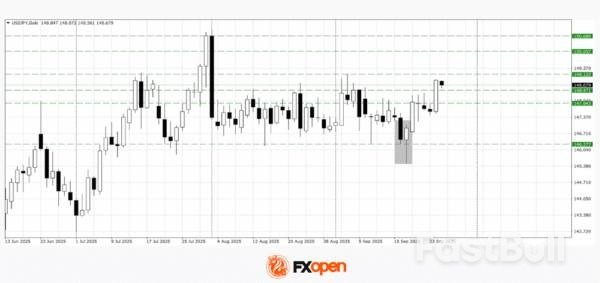
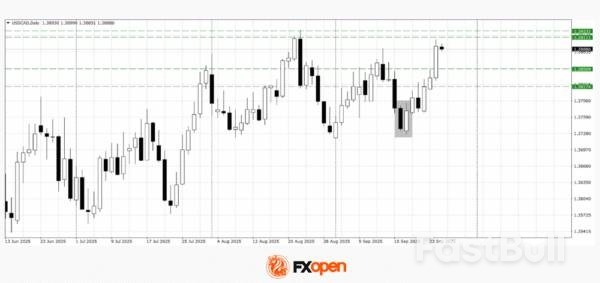
          The US dollar firmed after comments from Federal Reserve Chair Jerome Powell, who suggested that further rate cuts are unlikely in the coming months. While markets continue to price in policy easing by the end of the year, the current rhetoric points to a pause in the near term, supporting the dollar in USD/JPY and USD/CAD pairs.

          In the upcoming sessions, the key driver for the currency will remain US and Canadian data releases. Today, investors will focus on US Q2 GDP, weekly jobless claims and durable goods orders. Additional interest will centre on the Kansas City Fed manufacturing index and weekly housing reports. Tomorrow, attention will shift to the Core PCE Price Index — the Fed’s preferred measure of inflation — along with Canadian July GDP and US household income and spending data.

          USD/JPY

          After a false break below key support at 146.30 last week, USD/JPY buyers managed to form a bullish “piercing line” candlestick pattern. This setup helped lift the pair towards the upper boundary of the medium-term range at 146.30–149.00. Technical analysis of USD/JPY chart indicates a potential return inside this corridor, unless we see a daily close above 149.00 in the coming sessions.

          Events likely to influence USD/JPY:

          ● Today at 15:30 (GMT+3): US core durable goods orders;
          ● Today at 15:30 (GMT+3): US GDP;
          ● Today at 15:30 (GMT+3): US initial jobless claims.

          USD/CAD

          USD/CAD buyers have brought the pair close to August’s highs for the year. If the 1.3900–1.3920 range establishes itself as support, the price may extend gains towards the psychological resistance at 1.4000. Conversely, as the USD/CAD chart suggests, a rejection from these levels and the formation of reversal patterns could trigger a downward correction, testing key levels in the 1.3820–1.3850 area.

          Events likely to influence USD/CAD:

          ● Today at 20:00 (GMT+3): remarks by Michael S. Barr, Fed Vice Chair for Supervision;
          ● Tomorrow at 15:30 (GMT+3): US Core PCE Price Index;
          ● Tomorrow at 15:30 (GMT+3): Canadian GDP.

          Source: FXOpen

          To stay updated on all economic events of today, please check out our Economic calendar
          Risk Warnings and Disclaimers
          You understand and acknowledge that there is a high degree of risk involved in trading. Following any strategies or investment methods may lead to potential losses. The content on the site is provided by our contributors and analysts for information purposes only. You are solely responsible for determining whether any trading assets, securities, strategy, or any other product is suitable for investing based on your own investment objectives and financial situation.
          Add to Favorites
          Share

          China’s Soybean Purchases from Argentina Challenge U.S. Farmers

          Gerik

          Economic

          Commodity

          Shift in China’s Soybean Sourcing

          Chinese importers have expanded purchases from Argentina to at least 35 cargoes, up from 20 earlier, with most shipments scheduled for November. This marks a notable deviation from China’s usual pattern of sourcing U.S. soybeans between October and February after the American harvest, while relying on Brazil for most of its annual supply. As of September 11, China had not booked a single U.S. cargo a first since 1999, according to USDA data illustrating the impact of Argentina’s new trade measures on traditional supply chains.
          Argentina temporarily suspended export taxes on key crops, including soybeans, to increase dollar inflows and relieve pressure on the peso. The suspension, set to last until October 31 or until sales reached $7 billion, was quickly met, enabling Argentine producers to boost exports. The resulting shipments to China total over 2.27 million tons, surpassing previous monthly records from July 2015. Buyers include Chinese state-owned and private crushers, as well as major trading houses both domestic and international. Some purchases are intended for next year’s crop, signaling a continued shift in sourcing patterns.

          Implications for U.S. Farmers

          The American Soybean Association has urged President Donald Trump to negotiate swiftly with China to regain market access, citing pressures on the U.S. farm economy. With Chinese demand partially redirected to Argentina, U.S. farmers face reduced sales and potential long-term impacts on their market share. The situation underscores the vulnerability of traditional agricultural trade flows to policy shifts and external market interventions.
          China’s increased soybean imports from Argentina demonstrate the sensitivity of global commodity markets to government policy and international trade decisions. For U.S. producers, the redirection of Chinese demand represents both a challenge and a warning about the need for strategic engagement in key export markets. At the same time, Argentina’s temporary policy change reflects how emerging exporters can capitalize on trade shifts to gain market share in a competitive global environment.

          Source: Reuters

          To stay updated on all economic events of today, please check out our Economic calendar
          Risk Warnings and Disclaimers
          You understand and acknowledge that there is a high degree of risk involved in trading. Following any strategies or investment methods may lead to potential losses. The content on the site is provided by our contributors and analysts for information purposes only. You are solely responsible for determining whether any trading assets, securities, strategy, or any other product is suitable for investing based on your own investment objectives and financial situation.
          Add to Favorites
          Share

          SNB Keeps Rate at Zero in First Halt to Easing Since Early 2023

          Glendon

          Economic

          Forex

          The Swiss National Bank kept borrowing costs unchanged, halting its easing cycle as officials shirk from a return to negative interest rates.

          Officials left their benchmark at zero on Thursday, as predicted by almost all of the 24 economists surveyed by Bloomberg. The sole dissenter had anticipated a cut.

          “Inflationary pressure is virtually unchanged compared to the previous quarter,” the central bank said in a statement. “The SNB will continue to monitor the situation and adjust its monetary policy if necessary, in order to ensure price stability.”

          The pause follows six consecutive reductions that started in March 2023. Officials had consistently stated that the harm caused to the financial system from reintroducing the world’s only negative rate meant they would need to apply a higher bar to such a move than to a more conventional cut.

          While inflation may be nearly at the floor of their 0-2% range, the most recent reading of 0.2% is still above SNB forecasts. President Martin Schlegel and his colleagues also appear to have adopted a doctrine of responding more judiciously to the strength of their currency despite its effect of depressing import prices.

          That would give them leeway to monitor inflows into the franc, which last week pushed it to a decade-high against the dollar, without feeling the need to immediately react. Against the euro, which matters more for Swiss exporters, it’s roughly at the same level as it was in June, when the SNB’s last decision took place.

          The outcome does mean that exporters reeling from President Donald Trump’s imposition on Switzerland of the highest tariff applied to any advanced economy will need to keep fending for themselves. On the eve of the decision, the country’s KOF research institute slashed its forecast for growth next year, citing US levies.

          “Tariffs are likely to dampen exports and investment especially,” the SNB said. “The economic outlook for Switzerland remains uncertain. The main risks are US trade policy and global economic developments.”

          Officials published a new outlook for consumer-price growth that matches their previous estimates. They are forecasting it to average 0.2% this year, 0.5% in 2026 and 0.7% in 2027.

          The Swiss decision aligns with the wait-and-see approach of the European Central Bank, which has kept rates unchanged for two meetings in a row. It contrasts with other global peers including the Federal Reserve, which this month delivered its first reduction since Trump’s return to office.

          Looking ahead, a majority of economists reckons the SNB has reached the end of its easing cycle, meaning that it will keep its rate at zero at least until the end of next year.

          But about a quarter of them predict that by December, when the impact of Trump’s tariffs is clearer, the SNB will take the leap back into negative territory that it had exited three years ago.

          Schlegel and his two colleagues on the central bank’s board will be quizzed on their appetite to do so when they address reporters at 10 a.m. in Zurich. Other topics of interest may include the first summary of policymakers’ discussion for the decision, which is set to be published in four weeks.

          Source: Bloomberg Europe

          To stay updated on all economic events of today, please check out our Economic calendar
          Risk Warnings and Disclaimers
          You understand and acknowledge that there is a high degree of risk involved in trading. Following any strategies or investment methods may lead to potential losses. The content on the site is provided by our contributors and analysts for information purposes only. You are solely responsible for determining whether any trading assets, securities, strategy, or any other product is suitable for investing based on your own investment objectives and financial situation.
          Add to Favorites
          Share
          FastBull
          Copyright © 2025 FastBull Ltd

          728 RM B 7/F GEE LOK IND BLDG NO 34 HUNG TO RD KWUN TONG KLN HONG KONG

          TelegramInstagramTwitterfacebooklinkedin
          App Store Google Play Google Play
          Products
          Charts

          Chats

          Q&A with Experts
          Screeners
          Economic Calendar
          Data
          Tools
          Membership
          Features
          Function
          Markets
          Copy Trading
          Latest Signals
          Contests
          News
          Analysis
          24/7
          Columns
          Education
          Company
          Careers
          About Us
          Contact Us
          Advertising
          Help Center
          Feedback
          User Agreement
          Privacy Policy
          Business

          White Label

          Data API

          Web Plug-ins

          Poster Maker

          Affiliate Program

          Risk Disclosure

          The risk of loss in trading financial instruments such as stocks, FX, commodities, futures, bonds, ETFs and crypto can be substantial. You may sustain a total loss of the funds that you deposit with your broker. Therefore, you should carefully consider whether such trading is suitable for you in light of your circumstances and financial resources.

          No decision to invest should be made without thoroughly conducting due diligence by yourself or consulting with your financial advisors. Our web content might not suit you since we don't know your financial conditions and investment needs. Our financial information might have latency or contain inaccuracy, so you should be fully responsible for any of your trading and investment decisions. The company will not be responsible for your capital loss.

          Without getting permission from the website, you are not allowed to copy the website's graphics, texts, or trademarks. Intellectual property rights in the content or data incorporated into this website belong to its providers and exchange merchants.

          Not Logged In

          Log in to access more features

          FastBull Membership

          Not yet

          Purchase

          Become a signal provider
          Help Center
          Customer Service
          Dark Mode
          Price Up/Down Colors

          Log In

          Sign Up

          Position
          Layout
          Fullscreen
          Default to Chart
          The chart page opens by default when you visit fastbull.com