• Trade
  • Markets
  • Copy
  • Contests
  • News
  • 24/7
  • Calendar
  • Q&A
  • Chats
Trending
Screeners
SYMBOL
LAST
BID
ASK
HIGH
LOW
NET CHG.
%CHG.
SPREAD
SPX
S&P 500 Index
6896.25
6896.25
6896.25
6913.26
6893.48
-9.49
-0.14%
--
DJI
Dow Jones Industrial Average
48367.05
48367.05
48367.05
48471.70
48297.26
-94.87
-0.20%
--
IXIC
NASDAQ Composite Index
23419.07
23419.07
23419.07
23521.05
23414.83
-55.27
-0.24%
--
USDX
US Dollar Index
97.940
98.020
97.940
97.960
97.870
+0.060
+ 0.06%
--
EURUSD
Euro / US Dollar
1.17419
1.17427
1.17419
1.17488
1.17386
-0.00055
-0.05%
--
GBPUSD
Pound Sterling / US Dollar
1.34632
1.34639
1.34632
1.34674
1.34574
-0.00043
-0.03%
--
XAUUSD
Gold / US Dollar
4346.01
4346.40
4346.01
4373.05
4328.39
+6.90
+ 0.16%
--
WTI
Light Sweet Crude Oil
57.852
57.887
57.852
57.861
57.663
-0.001
0.00%
--

Community Accounts

Signal Accounts
--
Profit Accounts
--
Loss Accounts
--
View More

Become a signal provider

Sell trading signals to earn additional income

View More

Guide to Copy Trading

Get started with ease and confidence

View More

Signal Accounts for Members

All Signal Accounts

Best Return
  • Best Return
  • Best P/L
  • Best MDD
Past 1W
  • Past 1W
  • Past 1M
  • Past 1Y

All Contests

  • All
  • Trump Updates
  • Recommend
  • Stocks
  • Cryptocurrencies
  • Central Banks
  • Featured News
Top News Only
Share

Jpm: Cn Property Sale Tax Cut Has Limited Effect, Fails To Improve Mkt Forecasts On Home Prices

Share

Russia's Chief Of The General Staff Valery Gerasimov Says Russian Troops Are Advancing Confidently Deeper Into Ukrainian Defences, Interfax Reports

Share

Ukraine: Four Injured, Including Three Children In Russian Attack On Odesa

Share

India's Nifty Bank Futures Up 0.05% In Pre-Open Trade

Share

India's Nifty 50 Index Up 0.12% In Pre-Open Trade

Share

Indian Rupee Opens Down 0.06% At 89.84 Per USA Dollar, Previous Close 89.79

Share

《Hibor》Overnight Hibor Up To 4.38%, Logging 1-Month High

Share

Spot Platinum Extends Losses, Last Down Over 7% At $2038.55/Oz

Share

[Market Update] Spot Silver Fell 5% Intraday, Currently Trading At $72.32 Per Ounce. New York Silver Futures Plunged 7% Intraday, Currently Trading At $72.35 Per Ounce

Share

Taiwan's Benchmark Stock Index Crosses 29000 Points For The First Time, Rises As Much As 1% To 29001.260 Points

Share

Spot Palladium Falls Over 7% To $1497.75/Oz

Share

Spot Palladium Down Over 5% To $1520.38/Oz

Share

[Market Update] Spot Gold Fell Nearly $20 In The Short Term, Currently Trading At $4354 Per Ounce, While Spot Silver Plunged 3% Intraday, Currently Trading At $73.86 Per Ounce. The CME Group Announced Its Second Increase In Margin Requirements For Precious Metals Futures

Share

Indonesia Sets January Crude Palm Oil Referrence Price At $915.64 Per Metric Ton

Share

Korea's Inflation Gains 2.3% In December On Rising Fuel Prices

Share

[Market Update] Spot Gold Touched $4,370 Per Ounce, Up 0.72% On The Day

Share

Taiwan's Benchmark Stock Index Rises As Much As 0.5% To Record Of 28860.87 Points

Share

China Dec Official Composite PMI At 50.7

Share

China Dec Official Non-Manufacturing PMI At 50.2 Versus 49.5 In Nov

Share

China December Official Manufacturing PMI At 50.1 (Reuters Poll 49.2) Versus 49.2 In November

TIME
ACT
FCST
PREV
U.S. EIA Weekly Gasoline Stocks Change

A:--

F: --

P: --

South Korea Industrial Output MoM (SA) (Nov)

A:--

F: --

P: --
South Korea Retail Sales MoM (Nov)

A:--

F: --

P: --

South Korea Services Output MoM (Nov)

A:--

F: --

P: --

Russia IHS Markit Services PMI (Dec)

A:--

F: --

P: --

Turkey Economic Sentiment Indicator (Dec)

A:--

F: --

P: --

Brazil Unemployment Rate (Nov)

A:--

F: --

P: --

U.S. Weekly Redbook Index YoY

A:--

F: --

P: --

U.S. S&P/CS 10-City Home Price Index YoY (Oct)

A:--

F: --

P: --

U.S. S&P/CS 10-City Home Price Index MoM (Not SA) (Oct)

A:--

F: --

P: --

U.S. S&P/CS 20-City Home Price Index (Not SA) (Oct)

A:--

F: --

P: --

U.S. S&P/CS 20-City Home Price Index MoM (Not SA) (Oct)

A:--

F: --

P: --

U.S. FHFA House Price Index YoY (Oct)

A:--

F: --

P: --
U.S. S&P/CS 20-City Home Price Index YoY (Not SA) (Oct)

A:--

F: --

P: --

U.S. S&P/CS 20-City Home Price Index MoM (SA) (Oct)

A:--

F: --

P: --
U.S. FHFA House Price Index (Oct)

A:--

F: --

P: --

U.S. FHFA House Price Index MoM (Oct)

A:--

F: --

P: --
U.S. Chicago PMI (Dec)

A:--

F: --

P: --

Brazil CAGED Net Payroll Jobs (Nov)

A:--

F: --

P: --

U.S. Weekly Total Oil Rig Count

A:--

F: --

P: --

U.S. Weekly Total Rig Count

A:--

F: --

P: --

FOMC Meeting Minutes
U.S. API Weekly Refined Oil Stocks

A:--

F: --

P: --

U.S. API Weekly Crude Oil Stocks

A:--

F: --

P: --

U.S. API Weekly Cushing Crude Oil Stocks

A:--

F: --

P: --

U.S. API Weekly Gasoline Stocks

A:--

F: --

P: --

South Korea CPI YoY (Dec)

A:--

F: --

P: --

China, Mainland NBS Manufacturing PMI (Dec)

A:--

F: --

P: --

China, Mainland Composite PMI (Dec)

A:--

F: --

P: --

China, Mainland NBS Non-manufacturing PMI (Dec)

A:--

F: --

P: --

China, Mainland Caixin Manufacturing PMI (SA) (Dec)

A:--

F: --

P: --

Turkey Trade Balance (Nov)

--

F: --

P: --

Russia CPI YoY (Dec)

--

F: --

P: --

U.S. MBA Mortgage Application Activity Index WoW

--

F: --

P: --

South Africa Trade Balance (Nov)

--

F: --

P: --

U.S. Initial Jobless Claims 4-Week Avg. (SA)

--

F: --

P: --

U.S. Weekly Continued Jobless Claims (SA)

--

F: --

P: --

U.S. Weekly Initial Jobless Claims (SA)

--

F: --

P: --

U.S. EIA Weekly Cushing, Oklahoma Crude Oil Stocks Change

--

F: --

P: --

U.S. EIA Weekly Crude Demand Projected by Production

--

F: --

P: --

U.S. EIA Weekly Gasoline Stocks Change

--

F: --

P: --

U.S. EIA Weekly Crude Stocks Change

--

F: --

P: --

U.S. EIA Weekly Heating Oil Stock Changes

--

F: --

P: --

U.S. EIA Weekly Crude Oil Imports Changes

--

F: --

P: --

U.S. EIA Weekly Natural Gas Stocks Change

--

F: --

P: --

South Korea Trade Balance Prelim (Dec)

--

F: --

P: --

Indonesia Core Inflation YoY (Dec)

--

F: --

P: --

Indonesia Inflation Rate YoY (Dec)

--

F: --

P: --

Turkey Manufacturing PMI (Dec)

--

F: --

P: --

Brazil IHS Markit Manufacturing PMI (Dec)

--

F: --

P: --

Mexico Manufacturing PMI (Dec)

--

F: --

P: --

South Korea IHS Markit Manufacturing PMI (SA) (Dec)

--

F: --

P: --

Indonesia IHS Markit Manufacturing PMI (Dec)

--

F: --

P: --

India HSBC Manufacturing PMI Final (Dec)

--

F: --

P: --

Russia IHS Markit Manufacturing PMI (Dec)

--

F: --

P: --

U.K. Nationwide House Price Index MoM (Dec)

--

F: --

P: --

U.K. Nationwide House Price Index YoY (Dec)

--

F: --

P: --

Turkey Manufacturing PMI (Dec)

--

F: --

P: --

Italy Manufacturing PMI (SA) (Dec)

--

F: --

P: --

Euro Zone M3 Money Supply (SA) (Nov)

--

F: --

P: --

Euro Zone M3 Money Supply YoY (Nov)

--

F: --

P: --

Q&A with Experts
    • All
    • Chatrooms
    • Groups
    • Friends
    Nawhdir. Øt flag
    @luigiIf there is a miracle 4330 that goes down. Then you know the next step.
    Nawhdir. Øt flag
    @haomI have something 1 for you.
    luigi flag
    Nawhdir. Øt
    @luigiIf there is a miracle 4330 that goes down. Then you know the next step.
    @Nawhdir. Øtafter thath big sell off from monday I dont buy to much
    Nawhdir. Øt flag
    luigi
    @luigiYes, last Monday, when I was selling heavily, I actually bought (against the current) by scalping.
    Nawhdir. Øt flag
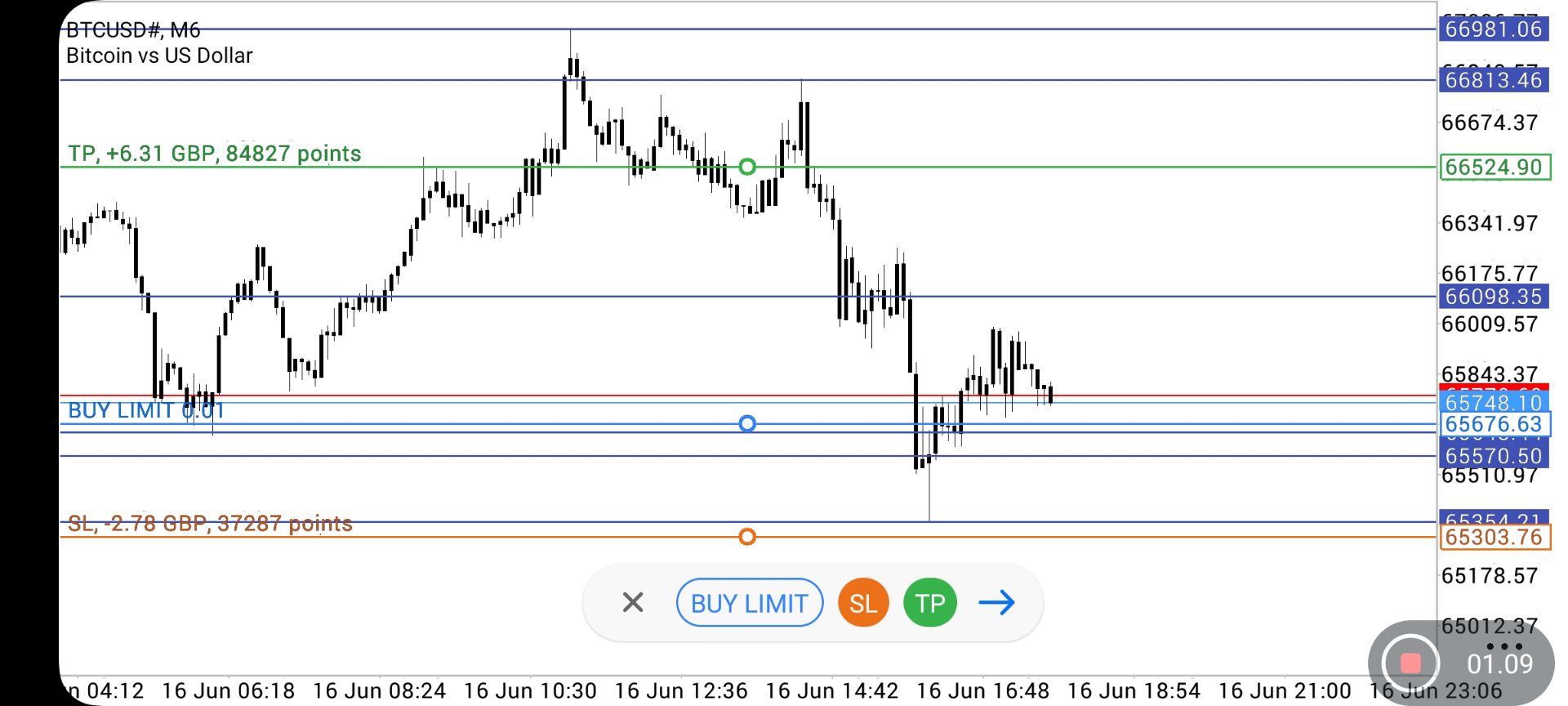
    @haomset buy limit order @ CHF/JPY.
    haom flag
    Nawhdir. Øt
    @haomset buy limit order @ CHF/JPY.
    Can I also use a demo account?
    haom flag
    Nawhdir. Øt flag
    haom
    @haomYes , but to be fair, I will also do it on my real account.
    Nawhdir. Øt flag
    Nawhdir. Øt
    I will share it in a moment
    luigi flag
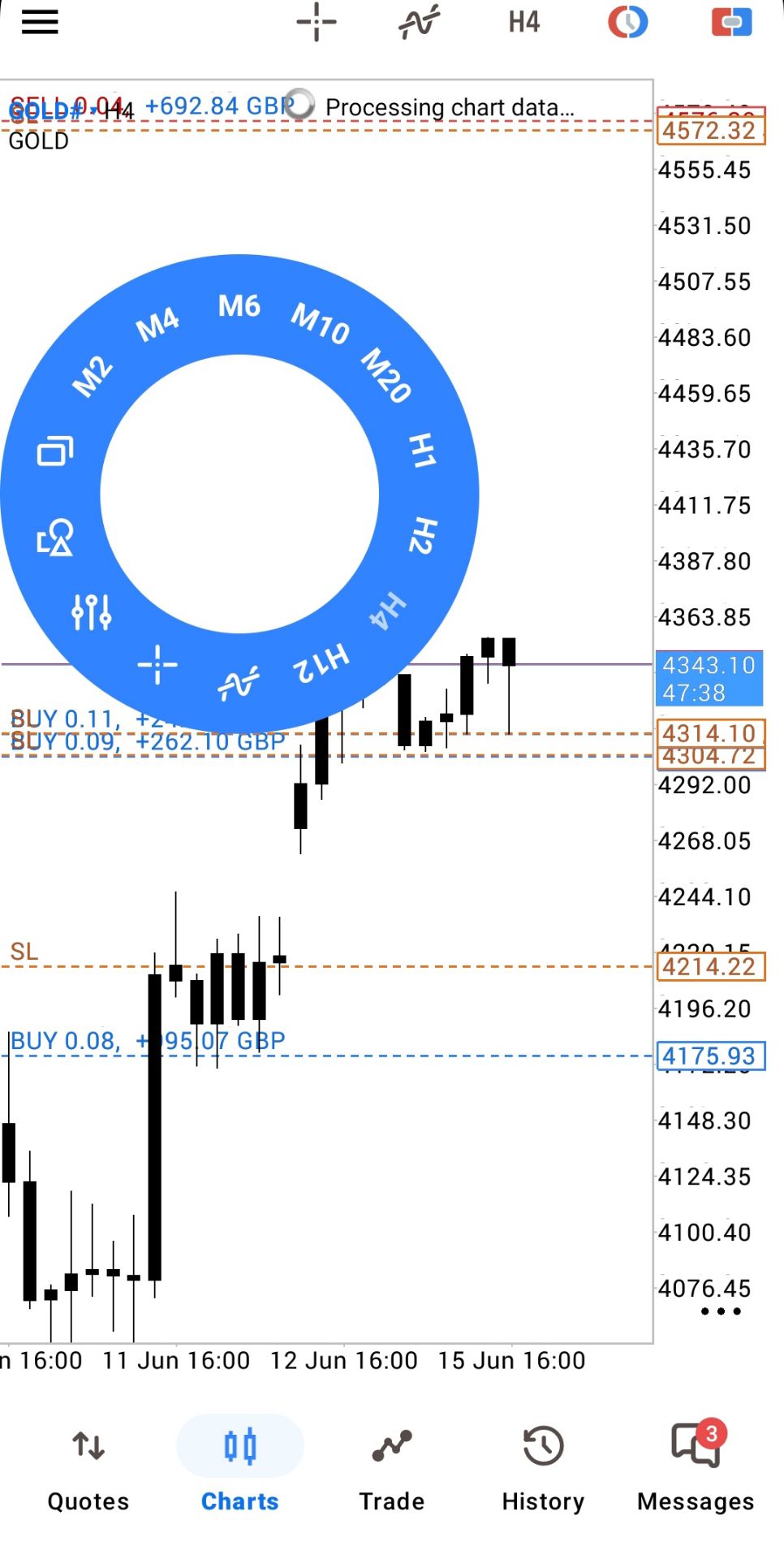
    in my opinion gold is in a big corection mode
    Nawhdir. Øt flag
    Nawhdir. Øt flag
    Nawhdir. Øt flag
    @haom
    Nawhdir. Øt flag
    adjust to your broker. Place TP exactly at 200
    D40MPXLZW2 flag
    gold sell limit my opinion
    Nawhdir. Øt flag
    Nawhdir. Øt flag
    I don't break promises.
    Nawhdir. Øt flag
    genius flag
    good morning guys
    MAK flag
    enjoy life and wife
    Type here...
    Add Symbol or Code

      No matching data

      All
      Trump Updates
      Recommend
      Stocks
      Cryptocurrencies
      Central Banks
      Featured News
      • All
      • Russia-Ukraine Conflict
      • Middle East Flashpoint
      • All
      • Russia-Ukraine Conflict
      • Middle East Flashpoint
      Search
      Products

      Charts Free Forever

      Chats Q&A with Experts
      Screeners Economic Calendar Data Tools
      Membership Features
      Data Warehouse Market Trends Institutional Data Policy Rates Macro

      Market Trends

      Market Sentiment Order Book Forex Correlations

      Top Indicators

      Charts Free Forever
      Markets

      News

      News Analysis 24/7 Columns Education
      From Institutions From Analysts
      Topics Columnists

      Latest Views

      Latest Views

      Trending Topics

      Top Columnists

      Latest Update

      Signals

      Copy Rankings Latest Signals Become a signal provider AI Rating
      Contests
      Brokers

      Overview Brokers Assessment Rankings Regulators News Claims
      Broker listing Forex Brokers Comparison Tool Live Spread Comparison Scam
      Q&A Complaint Scam Alert Videos Tips to Detect Scam
      More

      Business
      Events
      Careers About Us Advertising Help Center

      White Label

      Data API

      Web Plug-ins

      Affiliate Program

      Awards Institution Evaluation IB Seminar Salon Event Exhibition
      Vietnam Thailand Singapore Dubai
      Fans Party Investment Sharing Session
      FastBull Summit BrokersView Expo
      Recent Searches
        Top Searches
          Markets
          News
          Analysis
          User
          24/7
          Economic Calendar
          Education
          Data
          • Names
          • Latest
          • Prev

          View All

          No data

          Scan to Download

          Faster Charts, Chat Faster!

          Download App
          English
          • English
          • Español
          • العربية
          • Bahasa Indonesia
          • Bahasa Melayu
          • Tiếng Việt
          • ภาษาไทย
          • Français
          • Italiano
          • Türkçe
          • Русский язык
          • 简中
          • 繁中
          Open Account
          Search
          Products
          Charts Free Forever
          Markets
          News
          Signals

          Copy Rankings Latest Signals Become a signal provider AI Rating
          Contests
          Brokers

          Overview Brokers Assessment Rankings Regulators News Claims
          Broker listing Forex Brokers Comparison Tool Live Spread Comparison Scam
          Q&A Complaint Scam Alert Videos Tips to Detect Scam
          More

          Business
          Events
          Careers About Us Advertising Help Center

          White Label

          Data API

          Web Plug-ins

          Affiliate Program

          Awards Institution Evaluation IB Seminar Salon Event Exhibition
          Vietnam Thailand Singapore Dubai
          Fans Party Investment Sharing Session
          FastBull Summit BrokersView Expo

          Silver Closes 2025 with Historic Volatility Amid Surging Demand and Geopolitical Influence

          Gerik

          Economic

          Commodity

          Summary:

          Silver prices experienced unprecedented swings at the close of 2025, hitting a record $80 per ounce before plunging nearly 9% and then rebounding 5%, driven by industrial demand, inflation hedging, geopolitical instability...

          Unprecedented Price Swings Mark the End of 2025 for Silver

          Silver capped off 2025 with remarkable price turbulence, underscoring the asset's unique role in both industrial and investment portfolios. On Monday, silver futures for March delivery soared to an all-time high of $80 per ounce, marking the first time in history the metal crossed that psychological barrier. However, the euphoria was short-lived. By the end of the session, the market witnessed a sharp correction, with silver prices collapsing by 8.7%, their steepest daily decline since February 2021. Just a day later, silver rebounded strongly, rising 5% to around $74 per ounce during early Tuesday trading in London.
          Despite the dramatic intraday reversal, silver still registered an astonishing 153% gain year-to-date, positioning it as one of the top-performing commodities of 2025. This performance was not isolated. Gold futures also staged a recovery from Monday’s selloff, climbing 0.9% to trade above $4,380 per ounce. Copper followed suit with a 2.1% increase, reflecting a broader uplift across the commodities market.
          The underlying forces behind these gains are multifaceted. Silver, like gold, functions as a hedge against both inflation and geopolitical risk. With persistent global tensions and rising macroeconomic uncertainty, investor appetite for safe-haven assets grew steadily throughout the year. These causal factors ranging from monetary instability to fears of conflict escalation contributed directly to sustained inflows into precious metals.

          Weaker Dollar and Industrial Demand Reinforce Rally

          Another key driver in silver's explosive rise has been the weakening U.S. dollar. As the greenback depreciates, dollar-denominated assets such as silver become more affordable for foreign investors, thereby stimulating international demand. While this correlation is clear, the dollar’s impact on silver is not purely causal but also reflects broader market sentiment shifts about interest rates and inflation expectations.
          In silver’s case, however, its dual nature adds a unique industrial component to the equation. Beyond investment speculation, silver is integral to the manufacturing of electronics, particularly in fast-expanding sectors such as renewable energy, data infrastructure, and electric vehicles. The metal is a crucial element in solar panels, data center cooling systems, and EV battery components. As clean energy policies gained momentum across multiple regions in 2025, industrial consumption of silver surged accordingly.

          Elon Musk’s Influence on Market Sentiment

          Adding to the speculative momentum, Tesla CEO Elon Musk posted on X (formerly Twitter) over the weekend that “silver is needed in many industrial processes.” Though not a direct cause of the price spike, this high-profile endorsement served as a catalyst, amplifying public awareness and possibly encouraging retail investor participation. This relationship is primarily correlational, as social media commentary alone cannot determine commodity pricing, but it does play a role in shaping short-term demand surges through sentiment amplification.
          The massive swing from record highs to sharp decline and then partial recovery encapsulates the volatility investors have come to expect in 2025. As geopolitical disruptions, monetary policy shifts, and industrial transitions continue to shape global markets, silver remains at the intersection of hard asset stability and industrial necessity. While Monday’s plunge served as a stark reminder of speculative risk, the subsequent rebound reinforced the metal’s long-term appeal across diversified investment strategies.
          Silver’s 2025 trajectory highlights both the opportunities and the risks associated with commodities that serve dual purposes. On one hand, it thrives as a refuge in uncertain times; on the other, it is indispensable for modern technology and sustainable infrastructure. As 2026 begins, investors are likely to remain drawn to silver, not merely for its historical monetary value but also for its increasingly vital role in the future economy. The dramatic fluctuations witnessed this week may not be an anomaly but a preview of an even more volatile and integrated commodities market ahead.

          Source: CNBC

          To stay updated on all economic events of today, please check out our Economic calendar
          Risk Warnings and Disclaimers
          You understand and acknowledge that there is a high degree of risk involved in trading. Following any strategies or investment methods may lead to potential losses. The content on the site is provided by our contributors and analysts for information purposes only. You are solely responsible for determining whether any trading assets, securities, strategy, or any other product is suitable for investing based on your own investment objectives and financial situation.
          Add to Favorites
          Share

          China Mandates 50% Domestic Equipment Rule for Chipmakers, Sources Say

          Michelle

          Stocks

          Economic

          China is requiring chipmakers to use at least 50% domestically made equipment for adding new capacity, three people familiar with the matter said, as Beijing pushes to build a self-sufficient semiconductor supply chain.

          The rule is not publicly documented, but chipmakers seeking state approval to build or expand their plants have been told by authorities in recent months that they must prove through procurement tenders that at least half their equipment will be Chinese-made, the people told Reuters.

          The mandate is one of the most significant measures Beijing has introduced to wean itself off reliance on foreign technology, a push that gathered pace after the U.S. tightened technology export restrictions in 2023, banning sales of advanced AI chips and semiconductor equipment to China.

          While those U.S. export restrictions blocked the sale of some of the most advanced tools, the 50% rule is leading Chinese manufacturers to choose domestic suppliers even in areas where foreign equipment from the U.S., Japan, South Korea and Europe remain available.

          Applications failing the threshold are typically rejected, though authorities grant flexibility depending on supply constraints, the people said. The requirements are relaxed for advanced chip production lines, where domestically developed equipment is not yet fully available.

          "Authorities prefer if it is much higher than 50%," one source told Reuters. "Eventually they are aiming for the plants to use 100% domestic equipment."

          China's industry ministry did not respond to a request for comment. The sources did not wish to be identified as the measure is not public.

          'WHOLE NATION' APPROACH

          China's President Xi Jinping has been calling for a "whole nation" effort to build a fully self-sufficient domestic semiconductor supply chain that involves thousands of engineers and scientists at companies and research centers nationwide.

          The effort is being made across the wide supply-chain spectrum. Reuters reported earlier this month that Chinese scientists are working on a prototype of a machine capable of producing cutting-edge chips, an outcome that Washington has spent years trying to prevent.

          "Before, domestic fabs like SMIC would prefer U.S. equipment and would not really give Chinese firms a chance," a former employee at local equipment maker Naura Technology (002371.SZ), opens new tab said, referring to the Semiconductor Manufacturing International Corporation (0981.HK), opens new tab.

          "But that changed starting with the 2023 U.S export restrictions, when Chinese fabs had no choice but to work with domestic suppliers."

          State-affiliated entities placed a record 421 orders for domestic lithography machines and parts this year worth around 850 million yuan, according to publicly available procurement data, signaling a surge in demand for locally developed technologies.

          To support the local chip supply chain, Beijing has also poured hundreds of billions of yuan into its semiconductor sector through the "Big Fund", which established a third phase in 2024 with 344 billion yuan ($49 billion) in capital.

          WINNERS AND LOSERS

          The policy is already yielding results, including in areas such as etching, a critical chip manufacturing step that involves removing materials from silicon wafers to carve out intricate transistor patterns, sources said.

          China's largest chip equipment group, Naura, is testing its etching tools on a cutting-edge 7nm (nanometre) production line of SMIC, two sources said. The early-stage milestone, which comes after Naura recently deployed etching tools on 14nm successfully, demonstrates how quickly domestic suppliers are advancing.

          "Naura's etching results have been accelerated by the government requiring fabs to use at least 50% domestic equipment," one of the people told Reuters, adding that it was forcing the company to rapidly improve.

          Advanced etching tools had been predominantly supplied in China by foreign firms such as Lam Research (LRCX.O), opens new tab and Tokyo Electron (8035.T), opens new tab, but are now being partially replaced by Naura and smaller rival Advanced Micro-Fabrication Equipment (AMEC) (688012.SS), opens new tab, sources say.

          Naura has also proven a key partner for Chinese memory chipmakers, supplying etching tools for advanced chips with more than 300 layers. It developed electrostatic chucks — devices that hold wafers during processing — to replace worn parts in Lam Research equipment that the company could no longer service after the 2023 restrictions, sources said.

          Naura, AMEC, YTMC, SMIC, Lam Research, and Tokyo Electron did not respond to requests for comment.

          China's progress is being viewed with concern by global competitors, as foreign suppliers are squeezed out of the China market.

          Naura filed a record 779 patents in 2025, more than double what it filed in 2020 and 2021, while AMEC filed 259, according to Anaqua's AcclaimIP database, and verified by Reuters.

          That's also translating into strong financial results. Naura's revenue for the first half of 2025 jumped 30% to 16 billion yuan. AMEC reported a 44% jump in first-half revenue to 5 billion yuan.

          Analysts estimate that China has now reached roughly 50% self-sufficiency in photoresist-removal and cleaning equipment, a market previously dominated by Japanese firms, but now locally led by Naura.

          "The domestic equipment market will be dominated by two to three major manufacturers, and Naura is definitely one of them," said a separate source.

          Source: Reuters

          To stay updated on all economic events of today, please check out our Economic calendar
          Risk Warnings and Disclaimers
          You understand and acknowledge that there is a high degree of risk involved in trading. Following any strategies or investment methods may lead to potential losses. The content on the site is provided by our contributors and analysts for information purposes only. You are solely responsible for determining whether any trading assets, securities, strategy, or any other product is suitable for investing based on your own investment objectives and financial situation.
          Add to Favorites
          Share

          US Dollar Index (DXY): Outlook for 2025–2026

          FXOpen

          Forex

          Technical Analysis

          The year 2025 delivered significant volatility spikes for the US Dollar Index (DXY).

          A prime example is the April shock linked to the so-called "Liberation Day tariffs", which marked the most powerful blow to the US dollar on an annual basis. The introduction by Trump of new aggressive tariffs (including a universal 10% tariff) was perceived by the market not as protectionism, but as a threat of a global trade war and economic isolation. As a result, DXY plunged by approximately 2% in a single day and continued to decline over the following months.

          Equally important was the shift in the Federal Reserve's policy stance and the launch of an interest rate cutting cycle. During the first half of 2025, the policy rate was held at 4.5%, but starting in September it was reduced three times, reaching 3.75%.

          What Could Happen to DXY in 2026?

          In May, the Federal Reserve is likely to appoint a new Chair who would be more aligned with Trump's preference for accommodative monetary policy. As a result, market participants are pricing in further rate cuts towards approximately 3.00%, while the European Central Bank and the Bank of England may act more cautiously. This divergence in central bank policies is unfavourable for the US dollar.

          Analysts at Morgan Stanley, ING and MUFG are expressing bearish forecasts for 2026. In their view, the 2025 low is likely to be broken.

          In the final days of 2025, the US Dollar Index (DXY) continues to trend lower (marked in red), with the following technical signals in focus:
          → attempts to break above the August high resemble two bull traps;
          → in December, the 98.78 level shifted from support to resistance.

          Taking the above into account, we could assume that the current descending channel will remain a key guiding structure at the beginning of 2026.

          Source: FXOpen

          Risk Warnings and Disclaimers
          You understand and acknowledge that there is a high degree of risk involved in trading. Following any strategies or investment methods may lead to potential losses. The content on the site is provided by our contributors and analysts for information purposes only. You are solely responsible for determining whether any trading assets, securities, strategy, or any other product is suitable for investing based on your own investment objectives and financial situation.
          Add to Favorites
          Share

          China’s Growth Paradox: Resilience on Paper, Struggles on the Street

          Gerik

          Economic

          Official Resilience vs. Public Reality

          China’s economy is showing strength in official figures, driven by high-performing exports and strategic sectors like artificial intelligence and electric vehicles. Export volumes reached a record $3.4 trillion in the first 11 months of 2025. Despite these figures, many Chinese citizens report worsening financial conditions, with sluggish job growth, weak spending, and stagnant incomes undermining confidence.
          Housing is the cornerstone of wealth for many Chinese households. Since 2021, property prices have fallen over 20%, with new home sales dropping 11.2% and property investment down 16% in 2025. The real estate sector’s contraction, triggered by a regulatory crackdown on debt, continues to erode household net worth, consumer spending, and investor confidence. The slowdown in this sector has a cascading effect on other industries, including construction, home appliances, and private tutoring.

          Shrinking Consumer Spending and Small Business Pain

          On-the-ground stories like that of Xiao Feng, a billiards hall owner in Beijing, and Zhang Xiaoze, a once high-earning commercial property agent, reveal the severity of the economic stagnation among middle-income earners. Xiao has had no income for six months and cut staff, while Zhang has seen his earnings plummet from ¥3 million to ¥100,000 a year. Similarly, tutoring demand has fallen sharply, with group classes replacing personalized sessions due to cost concerns. These anecdotes reinforce broader retail data showing only a 1.3% YoY increase in November sales a marked slowdown from October.
          While the IMF and institutions like Goldman Sachs forecast China’s 2025 growth at 5%, analysts from Capital Economics and the Rhodium Group estimate actual growth is likely between 2.5% and 3.5%. This discrepancy reflects skepticism about the accuracy of official data, especially as fixed-asset investment fell 2.6% during the first 11 months of 2025.

          Structural Challenges Cloud 2026 Outlook

          Despite tech gains and stabilized trade with the U.S. following a truce between Xi Jinping and Donald Trump, deeper reforms to stimulate domestic consumption and address income inequality remain politically sensitive and slow-moving. Overcapacity in sectors like autos, steel, and consumer goods continues to suppress prices and profitability, while export prices have fallen more than 20% since early 2022, creating external trade friction.
          China’s swelling trade surplus surpassing $1 trillion in 2025 may intensify foreign scrutiny and lead to protectionist measures, especially from the U.S. and EU. Domestically, the government’s cautious approach relying on targeted stimulus and avoiding radical reforms risks prolonging the economic malaise. Michael Pettis and other economists warn that unless wealth distribution shifts more decisively toward workers, consumption-driven growth will remain elusive.

          Uncertainty Among the Working Class

          For many, the fear of declining prospects has become reality. Zhai, a budget hotel owner in Shijiazhuang, embodies the anxiety of low-income entrepreneurs. Faced with declining demand and no viable industry to switch into, Zhai is considering shutting down his business once his lease expires in mid-2026 if the economy doesn't rebound.
          China’s economy is at a crossroads. While exports and high-tech sectors sustain headline growth, the continuing collapse in the property sector, rising inequality, and shrinking consumer confidence suggest a more fragile reality. Unless Beijing addresses these deep-seated structural issues, the divergence between official optimism and on-the-ground hardship may widen, leaving China with slower, uneven, and unsustainable growth in the years ahead.

          Source: AP

          To stay updated on all economic events of today, please check out our Economic calendar
          Risk Warnings and Disclaimers
          You understand and acknowledge that there is a high degree of risk involved in trading. Following any strategies or investment methods may lead to potential losses. The content on the site is provided by our contributors and analysts for information purposes only. You are solely responsible for determining whether any trading assets, securities, strategy, or any other product is suitable for investing based on your own investment objectives and financial situation.
          Add to Favorites
          Share

          Asian Markets Drift Lower as Tech Weakness and Year-End Caution Weigh on Sentiment

          Gerik

          Economic

          Stocks

          Asia Follows Wall Street's Slide as Year-End Volumes Thin

          With just two trading days remaining in 2025, Asian markets reflected a subdued global tone, following Monday’s modest declines on Wall Street. Japan’s Nikkei edged down marginally to 50,519.12, while Shanghai’s Composite Index slipped 0.1%. The Hang Seng in Hong Kong bucked the regional trend, climbing 0.5% to 25,751.64. Australia’s ASX 200 dipped 0.1%, and Taiwan’s Taiex lost 0.2%. South Korea’s Kospi closed nearly flat.
          These mixed performances are largely a consequence of thinning liquidity as most institutional investors have closed their books for the year. This seasonal decline in volume reduces directional conviction, amplifying sensitivity to external signals particularly from U.S. tech and commodity markets.

          Wall Street Pullback Led by Tech Giants

          The S&P 500 fell 0.3% to 6,905.74 on Monday, while the Dow Jones and Nasdaq both declined 0.5%. Despite the dip, the S&P remains up over 17% for the year, marking eight consecutive monthly gains. However, the final week of the year has exposed investor fatigue especially in high-valuation tech stocks.
          Nvidia dropped 1.2%, and Broadcom fell 0.8%, contributing to the overall tech retreat. These declines reflect a growing skepticism over the near-term profitability of AI-related investments. While these firms remain dominant in market capitalization, some investors are questioning whether current valuations can be justified without clearer earnings visibility from artificial intelligence development pipelines.
          This correction phase does not necessarily indicate a structural reversal, but it does highlight a causal shift in sentiment where the exuberance over AI is now meeting fundamental valuation concerns.

          Commodities Rebound as Precious Metals Lead Gains

          Gold and silver bounced back sharply on Tuesday after facing margin-driven corrections the day before. Gold gained 0.9% in early trading, recovering from a steep 4.6% loss on Monday. For the year, it is still up about 64%. Silver rose 5.2% after plunging 8.7% on Monday and has more than doubled in value in 2025, outperforming most asset classes.
          The previous session’s drop was triggered by the Chicago Mercantile Exchange raising margin requirements, forcing traders to reduce positions. This regulatory action represents a clear causal impact, where higher capital requirements prompted short-term liquidation. However, the quick rebound suggests that long-term investor confidence in precious metals remains intact, driven by inflation hedging and geopolitical uncertainty.
          Oil prices were largely unchanged early Tuesday. Brent crude was flat at $61.48 per barrel after gaining 2.1% the day before, while U.S. benchmark crude settled Monday at $58.08 per barrel. The steadiness in oil reflects a balance between fragile demand and geopolitical tensions, with prices holding above recent lows but lacking momentum.

          Bonds and FX Show Mild Movement Ahead of 2026

          In the bond market, yields continued to ease, with the U.S. 10-year Treasury yield falling to 4.11% from 4.13%. Yields have declined significantly from their early 2025 highs, largely due to the Federal Reserve’s shift toward monetary easing. While rate cuts are intended to support a slowing labor market and broader economic growth, they may also rekindle inflationary risks especially with inflation still hovering above the Fed’s 2% target.
          In currency markets, the U.S. dollar slipped slightly to 156.03 yen, while the euro rose marginally to $1.1779. These movements are largely reflective of relative rate expectations and low year-end volatility rather than any significant macro shift.

          Fragile Optimism Meets Year-End Exhaustion

          As global markets wind down for the year, cautious trading prevails amid mixed economic signals and overstretched valuations in some sectors. Asian shares, echoing Wall Street’s retreat, are displaying signs of fatigue, while precious metals have reasserted strength as 2025 closes.
          With the Federal Reserve's December meeting minutes and further rate guidance still pending, traders remain hesitant to make aggressive moves. Looking ahead to 2026, the key themes will be the sustainability of tech valuations, the trajectory of inflation and interest rates, and whether the resilience of commodities can hold in the face of macro uncertainty. The closing days of 2025 serve as a reminder that while markets may celebrate gains, they remain exposed to rapid sentiment shifts and underlying structural tensions.

          Source: AP

          To stay updated on all economic events of today, please check out our Economic calendar
          Risk Warnings and Disclaimers
          You understand and acknowledge that there is a high degree of risk involved in trading. Following any strategies or investment methods may lead to potential losses. The content on the site is provided by our contributors and analysts for information purposes only. You are solely responsible for determining whether any trading assets, securities, strategy, or any other product is suitable for investing based on your own investment objectives and financial situation.
          Add to Favorites
          Share

          China’s EV Market Enters Survival Mode in 2026 Amid Price Wars and Global Push

          Gerik

          Economic

          From Boom to Brutal Competition: EV Growth Stalls in China

          After years of rapid expansion, China’s new energy vehicle (NEV) market encompassing both battery-electric and hybrid vehicles is transitioning into a phase of consolidation and cutthroat competition. As 2025 ends, sales figures reflect a broader slowdown: Tesla's China sales dropped 7.4% year-over-year between January and November, while BYD posted a 5.1% decline. More starkly, BYD’s November sales alone plunged 26.5% from the prior year.
          In contrast, newcomers such as Xiaomi and Huawei-backed EVs are reporting sales surges of over 90% in the same period. These divergent trends suggest the market is undergoing both brand fragmentation and consolidation, with top brands increasing their hold while newer tech-savvy entrants still find room to grow.
          The structural change in the market is reflected in concentration statistics: the top 10 NEV manufacturers now control 95% of the Chinese market, up from 60–70% just a few years ago. This shift is a clear indicator that only the most efficient, well-capitalized players will survive the next phase what analysts call a "survival test" rather than a growth opportunity.

          A Prolonged Price War and Policy Headwinds

          The most immediate pressure point is pricing. Across the board, carmakers are slashing prices to stay competitive. Mercedes-Benz’s EQS EV, for example, is listed with a discount of over 432,000 yuan ($61,660), while Volvo’s XC70 is selling for 147,000 yuan less than its sticker price. According to Paul Gong at UBS, this price war could persist “for years,” putting further strain on margins and smaller automakers.
          Domestic policy changes will further squeeze the market. In 2026, Beijing is set to reintroduce purchase taxes and reduce subsidies for trade-in purchases, both of which had previously buoyed demand. UBS now forecasts China’s EV growth rate will halve in 2026, falling from approximately 20% in 2025 to a single-digit expansion next year.
          This decline is not simply cyclical but reflects a deeper saturation issue. In November, 59.4% of new passenger car sales in China were NEVs a sign that demand is nearing its natural ceiling without significant breakthroughs in rural adoption or technological innovation.

          Global Expansion Becomes Strategic Imperative

          To escape the shrinking domestic battlefield, major Chinese automakers are now turning outward. BYD, China’s EV leader, exported over 131,000 cars in November alone and is investing in overseas production, including a large factory in Hungary expected to begin manufacturing in 2026. Geely, which ranks second in domestic NEV sales, quadrupled its exports in the first half of 2025, entering new markets like Australia, Vietnam, and several Middle Eastern and Southeast Asian countries.
          This global expansion is not merely a search for sales volume but a strategic move to access higher profit margins and mitigate domestic policy volatility. The push abroad also introduces competitive pressure to global incumbents, particularly in Europe, where companies like BYD and Geely are expected to “firmly stake their claims,” according to Tu Le of Sino Auto Insights.

          Foreign Automakers Localize to Stay Competitive

          Despite the harsh conditions, foreign automakers are not retreating from China. Volkswagen is leading the adaptation effort through joint ventures with Xpeng and chip designer Horizon Robotics. Its Hefei R&D center, now its largest outside Germany, can independently complete vehicle development and approvals. This localization is designed to compress time-to-market and customize vehicles for Chinese consumers an essential step in retaining relevance.
          Volkswagen’s Chinese deliveries exceeded 17 million vehicles in the first three quarters of 2025, compared to just 8.9 million in Western Europe. This volume underscores the enduring value of China’s auto market, even in the face of tightening competition.
          General Motors and Ford continue to deliver vehicles to China and export from Chinese factories. GM, in particular, is seen as better positioned than Ford due to a more tailored vehicle lineup and greater local production flexibility.

          2026 Is No Longer a Growth Story It’s a Test of Resilience

          The narrative surrounding China’s electric vehicle sector has fundamentally shifted. Where once rapid growth, innovation, and expansion dominated, the reality in 2026 is a complex struggle for survival, scale, and efficiency. Pricing pressure, policy shifts, and market saturation are forcing automakers to choose between consolidation, innovation, or internationalization.
          While top-tier companies like BYD and Geely are pivoting to global markets, foreign competitors are doubling down on local R&D and partnerships to hold their ground. With the competitive landscape tightening and consumer choices becoming increasingly brand- and price-sensitive, even market leaders can quickly fall behind. In China’s EV race, standing still is no longer an option and every quarter is a fight to stay ahead.

          Source: CNBC

          To stay updated on all economic events of today, please check out our Economic calendar
          Risk Warnings and Disclaimers
          You understand and acknowledge that there is a high degree of risk involved in trading. Following any strategies or investment methods may lead to potential losses. The content on the site is provided by our contributors and analysts for information purposes only. You are solely responsible for determining whether any trading assets, securities, strategy, or any other product is suitable for investing based on your own investment objectives and financial situation.
          Add to Favorites
          Share

          European Markets Set for Cautious Gains in Holiday-Shortened Session

          Gerik

          Economic

          Stocks

          European Bourses Enter Final 2025 Sessions With Tepid Momentum

          As 2025 draws to a close, European equities are expected to trade without clear direction, opening broadly flat on Tuesday. According to early data from IG, the UK’s FTSE 100 is set to edge up by 0.1%, France’s CAC 40 is expected to open flat, Germany’s DAX marginally lower, and Italy’s FTSE MIB slightly higher by 0.12%. This subdued start mirrors the cautious mood that has defined the final trading week of the year.
          The lack of major earnings reports or macroeconomic data releases in Europe on Tuesday reinforces the flat sentiment, with traders likely focused on portfolio rebalancing and position squaring rather than fresh risk-taking. The holiday-thinned volume also reduces market liquidity, making it difficult to generate strong directional moves unless driven by external shocks.

          Global Sentiment Dampened by U.S. Tech Weakness and AI Bubble Fears

          Overnight cues from Asia were largely negative. Most Asia-Pacific markets closed lower after Monday’s continued sell-off in U.S. tech shares. The pullback in AI-related stocks, including Nvidia, Palantir Technologies, Meta Platforms, and Oracle, raised investor concerns about the sustainability of valuations in the artificial intelligence sector.
          Nvidia, which gained over 5% last week, gave back more than 1% on Monday, signaling potential exhaustion in the rally that has helped fuel broader U.S. indices in recent months. This tech weakness contributed to cautious trading across Asian and European markets alike, given the global interconnectedness of the technology sector. While the European market has a smaller tech footprint compared to the U.S., sentiment often correlates due to cross-sector and cross-border investment flows.
          U.S. stock futures remained flat during early Asian and European hours, suggesting little short-term momentum from Wall Street to carry into Tuesday’s trading.

          Geopolitical Uncertainty Keeps Defense Stocks Under Pressure

          In Europe, defense-related stocks remained under pressure as negotiations continue around a framework peace deal to end the war in Ukraine. Although the prospect of peace is broadly positive for regional stability, the shift reduces speculative demand for defense and security companies that have benefited from elevated military spending since 2022. Markets are waiting for more concrete signals on timelines, terms, and commitments from both Russia and Ukraine.
          This geopolitical development is not yet a driver of major equity moves but represents a potential narrative shift heading into 2026. A peace deal could alter sector rotations, particularly among industrials and defense, while also affecting energy dynamics in Eastern Europe.

          Rangebound Trading Expected Into Year-End

          With no major economic events or corporate earnings to steer investor behavior, European markets are likely to continue drifting into the year-end in a holding pattern. Light volumes, geopolitical crosscurrents, and global sector-specific pressures particularly from the U.S. tech retreat are keeping sentiment restrained.
          As investors prepare for 2026, key focus areas will likely include the next wave of central bank decisions, geopolitical risk repricing, and earnings resilience in a moderating growth environment. For now, the market narrative remains one of caution, not conviction.

          Source: CNBC

          To stay updated on all economic events of today, please check out our Economic calendar
          Risk Warnings and Disclaimers
          You understand and acknowledge that there is a high degree of risk involved in trading. Following any strategies or investment methods may lead to potential losses. The content on the site is provided by our contributors and analysts for information purposes only. You are solely responsible for determining whether any trading assets, securities, strategy, or any other product is suitable for investing based on your own investment objectives and financial situation.
          Add to Favorites
          Share
          FastBull
          Copyright © 2025 FastBull Ltd

          728 RM B 7/F GEE LOK IND BLDG NO 34 HUNG TO RD KWUN TONG KLN HONG KONG

          TelegramInstagramTwitterfacebooklinkedin
          App Store Google Play Google Play
          Products
          Charts

          Chats

          Q&A with Experts
          Screeners
          Economic Calendar
          Data
          Tools
          Membership
          Features
          Function
          Markets
          Copy Trading
          Latest Signals
          Contests
          News
          Analysis
          24/7
          Columns
          Education
          Company
          Careers
          About Us
          Contact Us
          Advertising
          Help Center
          Feedback
          User Agreement
          Privacy Policy
          Personal Information Protection Statement
          Business

          White Label

          Data API

          Web Plug-ins

          Poster Maker

          Affiliate Program

          Risk Disclosure

          The risk of loss in trading financial instruments such as stocks, FX, commodities, futures, bonds, ETFs and crypto can be substantial. You may sustain a total loss of the funds that you deposit with your broker. Therefore, you should carefully consider whether such trading is suitable for you in light of your circumstances and financial resources.

          No decision to invest should be made without thoroughly conducting due diligence by yourself or consulting with your financial advisors. Our web content might not suit you since we don't know your financial conditions and investment needs. Our financial information might have latency or contain inaccuracy, so you should be fully responsible for any of your trading and investment decisions. The company will not be responsible for your capital loss.

          Without getting permission from the website, you are not allowed to copy the website's graphics, texts, or trademarks. Intellectual property rights in the content or data incorporated into this website belong to its providers and exchange merchants.

          Not Logged In

          Log in to access more features

          FastBull Membership

          Not yet

          Purchase

          Become a signal provider
          Help Center
          Customer Service
          Dark Mode
          Price Up/Down Colors

          Log In

          Sign Up

          Position
          Layout
          Fullscreen
          Default to Chart
          The chart page opens by default when you visit fastbull.com