Markets
News
Analysis
User
24/7
Economic Calendar
Education
Data
- Names
- Latest
- Prev


Signal Accounts for Members
All Signal Accounts
All Contests


U.K. Trade Balance Non-EU (SA) (Oct)A:--
F: --
P: --
U.K. Trade Balance (Oct)A:--
F: --
P: --
U.K. Services Index MoMA:--
F: --
P: --
U.K. Construction Output MoM (SA) (Oct)A:--
F: --
P: --
U.K. Industrial Output YoY (Oct)A:--
F: --
P: --
U.K. Trade Balance (SA) (Oct)A:--
F: --
P: --
U.K. Trade Balance EU (SA) (Oct)A:--
F: --
P: --
U.K. Manufacturing Output YoY (Oct)A:--
F: --
P: --
U.K. GDP MoM (Oct)A:--
F: --
P: --
U.K. GDP YoY (SA) (Oct)A:--
F: --
P: --
U.K. Industrial Output MoM (Oct)A:--
F: --
P: --
U.K. Construction Output YoY (Oct)A:--
F: --
P: --
France HICP Final MoM (Nov)A:--
F: --
P: --
China, Mainland Outstanding Loans Growth YoY (Nov)A:--
F: --
P: --
China, Mainland M2 Money Supply YoY (Nov)A:--
F: --
P: --
China, Mainland M0 Money Supply YoY (Nov)A:--
F: --
P: --
China, Mainland M1 Money Supply YoY (Nov)A:--
F: --
P: --
India CPI YoY (Nov)A:--
F: --
P: --
India Deposit Gowth YoYA:--
F: --
P: --
Brazil Services Growth YoY (Oct)A:--
F: --
P: --
Mexico Industrial Output YoY (Oct)A:--
F: --
P: --
Russia Trade Balance (Oct)A:--
F: --
P: --
Philadelphia Fed President Henry Paulson delivers a speech
Canada Building Permits MoM (SA) (Oct)A:--
F: --
P: --
Canada Wholesale Sales YoY (Oct)A:--
F: --
P: --
Canada Wholesale Inventory MoM (Oct)A:--
F: --
P: --
Canada Wholesale Inventory YoY (Oct)A:--
F: --
P: --
Canada Wholesale Sales MoM (SA) (Oct)A:--
F: --
P: --
Germany Current Account (Not SA) (Oct)A:--
F: --
P: --
U.S. Weekly Total Rig CountA:--
F: --
P: --
U.S. Weekly Total Oil Rig CountA:--
F: --
P: --
Japan Tankan Large Non-Manufacturing Diffusion Index (Q4)--
F: --
P: --
Japan Tankan Small Manufacturing Outlook Index (Q4)--
F: --
P: --
Japan Tankan Large Non-Manufacturing Outlook Index (Q4)--
F: --
P: --
Japan Tankan Large Manufacturing Outlook Index (Q4)--
F: --
P: --
Japan Tankan Small Manufacturing Diffusion Index (Q4)--
F: --
P: --
Japan Tankan Large Manufacturing Diffusion Index (Q4)--
F: --
P: --
Japan Tankan Large-Enterprise Capital Expenditure YoY (Q4)--
F: --
P: --
U.K. Rightmove House Price Index YoY (Dec)--
F: --
P: --
China, Mainland Industrial Output YoY (YTD) (Nov)--
F: --
P: --
China, Mainland Urban Area Unemployment Rate (Nov)--
F: --
P: --
Saudi Arabia CPI YoY (Nov)--
F: --
P: --
Euro Zone Industrial Output YoY (Oct)--
F: --
P: --
Euro Zone Industrial Output MoM (Oct)--
F: --
P: --
Canada Existing Home Sales MoM (Nov)--
F: --
P: --
Euro Zone Total Reserve Assets (Nov)--
F: --
P: --
U.K. Inflation Rate Expectations--
F: --
P: --
Canada National Economic Confidence Index--
F: --
P: --
Canada New Housing Starts (Nov)--
F: --
P: --
U.S. NY Fed Manufacturing Employment Index (Dec)--
F: --
P: --
U.S. NY Fed Manufacturing Index (Dec)--
F: --
P: --
Canada Core CPI YoY (Nov)--
F: --
P: --
Canada Manufacturing Unfilled Orders MoM (Oct)--
F: --
P: --
Canada Manufacturing New Orders MoM (Oct)--
F: --
P: --
Canada Core CPI MoM (Nov)--
F: --
P: --
Canada Manufacturing Inventory MoM (Oct)--
F: --
P: --
Canada CPI YoY (Nov)--
F: --
P: --
Canada CPI MoM (Nov)--
F: --
P: --
Canada CPI YoY (SA) (Nov)--
F: --
P: --
Canada Core CPI MoM (SA) (Nov)--
F: --
P: --


No matching data
Latest Views
Latest Views
Trending Topics
Top Columnists
Latest Update
White Label
Data API
Web Plug-ins
Affiliate Program
View All

No data
In a joint statement, which was posted on Saudi Arabia’s energy ministry website and Kuwait’s official oil ministry X account, the governments of Saudi Arabia and Kuwait announced a new oil discovery “in the Partitioned Zone”.
The statement said the governments “announced that Wafra Joint Operations have made a new oil discovery in (North Wafra Wara-Burgan) field, located five kilometers north of Wafra field”.
“Crude oil flowed from the Wara reservoir in the North Wafra (Wara-Burgan-1) well at a rate exceeding 500 barrels per day, with an API gravity of 26 to 27 degrees,” the statement added.
The joint statement noted that this marks the first discovery since the resumption of production operations in the Partitioned Zone and its adjacent offshore area in mid-2020.
“The discovery is regarded as highly significant, given its positive impact on both countries’ standing as reliable global energy suppliers and their capabilities in the exploration and production sector,” the statement went on to note.
A statement posted on the Saudi energy ministry’s site last month said the Minister of Energy Prince Abdulaziz bin Salman bin Abdulaziz announced that Saudi Aramco has discovered fourteen Arabian oil and natural gas fields and reservoirs in the Eastern Province and the Empty Quarter.
The discoveries include six fields and two reservoirs of Arabian oil, as well as two fields and four reservoirs of natural gas, that statement noted.
“His Royal Highness stressed on the importance of the added value that these discoveries represent, solidifying the Kingdom’s leading position in the global energy sector, and reinforcing its rich hydrocarbon potential, citing that such discoveries will lead to opening new horizons for the Kingdom’s economic development and strengthening its ability to meet both domestic and global energy demand efficiently and sustainably for decades to come,” the statement added.
“These discoveries will also support sustained economic growth and prosperity, in line with Vision 2030 and Saudi Arabia’s ambitious goals to fully harness its natural resources and enhance global energy security,” it went on to state.
Saudi Arabia and Kuwait are both founding countries of the Organization of the Petroleum Exporting Countries (OPEC), according to the organization’s website, which notes that the group was founded in Baghdad, Iraq, “with the signing of an agreement in September 1960 by five countries, namely Islamic Republic of Iran, Iraq, Kuwait, Saudi Arabia and Venezuela”.
The OPEC site states that the mission of the Organization of the Petroleum Exporting Countries is to “coordinate and unify the petroleum policies of its Member Countries and ensure the stabilization of oil markets in order to secure an efficient, economic, and regular supply of petroleum to consumers, a steady income to producers and a fair return on capital for those investing in the petroleum industry”.
A statement posted on OPEC’s site earlier this month noted that Saudi Arabia, Kuwait, Russia, Iraq, UAE, Kazakhstan, Algeria, and Oman “met virtually on May 3, 2025, to review global market conditions and outlook”.
“In view of the current healthy market fundamentals, as reflected in the low oil inventories, and in accordance with the decision agreed upon on 5 December 2024 to start a gradual and flexible return of the 2.2 million barrels per day voluntary adjustments starting from 1 April 2025, the eight participating countries will implement a production adjustment of 411,000 barrels per day in June 2025 from May 2025 required production level,” that statement said.
A release posted on OPEC’s website on April 3 announced that Saudi Arabia, Russia, Iraq, UAE, Kuwait, Kazakhstan, Algeria, and Oman “will implement a production adjustment of 411,000 barrels per day, equivalent to three monthly increments, in May 2025”.
The statement posted on OPEC’s site on May 3 revealed that the eight countries will meet on June 1 to decide on July production levels.
Bank of America (BofA) FX strategists took note a continuation of the trend with investors selling the USD, particularly against the Australian Dollar (AUD) and Asian emerging market currencies, following the recent U.S.-China talks.
Over the past month, BofA noted that investors have been selling the USD, Japanese Yen (JPY), and Swedish Krona (SEK) in favor of Eastern Europe, Middle East, and Africa (EMEA) emerging market currencies, the Swiss Franc (CHF), and the Euro (EUR).
Analysts at BofA highlighted the potential for the USD sell-off to persist, especially among Real Money investors. They pointed out that it will be crucial to observe if officials continue to rebalance into the USD at the current strong rate.
In contrast to the USD, the JPY has faced downward pressure in recent weeks, attributed to Real Money investors. The shift in sentiment towards the JPY could be due to improved tariff sentiments, concerns over Japan’s fiscal health, and the Bank of Japan’s (BoJ) dovish stance, as outlined in the "Yen’s summer risk" report from May 14, 2025. BofA maintains a bearish outlook on the JPY, particularly against the EUR.
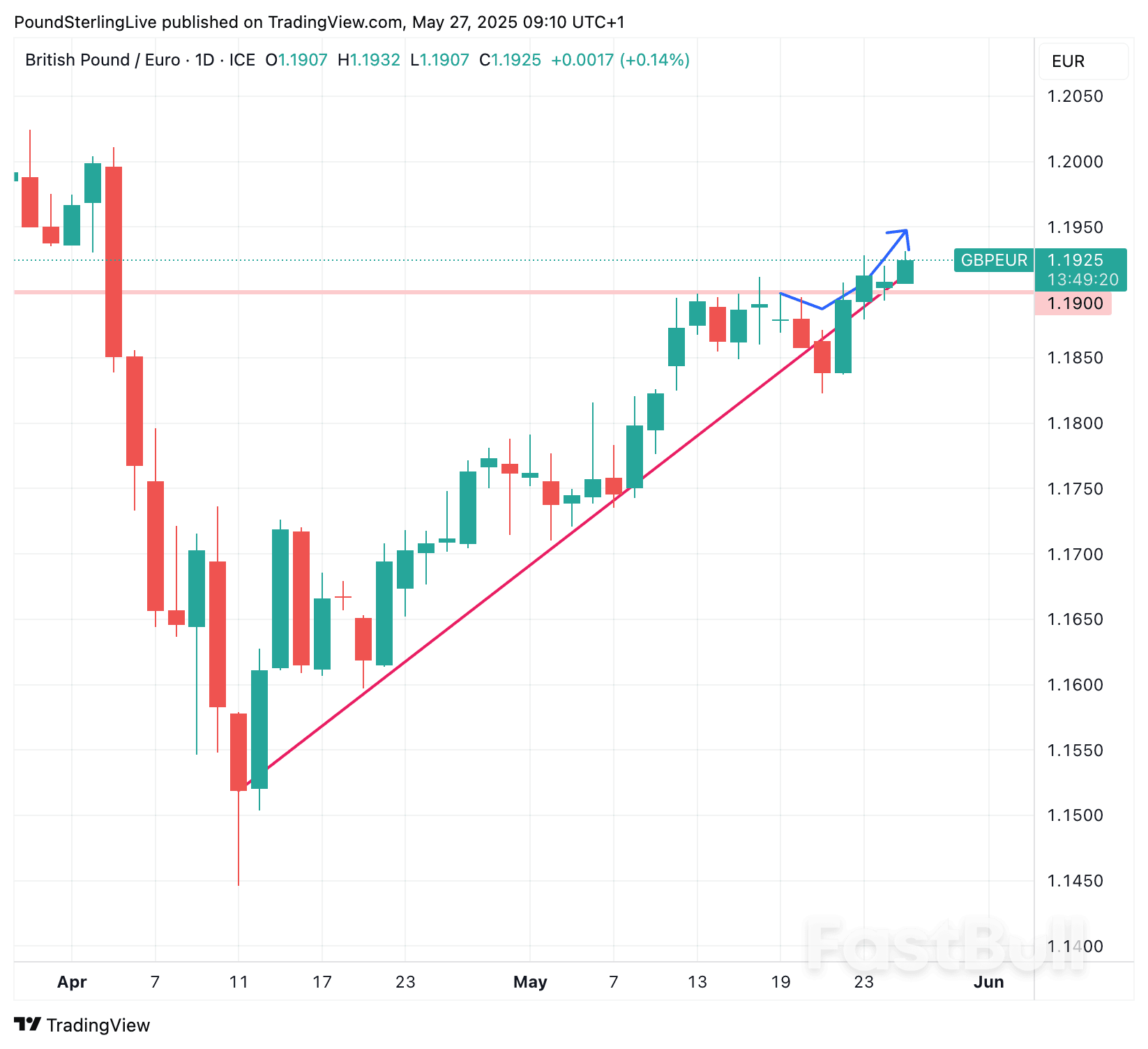
Conversely, the British Pound (GBP) has seen relatively bearish sentiment throughout the year. However, last week marked a change, with both Hedge Funds and Real Money investors returning to the GBP. This shift may be linked to optimism surrounding the UK-EU reset summit, a sentiment that BofA analysts share.


The financial world is keeping a close eye on the US Dollar. Recent reports indicate the greenback is softening, a move linked significantly to growing concerns over the nation’s budget deficit. This trend isn’t happening in a vacuum; it’s part of a complex interplay of global economic factors. Understanding this dynamic is crucial, especially for those navigating the volatile world of cryptocurrencies, which often reacts to shifts in major fiat currencies like the dollar.
Several factors contribute to the current state of the Currency Market, but the spotlight is increasingly on the fiscal health of the United States. A large and persistent budget deficit can weigh on a currency for fundamental economic reasons.
Beyond the deficit, other elements influencing the US Dollar include the Federal Reserve’s monetary policy (interest rates, quantitative easing/tightening), global economic growth prospects, geopolitical stability, and market risk sentiment. When global risk appetite is high, investors might move away from safe-haven assets like the dollar towards riskier investments.
According to analysts at ING, the current softening of the dollar is not just a temporary blip. They point to specific factors suggesting that more downside risks remain for the currency.
ING’s perspective often considers macro-financial trends and how they interact. While the precise details of their latest analysis would be in their specific reports, the general arguments for continued dollar weakness often revolve around:
These downside risks suggest that the path of least resistance for the dollar, in ING’s view, is downwards, at least in the near to medium term.
The Forex market, or foreign exchange market, is where currencies are traded. It’s the largest and most liquid financial market globally. When the US Dollar softens, it has ripple effects across this massive market.
Traders and investors in the Forex market constantly analyze these factors, including reports from institutions like ING, to anticipate currency movements.
Given the current outlook and the warnings from institutions like ING, what steps can market participants consider?
Firstly, stay informed. Monitor economic data releases, particularly those related to the US budget, inflation, and employment. Pay attention to statements from the Federal Reserve and other major central banks. Follow analysis from reputable financial institutions like ING.
Secondly, understand your exposure. If you hold assets denominated in dollars, recognize that a weakening dollar affects their value in terms of other currencies. If you are involved in international business or have foreign investments, currency fluctuations directly impact your bottom line.
Thirdly, consider diversification. Holding assets across different currencies and asset classes can help mitigate the risks associated with the decline of a single currency.
Finally, for those in the crypto space, remember that while cryptocurrencies operate independently of central banks, their prices are often influenced by global liquidity and risk sentiment, which are tied to major currency movements. A weaker dollar can sometimes correlate with increased risk appetite, potentially benefiting assets like Bitcoin, though this relationship is not always direct or consistent.
The softening of the US Dollar, fueled by concerns over the Budget Deficit and other macro factors, is a significant development in the global financial landscape. Analysis from institutions like ING reinforces the view that the dollar faces continued downside risks. This situation impacts the vast Forex market, influencing everything from major currency pairs to commodity prices and global trade dynamics. While the future is never certain, understanding the pressures on the dollar and the potential implications is vital for investors, businesses, and anyone with exposure to the global economy. Keeping a close watch on economic indicators and expert analysis will be key to navigating the potential shifts in the Currency Market ahead.
Citi analysts warned in a note Tuesday that European equities could face significant downside if President Trump’s tariff threats materialize.
The bank outlined the potential implications of a 50% tariff on European goods, a scenario the firm is treating as hypothetical for now but one that has already rattled markets.
While Trump said on Sunday that he has agreed to delay the 50% tariff on the European Union until July 9, Citi noted that the “surprise announcement on a possible 50% tariff on European goods” had triggered broad selling in European equities.
The Stoxx 600 Index could drop “c7-8% from here” if the tariff threats are enacted and priced in, according to Citi’s projections.
Earnings estimates for European companies have already started to reflect increased geopolitical risks.
“Analyst consensus forecasts for 2025E European EPS growth have fallen from +7% pre-Liberation day to c2% now,” Citi noted. That decline is said to be consistent with their prior modeling of the earnings impact from a 20% tariff.
However, should tariffs rise to 50%, Citi’s top-down models suggest EPS growth could deteriorate further.
“EPS growth could fall another 5-6% to c-4%, if 50% broad tariffs are implemented,” they warned. “This comes against the backdrop of the market pricing in c4% EPS growth over the next 12m.”
Citi emphasized that the uncertainty surrounding trade policy is already dragging down sentiment and could translate into more pronounced equity declines if the threats are realized.
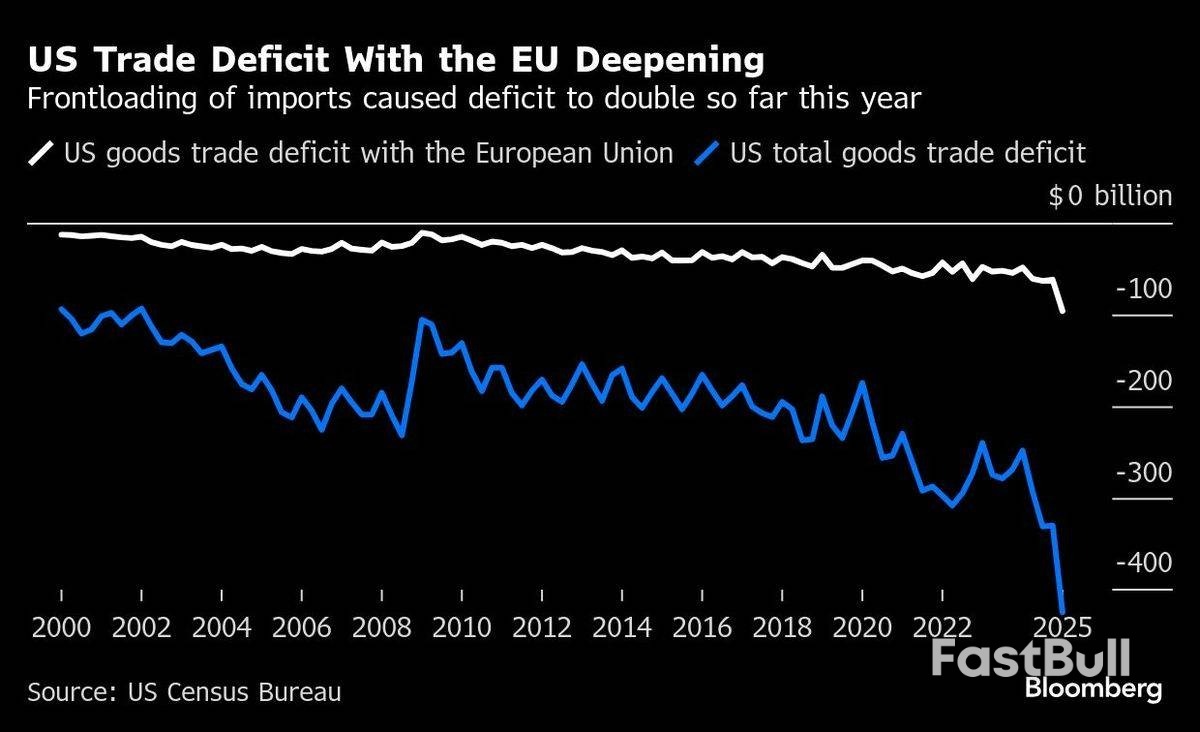
The European Union (EU) is seeking to accelerate trade talks with the US just six weeks before President Donald Trump’s threatened 50% tariffs come into effect.
The European Commission, which handles trade matters for the EU, will focus its new strategy on critical sectors as well as tariff and non-tariff barriers, according to people familiar with the plans. The commission will also link its approach to addressing regulatory barriers with its plans to simplify rules.
The EU’s trade chief, Maros Sefcovic, will lead political negotiations on industries such as steel and aluminium, automobiles, pharmaceuticals, semiconductors and civilian aircraft, said the people, who spoke on the condition of anonymity. Those talks will happen in parallel with the technical discussions on tariffs and non-tariff barriers.
Last week, Trump threatened to impose a 50% tariff on the EU starting June 1 after complaining the bloc was slow-walking negotiations and unfairly targeting US companies with lawsuits and regulations. But the US president extended the deadline back to July 9 after a Sunday call with Commission President Ursula von der Leyen when she agreed to fast-track talks.
A spokesperson for the commission declined to comment.
Member states were briefed on the discussions on Monday after Sefcovic held a call with his US counterparts, Commerce Secretary Howard Lutnick and US Trade Representative Jamieson Greer, according to the people.
The industries that Sefcovic will focus on either have already been hit with US tariffs, or have been earmarked for future levies. The EU has proposed deepening cooperation with the US in those sectors as part of a previous proposal shared with the US last week, Bloomberg reported.
The EU offer last week — which also proposed mutually lowering tariffs on many goods and working together on global challenges as well as mutual investments and strategic purchases — was rejected by the US and triggered Trump’s threat of higher tariffs.
Any US unilateral demands that would impair the bloc’s autonomy in regulatory and tax matters are likely to remain red lines, the people said.

Talks so far have been beset with multiple problems, with no clear path to finding a middle ground. The Europeans have complained that it’s not clear what the US wants or even who speaks for the American president, and the US has said the EU unfairly targets US companies with lawsuits and regulations.
In parallel to ongoing talks with the Trump administration, the EU will continue to prepare countermeasures should negotiations fail to yield a satisfactory outcome, the people said.
The EU has approved tariffs on €21 billion (US$23.8 billion or RM100.8 billion) of US goods in response to Trump’s metals levies that can be quickly implemented. They target politically sensitive American states and include products such as soybeans from Louisiana, home to House Speaker Mike Johnson, as well as agricultural products, poultry and motorcycles.
The bloc is also preparing an additional list of tariffs on €95 billion of American products. Those measures, which are in response to Trump’s “reciprocal” levies and automotive duties would target industrial goods including Boeing Co aircraft, US-made cars and bourbon.
The EU has been urged by some member states to additionally prepare countermeasures to any further action the US president has threatened, including on semiconductors and the pharmaceutical sector.
Many EU officials and member states continue to believe that several of Trump’s tariffs will stay in place and the chances of a good deal remain slim, the people added.
“We want a quick solution now,” German Finance Minister Lars Klingbeil told reporters in Berlin Monday. He added that he was “cautiously optimistic” that an agreement could be found, without elaborating. Klingbeil said the EU must respond to tariff threats from the US in a united, coordinated and consistent manner.
White Label
Data API
Web Plug-ins
Poster Maker
Affiliate Program
The risk of loss in trading financial instruments such as stocks, FX, commodities, futures, bonds, ETFs and crypto can be substantial. You may sustain a total loss of the funds that you deposit with your broker. Therefore, you should carefully consider whether such trading is suitable for you in light of your circumstances and financial resources.
No decision to invest should be made without thoroughly conducting due diligence by yourself or consulting with your financial advisors. Our web content might not suit you since we don't know your financial conditions and investment needs. Our financial information might have latency or contain inaccuracy, so you should be fully responsible for any of your trading and investment decisions. The company will not be responsible for your capital loss.
Without getting permission from the website, you are not allowed to copy the website's graphics, texts, or trademarks. Intellectual property rights in the content or data incorporated into this website belong to its providers and exchange merchants.
Not Logged In
Log in to access more features

FastBull Membership
Not yet
Purchase
Log In
Sign Up