• Trade
  • Markets
  • Copy
  • Contests
  • News
  • 24/7
  • Calendar
  • Q&A
  • Chats
Trending
Screeners
SYMBOL
LAST
BID
ASK
HIGH
LOW
NET CHG.
%CHG.
SPREAD
SPX
S&P 500 Index
6929.95
6929.95
6929.95
6945.76
6921.61
-2.10
-0.03%
--
DJI
Dow Jones Industrial Average
48710.96
48710.96
48710.96
48782.00
48589.07
-20.21
-0.04%
--
IXIC
NASDAQ Composite Index
23593.09
23593.09
23593.09
23665.15
23567.85
-20.22
-0.09%
--
USDX
US Dollar Index
97.690
97.770
97.690
97.770
97.500
+0.080
+ 0.08%
--
EURUSD
Euro / US Dollar
1.17707
1.17734
1.17707
1.17965
1.17613
-0.00054
-0.05%
--
GBPUSD
Pound Sterling / US Dollar
1.34976
1.35015
1.34976
1.35267
1.34768
-0.00021
-0.02%
--
XAUUSD
Gold / US Dollar
4533.34
4533.34
4533.34
4549.79
4502.79
+53.36
+ 1.19%
--
WTI
Light Sweet Crude Oil
56.739
56.991
56.739
58.765
56.571
-1.479
-2.54%
--

Community Accounts

Signal Accounts
--
Profit Accounts
--
Loss Accounts
--
View More

Become a signal provider

Sell trading signals to earn additional income

View More

Guide to Copy Trading

Get started with ease and confidence

View More

Signal Accounts for Members

All Signal Accounts

Best Return
  • Best Return
  • Best P/L
  • Best MDD
Past 1W
  • Past 1W
  • Past 1M
  • Past 1Y

All Contests

  • All
  • Trump Updates
  • Recommend
  • Stocks
  • Cryptocurrencies
  • Central Banks
  • Featured News
Top News Only
Share

[Bank Of America CEO: Trump's Tariff Situation Expected To De-escalate] Brian Moynihan, Chief Executive Officer Of Bank Of America Securities, Predicts That The Trump Administration Will Ease Trade Tensions Next Year. Moynihan Stated That Bank Of America Currently Anticipates A "de-escalation Rather Than An Escalation," With Average Tariffs On Most Countries Expected To Remain Around 15%. He Pointed Out That Trading Partners Such As North America Are "another Story"; And For Small Businesses, Concerns About Labor Supply Uncertainty Are More Prominent Than Tariffs

Share

Trump: We're In The Final Stages Of Talking

Share

Trump: There Are Economic Benefits To Ukraine

Share

Trump: There Will Be A Security Agreement

Share

Trump: Will Have A Great Meeting Today

Share

When Asked If He Will Meet Putin Again Soon, Trump Says 'Depends'

Share

Trump: Think Both Ukraine, Russian Presidents Want To Make A Deal

Share

Trump Says He Thinks Putin Is Serious About Peace

Share

Kremlin Foreign Policy Aide Ushakov: Putin And Trump Think Ukraine Needs To Make A Decision On Donbas Without Delay

Share

Kremlin Foreign Policy Aide Ushakov: Call Was 1 Hour 15 Mins

Share

Kremlin Foreign Policy Aide Ushakov: Trump Listened Carefully To Russia's Assessment Of The Prospects For Ukraine Settlement

Share

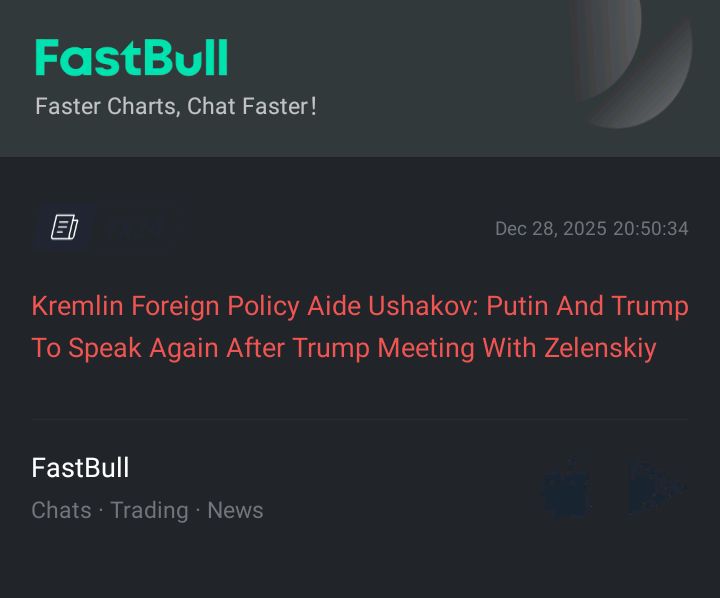
Kremlin Foreign Policy Aide Ushakov: Putin And Trump To Speak Again After Trump Meeting With Zelenskiy

Share

Kremlin Foreign Policy Aide Ushakov: Putin And Trump Think The Temporary Ceasefire Proposed By The EU And Ukraine Will Lead To Prolongation Of The Conflict

Share

Kremlin Foreign Policy Aide Ushakov: Ukraine Needs To Make Decision On Donbas Without Delay

Share

Kremlin Foreign Policy Aide Ushakov: They Exchanged Christmas Greetings Too

Share

Kremlin Foreign Policy Aide Ushakov: Putin-Trump Call Was At The Initiative Of Trump

Share

Downing Street Spokesperson: Both Leaders Welcomed Ongoing Diplomatic Efforts And Commended President Trump's Continued Engagement In Securing Peace

Share

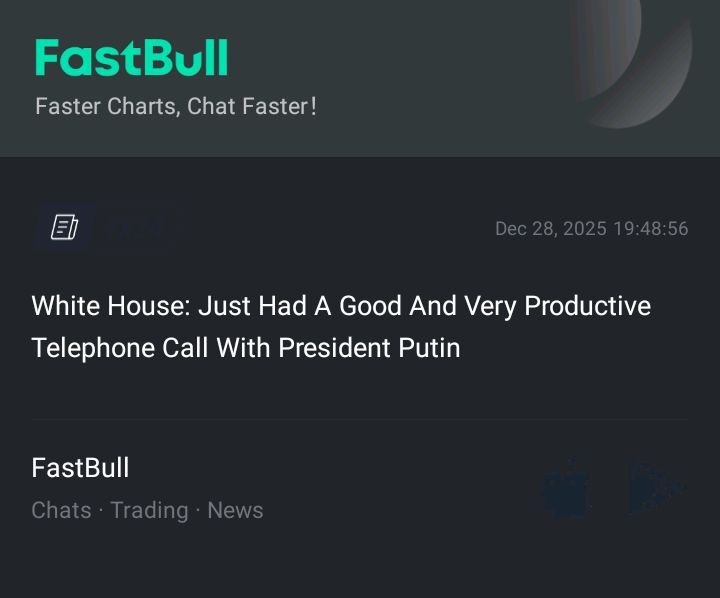
White House: Just Had A Good And Very Productive Telephone Call With President Putin

Share

Ukraine's Military Says Huliaipole Only Partly Controlled By Russia

Share

Ukraine President Zelenskiy: He Held 'Detailed' Phone Call With British Prime Minister Starmer

TIME
ACT
FCST
PREV
U.S. API Weekly Refined Oil Stocks

A:--

F: --

P: --

Mexico Unemployment Rate (Not SA) (Nov)

A:--

F: --

P: --

U.S. MBA Mortgage Application Activity Index WoW

A:--

F: --

P: --

U.S. Weekly Continued Jobless Claims (SA)

A:--

F: --

P: --
U.S. Weekly Initial Jobless Claims (SA)

A:--

F: --

P: --

U.S. Initial Jobless Claims 4-Week Avg. (SA)

A:--

F: --

P: --

Japan Construction Orders YoY (Nov)

A:--

F: --

P: --

Japan New Housing Starts YoY (Nov)

A:--

F: --

P: --

Turkey Capacity Utilization (Dec)

A:--

F: --

P: --

Japan Tokyo CPI YoY (Excl. Food & Energy) (Dec)

A:--

F: --

P: --

Japan Unemployment Rate (Nov)

A:--

F: --

P: --

Japan Tokyo Core CPI YoY (Dec)

A:--

F: --

P: --

Japan Tokyo CPI YoY (Dec)

A:--

F: --

P: --

Japan Jobs to Applicants Ratio (Nov)

A:--

F: --

P: --

Japan Tokyo CPI MoM (Dec)

A:--

F: --

P: --

Japan Tokyo CPI MoM (Excl. Food & Energy) (Dec)

A:--

F: --

P: --

Japan Industrial Inventory MoM (Nov)

A:--

F: --

P: --

Japan Retail Sales (Nov)

A:--

F: --

P: --

Japan Industrial Output Prelim MoM (Nov)

A:--

F: --

P: --

Japan Large-Scale Retail Sales YoY (Nov)

A:--

F: --

P: --

Japan Industrial Output Prelim YoY (Nov)

A:--

F: --

P: --

Japan Retail Sales MoM (SA) (Nov)

A:--

F: --

P: --

Japan Retail Sales YoY (Nov)

A:--

F: --

P: --

Russia Retail Sales YoY (Nov)

A:--

F: --

P: --

Russia Unemployment Rate (Nov)

A:--

F: --

P: --

Argentina Retail Sales YoY (Oct)

A:--

F: --

P: --

U.S. Weekly Treasuries Held by Foreign Central Banks

--

F: --

P: --

China, Mainland Industrial Profit YoY (YTD) (Nov)

A:--

F: --

P: --

India Industrial Production Index YoY (Nov)

--

F: --

P: --

India Manufacturing Output MoM (Nov)

--

F: --

P: --

Russia IHS Markit Manufacturing PMI (Dec)

--

F: --

P: --

India Manufacturing Output MoM (Nov)

--

F: --

P: --

India Industrial Production Index YoY (Nov)

--

F: --

P: --

France Unemployment Class-A (Nov)

--

F: --

P: --

Euro Zone Total Reserve Assets (Nov)

--

F: --

P: --

Canada National Economic Confidence Index

--

F: --

P: --

U.S. Pending Home Sales Index (Nov)

--

F: --

P: --

U.S. Pending Home Sales Index MoM (SA) (Nov)

--

F: --

P: --

U.S. Pending Home Sales Index YoY (Nov)

--

F: --

P: --

U.S. EIA Weekly Crude Oil Imports Changes

--

F: --

P: --

U.S. EIA Weekly Cushing, Oklahoma Crude Oil Stocks Change

--

F: --

P: --

U.S. EIA Weekly Crude Demand Projected by Production

--

F: --

P: --

U.S. EIA Weekly Gasoline Stocks Change

--

F: --

P: --

U.S. Dallas Fed General Business Activity Index (Dec)

--

F: --

P: --

U.S. EIA Weekly Heating Oil Stock Changes

--

F: --

P: --

U.S. EIA Weekly Crude Stocks Change

--

F: --

P: --

U.S. Dallas Fed New Orders Index (Dec)

--

F: --

P: --

Russia CPI YoY (Dec)

--

F: --

P: --

U.S. EIA Weekly Natural Gas Stocks Change

--

F: --

P: --

Brazil CAGED Net Payroll Jobs (Nov)

--

F: --

P: --

South Korea Industrial Output MoM (SA) (Nov)

--

F: --

P: --

South Korea Retail Sales MoM (Nov)

--

F: --

P: --

South Korea Services Output MoM (Nov)

--

F: --

P: --

Russia IHS Markit Services PMI (Dec)

--

F: --

P: --

Turkey Economic Sentiment Indicator (Dec)

--

F: --

P: --

Brazil Unemployment Rate (Nov)

--

F: --

P: --

U.S. Weekly Redbook Index YoY

--

F: --

P: --

U.S. S&P/CS 20-City Home Price Index YoY (Not SA) (Oct)

--

F: --

P: --

U.S. S&P/CS 20-City Home Price Index MoM (SA) (Oct)

--

F: --

P: --

U.S. FHFA House Price Index MoM (Oct)

--

F: --

P: --

Q&A with Experts
    • All
    • Chatrooms
    • Groups
    • Friends
    john flag
    john flag
    Jamolla
    Bitcoin and gold aren’t enemies
    @JamollaThey just solve different problems
    Jamolla flag
    this headline might impact the market in the Asian session resulting to pullback
    @john what headline bro ?
    john flag
    Jamolla
    @Jamollathe one I just posted
    Jamolla flag
    @john can't see any headline
    john flag
    john
    this one
    Jamolla flag
    @john ooh hadn't seen it though
    john flag
    this is Russia-Ukraine tensions descalating
    john flag
    Jamolla flag
    Let see how market will react tomorrow
    john flag
    Jamolla
    Let see how market will react tomorrow
    @Jamollayeah the last 3 days of trading in 2025 is a about to start
    EuroTrader flag
    3188483
    hello
    @Visitor3188483hi brother. How you doing today .The markets open in a few hours from now. Hope you are set
    EuroTrader flag
    Jamolla
    Right now, Bitcoin still feels like it’s in a waiting phase.
    @Jamollait's accumulating so definitely we would get to see it stay in this range for a while
    EuroTrader flag
    3188483
    @Visitor3188483For now I'll go with Gold because the fundamentals are strong with Gold at the moment than Bitcoin
    EuroTrader flag
    andi
    I'm sure BTC will continue to fall
    @andiAm sure it should continue to the downside in the long term
    King OF TRADERS❤🔥📉📈📊 flag
    how is btcusd
    Odalys Bel flag
    Can the graph be cropped for backtesting?
    King OF TRADERS❤🔥📉📈📊 flag
    let me start making 💰
    EuroTrader flag
    King OF TRADERS❤🔥📉📈📊
    how is btcusd
    @King OF TRADERS❤🔥📉📈📊btc is really good curently i have a sell order opened up on the btc market
    EuroTrader flag
    Type here...
    Add Symbol or Code

      No matching data

      All
      Trump Updates
      Recommend
      Stocks
      Cryptocurrencies
      Central Banks
      Featured News
      • All
      • Russia-Ukraine Conflict
      • Middle East Flashpoint
      • All
      • Russia-Ukraine Conflict
      • Middle East Flashpoint
      Search
      Products

      Charts Free Forever

      Chats Q&A with Experts
      Screeners Economic Calendar Data Tools
      Membership Features
      Data Warehouse Market Trends Institutional Data Policy Rates Macro

      Market Trends

      Market Sentiment Order Book Forex Correlations

      Top Indicators

      Charts Free Forever
      Markets

      News

      News Analysis 24/7 Columns Education
      From Institutions From Analysts
      Topics Columnists

      Latest Views

      Latest Views

      Trending Topics

      Top Columnists

      Latest Update

      Signals

      Copy Rankings Latest Signals Become a signal provider AI Rating
      Contests
      Brokers

      Overview Brokers Assessment Rankings Regulators News Claims
      Broker listing Forex Brokers Comparison Tool Live Spread Comparison Scam
      Q&A Complaint Scam Alert Videos Tips to Detect Scam
      More

      Business
      Events
      Careers About Us Advertising Help Center

      White Label

      Data API

      Web Plug-ins

      Affiliate Program

      Awards Institution Evaluation IB Seminar Salon Event Exhibition
      Vietnam Thailand Singapore Dubai
      Fans Party Investment Sharing Session
      FastBull Summit BrokersView Expo
      Recent Searches
        Top Searches
          Markets
          News
          Analysis
          User
          24/7
          Economic Calendar
          Education
          Data
          • Names
          • Latest
          • Prev

          View All

          No data

          Scan to Download

          Faster Charts, Chat Faster!

          Download App
          English
          • English
          • Español
          • العربية
          • Bahasa Indonesia
          • Bahasa Melayu
          • Tiếng Việt
          • ภาษาไทย
          • Français
          • Italiano
          • Türkçe
          • Русский язык
          • 简中
          • 繁中
          Open Account
          Search
          Products
          Charts Free Forever
          Markets
          News
          Signals

          Copy Rankings Latest Signals Become a signal provider AI Rating
          Contests
          Brokers

          Overview Brokers Assessment Rankings Regulators News Claims
          Broker listing Forex Brokers Comparison Tool Live Spread Comparison Scam
          Q&A Complaint Scam Alert Videos Tips to Detect Scam
          More

          Business
          Events
          Careers About Us Advertising Help Center

          White Label

          Data API

          Web Plug-ins

          Affiliate Program

          Awards Institution Evaluation IB Seminar Salon Event Exhibition
          Vietnam Thailand Singapore Dubai
          Fans Party Investment Sharing Session
          FastBull Summit BrokersView Expo

          Russia’s Fiscal Pillar Weakens as Oil Revenues Collapse Under Sanctions and Market Pressure

          Gerik

          Economic

          Summary:

          As Russia enters 2026, its budget faces mounting strain due to plunging oil prices, a stronger ruble, and dwindling extraction taxes. With oil and gas still accounting for roughly a quarter of state revenue...

          Oil Revenues Erode as 2026 Begins

          Russia is starting the new fiscal year with a deepening budgetary concern: the decline in oil revenues that once formed the backbone of its economy and military expenditures. According to Reuters estimates, crude oil production tax revenue in January 2026 could fall to just 380 billion rubles (approximately $4.7 billion), the lowest monthly level since late 2022. This represents a 16% drop from December and over a 50% plunge year-on-year.
          This fiscal erosion comes at a time when the Russian government remains heavily dependent on hydrocarbon income to fund both its military operations and welfare obligations. The situation is compounded by a combination of falling oil prices, a strengthening ruble, and reduced tax collection tied to extraction and refining profits.

          Market Forces and Sanctions Fuel Revenue Collapse

          The collapse in tax income is causally linked to the steep decline in oil prices. In December 2025, the average export price of Russian crude fell by around 12% compared to November. On December 19, Russia’s flagship Urals crude was trading below $35 per barrel, according to data from Argus. This level is substantially below the breakeven threshold for maintaining fiscal balance, further shrinking the taxable base.
          A stronger ruble has exacerbated the problem by reducing the domestic value of foreign-denominated export earnings. Additionally, refinery margins have weakened, dragging down tax revenues not just from crude oil production, but also from processed petroleum products.
          These pricing and currency shifts directly impact Russia’s mineral extraction tax, which is recalculated monthly based on production volume and realized oil prices. For December output, the per-ton tax rate is estimated at 14,266 rubles nearly 20% lower than November and more than 50% below the year-earlier level. This tax level mirrors conditions in December 2022, when the EU’s oil embargo on Russia officially took effect.

          Discounts and Sanctions Deepen Fiscal Strain

          Beyond price and currency effects, structural challenges are intensifying. The Russian government continues to sell Urals crude at steep discounts due to global sanctions and limited buyer options. U.S. sanctions on major energy companies like Rosneft and Lukoil have further narrowed market access, increasing pressure to offer price concessions.
          Reuters calculations show that combined oil and gas revenues for December fell nearly 50% from the previous year, hitting levels last seen during the COVID-induced demand collapse of 2020. In effect, the confluence of external sanctions, market discounts, and internal currency strength has pushed Russian hydrocarbon income to multi-year lows.
          This sustained drop is no longer isolated; it is shaping policy debates. Moscow is reportedly considering tax relief for Gazprom to offset the loss of pipeline gas exports to Europe a move that may necessitate higher taxes elsewhere in the energy sector. Such balancing acts reveal a deeper structural problem: while hydrocarbons remain vital to the budget, reserves to offset revenue shortfalls are shrinking.

          Budget Realignment Signals Strategic Vulnerability

          Faced with a dwindling fiscal buffer, the Kremlin is now grappling with difficult trade-offs. Any reduction in oil revenues has ripple effects across military spending, infrastructure projects, and social safety nets. Although Russia has built some resilience through sovereign funds and alternative trade channels, its economic model remains heavily tethered to fossil fuel exports a dependency that is becoming harder to sustain under sanctions and volatile global markets.
          While short-term resilience may hold, particularly through reserve drawdowns and tax adjustments, the medium-term outlook is fraught. If oil prices continue to decline or sanctions tighten further, early 2026 could mark a turning point in the Kremlin’s fiscal trajectory with consequences for both domestic stability and geopolitical ambition.
          Russia’s economic foundation long centered on oil is facing a crisis of endurance. The recent collapse in extraction taxes, compounded by weak prices and sanctions-induced export barriers, has undercut its primary source of budgetary inflows. With oil revenues falling to pre-embargo lows and broader energy receipts weakening, the Kremlin must now navigate a narrowing fiscal corridor, balancing strategic imperatives against hard revenue constraints. As 2026 unfolds, the sustainability of Russia’s financial and military posture will depend heavily on whether this revenue erosion is transitory or signals a structural unraveling.
          To stay updated on all economic events of today, please check out our Economic calendar
          Risk Warnings and Disclaimers
          You understand and acknowledge that there is a high degree of risk involved in trading. Following any strategies or investment methods may lead to potential losses. The content on the site is provided by our contributors and analysts for information purposes only. You are solely responsible for determining whether any trading assets, securities, strategy, or any other product is suitable for investing based on your own investment objectives and financial situation.
          Add to Favorites
          Share

          China Revises Foreign Trade Law to Strengthen Defensive Trade Capabilities Amid Global Tensions

          Gerik

          Economic

          New Trade Law Reflects Dual Strategy: Assertiveness and Openness

          China's latest revision of its Foreign Trade Law, scheduled to take effect on March 1, 2026, marks a significant legal and strategic shift in its trade governance. The updated framework enhances Beijing’s legal preparedness to confront external trade pressures, especially in the context of intensifying global competition and sanctions, while simultaneously asserting its ongoing commitment to deeper market openness.
          Approved by the National People’s Congress, this revised law directly equips policymakers with legal tools to counter foreign trade restrictions including sanctions and export bans with proportional responses. This structural adjustment allows China to transition from a reactive posture to a more proactive and legally grounded defense mechanism in trade disputes.
          The amendment also reflects an emerging consensus within Chinese policymaking circles: trade laws must not only facilitate openness but also safeguard national economic interests and strategic autonomy, especially amid rising geopolitical fragmentation.

          Codifying Strategic Export Controls and Economic Security

          One of the most consequential updates in the revised law is the explicit authorization for the government to regulate outbound shipments of strategic resources. This includes critical minerals, energy-related products, and inputs essential for global industrial and technological supply chains.
          Previously, such measures were implemented on an ad hoc basis or under broad administrative discretion. With the amendment, Beijing now formalizes its right to restrict or rechannel these exports in response to international sanctions or geopolitical tensions introducing a clear causal linkage between foreign restrictions and reciprocal countermeasures.
          This codification is expected to have significant implications for global supply chains. For instance, Beijing’s ability to constrain exports of rare earth elements, used in advanced electronics and military technology, could become a strategic lever in future trade negotiations or geopolitical confrontations.
          The move is also aimed at improving the consistency and legal defensibility of China’s trade responses under international law, especially as trade tensions with key partners such as the U.S., EU, and Japan show no signs of abating.

          Aligning Trade Governance With National Development Goals

          Beyond defensive capabilities, the revised law integrates trade policy more tightly with national development priorities. It introduces the principle that foreign trade must serve broader goals of economic and social progress, positioning trade policy as an instrument of domestic transformation rather than merely external engagement.
          This reflects a shift in Chinese economic thinking one that views trade not as a standalone function but as a strategic tool for strengthening China’s internal economic resilience, technology upgrading, and industrial self-reliance. In this context, trade liberalization is not abandoned but is selectively pursued in areas that align with national interest.
          By linking trade to the long-term goal of becoming a “strong trade power,” the law sets a clear developmental vision: China’s export-import ecosystem must support innovation, national security, and social stability. This principle could be invoked to justify future trade interventions, such as subsidy programs or export curbs, especially in emerging sectors like semiconductors, electric vehicles, and green technologies.

          Positioning for CPTPP Membership and Diversification from the U.S.

          The timing of the revision is also strategically calibrated. By overhauling its trade law, China seeks to demonstrate alignment with international standards in anticipation of its application to join the Comprehensive and Progressive Agreement for Trans-Pacific Partnership (CPTPP).
          Through legal modernization, Beijing signals to CPTPP members that it is ready to operate within transparent and rules-based frameworks an important gesture in light of longstanding concerns over China's state-driven economic model.
          Concurrently, the new trade law supports Beijing’s broader campaign to diversify its economic dependencies. With U.S.-China relations increasingly adversarial and Washington’s efforts to “decouple” supply chains gaining momentum, China is actively pursuing greater engagement with the Global South, Belt and Road partners, and regional economic blocs.
          The revised law thus serves both as a tool for managing external risk and as a signaling mechanism for international legitimacy balancing firmness with openness, and deterrence with cooperation.

          A Legal Shield in an Era of Strategic Competition

          China’s revision of its Foreign Trade Law represents more than a technical legal update; it is a structural realignment of national trade policy for a world defined by uncertainty, confrontation, and shifting alliances.
          By granting policymakers the authority to implement proportionate trade countermeasures and manage critical exports, the new law closes previous legal gaps and enhances China’s capacity to navigate external shocks. At the same time, its provisions emphasizing economic development and trade liberalization reflect a pragmatic effort to maintain international relevance and secure entry into global agreements like CPTPP.
          Ultimately, the amended law reinforces China’s posture in the evolving global order not as a passive participant in trade, but as a strategic actor capable of leveraging legal, economic, and diplomatic instruments to assert its interests on the world stage.
          To stay updated on all economic events of today, please check out our Economic calendar
          Risk Warnings and Disclaimers
          You understand and acknowledge that there is a high degree of risk involved in trading. Following any strategies or investment methods may lead to potential losses. The content on the site is provided by our contributors and analysts for information purposes only. You are solely responsible for determining whether any trading assets, securities, strategy, or any other product is suitable for investing based on your own investment objectives and financial situation.
          Add to Favorites
          Share

          Russia Boosts LPG Exports to Afghanistan and Central Asia as EU Sanctions Reshape Energy Flows

          Gerik

          Economic

          Commodity

          Moscow’s Energy Pivot Gains Momentum

          Between January and November 2025, Russia significantly reoriented its liquefied petroleum gas (LPG) exports, directing roughly 1.016 million tons toward Afghanistan and Central Asian nations. This volume represents a dramatic increase from the previous year, nearly doubling the total supply to this region. According to Reuters data, the share of Russia’s LPG exports bound for Afghanistan, Kazakhstan, Kyrgyzstan, Tajikistan, and Uzbekistan rose from 19% in 2024 to 36% in 2025.
          This sharp redirection follows the European Union’s December 2024 sanctions, which restricted the importation of Russian LPG in response to the ongoing conflict in Ukraine. LPG, primarily composed of propane and butane, plays a crucial role in transportation, heating, and petrochemical manufacturing making its rerouting not only economically significant but also geopolitically symbolic.

          Afghanistan Emerges as a Central Node in Russia’s Energy Strategy

          One of the most notable shifts in Russia’s LPG export pattern is Afghanistan’s rise as its largest buyer in the region. In the first eleven months of 2025 alone, Russia exported around 418,000 tons of LPG to Afghanistan a 1.5-fold increase compared to the same period in 2024. This includes shipments via Kazrosgaz, a Russian-Kazakh joint venture.
          The expansion of Russian-Afghan energy ties also aligns with a broader geopolitical shift. In July, Russia formally received the credentials of Afghanistan’s newly appointed ambassador, becoming the first country to effectively recognize the Taliban-led government. This move underpins not only a strategic energy relationship but also a deeper diplomatic normalization between Moscow and Kabul.
          This expansion is also partially attributable to declining supply from Iran, historically a key LPG supplier to the region. With Tehran still under strict U.S. sanctions, its ability to maintain export volumes has weakened, creating space for Russia to step in and fill the vacuum particularly in a market where logistical access and political alignment now outweigh traditional market structures.

          Central Asian Markets Absorb Sanction-Driven Supply Overflow

          In tandem with Afghanistan’s growing role, other Central Asian nations notably Kazakhstan, Kyrgyzstan, Tajikistan, and Uzbekistan have also increased their intake of Russian LPG. These countries have long maintained close infrastructural and energy ties with Moscow, and their existing pipelines and logistical networks make them natural alternatives to European destinations.
          This redirection suggests more than just a rerouting of cargo; it marks a long-term rebalancing of Russian energy diplomacy. The causal driver here is clearly the EU sanctions, which forced Moscow to seek alternative markets. However, the growth in regional demand is also influenced by correlated factors, including domestic consumption trends, pricing advantages amid Western disengagement, and geopolitical realignment in the post-sanctions era.

          China-Russia Energy Axis Expands Through New Maritime Routes

          Parallel to the LPG export surge to Central Asia, Russia is also deepening its energy partnership with China. A recent milestone saw a Russian liquefied natural gas (LNG) plant deliver its first shipment to China via a maritime route circumventing Europe sailing around Africa instead of the traditional Arctic or Suez passages. This detour followed new U.S. sanctions imposed in January 2025, targeting Russian LNG infrastructure and trade.
          While longer and more logistically complex, this route signifies China’s increasing role as a strategic buyer willing to bypass Western-aligned routes. It also underscores the durability of Sino-Russian energy cooperation in the face of intensifying Western pressure. This pattern points to a broader reorientation of global energy flows: Russia is not only diversifying geographically but also investing in alternative trade corridors to shield its energy exports from future geopolitical risks.

          Sanctions Accelerate Eurasian Energy Integration

          The nearly twofold increase in Russia’s LPG exports to Afghanistan and Central Asia in 2025 illustrates how sanctions, while constraining traditional trade channels, can accelerate regional realignments. Afghanistan’s emergence as a primary energy client and the deepening of ties with China reflect Moscow’s capacity to recalibrate its energy strategy under duress.
          While this pivot is clearly a reactive response to EU and U.S. sanctions, it is also becoming structurally embedded, as new partnerships and infrastructure form the foundation of a more Eastern-leaning energy ecosystem. The long-term implications suggest a declining dependence on European markets and an expanding energy footprint across the Eurasian landmass reshaping both trade flows and geopolitical influence in the process.
          To stay updated on all economic events of today, please check out our Economic calendar
          Risk Warnings and Disclaimers
          You understand and acknowledge that there is a high degree of risk involved in trading. Following any strategies or investment methods may lead to potential losses. The content on the site is provided by our contributors and analysts for information purposes only. You are solely responsible for determining whether any trading assets, securities, strategy, or any other product is suitable for investing based on your own investment objectives and financial situation.
          Add to Favorites
          Share

          China’s Debt Surges Past 300% of GDP as Deflation Risks Deepen in a Slowing $19 Trillion Economy

          Gerik

          Economic

          Mounting Debt Amid Stalling Growth

          By the close of September 2025, China's total debt burden had exceeded 302.3% of its gross domestic product, according to data from the state-affiliated National Institution for Finance and Development (NIFD). This marked a 1.9 percentage point increase from June, when the ratio first breached the 300% threshold. With aggregate liabilities now surpassing 400 trillion yuan (roughly $57 trillion), the debt load encapsulates obligations held by households, local and central government entities, and non-financial corporations.
          This surge in leverage coincides with a parallel downward revision in China's 2024 GDP by the National Bureau of Statistics (NBS), reducing it to 134.81 trillion yuan ($19.16 trillion), down from an earlier estimate by over 100 billion yuan. The downward GDP adjustment amplifies the debt-to-GDP ratio, further heightening market concerns over China’s economic trajectory.

          Public Sector Borrowing Surges as Private Lending Contracts

          A deeper look into sector-specific borrowing reveals a divergence in credit behavior. Government debt grew substantially, with its share of GDP rising to 67.5% by the end of September an increase of 2.2 percentage points from June. This was driven primarily by an uptick in bond issuance to fund infrastructure projects and regional development initiatives. The government’s proactive borrowing strategy is an attempt to offset weakening private sector momentum.
          However, unlike the public sector, households and businesses are becoming increasingly conservative in their financial commitments. Household debt relative to GDP fell to 60.4% in Q3 a 0.7 percentage point decline with the absolute volume of household liabilities registering its first year-on-year decrease since 1995. This signals a retreat from credit-based consumption, an unusual development in a country where property markets and credit growth have long fueled economic expansion.

          Property Market Weakness Amplifies Deflationary Forces

          One of the clearest symptoms of China’s structural slowdown lies in the real estate market. With property prices continuing to fall and no signs of stabilization in sight, homeowners have increasingly turned to selling secondary properties to reduce mortgage burdens. Investment properties are being liquidated, not replaced, while demand for new apartments remains subdued. This behavioral shift among households reflects deteriorating confidence, which in turn dampens broader consumption and investment.
          On the corporate front, debt rose marginally to a record 174.4% of GDP in Q3 up just 0.4 percentage points from the prior quarter. The restrained increase stems from regulatory interventions across multiple sectors, particularly electric vehicles and steel, where the government is attempting to curtail overcapacity and speculative expansion. These administrative curbs appear to be indirectly limiting further credit growth among businesses.

          Deflationary Pressures Undermine Nominal GDP Growth

          Despite the rising debt, nominal GDP growth remains sluggish due to deflationary headwinds. The GDP deflator a broad measure of price changes across the economy has remained negative, indicating that China’s economy is growing more slowly in value terms than in real output. This dynamic creates a feedback loop: as nominal growth stalls, the denominator in the debt-to-GDP ratio expands more slowly than the numerator, pushing the ratio upward.
          In this context, the relationship between rising debt levels and stagnant economic output is clearly causal. Increased borrowing is failing to stimulate proportional economic growth, particularly as credit flows toward non-productive or constrained sectors. Rather than boosting demand, new debt is being absorbed into existing liabilities or used for refinancing, offering minimal contribution to expansion.

          Demographic Strains and Long-Term Fiscal Constraints

          Adding to the fiscal challenge is China’s demographic profile. The country is grappling with a falling birthrate and rapid population aging trends that are expected to place increasing stress on the nation’s social security and healthcare systems. Rising dependency ratios mean that fewer workers are supporting a growing base of retirees, compelling the government to direct more budgetary resources toward welfare programs.
          With fiscal spending already stretched and debt ceilings under pressure, China’s capacity to introduce further economic stimulus through public debt is narrowing. The prospect of a shrinking workforce and rising welfare costs creates a structural constraint that will limit the government’s flexibility in managing future downturns.

          Comparative Insight: Japan’s Experience Offers a Cautionary Tale

          China’s debt trajectory is beginning to resemble Japan’s during its post-bubble stagnation in the late 1990s. According to the Bank for International Settlements (BIS), Japan’s debt-to-GDP ratio stood at 377.4% as of mid-2025, still high but below its peak of 422% at the end of 2020. Importantly, Japan has been able to lower its debt ratio in recent years, supported by a mix of inflation-driven nominal growth and improved tax revenues, which reduced the need for new bond issuance.
          Koji Takeuchi of the Itochu Research Institute notes that Japan’s fiscal progress stems partly from higher inflation boosting GDP and limiting further debt accumulation. However, China faces a contrasting scenario where disinflation, or outright deflation, is compounding fiscal fragility. While China’s nominal GDP per capita remains less than half of Japan’s in 1998 ($13,300 vs. $32,000), its debt ratio is now approaching similar levels, raising alarms about long-term solvency and growth.

          A Debt Trap Without Demand

          China’s current economic dilemma is not just about the scale of debt but the lack of productive outcomes it generates. Unlike the traditional model where credit expansion drives economic growth, the Chinese economy is now experiencing rising debt without corresponding demand growth a clear deviation from sustainable development patterns.
          With households deleveraging, businesses cautious, and public finances increasingly burdened by welfare and infrastructure obligations, Beijing’s options are narrowing. Unless nominal GDP growth revives meaningfully either through structural reforms or managed inflation the economy risks becoming trapped in a high-debt, low-growth cycle similar to what Japan faced decades earlier, but with far less fiscal space and a younger middle-income economy.
          To stay updated on all economic events of today, please check out our Economic calendar
          Risk Warnings and Disclaimers
          You understand and acknowledge that there is a high degree of risk involved in trading. Following any strategies or investment methods may lead to potential losses. The content on the site is provided by our contributors and analysts for information purposes only. You are solely responsible for determining whether any trading assets, securities, strategy, or any other product is suitable for investing based on your own investment objectives and financial situation.
          Add to Favorites
          Share

          Snow Storm Disrupts Holiday Travel at New York City Airports

          Manuel

          Stocks

          Hundreds of flights have been canceled at New York’s major airports as a significant winter storm descends on the city and neighboring regions.
          New York City and surrounding areas are in line to get 6 to 9 inches (15 to 23 cm) of snow, with a winter-storm warning in effect between 4 p.m. Friday to 1 p.m. Saturday, local time, according to the National Weather Service. The heaviest snowfall will occur from 6 p.m. Friday to midnight, with as much as 1-2 inches an hour.
          More than 1,700 flights across the US had been canceled as of 3:12 p.m. New York time on Friday, according to the FlightAware website. Roughly half of those were clustered around flights coming into or leaving New York City’s three major airports – LaGuardia, JFK, and Newark. Detroit, Philadelphia and Boston airports also saw cancellations and delays.
          New York City issued a travel advisory for the duration of the storm as cold temperatures limit snowmelt, increasing the risk of slippery and hazardous road conditions.
          A winter storm warning stretched from NYC to northeast New Jersey and into the Lower Hudson Valley and parts of Long Island and Connecticut, according to the National Weather Service. Some areas could see snowfall top 10 inches in the heaviest bands, the agency said.
          “Road conditions will be treacherous for those traveling back from the holiday,” the weather service said.
          New Jersey declared a state of emergency Friday afternoon and restricted vehicles including tractor-trailers, RVs and motorcycles from certain highways. “Unfortunately, this storm is hitting us during one of the busiest travel seasons of the year,” Acting Governor Tahesha Way said in an interview with Fox Weather. “If you don’t have to be on the roads, please stay home.”
          New York has positioned utility workers so they were ready in case the extreme winter weather knocked out electricity, Governor Kathy Hochul said in an interview with WABC.
          Winter weather can lead to soaring demand for electricity — crimping power supplies. So far, grids aren’t showing signs of stress, but electricity prices have started to climb. Spot prices in New York City touched about $127 a megawatt-hour at 2:10 p.m., up from $32 a day earlier.
          The colder temperatures also helped to lift prices for US natural gas, used as a fuel for home heating. Futures rose about 3% on Friday.
          Other parts of the country are also seeing weather-related travel disruptions.
          A combination of freezing rain, sleet and snow will create hazardous travel conditions from the Great Lakes into New England and the mid-Atlantic through Saturday morning, according to the weather service.
          The upper Midwest may see “a swath of snow and ice blossoming” Friday morning before a clipper system bumping up against a high pressure system in eastern Canada feeds cold air south over the border, bringing precipitation.
          Later this weekend, a potentially stronger cold front will move across the Northeast, including the Washington area, which could lead to blustery conditions during the last few days of the year. Parts of western Pennsylvania is under threat of an ice storm, which could cause power outages and make travel hazardous.

          Source: Bloomberg

          Risk Warnings and Disclaimers
          You understand and acknowledge that there is a high degree of risk involved in trading. Following any strategies or investment methods may lead to potential losses. The content on the site is provided by our contributors and analysts for information purposes only. You are solely responsible for determining whether any trading assets, securities, strategy, or any other product is suitable for investing based on your own investment objectives and financial situation.
          Add to Favorites
          Share

          Copper Hits Record in China, Jumps in New York on Supply Concern

          Manuel

          Commodity

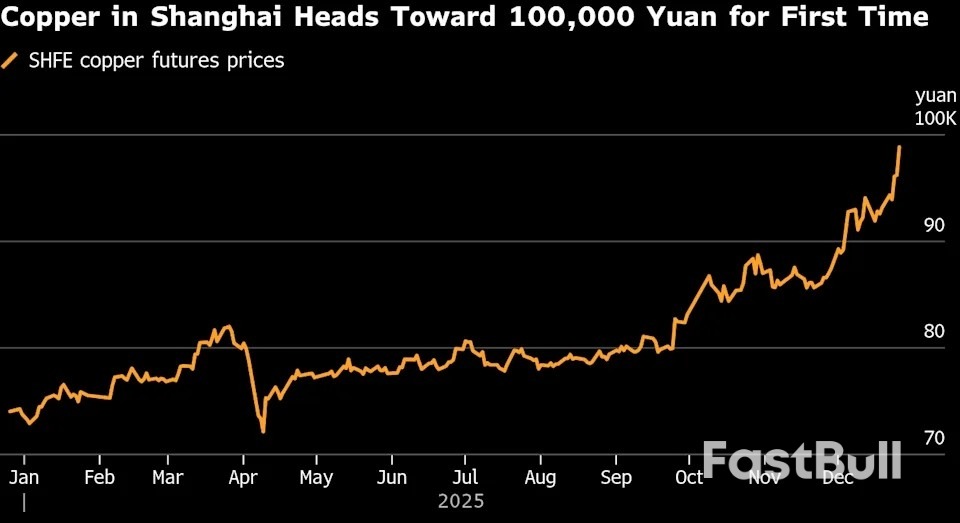
          Copper surged to a record in Shanghai and rallied in New York, adding to substantial annual gains as investors bet on tighter global supplies in 2026, while also pricing in the impact of a weaker US dollar.
          In China, prices gained as much as 4.7% to trade near 100,000 yuan ($14,270) a ton on the Shanghai Futures Exchange for the first time. Futures traded on the Comex in New York climbed as much as 5.6% to $5.8075 a pound, the highest intraday level since an unprecedented short squeeze in July. Benchmark trading on the London Metal Exchange will reopen on Monday after the Christmas break.
          Copper’s latest leg-up on Friday came as precious metals also bolted higher, with gold, silver and platinum all surging to record highs in a powerful end-of-year rally that has dominated global commodity markets.Copper Hits Record in China, Jumps in New York on Supply Concern_1
          Metals have made big gains in December, rounding off a year in which trade dislocations, geopolitical uncertainties, and supply shocks have combined to shake up the industry. On the demand side, copper is expected to be a major beneficiary of the world’s energy transition, helping to make it one of biggest winners in 2025, with a gain of roughly 42% in New York.
          Earlier this year, Comex copper contracts spiked to a record in anticipation that US President Donald Trump would impose tariffs. While he ultimately excluded the most widely-traded form of the commodity from levies, that decision is due for a review in 2026. A continued rush of metal into the US has spurred concerns buyers elsewhere may end up scrambling for supplies.
          Prices received an additional lift in recent sessions from a slump in the US dollar, with a Bloomberg gauge of the currency on pace for the biggest weekly loss since June. That shift makes raw materials cheaper for most buyers.

          Source: Bloomberg

          Risk Warnings and Disclaimers
          You understand and acknowledge that there is a high degree of risk involved in trading. Following any strategies or investment methods may lead to potential losses. The content on the site is provided by our contributors and analysts for information purposes only. You are solely responsible for determining whether any trading assets, securities, strategy, or any other product is suitable for investing based on your own investment objectives and financial situation.
          Add to Favorites
          Share

          Gold, Silver Bulls Taunt Bitcoin Investors Amid Parabolic Rally: 'Time has Come' to Switch

          Manuel

          Commodity

          Gold (GC=F) and silver (SI=F) investors are taking a victory lap this year as crypto bulls are left in the dust.
          On Friday, gold futures rose above $4,550 to hover at or near record highs, capping a year marked by more than 50 such records.
          Meanwhile, silver also jumped over $75 per ounce, extending its year-to-date gains to 150% in a parabolic rally driven by concerns about physical shortages during a time of robust industrial demand. Platinum (PL=F) and copper (HG=F) have also soared to records this year.
          Some investors have been quick to point out the divergence between the metals industry and cryptocurrency, which has been led by a sharp leg lower from bitcoin (BTC-USD) in recent weeks.
          "With gold now up almost 70% in 2025 and most cryptocurrencies negative, the time has come for the crypto crowd to switch to gold, " Louis Navellier, founder of Navellier & Associates, noted earlier this week.
          Navellier points to central bank purchases, lower volatility, and improved liquidity in the gold market compared with cryptocurrencies.
          Meanwhile, gold bull Peter Schiff, a notorious critic of crypto, stated on X, "If Bitcoin won’t go up when tech stocks rise, and it won’t go up when gold and silver rise, when will it go up? The answer is: it won’t."
          The metals' climb to all-time highs comes as crypto is on track to end the year in negative territory, with bitcoin trying to avoid a third consecutive losing month.
          The world’s largest cryptocurrency has diverged from stocks for the first time since 2014, despite a favorable regulatory environment and increasing crypto adoption on Wall Street.
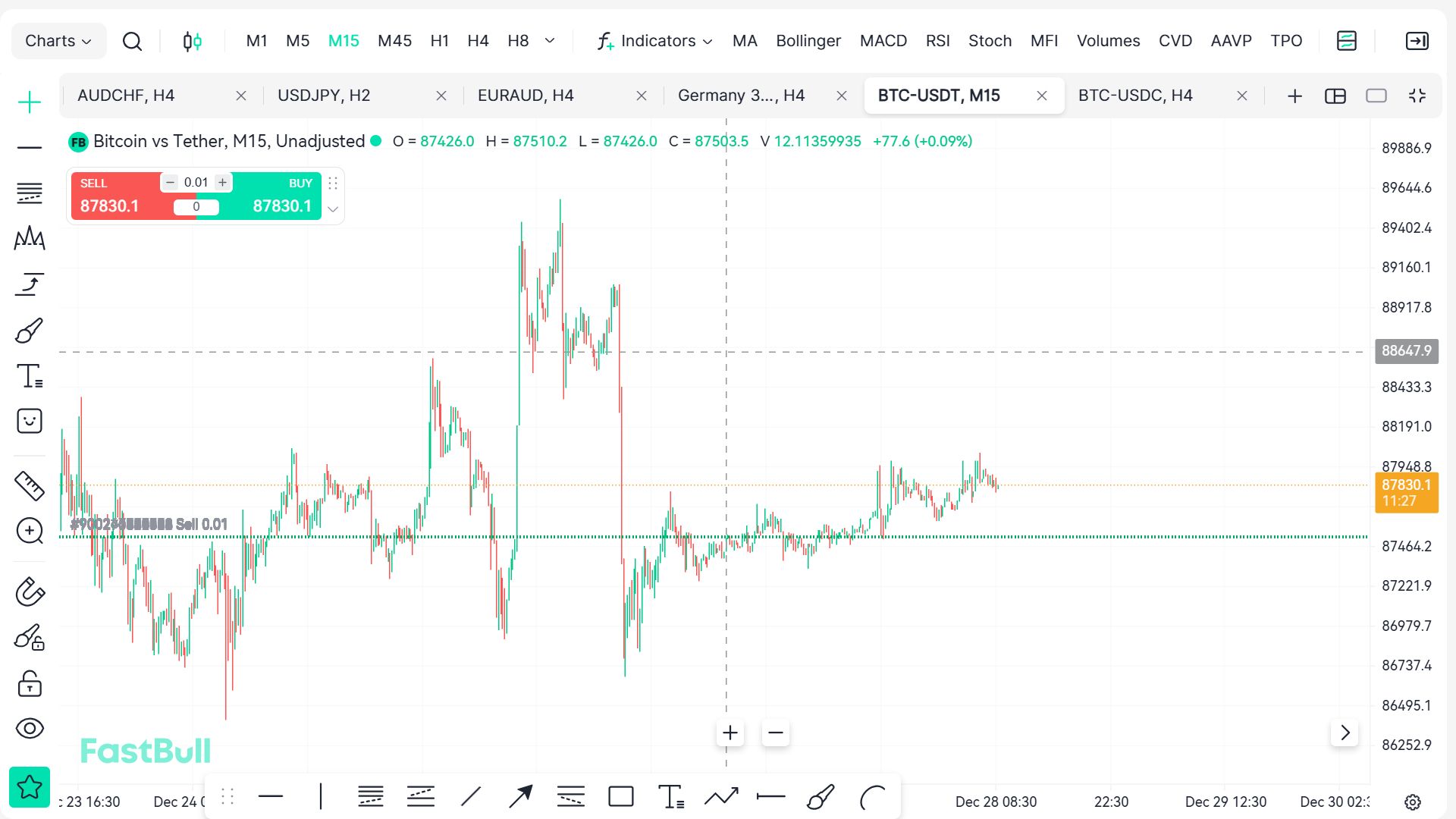
          The token has struggled to recover after long-term holders sold, and forced liquidations sent prices sliding roughly 30% from record highs near $126,000 in October to just over $87,000 on Friday.
          Fundstrat's head of digital assets Sean Farrell said he isn't surprised that bitcoin has been trading in a tight range recently.
          "Santa rallies are normally characterized by folks selling losers, buying winners into the year-end," said Farrell in a client video earlier this week.
          "I just think a lot of folks are not stepping in here to put on a lot of risk in an asset that has underperformed for the better part of the last couple of months," he added.
          The strategist said he believes there is a compelling setup for a bounce in January, as inflows are expected to increase from investors adopting bitcoin for their long-term portfolios.
          "Assuming that December closes red ... history does suggest that January will be green," Farrell said.
          This would mark a rare instance of bitcoin closing lower for three consecutive months, an event that has occurred just 15 times.
          Crypto research firm 10X Research also noted a near-term bitcoin bounce could be in the cards.
          "This may be an opportune moment to attempt a more durable rebound, as the ingredients for one are finally in place: a 30% correction, a 2.5-month decline, and technical indicators that have fully reset, conditions that have historically supported multi-week and potentially multi-month recoveries," a note from the firm on Friday said.
          Wall Street strategists, meanwhile, have revised down their price targets, with Standard Chartered recently cutting its year-end bitcoin price target to $100,000 from $200,000.
          The firm's head of digital assets, Geoff Kendrick, also slashed his 2026 target to $150,000 from $300,000.

          Source: Reuters

          Risk Warnings and Disclaimers
          You understand and acknowledge that there is a high degree of risk involved in trading. Following any strategies or investment methods may lead to potential losses. The content on the site is provided by our contributors and analysts for information purposes only. You are solely responsible for determining whether any trading assets, securities, strategy, or any other product is suitable for investing based on your own investment objectives and financial situation.
          Add to Favorites
          Share
          FastBull
          Copyright © 2025 FastBull Ltd

          728 RM B 7/F GEE LOK IND BLDG NO 34 HUNG TO RD KWUN TONG KLN HONG KONG

          TelegramInstagramTwitterfacebooklinkedin
          App Store Google Play Google Play
          Products
          Charts

          Chats

          Q&A with Experts
          Screeners
          Economic Calendar
          Data
          Tools
          Membership
          Features
          Function
          Markets
          Copy Trading
          Latest Signals
          Contests
          News
          Analysis
          24/7
          Columns
          Education
          Company
          Careers
          About Us
          Contact Us
          Advertising
          Help Center
          Feedback
          User Agreement
          Privacy Policy
          Personal Information Protection Statement
          Business

          White Label

          Data API

          Web Plug-ins

          Poster Maker

          Affiliate Program

          Risk Disclosure

          The risk of loss in trading financial instruments such as stocks, FX, commodities, futures, bonds, ETFs and crypto can be substantial. You may sustain a total loss of the funds that you deposit with your broker. Therefore, you should carefully consider whether such trading is suitable for you in light of your circumstances and financial resources.

          No decision to invest should be made without thoroughly conducting due diligence by yourself or consulting with your financial advisors. Our web content might not suit you since we don't know your financial conditions and investment needs. Our financial information might have latency or contain inaccuracy, so you should be fully responsible for any of your trading and investment decisions. The company will not be responsible for your capital loss.

          Without getting permission from the website, you are not allowed to copy the website's graphics, texts, or trademarks. Intellectual property rights in the content or data incorporated into this website belong to its providers and exchange merchants.

          Not Logged In

          Log in to access more features

          FastBull Membership

          Not yet

          Purchase

          Become a signal provider
          Help Center
          Customer Service
          Dark Mode
          Price Up/Down Colors

          Log In

          Sign Up

          Position
          Layout
          Fullscreen
          Default to Chart
          The chart page opens by default when you visit fastbull.com