Markets
News
Analysis
User
24/7
Economic Calendar
Education
Data
- Names
- Latest
- Prev


Signal Accounts for Members
All Signal Accounts
All Contests


U.K. Trade Balance Non-EU (SA) (Oct)A:--
F: --
P: --
U.K. Trade Balance (Oct)A:--
F: --
P: --
U.K. Services Index MoMA:--
F: --
P: --
U.K. Construction Output MoM (SA) (Oct)A:--
F: --
P: --
U.K. Industrial Output YoY (Oct)A:--
F: --
P: --
U.K. Trade Balance (SA) (Oct)A:--
F: --
P: --
U.K. Trade Balance EU (SA) (Oct)A:--
F: --
P: --
U.K. Manufacturing Output YoY (Oct)A:--
F: --
P: --
U.K. GDP MoM (Oct)A:--
F: --
P: --
U.K. GDP YoY (SA) (Oct)A:--
F: --
P: --
U.K. Industrial Output MoM (Oct)A:--
F: --
P: --
U.K. Construction Output YoY (Oct)A:--
F: --
P: --
France HICP Final MoM (Nov)A:--
F: --
P: --
China, Mainland Outstanding Loans Growth YoY (Nov)A:--
F: --
P: --
China, Mainland M2 Money Supply YoY (Nov)A:--
F: --
P: --
China, Mainland M0 Money Supply YoY (Nov)A:--
F: --
P: --
China, Mainland M1 Money Supply YoY (Nov)A:--
F: --
P: --
India CPI YoY (Nov)A:--
F: --
P: --
India Deposit Gowth YoYA:--
F: --
P: --
Brazil Services Growth YoY (Oct)A:--
F: --
P: --
Mexico Industrial Output YoY (Oct)A:--
F: --
P: --
Russia Trade Balance (Oct)A:--
F: --
P: --
Philadelphia Fed President Henry Paulson delivers a speech
Canada Building Permits MoM (SA) (Oct)A:--
F: --
P: --
Canada Wholesale Sales YoY (Oct)A:--
F: --
P: --
Canada Wholesale Inventory MoM (Oct)A:--
F: --
P: --
Canada Wholesale Inventory YoY (Oct)A:--
F: --
P: --
Canada Wholesale Sales MoM (SA) (Oct)A:--
F: --
P: --
Germany Current Account (Not SA) (Oct)A:--
F: --
P: --
U.S. Weekly Total Rig CountA:--
F: --
P: --
U.S. Weekly Total Oil Rig CountA:--
F: --
P: --
Japan Tankan Large Non-Manufacturing Diffusion Index (Q4)--
F: --
P: --
Japan Tankan Small Manufacturing Outlook Index (Q4)--
F: --
P: --
Japan Tankan Large Non-Manufacturing Outlook Index (Q4)--
F: --
P: --
Japan Tankan Large Manufacturing Outlook Index (Q4)--
F: --
P: --
Japan Tankan Small Manufacturing Diffusion Index (Q4)--
F: --
P: --
Japan Tankan Large Manufacturing Diffusion Index (Q4)--
F: --
P: --
Japan Tankan Large-Enterprise Capital Expenditure YoY (Q4)--
F: --
P: --
U.K. Rightmove House Price Index YoY (Dec)--
F: --
P: --
China, Mainland Industrial Output YoY (YTD) (Nov)--
F: --
P: --
China, Mainland Urban Area Unemployment Rate (Nov)--
F: --
P: --
Saudi Arabia CPI YoY (Nov)--
F: --
P: --
Euro Zone Industrial Output YoY (Oct)--
F: --
P: --
Euro Zone Industrial Output MoM (Oct)--
F: --
P: --
Canada Existing Home Sales MoM (Nov)--
F: --
P: --
Euro Zone Total Reserve Assets (Nov)--
F: --
P: --
U.K. Inflation Rate Expectations--
F: --
P: --
Canada National Economic Confidence Index--
F: --
P: --
Canada New Housing Starts (Nov)--
F: --
P: --
U.S. NY Fed Manufacturing Employment Index (Dec)--
F: --
P: --
U.S. NY Fed Manufacturing Index (Dec)--
F: --
P: --
Canada Core CPI YoY (Nov)--
F: --
P: --
Canada Manufacturing Unfilled Orders MoM (Oct)--
F: --
P: --
Canada Manufacturing New Orders MoM (Oct)--
F: --
P: --
Canada Core CPI MoM (Nov)--
F: --
P: --
Canada Manufacturing Inventory MoM (Oct)--
F: --
P: --
Canada CPI YoY (Nov)--
F: --
P: --
Canada CPI MoM (Nov)--
F: --
P: --
Canada CPI YoY (SA) (Nov)--
F: --
P: --
Canada Core CPI MoM (SA) (Nov)--
F: --
P: --


No matching data
Latest Views
Latest Views
Trending Topics
Top Columnists
Latest Update
White Label
Data API
Web Plug-ins
Affiliate Program
View All

No data
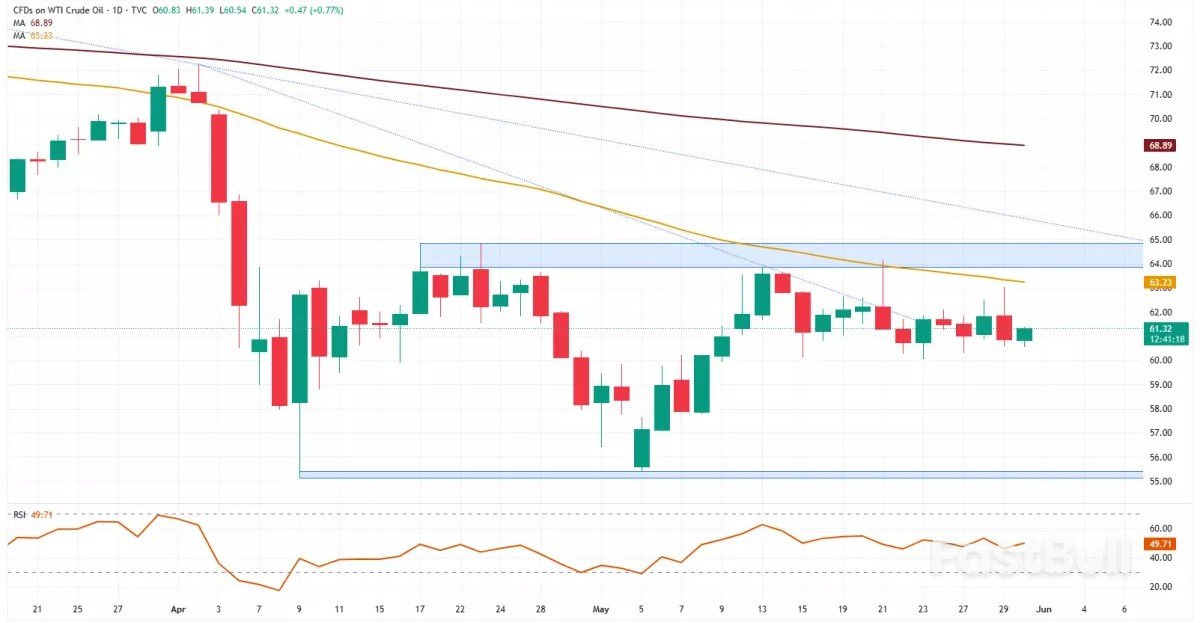
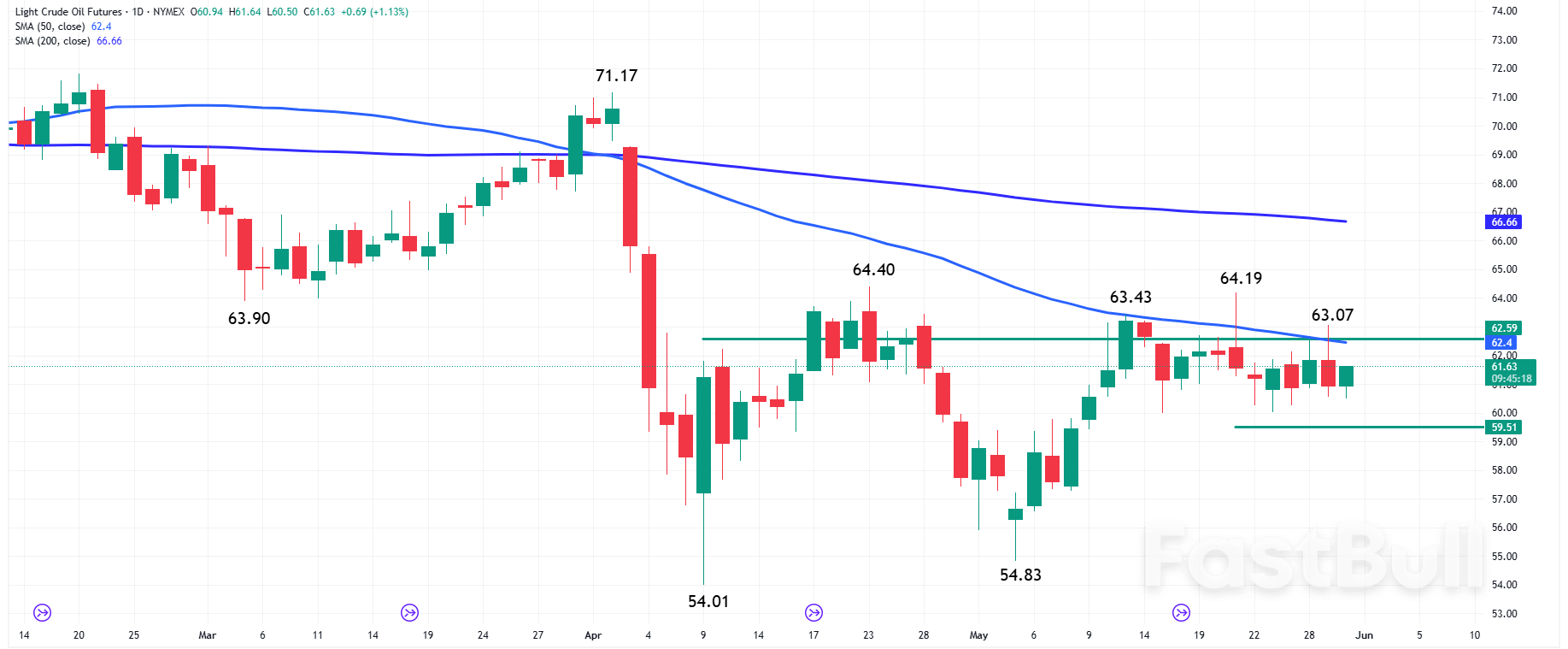
Oil prices remain capped below key resistance as traders await the OPEC+ meeting. Bearish sentiment dominates amid supply surplus, potential output hikes, and uncertainty from U.S. tariff developments.


US consumer sentiment rebounded in late May from one of the lowest readings on record earlier in the month and long-term inflation expectations retreated as concerns about the economy eased after the rollback of China tariffs.
The 52.2 final May sentiment index marked an improvement from the preliminary reading of 50.8, according to the University of Michigan. It was unchanged from April, one of the lowest levels on record. The median estimate in a Bloomberg survey of economists called for a final May reading of 51.5.
Consumers were also more sanguine about the longer-term inflation outlook. They saw costs rising an annualized 4.2% over the next five to 10 years, down from 4.4% in the prior month and the first decline this year.
Consumers expect prices to rise 6.6% over the next year, up just modestly from the 6.5% seen a month earlier, the data released Friday showed. The preliminary May figure was 7.3%.
The survey was concluded May 26, weeks after an agreement between the US and China to temporarily lower import duties. President Donald Trump’s trade policy has been feeding into more consumer apprehension that is weighing on economic activity.
A government report on Thursday showed the economy shrank in the first quarter as consumer spending softened and the trade deficit widened on a pre-tariff import surge. Economists largely anticipate restrained household demand and business investment over the course of the year.
“Sentiment had ebbed at the preliminary reading for May but turned a corner in the latter half of the month following the temporary pause on some tariffs on China goods,’’ Joanne Hsu, director of the survey, said in a statement.
Still, “consumers see the outlook for the economy as no worse than last month, but they remained quite worried about the future,” Hsu said.
The survey showed income expectations remained weak and respondents were still concerned about the possibility of losing their job. A gauge of sentiment about current personal finances fell from a month earlier to the lowest level since 2009.
The university's expectations index rose to 47.9 this month from 47.3 in April, marking the first increase since November. The current conditions gauge dropped to the lowest since late 2022.
The improvement sentiment from earlier in the month reflected a pickup among political independents as well as Democrats. Confidence among Republicans eased.


The Chicago Purchasing Managers’ Index (PMI), a key indicator of the economic health of the manufacturing sector in the Chicago region, has reported a lower than expected figure. The recent data reveals the actual figure to be at 40.5, well below the forecasted 45.1.
This number not only missed forecasted expectations but also fell short when compared to the previous PMI figure, which stood at 44.6. The drop in the PMI indicates a contraction in the manufacturing sector, as a reading above 50 suggests expansion, while a reading below 50 points towards contraction.
The Chicago PMI is a significant tool in understanding the economic climate as it can aid in forecasting the ISM manufacturing PMI. The lower than expected reading is likely to be viewed as negative or bearish for the USD. This is due to the integral role the manufacturing sector plays in the overall economy, and any contraction could signal potential economic slowdown.
The importance of the Chicago PMI is underscored by its two-star rating, marking it as a key event to monitor for those invested in the health of the manufacturing sector and the broader economy. The lower than predicted number will undoubtedly draw the attention of investors and economists alike, as they navigate the implications of this contraction in the manufacturing sector.
While the manufacturing sector continues to show signs of contraction, it remains to be seen how this will impact the overall economy in the coming months. The lower PMI reading, however, is a clear signal that the sector is currently facing challenges, and it may take some time to see a rebound.
In conclusion, the lower than expected Chicago PMI figure of 40.5 is a clear indicator of contraction in the manufacturing sector, falling short of the forecasted 45.1 and the previous figure of 44.6. This development could potentially impact the USD and the broader economy, warranting close monitoring in the coming period.

White Label
Data API
Web Plug-ins
Poster Maker
Affiliate Program
The risk of loss in trading financial instruments such as stocks, FX, commodities, futures, bonds, ETFs and crypto can be substantial. You may sustain a total loss of the funds that you deposit with your broker. Therefore, you should carefully consider whether such trading is suitable for you in light of your circumstances and financial resources.
No decision to invest should be made without thoroughly conducting due diligence by yourself or consulting with your financial advisors. Our web content might not suit you since we don't know your financial conditions and investment needs. Our financial information might have latency or contain inaccuracy, so you should be fully responsible for any of your trading and investment decisions. The company will not be responsible for your capital loss.
Without getting permission from the website, you are not allowed to copy the website's graphics, texts, or trademarks. Intellectual property rights in the content or data incorporated into this website belong to its providers and exchange merchants.
Not Logged In
Log in to access more features

FastBull Membership
Not yet
Purchase
Log In
Sign Up