

Markets
News
Analysis
User
24/7
Economic Calendar
Education
Data
- Names
- Latest
- Prev



Signal Accounts for Members
All Signal Accounts
All Contests
 U.K. Trade Balance Non-EU (SA) (Oct)
A:--
F: --
P: --
U.K. Trade Balance (Oct)A:--
F: --
P: --
U.K. Services Index MoMA:--
F: --
P: --
U.K. Construction Output MoM (SA) (Oct)A:--
F: --
P: --
U.K. Industrial Output YoY (Oct)A:--
F: --
P: --
U.K. Trade Balance (SA) (Oct)A:--
F: --
P: --
U.K. Trade Balance EU (SA) (Oct)A:--
F: --
P: --
U.K. Manufacturing Output YoY (Oct)A:--
F: --
P: --
U.K. GDP MoM (Oct)A:--
F: --
P: --
U.K. GDP YoY (SA) (Oct)A:--
F: --
P: --
U.K. Industrial Output MoM (Oct)A:--
F: --
P: --
U.K. Construction Output YoY (Oct)A:--
F: --
P: --
 France HICP Final MoM (Nov)
A:--
F: --
P: --
 China, Mainland Outstanding Loans Growth YoY (Nov)
A:--
F: --
P: --
China, Mainland M2 Money Supply YoY (Nov)A:--
F: --
P: --
China, Mainland M0 Money Supply YoY (Nov)A:--
F: --
P: --
China, Mainland M1 Money Supply YoY (Nov)A:--
F: --
P: --
 India CPI YoY (Nov)
A:--
F: --
P: --
India Deposit Gowth YoYA:--
F: --
P: --
 Brazil Services Growth YoY (Oct)
A:--
F: --
P: --
 Mexico Industrial Output YoY (Oct)
A:--
F: --
P: --
 Russia Trade Balance (Oct)
A:--
F: --
P: --
 Philadelphia Fed President Henry Paulson delivers a speech
 Canada Building Permits MoM (SA) (Oct)
A:--
F: --
P: --
Canada Wholesale Sales YoY (Oct)A:--
F: --
P: --
Canada Wholesale Inventory MoM (Oct)A:--
F: --
P: --
Canada Wholesale Inventory YoY (Oct)A:--
F: --
P: --
Canada Wholesale Sales MoM (SA) (Oct)A:--
F: --
P: --
 Germany Current Account (Not SA) (Oct)
A:--
F: --
P: --
U.S. Weekly Total Rig CountA:--
F: --
P: --
U.S. Weekly Total Oil Rig CountA:--
F: --
P: --
 Japan Tankan Large Non-Manufacturing Diffusion Index (Q4)
--
F: --
P: --
Japan Tankan Small Manufacturing Outlook Index (Q4)--
F: --
P: --
Japan Tankan Large Non-Manufacturing Outlook Index (Q4)--
F: --
P: --
Japan Tankan Large Manufacturing Outlook Index (Q4)--
F: --
P: --
Japan Tankan Small Manufacturing Diffusion Index (Q4)--
F: --
P: --
Japan Tankan Large Manufacturing Diffusion Index (Q4)--
F: --
P: --
Japan Tankan Large-Enterprise Capital Expenditure YoY (Q4)--
F: --
P: --
U.K. Rightmove House Price Index YoY (Dec)--
F: --
P: --
China, Mainland Industrial Output YoY (YTD) (Nov)--
F: --
P: --
China, Mainland Urban Area Unemployment Rate (Nov)--
F: --
P: --
 Saudi Arabia CPI YoY (Nov)
--
F: --
P: --
 Euro Zone Industrial Output YoY (Oct)
--
F: --
P: --
Euro Zone Industrial Output MoM (Oct)--
F: --
P: --
Canada Existing Home Sales MoM (Nov)--
F: --
P: --
Euro Zone Total Reserve Assets (Nov)--
F: --
P: --
U.K. Inflation Rate Expectations--
F: --
P: --
Canada National Economic Confidence Index--
F: --
P: --
Canada New Housing Starts (Nov)--
F: --
P: --
U.S. NY Fed Manufacturing Employment Index (Dec)--
F: --
P: --
U.S. NY Fed Manufacturing Index (Dec)--
F: --
P: --
Canada Core CPI YoY (Nov)--
F: --
P: --
Canada Manufacturing Unfilled Orders MoM (Oct)--
F: --
P: --
Canada Manufacturing New Orders MoM (Oct)--
F: --
P: --
Canada Core CPI MoM (Nov)--
F: --
P: --
Canada Manufacturing Inventory MoM (Oct)--
F: --
P: --
Canada CPI YoY (Nov)--
F: --
P: --
Canada CPI MoM (Nov)--
F: --
P: --
Canada CPI YoY (SA) (Nov)--
F: --
P: --
Canada Core CPI MoM (SA) (Nov)--
F: --
P: --


No matching data

Latest Views
Latest Views
Trending Topics
Top Columnists
Latest Update
White Label
Data API
Web Plug-ins
Affiliate Program
View All
No data
(Bloomberg) -- Oil erased gains as global markets were buffeted by mixed signals from the Federal Reserve and Donald Trump.
(Bloomberg) -- Oil erased gains as global markets were buffeted by mixed signals from the Federal Reserve and Donald Trump.
Brent traded below $71 a barrel, with US equity futures also reversing an earlier increase. Fed Chair Jerome Powell acknowledged the high degree of uncertainty from the US president’s policies, but said the central bank is in no hurry to cut rates.
Trump, meanwhile, said the Fed should reduce borrowing costs, splitting with policymakers weighing the economic cost of his tariff push. New Fed projections showed lower growth forecasts but higher inflation estimates. The Treasury market boosted its bets on lower rates.
Crude remains markedly below its mid-January peak, as a confluence of bearish factors pressures prices. While the escalating trade war threatens to hit energy demand as tariffs and counter levies are imposed, OPEC and its allies are set to raise output from April, contributing to weaker global balances.
“US tariff news is likely to keep oil prices volatile,” said Giovanni Staunovo, a commodity analyst at UBS Group AG. “That said, we retain our moderately constructive outlook for crude prices.”
US inventories of gasoline, meanwhile, fell last week to the lowest since the start of the year, while distillates — a category that includes diesel — also sank, allaying concerns about consumption. Crude stockpiles rose less than flagged in an industry report, while levels dropped at the Cushing, Oklahoma, hub.


After the recent Federal Open Market Committee meeting, the US Federal Reserve, yesterday, announced its plan to keep its federal funds rate unchanged at 4.25%-4.5%. Every FOMC meeting influences Bitcoin prices, sometimes causing major swings. In the last 24 hours, the price of BTC has seen a rise of 3.1%. This report looks at past rate hikes, how Bitcoin reacted and what traders can expect going forward. Ready? Dive in!
In April 2022, the Fed funds interest rate was as low as 0.5%. It was in May 2022 that the US Fed decided to revisit its interest rate policy. The primary reason was that the inflation rate had reached as high as 8.6% in May 2022. In June, the inflation rate touched a peak of 9.1% - the highest in a decade.

Between May 2022 and July 2023, the US Fed consistently pushed the interest rate upwards. By July 2023, it had reached as high as 5.5%. The level remained unchanged until August 2024.
In August 2024, the inflation rate fell to 2.5%. In fact, between June 2022 and June 2023, the rate declined consistently.
It was in September 2024 that the US Fed reversed its stance on the interest rate policy. In September, the interest rate was reduced from 5.5% to 5%. In November, it was lowered to 4.75%. In December, for the third time in 2024, it was brought down to 4.5%.
In the March 2024 FOMC meeting, the US Fed decided to keep the interest rate unchanged at 5.5%. Initially, the Bitcoin market reacted positively, pushing the price to a new ATH. In April 2024, the market moved sideways, trading within a range of $71K and $61K.
In the May 2024 FOMC meeting, the Fed showed no interest in making any changes. The BTC market showed small signs of recovery.
In the June 2024 FOMC meeting, even though the Fed acknowledged the moderation in inflation, they decided to keep the interest rate unchanged. At one point in June 2024, the BTC price dropped as low as $58,360.67.
In the July 2024 FOMC meeting also, the Fed refrained from making changes. The BTC market plummeted sharply after the meeting. At one point on August 5, it dropped to a low of $48,919.60.
In the September 2024 meeting, the Fed reversed its interest rate policy. It reduced the rate by 25 basis points to 5%. Within ten days of the meeting, the Bitcoin price climbed by 10%. This marked the beginning of a new bull run in the market.
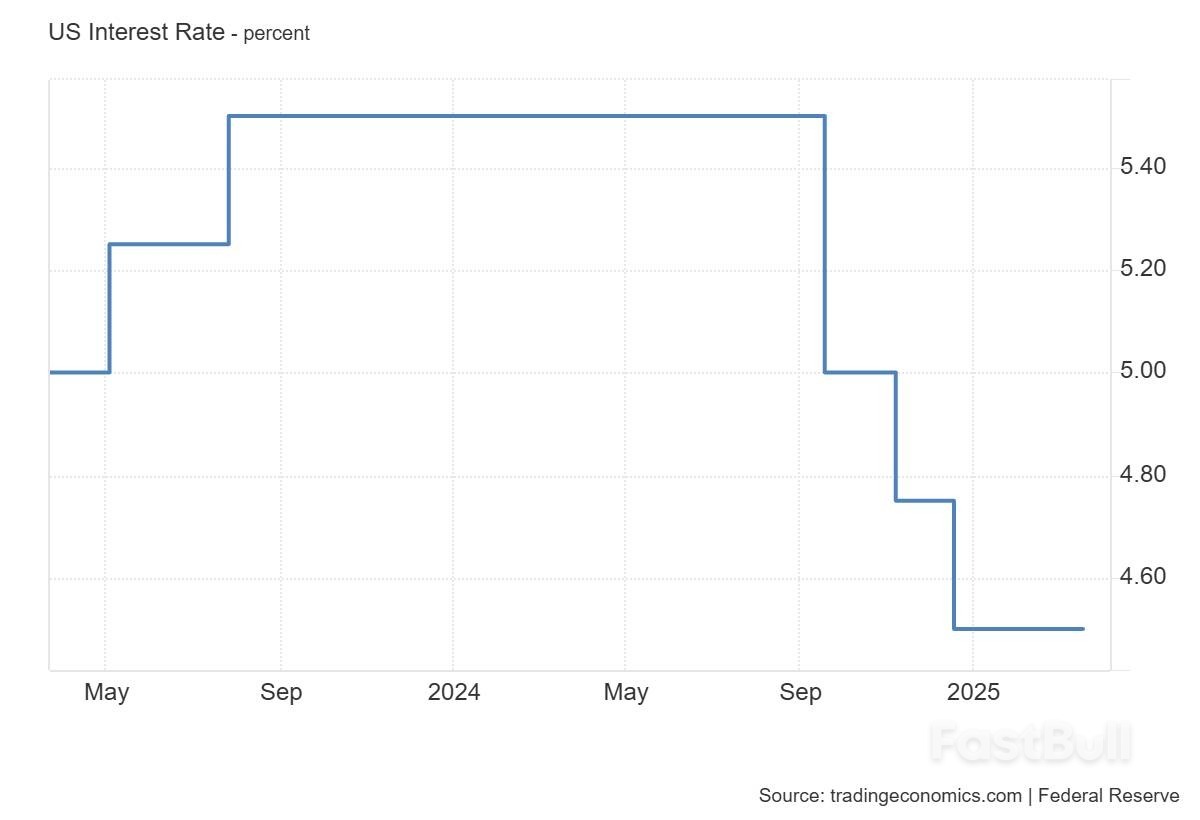
In the November 2024 meeting, the Fed implemented another 25 basis point reduction. November 2024 was a fantastic month for BTC. A favourable macroeconomic and political environment, fueled by Donald Trump’s victory in the US presidential election, contributed to Bitcoin’s steep growth.
In the December 2024 meeting, the Fed reduced the interest rate to 4.5%. It was the third and final reduction implemented by the Fed in 2024. In December, the BTC price touched a new ATH of 108K.
In the January 2025 FOMC meeting, the Fed returned to its “wait and watch” policy. It kept the interest rate unchanged at 4.5%. By January 2025, the Bitcoin market lost the bullish momentum, which had helped the asset reach its ATH of $109K.
(Bloomberg) -- Swiss National Bank officials cut their interest rate to the lowest since September 2022 to deter inflows into the franc, and declared another reduction is less likely for now.
Officials led by President Martin Schlegel trimmed their benchmark by a quarter point to 0.25% on Thursday, in a step anticipated by traders and a large majority of economists. He signaled to reporters in Zurich that the central bank doesn’t anticipate more easing at the current juncture.
“This rate cut has an expansionary impact,” Schlegel said. “In that sense, the probability of additional policy easing is naturally lower.”
The SNB’s fifth step in the current cycle leaves its rate at the lowest of any managing the world’s 10 most-traded currencies. Analysts largely reckon that this was its final reduction of the cycle.
The Swiss franc erased gains after the decision, traded slightly lower at 0.9572 versus the euro. Swaps pricing indicates traders expect no more rate cuts by the SNB this year.
The central bank’s activism contrasts with the hesitancy to ease further by global peers such as the US Federal Reserve, which on Wednesday acknowledged a backdrop of high uncertainty. Similarly, Sweden’s Riksbank kept borrowing costs unchanged and said it has finished cutting.
The SNB move, following up on a surprise half-point reduction in December, shores up its foreign-exchange policy in anticipation of volatile times ahead. While the franc has weakened this year, the currency remains a potential haven for investors guarding against instability just as US President Donald Trump ratchets up global trade tensions and war continues to rage in Ukraine.
“We also remain willing to be active in the foreign exchange market as necessary,” Schlegel said, sticking with the SNB’s standard language, as observed how the backdrop has shifted. “Uncertainty about global economic and inflation developments has increased significantly.”
What Bloomberg Economics Says...
“This decision reflects the increased uncertainty around the inflation outlook amid threats of tariffs and a high level of geopolitical uncertainty, both of which could put upward pressure on the currency. The decision can be seen as insurance against those risks.”
—Jean Dalbard, economist.
728 RM B 7/F GEE LOK IND BLDG NO 34 HUNG TO RD KWUN TONG KLN HONG KONG


White Label
Data API
Web Plug-ins
Poster Maker
Affiliate Program
The risk of loss in trading financial instruments such as stocks, FX, commodities, futures, bonds, ETFs and crypto can be substantial. You may sustain a total loss of the funds that you deposit with your broker. Therefore, you should carefully consider whether such trading is suitable for you in light of your circumstances and financial resources.
No decision to invest should be made without thoroughly conducting due diligence by yourself or consulting with your financial advisors. Our web content might not suit you since we don't know your financial conditions and investment needs. Our financial information might have latency or contain inaccuracy, so you should be fully responsible for any of your trading and investment decisions. The company will not be responsible for your capital loss.
Without getting permission from the website, you are not allowed to copy the website's graphics, texts, or trademarks. Intellectual property rights in the content or data incorporated into this website belong to its providers and exchange merchants.
Not Logged In
Log in to access more features

FastBull Membership
Not yet
Purchase


Log In
Sign Up


