• Trade
  • Markets
  • Copy
  • Contests
  • News
  • 24/7
  • Calendar
  • Q&A
  • Chats
Trending
Screeners
SYMBOL
LAST
BID
ASK
HIGH
LOW
NET CHG.
%CHG.
SPREAD
SPX
S&P 500 Index
6905.73
6905.73
6905.73
6920.22
6888.76
-24.21
-0.35%
--
DJI
Dow Jones Industrial Average
48461.92
48461.92
48461.92
48704.83
48390.91
-249.04
-0.51%
--
IXIC
NASDAQ Composite Index
23474.34
23474.34
23474.34
23531.02
23397.52
-118.75
-0.50%
--
USDX
US Dollar Index
97.660
97.740
97.660
97.830
97.570
-0.030
-0.03%
--
EURUSD
Euro / US Dollar
1.17686
1.17737
1.17686
1.17693
1.17628
-0.00032
-0.03%
--
GBPUSD
Pound Sterling / US Dollar
1.35079
1.35119
1.35079
1.35090
1.34980
-0.00016
-0.01%
--
XAUUSD
Gold / US Dollar
4332.11
4332.55
4332.11
4549.65
4302.46
-201.23
-4.44%
--
WTI
Light Sweet Crude Oil
57.706
57.736
57.706
58.167
56.815
+0.967
+ 1.70%
--

Community Accounts

Signal Accounts
--
Profit Accounts
--
Loss Accounts
--
View More

Become a signal provider

Sell trading signals to earn additional income

View More

Guide to Copy Trading

Get started with ease and confidence

View More

Signal Accounts for Members

All Signal Accounts

Best Return
  • Best Return
  • Best P/L
  • Best MDD
Past 1W
  • Past 1W
  • Past 1M
  • Past 1Y

All Contests

  • All
  • Trump Updates
  • Recommend
  • Stocks
  • Cryptocurrencies
  • Central Banks
  • Featured News
Top News Only
Share

EIA: US Crude, Fuel Inventories Rose In The Week Ended December 19

Share

EIA - US Exports Of Total Petroleum Products For Week Ended Dec 19 Rise To Highest On Record

Share

EIA - US Gulf Coast Stocks Of Distillate Fuel Oil For Week Ended Dec 19 Rise To Highest Since Aug 2021

Share

On Monday (December 29), At The Close Of Trading In New York (05:59 Beijing Time On Tuesday), The Offshore Yuan (CNH) Was Quoted At 6.9971 Against The US Dollar, Up 74 Points From The Close Of Trading In New York On Friday. The Yuan Traded In The Range Of 7.0152-6.9936 During The Day

Share

Japan And The European Union Are Considering Jointly Developing Defense Equipment

Share

The U.S. Energy Information Administration (EIA) Reported That U.S. Crude Oil Inventories Rose By 405,000 Barrels In The Week Ending December 19, Compared With Analysts' Expectations Of A Decrease Of 2,052,400 Barrels And A Decrease Of 1,274,000 Barrels In The Previous Week

Share

Russian Foreign Minister Lavrov To RIA News Agency: We Are Waiting For USA To Complete Study Of Putin's Proposal On Extending Accord On Strategic Arms, Cannot Rush Things

Share

Russian Foreign Minister Lavrov To RIA News Agency: Moscow Shared Its Version Of Security Guarantees For Ukraine With USA In September, Could Be Based On 2021 Proposals

Share

The Federal Reserve's Discount Window Lending Balance Was $9.87 Billion In The Week Ending December 24, Compared With $8.87 Billion The Previous Week

Share

Trump Says He And Netanyahu Don't Fully Agree On West Bank

Share

Trump Says He And Netanyahu Have An Understanding Regarding Syria

Share

Pentagon - USA State Dept Made Determination Approving Possible Military Sale To Poland Of Blanket Order Training For $200 Million

Share

Lavrov To RIA: It Is Clear That With Zelenskiy's Expired Mandate, Ukraine Must Hold Elections And The USA Backs This View

Share

Lavrov To RIA: It Is Important For A Ukraine Settlement To Stop NATO Presence In Ukraine And Ensure Neutral, Non-Aligned Status For The Country

Share

Lavrov To RIA: The West Must Come To Terms With The New Territorial Realities In Ukraine

Share

Russian Foreign Minister Lavrov Tells RIA News Agency: Everyone In The West Understands That Russia Holds The Strategic Initiative In Ukraine

Share

Citigroup: Sales Losses Remain At Approximately $1.6 Billion

Share

Trump On Federal Reserve: Thinking About Bringing A Lawsuit Against Powell

Share

US President Trump: We Will Announce The Federal Reserve Chair Nominee At The Appropriate Time; There Is Plenty Of Time

Share

Trump: At Some Point Saudi Arabia Will Sign The Abraham Accords

TIME
ACT
FCST
PREV
Japan Retail Sales (Nov)

A:--

F: --

P: --

Japan Retail Sales YoY (Nov)

A:--

F: --

P: --

Russia Retail Sales YoY (Nov)

A:--

F: --

P: --

Russia Unemployment Rate (Nov)

A:--

F: --

P: --

Argentina Retail Sales YoY (Oct)

A:--

F: --

P: --

U.S. Weekly Treasuries Held by Foreign Central Banks

--

F: --

P: --

China, Mainland Industrial Profit YoY (YTD) (Nov)

A:--

F: --

P: --

India Industrial Production Index YoY (Nov)

--

F: --

P: --

India Manufacturing Output MoM (Nov)

--

F: --

P: --

US President Trump delivered a speech
Russia IHS Markit Manufacturing PMI (Dec)

A:--

F: --

P: --

India Manufacturing Output MoM (Nov)

A:--

F: --

P: --

India Industrial Production Index YoY (Nov)

A:--

F: --

P: --

France Unemployment Class-A (Nov)

A:--

F: --

P: --

Canada National Economic Confidence Index

A:--

F: --

P: --

U.S. Pending Home Sales Index (Nov)

A:--

F: --

P: --
U.S. Pending Home Sales Index MoM (SA) (Nov)

A:--

F: --

P: --
U.S. Pending Home Sales Index YoY (Nov)

A:--

F: --

P: --

U.S. EIA Weekly Cushing, Oklahoma Crude Oil Stocks Change

--

F: --

P: --

U.S. EIA Weekly Crude Demand Projected by Production

--

F: --

P: --

U.S. EIA Weekly Gasoline Stocks Change

--

F: --

P: --

U.S. Dallas Fed General Business Activity Index (Dec)

A:--

F: --

P: --

U.S. EIA Weekly Crude Stocks Change

--

F: --

P: --

U.S. Dallas Fed New Orders Index (Dec)

A:--

F: --

P: --

U.S. EIA Weekly Natural Gas Stocks Change

A:--

F: --

P: --

U.S. Weekly Treasuries Held by Foreign Central Banks

A:--

F: --

P: --

U.S. EIA Weekly Crude Stocks Change

A:--

F: --

P: --

U.S. EIA Weekly Crude Demand Projected by Production

--

F: --

P: --

U.S. EIA Weekly Cushing, Oklahoma Crude Oil Stocks Change

A:--

F: --

P: --

U.S. EIA Weekly Gasoline Stocks Change

A:--

F: --

P: --

South Korea Industrial Output MoM (SA) (Nov)

--

F: --

P: --

South Korea Retail Sales MoM (Nov)

--

F: --

P: --

South Korea Services Output MoM (Nov)

--

F: --

P: --

Russia IHS Markit Services PMI (Dec)

--

F: --

P: --

Turkey Economic Sentiment Indicator (Dec)

--

F: --

P: --

Euro Zone Total Reserve Assets (Nov)

--

F: --

P: --

Brazil Unemployment Rate (Nov)

--

F: --

P: --

U.S. Weekly Redbook Index YoY

--

F: --

P: --

U.S. S&P/CS 10-City Home Price Index YoY (Oct)

--

F: --

P: --

U.S. S&P/CS 10-City Home Price Index MoM (Not SA) (Oct)

--

F: --

P: --

U.S. S&P/CS 20-City Home Price Index (Not SA) (Oct)

--

F: --

P: --

U.S. S&P/CS 20-City Home Price Index MoM (Not SA) (Oct)

--

F: --

P: --

U.S. FHFA House Price Index YoY (Oct)

--

F: --

P: --

U.S. S&P/CS 20-City Home Price Index YoY (Not SA) (Oct)

--

F: --

P: --

U.S. S&P/CS 20-City Home Price Index MoM (SA) (Oct)

--

F: --

P: --

U.S. FHFA House Price Index MoM (Oct)

--

F: --

P: --

U.S. FHFA House Price Index (Oct)

--

F: --

P: --

U.S. Chicago PMI (Dec)

--

F: --

P: --

Brazil CAGED Net Payroll Jobs (Nov)

--

F: --

P: --

U.S. Weekly Total Oil Rig Count

--

F: --

P: --

U.S. Weekly Total Rig Count

--

F: --

P: --

FOMC Meeting Minutes
U.S. API Weekly Refined Oil Stocks

--

F: --

P: --

U.S. API Weekly Crude Oil Stocks

--

F: --

P: --

U.S. API Weekly Cushing Crude Oil Stocks

--

F: --

P: --

U.S. API Weekly Gasoline Stocks

--

F: --

P: --

South Korea CPI YoY (Dec)

--

F: --

P: --

China, Mainland NBS Manufacturing PMI (Dec)

--

F: --

P: --

China, Mainland Composite PMI (Dec)

--

F: --

P: --

China, Mainland NBS Non-manufacturing PMI (Dec)

--

F: --

P: --

China, Mainland Caixin Manufacturing PMI (SA) (Dec)

--

F: --

P: --

Q&A with Experts
    • All
    • Chatrooms
    • Groups
    • Friends
    EuroTrader flag
    tracy
    @tracythis would be released during the New York session
    EuroTrader flag
    tracy
    @tracyAnother tool you should pay attention to is actually the sentiment indicator on fast ull
    tracy flag
    EuroTrader
    @EuroTraderwhat other pair should i look out tomorrow
    tracy flag
    EuroTrader
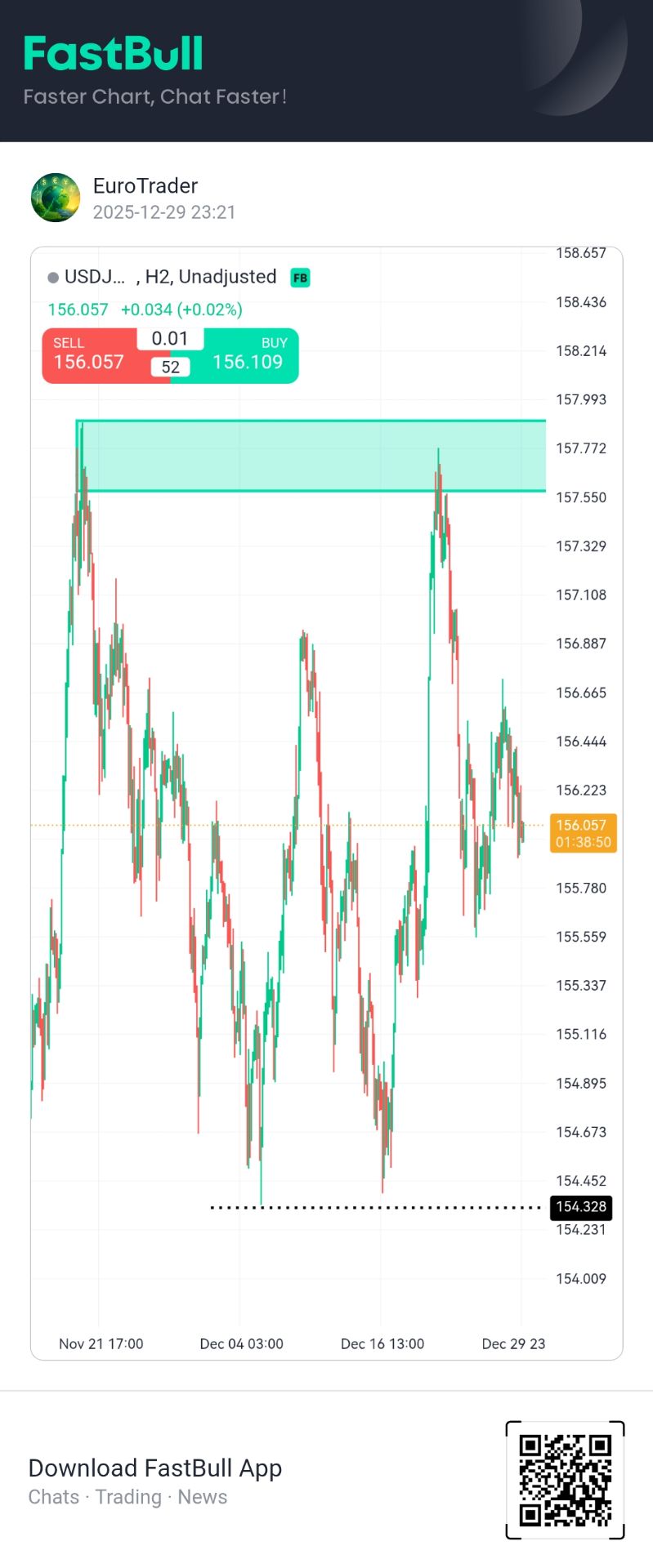
    @EuroTraderany analysis for USDjpy?.
    EuroTrader flag
    tracy
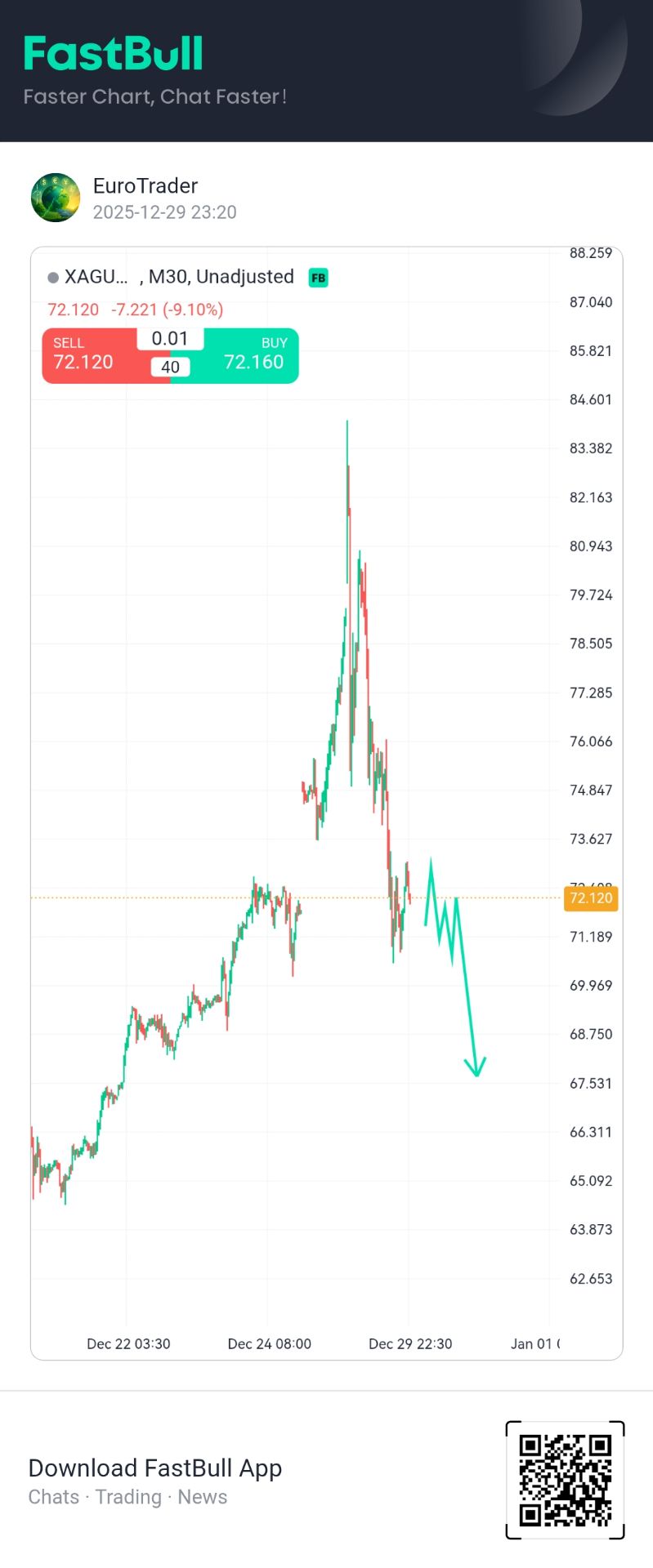
    @tracyYou can look at silver since they are correlated pairs. They live alone
    EuroTrader flag
    tracy
    @tracyI haven't really had a look at silver today. I'll do a quick analysis and share with you
    a _ I _ g flag
    EuroTrader
    @EuroTradershare with me bro
    3196397 flag
    wtf is going on with silver
    EuroTrader flag
    EuroTrader flag
    EuroTrader
    @a _ I _ g@a _ I _ gsilver should continue lower toward 67$ per oz that's my downside target
    EuroTrader flag
    3196397
    wtf is going on with silver
    @Visitor3196397it's following in the footsteps of its cousin Gold that's what s happening with silver
    a _ I _ g flag
    EuroTrader
    @EuroTraderseen bro
    EuroTrader flag
    tracy
    @tracycheck out the silver analysis i just shared in the chatroom
    EuroTrader flag
    a _ I _ g
    @a _ I _ gWhat i would be looking out for would be a breakout lower to the downside
    EuroTrader flag
    3196397 flag
    lol, ill eat my hat if it gets to 100 per oz
    EuroTrader flag
    EuroTrader
    @tracyUSDjpy is still trading sideways. It's not a good pair to trade at the moment till we see a clear structural confirmation
    3196397 flag
    they wont allow it
    EuroTrader flag
    3196397
    lol, ill eat my hat if it gets to 100 per oz
    @Visitor3196397It would get there .Now is even the best time to accumulate more silver as it continues to dip
    EuroTrader flag
    3196397
    they wont allow it
    @Visitor3196397silver is greatly undervalued . It's supply is tight and it's demand is increasing daily
    Type here...
    Add Symbol or Code

      No matching data

      All
      Trump Updates
      Recommend
      Stocks
      Cryptocurrencies
      Central Banks
      Featured News
      • All
      • Russia-Ukraine Conflict
      • Middle East Flashpoint
      • All
      • Russia-Ukraine Conflict
      • Middle East Flashpoint
      Search
      Products

      Charts Free Forever

      Chats Q&A with Experts
      Screeners Economic Calendar Data Tools
      Membership Features
      Data Warehouse Market Trends Institutional Data Policy Rates Macro

      Market Trends

      Market Sentiment Order Book Forex Correlations

      Top Indicators

      Charts Free Forever
      Markets

      News

      News Analysis 24/7 Columns Education
      From Institutions From Analysts
      Topics Columnists

      Latest Views

      Latest Views

      Trending Topics

      Top Columnists

      Latest Update

      Signals

      Copy Rankings Latest Signals Become a signal provider AI Rating
      Contests
      Brokers

      Overview Brokers Assessment Rankings Regulators News Claims
      Broker listing Forex Brokers Comparison Tool Live Spread Comparison Scam
      Q&A Complaint Scam Alert Videos Tips to Detect Scam
      More

      Business
      Events
      Careers About Us Advertising Help Center

      White Label

      Data API

      Web Plug-ins

      Affiliate Program

      Awards Institution Evaluation IB Seminar Salon Event Exhibition
      Vietnam Thailand Singapore Dubai
      Fans Party Investment Sharing Session
      FastBull Summit BrokersView Expo
      Recent Searches
        Top Searches
          Markets
          News
          Analysis
          User
          24/7
          Economic Calendar
          Education
          Data
          • Names
          • Latest
          • Prev

          View All

          No data

          Scan to Download

          Faster Charts, Chat Faster!

          Download App
          English
          • English
          • Español
          • العربية
          • Bahasa Indonesia
          • Bahasa Melayu
          • Tiếng Việt
          • ภาษาไทย
          • Français
          • Italiano
          • Türkçe
          • Русский язык
          • 简中
          • 繁中
          Open Account
          Search
          Products
          Charts Free Forever
          Markets
          News
          Signals

          Copy Rankings Latest Signals Become a signal provider AI Rating
          Contests
          Brokers

          Overview Brokers Assessment Rankings Regulators News Claims
          Broker listing Forex Brokers Comparison Tool Live Spread Comparison Scam
          Q&A Complaint Scam Alert Videos Tips to Detect Scam
          More

          Business
          Events
          Careers About Us Advertising Help Center

          White Label

          Data API

          Web Plug-ins

          Affiliate Program

          Awards Institution Evaluation IB Seminar Salon Event Exhibition
          Vietnam Thailand Singapore Dubai
          Fans Party Investment Sharing Session
          FastBull Summit BrokersView Expo

          New Regulations in China Target Emotional Influence of AI Chatbots Amid Mental Health Concerns

          Gerik

          Economic

          Summary:

          China's cybersecurity regulator has introduced draft rules aimed at controlling the emotional influence of AI chatbots, particularly around sensitive issues such as suicide, self-harm, and gambling...

          Tighter control over emotionally interactive AI

          The Cyberspace Administration of China (CAC) released draft regulations proposing strict limits on AI chatbots that mimic human interaction, especially those that simulate personality or emotional relationships. This comes amid rising concerns over the mental health impacts of AI, especially with the growing use of virtual companions and emotionally engaging chatbot apps in China.
          The regulations prohibit AI-generated content that could incite self-harm, suicide, verbal violence, or gambling. If a user expresses suicidal thoughts, platforms must ensure a human intervenes and notifies a guardian or designated person. These rules would apply to all AI tools using text, audio, images, or video for public interaction in China.

          AI emotional safety takes precedence over content control

          This policy shift reflects an evolution from content moderation (as in China’s 2023 generative AI rules) to emotional safety. According to Winston Ma, NYU Law adjunct professor, this regulatory leap underscores China’s aim to safeguard users especially minors from emotional manipulation and excessive dependency on AI systems.
          The CAC’s rules propose time restrictions for minors interacting with AI companions, including requiring guardian consent and systems that automatically apply minor-friendly settings if the user's age is uncertain.

          Regulation timed as Chinese AI chatbot IPOs surge

          The announcement follows IPO filings by two major Chinese AI chatbot developers Zhipu (Z.ai) and Minimax, the latter known for its popular Talkie app. Minimax’s apps accounted for over a third of its revenue, with over 20 million monthly active users. While these companies have not commented on the regulatory implications, their listings in Hong Kong suggest increasing international exposure, possibly affected by Beijing’s evolving stance on AI safety.
          Under the new rules, chatbots with over one million registered users or 100,000 monthly active users would need to undergo a formal security assessment, potentially slowing down or altering growth strategies.

          A broader global conversation on AI and mental health

          China’s move aligns with growing global attention to the mental health effects of AI companions. OpenAI CEO Sam Altman acknowledged the difficulty of moderating suicide-related conversations. The recent lawsuit against OpenAI in the U.S. and the hiring of a “Head of Preparedness” to assess risks highlight similar concerns in the West.
          Notably, emotionally responsive AI is becoming more mainstream, with some users forming relationships with AI companions. For example, a Japanese woman reportedly married her AI boyfriend in 2025. Meanwhile, platforms like Character.ai and Polybuzz.ai have seen explosive growth, ranking among the most used globally.
          China’s proposed AI regulations signify a landmark shift in global AI governance by directly addressing emotional and psychological risks. As the country pushes to influence global AI rules, these draft measures may shape international norms especially as generative and emotionally engaging AI continues to integrate into daily life.
          These new rules show that China is not only accelerating AI development but also establishing moral and psychological boundaries. Whether these regulations set a global precedent or merely tighten domestic control remains to be seen but their introduction suggests that emotional safety may become as crucial as content safety in the next era of AI governance.

          Source: CNBC

          To stay updated on all economic events of today, please check out our Economic calendar
          Risk Warnings and Disclaimers
          You understand and acknowledge that there is a high degree of risk involved in trading. Following any strategies or investment methods may lead to potential losses. The content on the site is provided by our contributors and analysts for information purposes only. You are solely responsible for determining whether any trading assets, securities, strategy, or any other product is suitable for investing based on your own investment objectives and financial situation.
          Add to Favorites
          Share

          Trump’s Fragile Truce with the $30 Trillion U.S. Bond Market

          Gerik

          Economic

          A wary detente between Trump and bond markets

          Since the market shock of April 2025 when President Donald Trump’s sudden imposition of “Liberation Day” tariffs rattled global confidence and sent U.S. bond yields surging his administration has been walking a fine line. While yields have calmed, the truce between fiscal policymakers and the $30 trillion Treasury market remains uneasy. Every new policy signal, such as the Treasury’s November suggestion of selling more long-dated debt, reminds investors just how precarious that calm is.
          The bond market’s ability to discipline governments has historically been underestimated. April’s revolt, where yields on 10-year Treasuries saw their steepest weekly climb in decades, forced the Trump administration to scale back and delay its tariff plans. But that incident has kept policymakers and Wall Street on edge.

          The weight of deficits and inflation risks

          At the core of market anxiety is the U.S. government’s persistent fiscal imbalance. The federal deficit remains around 6% of GDP, and with over 120% debt-to-GDP ratio, investors worry about long-term solvency. Analysts such as Daniel McCormack (Macquarie) note that unresolved fiscal pressures can lead to chronic voter dissatisfaction, compounding political risk.
          This structural stress is reflected in rising "term premiums" the extra yield demanded for holding long-term U.S. debt. The Treasury has responded by managing issuance strategy, favoring shorter-term debt and expanding its buyback programs to support liquidity and reduce pressure on long-term yields. Officials like Treasury Secretary Scott Bessent have framed their role as “America’s top bond salesmen,” openly prioritizing yield suppression.

          Market manipulation or stability engineering?

          Behind closed doors, the Treasury has been polling investors on major policy moves, including preferred candidates for the Federal Reserve chair. Reports show investors were especially wary of Kevin Hassett, seen as too closely aligned with Trump. The Treasury’s proactive outreach is viewed as both a stabilizing force and a sign of the administration’s growing sensitivity to market sentiment.
          This dovetails with other measures: expanding the buyback of illiquid long-dated debt, tilting issuance toward Treasury bills (T-bills), and supporting banking regulatory tweaks to facilitate Treasury purchases. JPMorgan estimates suggest issuance of long-dated bonds to the private sector will decline in 2026 despite the deficit remaining flat thanks to this shift.

          Unconventional demand sources: stablecoins and the Fed

          A new and perhaps unexpected force in bond market stability is the stablecoin sector. With Trump’s administration embracing crypto, the $300 billion stablecoin market is becoming a significant buyer of short-term Treasury bills. Officials estimate this demand could grow tenfold by 2030, effectively absorbing a large portion of new debt issuance.
          Simultaneously, the Federal Reserve has paused its balance sheet runoff, resuming its role as a major buyer especially of shorter-term bonds. This reduces market pressure but leaves the structure of federal debt increasingly skewed toward short maturities, posing risks if short-term rates surge unexpectedly.

          A short-term calm, but long-term fragility

          Market sentiment is stabilizing for now. The MOVE Index (a measure of bond volatility) has dropped to its lowest in four years, and 10-year yields have fallen over 30 basis points since their April peak. Yet as strategists like BofA’s Meghan Swiber warn, this calm is built on a “tenuous balance”: manageable inflation expectations, dovish Fed signals, and Treasury’s focus on short maturities.
          Any disruption to this equilibrium surging inflation, a hawkish Fed pivot, renewed tariff shocks, or bond-buying fatigue could reignite volatility. Critics such as Stephen Miran (Fed governor and former Trump critic) warn that this strategy of short-term funding leaves the U.S. vulnerable to future interest rate spikes.
          While Trump’s administration has succeeded in containing bond market panic for now investors remain watchful. The return of bond vigilantes isn’t a matter of if, but when. With inflation, geopolitical instability, and fiscal indiscipline all looming, the peace between Washington and Wall Street’s most powerful watchdog may prove fleeting.

          Source: Reuters

          To stay updated on all economic events of today, please check out our Economic calendar
          Risk Warnings and Disclaimers
          You understand and acknowledge that there is a high degree of risk involved in trading. Following any strategies or investment methods may lead to potential losses. The content on the site is provided by our contributors and analysts for information purposes only. You are solely responsible for determining whether any trading assets, securities, strategy, or any other product is suitable for investing based on your own investment objectives and financial situation.
          Add to Favorites
          Share

          Kremlin Says Ukraine Should Withdraw Troops From Donbas, And A Putin-Trump Call Expected Soon

          Ukadike Micheal

          Political

          Russia-Ukraine Conflict

          The Kremlin said on Monday that Ukraine should withdraw its troops from the part of Donbas that it still controls if it wanted peace, and that if Kyiv did not strike a deal then it would lose yet more territory.
          Putin and Trump spoke on Sunday ahead of Trump's meeting in Miami with Ukrainian President Volodymyr Zelenskiy. Kremlin spokesman Dmitry Peskov said another call was planned very soon.
          Peskov refused to comment on the idea of a free economic zone in Donbas or on the future of the Zaporizhzhia nuclear power plant, which is controlled by Russia, saying that the Kremlin felt it was inappropriate.
          When asked about Kremlin aide Yuri Ushakov's remarks about the decision that Kyiv needed to take on Donbas, Peskov said that Ukraine should withdraw its troops from the parts they still controlled.
          "We are talking about the withdrawal of the regime's armed forces from the Donbas," Peskov said. When asked it that applied to the Zaporizhzhia and Kherson regions too, he refused to discuss details.
          Russia currently controls a fifth of Ukraine, including Crimea which it annexed in 2014, about 90% of Donbas, 75% of Zaporizhzhia and Kherson regions, and slivers of the Kharkiv, Sumy, Mykolaiv and Dnipropetrovsk regions, according to Russian estimates.
          Russia claims Donbas, Zaporizhzhia and Kherson as part of Russia, though most countries consider the regions to be part of Ukraine.
          Peskov said no call between Putin and Zelenskiy was being discussed.
          Peskov paraphrased Trump's remarks that Ukraine could lose more territory to Russia over coming months unless Kyiv struck a deal.

          Source: Reuters

          Risk Warnings and Disclaimers
          You understand and acknowledge that there is a high degree of risk involved in trading. Following any strategies or investment methods may lead to potential losses. The content on the site is provided by our contributors and analysts for information purposes only. You are solely responsible for determining whether any trading assets, securities, strategy, or any other product is suitable for investing based on your own investment objectives and financial situation.
          Add to Favorites
          Share

          U.S. Revives Humanitarian Aid with $2 Billion Pledge to UN Amid Global Cuts

          Gerik

          Economic

          A measured return to global humanitarian leadership

          The United States has pledged $2 billion in humanitarian aid to the United Nations, marking a notable shift after a year of sharp foreign aid cuts under the Trump administration. The announcement, made by a State Department official on December 29, signals a partial revival of U.S. engagement with global relief efforts, as international agencies struggle to meet rising humanitarian needs amid falling donations.
          Although details on the allocation of the new funding were not disclosed, the pledge is seen as an attempt to mitigate the financial shock created by earlier reductions in U.S. contributions. In 2025, the U.S. had dramatically slashed its humanitarian aid, contributing only $3.38 billion to the UN a steep decline from $14.1 billion in 2024 and a record $17.2 billion in 2022. The 2025 total represented just 14.8% of global contributions, significantly down from previous years where the U.S. led global aid efforts.

          A UN in crisis: record needs, shrinking support

          The funding shortfall has had a direct impact on the United Nations’ operational capacity. Earlier in December, the UN announced its 2026 global aid appeal, requesting $23 billion to support 87 million people worldwide. This figure is nearly half of the $47 billion sought in 2025, a clear reflection of dwindling donor confidence and the pressure on international budgets.
          Western donors such as Germany have also scaled back humanitarian aid this year, opting instead to prioritize military and defense spending amid rising geopolitical tensions. This trend has created a vacuum in humanitarian financing at a time when crises from Gaza to Sudan to Afghanistan have only deepened.

          Palestinian crisis highlights urgent need for aid

          The funding crunch is already being felt in places like Gaza, where images of children queuing at charity kitchens underline the scale of human suffering. With food insecurity worsening and healthcare systems on the brink, humanitarian actors are stretched beyond capacity. The new U.S. pledge, though modest compared to past commitments, could provide short-term relief to areas facing imminent famine and displacement.
          Observers note that the $2 billion announcement may also serve strategic and diplomatic purposes. After being criticized for retreating from its global responsibilities, the Trump administration faces mounting international pressure to restore aid commitments, especially in light of China’s expanding influence in global development finance. Re-engagement via UN mechanisms allows Washington to reassert moral leadership without deep entanglements.
          However, it remains unclear whether the pledge is a one-off gesture or the start of a broader re-engagement strategy. Without transparency on fund disbursement and prioritization, skepticism remains over the actual impact on crisis zones.
          While the $2 billion pledge offers some hope to humanitarian organizations and crisis-affected populations, it falls short of reversing the overall trend of declining donor support. The scale of global need continues to rise, yet funding commitments are increasingly uncertain. The U.S.’s partial return could encourage other donors to follow suit, but unless sustained and expanded, it may prove symbolic rather than transformational.

          Source: Reuters

          To stay updated on all economic events of today, please check out our Economic calendar
          Risk Warnings and Disclaimers
          You understand and acknowledge that there is a high degree of risk involved in trading. Following any strategies or investment methods may lead to potential losses. The content on the site is provided by our contributors and analysts for information purposes only. You are solely responsible for determining whether any trading assets, securities, strategy, or any other product is suitable for investing based on your own investment objectives and financial situation.
          Add to Favorites
          Share

          Youthquake in Crisis: Bangladesh’s Gen-Z Party Splinters over Islamist Alliance

          Gerik

          Political

          A movement born from revolt now turns inward

          The National Citizen Party (NCP), formed in the aftermath of mass protests that ousted long-serving Prime Minister Sheikh Hasina in 2024, was once heralded as the symbol of a new political dawn in Bangladesh. Largely driven by Gen-Z activists, the party positioned itself as a centrist alternative to the entrenched political duopoly of Hasina’s Awami League and the Bangladesh Nationalist Party (BNP). However, a recent decision to ally with Jamaat-e-Islami a controversial Islamist party has sparked an internal crisis that may derail NCP’s credibility and long-term prospects.
          At least 30 senior leaders have publicly denounced the alliance, and some including prominent member and UK-based doctor Tasnim Jara have resigned, seeking to run as independents. The backlash highlights deep ideological fissures within the fledgling party, just six weeks before the national election scheduled for February 12, 2026.

          The controversial alliance: pragmatism or betrayal?

          NCP chief Nahid Islam, only 27 years old, defended the deal with Jamaat as a necessary response to escalating violence. He pointed to the recent assassination of Sharif Osman Hadi, a key figure in the 2024 uprising and NCP candidate, as a turning point. Hadi was fatally shot earlier in December while campaigning, and his murder was seen by party leaders as a sign that authoritarian forces may still be at work to undermine the electoral process.
          Nahid argued that the alliance was made "for the sake of greater unity," to prevent what he called an effort by "the dictatorship we overthrew" to sabotage the upcoming vote. Still, critics inside and outside the party view the move as a major ideological compromise. Jamaat, which had been banned from elections since 2013 for its incompatibility with the secular constitution, was only recently allowed to rejoin politics under Nobel laureate Muhammad Yunus’s interim government.

          Ideological erosion and the price of survival

          Analysts suggest the alliance may help Jamaat more than the NCP. Asif Shahan of Dhaka University warned that Jamaat would benefit from the liberal front provided by NCP, while the latter risks losing its centrist identity. “If you go with Jamaat, it will help Jamaat, not you,” he said. “Your centrist idea and ideology already poorly defined will simply vanish.”
          This concern is echoed by H.M. Nazmul Alam, who observed that youth-led political movements tend to fail not merely because of electoral defeats but due to loss of internal cohesion and moral clarity. The NCP’s rapid shift from street activism to alliance politics may have been premature, especially given its still-developing policy positions on issues such as women’s rights and minority protection.

          Electoral reality and the weight of inexperience

          Before the Jamaat deal, NCP was trailing far behind the BNP and Jamaat in opinion polls. The NCP’s lack of funding, limited grassroots structure, and unclear ideological stance left it vulnerable to political marginalization. Nahid Islam admitted that the party remained “weak” and under-resourced a fact that likely influenced the decision to seek electoral leverage through coalition-building.
          But while such pragmatism may be understandable in an environment of electoral urgency, it has alienated the very demographic that fueled the party’s rise: young, reform-minded voters demanding a break from past politics. For many, Jamaat’s history including its opposition to secularism and allegations of violence is incompatible with the NCP’s vision of progressive change.

          Wider implications for South Asia’s youth politics

          The unraveling of the NCP also serves as a cautionary tale for youth-led political movements across South Asia. In neighboring Nepal, a similar uprising led to the fall of the government, and fresh elections are expected in March. The Bangladeshi case underscores the difficulty of converting protest energy into sustainable political infrastructure without compromising ideals.
          While the NCP once offered a blueprint for youth-led transformation, its alliance with Jamaat may shift that narrative to one of co-optation and ideological surrender. Unless the party can reconcile internal divisions and reaffirm its foundational principles, its chances of surviving beyond the February vote appear dim.

          A crossroads for Gen-Z politics in Bangladesh

          The NCP’s crisis reflects the broader tension between idealism and political realism. By aligning with Jamaat, the party hoped to protect its electoral viability but may have fatally damaged its moral core in the process. As internal defections mount and criticism intensifies, the NCP’s future hangs in the balance.
          Whether the party can regain momentum or fade into the ranks of political footnotes will depend not only on election results but also on its ability to reaffirm its commitment to a new political culture one untainted by the compromises of the past.

          Source: Reuters

          Risk Warnings and Disclaimers
          You understand and acknowledge that there is a high degree of risk involved in trading. Following any strategies or investment methods may lead to potential losses. The content on the site is provided by our contributors and analysts for information purposes only. You are solely responsible for determining whether any trading assets, securities, strategy, or any other product is suitable for investing based on your own investment objectives and financial situation.
          Add to Favorites
          Share

          Update On Shah Alam LRT Operations Expected Next Month

          Justin

          Political

          Economic

          The latest update on the operational status of the Shah Alam Light Rail Transit Line (formerly LRT3), owned by Prasarana Malaysia Bhd (Prasarana), is expected to be announced next month.

          Shah Alam Line operations head Mohd Ariffin Idris said the LRT3 project is currently undergoing fault-free running (FFR) tests for each train.

          "We have 22 trains for the Shah Alam Line. Each train must undergo this test and is monitored by the Land Public Transport Agency (Apad).

          "(So far,) three trains have reached the required distance, but they need to be re-evaluated as Apad will reassess the criteria that have been implemented," he told reporters at a media engagement session with Selangor journalists organised by Prasarana here on Monday.

          On Dec 10, Prasarana confirmed that the Shah Alam Line would not commence operations this year due to the need to resolve system stability and software issues that were still detected during the testing and commissioning (T&C) phase.

          Prasarana group president and chief executive officer Amir Hamdan said the opening of the line would only be announced after all technical components, including the signalling system, train software and overall network integration, are confirmed to be operating stably in accordance with Apad standards.

          Meanwhile, Mohd Ariffin said Prasarana is prepared to offer its expertise to the Selangor government, which is considering expanding rail services through the "Kita Selangor Rail Line" project.

          He said Prasarana has a strong foundation and extensive experience in the rail industry, noting that LRT operators in Indonesia have also utilised its services.

          "Prasarana has more than 30 years of high-level expertise in public transport, and its personnel possess specialised skills that should not be wasted.

          "For Selangor's planning, Malaysia already has the experts. I am confident [that] Prasarana is ready to work together to realise this development plan," he said when asked whether the company is willing to collaborate on the project.

          Source: Theedgemarkets

          To stay updated on all economic events of today, please check out our Economic calendar
          Risk Warnings and Disclaimers
          You understand and acknowledge that there is a high degree of risk involved in trading. Following any strategies or investment methods may lead to potential losses. The content on the site is provided by our contributors and analysts for information purposes only. You are solely responsible for determining whether any trading assets, securities, strategy, or any other product is suitable for investing based on your own investment objectives and financial situation.
          Add to Favorites
          Share

          China Stages Record Drills Designed to Encircle Taiwan

          Glendon

          Political

          China launched its most extensive war games around Taiwan on Monday to showcase Beijing's ability to cut off the island from outside support in a conflict, testing Taipei's resolve to defend itself and its arsenal of U.S.-made weapons.
          The Eastern Theatre Command said it had deployed troops, warships, fighter jets and artillery for its "Justice Mission 2025" exercises to encircle the democratically governed island, conduct live fire and simulated strikes on land and sea targets, and drills to blockade Taiwan's main ports.
          The live-firing exercises will continue on Tuesday across a record seven zones designated by China's Maritime Safety Administration, making the drills the largest to date by total coverage and in areas closer to Taiwan than previous exercises. The military had initially said artillery firing would be confined to five zones.

          DRILLS FORCE FLIGHT CANCELLATIONS

          Taiwan's Defence Ministry said there was also an extra zone for a two-hour drill on Monday morning, which took place without a Chinese announcement in the eastern waters of the island.
          The Transport Ministry said more than 100,000 passengers on scheduled international flights will be affected by Tuesday's drills, while around 80 domestic flights are set to be cancelled.
          China's sixth major round of war games since 2022, after then-U.S. House Speaker Nancy Pelosi visited the democratically governed island, follows stronger rhetoric promoting Beijing's territorial claims in response to Japanese Prime Minister Sanae Takaichi suggesting a hypothetical Chinese attack on Taiwan could trigger a military response from Tokyo.
          Taiwan rejects China's claimed sovereignty, maintaining that only its people can decide the island's future.
          "Our armed forces operate on the principle of preparing for the worst and must take every possible scenario into account," Hsieh Jih-sheng, deputy chief of the general staff for intelligence at Taiwan's defence ministry, told reporters, when asked about Tuesday's drills.
          "Conducting live-fire exercises around the Taiwan Strait ... would not only constitute military pressure on us, but could also pose more complex challenges and impacts for the international community and neighbouring countries."

          'STRONG MESSAGE ON EXTERNAL INTERFERENCE'

          The exercises began 11 days after the U.S. announced $11.1 billion in arms sales to Taiwan, the largest ever weapons package for the island, drawing a protest from China's defence ministry and warnings the military would "take forceful measures" in response.
          "They (China) are sending a strong message on external interference," said Chieh Chung, a researcher at Taiwan's Institute for National Defence and Security Research, pointing to how China had "completely cut off" air and sea links with Japan for three zones to Taiwan's north.
          Analysts say Beijing's drills increasingly blur the line between routine military training exercises and what could be stage-setting for an attack, a strategy intended to give the U.S. and its allies minimal warning of an assault.
          The Chinese military also released a video depicting automated humanoid robots, microdrones and weaponised robotic dogs attacking the island, futuristic technology China has never showcased before.
          Fu Zhengyuan, a researcher at the Chinese military's Academy of Military Science, told state media the exercises were justified by concerns over increasing interoperability between Taiwanese and U.S. combat systems, which he said raises the risk of a direct clash between the two superpowers.
          Taiwan's government condemned the drills, while its defence ministry posted a video on Facebook showcasing various weapons, including U.S.-made HIMARS rocket systems, a highly mobile artillery system with a range of about 300 km (186 miles) that could hit coastal targets in China's southern province of Fujian, on the other side of the Taiwan Strait, in the event of a conflict.
          The island's coast guard said it had deployed large ships to face off against Chinese coast guard vessels near its waters and was coordinating with the military to minimise the drills' impact on maritime routes and fishing grounds.

          RAPID RESPONSE

          Taiwan's defence ministry said 89 Chinese military aircraft, 14 military vessels and 14 coast guard boats had been operating around the island on Monday, while four additional warships were also spotted in the Western Pacific.
          Authorities said some of the Chinese vessels were engaged in stand-offs with Taiwanese ships near the island's contiguous zone, defined as 24 nautical miles offshore.
          The ministry said Taiwan's military was on high alert and poised to carry out "rapid-response exercises", designed to move troops swiftly in case the drills turn into an attack.
          Taiwan stock markets were unaffected by the drills, closing up 0.9%.
          "I think these drills are just meant to scare us," said Lin Wei-ming, a 31-year-old teacher based in the capital, Taipei. "Similar drills have happened before ... the political side of things can only be handled by Taiwan's current government and how they choose to respond."

          SEALING OFF PORT CITIES

          The Chinese military released a series of propaganda posters along with a graphic depicting four locations across the island with targets locking on, following the drill announcement.
          China's state broadcaster said the exercises would focus on sealing off Taiwan's vital deep-water Port of Keelung to the island's north and Kaohsiung to Taiwan's south, the island's largest port city.
          The first poster appeared to show the armada of civilian ships China is mobilising to help in an attack on Taiwan, vessels with ramps and open decks that could be used to carry out an amphibious assault.

          Source: Reuters

          Risk Warnings and Disclaimers
          You understand and acknowledge that there is a high degree of risk involved in trading. Following any strategies or investment methods may lead to potential losses. The content on the site is provided by our contributors and analysts for information purposes only. You are solely responsible for determining whether any trading assets, securities, strategy, or any other product is suitable for investing based on your own investment objectives and financial situation.
          Add to Favorites
          Share
          FastBull
          Copyright © 2025 FastBull Ltd

          728 RM B 7/F GEE LOK IND BLDG NO 34 HUNG TO RD KWUN TONG KLN HONG KONG

          TelegramInstagramTwitterfacebooklinkedin
          App Store Google Play Google Play
          Products
          Charts

          Chats

          Q&A with Experts
          Screeners
          Economic Calendar
          Data
          Tools
          Membership
          Features
          Function
          Markets
          Copy Trading
          Latest Signals
          Contests
          News
          Analysis
          24/7
          Columns
          Education
          Company
          Careers
          About Us
          Contact Us
          Advertising
          Help Center
          Feedback
          User Agreement
          Privacy Policy
          Personal Information Protection Statement
          Business

          White Label

          Data API

          Web Plug-ins

          Poster Maker

          Affiliate Program

          Risk Disclosure

          The risk of loss in trading financial instruments such as stocks, FX, commodities, futures, bonds, ETFs and crypto can be substantial. You may sustain a total loss of the funds that you deposit with your broker. Therefore, you should carefully consider whether such trading is suitable for you in light of your circumstances and financial resources.

          No decision to invest should be made without thoroughly conducting due diligence by yourself or consulting with your financial advisors. Our web content might not suit you since we don't know your financial conditions and investment needs. Our financial information might have latency or contain inaccuracy, so you should be fully responsible for any of your trading and investment decisions. The company will not be responsible for your capital loss.

          Without getting permission from the website, you are not allowed to copy the website's graphics, texts, or trademarks. Intellectual property rights in the content or data incorporated into this website belong to its providers and exchange merchants.

          Not Logged In

          Log in to access more features

          FastBull Membership

          Not yet

          Purchase

          Become a signal provider
          Help Center
          Customer Service
          Dark Mode
          Price Up/Down Colors

          Log In

          Sign Up

          Position
          Layout
          Fullscreen
          Default to Chart
          The chart page opens by default when you visit fastbull.com