• Trade
  • Markets
  • Copy
  • Contests
  • News
  • 24/7
  • Calendar
  • Q&A
  • Chats
Trending
Screeners
SYMBOL
LAST
BID
ASK
HIGH
LOW
NET CHG.
%CHG.
SPREAD
SPX
S&P 500 Index
6827.42
6827.42
6827.42
6899.86
6801.80
-73.58
-1.07%
--
DJI
Dow Jones Industrial Average
48458.04
48458.04
48458.04
48886.86
48334.10
-245.98
-0.51%
--
IXIC
NASDAQ Composite Index
23195.16
23195.16
23195.16
23554.89
23094.51
-398.69
-1.69%
--
USDX
US Dollar Index
97.950
98.030
97.950
98.500
97.950
-0.370
-0.38%
--
EURUSD
Euro / US Dollar
1.17394
1.17409
1.17394
1.17496
1.17192
+0.00011
+ 0.01%
--
GBPUSD
Pound Sterling / US Dollar
1.33707
1.33732
1.33707
1.33997
1.33419
-0.00148
-0.11%
--
XAUUSD
Gold / US Dollar
4299.39
4299.39
4299.39
4353.41
4257.10
+20.10
+ 0.47%
--
WTI
Light Sweet Crude Oil
57.233
57.485
57.233
58.011
56.969
-0.408
-0.71%
--

Community Accounts

Signal Accounts
--
Profit Accounts
--
Loss Accounts
--
View More

Become a signal provider

Sell trading signals to earn additional income

View More

Guide to Copy Trading

Get started with ease and confidence

View More

Signal Accounts for Members

All Signal Accounts

Best Return
  • Best Return
  • Best P/L
  • Best MDD
Past 1W
  • Past 1W
  • Past 1M
  • Past 1Y

All Contests

  • All
  • Trump Updates
  • Recommend
  • Stocks
  • Cryptocurrencies
  • Central Banks
  • Featured News
Top News Only
Share

Iranian Media Says 18 Crew Members Of Foreign Tanker Seized In Gulf Of Oman Over Carrying 'Smuggled Fuel' Detained

Share

Regional Governor: Two Killed In Ukrainian Drone Strike On Russia's Saratov

Share

Chinese Foreign Ministry - China Foreign Minister Met With United Arab Emirates Counterpart On Dec 12

Share

China's Central Financial And Economic Affairs Commission Deputy Director: Will Expand Export And Increase Import In 2026

Share

Thai Leader Anutin: Landmine Blast That Killed Thai Soldiers 'Not A Roadside Accident'

Share

Thai Leader Anutin: Thailand To Continue Military Action Until 'We Feel No More Harm'

Share

Cambodian Prime Minister Hun Manet Says He Had Phone Calls With Trump And Malaysian Leader Anwar About Ceasefire

Share

Cambodia's Hun Manet Says USA, Malaysia Should Verify 'Which Side Fired First' In Latest Conflict

Share

Cambodia's Hun Manet: Cambodia Maintains Its Stance In Seeking Peaceful Resolution Of Disputes

Share

Nasdaq Companies: Allergan, Ferrovia, Insmed, Monolithic Power Systems, Seagate Technology, And Western Digital Will Be Added To The NASDAQ 100 Index. Biogen, CdW, GlobalFoundries, Lululemon, ON Semiconductor, And Tradedesk Will Be Removed From The NASDAQ 100 Index

Share

Witkoff Headed To Berlin This Weekend To Meet With Zelenskiy, European Leaders -Wsj Reporter On X

Share

Russia Attacks Two Ukrainian Ports, Damaging Three Turkish-Owned Vessels

Share

[Historic Flooding Occurs In At Least Four Rivers In Washington State Due To Days Of Torrential Rains] Multiple Areas In Washington State Have Been Hit By Severe Flooding Due To Days Of Torrential Rains, With At Least Four Rivers Experiencing Historic Flooding. Reporters Learned On The 12th That The Floods Caused By The Torrential Rains In Washington State Have Destroyed Homes And Closed Several Highways. Experts Warn That Even More Severe Flooding May Occur In The Future. A State Of Emergency Has Been Declared In Washington State

Share

Trump Says Proposed Free Economic Zone In Donbas Would Work

Share

Trump: I Think My Voice Should Be Heard

Share

Trump Says Will Be Choosing New Fed Chair In Near Future

Share

Trump Says Proposed Free Economic Zone In Donbas Complex But Would Work

Share

Trump Says Land Strikes In Venezuela Will Start Happening

Share

US President Trump: Thailand And Cambodia Are In A Good Situation

Share

State Media: North Korean Leader Kim Hails Troops Returning From Russia Mission

TIME
ACT
FCST
PREV
U.K. Trade Balance Non-EU (SA) (Oct)

A:--

F: --

P: --

U.K. Trade Balance (Oct)

A:--

F: --

P: --

U.K. Services Index MoM

A:--

F: --

P: --

U.K. Construction Output MoM (SA) (Oct)

A:--

F: --

P: --

U.K. Industrial Output YoY (Oct)

A:--

F: --

P: --

U.K. Trade Balance (SA) (Oct)

A:--

F: --

P: --

U.K. Trade Balance EU (SA) (Oct)

A:--

F: --

P: --

U.K. Manufacturing Output YoY (Oct)

A:--

F: --

P: --

U.K. GDP MoM (Oct)

A:--

F: --

P: --

U.K. GDP YoY (SA) (Oct)

A:--

F: --

P: --

U.K. Industrial Output MoM (Oct)

A:--

F: --

P: --

U.K. Construction Output YoY (Oct)

A:--

F: --

P: --

France HICP Final MoM (Nov)

A:--

F: --

P: --

China, Mainland Outstanding Loans Growth YoY (Nov)

A:--

F: --

P: --

China, Mainland M2 Money Supply YoY (Nov)

A:--

F: --

P: --

China, Mainland M0 Money Supply YoY (Nov)

A:--

F: --

P: --

China, Mainland M1 Money Supply YoY (Nov)

A:--

F: --

P: --

India CPI YoY (Nov)

A:--

F: --

P: --

India Deposit Gowth YoY

A:--

F: --

P: --

Brazil Services Growth YoY (Oct)

A:--

F: --

P: --

Mexico Industrial Output YoY (Oct)

A:--

F: --

P: --

Russia Trade Balance (Oct)

A:--

F: --

P: --

Philadelphia Fed President Henry Paulson delivers a speech
Canada Building Permits MoM (SA) (Oct)

A:--

F: --

P: --

Canada Wholesale Sales YoY (Oct)

A:--

F: --

P: --

Canada Wholesale Inventory MoM (Oct)

A:--

F: --

P: --

Canada Wholesale Inventory YoY (Oct)

A:--

F: --

P: --

Canada Wholesale Sales MoM (SA) (Oct)

A:--

F: --

P: --

Germany Current Account (Not SA) (Oct)

A:--

F: --

P: --

U.S. Weekly Total Rig Count

A:--

F: --

P: --

U.S. Weekly Total Oil Rig Count

A:--

F: --

P: --

Japan Tankan Large Non-Manufacturing Diffusion Index (Q4)

--

F: --

P: --

Japan Tankan Small Manufacturing Outlook Index (Q4)

--

F: --

P: --

Japan Tankan Large Non-Manufacturing Outlook Index (Q4)

--

F: --

P: --

Japan Tankan Large Manufacturing Outlook Index (Q4)

--

F: --

P: --

Japan Tankan Small Manufacturing Diffusion Index (Q4)

--

F: --

P: --

Japan Tankan Large Manufacturing Diffusion Index (Q4)

--

F: --

P: --

Japan Tankan Large-Enterprise Capital Expenditure YoY (Q4)

--

F: --

P: --

U.K. Rightmove House Price Index YoY (Dec)

--

F: --

P: --

China, Mainland Industrial Output YoY (YTD) (Nov)

--

F: --

P: --

China, Mainland Urban Area Unemployment Rate (Nov)

--

F: --

P: --

Saudi Arabia CPI YoY (Nov)

--

F: --

P: --

Euro Zone Industrial Output YoY (Oct)

--

F: --

P: --

Euro Zone Industrial Output MoM (Oct)

--

F: --

P: --

Canada Existing Home Sales MoM (Nov)

--

F: --

P: --

Euro Zone Total Reserve Assets (Nov)

--

F: --

P: --

U.K. Inflation Rate Expectations

--

F: --

P: --

Canada National Economic Confidence Index

--

F: --

P: --

Canada New Housing Starts (Nov)

--

F: --

P: --

U.S. NY Fed Manufacturing Employment Index (Dec)

--

F: --

P: --

U.S. NY Fed Manufacturing Index (Dec)

--

F: --

P: --

Canada Core CPI YoY (Nov)

--

F: --

P: --

Canada Manufacturing Unfilled Orders MoM (Oct)

--

F: --

P: --

Canada Manufacturing New Orders MoM (Oct)

--

F: --

P: --

Canada Core CPI MoM (Nov)

--

F: --

P: --

Canada Manufacturing Inventory MoM (Oct)

--

F: --

P: --

Canada CPI YoY (Nov)

--

F: --

P: --

Canada CPI MoM (Nov)

--

F: --

P: --

Canada CPI YoY (SA) (Nov)

--

F: --

P: --

Canada Core CPI MoM (SA) (Nov)

--

F: --

P: --

Q&A with Experts
    • All
    • Chatrooms
    • Groups
    • Friends
    Connecting
    .
    .
    .
    Type here...
    Add Symbol or Code

      No matching data

      All
      Trump Updates
      Recommend
      Stocks
      Cryptocurrencies
      Central Banks
      Featured News
      • All
      • Russia-Ukraine Conflict
      • Middle East Flashpoint
      • All
      • Russia-Ukraine Conflict
      • Middle East Flashpoint
      Search
      Products

      Charts Free Forever

      Chats Q&A with Experts
      Screeners Economic Calendar Data Tools
      Membership Features
      Data Warehouse Market Trends Institutional Data Policy Rates Macro

      Market Trends

      Market Sentiment Order Book Forex Correlations

      Top Indicators

      Charts Free Forever
      Markets

      News

      News Analysis 24/7 Columns Education
      From Institutions From Analysts
      Topics Columnists

      Latest Views

      Latest Views

      Trending Topics

      Top Columnists

      Latest Update

      Signals

      Copy Rankings Latest Signals Become a signal provider AI Rating
      Contests
      Brokers

      Overview Brokers Assessment Rankings Regulators News Claims
      Broker listing Forex Brokers Comparison Tool Live Spread Comparison Scam
      Q&A Complaint Scam Alert Videos Tips to Detect Scam
      More

      Business
      Events
      Careers About Us Advertising Help Center

      White Label

      Data API

      Web Plug-ins

      Affiliate Program

      Awards Institution Evaluation IB Seminar Salon Event Exhibition
      Vietnam Thailand Singapore Dubai
      Fans Party Investment Sharing Session
      FastBull Summit BrokersView Expo
      Recent Searches
        Top Searches
          Markets
          News
          Analysis
          User
          24/7
          Economic Calendar
          Education
          Data
          • Names
          • Latest
          • Prev

          View All

          No data

          Scan to Download

          Faster Charts, Chat Faster!

          Download App
          English
          • English
          • Español
          • العربية
          • Bahasa Indonesia
          • Bahasa Melayu
          • Tiếng Việt
          • ภาษาไทย
          • Français
          • Italiano
          • Türkçe
          • Русский язык
          • 简中
          • 繁中
          Open Account
          Search
          Products
          Charts Free Forever
          Markets
          News
          Signals

          Copy Rankings Latest Signals Become a signal provider AI Rating
          Contests
          Brokers

          Overview Brokers Assessment Rankings Regulators News Claims
          Broker listing Forex Brokers Comparison Tool Live Spread Comparison Scam
          Q&A Complaint Scam Alert Videos Tips to Detect Scam
          More

          Business
          Events
          Careers About Us Advertising Help Center

          White Label

          Data API

          Web Plug-ins

          Affiliate Program

          Awards Institution Evaluation IB Seminar Salon Event Exhibition
          Vietnam Thailand Singapore Dubai
          Fans Party Investment Sharing Session
          FastBull Summit BrokersView Expo

          Musk vs. Trump: A Clash That Cost $34 Billion and Rattled Markets

          Gerik

          Economic

          Summary:

          Elon Musk's explosive feud with President Trump triggered one of the worst personal wealth losses in history, wiping out $34 billion from his net worth...

          An Explosive Rift With Historic Financial Fallout

          Elon Musk’s net worth plunged by $34 billion on Thursday—his second-worst single-day loss ever—following a dramatic and very public dispute with U.S. President Donald Trump. The spat not only shook investor confidence but exposed the fragility of business-government relations in a hyper-politicized environment. Musk remains the world’s richest man with $334.5 billion, but the scale and context of this loss signal deeper structural risks for his companies and market perception.
          The clash was ignited by Musk's criticism of Trump’s “Big, Beautiful Bill,” a government spending package that Musk claimed would balloon the national deficit and undermine innovation. Trump's retaliatory threat to cut federal contracts—particularly those critical to Tesla and SpaceX—triggered Tesla’s 14% stock dive and investor concern about future revenues.

          Tesla’s Identity Crisis and Political Entanglement

          Tesla’s downfall is more than a stock correction; it signals a growing brand and market disconnect. Once the darling of eco-conscious consumers, Tesla’s alignment with Trump-era policies has alienated parts of its original liberal base. With Trump now turning on Musk, Tesla risks political isolation on both ends of the ideological spectrum.
          JPMorgan estimates that the bill in question could slash $1.2 billion from Tesla’s 2025 profits, largely due to the potential elimination of electric vehicle tax credits. Compounded by Musk’s unpredictable behavior—like suggesting SpaceX would decommission its Dragon spacecraft only to reverse hours later—investor confidence in governance is waning.

          Private Empire at Risk: SpaceX, Neuralink, xAI

          Musk’s wealth is increasingly tied to his private ventures: SpaceX, Neuralink, and xAI Holdings. SpaceX alone is valued at $350 billion, and its fortunes are closely linked to government contracts. Since 2000, Tesla and SpaceX have received $22.5 billion in U.S. government contracts, and Trump’s threats jeopardize future inflows. Even Neuralink, freshly valued at $9 billion, may face regulatory pressures if tensions escalate further.
          Musk’s counterattack—implying Trump’s name is in Epstein-related files and calling the bill an “abomination”—only intensified the hostilities. His proposal to form a centrist political party underscores a widening ideological rift and suggests he may pursue a more aggressive political identity independent of traditional parties.
          Strategic Implications: Market Volatility and Political Risk
          This feud introduces a new class of market risk: personal political fallout. While Musk has weathered previous volatility, this episode is unique in that it combines policy threats, consumer perception shifts, and the vulnerability of federal dependence. Investors will closely monitor Tesla’s stock performance, SpaceX’s contract flow, and whether this political rupture spills into broader regulatory scrutiny.
          With Tesla’s valuation now under stress and Musk’s private holdings exposed to retaliatory measures, the feud underscores how political alliances can become financial liabilities when trust breaks down.
          Musk’s $34 billion wealth wipeout is more than a headline—it’s a cautionary tale about overexposure to political capital. As Trump hardens his stance and Musk amplifies his defiance, both the markets and U.S. technological leadership face increasing uncertainty. Whether this rivalry resolves or deepens, its impact will ripple through business, politics, and investor psychology in the months ahead.

          Source: Bloomberg

          To stay updated on all economic events of today, please check out our Economic calendar
          Risk Warnings and Disclaimers
          You understand and acknowledge that there is a high degree of risk involved in trading. Following any strategies or investment methods may lead to potential losses. The content on the site is provided by our contributors and analysts for information purposes only. You are solely responsible for determining whether any trading assets, securities, strategy, or any other product is suitable for investing based on your own investment objectives and financial situation.
          Add to Favorites
          Share

          Oil Prices Rebound as U.S.–China Trade Talks Revive Market Optimism

          Gerik

          Economic

          Commodity

          Trade Talks Rekindle Hopes for Demand Recovery

          Oil markets responded positively this week to news that U.S. President Donald Trump and Chinese President Xi Jinping had resumed trade discussions. Initiated at Washington’s request and described by Trump as having a “very positive conclusion,” the talks signal a potential easing of tensions between the world’s two largest economies. With both nations being major consumers of oil, any reduction in tariff-driven uncertainty boosts market expectations for future energy demand.
          Brent crude has advanced approximately 2.1% this week to $65.22 per barrel, while West Texas Intermediate (WTI) has gained 4% to $63.22, reflecting the strongest week in nearly a month for both contracts. Despite Friday morning’s slight declines—0.2% for each benchmark—the broader market trend remains upward.

          Canada's Wildfires and Output Cuts Add Upward Pressure

          Supply-side constraints also played a key role in this week’s oil price recovery. Canadian output disruptions due to wildfires have tightened North American supply, supporting WTI in particular. Meanwhile, Saudi Arabia’s modest price reduction for July crude shipments to Asia—less than market expectations—has tempered concerns of a flood in supply following OPEC+’s agreement to raise output by 411,000 barrels per day starting in July.
          Saudi Arabia’s reluctance to deepen discounts suggests a calibrated approach aimed at maintaining market stability while reasserting control over production quotas within the OPEC+ alliance.

          Weak U.S. Economic Data Limits Upside Momentum

          Despite these bullish catalysts, macroeconomic indicators in the U.S. have capped further price increases. The services sector contracted in May for the first time in nearly a year, and weekly jobless claims continued to rise, signaling a slowing labor market. These data points increase speculation that the Federal Reserve may consider pausing or even reversing its current interest rate path, which would have implications for oil demand and broader economic momentum.
          Market participants are now closely watching the U.S. nonfarm payrolls report due Friday, which could provide further clarity on Fed policy direction and, by extension, investor sentiment in the commodities market.
          The rebound in oil prices this week reflects a delicate balance of geopolitical dialogue, production dynamics, and economic indicators. While trade negotiations between Washington and Beijing have restored some optimism, the sustainability of the rally hinges on concrete policy outcomes and stronger macroeconomic signals. Investors remain cautiously optimistic, but with volatility tied closely to headlines and central bank signals, oil's near-term trajectory remains data-dependent.

          Source: Bloomberg

          To stay updated on all economic events of today, please check out our Economic calendar
          Risk Warnings and Disclaimers
          You understand and acknowledge that there is a high degree of risk involved in trading. Following any strategies or investment methods may lead to potential losses. The content on the site is provided by our contributors and analysts for information purposes only. You are solely responsible for determining whether any trading assets, securities, strategy, or any other product is suitable for investing based on your own investment objectives and financial situation.
          Add to Favorites
          Share

          Senior FED Official Makes Important Statements About The US Economy

          Henry Thompson

          In recent statements, FED Board Member Adriana Kugler said that inflation currently poses a greater risk than weak employment.

          Kugler stated that the impact of customs duties on prices has not yet been fully seen, and said, “Inflation will be the primary effect, other effects will emerge over time.” Kugler said that the inflation experience during the pandemic period still has an impact on expectations, and noted that inflation resulting from customs duties may not be a one-time effect.

          “My focus right now is inflation. Once the tariffs are fully in place, we can start talking about other impacts, but that hasn’t happened yet,” Kugler said.

          Kugler also noted that the tax regulation that came into effect during the term of President Donald Trump may not have a contractionary effect in general, but rather a demand-stimulating effect, which could put pressure on prices.

          Kugler also touched on the labor market, noting that unemployment is still at historically low levels, and that the decrease in immigrant inflows could further tighten the labor market. Kugler said that these effects could begin to be felt in some sectors towards the end of the year, and that it was too early to expect large-scale job losses due to artificial intelligence.

          Source: CryptoSlate

          Risk Warnings and Disclaimers
          You understand and acknowledge that there is a high degree of risk involved in trading. Following any strategies or investment methods may lead to potential losses. The content on the site is provided by our contributors and analysts for information purposes only. You are solely responsible for determining whether any trading assets, securities, strategy, or any other product is suitable for investing based on your own investment objectives and financial situation.
          Add to Favorites
          Share

          ECB Cuts Rates Again But Hints At Pause

          Nathaniel Wright

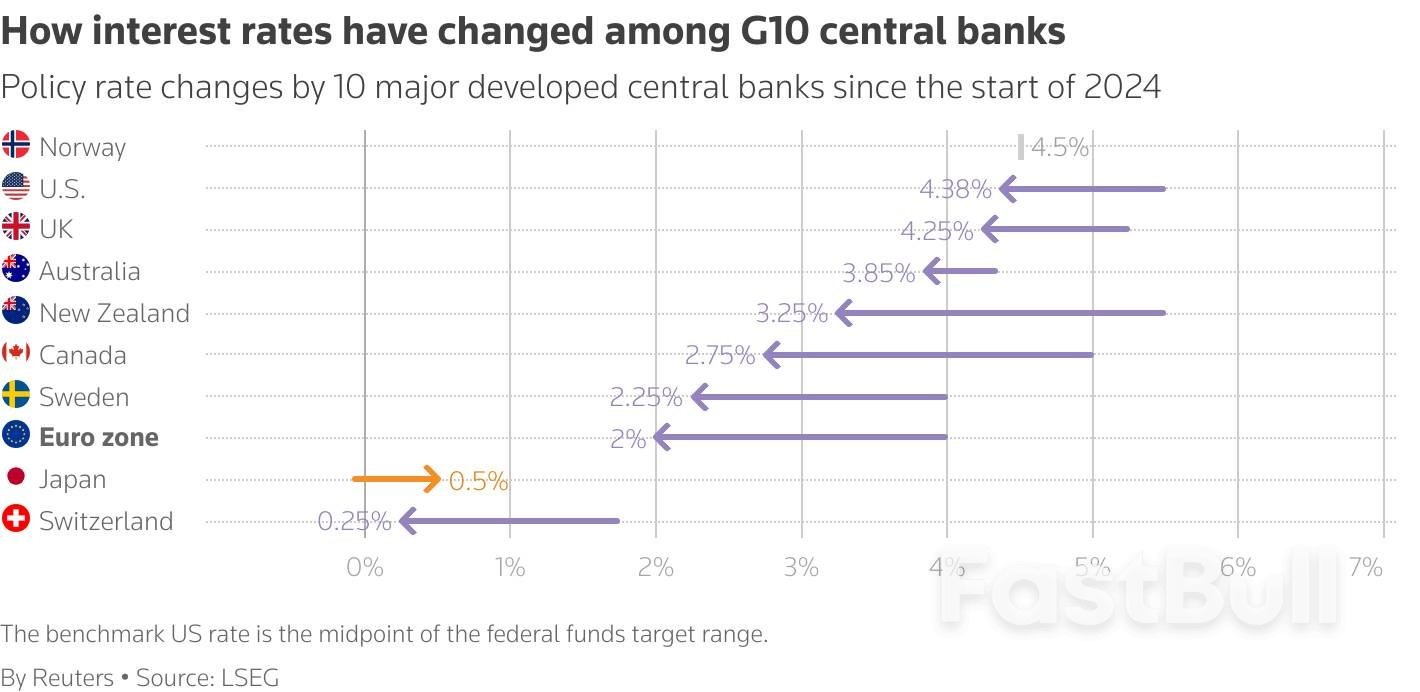
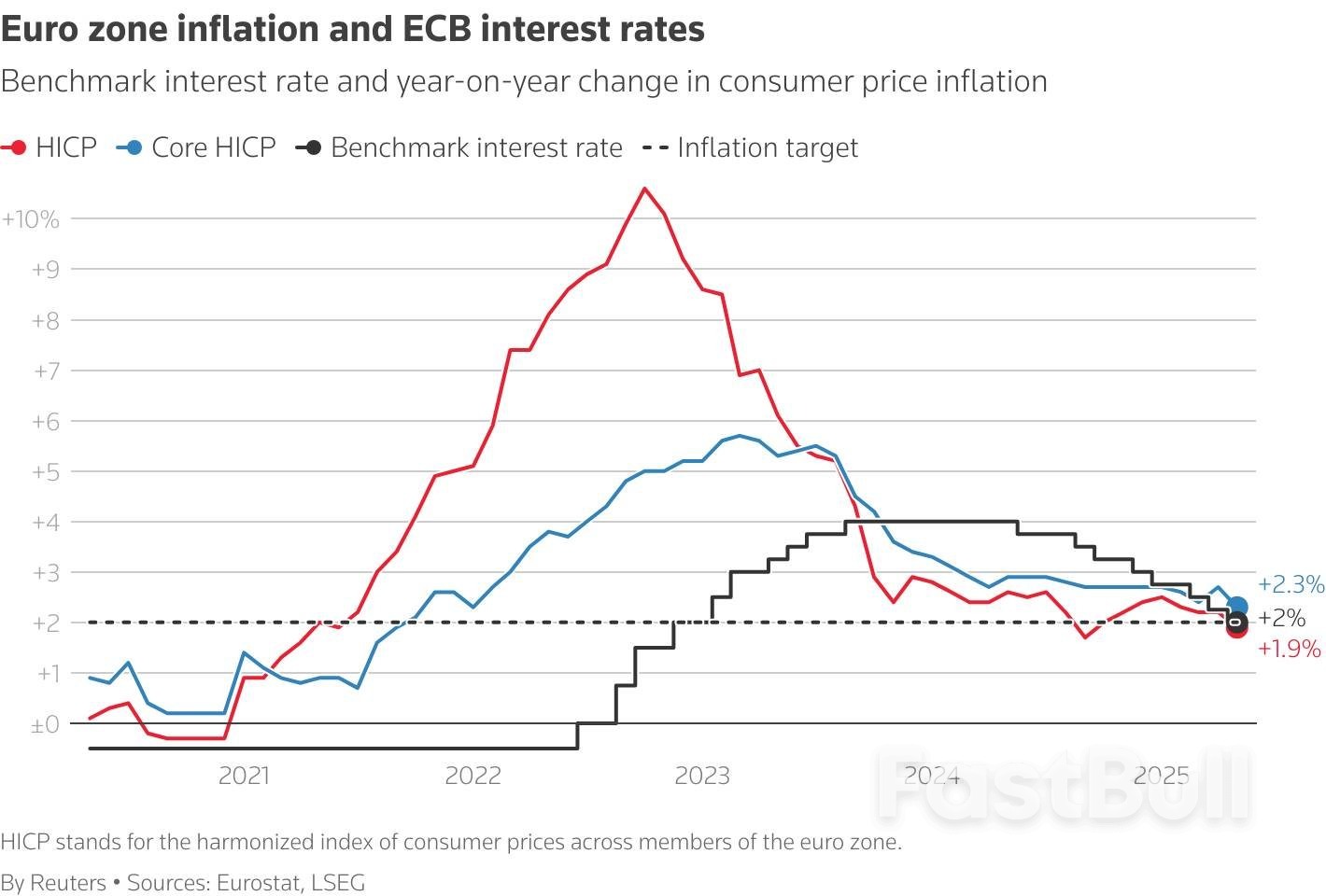
          The European Central Bank cut interest rates as expected on Thursday but hinted at a pause in its year-long easing cycle after inflation finally returned to its 2% target.

          The ECB has lowered borrowing costs eight times, or by 2 percentage points since last June, seeking to prop up a euro zone economy that was struggling even before erratic U.S. economic and trade policies dealt it further blows.

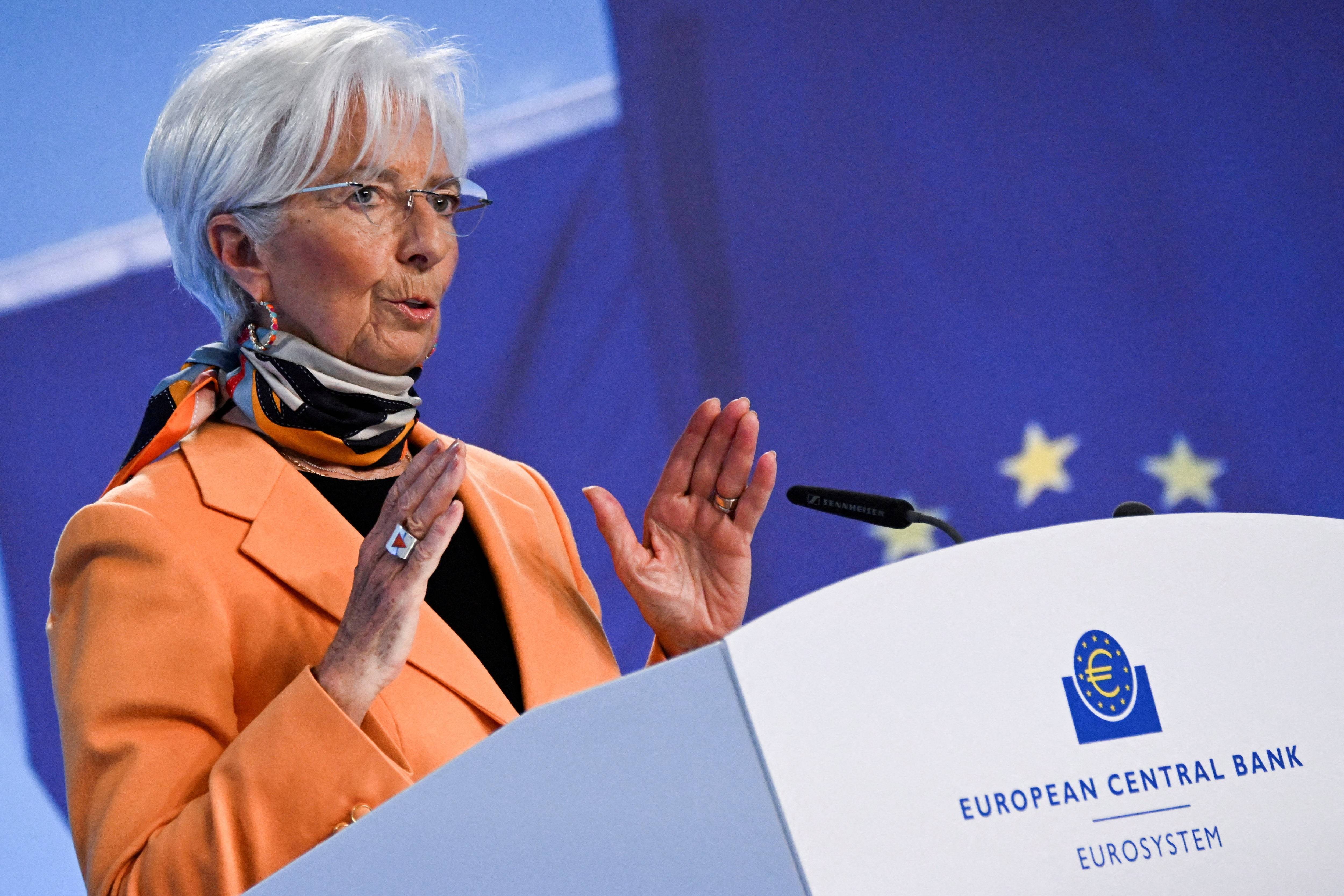
          With inflation now just below 2%, ECB President Christine Lagarde said the central bank for the 20 countries that share the euro was in a "good position" with the current rate path, a signal investors took to mean a break in cuts, if not an end to policy easing.

          Sources close to the discussion also said the time has come for at least a break since the ECB has already done the legwork in taming inflation and additional support was not needed for now, especially since little new data would be available by the July meeting.

          Speaking to Reuters on condition of anonymity, four sources with direct knowledge of the discussion said there was broad agreement around the table about sitting tight in July, and a few even made the case for a longer pause, barring unexpected market turbulence.

          Lagarde was less explicit but also hinted at steady policy at the next meeting.

          "We are well-positioned after that 25 basis point rate cut and with the rate path as it is," Lagarde told a press conference. "With today's cut, at the current level of interest rates, we believe we are in a good position."

          The interest rate path implied by markets sees a pause in July and anticipates just one more cut in the deposit rate toward the end of the year, possibly in December.

          "I think we are getting to the end of a monetary policy cycle that was responding to compounded shocks, including COVID, including the war in Ukraine, the illegitimate war in Ukraine, and the energy crisis," Lagarde said.

          Economists also saw her words as a clear indication of a pause and some even bet that the ECB's most aggressive easing cycle since the global financial crisis of 2008-2009 might be at a close.

          "We think the ECB is done cutting rates now, but this view is contingent on no major negative surprises surfacing and economic outlook to gradually become more robust in line with the ECB's forecasts," Nordea said in a note to clients.

          Change in policy rates by 10 major developed central banks since March

          Thursday's decision was virtually unanimous, and the sources said only Austria's Robert Holzmann objected. Holzmann did not return calls seeking comment.

          "Our central view is that today's cut is likely the last for some time," HSBC said in a note.

          Lagarde also said the euro zone appeared to be attracting more foreign investment, a sign of growing investor confidence and part of the reason why the euro has firmed so much since the U.S. administration embarked on its global trade war.

          European Central Bank (ECB) President Christine Lagarde speaks to the media following the Governing Council's monthly monetary policy meeting in Frankfurt, Germany, March 6, 2025.

          But there is exceptional uncertainty in the outlook.

          Falling energy prices and a stronger euro could put further downward pressure on inflation, said Lagarde, adding that effect could be reinforced if higher tariffs led to lower demand for euro exports and re-routing of overcapacity to Europe.

          Depending on the outcome of the trade war with the United States, inflation and growth could significantly differ from projections, the ECB said, as it took the unusual step of releasing alternative scenarios to its forecasts.

          PAUSE CASE

          The case for a pause rests on the premise that the short- and medium-term prospects for the currency bloc differ greatly and may require different policy responses.

          Inflation is set to dip in the short term and undershoot the ECB's target next year, but increased government spending and higher trade barriers will add to price pressures later.

          The added complication is that monetary policy impacts the economy with a 12-to-18 month lag, so support approved now could be giving help to a bloc that no longer needs it.

          "In our baseline, we expect the ECB to pause at the July meeting and deliver a final rate cut in September," PIMCO portfolio manager Konstantin Veit said. "A more recessionary configuration will likely be needed for the ECB to go faster and further in this cutting cycle."

          A line chart comparing inflation metrics over the past five years.

          Acknowledging near-term weakness, the ECB cut its inflation projection for next year.

          U.S. President Donald Trump's tariffs are already damaging activity and will have a lasting impact even if an amicable resolution is found, given the hit to confidence and investment.

          Most economists think inflation could fall below the ECB's 2% target next year, triggering memories of the pre-pandemic decade when price growth persistently undershot 2%, even if projections show it back at target in 2027.

          Further ahead, the outlook changes significantly.

          The European Union is likely to retaliate against any permanent U.S. tariffs, raising the cost of trade. Firms could relocate some activity to avoid trade barriers but changes to corporate value chains are also likely to raise costs.

          Higher European defence spending, particularly by Germany, and the cost of the green transition could add to inflation while a shrinking workforce due to an ageing population will keep wage pressures elevated.

          Source: Reuters

          Risk Warnings and Disclaimers
          You understand and acknowledge that there is a high degree of risk involved in trading. Following any strategies or investment methods may lead to potential losses. The content on the site is provided by our contributors and analysts for information purposes only. You are solely responsible for determining whether any trading assets, securities, strategy, or any other product is suitable for investing based on your own investment objectives and financial situation.
          Add to Favorites
          Share

          US Companies Likely Held Onto Workers In May Despite Tariff Uncertainty

          Fiona Harper

          US hiring likely moderated further in May and the unemployment rate was little changed, suggesting employers are yet to implement big changes to their headcount in response to President Donald Trump’s trade policy.

          Nonfarm payroll growth probably decelerated to 125,000 last month after handily beating expectations for a second month in April, according to the median estimate in a Bloomberg survey of economists. While that would still represent a healthy rate of job growth, the estimates vary widely from 75,000 to 190,000 payrolls. Unemployment is seen holding at 4.2%.

          The report from the Bureau of Labor Statistics is expected to show Friday that the labor market is generally holding up in the face of mounting uncertainty driven by Trump’s on-and-off tariffs. Layoffs remain low and many companies have put expansion plans on ice, indicating a preference to see the extent to which tariffs will impact their businesses before making major adjustments to payroll.

          “Businesses have learned the lesson of past recessions that if they are overly proactive in laying off staff or pulling back on investment into economic softness, it can be hard to get those people back,” BNP Paribas economist Andrew Husby said. “We think that dynamic remains in full effect, and we see a low-hiring, low-layoff environment continuing in the US this spring.”

          Recent data and surveys largely support a gradual slowdown in economic activity, including an increase in recurring filings for unemployment insurance that’s consistent with low hiring levels.

          Economists generally expect to see some weakness in trade-exposed sectors now that a surge in imports that helped boost payrolls in transportation and warehousing, retail and wholesale trade in the first quarter has mostly subsided. Pantheon Macroeconomics noted those industries added nearly 200,000 jobs in the six months leading up to April — when the bulk of Trump’s tariffs were announced — but said the pre-tariff buying frenzy has now likely peaked.

          “The impact of the trade war on payroll growth likely shifted last month from tailwind to headwind,” Pantheon economists Samuel Tombs and Oliver Allen said in a report.

          The tide is seen turning at a time when other sectors are already flashing warning signs. The federal government has now cut jobs for three months as Trump moves forward with plans to substantially downsize the public workforce and cut back government spending. “With each passing month it becomes more likely that federal civil servant layoffs will show up,” Bank of Nova Scotia economist Derek Holt wrote last week, but added that they are likely “to continue to be offset by state and local government hiring.”

          In the coming months, it will become more difficult for the labor market to take all these hits at once, said Joseph Brusuelas at RSM US LLP. “The problem right now is that we just do not see monthly labor flows and churn as sufficiently strong to absorb any increase in layoffs linked to government downsizing and trade-related disruptions to transportation, warehousing and retail,” he said in a note.

          Economists also flagged that because Easter fell in April this year — later than usual — that likely helped boost leisure and hospitality payrolls that month. “We are assuming a 25,000 boost to April and drag on May,” Morgan Stanley economists led by Michael Gapen wrote.

          “The key drag on headline job gains will likely come from leisure and hospitality,” Bloomberg Economics’ Anna Wong said, adding that she’s expecting a decline of nearly 40,000 payrolls in this sector. “Even taking into account the date of Easter Sunday — April 20 this year vs March 31 last year — spring travel has been slow, particularly for international tourism.”

          Another one-off factor likely to play a part in May’s report is the weather. Jefferies economist Thomas Simons noted that some parts of the East Coast and the South saw more rainfall than average in May, which may have dampened hiring in leisure as well as construction.

          Forecasters generally expect the unemployment rate to remain unchanged at 4.2% for a third month. Economists and policymakers have argued that a slowdown in immigration, which has translated into fewer workers joining the labor market, is coming at a time when hiring is shifting into a lower gear, which is helping keep a lid on unemployment.

          “Labor force growth will also be slower in 2025 due to less immigration, so less job growth is needed to hold the unemployment rate steady,” Comerica Bank’s Bill Adams wrote.

          BLS said earlier this week it will correct “minor errors” from April’s data in the May employment report. Major labor-force measures — such as the unemployment rate, labor force participation rate, and employment-population ratio — were unaffected, the agency said.

          Source: Bloomberg Europe

          Risk Warnings and Disclaimers
          You understand and acknowledge that there is a high degree of risk involved in trading. Following any strategies or investment methods may lead to potential losses. The content on the site is provided by our contributors and analysts for information purposes only. You are solely responsible for determining whether any trading assets, securities, strategy, or any other product is suitable for investing based on your own investment objectives and financial situation.
          Add to Favorites
          Share

          Japan’s Early May Exports Drop As Tariff War Disrupts Commerce

          Diana Wallace

          Japan’s exports fell in the first 20 days of May as the Trump administration’s sweeping tariffs continued to disrupt trade.

          Exports measured by value dropped 3% from the same period a year earlier, the Finance Ministry reported Friday. That compared with a 2.3% gain in the first 20 days of April, and a 2.0% rise for all of that month. Growth in exports has averaged 6.2% over the year through April.

          Japan’s trade balance was in the red, with a deficit of ¥1.1 trillion ($7.7 billion). The 20-day data don’t provide details such as a breakdown of exports to specific countries or regions. The figures for the full month of May are set to be released on June 18.

          Autos, steel and chips and other electonic components lead the exports lower while coal, non-ferrous metal and crude oil drove down the import, according to the Finance Ministry. The yen averaged 143.02 against the US dollar during the period in May, 8% stronger than the same period a year earlier, which weighed on the readings for yen-denominated exports and imports, according to the ministry.

          The trajectory for trade will be a key factor determining whether Japan’s economy enters a technical recession in the current quarter after weak external demand and sluggish private consumption resulted in a contraction in the previous period. In April, exports to the US fell, led by a drop in autos.

          As with other nations, Japan faces a 25% tariff on cars and their parts and a minimum 10% levy on other goods across the board. President Donald Trump doubled a levy on steel and aluminum to 50% in early June, and the 10% tariff is set to revert to 24% in early July, barring a deal.

          On May 12, the US and China, Japan’s two biggest trading partners, announced that they had reached a temporary agreement on reducing tariffs. But tensions have flared since then, with Trump complaining earlier this week that Chinese leader Xi Jinping is “hard to make a deal with.”

          Japan and the US are continuing to negotiate on the tariffs as they eye possibly announcing a deal on the sidelines of the Group of Seven leaders’ gathering in Canada later this month. Japan’s top trade negotiator Ryosei Akazawa said upon arrival in Washington Thursday that he would continue to press for a removal of all tariffs.

          Source: Bloomberg Europe

          Risk Warnings and Disclaimers
          You understand and acknowledge that there is a high degree of risk involved in trading. Following any strategies or investment methods may lead to potential losses. The content on the site is provided by our contributors and analysts for information purposes only. You are solely responsible for determining whether any trading assets, securities, strategy, or any other product is suitable for investing based on your own investment objectives and financial situation.
          Add to Favorites
          Share

          Germany's Merz Says he Agreed to Boost Cooperation With White House on Trade Issues

          Manuel

          Economic

          Political

          Chancellor Friedrich Merz on Thursday said Germany, Europe's largest economy, was ready to take over a greater leadership role on future trade agreements as the United States and the EU race to reach a trade deal before a July 9 deadline.
          Merz told reporters he had a productive meeting with U.S. President Donald Trump at the White House on Thursday, and the two men had agreed to strengthen cooperation on trade matters and other issues.
          Merz said he and Trump spoke at length about trade and tariffs during their meeting in the Oval Office, and over an extended lunch, where Merz said he highlighted the manufacturing facilities operated by German automakers in the United States.
          "We will send officials to further deepen these topics. We want to reach a mutual solution," Merz told reporters after the meeting, noting that while the European Union was responsible for setting trade policy, Germany had a significant role to play given the size of its exports.
          Trump has set a July 9 deadline for the 27-bloc European Union and other trading partners to reach trade deals and avert steep tariffs. U.S. and EU officials met in Paris on Wednesday and said negotiations were constructive and advancing quickly.
          Europe, already facing a 50% tariff on steel and aluminium and a 25% levy on car imports, could see U.S. tariffs on other exports surge from 10% to as high as 50% if no deal is reached.
          U.S. tariffs were having a significant impact on German automakers, he told CNN and Fox News in separate interviews.
          "These tariffs are ... something which is really threatening our economy and we are looking for ways to bring them down," he told Fox News. "Our conviction is that free trade, open markets are the best thing for the mutual wealth of our countries."
          Merz told ZDF German television that he told Trump that German automakers produced about 400,000 vehicles in the United States, about the same number as in Germany, with some of those vehicles then exported back to Germany.
          "There is a balance," he said. "Can we not acknowledge that for every car that is imported another car is exported by the same manufacturer and drop the tariffs?"
          Merz said he would also address the issue with European Commission President Ursula von der Leyen, adding that there was scope and potential momentum to reach a solution.
          "If a trade dispute escalates, that hurts everyone, also hurts the German manufacturers in America and the roughly one million families in America that are paid by German firms," he told Germany's ProSieben television station.
          "I'm optimistic that we'll make progress. But we're not yet at the goal line."

          Source: Reuters

          To stay updated on all economic events of today, please check out our Economic calendar
          Risk Warnings and Disclaimers
          You understand and acknowledge that there is a high degree of risk involved in trading. Following any strategies or investment methods may lead to potential losses. The content on the site is provided by our contributors and analysts for information purposes only. You are solely responsible for determining whether any trading assets, securities, strategy, or any other product is suitable for investing based on your own investment objectives and financial situation.
          Add to Favorites
          Share
          FastBull
          Copyright © 2025 FastBull Ltd

          728 RM B 7/F GEE LOK IND BLDG NO 34 HUNG TO RD KWUN TONG KLN HONG KONG

          TelegramInstagramTwitterfacebooklinkedin
          App Store Google Play Google Play
          Products
          Charts

          Chats

          Q&A with Experts
          Screeners
          Economic Calendar
          Data
          Tools
          Membership
          Features
          Function
          Markets
          Copy Trading
          Latest Signals
          Contests
          News
          Analysis
          24/7
          Columns
          Education
          Company
          Careers
          About Us
          Contact Us
          Advertising
          Help Center
          Feedback
          User Agreement
          Privacy Policy
          Business

          White Label

          Data API

          Web Plug-ins

          Poster Maker

          Affiliate Program

          Risk Disclosure

          The risk of loss in trading financial instruments such as stocks, FX, commodities, futures, bonds, ETFs and crypto can be substantial. You may sustain a total loss of the funds that you deposit with your broker. Therefore, you should carefully consider whether such trading is suitable for you in light of your circumstances and financial resources.

          No decision to invest should be made without thoroughly conducting due diligence by yourself or consulting with your financial advisors. Our web content might not suit you since we don't know your financial conditions and investment needs. Our financial information might have latency or contain inaccuracy, so you should be fully responsible for any of your trading and investment decisions. The company will not be responsible for your capital loss.

          Without getting permission from the website, you are not allowed to copy the website's graphics, texts, or trademarks. Intellectual property rights in the content or data incorporated into this website belong to its providers and exchange merchants.

          Not Logged In

          Log in to access more features

          FastBull Membership

          Not yet

          Purchase

          Become a signal provider
          Help Center
          Customer Service
          Dark Mode
          Price Up/Down Colors

          Log In

          Sign Up

          Position
          Layout
          Fullscreen
          Default to Chart
          The chart page opens by default when you visit fastbull.com