• Trade
  • Markets
  • Copy
  • Contests
  • News
  • 24/7
  • Calendar
  • Q&A
  • Chats
Trending
Screeners
SYMBOL
LAST
BID
ASK
HIGH
LOW
NET CHG.
%CHG.
SPREAD
SPX
S&P 500 Index
6811.64
6811.64
6811.64
6861.30
6801.50
-15.77
-0.23%
--
DJI
Dow Jones Industrial Average
48335.12
48335.12
48335.12
48679.14
48285.67
-122.92
-0.25%
--
IXIC
NASDAQ Composite Index
23081.06
23081.06
23081.06
23345.56
23012.00
-114.10
-0.49%
--
USDX
US Dollar Index
97.980
98.060
97.980
98.070
97.740
+0.030
+ 0.03%
--
EURUSD
Euro / US Dollar
1.17422
1.17430
1.17422
1.17686
1.17262
+0.00028
+ 0.02%
--
GBPUSD
Pound Sterling / US Dollar
1.33643
1.33652
1.33643
1.34014
1.33546
-0.00064
-0.05%
--
XAUUSD
Gold / US Dollar
4303.34
4303.75
4303.34
4350.16
4285.08
+3.95
+ 0.09%
--
WTI
Light Sweet Crude Oil
56.347
56.377
56.347
57.601
56.233
-0.886
-1.55%
--

Community Accounts

Signal Accounts
--
Profit Accounts
--
Loss Accounts
--
View More

Become a signal provider

Sell trading signals to earn additional income

View More

Guide to Copy Trading

Get started with ease and confidence

View More

Signal Accounts for Members

All Signal Accounts

Best Return
  • Best Return
  • Best P/L
  • Best MDD
Past 1W
  • Past 1W
  • Past 1M
  • Past 1Y

All Contests

  • All
  • Trump Updates
  • Recommend
  • Stocks
  • Cryptocurrencies
  • Central Banks
  • Featured News
Top News Only
Share

USA State Department: Rubio Signs Status Of Forces Agreement With Paraguayan Foreign Minister

Share

New York Fed Accepts $2.601 Billion Of $2.601 Billion Submitted To Reverse Repo Facility On Dec 15

Share

Turkey: Shoots Down A Drone In The Black Sea Using F-16 Fighter Jets

Share

Goldman Sachs Says They Believe That The Copper Price Is Vulnerable To An Ai-Linked Price Correction

Share

Goldman Sachs Upgrades 2026 Copper Price Forecast To $11400 From $10,650

Share

Attempts By Ukrainian Troops To Advance From The South-West To Outskirts Of Kupiansk Are Being Thwarted

Share

Russian Troops Control All Of Kupiansk - IFX Cites Russian Military

Share

On Monday (December 15), The South Korean Won Ultimately Rose 0.60% Against The US Dollar, Closing At 1468.91 Won. The Won Was On An Upward Trend Throughout The Day, Rising Significantly At 17:00 Beijing Time And Reaching A Daily High Of 1463.04 Won At 17:36

Share

Health Ministry: Israeli Forces Kill Palestinian Teen In West Bank

Share

New York Federal Reserve President Williams: Over Time, The Size Of Reserves Could Grow From $2.9 Trillion

Share

New York Fed President Williams: AI Valuations Are High, But There Is A Real Driving Factor

Share

New York Federal Reserve President Williams: The Job Market Is In Very Good Shape

Share

New York Fed President Williams: 'Very Supportive' Of USA Central Bank's Decision To Cut Interest Rates Last Week

Share

New York Fed President Williams: 'Too Early To Say' What Central Bank Should Do At January Meeting

Share

New York Fed President Williams: Strong Markets Part Of Reason Why Economy Will Grow Robustly In 2026

Share

New York Fed President Williams: What Constitutes Ample Reserves Will Change Over Time

Share

New York Fed President Williams: Market Valuations 'Elevated,' But There Are Reasons For Pricing

Share

New York Fed President Williams: Ample Reserves System Working Very Well

Share

New York Fed President Williams: Some Signs That Parts Of Underlying Economy Not As Strong As GDP Data Suggests

Share

New York Fed President Williams: Expects Coming Job Data Will Show Gradual Cooling

TIME
ACT
FCST
PREV
Japan Tankan Small Manufacturing Outlook Index (Q4)

A:--

F: --

P: --

Japan Tankan Large Non-Manufacturing Outlook Index (Q4)

A:--

F: --

P: --

Japan Tankan Large Manufacturing Outlook Index (Q4)

A:--

F: --

P: --

Japan Tankan Small Manufacturing Diffusion Index (Q4)

A:--

F: --

P: --

Japan Tankan Large-Enterprise Capital Expenditure YoY (Q4)

A:--

F: --

P: --

U.K. Rightmove House Price Index YoY (Dec)

A:--

F: --

P: --

China, Mainland Industrial Output YoY (YTD) (Nov)

A:--

F: --

P: --

China, Mainland Urban Area Unemployment Rate (Nov)

A:--

F: --

P: --

Saudi Arabia CPI YoY (Nov)

A:--

F: --

P: --

Euro Zone Industrial Output YoY (Oct)

A:--

F: --

P: --

Euro Zone Industrial Output MoM (Oct)

A:--

F: --

P: --

Canada Existing Home Sales MoM (Nov)

A:--

F: --

P: --

Canada National Economic Confidence Index

A:--

F: --

P: --

Canada New Housing Starts (Nov)

A:--

F: --

P: --
U.S. NY Fed Manufacturing Employment Index (Dec)

A:--

F: --

P: --

U.S. NY Fed Manufacturing Index (Dec)

A:--

F: --

P: --

Canada Core CPI YoY (Nov)

A:--

F: --

P: --

Canada Manufacturing Unfilled Orders MoM (Oct)

A:--

F: --

P: --

U.S. NY Fed Manufacturing Prices Received Index (Dec)

A:--

F: --

P: --

U.S. NY Fed Manufacturing New Orders Index (Dec)

A:--

F: --

P: --

Canada Manufacturing New Orders MoM (Oct)

A:--

F: --

P: --

Canada Core CPI MoM (Nov)

A:--

F: --

P: --

Canada Trimmed CPI YoY (SA) (Nov)

A:--

F: --

P: --

Canada Manufacturing Inventory MoM (Oct)

A:--

F: --

P: --

Canada CPI YoY (Nov)

A:--

F: --

P: --

Canada CPI MoM (Nov)

A:--

F: --

P: --

Canada CPI YoY (SA) (Nov)

A:--

F: --

P: --

Canada Core CPI MoM (SA) (Nov)

A:--

F: --

P: --

Canada CPI MoM (SA) (Nov)

A:--

F: --

P: --

Federal Reserve Board Governor Milan delivered a speech
U.S. NAHB Housing Market Index (Dec)

A:--

F: --

P: --

Australia Composite PMI Prelim (Dec)

--

F: --

P: --

Australia Services PMI Prelim (Dec)

--

F: --

P: --

Australia Manufacturing PMI Prelim (Dec)

--

F: --

P: --

Japan Manufacturing PMI Prelim (SA) (Dec)

--

F: --

P: --

U.K. 3-Month ILO Employment Change (Oct)

--

F: --

P: --

U.K. Unemployment Claimant Count (Nov)

--

F: --

P: --

U.K. Unemployment Rate (Nov)

--

F: --

P: --

U.K. 3-Month ILO Unemployment Rate (Oct)

--

F: --

P: --

U.K. Average Weekly Earnings (3-Month Average, Including Bonuses) YoY (Oct)

--

F: --

P: --

U.K. Average Weekly Earnings (3-Month Average, Excluding Bonuses) YoY (Oct)

--

F: --

P: --

France Services PMI Prelim (Dec)

--

F: --

P: --

France Composite PMI Prelim (SA) (Dec)

--

F: --

P: --

France Manufacturing PMI Prelim (Dec)

--

F: --

P: --

Germany Services PMI Prelim (SA) (Dec)

--

F: --

P: --

Germany Manufacturing PMI Prelim (SA) (Dec)

--

F: --

P: --

Germany Composite PMI Prelim (SA) (Dec)

--

F: --

P: --

Euro Zone Composite PMI Prelim (SA) (Dec)

--

F: --

P: --

Euro Zone Services PMI Prelim (SA) (Dec)

--

F: --

P: --

Euro Zone Manufacturing PMI Prelim (SA) (Dec)

--

F: --

P: --

U.K. Services PMI Prelim (Dec)

--

F: --

P: --

U.K. Manufacturing PMI Prelim (Dec)

--

F: --

P: --

U.K. Composite PMI Prelim (Dec)

--

F: --

P: --

Euro Zone ZEW Economic Sentiment Index (Dec)

--

F: --

P: --

Germany ZEW Current Conditions Index (Dec)

--

F: --

P: --

Germany ZEW Economic Sentiment Index (Dec)

--

F: --

P: --

Euro Zone Trade Balance (Not SA) (Oct)

--

F: --

P: --

Euro Zone ZEW Current Conditions Index (Dec)

--

F: --

P: --

Euro Zone Trade Balance (SA) (Oct)

--

F: --

P: --

Euro Zone Total Reserve Assets (Nov)

--

F: --

P: --

U.K. Inflation Rate Expectations

--

F: --

P: --

Q&A with Experts
    • All
    • Chatrooms
    • Groups
    • Friends
    Connecting
    .
    .
    .
    Type here...
    Add Symbol or Code

      No matching data

      All
      Trump Updates
      Recommend
      Stocks
      Cryptocurrencies
      Central Banks
      Featured News
      • All
      • Russia-Ukraine Conflict
      • Middle East Flashpoint
      • All
      • Russia-Ukraine Conflict
      • Middle East Flashpoint
      Search
      Products

      Charts Free Forever

      Chats Q&A with Experts
      Screeners Economic Calendar Data Tools
      Membership Features
      Data Warehouse Market Trends Institutional Data Policy Rates Macro

      Market Trends

      Market Sentiment Order Book Forex Correlations

      Top Indicators

      Charts Free Forever
      Markets

      News

      News Analysis 24/7 Columns Education
      From Institutions From Analysts
      Topics Columnists

      Latest Views

      Latest Views

      Trending Topics

      Top Columnists

      Latest Update

      Signals

      Copy Rankings Latest Signals Become a signal provider AI Rating
      Contests
      Brokers

      Overview Brokers Assessment Rankings Regulators News Claims
      Broker listing Forex Brokers Comparison Tool Live Spread Comparison Scam
      Q&A Complaint Scam Alert Videos Tips to Detect Scam
      More

      Business
      Events
      Careers About Us Advertising Help Center

      White Label

      Data API

      Web Plug-ins

      Affiliate Program

      Awards Institution Evaluation IB Seminar Salon Event Exhibition
      Vietnam Thailand Singapore Dubai
      Fans Party Investment Sharing Session
      FastBull Summit BrokersView Expo
      Recent Searches
        Top Searches
          Markets
          News
          Analysis
          User
          24/7
          Economic Calendar
          Education
          Data
          • Names
          • Latest
          • Prev

          View All

          No data

          Scan to Download

          Faster Charts, Chat Faster!

          Download App
          English
          • English
          • Español
          • العربية
          • Bahasa Indonesia
          • Bahasa Melayu
          • Tiếng Việt
          • ภาษาไทย
          • Français
          • Italiano
          • Türkçe
          • Русский язык
          • 简中
          • 繁中
          Open Account
          Search
          Products
          Charts Free Forever
          Markets
          News
          Signals

          Copy Rankings Latest Signals Become a signal provider AI Rating
          Contests
          Brokers

          Overview Brokers Assessment Rankings Regulators News Claims
          Broker listing Forex Brokers Comparison Tool Live Spread Comparison Scam
          Q&A Complaint Scam Alert Videos Tips to Detect Scam
          More

          Business
          Events
          Careers About Us Advertising Help Center

          White Label

          Data API

          Web Plug-ins

          Affiliate Program

          Awards Institution Evaluation IB Seminar Salon Event Exhibition
          Vietnam Thailand Singapore Dubai
          Fans Party Investment Sharing Session
          FastBull Summit BrokersView Expo

          Japan-U.S. Trade Pact Lifts Oil and Auto Markets, But Regional Growth Outlook Dampened by Tariffs and Political Shifts

          Gerik

          Economic

          Stocks

          Summary:

          Oil prices and Japanese auto stocks surged following a landmark U.S.-Japan trade deal that reduces tariffs and signals stronger demand, but the optimism is tempered by regional growth downgrades from the Asian Development Bank...

          Trade Pact Fuels Oil Rebound and Auto Rally

          Oil prices reversed a three-day decline after President Donald Trump announced a U.S.-Japan trade deal that includes a 15% tariff on Japanese imports lower than the previously threatened 25% rate. In response, Brent crude rose to $68.92 and WTI to $65.64 per barrel, aided further by American Petroleum Institute data indicating a drawdown in U.S. crude stockpiles, suggesting stronger demand.
          The deal also included a $550 billion Japanese investment pledge into the U.S. economy and came with Trump’s remark that Japan had agreed to open its markets more broadly to American goods. In energy markets, he claimed a U.S.-Japan joint venture is forming to develop the Alaska LNG project, though Japanese officials and companies like JERA and Tokyo Gas have yet to confirm.
          Japanese automakers saw immediate gains from the tariff reduction. Shares in Toyota soared 11%, Honda rose 8.4%, Nissan gained over 7%, and Mazda surged more than 16%. These gains are tied to renewed investor confidence in the sector, which had been hit by a 26.7% YoY drop in U.S.-bound Japanese auto exports in June.

          Steel Tariffs Remain Unchanged Despite Broader Deal

          Despite the broader easing of trade tensions, NHK reported that the 50% tariffs on steel and aluminum will remain in place, highlighting a selective approach to protectionism within the agreement. The move preserves tariff barriers on key materials despite easing in automotive and agricultural sectors.
          However, the broader regional economic picture remains clouded. The Asian Development Bank downgraded its 2025 and 2026 growth forecasts for developing Asia and the Pacific, citing trade tensions, elevated energy prices, geopolitical risks, and China’s struggling property sector.
          Growth for Southeast Asia is expected to fall from 4.7% to 4.2% in 2025, with Vietnam and the Philippines maintaining modest resilience, while Malaysia and Thailand face larger downward revisions. Inflationary pressures remain mild across most countries, with Vietnam projected at 3.9% in 2025.
          The ADB emphasized the need for economies to strengthen fundamentals and support regional trade integration. However, Trump’s imposition of a 19% tariff on Philippine goods and the existing across-the-board 10% tariffs on many partners complicate this goal.

          Political Instability in Japan Raises Market Uncertainty

          The optimism surrounding the trade deal is counterbalanced by political instability in Tokyo. Prime Minister Shigeru Ishiba is reportedly planning to resign by the end of July following a crushing electoral defeat. His approval rating has dropped to just over 20%, historically a sign of impending leadership change in Japan.
          Ishiba had previously insisted on remaining in office to conclude the U.S. trade deal, but with the agreement now finalized, he appears ready to step down. Speculation over his successor has already begun, potentially injecting volatility into Japan’s policy direction, especially in economic and foreign relations.

          Taiwan Bets Big on AI to Drive Long-Term Growth

          Amid regional uncertainty, Taiwan is doubling down on future-proof sectors. The government announced a T$15 trillion ($510 billion) “Ten Major AI Infrastructure Projects” initiative targeting AI robotics, silicon photonics, and quantum technology. With support from tech leaders like Foxconn and TSMC, the plan aims to create 500,000 jobs by 2040 and position Taiwan as a global AI hub.
          This ambitious investment aligns Taiwan’s industrial strengths with emerging technologies while buffering it from trade-driven headwinds. However, success will depend on sustained venture capital backing, global demand, and political stability in the region.
          While the U.S.-Japan trade deal offers short-term market relief and investor enthusiasm especially in oil and automotive sectors risks remain substantial. Tariffs, political transitions, and regional growth downgrades from the ADB remind investors and policymakers that the path to economic recovery and integration is far from smooth. Taiwan’s AI strategy stands out as a proactive bet on future growth, but the wider region will need to balance trade resilience with innovation-driven investment to stay competitive.

          Source: Yahoo Finance

          To stay updated on all economic events of today, please check out our Economic calendar
          Risk Warnings and Disclaimers
          You understand and acknowledge that there is a high degree of risk involved in trading. Following any strategies or investment methods may lead to potential losses. The content on the site is provided by our contributors and analysts for information purposes only. You are solely responsible for determining whether any trading assets, securities, strategy, or any other product is suitable for investing based on your own investment objectives and financial situation.
          Add to Favorites
          Share

          Trump Touts Japan-U.S. LNG Joint Venture in Alaska, but Tokyo Officials Remain Unaware

          Gerik

          Economic

          Commodity

          A Surprise LNG Announcement Amid Trade Talks

          During a White House address on Tuesday, U.S. President Donald Trump declared that Japan would participate in a joint venture with the U.S. to develop an LNG project in Alaska. The project likely refers to the long-delayed $44 billion Alaska LNG initiative, which includes an 800-mile pipeline and an export terminal to deliver U.S. gas to Asia.
          Trump’s statement followed his announcement of a major trade agreement with Japan, which included lower auto tariffs and agricultural market access. While this LNG claim further showcases Trump's intent to deepen U.S.-Japan economic ties, it caught Japanese stakeholders by surprise.

          Japanese Officials and Firms Caught Off Guard

          A representative from Japan’s Ministry of Economy, Trade and Industry (METI) said the agency was not aware of a joint venture and was seeking clarification. This gap between presidential rhetoric and official communication has raised questions about whether Trump was referring to an existing dialogue or prematurely publicizing a pending or informal discussion.
          Japan’s largest LNG buyers, JERA and Tokyo Gas, have previously expressed interest in Alaska LNG, but emphasized that no joint venture had been formalized. JERA explicitly stated it could not confirm Trump’s claim, and Tokyo Gas declined to comment, reiterating no current involvement in an Alaskan partnership.

          Commercial Viability Still in Question

          While Japan remains the world’s largest LNG importer and is keen on diversifying energy sources, the Alaska LNG project has long struggled with commercial viability due to its high costs and geopolitical competition. Both Japanese and Asian buyers have requested detailed feasibility assessments before committing to any long-term offtake agreements or equity stakes.
          Other Asian players, including Thailand’s PTT and India’s GAIL, have also shown interest in the project, suggesting a regional appetite—but only under competitive pricing and guaranteed supply terms.
          Trump’s announcement reflects a broader strategy to link trade policy with energy diplomacy. However, without formal agreements or confirmations from Japanese stakeholders, the joint venture appears more aspirational than operational at this stage. Nonetheless, the statement may serve as a signal of U.S. intent to leverage trade negotiations for deeper energy partnerships, especially in Asia’s LNG-hungry markets. Clarity from Japanese regulators and firms in the coming weeks will determine whether this becomes a headline deal or a diplomatic miscommunication.

          Source: Reuters

          To stay updated on all economic events of today, please check out our Economic calendar
          Risk Warnings and Disclaimers
          You understand and acknowledge that there is a high degree of risk involved in trading. Following any strategies or investment methods may lead to potential losses. The content on the site is provided by our contributors and analysts for information purposes only. You are solely responsible for determining whether any trading assets, securities, strategy, or any other product is suitable for investing based on your own investment objectives and financial situation.
          Add to Favorites
          Share

          Taiwan's Bold AI Push: $510 Billion Initiative to Reshape the Island’s Economic Future

          Gerik

          Economic

          Strategic Vision to Lead the AI Era

          On Tuesday, Premier Cho Jung-tai announced that Taiwan aims to transform into a “smart technology island” through a sweeping AI strategy. By harnessing its internationally dominant semiconductor industry anchored by TSMC and its established ICT supply chains, Taiwan is positioning itself not just as a key AI contributor but as a leading innovator.
          Central to this strategy are three breakthrough technologies: silicon photonics, quantum technology, and AI robotics. Silicon photonics key for faster and energy-efficient AI processing has already gained traction within Taiwan’s chip ecosystem, with TSMC and other players actively investing in R&D. Meanwhile, AI robotics builds on the country's hardware heritage, and quantum tech ambitions signal a long-term leap in computing capabilities.

          Industrial and Private Sector Alignment

          The announcement of the Taiwan AI Robotics Industry Grand Alliance, spearheaded by Foxconn Chairman Young Liu, reflects robust private sector alignment. This consortium is designed to drive ecosystem-building, enhance hardware-software integration, and fast-track commercial applications of AI across sectors.
          Furthermore, the government plans to inject over T$100 billion ($3.08 billion) into AI innovation through venture capital funding, seeking to make Taiwan a magnet for global AI talent and investment. The initiative will also nurture domestic AI sovereignty by building independent AI models and compute infrastructure, essential amid rising geopolitical tech tensions.

          Economic and Social Impact

          By 2040, the government projects the initiative to generate T$15 trillion ($510 billion) in economic value, create 500,000 jobs, and establish three international-grade AI research labs. These goals reflect not only an economic strategy but also a vision to diffuse AI benefits island-wide, including infrastructure balancing across regions and cross-industry AI integration.
          With foundational strengths in hardware and semiconductors, Taiwan is setting the stage to move up the global value chain from manufacturing to strategic innovation. The AI initiative reflects both economic foresight and geopolitical awareness, ensuring that Taiwan remains a resilient and central actor in shaping the future of artificial intelligence globally.

          Source: Reuters

          To stay updated on all economic events of today, please check out our Economic calendar
          Risk Warnings and Disclaimers
          You understand and acknowledge that there is a high degree of risk involved in trading. Following any strategies or investment methods may lead to potential losses. The content on the site is provided by our contributors and analysts for information purposes only. You are solely responsible for determining whether any trading assets, securities, strategy, or any other product is suitable for investing based on your own investment objectives and financial situation.
          Add to Favorites
          Share

          Political Risk, Central Bank Ambiguity, and the Summer of Uncertainty

          ACY

          Forex

          Economic

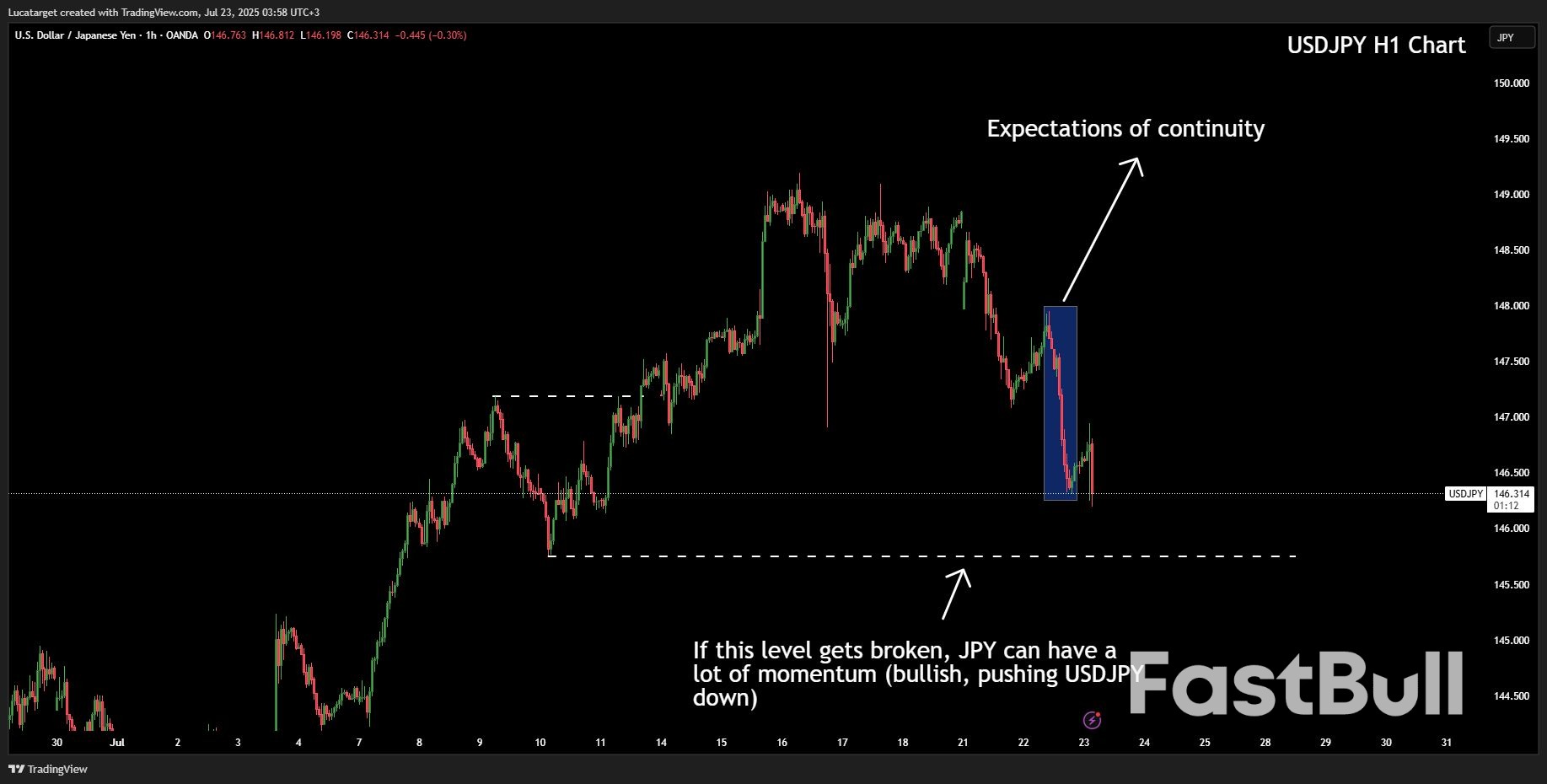
          Yen in the Eye of a Political Storm

          The Japanese yen began the week with renewed strength, driven not by economic momentum but by escalating political tension. Leadership challenges are destabilizing the status quo just as Tokyo enters crucial negotiations with Washington. The currency surged briefly on expectations of continuity, but those gains may prove short-lived if deeper fractures within the ruling coalition lead to a sudden leadership vacuum.
          Political Risk, Central Bank Ambiguity, and the Summer of Uncertainty_1

          Source: TradingView

          Political instability has a long history of amplifying volatility in yen crosses, particularly when coupled with uncertainty around fiscal commitments. With key government figures under pressure and confidence in policy direction wavering, the yen could remain reactive to headlines rather than macro data. Traders should remain alert to signs of broader shifts in fiscal stance, especially if a new leadership team emerges.

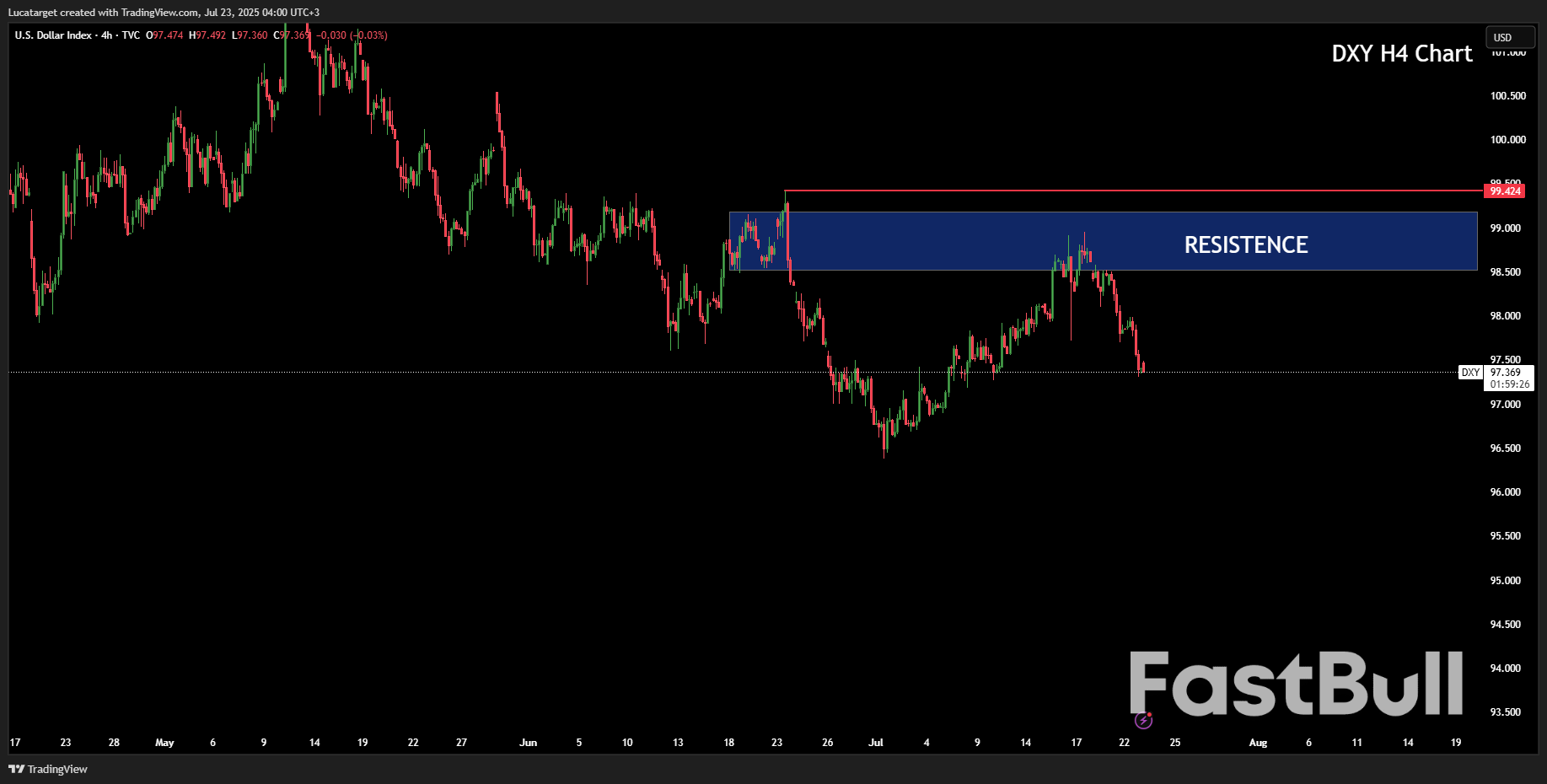
          The Dollar’S Double Life: Soft Data, Strong Demand

          In the U.S., the dollar faces an unusual paradox. Structurally, it continues to benefit from vast capital inflows especially from foreign buyers seeking relative yield stability and equity exposure. But tactically, the greenback is under pressure. Yields have softened, the equity rally shows signs of exhaustion, and political commentary is starting to inject noise into the policy narrative.
          Political Risk, Central Bank Ambiguity, and the Summer of Uncertainty_2

          Source: TradingView

          This week’s focus will be on Fed Chair Powell’s midweek remarks, which despite the blackout period could still stir markets if they touch on regulatory changes or macroprudential risk. Investors are also watching regional Fed surveys and any signs that manufacturing sentiment is starting to turn south. In the absence of clear direction from data or central bank guidance, dollar positioning may become more vulnerable to risk sentiment and flows.

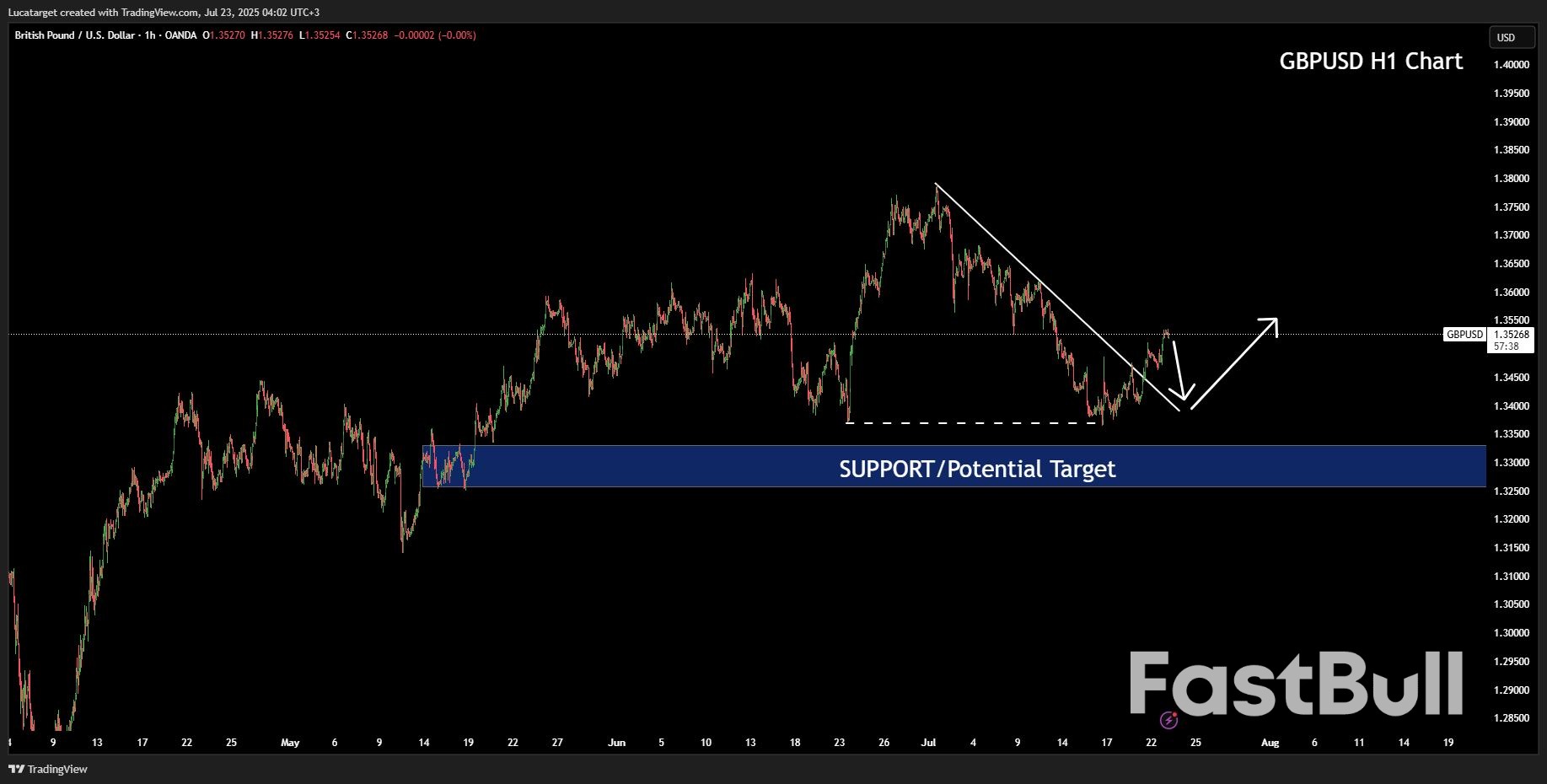
          Sterling’s Strength: A Positioning Play or Something More?

          The British pound staged an impressive rally last week, fuelled in part by cleaner positioning and modest USD softness. However, upcoming releases particularly PMI data and testimony from the Bank of England Governor could quickly reverse momentum if they disappoint.
          Political Risk, Central Bank Ambiguity, and the Summer of Uncertainty_3
          Underlying fundamentals remain mixed. The fiscal trajectory is becoming increasingly strained, and recent public finance figures have missed expectations. Yet for now, traders appear to be giving sterling the benefit of the doubt. A poor PMI print could change that calculus swiftly.
          Political Risk, Central Bank Ambiguity, and the Summer of Uncertainty_4

          Source: TradingView

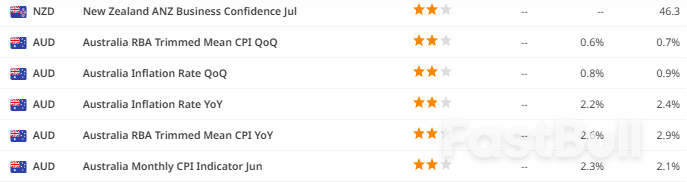
          Commodity Currencies Hold Their Breath Ahead of Inflation Clarity

          For AUD and NZD, the stakes are high. With commodity-linked currencies struggling to find sustained traction, attention now turns to next week’s quarterly inflation figures arguably the most important macro event for the region this month.
          Political Risk, Central Bank Ambiguity, and the Summer of Uncertainty_5
          Expectations have shifted. What was once seen as a front-loaded cutting cycle now appears more nuanced. A soft inflation print may reignite dovish bets, while any upside surprise could push back the easing timeline. Given their beta to risk and rate expectations, both AUD and NZD may see outsized reactions to relatively minor data surprises.
          The FX market is no longer just reacting to central banks it’s pre-empting them. As positioning cleans up and liquidity thins out in the dog days of summer, even modest surprises can trigger major repricing. Political risk, data fatigue, and silent shifts in capital flows are creating a landscape where narratives matter as much as numbers.
          For traders, this is a moment to stay nimble. The catalysts may not be obvious, but the volatility will be real.

          Source:ACY

          To stay updated on all economic events of today, please check out our Economic calendar
          Risk Warnings and Disclaimers
          You understand and acknowledge that there is a high degree of risk involved in trading. Following any strategies or investment methods may lead to potential losses. The content on the site is provided by our contributors and analysts for information purposes only. You are solely responsible for determining whether any trading assets, securities, strategy, or any other product is suitable for investing based on your own investment objectives and financial situation.
          Add to Favorites
          Share

          Japan’s Prime Minister Poised to Resign Amid Tumultuous Political and Trade Shifts

          Gerik

          Economic

          A Trade Deal and a Political Turning Point

          According to Japan’s Yomiuri newspaper, Prime Minister Shigeru Ishiba has already informed close allies of his intention to resign, potentially as soon as late July. The report was soon echoed by other local media, suggesting an official announcement may follow in August, with the Liberal Democratic Party (LDP) preparing for a leadership election in September.
          The timing follows the U.S.-Japan trade deal that reduced U.S. auto tariffs on Japanese cars to 15%. This deal, which Ishiba had previously cited as a reason to remain in office, now appears to have served as his final act of diplomacy before exit. The agreement was heralded as a victory for Japanese automakers but has not translated into political capital for Ishiba, whose administration has been rocked by electoral losses and plunging approval ratings.

          Market Reaction: Yen Dips on Resignation Reports

          Initial reports of Ishiba’s resignation triggered volatility in the foreign exchange markets. The Japanese yen weakened to 147.20 against the U.S. dollar before recovering some of its losses. Investors are now weighing the implications of a potential change in economic leadership at a time when Japan is navigating global trade realignments, internal stagnation, and deflationary pressures.
          Despite recent gains in Japanese auto stocks, the political turmoil could cloud investor sentiment. According to William Chou of the Hudson Institute, “We’re entering a period of speculation as to who’s going to be the next leader,” emphasizing the uncertainty that now surrounds Japanese policymaking.

          A Steep Fall from Power

          Ishiba’s expected resignation comes on the heels of a historic electoral defeat in Sunday’s upper house election, where his ruling coalition suffered significant setbacks. With public approval hovering just above 20%, Ishiba’s leadership has become increasingly untenable. This level of support is considered critically low for any sitting prime minister in Japan and has fueled widespread calls within the LDP for new leadership.
          While Ishiba remained tight-lipped on his future during a Wednesday morning briefing about the U.S. trade deal, political insiders confirmed that he is scheduled to meet with three former prime ministers later in the day, likely to finalize his transition plan.

          What’s Next for Japan?

          The impending resignation will likely trigger a leadership contest within the LDP. Although no successors have been formally declared, several prominent names are already circulating in Japanese media and political circles. The next prime minister will face a complex agenda, including continued trade negotiations, fiscal stimulus considerations, and rebuilding trust with the electorate.
          For now, both domestic and international observers are bracing for a period of political flux in Tokyo, as one of Asia’s most influential economies undergoes another leadership transition in the middle of global trade tensions and shifting alliances.

          Source: Bloomberg

          To stay updated on all economic events of today, please check out our Economic calendar
          Risk Warnings and Disclaimers
          You understand and acknowledge that there is a high degree of risk involved in trading. Following any strategies or investment methods may lead to potential losses. The content on the site is provided by our contributors and analysts for information purposes only. You are solely responsible for determining whether any trading assets, securities, strategy, or any other product is suitable for investing based on your own investment objectives and financial situation.
          Add to Favorites
          Share

          Trump Deals Bring Some Clarity For World’s Manufacturing Base

          James Whitman

          Economic

          After months of uncertainty, President Donald Trump’s latest tariff deals are providing clarity on the broad contours of a new trade landscape for the world’s biggest manufacturing region.

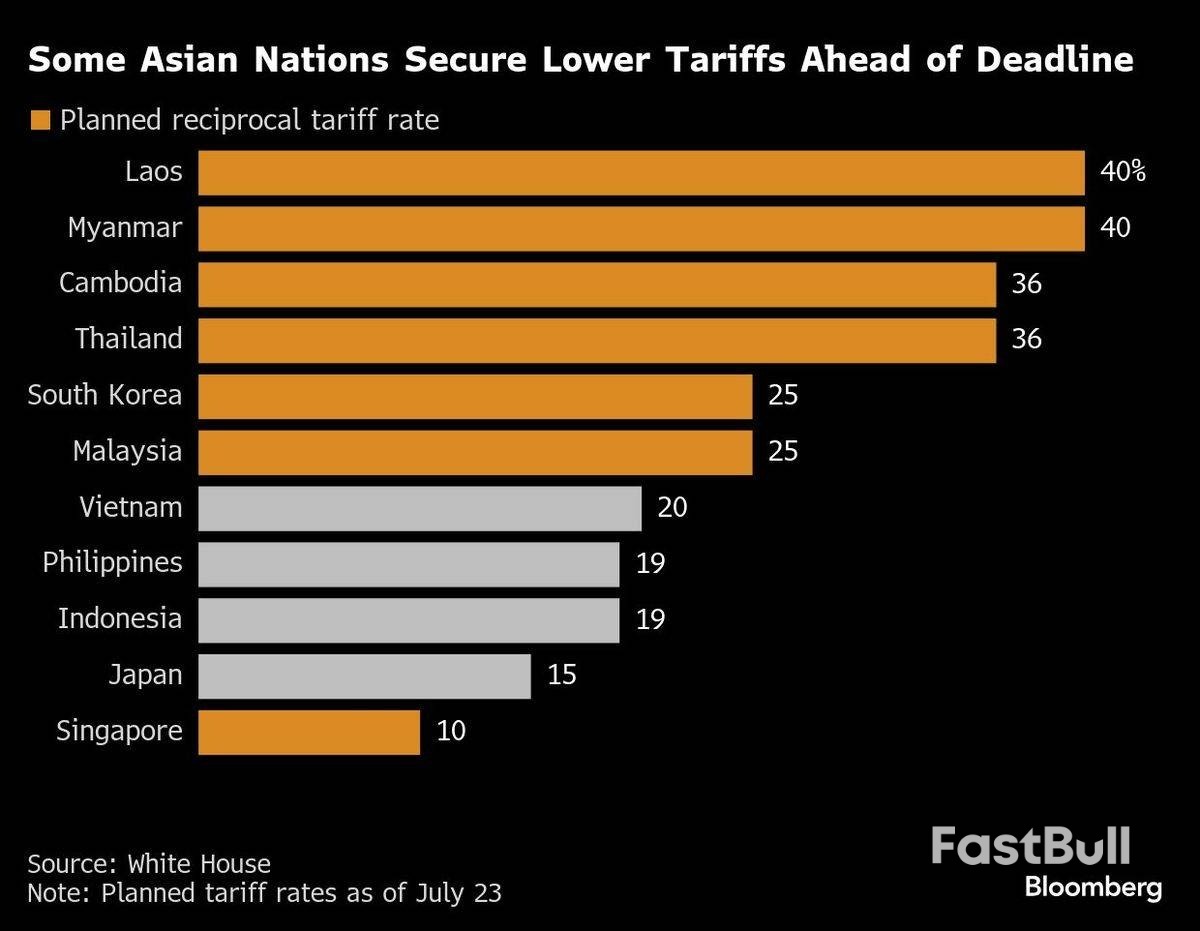
          Trump on Tuesday announced a deal with Japan that sets tariffs on the nation’s imports at 15%, including for autos — by far the biggest component of the trade deficit between the countries.

          A separate agreement with the Philippines set a 19% rate, the same level as Indonesia agreed and a percentage point below Vietnam’s 20% baseline level, signalling that the bulk of Southeast Asia is likely to get a similar rate.

          “We live in a new normal where 10% is the new zero and so 15% and 20% doesn’t seem so bad if everyone else got it,” said Trinh Nguyen, senior economist for emerging Asia at Natixis. At a 15%-20% tariff level, it’s still profitable for US companies to import from abroad rather than produce similar goods at home, she said.

          Meantime, US Treasury Secretary Scott Bessent said he’ll meet his Chinese counterparts in Stockholm next week for their third round of talks aimed at extending a tariff truce and widening the discussions. That suggests a continuing stabilisation in ties between the world’s two largest economies after the US recently eased chip curbs and China resumed rare earths exports.

          “We’re getting along with China very well,” Trump told reporters on Tuesday. “We have a very good relationship.”

          Throw it all together and a level of predictability is finally emerging after six months of tariff threats that had at one point jacked up tariff levels to 145% on China and near 50% on some smaller Asian exporters. Investors cheered the moves, with Asian shares rising the most in a month and contracts for the S&P 500 up 0.2%. The Nikkei-225 index in Japan jumped 3.2%, with Toyota Motor Corp. and other carmakers leading the gains.

          “What’s been interesting to me is that equity markets still have been fairly rosy about the changes,” Albert Park, chief economist at the Asian Development Bank, said in a Bloomberg Television interview. “I’m not sure they’ve priced in fully all of the effects that are likely to occur from the disruption of higher tariff rates.”

          Back in April, Trump hit the pause button on the steepest levies after a rare combination of weakening US stocks, bonds and the dollar showed investors were unnerved by his protectionist salvos. That bought time for policymakers from Tokyo, Manila and across the globe to negotiate more palatable deals.

          Although the latest deals bring some relief, key questions remain. The Trump administration is still considering a range of sectoral tariffs on goods like semiconductors and pharmaceuticals that will be critical for Asian economies including Taiwan and India — both of which have yet to announce tariff agreements with the US.

          South Korea is also more exposed to sectoral tariffs, even though the Japan deal provides a potential template for new President Lee Jae Myung.

          As Trump moves quickly on talks with countries accounting for the bulk of the US trade deficit, he has said he may hit around 150 smaller countries with a blanket rate of between 10% and 15%.

          With some certainty on tariff levels now emerging, businesses with complex supply chains across Asia and still reliant of the US consumer can start to game out how they’ll shift operations to minimise the hit to sales.

          Just like the first trade war in 2018, the latest tariff announcements are likely to spur companies to increasingly shift production outside of China. The average tariff rate on the world’s second-largest economy remains the highest in the region, and continued White House pressure on the nation’s technology and trade ambitions means companies may find more stability elsewhere.

          Companies and industry groups have been flagging for months that uncertainty is worse than tariffs for investment. The manufacturing sector across the Asean region saw the most notable weakening since August 2021, according to S&P PMI, led by a sharper decrease in new orders, major job cuts and weaker purchasing activity.

          The front-loading of shipments from Asia to the US to get ahead of the incoming levies will likely slow once the new rates kick in. While there’s relief that tariff rates for Southeast Asian economies and 15% for Japan are lower than some of Trump’s earlier threats, the reality is that they’re far higher than they were before he took office.

          The latest deals “continue the trend of tariff rates gravitating towards the 15-20% range that President Trump recently indicated to be his preferred level for the blanket rate instead of 10% currently,” Barclays plc analysts including Brian Tan wrote in a note. That skews risks to GDP growth forecasts for Asia “to the downside,” they wrote.

          For US consumers who have so far been spared the tariff ticket shock, economists warn there’s likely to be some pass through in the months ahead. Goldman Sachs Group Inc economists now expect the US baseline “reciprocal” tariff rate will rise from 10% to 15% — an outcome that threatens to fuel inflation and weigh on economic growth.

          Federal Reserve Chair Jerome Powell has argued he wants to see where tariffs land and how they filter through the economy before cutting interest rates — much to the annoyance of Trump.

          For now, the US president is hailing a win on trade, and investors seem overall relieved.

          “I just signed the largest trade deal in history — I think maybe the largest deal in history — with Japan,” Trump said at an event at the White House on Tuesday after announcing the deal on social media. “It’s a great deal for everybody.”

          Source: Bloomberg

          To stay updated on all economic events of today, please check out our Economic calendar
          Risk Warnings and Disclaimers
          You understand and acknowledge that there is a high degree of risk involved in trading. Following any strategies or investment methods may lead to potential losses. The content on the site is provided by our contributors and analysts for information purposes only. You are solely responsible for determining whether any trading assets, securities, strategy, or any other product is suitable for investing based on your own investment objectives and financial situation.
          Add to Favorites
          Share

          Trade Tensions Take Toll: ADB Cuts Growth Outlook for Developing Asia Amid U.S. Tariff Escalation

          Gerik

          Economic

          Tariffs Undermine Growth Prospects Across Asia-Pacific

          The ADB’s July 2025 Asian Development Outlook paints a sobering picture for the region. The combination of higher U.S. tariffs, geopolitical instability, fragile supply chains, and a sluggish Chinese property market is weakening domestic demand and investment confidence. According to ADB Chief Economist Albert Park, “The region’s resilience is under stress, and risks are intensifying.”
          The growth forecast for developing Asia in 2025 has been revised down from April’s 4.9% to 4.7%, and 2026 is now expected to see 4.6% growth instead of 4.7%. These figures reflect growing macroeconomic instability as Washington’s trade policy reshapes the global economic landscape.

          Southeast Asia Hit Hardest

          Among the ADB’s subregions, Southeast Asia faces the steepest slowdown. Growth in the region is now forecast at 4.2% for 2025, down from 4.7%, and 4.3% in 2026. Economies like Thailand and Singapore see the sharpest downward revisions, with Thailand’s 2025 GDP growth cut to just 1.8% (from 2.8%) and Singapore’s to 1.6% (from 2.6%).
          Vietnam, which had been a standout performer in recent years, now faces a minor downgrade to 6.5% in 2025, down from April’s 6.6%. This reflects not only trade frictions but also spillover effects from weaker global demand and investment sentiment.

          U.S. Tariffs Add Pressure

          The timing of the forecast revision comes just after President Donald Trump confirmed a 15% tariff on Japanese auto exports to the U.S., down from a threatened 25%. Simultaneously, he imposed a new 19% tariff on goods from the Philippines, slightly lower than the anticipated 20% but still above April’s 17% level. Nearly every major U.S. trading partner is now subject to a 10% base tariff introduced in April, with many facing steeper increases from August 1.
          These measures have disrupted regional supply chains and shaken investor confidence. While some countries have seen marginally “less severe” tariffs, the uncertainty and lack of predictability in U.S. trade policy are dampening longer-term capital flows and business decisions.

          China’s Property Sector and Geopolitical Uncertainty Loom Large

          Beyond tariffs, China’s ongoing property sector slump and lack of a strong fiscal recovery pose systemic risks to East Asia. Chinese growth is projected to stay at 4.7% in 2025 and 4.3% in 2026, unchanged from previous forecasts but still below pre-pandemic levels. As China is the region’s largest economy, its slowdown adds a drag on neighboring export-oriented economies.
          Additionally, ongoing geopolitical tensions particularly the war in Ukraine, a potential decoupling of global trade, and China-U.S. tech friction continue to cloud investment prospects.

          Inflation Outlook and Policy Implications

          The inflation outlook is largely stable, with regional inflation projected at 2.0% in 2025 and 2.1% in 2026. This allows most central banks some monetary flexibility, but the external shocks are primarily supply-side, limiting the effectiveness of rate changes.
          The ADB’s report emphasizes that countries must double down on structural reforms, open trade policies, and regional integration to weather this storm. While some countries like India remain growth outliers (with 2025 GDP forecast at 6.5%), the broader trend shows developing Asia struggling under the weight of trade headwinds and external volatility. Without a shift in global trade dynamics or more collaborative economic strategies, the region’s medium-term growth potential will remain subdued.

          Source: Reuters

          To stay updated on all economic events of today, please check out our Economic calendar
          Risk Warnings and Disclaimers
          You understand and acknowledge that there is a high degree of risk involved in trading. Following any strategies or investment methods may lead to potential losses. The content on the site is provided by our contributors and analysts for information purposes only. You are solely responsible for determining whether any trading assets, securities, strategy, or any other product is suitable for investing based on your own investment objectives and financial situation.
          Add to Favorites
          Share
          FastBull
          Copyright © 2025 FastBull Ltd

          728 RM B 7/F GEE LOK IND BLDG NO 34 HUNG TO RD KWUN TONG KLN HONG KONG

          TelegramInstagramTwitterfacebooklinkedin
          App Store Google Play Google Play
          Products
          Charts

          Chats

          Q&A with Experts
          Screeners
          Economic Calendar
          Data
          Tools
          Membership
          Features
          Function
          Markets
          Copy Trading
          Latest Signals
          Contests
          News
          Analysis
          24/7
          Columns
          Education
          Company
          Careers
          About Us
          Contact Us
          Advertising
          Help Center
          Feedback
          User Agreement
          Privacy Policy
          Business

          White Label

          Data API

          Web Plug-ins

          Poster Maker

          Affiliate Program

          Risk Disclosure

          The risk of loss in trading financial instruments such as stocks, FX, commodities, futures, bonds, ETFs and crypto can be substantial. You may sustain a total loss of the funds that you deposit with your broker. Therefore, you should carefully consider whether such trading is suitable for you in light of your circumstances and financial resources.

          No decision to invest should be made without thoroughly conducting due diligence by yourself or consulting with your financial advisors. Our web content might not suit you since we don't know your financial conditions and investment needs. Our financial information might have latency or contain inaccuracy, so you should be fully responsible for any of your trading and investment decisions. The company will not be responsible for your capital loss.

          Without getting permission from the website, you are not allowed to copy the website's graphics, texts, or trademarks. Intellectual property rights in the content or data incorporated into this website belong to its providers and exchange merchants.

          Not Logged In

          Log in to access more features

          FastBull Membership

          Not yet

          Purchase

          Become a signal provider
          Help Center
          Customer Service
          Dark Mode
          Price Up/Down Colors

          Log In

          Sign Up

          Position
          Layout
          Fullscreen
          Default to Chart
          The chart page opens by default when you visit fastbull.com