Markets
News
Analysis
User
24/7
Economic Calendar
Education
Data
- Names
- Latest
- Prev


Signal Accounts for Members
All Signal Accounts
All Contests


U.K. Trade Balance Non-EU (SA) (Oct)A:--
F: --
P: --
U.K. Trade Balance (Oct)A:--
F: --
P: --
U.K. Services Index MoMA:--
F: --
P: --
U.K. Construction Output MoM (SA) (Oct)A:--
F: --
P: --
U.K. Industrial Output YoY (Oct)A:--
F: --
P: --
U.K. Trade Balance (SA) (Oct)A:--
F: --
P: --
U.K. Trade Balance EU (SA) (Oct)A:--
F: --
P: --
U.K. Manufacturing Output YoY (Oct)A:--
F: --
P: --
U.K. GDP MoM (Oct)A:--
F: --
P: --
U.K. GDP YoY (SA) (Oct)A:--
F: --
P: --
U.K. Industrial Output MoM (Oct)A:--
F: --
P: --
U.K. Construction Output YoY (Oct)A:--
F: --
P: --
France HICP Final MoM (Nov)A:--
F: --
P: --
China, Mainland Outstanding Loans Growth YoY (Nov)A:--
F: --
P: --
China, Mainland M2 Money Supply YoY (Nov)A:--
F: --
P: --
China, Mainland M0 Money Supply YoY (Nov)A:--
F: --
P: --
China, Mainland M1 Money Supply YoY (Nov)A:--
F: --
P: --
India CPI YoY (Nov)A:--
F: --
P: --
India Deposit Gowth YoYA:--
F: --
P: --
Brazil Services Growth YoY (Oct)A:--
F: --
P: --
Mexico Industrial Output YoY (Oct)A:--
F: --
P: --
Russia Trade Balance (Oct)A:--
F: --
P: --
Philadelphia Fed President Henry Paulson delivers a speech
Canada Building Permits MoM (SA) (Oct)A:--
F: --
P: --
Canada Wholesale Sales YoY (Oct)A:--
F: --
P: --
Canada Wholesale Inventory MoM (Oct)A:--
F: --
P: --
Canada Wholesale Inventory YoY (Oct)A:--
F: --
P: --
Canada Wholesale Sales MoM (SA) (Oct)A:--
F: --
P: --
Germany Current Account (Not SA) (Oct)A:--
F: --
P: --
U.S. Weekly Total Rig CountA:--
F: --
P: --
U.S. Weekly Total Oil Rig CountA:--
F: --
P: --
Japan Tankan Large Non-Manufacturing Diffusion Index (Q4)--
F: --
P: --
Japan Tankan Small Manufacturing Outlook Index (Q4)--
F: --
P: --
Japan Tankan Large Non-Manufacturing Outlook Index (Q4)--
F: --
P: --
Japan Tankan Large Manufacturing Outlook Index (Q4)--
F: --
P: --
Japan Tankan Small Manufacturing Diffusion Index (Q4)--
F: --
P: --
Japan Tankan Large Manufacturing Diffusion Index (Q4)--
F: --
P: --
Japan Tankan Large-Enterprise Capital Expenditure YoY (Q4)--
F: --
P: --
U.K. Rightmove House Price Index YoY (Dec)--
F: --
P: --
China, Mainland Industrial Output YoY (YTD) (Nov)--
F: --
P: --
China, Mainland Urban Area Unemployment Rate (Nov)--
F: --
P: --
Saudi Arabia CPI YoY (Nov)--
F: --
P: --
Euro Zone Industrial Output YoY (Oct)--
F: --
P: --
Euro Zone Industrial Output MoM (Oct)--
F: --
P: --
Canada Existing Home Sales MoM (Nov)--
F: --
P: --
Euro Zone Total Reserve Assets (Nov)--
F: --
P: --
U.K. Inflation Rate Expectations--
F: --
P: --
Canada National Economic Confidence Index--
F: --
P: --
Canada New Housing Starts (Nov)--
F: --
P: --
U.S. NY Fed Manufacturing Employment Index (Dec)--
F: --
P: --
U.S. NY Fed Manufacturing Index (Dec)--
F: --
P: --
Canada Core CPI YoY (Nov)--
F: --
P: --
Canada Manufacturing Unfilled Orders MoM (Oct)--
F: --
P: --
Canada Manufacturing New Orders MoM (Oct)--
F: --
P: --
Canada Core CPI MoM (Nov)--
F: --
P: --
Canada Manufacturing Inventory MoM (Oct)--
F: --
P: --
Canada CPI YoY (Nov)--
F: --
P: --
Canada CPI MoM (Nov)--
F: --
P: --
Canada CPI YoY (SA) (Nov)--
F: --
P: --
Canada Core CPI MoM (SA) (Nov)--
F: --
P: --


No matching data
Latest Views
Latest Views
Trending Topics
Top Columnists
Latest Update
White Label
Data API
Web Plug-ins
Affiliate Program
View All

No data
Kristalina Georgieva outlines mounting risks to economic stability before fund’s annual meetings next week
(Oct 9): Copper hit a 16-month high as it climbed toward US$11,000 per metric ton on Thursday, with investors in top metals consumer China returning from a week-long holiday, and concerns over supply from major mines lingering.
Benchmark three-month copper on the London Metal Exchange CMCU3 was up 1.9% at US$10,875 per metric ton in official open outcry trading. It touched a session peak of US$10,910.50, the highest since May 2024 when the metal struck a record of US$11,104.50.
While LME copper is rising, the Yangshan copper premium SMM-CUYP-CN, an indicator of what what Chinese buyers will pay above the LME price for copper still outside the country, has fallen to US$49 a ton from US$58 a month ago. This shows that copper's rise is a "money-led rally," Marex said in a note.
Dovish minutes from the US Federal Reserve were also supporting prices, the brokerage added.
Total copper stocks in LME warehousing system MCUSTX-TOTAL are at 139,475 tons, the lowest since late July, while the discount for the cash copper contract against the three-month contract CMCU0-3 narrowed to US$5.80 per ton, from US$29.50 on Wednesday, indicating tighter near-term availability.
The International Copper Study Group lowered its 2025 market surplus estimate to 178,000 tons from 289,000 tons due to disruptions at major mines, including Grasberg in Indonesia, which has been shut for a month.
"If there's any expectation that Grasberg is coming back faster than people have been told over the past couple of weeks, copper would take a hit," Panmure Liberum analyst Tom Price said.
Copper's strength took the base metals complex higher. Aluminium CMAL3 rose 1% to US$2,780, having earlier touched US$2,793, also the highest since May 2024. Marex positioning estimates show the largest speculative long in aluminium since June 2024.
Zinc CMZN3 climbed 1.2% to US$3,042, nickel CMNI3 gained 0.7% to US$15,460, lead CMPB3 added 0.8% to US$2,018.50, and tin CMSN3 jumped 1.3% to US$36,880.
Uploaded by Lam Seng Fatt
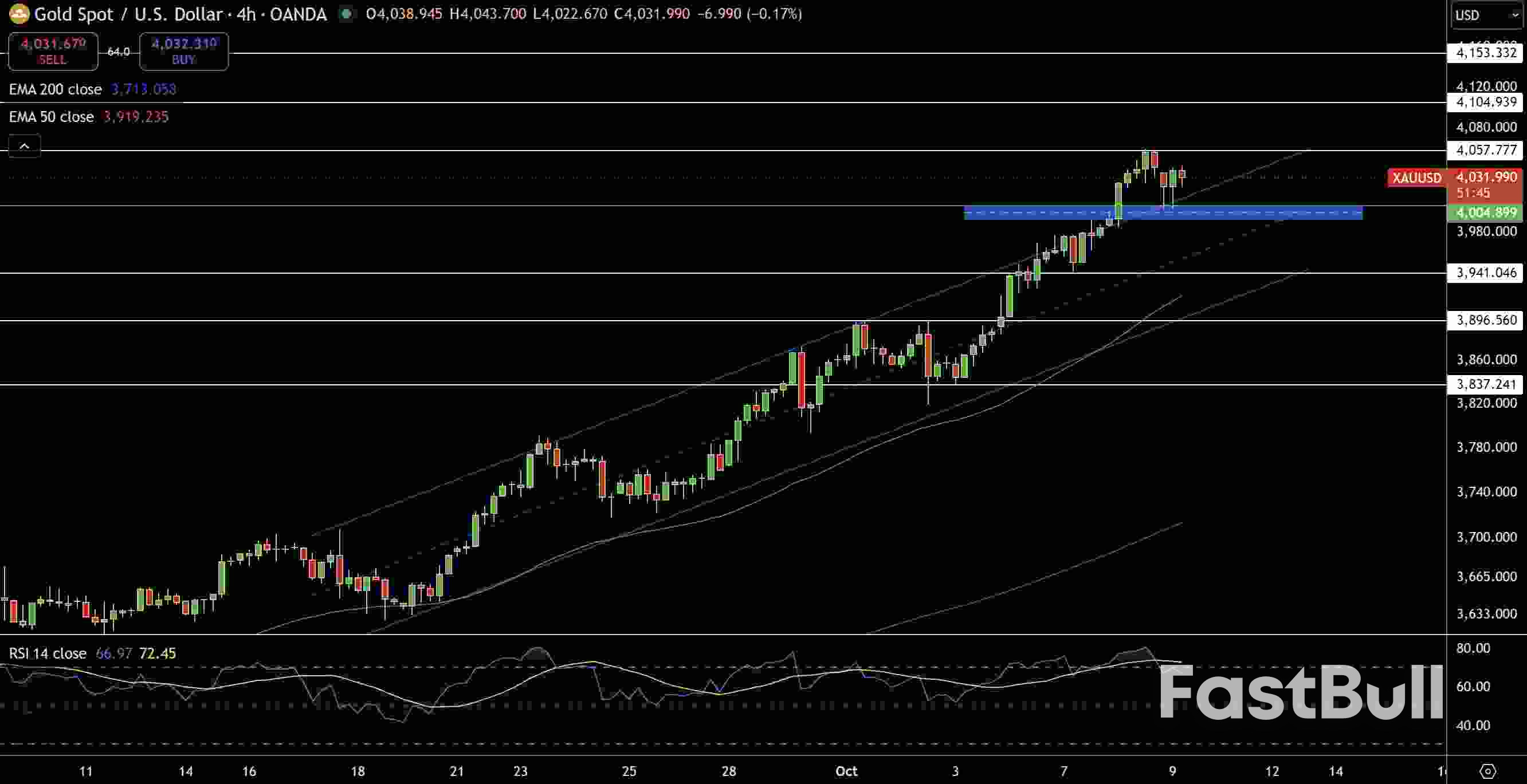
Gold – Chart
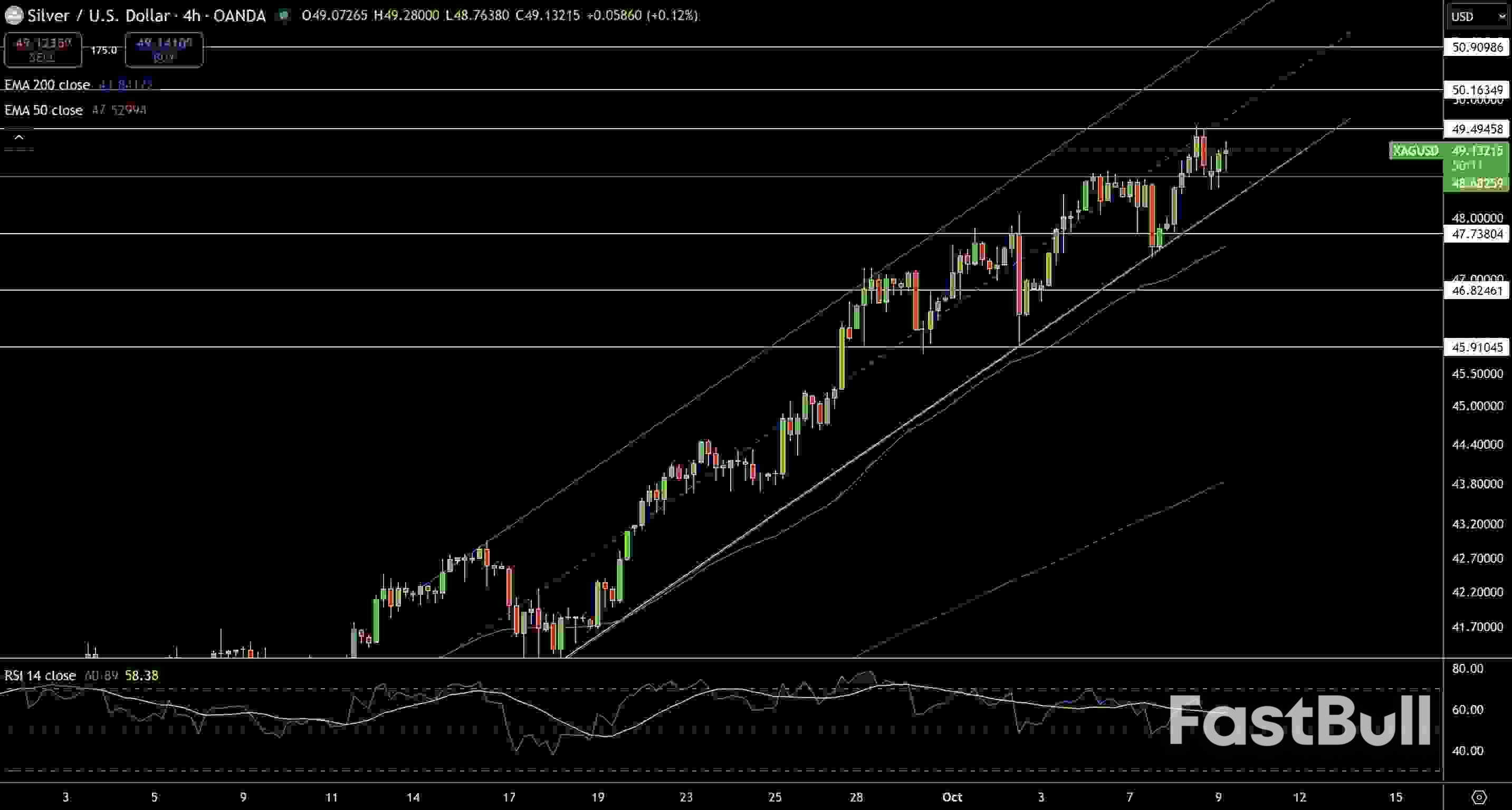
Silver – ChartEuro came under renewed selling pressure today, particularly in crosses, as investors reacted nervously to deepening political uncertainty in France. President Emmanuel Macron’s search for a new prime minister dominated headlines. His office confirmed that he would appoint a replacement “within 48 hours,” after outgoing Prime Minister Sebastien Lecornu spent two days in futile talks to resolve what has become France’s worst political crisis in decades. Macron’s next pick would be his sixth prime minister in less than two years, highlighting the instability that has plagued his administration.
The abrupt resignation of Lecornu—after just 27 days in office—surprised markets, which had largely assumed that the next step in France’s political drama would be a snap parliamentary election. Instead, the prospect of yet another reshuffle with no clear end to the legislative gridlock has rekindled investor anxiety about France’s fiscal direction and reform capacity.
Meanwhile the ECB’s September meeting accounts, released overnight, reaffirmed that the central bank is firmly on hold and in no rush to adjust interest rates. Importantly, the minutes also made clear that “moderate fluctuations of inflation around the target” should not prompt a policy adjustment — effectively confirming that the ECB sees little reason to move in the near term. The reiteration of patience was already priced in by markets, and provided no meaningful support to the Euro, which continues to trade on political headlines rather than monetary expectations.
Elsewhere, currency market performance this week remains broadly consistent. Yen continues to lead losses, pressured by risk-on sentiment and doubts over further BoJ tightening. The Euro ranks second worst, with the Kiwi close behind following the RBNZ’s dovish 50bps cut. In contrast, Aussie and Loonie remain top performers. Dollar holds firm in the upper tier. Sterling and the Swiss Franc are trading mixed in the middle.
In Europe, at the time of writing, FTSE is down -0.18%. DAX is up 0.53%. CAC is up 0.50%. UK 10-year yield is up 0.016 at 4.737. Germany 10-year yield is up 0.01 at 2.692. Earlier in Asia, Nikkei rose 1.77%. Hong Kong HSI fell -0.29%. China Shanghai SSE rose 1.32%. Singapore Strait Times fell -0.35%. Japan 10-year JGB yield fell -0.007 to 1.697.
Minutes of the ECB’s September 10–11 meeting revealed broad agreement among policymakers that there was “no immediate pressure” to adjust interest rates. Officials noted that recent data confirmed inflation is “in a good place” while the domestic economy remains “resilient,” risks to growth now seen as “more balanced.”
The ECB recognized that the environment remains more uncertain than usual. The situation was likely to “change materially at some point” but the timing and direction were still unclear. The minutes noted the “high option value” of waiting for more evidence before altering policy, given two-sided inflation risks and the potential for unexpected shocks. The current rate level was described as “sufficiently robust” to manage a range of outcomes.
It also stressed that monetary policy should not be recalibrated for “moderate fluctuations of inflation around the target,” but only when a “significant deviation” is expected over the medium term. Though, while large, sustained deviations from target—like those seen over the past decade—are rare, monetary policy will still be ready to deliver “cyclical responses” to demand shocks.
BoE policymaker Catherine Mann cautioned in a speech today that monetary policy must remain restrictive despite signs of weak consumption, arguing that high inflation has scarred UK consumers and continues to suppress spending.
“If the consumption gap was my only concern, reducing the restrictiveness of monetary policy would be appropriate,” she said. “However, in light of elevated inflation and expectations, maintaining restrictiveness for longer would be appropriate.”
Mann said the Bank’s analysis points to two drivers of the consumption gap: first, inflation and consumer scarring, and second, the channels through which monetary policy affects consumption.
The former, she explained, is a legacy of the rapid price surge that eroded purchasing power and altered household behavior. “High inflation itself is behind income uncertainty and weak consumption growth,” she said. “Monetary policy needs to continue to focus on reducing inflation” so households can return to a sustainable spending pattern.
For the second, she emphasized that higher rates have already exerted a material drag on demand, and the tightening effect is already waning. “Monetary policy has indeed loosened,” Mann said, adding that its impact on consumption has peaked.
Daily Pivots: (S1) 1.7612; (P) 1.7667; (R1) 1.7703;
EUR/AUD’s break of 1.7588 support confirms resumption of the fall from 1.8155. Such decline is seen as the third leg of the corrective pattern from 1.8554 high. Intraday bias is back on the downside for 100% projection of 1.8155 to 1.7588 from 1.7929 at 1.7362. On the upside, above 1.7672 minor resistance will turn intraday bias neutral again first.
In the bigger picture, price actions from 1.8554 medium term top are seen as a corrective pattern. Deeper fall could be seen as the pattern extends, but downside should be contained by 38.2% retracement of 1.4281 (2022 low) to 1.8554 at 1.6922 to bring rebound. Uptrend from 1.4281 is expected to resume at a later stage.
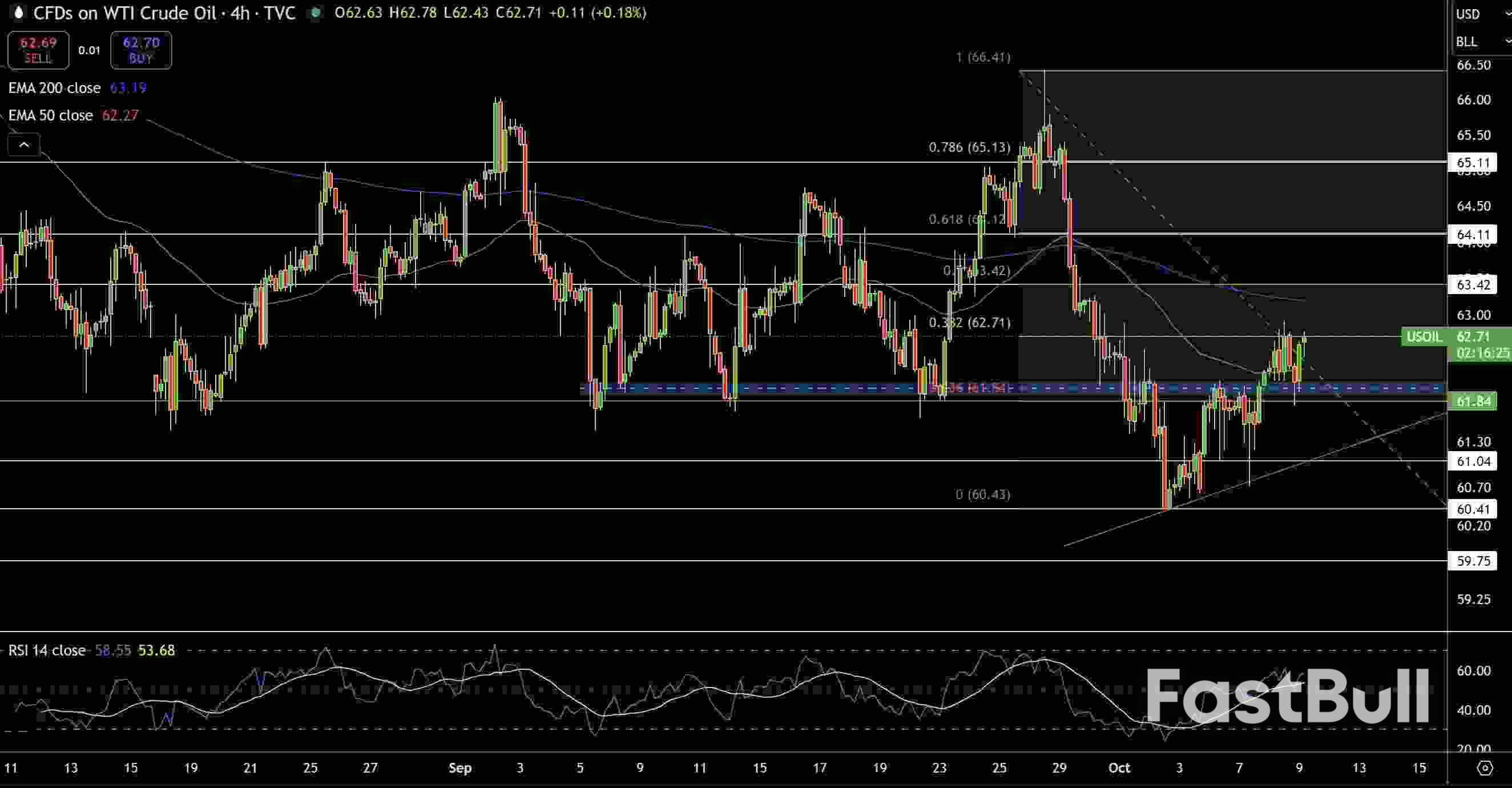
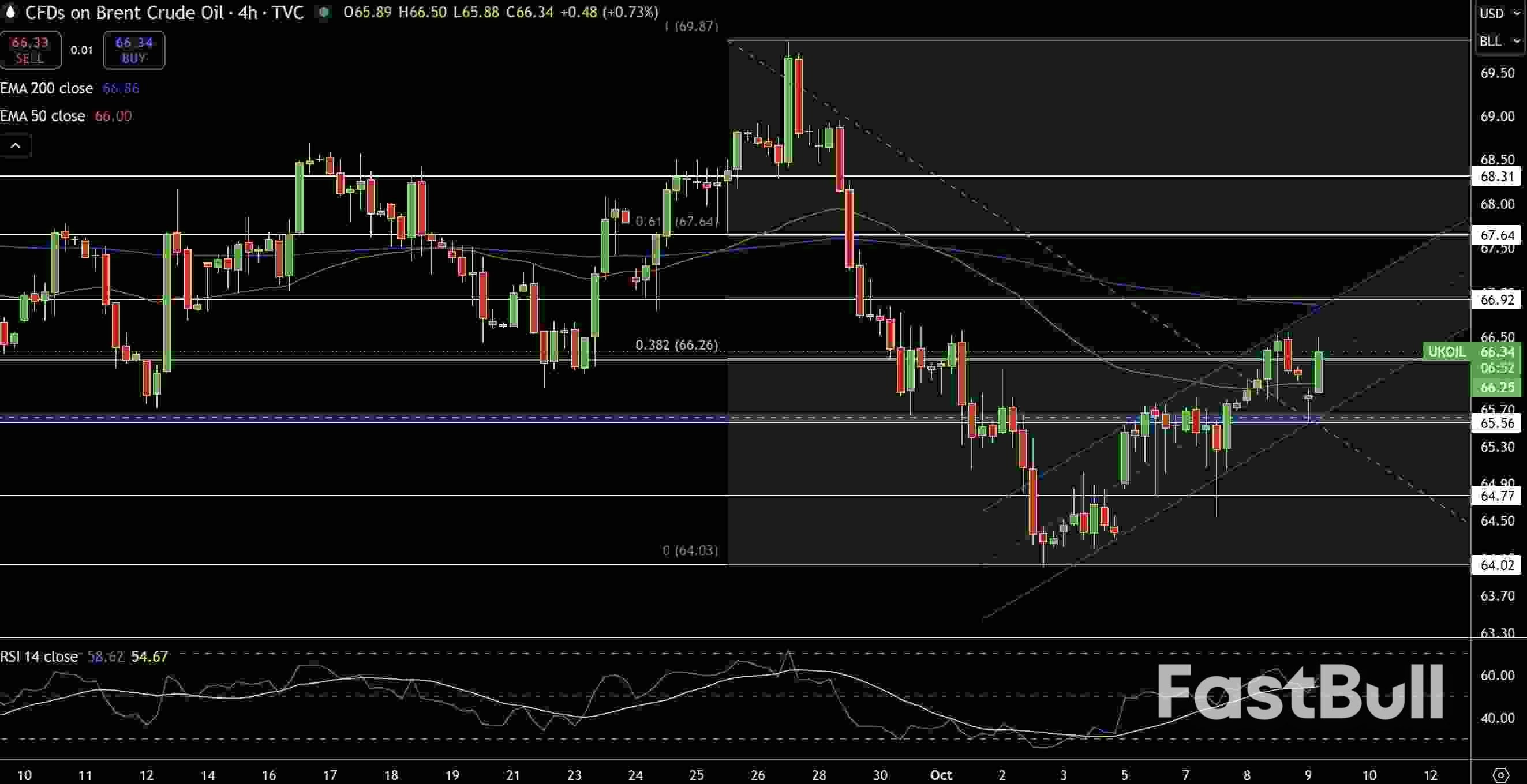
The broad mood in the oil market remains bearish, although there are discrepancies as to how gloomy crude’s prospects are, according to Citigroup Inc., summarizing views from clients in North America and Europe.“Conviction differs on the depth of downside,” analysts including Francesco Martoccia said in a note. “Some clients doubt that a price floor at $60 a barrel for Brent crude oil would be enough to induce a supply-and-demand reaction to balance a global liquids market generally seen heading for a surplus.”
Oil prices have shed more than 10% this year, with global benchmark Brent posting back-to-back monthly losses in August and September. The weakness has been driven largely by expectations that supplies will run ahead of demand as OPEC+ loosens output curbs and rival drillers also step up production. Still, stockpiling by China has acted to support the market, with inventory builds so far seen concentrated away from the market’s main pricing centers.
“Other clients expect a more moderate, orderly price correction, arguing that projected stock builds could continue to accumulate outside of key pricing hubs, certainly ex-Cushing,” the analysts said, referring to the storage hub in Oklahoma that’s the physical delivery point for West Texas Intermediate.The Organization of the Petroleum Exporting Countries and its allies endorsed another quota hike last weekend, although the increment — 137,000 barrels a day for November’s production — was smaller than some of the sums that had been reported in the run-up to the gathering.
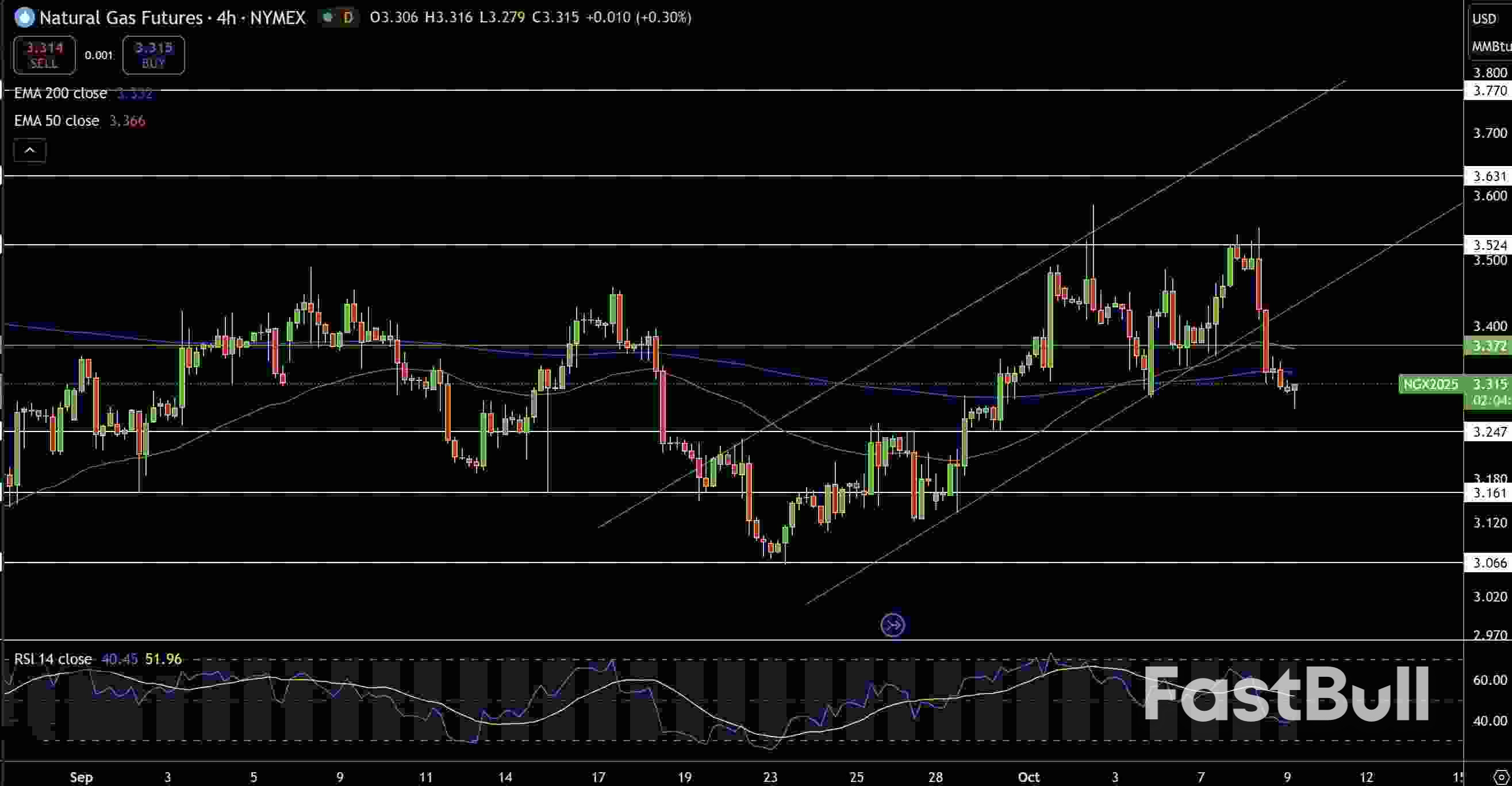
“Today’s slower non-OPEC+ growth and greater OPEC+ optionality, along with heightened geopolitical risks looming on large producers” such as Russia and Iran, could temper the pace of price adjustment, the analysts said.Brent futures — which tumbled 8% last week ahead of the OPEC+ supply decision — traded slightly lower at $65.80 a barrel on Thursday.“Within the energy complex, consensus sees fundamentals turning increasingly bearish on both crude oil and natural gas, but geopolitical risks make it hard to short these markets in size,” the analysts said.

WTI Price Chart
Brent Price ChartGold (XAUUSD) has continued shining brightly this week, crossing above the closely watched $4,000/oz level for the for first time ever.
Recent buying of the precious metal has been fueled by investor anxiety about the ongoing U.S. government shutdown, economic uncertainty, and expectations that the Federal Reserve will cut interest rates this month.
Spot gold prices, which were little changed at around $4,035 per ounce in recent trading, have surged 54% since the start of the year, with broader gains supported by central bank buying, a loss of confidence in the U.S. dollar and a range of geopolitical issues.
Below, we break down the technicals on gold’s chart and point out critical price levels worth watching out for.
After breaking out from a narrow trading range in early September, gold’s price has continued to trend sharply higher with only several minor retracements since that time.
The rally has coincided with the relative strength index remaining embedded in overbought territory to confirm bullish price momentum. However, the indicator recently climbed above 85, signaling extremely stretched conditions in the commodity that could lead to near-term profit-taking dips.
The average directional index indicator, which measures the strength of an asset’s trend, sits over 50, highlighting gold’s strong uptrend.
Let’s use technical analysis to forecast a potential bullish target worth watching and also identify critical support levels to monitor during retracements.
Investors can project a bullish target in the yellow metal by using the measured move technique, also known by chart watchers as the measuring principle.
When applying the study to gold’s chart, we calculate the commodity's strong uptrend from February to April in dollars and add that amount to the recent trading range’s top trendline. This forecasts a target of $4,160 ($710 + $3,450), implying 3% upside from current trading levels.
We selected this earlier move as it also followed a narrow rangebound phase, providing clues as to how high gold’s price may go if a similar trend replicates.
An initial pullback could see the precious metal test the $3,700 level. This location may provide support near the top of a brief consolidation period on the chart in early to mid-September.
Bullion bulls’ failure to defend this critical level may trigger a fall to around $3,450. Investors could look to accumulate in this region near last month’s trading range breakout point, which may flip from an area of prior resistance to future support.
A more-significant drop could see gold revisit lower support near $3,250, currently just above the rising 200-day moving average. The commodity would likely attract buying interest at this level near multiple troughs on the chart between May and July that form the trading range’s lower trendline.
White Label
Data API
Web Plug-ins
Poster Maker
Affiliate Program
The risk of loss in trading financial instruments such as stocks, FX, commodities, futures, bonds, ETFs and crypto can be substantial. You may sustain a total loss of the funds that you deposit with your broker. Therefore, you should carefully consider whether such trading is suitable for you in light of your circumstances and financial resources.
No decision to invest should be made without thoroughly conducting due diligence by yourself or consulting with your financial advisors. Our web content might not suit you since we don't know your financial conditions and investment needs. Our financial information might have latency or contain inaccuracy, so you should be fully responsible for any of your trading and investment decisions. The company will not be responsible for your capital loss.
Without getting permission from the website, you are not allowed to copy the website's graphics, texts, or trademarks. Intellectual property rights in the content or data incorporated into this website belong to its providers and exchange merchants.
Not Logged In
Log in to access more features

FastBull Membership
Not yet
Purchase
Log In
Sign Up