• Trade
  • Markets
  • Copy
  • Contests
  • News
  • 24/7
  • Calendar
  • Q&A
  • Chats
Trending
Screeners
SYMBOL
LAST
BID
ASK
HIGH
LOW
NET CHG.
%CHG.
SPREAD
SPX
S&P 500 Index
6827.42
6827.42
6827.42
6899.86
6801.80
-73.58
-1.07%
--
DJI
Dow Jones Industrial Average
48458.04
48458.04
48458.04
48886.86
48334.10
-245.98
-0.51%
--
IXIC
NASDAQ Composite Index
23195.16
23195.16
23195.16
23554.89
23094.51
-398.69
-1.69%
--
USDX
US Dollar Index
97.950
98.030
97.950
98.500
97.950
-0.370
-0.38%
--
EURUSD
Euro / US Dollar
1.17394
1.17409
1.17394
1.17496
1.17192
+0.00011
+ 0.01%
--
GBPUSD
Pound Sterling / US Dollar
1.33707
1.33732
1.33707
1.33997
1.33419
-0.00148
-0.11%
--
XAUUSD
Gold / US Dollar
4299.39
4299.39
4299.39
4353.41
4257.10
+20.10
+ 0.47%
--
WTI
Light Sweet Crude Oil
57.233
57.485
57.233
58.011
56.969
-0.408
-0.71%
--

Community Accounts

Signal Accounts
--
Profit Accounts
--
Loss Accounts
--
View More

Become a signal provider

Sell trading signals to earn additional income

View More

Guide to Copy Trading

Get started with ease and confidence

View More

Signal Accounts for Members

All Signal Accounts

Best Return
  • Best Return
  • Best P/L
  • Best MDD
Past 1W
  • Past 1W
  • Past 1M
  • Past 1Y

All Contests

  • All
  • Trump Updates
  • Recommend
  • Stocks
  • Cryptocurrencies
  • Central Banks
  • Featured News
Top News Only
Share

Iranian Media Says 18 Crew Members Of Foreign Tanker Seized In Gulf Of Oman Over Carrying 'Smuggled Fuel' Detained

Share

Regional Governor: Two Killed In Ukrainian Drone Strike On Russia's Saratov

Share

Chinese Foreign Ministry - China Foreign Minister Met With United Arab Emirates Counterpart On Dec 12

Share

China's Central Financial And Economic Affairs Commission Deputy Director: Will Expand Export And Increase Import In 2026

Share

Thai Leader Anutin: Landmine Blast That Killed Thai Soldiers 'Not A Roadside Accident'

Share

Thai Leader Anutin: Thailand To Continue Military Action Until 'We Feel No More Harm'

Share

Cambodian Prime Minister Hun Manet Says He Had Phone Calls With Trump And Malaysian Leader Anwar About Ceasefire

Share

Cambodia's Hun Manet Says USA, Malaysia Should Verify 'Which Side Fired First' In Latest Conflict

Share

Cambodia's Hun Manet: Cambodia Maintains Its Stance In Seeking Peaceful Resolution Of Disputes

Share

Nasdaq Companies: Allergan, Ferrovia, Insmed, Monolithic Power Systems, Seagate Technology, And Western Digital Will Be Added To The NASDAQ 100 Index. Biogen, CdW, GlobalFoundries, Lululemon, ON Semiconductor, And Tradedesk Will Be Removed From The NASDAQ 100 Index

Share

Witkoff Headed To Berlin This Weekend To Meet With Zelenskiy, European Leaders -Wsj Reporter On X

Share

Russia Attacks Two Ukrainian Ports, Damaging Three Turkish-Owned Vessels

Share

[Historic Flooding Occurs In At Least Four Rivers In Washington State Due To Days Of Torrential Rains] Multiple Areas In Washington State Have Been Hit By Severe Flooding Due To Days Of Torrential Rains, With At Least Four Rivers Experiencing Historic Flooding. Reporters Learned On The 12th That The Floods Caused By The Torrential Rains In Washington State Have Destroyed Homes And Closed Several Highways. Experts Warn That Even More Severe Flooding May Occur In The Future. A State Of Emergency Has Been Declared In Washington State

Share

Trump Says Proposed Free Economic Zone In Donbas Would Work

Share

Trump: I Think My Voice Should Be Heard

Share

Trump Says Will Be Choosing New Fed Chair In Near Future

Share

Trump Says Proposed Free Economic Zone In Donbas Complex But Would Work

Share

Trump Says Land Strikes In Venezuela Will Start Happening

Share

US President Trump: Thailand And Cambodia Are In A Good Situation

Share

State Media: North Korean Leader Kim Hails Troops Returning From Russia Mission

TIME
ACT
FCST
PREV
U.K. Trade Balance Non-EU (SA) (Oct)

A:--

F: --

P: --

U.K. Trade Balance (Oct)

A:--

F: --

P: --

U.K. Services Index MoM

A:--

F: --

P: --

U.K. Construction Output MoM (SA) (Oct)

A:--

F: --

P: --

U.K. Industrial Output YoY (Oct)

A:--

F: --

P: --

U.K. Trade Balance (SA) (Oct)

A:--

F: --

P: --

U.K. Trade Balance EU (SA) (Oct)

A:--

F: --

P: --

U.K. Manufacturing Output YoY (Oct)

A:--

F: --

P: --

U.K. GDP MoM (Oct)

A:--

F: --

P: --

U.K. GDP YoY (SA) (Oct)

A:--

F: --

P: --

U.K. Industrial Output MoM (Oct)

A:--

F: --

P: --

U.K. Construction Output YoY (Oct)

A:--

F: --

P: --

France HICP Final MoM (Nov)

A:--

F: --

P: --

China, Mainland Outstanding Loans Growth YoY (Nov)

A:--

F: --

P: --

China, Mainland M2 Money Supply YoY (Nov)

A:--

F: --

P: --

China, Mainland M0 Money Supply YoY (Nov)

A:--

F: --

P: --

China, Mainland M1 Money Supply YoY (Nov)

A:--

F: --

P: --

India CPI YoY (Nov)

A:--

F: --

P: --

India Deposit Gowth YoY

A:--

F: --

P: --

Brazil Services Growth YoY (Oct)

A:--

F: --

P: --

Mexico Industrial Output YoY (Oct)

A:--

F: --

P: --

Russia Trade Balance (Oct)

A:--

F: --

P: --

Philadelphia Fed President Henry Paulson delivers a speech
Canada Building Permits MoM (SA) (Oct)

A:--

F: --

P: --

Canada Wholesale Sales YoY (Oct)

A:--

F: --

P: --

Canada Wholesale Inventory MoM (Oct)

A:--

F: --

P: --

Canada Wholesale Inventory YoY (Oct)

A:--

F: --

P: --

Canada Wholesale Sales MoM (SA) (Oct)

A:--

F: --

P: --

Germany Current Account (Not SA) (Oct)

A:--

F: --

P: --

U.S. Weekly Total Rig Count

A:--

F: --

P: --

U.S. Weekly Total Oil Rig Count

A:--

F: --

P: --

Japan Tankan Large Non-Manufacturing Diffusion Index (Q4)

--

F: --

P: --

Japan Tankan Small Manufacturing Outlook Index (Q4)

--

F: --

P: --

Japan Tankan Large Non-Manufacturing Outlook Index (Q4)

--

F: --

P: --

Japan Tankan Large Manufacturing Outlook Index (Q4)

--

F: --

P: --

Japan Tankan Small Manufacturing Diffusion Index (Q4)

--

F: --

P: --

Japan Tankan Large Manufacturing Diffusion Index (Q4)

--

F: --

P: --

Japan Tankan Large-Enterprise Capital Expenditure YoY (Q4)

--

F: --

P: --

U.K. Rightmove House Price Index YoY (Dec)

--

F: --

P: --

China, Mainland Industrial Output YoY (YTD) (Nov)

--

F: --

P: --

China, Mainland Urban Area Unemployment Rate (Nov)

--

F: --

P: --

Saudi Arabia CPI YoY (Nov)

--

F: --

P: --

Euro Zone Industrial Output YoY (Oct)

--

F: --

P: --

Euro Zone Industrial Output MoM (Oct)

--

F: --

P: --

Canada Existing Home Sales MoM (Nov)

--

F: --

P: --

Euro Zone Total Reserve Assets (Nov)

--

F: --

P: --

U.K. Inflation Rate Expectations

--

F: --

P: --

Canada National Economic Confidence Index

--

F: --

P: --

Canada New Housing Starts (Nov)

--

F: --

P: --

U.S. NY Fed Manufacturing Employment Index (Dec)

--

F: --

P: --

U.S. NY Fed Manufacturing Index (Dec)

--

F: --

P: --

Canada Core CPI YoY (Nov)

--

F: --

P: --

Canada Manufacturing Unfilled Orders MoM (Oct)

--

F: --

P: --

Canada Manufacturing New Orders MoM (Oct)

--

F: --

P: --

Canada Core CPI MoM (Nov)

--

F: --

P: --

Canada Manufacturing Inventory MoM (Oct)

--

F: --

P: --

Canada CPI YoY (Nov)

--

F: --

P: --

Canada CPI MoM (Nov)

--

F: --

P: --

Canada CPI YoY (SA) (Nov)

--

F: --

P: --

Canada Core CPI MoM (SA) (Nov)

--

F: --

P: --

Q&A with Experts
    • All
    • Chatrooms
    • Groups
    • Friends
    Connecting
    .
    .
    .
    Type here...
    Add Symbol or Code

      No matching data

      All
      Trump Updates
      Recommend
      Stocks
      Cryptocurrencies
      Central Banks
      Featured News
      • All
      • Russia-Ukraine Conflict
      • Middle East Flashpoint
      • All
      • Russia-Ukraine Conflict
      • Middle East Flashpoint
      Search
      Products

      Charts Free Forever

      Chats Q&A with Experts
      Screeners Economic Calendar Data Tools
      Membership Features
      Data Warehouse Market Trends Institutional Data Policy Rates Macro

      Market Trends

      Market Sentiment Order Book Forex Correlations

      Top Indicators

      Charts Free Forever
      Markets

      News

      News Analysis 24/7 Columns Education
      From Institutions From Analysts
      Topics Columnists

      Latest Views

      Latest Views

      Trending Topics

      Top Columnists

      Latest Update

      Signals

      Copy Rankings Latest Signals Become a signal provider AI Rating
      Contests
      Brokers

      Overview Brokers Assessment Rankings Regulators News Claims
      Broker listing Forex Brokers Comparison Tool Live Spread Comparison Scam
      Q&A Complaint Scam Alert Videos Tips to Detect Scam
      More

      Business
      Events
      Careers About Us Advertising Help Center

      White Label

      Data API

      Web Plug-ins

      Affiliate Program

      Awards Institution Evaluation IB Seminar Salon Event Exhibition
      Vietnam Thailand Singapore Dubai
      Fans Party Investment Sharing Session
      FastBull Summit BrokersView Expo
      Recent Searches
        Top Searches
          Markets
          News
          Analysis
          User
          24/7
          Economic Calendar
          Education
          Data
          • Names
          • Latest
          • Prev

          View All

          No data

          Scan to Download

          Faster Charts, Chat Faster!

          Download App
          English
          • English
          • Español
          • العربية
          • Bahasa Indonesia
          • Bahasa Melayu
          • Tiếng Việt
          • ภาษาไทย
          • Français
          • Italiano
          • Türkçe
          • Русский язык
          • 简中
          • 繁中
          Open Account
          Search
          Products
          Charts Free Forever
          Markets
          News
          Signals

          Copy Rankings Latest Signals Become a signal provider AI Rating
          Contests
          Brokers

          Overview Brokers Assessment Rankings Regulators News Claims
          Broker listing Forex Brokers Comparison Tool Live Spread Comparison Scam
          Q&A Complaint Scam Alert Videos Tips to Detect Scam
          More

          Business
          Events
          Careers About Us Advertising Help Center

          White Label

          Data API

          Web Plug-ins

          Affiliate Program

          Awards Institution Evaluation IB Seminar Salon Event Exhibition
          Vietnam Thailand Singapore Dubai
          Fans Party Investment Sharing Session
          FastBull Summit BrokersView Expo

          Gold Pulls Back Slightly as Dollar Strengthens Ahead of Key U.S. Jobs Report

          Gerik

          Economic

          Commodity

          Summary:

          Gold prices edged lower on Tuesday as the U.S. dollar regained strength ahead of Friday’s labor market data release. Despite the pullback, gold remains up over 25% year-to-date...

          Dollar Strength Pauses Gold Rally

          Gold prices declined by 0.5% to $3,364.69 per ounce in Singapore as traders recalibrated positions ahead of crucial U.S. employment data set for release on Friday. The modest pullback follows a sharp gain on Monday — the largest daily jump in four weeks — suggesting that the metal’s bullish momentum remains intact, albeit momentarily capped by the dollar’s rebound.
          The Bloomberg Dollar Spot Index rose 0.1%, reflecting cautious optimism about the U.S. economy and expectations that the labor data could reignite speculation around a potential delay in Fed rate cuts. A stronger dollar tends to weigh on gold by making the non-yielding asset more expensive for foreign buyers.

          Gold’s Strategic Role Amid Uncertainty

          Goldman Sachs recently reaffirmed its view that gold remains a core hedge against inflation and a key asset in long-term portfolios. With bullion prices already up more than 25% in 2025, the yellow metal continues to attract safe-haven demand amid mounting concerns over global trade tensions, especially with fresh uncertainties from Trump’s tariff threats against China and the European Union.
          Although the greenback hit its weakest point since 2023 on Monday, its recovery Tuesday underscores investor nervousness heading into Friday’s job report — widely seen as a litmus test for the Federal Reserve’s next policy move. Any signs of labor market overheating could lead markets to price in higher-for-longer interest rates, which typically reduce the appeal of gold.

          Eyes on Employment Data and Trade Diplomacy

          Markets are now awaiting the May U.S. nonfarm payrolls report, which will offer insights into wage pressures and hiring momentum. A strong print could dampen expectations for rate cuts, placing renewed pressure on precious metals. Conversely, signs of labor market softness might reinforce gold’s role as a defensive play.
          Additionally, investors remain attentive to developments in U.S.-China and U.S.-EU trade diplomacy. A lack of progress or further escalation in tariff rhetoric could spark flight-to-safety flows into gold.

          Technical Levels and Cross-Metal Performance

          COMEX August gold futures traded at $3,387.80, down 0.28%. Spot gold tested support near $3,365. Meanwhile, silver retreated after briefly touching its highest level since October, and both platinum and palladium posted mixed performance, with platinum flat and palladium slipping.
          Should Friday’s data disappoint, gold could swiftly resume its upward path, possibly testing recent highs above $3,400. However, a stronger-than-expected labor report may lead to deeper consolidation toward the $3,320–$3,300 support range.

          Source: Bloomberg

          To stay updated on all economic events of today, please check out our Economic calendar
          Risk Warnings and Disclaimers
          You understand and acknowledge that there is a high degree of risk involved in trading. Following any strategies or investment methods may lead to potential losses. The content on the site is provided by our contributors and analysts for information purposes only. You are solely responsible for determining whether any trading assets, securities, strategy, or any other product is suitable for investing based on your own investment objectives and financial situation.
          Add to Favorites
          Share

          Euro Zone Inflation Eases Below ECB Target, Supporting Rate Cut Bets

          Michelle

          Forex

          Economic

          Euro Zone Inflation Eases Below ECB Target, Supporting Rate Cut Bets_1

          Euro zone inflation eased below the European Central Bank's target last month, data showed on Tuesday, underpinning expectations for another interest rate cut this week, even as global trade tensions fuel longer-term price pressures.

          Consumer price inflation in the 20 countries sharing the euro slowed to 1.9% in May from 2.2% a month earlier, below expectations for 2.0% on a fall in energy prices and a sharp decline in services inflation.

          A more closely watched reading on underlying inflation, or prices excluding volatile fuel and food prices, meanwhile slowed to 2.3% from 2.7%, driven by a slowdown in services price growth to 3.2% from 4.0%, Eurostat, the EU's statistics agency said.

          The ECB has cut interest rates seven times since last June and another move on Thursday is almost fully priced in given muted wage growth, easing energy prices, a strong euro and lukewarm economic growth, factors which all point in the direction of easing inflation.

          Price pressures are so weak that some economists even expect inflation to keep sinking below the ECB's 2% target this year and not rebounding until sometime in 2026.

          OPPOSING TRENDS

          This raises a dilemma for the ECB because the short and the longer-term outlooks for prices differ greatly since inflation could come under upward pressure from a host of factors further out.

          This is why investors think the ECB will pause with rate cuts after June and only make one more cut this year, possibly in the autumn.

          Interest rates are also firmly in the 'neutral' territory now, where they neither slow economic growth nor stimulate it, an argument for some to take a step back and see how erratic U.S. trade policy will impact growth and prices.

          Policy hawks have also warned that inflation could go back up soon, given unusually high geopolitical tensions.

          A trade war, increased tariffs, deglobalisation and the realignment of corporate value chains are all expected to increase prices.

          In addition, the continued decline of the working age population and investments related to defence and climate change could also raise price pressures.

          How these opposing trends will impact ECB policy is unclear for now but the ECB generally looks through short-term price volatility since it targets inflation in the medium term, a loosely defined concept that normally means one to two years out.

          Policymakers, however, could be forced to intervene if they think that a dip in prices is also pulling down or 'de-anchoring' longer-term expectations.

          Source: Yahoo Finance

          To stay updated on all economic events of today, please check out our Economic calendar
          Risk Warnings and Disclaimers
          You understand and acknowledge that there is a high degree of risk involved in trading. Following any strategies or investment methods may lead to potential losses. The content on the site is provided by our contributors and analysts for information purposes only. You are solely responsible for determining whether any trading assets, securities, strategy, or any other product is suitable for investing based on your own investment objectives and financial situation.
          Add to Favorites
          Share

          Vietnam Boosts U.S. Ties with $2 Billion Farm Produce MoUs Amid Tariff Pressure

          Gerik

          Economic

          China–U.S. Trade War

          Strengthening Trade Ties in the Shadow of Tariffs

          Vietnam’s commitment to sign memorandums of understanding (MoUs) to purchase $2 billion worth of U.S. agricultural products reflects a calculated diplomatic and economic maneuver to ease escalating trade tensions. With the Trump administration imposing a 46% tariff — albeit temporarily paused — Vietnam is under pressure to rebalance trade in favor of the United States to avoid economic disruption. These MoUs represent a goodwill gesture aimed at securing a more favorable trade agreement and preventing the reinstatement of punitive measures.
          Leading this diplomatic outreach is Agriculture Minister Do Duc Duy, accompanied by 50 Vietnamese companies on an official visit to the U.S. A significant portion of the new MoUs involves five deals with Iowa-based producers, accounting for $800 million over three years. These agreements focus on key American exports such as corn, wheat, dried distillers grains (DDGs), and soybean meal — products central to Vietnam’s feed and food production industries.

          Addressing Bilateral Trade Imbalances

          The U.S.-Vietnam trade relationship has been increasingly scrutinized, with a $123 billion trade deficit recorded by the United States last year. Although Vietnam purchased $3.4 billion in U.S. agricultural goods in 2024, it exported nearly four times that amount — $13.68 billion — in the same category. By proactively increasing its American imports, Vietnam aims to demonstrate a cooperative stance and reduce the risk of retaliatory tariffs that could disrupt a vital export flow to its largest market.
          This agricultural initiative is not isolated. Vietnam has also pledged to increase purchases of high-value American goods, including Boeing aircraft and liquefied natural gas, showing a diversified approach to appease Washington. Furthermore, Hanoi has promised tougher enforcement on digital piracy and counterfeit goods, areas that have drawn strong criticism from the U.S. Trade Representative.

          Implications for Vietnam’s Economic Model

          Vietnam’s economy is heavily reliant on exports, particularly to the U.S., which serves as a major market for its electronics, apparel, and agricultural products. A potential reimposition of high U.S. tariffs would threaten this model, disrupting manufacturing output and foreign investment flows. Therefore, securing a trade agreement and demonstrating compliance with U.S. expectations is not just a diplomatic priority but an economic necessity.
          By increasing agricultural imports, Vietnam is also diversifying its food supply chain at a time of global commodity volatility. Importing feedstock such as soybean meal and DDGs supports domestic livestock and aquaculture sectors, which are key to Vietnam’s rural employment and food security strategies.

          Outlook and Strategic Calculations

          While the MoUs themselves are non-binding, they signal a strong political commitment and are likely to serve as bargaining chips in ongoing trade talks. The timeline is critical: the tariff pause expires in July. Thus, these agreements could shape the outcome of negotiations over the next month. If Vietnam successfully leverages these deals and demonstrates concrete trade adjustments, it may avoid the full brunt of U.S. tariff enforcement.
          In summary, Vietnam’s $2 billion MoU package is a multi-faceted strategy — part economic necessity, part diplomatic outreach — aimed at preserving its export-driven growth while navigating an increasingly protectionist global landscape.

          Source: Reuters

          To stay updated on all economic events of today, please check out our Economic calendar
          Risk Warnings and Disclaimers
          You understand and acknowledge that there is a high degree of risk involved in trading. Following any strategies or investment methods may lead to potential losses. The content on the site is provided by our contributors and analysts for information purposes only. You are solely responsible for determining whether any trading assets, securities, strategy, or any other product is suitable for investing based on your own investment objectives and financial situation.
          Add to Favorites
          Share

          US-India Nearing Trade Deal As Talks Progress, Commerce Secretary Says

          Olivia Brooks

          China–U.S. Trade War

          Political

          Economic

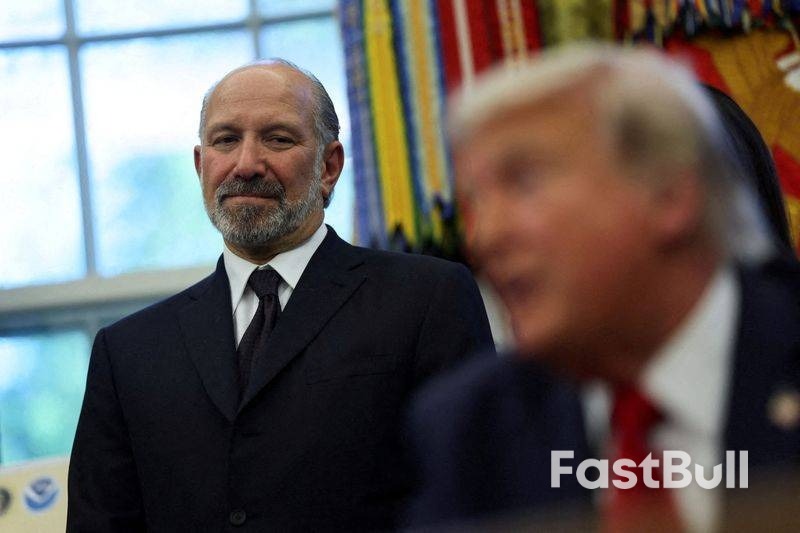
          Trade negotiations between the United States and India are making progress and a deal could be finalised soon, U.S. Commerce Secretary Howard Lutnick said on Monday, as both sides push to conclude talks ahead of a July deadline.

          "You should expect a deal between United States and India (in the ) not-too-distant future because I think we have found a place that really works for both countries," Lutnick said at the annual summit of the US-India Strategic Partnership Forum in Washington.

          Lutnick later posted a short video of his remarks on social media platform X, saying "We have a great relationship between the countries. I'm optimistic for a trade deal soon that will benefit both nations."

          Reuters reported earlier that the Trump administration had asked trade partners to submit their best offers by Wednesday, as officials work towards finalising several deals ahead of a self-imposed July 9 deadline.

          India's trade ministry declined to comment on the timeline.

          However, Rajesh Agrawal, India's chief negotiator for talks with the U.S., said last week that trade talks between the two countries were progressing well, and that a "good outcome" was expected soon.

          A U.S. trade delegation is scheduled to visit New Delhi on June 5-6 for further discussions.

          An Indian team had visited Washington in April, and Trade Minister Piyush Goyal also visited last month to push trade talks.

          Lutnick said Washington was seeking lower tariffs particularly on agricultural products, greater market access for U.S. firms, and increased purchases of defence equipment, with an aim of reducing its trade deficit with India.

          In return, it was prepared to expand access for Indian exports.

          "India is a very protectionist country," he said, noting tariffs of up to 100% on some products. "We would like our businesses to have reasonable market access."

          He said strong ties between President Donald Trump and Prime Minister Narendra Modi were helping ease negotiations.

          Source: Yahoo Finance

          To stay updated on all economic events of today, please check out our Economic calendar
          Risk Warnings and Disclaimers
          You understand and acknowledge that there is a high degree of risk involved in trading. Following any strategies or investment methods may lead to potential losses. The content on the site is provided by our contributors and analysts for information purposes only. You are solely responsible for determining whether any trading assets, securities, strategy, or any other product is suitable for investing based on your own investment objectives and financial situation.
          Add to Favorites
          Share

          Russia's Stringent Peace Terms Stall Ukraine Talks Amid Escalating Battlefield Tensions

          Gerik

          Political

          Peace Talks Yield Minimal Progress, Underscored by Harsh Russian Demands

          In Istanbul, Russia presented a series of punitive conditions to Ukraine during their second direct negotiation since 2022. These included the recognition of Crimea and four additional regions as Russian territory, forced neutrality barring NATO membership, limitations on Ukrainian military size, and language and political reforms that Kyiv views as unacceptable. The brief one-hour meeting concluded with minimal concessions—limited to prisoner exchanges and the return of fallen soldiers—failing to produce a ceasefire or roadmap toward a meaningful peace.
          Ukraine’s response was measured but firm. Defence Minister Rustem Umerov stated Kyiv would examine the Russian memorandum but emphasized that any substantive progress would require a direct meeting between Presidents Zelenskiy and Putin. President Zelenskiy further condemned Russia’s demands as ultimatums and reaffirmed Ukraine’s refusal to submit to forced territorial concessions.

          Geopolitical Stakes Heighten Amid U.S. and Turkish Mediation Efforts

          While Turkish President Erdogan called the session a “great meeting” and expressed hope for a trilateral summit involving Trump, Putin, and Zelenskiy, the political optics starkly contrasted the lack of progress. U.S. President Trump has issued warnings that U.S. mediation may be withdrawn if neither side shows commitment to compromise. Meanwhile, the EU and Washington continue to pressure Moscow for an unconditional ceasefire, which Russia rejects, stating it seeks a “long-term settlement” rather than a temporary pause.
          Amid stalled diplomacy, the conflict escalated on the battlefield. Ukraine launched an unprecedented drone assault—Operation "Spider's Web"—on Russia’s nuclear-capable bombers stationed in remote airbases in Siberia and the Arctic. The attack involved 117 drones and targeted critical elements of Russia’s strategic nuclear triad. Satellite images suggest significant damage, though Russia downplayed the outcome.
          Western analysts called the operation one of Ukraine’s most daring, demonstrating Kyiv’s ability to strike deep into Russian territory and challenge Moscow’s nuclear posturing. Importantly, Western governments including the U.S. and UK confirmed they were not pre-informed of the attack, reflecting Ukraine’s increasing operational independence in its wartime tactics.
          Zelenskiy framed the strike as a morale boost and reaffirmation of Ukraine’s resolve: “We do not want to fight, but we will not accept ultimatums,” he stated, signaling a clear stance against compromise under duress.

          Outlook: Diplomatic Deadlock, Military Determination

          The Istanbul meeting underscores the gulf between the two sides’ visions for peace. Russia’s maximalist demands and insistence on territorial annexation leave little room for negotiation, while Ukraine, backed by Western allies, refuses to legitimize what it sees as illegal occupation. The drone strikes demonstrate Kyiv’s intent to keep pressure on Russia not only at the front lines but across its strategic infrastructure.
          As tensions persist, the prospect of meaningful peace appears distant. With neither side yielding and geopolitical risks mounting—including potential escalation involving nuclear assets—international actors may face increased pressure to mediate a new framework or prepare for a protracted conflict with deeper consequences.

          Source: Reuters

          Risk Warnings and Disclaimers
          You understand and acknowledge that there is a high degree of risk involved in trading. Following any strategies or investment methods may lead to potential losses. The content on the site is provided by our contributors and analysts for information purposes only. You are solely responsible for determining whether any trading assets, securities, strategy, or any other product is suitable for investing based on your own investment objectives and financial situation.
          Add to Favorites
          Share

          Refiners Enjoy Temporary Windfall Amid Tight Fuel Supply and Summer Demand Surge

          Gerik

          Economic

          Commodity

          Short-Term Profitability Returns Despite Structural Pressures

          Oil refiners around the world are experiencing a temporary reprieve from recent profit slumps. Global composite refining margins climbed to $8.37 per barrel in May, their highest in over a year, reflecting a short-term supply-demand mismatch. While still far below the extraordinary margins seen in mid-2022, the recent uplift is significant given the sector’s earlier projections of a weak 2025. The uptick has been primarily driven by shrinking global refinery capacity — a consequence of permanent closures in the U.S. and Europe — alongside unplanned outages and rising summer fuel demand.
          The paradox lies in the fact that refining margins have risen even as crude prices hit a four-year low in May due to faster-than-expected easing of OPEC+ output cuts. This decoupling underscores that refined product tightness is not simply a function of upstream supply but also downstream capacity constraints and logistics bottlenecks.

          Supply Constraints and Inventories Drive Up Margins

          A major contributor to this margin rebound has been the tightening of fuel inventories. According to JPMorgan, OECD-region fuel stocks dropped by 50 million barrels from January through May, signaling a substantial drawdown that aligns with peak summer transport and cooling fuel demand in the Northern Hemisphere. In parallel, refinery output disruptions due to plant shutdowns — such as those in Spain, Nigeria, and Mexico — further constricted the fuel supply chain.
          Specifically, global diesel and gasoline supplies are both projected to contract in 2025, while demand for these key fuels either rises slightly or declines more slowly, creating a squeeze that lifts prices. Analysts from FGE and Rystad agree that this tighter balance is providing near-term relief for refiners, especially in Europe and North America, where many have long struggled with high operating costs and declining utilization rates.

          Plant Closures Shift Market Dynamics

          The impact of permanent closures is being felt more acutely now, especially with Europe’s Petroineos, Shell, and BP facilities winding down operations. In the U.S., LyondellBasell and other major players are also reducing refining capacity. These structural changes have slowed global net refinery capacity growth below product demand growth for the first time in years. Combined with outages like the Iberian Peninsula’s 1.5 million bpd loss in April, this has made existing operational refineries significantly more profitable in the short term.
          Even newer projects like Nigeria’s Dangote and Mexico’s Olmeca refineries have suffered unexpected disruptions, limiting the expected cushion in global supply expansion.

          Caution Ahead: Trade Tensions and Overproduction Loom

          Despite the current momentum, industry analysts warn that these margins may not be sustainable. The International Energy Agency (IEA) forecasts that global oil demand growth will slow to 650,000 bpd for the remainder of 2025, down from near 1 million bpd in Q1. A resurgence of trade conflicts and tariff-related disruptions — such as those between the U.S. and China — could further erode consumer and industrial fuel consumption.
          Moreover, the profitability of refining is likely to draw idle capacity back online, increasing output just as demand softens. This supply response could flatten or reverse current margin gains. Wood Mackenzie and veteran traders alike suggest refiners should lock in profits now through hedging, as the outlook beyond summer appears less favorable.
          Refiners globally are benefitting from a narrow window of profitability due to tight fuel markets and strong seasonal demand. However, this rebound is unlikely to alter the longer-term trajectory of the refining industry, which still faces headwinds from electrification, evolving fuel standards, and geopolitical uncertainty. Strategic hedging, operational efficiency, and selective investment in newer, flexible capacity will be essential for refiners seeking to extend gains and remain competitive beyond 2025.

          Source: Reuters

          To stay updated on all economic events of today, please check out our Economic calendar
          Risk Warnings and Disclaimers
          You understand and acknowledge that there is a high degree of risk involved in trading. Following any strategies or investment methods may lead to potential losses. The content on the site is provided by our contributors and analysts for information purposes only. You are solely responsible for determining whether any trading assets, securities, strategy, or any other product is suitable for investing based on your own investment objectives and financial situation.
          Add to Favorites
          Share

          OECD Trims Global Outlook As Trump Trade War Hits U.S. Growth

          Glendon

          Forex

          Economic

          OECD Trims Global Outlook As Trump Trade War Hits U.S. Growth_1

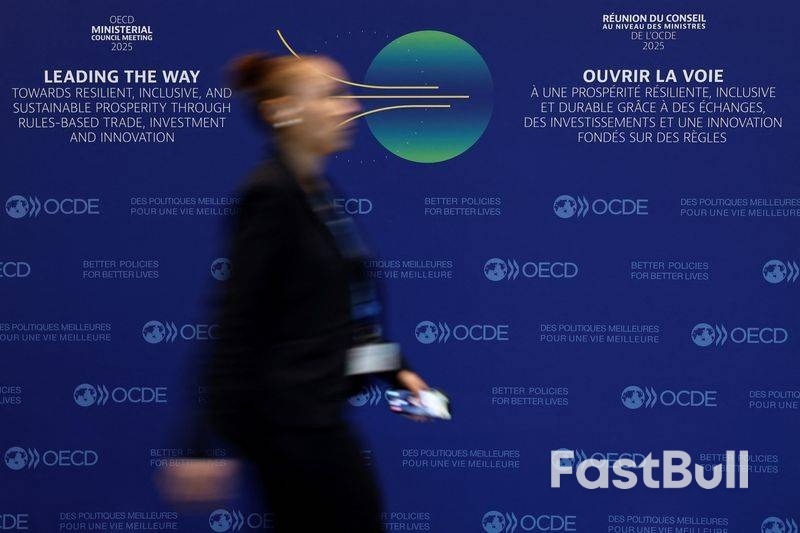
          Global economic growth is slowing more than expected only a few months ago as the fallout from the Trump administration's trade war takes a bigger toll on the U.S. economy, the OECD said on Tuesday, revising down its outlook.

          The global economy is on course to slow from 3.3% last year to 2.9% in 2025 and 2026, the Organisation for Economic Cooperation and Development said, trimming its estimates from March for growth of 3.1% this year and 3.0% next year.

          But the growth outlook would likely be even weaker if protectionism increases, further fuelling inflation, disrupting supply chains and rattling financial markets, the Paris-based organisation said in its latest Economic Outlook.

          U.S. President Donald Trump's tariff announcements since he took office in January have already roiled financial markets and fuelled global economic uncertainty, forcing him to walk back some of his initial stances.

          Last month, the U.S. and China agreed to a temporary truce to scale back tariffs, while Trump also postponed 50% duties on the European Union until July 9.

          The OECD forecast the U.S. economy would grow only 1.6% this year and 1.5% next year, assuming for the purpose of making calculations that tariffs in place mid-May would remain so through the rest of 2025 and 2026.

          For 2025, the new forecast marked a sizeable cut as the organisation had previously expected the world's biggest economy would grow 2.2% this year and 1.6% next year.

          While new tariffs may create incentives to manufacture in the United States, higher import prices would squeeze consumers' purchasing power and economic policy uncertainty would hold back corporate investment, the OECD warned.

          Meanwhile, the higher tariff receipts would only partly offset revenues lost due to the extension of the 2017 Tax Cuts and Jobs Act, new tax cuts and weaker economic growth, it added.

          Trump's sweeping tax cut and spending bill was expected to push the U.S. budget deficit to 8% of economic output by 2026, among the biggest fiscal shortfalls for a developed economy not at war.

          As tariffs fuel inflation pressures, the Federal Reserve was seen keeping rates on hold through this year and then cutting the fed funds rate to 3.25-3.5% by the end of 2026.

          In China, the fallout from the U.S. tariff hikes would be partly offset by government subsidies for a trade-in programme on consumer goods like mobile phones and appliances and increased welfare transfers, the OECD said.

          It estimated the world's second-biggest economy, which is not an OECD member, would grow 4.7% this year and 4.3% in 2026, little changed from previous forecasts for 4.8% in 2025 and 4.4% in 2026.

          Source: Yahoo Finance

          To stay updated on all economic events of today, please check out our Economic calendar
          Risk Warnings and Disclaimers
          You understand and acknowledge that there is a high degree of risk involved in trading. Following any strategies or investment methods may lead to potential losses. The content on the site is provided by our contributors and analysts for information purposes only. You are solely responsible for determining whether any trading assets, securities, strategy, or any other product is suitable for investing based on your own investment objectives and financial situation.
          Add to Favorites
          Share
          FastBull
          Copyright © 2025 FastBull Ltd

          728 RM B 7/F GEE LOK IND BLDG NO 34 HUNG TO RD KWUN TONG KLN HONG KONG

          TelegramInstagramTwitterfacebooklinkedin
          App Store Google Play Google Play
          Products
          Charts

          Chats

          Q&A with Experts
          Screeners
          Economic Calendar
          Data
          Tools
          Membership
          Features
          Function
          Markets
          Copy Trading
          Latest Signals
          Contests
          News
          Analysis
          24/7
          Columns
          Education
          Company
          Careers
          About Us
          Contact Us
          Advertising
          Help Center
          Feedback
          User Agreement
          Privacy Policy
          Business

          White Label

          Data API

          Web Plug-ins

          Poster Maker

          Affiliate Program

          Risk Disclosure

          The risk of loss in trading financial instruments such as stocks, FX, commodities, futures, bonds, ETFs and crypto can be substantial. You may sustain a total loss of the funds that you deposit with your broker. Therefore, you should carefully consider whether such trading is suitable for you in light of your circumstances and financial resources.

          No decision to invest should be made without thoroughly conducting due diligence by yourself or consulting with your financial advisors. Our web content might not suit you since we don't know your financial conditions and investment needs. Our financial information might have latency or contain inaccuracy, so you should be fully responsible for any of your trading and investment decisions. The company will not be responsible for your capital loss.

          Without getting permission from the website, you are not allowed to copy the website's graphics, texts, or trademarks. Intellectual property rights in the content or data incorporated into this website belong to its providers and exchange merchants.

          Not Logged In

          Log in to access more features

          FastBull Membership

          Not yet

          Purchase

          Become a signal provider
          Help Center
          Customer Service
          Dark Mode
          Price Up/Down Colors

          Log In

          Sign Up

          Position
          Layout
          Fullscreen
          Default to Chart
          The chart page opens by default when you visit fastbull.com