Markets
News
Analysis
User
24/7
Economic Calendar
Education
Data
- Names
- Latest
- Prev



Signal Accounts for Members
All Signal Accounts
All Contests


U.S. Initial Jobless Claims 4-Week Avg. (SA)A:--
F: --
U.S. Weekly Continued Jobless Claims (SA)A:--
F: --
U.S. Weekly Initial Jobless Claims (SA)A:--
F: --
U.S. EIA Weekly Cushing, Oklahoma Crude Oil Stocks ChangeA:--
F: --
P: --
U.S. EIA Weekly Crude Demand Projected by ProductionA:--
F: --
P: --
U.S. EIA Weekly Gasoline Stocks ChangeA:--
F: --
P: --
U.S. EIA Weekly Crude Stocks ChangeA:--
F: --
P: --
U.S. EIA Weekly Heating Oil Stock ChangesA:--
F: --
P: --
U.S. EIA Weekly Crude Oil Imports ChangesA:--
F: --
P: --
U.S. EIA Weekly Natural Gas Stocks ChangeA:--
F: --
P: --
South Korea Trade Balance Prelim (Dec)A:--
F: --
P: --
South Korea IHS Markit Manufacturing PMI (SA) (Dec)A:--
F: --
P: --
Indonesia IHS Markit Manufacturing PMI (Dec)A:--
F: --
P: --
India HSBC Manufacturing PMI Final (Dec)A:--
F: --
P: --
U.K. Nationwide House Price Index MoM (Dec)A:--
F: --
P: --
U.K. Nationwide House Price Index YoY (Dec)A:--
F: --
P: --
Turkey Manufacturing PMI (Dec)A:--
F: --
P: --
Italy Manufacturing PMI (SA) (Dec)A:--
F: --
P: --
Euro Zone Manufacturing PMI Final (Dec)A:--
F: --
P: --
Euro Zone M3 Money Supply (SA) (Nov)A:--
F: --
P: --
Euro Zone 3-Month M3 Money Supply YoY (Nov)A:--
F: --
P: --
Euro Zone Private Sector Credit YoY (Nov)A:--
F: --
P: --
Euro Zone M3 Money Supply YoY (Nov)A:--
F: --
P: --
U.K. Manufacturing PMI Final (Dec)A:--
F: --
P: --
India Deposit Gowth YoYA:--
F: --
P: --
Brazil IHS Markit Manufacturing PMI (Dec)A:--
F: --
P: --
Canada Manufacturing PMI (SA) (Dec)A:--
F: --
P: --
U.S. IHS Markit Manufacturing PMI Final (Dec)A:--
F: --
P: --
Mexico Manufacturing PMI (Dec)A:--
F: --
P: --
U.S. Weekly Treasuries Held by Foreign Central BanksA:--
F: --
P: --
Philadelphia Fed President Henry Paulson delivers a speech
Japan Manufacturing PMI Final (Dec)--
F: --
P: --
China, Mainland Caixin Composite PMI (Dec)--
F: --
P: --
China, Mainland Caixin Services PMI (Dec)--
F: --
P: --
Indonesia Trade Balance (Nov)--
F: --
P: --
Indonesia Core Inflation YoY (Dec)--
F: --
P: --
Indonesia Inflation Rate YoY (Dec)--
F: --
P: --
Saudi Arabia IHS Markit Composite PMI (Dec)--
F: --
P: --
Turkey CPI YoY (Excl. Energy, Food, Beverage, Tobacco & Gold) (Dec)--
F: --
P: --
Turkey CPI YoY (Dec)--
F: --
P: --
Turkey PPI YoY (Dec)--
F: --
P: --
U.K. Mortgage Approvals (Nov)--
F: --
P: --
U.K. M4 Money Supply MoM (Nov)--
F: --
P: --
U.K. Mortgage Lending (Nov)--
F: --
P: --
U.K. M4 Money Supply (SA) (Nov)--
F: --
P: --
U.K. M4 Money Supply YoY (Nov)--
F: --
P: --
Canada National Economic Confidence Index--
F: --
P: --
U.S. ISM Inventories Index (Dec)--
F: --
P: --
U.S. ISM Output Index (Dec)--
F: --
P: --
U.S. ISM Manufacturing PMI (Dec)--
F: --
P: --
U.S. ISM Manufacturing Employment Index (Dec)--
F: --
P: --
U.S. ISM Manufacturing New Orders Index (Dec)--
F: --
P: --
Japan Monetary Base YoY (SA) (Dec)--
F: --
P: --
Japan Foreign Exchange Reserves (Dec)--
F: --
P: --
U.K. BRC Shop Price Index YoY (Dec)--
F: --
P: --
Japan 10-Year Note Auction Yield--
F: --
P: --
India HSBC Services PMI Final (Dec)--
F: --
P: --
India IHS Markit Composite PMI (Dec)--
F: --
P: --
South Africa IHS Markit Composite PMI (SA) (Dec)--
F: --
P: --
Turkey Trade Balance (Dec)--
F: --
P: --
Italy Services PMI (SA) (Dec)--
F: --
P: --


No matching data
Latest Views
Latest Views
Trending Topics
Top Columnists
Latest Update
White Label
Data API
Web Plug-ins
Affiliate Program
View All

No data
Euro zone factory activity slipped into deeper contraction in December; Asian factory activity rebounds with growth in key economies; Taiwan and South Korea PMIs show expansion after months of decline.
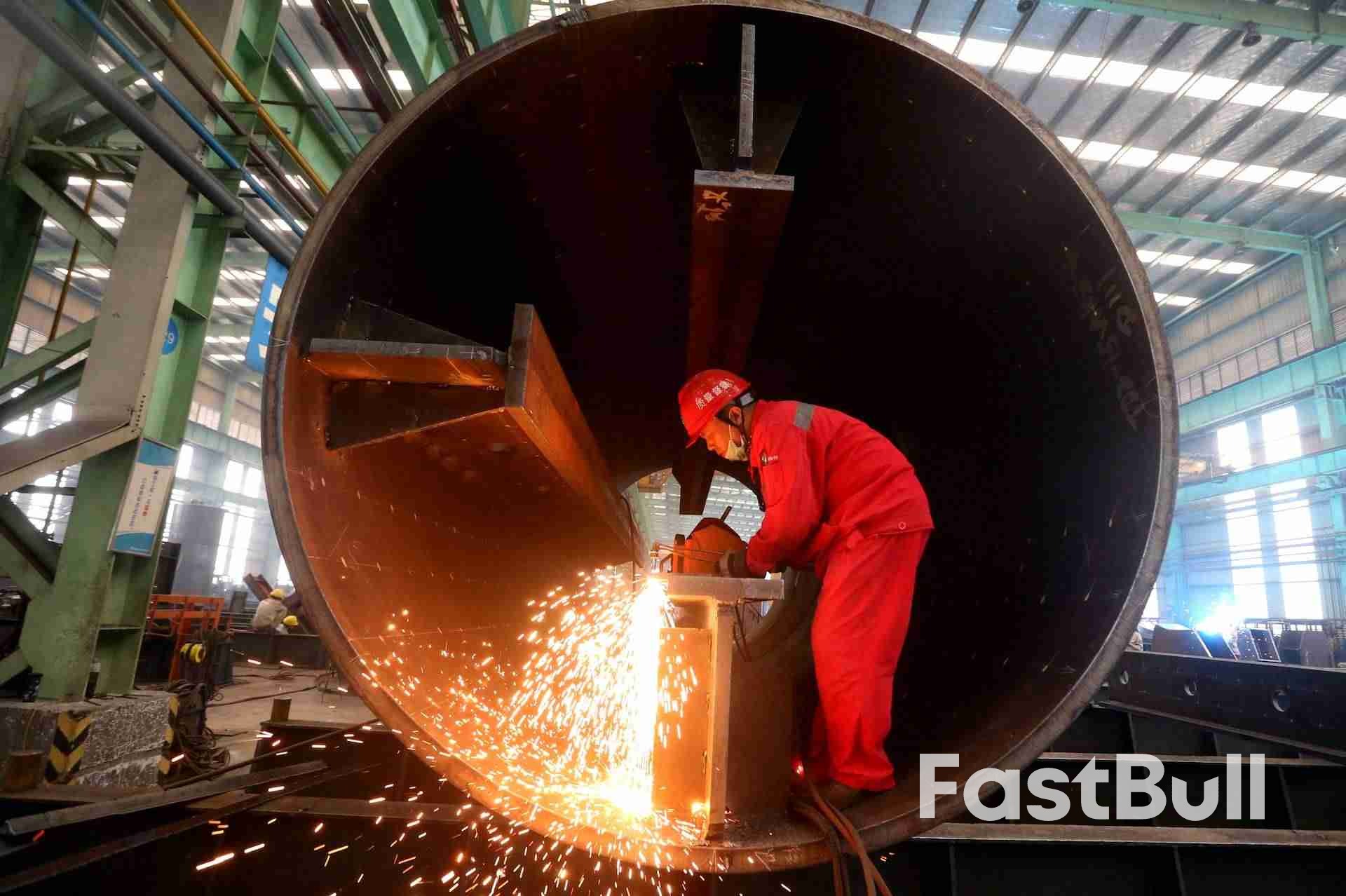
Euro zone manufacturing activity shrank further in December but Asia's factory powerhouses closed 2025 on a firmer footing backed by a rebound in export orders and growing demand for artificial intelligence, private surveys showed.
Factory activity in the common currency bloc slid into deeper contraction last month as production decreased for the first time in 10 months on further declines in new orders.
The HCOB Eurozone Manufacturing Purchasing Managers' Index (PMI), compiled by S&P Global, fell to 48.8 in December from 49.6 in November. It was the lowest reading in nine months and below the 50 level that separates growth from contraction for the second straight month.
Surveys highlighted a broad-based decline in activity in the 20-nation euro zone.
Germany, the bloc's largest economy, recorded the weakest performance among the eight nations monitored with the PMI reading hitting a 10-month low. Italy and Spain also slipped back into contraction territory.
"Demand for manufactured products from the euro zone is slowing down again," said Cyrus de la Rubia, chief economist at Hamburg Commercial Bank. "Companies seem neither able nor willing to build momentum for the coming year, but are instead exercising caution, which is poison for the economy."
France provided a rare bright spot, with its manufacturing PMI jumping to a 42-month high.
In Britain, outside the European Union, activity grew at its fastest pace in 15 months in December, riding a recovery in demand after finance minister Rachel Reeves' budget provided some relief.
Factory activity in the major tech-exporting economies of South Korea and Taiwan snapped months of declines in December, while most Southeast Asian nations maintained brisk growth.
They followed PMIs released for China on Tuesday, which also showed an unexpected turnaround in factory activity in the world's second-largest economy, helped by a pre-holiday surge in orders.
While it is too early to say whether Asia's largest exporters are adjusting to U.S. tariffs, a pickup in global demand had given some manufacturers cause for optimism heading into the new year.
"Exports from most countries have surged in recent months, and we think the near-term outlook for Asia's export-oriented manufacturing sectors remains favourable," said Shivaan Tandon, Asia economist with Capital Economics.
He noted that most Asian economies should continue to benefit from a shift in U.S. demand away from China and strong global demand for AI-related hardware.
Taiwan's PMI rose to 50.9 in December from 48.8 in November, breaking above the 50-point mark that separates growth from contraction for the first time in 10 months.
Similarly, South Korea's PMI rose to 50.1 from 49.4, the first expansionary reading since September on the steepest rise in new orders since November 2024.
Both economies are among the world's largest manufacturers of semiconductors, which have benefited enormously from a booming market for artificial intelligence.
"According to manufacturers, new product launches and improved external demand drove the improvement in sales, while confidence in the outlook also improved markedly in December to reach its highest level since May 2022," said Usamah Bhatti, economist at S&P Global Market Intelligence.
"In turn, firms were encouraged to raise both employment levels and purchasing activity."
Official data released on Thursday showed exports from South Korea, a bellwether for global trade, beat forecasts in December.
Elsewhere in Asia, factories mostly sustained activity growth although Indonesia and Vietnam reported slight moderations in expansion.
India's factory sector activity slowed to its weakest growth in two years, although the pace remains the region's strongest.
Separately, Singapore on Friday reported a pickup in economic growth for 2025 to 4.8% from 4.4% in 2024, while the quarterly growth beat forecasts.
S&P Global will release the Japanese PMI on Monday.
Dubai Electricity and Water Authority (DEWA) has been granted a UAE patent for a Feeder Input-Output Simulator for Substation Automation Applications.
This achievement reflects its commitment to adopting advanced engineering solutions to elevate electricity transmission system performance, boost efficiency and reduce operational costs.
The innovation, now in active use within DEWA's Power Transmission Division, serves as a pivotal tool for the safe and precise testing of complex automation systems. It reinforces grid reliability and supports digital and smart transformation in the energy sector.
Saeed Mohammed Al Tayer, MD & CEO of DEWA, said, "This technology reflects the wise leadership's vision to promote innovation that shapes a more prosperous and sustainable future for our nation. It embodies DEWA's approach to turning applied innovation into tangible solutions that strengthen the resilience and sustainability of our energy infrastructure. The simulator underscores the ingenuity of our Emirati staff in developing advanced tools that enable the safe and efficient testing of substation automation systems while accelerating project completion, reducing costs and enhancing safety standards."
The simulator is used to test substation automation systems within a secure virtual environment. It simulates actual electrical equipment, including switches and relays, and transmits virtual signals to associated real controllers. This enables the safe testing of multiple operating scenarios and the verification of control system performance with high accuracy. It eliminates the need to handle live electrical current or shut down substations, ensuring system readiness and reliability before field implementation.
The innovation has already delivered tangible results, including lower testing and operational costs, faster task execution and reduced operational risks. These improvements reinforce the reliability of the electricity network and support service continuity in line with the highest international standards.
Hussain Lootah, Executive Vice President of Transmission Power at DEWA, said, "This device is a significant addition to the tools used by the Power Transmission Division, as it provides a safe and effective environment for testing substation automation systems. It enhances the efficiency of work teams and accelerates task completion without compromising network safety."
This achievement underscores DEWA's commitment to fostering organisational innovation and investing in practical, employee-led technical solutions. It reinforces DEWA's leadership in the energy sector and supports the provision of reliable, safe and sustainable services that align with Dubai's ambitions and the needs of society.

President Donald Trump said Friday that if Iran "violently" intervenes with peaceful protests, then the U.S. will "come to their rescue."
Unrest has been growing in Iran since last week, as protests erupted over the government's handling of a sharp fall in the nation's currency and soaring prices. Annual inflation hit 42.2% in December, with food prices jumping 72%. The protests turned violent this week as local media reported the death of at least six civilians.
"If Iran shots and violently kills peaceful protesters, which is their custom, the United States of America will come to their rescue," Trump wrote in a post on Truth Social on Friday.
"We are locked and loaded and ready to go," he added.
Iran's supreme leader adviser Ali Larijani responded by saying that U.S. interference in Iran's protests was equivalent to chaos across the entire region on Friday, in comments reported by Reuters.
Iran's economy has struggled since Trump pulled the U.S. out of the Iranian nuclear deal in 2018 and re-imposed sanctions on the country. Last year in June, U.S. strikes on Iranian nuclear sites escalated tensions, pulling Washington into Israel's war with its longtime regional rival.
Suzanne Maloney, vice president and director of foreign policy at the Brookings Institution, previously said that the Iranian people were calling for not just a fix to the economy, but for regime change. She added that Iran's Supreme Leader Ayatollah Ali Khamenei has been in power for 36 years.
"We're hearing cries of Death to the dictator. We're hearing slogans that juxtapose the regime's support for militia groups across the region with the real interests and demands of the Iranian people," Maloney told CNBC's "Squawk Box" on Wednesday.
Germany's manufacturing sector faced a deepening downturn at the end of 2025, with output declining for the first time in 10 months in December amid a sustained drop in demand, a business survey showed on Friday.
The HCOB final Purchasing Managers' Index (PMI) for German manufacturing, compiled by S&P Global, fell to 47.0 in December from 48.2 in November, a bigger decline than the preliminary reading of 47.7 for the final month of the year.
Readings below 50.0 indicate contraction while those above point to growth.
The decline was largely driven by a sharp fall in export sales, which have now decreased for five consecutive months, with the rate of decline accelerating to its fastest since December 2024.
"Manufacturing had shown hints of recovery earlier in 2025, but the downturn has deepened again in December, driven by investment and consumer goods," said Cyrus de la Rubia, chief economist at Hamburg Commercial Bank AG.
The survey highlighted a challenging environment for German manufacturers, with employment, purchasing activity and stocks of inputs all seeing deeper cuts.
Workforce numbers fell at the steepest rate in six months.
However, manufacturers remained optimistic about future production, with expectations reaching a six-month high.
Firms expressed hopes for a demand boost from new products and increased defence and infrastructure spending.
"With the start of government-backed infrastructure projects and the booming demand for defence equipment, things could look different in 2026," de la Rubia said.
Euro zone factory activity retreated further into contraction territory in December as production decreased for the first time in 10 months, dampened by accelerating declines in new orders, a survey showed on Tuesday.
The HCOB Eurozone Manufacturing Purchasing Managers' Index (PMI), compiled by S&P Global, fell to 48.8 in December from 49.6 in November, marking its lowest reading in nine months and lower than a preliminary estimate of 49.2.
Readings above 50.0 indicate growth in activity, while those below that point to contraction.
"Demand for manufactured products from the euro zone is slowing down again. Significantly fewer orders, declining order backlogs, and continued inventory reduction are the most obvious indicators of this," said Cyrus de la Rubia, chief economist at Hamburg Commercial Bank.
"Companies seem neither able nor willing to build momentum for the coming year, but are instead exercising caution, which is poison for the economy."
The output subindex dropped to 48.9 from November's 50.4, marking its first contraction since February.
New orders fell at the quickest pace in almost a year, with export demand decreasing at the fastest rate in 11 months.
Germany, the bloc's largest economy, recorded the weakest performance among the eight nations monitored with the PMI reading hitting a 10-month low. Italy and Spain also slipped back into contraction territory.
France provided a rare bright spot, with its manufacturing PMI jumping to a 42-month high.
Supply chain pressures re-emerged for factories, with vendor delivery times increasing to the longest since October 2022. This contributed to input cost inflation accelerating to a 16-month high.
Factories, however, continued to discount their goods prices for the seventh time in eight months as they struggled to stimulate demand.
Weak demand led factories to shed jobs for the 31st consecutive month.

"Overall, it will not be easy for the manufacturing sector of the euro zone to gain a foothold in 2026. However, expansionary fiscal policy could help," de la Rubia added.
Despite current challenges, manufacturers' optimism about the year ahead improved to its highest level since February 2022, just before Russia invaded Ukraine.
UK manufacturing output grew for a second consecutive month in December, according to a closely watched survey suggesting the sector is shaking off pre-budget fears of potential tax rises and the impact of the Jaguar Land Rover shutdown.
S&P Global said its manufacturing purchasing managers' index increased to 50.6, up from 50.2 the month before. While the reading was below a preliminary estimate of 51.2 announced in mid-December, it was still the highest in 15 months.
The index increased for a third month in a row, registering a reading above 50 — which indicates growth — for the second straight month. After new orders stood still in November, firms reported an increase for the first time since September 2024, driven by consumer goods producers. Output rose across all sectors concurrently for the first time since August 2024.
"UK manufacturers benefited from several reduced headwinds towards the end of the year, as the negative impacts of the uncertainty surrounding the autumn budget, tariffs and the JLR cyber-attack all moderated," Rob Dobson, director at S&P Global Market Intelligence, said.
In the run-up to Chancellor of the Exchequer Rachel Reeves' Nov. 26 budget, businesses held off on making investment decisions amid concern about potential tax rises after her first budget a year earlier raised levies by £40 billion a year, with the burden mainly hitting companies.
While the sector was supported by domestic buyers, overseas orders continued to fall for a forty-seventh month. Firms reported some signs that demand from the US and the Middle East is recovering after the shock sparked by US President Donald Trump's tariff war.
Production in December was boosted by efforts to build up stocks of finished goods and clear order backlogs, the survey also showed.
However, there are some early signs that manufacturers are questioning whether the current boost will extend into 2026. S&P's business optimism indicator fell for the first time in three months in December due to fears that spending by firms and consumers will remain subdued and amid an increase in price pressures.
"The start of 2026 will show if growth can be sustained after these temporary boosts subside," Dobson said.
UK house prices unexpectedly fell in December, according to a top mortgage lender, in a sign that the property market may have been affected by Labour's tax-hiking budget.
Nationwide Building Society said the average price of a home was down 0.4% to £271,068 ($365,000), declining for the first time in four months. It reversed November's 0.3% increase and defied analysts' expectations of a 0.1% gain to end the year.
Chancellor of the Exchequer Rachel Reeves' budget on Nov. 26 lifted taxes by £26 billion and announced a new levy on homes worth more than £2 million. These make up a small fraction of the UK's total housing stock, yet confidence remains subdued across the market.
The Bank of England's decision to cut interest rates to 3.75%, the lowest since 2023, in December will provide some support to homebuyers. However, affordability is likely to remain stretched as the BOE said it is nearing the end of the easing cycle.
White Label
Data API
Web Plug-ins
Poster Maker
Affiliate Program
The risk of loss in trading financial instruments such as stocks, FX, commodities, futures, bonds, ETFs and crypto can be substantial. You may sustain a total loss of the funds that you deposit with your broker. Therefore, you should carefully consider whether such trading is suitable for you in light of your circumstances and financial resources.
No decision to invest should be made without thoroughly conducting due diligence by yourself or consulting with your financial advisors. Our web content might not suit you since we don't know your financial conditions and investment needs. Our financial information might have latency or contain inaccuracy, so you should be fully responsible for any of your trading and investment decisions. The company will not be responsible for your capital loss.
Without getting permission from the website, you are not allowed to copy the website's graphics, texts, or trademarks. Intellectual property rights in the content or data incorporated into this website belong to its providers and exchange merchants.
Not Logged In
Log in to access more features

FastBull Membership
Not yet
Purchase
Log In
Sign Up