• Trade
  • Markets
  • Copy
  • Contests
  • News
  • 24/7
  • Calendar
  • Q&A
  • Chats
Trending
Screeners
SYMBOL
LAST
BID
ASK
HIGH
LOW
NET CHG.
%CHG.
SPREAD
SPX
S&P 500 Index
6827.42
6827.42
6827.42
6899.86
6801.80
-73.58
-1.07%
--
DJI
Dow Jones Industrial Average
48458.04
48458.04
48458.04
48886.86
48334.10
-245.98
-0.51%
--
IXIC
NASDAQ Composite Index
23195.16
23195.16
23195.16
23554.89
23094.51
-398.69
-1.69%
--
USDX
US Dollar Index
97.950
98.030
97.950
98.500
97.950
-0.370
-0.38%
--
EURUSD
Euro / US Dollar
1.17394
1.17409
1.17394
1.17496
1.17192
+0.00011
+ 0.01%
--
GBPUSD
Pound Sterling / US Dollar
1.33707
1.33732
1.33707
1.33997
1.33419
-0.00148
-0.11%
--
XAUUSD
Gold / US Dollar
4299.39
4299.39
4299.39
4353.41
4257.10
+20.10
+ 0.47%
--
WTI
Light Sweet Crude Oil
57.233
57.485
57.233
58.011
56.969
-0.408
-0.71%
--

Community Accounts

Signal Accounts
--
Profit Accounts
--
Loss Accounts
--
View More

Become a signal provider

Sell trading signals to earn additional income

View More

Guide to Copy Trading

Get started with ease and confidence

View More

Signal Accounts for Members

All Signal Accounts

Best Return
  • Best Return
  • Best P/L
  • Best MDD
Past 1W
  • Past 1W
  • Past 1M
  • Past 1Y

All Contests

  • All
  • Trump Updates
  • Recommend
  • Stocks
  • Cryptocurrencies
  • Central Banks
  • Featured News
Top News Only
Share

Iranian Media Says 18 Crew Members Of Foreign Tanker Seized In Gulf Of Oman Over Carrying 'Smuggled Fuel' Detained

Share

Regional Governor: Two Killed In Ukrainian Drone Strike On Russia's Saratov

Share

Chinese Foreign Ministry - China Foreign Minister Met With United Arab Emirates Counterpart On Dec 12

Share

China's Central Financial And Economic Affairs Commission Deputy Director: Will Expand Export And Increase Import In 2026

Share

Thai Leader Anutin: Landmine Blast That Killed Thai Soldiers 'Not A Roadside Accident'

Share

Thai Leader Anutin: Thailand To Continue Military Action Until 'We Feel No More Harm'

Share

Cambodian Prime Minister Hun Manet Says He Had Phone Calls With Trump And Malaysian Leader Anwar About Ceasefire

Share

Cambodia's Hun Manet Says USA, Malaysia Should Verify 'Which Side Fired First' In Latest Conflict

Share

Cambodia's Hun Manet: Cambodia Maintains Its Stance In Seeking Peaceful Resolution Of Disputes

Share

Nasdaq Companies: Allergan, Ferrovia, Insmed, Monolithic Power Systems, Seagate Technology, And Western Digital Will Be Added To The NASDAQ 100 Index. Biogen, CdW, GlobalFoundries, Lululemon, ON Semiconductor, And Tradedesk Will Be Removed From The NASDAQ 100 Index

Share

Witkoff Headed To Berlin This Weekend To Meet With Zelenskiy, European Leaders -Wsj Reporter On X

Share

Russia Attacks Two Ukrainian Ports, Damaging Three Turkish-Owned Vessels

Share

[Historic Flooding Occurs In At Least Four Rivers In Washington State Due To Days Of Torrential Rains] Multiple Areas In Washington State Have Been Hit By Severe Flooding Due To Days Of Torrential Rains, With At Least Four Rivers Experiencing Historic Flooding. Reporters Learned On The 12th That The Floods Caused By The Torrential Rains In Washington State Have Destroyed Homes And Closed Several Highways. Experts Warn That Even More Severe Flooding May Occur In The Future. A State Of Emergency Has Been Declared In Washington State

Share

Trump Says Proposed Free Economic Zone In Donbas Would Work

Share

Trump: I Think My Voice Should Be Heard

Share

Trump Says Will Be Choosing New Fed Chair In Near Future

Share

Trump Says Proposed Free Economic Zone In Donbas Complex But Would Work

Share

Trump Says Land Strikes In Venezuela Will Start Happening

Share

US President Trump: Thailand And Cambodia Are In A Good Situation

Share

State Media: North Korean Leader Kim Hails Troops Returning From Russia Mission

TIME
ACT
FCST
PREV
U.K. Trade Balance Non-EU (SA) (Oct)

A:--

F: --

P: --

U.K. Trade Balance (Oct)

A:--

F: --

P: --

U.K. Services Index MoM

A:--

F: --

P: --

U.K. Construction Output MoM (SA) (Oct)

A:--

F: --

P: --

U.K. Industrial Output YoY (Oct)

A:--

F: --

P: --

U.K. Trade Balance (SA) (Oct)

A:--

F: --

P: --

U.K. Trade Balance EU (SA) (Oct)

A:--

F: --

P: --

U.K. Manufacturing Output YoY (Oct)

A:--

F: --

P: --

U.K. GDP MoM (Oct)

A:--

F: --

P: --

U.K. GDP YoY (SA) (Oct)

A:--

F: --

P: --

U.K. Industrial Output MoM (Oct)

A:--

F: --

P: --

U.K. Construction Output YoY (Oct)

A:--

F: --

P: --

France HICP Final MoM (Nov)

A:--

F: --

P: --

China, Mainland Outstanding Loans Growth YoY (Nov)

A:--

F: --

P: --

China, Mainland M2 Money Supply YoY (Nov)

A:--

F: --

P: --

China, Mainland M0 Money Supply YoY (Nov)

A:--

F: --

P: --

China, Mainland M1 Money Supply YoY (Nov)

A:--

F: --

P: --

India CPI YoY (Nov)

A:--

F: --

P: --

India Deposit Gowth YoY

A:--

F: --

P: --

Brazil Services Growth YoY (Oct)

A:--

F: --

P: --

Mexico Industrial Output YoY (Oct)

A:--

F: --

P: --

Russia Trade Balance (Oct)

A:--

F: --

P: --

Philadelphia Fed President Henry Paulson delivers a speech
Canada Building Permits MoM (SA) (Oct)

A:--

F: --

P: --

Canada Wholesale Sales YoY (Oct)

A:--

F: --

P: --

Canada Wholesale Inventory MoM (Oct)

A:--

F: --

P: --

Canada Wholesale Inventory YoY (Oct)

A:--

F: --

P: --

Canada Wholesale Sales MoM (SA) (Oct)

A:--

F: --

P: --

Germany Current Account (Not SA) (Oct)

A:--

F: --

P: --

U.S. Weekly Total Rig Count

A:--

F: --

P: --

U.S. Weekly Total Oil Rig Count

A:--

F: --

P: --

Japan Tankan Large Non-Manufacturing Diffusion Index (Q4)

--

F: --

P: --

Japan Tankan Small Manufacturing Outlook Index (Q4)

--

F: --

P: --

Japan Tankan Large Non-Manufacturing Outlook Index (Q4)

--

F: --

P: --

Japan Tankan Large Manufacturing Outlook Index (Q4)

--

F: --

P: --

Japan Tankan Small Manufacturing Diffusion Index (Q4)

--

F: --

P: --

Japan Tankan Large Manufacturing Diffusion Index (Q4)

--

F: --

P: --

Japan Tankan Large-Enterprise Capital Expenditure YoY (Q4)

--

F: --

P: --

U.K. Rightmove House Price Index YoY (Dec)

--

F: --

P: --

China, Mainland Industrial Output YoY (YTD) (Nov)

--

F: --

P: --

China, Mainland Urban Area Unemployment Rate (Nov)

--

F: --

P: --

Saudi Arabia CPI YoY (Nov)

--

F: --

P: --

Euro Zone Industrial Output YoY (Oct)

--

F: --

P: --

Euro Zone Industrial Output MoM (Oct)

--

F: --

P: --

Canada Existing Home Sales MoM (Nov)

--

F: --

P: --

Euro Zone Total Reserve Assets (Nov)

--

F: --

P: --

U.K. Inflation Rate Expectations

--

F: --

P: --

Canada National Economic Confidence Index

--

F: --

P: --

Canada New Housing Starts (Nov)

--

F: --

P: --

U.S. NY Fed Manufacturing Employment Index (Dec)

--

F: --

P: --

U.S. NY Fed Manufacturing Index (Dec)

--

F: --

P: --

Canada Core CPI YoY (Nov)

--

F: --

P: --

Canada Manufacturing Unfilled Orders MoM (Oct)

--

F: --

P: --

Canada Manufacturing New Orders MoM (Oct)

--

F: --

P: --

Canada Core CPI MoM (Nov)

--

F: --

P: --

Canada Manufacturing Inventory MoM (Oct)

--

F: --

P: --

Canada CPI YoY (Nov)

--

F: --

P: --

Canada CPI MoM (Nov)

--

F: --

P: --

Canada CPI YoY (SA) (Nov)

--

F: --

P: --

Canada Core CPI MoM (SA) (Nov)

--

F: --

P: --

Q&A with Experts
    • All
    • Chatrooms
    • Groups
    • Friends
    Connecting
    .
    .
    .
    Type here...
    Add Symbol or Code

      No matching data

      All
      Trump Updates
      Recommend
      Stocks
      Cryptocurrencies
      Central Banks
      Featured News
      • All
      • Russia-Ukraine Conflict
      • Middle East Flashpoint
      • All
      • Russia-Ukraine Conflict
      • Middle East Flashpoint
      Search
      Products

      Charts Free Forever

      Chats Q&A with Experts
      Screeners Economic Calendar Data Tools
      Membership Features
      Data Warehouse Market Trends Institutional Data Policy Rates Macro

      Market Trends

      Market Sentiment Order Book Forex Correlations

      Top Indicators

      Charts Free Forever
      Markets

      News

      News Analysis 24/7 Columns Education
      From Institutions From Analysts
      Topics Columnists

      Latest Views

      Latest Views

      Trending Topics

      Top Columnists

      Latest Update

      Signals

      Copy Rankings Latest Signals Become a signal provider AI Rating
      Contests
      Brokers

      Overview Brokers Assessment Rankings Regulators News Claims
      Broker listing Forex Brokers Comparison Tool Live Spread Comparison Scam
      Q&A Complaint Scam Alert Videos Tips to Detect Scam
      More

      Business
      Events
      Careers About Us Advertising Help Center

      White Label

      Data API

      Web Plug-ins

      Affiliate Program

      Awards Institution Evaluation IB Seminar Salon Event Exhibition
      Vietnam Thailand Singapore Dubai
      Fans Party Investment Sharing Session
      FastBull Summit BrokersView Expo
      Recent Searches
        Top Searches
          Markets
          News
          Analysis
          User
          24/7
          Economic Calendar
          Education
          Data
          • Names
          • Latest
          • Prev

          View All

          No data

          Scan to Download

          Faster Charts, Chat Faster!

          Download App
          English
          • English
          • Español
          • العربية
          • Bahasa Indonesia
          • Bahasa Melayu
          • Tiếng Việt
          • ภาษาไทย
          • Français
          • Italiano
          • Türkçe
          • Русский язык
          • 简中
          • 繁中
          Open Account
          Search
          Products
          Charts Free Forever
          Markets
          News
          Signals

          Copy Rankings Latest Signals Become a signal provider AI Rating
          Contests
          Brokers

          Overview Brokers Assessment Rankings Regulators News Claims
          Broker listing Forex Brokers Comparison Tool Live Spread Comparison Scam
          Q&A Complaint Scam Alert Videos Tips to Detect Scam
          More

          Business
          Events
          Careers About Us Advertising Help Center

          White Label

          Data API

          Web Plug-ins

          Affiliate Program

          Awards Institution Evaluation IB Seminar Salon Event Exhibition
          Vietnam Thailand Singapore Dubai
          Fans Party Investment Sharing Session
          FastBull Summit BrokersView Expo

          Five Reasons Copper Prices Have Risen

          Damon
          Summary:

          Copper prices have risen 125% from their March 2020 lows and have been among the commodities that have reached record high prices since the pandemic began.  Several factors have contributed to copper's rally. Following is a look at each, in detail.
          Slow Growth in Copper Supplies

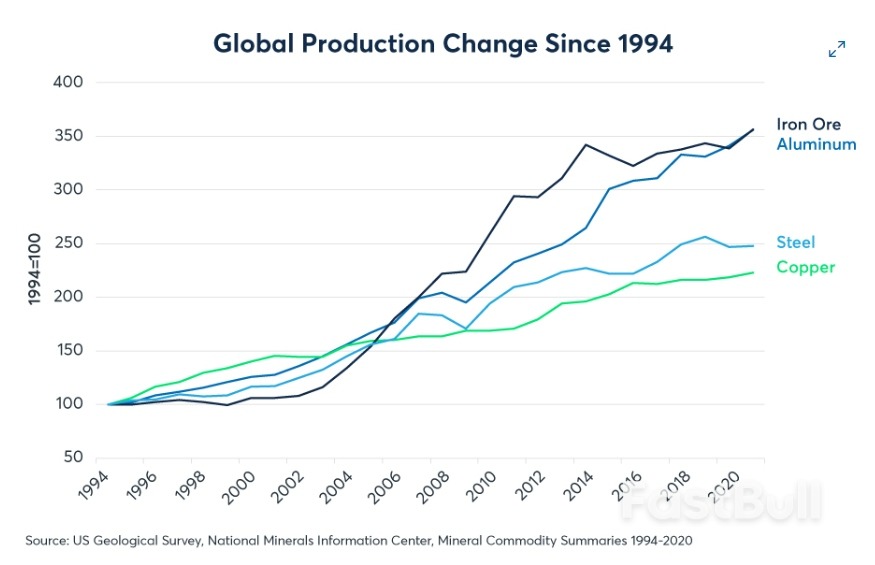
          Over the past three decades mining output for copper grew far more slowly than for most other metals, rising just 123%. Over the same period, aluminum production grew by 256% and iron ore production rose by 257%. Since 2013 copper mining output has grown slowly, at just 1.7% per year, less than half aluminium's 4.6% annual pace of supply growth.
          The exceptionally slow growth in copper supplies resulted from a combination of factors. First, copper prices fell 58% between the beginning of 2010 and the beginning of 2016, falling close to the metal's cost of production and thereby discouraging new investments in mines and ore-processing facilities. Secondly, the copper content of copper ore has declined steadily over time. While total discovered reserves of copper have continued to climb, the cost of extracting copper has been on the rise and a large part of that cost is energy.

          Energy Costs and Copper

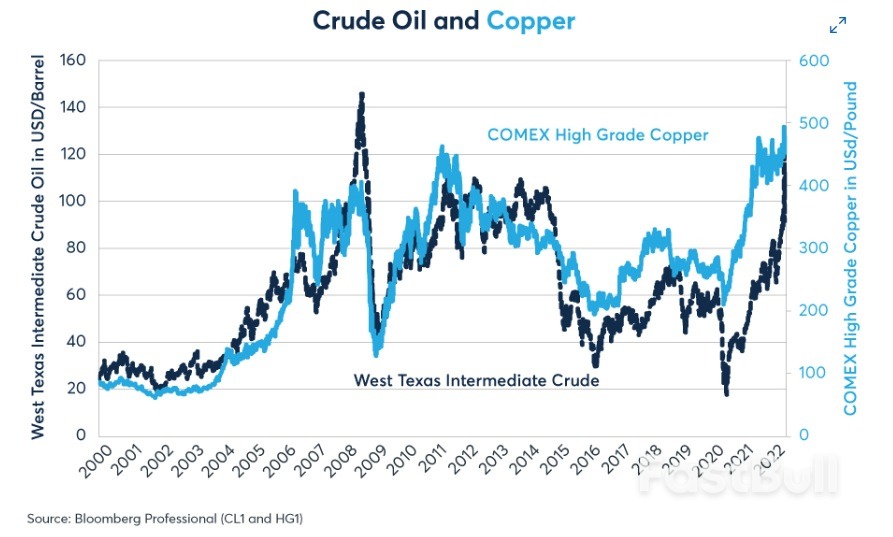
          Mining and refining metals is an energy-intensive business. As such, copper prices tend to show a great deal of co-movement with the price of West Texas Intermediate crude oil, as well as other crude oil benchmarks. In the past, one might have assumed that this relationship was mostly on the input side: higher/lower crude oil and natural gas prices made mining and refining copper more/less expensive. That assumption is still valid today.
          However, the sharp rise in oil and natural gas prices in 2021 may be raising demand for copper by fueling interest in alternative technologies such as wind, solar, batteries and electric vehicles, all of which imply the use of copper either directly or indirectly. This may be especially true in Europe and Asia, home to 75% of the world's population, where natural gas prices have risen to 7-8x North American levels.

          Five Reasons Copper Prices Have Risen_1Five Reasons Copper Prices Have Risen_2The Energy Transition

          The energy transition may generate strong demand for copper and other metals such as lithium and cobalt. During the past decade, the cost of solar energy fell by nearly 70% while the cost of batteries fell by a similar amount. Since 1990, the costs of solar energy and battery storage have fallen by close to 98%. If such trends continue over the next few decades, it will be possible to imagine a future of abundant, carbon-free energy, but one that requires a great deal more copper wiring.
          The transition is already becoming apparent in ground transportation. Sales of electric vehicles (EVs) surged 160% worldwide in 2021 to 2.6 million vehicles. Moreover, those EVs accounted for less than 4% of the global vehicle sales. If EVs sales continue to grow at this fast pace, increasing their market share relative to combustion engine powered cars, it implies potentially strong demand growth for copper and other metals. The cost of EVs has been falling rapidly, and EVs may become less expensive than vehicles power by combustion engines by the second half of the 2020s.
          Among the world's major economies, the fastest growth in EV demand has come from China, where EV sales grew by nearly 190% last year. Even outside of EV sales, China's economy has been the single most important source of copper demand for the past two decades.

          China's Influence

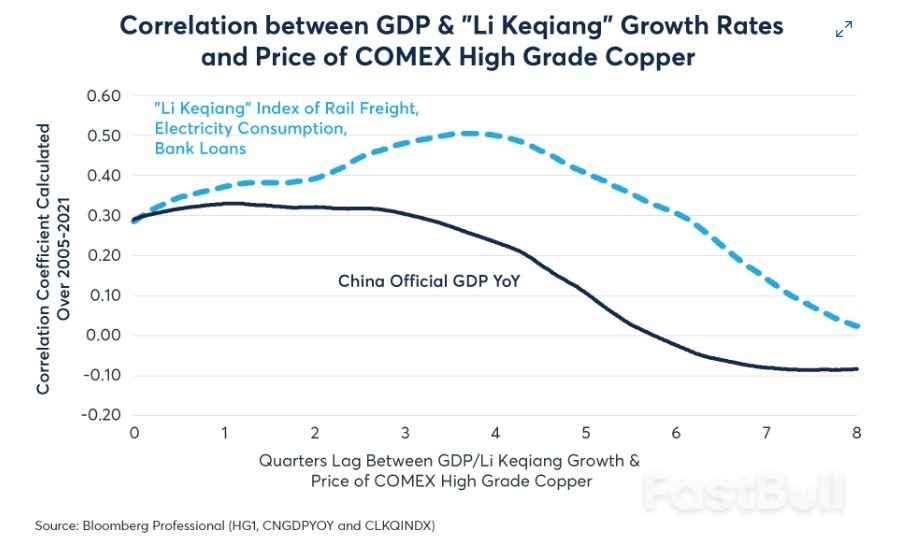
          Each year China buys about 40%-50% of the newly mined copper. Some of raw copper is used domestically, while much of it is re-exported in the components of intermediate or finished goods. The pace of growth in China's manufacturing sector has often correlated strongly both to the current price of copper as well as copper prices three to five quarters in advance. To measure the pace of growth in China's manufacturing sector we prefer to use the Li Keqiang Index, which measures electricity consumption, rail freight volumes and bank loans. This particular measure has been a much stronger indicator of demand for copper and other commodities than China's official GDP, which includes other components such as services and government spending that are less relevant to raw materials.
          Five Reasons Copper Prices Have Risen_3Having dipped sharply early in the pandemic, China's pace of growth rebounded strongly in the second half of 2020 and the first half of 2021. Copper prices followed this rebound closely. Since then, the pace of China's industrial growth has slowed significantly. As China slowed, copper prices traded sideways for several months before recommencing a relatively tepid rally in the past few months. Copper's recent gains may be in response to the Russo-Ukrainian conflict. Russia produced 850,000 tons of copper in 2021, about 5% of the world's total.
          China's economy, though still growing, is encountering several headwinds including those coming from higher raw materials prices, declining housing prices, slower export growth, high levels of debt, sharply higher corporate bond yields and a highly valued currency. Should China's growth continue to slow, it might increase the risk of copper prices coming under pressure later this year or in 2023. However, if copper prices continue to rise, despite potentially slower growth in China, the aforementioned energy transition may be the reason why.

          The Pandemic Shift in Consumer Demand

          Between December 2019 and December 2021, U.S. consumers spent 18% more on manufactured goods but only 6% more on services, and they weren't alone. In the U.S. and around the world,consumers shifted to purchasing more manufactured goods, including consumer electronics and other items that involve significant copper content.
          However, most of the world is returning to a new version of life-as-normal, and in most regions of the world consumers appear set to shift their spending back towards experiences and away from purchases of manufactured goods. This may limit demand growth in copper and may also hamper export growth in China. In the short-term such a shift in consumer demand might offset some of increased demand for copper resulting from the energy transition.

          Source:CME Group

          Risk Warnings and Disclaimers
          You understand and acknowledge that there is a high degree of risk involved in trading. Following any strategies or investment methods may lead to potential losses. The content on the site is provided by our contributors and analysts for information purposes only. You are solely responsible for determining whether any trading assets, securities, strategy, or any other product is suitable for investing based on your own investment objectives and financial situation.
          Comments
          Add to Favorites
          Share

          Hawkish Fed and China Lockdowns Threaten Brazil's World-beating FX Rally

          Owen Li
          Hawkish Fed and China Lockdowns Threaten Brazil's World-beating FX Rally_1
          Brazil's real has gained over 18% against the U.S. dollar so far this year, more than twice the rise of any other peer, as aggressive rate hikes drew in foreign investment flows seeking distance from the Ukraine war.
          While Brazil's double-digit interest rates may still offer a lucrative carry trade for hot money, looming rate hikes from the U.S. Federal Reserve may narrow that gap quickly. China's aggressive lockdowns to fight COVID-19 have also weighed on prices for the iron ore, soybeans and oil that Brazil exports.
          "There are two big risks to the real's performance: the Fed raising rates more than expected and a sharp deceleration in the Chinese economy that could affect commodity prices," said Alvaro Mollica, emerging markets strategist for Citigroup.
          A note from his colleagues at Citi Economics on Thursday flagged "a weaker currency ahead" for Brazil, forecasting a year-end exchange rate of 5.19 reais per dollar – a nearly 10% depreciation from Wednesday's close.
          Even in Brazil's Economy Ministry, which has trumpeted the jump in foreign investment and perks of a stronger currency for fighting inflation, some officials doubt the trend will continue indefinitely. Right-wing President Jair Bolsonaro's government, which generated huge initial optimism among investors, has had a mixed record on reforms as well as privatizing state assets.
          "I haven't seen any structural factor, unfortunately. It all seems circumstantial," said one official, requesting anonymity to give a frank assessment of the market. "The dollar came way down, even below where some institutions see its equilibrium ... I think there's room for some reversal."
          The same official pointed out that Brazil's main stock exchange, which has attracted a net 69 billion reais ($14.7 billion) in foreign flows this year, no longer looks so cheap in dollars or reais after an 11% runup this year.
          Another ministry source agreed that, apart from Brazil's interest rates, the major drivers of the currency rally have been "external" and are subject to change.
          Not all officials are so skeptical.
          Fausto Vieira, undersecretary of macroeconomic policy at the Economy Ministry, said business-friendly regulation is boosting investment in areas such as sanitation, where private capital spending has jumped from 3 billion to 30 billion reais annually.
          The ministry projects some 360 billion reais in new private investments through 2025, helping to draw long-term foreign capital flows regardless of short-term market effects.
          However, that may hinge on this year's election. Leftist former President Luiz Inacio Lula da Silva, who leads Bolsonaro in polling ahead of the October vote, has vowed to roll back much of the incumbent's economic agenda.
          As the presidential race heats up, analysts warn that both Lula and Bolsonaro may resort to more populist rhetoric, raising investor concern about the country's fiscal discipline.
          For now, Brazil's risk premiums have come down, noted economist Jonathan Petersen of Capital Economics, which "may reflect fading concerns about fiscal sustainability and political risks."
          "But if our outlook for falling commodity prices and weakening economic growth proves correct, these concerns may re-emerge, especially prior to the election," he told clients in a Thursday note, forecasting the exchange rate at 5.0 reais per dollar by the end of the year.

          Source:Reuters

          Risk Warnings and Disclaimers
          You understand and acknowledge that there is a high degree of risk involved in trading. Following any strategies or investment methods may lead to potential losses. The content on the site is provided by our contributors and analysts for information purposes only. You are solely responsible for determining whether any trading assets, securities, strategy, or any other product is suitable for investing based on your own investment objectives and financial situation.
          Comments
          Add to Favorites
          Share

          Putin's Ruble Standoff With Europe Risks De Facto Gas Embargo

          Damon
          Putin's Ruble Standoff With Europe Risks De Facto Gas Embargo_1
          Countries including Germany are still scrutinizing an initial EU assessment that Putin's ruble demand would breach the bloc's sanctions imposed over Russia's invasion of Ukraine. The Netherlands has told its energy firms to refuse the new payment system in light of the EU legal analysis.
          Russia could still provide clarifications or adjustments to its decree that could affect how the EU and companies move forward. Moscow has been pulling in roughly 1 billion euros a day from Europe in energy purchases, which has helped insulate it from the impact of EU sanctions.
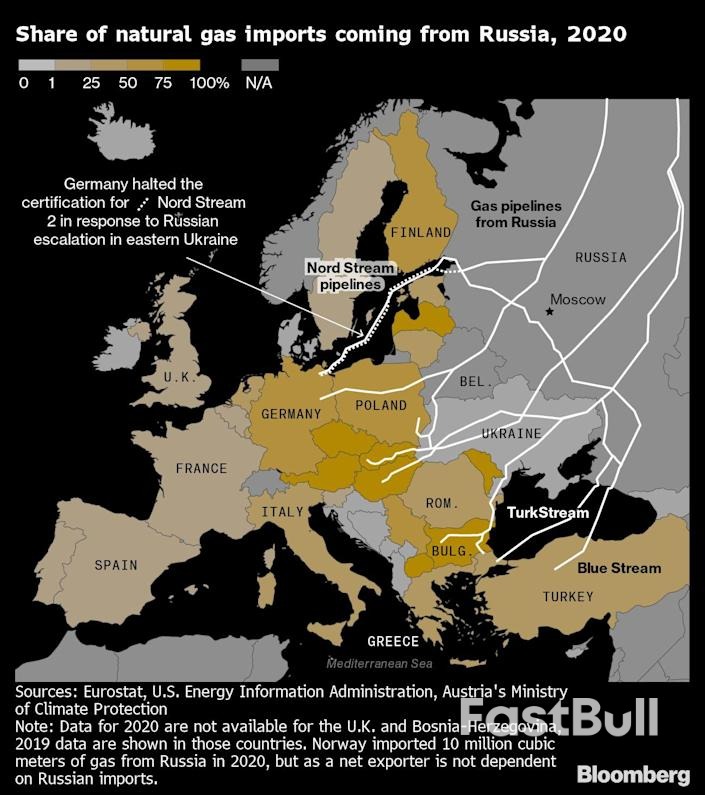
          If Russia follows through on its threat to cut off gas supplies to buyers that don't comply, it poses a serious threat for the EU, which gets 40% of its gas from Russia. The bloc is scrambling to find alternative energy sources as it comes to terms with the outsize leverage Moscow has over its security, but the transition will take time. The EU is working on its sixth sanctions package, but moves to target Russian energy have been fraught given the bloc's dependence.
          Germany could face a 220 billion-euro ($238 billion) hit to output over the next two years should the gas supply be cut immediately, according to a joint forecast of economic institutes. That's the equivalent of a 6.5% annual output cut and it could tip the country into a recession of more than 2% next year.
          On March 31, Putin issued a decree stipulating that “unfriendly” buyers of its gas open two accounts, one in a foreign currency and one in rubles, with Gazprombank. The Russian bank would convert the foreign currency payments into rubles before transferring the payment to Gazprom PJSC, the state-owned gas company.
          A preliminary analysis by lawyers for the European Commission, the EU's executive arm, found that payments using this system would violate the bloc's sanctions, according to a person familiar with the matter. Lawyers for the European Council, the institution composed of the leaders of the 27 member states, concurred with the commission's assessment, another person said.
          The commission relayed the analysis to member states this week, adding that governments would need to inform the 150 companies that hold gas contracts with Russia, the person said. The EU also said it plans to provide further guidance on the situation to aid countries and companies.
          The Netherlands this week told its companies to refuse the new gas-payment terms being demanded by Russia. “The Dutch government agrees with the conclusion of the European Commission,” a spokesperson for the Dutch Ministry of Economic Affairs and Climate Policy told Bloomberg. “This means it's not allowed for Dutch companies to agree with these terms.”
          New Sanctions Package
          Gazprom's gas exports to the Netherlands are relatively low by regional standards, with supplies to the country representing only about 4% of the Russian gas giant's shipments to the EU and Turkey in the first half of last year.
          German Economy Minister Robert Habeck acknowledged the commission report to Politico, adding, “We cannot allow any circumvention of the sanctions through back doors.” He didn't, however, say if his government agreed with the assessment, nor did he elaborate on what action Germany would take.
          Germany is particularly exposed, since half of its gas and coal comes from Russia.
          The commission is working on a sixth sanctions package that could include restrictions on some oil imports and goods, according to a person familiar with the work, but member states including Germany, Austria and Hungary have expressed reservations on a full embargo. Even then, it's unlikely the commission will present anything concrete until after the second round of the French election on April 24, two separate officials said.

          Source: Bloomberg

          Risk Warnings and Disclaimers
          You understand and acknowledge that there is a high degree of risk involved in trading. Following any strategies or investment methods may lead to potential losses. The content on the site is provided by our contributors and analysts for information purposes only. You are solely responsible for determining whether any trading assets, securities, strategy, or any other product is suitable for investing based on your own investment objectives and financial situation.
          Comments
          Add to Favorites
          Share

          After Buying Cheap Russian Oil, India is now Setting Sights on its Coal

          Owen Li
          After Buying Cheap Russian Oil, India is now Setting Sights on its Coal_1
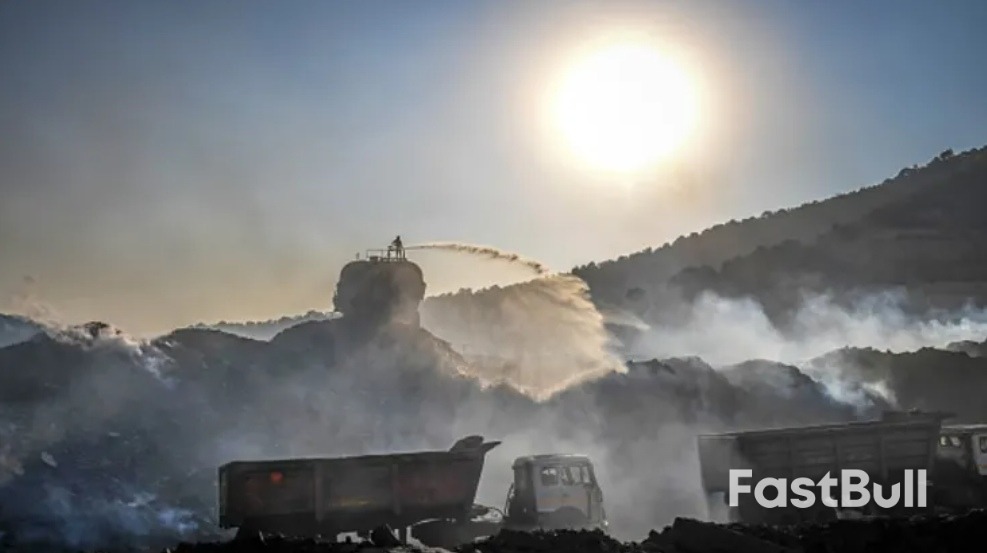
          India's hunger for coal is growing. Even as the world shuns Russian goods, the Asian giant is setting its sights on Russian coal – after already buying up its discounted oil.
          The European Commission last week proposed banning Russian coal as part of a new round of sanctions against Moscow for its invasion of Ukraine.
          On the other hand, India's coal imports from Russia jumped in March to highs not seen in more than two years, according to data from commodity intelligence firm Kpler.
          Coal imports from Russia were at 1.04 million tonnes, the highest level since January 2020, Kpler's Matthew Boyle, lead dry bulk analyst, told CNBC in an email. As much as two-thirds of March's volume came from Russia's Far East ports, likely after the war began in late February.
          “Markets suspect that India and China may boost coal imports from Russia, offsetting some of the impact of a formalised EU ban on Russian coal imports,” Vivek Dhar, director of mining and energy commodities research at the Commonwealth Bank of Australia, said in a note last week.
          Last week, India said it planned to double imports of Russian coking coal, used to make steel.
          “The EU ban on Russian coal imports comes at a time when the international coal market is already very tight, with correspondingly high prices,” said Rystad Energy in a note. “A surge in coal demand in Asia, as countries try to minimize imports of expensive natural gas, has sent coal prices soaring in the past year.”
          The main benchmark for coal imported into Europe — the API 2 — saw May prices surge to $300 per tonne last Tuesday, compared to $70 per tonne a year ago, according to Rystad Energy.
          India's coal crunch will likely benefit from a mega trade deal it signed with Australia on April 2, as the commodity qualifies for the lifting of tariffs.
          Tariffs are set to be removed on more than 85% of Australian goods exported to India. That, however, will have its limitations as Australia won't have sufficient coal to meet India's growing needs, said analysts.
          After Buying Cheap Russian Oil, India is now Setting Sights on its Coal_2
          Coal accounts for around 70% of India's electricity generation, according to the International Energy Agency's 2021 India energy outlook report. The country is the world's second-largest consumer and importer of coal, with China being the first.
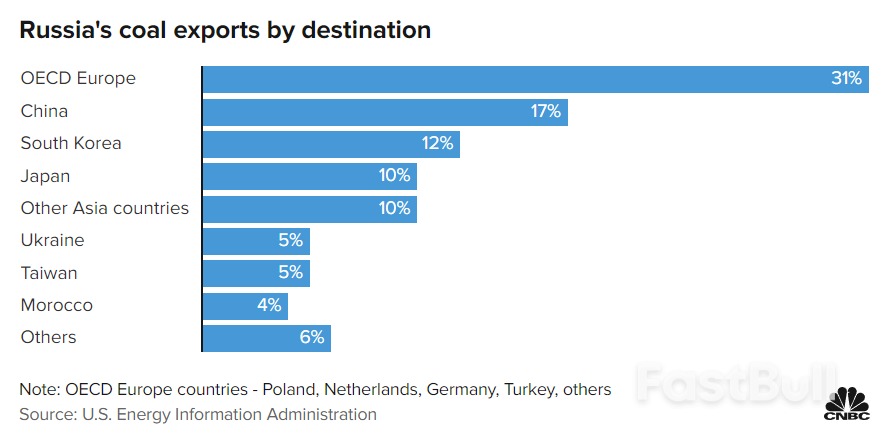
          Russia is the sixth-largest coal producer in the world. In 2020, 54% of the country's coal exports went to Asia, while about 31% went to Organisation for Economic Co-operation and Development countries in Europe, according to the U.S. Energy Information Administration.

          Doubling down despite 'warning shots' from U.S.

          Before the war started, India bought very little coal from Russia, which accounted for only about 2% of India's overall imports in 2021.
          “We are moving in the direction of importing coking coal from Russia,” Indian Steel Minister Ramchandra Prasad Singh told a conference in New Delhi, according to Reuters. He said the country had imported 4.5 million tonnes of coking coal from Russia, but did not indicate which period.
          “Despite warnings from the West, India continues to lean into their supply chain relationship with Russia for natural resources like oil and coal,” said Samir N. Kapadia, head of trade at government relations consulting firm Vogel Group.
          Kapadia said it would hinge on a currency swap agreement “to bypass some of the financing challenges in the market.” A currency swap line is an agreement between two central banks to exchange currencies, set up to improve liquidity conditions and provide foreign currency funding to domestic banks during periods of market stress.
          Such a mechanism would allow India to buy Russian energy exports and other goods — even with Western sanctions restricting international payment mechanisms.
          Several Russian banks have already been cut out of SWIFT, a global system connecting more than 11,000 member banks in some 200 countries and territories globally.
          “I don't think they can get around the logistical issues with shipping, but a rupee-rouble currency swap would help,” Kapadia told CNBC in an email.
          The U.S might consider sanctions and other measures on India if it doesn't curtail its purchases of oil and coal from Russia, said Kapadia.
          “The White House has fired two ‘warning shots' to date, pressuring India to be on the ‘right side of history' and avoid aligning with Russia. There likely won't be a third if this persists,” he said.
          In recent weeks, top U.S. officials have reportedly warned New Delhi against a sharp rise in oil imports, Washington has warned that India will face significant consequences if it aligns itself with Moscow, according to reports.
          India has also been snapping up cheaper oil from Russia as its purchases jump significantly, since the start of the war.

          India's increasing coal dependence

          India's coking coal import dependency has soared to around 85%, according to CBA's Dhar.
          A mega trade deal it signed with Australia early this month may bring some relief, but even that might be limited.
          “Australia just won't be in a position to supply India the additional coking coal tonnes it requires for its growing steel production fleet because supply growth will be limited,” said Dhar.
          Late last year, India was hit by a coal shortage as its power demand soared.
          The only way is for Australia's coking coal exports to shift away from other countries so that India can claim a bigger share — but that's unlikely given that countries are now considering moving away from Russian coal, according to Dhar.
          “Given that South Korea, Japan and Europe are looking to diversify away from Russia (~10% of global coking coal exports), it's even harder to build the case that demand for Australian coking coal will weaken from a major buyer in the foreseeable future,” Dhar said.

          Source: CNBC

          Risk Warnings and Disclaimers
          You understand and acknowledge that there is a high degree of risk involved in trading. Following any strategies or investment methods may lead to potential losses. The content on the site is provided by our contributors and analysts for information purposes only. You are solely responsible for determining whether any trading assets, securities, strategy, or any other product is suitable for investing based on your own investment objectives and financial situation.
          Comments
          Add to Favorites
          Share

          BOJ Likely to Raise Inflation Forecast Near 2%, Vow to Keep Easy Policy

          Devin
          BOJ Likely to Raise Inflation Forecast Near 2%, Vow to Keep Easy Policy_1
          The Bank of Japan (BOJ) is likely to raise its inflation forecast for this fiscal year to near 2% at this month's policy meeting as global commodity inflation drives up energy and food costs, said three sources familiar with the bank's thinking.
          While the upgrade will bring inflation closer to its 2% target, the central bank will stress its resolve to keep monetary policy ultra-loose to underpin a fragile economic recovery, the sources said.
          "Consumer inflation may accelerate to near 2% this fiscal year, but mostly due to rising fuel and food costs," one of the sources said.
          "It's too early to withdraw stimulus because wage growth is slow and the economy is still weak," the source said.
          Two other sources echoed that view.
          In new quarterly projections due to be released at the April 27-28 policy meeting, the BOJ will likely lift its core consumer inflation forecast for the current fiscal year through March 2023 to above 1.5% from the present estimate of 1.1%, the sources said.
          A Reuters poll in March showed analysts expect core consumer inflation to hit 1.6% in fiscal 2022.
          The board is also expected to trim this fiscal year's growth forecast, the sources said, as rising raw material costs caused by the Ukraine war hurt global trade and domestic consumption.
          The BOJ's current forecast, made in January, is for the economy to expand 3.8% this fiscal year, far faster than the 2.6% growth projected in a Reuters poll.
          NO EXIT IN SIGHT
          Lingering supply constraints, soft consumption and the pinch from global commodity inflation have cast doubt on the BOJ's view the economy is picking up and headed for a steady recovery.
          While the BOJ still expects the economy to recover, it will likely warn of rising risks to the outlook as the Ukraine crisis weighs on global and domestic demand, the sources said.
          Analysts say Japanese inflation likely won't gain the kind of momentum seen in countries like the United States, where rising prices are accompanied by strong wage growth, prodding central banks to plan aggressive interest rate increases.
          The BOJ's new projections will likely show consumer inflation slowing back to around 1% in fiscal 2023 as the impact of recent fuel price rises tapers off, the sources said.
          In the current forecasts, the BOJ expects core consumer inflation to hit 1.1% in fiscal 2023.
          Several BOJ executives, including Governor Haruhiko Kuroda, have said core consumer inflation will likely accelerate to around the bank's 2% target from April due to rising fuel costs and the dissipating effect of past cellphone fee cuts.
          They have also said the BOJ won't respond to cost-push inflation with tighter policy, and it will maintain stimulus until inflation stably hits 2% on the back of strong wage growth.
          At the policy meeting, the BOJ is widely expected to maintain a pledge to guide short-term interest rates at -0.1% and cap long-term borrowing costs around 0%.

          Source: REUTERS

          Risk Warnings and Disclaimers
          You understand and acknowledge that there is a high degree of risk involved in trading. Following any strategies or investment methods may lead to potential losses. The content on the site is provided by our contributors and analysts for information purposes only. You are solely responsible for determining whether any trading assets, securities, strategy, or any other product is suitable for investing based on your own investment objectives and financial situation.
          Comments
          Add to Favorites
          Share

          Near-Term Renminbi Outlook: Steady as She Goes

          Damon
          As China exited the first wave of COVID-19 ahead of other countries, its stronger growth rates, higher interest rates and an export-led recovery saw demand for the RMB rise. Now that those support pillars have eroded, the currency's recent strength has puzzled investors.
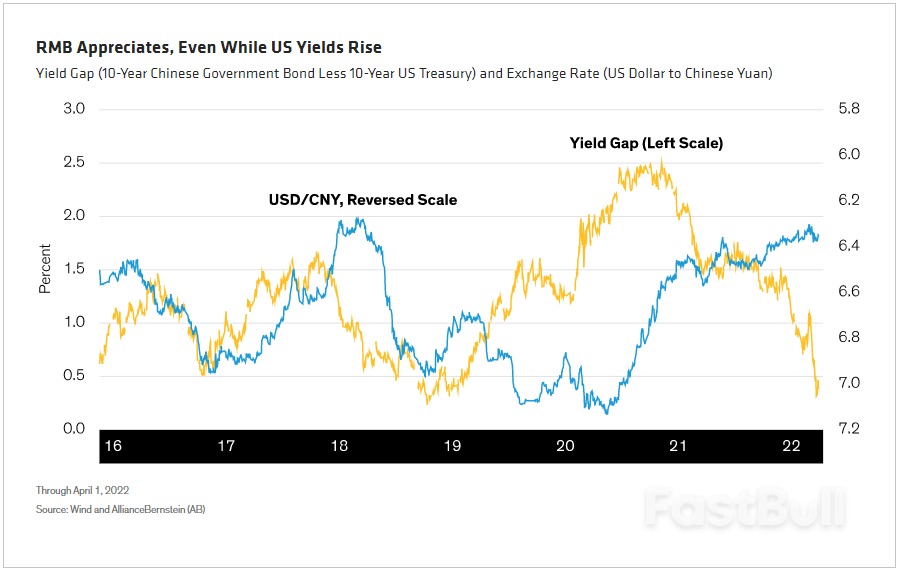
          It's persisted even as the difference between 10-year US Treasuries and Chinese government bonds has narrowed, with Treasury yields rising (making them more attractive to buyers) and Chinese yields falling.
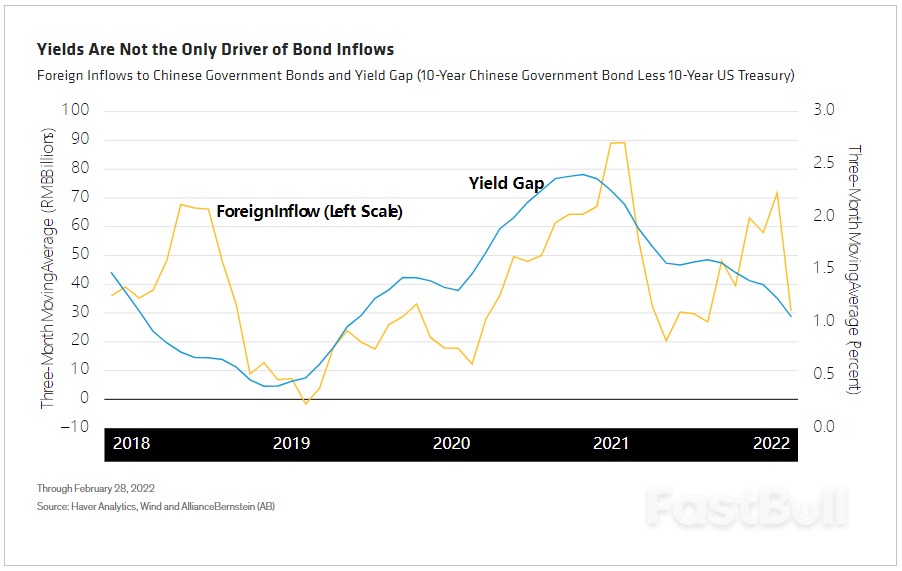
          For example, the “yield gap” between the US and China 10-year bonds has fallen from a record high of 2.5% in November 2020 to close to zero recently.
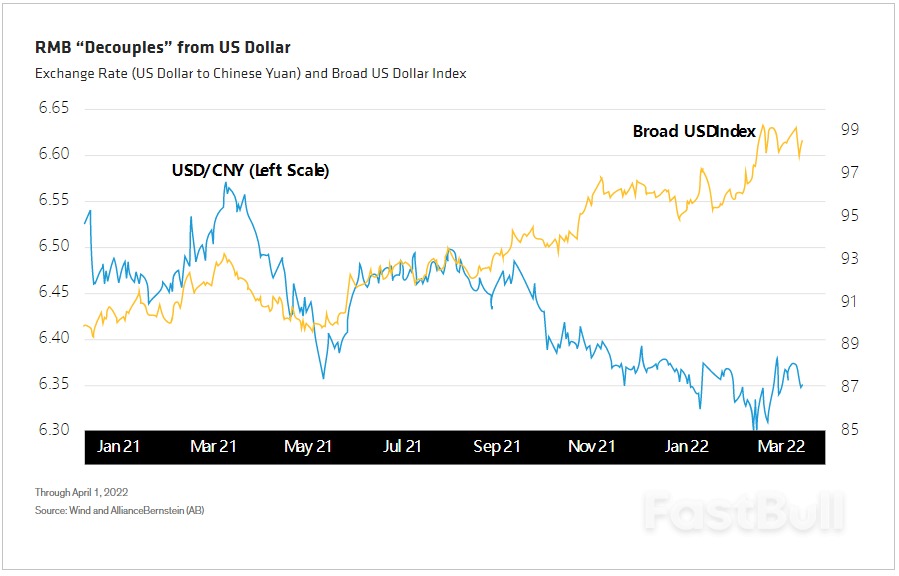
          This fueled expectations that the RMB would weaken against the dollar on the basis that the “carry,” or additional yield available in China versus other markets, had disappeared. As China's bonds would see reduced foreign investor demand, the RMB would see less support. Instead, however, the RMB appreciated against the USD, from CN¥6.6 to CN¥6.35 (Display).
          Near-Term Renminbi Outlook: Steady as She Goes_1
          Also puzzling is the fact that, despite being relatively closely correlated to the US dollar trade-weighted index historically, the RMB has sharply diverged from it recently. And the People's Bank of China (PBOC)—which, in the past, intervened to moderate the RMB's strength or weakness—has taken no strong action on this occasion.
          Unravelling these puzzles is the key, in our view, to understanding the RMB's short-term outlook.

          Rate Differentials Have Limited Impact

          In theory, it makes sense that interest-rate differentials—as measured by the yield gap between the Chinese and US bond markets—should have some impact on the USD-CNY exchange rate.
          However, statistics show that the historical relationship between Chinese and US yield differentials and USD-CNY is not very strong compared to similar relationships elsewhere—a reflection, in part, of the fact that China is still among the least financially open economies in its per-capita income range.
          Similarly, there's no clear-cut link between foreign fund inflows into the Chinese bond market and yield differentials. Inflows into Chinese bonds increased from April 2021 through year-end even while US yields, as shown by the narrowing yield gap, rose relative to Chinese yields (Display).
          Near-Term Renminbi Outlook: Steady as She Goes_2
          Clearly, factors unrelated to yield differentials helped to support the inflows. These would have included structural demand from foreign investors to allocate to RMB assets and demand for Chinese government bonds caused by their inclusion in the FTSE World Government Bond Index in November 2021.
          Foreign inflows have dropped sharply since February 2022. While the yield differential might have been a factor, low net supply of Chinese government bonds and global market turmoil amid the Russia-Ukraine crisis are likely to have played a part, too.

          Market Forces Dent USD-CNY Correlation

          Currently there are two elements to the mechanism by which China establishes the daily USD-CNY “central parity”: market forces (which can be measured by comparing the spot closing rate with the previous day's fixing), and the broad or trade-weighted US dollar index. The USD-CNY spot rate can move within a 2% band around the fixing.
          Historically, the USD-CNY fixing and the USD index have been closely correlated. Recently, however, they have diverged (Display).
          Near-Term Renminbi Outlook: Steady as She Goes_3
          The divergence has been triggered largely by market forces, reflected in the fact that, in recent months, the USD-CNY closing rate has been consistently higher than the previous day's fixing rate.
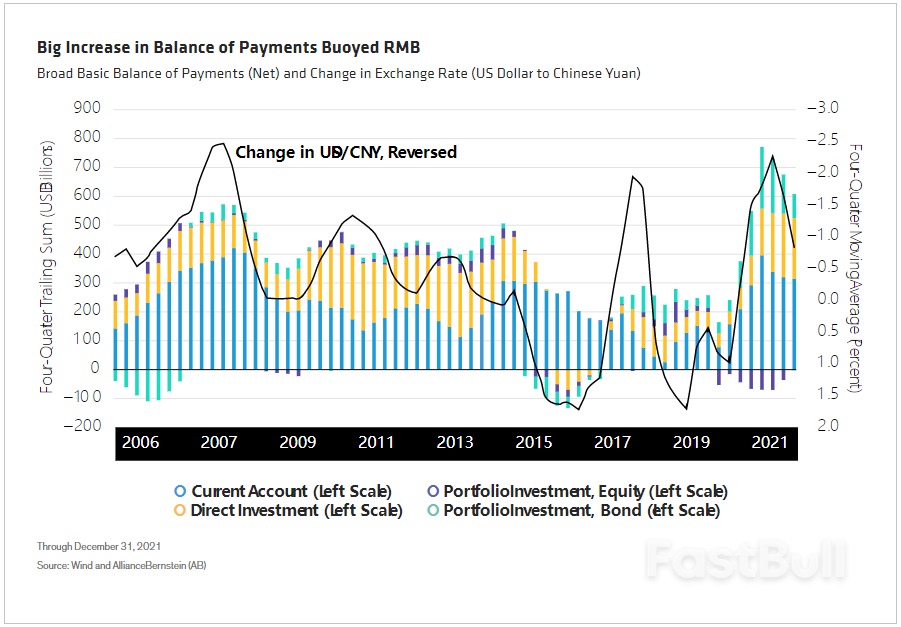
          A major contributor has been the large trade surplus which, in fourth-quarter 2021, averaged US$84 billion a month and reached a monthly record of US$94 billion in December. The surplus has remained strong in early 2022, seasonally adjusted.
          The impact runs across the broad basic balance of payments (BBOP), including the current account balance, net direct investments and net portfolio flows. While portfolio investment inflows have benefited from the opening of China's bond and equity markets, the current account and direct investments remain more important. China's current account surplus has increased notably in the last two years thanks to strong goods exports growth and a lower service trade deficit (Display).
          Near-Term Renminbi Outlook: Steady as She Goes_4
          Overall, a significant increase in the BBOP has been a major factor driving the RMB higher.

          PBOC Favors Flexibility

          In our view, the absence of PBOC intervention is less of a puzzle than it might appear. It's been several years since the central bank took such action (for example, to defend the currency's competitiveness in export markets), and it has explicitly disavowed plans to do so again.
          The PBOC significantly increased the RMB's flexibility in recent years, as a response to more volatile capital flows and to increase the independence of monetary policy. Partly because of this, CNY has been increasingly driven by market forces.
          The PBOC does care about USD-CNY—but, rather than changing its direction or defending a “magic level,” the central bank is more concerned about the potential accumulation of pro-cyclical and speculative factors in the market, which could happen when the pace of appreciation or depreciation is too fast.
          Importantly, direct intervention through foreign-exchange reserves has been sharply reduced, and the PBOC has preferred indirect policy tools such as macroprudential measures to curb the currency's excesses.

          All Things Considered, Stability Is Likely

          Against this background, what is the short-term outlook for the RMB?
          While all the above factors play a role, the most important, based on our research, is the BBOP. The current account surplus is likely to moderate this year, but we expect it to remain positive and significant. Foreign direct investment (FDI) inflows have trended upwards since 2015, despite a slowdown during the 2018–2019 trade war, and FDI data early this year together with industry surveys suggest they should remain steady.
          Bond inflows could come under pressure from the geopolitical crisis and narrowing rate differentials, but the index-inclusion effect and potential increase in reserve allocation towards Chinese government bonds could help support flows. Equity inflows could benefit now that the government—following the equity market sell-off caused by macro policy uncertainties and the significant northbound equity outflow in early March—aims to improve communication with markets, policy coordination and transparency.
          These factors, together with an expected improvement in growth fundamentals in coming quarters, should be positive for RMB.
          Regarding yield differentials, while the 10-year US Treasury yield could rise further in coming months, we expect the comparable Chinese government bond yield to rise too, limiting scope for the yield gap to narrow further. Although narrower rate differentials could put some pressure on CNY, it is unlikely, in our view, to dominate its direction.
          Taking all these factors into account, we expect the RMB to be broadly range-bound and stable against the US dollar in the short term.

          Source:ALLIANCEBERNSTEIN

          Risk Warnings and Disclaimers
          You understand and acknowledge that there is a high degree of risk involved in trading. Following any strategies or investment methods may lead to potential losses. The content on the site is provided by our contributors and analysts for information purposes only. You are solely responsible for determining whether any trading assets, securities, strategy, or any other product is suitable for investing based on your own investment objectives and financial situation.
          Comments
          Add to Favorites
          Share

          Libya: The Rule of Corruption, Envy and Hunger

          Devin
          The war in Ukraine having a major impact on Libya. The most immediate impact was the price of flour in Libya rising 31 percent the day after the Russian invasion began on February 24 th . Russia and Ukraine account for 30 percent of world wheat exports and Libya gets all of its annual 1.35 million tons of wheat and barley imports from Russia and Ukraine. Other sources, mainly in the Americas and Australia, are available but they are much farther away, meaning higher shipping costs in addition to the shortage-related price increases. Before the civil war Libya produced most of the grains it needed but economic and transportation disruptions have halted most of that.
          Russia thought they would retain the support of general Haftar, the leader of the HoR (House of Representatives) government armed forces. That did not happen as in early March a new HoR prime minister denounced the invasion of Ukraine. While Haftar did not make a statement, he works closely with HoR leaders and supports peace and unity in Libya and was never a supporter of all Russian policies.
          Russia has a long history with Libya and has been providing military and economic assistance to Libya for decades, mainly because of its long relationship with Libyan dictator Kaddafi. That ended when Kaddafi was killed during the 2011 uprising. There was no unified government to replace the dictatorship then and there still isn't. Russia tried to maintain its embassy in Tripoli but finally closed it in October 2013. Russia kept tabs on Libyan developments via its embassies in other Arab nations, particularly Egypt. Russia sided with the HoR faction and its military commander Haftar, providing military support and some ground forces, mainly Wagner Group Russian military contractors and a somewhat larger force of Syrian Arab mercenaries. That military support seemed decisive until Turkey made an illegal deal with the Tripoli government in 2019 and brought in a more powerful military force than Russian had in Libya. This created a stalemate that is now even less favorable for Russia because the enormous economic sanctions Russia was hit with for invading Ukraine means Russia can no longer provide as much military support to the HoR as it has in the past, plus its forces there are now needed in Russia,
          The GNU (Government of National Unity) officially refused to recognize the HoR government approval of Fathi Bashagha as the new GNU prime minister. The HoR government represents more Libyans than the Tripoli-based GNA (Government of National Accord). The GNA and HoR are in the process of using the GNU to merge but that process, and the long-sought national elections, are currently blocked by a dispute within the GNU between the newly election of former interior minister Fathi Bashagha as the new GNU prime minister and the original GNU prime minister Abdul Hamid Dbeibah, whose term of office ended in December. This dispute has been going on since January and the UN has not taken sides so far.
          Dbeibah turned out to be corrupt and willing to accept the Turkish presence in Libya. Dbeibah and members of his cabinet refuse to cede power to Bashagha, who is backed by the eastern HoR faction and its military forces (the LNA), which still control most of Libya. Bashagha believes he can organize national elections in 14 months, unless the UN backs Dbeibah or does nothing to block interference from Dbeibah. Bashagha backed Turkish intervention in 2019 and 2020, but turned against the Turks when the Turks indicated they were not leaving Libya.
          The December 24 elections did not happen and there are disagreements in Libya and the UN over a new date for national elections. The UN also wants to replace many of the local officials in the GNU. In late 2020 the UN brokered the creation of the GNU, yet another temporary government to unite Libya. The Turks, Russians, GNA , HoR and LNA (Libyan National Army) agreed to withdraw their forces as part of a late 2020 ceasefire/national unification plan. This agreement called for national elections to be held by the end of 2021. That did not happen, mainly because of the continued presence of Turkish forces and disagreements over the new constitution and who can run for office. The Turks realize they don't have to fight to remain in Libya, just disrupt and delay any efforts, like elections or a UN condemnation, to force them to leave or fight to stay.
          Libyans have not been able to agree on a new government since the overthrow of dictator Kaddafi in mid-2011. There was some unity because by 2015 there were two major factions' one in the capital Tripoli and backed by the UN and the other in the east, based in Tobruk. The primary dispute between the two factions was support of Islamic political parties and some Islamic terrorist groups. In Most of Libya, especially the east, that attitude was not acceptable and the growing number of Islamic terror groups in Libya had become a major threat to most Libyans. The most effective opponent of the Islamic terrorists was a former Libyan army officer, Khalifa Haftar, who fled Libya in the 1980s after incurring the wrath of dictator Kaddafi. Now an American citizen, he returned to eastern Libya in 2013, revived some of the units of the Kaddafi-era military and began taking control of military bases from militias and Islamic terrorists. Eastern tribes rallied to Haftar, who had organized the most effective counterterrorism effort in the country. Haftar had the support of most Arab states, especially Egypt and the UAE. Egypt has a vulnerable border with Libya that was being used by Islamic terror groups to move people in and out as well as smuggle weapons into Egypt.
          Egypt provided a land route to Libya for supplies and weapons for the LNA, largely paid for by the UAE and other Arab oil states. Egypt, the UAE and other Arab states support the new Bashagha government and oppose the Russian invasion of Ukraine. Turkey backs Ukraine more than it opposes Russia and is trying to play both sides. The UN was forced by nearly all its members to strongly condemn Russia for the Ukraine invasion. The Ukrainian situation has also taken away any UN attention to the Libya crisis. Currently the UN has not proposed any solution to the GNA/HoR dispute or the illegal presence of Turkey in Libya. The UN tends to avoid offending major UN members, especially the five nations with veto power. That group includes Russia but not Turkey. The UN does not have armed forces, aside from peacekeepers who are supplied by member states and paid for by UN members, especially the U.S. and other industrial nations that provide most of the UN budget. UN leaders have found that the safest thing for them to do when major powers have disputes is to find ways to offend no one, even if that means serious disputes go on far longer than necessary.
          Russia backed Haftar early on and by 2016 Haftar was making regular visits to Russia to discuss cooperation in the fight against the Islamic terrorists in Libya. In January 2017 the Russian government visited Haftar when the Russian aircraft carrier Kuznetsov and its escorts arrived off the coast of eastern Libya. The carrier sent a helicopter to nearby Tobruk and picked up Khalifa Haftar and two of his senior officers, all in uniform, to the carrier. The visit to the Kuznetsov was captured on video and broadcast. The video showed the event treated as an official visit with sailors in dress uniforms lined up and a band playing the Libyan national anthem. What impressed the Russians was Haftar's long-range plan for uniting Libya, holding elections and allowing the Libyan economy to thrive once more. Russia began providing military assistance, in the form of advisors and technicians to repair and restore a lot of Russian tanks, artillery and aircraft that were still intact but out of action because of a lack of repairs and new parts. Russia and Arab allies also helped Haftar with logistics.
          Haftar forces were effective and loyal because Haftar took care of them and minimized friendly casualties. The Russian and Arab support enabled the LNA to pacify 90 percent of Libya and by early 2019 Haftar was closing in on Tripoli, where the UN-backed GNA was barely able to maintain order in Tripoli and two other eastern cities dominated by Islamic militias who openly feuded with each other and barely tolerated the GNA. By mid-2019 the LNA offensive was working its way towards taking Tripoli when Turkey showed up with an offer the GNA couldn't refuse; military intervention against the LNA. In return the GNA would sign a treaty with Turkey granting it somebody else's offshore oil rights. The GNA's UN patron did little more than protest as Turkey began moving in weapons and troops, especially 10,000 of its own Syrian Arab mercenaries, to halt the LNA advance. By February 2020 the LNA agreed to a ceasefire. This held and led to a peace deal in which the GNA and eastern HoR governments agreed to merge and carry out national elections. Part of the deal was Russia and Turkey withdrawing their troops. Russia began doing so but the Turks did not. The Russian force was much smaller (about 1,200 Wagner Group military contractors and Russian technicians for maintaining equipment as well as a larger force of Arab mercenaries) than the 12,000 Turkish troops and Arab mercenaries. Russia had another reason for pulling out most of its personnel; it could no longer afford it. That was the result of economic sanctions imposed after the 2014 Russian attack on Ukraine. In 2022 that escalated into a larger operation and Russia is now burdened with even heavier sanctions. This will probably lead to the departure of all Russian military personnel. The Turks are now the major obstacle to Libyan unity and elections. Russia also has forces in Syria, where it is an ally of Turkey.
          The key issue is getting the Turks out of Libya but no one has the military capability to force the Turks out as long as the Turks refuse to leave. Bashagha, the new GNU leader, promises to use negotiation to get the Turks out. The Turkish forces are still concentrated in the west, around Tripoli and Misrata. In both these cities the militias violently feud with each other. This happens despite Turkish efforts to train militia members to be professional soldiers. The militiamen accepted the training and new weapons, but their first loyalty remained to their militia leaders, who often represented populations in the two cities.
          What it comes down to is that there is currently no war in Libya. There is still violence between rival militias and some diehard Islamic terror groups. Not all the troublesome militias are in the major cities. Some are from rural areas around oil production facilities and serve as PFGs (Petroleum Facilities Guards). General Haftar and his LNA tamed these PFGs via negotiation and in a few instances by force. Despite that, and the fact that jobs as PFGs are among the best paid and secure in the country, some PFG groups have internal political problems that occasionally result in a PFG threatening to shut down the facilities they guard unless they are paid more. It's still up to the LNA to settle these disputes with a minimum of violence or lost production. Most Libyans are aware of the rising cost of grain imports and that the national bank has exhausted most of its cash reserves. That means that any serious disruption of oil production will soon mean less access to food or cash for government payrolls, including the PFGs.
          The PFGs have long been seen as a permanent source of corruption. PFGs are tribal militias hired (or bribed) by previous or post-2011 governments to keep oil fields, pipelines and port facilities secure. Soon after Kaddafi was deposed in 2011 many, if not most, PFGs went rogue, shut down the facilities they guarded and, in effect, tried to blackmail whoever was paying them to pay more. This was driven by tribal feuds over how oil revenue should be allocated. Libya has always been very corrupt and Kaddafi remained in power for decades by playing the tribes off on each other with oil income. Those who cooperated got more, those who caused trouble got less. With Kaddafi gone many tribes wanted payback for past real or imagined injustices. Many of the PFGs came to support the GNA but as long as some of them continue to resist oil income is crippled and the much-feared food crisis is no longer approaching, it is here. General Haftar and the HoR government have been successful negotiating with the PFGs and offering a better deal (larger share of oil income) and less corruption. Haftar has a reputation for being much less corrupt. PFGs often shut down oil fields and ports because GNA has not paid them. In these cases, GNA often delivered the cash but some or all of it was stolen by PFG leaders who denied they were stealing. The GNA has to collect and publicize enough evidence of the theft to convince other militias and tribal leaders that the corrupt PFG men must be replaced. This is difficult to do and meanwhile PFGs are constantly demanding "adequate compensation" before they will allow oil to be pumped, moved via a pipeline to the export facilities or loaded on tankers. The details of how much "adequate compensation" any PFG is paid is usually kept secret because in Libya the feeling is that no one group is getting their fair share of the oil wealth that has kept the country functioning since the 1970s. Without the cash provided by oil exports Libya could not import enough food and other essentials to keep the population alive. PFGs are acutely aware that if they lose control of the facilities they protect they lose their jobs so they are extremely defensive and paranoid. The overall problem is that PFG compensation has little relationship to how dangerous the work is but rather is more a matter of tribal politics. It has taken several years for tribes in areas where there are oil facilities to realize that if they do not cooperate everyone will suffer, which is what has been happening and is getting worse.
          The growing fear of political uncertainty, hunger and foreign intervention has paralyzed most of the organized violence. This won't last long but for the moment there are greater threats to worry about.

          Source: StrategyPage

          Risk Warnings and Disclaimers
          You understand and acknowledge that there is a high degree of risk involved in trading. Following any strategies or investment methods may lead to potential losses. The content on the site is provided by our contributors and analysts for information purposes only. You are solely responsible for determining whether any trading assets, securities, strategy, or any other product is suitable for investing based on your own investment objectives and financial situation.
          Comments
          Add to Favorites
          Share
          FastBull
          Copyright © 2025 FastBull Ltd

          728 RM B 7/F GEE LOK IND BLDG NO 34 HUNG TO RD KWUN TONG KLN HONG KONG

          TelegramInstagramTwitterfacebooklinkedin
          App Store Google Play Google Play
          Products
          Charts

          Chats

          Q&A with Experts
          Screeners
          Economic Calendar
          Data
          Tools
          Membership
          Features
          Function
          Markets
          Copy Trading
          Latest Signals
          Contests
          News
          Analysis
          24/7
          Columns
          Education
          Company
          Careers
          About Us
          Contact Us
          Advertising
          Help Center
          Feedback
          User Agreement
          Privacy Policy
          Business

          White Label

          Data API

          Web Plug-ins

          Poster Maker

          Affiliate Program

          Risk Disclosure

          The risk of loss in trading financial instruments such as stocks, FX, commodities, futures, bonds, ETFs and crypto can be substantial. You may sustain a total loss of the funds that you deposit with your broker. Therefore, you should carefully consider whether such trading is suitable for you in light of your circumstances and financial resources.

          No decision to invest should be made without thoroughly conducting due diligence by yourself or consulting with your financial advisors. Our web content might not suit you since we don't know your financial conditions and investment needs. Our financial information might have latency or contain inaccuracy, so you should be fully responsible for any of your trading and investment decisions. The company will not be responsible for your capital loss.

          Without getting permission from the website, you are not allowed to copy the website's graphics, texts, or trademarks. Intellectual property rights in the content or data incorporated into this website belong to its providers and exchange merchants.

          Not Logged In

          Log in to access more features

          FastBull Membership

          Not yet

          Purchase

          Become a signal provider
          Help Center
          Customer Service
          Dark Mode
          Price Up/Down Colors

          Log In

          Sign Up

          Position
          Layout
          Fullscreen
          Default to Chart
          The chart page opens by default when you visit fastbull.com