• Trade
  • Markets
  • Copy
  • Contests
  • News
  • 24/7
  • Calendar
  • Q&A
  • Chats
Trending
Screeners
SYMBOL
LAST
BID
ASK
HIGH
LOW
NET CHG.
%CHG.
SPREAD
SPX
S&P 500 Index
6827.42
6827.42
6827.42
6899.86
6801.80
-73.58
-1.07%
--
DJI
Dow Jones Industrial Average
48458.04
48458.04
48458.04
48886.86
48334.10
-245.98
-0.51%
--
IXIC
NASDAQ Composite Index
23195.16
23195.16
23195.16
23554.89
23094.51
-398.69
-1.69%
--
USDX
US Dollar Index
97.950
98.030
97.950
98.500
97.950
-0.370
-0.38%
--
EURUSD
Euro / US Dollar
1.17394
1.17409
1.17394
1.17496
1.17192
+0.00011
+ 0.01%
--
GBPUSD
Pound Sterling / US Dollar
1.33707
1.33732
1.33707
1.33997
1.33419
-0.00148
-0.11%
--
XAUUSD
Gold / US Dollar
4299.39
4299.39
4299.39
4353.41
4257.10
+20.10
+ 0.47%
--
WTI
Light Sweet Crude Oil
57.233
57.485
57.233
58.011
56.969
-0.408
-0.71%
--

Community Accounts

Signal Accounts
--
Profit Accounts
--
Loss Accounts
--
View More

Become a signal provider

Sell trading signals to earn additional income

View More

Guide to Copy Trading

Get started with ease and confidence

View More

Signal Accounts for Members

All Signal Accounts

Best Return
  • Best Return
  • Best P/L
  • Best MDD
Past 1W
  • Past 1W
  • Past 1M
  • Past 1Y

All Contests

  • All
  • Trump Updates
  • Recommend
  • Stocks
  • Cryptocurrencies
  • Central Banks
  • Featured News
Top News Only
Share

Ukraine's Navy Says Russian Drone Attack Hit Civilian Turkish Vessel Carrying Sunflower Oil To Egypt On Saturday

Share

Israeli Military Says It Put Planned Strike On South Lebanon Site On Hold After Lebanese Army Requested Access

Share

Norwegian Nobel Committee: Calls On The Belarusian Authorities To Release All Political Prisoners

Share

Norwegian Nobel Committee: His Freedom Is A Deeply Welcome And Long-Awaited Moment

Share

Ukraine Says It Received 114 Prisoners From Belarus

Share

USA Embassy In Lithuania: Maria Kalesnikava Is Not Going To Vilnius

Share

USA Embassy In Lithuania: Other Prisoners Are Being Sent From Belarus To Ukraine

Share

Ukraine President Zelenskiy: Five Ukrainians Released By Belarus In US-Brokered Deal

Share

USA Vilnius Embassy: USA Stands Ready For "Additional Engagement With Belarus That Advances USA Interests"

Share

USA Vilnius Embassy: Belarus, USA, Other Citizens Among The Prisoners Released Into Lithuania

Share

USA Vilnius Embassy: USA Will Continue Diplomatic Efforts To Free The Remaining Political Prisoners In Belarus

Share

USA Vilnius Embassy: Belarus Releases 123 Prisoners Following Meeting Of President Trump's Envoy Coale And Belarus President Lukashenko

Share

USA Vilnius Embassy: Masatoshi Nakanishi, Aliaksandr Syrytsa Are Among The Prisoners Released By Belarus

Share

USA Vilnius Embassy: Maria Kalesnikava And Viktor Babaryka Are Among The Prisoners Released By Belarus

Share

USA Vilnius Embassy: Nobel Peace Prize Laureate Ales Bialiatski Is Among The Prisoners Released By Belarus

Share

Belarusian Presidential Administration Telegram Channel: Lukashenko Has Pardoned 123 Prisoners As Part Of Deal With US

Share

Two Local Syrian Officials: Joint US-Syrian Military Patrol In Central Syria Came Under Fire From Unknown Assailants

Share

Israeli Military Says It Targeted 'Key Hamas Terrorist' In Gaza City

Share

Rwanda's Actions In Eastern Drc Are A Clear Violation Of Washington Accords Signed By President Trump - Secretary Of State Rubio

Share

Israeli Military Issues Evacuation Warning In Southern Lebanon Village Ahead Of Strike - Spokesperson On X

TIME
ACT
FCST
PREV
U.K. Trade Balance Non-EU (SA) (Oct)

A:--

F: --

P: --

U.K. Trade Balance (Oct)

A:--

F: --

P: --

U.K. Services Index MoM

A:--

F: --

P: --

U.K. Construction Output MoM (SA) (Oct)

A:--

F: --

P: --

U.K. Industrial Output YoY (Oct)

A:--

F: --

P: --

U.K. Trade Balance (SA) (Oct)

A:--

F: --

P: --

U.K. Trade Balance EU (SA) (Oct)

A:--

F: --

P: --

U.K. Manufacturing Output YoY (Oct)

A:--

F: --

P: --

U.K. GDP MoM (Oct)

A:--

F: --

P: --

U.K. GDP YoY (SA) (Oct)

A:--

F: --

P: --

U.K. Industrial Output MoM (Oct)

A:--

F: --

P: --

U.K. Construction Output YoY (Oct)

A:--

F: --

P: --

France HICP Final MoM (Nov)

A:--

F: --

P: --

China, Mainland Outstanding Loans Growth YoY (Nov)

A:--

F: --

P: --

China, Mainland M2 Money Supply YoY (Nov)

A:--

F: --

P: --

China, Mainland M0 Money Supply YoY (Nov)

A:--

F: --

P: --

China, Mainland M1 Money Supply YoY (Nov)

A:--

F: --

P: --

India CPI YoY (Nov)

A:--

F: --

P: --

India Deposit Gowth YoY

A:--

F: --

P: --

Brazil Services Growth YoY (Oct)

A:--

F: --

P: --

Mexico Industrial Output YoY (Oct)

A:--

F: --

P: --

Russia Trade Balance (Oct)

A:--

F: --

P: --

Philadelphia Fed President Henry Paulson delivers a speech
Canada Building Permits MoM (SA) (Oct)

A:--

F: --

P: --

Canada Wholesale Sales YoY (Oct)

A:--

F: --

P: --

Canada Wholesale Inventory MoM (Oct)

A:--

F: --

P: --

Canada Wholesale Inventory YoY (Oct)

A:--

F: --

P: --

Canada Wholesale Sales MoM (SA) (Oct)

A:--

F: --

P: --

Germany Current Account (Not SA) (Oct)

A:--

F: --

P: --

U.S. Weekly Total Rig Count

A:--

F: --

P: --

U.S. Weekly Total Oil Rig Count

A:--

F: --

P: --

Japan Tankan Large Non-Manufacturing Diffusion Index (Q4)

--

F: --

P: --

Japan Tankan Small Manufacturing Outlook Index (Q4)

--

F: --

P: --

Japan Tankan Large Non-Manufacturing Outlook Index (Q4)

--

F: --

P: --

Japan Tankan Large Manufacturing Outlook Index (Q4)

--

F: --

P: --

Japan Tankan Small Manufacturing Diffusion Index (Q4)

--

F: --

P: --

Japan Tankan Large Manufacturing Diffusion Index (Q4)

--

F: --

P: --

Japan Tankan Large-Enterprise Capital Expenditure YoY (Q4)

--

F: --

P: --

U.K. Rightmove House Price Index YoY (Dec)

--

F: --

P: --

China, Mainland Industrial Output YoY (YTD) (Nov)

--

F: --

P: --

China, Mainland Urban Area Unemployment Rate (Nov)

--

F: --

P: --

Saudi Arabia CPI YoY (Nov)

--

F: --

P: --

Euro Zone Industrial Output YoY (Oct)

--

F: --

P: --

Euro Zone Industrial Output MoM (Oct)

--

F: --

P: --

Canada Existing Home Sales MoM (Nov)

--

F: --

P: --

Euro Zone Total Reserve Assets (Nov)

--

F: --

P: --

U.K. Inflation Rate Expectations

--

F: --

P: --

Canada National Economic Confidence Index

--

F: --

P: --

Canada New Housing Starts (Nov)

--

F: --

P: --

U.S. NY Fed Manufacturing Employment Index (Dec)

--

F: --

P: --

U.S. NY Fed Manufacturing Index (Dec)

--

F: --

P: --

Canada Core CPI YoY (Nov)

--

F: --

P: --

Canada Manufacturing Unfilled Orders MoM (Oct)

--

F: --

P: --

Canada Manufacturing New Orders MoM (Oct)

--

F: --

P: --

Canada Core CPI MoM (Nov)

--

F: --

P: --

Canada Manufacturing Inventory MoM (Oct)

--

F: --

P: --

Canada CPI YoY (Nov)

--

F: --

P: --

Canada CPI MoM (Nov)

--

F: --

P: --

Canada CPI YoY (SA) (Nov)

--

F: --

P: --

Canada Core CPI MoM (SA) (Nov)

--

F: --

P: --

Q&A with Experts
    • All
    • Chatrooms
    • Groups
    • Friends
    Connecting
    .
    .
    .
    Type here...
    Add Symbol or Code

      No matching data

      All
      Trump Updates
      Recommend
      Stocks
      Cryptocurrencies
      Central Banks
      Featured News
      • All
      • Russia-Ukraine Conflict
      • Middle East Flashpoint
      • All
      • Russia-Ukraine Conflict
      • Middle East Flashpoint
      Search
      Products

      Charts Free Forever

      Chats Q&A with Experts
      Screeners Economic Calendar Data Tools
      Membership Features
      Data Warehouse Market Trends Institutional Data Policy Rates Macro

      Market Trends

      Market Sentiment Order Book Forex Correlations

      Top Indicators

      Charts Free Forever
      Markets

      News

      News Analysis 24/7 Columns Education
      From Institutions From Analysts
      Topics Columnists

      Latest Views

      Latest Views

      Trending Topics

      Top Columnists

      Latest Update

      Signals

      Copy Rankings Latest Signals Become a signal provider AI Rating
      Contests
      Brokers

      Overview Brokers Assessment Rankings Regulators News Claims
      Broker listing Forex Brokers Comparison Tool Live Spread Comparison Scam
      Q&A Complaint Scam Alert Videos Tips to Detect Scam
      More

      Business
      Events
      Careers About Us Advertising Help Center

      White Label

      Data API

      Web Plug-ins

      Affiliate Program

      Awards Institution Evaluation IB Seminar Salon Event Exhibition
      Vietnam Thailand Singapore Dubai
      Fans Party Investment Sharing Session
      FastBull Summit BrokersView Expo
      Recent Searches
        Top Searches
          Markets
          News
          Analysis
          User
          24/7
          Economic Calendar
          Education
          Data
          • Names
          • Latest
          • Prev

          View All

          No data

          Scan to Download

          Faster Charts, Chat Faster!

          Download App
          English
          • English
          • Español
          • العربية
          • Bahasa Indonesia
          • Bahasa Melayu
          • Tiếng Việt
          • ภาษาไทย
          • Français
          • Italiano
          • Türkçe
          • Русский язык
          • 简中
          • 繁中
          Open Account
          Search
          Products
          Charts Free Forever
          Markets
          News
          Signals

          Copy Rankings Latest Signals Become a signal provider AI Rating
          Contests
          Brokers

          Overview Brokers Assessment Rankings Regulators News Claims
          Broker listing Forex Brokers Comparison Tool Live Spread Comparison Scam
          Q&A Complaint Scam Alert Videos Tips to Detect Scam
          More

          Business
          Events
          Careers About Us Advertising Help Center

          White Label

          Data API

          Web Plug-ins

          Affiliate Program

          Awards Institution Evaluation IB Seminar Salon Event Exhibition
          Vietnam Thailand Singapore Dubai
          Fans Party Investment Sharing Session
          FastBull Summit BrokersView Expo

          Fed to keep rates steady as tariffs, possible oil shock counter inflation data

          Adam

          Economic

          Summary:

          The Fed is expected to keep rates steady amid soft inflation and job data, rising geopolitical risks, and tariff uncertainty. Rate cuts may start later in 2025 if demand continues weakening.

          The Federal Reserve is widely expected to hold interest rates steady next week, with investors focused on new central bank projections that will show how much weight policymakers are putting on recent soft data and how much risk they attach to unresolved trade and budget issues and an intensifying conflict in the Middle East.
          Recent inflation data had eased concern that the tariffs imposed by President Donald Trump would translate quickly into higher prices, while the latest monthly employment report showed slowing job growth - a combination that, all things equal, would put the Fed closer to resuming its rate cuts.
          Trump has demanded the U.S. central bank lower its benchmark overnight interest rate immediately by a full percentage point, a dramatic step that would amount to an all-in bet by the Fed that inflation will fall to its 2% target and stay there regardless of what the administration does and even with dramatically looser financial conditions.
          The risks of that approach were highlighted overnight when an Israeli attack on Iran sent spot oil prices up nearly 9%, potentially upending a four-month run of falling energy prices that have helped keep overall inflation more moderate than expected. Iran is a major oil producer, and a broader conflict in the region could disrupt both production and shipping.
          Though the price of oil figures less prominently in U.S. inflation than it did during the oil shocks of the 1970s, big swings in commodity prices or developing geopolitical risks can make Fed officials more cautious in their decisions - as Russia's invasion of Ukraine did in early 2022 when it prompted the U.S. central bank to start a cycle of interest rate hikes with a quarter-percentage-point increase, smaller than many officials had favored before the war began.
          Trump's push to rewrite the rules of global trade also remains a work in progress, with potentially inflationary results. Since the Fed's last policy meeting in May, the administration delayed until next month a threatened round of global tariffs that central bank officials worry could lead to both higher prices and slower growth if implemented; trade tensions between the U.S. and China have eased but not been resolved; and the terms of a massive budget and tax bill under consideration in Congress are far from settled.
          When Fed officials issued their last set of quarterly projections in March, anticipating two quarter-percentage-point rate cuts this year, Fed Chair Jerome Powell noted the role that inertia can play in moments when the outlook is so unclear that "you just say 'maybe I'll stay where I am,'" a sentiment that may last as long as the tariff debate remains unresolved.
          "Recent Fed commentary has reinforced a wait-and-see approach, with officials signaling little urgency to adjust policy amid increased uncertainty around the economic outlook," Gregory Daco, chief economist at EY-Parthenon, wrote in the run-up to the Fed's June 17-18 meeting. Daco said he anticipates the median rate projection among the Fed's 19 policymakers to still show two rate cuts in 2025, with an overall tone of "cautious patience" and "little in the way of forward guidance" given the uncertainty weighing on households and businesses.
          That view aligns roughly with what investors in contracts tied to the Fed's policy rate currently expect, though pricing shifted towards a possible third rate cut this week after data showed consumer and producer prices both increased less than expected in May. While year-over-year inflation measured by the Fed's preferred Personal Consumption Expenditures Price Index is around half a percentage point above the central bank's target, recent data show it running close to 2% for the past three months once the more volatile food and energy components are excluded.
          The unemployment rate, meanwhile, has remained at 4.2% for the past three months.
          'BECOMING INCREASINGLY CLEAR'
          The Fed's policy rate was set in the current 4.25%-4.50% range in December when the U.S. central bank cut it by a quarter of a percentage point in what officials at the time expected would be a steady series of reductions in borrowing costs spurred by slowing inflation. The trade policy Trump pursued after he returned to office on January 20, however, raised the risk of higher inflation and slower growth, an outcome that would put the Fed in the uncomfortable position of having to choose whether to focus on keeping inflation at its 2% target or supporting the economy and sustaining low unemployment.
          The risk of that worst-of-both-worlds outcome has eased since the early spring, when Trump's "Liberation Day" slate of global tariffs caused a market backlash and led to widespread forecasts of a U.S. recession before the president backed down.
          In its most recent analysis, Goldman Sachs analysts lowered the odds of a recession to around 30% and said they now see a bit less inflation and slightly higher growth this year.
          Yet that analysis did not prompt a shift in the investment bank's Fed rate outlook, which currently expects higher inflation numbers over the summer to sideline the central bank until December.
          The Fed itself may see its median rate projection fall to a single quarter-percentage-point cut this year if only due to the passage of time, noted Tim Duy, chief U.S. economist at SGH Macro Advisors.
          With three fewer months in the year to make changes in policy and so many major issues outstanding, "if the Fed retained two cuts ... it would have more confidence in those two cuts than in March," Duy wrote. "But ... participants have less confidence in rate cuts since 'Liberation Day,' and that should be reflected" in the new projections.
          It would only take two officials to change their outlooks for the Fed's projected rate reductions to shift more toward next year.
          There's another scenario, one in which the weak pass-through from tariffs to inflation is due to weakening demand as consumers pay more for imported goods by cutting back on services, a dynamic that may already be developing.
          The retail sales report for May, which is due to be released next week ahead of the Fed meeting, may provide insight into that issue. But Citi economists say they think weakening demand will keep inflation down, lead to rising unemployment, and prompt the central bank to cut rates faster than expected, beginning in September and continuing at each meeting from there into 2026.
          "Tariffs may eventually boost some goods prices, but the broad-based slowing in core services inflation will make this a one-time price increase," the Citi analysts wrote. "Markets have yet to internalize that softer demand will lead to cooler inflation but also to rising unemployment ... The path to Fed rate cuts is becoming increasingly clear."

          Source: Reuters

          To stay updated on all economic events of today, please check out our Economic calendar
          Risk Warnings and Disclaimers
          You understand and acknowledge that there is a high degree of risk involved in trading. Following any strategies or investment methods may lead to potential losses. The content on the site is provided by our contributors and analysts for information purposes only. You are solely responsible for determining whether any trading assets, securities, strategy, or any other product is suitable for investing based on your own investment objectives and financial situation.
          Add to Favorites
          Share

          Investors fearing worst-case Middle East scenarios hunker down

          Adam

          Economic

          Investors' worst-case scenario of a full-blown Middle East conflict is coming into view, unleashing a flood of capital out of risk assets and into classic safe-havens, topped once more by the dollar.
          Israel on Friday said it had launched a strike against nuclear facilities and missile factories in Iran and killed a swathe of military commanders in what could be a prolonged operation to prevent Tehran building an atomic weapon.
          Oil, which accounts for roughly 30% of global energy demand, soared - gaining almost 14% at one point - along with gold , while government bond yields fell briefly. Shares, near record highs, also declined, led by airlines.
          "This is a dangerous situation," said Francois Savary, chief investment officer at Genvil Wealth Management in Geneva. "This is one of those situations where everything is under control and then everything is not under control."
          Iran is one of the world's largest exporters of crude. It also borders the Strait of Hormuz, a critical choke-point through which roughly a fifth of daily global consumption flows and which Iran has previously threatened to close in retaliation to Western pressure. U.S. President Donald Trump suggested Iran, which promised a harsh response, had brought the attack on itself by resisting U.S. demands in talks to restrict its nuclear programme, and urged it to make a deal, "with the next already planned attacks being even more brutal".
          In markets, focus returned the real-world implications of the flare-up.
          Investors and central banks alike have been wrestling with the direction of interest rates from here, given the likely upward hit to consumer prices and growth from U.S. tariffs.
          Friday's strikes by Israel added to that dilemma, given the surge to 5-1/2 month highs in the oil price. U.S. Treasuries struggled to gain much of a safe-haven tailwind, leaving 10-year yields holding steady on the day around 4.36% .
          DOLLAR BACK
          The dollar, which for weeks has borne the brunt of investor risk aversion, again took up the mantle of ultimate safe haven.
          "The dollar is reverting to that traditional role of safe haven, which we haven't seen for months," City Index strategist Fiona Cincotta said.
          "We've got the equities markets coming lower in the safe-haven, risk-off trade and giving the dollar some much-needed boost from the lows that it was trading at."
          The S&P 500 (.SPX)
          , opens new tab fell 0.7% in early trade on Friday, but remained near record highs struck in February.
          The dollar, which is down 10% against a basket of six others this year, has traded virtually in lockstep with stocks since Trump's April 2 "Liberation Day" unveiling of tariffs and subsequent erratic approach to trade policy that has shattered confidence in U.S. assets.
          That relationship began to erode on Friday, as investors embraced the dollar at the expense of stocks, crypto, industrial commodities and currencies such as the safe-haven Swiss franc and yen.
          OIL SLICK
          Brent crude oil prices were last up 7% at $75.54 per barrel , were set for their biggest one-day jump since 2022, when energy costs spiked after Russia's invasion of Ukraine.
          "If we see oil prices moving towards $80 and above then that becomes more of an issue for global central banks," said Chris Scicluna, head of economic research at Daiwa Capital Markets.
          Marlborough fixed income fund manager James Athey said there was a risk investors may be too quick to take a lack of ratcheting-up in tensions as a green light to dive back into things like stocks.
          "In general, markets tend to look through these sorts of events quite quickly but of course therein lies the risk of complacency," he said.
          "The situation is genuinely tense and fraught and risk assets are still priced for perfection," he said.

          Source: Reuters

          To stay updated on all economic events of today, please check out our Economic calendar
          Risk Warnings and Disclaimers
          You understand and acknowledge that there is a high degree of risk involved in trading. Following any strategies or investment methods may lead to potential losses. The content on the site is provided by our contributors and analysts for information purposes only. You are solely responsible for determining whether any trading assets, securities, strategy, or any other product is suitable for investing based on your own investment objectives and financial situation.
          Add to Favorites
          Share

          Companies are bullish on AI but remain skeptical of the payoff

          Adam

          Economic

          Many technology leaders remain skeptical or concerned about the use of artificial intelligence tools, at the same time organizations are relying on these tools to handle a growing number of roles and functions. Given this paradox, a key consideration is what will it take to bring these two opposing dynamics in alignment?
          A recent survey of 1,393 technology leaders across nine countries by IT staffing and services provider Experis showed that about two-thirds are accelerating their AI capabilities and about half are embedding AI skills into existing roles rather than creating new positions.
          And yet, despite the ongoing buzz around AI, the research indicated a measured approach to AI adoption among technology leaders. Just 37% see generative AI as a valuable solution for specific applications today, and 33% remain uncertain about its business impact.
          “CIOs and technology leaders are embedding AI into existing functions and roles primarily by using it to augment existing work patterns and tasks,” said Cameron Haight, an analyst at research firm Gartner. “This initial use of AI tools is expected to generate modest productivity increases. In the short term, AI operates within boundaries, enhancing current processes without fundamentally transforming them.”
          Businesses are using AI in several key areas, said Kye Mitchell, president of Experis U.S. They’re deploying it to accelerate coding and automate testing in software development; to enhance cybersecurity via real-time threat detection and response; and to improve customer support and sales by streamlining ticket handling and personalizing outreach.
          Over time, AI tools are expected to push boundaries, becoming more “agentic” and capable of breaking down complex problems, Haight said. “This will transform work patterns by enabling developers to fully automate and offload more tasks,” he said.
          AI agents can enhance developer experience and increase the ability to deliver business value, Haight said. “For example, an AI agent can automate tasks such as code generation, debugging, and performance tuning,” he said.
          Gartner research has a more nuanced view on AI replacing humans for jobs, however, as the impact is complex and varies, Haight said. “While there is speculation and hype from vendors touting ‘AI-based software engineers’ that could supplant human engineers, we believe that the rumors of the demise of, for example, software engineers are greatly exaggerated,” he added.
          The skepticism and uncertainty among IT leaders regarding AI’s business impact is partly because many organizations struggle to translate AI investments into tangible productivity improvements, Haight said.

          Achieving alignment

          Navigating the balance between the hype, potential, and challenges of AI requires technology leaders to focus on strategic integration, workforce adaptation, and cultural change, Haight said.
          Companies need to shift the focus to an AI-first mindset. “Instead of developers manually coding everything, cultivate an ‘AI-first’ mindset where software engineers primarily focus on steering AI agents by providing relevant context and constraints,” Haight said. “This means upskilling teams in prompt engineering and retrieval-augmented generation skills.”
          To effectively leverage AI, especially for building AI-empowered applications and supporting new roles such as AI engineers, organizations need to invest in AI developer platforms, Haight said. “These platforms provide the necessary technology, workflows, reusable components, access to large language models, and support for responsible AI practices, enabling efficient and scalable AI integration,” he said.
          The impact of AI necessitates redesigning roles to fit new ways of operating and account for changing demand, Haight said. “Instead of just replacing roles, focus on reconfiguring roles often towards assisted multi-skilled generalist roles where AI automates routine tasks,” he said. “Set up more networked and dynamic teaming to make it easier for people to connect with work.”
          To align AI enthusiasm with business impact, technology leaders “need to create space for innovation without losing control,” Mitchell said. “That means setting up safe sandboxes to test AI, building bridge roles that connect tech with business, and measuring results through real outcomes — not just hype. Just as important, we need to upskill teams so AI becomes a productivity partner, not a mystery or a threat.”
          Also to help close the gap between AI deployments and executive hesitation, technology leaders must focus on small, strategic deployments that show measurable business value, Mitchell said.
          “Whether it’s reducing time-to-resolution in customer service or speeding up code review, pilot programs with clear KPIs [key performance indicators] can turn AI from a buzzword into a business tool,” Mitchell said. “But adoption won’t scale without education.”
          At the same time, companies need to put strong AI governance in place to monitor how tools are trained, deployed, and evaluated — especially in industries where bias or error carry heavy consequences.
          “And perhaps most importantly, leaders need to bring people into the process,” Mitchell said. “Co-creating AI solutions with cross-functional teams builds trust, improves outcomes, and helps shift the narrative from fear to empowerment.”
          While some jobs — such as data entry, low-level coding, and routine legal review — are vulnerable to automation, the future is bright for roles that blend human judgment with machine intelligence, Mitchell said. “Think AI engineers, data ethicists, cybersecurity experts, and product leaders who know how to build with AI, not just around it,” she said. “The new era of work belongs to those who can collaborate with the machines, not compete against them.”

          Source: cnbc

          To stay updated on all economic events of today, please check out our Economic calendar
          Risk Warnings and Disclaimers
          You understand and acknowledge that there is a high degree of risk involved in trading. Following any strategies or investment methods may lead to potential losses. The content on the site is provided by our contributors and analysts for information purposes only. You are solely responsible for determining whether any trading assets, securities, strategy, or any other product is suitable for investing based on your own investment objectives and financial situation.
          Add to Favorites
          Share

          Middle East conflict threatens to exacerbate inflationary pressure on some things

          Manuel

          Middle East Situation

          Israel's attack on Iran Friday has catapulted their long-running conflict into what could become a wider, more dangerous regional war and potentially drive prices higher for both businesses and households.
          Oil and gold surged and the dollar rose as markets retreated, signaling a flight to investments perceived as more safe.
          After years of sky-high inflation in the aftermath of the COVID-19 pandemic, Americans have become increasingly leery about the economy this year due to President Donald Trump's sweeping tariffs, though the impact so far has been muted.
          The latest escalation in the Middle East has the potential to cause widespread price increases that could set consumers back again.
          Here's a look at some of the sectors that could face an outsized impact from the escalation in the Middle East, and what that might mean for consumers.

          Energy

          Oil prices surged Friday to their biggest gain since the onset of Russia's war on Ukraine began more than three years ago. If or when Israel's attack on Iran could impact gas prices, which have been in decline for nearly a year, isn't entirely clear.
          Iran is one of the world’s major producers of oil, though sanctions by Western countries have limited its sales. If a wider war erupts, it could significantly slow or stop the flow of Iran’s oil to its customers. Energy prices have been held in check this year because production has remained relatively high, and demand for it low. A widening conflict could tilt that balance.
          “The loss of this export supply would wipe out the surplus that was expected in the fourth quarter of this year,” analysts for ING wrote in a note to clients.
          In the past, conflicts in the Middle East have sent energy price soaring for extended periods but in recent years, because of the huge supply of oil, those spikes have been more fleeting.
          Earlier this month, the countries in the OPEC+ alliance decided to increase production again, which often pushes crude prices down. They hit a four-year low in early May. That usually means cheaper gas, of which there is currently a surplus.
          According to the auto club organization AAA, the average price for a gallon of gas in the U.S. on Friday was $3.13 per gallon, down from $3.46 a year ago.

          Shipping

          Shipping costs were already on the rise for a number of reasons. Cargo is being rerouted around the Red Sea where the U.S. began conducting air strikes on Yemen’s Houthis, the Iran-backed rebels who were attacking ships on what is a vital global trade route. And this year, companies have scrambled to import as many goods as possible before Trump’s tariffs kicked in, pushing demand, and prices to ship, higher.

          Source: AP

          Risk Warnings and Disclaimers
          You understand and acknowledge that there is a high degree of risk involved in trading. Following any strategies or investment methods may lead to potential losses. The content on the site is provided by our contributors and analysts for information purposes only. You are solely responsible for determining whether any trading assets, securities, strategy, or any other product is suitable for investing based on your own investment objectives and financial situation.
          Add to Favorites
          Share

          Defense stocks trade higher after Israel airstrikes in Iran raise Middle East tensions

          Adam

          Stocks

          Defense stocks climbed early Friday after Israel launched a series of airstrikes on Iran, raising tensions in the Middle East and heightening fears of a broader regional conflict.
          Lockheed Martin (LMT) stock gained 3% early Friday, while shares of Northrop Grumman (NOC) and RTX (RTX) rose closer to 2%.
          The three companies supply weapons to Israel through their contracts with the US government.
          US stocks were lower at the open, with the S&P 500 and Nasdaq off about 0.7% while the Dow fell 1.1%. Overnight futures fell nearly 2% in immediate reaction to Israel's airstrikes, which were first reported near 8:00 p.m. ET on Thursday.
          Oil prices were the biggest mover on Friday, rising as much as 8%.
          Defense stocks have been on the rise over the past year, with Friday’s gains bringing RTX stock's gain to north of 35% over the past year, while Northrop Grumman is up 19.5%. Lockheed Martin has risen a more modest 3.9% over that time frame.
          Palantir (PLTR), a defense contractor that has benefited both from the bid in defense names and its role in the AI boom, traded flat Friday morning. Its stock has soared more than 480% over the last year and is the best performer in the S&P 500 year to date.
          RTX has outperformed Wall Street’s expectations since the fourth quarter of 2022. Lockheed Martin and Northrop Grumman have beaten analysts’ projections in seven and six of those nine quarters, respectively.
          The Trump administration has promised a $1 trillion budget for US defense, but its fiscal 2026 budget looks set to fall short of that goal.
          On Thursday night, Israel launched what it called a "preemptive strike" against Iran, targeting its nuclear facilities. The attacks continued into Friday, killing 78 people in Tehran including Iran’s top military leadership.
          Iran’s foreign minister described the attacks as a “declaration of war,” and its supreme leader, Ayatollah Ali Khamenei, said Israel “should expect severe punishment.”
          US President Trump urged Iran to “make a deal” in a post on Truth Social Friday.
          “There has already been great death and destruction, but there is still time to make this slaughter, with the next already planned attacks being even more brutal, come to an end,” he wrote. “Iran must make a deal, before there is nothing left, and save what was once known as the Iranian Empire. No more death, no more destruction, JUST DO IT, BEFORE IT IS TOO LATE.”

          Source: finance.yahoo

          Risk Warnings and Disclaimers
          You understand and acknowledge that there is a high degree of risk involved in trading. Following any strategies or investment methods may lead to potential losses. The content on the site is provided by our contributors and analysts for information purposes only. You are solely responsible for determining whether any trading assets, securities, strategy, or any other product is suitable for investing based on your own investment objectives and financial situation.
          Add to Favorites
          Share

          US Consumer Sentiment Improves; Tariff Anxiety Lingers

          Damon

          Economic

          U.S. consumer sentiment improved for the first time in six months in June as trade tensions between the U.S. and China eased, but households worried about the economy's trajectory.

          The rise in sentiment reported by the University of Michigan's Surveys of Consumers on Friday was, however, overshadowed by Israel's missile strikes against Iran, which boosted oil prices to multi-month highs and weighed on global stock markets.

          Though consumers' inflation expectations also improved this month, higher oil prices are likely to translate into pain at the pump. Gasoline prices have been generally low this year, freeing up much needed money for spending elsewhere.

          "The improvement may be short-lived if current geopolitical risks as well as the increase in oil prices continue," said Eugenio Aleman, chief economist at Raymond James. "The same is going to probably be true for inflation expectations."

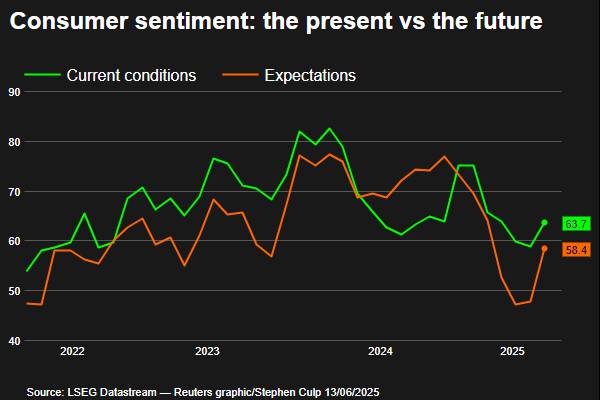
          The University of Michigan's Consumer Sentiment Index jumped to 60.5 this month from a final reading of 52.2 in May.

          Economists polled by Reuters had forecast the index would rise to 53.5. The index, however, remained about 20% below last December's level, when sentiment soared in the wake of President Donald Trump's victory in the November 5 election.

          Sentiment rose across all age, income, wealth, political party affiliation groups and geographic regions. While the share of consumers giving unsolicited comments about tariffs was down from May, it was higher than any other month since the election.

          Stocks on Wall Street fell. The dollar rose against a basket of currencies. U.S. Treasury yields were higher.

          UMich current conditions and expectations

          DOWNSIDE RISKS REMAIN

          The U.S. and China have made big strides towards de-escalating their trade war, with Washington slashing tariffs on Chinese goods to 30% from 145% until mid-August. They agreed earlier this week on a framework covering tariff rates.

          "Consumers appear to have settled somewhat from the shock of the extremely high tariffs announced in April and the policy volatility seen in the weeks that followed," Joanne Hsu, the director of the University of Michigan's Surveys of Consumers, said in a statement. "However, consumers still perceive wide-ranging downside risks to the economy."

          Hsu said consumers' views on business conditions, personal finances, buying conditions for big-ticket items, labor markets and stock markets were all nowhere near the upbeat readings of six months ago.

          Some economists were dismissive of the survey, noting that the response rate was very low. Samuel Tombs, chief U.S. economist at Pantheon Macroeconomics, called it "a broken compass."

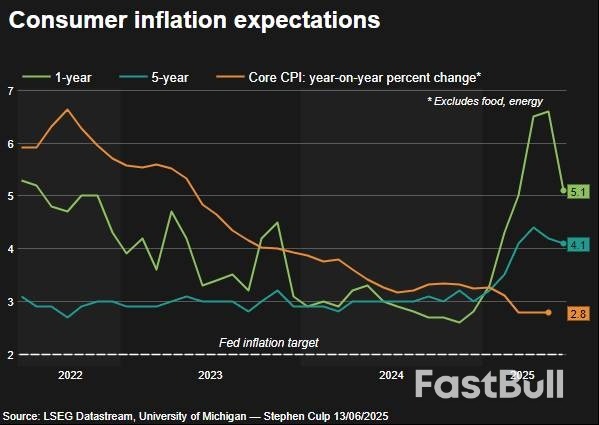
          Consumers' 12-month inflation expectations fell to 5.1% from 6.6% in May. Hsu said consumers' fears about the potential inflation surge from import duties have "softened" somewhat.

          Their views have probably been influenced by tame consumer price increases over the past three months.

          UMich inflation expectations

          Economists say consumer inflation has remained benign because businesses are still selling inventory accumulated before Trump's tariffs kicked in. They expect inflation to accelerate from June through the second half of the year. Long-run inflation expectations dipped to 4.1% from 4.2% last month.

          "But the fact they (inflation expectations) remain historically high shows anxiety over prices hasn't dropped off consumers' list of worries," said Oren Klachkin, financial market economist at Nationwide.

          Federal Reserve officials, who will hold a policy meeting on Tuesday and Wednesday, could take note of the decline in inflation expectations, though the higher readings had previously been dismissed as an outlier.

          The U.S. central bank is expected to leave its benchmark overnight interest rate in the 4.25%-4.50% range at the end of its meeting next week while policymakers monitor the economic effects of tariffs.

          Source: Reuters

          To stay updated on all economic events of today, please check out our Economic calendar
          Risk Warnings and Disclaimers
          You understand and acknowledge that there is a high degree of risk involved in trading. Following any strategies or investment methods may lead to potential losses. The content on the site is provided by our contributors and analysts for information purposes only. You are solely responsible for determining whether any trading assets, securities, strategy, or any other product is suitable for investing based on your own investment objectives and financial situation.
          Add to Favorites
          Share

          S&P 500 and Nasdaq: Tech Stocks Drop—Nvidia, Apple Down; Oil Powers Exxon Higher

          Adam

          Stocks

          Dow Drops Over 400 Midday as Israel Strikes Iran; Oil Surges, Tech and Financials Slide

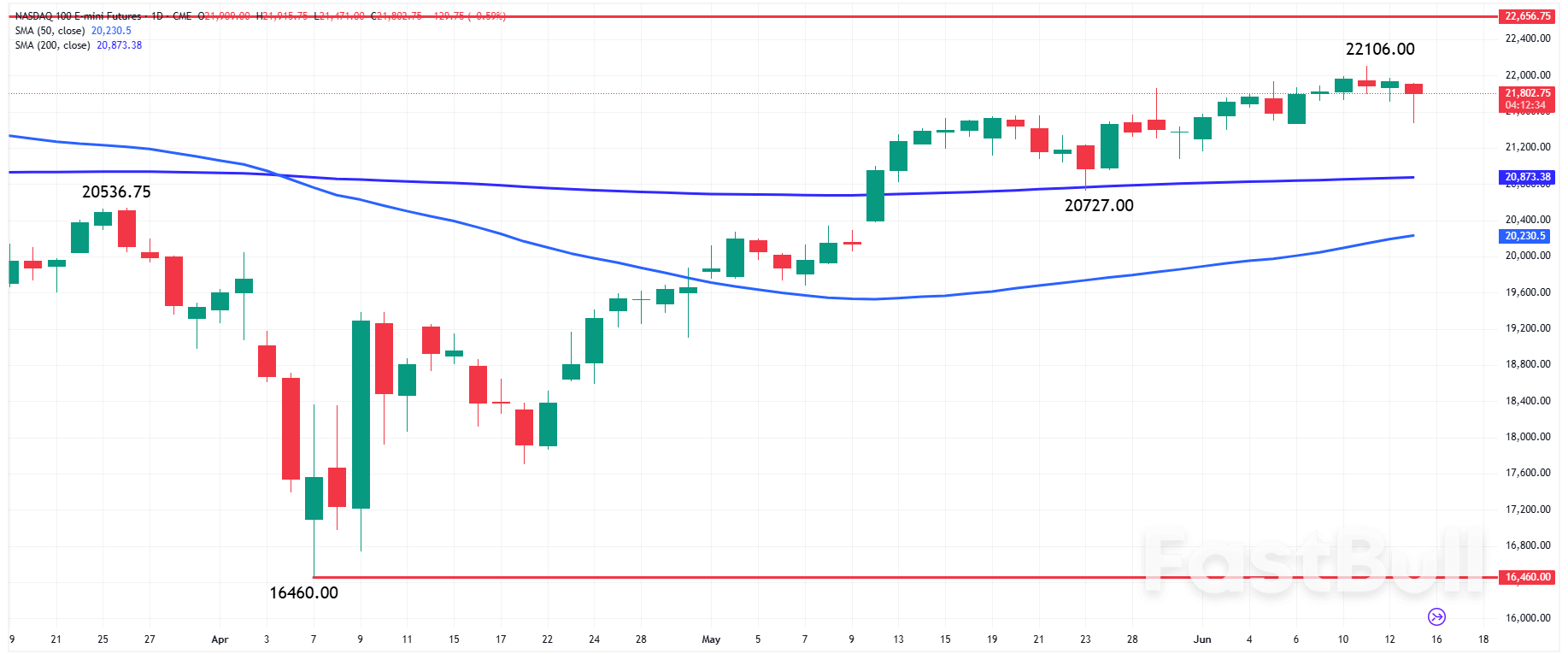
          S&P 500 and Nasdaq: Tech Stocks Drop—Nvidia, Apple Down; Oil Powers Exxon Higher_1Daily Nasdaq 100 Index

          Stocks fell sharply at midday Friday after Israel launched airstrikes on Iran, stoking geopolitical risks and fueling a spike in oil prices. The Dow Jones Industrial Average shed over 400 points, while the S&P 500 and Nasdaq posted smaller declines of 0.3% and 0.4%, respectively. The biggest market movers were energy and defense names, while tech and financials led the downside.

          Energy Sector Pops as Crude Jumps 6% on Middle East Conflict

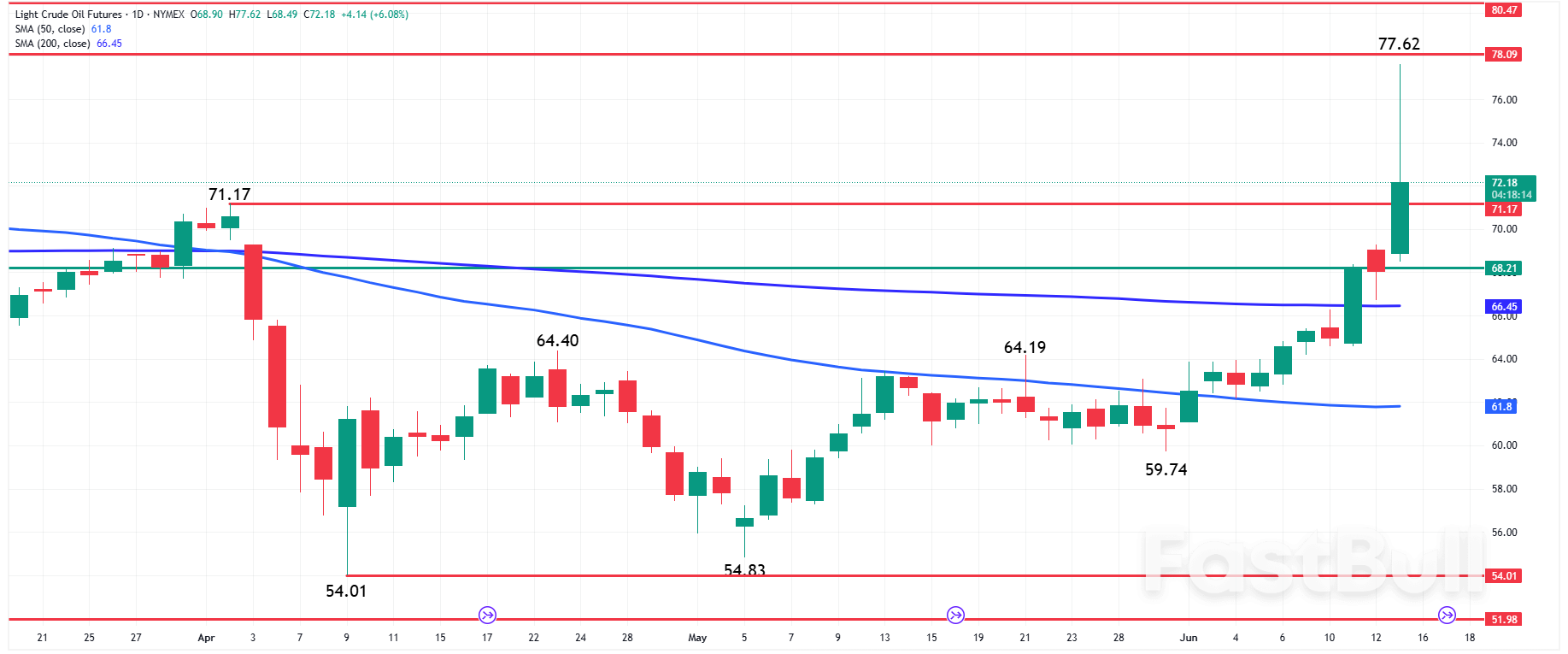
          S&P 500 and Nasdaq: Tech Stocks Drop—Nvidia, Apple Down; Oil Powers Exxon Higher_2Daily Light Crude Oil Futures

          The energy sector was the top gainer by far, up 1.14% midday, as Brent and WTI crude each surged about 6% on fears of supply disruptions from the oil-rich Middle East. WTI nearly touched $74 a barrel.
          S&P 500 and Nasdaq: Tech Stocks Drop—Nvidia, Apple Down; Oil Powers Exxon Higher_3

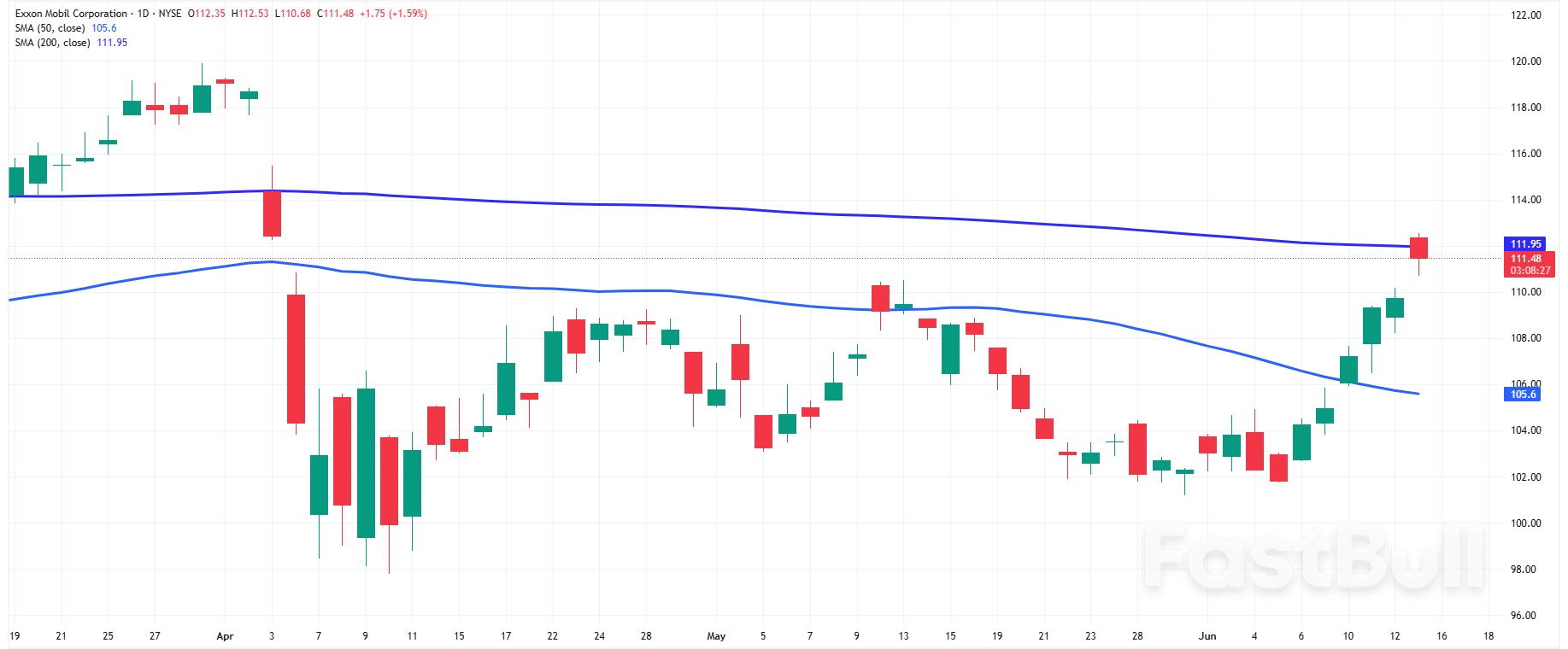
          Daily Exxon Mobil Corporation

          Major oil stocks like Exxon and Chevron rose over 1%, while Halliburton spiked more than 4%. The energy rally marks a notable pivot from the recent rate-driven pullback and positions the sector as a safe-haven trade in a risk-off environment.

          Which Sectors Are Getting Hit the Hardest from the Oil Spike?

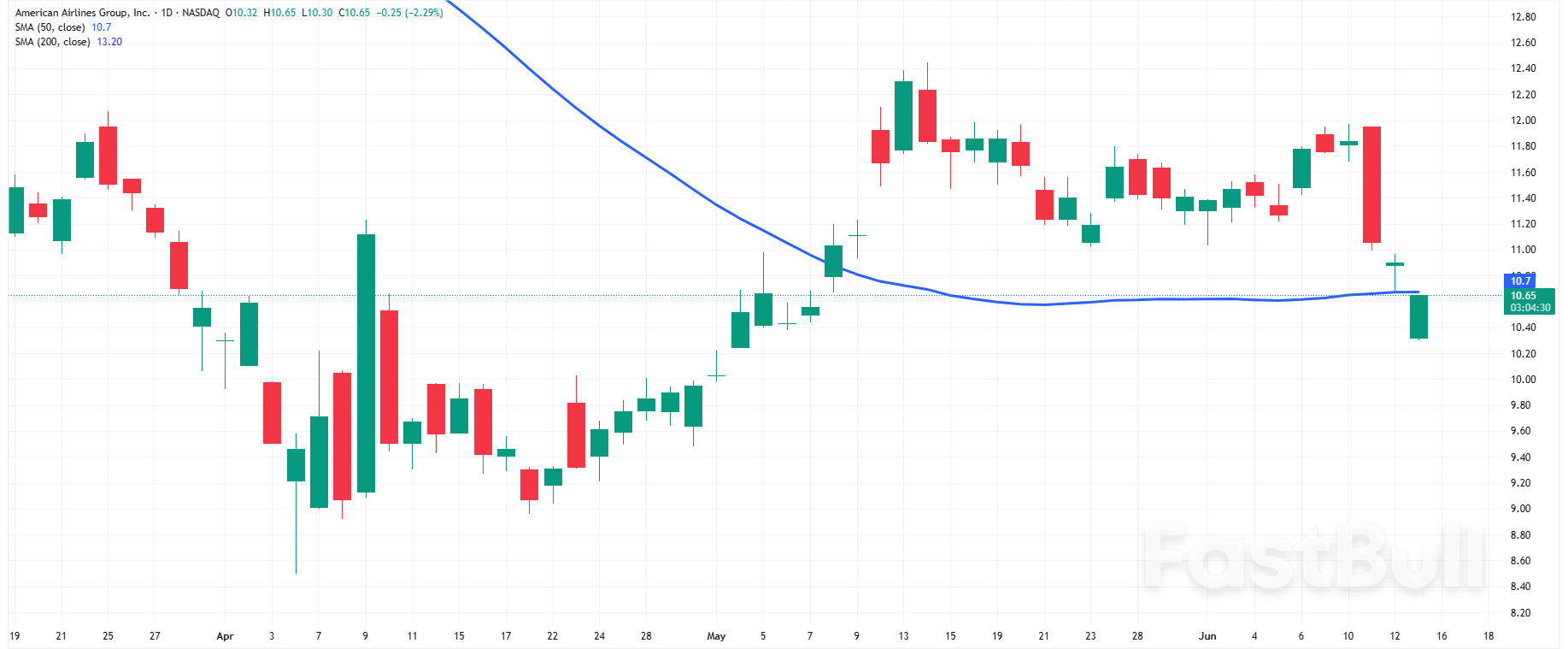
          S&P 500 and Nasdaq: Tech Stocks Drop—Nvidia, Apple Down; Oil Powers Exxon Higher_4Daily American Airlines Group, Inc (AAL)

          Travel-related sectors were under pressure. Airlines dropped sharply on expectations of higher jet fuel costs—American and United Airlines each lost 4%, while Delta fell 3%.
          Cruise lines and hotel stocks also weakened, as investors priced in softer travel demand. Carnival fell 4%, Royal Caribbean and Norwegian lost about 2%, and hotel chains Marriott and Hilton were down about 1%.

          Why Are Tech and Financials Underperforming?

          Technology was the worst-performing sector midday, down 0.83%, with the Nasdaq sliding as traders trimmed exposure to growth stocks. Nvidia and other AI leaders sold off following recent gains.
          Financials also dropped 1.46%, with rate volatility and risk aversion weighing on banks and credit names.
          Consumer staples saw a 0.7% pullback, and real estate and utilities were both down around 0.9% and 0.5%, respectively.

          What Are Traders Watching Next for Direction?

          With markets on edge, attention remains fixed on further geopolitical developments. Traders are also eyeing energy prices for inflation implications. A sustained rally in crude could reignite broader concerns over Fed policy tightening.
          Meanwhile, the University of Michigan consumer sentiment index jumped to 60.5 in June—well above estimates—offering a silver lining. Still, unless tensions de-escalate, the current safe-haven rotation into energy, defense, and gold is likely to persist. Traders will be closely monitoring comments from the Federal Reserve and further oil price action in the coming days.

          Source: fxempire

          Risk Warnings and Disclaimers
          You understand and acknowledge that there is a high degree of risk involved in trading. Following any strategies or investment methods may lead to potential losses. The content on the site is provided by our contributors and analysts for information purposes only. You are solely responsible for determining whether any trading assets, securities, strategy, or any other product is suitable for investing based on your own investment objectives and financial situation.
          Add to Favorites
          Share
          FastBull
          Copyright © 2025 FastBull Ltd

          728 RM B 7/F GEE LOK IND BLDG NO 34 HUNG TO RD KWUN TONG KLN HONG KONG

          TelegramInstagramTwitterfacebooklinkedin
          App Store Google Play Google Play
          Products
          Charts

          Chats

          Q&A with Experts
          Screeners
          Economic Calendar
          Data
          Tools
          Membership
          Features
          Function
          Markets
          Copy Trading
          Latest Signals
          Contests
          News
          Analysis
          24/7
          Columns
          Education
          Company
          Careers
          About Us
          Contact Us
          Advertising
          Help Center
          Feedback
          User Agreement
          Privacy Policy
          Business

          White Label

          Data API

          Web Plug-ins

          Poster Maker

          Affiliate Program

          Risk Disclosure

          The risk of loss in trading financial instruments such as stocks, FX, commodities, futures, bonds, ETFs and crypto can be substantial. You may sustain a total loss of the funds that you deposit with your broker. Therefore, you should carefully consider whether such trading is suitable for you in light of your circumstances and financial resources.

          No decision to invest should be made without thoroughly conducting due diligence by yourself or consulting with your financial advisors. Our web content might not suit you since we don't know your financial conditions and investment needs. Our financial information might have latency or contain inaccuracy, so you should be fully responsible for any of your trading and investment decisions. The company will not be responsible for your capital loss.

          Without getting permission from the website, you are not allowed to copy the website's graphics, texts, or trademarks. Intellectual property rights in the content or data incorporated into this website belong to its providers and exchange merchants.

          Not Logged In

          Log in to access more features

          FastBull Membership

          Not yet

          Purchase

          Become a signal provider
          Help Center
          Customer Service
          Dark Mode
          Price Up/Down Colors

          Log In

          Sign Up

          Position
          Layout
          Fullscreen
          Default to Chart
          The chart page opens by default when you visit fastbull.com