• Trade
  • Markets
  • Copy
  • Contests
  • News
  • 24/7
  • Calendar
  • Q&A
  • Chats
Trending
Screeners
SYMBOL
LAST
BID
ASK
HIGH
LOW
NET CHG.
%CHG.
SPREAD
SPX
S&P 500 Index
6827.42
6827.42
6827.42
6899.86
6801.80
-73.58
-1.07%
--
DJI
Dow Jones Industrial Average
48458.04
48458.04
48458.04
48886.86
48334.10
-245.98
-0.51%
--
IXIC
NASDAQ Composite Index
23195.16
23195.16
23195.16
23554.89
23094.51
-398.69
-1.69%
--
USDX
US Dollar Index
97.950
98.030
97.950
98.500
97.950
-0.370
-0.38%
--
EURUSD
Euro / US Dollar
1.17394
1.17409
1.17394
1.17496
1.17192
+0.00011
+ 0.01%
--
GBPUSD
Pound Sterling / US Dollar
1.33707
1.33732
1.33707
1.33997
1.33419
-0.00148
-0.11%
--
XAUUSD
Gold / US Dollar
4299.39
4299.39
4299.39
4353.41
4257.10
+20.10
+ 0.47%
--
WTI
Light Sweet Crude Oil
57.233
57.485
57.233
58.011
56.969
-0.408
-0.71%
--

Community Accounts

Signal Accounts
--
Profit Accounts
--
Loss Accounts
--
View More

Become a signal provider

Sell trading signals to earn additional income

View More

Guide to Copy Trading

Get started with ease and confidence

View More

Signal Accounts for Members

All Signal Accounts

Best Return
  • Best Return
  • Best P/L
  • Best MDD
Past 1W
  • Past 1W
  • Past 1M
  • Past 1Y

All Contests

  • All
  • Trump Updates
  • Recommend
  • Stocks
  • Cryptocurrencies
  • Central Banks
  • Featured News
Top News Only
Share

Ukraine Says It Received 114 Prisoners From Belarus

Share

USA Embassy In Lithuania: Maria Kalesnikava Is Not Going To Vilnius

Share

USA Embassy In Lithuania: Other Prisoners Are Being Sent From Belarus To Ukraine

Share

Ukraine President Zelenskiy: Five Ukrainians Released By Belarus In US-Brokered Deal

Share

USA Vilnius Embassy: USA Stands Ready For "Additional Engagement With Belarus That Advances USA Interests"

Share

USA Vilnius Embassy: Belarus, USA, Other Citizens Among The Prisoners Released Into Lithuania

Share

USA Vilnius Embassy: USA Will Continue Diplomatic Efforts To Free The Remaining Political Prisoners In Belarus

Share

USA Vilnius Embassy: Belarus Releases 123 Prisoners Following Meeting Of President Trump's Envoy Coale And Belarus President Lukashenko

Share

USA Vilnius Embassy: Masatoshi Nakanishi, Aliaksandr Syrytsa Are Among The Prisoners Released By Belarus

Share

USA Vilnius Embassy: Maria Kalesnikava And Viktor Babaryka Are Among The Prisoners Released By Belarus

Share

USA Vilnius Embassy: Nobel Peace Prize Laureate Ales Bialiatski Is Among The Prisoners Released By Belarus

Share

Belarusian Presidential Administration Telegram Channel: Lukashenko Has Pardoned 123 Prisoners As Part Of Deal With US

Share

Two Local Syrian Officials: Joint US-Syrian Military Patrol In Central Syria Came Under Fire From Unknown Assailants

Share

Israeli Military Says It Targeted 'Key Hamas Terrorist' In Gaza City

Share

Rwanda's Actions In Eastern Drc Are A Clear Violation Of Washington Accords Signed By President Trump - Secretary Of State Rubio

Share

Israeli Military Issues Evacuation Warning In Southern Lebanon Village Ahead Of Strike - Spokesperson On X

Share

Belarusian State Media Cites US Envoy Coale As Saying He Discussed Ukraine And Venezuela With Lukashenko

Share

Belarusian State Media Cites US Envoy Coale As Saying That US Removes Sanctions On Belarusian Potassium

Share

Thai Prime Minister: No Ceasefire Agreement With Cambodia

Share

US, Ukraine To Discuss Ceasefire In Berlin Ahead Of European Summit

TIME
ACT
FCST
PREV
U.K. Trade Balance Non-EU (SA) (Oct)

A:--

F: --

P: --

U.K. Trade Balance (Oct)

A:--

F: --

P: --

U.K. Services Index MoM

A:--

F: --

P: --

U.K. Construction Output MoM (SA) (Oct)

A:--

F: --

P: --

U.K. Industrial Output YoY (Oct)

A:--

F: --

P: --

U.K. Trade Balance (SA) (Oct)

A:--

F: --

P: --

U.K. Trade Balance EU (SA) (Oct)

A:--

F: --

P: --

U.K. Manufacturing Output YoY (Oct)

A:--

F: --

P: --

U.K. GDP MoM (Oct)

A:--

F: --

P: --

U.K. GDP YoY (SA) (Oct)

A:--

F: --

P: --

U.K. Industrial Output MoM (Oct)

A:--

F: --

P: --

U.K. Construction Output YoY (Oct)

A:--

F: --

P: --

France HICP Final MoM (Nov)

A:--

F: --

P: --

China, Mainland Outstanding Loans Growth YoY (Nov)

A:--

F: --

P: --

China, Mainland M2 Money Supply YoY (Nov)

A:--

F: --

P: --

China, Mainland M0 Money Supply YoY (Nov)

A:--

F: --

P: --

China, Mainland M1 Money Supply YoY (Nov)

A:--

F: --

P: --

India CPI YoY (Nov)

A:--

F: --

P: --

India Deposit Gowth YoY

A:--

F: --

P: --

Brazil Services Growth YoY (Oct)

A:--

F: --

P: --

Mexico Industrial Output YoY (Oct)

A:--

F: --

P: --

Russia Trade Balance (Oct)

A:--

F: --

P: --

Philadelphia Fed President Henry Paulson delivers a speech
Canada Building Permits MoM (SA) (Oct)

A:--

F: --

P: --

Canada Wholesale Sales YoY (Oct)

A:--

F: --

P: --

Canada Wholesale Inventory MoM (Oct)

A:--

F: --

P: --

Canada Wholesale Inventory YoY (Oct)

A:--

F: --

P: --

Canada Wholesale Sales MoM (SA) (Oct)

A:--

F: --

P: --

Germany Current Account (Not SA) (Oct)

A:--

F: --

P: --

U.S. Weekly Total Rig Count

A:--

F: --

P: --

U.S. Weekly Total Oil Rig Count

A:--

F: --

P: --

Japan Tankan Large Non-Manufacturing Diffusion Index (Q4)

--

F: --

P: --

Japan Tankan Small Manufacturing Outlook Index (Q4)

--

F: --

P: --

Japan Tankan Large Non-Manufacturing Outlook Index (Q4)

--

F: --

P: --

Japan Tankan Large Manufacturing Outlook Index (Q4)

--

F: --

P: --

Japan Tankan Small Manufacturing Diffusion Index (Q4)

--

F: --

P: --

Japan Tankan Large Manufacturing Diffusion Index (Q4)

--

F: --

P: --

Japan Tankan Large-Enterprise Capital Expenditure YoY (Q4)

--

F: --

P: --

U.K. Rightmove House Price Index YoY (Dec)

--

F: --

P: --

China, Mainland Industrial Output YoY (YTD) (Nov)

--

F: --

P: --

China, Mainland Urban Area Unemployment Rate (Nov)

--

F: --

P: --

Saudi Arabia CPI YoY (Nov)

--

F: --

P: --

Euro Zone Industrial Output YoY (Oct)

--

F: --

P: --

Euro Zone Industrial Output MoM (Oct)

--

F: --

P: --

Canada Existing Home Sales MoM (Nov)

--

F: --

P: --

Euro Zone Total Reserve Assets (Nov)

--

F: --

P: --

U.K. Inflation Rate Expectations

--

F: --

P: --

Canada National Economic Confidence Index

--

F: --

P: --

Canada New Housing Starts (Nov)

--

F: --

P: --

U.S. NY Fed Manufacturing Employment Index (Dec)

--

F: --

P: --

U.S. NY Fed Manufacturing Index (Dec)

--

F: --

P: --

Canada Core CPI YoY (Nov)

--

F: --

P: --

Canada Manufacturing Unfilled Orders MoM (Oct)

--

F: --

P: --

Canada Manufacturing New Orders MoM (Oct)

--

F: --

P: --

Canada Core CPI MoM (Nov)

--

F: --

P: --

Canada Manufacturing Inventory MoM (Oct)

--

F: --

P: --

Canada CPI YoY (Nov)

--

F: --

P: --

Canada CPI MoM (Nov)

--

F: --

P: --

Canada CPI YoY (SA) (Nov)

--

F: --

P: --

Canada Core CPI MoM (SA) (Nov)

--

F: --

P: --

Q&A with Experts
    • All
    • Chatrooms
    • Groups
    • Friends
    Connecting
    .
    .
    .
    Type here...
    Add Symbol or Code

      No matching data

      All
      Trump Updates
      Recommend
      Stocks
      Cryptocurrencies
      Central Banks
      Featured News
      • All
      • Russia-Ukraine Conflict
      • Middle East Flashpoint
      • All
      • Russia-Ukraine Conflict
      • Middle East Flashpoint
      Search
      Products

      Charts Free Forever

      Chats Q&A with Experts
      Screeners Economic Calendar Data Tools
      Membership Features
      Data Warehouse Market Trends Institutional Data Policy Rates Macro

      Market Trends

      Market Sentiment Order Book Forex Correlations

      Top Indicators

      Charts Free Forever
      Markets

      News

      News Analysis 24/7 Columns Education
      From Institutions From Analysts
      Topics Columnists

      Latest Views

      Latest Views

      Trending Topics

      Top Columnists

      Latest Update

      Signals

      Copy Rankings Latest Signals Become a signal provider AI Rating
      Contests
      Brokers

      Overview Brokers Assessment Rankings Regulators News Claims
      Broker listing Forex Brokers Comparison Tool Live Spread Comparison Scam
      Q&A Complaint Scam Alert Videos Tips to Detect Scam
      More

      Business
      Events
      Careers About Us Advertising Help Center

      White Label

      Data API

      Web Plug-ins

      Affiliate Program

      Awards Institution Evaluation IB Seminar Salon Event Exhibition
      Vietnam Thailand Singapore Dubai
      Fans Party Investment Sharing Session
      FastBull Summit BrokersView Expo
      Recent Searches
        Top Searches
          Markets
          News
          Analysis
          User
          24/7
          Economic Calendar
          Education
          Data
          • Names
          • Latest
          • Prev

          View All

          No data

          Scan to Download

          Faster Charts, Chat Faster!

          Download App
          English
          • English
          • Español
          • العربية
          • Bahasa Indonesia
          • Bahasa Melayu
          • Tiếng Việt
          • ภาษาไทย
          • Français
          • Italiano
          • Türkçe
          • Русский язык
          • 简中
          • 繁中
          Open Account
          Search
          Products
          Charts Free Forever
          Markets
          News
          Signals

          Copy Rankings Latest Signals Become a signal provider AI Rating
          Contests
          Brokers

          Overview Brokers Assessment Rankings Regulators News Claims
          Broker listing Forex Brokers Comparison Tool Live Spread Comparison Scam
          Q&A Complaint Scam Alert Videos Tips to Detect Scam
          More

          Business
          Events
          Careers About Us Advertising Help Center

          White Label

          Data API

          Web Plug-ins

          Affiliate Program

          Awards Institution Evaluation IB Seminar Salon Event Exhibition
          Vietnam Thailand Singapore Dubai
          Fans Party Investment Sharing Session
          FastBull Summit BrokersView Expo

          European Shares Rise As Trumps Signals 'major' Trade Deal

          Grace Montgomery

          Stocks

          Summary:

          European shares climbed on Thursday after U.S. President Donald Trump signalled progress toward a first trade deal in his global tariff dispute, boosting market sentiment.
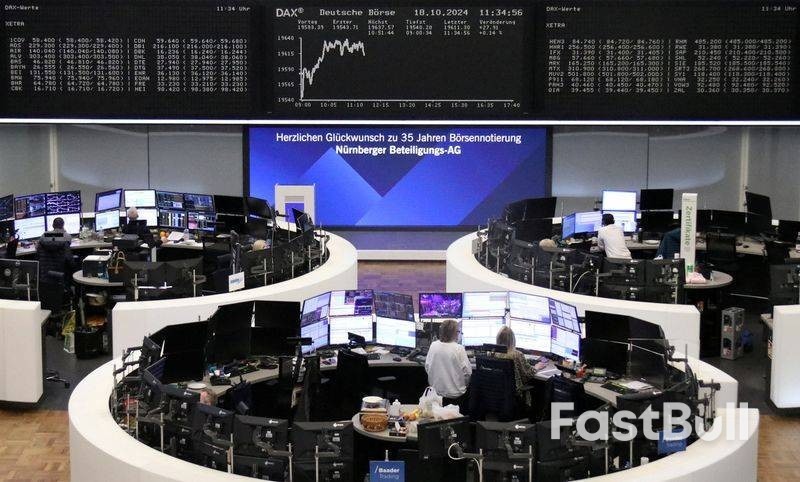
          German share price index DAX at the stock exchange in Frankfurt

          European shares climbed on Thursday after U.S. President Donald Trump signalled progress toward a first trade deal in his global tariff dispute, boosting market sentiment.
          The pan-European STOXX 600 index was up 0.3%, as of 0707 GMT. Other regional indexes were also trading in positive territory, except for Spain, which fell 0.4%.
          Trump posted on Truth Social that he will hold a news conference later in the day about a "major trade deal with representatives of a big, and highly respected, country".
          Citing three people familiar with the plans, the New York Times reported on Wednesday that the deal could be with Britain.
          This comes ahead of potential ice-breaker talks between Washington and Beijing trade tsars this weekend, that have firmed hopes for de-escalation in trade tensions between the world's two leading economies.
          Overnight, in a widely expected decision, the Federal Reserve held its interest rates steady, with the U.S. central bank flagging that the risks of higher inflation and unemployment had risen.
          Markets are also closely watching the Bank of England's policy meeting, due later in the day, with expectations for a quarter-point rate cut.
          Separately, Trump's administration plans to rescind and modify a Biden-era rule that curbed the export of sophisticated artificial-intelligence chips, said a spokeswoman for the U.S. Department of Commerce.
          Shares of A.P. Moller-Maersk fell 2.1% after the shipping group lowered its global container market forecast for this year due to increased economic and geopolitical uncertainty, although it left its profit outlook unchanged.
          Anheuser-Busch InBev rose 4.2% after the beer brewer reported a nearly 8% rise in first-quarter operating profit, beating analysts' estimate by more than double.

          Source: Yahoo Finance

          Risk Warnings and Disclaimers
          You understand and acknowledge that there is a high degree of risk involved in trading. Following any strategies or investment methods may lead to potential losses. The content on the site is provided by our contributors and analysts for information purposes only. You are solely responsible for determining whether any trading assets, securities, strategy, or any other product is suitable for investing based on your own investment objectives and financial situation.
          Add to Favorites
          Share

          German Exports and Industrial Output Rebound Sharply in March Ahead of U.S. Tariff Hike

          Gerik

          Economic

          Exports Rebound on Pre-Tariff U.S. Demand Surge

          German exports rose by 1.1% month-on-month in March, exceeding the 1.0% forecast in a Reuters poll. This improvement was largely driven by a front-loading of shipments to the United States, which is preparing to implement sweeping tariffs under President Donald Trump’s administration. As the U.S. remained Germany’s top trading partner in 2024, with €253 billion in bilateral goods trade, the anticipatory surge in demand from American buyers provided short-term support to German exporters.
          While the uptick is encouraging, analysts caution that it reflects exceptional one-off dynamics rather than a sustained recovery. As new tariffs take effect, German exporters may face significant headwinds in the months ahead, particularly in automotive and machinery sectors that are heavily exposed to U.S. markets.

          Industrial Production Surprises to the Upside

          Industrial output also saw an unexpected surge, growing 3.0% in March compared to February—far outpacing the 0.8% forecast by economists. The figures suggest a potential stabilization in Germany’s industrial sector, which has been plagued by weak global demand, energy price pressures, and supply chain disruptions over the past two years.
          The combination of rising exports and stronger output points to a temporary lift in momentum, especially as firms accelerate production to fulfill orders ahead of trade barriers. However, this front-loaded activity may mask underlying weakness, with production likely to soften once U.S.-bound shipments taper off under the new tariff regime.

          Trade Balance Strengthens Despite Import Weakness

          Germany’s trade surplus widened to €21.1 billion in March, up from €18.0 billion in February. This expansion was not only supported by stronger exports but also by a notable 1.4% drop in imports, reflecting softer domestic demand and possibly early signs of tightening financial conditions.
          Although a stronger trade surplus is typically viewed as a positive macro signal, the contraction in imports could be a warning sign of weaker internal consumption and investment, particularly if companies and consumers are growing more cautious in response to global uncertainty and rising costs.

          Outlook Clouded by Tariffs and External Pressures

          Looking ahead, the export-oriented German economy faces renewed challenges. The U.S. tariffs—set to be among the most severe in recent history—could significantly erode competitiveness for German goods. Furthermore, geopolitical volatility, tight monetary conditions in Europe, and weak Chinese demand add to the uncertainty.
          Still, March’s data suggests that German industry remains resilient and capable of responding to short-term external shocks. Whether this resilience can be maintained will depend heavily on how firms navigate the rapidly changing global trade environment in the second half of 2025.

          Source: Reuters

          To stay updated on all economic events of today, please check out our Economic calendar
          Risk Warnings and Disclaimers
          You understand and acknowledge that there is a high degree of risk involved in trading. Following any strategies or investment methods may lead to potential losses. The content on the site is provided by our contributors and analysts for information purposes only. You are solely responsible for determining whether any trading assets, securities, strategy, or any other product is suitable for investing based on your own investment objectives and financial situation.
          Add to Favorites
          Share

          EU Accelerates Global Trade Negotiations Amid Shifting Geopolitical Landscape

          Gerik

          Economic

          Global Gateway Becomes Cornerstone of EU Trade Diplomacy

          In response to an increasingly fragmented global order, the EU has redoubled its efforts to forge strategic economic partnerships. The Global Gateway initiative—a cornerstone of the bloc’s infrastructure and investment diplomacy—is now at the forefront of EU trade expansion. Overseen by European Commissioner for International Partnerships Jozef Sikela, the strategy is broadening from hard infrastructure to encompass digital, telecommunications, and critical mineral supply chains.
          Sikela emphasized that the current geopolitical shift is the most consequential since World War II. He asserted that new global alliances are emerging and that support for European integration is strengthening internally. In this environment, the EU is positioning itself as a stable force advocating for rules-based trade and long-term economic collaboration.

          Mercosur Deal Signals Renewed Ambition

          The clearest example of this renewed ambition is the long-awaited EU-Mercosur free trade agreement, finalized in principle after two decades of negotiations. Though initially met with firm resistance from France due to environmental concerns—especially relating to Amazon deforestation—recent developments suggest a softening of opposition, with both France and Austria reconsidering their stance.
          The deal, if ratified, would significantly expand EU access to Latin America’s largest economies and could be approved by the EU Parliament as early as autumn 2025. It represents a strategic pivot to Latin America at a time when relations with China and the United States are increasingly complex.

          Diversifying Trade Beyond Traditional Partners

          The EU already maintains robust trade agreements with partners like South Korea, Japan, Singapore, Vietnam, and New Zealand. Negotiations are advancing with Australia, Malaysia, and the Philippines, with particular emphasis on sustainability, digital governance, and supply chain resilience.
          Most notably, the EU is re-engaging in negotiations with India and Indonesia—two populous and rapidly growing markets. These countries are central to the EU’s broader Indo-Pacific strategy, as the bloc recognizes that 37% of its imports originate from the region, while a quarter of its exports are destined for the same area. Ensuring access to these markets is now both an economic imperative and a geopolitical necessity.

          Challenges of Standard Setting and Strategic Flexibility

          Despite its proactive outreach, the EU faces structural obstacles. Many developing nations are hesitant to accept stringent EU conditions on carbon border taxes, rules of origin, and environmental standards, which are often perceived as disguised protectionism. Moreover, some countries remain cautious, balancing their renewed openness to the EU with efforts to maintain or restore trade relations with the United States.
          European negotiators are increasingly aware that rigid policies could jeopardize deals. There is a growing consensus that a more flexible approach—tailoring rules to specific regional contexts and development levels—may be necessary to secure partnerships. The leverage once held by the EU’s market size is now being counterbalanced by the strategic self-confidence of emerging economies.

          A Strategic Push for Trade Amid Multipolar Competition

          The EU’s intensified pursuit of trade agreements is both a response to growing global fragmentation and an assertion of its role as a normative power. While initiatives like Global Gateway aim to project economic influence through cooperation, the success of this strategy depends on Brussels’ ability to balance its regulatory ambitions with pragmatic diplomacy.
          With traditional global leadership in flux, the EU must offer an appealing alternative—not through inflexible standards, but through adaptive, mutually beneficial frameworks. As the trade architecture of the 21st century continues to evolve, Europe’s relevance may well hinge on how effectively it listens, negotiates, and aligns its principles with global realities.
          To stay updated on all economic events of today, please check out our Economic calendar
          Risk Warnings and Disclaimers
          You understand and acknowledge that there is a high degree of risk involved in trading. Following any strategies or investment methods may lead to potential losses. The content on the site is provided by our contributors and analysts for information purposes only. You are solely responsible for determining whether any trading assets, securities, strategy, or any other product is suitable for investing based on your own investment objectives and financial situation.
          Add to Favorites
          Share

          Malaysia-US Trade Talks: 10% Blanket Tariff Expected To Remain

          Fiona Harper

          Economic

          Political

          Malaysia's trade talks with the US may yield positive results, but the existing 10% blanket import tariff is expected to stay, according to Ministry of Investment, Trade and Industry (Miti) official Raveendran Nair.
          Raveendran, who was among the Miti entourage that visited Washington DC to set up talks, shared that US Secretary of Commerce Howard Lutnick confirmed the 10% tariff would remain for all countries, despite ongoing negotiations.
          “We are looking for a positive outcome, but just to indicate, the secretary of commerce did mention that most probably that 10% [blanket tariff] will remain for the entire world,” Raveendran said at a forum organised by Hong Leong Bank Bhd (KL:HLBANK) on Thursday.
          When asked by panel discussion moderator Hong Leong Bank global markets managing director Hor Kwok Wai if keeping only the blanket tariff was the best possible outcome from talks with the US, Raveendran confirmed it was.
          “The rest we can negotiate on is the modification of the reciprocal tariff (additional 14%, totalling 24% in reciprocal tariff),” Raveendran said. He did not disclose any further details regarding specifics of the negotiations, citing a non-disclosure agreement inked with the US.
          Small and Medium Enterprises Association (Samenta) chairman of international trade Eugene Tan said the 10% blanket tariff is a major challenge for businesses, especially manufacturers, as it matches the profit margins for many, such as in the electrical and electronics sector.
          “I think for manufacturing, like E&E (electrical and electronics) for example, I think 10% is practically their margin. So, this is something that we need a bit of runway to build up — the pricing, cost reduction — as it's not something that we can absorb right away.
          “We will still see an impact. It will take time for us to figure out how to resolve that additional margin,” Tan warned.
          Meanwhile, Raveendran also shared that the US is not open to countries approaching the trade negotiating table as a bloc.
          He stated that the US prefers bilateral negotiations over countries approaching as a bloc, warning that negotiating as a group would be seen as "ganging up" on the US.
          “Furthermore, we must understand that even though Asean is a bloc, each country has its own interests, different products, and tariff rates. So, they have to negotiate bilaterally,” he added.
          The reciprocal tariff, originally set for April 9, is now delayed until July 9. Several countries, including Malaysia, are pushing for its removal. Malaysia began official talks with the US on Tuesday (May 6), led by Miti deputy secretary general Mastura Ahmad Mustafa.

          Source: Theedgemarkets

          To stay updated on all economic events of today, please check out our Economic calendar
          Risk Warnings and Disclaimers
          You understand and acknowledge that there is a high degree of risk involved in trading. Following any strategies or investment methods may lead to potential losses. The content on the site is provided by our contributors and analysts for information purposes only. You are solely responsible for determining whether any trading assets, securities, strategy, or any other product is suitable for investing based on your own investment objectives and financial situation.
          Add to Favorites
          Share

          Trump Refuses to Ease China Tariffs Ahead of Key US-China Trade Talks

          Gerik

          China–U.S. Trade War

          Economic

          Firm Stance on Tariffs Undermines Negotiation Optimism

          As high-level US and Chinese officials prepare to meet in Switzerland this weekend, President Trump has confirmed that he will not ease tariffs on Chinese imports, challenging earlier speculation of a possible de-escalation. His decision maintains a confrontational posture just days before the anticipated talks between Treasury Secretary Scott Bessent, US Trade Representative Jamieson Greer, and their Chinese counterparts.
          Despite suggesting on NBC’s Meet the Press that tariff relief might eventually be considered to facilitate trade, Trump has since reversed course, insisting that the US “loses nothing” by refusing to trade with China and arguing that Beijing "deserves" to pay the steep import duties.

          Beijing Seeks De-Escalation Without Concession

          China, meanwhile, has implemented a partial response by exempting certain US goods from its 125% retaliatory tariffs, a move seen as a face-saving gesture aimed at stabilizing relations without openly conceding to pressure. However, Beijing’s restraint has not swayed Washington’s position, as Trump continues to frame the tariff war as a justified response to long-standing trade imbalances.
          Trump’s claim that the US “does not have to sign a deal” further reinforces the administration’s unilateral strategy. During a meeting with Canadian Prime Minister Mark Carney, Trump reiterated that the burden of engagement lies with America’s trading partners, not the White House.

          Fed Holds Steady Amid Policy Uncertainty

          While Trump pushes for aggressive trade enforcement, Federal Reserve Chair Jerome Powell has taken a more cautious approach. Speaking Wednesday, Powell emphasized that the “tariff shock” has not yet fully materialized in macroeconomic data. Accordingly, the Fed has left interest rates unchanged, awaiting clearer signals on how trade disruptions will affect inflation, employment, and consumer sentiment.
          Powell’s remarks suggest that while business sentiment is deteriorating, central bank intervention remains on hold until empirical evidence warrants a policy shift. Nonetheless, prolonged uncertainty could pressure the Fed to act if market conditions worsen or consumer prices begin to respond to import taxes.

          Corporate Concerns Mount as Economic Risks Rise

          Major US corporations are increasingly voicing concern over the impact of tariffs on operations and supply chains. Ford Motor Company recently issued a warning about "significant" business disruptions stemming from the tariff regime, joining a growing list of firms facing higher costs and margin pressures.
          In another unexpected move, Trump threatened to impose a 100% tariff on foreign-produced films by the end of the week—though no specifics were provided. This highlights the administration’s willingness to expand the trade war into cultural and intellectual property domains, adding yet another layer of uncertainty for global industries.

          Brinkmanship Continues, but Economic Costs May Escalate

          President Trump’s refusal to soften tariffs before US-China negotiations reflects a deliberate strategy of brinkmanship, aimed at extracting maximum leverage at the cost of near-term economic pain. However, with corporate America sounding alarms and global markets increasingly fragile, the margin for error is narrowing.
          Whether this hardline approach yields a breakthrough or drives the two largest economies further apart remains uncertain. For now, the message is clear: Washington is not backing down, and the world must adjust to a trade regime where economic diplomacy is governed by unilateral assertiveness rather than mutual compromise.

          Source: Yahoo Finance

          To stay updated on all economic events of today, please check out our Economic calendar
          Risk Warnings and Disclaimers
          You understand and acknowledge that there is a high degree of risk involved in trading. Following any strategies or investment methods may lead to potential losses. The content on the site is provided by our contributors and analysts for information purposes only. You are solely responsible for determining whether any trading assets, securities, strategy, or any other product is suitable for investing based on your own investment objectives and financial situation.
          Add to Favorites
          Share

          Trump Set to Unveil 2026 Budget Proposal with Massive Military Spending and Deep Cuts to Social Programs

          Gerik

          Economic

          White House to Deliver Budget Proposal Amid Policy Shifts

          On May 2, President Donald Trump will submit his administration’s fiscal year 2026 budget to Congress, offering a sweeping vision of federal priorities shaped by a push for tax cuts, elevated defense spending, and a drastically leaner government. The proposal arrives in the context of heightened internal Republican debate over how to reconcile deep spending reductions with expansive tax legislation targeted for July 4.
          Although presidential budget submissions are largely symbolic, serving as policy statements rather than enforceable fiscal blueprints, they often signal political intent. Trump’s plan is expected to include broad agency-level outlines and economic forecasts, setting the stage for contentious appropriations battles in Congress.

          Defense Spending Surges While Social Programs Face Austerity

          Trump’s budget is likely to feature a proposed military budget exceeding $1 trillion—a historically unprecedented figure. The administration claims this expansion is essential for “strategic deterrence,” especially amid rising geopolitical uncertainty and shifting global alliances. Trump has publicly framed the defense investment as central to “restoring American strength.”
          Offsetting this increase, the White House intends to cut more than $160 billion from key discretionary programs. These include environmental protections, renewable energy research, public education, and foreign aid—areas the Trump administration views as peripheral to core national interests. According to the Wall Street Journal, many of these reductions are politically and legally contested, with some still pending resolution in federal courts due to ongoing litigation.

          Tariffs, Tax Cuts, and Fiscal Risks Collide

          In a notable departure from traditional conservative orthodoxy, Trump claims that revenue from sweeping tariff hikes will offset both defense increases and his flagship tax reform bill. This proposal, dubbed a “big beautiful bill,” is the centerpiece of the administration’s economic strategy. However, critics warn that relying on tariff revenues—especially amid slowing global trade and retaliation from key partners—could worsen the fiscal deficit and dampen domestic investment.
          Complicating matters, the economic impact of these trade policies is beginning to emerge. Supply chain disruptions, inflationary pressures on imports, and weakening global demand are beginning to strain key sectors of the U.S. economy. Lawmakers are reportedly considering how to mitigate these shocks within the budget framework.

          Administrative Cuts and Executive Restructuring Advance

          Aligned with his 2024 campaign pledge to “streamline government,” Trump has enacted significant administrative restructuring with assistance from private sector allies, notably Elon Musk. Several federal agencies have been dissolved or consolidated, and the federal workforce has been reduced by tens of thousands. While the administration touts these cuts as evidence of efficiency, several of them are mired in legal battles over jurisdictional authority and employment protections.
          Unconventionally, Trump will not be in Washington when the budget is unveiled. He concluded a week-long celebration of his first 100 days in office with a commencement address at the University of Alabama on Thursday and will spend the weekend in West Palm Beach. His absence from the capital underscores the theatrical nature of modern budget politics—where executive proposals serve more as ideological blueprints than governing documents.
          Trump’s 2026 budget proposal arrives at the confluence of fiscal ambition and political constraint. It reflects his administration’s priorities—military strength, deregulation, and lower taxes—while exposing the trade-offs between growth aspirations and social investment. As Congress takes up the budget process, key debates will center on the sustainability of this fiscal approach in an environment shaped by trade disruptions, social polarization, and economic fragility.

          Source: CNBC

          To stay updated on all economic events of today, please check out our Economic calendar
          Risk Warnings and Disclaimers
          You understand and acknowledge that there is a high degree of risk involved in trading. Following any strategies or investment methods may lead to potential losses. The content on the site is provided by our contributors and analysts for information purposes only. You are solely responsible for determining whether any trading assets, securities, strategy, or any other product is suitable for investing based on your own investment objectives and financial situation.
          Add to Favorites
          Share

          Indian Rupee Set for Modest Recovery as Markets Monitor India-Pakistan Tensions and Fed Outlook

          Gerik

          Economic

          Forex

          Rupee Seeks Stability Amid Geopolitical Strain

          The rupee is expected to recover slightly at the open on Thursday, following a steep decline the previous session prompted by India’s missile strikes in Pakistan-administered Kashmir. The 1-month non-deliverable forward (NDF) suggests the rupee will open around 84.72–84.74 against the dollar, improving from Wednesday’s 84.8250 close.
          Wednesday marked the rupee’s largest single-day percentage drop in nearly a month. The move followed India’s military operation and Pakistan’s pledge of retaliation, which injected fresh geopolitical volatility into regional financial markets. However, the absence of an immediate response from Islamabad has helped ease investor concerns, albeit temporarily.
          A senior trader at a local bank noted, “If Pakistan retaliates by targeting military infrastructure, renewed selling pressure on the rupee is likely. But for now, the market is in a wait-and-watch mode.”

          Foreign Inflows Reflect Tentative Market Confidence

          Despite geopolitical tension, foreign institutional investors were net buyers of Indian equities on May 6, purchasing a net $474.5 million according to NSDL data. The positive equity inflows suggest that investors are cautiously optimistic, betting that the situation will not escalate into a full-scale conflict. Meanwhile, $84.9 million worth of Indian bonds were sold, reflecting a slight hedging behavior in fixed income markets.
          This divergence underscores that equity markets are responding more to macroeconomic resilience and earnings momentum, while bond markets are pricing in short-term uncertainty and potential liquidity risks.

          Regional Currencies Under Pressure as Dollar Finds Support

          Across Asia, most currencies dipped on Wednesday after the U.S. Federal Reserve held interest rates steady but acknowledged rising risks of both inflation and unemployment. The dollar index rose to 99.66, lending support to the greenback and weighing on regional currencies.
          The Chinese offshore yuan fell past 7.2350, reflecting broader sentiment shifts following the Fed’s cautious policy stance. MUFG Bank noted that with simultaneous inflation and job market risks, the Fed faces significant policy trade-offs, further complicating its next move. These developments are likely to keep the rupee’s upward momentum in check despite local resilience.

          Oil Prices and U.S. Yields Add to Macro Pressure

          Brent crude rose 0.4% to $61.3 per barrel, a moderate increase that does not yet threaten India’s import bill but could add pressure if sustained. Meanwhile, the U.S. 10-year Treasury yield stands at 4.28%, offering global investors an attractive risk-adjusted return, which could limit capital flows into emerging markets, including India.
          Despite these global headwinds, the rupee’s one-month onshore forward premium remains at a healthy 16.5 paise, reflecting some degree of forward market stability. This indicates that while the spot market remains sensitive, there is still confidence in medium-term rupee performance.

          Rupee Caught Between Local Tensions and Global Forces

          While the Indian rupee is expected to see a minor technical recovery at the open, its trajectory remains vulnerable to both geopolitical developments on the subcontinent and shifts in global risk sentiment. Investors will closely monitor any retaliatory actions from Pakistan as well as further policy signals from the U.S. Federal Reserve in the coming days.
          With India’s strong foreign equity inflows providing a cushion and the global dollar environment turning cautiously bullish, the rupee’s outlook will depend on the delicate balance between regional stability and international policy dynamics.

          Source: Reuters

          To stay updated on all economic events of today, please check out our Economic calendar
          Risk Warnings and Disclaimers
          You understand and acknowledge that there is a high degree of risk involved in trading. Following any strategies or investment methods may lead to potential losses. The content on the site is provided by our contributors and analysts for information purposes only. You are solely responsible for determining whether any trading assets, securities, strategy, or any other product is suitable for investing based on your own investment objectives and financial situation.
          Add to Favorites
          Share
          FastBull
          Copyright © 2025 FastBull Ltd

          728 RM B 7/F GEE LOK IND BLDG NO 34 HUNG TO RD KWUN TONG KLN HONG KONG

          TelegramInstagramTwitterfacebooklinkedin
          App Store Google Play Google Play
          Products
          Charts

          Chats

          Q&A with Experts
          Screeners
          Economic Calendar
          Data
          Tools
          Membership
          Features
          Function
          Markets
          Copy Trading
          Latest Signals
          Contests
          News
          Analysis
          24/7
          Columns
          Education
          Company
          Careers
          About Us
          Contact Us
          Advertising
          Help Center
          Feedback
          User Agreement
          Privacy Policy
          Business

          White Label

          Data API

          Web Plug-ins

          Poster Maker

          Affiliate Program

          Risk Disclosure

          The risk of loss in trading financial instruments such as stocks, FX, commodities, futures, bonds, ETFs and crypto can be substantial. You may sustain a total loss of the funds that you deposit with your broker. Therefore, you should carefully consider whether such trading is suitable for you in light of your circumstances and financial resources.

          No decision to invest should be made without thoroughly conducting due diligence by yourself or consulting with your financial advisors. Our web content might not suit you since we don't know your financial conditions and investment needs. Our financial information might have latency or contain inaccuracy, so you should be fully responsible for any of your trading and investment decisions. The company will not be responsible for your capital loss.

          Without getting permission from the website, you are not allowed to copy the website's graphics, texts, or trademarks. Intellectual property rights in the content or data incorporated into this website belong to its providers and exchange merchants.

          Not Logged In

          Log in to access more features

          FastBull Membership

          Not yet

          Purchase

          Become a signal provider
          Help Center
          Customer Service
          Dark Mode
          Price Up/Down Colors

          Log In

          Sign Up

          Position
          Layout
          Fullscreen
          Default to Chart
          The chart page opens by default when you visit fastbull.com
