• Trade
  • Markets
  • Copy
  • Contests
  • News
  • 24/7
  • Calendar
  • Q&A
  • Chats
Trending
Screeners
SYMBOL
LAST
BID
ASK
HIGH
LOW
NET CHG.
%CHG.
SPREAD
SPX
S&P 500 Index
6827.42
6827.42
6827.42
6899.86
6801.80
-73.58
-1.07%
--
DJI
Dow Jones Industrial Average
48458.04
48458.04
48458.04
48886.86
48334.10
-245.98
-0.51%
--
IXIC
NASDAQ Composite Index
23195.16
23195.16
23195.16
23554.89
23094.51
-398.69
-1.69%
--
USDX
US Dollar Index
97.830
97.910
97.830
98.070
97.810
-0.120
-0.12%
--
EURUSD
Euro / US Dollar
1.17575
1.17583
1.17575
1.17596
1.17262
+0.00181
+ 0.15%
--
GBPUSD
Pound Sterling / US Dollar
1.33914
1.33923
1.33914
1.33940
1.33546
+0.00207
+ 0.15%
--
XAUUSD
Gold / US Dollar
4341.11
4341.52
4341.11
4350.16
4294.68
+41.72
+ 0.97%
--
WTI
Light Sweet Crude Oil
57.033
57.063
57.033
57.601
56.878
-0.200
-0.35%
--

Community Accounts

Signal Accounts
--
Profit Accounts
--
Loss Accounts
--
View More

Become a signal provider

Sell trading signals to earn additional income

View More

Guide to Copy Trading

Get started with ease and confidence

View More

Signal Accounts for Members

All Signal Accounts

Best Return
  • Best Return
  • Best P/L
  • Best MDD
Past 1W
  • Past 1W
  • Past 1M
  • Past 1Y

All Contests

  • All
  • Trump Updates
  • Recommend
  • Stocks
  • Cryptocurrencies
  • Central Banks
  • Featured News
Top News Only
Share

Mexico's Economy Ministry Announces Start Of Anti-Dumping Investigation And Anti-Subsidy Investigations Into USA Pork Imports

Share

Canada Nov CPI Common +2.8%, CPI Median +2.8%, CPI Trim +2.8% On Year

Share

NY Fed's Empire State Prices Paid Index +37.6 In December Versus+49.0 In November

Share

Canada Nov Consumer Prices +0.1% On Month, +2.2% On Year

Share

Canada Nov CPI Core -0.1% On Month, +2.9% On Year

Share

Canada Nov Core CPI, Seasonally Adjusted +0.2% On Month, Oct +0.3% (Unrevised)

Share

UK Health Minister Streeting On Doctors' Strike: Vote To Go Ahead Reveals The Bma's Shocking Disregard For Patient Safety

Share

Venezuelan State Oil Company Pdvsa Says Was Subject To Cyber Attack But Operations Unaffected

Share

Russia Central Bank Says January-October Current Account Surplus At $37.1 Billion

Share

Polish Current Account Balance At +1924 Million Euros In October Versus+130 Million Euros Seen In Reuters Poll

Share

Statement: Germany, Ukraine Propose 10-Point Plan To Strengthen Armament Cooperation

Share

London Metal Exchange Three Month Copper Falls More Than 3% To $11541.50 A Metric Ton

Share

[Market Update] Spot Silver Surged $2.00 During The Day, Returning To $64/ounce, A Gain Of 3.23%

Share

European Central Bank: Italy's Recurrent Ad Hoc Tax Provisions Cause Uncertainty, Damage Investor Confidence, And May Affect Banks' Funding Costs

Share

Stats Office: Nigeria Consumer Inflation At 14.45% Year-On-Year In November

Share

European Central Bank: Italy's Budget Measures Weighing On Domestic Banks Could Have "Negative Implications" On Their Credit Liquidity

Share

Azerbaijan's January-November Oil Exports Via Btc Pipeline Down 7.1% Year-On-Year Data Shows

Share

Azerbaijan's Aliyev Plans A Large-Scale Prisoner Amnesty, Azertac Reports

Share

EU Commission Chief Von Der Leyen, NATO's Rutte Join Ukraine Talks In Berlin

Share

EU Announces Sanctions On Companies, Individuals For Moving Russian Oil

TIME
ACT
FCST
PREV
Japan Tankan Small Manufacturing Outlook Index (Q4)

A:--

F: --

P: --

Japan Tankan Large Non-Manufacturing Outlook Index (Q4)

A:--

F: --

P: --

Japan Tankan Large Manufacturing Outlook Index (Q4)

A:--

F: --

P: --

Japan Tankan Small Manufacturing Diffusion Index (Q4)

A:--

F: --

P: --

Japan Tankan Large Manufacturing Diffusion Index (Q4)

A:--

F: --

P: --

Japan Tankan Large-Enterprise Capital Expenditure YoY (Q4)

A:--

F: --

P: --

U.K. Rightmove House Price Index YoY (Dec)

A:--

F: --

P: --

China, Mainland Industrial Output YoY (YTD) (Nov)

A:--

F: --

P: --

China, Mainland Urban Area Unemployment Rate (Nov)

A:--

F: --

P: --

Saudi Arabia CPI YoY (Nov)

A:--

F: --

P: --

Euro Zone Industrial Output YoY (Oct)

A:--

F: --

P: --

Euro Zone Industrial Output MoM (Oct)

A:--

F: --

P: --

Canada Existing Home Sales MoM (Nov)

A:--

F: --

P: --

Canada National Economic Confidence Index

A:--

F: --

P: --

Canada New Housing Starts (Nov)

A:--

F: --

P: --
U.S. NY Fed Manufacturing Employment Index (Dec)

A:--

F: --

P: --

U.S. NY Fed Manufacturing Index (Dec)

A:--

F: --

P: --

Canada Core CPI YoY (Nov)

A:--

F: --

P: --

Canada Manufacturing Unfilled Orders MoM (Oct)

A:--

F: --

P: --

U.S. NY Fed Manufacturing Prices Received Index (Dec)

A:--

F: --

P: --

U.S. NY Fed Manufacturing New Orders Index (Dec)

A:--

F: --

P: --

Canada Manufacturing New Orders MoM (Oct)

A:--

F: --

P: --

Canada Core CPI MoM (Nov)

A:--

F: --

P: --

Canada Trimmed CPI YoY (SA) (Nov)

A:--

F: --

P: --

Canada Manufacturing Inventory MoM (Oct)

A:--

F: --

P: --

Canada CPI YoY (Nov)

A:--

F: --

P: --

Canada CPI MoM (Nov)

A:--

F: --

P: --

Canada CPI YoY (SA) (Nov)

--

F: --

P: --

Canada Core CPI MoM (SA) (Nov)

A:--

F: --

P: --

Canada CPI MoM (SA) (Nov)

A:--

F: --

P: --

Federal Reserve Board Governor Milan delivered a speech
U.S. NAHB Housing Market Index (Dec)

--

F: --

P: --

Australia Composite PMI Prelim (Dec)

--

F: --

P: --

Australia Services PMI Prelim (Dec)

--

F: --

P: --

Australia Manufacturing PMI Prelim (Dec)

--

F: --

P: --

Japan Manufacturing PMI Prelim (SA) (Dec)

--

F: --

P: --

U.K. 3-Month ILO Employment Change (Oct)

--

F: --

P: --

U.K. Unemployment Claimant Count (Nov)

--

F: --

P: --

U.K. Unemployment Rate (Nov)

--

F: --

P: --

U.K. 3-Month ILO Unemployment Rate (Oct)

--

F: --

P: --

U.K. Average Weekly Earnings (3-Month Average, Including Bonuses) YoY (Oct)

--

F: --

P: --

U.K. Average Weekly Earnings (3-Month Average, Excluding Bonuses) YoY (Oct)

--

F: --

P: --

France Services PMI Prelim (Dec)

--

F: --

P: --

France Composite PMI Prelim (SA) (Dec)

--

F: --

P: --

France Manufacturing PMI Prelim (Dec)

--

F: --

P: --

Germany Services PMI Prelim (SA) (Dec)

--

F: --

P: --

Q&A with Experts
    • All
    • Chatrooms
    • Groups
    • Friends
    Connecting
    .
    .
    .
    Type here...
    Add Symbol or Code

      No matching data

      All
      Trump Updates
      Recommend
      Stocks
      Cryptocurrencies
      Central Banks
      Featured News
      • All
      • Russia-Ukraine Conflict
      • Middle East Flashpoint
      • All
      • Russia-Ukraine Conflict
      • Middle East Flashpoint
      Search
      Products

      Charts Free Forever

      Chats Q&A with Experts
      Screeners Economic Calendar Data Tools
      Membership Features
      Data Warehouse Market Trends Institutional Data Policy Rates Macro

      Market Trends

      Market Sentiment Order Book Forex Correlations

      Top Indicators

      Charts Free Forever
      Markets

      News

      News Analysis 24/7 Columns Education
      From Institutions From Analysts
      Topics Columnists

      Latest Views

      Latest Views

      Trending Topics

      Top Columnists

      Latest Update

      Signals

      Copy Rankings Latest Signals Become a signal provider AI Rating
      Contests
      Brokers

      Overview Brokers Assessment Rankings Regulators News Claims
      Broker listing Forex Brokers Comparison Tool Live Spread Comparison Scam
      Q&A Complaint Scam Alert Videos Tips to Detect Scam
      More

      Business
      Events
      Careers About Us Advertising Help Center

      White Label

      Data API

      Web Plug-ins

      Affiliate Program

      Awards Institution Evaluation IB Seminar Salon Event Exhibition
      Vietnam Thailand Singapore Dubai
      Fans Party Investment Sharing Session
      FastBull Summit BrokersView Expo
      Recent Searches
        Top Searches
          Markets
          News
          Analysis
          User
          24/7
          Economic Calendar
          Education
          Data
          • Names
          • Latest
          • Prev

          View All

          No data

          Scan to Download

          Faster Charts, Chat Faster!

          Download App
          English
          • English
          • Español
          • العربية
          • Bahasa Indonesia
          • Bahasa Melayu
          • Tiếng Việt
          • ภาษาไทย
          • Français
          • Italiano
          • Türkçe
          • Русский язык
          • 简中
          • 繁中
          Open Account
          Search
          Products
          Charts Free Forever
          Markets
          News
          Signals

          Copy Rankings Latest Signals Become a signal provider AI Rating
          Contests
          Brokers

          Overview Brokers Assessment Rankings Regulators News Claims
          Broker listing Forex Brokers Comparison Tool Live Spread Comparison Scam
          Q&A Complaint Scam Alert Videos Tips to Detect Scam
          More

          Business
          Events
          Careers About Us Advertising Help Center

          White Label

          Data API

          Web Plug-ins

          Affiliate Program

          Awards Institution Evaluation IB Seminar Salon Event Exhibition
          Vietnam Thailand Singapore Dubai
          Fans Party Investment Sharing Session
          FastBull Summit BrokersView Expo

          Copper’s Structural Supercycle: Power Grid Investment Sparks Demand Boom Amid Tight Supply

          Gerik

          Economic

          Commodity

          Summary:

          Global copper demand is surging due to record-breaking investments in electricity grids, AI-driven data centers, and electric vehicles, while supply growth remains constrained...

          Power Grid Expansion and Digitalization Drive Structural Demand

          Copper is entering a structural demand supercycle fueled by the massive global push toward energy transition and digital infrastructure. With over $400 billion in power grid investments expected this year surpassing the record $390 billion in 2024 copper's critical role in transmission infrastructure has taken center stage. According to Benchmark Mineral Intelligence (BMI), copper demand specifically for upgrading power grids is set to rise from 12.52 million metric tons in 2025 to 14.87 million tons by 2030.
          This transformation is not merely cyclical but foundational. As Michael Finch of BMI noted, copper’s role in grid expansion is frequently underestimated, even though the success of green energy rollouts and digital economies hinges upon this metal.

          AI, Data Centers, and EVs Deepen the Copper Crunch

          The AI boom is accelerating copper demand further. Data centers, increasingly central to machine learning and cloud computing ecosystems, require robust, high-capacity power supplies. Consultancy CRU projects copper use in data centers will jump from 260,000 tons this year to more than 650,000 tons by 2030.
          Simultaneously, electric vehicles (EVs) are compounding the surge. BMI forecasts that copper demand from EVs will nearly double by 2030 from 1.2 million tons in 2025 to 2.2 million tons. For context, demand was just 204,000 tons in 2020, highlighting the exponential trajectory of consumption.
          Bank of America’s Michael Widmer estimates total global copper demand will grow 10% by 2030, reaching 30.32 million tons, with a projected deficit of 1.84 million tons that same year. This deficit, if realized, could send prices well beyond $12,000/ton a 23% increase from current levels around $9,700.

          Supply Constraints: Mining Lag and Innovation Limits

          While demand climbs, supply remains stubbornly flat. Key copper-producing countries such as Chile and the Democratic Republic of Congo face investment bottlenecks in new mining projects. The current pace of mine development is insufficient to close the looming gap, creating a risk of prolonged price elevation.
          Though alternatives like aluminum and fiber optics have gained niche footholds, copper’s unmatched electrical conductivity and versatility ensure its continued dominance in grid and vehicle applications. Past experiments with aluminum cable particularly copper-coated variants were short-lived due to performance issues.

          Recycling and Substitution: Partial Relief but No Cure

          Secondary production via scrap recycling provides some relief. Copper from recycled sources is expected to increase from 10 million tons today to 11 million tons by 2030. This helps reduce environmental pressure secondary copper requires 65% less energy but it won’t be enough to offset rising primary demand.
          Fiber optics have replaced copper in some data transmission settings due to their lower cost and higher efficiency. However, fiber is not a substitute for copper in power transmission, limiting its overall impact on demand.
          The convergence of green energy, AI expansion, and EV penetration is pushing copper demand into uncharted territory, shifting the market from cyclical fluctuations to long-term structural imbalance. Supply-side inertia, despite partial relief from recycling and innovation, sets the stage for elevated prices and tighter markets. Governments and industries banking on energy transition must now contend with copper’s pivotal and possibly constraining role in achieving their infrastructure goals. Without bold mining investments and supply chain reforms, the copper crunch may emerge as the new bottleneck in the global clean energy narrative.

          Source: Reuters

          To stay updated on all economic events of today, please check out our Economic calendar
          Risk Warnings and Disclaimers
          You understand and acknowledge that there is a high degree of risk involved in trading. Following any strategies or investment methods may lead to potential losses. The content on the site is provided by our contributors and analysts for information purposes only. You are solely responsible for determining whether any trading assets, securities, strategy, or any other product is suitable for investing based on your own investment objectives and financial situation.
          Add to Favorites
          Share

          Trump’s Anti-Russian Tariff Offensive Rattles India’s Refiners, Spurs Costly Crude Shift

          Gerik

          Economic

          Indian Refiners Caught in Crossfire of Geopolitics and Trade

          President Donald Trump’s announcement of a 25% tariff on all Indian imports, framed as retaliation for India’s continued purchases of Russian oil, has destabilized one of the world’s largest energy markets. Indian oil refiners heavily reliant on cut-rate Russian crude are now scrambling to secure alternative sources, raising concerns over cost inflation and margin compression across the sector.
          The causal link is direct: Trump’s tariffs are explicitly framed as punishment for India’s trade ties with Russia. Refiners, already under pressure from a proposed EU ban on diesel exports made from Russian crude, now face dual threats from their two most important markets Europe and the US. The result is a rapidly deteriorating commercial environment with significant operational and financial consequences.

          Market Turmoil Reflects Sectoral Stress

          The market reacted swiftly. Shares of Indian Oil Corp., Bharat Petroleum, Hindustan Petroleum, and Reliance Industries all dropped between 2% and 4% on Thursday, with sentiment further weakened by uncertainty over additional penalties hinted at by Trump. The rupee also edged lower as investors grew wary of broader economic repercussions tied to trade tensions.
          The scale of exposure is considerable. India imported about 1.63 million barrels per day of Russian crude in 2024, making up more than a third of total imports. While those volumes have remained resilient into 2025, refiners are now hesitant to place September-loading orders for Russian Urals due to uncertainty over potential sanctions, payment delays, and logistical disruption.

          Shift to Costlier Alternatives Already Underway

          State-run refiners have already begun issuing prompt tenders for crude delivery in late September to early October a more urgent timeline than usual. Bharat Petroleum and Indian Oil have shifted their procurement focus toward Middle Eastern and West African grades, which are not subject to political scrutiny but come at a higher cost.
          According to industry veteran R. Ramachandran, India will likely face a 3–6 month adjustment period during which alternative supply lines are built. Although global crude availability is ample, prices are higher, and competition for non-sanctioned barrels is intensifying. The correlation between geopolitical instability and commercial procurement pressure is now manifest in real-time, as refiners are forced to pay more for less controversial sources.

          Strategic Uncertainty Mounts Ahead of Trump’s Deadline

          Trump has threatened additional penalties unless India halts its Russian crude purchases or until there is a ceasefire in Ukraine by his self-imposed August 7 deadline. Vandana Hari of Vanda Insights noted that until more clarity is provided either by Trump or via a potential diplomatic shift from Russia refiners will operate in a climate of uncertainty. That uncertainty is both pricing-related and regulatory, as refiners weigh the risk of future punitive measures on finance, shipping, or insurance linked to Russian barrels.
          With the US also pushing the EU to tighten energy-related sanctions, India’s already precarious geopolitical balancing act between Washington and Moscow is entering a more volatile phase. Should the government in New Delhi seek to defuse tensions, one option could be to boost imports from US-based producers, particularly of LNG and light sweet crude, but such a shift would be politically and economically costly.
          Trump’s aggressive stance on India’s Russian oil trade has exposed deep vulnerabilities in India’s energy security strategy. With over a third of its crude supply now politically contested and subject to trade retaliation, Indian refiners must navigate an abrupt shift in procurement strategies, higher input costs, and geopolitical ambiguity. The short-term consequence is financial pain and logistical disruption; the long-term challenge will be to rebuild a more resilient and diversified import framework in an increasingly fragmented global energy market.

          Source: Bloomberg

          To stay updated on all economic events of today, please check out our Economic calendar
          Risk Warnings and Disclaimers
          You understand and acknowledge that there is a high degree of risk involved in trading. Following any strategies or investment methods may lead to potential losses. The content on the site is provided by our contributors and analysts for information purposes only. You are solely responsible for determining whether any trading assets, securities, strategy, or any other product is suitable for investing based on your own investment objectives and financial situation.
          Add to Favorites
          Share

          BOJ Holds Rates but Upgrades Inflation Outlook, Edging Closer to Potential Hike Amid Tariff Caution

          Gerik

          Economic

          BOJ Signals Progress on Normalization But Stays Cautious

          In its July meeting, the Bank of Japan (BOJ) voted unanimously to maintain the short-term policy rate at 0.5%, aligning with market expectations. However, in a move interpreted as a step toward potential tightening, the central bank raised its core inflation forecast for fiscal year 2025 to 2.7% from 2.2%, exceeding the 2.5% consensus among economists.
          This upward revision, driven by persistent food price inflation particularly in rice and other staples suggests that underlying price pressures are becoming entrenched. It also reflects a shift in the central bank’s risk assessment: the BOJ no longer views inflation risks as skewed to the downside for the near term, describing the outlook as “generally balanced.”
          The revised outlook suggests a growing probability of a rate hike by the end of 2025, contingent on stable growth and clearer data on the impact of US trade policy. Yet, despite these signals, the BOJ stopped short of offering concrete forward guidance highlighting Governor Kazuo Ueda’s preference for a gradual, data-dependent strategy.

          Tariff Impact Under Scrutiny as Trade Tensions Shift

          The BOJ remains focused on assessing how President Trump’s recently announced tariffs though softened for Japan through a bilateral deal may ripple through Japan’s export sectors. The trade agreement signed on July 22 sets a 15% US tariff rate on most Japanese goods, down from initial fears of higher levels.
          This relative moderation has reduced “extreme” uncertainty, according to the BOJ’s quarterly economic outlook. However, the central bank acknowledged that it still needs time to evaluate how these changes will affect corporate profits, business investment, and wage-setting behavior all key variables influencing inflation momentum.
          The interplay between tariffs and inflation is more correlational than immediately causal at this stage. Yet the BOJ’s caution shows its awareness that even reduced tariffs could dampen external demand or disrupt supply chains, particularly in the auto and electronics sectors.

          Market Reaction Muted as Policy Path Remains Unclear

          Markets responded to the BOJ’s decision with restrained optimism. The yen strengthened slightly but remained near its weakest level since early April, hovering close to the psychological threshold of 150 per US dollar. Japanese equities closed higher, while bond futures swung modestly, reflecting a lack of firm guidance on timing for the next rate move.
          The muted market reaction underscores the BOJ’s success in managing expectations. By telegraphing inflation confidence without firm policy action, the bank preserved flexibility while signaling that normalization remains a live option likely around the end of the year.

          Political Pressures Complicate Policy Trajectory

          Adding another layer of complexity is the political backdrop. Prime Minister Shigeru Ishiba’s ruling coalition suffered a setback in recent upper house elections, and rising living costs among the highest in the G7 have emerged as a major concern for voters. Any further rate hikes, which would lift borrowing costs to levels not seen in three decades, risk stoking political resistance.
          This context limits the BOJ’s maneuverability. With past instances of conflict between the central bank and government over rate increases, Ueda is likely to coordinate closely with political leaders to avoid disrupting fiscal policy or consumer sentiment.

          December Hike Possible If Growth Holds

          Analysts see a rate hike by year-end as increasingly plausible. Harumi Taguchi of S&P Global expects a move in December, contingent on stable GDP performance and confirmation that wage growth and investment remain robust despite tariff risks. If realized, this would mark the BOJ’s second rate hike in its cautious path toward policy normalization.
          However, risks remain two-sided. A sharp slowdown in global demand or renewed yen volatility could delay action. Likewise, further political instability could pressure the BOJ to prioritize economic support over inflation anchoring.
          The BOJ’s July meeting marked a subtle yet meaningful shift in tone. By upgrading inflation forecasts and acknowledging reduced trade uncertainty, it opened the door to a possible rate hike by year-end. Still, Ueda’s wait-and-see posture, shaped by global trade risks and domestic politics, suggests that any move will be measured and contingent on data. For now, Japan’s ultra-loose policy stance persists but not without growing signs of an eventual departure.

          Source: Reuters

          To stay updated on all economic events of today, please check out our Economic calendar
          Risk Warnings and Disclaimers
          You understand and acknowledge that there is a high degree of risk involved in trading. Following any strategies or investment methods may lead to potential losses. The content on the site is provided by our contributors and analysts for information purposes only. You are solely responsible for determining whether any trading assets, securities, strategy, or any other product is suitable for investing based on your own investment objectives and financial situation.
          Add to Favorites
          Share

          Trump’s 25% Tariffs Shake Indian Markets, Expose Growth Vulnerabilities

          Gerik

          Economic

          Markets React Sharply as Tariff Shock Hits Sentiment

          Indian financial markets experienced immediate stress following President Donald Trump’s announcement of a 25% tariff on Indian exports starting August 1. The rupee weakened to 87.74 per US dollar its lowest level in over five months and within range of the record 87.95 low set earlier this year. Equity benchmarks, including the Nifty 50 and BSE Sensex, declined by around 0.6%, reflecting investor anxiety over the broader macroeconomic fallout.
          Market reaction demonstrates a clear causal link between the tariff announcement and capital outflows, as traders reassessed India’s external trade dynamics and potential headwinds to corporate earnings. While the Reserve Bank of India likely intervened to limit the rupee’s fall, market watchers, including Jefferies’ Brad Bechtel, speculated that policymakers may eventually allow further depreciation to absorb the shock, with 88 and 90 flagged as critical psychological thresholds.

          Tariffs Threaten India’s Manufacturing Momentum

          The tariff hike, steeper than anticipated, risks undercutting India’s recent gains in attracting manufacturing investments as global firms seek to diversify away from China. Economists estimate a 30 to 40 basis point impact on India’s GDP for fiscal year 2025–26, with Goldman Sachs emphasizing that heightened US policy uncertainty could discourage firms from committing capital, particularly in tariff-sensitive sectors.
          This projected drag is not merely speculative; it directly correlates with how multinational corporations weigh cost structures and access to markets when making long-term investment decisions. Raphael Luescher from Vontobel warned that India’s attractiveness in low-value-added manufacturing such as apparel, footwear, and electronics assembly could be diminished if the tariffs persist.
          However, this risk may be partially offset by domestic policy responses. Economists at DBS Bank noted that fiscal incentives for labor-intensive industries and SMEs, as well as potential rate cuts, could soften the blow. While such countermeasures offer short-term cushioning, they do not fully neutralize the long-term impact of diminished US market access.

          Geopolitical Balancing and Strategic Trade Adjustments

          Beyond economics, India now faces a strategic dilemma: how to manage trade relationships with both the US and Russia without jeopardizing national interests. With Trump citing India’s ties to Moscow especially in defense and energy as part of his justification for tariffs, New Delhi may be forced to recalibrate imports in favor of US-origin goods to restore balance.
          Alison Shimada of Allspring Global Investments noted that India’s direct exposure may seem limited US-bound exports represent just 2–3% of India’s GDP but the signaling effect of such tariffs introduces geopolitical complexity. Trade policy in this context is no longer a technical adjustment; it becomes a lever for broader strategic alignment.
          India's response could include increasing purchases of American agriculture, LNG, or defense equipment, seeking to rebalance its trade ledger and temper Washington’s concerns. Such adjustments, however, take time and could disrupt other domestic priorities, especially if they conflict with cost efficiency or non-aligned foreign policy goals.

          Fragile Recovery Meets Policy Risk

          India’s official growth target for FY 2025–26 stands at 6.3% to 6.8%, but that projection now faces downside risk. While short-term equity market dips may be contained especially with corporate earnings season providing a distraction investor skepticism will likely persist until more clarity emerges on how far Trump’s tariff regime will go.
          Despite the market volatility, some analysts expect India to remain a beneficiary of long-term trade diversion from China, particularly in sectors where supply chain diversification is critical. However, this assumption hinges on India maintaining favorable access to large consumer markets like the US, which is now in jeopardy.
          President Trump’s latest tariff escalation has dealt a direct blow to India’s financial markets and raised fresh doubts about the country’s near-term growth path. As policymakers weigh currency management, trade diplomacy, and fiscal support, the underlying concern remains: India’s ability to navigate an increasingly protectionist global landscape without sacrificing its ambitions to become a manufacturing and export powerhouse. The days ahead will test both its economic resilience and diplomatic agility.

          Source: Reuters

          To stay updated on all economic events of today, please check out our Economic calendar
          Risk Warnings and Disclaimers
          You understand and acknowledge that there is a high degree of risk involved in trading. Following any strategies or investment methods may lead to potential losses. The content on the site is provided by our contributors and analysts for information purposes only. You are solely responsible for determining whether any trading assets, securities, strategy, or any other product is suitable for investing based on your own investment objectives and financial situation.
          Add to Favorites
          Share

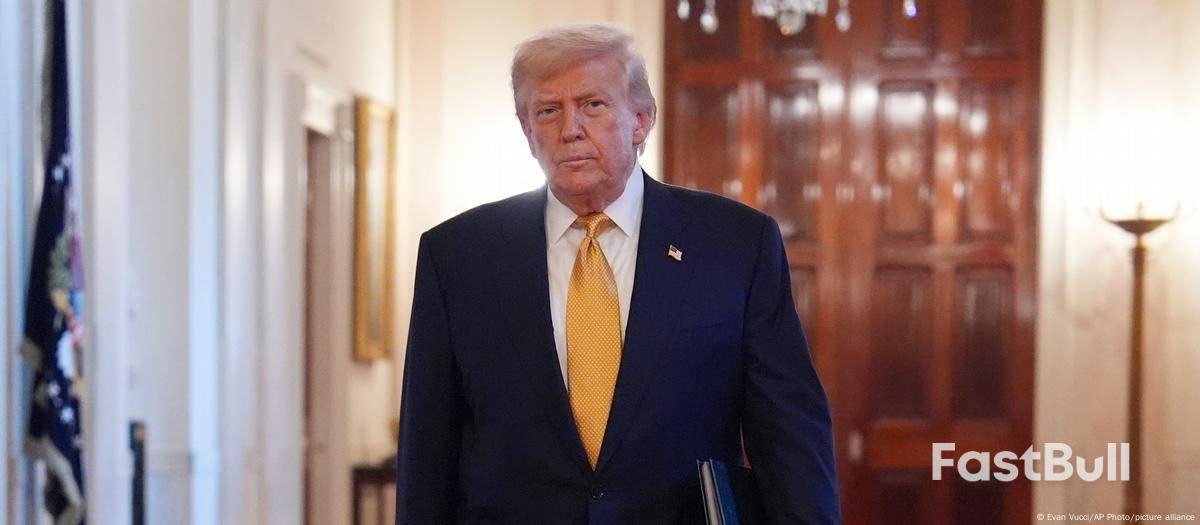
          US And Pakistan Strike Trade Deal To Develop Oil Reserves

          Daniel Carter

          Economic

          Political

          The development between US and Pakistan comes less than a day after Trump slapped a 25% tariff on Islamabad's arch-rival India.
          US President Donald Trump announced late on Wednesday that he had reached an agreement with Pakistan that will see Washington help develop the South Asian nation's oil reserves.
          "We have just concluded a Deal with the Country of Pakistan, whereby Pakistan and the United States will work together on developing their massive Oil Reserves," Trump wrote on his social media site Truth Social.
          Pakistan said the deal will result in lower tariffs on its exports to the US.
          The country's deputy prime minister and foreign minister, Ishaq Dar, confirmed the deal in a statement.
          "Pakistan concludes deal with USA," he wrote on X, without elaborating further.

          Sketchy details of US-Pakistan agreement

          The details of the deal — including the tariff rate agreed upon and the oil reserves Trump was referring to— were not immediately clear.
          Trump also made no mention of tariffs in his announcement.
          "We are in the process of choosing the Oil Company that will lead this Partnership," the US President said.
          In April, Pakistan was facing a potential tariff of 29% from US, which was later suspended for 90 days to make way trade negotitiations.
          On Thursday, Pakistan's Finance Minister Mohammad Aurangzeb said he had conducted meetings with senior US officials in Washington, and called the deal a "win-win" situation for his country and the US.
          Aurangzeb is visiting the US capital for the second time in two weeks for what he said was a final-stage parley on a tariff deal.
          "From our perspective, it was always going beyond the immediate trade imperative, and its whole purpose was, and is, that trade and investment have to go hand in hand," he said in a video posted by Pakistan's finance ministry.

          Trump's scathing remarks on India

          The development between US and Pakistan comes less than a day after Washington slapped a 25% tariff on Islamabad's arch-rival India.
          The US imposed the tariff and other financial penalties over it, slated to take effect from August 1, for India's trade with Russia despite the ongoing Ukraine war.
          Trump on Wednesday criticized the Russian and Indian economies, adding that the latter had one of the "highest" tariffs in the world.
          "I don't care what India does with Russia. They can take their dead economies down together, for all I care. We have done very little business with India, their Tariffs are too high, among the highest in the World," he said.
          While announcing the oil partnership with Pakistan, the US President also suggested that Islamabad could sell oil to New Delhi "some day".
          "Who knows, maybe they'll be selling Oil to India some day!" Trump wrote.

          Source: DW

          To stay updated on all economic events of today, please check out our Economic calendar
          Risk Warnings and Disclaimers
          You understand and acknowledge that there is a high degree of risk involved in trading. Following any strategies or investment methods may lead to potential losses. The content on the site is provided by our contributors and analysts for information purposes only. You are solely responsible for determining whether any trading assets, securities, strategy, or any other product is suitable for investing based on your own investment objectives and financial situation.
          Add to Favorites
          Share

          Global Gold Demand Rises 3% in Q2 as Investment Surges Despite Jewelry Slump

          Gerik

          Economic

          Commodity

          Investment Demand Drives Market Growth Amid Uncertainty

          According to the World Gold Council (WGC), total global gold demand including over-the-counter (OTC) transactions rose 3% in Q2 2025 compared to the same period last year. The primary driver was a dramatic 78% increase in investment demand, as gold emerged once again as a preferred hedge against geopolitical instability and volatile trade policy. Spot prices soared 26% year-to-date, peaking at a record $3,500 per ounce in April, drawing large flows into gold-backed exchange-traded funds (ETFs) and physical bars.
          This rise reflects a strong causal relationship between macroeconomic uncertainty particularly related to tariffs, inflation risks, and policy divergence and investor appetite for safe-haven assets. ETFs experienced their largest semi-annual inflow since H1 2020, while bar demand alone rose 21% year-on-year, underscoring a shift toward long-term physical holdings in a high-volatility environment.

          Jewelry Demand Falters as Prices Deter Traditional Buyers

          While investment demand soared, the same cannot be said for jewelry. Consumption dropped 14% to 341.0 tons, the lowest level since the COVID-19 era. The steep decline was most notable in China and India markets that typically account for more than half of global jewelry demand. In Q2, their combined share fell below 50% for only the third time in five years, marking a significant deviation from historical norms.
          This downturn is directly attributable to elevated gold prices, which pushed traditional buyers to the sidelines. The inverse relationship between price level and jewelry demand is a well-established dynamic in physical markets, and this quarter’s data reaffirms that link.
          Central Bank Demand Softens but Strategic Reallocation Persists
          Another major pillar of gold demand central bank buying fell 21% in the second quarter to 166.5 tons. While some of this pullback reflects reduced reported purchases, the WGC noted that unreported buying remains a component of the broader trend. The Council downgraded its full-year estimate for central bank gold purchases, though it emphasized that the longer-term strategic shift away from US-dollar-denominated assets toward gold reserves remains intact.
          The decline in quarterly purchases highlights a correlation rather than a causality. Central banks may be timing their purchases amid high prices or geopolitical shifts, but their broader objective of reserve diversification still underpins medium- to long-term accumulation patterns.

          Recycling and Mine Production Steady, Supply Matches Demand

          On the supply side, global gold availability also increased by 3% year-on-year in Q2, aligning with demand. Mine production rose slightly to 908.6 tons, while recycled gold added 347.2 tons up 4% from last year. Despite record prices, recycling remained relatively subdued, especially in India, where consumers often chose to exchange gold for new jewelry or use it as loan collateral rather than sell it outright.
          This behavior reflects a cultural and financial strategy common in Asian markets where gold serves as both adornment and economic security. As such, elevated prices have not yet triggered a broad recycling wave, despite favorable conditions.

          Investment to Sustain Market Strength, Jewelry Still Under Pressure

          The WGC anticipates continued momentum in ETFs during the second half of 2025, supported by market volatility and geopolitical events. However, it expects a moderate softening in retail investment and continued pressure on jewelry demand, especially if prices remain above $3,200 per ounce.
          Given the macroeconomic context, further divergence between price-sensitive physical demand and price-driven investment flows seems likely. Central banks may also resume purchases in later quarters if price volatility subsides or currency diversification pressures intensify.
          The gold market’s performance in Q2 2025 reflects a decisive pivot toward financial and strategic uses of the metal. While traditional demand from jewelry and central banks softened under high prices, investment appetite surged in response to economic and geopolitical turbulence. The 3% rise in total demand, mirroring a proportional increase in supply, suggests that gold remains well-balanced but increasingly financialized in nature. As global uncertainties persist, gold’s role as a reserve and risk-hedge asset is only expected to grow in the quarters ahead.

          Source: Reuters

          To stay updated on all economic events of today, please check out our Economic calendar
          Risk Warnings and Disclaimers
          You understand and acknowledge that there is a high degree of risk involved in trading. Following any strategies or investment methods may lead to potential losses. The content on the site is provided by our contributors and analysts for information purposes only. You are solely responsible for determining whether any trading assets, securities, strategy, or any other product is suitable for investing based on your own investment objectives and financial situation.
          Add to Favorites
          Share

          Jet Fuel Exports from Asia to Europe Surge to Multi-Year High on Strong Arbitrage and Demand

          Gerik

          Economic

          Commodity

          Asian Jet Fuel Flows Redirected to Europe Amid Surging Demand

          Jet fuel exports from Asia to Europe have climbed sharply in July, as traders moved to capitalize on favorable arbitrage margins amid a growing supply glut in the East and rising consumption in the West. According to Vortexa and several shipping sources, total shipments are estimated between 600,000 and 775,000 metric tons for the month equivalent to roughly 4.7 to 6.1 million barrels. This marks the highest volume in nearly three years, and some industry participants suggest it may be the most significant export level in five years.
          The volume represents a substantial increase from June, when exports from Northeast Asia to Europe stood near 500,000 tons. This consistent month-on-month growth illustrates a strong causal relationship between regional oversupply in Asia and the profitable export opportunities offered by European price premiums.

          Favorable Arbitrage, Lower Freight Costs Drive Trade Surge

          The key driver behind July’s export boom lies in the favorable arbitrage economics. According to LSEG, physical jet fuel prices in Northwest Europe maintained a $65-per-ton premium over Asia in July up from $50 in June. This pricing gap incentivized Asian refiners and traders to move surplus fuel westward, offsetting weaker margins at home.
          At the same time, falling freight rates enhanced arbitrage profitability. The average cost to ship 90,000 tons of jet fuel on LR2 tankers declined to $3.75 million in July, down from $4.4 million in June. The easing of geopolitical tensions following the Iran-Israel conflict contributed to this drop, creating a more favorable shipping environment for exporters.
          This combination of higher margins and reduced transportation costs directly stimulated export activity, illustrating a classic case of causality between improved netback economics and elevated shipping volumes.

          European Aviation Demand Fuels Import Appetite

          The sharp increase in imports also reflects robust European demand. Eurocontrol data shows the average number of daily flights in July rose 4% year-on-year and 3% higher than 2019 pre-pandemic levels, signaling a full recovery and renewed momentum in the aviation sector. As a result, stockpiles at the key ARA (Amsterdam-Rotterdam-Antwerp) hub fell to 745,000 tons the lowest since February and well below both 2025 and 2024 averages.
          This tight supply environment further reinforced Europe's appetite for imports, creating a feedback loop where increased demand in the West alleviates oversupply in the East.

          China and South Korea Lead Export Growth

          China, the world’s largest refining hub, played a central role in July’s export surge. The country is on track to ship out more than 2.3 million tons of aviation fuel in both July and August, according to industry estimates. Analysts at FGE suggest that while domestic demand has plateaued, Chinese refiners particularly Sinopec are ramping up output due to high profitability in the export market.
          South Korea also contributed significantly to the flow, leveraging its large-scale refining capacity and geographic advantage to supply Europe more aggressively.
          From a profitability standpoint, jet fuel remains the most lucrative product for Chinese refiners compared to alternatives, prompting a clear shift in refining strategies. The export decision is thus causally tied to comparative product margins rather than just geopolitical or logistical considerations.
          The dramatic surge in jet fuel exports from Asia to Europe in July underscores the powerful interaction between regional imbalances, arbitrage incentives, and recovering global aviation demand. While exports may moderate in August due to narrowing margins, the July data reflect a moment when trade flows, refinery economics, and transport costs aligned to produce a near-record redistribution of global jet fuel supply. For Asian refiners, the European market remains a critical outlet particularly when domestic demand stagnates and margin optimization becomes paramount.

          Source: Reuters

          To stay updated on all economic events of today, please check out our Economic calendar
          Risk Warnings and Disclaimers
          You understand and acknowledge that there is a high degree of risk involved in trading. Following any strategies or investment methods may lead to potential losses. The content on the site is provided by our contributors and analysts for information purposes only. You are solely responsible for determining whether any trading assets, securities, strategy, or any other product is suitable for investing based on your own investment objectives and financial situation.
          Add to Favorites
          Share
          FastBull
          Copyright © 2025 FastBull Ltd

          728 RM B 7/F GEE LOK IND BLDG NO 34 HUNG TO RD KWUN TONG KLN HONG KONG

          TelegramInstagramTwitterfacebooklinkedin
          App Store Google Play Google Play
          Products
          Charts

          Chats

          Q&A with Experts
          Screeners
          Economic Calendar
          Data
          Tools
          Membership
          Features
          Function
          Markets
          Copy Trading
          Latest Signals
          Contests
          News
          Analysis
          24/7
          Columns
          Education
          Company
          Careers
          About Us
          Contact Us
          Advertising
          Help Center
          Feedback
          User Agreement
          Privacy Policy
          Business

          White Label

          Data API

          Web Plug-ins

          Poster Maker

          Affiliate Program

          Risk Disclosure

          The risk of loss in trading financial instruments such as stocks, FX, commodities, futures, bonds, ETFs and crypto can be substantial. You may sustain a total loss of the funds that you deposit with your broker. Therefore, you should carefully consider whether such trading is suitable for you in light of your circumstances and financial resources.

          No decision to invest should be made without thoroughly conducting due diligence by yourself or consulting with your financial advisors. Our web content might not suit you since we don't know your financial conditions and investment needs. Our financial information might have latency or contain inaccuracy, so you should be fully responsible for any of your trading and investment decisions. The company will not be responsible for your capital loss.

          Without getting permission from the website, you are not allowed to copy the website's graphics, texts, or trademarks. Intellectual property rights in the content or data incorporated into this website belong to its providers and exchange merchants.

          Not Logged In

          Log in to access more features

          FastBull Membership

          Not yet

          Purchase

          Become a signal provider
          Help Center
          Customer Service
          Dark Mode
          Price Up/Down Colors

          Log In

          Sign Up

          Position
          Layout
          Fullscreen
          Default to Chart
          The chart page opens by default when you visit fastbull.com