• Trade
  • Markets
  • Copy
  • Contests
  • News
  • 24/7
  • Calendar
  • Q&A
  • Chats
Trending
Screeners
SYMBOL
LAST
BID
ASK
HIGH
LOW
NET CHG.
%CHG.
SPREAD
SPX
S&P 500 Index
6815.46
6815.46
6815.46
6861.30
6801.50
-11.95
-0.18%
--
DJI
Dow Jones Industrial Average
48362.87
48362.87
48362.87
48679.14
48285.67
-95.17
-0.20%
--
IXIC
NASDAQ Composite Index
23095.92
23095.92
23095.92
23345.56
23012.00
-99.24
-0.43%
--
USDX
US Dollar Index
97.940
98.020
97.940
98.070
97.740
-0.010
-0.01%
--
EURUSD
Euro / US Dollar
1.17463
1.17473
1.17463
1.17686
1.17262
+0.00069
+ 0.06%
--
GBPUSD
Pound Sterling / US Dollar
1.33737
1.33747
1.33737
1.34014
1.33546
+0.00030
+ 0.02%
--
XAUUSD
Gold / US Dollar
4302.89
4303.32
4302.89
4350.16
4285.08
+3.50
+ 0.08%
--
WTI
Light Sweet Crude Oil
56.332
56.362
56.332
57.601
56.233
-0.901
-1.57%
--

Community Accounts

Signal Accounts
--
Profit Accounts
--
Loss Accounts
--
View More

Become a signal provider

Sell trading signals to earn additional income

View More

Guide to Copy Trading

Get started with ease and confidence

View More

Signal Accounts for Members

All Signal Accounts

Best Return
  • Best Return
  • Best P/L
  • Best MDD
Past 1W
  • Past 1W
  • Past 1M
  • Past 1Y

All Contests

  • All
  • Trump Updates
  • Recommend
  • Stocks
  • Cryptocurrencies
  • Central Banks
  • Featured News
Top News Only
Share

Goldman Sachs Says They Believe That The Copper Price Is Vulnerable To An Ai-Linked Price Correction

Share

Goldman Sachs Upgrades 2026 Copper Price Forecast To $11400 From $10,650

Share

Attempts By Ukrainian Troops To Advance From The South-West To Outskirts Of Kupiansk Are Being Thwarted

Share

Russian Troops Control All Of Kupiansk - IFX Cites Russian Military

Share

On Monday (December 15), The South Korean Won Ultimately Rose 0.60% Against The US Dollar, Closing At 1468.91 Won. The Won Was On An Upward Trend Throughout The Day, Rising Significantly At 17:00 Beijing Time And Reaching A Daily High Of 1463.04 Won At 17:36

Share

Health Ministry: Israeli Forces Kill Palestinian Teen In West Bank

Share

New York Federal Reserve President Williams: Over Time, The Size Of Reserves Could Grow From $2.9 Trillion

Share

New York Fed President Williams: AI Valuations Are High, But There Is A Real Driving Factor

Share

New York Federal Reserve President Williams: The Job Market Is In Very Good Shape

Share

New York Fed President Williams: 'Very Supportive' Of USA Central Bank's Decision To Cut Interest Rates Last Week

Share

New York Fed President Williams: 'Too Early To Say' What Central Bank Should Do At January Meeting

Share

New York Fed President Williams: Strong Markets Part Of Reason Why Economy Will Grow Robustly In 2026

Share

New York Fed President Williams: What Constitutes Ample Reserves Will Change Over Time

Share

New York Fed President Williams: Market Valuations 'Elevated,' But There Are Reasons For Pricing

Share

New York Fed President Williams: Ample Reserves System Working Very Well

Share

New York Fed President Williams: Some Signs That Parts Of Underlying Economy Not As Strong As GDP Data Suggests

Share

New York Fed President Williams: Expects Coming Job Data Will Show Gradual Cooling

Share

Ukraine President Zelenskiy: Monitoring Of Ceasefire Should Be Part Of Security Guarantees

Share

Ukraine President Zelenskiy: Ukraine Needs Clear Understanding On Security Guarantees Before Taking Any Decisions Regarding Frontlines

Share

U.S. Commerce Secretary Rutnick Praised Korea Zinc Co. Ltd., Stating That The United States Will Have Priority Access To The Company's Products In 2026

TIME
ACT
FCST
PREV
Japan Tankan Small Manufacturing Outlook Index (Q4)

A:--

F: --

P: --

Japan Tankan Large Non-Manufacturing Outlook Index (Q4)

A:--

F: --

P: --

Japan Tankan Large Manufacturing Outlook Index (Q4)

A:--

F: --

P: --

Japan Tankan Small Manufacturing Diffusion Index (Q4)

A:--

F: --

P: --

Japan Tankan Large-Enterprise Capital Expenditure YoY (Q4)

A:--

F: --

P: --

U.K. Rightmove House Price Index YoY (Dec)

A:--

F: --

P: --

China, Mainland Industrial Output YoY (YTD) (Nov)

A:--

F: --

P: --

China, Mainland Urban Area Unemployment Rate (Nov)

A:--

F: --

P: --

Saudi Arabia CPI YoY (Nov)

A:--

F: --

P: --

Euro Zone Industrial Output YoY (Oct)

A:--

F: --

P: --

Euro Zone Industrial Output MoM (Oct)

A:--

F: --

P: --

Canada Existing Home Sales MoM (Nov)

A:--

F: --

P: --

Canada National Economic Confidence Index

A:--

F: --

P: --

Canada New Housing Starts (Nov)

A:--

F: --

P: --
U.S. NY Fed Manufacturing Employment Index (Dec)

A:--

F: --

P: --

U.S. NY Fed Manufacturing Index (Dec)

A:--

F: --

P: --

Canada Core CPI YoY (Nov)

A:--

F: --

P: --

Canada Manufacturing Unfilled Orders MoM (Oct)

A:--

F: --

P: --

U.S. NY Fed Manufacturing Prices Received Index (Dec)

A:--

F: --

P: --

U.S. NY Fed Manufacturing New Orders Index (Dec)

A:--

F: --

P: --

Canada Manufacturing New Orders MoM (Oct)

A:--

F: --

P: --

Canada Core CPI MoM (Nov)

A:--

F: --

P: --

Canada Trimmed CPI YoY (SA) (Nov)

A:--

F: --

P: --

Canada Manufacturing Inventory MoM (Oct)

A:--

F: --

P: --

Canada CPI YoY (Nov)

A:--

F: --

P: --

Canada CPI MoM (Nov)

A:--

F: --

P: --

Canada CPI YoY (SA) (Nov)

A:--

F: --

P: --

Canada Core CPI MoM (SA) (Nov)

A:--

F: --

P: --

Canada CPI MoM (SA) (Nov)

A:--

F: --

P: --

Federal Reserve Board Governor Milan delivered a speech
U.S. NAHB Housing Market Index (Dec)

A:--

F: --

P: --

Australia Composite PMI Prelim (Dec)

--

F: --

P: --

Australia Services PMI Prelim (Dec)

--

F: --

P: --

Australia Manufacturing PMI Prelim (Dec)

--

F: --

P: --

Japan Manufacturing PMI Prelim (SA) (Dec)

--

F: --

P: --

U.K. 3-Month ILO Employment Change (Oct)

--

F: --

P: --

U.K. Unemployment Claimant Count (Nov)

--

F: --

P: --

U.K. Unemployment Rate (Nov)

--

F: --

P: --

U.K. 3-Month ILO Unemployment Rate (Oct)

--

F: --

P: --

U.K. Average Weekly Earnings (3-Month Average, Including Bonuses) YoY (Oct)

--

F: --

P: --

U.K. Average Weekly Earnings (3-Month Average, Excluding Bonuses) YoY (Oct)

--

F: --

P: --

France Services PMI Prelim (Dec)

--

F: --

P: --

France Composite PMI Prelim (SA) (Dec)

--

F: --

P: --

France Manufacturing PMI Prelim (Dec)

--

F: --

P: --

Germany Services PMI Prelim (SA) (Dec)

--

F: --

P: --

Germany Manufacturing PMI Prelim (SA) (Dec)

--

F: --

P: --

Germany Composite PMI Prelim (SA) (Dec)

--

F: --

P: --

Euro Zone Composite PMI Prelim (SA) (Dec)

--

F: --

P: --

Euro Zone Services PMI Prelim (SA) (Dec)

--

F: --

P: --

Euro Zone Manufacturing PMI Prelim (SA) (Dec)

--

F: --

P: --

U.K. Services PMI Prelim (Dec)

--

F: --

P: --

U.K. Manufacturing PMI Prelim (Dec)

--

F: --

P: --

U.K. Composite PMI Prelim (Dec)

--

F: --

P: --

Euro Zone ZEW Economic Sentiment Index (Dec)

--

F: --

P: --

Germany ZEW Current Conditions Index (Dec)

--

F: --

P: --

Germany ZEW Economic Sentiment Index (Dec)

--

F: --

P: --

Euro Zone Trade Balance (Not SA) (Oct)

--

F: --

P: --

Euro Zone ZEW Current Conditions Index (Dec)

--

F: --

P: --

Euro Zone Trade Balance (SA) (Oct)

--

F: --

P: --

Euro Zone Total Reserve Assets (Nov)

--

F: --

P: --

U.K. Inflation Rate Expectations

--

F: --

P: --

Q&A with Experts
    • All
    • Chatrooms
    • Groups
    • Friends
    Connecting
    .
    .
    .
    Type here...
    Add Symbol or Code

      No matching data

      All
      Trump Updates
      Recommend
      Stocks
      Cryptocurrencies
      Central Banks
      Featured News
      • All
      • Russia-Ukraine Conflict
      • Middle East Flashpoint
      • All
      • Russia-Ukraine Conflict
      • Middle East Flashpoint
      Search
      Products

      Charts Free Forever

      Chats Q&A with Experts
      Screeners Economic Calendar Data Tools
      Membership Features
      Data Warehouse Market Trends Institutional Data Policy Rates Macro

      Market Trends

      Market Sentiment Order Book Forex Correlations

      Top Indicators

      Charts Free Forever
      Markets

      News

      News Analysis 24/7 Columns Education
      From Institutions From Analysts
      Topics Columnists

      Latest Views

      Latest Views

      Trending Topics

      Top Columnists

      Latest Update

      Signals

      Copy Rankings Latest Signals Become a signal provider AI Rating
      Contests
      Brokers

      Overview Brokers Assessment Rankings Regulators News Claims
      Broker listing Forex Brokers Comparison Tool Live Spread Comparison Scam
      Q&A Complaint Scam Alert Videos Tips to Detect Scam
      More

      Business
      Events
      Careers About Us Advertising Help Center

      White Label

      Data API

      Web Plug-ins

      Affiliate Program

      Awards Institution Evaluation IB Seminar Salon Event Exhibition
      Vietnam Thailand Singapore Dubai
      Fans Party Investment Sharing Session
      FastBull Summit BrokersView Expo
      Recent Searches
        Top Searches
          Markets
          News
          Analysis
          User
          24/7
          Economic Calendar
          Education
          Data
          • Names
          • Latest
          • Prev

          View All

          No data

          Scan to Download

          Faster Charts, Chat Faster!

          Download App
          English
          • English
          • Español
          • العربية
          • Bahasa Indonesia
          • Bahasa Melayu
          • Tiếng Việt
          • ภาษาไทย
          • Français
          • Italiano
          • Türkçe
          • Русский язык
          • 简中
          • 繁中
          Open Account
          Search
          Products
          Charts Free Forever
          Markets
          News
          Signals

          Copy Rankings Latest Signals Become a signal provider AI Rating
          Contests
          Brokers

          Overview Brokers Assessment Rankings Regulators News Claims
          Broker listing Forex Brokers Comparison Tool Live Spread Comparison Scam
          Q&A Complaint Scam Alert Videos Tips to Detect Scam
          More

          Business
          Events
          Careers About Us Advertising Help Center

          White Label

          Data API

          Web Plug-ins

          Affiliate Program

          Awards Institution Evaluation IB Seminar Salon Event Exhibition
          Vietnam Thailand Singapore Dubai
          Fans Party Investment Sharing Session
          FastBull Summit BrokersView Expo

          Aug. 1 Is 'Hard Deadline' For Trump's Tariffs, Commerce Secretary Lutnick Says

          Olivia Brooks

          China–U.S. Trade War

          Economic

          Political

          Summary:

          President Donald Trump's 'reciprocal" tariff deadline has shifted since April 2, but White House officials insist that Aug. 1 is a firm deadline.
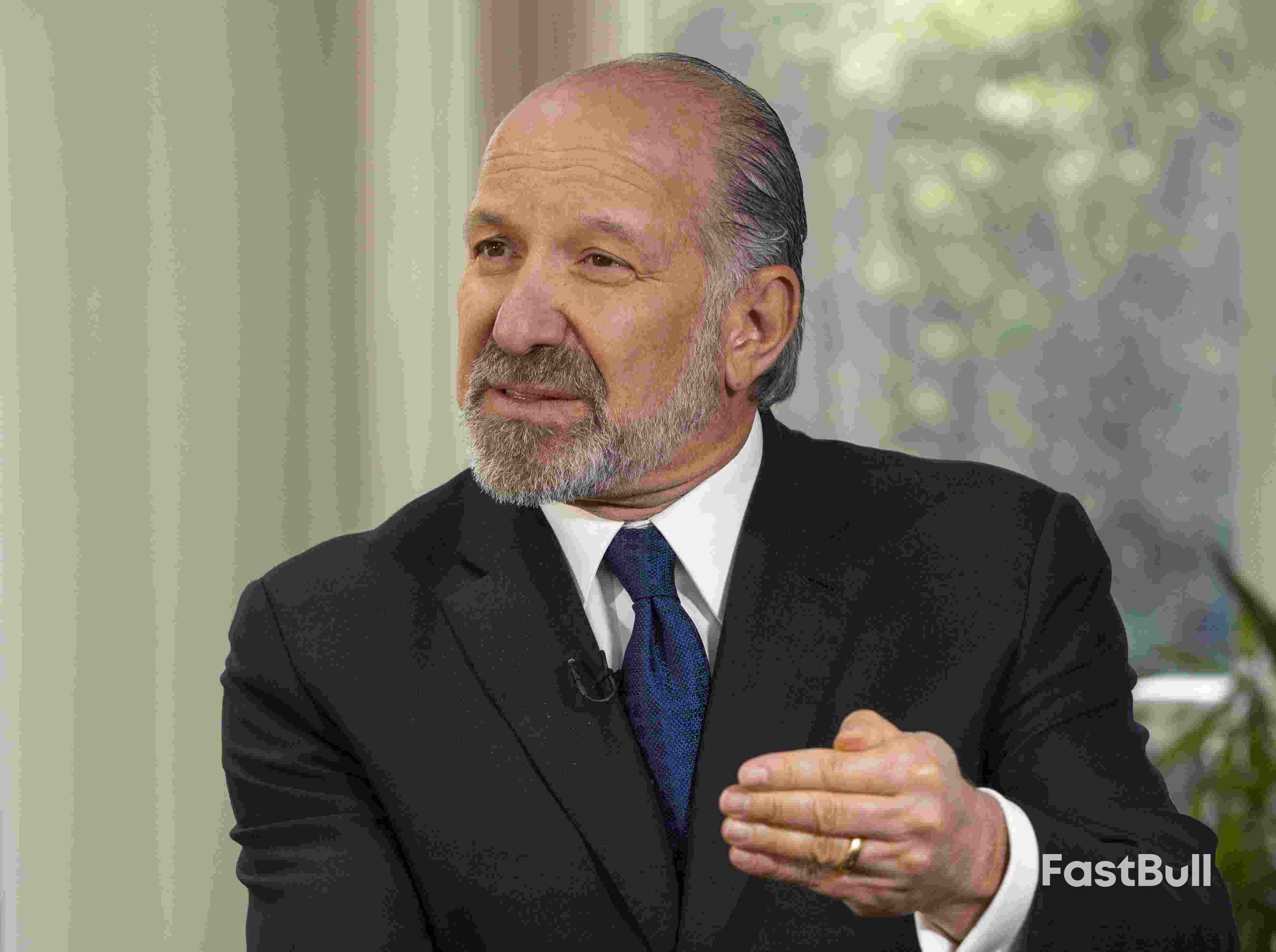
          Commerce Secretary Howard Lutnick said Sunday that Aug. 1 is the deadline for countries to begin paying tariffs to the United States, but said that "nothing stops countries from talking to us after August 1."

          "That's a hard deadline, so on August 1, the new tariff rates will come in," Lutnick said on CBS News, when asked about the deadline for his tariffs on the European Union.

          President Donald Trump's tariff deadline has shifted since he announced his steep levies on trading partners on April 2, but White House officials now maintain that Aug. 1 is a firm deadline.

          "Nothing stops countries from talking to us after August 1, but they're going to start paying the tariffs on August 1," Lutnick said.

          Lutnick said that some small countries, "the Latin American countries, the Caribbean countries, many countries in Africa," would have a baseline tariff of 10%.

          Lutnick's comments could bring relief for nations anxiously awaiting a definitive decision on tariff rates from Trump, who recently suggested that baseline tariff rates for these nations could be over 10%.

          The president announced last week that letters to smaller countries would be sent out soon. "We'll probably set one tariff for all of them ... probably a little over 10%," Trump said.

          Lutnick added that "the bigger economies will either open themselves up or they'll pay a fair tariff to America."

          Lutnick's comments come after Trump earlier this month sent letters to trading partners notifying them of the new tariff rates, which reached as high as 40% for some nations.

          The letters, posted on Trump's Truth Social, said that tariffs would take effect Aug. 1, prompting last-minute negotiations from trading partners seeking a lower rate.

          Source: CNBC

          To stay updated on all economic events of today, please check out our Economic calendar
          Risk Warnings and Disclaimers
          You understand and acknowledge that there is a high degree of risk involved in trading. Following any strategies or investment methods may lead to potential losses. The content on the site is provided by our contributors and analysts for information purposes only. You are solely responsible for determining whether any trading assets, securities, strategy, or any other product is suitable for investing based on your own investment objectives and financial situation.
          Add to Favorites
          Share

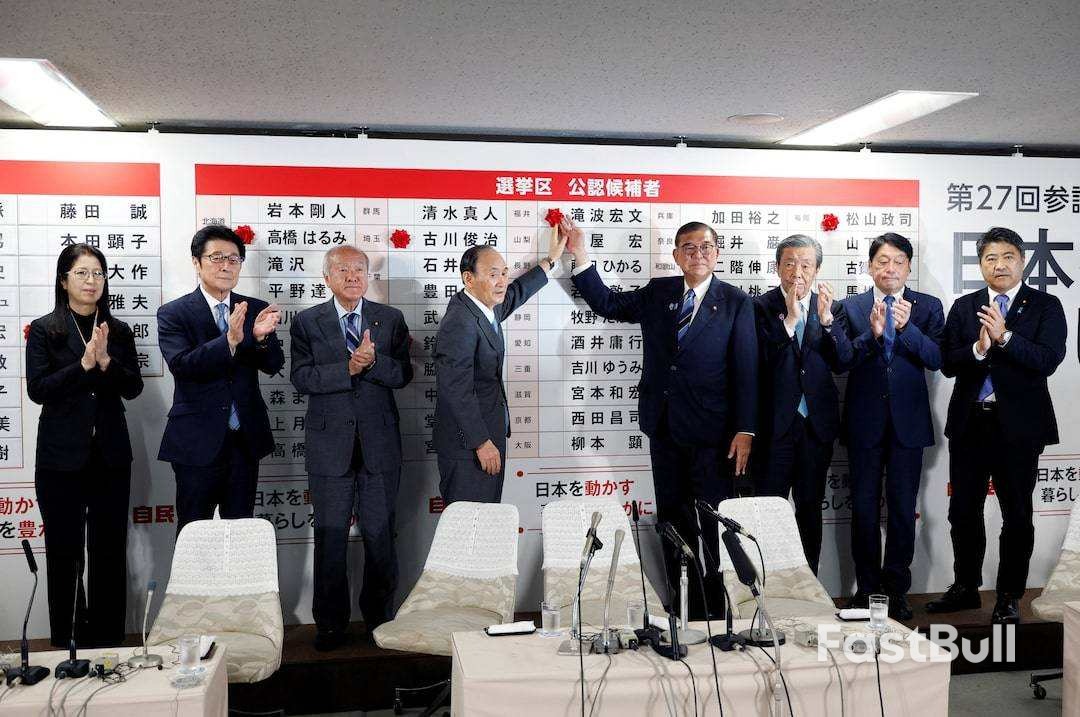
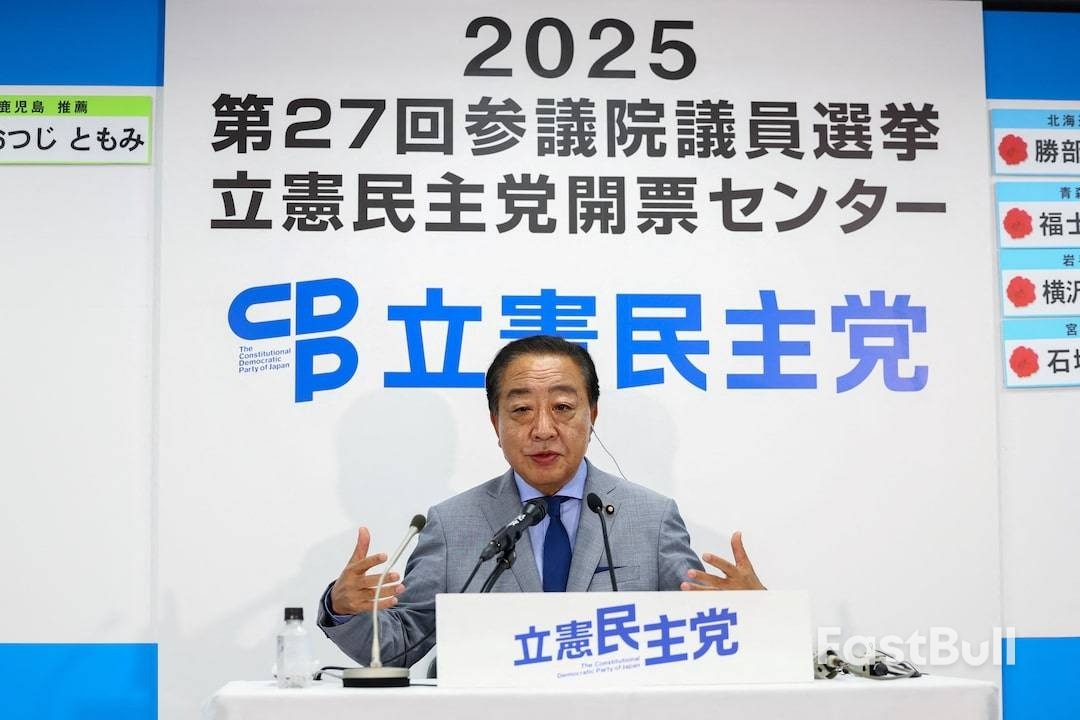
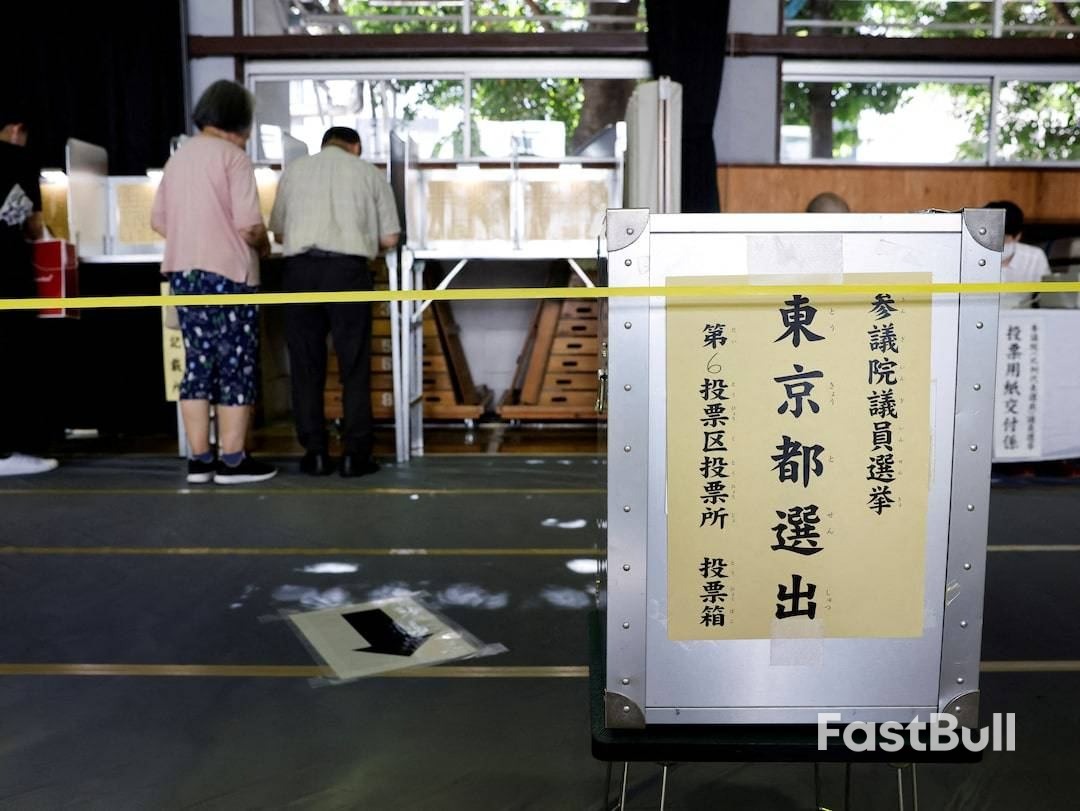
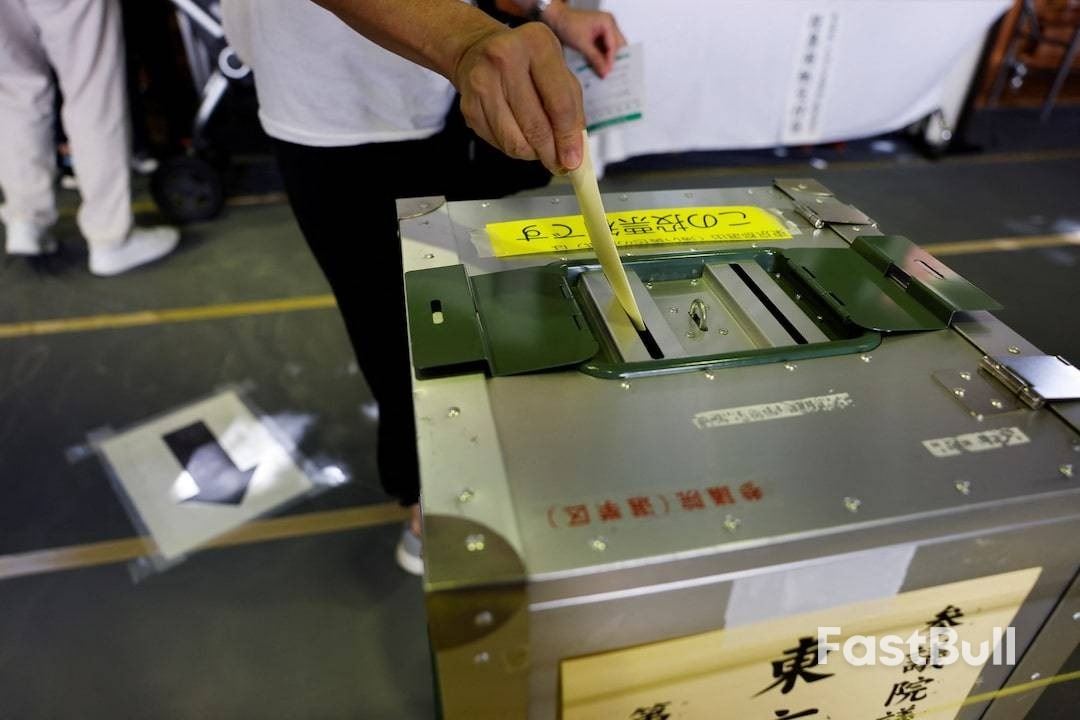
          Japan's Shaky Government Loses Upper House Control

          Olivia Brooks

          Political

          Upper house in Sunday's election, public broadcaster NHK reported , an outcome that further weakens Prime Minister Shigeru Ishiba's grip on power as a tariff deadline with the United States looms.

          While the ballot does not directly determine whether Ishiba's administration will fall, it heaps political pressure on the embattled leader who also lost control of the more powerful lower house in October.

          Ishiba's Liberal Democratic Party (LDP) and coalition partner Komeito were certain to fall short of the 50 seats needed to secure the 248-seat upper chamber in an election where half the seats were up for grabs, NHK said early on Monday, with six seats still to call.

          That comes on top of its worst showing in 15 years in October's lower house election, a vote which has left Ishiba's administration vulnerable to no-confidence motions and calls from within his own party for leadership change.

          Speaking late on Sunday evening after exit polls closed, Ishiba told NHK he "solemnly" accepted the "harsh result".

          "We are engaged in extremely critical tariff negotiations with the United States...we must never ruin these negotiations. It is only natural to devote our complete dedication and energy to realizing our national interests," he later told TV Tokyo.

          Asked whether he intended to stay on as prime minister and party leader, he said "that's right".

          Japan, the world's fourth largest economy, faces a deadline of August 1 to strike a trade deal with the United States or face punishing tariffs in its largest export market.

          The main opposition Constitutional Democratic Party was set to finish second, vote counts showed.

          The fringe far-right Sanseito party, birthed on YouTube a few years ago, announced its arrival in mainstream politics with its 'Japanese First' campaign and warnings about a "silent invasion" of foreigners winning broader support. It was set to add at least 13 seats to one elected previously.

          'HAMMERED HOME'

          Opposition parties advocating for tax cuts and welfare spending struck a chord with voters, as rising consumer prices - particularly a jump in the cost of rice - have sowed frustration at the government's response.


          Item 1 of 10 Election officials count votes at a ballot counting centre for Japan's upper house election in Tokyo, Japan, July 20, 2025. REUTERS/Manami Yamada

          [1/10]Election officials count votes at a ballot counting centre for Japan's upper house election in Tokyo, Japan, July 20, 2025. REUTERS/Manami Yamada Purchase Licensing Rights, opens new tab

          "The LDP was largely playing defence in this election, being on the wrong side of a key voter issue," said David Boling, a director at consulting firm Eurasia Group.

          "Polls show that most households want a cut to the consumption tax to address inflation, something that the LDP opposes. Opposition parties seized on it and hammered that message home."

          The LDP has been urging fiscal restraint, with one eye on a very jittery government bond market, as investors worry about Japan's ability to refinance the world's largest debt pile. Any concessions the LDP must now strike with opposition parties to pass policy will only further elevate those nerves, analysts say.

          "The ruling party will have to compromise in order to gain the cooperation of the opposition, and the budget will continue to expand," said Yu Uchiyama, a politics professor at the University of Tokyo.

          "Overseas investors' evaluation of the Japan economy will also be quite harsh."

          Sanseito, which first emerged during the COVID-19 pandemic spreading conspiracy theories about vaccinations and a cabal of global elites, is among those advocating fiscal expansion.

          But it is its tough talk on immigration that has grabbed attention, dragging once-fringe political rhetoric into the mainstream.

          It remains to be seen whether the party can follow the path of other far-right parties with which it has drawn comparisons, such as Germany's AfD and Reform UK.

          "I am attending graduate school but there are no Japanese around me. All of them are foreigners," said Yu Nagai, a 25-year-old student who voted for Sanseito earlier on Sunday.

          "When I look at the way compensation and money are spent on foreigners, I think that Japanese people are a bit disrespected," Nagai said after casting his ballot at a polling station in Tokyo's Shinjuku ward.

          Japan, the world's oldest society, saw foreign-born residents hit a record of about 3.8 million last year.

          That is still just 3% of the total population, a much smaller fraction than in the United States and Europe, but comes amid a tourism boom that has made foreigners far more visible across the country.

          Source: Reuters

          Risk Warnings and Disclaimers
          You understand and acknowledge that there is a high degree of risk involved in trading. Following any strategies or investment methods may lead to potential losses. The content on the site is provided by our contributors and analysts for information purposes only. You are solely responsible for determining whether any trading assets, securities, strategy, or any other product is suitable for investing based on your own investment objectives and financial situation.
          Add to Favorites
          Share

          Trump’s GENIUS Act Launches U.S. into Digital Currency Era with Regulatory Clarity and Strategic Ambition

          Gerik

          Economic

          Cryptocurrency

          Legal Recognition for Stablecoins: A New Era Begins

          In a landmark move, President Trump has enacted the GENIUS Act (Guiding and Establishing National Innovation for U.S. Finance), the first federal legislation to establish a regulatory framework for stablecoins backed by the U.S. dollar. The law mandates that stablecoin issuers hold a one-to-one reserve in short-term Treasury securities or equivalent assets under federal or state oversight.
          Trump described the moment as “a giant leap to secure America’s dominance in global finance and digital currency,” positioning the U.S. at the forefront of fintech innovation. He emphasized that stablecoins will offer a new financial infrastructure combining the flexibility of cash with the efficiency of blockchain, serving both domestic and international users.
          This legislative milestone marks a turning point not just for policy but for the industry itself. By providing regulatory clarity and legal certainty, the GENIUS Act opens the door for broader adoption of stablecoins and cements the role of the U.S. dollar as the foundation of global digital finance.

          Reinforcing the Dollar’s Global Status

          A central theme of the GENIUS Act is preserving the dollar’s reserve currency status. Trump warned that losing this position would be “equivalent to losing a world war.” The Act’s stablecoin framework is designed to extend the dollar’s reach, enabling billions globally to transact in USD with the privacy and decentralization of cash, but with digital speed and global access.
          By tying stablecoin issuance to highly secure U.S. Treasury instruments, the policy also supports domestic financial stability. This linkage ensures that digital dollars are not only credible but tightly integrated into the traditional financial system creating a stabilizing feedback loop between on-chain assets and public finance.

          A Political Shift: From Skepticism to Crypto Advocacy

          Trump’s embrace of digital assets marks a dramatic shift in tone. Once critical of cryptocurrencies, he now emerges as the first U.S. president to legally recognize and promote them. The transformation became official during what he called “Crypto Week,” attended by high-profile crypto leaders including Coinbase CEO Brian Armstrong, Gemini founders Tyler and Cameron Winklevoss, and Robinhood’s Vlad Tenev.
          This pivot reflects a strategic understanding of the crypto sector’s growing economic and political influence. The law’s passage was backed by bipartisan support in Congress, although not without opposition. Some conservative lawmakers attempted to stall the bill over concerns about a potential Federal Reserve-issued CBDC (central bank digital currency). Their objections were withdrawn after Trump agreed to address the issue in a forthcoming defense bill.

          Strategic and Legal Implications for the Industry

          The GENIUS Act requires stablecoin reserves to be maintained in cash or short-term U.S. government debt, significantly reducing systemic risk. It also prohibits off-chain rehypothecation, ensuring that reserve transparency remains intact. According to Treasury officials, this structure will foster innovation while preventing speculative excesses seen in previous cycles such as the collapse of FTX and other unregulated platforms.
          The Act comes at a time when investors are seeking regulatory clarity after years of legal ambiguity. Following its passage, Trump’s administration moved quickly to de-escalate legal actions against major platforms including Coinbase, Uniswap Labs, Robinhood, and OpenSea signaling a coordinated shift in the federal government’s posture toward the sector.

          Political Influence and Industry Backing

          The crypto industry’s growing lobbying power also played a role in the law’s momentum. Political action committees (PACs) linked to crypto firms have channeled substantial funds into supporting pro-crypto candidates for the 2024 election cycle. Trump, widely backed by the crypto community, has capitalized on this support in his reelection campaign.
          To institutionalize his digital agenda, Trump appointed venture capitalist David Sacks as the first White House Advisor on Artificial Intelligence and Crypto. He also issued an executive order to create the Strategic Bitcoin Reserve Fund, which includes holdings of digital assets considered strategically vital to national interests.

          A Defining Moment for U.S. Digital Finance

          The GENIUS Act positions the United States at the frontier of regulated digital finance. It formalizes the role of stablecoins in the global monetary system, stabilizes the domestic fintech ecosystem, and reinforces the dollar’s supremacy in a digitized world economy.
          By aligning legal infrastructure with private innovation and global competitiveness, Trump’s administration has launched a new era in American financial leadership one where blockchain technologies are not only permitted but encouraged under clear, enforceable rules. Whether this marks the beginning of a long-term transformation or merely a policy phase remains to be seen, but the implications for the future of global finance are undeniably profound.
          To stay updated on all economic events of today, please check out our Economic calendar
          Risk Warnings and Disclaimers
          You understand and acknowledge that there is a high degree of risk involved in trading. Following any strategies or investment methods may lead to potential losses. The content on the site is provided by our contributors and analysts for information purposes only. You are solely responsible for determining whether any trading assets, securities, strategy, or any other product is suitable for investing based on your own investment objectives and financial situation.
          Add to Favorites
          Share

          Thailand Responds to Tariff Turbulence with Strategic Reforms to Boost Domestic Industry

          Gerik

          Economic

          Adapting to a New Trade Era: BOI’s Five-Pillar Strategy

          In response to growing investor concerns and intensifying global trade tensions particularly following retaliatory tariff measures from the United States Thailand’s Board of Investment (BOI) has rolled out a comprehensive strategy under the theme “Enhancing Thai Business Competitiveness for a New Global Era.” The policy suite aims to help Thai industries withstand external shocks while accelerating structural transformation across key sectors.
          This initiative reflects a direct response to dual pressures: the immediate risk of higher trade barriers and the longer-term challenge of remaining competitive in an increasingly protectionist and technologically driven world economy.

          Strengthening SMEs Through Tax and Technology Incentives

          The first pillar targets Thai small and medium-sized enterprises (SMEs), encouraging operational upgrades through extended tax breaks and support for modernization. SMEs registered with the Office of Small and Medium Enterprises Promotion (OSMEP) can now access five-year corporate income tax exemptions, up from the previous three years. These benefits apply to 100% of qualifying investments in automation, energy efficiency, digitalization, and international certification.
          This measure has a clear causal link: enhancing SME productivity and technology use is expected to increase their integration into high-value sectors, thus reducing vulnerability to foreign competition and external demand shocks.

          Localizing the EV Supply Chain for Resilience

          The second policy pillar promotes the domestic sourcing of components for electric vehicles (EVs) and electrical devices. By establishing domestic content thresholds such as 40% for battery EVs, 45% for plug-in hybrids, and 15% for EV parts Thailand incentivizes foreign companies to incorporate local suppliers in exchange for tax relief.
          These requirements are backed by official “Made in Thailand” (MiT) certifications. In return, eligible firms receive an additional 50% corporate tax reduction for two years. The correlation between supply chain localization and industrial stability is central here: by tying incentives to local integration, Thailand strengthens its manufacturing base and insulates itself from external supply disruptions.
          Monitoring and Filtering High-Risk Industries
          The third measure involves heightened oversight of sectors vulnerable to trade circumvention or potential US countermeasures. Industries such as auto parts, textiles, furniture, and electronics must now demonstrate genuine value-added production, not mere reprocessing. This ensures transparency in origin and aligns with international trade norms, reducing the risk of punitive measures from trade partners.
          Selective Industrial Investment and Environmental Governance
          The fourth pillar focuses on reshaping Thailand’s investment landscape by reallocating support away from saturated or environmentally sensitive sectors. BOI will suspend investment incentives for industries suffering from overcapacity such as steel and those with high environmental impact unless located in designated industrial zones.
          Additionally, certain industries like solar panel accessories and printed goods will require majority Thai ownership, a move designed to preserve domestic economic sovereignty and ensure fair competition. This set of regulations aims to balance industrial expansion with sustainability and equitable market access.

          Labor Market Reforms and Talent Incentives

          The fifth policy track addresses labor dynamics by mandating that at least 70% of the workforce in large manufacturing enterprises be Thai nationals. It also sets income thresholds for foreign work permit applicants 150,000 baht per month for executives and 50,000 baht for specialists to ensure imported talent brings measurable economic value.
          This measure is causally linked to knowledge transfer and local employment growth. By prioritizing Thai workers and attracting skilled foreign professionals, Thailand aims to foster innovation and workforce development simultaneously.

          Positioning for Global Supply Chain Realignment

          Beyond defensive adjustments, BOI is actively working to support industries with high export potential to the US and other major markets. Target sectors include food processing, rubber, auto parts, electronics, and machinery areas where Thailand already plays a vital role in global value chains.
          The BOI plans to organize sourcing events and business matching platforms such as SUBCON Thailand, expected to facilitate over 645 million USD in transactions annually. These actions are designed not only to offset the impact of US tariffs but to capture new market opportunities arising from the realignment of global production networks.

          Strategic Investment for Long-Term Competitiveness

          Thailand’s proactive and layered response to the “tariff storm” reveals a clear strategic intent: to turn trade disruption into industrial transformation. By reinforcing domestic supply chains, upgrading SMEs, enforcing production transparency, and nurturing skilled labor, Thailand is not merely reacting it is restructuring.
          As the global trade system fragments and realigns, countries that can balance adaptability with long-term planning will emerge stronger. Thailand’s current trajectory signals its ambition to become a resilient, high-value production hub in the next phase of global economic development.
          To stay updated on all economic events of today, please check out our Economic calendar
          Risk Warnings and Disclaimers
          You understand and acknowledge that there is a high degree of risk involved in trading. Following any strategies or investment methods may lead to potential losses. The content on the site is provided by our contributors and analysts for information purposes only. You are solely responsible for determining whether any trading assets, securities, strategy, or any other product is suitable for investing based on your own investment objectives and financial situation.
          Add to Favorites
          Share

          Russia Rolls Out Digital Ruble and Universal QR Code to Modernize National Payment System

          Gerik

          Economic

          Cryptocurrency

          Digital Ruble Legislation Enters into Force

          The Russian State Duma has passed a comprehensive law authorizing the phased introduction of the digital ruble into circulation. This marks a significant step in Russia's efforts to modernize its payment infrastructure while asserting greater control over digital financial flows. The legislation outlines a detailed implementation timeline beginning September 1, 2026, with full integration expected by 2028.
          The initial rollout targets the largest commercial banks, which will begin offering digital ruble accounts, transfers, and payment services to customers. All banks will be required to support digital ruble operations by 2028. This staged implementation strategy is designed to ensure system readiness while minimizing disruption for both businesses and consumers.

          Selective Adoption and Scalability Considerations

          Notably, the law distinguishes between large and small businesses. Retailers with annual revenue exceeding 120 million rubles (approximately $1.53 million) must accept the digital ruble starting in 2026. By contrast, small vendors with turnover under 5 million rubles are exempt, as are stores in areas lacking internet access. This approach reflects a recognition of infrastructure disparities and aims to avoid penalizing small or remote operators during the early adoption phase.
          From September 2027, compliance will be extended to licensed banks and business entities with turnover above 30 million rubles. By 2028, all remaining entities will be required to support digital ruble transactions. This sequence of deadlines reflects a causal prioritization: larger and better-resourced actors are expected to lead adoption, creating network effects before the full system goes mainstream.

          Universal QR Code to Streamline Payments

          Alongside the digital ruble, the legislation mandates the deployment of a universal QR code system based on the National Payment Card System (NSPK). This solution is designed to consolidate multiple payment options such as fast payment systems, credit services, and eventually the digital ruble into a single, user-friendly code. Customers and merchants will benefit from reduced payment complexity, eliminating confusion caused by multiple QR formats.
          All banks must be technically prepared to process these universal QR codes by September 2026, though early implementation is encouraged. NSPK will offer this QR system free of charge, helping banks reduce integration costs and accelerating adoption across the financial sector.

          User Autonomy and System Coexistence

          The digital ruble is positioned as a complement to existing cash and non-cash instruments. Citizens can open digital wallets via their bank’s existing mobile applications, which will connect to the Central Bank of Russia’s digital ruble platform. Importantly, use of the digital ruble is optional, and all transactions will remain free for individuals. This voluntary model is designed to encourage uptake without compulsion, allowing users to gradually explore the currency’s utility.
          Russia’s Central Bank initiated a pilot of the digital ruble in April 2023. By May 2025, the pilot had opened 2,500 wallets for individuals and legal entities and facilitated 63,000 transactions, including nearly 13,000 purchases and over 17,000 smart contracts. These early results demonstrate initial viability and signal a cautious but deliberate path toward broader adoption.
          The combination of digital currency functionality and programmable features like smart contracts underscores the state’s ambition to embed financial automation into the mainstream economy. The correlation between the pilot results and legislative rollout indicates that the early-stage trials have provided sufficient confidence for nationwide expansion.

          Toward a Sovereign Digital Financial System

          Russia’s digital ruble initiative and the universal QR code system represent a strategic overhaul of its national payment infrastructure. By phasing implementation, accommodating varied business capacities, and offering user autonomy, the government aims to balance modernization with inclusivity.
          This transformation carries both technological and geopolitical implications. The digital ruble offers a state-controlled alternative to foreign payment networks and intermediaries, signaling a desire to enhance monetary sovereignty. As the system evolves, its success will depend on user adoption, interoperability, and the state’s ability to maintain trust in a rapidly digitizing financial landscape.

          Source: The Block

          To stay updated on all economic events of today, please check out our Economic calendar
          Risk Warnings and Disclaimers
          You understand and acknowledge that there is a high degree of risk involved in trading. Following any strategies or investment methods may lead to potential losses. The content on the site is provided by our contributors and analysts for information purposes only. You are solely responsible for determining whether any trading assets, securities, strategy, or any other product is suitable for investing based on your own investment objectives and financial situation.
          Add to Favorites
          Share

          South Korea’s Crypto Exchanges Struggle as Investor Capital Shifts to Domestic Stocks

          Gerik

          Cryptocurrency

          Economic

          Crypto Market Faces Headwinds Amid Shifting Investor Sentiment

          South Korea’s major cryptocurrency exchanges are encountering sharp declines in trading activity, even as Bitcoin posts new all-time highs. According to industry officials, this paradox reflects a broader shift in investor behavior away from digital assets and toward traditional equities.
          Recent data from CoinGecko revealed that the average monthly trading volume across the country’s top five crypto platforms fell by 34% in June compared to May, reaching 3.17 trillion won (approximately $2.3 billion). This marks a staggering 71% drop from January, a time when the market was energized following the inauguration of US President Donald Trump.
          This downturn is not coincidental. It correlates directly with renewed investor enthusiasm for domestic equities, spurred by the June 4 inauguration of President Lee Jae Myung in South Korea. His administration has pledged aggressive pro-market reforms to stimulate the stock market, leading the KOSPI index to its highest level in nearly four years. The redirection of capital is therefore rooted in policy shifts that have made stocks more attractive than speculative crypto holdings.

          Crypto Platforms Respond with Business Model Diversification

          With trading volume the core revenue driver for exchanges on a sharp decline, platforms are exploring alternative income streams to stay afloat. One notable response is the rollout of “crypto lending” services. These offerings allow users to borrow digital assets by using other cryptocurrencies as collateral, thereby enabling leveraged trades and short selling.
          This pivot signals a causal adaptation to a rapidly changing market landscape. Faced with declining interest from retail investors, exchanges are under pressure to innovate or risk obsolescence. By providing tools for margin-based trading, platforms aim to retain active users and generate new fee-based revenues, although such moves may also elevate systemic risk.

          Retail Investor Retreat Reflects Deeper Sentiment Weakness

          Despite favorable global conditions for Bitcoin, retail engagement in South Korea remains subdued. Matrixport, a digital asset service provider, noted in a recent report that the sharp contraction in trading volume indicates a broader withdrawal by individual investors. They attribute this partly to seasonal factors, noting that summer months often coincide with reduced activity, but also emphasize a lack of compelling catalysts in the crypto space.
          The relationship here is more than coincidental; it illustrates how psychological and economic drivers shape market engagement. As attention drifts to equities offering clearer policy support and potentially lower perceived risk, retail investors are less inclined to participate in highly volatile crypto markets despite headline gains in digital asset prices.

          Implications for the Future of South Korea’s Crypto Sector

          The current market trajectory exposes a vulnerability within the business model of South Korea’s crypto exchanges. With their revenue streams heavily tied to transaction volumes, even short-term reductions in trading can have immediate financial repercussions. While crypto lending may offer a temporary buffer, it also raises regulatory concerns around risk exposure and user protection.
          Moreover, the competition for investor capital between traditional and digital markets is intensifying. As long as government policies continue to favor stock market growth, capital flight from cryptocurrencies may persist. Without a major technological breakthrough or regulatory development to reinvigorate enthusiasm, digital asset platforms may face prolonged stagnation.

          A Market in Transition, Awaiting a Catalyst

          South Korea’s cryptocurrency exchanges are navigating a complex and shifting investment landscape. While macroeconomic conditions and technological trends still favor the long-term viability of digital assets, the short-term reality is defined by declining volumes, investor fatigue, and intensified competition from a resurgent equities market.
          Whether this downturn proves cyclical or structural will depend on the sector’s ability to adapt and reengage disenchanted retail participants. Until then, the industry remains in search of a new catalyst one capable of reversing capital outflows and reigniting the speculative appetite that once defined South Korea’s crypto scene.
          To stay updated on all economic events of today, please check out our Economic calendar
          Risk Warnings and Disclaimers
          You understand and acknowledge that there is a high degree of risk involved in trading. Following any strategies or investment methods may lead to potential losses. The content on the site is provided by our contributors and analysts for information purposes only. You are solely responsible for determining whether any trading assets, securities, strategy, or any other product is suitable for investing based on your own investment objectives and financial situation.
          Add to Favorites
          Share

          Wall Street Banks Embrace Cautious Optimism as Profit Outlook Rebounds

          Gerik

          Economic

          From Gloom to Optimism: A Swift Sentiment Shift

          Just a quarter ago, the sentiment across Wall Street’s biggest banks was notably grim. Triggered by President Donald Trump’s surprise tariff announcement on April 2 dubbed “Liberation Day” and warnings of potential economic turmoil, the first quarter of 2025 was marked by frozen deal activity, jittery markets, and recession fears. Today, that pessimism has been replaced with a cautious but rising sense of optimism.
          According to CFRA Research analyst Ken Leon, the financial sector in April appeared poised for serious disruption. However, those fears did not materialize. As the second-quarter earnings season unfolds, JPMorgan Chase, Citigroup, and Wells Fargo are signaling recovery, boosted by improving capital markets and strategic corporate activity.

          Catalysts Behind the Recovery: IPOs, M&A, and Regulatory Easing

          The upturn is not random it is linked to a series of favorable developments. A resurgence in high-profile IPOs and large-scale mergers and acquisitions has revived deal pipelines. Additionally, the Trump administration’s move to loosen capital requirements and oversight for major banks has improved the regulatory climate, providing a stronger platform for profitability.
          The causal link between policy relaxation and renewed investor confidence is particularly evident. Deregulation has bolstered banks’ ability to repurchase shares and issue dividends, which, in turn, lifted stock prices to all-time highs. On July 3, shares of JPMorgan, Goldman Sachs, and Morgan Stanley reached record levels, underlining a broad market endorsement of these policy shifts.

          Trading Volatility Turns into Opportunity

          Unexpectedly, the market turbulence triggered by new tariffs became a tailwind for trading desks. Investors responded by aggressively repositioning portfolios, which led to elevated transaction volumes and trading revenues across Wall Street. This outcome, initially seen as a risk, instead delivered tangible revenue gains for investment banks.
          The chain of cause and effect is straightforward: increased uncertainty drove trading activity, which directly enhanced banks' earnings potential. This turnaround has also fueled expectations that upcoming earnings reports will surpass analyst forecasts, particularly in investment banking divisions.

          Strengthening Capital Market Momentum

          Ted Pick, CEO of Morgan Stanley, noted in June that the investment banking segment had regained momentum after a sluggish Q1. Supporting this view, analyst Betsy Graseck from Morgan Stanley observed in early July that capital markets had made a convincing comeback. Her forecasts suggest that institutions like JPMorgan and Goldman Sachs may outperform consensus expectations, owing to a robust finish in the latter half of the second quarter.
          Analysts from other firms echo this optimism. Jason Goldberg of Barclays emphasized that large banks are increasingly likely to beat Wall Street’s profit estimates, further validating the sentiment shift underway across the financial sector.

          Investor Sentiment and Strategic Confidence

          This turnaround in perception highlights a key point: investor sentiment toward the banking sector is tightly correlated with both regulatory dynamics and market activity. While April’s challenges were real, they appear to have served as a temporary headwind rather than a structural setback.
          Investors are now focused on whether banks can maintain their upward trajectory through the remainder of the year. With improved deal flow, more favorable policy conditions, and strong earnings momentum, the sector appears well-positioned assuming external shocks do not re-emerge.
          Major US banks are entering the second half of 2025 with strengthened balance sheets and strategic clarity. Regulatory easing, revived capital markets, and unexpected trading gains have collectively reignited investor enthusiasm. While caution remains warranted due to lingering macroeconomic uncertainties, the financial sector’s ability to adapt and rebound underscores its central role in navigating and capitalizing on market volatility. The current earnings season may well mark a turning point one where resilience and opportunity align to push profitability beyond expectations.

          Source: Investing

          To stay updated on all economic events of today, please check out our Economic calendar
          Risk Warnings and Disclaimers
          You understand and acknowledge that there is a high degree of risk involved in trading. Following any strategies or investment methods may lead to potential losses. The content on the site is provided by our contributors and analysts for information purposes only. You are solely responsible for determining whether any trading assets, securities, strategy, or any other product is suitable for investing based on your own investment objectives and financial situation.
          Add to Favorites
          Share
          FastBull
          Copyright © 2025 FastBull Ltd

          728 RM B 7/F GEE LOK IND BLDG NO 34 HUNG TO RD KWUN TONG KLN HONG KONG

          TelegramInstagramTwitterfacebooklinkedin
          App Store Google Play Google Play
          Products
          Charts

          Chats

          Q&A with Experts
          Screeners
          Economic Calendar
          Data
          Tools
          Membership
          Features
          Function
          Markets
          Copy Trading
          Latest Signals
          Contests
          News
          Analysis
          24/7
          Columns
          Education
          Company
          Careers
          About Us
          Contact Us
          Advertising
          Help Center
          Feedback
          User Agreement
          Privacy Policy
          Business

          White Label

          Data API

          Web Plug-ins

          Poster Maker

          Affiliate Program

          Risk Disclosure

          The risk of loss in trading financial instruments such as stocks, FX, commodities, futures, bonds, ETFs and crypto can be substantial. You may sustain a total loss of the funds that you deposit with your broker. Therefore, you should carefully consider whether such trading is suitable for you in light of your circumstances and financial resources.

          No decision to invest should be made without thoroughly conducting due diligence by yourself or consulting with your financial advisors. Our web content might not suit you since we don't know your financial conditions and investment needs. Our financial information might have latency or contain inaccuracy, so you should be fully responsible for any of your trading and investment decisions. The company will not be responsible for your capital loss.

          Without getting permission from the website, you are not allowed to copy the website's graphics, texts, or trademarks. Intellectual property rights in the content or data incorporated into this website belong to its providers and exchange merchants.

          Not Logged In

          Log in to access more features

          FastBull Membership

          Not yet

          Purchase

          Become a signal provider
          Help Center
          Customer Service
          Dark Mode
          Price Up/Down Colors

          Log In

          Sign Up

          Position
          Layout
          Fullscreen
          Default to Chart
          The chart page opens by default when you visit fastbull.com