• Trade
  • Markets
  • Copy
  • Contests
  • News
  • 24/7
  • Calendar
  • Q&A
  • Chats
Trending
Screeners
SYMBOL
LAST
BID
ASK
HIGH
LOW
NET CHG.
%CHG.
SPREAD
SPX
S&P 500 Index
6827.42
6827.42
6827.42
6899.86
6801.80
-73.58
-1.07%
--
DJI
Dow Jones Industrial Average
48458.04
48458.04
48458.04
48886.86
48334.10
-245.98
-0.51%
--
IXIC
NASDAQ Composite Index
23195.16
23195.16
23195.16
23554.89
23094.51
-398.69
-1.69%
--
USDX
US Dollar Index
97.950
98.030
97.950
98.500
97.950
-0.370
-0.38%
--
EURUSD
Euro / US Dollar
1.17394
1.17409
1.17394
1.17496
1.17192
+0.00011
+ 0.01%
--
GBPUSD
Pound Sterling / US Dollar
1.33707
1.33732
1.33707
1.33997
1.33419
-0.00148
-0.11%
--
XAUUSD
Gold / US Dollar
4299.39
4299.39
4299.39
4353.41
4257.10
+20.10
+ 0.47%
--
WTI
Light Sweet Crude Oil
57.233
57.485
57.233
58.011
56.969
-0.408
-0.71%
--

Community Accounts

Signal Accounts
--
Profit Accounts
--
Loss Accounts
--
View More

Become a signal provider

Sell trading signals to earn additional income

View More

Guide to Copy Trading

Get started with ease and confidence

View More

Signal Accounts for Members

All Signal Accounts

Best Return
  • Best Return
  • Best P/L
  • Best MDD
Past 1W
  • Past 1W
  • Past 1M
  • Past 1Y

All Contests

  • All
  • Trump Updates
  • Recommend
  • Stocks
  • Cryptocurrencies
  • Central Banks
  • Featured News
Top News Only
Share

USA Embassy In Lithuania: Maria Kalesnikava Is Not Going To Vilnius

Share

USA Embassy In Lithuania: Other Prisoners Are Being Sent From Belarus To Ukraine

Share

Ukraine President Zelenskiy: Five Ukrainians Released By Belarus In US-Brokered Deal

Share

USA Vilnius Embassy: USA Stands Ready For "Additional Engagement With Belarus That Advances USA Interests"

Share

USA Vilnius Embassy: Belarus, USA, Other Citizens Among The Prisoners Released Into Lithuania

Share

USA Vilnius Embassy: USA Will Continue Diplomatic Efforts To Free The Remaining Political Prisoners In Belarus

Share

USA Vilnius Embassy: Belarus Releases 123 Prisoners Following Meeting Of President Trump's Envoy Coale And Belarus President Lukashenko

Share

USA Vilnius Embassy: Masatoshi Nakanishi, Aliaksandr Syrytsa Are Among The Prisoners Released By Belarus

Share

USA Vilnius Embassy: Maria Kalesnikava And Viktor Babaryka Are Among The Prisoners Released By Belarus

Share

USA Vilnius Embassy: Nobel Peace Prize Laureate Ales Bialiatski Is Among The Prisoners Released By Belarus

Share

Belarusian Presidential Administration Telegram Channel: Lukashenko Has Pardoned 123 Prisoners As Part Of Deal With US

Share

Two Local Syrian Officials: Joint US-Syrian Military Patrol In Central Syria Came Under Fire From Unknown Assailants

Share

Israeli Military Says It Targeted 'Key Hamas Terrorist' In Gaza City

Share

Rwanda's Actions In Eastern Drc Are A Clear Violation Of Washington Accords Signed By President Trump - Secretary Of State Rubio

Share

Israeli Military Issues Evacuation Warning In Southern Lebanon Village Ahead Of Strike - Spokesperson On X

Share

Belarusian State Media Cites US Envoy Coale As Saying He Discussed Ukraine And Venezuela With Lukashenko

Share

Belarusian State Media Cites US Envoy Coale As Saying That US Removes Sanctions On Belarusian Potassium

Share

Thai Prime Minister: No Ceasefire Agreement With Cambodia

Share

US, Ukraine To Discuss Ceasefire In Berlin Ahead Of European Summit

Share

Incoming Czech Prime Minister Babis: Czech Republic Will Not Take On Guarantees For Ukraine Financing, European Commission Must Find Alternatives

TIME
ACT
FCST
PREV
U.K. Trade Balance Non-EU (SA) (Oct)

A:--

F: --

P: --

U.K. Trade Balance (Oct)

A:--

F: --

P: --

U.K. Services Index MoM

A:--

F: --

P: --

U.K. Construction Output MoM (SA) (Oct)

A:--

F: --

P: --

U.K. Industrial Output YoY (Oct)

A:--

F: --

P: --

U.K. Trade Balance (SA) (Oct)

A:--

F: --

P: --

U.K. Trade Balance EU (SA) (Oct)

A:--

F: --

P: --

U.K. Manufacturing Output YoY (Oct)

A:--

F: --

P: --

U.K. GDP MoM (Oct)

A:--

F: --

P: --

U.K. GDP YoY (SA) (Oct)

A:--

F: --

P: --

U.K. Industrial Output MoM (Oct)

A:--

F: --

P: --

U.K. Construction Output YoY (Oct)

A:--

F: --

P: --

France HICP Final MoM (Nov)

A:--

F: --

P: --

China, Mainland Outstanding Loans Growth YoY (Nov)

A:--

F: --

P: --

China, Mainland M2 Money Supply YoY (Nov)

A:--

F: --

P: --

China, Mainland M0 Money Supply YoY (Nov)

A:--

F: --

P: --

China, Mainland M1 Money Supply YoY (Nov)

A:--

F: --

P: --

India CPI YoY (Nov)

A:--

F: --

P: --

India Deposit Gowth YoY

A:--

F: --

P: --

Brazil Services Growth YoY (Oct)

A:--

F: --

P: --

Mexico Industrial Output YoY (Oct)

A:--

F: --

P: --

Russia Trade Balance (Oct)

A:--

F: --

P: --

Philadelphia Fed President Henry Paulson delivers a speech
Canada Building Permits MoM (SA) (Oct)

A:--

F: --

P: --

Canada Wholesale Sales YoY (Oct)

A:--

F: --

P: --

Canada Wholesale Inventory MoM (Oct)

A:--

F: --

P: --

Canada Wholesale Inventory YoY (Oct)

A:--

F: --

P: --

Canada Wholesale Sales MoM (SA) (Oct)

A:--

F: --

P: --

Germany Current Account (Not SA) (Oct)

A:--

F: --

P: --

U.S. Weekly Total Rig Count

A:--

F: --

P: --

U.S. Weekly Total Oil Rig Count

A:--

F: --

P: --

Japan Tankan Large Non-Manufacturing Diffusion Index (Q4)

--

F: --

P: --

Japan Tankan Small Manufacturing Outlook Index (Q4)

--

F: --

P: --

Japan Tankan Large Non-Manufacturing Outlook Index (Q4)

--

F: --

P: --

Japan Tankan Large Manufacturing Outlook Index (Q4)

--

F: --

P: --

Japan Tankan Small Manufacturing Diffusion Index (Q4)

--

F: --

P: --

Japan Tankan Large Manufacturing Diffusion Index (Q4)

--

F: --

P: --

Japan Tankan Large-Enterprise Capital Expenditure YoY (Q4)

--

F: --

P: --

U.K. Rightmove House Price Index YoY (Dec)

--

F: --

P: --

China, Mainland Industrial Output YoY (YTD) (Nov)

--

F: --

P: --

China, Mainland Urban Area Unemployment Rate (Nov)

--

F: --

P: --

Saudi Arabia CPI YoY (Nov)

--

F: --

P: --

Euro Zone Industrial Output YoY (Oct)

--

F: --

P: --

Euro Zone Industrial Output MoM (Oct)

--

F: --

P: --

Canada Existing Home Sales MoM (Nov)

--

F: --

P: --

Euro Zone Total Reserve Assets (Nov)

--

F: --

P: --

U.K. Inflation Rate Expectations

--

F: --

P: --

Canada National Economic Confidence Index

--

F: --

P: --

Canada New Housing Starts (Nov)

--

F: --

P: --

U.S. NY Fed Manufacturing Employment Index (Dec)

--

F: --

P: --

U.S. NY Fed Manufacturing Index (Dec)

--

F: --

P: --

Canada Core CPI YoY (Nov)

--

F: --

P: --

Canada Manufacturing Unfilled Orders MoM (Oct)

--

F: --

P: --

Canada Manufacturing New Orders MoM (Oct)

--

F: --

P: --

Canada Core CPI MoM (Nov)

--

F: --

P: --

Canada Manufacturing Inventory MoM (Oct)

--

F: --

P: --

Canada CPI YoY (Nov)

--

F: --

P: --

Canada CPI MoM (Nov)

--

F: --

P: --

Canada CPI YoY (SA) (Nov)

--

F: --

P: --

Canada Core CPI MoM (SA) (Nov)

--

F: --

P: --

Q&A with Experts
    • All
    • Chatrooms
    • Groups
    • Friends
    Connecting
    .
    .
    .
    Type here...
    Add Symbol or Code

      No matching data

      All
      Trump Updates
      Recommend
      Stocks
      Cryptocurrencies
      Central Banks
      Featured News
      • All
      • Russia-Ukraine Conflict
      • Middle East Flashpoint
      • All
      • Russia-Ukraine Conflict
      • Middle East Flashpoint
      Search
      Products

      Charts Free Forever

      Chats Q&A with Experts
      Screeners Economic Calendar Data Tools
      Membership Features
      Data Warehouse Market Trends Institutional Data Policy Rates Macro

      Market Trends

      Market Sentiment Order Book Forex Correlations

      Top Indicators

      Charts Free Forever
      Markets

      News

      News Analysis 24/7 Columns Education
      From Institutions From Analysts
      Topics Columnists

      Latest Views

      Latest Views

      Trending Topics

      Top Columnists

      Latest Update

      Signals

      Copy Rankings Latest Signals Become a signal provider AI Rating
      Contests
      Brokers

      Overview Brokers Assessment Rankings Regulators News Claims
      Broker listing Forex Brokers Comparison Tool Live Spread Comparison Scam
      Q&A Complaint Scam Alert Videos Tips to Detect Scam
      More

      Business
      Events
      Careers About Us Advertising Help Center

      White Label

      Data API

      Web Plug-ins

      Affiliate Program

      Awards Institution Evaluation IB Seminar Salon Event Exhibition
      Vietnam Thailand Singapore Dubai
      Fans Party Investment Sharing Session
      FastBull Summit BrokersView Expo
      Recent Searches
        Top Searches
          Markets
          News
          Analysis
          User
          24/7
          Economic Calendar
          Education
          Data
          • Names
          • Latest
          • Prev

          View All

          No data

          Scan to Download

          Faster Charts, Chat Faster!

          Download App
          English
          • English
          • Español
          • العربية
          • Bahasa Indonesia
          • Bahasa Melayu
          • Tiếng Việt
          • ภาษาไทย
          • Français
          • Italiano
          • Türkçe
          • Русский язык
          • 简中
          • 繁中
          Open Account
          Search
          Products
          Charts Free Forever
          Markets
          News
          Signals

          Copy Rankings Latest Signals Become a signal provider AI Rating
          Contests
          Brokers

          Overview Brokers Assessment Rankings Regulators News Claims
          Broker listing Forex Brokers Comparison Tool Live Spread Comparison Scam
          Q&A Complaint Scam Alert Videos Tips to Detect Scam
          More

          Business
          Events
          Careers About Us Advertising Help Center

          White Label

          Data API

          Web Plug-ins

          Affiliate Program

          Awards Institution Evaluation IB Seminar Salon Event Exhibition
          Vietnam Thailand Singapore Dubai
          Fans Party Investment Sharing Session
          FastBull Summit BrokersView Expo

          AUD/USD & NZD/USD Aim Steady Increase

          Blue River

          Economic

          Forex

          Technical Analysis

          Summary:

          AUD/USD started a decent increase above the 0.6450 and 0.6500 levels. NZD/USD is also rising and might aim for more gains above 0.6080.

          AUD/USD started a decent increase above the 0.6450 and 0.6500 levels. NZD/USD is also rising and might aim for more gains above 0.6080.

          Important Takeaways for AUD USD and NZD USD Analysis Today

          ● The Aussie Dollar rebounded after forming a base above the 0.6400 level against the US Dollar.
          ● There is a connecting bullish trend line forming with support at 0.6510 on the hourly chart of AUD/USD.
          ● NZD/USD is consolidating gains above the 0.6030 zone.
          ● There is a key bullish trend line forming with support at 0.6030 on the hourly chart of NZD/USD.

          AUD/USD Technical Analysis

          On the hourly chart of AUD/USD, the pair started a fresh increase from the 0.6450 support. The Aussie Dollar was able to clear the 0.6500 resistance to move into a positive zone against the US Dollar.

          There was a close above the 0.6500 resistance and the 50-hour simple moving average. Finally, the pair tested the 0.6535 zone. A high was formed near 0.6533 and the pair recently started a consolidation phase.
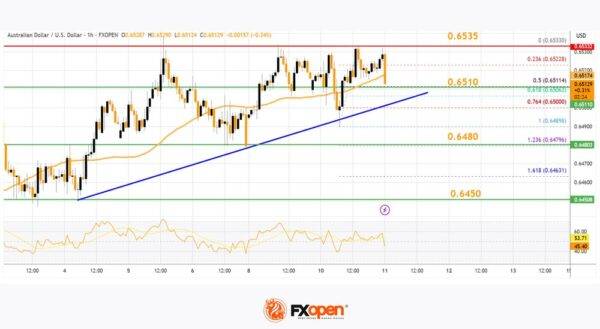
          There was a move below the 0.6520 level. The pair dipped below the 23.6% Fib retracement level of the upward move from the 0.6489 swing low to the 0.6533 high.

          On the downside, initial support is near the 0.6510 level. There is also a connecting bullish trend line forming with support at 0.6510. It is close to the 50% Fib retracement level of the upward move from the 0.6489 swing low to the 0.6533 high.

          The next major support is near the 0.6480 zone. If there is a downside break below the 0.6480 support, the pair could extend its decline toward the 0.6450 level.

          Any more losses might signal a move toward 0.6420. On the upside, the AUD/USD chart indicates that the pair is now facing resistance near 0.6535. The first major resistance might be 0.6550. An upside break above the 0.6580 resistance might send the pair further higher.

          The next major resistance is near the 0.6600 level. Any more gains could clear the path for a move toward the 0.6650 resistance zone.

          NZD/USD Technical Analysis

          On the hourly chart of NZD/USD on, the pair started a steady increase from the 0.5990 zone. The New Zealand Dollar broke the 0.6020 resistance to start the recent increase against the US Dollar.

          The pair settled above 0.6030 and the 50-hour simple moving average. It tested the 0.6065 zone and is currently consolidating gains. The pair corrected lower below the 0.6050 level and the 23.6% Fib retracement level of the upward move from the 0.6006 swing low to the 0.6064 high.
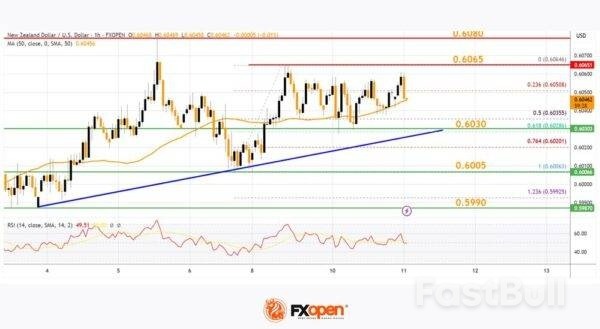
          However, the bulls are active above the 0.6030 level. The NZD/USD chartsuggests that the RSI is stable near 50. On the upside, the pair might struggle near 0.6065. The next major resistance is near the 0.6080 level.

          A clear move above the 0.6080 level might even push the pair toward the 0.6120 level. Any more gains might clear the path for a move toward the 0.6200 resistance zone in the coming days.

          On the downside, immediate support is near the 0.6030 level. There is also a key bullish trend line forming with support at 0.6030. It is close to the 61.8% Fib retracement level of the upward move from the 0.6006 swing low to the 0.6064 high.

          The first key support is near the 0.6005 level. The next major support is near the 0.5990 level. If there is a downside break below the 0.5990 support, the pair might slide toward the 0.5970 support. Any more losses could lead NZD/USD in a bearish zone to 0.5950.

          Source: FXOpen

          To stay updated on all economic events of today, please check out our Economic calendar
          Risk Warnings and Disclaimers
          You understand and acknowledge that there is a high degree of risk involved in trading. Following any strategies or investment methods may lead to potential losses. The content on the site is provided by our contributors and analysts for information purposes only. You are solely responsible for determining whether any trading assets, securities, strategy, or any other product is suitable for investing based on your own investment objectives and financial situation.
          Add to Favorites
          Share

          U.S. Tariffs Begin to Stoke Underlying Inflation as CPI Edges Higher in May

          Gerik

          Economic

          Tariff-Led Inflation Begins to Show in Core CPI

          The U.S. Consumer Price Index (CPI) report for May 2025 is beginning to reflect the initial inflationary consequences of President Trump’s sweeping import tariffs. According to economists surveyed by Reuters, while the overall CPI is expected to have increased by 0.2%—matching April’s pace—the more consequential development lies in the underlying inflation trend. Core CPI, which excludes food and energy, is forecast to rise 0.3%, the largest monthly increase since January. This reflects the gradual pass-through of tariffs to consumer prices, especially in retail sectors now depleting pre-duty inventories.
          Large retailers like Walmart, which had initially held off on price increases, have begun adjusting prices as tariff-laden goods reach shelves. This indicates that the brunt of tariff-induced inflation is likely to emerge more clearly in the June and July CPI figures.

          Fuel Costs Limit Headline Inflation, but Pressure Builds Elsewhere

          The relatively mild 0.2% headline CPI gain is attributed largely to lower gasoline prices, supported by declining global oil demand due to economic uncertainty. However, this masks the broader inflationary undercurrent in non-energy categories, where price rigidity is giving way under cost pressures from tariffs on imported consumer goods and manufacturing inputs.
          Year-over-year, overall CPI is projected to increase 2.5%, up from April’s 2.3%, while core CPI is expected to tick up to 2.9% from 2.8%. This uptick reflects not only new cost structures but also a base effect as weaker readings from 2024 drop out of the calculation.
          The Federal Reserve remains in a holding pattern, with markets anticipating no interest rate changes at next week’s policy meeting. The Fed’s preferred inflation gauges differ from CPI, but the uptick in core CPI may add to its internal debate, especially if further tariff-induced inflation proves more persistent. The Fed’s benchmark rate remains in the 4.25%–4.50% range, and forward guidance is likely to emphasize patience while monitoring supply-side disruptions and price dynamics.
          Institutional Challenges: BLS Staffing and Data Quality Risks
          Beneath the surface of these inflation numbers lies a growing challenge for data reliability. The Bureau of Labor Statistics (BLS) has announced the suspension of CPI data collection in three cities due to staffing shortfalls, linked to sweeping federal downsizing measures by the Trump administration. A hiring freeze, voluntary resignations, and early retirements have reportedly reduced BLS staffing by at least 15%.
          Despite BLS reassurances that national-level data remains statistically robust, experts caution that at a disaggregated or regional level, the loss of granular data could weaken the precision of future releases. Former BLS commissioner Erica Groshen emphasized that while headline CPI remains dependable, reduced publication standards for sub-indexes could erode transparency and limit analytical insights.

          Inflation Risks Likely to Worsen Before Easing

          May 2025 marks the beginning of what many economists believe will be a prolonged phase of elevated inflation readings driven by trade policy rather than traditional demand-side overheating. While lower fuel costs have dampened the headline rate, the structural effects of import tariffs—especially those impacting consumer durables, apparel, and electronics—are only starting to emerge.
          If tariffs remain in place through the second half of the year, retailers and manufacturers may increasingly pass along costs, and the core CPI could remain well above the Fed’s comfort zone. Combined with weakening data infrastructure, the challenge for policymakers will be balancing transparency, stability, and forward-looking credibility in an increasingly politicized economic landscape.

          Source: Reuters

          To stay updated on all economic events of today, please check out our Economic calendar
          Risk Warnings and Disclaimers
          You understand and acknowledge that there is a high degree of risk involved in trading. Following any strategies or investment methods may lead to potential losses. The content on the site is provided by our contributors and analysts for information purposes only. You are solely responsible for determining whether any trading assets, securities, strategy, or any other product is suitable for investing based on your own investment objectives and financial situation.
          Add to Favorites
          Share

          Bullish Crypto Exchange Quietly Files for U.S. IPO Amid Regulatory Shift

          Gerik

          Cryptocurrency

          Bullish Reignites Public Listing Ambitions in Friendlier Regulatory Climate

          Peter Thiel-backed cryptocurrency exchange Bullish has confidentially submitted paperwork to the U.S. Securities and Exchange Commission (SEC) for an initial public offering, according to a Financial Times report. This marks a renewed effort to enter public markets after its previous attempt via a SPAC merger collapsed in 2022, largely due to unfavorable macroeconomic conditions and regulatory scrutiny during the Biden administration.
          Now, under the Trump administration, which has taken a more supportive stance toward digital asset markets, Bullish appears poised to benefit from both political tailwinds and renewed investor appetite for crypto-related equities. The SEC has reportedly softened its posture, having dropped several investigations into cryptocurrency firms — a marked departure from the aggressive oversight seen during the previous administration.

          From SPAC Failure to Strategic Reset

          Bullish, a subsidiary of Block.one, originally sought to go public in 2021 via a merger with Far Peak Acquisition Corp. at a valuation exceeding $9 billion. That deal unraveled in late 2022, as rising interest rates, declining equity valuations, and mounting regulatory hurdles eroded investor confidence in crypto ventures. The failure also aligned with a broader industry reckoning, including collapses like FTX and scrutiny of stablecoins.
          Since then, Bullish has recalibrated. The company has reportedly focused on compliance infrastructure, liquidity provisioning, and expanding institutional partnerships, aiming to distance itself from the speculative excesses that plagued the industry during the last bull run.

          IPO Wave Signals Crypto Sector Reawakening

          Bullish's confidential filing follows a similar move by Gemini, the cryptocurrency exchange led by Tyler and Cameron Winklevoss. The back-to-back filings suggest a reawakening in IPO interest across the digital asset sector — buoyed by shifting political winds and a broader thaw in regulatory attitudes. Both firms aim to tap into a capital market that is warming again to crypto, especially as token prices and trading volumes have shown signs of recovery in 2025.
          With the SEC now taking a more accommodating approach and institutional capital slowly reentering the space, crypto exchanges are seizing what may be a narrow window of opportunity before the next regulatory or market cycle turns.
          While Bullish has not confirmed the filing or commented publicly, its confidential IPO submission could signal a cautious but deliberate return of crypto exchanges to mainstream equity markets. The company’s valuation, proposed share structure, and timeline remain under wraps, but the filing itself underscores growing confidence in a more predictable regulatory environment — at least for now. Whether this translates into long-term stability for digital asset firms remains to be seen, especially in an industry prone to volatility, both technical and political.

          Source: Reuters

          Risk Warnings and Disclaimers
          You understand and acknowledge that there is a high degree of risk involved in trading. Following any strategies or investment methods may lead to potential losses. The content on the site is provided by our contributors and analysts for information purposes only. You are solely responsible for determining whether any trading assets, securities, strategy, or any other product is suitable for investing based on your own investment objectives and financial situation.
          Add to Favorites
          Share

          BOJ Seen Delaying Rate Hike to Early 2026 Amid Global Trade Uncertainty

          Gerik

          Economic

          Cautious BOJ to Hold Rates Through 2025

          The Bank of Japan is expected to delay further interest rate hikes until early 2026, according to a slight majority of economists surveyed in a Reuters poll conducted from June 2 to 10. Amid global trade instability and concerns about Japan’s fiscal health, the central bank appears likely to maintain its benchmark short-term interest rate at 0.50% through year-end 2025.
          This cautious stance comes despite the BOJ’s continued hawkish rhetoric. Governor Kazuo Ueda has reiterated the bank’s readiness to raise rates if inflationary pressures build. However, economists suggest that external uncertainty, especially U.S. trade policies under President Trump, and internal market fragility are prompting the BOJ to act more conservatively.
          Only 17 basis points of tightening are priced in by bond markets for the remainder of the year, reinforcing the perception that significant hikes are unlikely in 2025. January 2026 now emerges as the consensus timing for a potential 25-basis-point increase, although some economists still consider October 2025 or March 2026 as plausible windows.

          Tapering to Slow, Super-Long Bond Issuance to Fall

          In addition to the rate outlook, the BOJ is also expected to decelerate its quantitative tightening. Over half of the economists polled (17 out of 31) predict that the BOJ will slow its tapering of Japanese government bond (JGB) purchases beyond April 2026, reducing from the current pace of roughly 400 billion yen per quarter. Forecasted reductions vary widely, from 200 billion yen to 370 billion yen.
          This policy shift is driven by concerns over Japan’s public debt dynamics and the weakening demand for ultra-long duration bonds. Around three-quarters of economists (21 out of 28) expect the Ministry of Finance to trim issuance of 20-, 30-, and 40-year bonds, with the 30-year category being most frequently identified for cuts.
          The drop in demand for long-duration debt, particularly from life insurers, has driven yields on super-long JGBs to record highs. In response, the Japanese government is reportedly weighing bond buybacks to manage debt maturities and reduce refinancing risks — a signal of potential fiscal recalibration in light of shifting interest rate conditions.

          Trade Tensions Cloud Monetary Outlook

          The broader macroeconomic landscape remains complicated by global trade frictions. Unpredictable tariff policies from the U.S. — including recent retaliatory threats — have shaken Japan’s export-driven economy and raised concerns about the durability of current growth momentum. While the BOJ maintains a medium-term inflation target of 2%, the foundation for consistent price gains is far from secure.
          Takumi Tsunoda from Shinkin Central Bank Research Institute emphasized that global trade progress could revive economic momentum, but the timing remains uncertain. As such, the BOJ is unlikely to act aggressively until there is greater clarity on external demand and inflation stability.
          The June Reuters poll indicates a subtle but clear shift in sentiment toward policy patience. Although Japan was among the last to exit ultra-loose monetary settings, the fragile post-pandemic recovery, volatile trade environment, and structural debt challenges are forcing the BOJ into a cautious mode. While inflation remains on the radar, domestic and international vulnerabilities are likely to keep policy rates steady through at least Q1 2026. The next few quarters will test the BOJ’s ability to balance normalization with market stability, particularly as bond markets signal mounting stress.

          Source: Reuters

          To stay updated on all economic events of today, please check out our Economic calendar
          Risk Warnings and Disclaimers
          You understand and acknowledge that there is a high degree of risk involved in trading. Following any strategies or investment methods may lead to potential losses. The content on the site is provided by our contributors and analysts for information purposes only. You are solely responsible for determining whether any trading assets, securities, strategy, or any other product is suitable for investing based on your own investment objectives and financial situation.
          Add to Favorites
          Share

          US And China Agree Plan To Restore Trade Truce

          James Whitman

          Economic

          China–U.S. Trade War

          The US and China capped two days of high-stakes trade talks with a plan to revive the flow of sensitive goods — a framework now awaiting the blessing of Donald Trump and Xi Jinping.

          After some 20 hours of negotiations in London, US Commerce Secretary Howard Lutnick said both sides had established a framework for implementing the Geneva consensus that last month brought down tariffs. “First we had to get sort of the negativity out,” he said. “Now we can go forward to try to do positive trade, growing trade.”

          Capping a marathon round of haggling that stretched over 12 hours on Tuesday, Lutnick said the Chinese had pledged to speed up shipments of rare earth metals critical to US auto and defence firms, while Washington would ease some of its own export controls — suggesting progress was made on two of the thorniest issues in bilateral ties.

          The US and Chinese delegations will take that proposal back to their respective leaders, according to China’s chief trade negotiator Li Chenggang. Negotiations were “in-depth and candid”, he told reporters in brief remarks before midnight outside Lancaster House, a Georgian-era mansion near Buckingham Palace that served as this week’s meeting site.

          While the positive tone should reassure investors worried about a decoupling of the world’s largest economies, details were scarce and the deal could still be nixed by top leaders. The discussions also did little to fix issues such as China’s massive trade surplus with the US and a belief in Washington that Beijing is dumping goods on its markets.

          Initial market reaction to the announcement was muted, with US equity futures edging lower and the offshore yuan little changed. The Chinese onshore benchmark stock gauge was up 0.9% on Wednesday morning, on track for the biggest increase since May 14, shortly after the Geneva agreement.

          “Markets will likely welcome the shift from confrontation to coordination,” said Charu Chanana, chief investment strategist at Saxo Markets. “We’re not out of the woods yet — it’s up to Trump and Xi to approve and enforce the deal.”

          The Chinese Foreign Ministry and Commerce Ministry didn’t respond to requests for comment.

          The London meetings came together at short notice after Trump last week spoke to Xi for the first time since taking office, in a bid to stop ties spiralling over claims both sides had reneged on the Geneva accord. US officials accused China of stalling magnet exports while Trump officials angered Beijing with new controls on chip design software, jet engines and student visas.

          That spat showcased the growing role of export controls in modern trade warfare, where access to rare metals or tiny microchips can give one economy leverage over a rival. European trade officials and global carmakers also sounded the alarm in recent weeks on disruption of supplies from China that are critical for fighter jets and electric vehicles.

          Lutnick suggested they’d found a way to overcome the deadlock.

          “There were a number of measures the United States of America put on when those rare earths were not coming,” he added. “You should expect those to come off — sort of, as President Trump said, in a balanced way.”

          Allowing technology that’s critical to Beijing’s military advancement to become a bargaining chip would mark a major departure for Washington, which has justified such export controls with national security concerns. It would also open the door for China to use its dominance of rare earths to put a lid on further limits on cutting-edge chips.

          The US relenting on export controls is “unprecedented”, Wendy Cutler, a former senior US trade negotiator now at the Asia Society Policy Institute, wrote on LinkedIn, while pointing to the fragility of the current arrangement.

          It took two days, three US Cabinet members and one Chinese vice premier to get back to upholding the Geneva accord, she added. That’s “a preview” for the next 60 days, she said, when US and Chinese officials have to hammer out agreements on excess capacity, unfair trade practices and the flow of fentanyl as part of a broader trade agreement.

          US Trade Representative Jamieson Greer said the issue of fentanyl, which the Trump administration cited as a rationale for imposing a 20% tariff on China, was a priority for the US president. “We would expect to see progress from the Chinese on that issue in a major way,” he added.

          Greer said there are no other meetings scheduled, adding that both sides talk frequently. Striking a similar tone, China’s Li said: “We hope the progress we made will be conducive to building trust.”

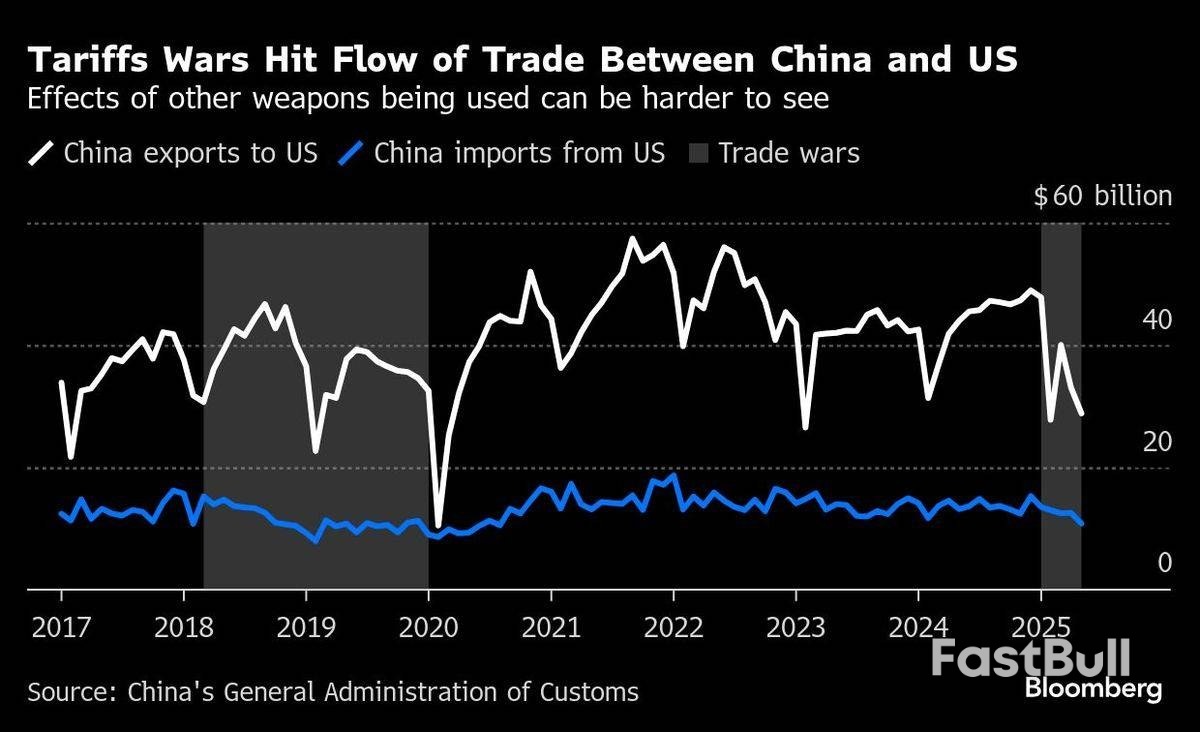
          The US and China are about a third of the way through a 90-day reprieve on the crippling tit-for-tat tariffs imposed on each other through April. Though the Geneva settlement dramatically reduced duties, trade remains disrupted — China’s exports to the US fell in May by the most since early 2020 when the pandemic shut down the Chinese economy.

          The trade war’s biggest casualty hasn’t been lost sales but lost trust, according to Josef Gregory Mahoney, a professor of international relations at Shanghai’s East China Normal University.

          “We’ve heard a lot about agreements on frameworks for talks,” he added. “But the fundamental issue remains: Chips vs rare earths. Everything else is a peacock dance.”

          Source: Bloomberg

          To stay updated on all economic events of today, please check out our Economic calendar
          Risk Warnings and Disclaimers
          You understand and acknowledge that there is a high degree of risk involved in trading. Following any strategies or investment methods may lead to potential losses. The content on the site is provided by our contributors and analysts for information purposes only. You are solely responsible for determining whether any trading assets, securities, strategy, or any other product is suitable for investing based on your own investment objectives and financial situation.
          Add to Favorites
          Share

          Asian Markets Rise Amid Fragile Trade Truce Between China and the US

          Gerik

          Economic

          Stocks

          Asian Equity Markets Rally on Trade Truce Optimism

          Asia’s major stock indices rallied on Wednesday after the United States and China announced a framework to move forward on their Geneva trade truce. The deal, reached after two days of discussions in London, was hailed by officials from both nations, though analysts questioned the depth of the agreement, suggesting it was more a reaffirmation of previous promises than a breakthrough.
          In Tokyo, the Nikkei 225 advanced 0.5% to 38,385.37, with sentiment buoyed by Bank of Japan data showing easing wholesale inflation in May. This suggests a lower likelihood of near-term rate hikes from the central bank, giving equities a further boost. Hong Kong’s Hang Seng rose 0.8% to 24,364.77, while the Shanghai Composite climbed 0.5% to 3,402.72. Markets in Australia and South Korea also posted moderate gains, with the ASX 200 and Kospi up 0.3% and 0.6% respectively.

          Muted Progress in Trade Talks

          The rally was partially fueled by a cautious sense of progress in trade negotiations. US Commerce Secretary Howard Lutnick described the London discussions as going “really, really well,” echoing previous comments from Chinese officials. However, investors and analysts expressed skepticism about the substance of the agreement.
          Stephen Innes of SPI Asset Management noted that the outcome of the 48-hour talks was largely procedural rather than substantive. “Markets were expecting substance, they got process instead,” he said, highlighting the still-precarious nature of global trade relationships.
          Despite temporary pauses on many announced tariffs, the economic toll of the trade conflict continues to weigh on corporate strategies. For instance, Designer Brands — the owner of DSW and other shoe brands — withdrew its financial forecast for 2025 due to uncertainty from global trade policies, sending its stock down over 18%. CEO Doug Howe emphasized that “persistent instability” is suppressing consumer discretionary spending.

          US Markets Mirror Cautious Optimism

          Wall Street extended gains as the S&P 500 rose 0.5% to 6,038.81, the Nasdaq gained 0.6%, and the Dow added 0.2%. The S&P 500 is now just 1.7% below its record high from February, rebounding from a sharp drop triggered by Trump’s surprise tariff announcements two months prior.
          Tesla shares climbed 5.7%, partly recovering from last week’s losses tied to political tension between CEO Elon Musk and the Trump administration. Similarly, Taiwan Semiconductor Manufacturing Co.’s US-listed shares rose 2.6% after a strong revenue report, showcasing resilience in the semiconductor sector despite trade headwinds.

          Mixed Signals from US Economy

          While some US companies are struggling with uncertainty, optimism among small businesses showed a slight uptick in May. According to the National Federation of Independent Business, owners reported more positive expectations for business conditions and sales growth, though broader economic momentum remains fragile.
          In currency markets, the US dollar edged higher against the yen, reaching 144.94, while the euro slipped slightly to $1.1414. US bond yields remained stable, with the 10-year Treasury yield at 4.48%. Oil prices showed minimal movement, with US crude at $64.86 per barrel and Brent at $66.72.
          The latest market rally underscores investor sensitivity to geopolitical headlines and central bank signals. While the trade framework between the US and China has temporarily lifted sentiment, the path forward remains unclear, with no binding agreements and many tariffs still in place. Businesses and markets alike will be watching closely as the July deadline for Trump’s tariff pause approaches, hoping for real policy clarity rather than rhetorical reassurance.

          Source: AP

          To stay updated on all economic events of today, please check out our Economic calendar
          Risk Warnings and Disclaimers
          You understand and acknowledge that there is a high degree of risk involved in trading. Following any strategies or investment methods may lead to potential losses. The content on the site is provided by our contributors and analysts for information purposes only. You are solely responsible for determining whether any trading assets, securities, strategy, or any other product is suitable for investing based on your own investment objectives and financial situation.
          Add to Favorites
          Share

          Price War Pushes China’s EV Industry Toward Crisis as Profit Margins Collapse

          Gerik

          Economic

          Racing to the Bottom: China’s EV Industry Caught in Self-Destructive Price War

          China’s once-booming electric vehicle (EV) sector, long hailed as a symbol of green industrial strength and technological leadership, is now teetering on the edge of financial instability. The recent wave of price cuts initiated by top manufacturer BYD has triggered a brutal price war that is eroding profits across the value chain — from automakers to used car dealers — and prompting comparisons to the collapse of the property giant Evergrande.
          The most symbolic move came with BYD’s decision in late May to slash prices on several models, including a 34% discount on its entry-level Seagull mini hatchback, now selling for around $7,700. While the cuts have driven down sticker prices for consumers, they have sparked panic in the industry and accusations of market dumping. China’s top car industry association, CAAM, criticized what it called “irrational” pricing behavior, in a veiled attack on BYD’s aggressive strategy.

          Warning Signals: Executive Outcry and Government Concern

          Industry leaders are sounding increasingly dire warnings. Great Wall Motor’s Chairman Wei Jianjun likened the situation to the early stages of the property sector collapse, stating in a May interview that “an Evergrande-like crisis already exists” in the auto industry. His remarks reflect broader anxiety over the systemic risks of overcapacity, overcompetition, and artificially inflated sales figures — such as the sale of “zero mileage used cars” that are registered but never actually driven.
          These concerns have been echoed by state media. In a striking move, the People’s Daily — the official newspaper of the Chinese Communist Party — condemned the price war as “disorderly” and “unsustainable,” warning that it undermines the broader automotive ecosystem, reduces worker incomes, and discourages consumer confidence. As inflation-adjusted wages stagnate and economic uncertainty rises, even falling EV prices are failing to ignite significant new demand.

          Profit Pressure Meets Structural Overcapacity

          At the heart of the crisis is a classic problem: too many firms chasing too little profit in an overbuilt sector. China has promoted EV production through a mix of subsidies, mandates, and consumer incentives, creating an explosion in output that has not been matched by domestic consumption. This structural overcapacity has now been magnified by firms attempting to compete primarily through discounting rather than innovation or export expansion.
          The “race to the bottom” is especially damaging in a sector already burdened by high capital expenditures, long development cycles, and dependency on battery material prices. Smaller and less financially resilient automakers are now struggling to stay afloat, raising the risk of mass bankruptcies or government-led consolidation efforts in the coming quarters.

          Used Car Dealers and Consumer Uncertainty

          The effects are not limited to automakers. Used car sellers in Beijing, like Ma Hui, are already reporting sharp declines in profitability and a growing reluctance among consumers to purchase. “All of us were losing money last year,” Ma told CNBC, citing saturated inventory and pricing uncertainty as key barriers. With prices falling, potential buyers are delaying purchases in hopes of deeper discounts — a deflationary dynamic that mirrors broader consumer behavior in China’s cooling economy.
          Moreover, consumer trust is being shaken by unusual practices like “zero mileage used cars,” which, while technically legal, raise concerns about transparency and the real health of the industry’s sales numbers.

          Toward a Financial Reckoning

          The Chinese EV industry’s price war is not simply a commercial dispute — it reflects deeper imbalances in industrial policy, market saturation, and demand dynamics. Without a coordinated policy response to encourage rational pricing, reduce overcapacity, and stabilize consumer expectations, the sector risks falling into the same trap that ensnared China’s real estate developers: inflated growth, unsustainable debt, and an eventual collapse.
          As the government signals concern but stops short of direct intervention, the next few months could determine whether China’s EV sector stabilizes or becomes the next cautionary tale in the country’s shifting economic landscape.

          Source: CNBC

          To stay updated on all economic events of today, please check out our Economic calendar
          Risk Warnings and Disclaimers
          You understand and acknowledge that there is a high degree of risk involved in trading. Following any strategies or investment methods may lead to potential losses. The content on the site is provided by our contributors and analysts for information purposes only. You are solely responsible for determining whether any trading assets, securities, strategy, or any other product is suitable for investing based on your own investment objectives and financial situation.
          Add to Favorites
          Share
          FastBull
          Copyright © 2025 FastBull Ltd

          728 RM B 7/F GEE LOK IND BLDG NO 34 HUNG TO RD KWUN TONG KLN HONG KONG

          TelegramInstagramTwitterfacebooklinkedin
          App Store Google Play Google Play
          Products
          Charts

          Chats

          Q&A with Experts
          Screeners
          Economic Calendar
          Data
          Tools
          Membership
          Features
          Function
          Markets
          Copy Trading
          Latest Signals
          Contests
          News
          Analysis
          24/7
          Columns
          Education
          Company
          Careers
          About Us
          Contact Us
          Advertising
          Help Center
          Feedback
          User Agreement
          Privacy Policy
          Business

          White Label

          Data API

          Web Plug-ins

          Poster Maker

          Affiliate Program

          Risk Disclosure

          The risk of loss in trading financial instruments such as stocks, FX, commodities, futures, bonds, ETFs and crypto can be substantial. You may sustain a total loss of the funds that you deposit with your broker. Therefore, you should carefully consider whether such trading is suitable for you in light of your circumstances and financial resources.

          No decision to invest should be made without thoroughly conducting due diligence by yourself or consulting with your financial advisors. Our web content might not suit you since we don't know your financial conditions and investment needs. Our financial information might have latency or contain inaccuracy, so you should be fully responsible for any of your trading and investment decisions. The company will not be responsible for your capital loss.

          Without getting permission from the website, you are not allowed to copy the website's graphics, texts, or trademarks. Intellectual property rights in the content or data incorporated into this website belong to its providers and exchange merchants.

          Not Logged In

          Log in to access more features

          FastBull Membership

          Not yet

          Purchase

          Become a signal provider
          Help Center
          Customer Service
          Dark Mode
          Price Up/Down Colors

          Log In

          Sign Up

          Position
          Layout
          Fullscreen
          Default to Chart
          The chart page opens by default when you visit fastbull.com