• Trade
  • Markets
  • Copy
  • Contests
  • News
  • 24/7
  • Calendar
  • Q&A
  • Chats
Trending
Screeners
SYMBOL
LAST
BID
ASK
HIGH
LOW
NET CHG.
%CHG.
SPREAD
SPX
S&P 500 Index
6827.42
6827.42
6827.42
6899.86
6801.80
-73.58
-1.07%
--
DJI
Dow Jones Industrial Average
48458.04
48458.04
48458.04
48886.86
48334.10
-245.98
-0.51%
--
IXIC
NASDAQ Composite Index
23195.16
23195.16
23195.16
23554.89
23094.51
-398.69
-1.69%
--
USDX
US Dollar Index
97.950
98.030
97.950
98.500
97.950
-0.370
-0.38%
--
EURUSD
Euro / US Dollar
1.17394
1.17409
1.17394
1.17496
1.17192
+0.00011
+ 0.01%
--
GBPUSD
Pound Sterling / US Dollar
1.33707
1.33732
1.33707
1.33997
1.33419
-0.00148
-0.11%
--
XAUUSD
Gold / US Dollar
4299.39
4299.39
4299.39
4353.41
4257.10
+20.10
+ 0.47%
--
WTI
Light Sweet Crude Oil
57.233
57.485
57.233
58.011
56.969
-0.408
-0.71%
--

Community Accounts

Signal Accounts
--
Profit Accounts
--
Loss Accounts
--
View More

Become a signal provider

Sell trading signals to earn additional income

View More

Guide to Copy Trading

Get started with ease and confidence

View More

Signal Accounts for Members

All Signal Accounts

Best Return
  • Best Return
  • Best P/L
  • Best MDD
Past 1W
  • Past 1W
  • Past 1M
  • Past 1Y

All Contests

  • All
  • Trump Updates
  • Recommend
  • Stocks
  • Cryptocurrencies
  • Central Banks
  • Featured News
Top News Only
Share

USA Embassy In Lithuania: Maria Kalesnikava Is Not Going To Vilnius

Share

USA Embassy In Lithuania: Other Prisoners Are Being Sent From Belarus To Ukraine

Share

Ukraine President Zelenskiy: Five Ukrainians Released By Belarus In US-Brokered Deal

Share

USA Vilnius Embassy: USA Stands Ready For "Additional Engagement With Belarus That Advances USA Interests"

Share

USA Vilnius Embassy: Belarus, USA, Other Citizens Among The Prisoners Released Into Lithuania

Share

USA Vilnius Embassy: USA Will Continue Diplomatic Efforts To Free The Remaining Political Prisoners In Belarus

Share

USA Vilnius Embassy: Belarus Releases 123 Prisoners Following Meeting Of President Trump's Envoy Coale And Belarus President Lukashenko

Share

USA Vilnius Embassy: Masatoshi Nakanishi, Aliaksandr Syrytsa Are Among The Prisoners Released By Belarus

Share

USA Vilnius Embassy: Maria Kalesnikava And Viktor Babaryka Are Among The Prisoners Released By Belarus

Share

USA Vilnius Embassy: Nobel Peace Prize Laureate Ales Bialiatski Is Among The Prisoners Released By Belarus

Share

Belarusian Presidential Administration Telegram Channel: Lukashenko Has Pardoned 123 Prisoners As Part Of Deal With US

Share

Two Local Syrian Officials: Joint US-Syrian Military Patrol In Central Syria Came Under Fire From Unknown Assailants

Share

Israeli Military Says It Targeted 'Key Hamas Terrorist' In Gaza City

Share

Rwanda's Actions In Eastern Drc Are A Clear Violation Of Washington Accords Signed By President Trump - Secretary Of State Rubio

Share

Israeli Military Issues Evacuation Warning In Southern Lebanon Village Ahead Of Strike - Spokesperson On X

Share

Belarusian State Media Cites US Envoy Coale As Saying He Discussed Ukraine And Venezuela With Lukashenko

Share

Belarusian State Media Cites US Envoy Coale As Saying That US Removes Sanctions On Belarusian Potassium

Share

Thai Prime Minister: No Ceasefire Agreement With Cambodia

Share

US, Ukraine To Discuss Ceasefire In Berlin Ahead Of European Summit

Share

Incoming Czech Prime Minister Babis: Czech Republic Will Not Take On Guarantees For Ukraine Financing, European Commission Must Find Alternatives

TIME
ACT
FCST
PREV
U.K. Trade Balance Non-EU (SA) (Oct)

A:--

F: --

P: --

U.K. Trade Balance (Oct)

A:--

F: --

P: --

U.K. Services Index MoM

A:--

F: --

P: --

U.K. Construction Output MoM (SA) (Oct)

A:--

F: --

P: --

U.K. Industrial Output YoY (Oct)

A:--

F: --

P: --

U.K. Trade Balance (SA) (Oct)

A:--

F: --

P: --

U.K. Trade Balance EU (SA) (Oct)

A:--

F: --

P: --

U.K. Manufacturing Output YoY (Oct)

A:--

F: --

P: --

U.K. GDP MoM (Oct)

A:--

F: --

P: --

U.K. GDP YoY (SA) (Oct)

A:--

F: --

P: --

U.K. Industrial Output MoM (Oct)

A:--

F: --

P: --

U.K. Construction Output YoY (Oct)

A:--

F: --

P: --

France HICP Final MoM (Nov)

A:--

F: --

P: --

China, Mainland Outstanding Loans Growth YoY (Nov)

A:--

F: --

P: --

China, Mainland M2 Money Supply YoY (Nov)

A:--

F: --

P: --

China, Mainland M0 Money Supply YoY (Nov)

A:--

F: --

P: --

China, Mainland M1 Money Supply YoY (Nov)

A:--

F: --

P: --

India CPI YoY (Nov)

A:--

F: --

P: --

India Deposit Gowth YoY

A:--

F: --

P: --

Brazil Services Growth YoY (Oct)

A:--

F: --

P: --

Mexico Industrial Output YoY (Oct)

A:--

F: --

P: --

Russia Trade Balance (Oct)

A:--

F: --

P: --

Philadelphia Fed President Henry Paulson delivers a speech
Canada Building Permits MoM (SA) (Oct)

A:--

F: --

P: --

Canada Wholesale Sales YoY (Oct)

A:--

F: --

P: --

Canada Wholesale Inventory MoM (Oct)

A:--

F: --

P: --

Canada Wholesale Inventory YoY (Oct)

A:--

F: --

P: --

Canada Wholesale Sales MoM (SA) (Oct)

A:--

F: --

P: --

Germany Current Account (Not SA) (Oct)

A:--

F: --

P: --

U.S. Weekly Total Rig Count

A:--

F: --

P: --

U.S. Weekly Total Oil Rig Count

A:--

F: --

P: --

Japan Tankan Large Non-Manufacturing Diffusion Index (Q4)

--

F: --

P: --

Japan Tankan Small Manufacturing Outlook Index (Q4)

--

F: --

P: --

Japan Tankan Large Non-Manufacturing Outlook Index (Q4)

--

F: --

P: --

Japan Tankan Large Manufacturing Outlook Index (Q4)

--

F: --

P: --

Japan Tankan Small Manufacturing Diffusion Index (Q4)

--

F: --

P: --

Japan Tankan Large Manufacturing Diffusion Index (Q4)

--

F: --

P: --

Japan Tankan Large-Enterprise Capital Expenditure YoY (Q4)

--

F: --

P: --

U.K. Rightmove House Price Index YoY (Dec)

--

F: --

P: --

China, Mainland Industrial Output YoY (YTD) (Nov)

--

F: --

P: --

China, Mainland Urban Area Unemployment Rate (Nov)

--

F: --

P: --

Saudi Arabia CPI YoY (Nov)

--

F: --

P: --

Euro Zone Industrial Output YoY (Oct)

--

F: --

P: --

Euro Zone Industrial Output MoM (Oct)

--

F: --

P: --

Canada Existing Home Sales MoM (Nov)

--

F: --

P: --

Euro Zone Total Reserve Assets (Nov)

--

F: --

P: --

U.K. Inflation Rate Expectations

--

F: --

P: --

Canada National Economic Confidence Index

--

F: --

P: --

Canada New Housing Starts (Nov)

--

F: --

P: --

U.S. NY Fed Manufacturing Employment Index (Dec)

--

F: --

P: --

U.S. NY Fed Manufacturing Index (Dec)

--

F: --

P: --

Canada Core CPI YoY (Nov)

--

F: --

P: --

Canada Manufacturing Unfilled Orders MoM (Oct)

--

F: --

P: --

Canada Manufacturing New Orders MoM (Oct)

--

F: --

P: --

Canada Core CPI MoM (Nov)

--

F: --

P: --

Canada Manufacturing Inventory MoM (Oct)

--

F: --

P: --

Canada CPI YoY (Nov)

--

F: --

P: --

Canada CPI MoM (Nov)

--

F: --

P: --

Canada CPI YoY (SA) (Nov)

--

F: --

P: --

Canada Core CPI MoM (SA) (Nov)

--

F: --

P: --

Q&A with Experts
    • All
    • Chatrooms
    • Groups
    • Friends
    Connecting
    .
    .
    .
    Type here...
    Add Symbol or Code

      No matching data

      All
      Trump Updates
      Recommend
      Stocks
      Cryptocurrencies
      Central Banks
      Featured News
      • All
      • Russia-Ukraine Conflict
      • Middle East Flashpoint
      • All
      • Russia-Ukraine Conflict
      • Middle East Flashpoint
      Search
      Products

      Charts Free Forever

      Chats Q&A with Experts
      Screeners Economic Calendar Data Tools
      Membership Features
      Data Warehouse Market Trends Institutional Data Policy Rates Macro

      Market Trends

      Market Sentiment Order Book Forex Correlations

      Top Indicators

      Charts Free Forever
      Markets

      News

      News Analysis 24/7 Columns Education
      From Institutions From Analysts
      Topics Columnists

      Latest Views

      Latest Views

      Trending Topics

      Top Columnists

      Latest Update

      Signals

      Copy Rankings Latest Signals Become a signal provider AI Rating
      Contests
      Brokers

      Overview Brokers Assessment Rankings Regulators News Claims
      Broker listing Forex Brokers Comparison Tool Live Spread Comparison Scam
      Q&A Complaint Scam Alert Videos Tips to Detect Scam
      More

      Business
      Events
      Careers About Us Advertising Help Center

      White Label

      Data API

      Web Plug-ins

      Affiliate Program

      Awards Institution Evaluation IB Seminar Salon Event Exhibition
      Vietnam Thailand Singapore Dubai
      Fans Party Investment Sharing Session
      FastBull Summit BrokersView Expo
      Recent Searches
        Top Searches
          Markets
          News
          Analysis
          User
          24/7
          Economic Calendar
          Education
          Data
          • Names
          • Latest
          • Prev

          View All

          No data

          Scan to Download

          Faster Charts, Chat Faster!

          Download App
          English
          • English
          • Español
          • العربية
          • Bahasa Indonesia
          • Bahasa Melayu
          • Tiếng Việt
          • ภาษาไทย
          • Français
          • Italiano
          • Türkçe
          • Русский язык
          • 简中
          • 繁中
          Open Account
          Search
          Products
          Charts Free Forever
          Markets
          News
          Signals

          Copy Rankings Latest Signals Become a signal provider AI Rating
          Contests
          Brokers

          Overview Brokers Assessment Rankings Regulators News Claims
          Broker listing Forex Brokers Comparison Tool Live Spread Comparison Scam
          Q&A Complaint Scam Alert Videos Tips to Detect Scam
          More

          Business
          Events
          Careers About Us Advertising Help Center

          White Label

          Data API

          Web Plug-ins

          Affiliate Program

          Awards Institution Evaluation IB Seminar Salon Event Exhibition
          Vietnam Thailand Singapore Dubai
          Fans Party Investment Sharing Session
          FastBull Summit BrokersView Expo

          Are Donald Trump’s Tariffs a Legal House of Cards?

          Warren Takunda

          Cryptocurrency

          China–U.S. Trade War

          Summary:

          13 states have sued the government over the “Liberation Day” tariff program, and signs suggest they could win. What would that mean for crypto?
          On Wednesday, speaking from the White House, US President Donald Trump suggested that families scale back on gifts this year.
          Asked about his tariff program, the president remarked, “Somebody said, ‘Oh, the shelves are gonna be open. Well, maybe the children will have two dolls instead of 30 dolls, and maybe the two dolls will cost a couple of bucks more.’”
          But the toy stores where those dolls are sold might have something to say about it.
          Earlier in the week, Mischief Toy Store in St. Paul, Minnesota joined a growing number of American small businesses suing the president over his emergency tariff plan.
          Throughout April, a groundswell of lawsuits led by 13 states further challenged Trump’s ambitious tariff program. Their success or failure rests on hundreds of years of judicial policy and American constitutional law.

          The legal basis for the Trump tariffs

          When Trump first announced his ambitious tariff program to the world, you might have wondered, Why is he allowed to do this? Well, he may not be. The president’s power to unilaterally impose tariffs is not rooted in the office’s constitutional Article II power. Instead, it is a delegation of authority by Congress.
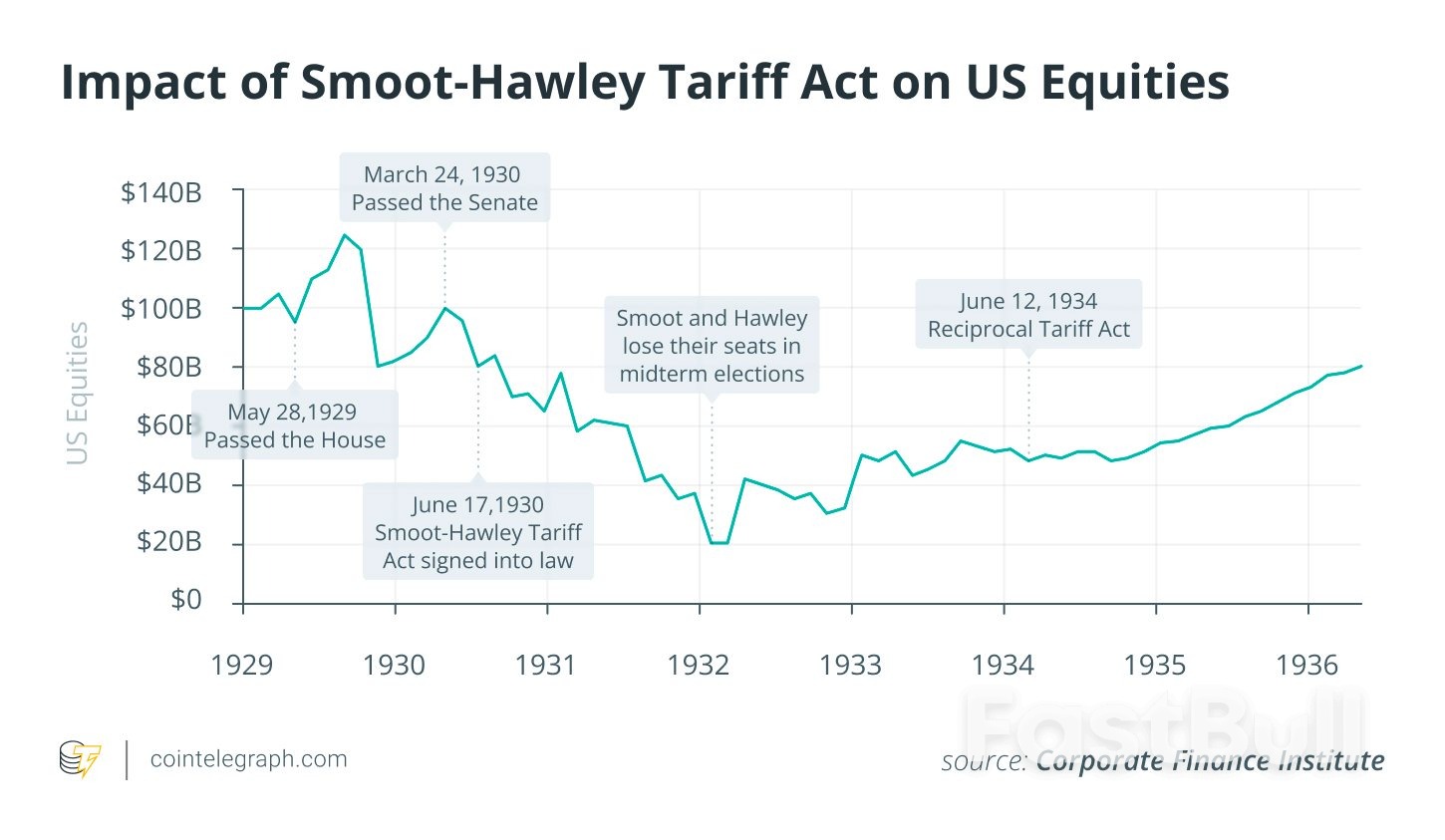
          Article I of the US Constitution creates Congress, and Section 8 delegates the authority to “lay and collect taxes, duties, imposts and excises.” For much of the United States’ history, this is precisely what it did — through a series of colorfully named tariff programs like the Tariff of Abominations of 1828, the Dingley Tariff of 1897 and culminating in the infamous Smoot-Hawley Tariff of 1930. Are Donald Trump’s Tariffs a Legal House of Cards?_1
          At the time, Smoot-Hawley was widely perceived as contributing to the devastation of the Great Depression. As a consequence, Congress’s use of tariffs became viewed as corrosively political and dysregulated, spurring change.
          In the early 1930s, then-President Franklin Delano Roosevelt pushed for legislation to grant his office the authority to negotiate tariffs. He argued that tariffs had wrecked the economy and that he should have the power to reduce them:
          World trade has declined with startling rapidity. Measured in terms of the volume of goods in 1933, it has been reduced to approximately 70 percent of its 1929 volume; measured in terms of dollars, it has fallen to 35 percent. The drop in the foreign trade of the United States has been even sharper. Our exports in 1933 were but 52 percent of the 1929 volume, and 32 percent of the 1929 value […] a full and permanent domestic recovery depends in part upon a revived and strengthened international trade and that American exports cannot be permanently increased without a corresponding increase in imports.
          Thus followed the Reciprocal Trade Agreement Act of 1934 (RTAA), which gave the president the power to set tariff rates, provided it came as part of a reciprocal agreement with a counterpart. This allowed the office to negotiate directly with other nations and promoted a period of liberalized trade.
          The RTAA, however, is not the law that Trump is now relying on. His tariffs are unilateral, not reciprocal, and would require another century of law to conceive.
          After the RTAA, Congress continued to delegate authority to the president through the midcentury. Notably, this included the Trade Expansion Act of 1962, which allowed the president to impose unilateral tariffs in response to national security threats; the Trade Act of 1974, which allowed the president to retaliate against unfair trade practices; and, crucially, the International Emergency Economic Powers Act of 1977, known as IEEPA.
          Now, the IEEPA doesn’t say anything about tariffs; it is better known as the law that recent presidents have used to levy sanctions against enemy nations like Russia. It grants the president the power to respond to declared emergencies in response to “unusual and extraordinary threat[s]” (the president also has the power to declare emergencies, but that comes from the National Emergencies Act, a different law) by “investigat[ing], regulat[ing], or prohibit[ing] any transactions in foreign exchange.”
          Despite this novel application, the Trump administration has seized on the law because, unlike all other tariff statutes, it permits the president to act through executive order alone.
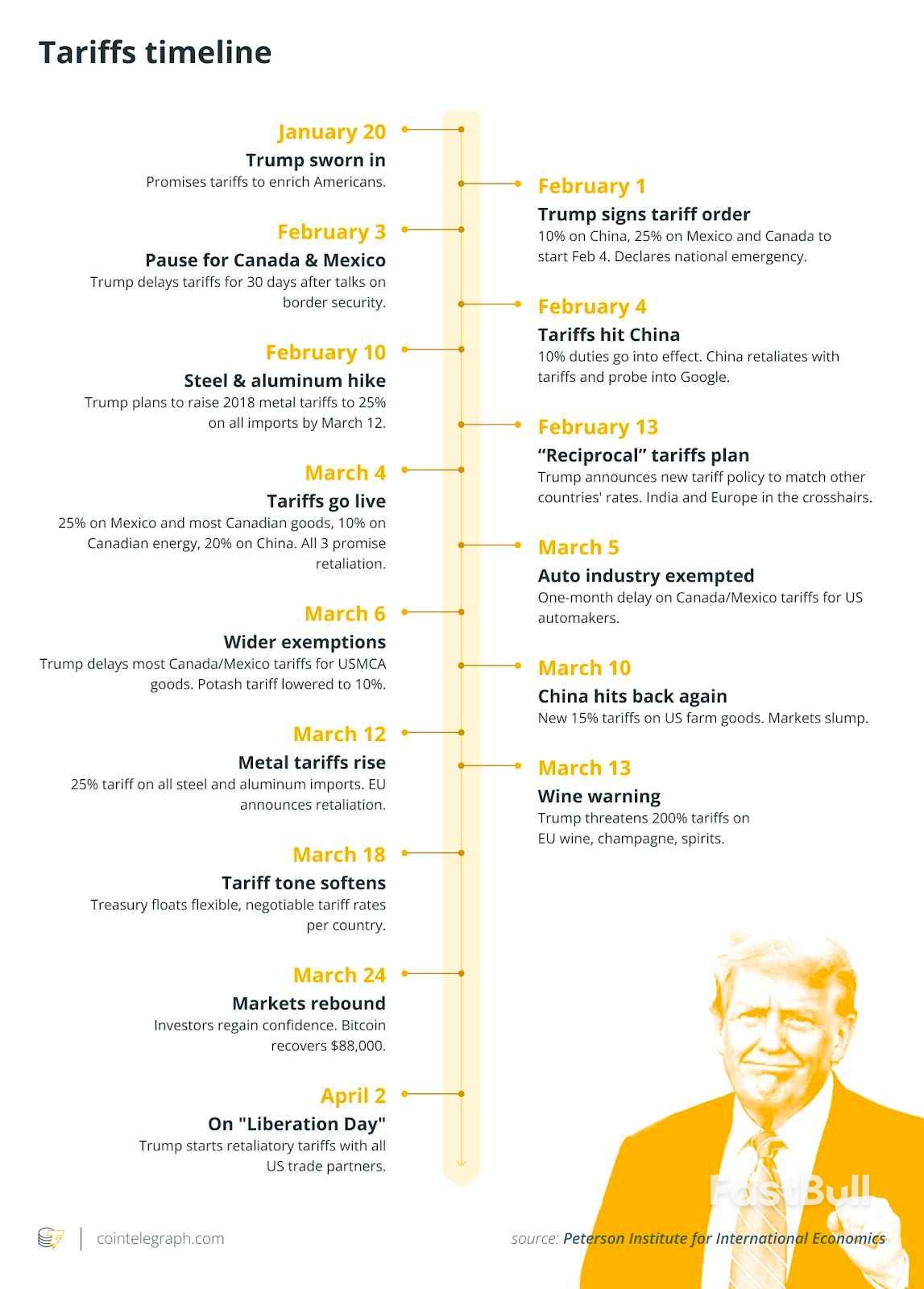
          Throughout his young second term, Trump has used this statute to declare arbitrary tariffs on virtually all of America’s trading partners. First, declaring 25% tariffs on Canada and Mexico and then various large tariffs on the rest of the world.Are Donald Trump’s Tariffs a Legal House of Cards?_2
          To do so, Trump declared a “national emergency posed by the large and persistent trade deficit that is driven by the absence of reciprocity in our trade relationships and other harmful policies like currency manipulation and exorbitant value-added taxes (VAT) perpetuated by other countries.”
          This was the first time a president had attempted to use the law in this way, and many legal scholars believe it is illegal.

          Like flies to honey

          Almost immediately after Trump’s tariffs were announced, lawsuits began to trickle in. Fearing retribution from the administration, many trade groups and major players reportedly chose to bow out of proceedings. However, California became the first state to sue on April 16, followed a week later on April 23 by a dozen other states.
          There are basically two legal arguments you can make against Trump’s tariffs: (1) The IEEPA doesn’t authorize the president to implement his tariff program, and (2) it is unconstitutional for the IEEPA to delegate such broad authority to the president.
          This is exactly what California and the consortium of 12 states did — arguing that (1) the president’s actions are ultra vires — beyond his legal authority — and (2) they would violate separation of powers.
          There are a few reasons this might be true. For one, as the states identified, any action under the IEEPA must be tailored to “deal with an unusual and extraordinary threat,” and, “[t]he nearly worldwide 10 percent tariff level is wholly unconnected to the stated basis of the emergency declaration: it applies without regard to any country’s trade practices or purported threat to domestic industries.”
          Second, there is a constitutional limit on Congress’s authority to delegate Article I powers to the president, known as the “nondelegation doctrine.” While in theory this could be robust, it has generally been nerfed by the obsequious Supreme Court’s past. Nonetheless, there remains an “intelligible principle test” that such delegation may only be allowed “if Congress shall lay down by legislative act an intelligible principle to which the person or body authorized to fix such rates is directed to conform.”
          In theory, if Congress had actually given the president plenary authority to fix tariffs according to his whims, it should violate this doctrine. But the Supreme Court has not struck down an executive action on these grounds since Panama Refining Co. v. Ryan in 1935.
          Despite the constitutional uncertainty, the net of the arguments is broadly perceived as strong. This is why one “prominent conservative lawyer” told ABC News that plaintiffs may win in a fight against Trump:
          There is a strong argument that the tariffs imposed under the IEEPA are not legal or constitutional. Under that particular statute, tariffs are not listed amongst the various actions a president can take in response to the declaration of a national emergency.
          But there are some factors in the president’s favor. For one, the administration may be able to hear these claims in the US Court of International Trade (CIT), which has exclusive jurisdiction over most tariff disputes.
          Appeals from this court are heard in the Federal Circuit, which is generally seen as favorable for Trump. The 12-state complaint was actually filed in this court from the outset, but California filed its complaint in the Northern District of California, which sits in the less deferential Ninth Circuit.
          If Trump succeeds in removing that action to CIT, it will be an early victory for the administration.
          More importantly, the administration is attempting to invoke the “political question doctrine.” In the first major Supreme Court case, 1803’s Marbury v. Madison, the Court noted that “[q]uestions, in their nature political or which are, by the Constitution and laws, submitted to the Executive, can never be made in this court.” Ever since then, pusillanimous courts have used the doctrine to avoid difficult questions, most notably in cases involving impeachment, foreign policy and partisan gerrymandering.
          The Trump administration argued exactly this in its April 29 motion for preliminary injunction and summary judgment in the states’ AG case. Trump argues that “courts have consistently held that the President’s emergency declarations under NEA, and the adequacy of his policy choices addressing those emergencies under IEEPA, are unreviewable” and that “[t]herefore, any challenge to the fact of the emergency itself — particularly the claim that the emergency is not ‘unusual’ or ‘extraordinary’ enough, in plaintiffs’ view — is a nonjusticiable political question that this Court lacks jurisdiction to consider.”
          To date, no rulings hint at which side the courts are likely to prefer. The president’s track record in court has historically been poor, with a win rate of 35% in the Supreme Court during his first term, compared to an average presidential win rate of 65.2%.

          The outlook for crypto

          As the tariff fight has matured, the outlook for crypto is uncertain. It is a peculiarity of tariffs that they apply only to goods and not services or digital products. This has left cryptocurrency assets — intangible, borderless and often routed through offshore entities — outside the reach of traditional trade barriers.
          As markets have shuddered at Trump’s policies, Bitcoin finished April up 14% on the month. If Trump is allowed to pursue arbitrary trade policy and abide by Peter Navarro’s wish to turn the United States into a new hermit nation, it may prove the final validation to force cryptocurrency as the medium of international trade.

          Source: Cointelegraph

          Risk Warnings and Disclaimers
          You understand and acknowledge that there is a high degree of risk involved in trading. Following any strategies or investment methods may lead to potential losses. The content on the site is provided by our contributors and analysts for information purposes only. You are solely responsible for determining whether any trading assets, securities, strategy, or any other product is suitable for investing based on your own investment objectives and financial situation.
          Add to Favorites
          Share

          China Quietly Exempts About A Quarter of US Imports From Tariffs, Bloomberg Reports

          Glendon

          Economic

          Forex

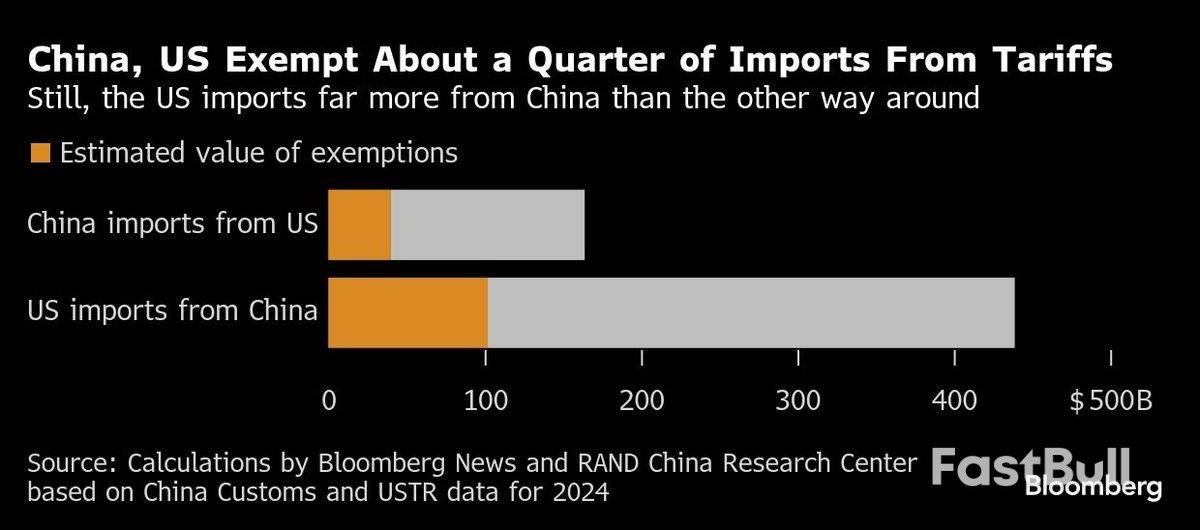
          China has quietly started to exempt some US goods from tariffs that likely cover around US$40 billion (RM170.64 billion) worth of imports, in what looks like an effort to soften the blow of the trade war on its own economy.

          A list of exempted US products covering 131 items like pharmaceuticals and industrial chemicals has been circulating among traders and businesses over the past week. Some of these products were previously reported by Bloomberg News.

          It’s unclear where the list came from and it hasn’t been officially confirmed, but at least half a dozen companies in China have been able to bring in goods from the list without paying tariffs, according to people familiar with the matter, who asked not to be identified discussing confidential information.

          The 131 items are worth about US$40 billion, or around 24% of Chinese imports from the US in 2024, Bloomberg calculations based on China customs data show.

          The move echoes steps taken by the Trump administration to exempt smartphones and other electronics from its own “reciprocal” tariffs, including the 145% levies on China. Those US exemptions apply to about US$102 billion, or roughly 22% of US imports from China last year, according to estimates by Gerard DiPippo, associate director of the RAND China Research Center.

          The notion that China’s exemptions largely mirror the US ones suggests this is more of a strategic move to match Washington’s actions rather than purely a goodwill gesture. It also points to Beijing’s priority of shielding its own economy from the fallout of the trade war.

          “China is likely trying to mitigate damage to its economy by avoiding a collapse in key imports,” DiPippo said. “The exemptions shouldn’t be interpreted as a signal to the US, as China has been quiet about its exemptions, working through business channels and avoiding public statements.”

          There are tentative signs the US-China trade standoff could be shifting. The Chinese Commerce Ministry said on Friday it’s assessing the possibility of trade talks with the US, giving a lift to equity markets.

          “The US has recently sent messages to China through relevant parties, hoping to start talks with China,” the ministry said in a statement released during a mainland holiday. “China is currently evaluating this.”

          Chinese officials began asking foreign companies as early as the second week of April to name the US imports that are essential to their operations and can’t easily be replaced, said the people. Since then, some of those items have received waivers from China’s 125% tariffs on the US goods.

          The list of exemptions is said to be dynamic and will be continuously adjusted depending on China’s needs, according to people familiar with the matter. More products may be added, while some could be removed if China manages to find substitutes, said one of the people.

          China’s General Administration of Customs didn’t respond to a faxed request for comment during a Chinese holiday.

          Bloomberg reported last week that the Chinese government is considering lifting levies for certain medical devices and industrial chemicals like ethane. Officials are also discussing waiving the tariff on aircraft leasing.

          While the US imports far more from China than the other way around, the exemptions highlight areas where Beijing still relies on American products. For example, China is the world’s largest plastics manufacturer but some of its factories depend on ethane — a feedstock mainly imported from the US.

          China has already granted exemptions to two domestic plastic producers that depend heavily on US ethane, according to analytics firm Vortexa.

          The trade war has hit both economies hard. China’s factory activity slipped into its sharpest contraction since December 2023, an early sign of the strain from the tariffs. Major banks including UBS Group AG and Goldman Sachs Group Inc have cut their forecasts for China’s full-year growth to around 4% or lower — well below Beijing’s official target of around 5%.

          Wu Xinbo, director at Fudan University’s Center for American Studies in Shanghai, said while he couldn’t confirm the exemptions, they wouldn’t be surprising. “Tariffs are a kind of self-inflicted thing,” he said. “And we want to control the damage as much as we can.”

          Source: Theedgemarkets

          To stay updated on all economic events of today, please check out our Economic calendar
          Risk Warnings and Disclaimers
          You understand and acknowledge that there is a high degree of risk involved in trading. Following any strategies or investment methods may lead to potential losses. The content on the site is provided by our contributors and analysts for information purposes only. You are solely responsible for determining whether any trading assets, securities, strategy, or any other product is suitable for investing based on your own investment objectives and financial situation.
          Add to Favorites
          Share

          Oil News: Crude Slips as Demand Fears Outweigh Geopolitical Supply Risks

          Adam

          Commodity

          Crude Oil Edges Lower as Demand Concerns Outweigh Supply Risks

          Light crude oil futures slipped on Friday, giving back gains from a short-lived technical bounce, as bearish demand signals continued to dominate trader sentiment.
          The market had attempted to rally following a closing price reversal bottom at $56.39, but gains stalled at the minor 50% retracement level near $59.67, with stronger resistance looming at $63.06 and $65.09—where the 50-day moving average sits.

          OPEC+ Output Plans and US-China Tensions Pressure Sentiment

          Crude prices are on track for a 7% weekly loss, reflecting mounting concerns over weaker global demand. Traders remain cautious ahead of a key OPEC+ meeting set for May 5, where several members are expected to push for accelerated production hikes into June. Reports suggest Saudi Arabia is signaling no intent to support prices with fresh supply cuts, further adding pressure to the downside.
          On the demand front, skepticism persists around potential US-China trade negotiations. China’s Commerce Ministry said it was evaluating a US proposal to resume tariff discussions, but analysts warn the trade environment remains volatile and uncertain.
          Lingering trade disputes between the world’s top two economies are viewed as a major drag on global growth and oil consumption forecasts.

          Geopolitical Risks Offer Only Temporary Support

          While supply concerns stemming from U.S. policy toward Iran have occasionally sparked short-covering rallies, they have failed to provide sustained price support.
          President Trump reiterated that all purchases of Iranian oil or petrochemicals must cease immediately, threatening secondary sanctions on any violators.
          Though these remarks lifted prices briefly on Thursday, the broader market reaction suggests traders are more focused on macroeconomic headwinds than geopolitical flashpoints.

          Technical Weakness Points to Bearish Continuation

          From a technical perspective, the failure to break above resistance at $59.67 reinforces the bearish tone. If downside momentum accelerates, crude may retest the $56.39–$54.48 support zone. With robust non-OPEC+ supply growth and slowing structural demand, traders see limited upside unless OPEC+ unexpectedly shifts course or demand conditions improve.

          Oil Prices Forecast: Bearish Outlook Holds

          In the current environment—characterized by weak demand signals, firm resistance levels, and a lack of cohesive supply discipline—oil prices remain vulnerable to further downside. Unless fresh headlines inject credible bullish momentum, the market bias remains bearish heading into the next OPEC+ policy decision.

          Source: fxempire

          Risk Warnings and Disclaimers
          You understand and acknowledge that there is a high degree of risk involved in trading. Following any strategies or investment methods may lead to potential losses. The content on the site is provided by our contributors and analysts for information purposes only. You are solely responsible for determining whether any trading assets, securities, strategy, or any other product is suitable for investing based on your own investment objectives and financial situation.
          Add to Favorites
          Share

          China says it’s evaluating the possibility of trade talks with the U.S.

          Adam

          China–U.S. Trade War

          Economic

          China said it is evaluating U.S. overtures to initiate trade negotiations, potentially paving the way for the world’s two largest economies to start talks to resolve a trade war that has rumbled financial markets and cast a pall on global economic activity.
          Senior U.S. officials have reached out recently “through relevant parties multiple times,” hoping to start negotiations with China on tariffs, a spokesperson for the commerce ministry said in a statement Friday.
          While assessing the possibility of starting any negotiations, Chinese authorities reiterated Beijing’s request for the U.S. to remove all unilateral tariffs. Failure to do so would indicate “an outright lack of sincerity” from Washington and “further compromise mutual trust,” according to a CNBC translation.
          “If the U.S. wants to talk, it should show its sincerity and be prepared to correct its wrong practices and cancel the unilateral tariffs,” according to the statement.
          U.S. President Donald Trump has slapped tariffs of 145% on imported Chinese goods this year, prompting China to impose retaliatory levies of 125%. So far, both sides have sought to blunt the economic impact of tariffs by granting exemptions on certain critical products.
          Chinese offshore yuan strengthened 0.14% to 7.2665 against the U.S. dollar following the statement. While China’s onshore markets are closed for a holiday, Hong Kong’s Hang Seng index jumped 1.6%.
          The latest comments from Beijing follow a flurry of conflicting statements from the Trump administration and Chinese leadership on whether talks were underway, with both sides wanting to avoid being seen as the first to back down.
          Separately, U.S. Secretary of State Marco Rubio told Fox News’ Hannity Program that the “Chinese want to meet and talk,” according to Reuters, while indicating that such talks will come up soon.

          Stumbling blocks

          While Beijing appears to signal its readiness to engage in talks with the Trump administration, analysts cautioned that reaching a comprehensive deal will be a complex and time-consuming endeavor.
          The wildcard Beijing must contend with before entering any negotiations is the unpredictability of Trump, said Dan Wang, China director at risk consultancy firm Eurasia Group.
          “The negotiation is difficult to start because Trump is chaotic. China will not risk losing control of the situation just for the negotiation’s sake,” Wang said.
          She anticipates that both sides will only arrange open negotiation after all details are agreed privately. “A more likely scenario is just a long-lasting painful truce with both sides doing their own type of rolling back in practice without backing down politically in public. It can easily last the entire Trump term,” Wang said.
          That said, the substance of such talks — if they happen — will also hinge on both sides’ strategic priorities and economic red lines, with both sides showing little appetite for compromise.
          “The process is likely to be delicate, as both sides will be reluctant to make concessions on issues they deem vital to their national economic security,” said Alfredo Montufar-Helu, senior advisor to the China Center at think tank The Conference Board.
          “One of the major asks of China will be for tariffs to go back to pre-‘liberation day’ levels, at least during the negotiation period. Such a move could provide significant relief to businesses on both sides; however, it remains uncertain how receptive the Trump administration would be to this proposal,” said Montufar-Helu.

          Mixed messages

          U.S. officials, including Treasury Secretary Scott Bessent, have indicated that there could be an easing in tensions with China. Bessent, who has largely backed Trump’s broad tariff scheme, said in a Fox Business Network interview Thursday that U.S.-China tariffs at their current levels are “not sustainable on the Chinese side,” and a “big deal” could be made between the two economies.
          “Everything is on the table for the economic relationship. I am confident that the Chinese will want to reach a deal. And as I said, this is going to be a multi-step process,” Bessent said. “First, we need to de-escalate, and then over time, we will start focusing on a larger trade deal.”
          In an interview with CNBC on Thursday, White House economic adviser Kevin Hassett said “there have been kind of loose discussions all over both governments,” adding that China’s recent easing of duties on some U.S. products indicated “they were very close to making the kind of progress we need to move the ball forward.”
          “We need to look at these exchanges of words with a pinch of salt,” said Tianchen Xu, senior economist at Economist Intelligence Unit, adding that both sides are “waiting for the other side to blink first.”
          Xu believes that certain working-level engagements may have already occurred, or are about to occur, which could result in tariff rates being lowered to “less devastating” levels of 40% to 50% over the next one or two quarters.
          Trump signed an executive order on Wednesday exempting imported cars and parts from the lofty levies, following the rollback of tariffs on a range of electronic products earlier in April.
          According to Reuters, China has also granted tariff waivers on imports of certain U.S. goods, such as pharmaceuticals, aerospace equipment, semiconductors and ethane, while seeking opinion from businesses on items they need to be able to import without paying extra duties.
          “Although in practice, the effective tariffs on both sides have gone down, the political stance [from Beijing] has not changed,” Eurasia Group’s Wang said, as Beijing made it clear that the U.S. has to roll back all tariffs for it to participate in any meaningful trade negotiation.
          “China is actively managing this decoupling, not taking the bait from the U.S.,” she added.

          Source: cnbc

          To stay updated on all economic events of today, please check out our Economic calendar
          Risk Warnings and Disclaimers
          You understand and acknowledge that there is a high degree of risk involved in trading. Following any strategies or investment methods may lead to potential losses. The content on the site is provided by our contributors and analysts for information purposes only. You are solely responsible for determining whether any trading assets, securities, strategy, or any other product is suitable for investing based on your own investment objectives and financial situation.
          Add to Favorites
          Share

          US Job Growth Slows Marginally in April; Unemployment Rate Steady at 4.2%

          Warren Takunda

          Economic

          U.S. job growth slowed marginally in April, but the outlook for the labor market is increasingly darkening as President Donald Trump's aggressive tariff policy heightens economic uncertainty.
          Nonfarm payrolls increased by 177,000 jobs last month after rising by a downwardly revised 185,000 in March, the Labor Department's Bureau of Labor Statistics said in its closely watched employment report on Friday.
          Economists polled by Reuters had forecast 130,000 jobs added last month after a previously reported 228,000 advance in March. Estimates ranged from 25,000 to 195,000 jobs added.
          The economy needs to create roughly 100,000 jobs per month to keep up with growth in the working-age population. The unemployment rate held steady at 4.2%.
          The report is backward-looking and it is too early for the labor market to show the impact of Trump's on-and-off again tariffs policy.
          A flood of imports as businesses tried to get ahead of tariffs weighed on the economy in the first quarter.
          Trump's "Liberation Day" tariff announcement ushered in sweeping duties on most imports from the United States' trade partners, including boosting duties on Chinese goods to 145%, sparking a trade war with Beijing and tightening financial conditions.
          Trump later delayed higher reciprocal tariffs for 90 days, which economists said was essentially a pause on the whole economy as it left businesses in a state of paralysis and risked a recession if there was no clarity soon.
          The labor market continues to show resilience amid a reluctance by employers to let go of workers after struggling to find labor during and after the COVID-19 pandemic, but warning signs are accumulating.
          Business sentiment continues to plummet, which economists expect will at some point give way to layoffs. Already, airlines have pulled their 2025 financial forecasts, citing uncertainty over spending on nonessential travel because of tariffs.
          General Motors cut its 2025 profit forecast on Thursday and said it expected a $4-$5 billion tariff hit.
          China has ordered its airlines not to take further deliveries of Boeing planes. Ryanair, Europe's largest low-cost carrier, on Thursday threatened to cancel orders for hundreds of Boeing aircraft if the tariff war leads to materially higher prices.
          A grassroots solution that gives them autonomy and resilience in the face of worsening drought and unpredictable weather due to climate change.
          Amid the swirling uncertainty, the Federal Reserve is expected to keep its benchmark overnight interest rate in the 4.25%-4.50% range next week. Economists expect companies will reduce hours before resorting to mass layoffs.
          Most economists anticipate the tariff drag could become evident by summer in the so-called hard data, including employment and inflation reports.
          Surveys, including from the Institute for Supply Management, the Conference Board and University of Michigan, have uniformly painted a dire economic picture.
          The Trump administration's unprecedented and often chaotic campaign spearheaded by tech billionaire Elon Musk's Department of Government Efficiency, or DOGE, to drastically shrink the federal government through mass layoffs and deep funding cuts is adding to the rising labor market risks.

          Source: Reuters

          To stay updated on all economic events of today, please check out our Economic calendar
          Risk Warnings and Disclaimers
          You understand and acknowledge that there is a high degree of risk involved in trading. Following any strategies or investment methods may lead to potential losses. The content on the site is provided by our contributors and analysts for information purposes only. You are solely responsible for determining whether any trading assets, securities, strategy, or any other product is suitable for investing based on your own investment objectives and financial situation.
          Add to Favorites
          Share

          US Payroll Growth Top Forecasts With Robust 177,000 Addition

          Michelle

          Forex

          Economic

          US job growth was robust in April and the unemployment rate held steady, suggesting uncertainty over President Donald Trump’s trade policy has yet to have a material impact on hiring plans.

          Nonfarm payrolls increased 177,000 last month after the prior two months’ advances were revised lower, according to Bureau of Labor Statistics data out Friday. The unemployment rate was unchanged at 4.2%.

          US stock futures and Treasury yields rose following the release, while the dollar pared losses.

          The report suggests the labor market continues to cool gradually, a sign that businesses facing heightened uncertainty around tariffs and turmoil in financial markets didn’t significantly alter their hiring plans. Most economists anticipate the brunt of the impact from punishing levies will be seen in coming months.

          Federal Reserve officials have indicated they’re in no rush to cut rates until they get further clarity on the impact the administration’s policies will have on the economy, and are widely expected to leave their benchmark unchanged when they next meet May 6-7. While the US central bank is an independent institution, Trump has been pressuring it to ease borrowing costs.

          Payroll gains in April were broad based, led by the health care and transportation and warehousing sectors. Manufacturing shed jobs as the sector saw the steepest contraction in output since 2020.

          Source: Bloomberg Europe

          To stay updated on all economic events of today, please check out our Economic calendar
          Risk Warnings and Disclaimers
          You understand and acknowledge that there is a high degree of risk involved in trading. Following any strategies or investment methods may lead to potential losses. The content on the site is provided by our contributors and analysts for information purposes only. You are solely responsible for determining whether any trading assets, securities, strategy, or any other product is suitable for investing based on your own investment objectives and financial situation.
          Add to Favorites
          Share

          April jobs report expected to show hiring slowed amid tariff uncertainty

          Adam

          China–U.S. Trade War

          Economic

          The April jobs report is expected to show hiring slowed to start the second quarter while unemployment held flat. Investors are closely watching the monthly release, the first since President Trump's "Liberation Day" tariffs announcement on April 2, for signs of cooling in the labor market.
          The Bureau of Labor Statistics data is slated for release at 8:30 a.m. ET on Friday. Economists expect nonfarm payrolls to have risen by 135,000 in April and the unemployment rate to hold steady at 4.2%, according to consensus estimates compiled by Bloomberg.
          In March, the US economy added 228,000 jobs. Meanwhile, the unemployment rate ticked higher to 4.2%.
          Here are the numbers Wall Street is expecting Friday, according to data from Bloomberg:
          Nonfarm payroll: +125,000 vs. +228,000 in March
          Unemployment rate: 4.2% vs. 4.2%
          Average hourly earnings, month over month: +0.3% vs. +0.3%
          Average hourly earnings, year over year: +3.9% vs. +3.8%
          Average weekly hours worked: 34.2 vs. 34.2
          The release comes as impacts from Trump's tariffs have begun to show up in economic data.
          On Wednesday, a new release from the Bureau of Economic Analysis showed economic growth contracted for the first time in three years during the first quarter. A surge in imports ahead of the levies weighed on growth in the quarter. Tariffs have also negatively impacted activity in the manufacturing sector and weighed on various consumer sentiment surveys.
          But thus far, the effects haven't fully spilled over into labor market data. Economists expect that trend to largely continue with the April jobs report.
          "Similar to March, solid April data may feel stale as it reflects labor market conditions during the first two weeks of the month, likely too soon to reflect employment decisions made after the April 2 tariff announcement," Citi economist Veronica Clark wrote in a note previewing the release.
          Recent data, however, has shown some signs of cooling in the labor market. On Thursday, data from the Department of Labor revealed weekly claims for unemployment benefits hit their highest level in two months during the final full week of April while the number of Americans filing for unemployment insurance on an ongoing basis reached the highest level since November 2021.
          The release followed a weaker-than-expected reading of private payroll additions for April on Wednesday and data out Tuesday showing job openings at the end of March hovered near their lowest level since December 2020.
          "Unease is the word of the day," ADP chief economist Nela Richardson said in the April private payroll release. "Employers are trying to reconcile policy and consumer uncertainty with a run of mostly positive economic data. It can be difficult to make hiring decisions in such an environment."
          Entering Friday's report, markets are pricing in a 60% chance that the Federal Reserve resumes interest rate cuts at its June meeting, per the CME FedWatch Tool.

          Source: finance.yahoo

          To stay updated on all economic events of today, please check out our Economic calendar
          Risk Warnings and Disclaimers
          You understand and acknowledge that there is a high degree of risk involved in trading. Following any strategies or investment methods may lead to potential losses. The content on the site is provided by our contributors and analysts for information purposes only. You are solely responsible for determining whether any trading assets, securities, strategy, or any other product is suitable for investing based on your own investment objectives and financial situation.
          Add to Favorites
          Share
          FastBull
          Copyright © 2025 FastBull Ltd

          728 RM B 7/F GEE LOK IND BLDG NO 34 HUNG TO RD KWUN TONG KLN HONG KONG

          TelegramInstagramTwitterfacebooklinkedin
          App Store Google Play Google Play
          Products
          Charts

          Chats

          Q&A with Experts
          Screeners
          Economic Calendar
          Data
          Tools
          Membership
          Features
          Function
          Markets
          Copy Trading
          Latest Signals
          Contests
          News
          Analysis
          24/7
          Columns
          Education
          Company
          Careers
          About Us
          Contact Us
          Advertising
          Help Center
          Feedback
          User Agreement
          Privacy Policy
          Business

          White Label

          Data API

          Web Plug-ins

          Poster Maker

          Affiliate Program

          Risk Disclosure

          The risk of loss in trading financial instruments such as stocks, FX, commodities, futures, bonds, ETFs and crypto can be substantial. You may sustain a total loss of the funds that you deposit with your broker. Therefore, you should carefully consider whether such trading is suitable for you in light of your circumstances and financial resources.

          No decision to invest should be made without thoroughly conducting due diligence by yourself or consulting with your financial advisors. Our web content might not suit you since we don't know your financial conditions and investment needs. Our financial information might have latency or contain inaccuracy, so you should be fully responsible for any of your trading and investment decisions. The company will not be responsible for your capital loss.

          Without getting permission from the website, you are not allowed to copy the website's graphics, texts, or trademarks. Intellectual property rights in the content or data incorporated into this website belong to its providers and exchange merchants.

          Not Logged In

          Log in to access more features

          FastBull Membership

          Not yet

          Purchase

          Become a signal provider
          Help Center
          Customer Service
          Dark Mode
          Price Up/Down Colors

          Log In

          Sign Up

          Position
          Layout
          Fullscreen
          Default to Chart
          The chart page opens by default when you visit fastbull.com