• Trade
  • Markets
  • Copy
  • Contests
  • News
  • 24/7
  • Calendar
  • Q&A
  • Chats
Trending
Screeners
SYMBOL
LAST
BID
ASK
HIGH
LOW
NET CHG.
%CHG.
SPREAD
SPX
S&P 500 Index
6846.50
6846.50
6846.50
6878.28
6827.18
-23.90
-0.35%
--
DJI
Dow Jones Industrial Average
47739.31
47739.31
47739.31
47971.51
47611.93
-215.67
-0.45%
--
IXIC
NASDAQ Composite Index
23545.89
23545.89
23545.89
23698.93
23455.05
-32.22
-0.14%
--
USDX
US Dollar Index
99.030
99.110
99.030
99.160
98.730
+0.080
+ 0.08%
--
EURUSD
Euro / US Dollar
1.16375
1.16383
1.16375
1.16717
1.16162
-0.00051
-0.04%
--
GBPUSD
Pound Sterling / US Dollar
1.33243
1.33255
1.33243
1.33462
1.33053
-0.00069
-0.05%
--
XAUUSD
Gold / US Dollar
4189.28
4189.72
4189.28
4218.85
4175.92
-8.63
-0.21%
--
WTI
Light Sweet Crude Oil
58.607
58.734
58.607
60.084
58.495
-1.202
-2.01%
--

Community Accounts

Signal Accounts
--
Profit Accounts
--
Loss Accounts
--
View More

Become a signal provider

Sell trading signals to earn additional income

View More

Guide to Copy Trading

Get started with ease and confidence

View More

Signal Accounts for Members

All Signal Accounts

Best Return
  • Best Return
  • Best P/L
  • Best MDD
Past 1W
  • Past 1W
  • Past 1M
  • Past 1Y

All Contests

  • All
  • Trump Updates
  • Recommend
  • Stocks
  • Cryptocurrencies
  • Central Banks
  • Featured News
Top News Only
Share

(US Stocks) The Philadelphia Gold And Silver Index Closed Down 2.34% At 311.01 Points. (Global Session) The NYSE Arca Gold Miners Index Closed Down 2.17%, Hitting A Daily Low Of 2235.45 Points; US Stocks Remained Slightly Down Before The Opening Bell—holding Steady Around 2280 Points—before Briefly Rising Slightly

Share

IMF: IMF Executive Board Approves Extension Of The Extended Credit Facility Arrangement With Nepal

Share

Trump: Same Approach Will Apply To Amd, Intel, And Other Great American Companies

Share

Trump: Department Of Commerce Is Finalizing Details

Share

Trump: $25% Will Be Paid To United States Of America

Share

Trump: President Xi Responded Positively

Share

[Consumer Discretionary ETFs Fell Over 1.4%, Leading The Decline Among US Sector ETFs; Semiconductor ETFs Rose Over 1.1%] On Monday (December 8), The Consumer Discretionary ETF Fell 1.45%, The Energy ETF Fell 1.09%, The Internet ETF Fell 0.18%, The Regional Banks ETF Rose 0.34%, The Technology ETF Rose 0.70%, The Global Technology ETF Rose 0.93%, And The Semiconductor ETF Rose 1.13%

Share

Trump: I Have Informed President Xi, Of China, That United States Will Allow Nvidia To Ship Its H200 Products To Approved Customers In China

Share

Argentina's Merval Index Closed Up 0.02% At 3.047 Million Points. It Rose To A New Daily High Of 3.165 Million Points In Early Trading In Buenos Aires Before Gradually Giving Back Its Gains

Share

US Stock Market Closing Report | On Monday (December 8), The Magnificent 7 Index Fell 0.20% To 208.33 Points. The "mega-cap" Tech Stock Index Fell 0.33% To 405.00 Points

Share

Pentagon - USA State Dept Approves Potential Sale Of Hellfire Missiles To Belgium For An Estimated $79 Million

Share

Toronto Stock Index .GSPTSE Unofficially Closes Down 141.44 Points, Or 0.45 Percent, At 31169.97

Share

The Nasdaq Golden Dragon China Index Closed Up Less Than 0.1%. Nxtt Rose 21%, Microalgo Rose 7%, Daqo New Energy Rose 4.3%, And 21Vianet, Baidu, And Miniso All Rose More Than 3%

Share

The S&P 500 Initially Closed Down More Than 0.4%, With The Telecom Sector Down 1.9%, And Materials, Consumer Discretionary, Utilities, Healthcare, And Energy Sectors Down By As Much As 1.6%, While The Technology Sector Rose 0.7%. The NASDAQ 100 Initially Closed Down 0.3%, With Marvell Technology Down 7%, Fortinet Down 4%, And Netflix And Tesla Down 3.4%

Share

IMF: Review Pakistan Authorities To Draw The Equivalent Of About US$1 Billion

Share

President Trump Is Committed To The Continued Cessation Of Violence And Expects The Governments Of Cambodia And Thailand To Fully Honor Their Commitments To End This Conflict - Senior White House Official

Share

[Water Overflows From Spent Fuel Pool At Japanese Nuclear Facility] According To Japan's Nuclear Waste Management Company, Following A Strong Earthquake Off The Coast Of Aomori Prefecture Late On December 8th, Workers At The Nuclear Waste Treatment Plant In Rokkasho Village, Aomori Prefecture, Discovered "at Least 100 Liters Of Water" On The Ground Around The Spent Fuel Pool During An Inspection. Analysis Suggests This Water "may Have Overflowed Due To The Earthquake's Shaking." However, It Is Reported That The Overflowed Water "remains Inside The Building And Has Not Affected The External Environment."

Share

Trump Says Netflix, Paramount Are Not His Friends As Warner Bros Fight Heats Up

Share

On Monday (December 8), The ICE Dollar Index Rose 0.11% To 99.102 In Late New York Trading, Trading Between 98.794 And 99.227, Following A Significant Rally After The US Stock Market Opened. The Bloomberg Dollar Index Rose 0.12% To 1213.90, Trading Between 1210.34 And 1214.88

Share

Trump: Has Not Spoken To Kushner About Paramount Bid

TIME
ACT
FCST
PREV
France Trade Balance (SA) (Oct)

A:--

F: --

P: --
Euro Zone Employment YoY (SA) (Q3)

A:--

F: --

P: --
Canada Part-Time Employment (SA) (Nov)

A:--

F: --

P: --

Canada Unemployment Rate (SA) (Nov)

A:--

F: --

P: --

Canada Full-time Employment (SA) (Nov)

A:--

F: --

P: --

Canada Labor Force Participation Rate (SA) (Nov)

A:--

F: --

P: --

Canada Employment (SA) (Nov)

A:--

F: --

P: --

U.S. PCE Price Index MoM (Sept)

A:--

F: --

P: --

U.S. Personal Income MoM (Sept)

A:--

F: --

P: --

U.S. Core PCE Price Index MoM (Sept)

A:--

F: --

P: --

U.S. PCE Price Index YoY (SA) (Sept)

A:--

F: --

P: --

U.S. Core PCE Price Index YoY (Sept)

A:--

F: --

P: --

U.S. Personal Outlays MoM (SA) (Sept)

A:--

F: --

P: --
U.S. 5-10 Year-Ahead Inflation Expectations (Dec)

A:--

F: --

P: --

U.S. Real Personal Consumption Expenditures MoM (Sept)

A:--

F: --

P: --
U.S. Weekly Total Rig Count

A:--

F: --

P: --

U.S. Weekly Total Oil Rig Count

A:--

F: --

P: --

U.S. Consumer Credit (SA) (Oct)

A:--

F: --

P: --
China, Mainland Foreign Exchange Reserves (Nov)

A:--

F: --

P: --

Japan Trade Balance (Oct)

A:--

F: --

P: --

Japan Nominal GDP Revised QoQ (Q3)

A:--

F: --

P: --

China, Mainland Imports YoY (CNH) (Nov)

A:--

F: --

P: --

China, Mainland Exports (Nov)

A:--

F: --

P: --

China, Mainland Imports (CNH) (Nov)

A:--

F: --

P: --

China, Mainland Trade Balance (CNH) (Nov)

A:--

F: --

P: --

China, Mainland Exports YoY (USD) (Nov)

A:--

F: --

P: --

China, Mainland Imports YoY (USD) (Nov)

A:--

F: --

P: --

Germany Industrial Output MoM (SA) (Oct)

A:--

F: --

P: --
Euro Zone Sentix Investor Confidence Index (Dec)

A:--

F: --

P: --

Canada National Economic Confidence Index

A:--

F: --

P: --

U.K. BRC Like-For-Like Retail Sales YoY (Nov)

--

F: --

P: --

U.K. BRC Overall Retail Sales YoY (Nov)

--

F: --

P: --

Australia Overnight (Borrowing) Key Rate

--

F: --

P: --

RBA Rate Statement
RBA Press Conference
Germany Exports MoM (SA) (Oct)

--

F: --

P: --

U.S. NFIB Small Business Optimism Index (SA) (Nov)

--

F: --

P: --

Mexico 12-Month Inflation (CPI) (Nov)

--

F: --

P: --

Mexico Core CPI YoY (Nov)

--

F: --

P: --

Mexico PPI YoY (Nov)

--

F: --

P: --

U.S. Weekly Redbook Index YoY

--

F: --

P: --

U.S. JOLTS Job Openings (SA) (Oct)

--

F: --

P: --

China, Mainland M1 Money Supply YoY (Nov)

--

F: --

P: --

China, Mainland M0 Money Supply YoY (Nov)

--

F: --

P: --

China, Mainland M2 Money Supply YoY (Nov)

--

F: --

P: --

U.S. EIA Short-Term Crude Production Forecast For The Year (Dec)

--

F: --

P: --

U.S. EIA Natural Gas Production Forecast For The Next Year (Dec)

--

F: --

P: --

U.S. EIA Short-Term Crude Production Forecast For The Next Year (Dec)

--

F: --

P: --

EIA Monthly Short-Term Energy Outlook
U.S. API Weekly Gasoline Stocks

--

F: --

P: --

U.S. API Weekly Cushing Crude Oil Stocks

--

F: --

P: --

U.S. API Weekly Crude Oil Stocks

--

F: --

P: --

U.S. API Weekly Refined Oil Stocks

--

F: --

P: --

South Korea Unemployment Rate (SA) (Nov)

--

F: --

P: --

Japan Reuters Tankan Non-Manufacturers Index (Dec)

--

F: --

P: --

Japan Reuters Tankan Manufacturers Index (Dec)

--

F: --

P: --

Japan Domestic Enterprise Commodity Price Index MoM (Nov)

--

F: --

P: --

Japan Domestic Enterprise Commodity Price Index YoY (Nov)

--

F: --

P: --

China, Mainland PPI YoY (Nov)

--

F: --

P: --

China, Mainland CPI MoM (Nov)

--

F: --

P: --

Italy Industrial Output YoY (SA) (Oct)

--

F: --

P: --

Q&A with Experts
    • All
    • Chatrooms
    • Groups
    • Friends
    Connecting
    .
    .
    .
    Type here...
    Add Symbol or Code

      No matching data

      All
      Trump Updates
      Recommend
      Stocks
      Cryptocurrencies
      Central Banks
      Featured News
      • All
      • Russia-Ukraine Conflict
      • Middle East Flashpoint
      • All
      • Russia-Ukraine Conflict
      • Middle East Flashpoint

      Search
      Products

      Charts Free Forever

      Chats Q&A with Experts
      Screeners Economic Calendar Data Tools
      Membership Features
      Data Warehouse Market Trends Institutional Data Policy Rates Macro

      Market Trends

      Market Sentiment Order Book Forex Correlations

      Top Indicators

      Charts Free Forever
      Markets

      News

      News Analysis 24/7 Columns Education
      From Institutions From Analysts
      Topics Columnists

      Latest Views

      Latest Views

      Trending Topics

      Top Columnists

      Latest Update

      Signals

      Copy Rankings Latest Signals Become a signal provider AI Rating
      Contests
      Brokers

      Overview Brokers Assessment Rankings Regulators News Claims
      Broker listing Forex Brokers Comparison Tool Live Spread Comparison Scam
      Q&A Complaint Scam Alert Videos Tips to Detect Scam
      More

      Business
      Events
      Careers About Us Advertising Help Center

      White Label

      Data API

      Web Plug-ins

      Affiliate Program

      Awards Institution Evaluation IB Seminar Salon Event Exhibition
      Vietnam Thailand Singapore Dubai
      Fans Party Investment Sharing Session
      FastBull Summit BrokersView Expo
      Recent Searches
        Top Searches
          Markets
          News
          Analysis
          User
          24/7
          Economic Calendar
          Education
          Data
          • Names
          • Latest
          • Prev

          View All

          No data

          Scan to Download

          Faster Charts, Chat Faster!

          Download App
          English
          • English
          • Español
          • العربية
          • Bahasa Indonesia
          • Bahasa Melayu
          • Tiếng Việt
          • ภาษาไทย
          • Français
          • Italiano
          • Türkçe
          • Русский язык
          • 简中
          • 繁中
          Open Account
          Search
          Products
          Charts Free Forever
          Markets
          News
          Signals

          Copy Rankings Latest Signals Become a signal provider AI Rating
          Contests
          Brokers

          Overview Brokers Assessment Rankings Regulators News Claims
          Broker listing Forex Brokers Comparison Tool Live Spread Comparison Scam
          Q&A Complaint Scam Alert Videos Tips to Detect Scam
          More

          Business
          Events
          Careers About Us Advertising Help Center

          White Label

          Data API

          Web Plug-ins

          Affiliate Program

          Awards Institution Evaluation IB Seminar Salon Event Exhibition
          Vietnam Thailand Singapore Dubai
          Fans Party Investment Sharing Session
          FastBull Summit BrokersView Expo

          Gold Retreats from $3,345 Peak as Dollar Firms, but Fiscal Risks Keep Bullish Case Intact

          Warren Takunda

          Economic

          Summary:

          Gold prices retreated from a two-week high near $3,345 to trade around $3,300 on Thursday, weighed down by a rebound in the U.S. Dollar.

          SELL XAUUSD
          Close Time
          CLOSED

          3305.00

          Entry Price

          3100.00

          TP

          3350.00

          SL

          4189.28 -8.63 -0.21%

          450.0

          Pips

          Loss

          3100.00

          TP

          3350.00

          Exit Price

          3305.00

          Entry Price

          3350.00

          SL
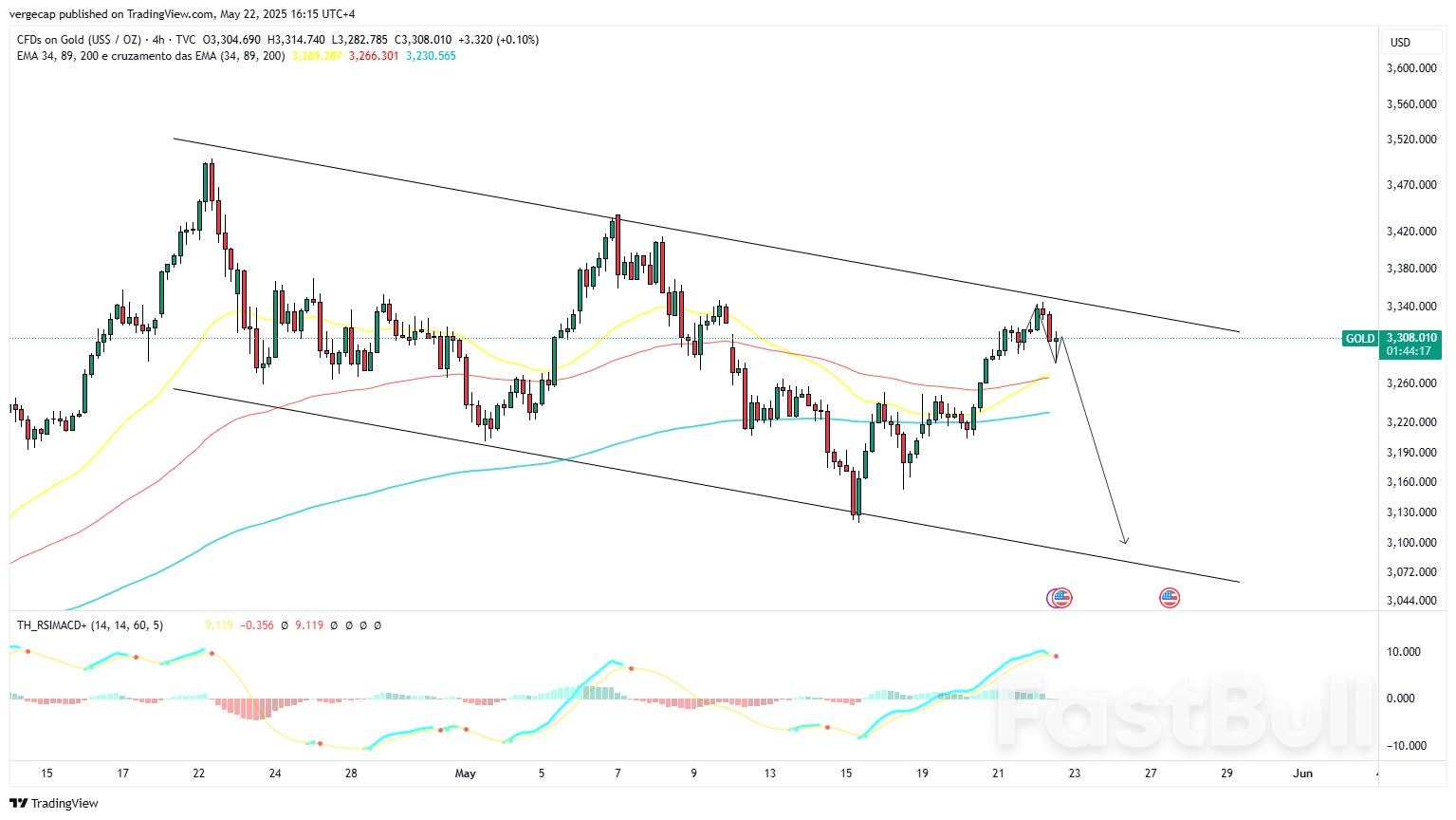
          Gold prices edged lower on Thursday during European trade, surrendering early-session gains after touching a two-week high around $3,345. At the time of writing, spot gold (XAU/USD) was seen hovering near the $3,300 mark, pressured by a modest recovery in the U.S. Dollar. While the metal lost ground intraday, its broader outlook remains notably firm, underpinned by renewed U.S. fiscal concerns and escalating geopolitical tension surrounding the ongoing war in Ukraine.
          The U.S. Dollar Index, which gauges the greenback against a basket of six major currencies, climbed about 0.15% to trade near 99.85 after bottoming at 99.35 earlier in the week. A firmer dollar tends to exert downward pressure on gold, making it more expensive for foreign buyers. Yet this renewed strength in the dollar appears more of a technical rebound than a reversal in the fundamental narrative that continues to favor gold in the medium term.
          Driving the metal’s underlying support is the intensifying spotlight on U.S. fiscal instability. On Wednesday, the House Rules Committee, under Republican control, advanced President Donald Trump’s sweeping tax package for a full vote in the House. The bill is projected by the Congressional Budget Office to increase the federal deficit by $3.8 trillion over the next ten years. It includes extensions of Trump-era tax cuts and adds new breaks on tips, overtime pay, and car loan interest. At a time when the U.S. national debt is already exceeding $36 trillion, market participants are increasingly concerned that such measures may further strain the country’s long-term creditworthiness.
          That anxiety was validated by Moody’s, which downgraded the U.S. sovereign credit rating from Aaa to Aa1 last week. In its statement, the ratings agency cited ongoing legislative dysfunction and a failure by both Congress and successive administrations to implement meaningful deficit reduction strategies. As investors digest the implications of spiraling debt and widening deficits, many are reallocating toward traditional safe-haven assets like gold.
          Adding to the bullish undertone is the gloomy domestic macroeconomic narrative. Fears of stagflation—where inflation persists alongside stagnating growth—are mounting among both investors and policymakers. JPMorgan Chase CEO Jamie Dimon added his voice to the chorus this week, expressing support for the Federal Reserve’s decision to hold interest rates steady while cautioning that the U.S. economy remains far from stable. In an interview with Bloomberg, Dimon said he does not believe the current environment is a “sweet spot,” highlighting risks posed by inflation, geopolitical shocks, and the rising cost of capital. These factors, combined with a fragile labor market, suggest the Fed may remain in a holding pattern, which could cap gains in the dollar while supporting non-yielding assets like gold.
          Geopolitically, tensions are again flaring over the war in Ukraine. According to reports from the Wall Street Journal, President Trump told European leaders in a private call that Russian President Vladimir Putin sees no incentive to agree to a ceasefire, believing he is winning the war. This latest stance contradicts Trump’s own public messaging earlier this week on Truth Social, where he claimed that both sides had agreed to initiate truce talks in the Vatican. The mixed messaging has only added to investor uncertainty, which has historically buoyed gold demand in times of global unease.
          Technical AnalysisGold Retreats from $3,345 Peak as Dollar Firms, but Fiscal Risks Keep Bullish Case Intact_1
          While the macro and geopolitical backdrop remains broadly supportive, gold’s immediate technical setup paints a more cautious picture. On the four-hour chart, gold continues to trade within a descending channel that has been in place for several sessions. The price is currently near the upper boundary of this channel around $3,355, which is acting as a resistance level. If this level holds and sellers step back in, the metal could reverse lower, with a potential move toward $3,200 or even $3,100 if the lower boundary of the channel is respected.
          TRADE RECOMMENDATION
          SELL GOLD
          ENTRY PRICE: 3305
          STOP LOSS: 3350
          TAKE PROFIT: 3100
          Risk Warnings and Disclaimers
          You understand and acknowledge that there is a high degree of risk involved in trading. Following any strategies or investment methods may lead to potential losses. The content on the site is provided by our contributors and analysts for information purposes only. You are solely responsible for determining whether any trading assets, securities, strategy, or any other product is suitable for investing based on your own investment objectives and financial situation.
          Add to Favorites
          Share

          Initial Signs of Rebound Emerge

          Eva Chen

          Economic

          Forex

          Summary:

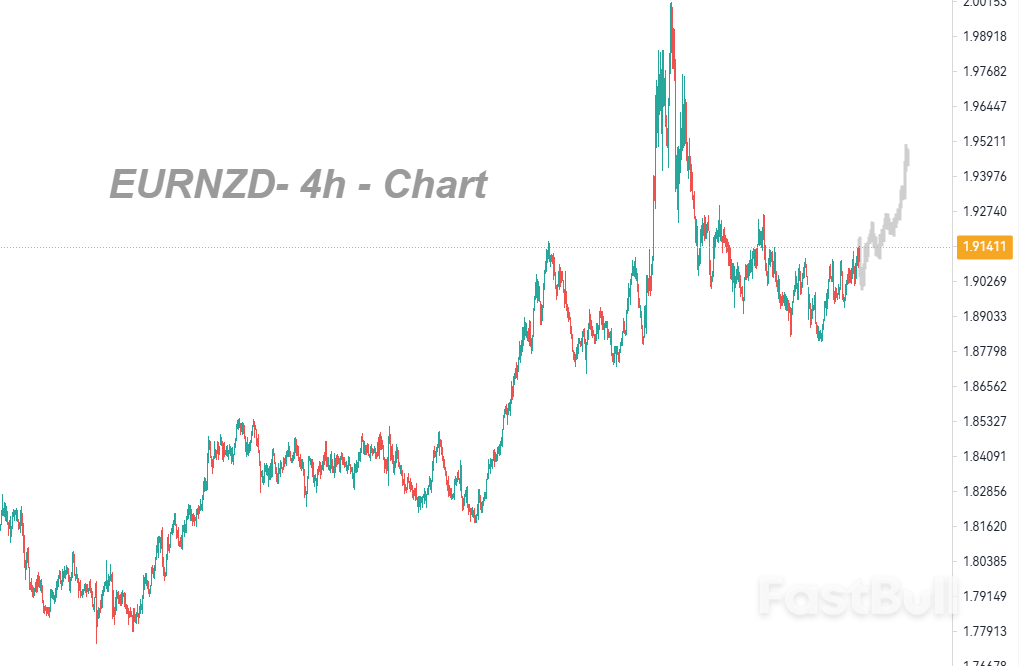
          The EURNZD pair has recently been consolidating above 1.9107, with the market focusing on the potential interest rate cuts by the European Central Bank (ECB) and the ongoing economic weakness in New Zealand. In the short term, EURNZD is expected to maintain an overall upward bias within a range. If it breaks through key resistance levels, it could continue to rise.

          BUY EURNZD
          Close Time
          CLOSED

          1.91468

          Entry Price

          1.95500

          TP

          1.89100

          SL

          2.01492 -0.00059 -0.03%

          236.8

          Pips

          Loss

          1.89100

          SL

          1.89094

          Exit Price

          1.91468

          Entry Price

          1.95500

          TP

          Fundamentals

          On the Euro front, as inflationary pressures gradually ease, the ECB has hinted at the possibility of initiating an interest rate cut cycle in June. However, overall monetary policy remains relatively cautious. Although economic growth remains sluggish, recent data show a slight recovery in service sector activity, which provides some short-term support for the Euro.
          ECB Governing Council member Klaas Knot said on Tuesday that the possibility of an interest rate cut in June still exists, but it is far from certain.
          He told reporters, "I cannot rule out that we will decide to cut rates again in June, but I also cannot confirm it." He emphasized that the ECB must continue to focus on medium- and long-term inflation risks rather than short-term fluctuations.
          Knot noted that the new staff projections for next month will incorporate scenarios reflecting the impact of recent U.S. trade policies and potential countermeasures by the EU.
          While the outlook may show a decline in inflation rates in 2025 and 2026, the greater concern is the long-term impact of tariff-related distortions beyond that period. "What is more interesting is to observe what happens after that period," he pointed out.
          In New Zealand, inflation remains above the central bank's target, but the slowdown in core inflation has intensified market expectations for policy easing by the Reserve Bank of New Zealand (RBNZ). Moreover, the underwhelming economic recovery in China has weighed on New Zealand's exports, putting downward pressure on the New Zealand dollar. Additionally, fluctuations in commodity prices have added uncertainty to the NZD's trajectory.
          Overall, while the Euro faces potential rate cuts, the New Zealand dollar's fundamentals are relatively weaker. As a result, EURNZD is in a favorable position.
          Initial Signs of Rebound Emerge_1

          Technical Analysis

          From the daily chart perspective, EURNZD is currently in a bottom-building and upward trend, having formed a breakout pattern within the 1.8913-1.9107 range. The MACD indicator shows sustained positive momentum, with short-term moving averages in a bullish alignment, indicating a technical bias towards the upside.
          If the price breaks through the resistance levels at 1.9265 and 1.9294, it could further open up upside potential and challenge the 50% Fibonacci retracement level of the 2.0011-1.809 range. Further gains could subsequently test the 61.8% and 78.6% Fibonacci retracements. Conversely, if the price falls below the support level at 1.8910, a short-term correction may ensue.

          Trading Recommendations

          Trading Direction: Long
          Entry Price: 1.9107
          Target Price: 1.9550
          Stop Loss: 1.8910
          Valid Until: June 6, 2025, 23:55:00
          Support: 1.9107/1.9071/1.9007
          Resistance: 1.9154/1.9268/1.9295
          Risk Warnings and Disclaimers
          You understand and acknowledge that there is a high degree of risk involved in trading. Following any strategies or investment methods may lead to potential losses. The content on the site is provided by our contributors and analysts for information purposes only. You are solely responsible for determining whether any trading assets, securities, strategy, or any other product is suitable for investing based on your own investment objectives and financial situation.
          Add to Favorites
          Share

          Supply Glut Is Likely to Intensify

          Alan

          Commodity

          Summary:

          Market speculation suggests that OPEC may increase production again in July, potentially exacerbating the global crude oil supply surplus.

          SELL WTI
          Close Time
          CLOSED

          60.743

          Entry Price

          50.500

          TP

          64.200

          SL

          58.607 -1.202 -2.01%

          238.9

          Pips

          Loss

          50.500

          TP

          63.132

          Exit Price

          60.743

          Entry Price

          64.200

          SL

          Fundamentals

          The U.S. Energy Information Administration's weekly report, released yesterday, indicated a surprise increase in U.S. crude oil inventories of 1.328 million barrels for the week ending May 16. Gasoline and distillate stocks also rose, signaling continued weak demand and exerting downward pressure on oil prices. Meanwhile, global refined product inventories remain elevated, with the IEA reporting that March inventories reached 7.7 billion barrels, exacerbating oversupply concerns. Despite the approaching summer driving season, potential demand upside may be limited, hindering effective inventory absorption in the short term.
          Furthermore, bearish news emerged today. Market sources suggest that OPEC+ members are considering another substantial production increase at their June 1 meeting, potentially marking the third consecutive month of additional oil output. Delegates are reportedly discussing an option to raise daily production by 411,000 barrels in July, although no final agreement has been reached. If implemented, this would accelerate supply releases following increases in May and June, likely intensifying the global crude oil supply glut and further depressing oil prices.

          Technical Analysis

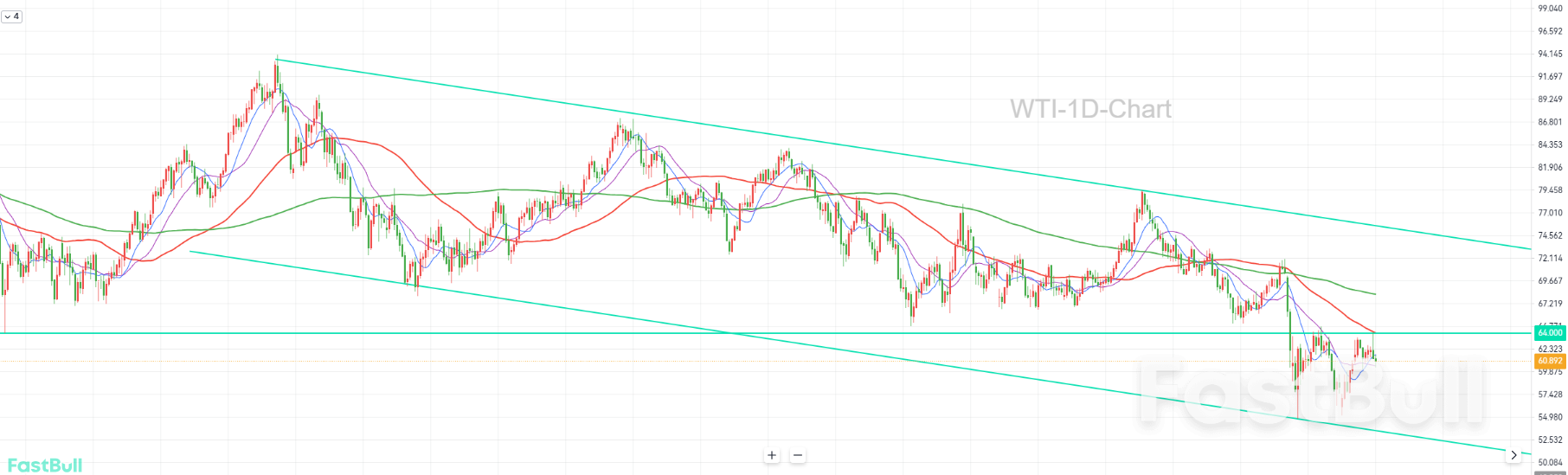
          Supply Glut Is Likely to Intensify_1
          In the 1D timeframe, WTI's candlestick patterns are trending within a clear downward channel, indicating a prevailing bearish trend. The breach of the 64.00 level has established this as a significant resistance level, as evidenced by the failure of recent rebounds to surpass this point.
          Currently, WTI is again approaching the 64.00 resistance, coinciding with the 60-day SMA, creating a confluence of resistance that increases the likelihood of a short-term decline. The formation of an inverted hammer pattern below the 64.00 resistance suggests a high probability of a continuation of the prior downtrend. This could lead to a retest of the 55.00 support level. A break below 55.00 would likely open further downside potential, potentially targeting the 50.00 psychological level.

          Trading Recommendations

          Trading Direction: Sell
          Entry Price: 60.90
          Target Price: 50.50
          Stop Loss: 64.20
          Valid Until: June 5, 2025 23:00:00
          Support: 60.06, 55.00
          Resistance: 64.01, 65.00
          Risk Warnings and Disclaimers
          You understand and acknowledge that there is a high degree of risk involved in trading. Following any strategies or investment methods may lead to potential losses. The content on the site is provided by our contributors and analysts for information purposes only. You are solely responsible for determining whether any trading assets, securities, strategy, or any other product is suitable for investing based on your own investment objectives and financial situation.
          Add to Favorites
          Share

          GBP/USD Eyes 1.3500 as Inflation-Fueled Rally Gains Steam

          Warren Takunda

          Economic

          Summary:

          The Pound Sterling rallies near 1.3470 after UK CPI jumps more than expected in April, while the US Dollar weakens on Moody’s credit downgrade and mounting fiscal concerns.

          BUY GBPUSD
          Close Time
          CLOSED

          1.34401

          Entry Price

          1.35500

          TP

          1.33800

          SL

          1.33243 -0.00069 -0.05%

          78.5

          Pips

          Profit

          1.33800

          SL

          1.35186

          Exit Price

          1.34401

          Entry Price

          1.35500

          TP

          The British Pound surged against the US Dollar on Wednesday, closing in on its highest level since mid-2021 as stronger-than-expected UK inflation data ignited fresh policy speculation around the Bank of England’s next move. The move was further bolstered by a deepening sense of vulnerability in the US Dollar, triggered by Moody’s downgrade of the United States' sovereign credit rating and mounting uncertainty around President Donald Trump’s latest fiscal proposals.
          Sterling gained ground swiftly during the London and early North American sessions, with the GBP/USD pair peaking around the 1.3470 handle. The rally was primarily driven by data from the Office for National Statistics showing that the UK Consumer Price Index for April rose by a staggering 3.5% year-on-year, up sharply from the 2.6% recorded in March and outpacing market expectations of 3.3%. This marked the highest annual rate of inflation since November 2023, reversing a recent trend of disinflation and complicating the Bank of England’s narrative around monetary easing.
          More concerning for policymakers was the core CPI measure, which strips out volatile elements like energy, food, alcohol and tobacco. This metric rose 3.8% annually, up from 3.4% in March and beating forecasts of 3.6%. On a monthly basis, inflation also surged, rising 1.2% compared to the previous month’s 0.3%, signaling that price pressures are not only lingering but intensifying across several sectors of the economy. Notably, services inflation—which the Bank of England tracks closely as a proxy for domestic cost pressures—climbed to 5.4%, a jump from 4.7% in March.
          This sharp rise in services inflation is likely to feed into the central bank’s June policy meeting, where markets had previously priced in a potential rate cut. Now, with inflation stubbornly above target, those expectations are beginning to fade. The data suggests that the BoE may be forced to abandon its recent “gradual and cautious” messaging around easing, as inflation proves far stickier than anticipated. Speaking on Tuesday ahead of the inflation print, BoE Chief Economist Huw Pill signaled a hawkish tone, warning of inflationary risks stemming from structural shifts in wage and price-setting behavior that have persisted since the COVID-era inflation spike. Pill noted that these behavioral changes may sustain inflation above target, complicating the path to rate normalization.
          The inflation surprise also drew political reaction. Chancellor of the Exchequer Rachel Reeves expressed concern over the figures, stating, “I am disappointed with the inflation figures,” reflecting the growing challenge facing the government as it attempts to balance growth, affordability, and fiscal credibility.
          While the Pound gained strength from domestic data, the US Dollar was grappling with its own set of challenges. The greenback weakened notably after Moody’s Investors Service downgraded the United States’ long-term issuer rating from Aaa to Aa1. The move, citing rising fiscal imbalances, growing interest obligations and political dysfunction in Washington, sent a wave of anxiety through the markets. The US Dollar Index (DXY), which measures the dollar against a basket of six major currencies, slumped to 99.45, its lowest level in two weeks.
          Moody’s decision reflects a deteriorating fiscal picture, with the US national debt surpassing $36 trillion and expected to rise sharply under President Trump’s newly proposed tax plan. The bill, which aims to expand tax cuts while raising the limit on deductions for state and local tax payments, could increase the federal deficit by an additional $3 trillion to $5 trillion over the next decade. Republican lawmakers have expressed concern about the legislation’s fiscal irresponsibility, with Representative Mike Lawler warning that the bill could face significant opposition due to its potential to widen the deficit.
          Democratic leaders have also voiced opposition, arguing that the bill unfairly favors the wealthy and weakens key social programs such as Medicaid. Their pushback stems largely from proposals within the bill that would tighten eligibility and reduce funding for entitlement programs, sparking fears of increased inequality at a time when economic vulnerability remains widespread.
          Further compounding dollar weakness, some Federal Reserve officials have begun voicing concerns about a potential stagflation scenario—where inflation remains high even as growth stagnates—due to the confluence of aggressive fiscal stimulus and sticky inflation. While the Fed had previously left the door open for potential rate cuts later this year, those plans may now be delayed or abandoned altogether if inflation proves to be more entrenched than anticipated.
          Against this macroeconomic backdrop, traders are reassessing currency dynamics. The Pound appears to be benefiting from a reversal in expectations, as the BoE is now seen as more likely to hold rates steady or even hike again, rather than initiate a rate-cutting cycle. In contrast, the Federal Reserve’s credibility is being questioned in the face of conflicting fiscal and monetary signals.
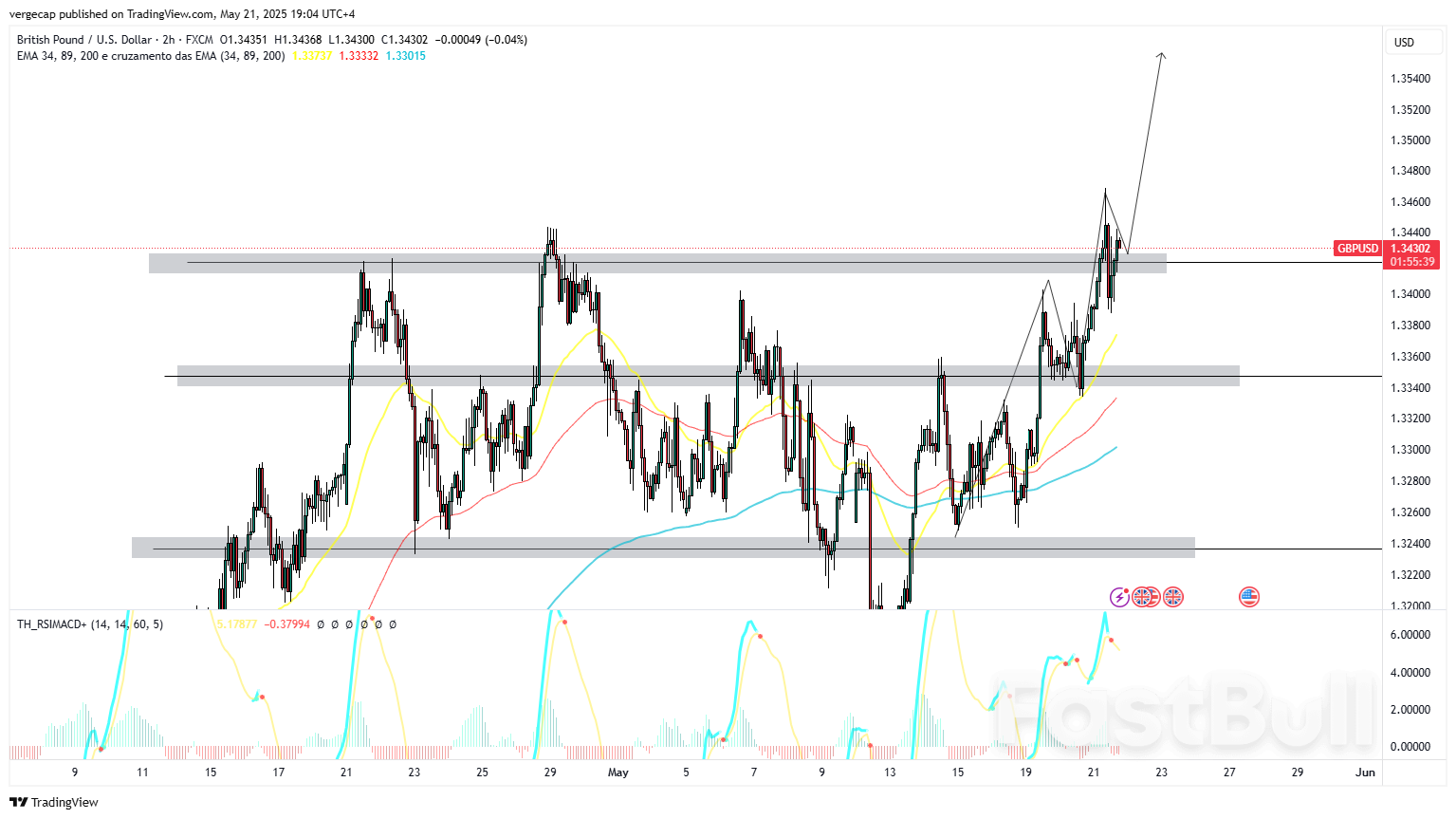
          Technical AnalysisGBP/USD Eyes 1.3500 as Inflation-Fueled Rally Gains Steam_1
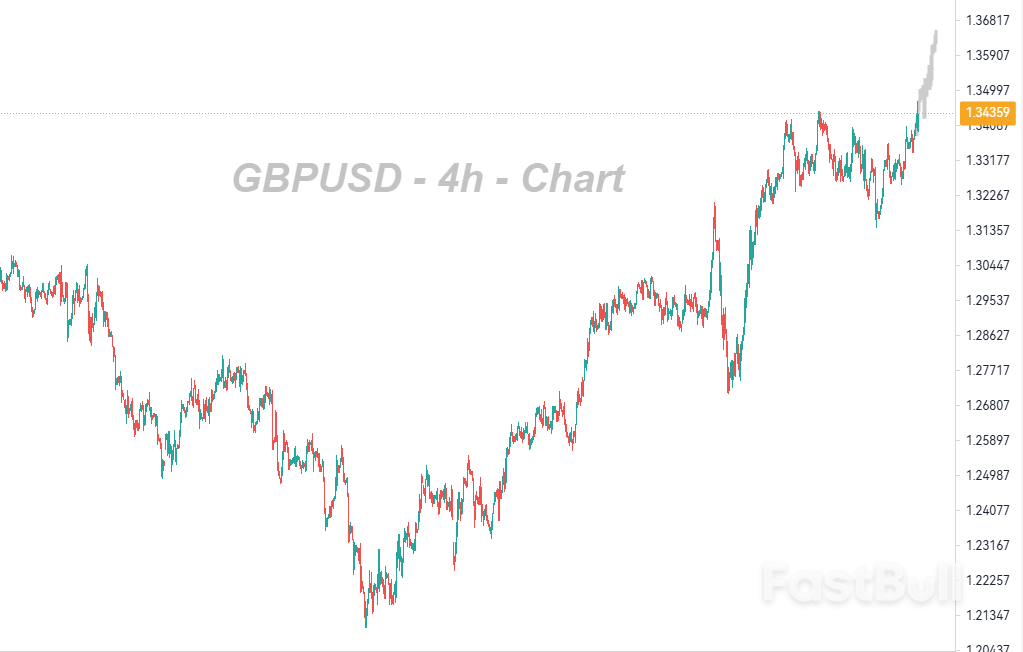
          Technically, GBP/USD remains in a firm uptrend. The pair is currently testing resistance at 1.3440, having found solid support at 1.3410 in recent sessions. The short-term structure continues to favor the bulls, with the price comfortably trading above its 50-period EMA on the four-hour chart. Momentum indicators such as the Relative Strength Index have reset from overbought levels and are pointing higher again, suggesting further upside potential. A break above the 1.3440 barrier could open the path to a retest of the psychologically important 1.3550 level in the days ahead.
          TRADE RECOMMENDATION
          BUY GBPUSD
          ENTRY PRICE: 1.3440
          STOP LOSS: 1.3380
          TAKE PROFIT: 1.3550
          Risk Warnings and Disclaimers
          You understand and acknowledge that there is a high degree of risk involved in trading. Following any strategies or investment methods may lead to potential losses. The content on the site is provided by our contributors and analysts for information purposes only. You are solely responsible for determining whether any trading assets, securities, strategy, or any other product is suitable for investing based on your own investment objectives and financial situation.
          Add to Favorites
          Share

          Strong Rebound Momentum Comes with Breakout of Key Resistance

          Eva Chen

          Economic

          Forex

          Summary:

          The technicals favor a long bias. It is recommended to monitor New Zealand economic data and shifts in Eurozone policy guidance closely.

          BUY EURNZD
          Close Time
          CLOSED

          1.90340

          Entry Price

          1.94080

          TP

          1.88600

          SL

          2.01492 -0.00059 -0.03%

          174.0

          Pips

          Loss

          1.88600

          SL

          1.88600

          Exit Price

          1.90340

          Entry Price

          1.94080

          TP

          Fundamentals

          The Eurozone's consumer confidence index for May rose to -15.2, surpassing the anticipated -16.0 and exceeding the consensus forecast of -16.6. This increase may be attributed to positive shifts in U.S. trade policies.
          New Zealand's services sector continued to exhibit weakness in April, with the BusinessNZ Performance of Services Index declining to 48.5 from 48.9, significantly below the long-term average of 53.0.
          Key indicators from the survey underscore persistent weakness, as economic activity/sales stagnated at 47.3. Employment contracted to 48.2. New orders saw a marginal improvement, increasing from 50.8 to 50.9.
          MARKET WATCH: The New Zealand services sector presents a more concerning picture than the broader recovery narrative suggests, underperforming relative to its major global peers.
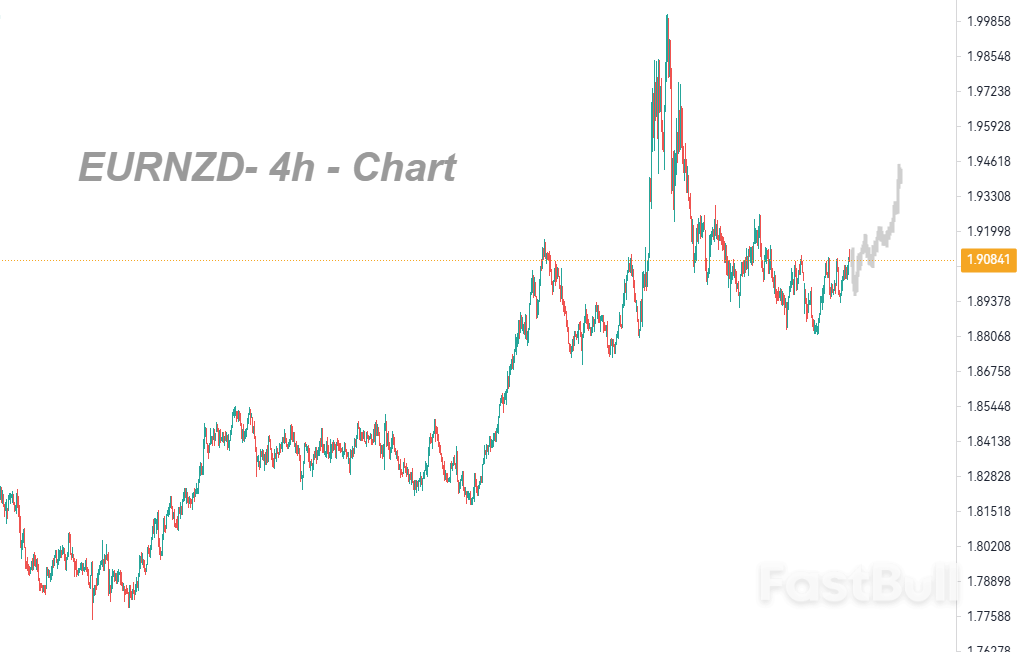
          Strong Rebound Momentum Comes with Breakout of Key Resistance_1

          Technical Analysis

          The EURNZD has exhibited a generally bullish bias recently, with price action repeatedly testing the resistance zone above the 1.9000 level since early May, indicating strengthening buying pressure. The current price is trading above both the 50-day and 200-day SMAs, suggesting a bullish intermediate-term trend, with positive short-term momentum.
          Since the mid-April low at 1.8600, the EURNZD has been trending upwards along a rising trendline, with trendline support currently around the 1.8940 range.
          The SMA system shows a "golden cross" with the 50-day SMA crossing above the 200-day SMA. The MA50 is currently at approximately 1.8915, and the MA200 is at 1.8870, providing solid support for the price.
          Regarding momentum, the Relative Strength Index is currently near 62, remaining below overbought territory but exhibiting an upward trajectory, which supports further short-term gains.
          The MACD line and the signal line of the MACD are both positioned above the zero line, with increasing red histogram bars, indicating accumulating bullish momentum.
          Conversely, a breakdown below the 1.8940 trendline support in the EURNZD could trigger a short-term retracement towards the 1.8800 range.
          Overall, the EURNZD is trading within an ascending channel, with current momentum indicators and structural support favoring the continuation of the bullish trend, targeting 1.9148 in the short term. As long as the price holds above 1.8940, further upside is anticipated, with the potential to breach the 1.9295 resistance level.

          Trading Recommendations

          Trading Direction: Buy
          Entry Price: 1.9060
          Target Price: 1.9408
          Stop Loss: 1.8860
          Valid Until: June 5, 2025 23:55:00
          Support: 1.8999, 1.8933, 1.8913
          Resistance: 1.9148, 1.9266, 1.9295
          Risk Warnings and Disclaimers
          You understand and acknowledge that there is a high degree of risk involved in trading. Following any strategies or investment methods may lead to potential losses. The content on the site is provided by our contributors and analysts for information purposes only. You are solely responsible for determining whether any trading assets, securities, strategy, or any other product is suitable for investing based on your own investment objectives and financial situation.
          Add to Favorites
          Share

          USD/JPY Slips on Debt Downgrade, Trump’s Tax Plan Fuels Deficit Fears

          Warren Takunda

          Economic

          Summary:

          USD/JPY slipped below the key 144.00 level as investor sentiment turned against the Greenback amid deepening U.S. fiscal concerns and a hawkish policy shift from the Bank of Japan.

          SELL USDJPY
          Close Time
          CLOSED

          143.600

          Entry Price

          140.500

          TP

          146.000

          SL

          155.931 +0.586 +0.38%

          97.2

          Pips

          Profit

          140.500

          TP

          142.628

          Exit Price

          143.600

          Entry Price

          146.000

          SL

          The Japanese Yen strengthened against the U.S. Dollar on Tuesday, with the USD/JPY pair decisively breaching the psychologically critical 144.00 level for the first time in weeks. The move reflects intensifying pressure on the Greenback, driven by a potent combination of fiscal uncertainty in the U.S. and growing expectations that Japan’s central bank may soon begin a tightening cycle after years of ultra-loose policy.
          At the heart of the Dollar’s recent slide is a growing unease about America’s fiscal trajectory. Moody’s became the latest major rating agency to cut its long-term U.S. sovereign credit outlook, following similar moves by S&P and Fitch. The downgrade, from the highest AAA level to AA1, reflects skepticism over Washington’s fiscal discipline amid ballooning deficits and a fresh wave of politically charged spending proposals.
          Adding fuel to that fire, former President Donald Trump’s long-anticipated legislative push — dubbed the “One Big Beautiful Bill” — is now awaiting approval in the House of Representatives. The bill proposes an extension of the Trump-era tax cuts while introducing further fiscal incentives aimed at bolstering consumer spending and investment. However, the Congressional Budget Office (CBO) estimates the bill could add nearly $3.8 trillion to the national deficit over the next decade. Such a surge in deficit spending has triggered concern among bond investors, raising questions about the long-term sustainability of U.S. debt and pressuring the U.S. Dollar as a result.
          As investors weigh the implications of America’s fiscal loosening, attention has simultaneously shifted across the Pacific to Japan, where the economic and monetary policy narrative is taking a sharp turn. The Bank of Japan, long synonymous with yield curve control and near-zero interest rates, is now signaling a shift towards normalization.
          Recent comments from BoJ officials, including Governor Kazuo Ueda, have underscored the central bank’s readiness to act if inflation proves persistent — a marked departure from its previous dovish approach. Surging domestic wages, coupled with sticky inflation, have reinforced the view that Japan could exit its ultra-loose stance sooner than many anticipated.
          Ueda has also highlighted the need to close the yawning interest rate gap between Japan and the U.S., a key driver of Yen weakness in recent years. Narrowing this divergence not only supports the Yen but also helps mitigate Japan’s imported inflation — a major pain point for policymakers amid rising global energy and commodity prices.
          Technical Analysis USD/JPY Slips on Debt Downgrade, Trump’s Tax Plan Fuels Deficit Fears_1
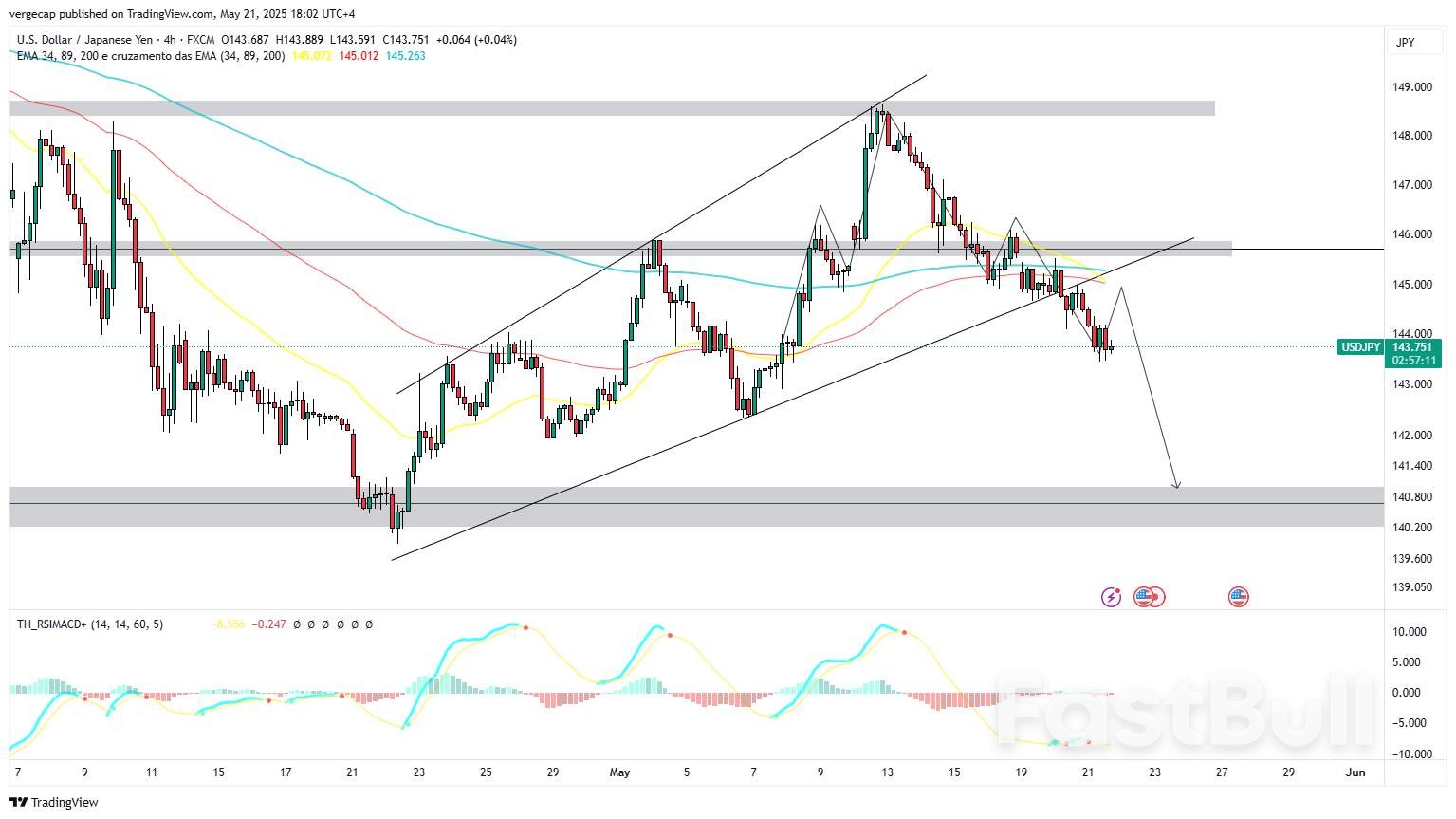
          From a technical standpoint, the bearish bias on USD/JPY has become more pronounced. The pair has broken below its 50-day Exponential Moving Average (EMA50), a critical support level that had previously underpinned bullish sentiment. This breach, combined with the break of a short-term ascending trendline, confirms a reversal of the previous corrective rally.
          Moreover, the USD/JPY pair has carved out an Expanding Triangle pattern, typically indicative of market indecision that precedes a breakout — in this case, to the downside. This pattern, along with the exit from overbought territory on the Relative Strength Index (RSI), opens the door for further declines.
          With the support line now broken, technical momentum aligns with macroeconomic fundamentals. The next key target lies at 140.500, a level that could act as a near-term magnet if risk sentiment continues to favor safer assets like the Yen.
          TRADE RECOMMENDATION
          SELL USDJPY
          ENTRY PRICE: 143.80
          STOP LOSS: 146.00
          TAKE PROFIT: 140.50
          Risk Warnings and Disclaimers
          You understand and acknowledge that there is a high degree of risk involved in trading. Following any strategies or investment methods may lead to potential losses. The content on the site is provided by our contributors and analysts for information purposes only. You are solely responsible for determining whether any trading assets, securities, strategy, or any other product is suitable for investing based on your own investment objectives and financial situation.
          Add to Favorites
          Share

          The Path of Least Resistance Is Upward

          Eva Chen

          Forex

          Economic

          Summary:

          UK inflation surged unexpectedly to its highest level in over a year. Analysts suggest the data "effectively eliminates a June rate cut," and "an August policy easing is far from assured."

          BUY GBPUSD
          Close Time
          CLOSED

          1.34127

          Entry Price

          1.36500

          TP

          1.31000

          SL

          1.33243 -0.00069 -0.05%

          111.5

          Pips

          Profit

          1.31000

          SL

          1.35242

          Exit Price

          1.34127

          Entry Price

          1.36500

          TP

          Fundamentals

          UK inflation surged unexpectedly in April to its highest level in over a year, intensifying the impact of rising prices on the UK households and prompting investors to significantly reduce their bets on interest rate cuts by the Bank of England (BOE).
          Data released on Wednesday revealed that April's inflation exceeded forecasts, with the overall CPI rising 1.2% month-over-month, against an anticipated 1.1%. The annual CPI increased from 2.6% to 3.5%, surpassing 3% for the first time since March 2024.
          Core CPI, excluding energy, food, alcohol, and tobacco, jumped from 3.4% to 3.8% year-over-year, reaching its highest level since April 2024.
          Detailed figures indicate substantial increases in both goods and services inflation. Goods inflation accelerated from 0.6% to 1.7% year-over-year, while services inflation climbed from 4.7% to 5.4% year-over-year, highlighting robust domestic price pressures.
          MARKET WATCH: The economic data effectively diminishes the likelihood of a June rate cut, and an August easing is far from assured. These figures reinforce the BOE's cautious stance from its early-month meeting, where two policymakers voted against a rate cut, and others were hesitant about further easing.
          Despite officials' ultimate decision to lower rates by 25 basis points to 4.25%, and their view that price surges are temporary, the BOE is concerned about persistent inflationary pressures within the economy.
          On Tuesday, Huw Pill, the BOE's chief economist, warned that “the current rate of interest rate cuts is too fast”.
          Pill clarified his vote to hold the Bank Rate steady at the May Monetary Policy Committee meeting, characterizing it as a "skip" rather than a pause in the broader easing cycle.
          He is particularly concerned that structural changes in wage and pricing behavior have exacerbated the “inherent persistence” of inflation in the UK.
          Therefore, Pill advocated for a more cautious approach to monetary easing, emphasizing the need to decelerate the pace of interest rate cuts while continuing the broader policy normalization.
          The Path of Least Resistance Is Upward_1

          Technical Analysis

          The GBPUSD remains biased to the upside intraday. A decisive break above the key resistance at 1.3433 would confirm the resumption of a more significant bullish trend. The next short-term target is 1.3593, followed by the 100% projection at 1.3874.
          On the downside, a break below the minor support at 1.3333 would delay the bullish outlook and turn the intraday bias neutral first.

          Trading Recommendations

          Trading Direction: Buy
          Entry Price: 1.3369
          Target Price: 1.3650
          Stop Loss: 1.3100
          Valid Until: June 5, 2025 23:55:00
          Support: 1.3333, 1.3239, 1.3140
          Resistance: 1.3468, 1.3593, 1.3642
          Risk Warnings and Disclaimers
          You understand and acknowledge that there is a high degree of risk involved in trading. Following any strategies or investment methods may lead to potential losses. The content on the site is provided by our contributors and analysts for information purposes only. You are solely responsible for determining whether any trading assets, securities, strategy, or any other product is suitable for investing based on your own investment objectives and financial situation.
          Add to Favorites
          Share
          FastBull
          Copyright © 2025 FastBull Ltd

          728 RM B 7/F GEE LOK IND BLDG NO 34 HUNG TO RD KWUN TONG KLN HONG KONG

          TelegramInstagramTwitterfacebooklinkedin
          App Store Google Play Google Play
          Products
          Charts

          Chats

          Q&A with Experts
          Screeners
          Economic Calendar
          Data
          Tools
          Membership
          Features
          Function
          Markets
          Copy Trading
          Latest Signals
          Contests
          News
          Analysis
          24/7
          Columns
          Education
          Company
          Careers
          About Us
          Contact Us
          Advertising
          Help Center
          Feedback
          User Agreement
          Privacy Policy
          Business

          White Label

          Data API

          Web Plug-ins

          Poster Maker

          Affiliate Program

          Risk Disclosure

          The risk of loss in trading financial instruments such as stocks, FX, commodities, futures, bonds, ETFs and crypto can be substantial. You may sustain a total loss of the funds that you deposit with your broker. Therefore, you should carefully consider whether such trading is suitable for you in light of your circumstances and financial resources.

          No decision to invest should be made without thoroughly conducting due diligence by yourself or consulting with your financial advisors. Our web content might not suit you since we don't know your financial conditions and investment needs. Our financial information might have latency or contain inaccuracy, so you should be fully responsible for any of your trading and investment decisions. The company will not be responsible for your capital loss.

          Without getting permission from the website, you are not allowed to copy the website's graphics, texts, or trademarks. Intellectual property rights in the content or data incorporated into this website belong to its providers and exchange merchants.

          Not Logged In

          Log in to access more features

          FastBull Membership

          Not yet

          Purchase

          Become a signal provider
          Help Center
          Customer Service
          Dark Mode
          Price Up/Down Colors

          Log In

          Sign Up

          Position
          Layout
          Fullscreen
          Default to Chart
          The chart page opens by default when you visit fastbull.com