• Trade
  • Markets
  • Copy
  • Contests
  • News
  • 24/7
  • Calendar
  • Q&A
  • Chats
Trending
Screeners
SYMBOL
LAST
BID
ASK
HIGH
LOW
NET CHG.
%CHG.
SPREAD
SPX
S&P 500 Index
6827.42
6827.42
6827.42
6899.86
6801.80
-73.58
-1.07%
--
DJI
Dow Jones Industrial Average
48458.04
48458.04
48458.04
48886.86
48334.10
-245.98
-0.51%
--
IXIC
NASDAQ Composite Index
23195.16
23195.16
23195.16
23554.89
23094.51
-398.69
-1.69%
--
USDX
US Dollar Index
97.950
98.030
97.950
98.500
97.950
-0.370
-0.38%
--
EURUSD
Euro / US Dollar
1.17394
1.17409
1.17394
1.17496
1.17192
+0.00011
+ 0.01%
--
GBPUSD
Pound Sterling / US Dollar
1.33707
1.33732
1.33707
1.33997
1.33419
-0.00148
-0.11%
--
XAUUSD
Gold / US Dollar
4299.39
4299.39
4299.39
4353.41
4257.10
+20.10
+ 0.47%
--
WTI
Light Sweet Crude Oil
57.233
57.485
57.233
58.011
56.969
-0.408
-0.71%
--

Community Accounts

Signal Accounts
--
Profit Accounts
--
Loss Accounts
--
View More

Become a signal provider

Sell trading signals to earn additional income

View More

Guide to Copy Trading

Get started with ease and confidence

View More

Signal Accounts for Members

All Signal Accounts

Best Return
  • Best Return
  • Best P/L
  • Best MDD
Past 1W
  • Past 1W
  • Past 1M
  • Past 1Y

All Contests

  • All
  • Trump Updates
  • Recommend
  • Stocks
  • Cryptocurrencies
  • Central Banks
  • Featured News
Top News Only
Share

Ukraine Says It Received 114 Prisoners From Belarus

Share

USA Embassy In Lithuania: Maria Kalesnikava Is Not Going To Vilnius

Share

USA Embassy In Lithuania: Other Prisoners Are Being Sent From Belarus To Ukraine

Share

Ukraine President Zelenskiy: Five Ukrainians Released By Belarus In US-Brokered Deal

Share

USA Vilnius Embassy: USA Stands Ready For "Additional Engagement With Belarus That Advances USA Interests"

Share

USA Vilnius Embassy: Belarus, USA, Other Citizens Among The Prisoners Released Into Lithuania

Share

USA Vilnius Embassy: USA Will Continue Diplomatic Efforts To Free The Remaining Political Prisoners In Belarus

Share

USA Vilnius Embassy: Belarus Releases 123 Prisoners Following Meeting Of President Trump's Envoy Coale And Belarus President Lukashenko

Share

USA Vilnius Embassy: Masatoshi Nakanishi, Aliaksandr Syrytsa Are Among The Prisoners Released By Belarus

Share

USA Vilnius Embassy: Maria Kalesnikava And Viktor Babaryka Are Among The Prisoners Released By Belarus

Share

USA Vilnius Embassy: Nobel Peace Prize Laureate Ales Bialiatski Is Among The Prisoners Released By Belarus

Share

Belarusian Presidential Administration Telegram Channel: Lukashenko Has Pardoned 123 Prisoners As Part Of Deal With US

Share

Two Local Syrian Officials: Joint US-Syrian Military Patrol In Central Syria Came Under Fire From Unknown Assailants

Share

Israeli Military Says It Targeted 'Key Hamas Terrorist' In Gaza City

Share

Rwanda's Actions In Eastern Drc Are A Clear Violation Of Washington Accords Signed By President Trump - Secretary Of State Rubio

Share

Israeli Military Issues Evacuation Warning In Southern Lebanon Village Ahead Of Strike - Spokesperson On X

Share

Belarusian State Media Cites US Envoy Coale As Saying He Discussed Ukraine And Venezuela With Lukashenko

Share

Belarusian State Media Cites US Envoy Coale As Saying That US Removes Sanctions On Belarusian Potassium

Share

Thai Prime Minister: No Ceasefire Agreement With Cambodia

Share

US, Ukraine To Discuss Ceasefire In Berlin Ahead Of European Summit

TIME
ACT
FCST
PREV
U.K. Trade Balance Non-EU (SA) (Oct)

A:--

F: --

P: --

U.K. Trade Balance (Oct)

A:--

F: --

P: --

U.K. Services Index MoM

A:--

F: --

P: --

U.K. Construction Output MoM (SA) (Oct)

A:--

F: --

P: --

U.K. Industrial Output YoY (Oct)

A:--

F: --

P: --

U.K. Trade Balance (SA) (Oct)

A:--

F: --

P: --

U.K. Trade Balance EU (SA) (Oct)

A:--

F: --

P: --

U.K. Manufacturing Output YoY (Oct)

A:--

F: --

P: --

U.K. GDP MoM (Oct)

A:--

F: --

P: --

U.K. GDP YoY (SA) (Oct)

A:--

F: --

P: --

U.K. Industrial Output MoM (Oct)

A:--

F: --

P: --

U.K. Construction Output YoY (Oct)

A:--

F: --

P: --

France HICP Final MoM (Nov)

A:--

F: --

P: --

China, Mainland Outstanding Loans Growth YoY (Nov)

A:--

F: --

P: --

China, Mainland M2 Money Supply YoY (Nov)

A:--

F: --

P: --

China, Mainland M0 Money Supply YoY (Nov)

A:--

F: --

P: --

China, Mainland M1 Money Supply YoY (Nov)

A:--

F: --

P: --

India CPI YoY (Nov)

A:--

F: --

P: --

India Deposit Gowth YoY

A:--

F: --

P: --

Brazil Services Growth YoY (Oct)

A:--

F: --

P: --

Mexico Industrial Output YoY (Oct)

A:--

F: --

P: --

Russia Trade Balance (Oct)

A:--

F: --

P: --

Philadelphia Fed President Henry Paulson delivers a speech
Canada Building Permits MoM (SA) (Oct)

A:--

F: --

P: --

Canada Wholesale Sales YoY (Oct)

A:--

F: --

P: --

Canada Wholesale Inventory MoM (Oct)

A:--

F: --

P: --

Canada Wholesale Inventory YoY (Oct)

A:--

F: --

P: --

Canada Wholesale Sales MoM (SA) (Oct)

A:--

F: --

P: --

Germany Current Account (Not SA) (Oct)

A:--

F: --

P: --

U.S. Weekly Total Rig Count

A:--

F: --

P: --

U.S. Weekly Total Oil Rig Count

A:--

F: --

P: --

Japan Tankan Large Non-Manufacturing Diffusion Index (Q4)

--

F: --

P: --

Japan Tankan Small Manufacturing Outlook Index (Q4)

--

F: --

P: --

Japan Tankan Large Non-Manufacturing Outlook Index (Q4)

--

F: --

P: --

Japan Tankan Large Manufacturing Outlook Index (Q4)

--

F: --

P: --

Japan Tankan Small Manufacturing Diffusion Index (Q4)

--

F: --

P: --

Japan Tankan Large Manufacturing Diffusion Index (Q4)

--

F: --

P: --

Japan Tankan Large-Enterprise Capital Expenditure YoY (Q4)

--

F: --

P: --

U.K. Rightmove House Price Index YoY (Dec)

--

F: --

P: --

China, Mainland Industrial Output YoY (YTD) (Nov)

--

F: --

P: --

China, Mainland Urban Area Unemployment Rate (Nov)

--

F: --

P: --

Saudi Arabia CPI YoY (Nov)

--

F: --

P: --

Euro Zone Industrial Output YoY (Oct)

--

F: --

P: --

Euro Zone Industrial Output MoM (Oct)

--

F: --

P: --

Canada Existing Home Sales MoM (Nov)

--

F: --

P: --

Euro Zone Total Reserve Assets (Nov)

--

F: --

P: --

U.K. Inflation Rate Expectations

--

F: --

P: --

Canada National Economic Confidence Index

--

F: --

P: --

Canada New Housing Starts (Nov)

--

F: --

P: --

U.S. NY Fed Manufacturing Employment Index (Dec)

--

F: --

P: --

U.S. NY Fed Manufacturing Index (Dec)

--

F: --

P: --

Canada Core CPI YoY (Nov)

--

F: --

P: --

Canada Manufacturing Unfilled Orders MoM (Oct)

--

F: --

P: --

Canada Manufacturing New Orders MoM (Oct)

--

F: --

P: --

Canada Core CPI MoM (Nov)

--

F: --

P: --

Canada Manufacturing Inventory MoM (Oct)

--

F: --

P: --

Canada CPI YoY (Nov)

--

F: --

P: --

Canada CPI MoM (Nov)

--

F: --

P: --

Canada CPI YoY (SA) (Nov)

--

F: --

P: --

Canada Core CPI MoM (SA) (Nov)

--

F: --

P: --

Q&A with Experts
    • All
    • Chatrooms
    • Groups
    • Friends
    Connecting
    .
    .
    .
    Type here...
    Add Symbol or Code

      No matching data

      All
      Trump Updates
      Recommend
      Stocks
      Cryptocurrencies
      Central Banks
      Featured News
      • All
      • Russia-Ukraine Conflict
      • Middle East Flashpoint
      • All
      • Russia-Ukraine Conflict
      • Middle East Flashpoint
      Search
      Products

      Charts Free Forever

      Chats Q&A with Experts
      Screeners Economic Calendar Data Tools
      Membership Features
      Data Warehouse Market Trends Institutional Data Policy Rates Macro

      Market Trends

      Market Sentiment Order Book Forex Correlations

      Top Indicators

      Charts Free Forever
      Markets

      News

      News Analysis 24/7 Columns Education
      From Institutions From Analysts
      Topics Columnists

      Latest Views

      Latest Views

      Trending Topics

      Top Columnists

      Latest Update

      Signals

      Copy Rankings Latest Signals Become a signal provider AI Rating
      Contests
      Brokers

      Overview Brokers Assessment Rankings Regulators News Claims
      Broker listing Forex Brokers Comparison Tool Live Spread Comparison Scam
      Q&A Complaint Scam Alert Videos Tips to Detect Scam
      More

      Business
      Events
      Careers About Us Advertising Help Center

      White Label

      Data API

      Web Plug-ins

      Affiliate Program

      Awards Institution Evaluation IB Seminar Salon Event Exhibition
      Vietnam Thailand Singapore Dubai
      Fans Party Investment Sharing Session
      FastBull Summit BrokersView Expo
      Recent Searches
        Top Searches
          Markets
          News
          Analysis
          User
          24/7
          Economic Calendar
          Education
          Data
          • Names
          • Latest
          • Prev

          View All

          No data

          Scan to Download

          Faster Charts, Chat Faster!

          Download App
          English
          • English
          • Español
          • العربية
          • Bahasa Indonesia
          • Bahasa Melayu
          • Tiếng Việt
          • ภาษาไทย
          • Français
          • Italiano
          • Türkçe
          • Русский язык
          • 简中
          • 繁中
          Open Account
          Search
          Products
          Charts Free Forever
          Markets
          News
          Signals

          Copy Rankings Latest Signals Become a signal provider AI Rating
          Contests
          Brokers

          Overview Brokers Assessment Rankings Regulators News Claims
          Broker listing Forex Brokers Comparison Tool Live Spread Comparison Scam
          Q&A Complaint Scam Alert Videos Tips to Detect Scam
          More

          Business
          Events
          Careers About Us Advertising Help Center

          White Label

          Data API

          Web Plug-ins

          Affiliate Program

          Awards Institution Evaluation IB Seminar Salon Event Exhibition
          Vietnam Thailand Singapore Dubai
          Fans Party Investment Sharing Session
          FastBull Summit BrokersView Expo

          ‘Vital’ That British Steel Gets Trump Tariff Deal After UK-US Trade Pact, Say Unions

          Warren Takunda

          Economic

          China–U.S. Trade War

          Summary:

          Starmer should secure deal as soon as possible to exempt UK steel from US levies, says Community union

          Steel trade unions have said it is “absolutely vital” that the UK rapidly secures a deal to protect the sector from Donald Trump’s tariffs, after the industry was excluded from an initial UK-US pact signed on Monday night.
          Keir Starmer and Trump signed off a UK-US trade deal at the G7 summit in Canada, with the US president saying Britain would have protection against future tariffs “because I like them”.
          The car industry was relieved that tariffs on the sector will be reduced to 10% from 27.5%. The UK aerospace sector will face no tariffs at all from the US after deal, which followed an initial agreement made in May.
          However, the announcement of the deal did not include the removal of tariffs on steel imports. UK steelmakers still face 25% tariffs, although this is lower than the global tariff of 50% imposed by the Trump administration on other nations.
          The UK business department said the two leaders had pledged to “make progress towards 0% tariffs on core steel products as agreed”.
          Alasdair McDiarmid, the assistant general secretary of the steel union Community, welcomed the progress that has been made on reaching a deal on steel.“However, it’s now absolutely vital that a deal for steel is secured as soon as possible,” he said. “Our steel producers and their US customers need an end to the current state of uncertainty to allow normal business to resume.
          “Crucially, we must see a full exemption for all UK steel exports to the US – without that guarantee some of our leading steel businesses could be left behind, with a threat to jobs and livelihoods.”
          A steel industry source said the automotive deal had been widely expected to be completed before steel and aluminium. However, the person said “we now need steel to happen pretty quickly” to avoid the risk of 50% tariffs kicking in on 9 July, under the terms of the UK’s temporary exemption.
          Gareth Stace, the director general of the trade body UK Steel, said: “We look forward to imminently benefiting from a tariff rate cut similar to that which the automotive and aerospace industries will enjoy in seven days. The UK steel industry badly needs clarification over the ‘melted and poured’ requirement, and the level of quotas available to UK steelmakers so that we can restore the historical trade routes that have served both the UK and the US economies for many years.”
          Ministers have been working to ensure the UK’s biggest steelmaker, Tata Steel, is included in tariff-free access to the US. Its bosses fear the deal could end up excluding Indian-owned Tata Steel, which runs the vast Port Talbot steelworks in south Wales, because of the origin of some of its products. The company exports more than $100m (£74m) worth of goods to the US every year.
          The Chinese ownership of British Steel, which is under government control, could be a sticking point in a deal for the industry as the executive order signed by Trump suggests the US wants assurances that the metal originates in the UK.
          “The UK also committed to working to meet American requirements on the security of the supply chains of steel and aluminium products intended for export to the US and on the nature of ownership of relevant production facilities,” the order states.
          Separately, British Steel has secured a new five-year supply contract with Network Rail worth more than £500m, under which British Steel will supply between 70,000 and 80,000 tonnes of rail a year. McDiarmid welcomed the extension but expressed concern that “British Steel’s share of the Network Rail contract is set to reduce significantly”.
          Mike Hawes, the chief executive of the Society of Motor Manufacturers and Traders, told BBC Radio 4’s Today programme he hoped the new 10% tariff rate for UK carmakers would start “in the next few days”.The UK-US trade pact had been negotiated in early May, “but we’ve been waiting for it to be implemented so manufacturers can start shipping without being subject to those punitive tariffs”, he said.
          He added that “a lot less” had been exported to the US in the meantime, and some UK manufacturers had halted shipments. The British luxury carmakers Jaguar Land Rover and Bentley are among those that paused shipments.“They’ve been pausing because their customers – we’ve got shrewd customers – were going to wait and see what was going to happen,” Hawes said. “You could see that the cost to the ultimate consumer was going to come down because of the reduction in the tariff, but you just didn’t know when.”

          Source: Theguardian

          To stay updated on all economic events of today, please check out our Economic calendar
          Risk Warnings and Disclaimers
          You understand and acknowledge that there is a high degree of risk involved in trading. Following any strategies or investment methods may lead to potential losses. The content on the site is provided by our contributors and analysts for information purposes only. You are solely responsible for determining whether any trading assets, securities, strategy, or any other product is suitable for investing based on your own investment objectives and financial situation.
          Add to Favorites
          Share

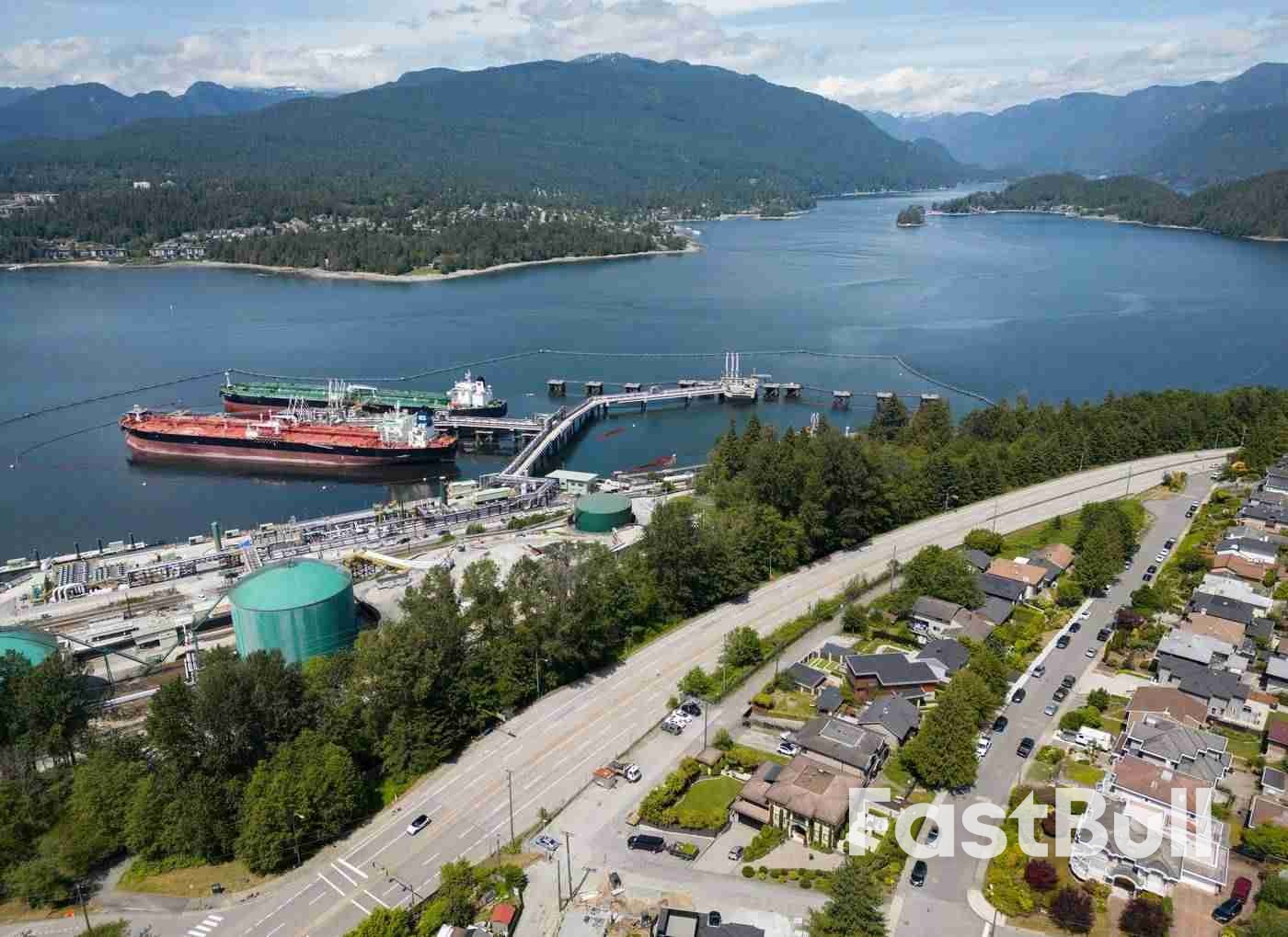
          World Oil Demand to Keep Growing This Decade Despite 2027 China Peak, IEA Says

          Michelle

          Commodity

          Economic

          Global oil demand will keep growing until around the end of this decade despite peaking in top importer China in 2027, as cheaper gasoline and slower electric vehicle adoption in the United States support consumption, the International Energy Agency said on Tuesday.

          Despite seeing an earlier demand peak for China, the IEA, which advises industrialized countries, stuck to its prediction that global demand will peak by 2029. This view sharply contrasts with that of producer group OPEC, which says consumption will keep growing for much longer.

          Oil demand will peak at 105.6 million barrels per day (bpd) by 2029 and then fall slightly in 2030, a table in the Paris-based IEA’s annual report shows. At the same time, global production capacity is forecast to rise by more than 5 million bpd to 114.7 million bpd by 2030.

          A conflict between Israel and Iran has highlighted the risk to Middle East supplies, helping send oil prices up 5% to above $74 a barrel on Friday.

          Still, the latest forecasts suggest ample supplies through 2030 if there are no major disruptions, the IEA said.

          “Based on the fundamentals, oil markets look set to be well-supplied in the years ahead,” said IEA Executive Director Fatih Birol in a statement. “But recent events sharply highlight the significant geopolitical risks to oil supply security,” Birol said.

          In a separate report on Tuesday, which included a commentary on the market impact of the Israel-Iran conflict, the IEA said the world market looks well supplied this year in the absence of a major disruption as growth in supply exceeds that of demand.

          Global supply in 2025 will rise by 1.8 million bpd, up 200,000 bpd from last month, the IEA said. This is partly because OPEC+, which groups the Organization of the Petroleum Exporting Countries plus Russia and other allies, is raising output.

          World demand in 2025 will rise by a much lower 720,000 bpd, the IEA said, down 20,000 bpd from last month’s forecast.

          China peak

          After decades of leading global oil demand growth, China’s contribution is sputtering as it faces economic challenges as well as making a big shift to EVs.

          The world’s second-largest economy is set to see its oil consumption peak in 2027, following a surge in EV sales and the deployment of high-speed rail and trucks running on natural gas, the IEA said. In February, it predicted China’s demand for road and air transport fuels may have already peaked.

          China’s total oil consumption in 2030 is now set to be only marginally higher than in 2024, the IEA said, compared with growth of around 1 million bpd forecast in last year’s report.

          By contrast, lower gasoline prices and slower EV adoption in the United States, the world’s largest oil consumer, have boosted the 2030 oil demand forecast by 1.1 million bpd compared with the previous prediction, the IEA said.

          U.S. electric vehicles are now expected to account for 20% of U.S. total car sales in 2030, down from 55% assumed last year, the report said.

          Since returning to office, U.S. President Donald Trump has demanded OPEC lower oil prices and has taken aim at EVs through steps such as signing resolutions approved by lawmakers barring California’s EV sales mandates.

          Source: BNN BIoomberg

          To stay updated on all economic events of today, please check out our Economic calendar
          Risk Warnings and Disclaimers
          You understand and acknowledge that there is a high degree of risk involved in trading. Following any strategies or investment methods may lead to potential losses. The content on the site is provided by our contributors and analysts for information purposes only. You are solely responsible for determining whether any trading assets, securities, strategy, or any other product is suitable for investing based on your own investment objectives and financial situation.
          Add to Favorites
          Share

          Gloomy Trading in the European Markets as Oil Keeps Climbing

          Warren Takunda

          Economic

          Middle East Situation

          Oil prices gained more than $1 a barrel as share prices skidded in Europe and Asia on Tuesday after Israel's military issued an evacuation warning to 330,000 people in Iran's capital, Tehran. US futures also declined.
          The latest alerts came as Israel warned that Iran’s capital, a city of 9.5 million, should be evacuated, and the US President Donald Trump announced he was returning from the G7 summit in Canada a day early due to the intensifying conflict.
          Before leaving, Trump signed a trade deal with the UK, lowering tariffs on key British exports to the US, including cars, agricultural and aerospace products. Despite the promising news for the British economy, the main stock index in London, along with its European peers, started trading in a gloomy mood.
          By midday in Europe, the FTSE 100 sank nearly 0.5%, Germany's DAX was in -1.3%, and the CAC 40 in Paris followed suit by dropping 1%. Madrid's IBEX 35 was losing 1.5% at this time.
          “The UK stock market saw broad-based losses, with only six FTSE 100 stocks in positive territory. BP and Shell were among the rare risers as oil prices held firm after a recent rally,” Russ Mould, investment director at AJ Bell said.
          In Germany, Rheinmetall was the biggest faller, “as investors locked in profits after a strong run for the defence group,” Mould said, adding that the current uncertainty across financial markets could bring the same fate to other “stocks or assets that have done well this year”.
          After thriving on Monday, the main US stock indexes also showed signs of opening lower; the futures for the S&P 500 and the Dow Jones Industrial Average were down 0.6% after midday in Europe.

          Mixed sentiment in Asia

          In Asia, Tokyo's Nikkei 225 index climbed 0.6% to 38,536.74 as the Japanese central bank opted to keep its key interest rate unchanged at 0.5%.
          The Bank of Japan (BOJ) has been gradually raising its rate from near zero and cutting back on its purchases of Japanese government bonds and other assets to help counter inflation.
          It said economic growth was likely to moderate, and there was some weakness in consumer sentiment and housing investment.
          "In particular, it is extremely uncertain how trade and policies in each jurisdiction will evolve and how overseas activity and prices will react to them," the BOJ's statement said.
          Chinese shares edged lower. In Hong Kong, the Hang Seng shed 0.7% while the Shanghai Composite index was barely changed at 3,387.40.
          In South Korea, the Kospi gained 0.1% to 2,950.30.
          Australia's S&P/ASX 500 gave up 0.1% to 8,541.30. Taiwan's Taiex gained 0.7% and in Bangkok the SET was little changed.

          Oil prices keep climbing

          As Israel and Iran attack each other, the fear remains that a wider war could constrict the flow of Iran's oil to its customers. That in turn could raise gasoline prices worldwide and keep them high, though spikes in prices from previous conflicts have been brief.
          Crude oil jumped 7% late last week after Israel's attack on Iranian nuclear and military targets. Early Tuesday, US benchmark crude oil gained 87 cents to $72.64 per barrel, while Brent crude, the international standard, was up 87 cents at $74.10 per barrel.
          Meanwhile, the price of gold is inching lower after jumping on Friday, when investors were looking for someplace safe to park their cash. An ounce of gold fell by more than 0.3% to $3,405.
          At 12h CET on Tuesday, the euro was stable against the US dollar, standing around 1.1565. The British pound has also lost slightly against the dollar, bringing the exchange rate to 1.3555. The Japanese yen first strengthened but then gave back, by midday a US dollar cost ¥144.75.
          Investors have other concerns, key among them Donald Trump's tariffs, which still threaten to slow the US economy and raise inflation if Washington doesn't win trade deals with other countries.

          What drives investors' hands this week?

          The spectre of those tariffs was looming over the meeting of the Group of Seven (G7) meeting of major economies in Canada.
          Later this week, the US Federal Reserve is set to discuss whether to lower or raise interest rates, with the decision due on Wednesday. The nearly unanimous expectation among traders and economists is that the Fed will not change interest rates.
          The Federal Reserve has hesitated to lower interest rates after one cut late last year. It is waiting to see how much Trump's tariffs will hurt the economy and raise inflation, which has remained tame recently, and is near the Fed's 2% target.
          More important for financial markets are forecasts for where Fed officials see the economy and interest rates heading in upcoming years.

          Source: Euronews

          To stay updated on all economic events of today, please check out our Economic calendar
          Risk Warnings and Disclaimers
          You understand and acknowledge that there is a high degree of risk involved in trading. Following any strategies or investment methods may lead to potential losses. The content on the site is provided by our contributors and analysts for information purposes only. You are solely responsible for determining whether any trading assets, securities, strategy, or any other product is suitable for investing based on your own investment objectives and financial situation.
          Add to Favorites
          Share

          Iran/ Israel conflict hits risk sentiment yet again, as all eyes towards the Fed

          Adam

          Economic

          Middle East Situation

          It is difficult to sum up the general mood in the markets on Tuesday. European stocks are extending losses as we move through the European morning session, and US equity market futures also point to a lower open. The oil price is also extending gains towards $74.50, as risk aversion takes hold once more. However, the gold price is only moderately higher. Headline risk from the Iran/ Israel conflict is once again impacting financial markets, after taking a reprieve on Monday.
          Stocks are lower after Donald Trump’s abrupt departure from the G7 to monitor events in the Middle East from the White House. This suggests that things could be about escalate in this conflict. The French President initially said that President Trump was leaving due to a ceasefire between Iran and Israel, but that was rebuffed by President Trump. This has spooked financial markets on Tuesday morning.

          Why oil price gains could still be capped

          Since the start of last week’s attacks between Iran and Israel, the price of Brent crude has risen by $6 per barrel. This is a moderate gain considering the stakes in this conflict are high, however there is some logic in the oil market’s restraint. So far, there has been no impact on oil exports, and the strait of Hormuz is still open for oil tankers. This means that one fifth of the world’s oil supply is still flowing through the strait. Oil inventories are rising, and Iranian oil supply has not impacted by the conflict, this is why upside for the oil price could be limited on Tuesday, and gains could be capped around $75 per barrel for Brent crude.
          US oil supply and Opec+’s production increases mean that conflict in the Middle East does not always trigger significant upward pressure on the oil price. However, if there was a big escalation in the conflict or if there is regime change in Iran, the oil price could be vulnerable to another pop higher.

          UK – US trade deal fails to boost the pound

          The other big news overnight was the US-UK trade deal announced before Trump departed the G7 meeting. This is a coup for the UK. Tariffs will be 10% for auto exports to the US and aerospace exports will not be subject to tariffs. This is the first trade deal the US has signed since the Liberation Day reciprocal tariff announcement. Although this is good news for the UK, aluminum and steel exports are currently still subject to 25% tariffs, although the US Commerce Secretary is working on putting in place a quota system for steel and aluminum exports, which the UK hopes will be generous.
          Although UK stocks are lower on Tuesday, they have been saved the worst of the sell off, and the FTSE 100 is outperforming European indices. However, gains have been driven by the energy sector, with BP and Shell both rising by more than 1%. The FTSE 250 is also benefitting from the deal and is outperforming the blue-chip index so far this morning. The pound has failed to benefit from the trade deal, and it is the weakest currency in the G10 so far on Tuesday. UK bond yields are rising in line with European yields so far today.

          The BOJ weighs on the yen

          The yen is the one of the weakest currencies in the G10 FX space on Tuesday, even though Japanese bond yields are rising. The Bank of Japan left interest rates unchanged when they met earlier today, and the governor’s press conference was neutral. Although 2-year Japanese bond yields are rising back towards their high from April, the interest rate futures market seems unconvinced that the BOJ will hike rates again this year. There is less than one hike priced in for the BOJ for the rest of this year, and the outcome of today’s meeting is not causing the market to rush to price in rate hikes from the Bank of Japan, which is weighing on the yen.
          USD/JPY is also starting to make a comeback. It has risen back above the 50-day sma at 144.00, which is a short-term bullish signal for this pair, and suggests that the yen is vulnerable to a correction and erodes its status as a safe haven currency even further.

          What to expect from the Fed

          Elsewhere, the focus on Tuesday is event risk from the Iran/ Israel conflict, after Donald Trump said that something ‘big’ was about to happen. Added to this, the market will be looking ahead to Wednesday’s Fed meeting. The Fed is unlikely to commit to rate cuts, and the upside risks to the oil price are likely to reinforce their message that they remain data dependent and will take a cautious approach to future rate cuts.
          There is currently no chance of a rate cut priced into the market for tomorrow’s Fed meeting. There are less than 2 rate cuts priced in for the US for the rest of this year, however, tomorrow’s updated Dot Plot from the FOMC could cause movement in the US interest rate futures market. The median expectation from March was for rates to end 2025 at 3.88%, current market-based expectations are for US rates to end the year at 3.84%. Thus, the Dot Plot will need to show a big shift to the upside or the downside to have an impact on stocks, bonds and the dollar, in our view.

          Source : xtb

          To stay updated on all economic events of today, please check out our Economic calendar
          Risk Warnings and Disclaimers
          You understand and acknowledge that there is a high degree of risk involved in trading. Following any strategies or investment methods may lead to potential losses. The content on the site is provided by our contributors and analysts for information purposes only. You are solely responsible for determining whether any trading assets, securities, strategy, or any other product is suitable for investing based on your own investment objectives and financial situation.
          Add to Favorites
          Share

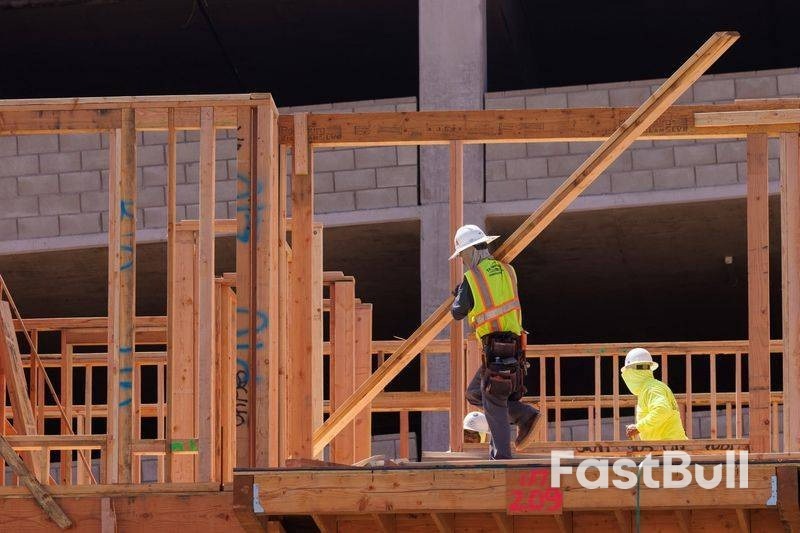
          US Homebuilder Sentiment Skids to 2-1/2-Year Low, NAHB Says

          Glendon

          Economic

          Forex

          A gauge of U.S. homebuilder sentiment slid unexpectedly to its lowest level in two and a half years in June, with more than a third of residential construction firms cutting prices to lure buyers sidelined by high mortgage rates and economic uncertainty due to President Donald Trump's tariffs.

          The National Association of Home Builders/Wells Fargo Housing Market Index fell to 32, the lowest reading since December 2022, from 34 in May. Economists polled by Reuters had expected the sentiment score to improve to 36.

          Measures of current sales conditions, future sales expectations and buyer foot traffic all fell. On a regional basis, the Northeast posted a small rise while the South, Midwest and West all declined.

          "Rising inventory levels and prospective home buyers who are on hold waiting for affordability conditions to improve are resulting in weakening price growth in most markets and generating price declines for resales in a growing number of markets," Robert Dietz, NAHB's chief economist, said in a statement. "Given current market conditions, NAHB is forecasting a decline in single-family starts for 2025."

          Mortgage rates remain elevated. The average rate on the most popular home loan, the 30-year fixed-rate mortgage, was 6.84% last week, according to home finance firm Freddie Mac, squarely in the middle of the 6.60% to 7.04% range over the past six months.

          "Buyers are increasingly moving to the sidelines due to elevated mortgage rates and tariff and economic uncertainty," said NAHB Chairman Buddy Hughes, a home builder and developer based in Lexington, North Carolina. "To help address affordability concerns and bring hesitant buyers off the fence, a growing number of builders are moving to cut prices."

          The survey showed 37% of builders were cutting prices in June, the highest percentage since NAHB began tracking the metric on a monthly basis in 2022. That figure was up from 34% in May and 29% in April, while the average price cut held steady at 5%. The use of any kind of incentive ticked up a point to 62%.

          Source: Yahoo Finance

          To stay updated on all economic events of today, please check out our Economic calendar
          Risk Warnings and Disclaimers
          You understand and acknowledge that there is a high degree of risk involved in trading. Following any strategies or investment methods may lead to potential losses. The content on the site is provided by our contributors and analysts for information purposes only. You are solely responsible for determining whether any trading assets, securities, strategy, or any other product is suitable for investing based on your own investment objectives and financial situation.
          Add to Favorites
          Share

          May Retail Sales in Focus as Fed Balances Inflation Risk and Slowing Consumer Demand

          Adam

          Economic

          May Retail Sales Arrive at a Pivotal Moment for Fed Policy

          U.S. May retail sales data hits at 12:30 GMT—just as the Federal Reserve begins its two-day policy meeting. With economic signals increasingly mixed, today’s numbers will help clarify whether slowing consumer activity is a temporary dip or the beginning of a broader retrenchment. Traders are watching the control group closely, as it feeds directly into GDP forecasts.

          Control Group the Key as Wall Street Looks for Clarity

          Expectations are modest: headline and ex-auto sales are seen rising 0.3%, with the control group also forecast at +0.3%. The control group strips out volatile components like autos, gas, building materials, and restaurants, offering the clearest view of real consumer strength. April’s decline of 0.2% in this category raised concerns that the U.S. consumer may be retreating under pressure.

          Tariff-Induced Buying Spree Wears Off in May

          March’s surge in vehicle and appliance sales—driven by tariff fears—skewed spending patterns. Consumers rushed to buy big-ticket items ahead of expected price hikes, leading to a 5.3% jump in auto-related sales. But those purchases weren’t repeated. Motor vehicle sales dipped 0.1% in April and are expected to remain weak in May, a drag on overall retail numbers.

          Consumers Pull Back on Dining and Discretionary Spending

          Receipts at food services and drinking establishments fell 1.5% in April—the sharpest drop since January 2024. This signals tightening household budgets and growing concerns over job security or inflation. Sentiment surveys reflect this shift: personal finances may be improving, but consumer confidence is falling, a combination that usually precedes spending cutbacks.

          Fed Constrained as Growth Slows and Inflation Stays Elevated

          The Fed remains stuck between slow growth and above-target inflation. Rates are expected to hold at 4.25%–4.50%, with a 99.9% probability priced in via CME’s FedWatch tool. But real consumer spending is projected to slow from 3.1% year-over-year in Q1 to just 1.1% by Q4. With Q1 GDP already down 0.3%, a weak May print could pressure Q2 growth further. The Atlanta Fed currently estimates a 2.1% GDP contraction for the quarter.

          Market Forecast: Sideways to Bearish if Sales Miss

          Markets may react unevenly. A strong beat (above 0.5%) could reinforce the Fed’s hawkish bias, lifting the dollar and pressuring bonds. In-line data (0.2%–0.4%) likely shifts focus to the Fed’s statement. A miss (below 0.2%) risks renewed volatility across equities, fixed income, and FX. Revisions to April’s data could also move markets independently.
          With spending slowing, tariffs distorting behavior, and policy tightening already in place, downside risks remain dominant. Traders should stay flexible and watch closely for control group revisions and Fed tone tomorrow.

          Source: fxempire

          To stay updated on all economic events of today, please check out our Economic calendar
          Risk Warnings and Disclaimers
          You understand and acknowledge that there is a high degree of risk involved in trading. Following any strategies or investment methods may lead to potential losses. The content on the site is provided by our contributors and analysts for information purposes only. You are solely responsible for determining whether any trading assets, securities, strategy, or any other product is suitable for investing based on your own investment objectives and financial situation.
          Add to Favorites
          Share

          Gloomy trading in the European markets as oil keeps climbing

          Adam

          Commodity

          Economic

          Oil prices gained more than $1 a barrel as share prices skidded in Europe and Asia on Tuesday after Israel's military issued an evacuation warning to 330,000 people in Iran's capital, Tehran. US futures also declined.
          The latest alerts came as Israel warned that Iran’s capital, a city of 9.5 million, should be evacuated, and the US President Donald Trump announced he was returning from the G7 summit in Canada a day early due to the intensifying conflict.
          Before leaving, Trump signed a trade deal with the UK, lowering tariffs on key British exports to the US, including cars, agricultural and aerospace products. Despite the promising news for the British economy, the main stock index in London, along with its European peers, started trading in a gloomy mood.
          By midday in Europe, the FTSE 100 sank nearly 0.5%, Germany's DAX was in -1.3%, and the CAC 40 in Paris followed suit by dropping 1%. Madrid's IBEX 35 was losing 1.5% at this time.
          “The UK stock market saw broad-based losses, with only six FTSE 100 stocks in positive territory. BP and Shell were among the rare risers as oil prices held firm after a recent rally,” Russ Mould, investment director at AJ Bell said.
          In Germany, Rheinmetall was the biggest faller, “as investors locked in profits after a strong run for the defence group,” Mould said, adding that the current uncertainty across financial markets could bring the same fate to other “stocks or assets that have done well this year”.
          After thriving on Monday, the main US stock indexes also showed signs of opening lower; the futures for the S&P 500 and the Dow Jones Industrial Average were down 0.6% after midday in Europe.

          Mixed sentiment in Asia

          In Asia, Tokyo's Nikkei 225 index climbed 0.6% to 38,536.74 as the Japanese central bank opted to keep its key interest rate unchanged at 0.5%.
          The Bank of Japan (BOJ) has been gradually raising its rate from near zero and cutting back on its purchases of Japanese government bonds and other assets to help counter inflation.
          It said economic growth was likely to moderate, and there was some weakness in consumer sentiment and housing investment.
          "In particular, it is extremely uncertain how trade and policies in each jurisdiction will evolve and how overseas activity and prices will react to them," the BOJ's statement said.
          Chinese shares edged lower. In Hong Kong, the Hang Seng shed 0.7% while the Shanghai Composite index was barely changed at 3,387.40.
          In South Korea, the Kospi gained 0.1% to 2,950.30.
          Australia's S&P/ASX 500 gave up 0.1% to 8,541.30. Taiwan's Taiex gained 0.7% and in Bangkok the SET was little changed.

          Oil prices keep climbing

          As Israel and Iran attack each other, the fear remains that a wider war could constrict the flow of Iran's oil to its customers. That in turn could raise gasoline prices worldwide and keep them high, though spikes in prices from previous conflicts have been brief.
          Crude oil jumped 7% late last week after Israel's attack on Iranian nuclear and military targets. Early Tuesday, US benchmark crude oil gained 87 cents to $72.64 per barrel, while Brent crude, the international standard, was up 87 cents at $74.10 per barrel.
          Meanwhile, the price of gold is inching lower after jumping on Friday, when investors were looking for someplace safe to park their cash. An ounce of gold fell by more than 0.3% to $3,405.
          At 12h CET on Tuesday, the euro was stable against the US dollar, standing around 1.1565. The British pound has also lost slightly against the dollar, bringing the exchange rate to 1.3555. The Japanese yen first strengthened but then gave back, by midday a US dollar cost ¥144.75.
          Investors have other concerns, key among them Donald Trump's tariffs, which still threaten to slow the US economy and raise inflation if Washington doesn't win trade deals with other countries.

          What drives investors' hands this week?

          The spectre of those tariffs was looming over the meeting of the Group of Seven (G7) meeting of major economies in Canada.
          Later this week, the US Federal Reserve is set to discuss whether to lower or raise interest rates, with the decision due on Wednesday. The nearly unanimous expectation among traders and economists is that the Fed will not change interest rates.
          The Federal Reserve has hesitated to lower interest rates after one cut late last year. It is waiting to see how much Trump's tariffs will hurt the economy and raise inflation, which has remained tame recently, and is near the Fed's 2% target.

          source : euronews

          To stay updated on all economic events of today, please check out our Economic calendar
          Risk Warnings and Disclaimers
          You understand and acknowledge that there is a high degree of risk involved in trading. Following any strategies or investment methods may lead to potential losses. The content on the site is provided by our contributors and analysts for information purposes only. You are solely responsible for determining whether any trading assets, securities, strategy, or any other product is suitable for investing based on your own investment objectives and financial situation.
          Add to Favorites
          Share
          FastBull
          Copyright © 2025 FastBull Ltd

          728 RM B 7/F GEE LOK IND BLDG NO 34 HUNG TO RD KWUN TONG KLN HONG KONG

          TelegramInstagramTwitterfacebooklinkedin
          App Store Google Play Google Play
          Products
          Charts

          Chats

          Q&A with Experts
          Screeners
          Economic Calendar
          Data
          Tools
          Membership
          Features
          Function
          Markets
          Copy Trading
          Latest Signals
          Contests
          News
          Analysis
          24/7
          Columns
          Education
          Company
          Careers
          About Us
          Contact Us
          Advertising
          Help Center
          Feedback
          User Agreement
          Privacy Policy
          Business

          White Label

          Data API

          Web Plug-ins

          Poster Maker

          Affiliate Program

          Risk Disclosure

          The risk of loss in trading financial instruments such as stocks, FX, commodities, futures, bonds, ETFs and crypto can be substantial. You may sustain a total loss of the funds that you deposit with your broker. Therefore, you should carefully consider whether such trading is suitable for you in light of your circumstances and financial resources.

          No decision to invest should be made without thoroughly conducting due diligence by yourself or consulting with your financial advisors. Our web content might not suit you since we don't know your financial conditions and investment needs. Our financial information might have latency or contain inaccuracy, so you should be fully responsible for any of your trading and investment decisions. The company will not be responsible for your capital loss.

          Without getting permission from the website, you are not allowed to copy the website's graphics, texts, or trademarks. Intellectual property rights in the content or data incorporated into this website belong to its providers and exchange merchants.

          Not Logged In

          Log in to access more features

          FastBull Membership

          Not yet

          Purchase

          Become a signal provider
          Help Center
          Customer Service
          Dark Mode
          Price Up/Down Colors

          Log In

          Sign Up

          Position
          Layout
          Fullscreen
          Default to Chart
          The chart page opens by default when you visit fastbull.com