


- USDX
- XAUUSD
- XAGUSD
- WTI


Markets
Analysis
User
24/7
Economic Calendar
Education
Data
- Names
- Latest
- Prev













The U.S. launches a high-stakes campaign in the Sahel, aiming to realign regional security away from Russia.
The United States is launching a high-stakes diplomatic effort in West Africa, sending the chief of its Bureau of African Affairs to Mali to "chart a new course" in the relationship. While the official announcement speaks of respecting Mali's sovereignty, the visit signals a broader American push to reshape the security landscape in the Sahel, potentially at Russia's expense.
This engagement targets not just Mali but its partners in the recently formed Alliance of Sahel States (AES), which also includes Burkina Faso and Niger. The move comes as the U.S. looks to consult with these governments on shared security and economic interests, setting the stage for a major geopolitical realignment.
The context for this diplomatic outreach is critical. The AES was formed after patriotic military coups in all three member nations, leading to a strategic pivot away from their former colonial power, France. This new bloc is evolving into a confederation and has forged a strong military alliance with Russia to assist with "Democratic Security"—a term for ensuring political stability and countering persistent terrorist threats.
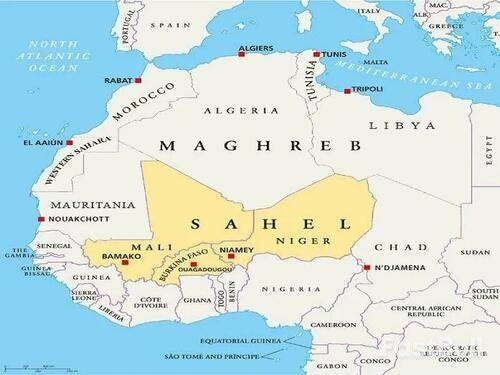
Since expelling French forces, the AES has accused France of backing terrorist groups in retaliation, an act they see as revenge for strategic setbacks that have damaged France's image as a global power. Meanwhile, reported coup attempts, particularly in Burkina Faso, continue to challenge the region's stability.
For the United States, this situation presents an opportunity. If Washington can persuade the AES to replace or even "balance" Russia's role as its primary security guarantor, it could deliver a significant blow to Moscow's international prestige. This would add to a series of strategic setbacks Russia has experienced in regions like Armenia-Azerbaijan, Kazakhstan, Venezuela, and Syria since the start of its special operation.
The U.S. approach appears to be a classic carrot-and-stick strategy, presenting the AES with an offer that may be difficult to decline.
The Diplomatic Path
The "easy way" for the AES would be to voluntarily comply with U.S. overtures. This deal could be sweetened with offers of large-scale aid or reduced tariffs, granting the bloc's members preferential access to the massive U.S. market.
The Coercive Path
If diplomacy fails, the U.S. could pursue a "hard way" through indirect military coercion. This strategy would leverage a combination of escalating pressures:
• US-backed Nigerian military action: Using anti-terrorism as a pretext, the U.S. could support military pressure from neighboring Nigeria.
• French-backed terrorist advances: Washington could leverage France's alleged support for insurgent groups to destabilize the region further.
• Direct US military strikes: The U.S. could conduct its own anti-terrorist strikes, with or without the approval of AES governments.
A recent U.S. bombing of ISIS in Nigeria on Christmas has already set a precedent for direct American military intervention in the region. Furthermore, the U.S. is reportedly considering deploying spy planes and potentially armed drones in the Ivory Coast, which borders Mali and Burkina Faso, to facilitate cross-border operations.
The timing of the U.S. initiative is no accident. All three AES members are already struggling to contain terrorist advances, even with Russian assistance. Moscow's capacity to provide further aid is limited as it prioritizes its special operation. Unlike the Soviet Union's decisive intervention to save Ethiopia from Somalia in the late 1970s, modern Russia is unable to rush to the rescue of its African allies with overwhelming force.
Both the U.S. and France are keenly aware of Russia's constraints. This understanding appears to be driving their coordinated strategy: France allegedly fuels instability through terrorist proxies, while the U.S. arrives with a powerful diplomatic and military proposition.
For the Sahelian Alliance, the choice is stark. The best-case scenario involves their armed forces achieving a decisive breakthrough against terrorists with Russia's help, thereby thwarting the external pressure campaign. However, given their recent setbacks, this outcome is far from certain. The worst-case scenarios—capitulating to U.S. demands or collapsing under the combined military and political pressure—remain distinct possibilities.

728 RM B 7/F GEE LOK IND BLDG NO 34 HUNG TO RD KWUN TONG KLN HONG KONG





The risk of loss in trading financial instruments such as stocks, FX, commodities, futures, bonds, ETFs and crypto can be substantial. You may sustain a total loss of the funds that you deposit with your broker. Therefore, you should carefully consider whether such trading is suitable for you in light of your circumstances and financial resources.
No decision to invest should be made without thoroughly conducting due diligence by yourself or consulting with your financial advisors. Our web content might not suit you since we don't know your financial conditions and investment needs. Our financial information might have latency or contain inaccuracy, so you should be fully responsible for any of your trading and investment decisions. The company will not be responsible for your capital loss.
Without getting permission from the website, you are not allowed to copy the website's graphics, texts, or trademarks. Intellectual property rights in the content or data incorporated into this website belong to its providers and exchange merchants.
Not Logged In
Log in to access more features


Log In
Sign Up


