
Markets
News
Analysis
User
24/7
Economic Calendar
Education
Data
- Names
- Latest
- Prev


Signal Accounts for Members
All Signal Accounts
All Contests


Italy Retail Sales MoM (SA) (Oct)A:--
F: --
P: --
Euro Zone Employment YoY (SA) (Q3)A:--
F: --
P: --
Euro Zone GDP Final YoY (Q3)A:--
F: --
P: --
Euro Zone GDP Final QoQ (Q3)A:--
F: --
P: --
Euro Zone Employment Final QoQ (SA) (Q3)A:--
F: --
P: --
Euro Zone Employment Final (SA) (Q3)A:--
F: --
Brazil PPI MoM (Oct)A:--
F: --
P: --
Mexico Consumer Confidence Index (Nov)A:--
F: --
P: --
Canada Unemployment Rate (SA) (Nov)A:--
F: --
P: --
Canada Labor Force Participation Rate (SA) (Nov)A:--
F: --
P: --
Canada Employment (SA) (Nov)A:--
F: --
P: --
Canada Part-Time Employment (SA) (Nov)A:--
F: --
P: --
Canada Full-time Employment (SA) (Nov)A:--
F: --
P: --
U.S. Personal Income MoM (Sept)A:--
F: --
P: --
U.S. PCE Price Index YoY (SA) (Sept)A:--
F: --
P: --
U.S. PCE Price Index MoM (Sept)A:--
F: --
P: --
U.S. Personal Outlays MoM (SA) (Sept)A:--
F: --
P: --
U.S. Core PCE Price Index MoM (Sept)A:--
F: --
P: --
U.S. Core PCE Price Index YoY (Sept)A:--
F: --
P: --
U.S. UMich 5-Year-Ahead Inflation Expectations Prelim YoY (Dec)A:--
F: --
P: --
U.S. Real Personal Consumption Expenditures MoM (Sept)A:--
F: --
P: --
U.S. 5-10 Year-Ahead Inflation Expectations (Dec)A:--
F: --
P: --
U.S. UMich Current Economic Conditions Index Prelim (Dec)A:--
F: --
P: --
U.S. UMich Consumer Sentiment Index Prelim (Dec)A:--
F: --
P: --
U.S. UMich 1-Year-Ahead Inflation Expectations Prelim (Dec)A:--
F: --
P: --
U.S. UMich Consumer Expectations Index Prelim (Dec)A:--
F: --
P: --
U.S. Weekly Total Rig CountA:--
F: --
P: --
U.S. Weekly Total Oil Rig CountA:--
F: --
P: --
U.S. Unit Labor Cost Prelim (SA) (Q3)--
F: --
P: --
U.S. Consumer Credit (SA) (Oct)A:--
F: --
P: --
China, Mainland Foreign Exchange Reserves (Nov)--
F: --
P: --
China, Mainland Exports YoY (USD) (Nov)--
F: --
P: --
China, Mainland Imports YoY (CNH) (Nov)--
F: --
P: --
China, Mainland Imports YoY (USD) (Nov)--
F: --
P: --
China, Mainland Imports (CNH) (Nov)--
F: --
P: --
China, Mainland Trade Balance (CNH) (Nov)--
F: --
P: --
China, Mainland Exports (Nov)--
F: --
P: --
Japan Wages MoM (Oct)--
F: --
P: --
Japan Trade Balance (Oct)--
F: --
P: --
Japan Nominal GDP Revised QoQ (Q3)--
F: --
P: --
Japan Trade Balance (Customs Data) (SA) (Oct)--
F: --
P: --
Japan GDP Annualized QoQ Revised (Q3)--
F: --
China, Mainland Exports YoY (CNH) (Nov)--
F: --
P: --
China, Mainland Trade Balance (USD) (Nov)--
F: --
P: --
Germany Industrial Output MoM (SA) (Oct)--
F: --
P: --
Euro Zone Sentix Investor Confidence Index (Dec)--
F: --
P: --
Canada Leading Index MoM (Nov)--
F: --
P: --
Canada National Economic Confidence Index--
F: --
P: --
U.S. Dallas Fed PCE Price Index YoY (Sept)--
F: --
P: --
U.S. 3-Year Note Auction Yield--
F: --
P: --
U.K. BRC Overall Retail Sales YoY (Nov)--
F: --
P: --
U.K. BRC Like-For-Like Retail Sales YoY (Nov)--
F: --
P: --
Australia Overnight (Borrowing) Key Rate--
F: --
P: --
RBA Rate Statement
RBA Press Conference
Germany Exports MoM (SA) (Oct)--
F: --
P: --
U.S. NFIB Small Business Optimism Index (SA) (Nov)--
F: --
P: --
Mexico Core CPI YoY (Nov)--
F: --
P: --
Mexico 12-Month Inflation (CPI) (Nov)--
F: --
P: --
Mexico PPI YoY (Nov)--
F: --
P: --


No matching data
Latest Views
Latest Views
Trending Topics
Top Columnists
Latest Update
White Label
Data API
Web Plug-ins
Affiliate Program
View All

No data
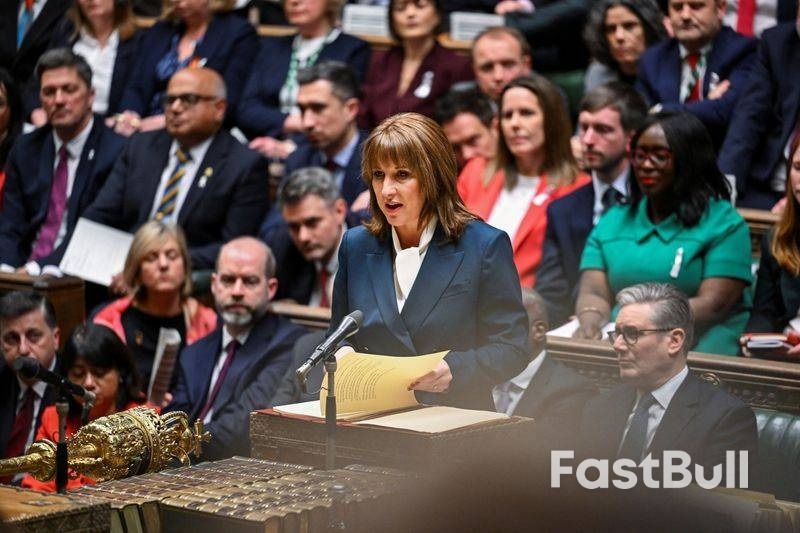
British finance minister Rachel Reeves announced a big tax-raising budget on Wednesday that will take more money from workers, people saving for a pension and investors to give herself greater room to meet her deficit-reduction targets.
Britain's fiscal watchdog cut its forecasts for economic growth for the coming years - a setback for struggling Prime Minister Keir Starmer who promised voters last year he would speed up the economy.
But the Office for Budget Responsibility (OBR) said the government will now have more than double its previous buffer for meeting its fiscal targets, something closely watched by investors assessing Britain's borrowing risks.
The OBR - in forecasts published in error before Reeves began her annual tax and spending speech to parliament, and first reported by Reuters - said the tax hikes would amount to an annual 26.1 billion pounds ($34.5 billion).
That will push Britain's tax-to-GDP ratio to 38.3% of economic output, a fresh post-war high, although this will still be lower than the euro zone's average of 41% last year.
Last year, Reeves ordered 40 billion pounds of tax hikes - the biggest since the 1990s - and she promised at the time that they would be a one-off.
"No doubt, we will face opposition again. But I have yet to see a credible, or a fairer alternative plan for working people," Reeves said.
The removal of a two-child limit on welfare payments to poor families is opposed by most Britons, according to opinion polls but the announcement earned cheers from Labour Party lawmakers.
Although the next national election is not due until 2029, the authority of Reeves and Starmer has been questioned within their centre-left party.
The Institute for Fiscal Studies think tank highlighted how the budget included an increase in spending in the short term while much of the push to raise taxes would hit later on.
"The future restraint, just before the next election? One could be forgiven for treating that with a healthy dose of scepticism," IFS director Helen Miller said.
The OBR cut its forecasts for economic growth which it now saw averaging 1.5% over the five-year forecast period, 0.3 percentage points slower than it expected in March.
The downgrade was linked to lower productivity growth which the OBR said reflected past underperformance due to headwinds including Brexit.
Reeves vowed to prove the watchdog wrong. "We beat the forecasts this year and we will beat them again," she said.
But the OBR's verdict on the budget and the outlook saw British living standards barely growing in the coming years, hurt in part by the higher taxes.
British 30-year government bond yields - which are sensitive to borrowing concerns - fell sharply by almost 12 basis points on the day, their biggest one-day drop since April, suggesting investors were largely comfortable with the budget plan.
Sterling rose against the U.S. dollar and the euro.
The OBR said the headroom - the amount of extra spending or tax cuts possible for the government while meeting its budget rules - stood at almost 21.7 billion pounds in four years' time.
In March, the OBR forecast headroom of just 9.9 billion pounds which was eaten up by the weaker economic outlook, higher-than-expected borrowing costs and a U-turn in July on welfare reform.
Deloitte Chief Economist Ian Stewart said the OBR's assumption of faster wage growth - and higher tax receipts - had rescued Reeves.
"However, today's announcements will likely have a longer-term impact on growth, as the chancellor is raising an extra 26 billion pounds a year in tax," Stewart said.
The OBR said a three-year extension of a freeze on income tax thresholds - first introduced by the previous Conservative government - would raise an extra 8.0 billion pounds in the 2029/30 financial year.
The generosity of pension incentives was scaled back with social security charges on salary-sacrifice pension contributions raising almost 5 billion pounds.
Increasing tax rates on dividends, property and savings income would raise 2.1 billion pounds, the OBR said, while a so-called "mansion tax" on homes worth more than 2 million pounds was expected to raise 0.4 billion in 2029/30.
Reeves maintained a freeze on the rate of fuel duty but she introduced a new mileage-based charge on electric cars.
Despite the increases, David Zahn, head of European fixed income at Franklin Templeton, which manages $1.5 trillion in assets, said he expected Reeves would have to raise taxes again next year.
"It's a missed opportunity, and she's just chosen to kick the can down the road," he said
Public spending was due to grow every year as a result of the measures in the budget - reaching an extra 11 billion pounds in 2029/30 - primarily to pay for the welfare measures.
A think tank that focuses on poverty reduction welcomed the removal of the two-child cap, along with actions to lower energy bills and an increase in the minimum wage announced on Tuesday.
"But there is more to do," Alfie Stirling, insight and policy director at the Joseph Rowntree Foundation said. "Housing costs and bills are still too high, our safety nets are too frail, and the cost to workers of caring for their loved ones is too great."
Chinese automotive suppliers are inundating Germany with low-cost components, piling pressure on local manufacturers already grappling with muted demand and elevated costs, according to labor officials.
The influx of electrical systems and forged metal parts is hitting companies including Robert Bosch GmbH, Mahle GmbH and PWO AG. The imbalance threatens local production, with China's industrial upgrades narrowing quality gaps that used to protect German firms.
Chinese car parts are "pouring into the German market at incredible speed," said Andreas Bohnert, who chairs the works council at PWO, which makes steering columns and other precision-metal parts. "The pace at which these products are arriving — and, one has to admit, at a relatively good level of quality — shows that the Chinese have really done their homework."
The squeeze on Germany's supplier base is part of a Chinese expansion that's rattling the country's industrial core. China, once a driver of sales and profit for German automakers, is increasingly becoming an equally capable rival. Imports of Chinese vehicles and components to Germany have surged since the pandemic, and the likes of BYD Co. and Contemporary Amperex Technology Co. Ltd. are dominating on EVs and the batteries needed to run them.
The shift is reverberating through the supplier landscape. Company officials said the accelerating flow of low-cost Chinese inputs is squeezing margins, eroding order volumes and testing the resilience of a supply chain already strained by the transition to EVs and a protracted downturn in European car production. Several companies have started to cut output and jobs.
Fresh data has reinforced the concerns. An analysis from the Cologne-based German Economic Institute last week identified sharp increases in Chinese imports across several component categories, including a near tripling of gearbox parts for combustion-engine vehicles.
A survey released Thursday by European supplier association CLEPA found that nearly 70% of European parts makers now face direct competition from Chinese imports — a 12-percentage-point jump over the previous study from late March. The pressure is taking a toll, the group said, with a majority of suppliers expecting profitability to fall below the 5% minimum needed to sustain investment.
"Without decisive measures, parts manufacturing in Europe risks disappearing, as companies are forced to relocate or shut down, jeopardizing employment and expertise," said Benjamin Krieger, CLEPA's secretary general.
Some firms are already feeling the squeeze. At Mahle, general works council chairman Boris Schwürz said Chinese rivals are moving into product areas long dominated by German manufacturers. Some offers reaching automakers arrive at "prices that in certain cases are clearly below manufacturing cost," he said, adding that Volkswagen AG, BMW AG and Mercedes-Benz Group AG are buying the Chinese parts.
Suppliers from the Asian country are now offering equivalent products "20% to 30% cheaper," according to Bosch labor representative Frank Sell. Europe may need to reconsider whether foreign manufacturers should be required to carry out part of their production within the region, he said.
A World Bank economist said on Thursday that Malaysia should reduce tariffs for all trading partners, not just major ones like the US, because selective cuts can distort trade and reduce overall welfare.
Chief economist for East Asia and the Pacific Apurva Sanghi said non-discriminatory tariff cuts would make Malaysia's economy more open and efficient.
"Tariff cuts are good, but if you are going to cut them, you need to cut them in a non-discriminatory fashion," he said at the National Economic Outlook Conference 2025 organised by Malaysian Institute of Economic Research (MIER). He added that preferential tariffs often benefit less efficient foreign producers, while hurting the country's overall welfare.
Sanghi made the remarks during a presentation on global economic challenges, warning that slowing growth, weak investment, and rising debt make trade openness especially important for middle-income countries.
He noted that Malaysia signed a Reciprocal Trade Agreement (ART) with the US in October, its third-largest trading partner, creating a delicate balance with its biggest trading partner, China. The deal has raised concerns that Malaysia might be forced to align with US sanctions, potentially affecting its neutral stance in the US-China rivalry.
To illustrate the economic impact of selective tariffs, Sanghi presented a simple model: Malaysia imports only BYD from China and Tesla from the US, with no domestic cars. Prices before tariffs are US$20,000 for BYD and US$30,000 for Tesla, with a 100% tariff.
With tariffs, BYD costs US$40,000, and Malaysia imports 50 units, generating US$1 million in government revenue.
If tariffs are removed only for Tesla, it drops to US$30,000, and consumers switch to Tesla, saving money, but the government loses US$1 million, creating a net welfare loss.
If tariffs are removed for all cars, BYD drops to US$20,000, generating US$1 million in consumer savings, offsetting the loss of revenue.
"The net outcome is zero, which is better than the negative outcome under unilateral preferential treatment," Sanghi said. He emphasised that the example was about economic logic, not fairness or geopolitics. "Preferential treatment leads to both trade creation and trade diversion," he noted. "But when it is extended to a less efficient country, the negative impact of diversion outweighs the positive effect of trade creation."
Earlier, Sanghi warned that the world economy faces slowing growth, stalling investment, and rising debt, with investment in low- and middle-income countries at its slowest in 30 years, and global policy uncertainty at record highs.
White Label
Data API
Web Plug-ins
Poster Maker
Affiliate Program
The risk of loss in trading financial instruments such as stocks, FX, commodities, futures, bonds, ETFs and crypto can be substantial. You may sustain a total loss of the funds that you deposit with your broker. Therefore, you should carefully consider whether such trading is suitable for you in light of your circumstances and financial resources.
No decision to invest should be made without thoroughly conducting due diligence by yourself or consulting with your financial advisors. Our web content might not suit you since we don't know your financial conditions and investment needs. Our financial information might have latency or contain inaccuracy, so you should be fully responsible for any of your trading and investment decisions. The company will not be responsible for your capital loss.
Without getting permission from the website, you are not allowed to copy the website's graphics, texts, or trademarks. Intellectual property rights in the content or data incorporated into this website belong to its providers and exchange merchants.
Not Logged In
Log in to access more features

FastBull Membership
Not yet
Purchase
Log In
Sign Up