Markets
News
Analysis
User
24/7
Economic Calendar
Education
Data
- Names
- Latest
- Prev


Signal Accounts for Members
All Signal Accounts
All Contests


U.K. Trade Balance Non-EU (SA) (Oct)A:--
F: --
P: --
U.K. Trade Balance (Oct)A:--
F: --
P: --
U.K. Services Index MoMA:--
F: --
P: --
U.K. Construction Output MoM (SA) (Oct)A:--
F: --
P: --
U.K. Industrial Output YoY (Oct)A:--
F: --
P: --
U.K. Trade Balance (SA) (Oct)A:--
F: --
P: --
U.K. Trade Balance EU (SA) (Oct)A:--
F: --
P: --
U.K. Manufacturing Output YoY (Oct)A:--
F: --
P: --
U.K. GDP MoM (Oct)A:--
F: --
P: --
U.K. GDP YoY (SA) (Oct)A:--
F: --
P: --
U.K. Industrial Output MoM (Oct)A:--
F: --
P: --
U.K. Construction Output YoY (Oct)A:--
F: --
P: --
France HICP Final MoM (Nov)A:--
F: --
P: --
China, Mainland Outstanding Loans Growth YoY (Nov)A:--
F: --
P: --
China, Mainland M2 Money Supply YoY (Nov)A:--
F: --
P: --
China, Mainland M0 Money Supply YoY (Nov)A:--
F: --
P: --
China, Mainland M1 Money Supply YoY (Nov)A:--
F: --
P: --
India CPI YoY (Nov)A:--
F: --
P: --
India Deposit Gowth YoYA:--
F: --
P: --
Brazil Services Growth YoY (Oct)A:--
F: --
P: --
Mexico Industrial Output YoY (Oct)A:--
F: --
P: --
Russia Trade Balance (Oct)A:--
F: --
P: --
Philadelphia Fed President Henry Paulson delivers a speech
Canada Building Permits MoM (SA) (Oct)A:--
F: --
P: --
Canada Wholesale Sales YoY (Oct)A:--
F: --
P: --
Canada Wholesale Inventory MoM (Oct)A:--
F: --
P: --
Canada Wholesale Inventory YoY (Oct)A:--
F: --
P: --
Canada Wholesale Sales MoM (SA) (Oct)A:--
F: --
P: --
Germany Current Account (Not SA) (Oct)A:--
F: --
P: --
U.S. Weekly Total Rig CountA:--
F: --
P: --
U.S. Weekly Total Oil Rig CountA:--
F: --
P: --
Japan Tankan Large Non-Manufacturing Diffusion Index (Q4)--
F: --
P: --
Japan Tankan Small Manufacturing Outlook Index (Q4)--
F: --
P: --
Japan Tankan Large Non-Manufacturing Outlook Index (Q4)--
F: --
P: --
Japan Tankan Large Manufacturing Outlook Index (Q4)--
F: --
P: --
Japan Tankan Small Manufacturing Diffusion Index (Q4)--
F: --
P: --
Japan Tankan Large Manufacturing Diffusion Index (Q4)--
F: --
P: --
Japan Tankan Large-Enterprise Capital Expenditure YoY (Q4)--
F: --
P: --
U.K. Rightmove House Price Index YoY (Dec)--
F: --
P: --
China, Mainland Industrial Output YoY (YTD) (Nov)--
F: --
P: --
China, Mainland Urban Area Unemployment Rate (Nov)--
F: --
P: --
Saudi Arabia CPI YoY (Nov)--
F: --
P: --
Euro Zone Industrial Output YoY (Oct)--
F: --
P: --
Euro Zone Industrial Output MoM (Oct)--
F: --
P: --
Canada Existing Home Sales MoM (Nov)--
F: --
P: --
Euro Zone Total Reserve Assets (Nov)--
F: --
P: --
U.K. Inflation Rate Expectations--
F: --
P: --
Canada National Economic Confidence Index--
F: --
P: --
Canada New Housing Starts (Nov)--
F: --
P: --
U.S. NY Fed Manufacturing Employment Index (Dec)--
F: --
P: --
U.S. NY Fed Manufacturing Index (Dec)--
F: --
P: --
Canada Core CPI YoY (Nov)--
F: --
P: --
Canada Manufacturing Unfilled Orders MoM (Oct)--
F: --
P: --
Canada Manufacturing New Orders MoM (Oct)--
F: --
P: --
Canada Core CPI MoM (Nov)--
F: --
P: --
Canada Manufacturing Inventory MoM (Oct)--
F: --
P: --
Canada CPI YoY (Nov)--
F: --
P: --
Canada CPI MoM (Nov)--
F: --
P: --
Canada CPI YoY (SA) (Nov)--
F: --
P: --
Canada Core CPI MoM (SA) (Nov)--
F: --
P: --


No matching data
Latest Views
Latest Views
Trending Topics
Top Columnists
Latest Update
White Label
Data API
Web Plug-ins
Affiliate Program
View All

No data
Following the U.S. airstrikes on Iranian nuclear sites, Iran’s parliament has called for the closure of the Strait of Hormuz. While the decision now lies with Iran’s Supreme National Security Council...

The unprecedented US airstrikes on Iran have set traders and governments worldwide on edge, as the Islamic Republic warns of retaliation and Israel shows no sign of letting up in its assault.
Most Read from Bloomberg
● Bezos Wedding Draws Protests, Soul-Searching Over Tourism in Venice
● One Architect’s Quest to Save Mumbai’s Heritage From Disappearing
● NYC Congestion Toll Cuts Manhattan Gridlock by 25%, RPA Reports
President Donald Trump’s decision to deploy bunker-busting bombs, Washington’s first direct military action against Iran after decades of hostility, has pushed the Middle East into uncharted territory and raised geopolitical risk in a world economy already facing severe uncertainty over his trade war.
Oil rose almost 6% when markets opened Monday morning in Asia, with analysts warning $100 a barrel is in sight depending on Iran’s further response to the conflict, which began June 13 with a surprise attack by Israel. The US dollar pushed higher, stock futures fell and Bitcoin slid below $100,000 for the first time since early May.
The extensive US operation — which targeted nuclear sites at Fordow, Natanz, and Isfahan — included 125 aircraft, strikes by Tomahawk missiles launched from a submarine and the use of 14 Massive Ordnance Penetrator bombs, the first time such bunker busters were used in combat.
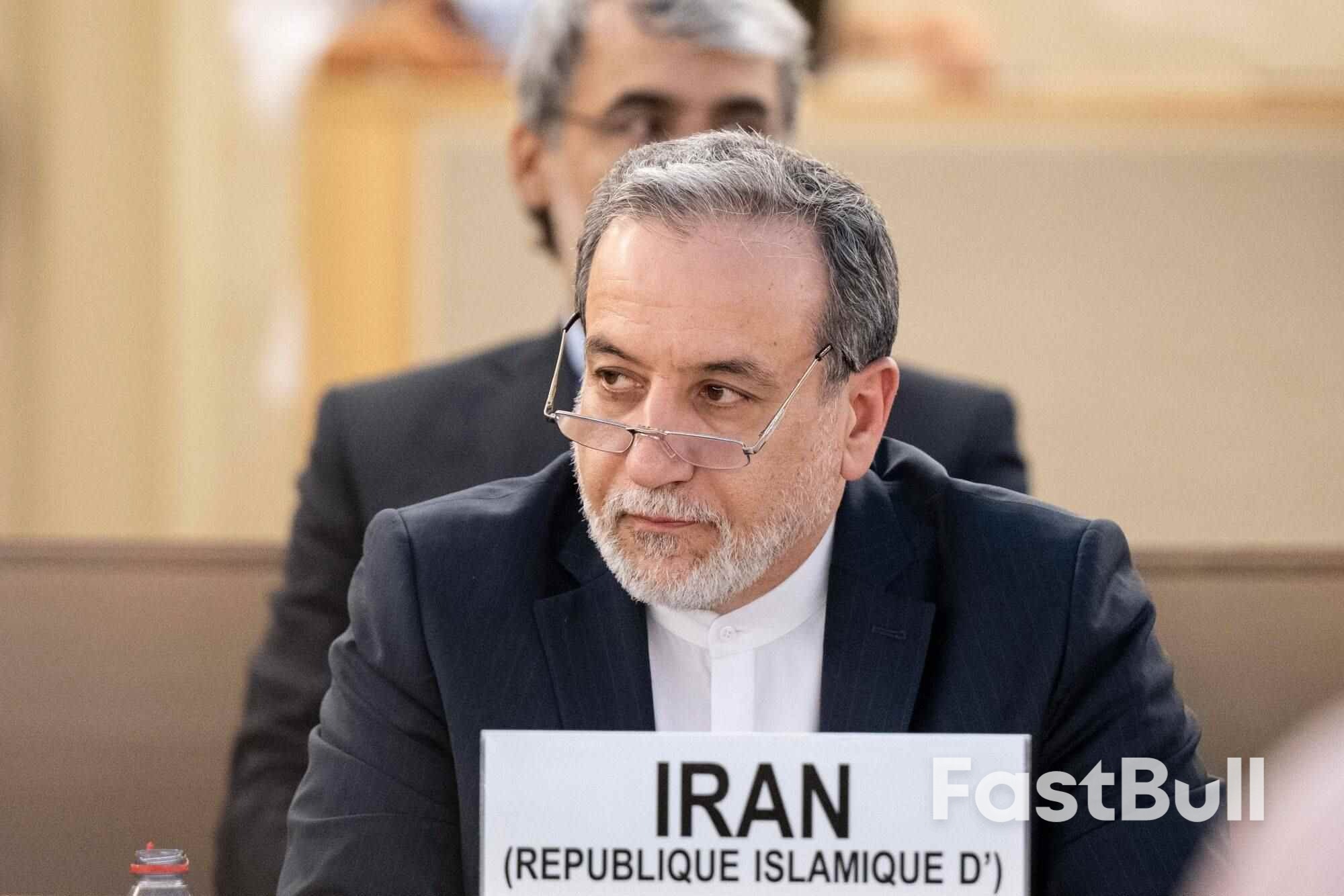
At the United Nations on Sunday, Iranian Ambassador Amir Saeid Iravani told an emergency Security Council meeting that the “timing nature and scale” of Tehran’s response “will be decided by its armed forces.”
Foreign Minister Abbas Araghchi earlier said the country reserves all options to respond. The Islamic Revolutionary Guard Corps, which answers to the Iran’s supreme leader, signaled US military bases in the region could be targeted.
Trump has vowed to meet any retaliation with force “far greater” than the US strikes on the nuclear sites. He also floated the possibility of regime change in Iran, although US and Israeli officials Sunday stressed that isn’t their aim.
Police in New York, Washington and Los Angeles increased patrols at religious institutions, diplomatic facilities and public spaces. Officials cited no immediate credible threats but highlighted the need for vigilance. The Department of Homeland Security said the Israel-Iran war has placed the US in a “heightened threat environment” through Sept. 22.
It’s still unclear how successful the US strikes were in eliminating Iran’s most heavily protected enrichment site at Fordow.
The head of the International Atomic Energy Agency, which officially has the task of monitoring Iran’s program, told the UN Security Council on Sunday that no one yet knows the condition of the facility, nor the location of Iran’s more than 400 kilograms of uranium enriched to 60%.
US strikes on Iran over the weekend have added to risks for global oil supply, which has so far been unaffected by some of the most extreme military actions in the Middle East in years.
Brent crude jumped early on Monday to trade above $80 a barrel for the first time since mid-January after US President Donald Trump said air attacks had “obliterated” Iran’s three main nuclear sites. It then pared gains, as the vital Strait of Hormuz remains open to tankers.
Analysts are now trying to weigh the increased geopolitical risk against previous fears that strong production and a lukewarm global economy could result in a supply glut. Here’s what oil watchers are saying:
Iran will likely be very cautious about disrupting Hormuz, the narrow passage separating Iran and the Arabian peninsula through which about 25% of the world’s oil and 20% of global liquefied natural gas must pass, said Bob McNally, president and founder of Rapidan Energy Group and a former White House energy official.
“Traders are holding their breath, waiting to see if Israel or Iran expand this conflict beyond military and political targets into traded energy,” McNally said on Bloomberg TV. “So far, no one has pulled that trigger. And if they don’t, I can see the price reversing.”
Iran has other options for retaliation, including using its regional proxies to disrupt global trade flows more indirectly, according to Kpler Ltd. senior crude analyst Muyu Xu . That’s what happened after Israel’s invasion of the Gaza strip in 2023, when Houthi rebels in Yemen began attacking ships in the Red Sea. A direct move to disrupt Middle East oil flows would have severe consequences for prices, she said.
“If Iran blocks the Strait of Hormuz, even for one day, oil can temporarily hit $120 or even $150 a barrel,” she said. “And if it attacks major oil production or export facilities in neighboring countries, it may drive up prices higher for longer.”
Oil markets have been incredibly choppy since Israel began strikes on Iranian nuclear infrastructure earlier this month, with some trading sessions beginning with price spikes before they retreated into daily losses. Traders need to look past the surprise of the news and analyze whether the underlying risks have actually changed, said Vandana Hari, founder of consultancy Vanda Insights.
“Beyond the knee-jerk reaction to the shock US attacks, the market needs to assess if the risk of the worst-case supply disruption scenarios has risen,” Hari said. “I don’t see a material increase.”
Long-time oil market hand Harry Tchilinguirian said he’s particularly watching whether Iran risks pulling the US deeper into the conflict by responding with strikes on US military assets or energy infrastructure in the region, which could drive prices higher. If the response is confined to Israel, that could reduce fears of escalation.
“Basically, the ball is now in Iran’s court to respond, and while it says all options are on the table, some are more consequential than others,” said Tchilinguirian, head of oil research and analytics for Onyx Commodities Ltd.
It’s not just crude oil that faces risk. The Strait of Hormuz is also a major chokepoint for LNG and refined products including diesel and jet fuel. Some fuel markets may see the biggest price responses to the latest development, said June Goh, senior oil market analyst with Sparta Commodities.
“Diesel and jet fuel supply chains are most exposed to the Middle East as oil from the Arab Gulf and the West Coast of India flows through the Straits of Hormuz to feed the main demand hub in Europe,” Goh said. “The east-west spread for middle distillates is expected to widen further to incentivize barrels to flow into Western markets.”
U.S. President Donald Trump on Sunday raised the question of regime change in Iran following U.S. strikes against key military sites over the weekend, as senior officials in his administration warned Tehran against retaliation.
"It’s not politically correct to use the term, “Regime Change,” but if the current Iranian Regime is unable to MAKE IRAN GREAT AGAIN, why wouldn’t there be a Regime change??? MIGA!!!" Trump wrote on his social media platform.
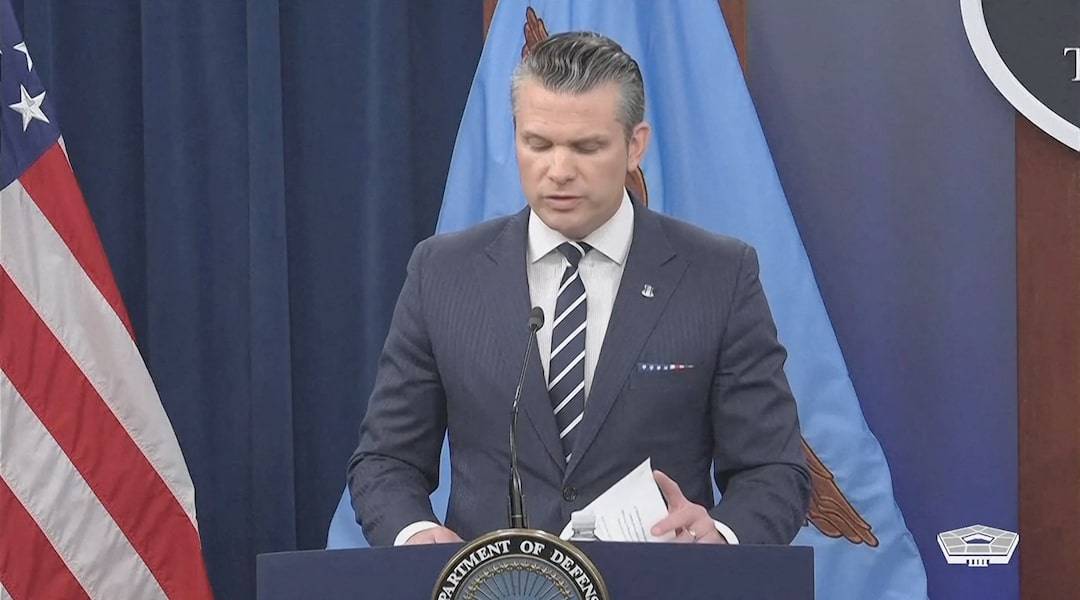
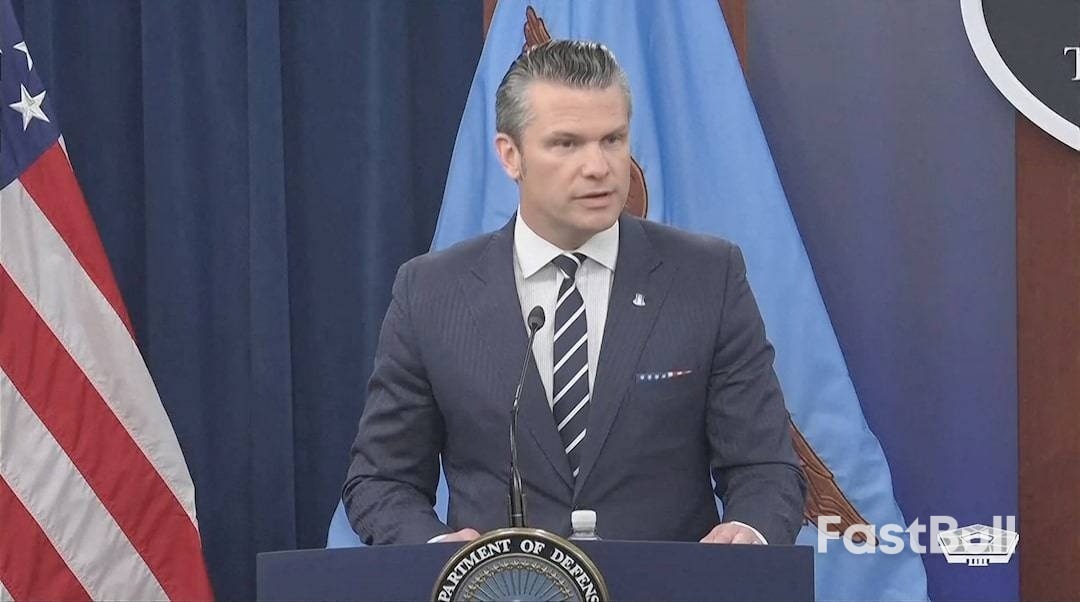
Trump's post came after officials in his administration, including U.S. Vice President JD Vance and Defense Secretary Pete Hegseth, stressed they were not working to overthrow Iran's government.
"This mission was not and has not been about regime change," Hegseth told reporters at the Pentagon, calling the mission "a precision operation" targeting Iran's nuclear program.
Vance, in an interview on NBC's "Meet the Press with Kristen Welker," said "our view has been very clear that we don't want a regime change."
"We do not want to protract this or build this out any more than it's already been built out. We want to end their nuclear program, and then we want to talk to the Iranians about a long-term settlement here," Vance said, adding the U.S. "had no interest in boots on the ground."
"Operation Midnight Hammer" was known only to a small number of people in Washington and at the U.S. military's headquarters for Middle East operations in Tampa, Florida.
Complete with deception, seven B-2 bombers flew for 18 hours from the United States into Iran to drop 14 bunker-buster bombs, chairman of the Joint Chiefs of Staff, General Dan Caine, told reporters.
In total, the U.S. launched 75 precision-guided munitions, including more than two dozen Tomahawk missiles, and more than 125 military aircraft in the operation against three nuclear sites, Caine said.
The operation pushes the Middle East to the brink of a major new conflagration in a region already aflame for more than 20 months with wars in Gaza and Lebanon, and a toppled dictator in Syria.
With the damage visible from space after 30,000-pound U.S. bunker-buster bombs crashed into the mountain above Iran's Fordow nuclear site, experts and officials are closely watching how far the strikes might have set back Iran's nuclear ambitions.
Caine said initial battle damage assessments indicated all three sites sustained extremely severe damage and destruction, but he declined to speculate whether any Iranian nuclear capabilities might still be intact.
U.N. nuclear watchdog chief Rafael Grossi was more cautious, saying while it was clear U.S. airstrikes hit Iran's enrichment site at Fordow, it was not yet possible to assess the damage done underground.
A senior Iranian source told Reuters on Sunday that most of the highly enriched uranium at Fordow, the site producing the bulk of Iran's uranium refined to up to 60%, had been moved to an undisclosed location before the U.S. attack.


Vance told NBC the U.S. was not at war with Iran but rather its nuclear program, and he thought the strikes "really pushed their program back by a very long time."
Trump called the damage "monumental," in a separate social media post on Sunday, a day after saying he had "obliterated" Iran's main nuclear sites, but gave no details.
Tehran has vowed to defend itself and responded with a volley of missiles at Israel that wounded scores of people and destroyed buildings in its commercial hub Tel Aviv.
But, perhaps in an effort to avert all-out war with the superpower, it had yet to carry out its main threats of retaliation, to target U.S. bases or choke off the quarter of the world's oil shipments that pass through its waters.
Caine said the U.S. military had increased protection of troops in the region, including in Iraq and Syria.
The United States already has a sizeable force in the Middle East, with nearly 40,000 troops in the region, including air defense systems, fighter aircraft and warships that can detect and shoot down enemy missiles.
Reuters reported last week the Pentagon had started to move some aircraft and ships from bases in the Middle East that may be vulnerable to any potential Iranian attack.
With his unprecedented decision to bomb Iran’s nuclear sites, directly joining Israel’s air attack on its regional arch foe, Trump has done something he had long vowed to avoid - intervene militarily in a major foreign war.
There were sporadic anti-war demonstrations on Sunday afternoon in some U.S. cities, including New York City and Washington.
It was unclear why Trump chose to act on Saturday.
At the press conference, Hegseth said there was a moment in time when Trump "realized that it had to be a certain action taken in order to minimize the threat to us and our troops."
After Trump disputed her original assessment, Director of National Intelligence Tulsi Gabbard on Friday said the U.S. had intelligence that should Iran decide to do so, it could build a nuclear weapon in weeks or months, an assessment disputed by some lawmakers and independent experts. U.S. officials say they do not believe Iran had decided to make a bomb.
U.S. Secretary of State Marco Rubio, asked on CBS' "Face the Nation with Margaret Brennan" whether the U.S. saw intelligence that Iran's Supreme Leader Ayatollah Ali Khamenei had ordered nuclear weaponization, said: "That's irrelevant."
Hegseth, who said the Pentagon notified lawmakers about the operation after U.S. aircraft were out of Iran, said the strikes against Iran were not open-ended.
Rubio also said no more strikes were planned, unless Iran responded, telling CBS: "We have other targets we can hit, but we achieved our objective. There are no planned military operations right now against Iran - unless they mess around."
Japanese manufacturing activity rose more than expected in June and was back in expansion territory, purchasing managers index data showed on Monday.
The au Jibun manufacturing PMI rose 50.4 in the first three weeks of June, more than expectations of 49.5 and also picking up sharply from the 49.4 seen in May.
A reading above 50 indicates growth, with the manufacturing PMI now on track to log its first positive month since May 2024.
Au Jibun analysts said the positive print was driven by renewed increases in output and inventory, although overall demand still remained muted. Still, Monday’s data showed that Japan’s major manufacturers saw some recovery in new orders despite the impact of steep U.S. trade tariffs, which had been a major pressure point on automakers in the past two months.
Japan’s services sector continued to grow, with the au Jibun services PMI up 51.5 in June from 51.0 in the prior month. Japanese services demand has remained strong despite recent weakness in manufacturing, with local demand especially underpinned by a bumper wage hike earlier this year.
The positive PMIs saw the au Jibun flash composite output index– a gauge of overall business activity– rise to 51.4 in June from 50.2 in May.
White Label
Data API
Web Plug-ins
Poster Maker
Affiliate Program
The risk of loss in trading financial instruments such as stocks, FX, commodities, futures, bonds, ETFs and crypto can be substantial. You may sustain a total loss of the funds that you deposit with your broker. Therefore, you should carefully consider whether such trading is suitable for you in light of your circumstances and financial resources.
No decision to invest should be made without thoroughly conducting due diligence by yourself or consulting with your financial advisors. Our web content might not suit you since we don't know your financial conditions and investment needs. Our financial information might have latency or contain inaccuracy, so you should be fully responsible for any of your trading and investment decisions. The company will not be responsible for your capital loss.
Without getting permission from the website, you are not allowed to copy the website's graphics, texts, or trademarks. Intellectual property rights in the content or data incorporated into this website belong to its providers and exchange merchants.
Not Logged In
Log in to access more features

FastBull Membership
Not yet
Purchase
Log In
Sign Up