• Trade
  • Markets
  • Copy
  • Contests
  • News
  • 24/7
  • Calendar
  • Q&A
  • Chats
Trending
Screeners
SYMBOL
LAST
BID
ASK
HIGH
LOW
NET CHG.
%CHG.
SPREAD
SPX
S&P 500 Index
6827.42
6827.42
6827.42
6899.86
6801.80
-73.58
-1.07%
--
DJI
Dow Jones Industrial Average
48458.04
48458.04
48458.04
48886.86
48334.10
-245.98
-0.51%
--
IXIC
NASDAQ Composite Index
23195.16
23195.16
23195.16
23554.89
23094.51
-398.69
-1.69%
--
USDX
US Dollar Index
97.950
98.030
97.950
98.500
97.950
-0.370
-0.38%
--
EURUSD
Euro / US Dollar
1.17394
1.17409
1.17394
1.17496
1.17192
+0.00011
+ 0.01%
--
GBPUSD
Pound Sterling / US Dollar
1.33707
1.33732
1.33707
1.33997
1.33419
-0.00148
-0.11%
--
XAUUSD
Gold / US Dollar
4299.39
4299.39
4299.39
4353.41
4257.10
+20.10
+ 0.47%
--
WTI
Light Sweet Crude Oil
57.233
57.485
57.233
58.011
56.969
-0.408
-0.71%
--

Community Accounts

Signal Accounts
--
Profit Accounts
--
Loss Accounts
--
View More

Become a signal provider

Sell trading signals to earn additional income

View More

Guide to Copy Trading

Get started with ease and confidence

View More

Signal Accounts for Members

All Signal Accounts

Best Return
  • Best Return
  • Best P/L
  • Best MDD
Past 1W
  • Past 1W
  • Past 1M
  • Past 1Y

All Contests

  • All
  • Trump Updates
  • Recommend
  • Stocks
  • Cryptocurrencies
  • Central Banks
  • Featured News
Top News Only
Share

Ukraine President Zelenskiy: Security Guarantees Should Be Legally Binding

Share

Ukraine President Zelenskiy: US, European Security Guarantees Instead Of NATO Membership Is Compromise From Ukraine's Side

Share

Ukraine President Zelenskiy: There Won't Be A Peace Plan That Everyone Will Like, There Will Be Compromises

Share

Ukraine President Zelenskiy: He Has Had No US Reaction Yet To Revised Peace Proposals

Share

Kremlin Says NATO's Rutte Is Irresponsible To Talk Of War With Russia

Share

Israel Foreign Minister Saar: The Australian Government, Which Has Received Countless Warning Signs, Must Come To Its Senses

Share

Israel Foreign Minister Saar: Calls For 'Globalize The Intifada' Were Realized Today

Share

Zelenskiy Demands 'Dignified' Peace As US And Ukraine Officials Meet In Berlin

Share

Australia Opposition Leader: The Loss Of Life In Bondi Beach Shooting Is Significant

Share

Russian Defence Ministry Says Russian Forces Capture Varvarivka In Ukraine's Zaporizhzhia Region

Share

Israel President Herzog: Our Sisters And Brothers In Sydney Have Been Attacked By Vile Terrorists In A Very Cruel Attack On Jews Who Went To Light The First Candle Of Hanukkahon Bondi Beach

Share

Australia Prime Minister: I Just Have Spoken To The AFP Commissioner And The Nsw Premier. We Are Working With Nsw Police And Will Provide Further Updates As More Information Is Confirmed

Share

Australia Prime Minister: The Scenes In Bondi Are Shocking And Distressing. Police And Emergency Responders Are On The Ground Working To Save Lives. My Thoughts Are With Every Person Affected

Share

Petroleum Ministry: Egypt Proposes A Unified Arab Emergency Oil And Gas Purchases Mechanism

Share

Ukraine President Zelenskiy: Services Have Been Working To Restore Electricity, Heating, Water Supply To Regions Following Russian Strikes On Energy Infrastructure

Share

Hamas Gaza Chief Confirms Killing Of The Group's Senior Commander In Israeli Strike

Share

Foreign Ministry - Iran's Foreign Minister Araqchi To Visit Russia And Belarus In Coming Week

Share

Defence Ministry: Russia Downs 235 Ukrainian Drones Overnight

Share

Trump Isn't Certain His Economic Policies Will Translate To Midterm Wins

Share

The United States And Mexico Have Reached An Agreement On How To Resolve The Water Dispute In The Rio Grande Basin (which Borders Texas). Starting December 15, Mexico Will Supply The U.S. With An Additional 20.2 Acre-feet (a Unit Of Volume For Irrigation). The Agreement Seeks To “strengthen Water Management In The Rio Grande Basin” Within The Framework Of The 1944 Water Treaty

TIME
ACT
FCST
PREV
U.K. Trade Balance (Oct)

A:--

F: --

P: --

U.K. Services Index MoM

A:--

F: --

P: --

U.K. Construction Output MoM (SA) (Oct)

A:--

F: --

P: --

U.K. Industrial Output YoY (Oct)

A:--

F: --

P: --

U.K. Trade Balance (SA) (Oct)

A:--

F: --

P: --

U.K. Trade Balance EU (SA) (Oct)

A:--

F: --

P: --

U.K. Manufacturing Output YoY (Oct)

A:--

F: --

P: --

U.K. GDP MoM (Oct)

A:--

F: --

P: --

U.K. GDP YoY (SA) (Oct)

A:--

F: --

P: --

U.K. Industrial Output MoM (Oct)

A:--

F: --

P: --

U.K. Construction Output YoY (Oct)

A:--

F: --

P: --

France HICP Final MoM (Nov)

A:--

F: --

P: --

China, Mainland Outstanding Loans Growth YoY (Nov)

A:--

F: --

P: --

China, Mainland M2 Money Supply YoY (Nov)

A:--

F: --

P: --

China, Mainland M0 Money Supply YoY (Nov)

A:--

F: --

P: --

China, Mainland M1 Money Supply YoY (Nov)

A:--

F: --

P: --

India CPI YoY (Nov)

A:--

F: --

P: --

India Deposit Gowth YoY

A:--

F: --

P: --

Brazil Services Growth YoY (Oct)

A:--

F: --

P: --

Mexico Industrial Output YoY (Oct)

A:--

F: --

P: --

Russia Trade Balance (Oct)

A:--

F: --

P: --

Philadelphia Fed President Henry Paulson delivers a speech
Canada Building Permits MoM (SA) (Oct)

A:--

F: --

P: --

Canada Wholesale Sales YoY (Oct)

A:--

F: --

P: --

Canada Wholesale Inventory MoM (Oct)

A:--

F: --

P: --

Canada Wholesale Inventory YoY (Oct)

A:--

F: --

P: --

Canada Wholesale Sales MoM (SA) (Oct)

A:--

F: --

P: --

Germany Current Account (Not SA) (Oct)

A:--

F: --

P: --

U.S. Weekly Total Rig Count

A:--

F: --

P: --

U.S. Weekly Total Oil Rig Count

A:--

F: --

P: --

Japan Tankan Large Non-Manufacturing Diffusion Index (Q4)

--

F: --

P: --

Japan Tankan Small Manufacturing Outlook Index (Q4)

--

F: --

P: --

Japan Tankan Large Non-Manufacturing Outlook Index (Q4)

--

F: --

P: --

Japan Tankan Large Manufacturing Outlook Index (Q4)

--

F: --

P: --

Japan Tankan Small Manufacturing Diffusion Index (Q4)

--

F: --

P: --

Japan Tankan Large Manufacturing Diffusion Index (Q4)

--

F: --

P: --

Japan Tankan Large-Enterprise Capital Expenditure YoY (Q4)

--

F: --

P: --

U.K. Rightmove House Price Index YoY (Dec)

--

F: --

P: --

China, Mainland Industrial Output YoY (YTD) (Nov)

--

F: --

P: --

China, Mainland Urban Area Unemployment Rate (Nov)

--

F: --

P: --

Saudi Arabia CPI YoY (Nov)

--

F: --

P: --

Euro Zone Industrial Output YoY (Oct)

--

F: --

P: --

Euro Zone Industrial Output MoM (Oct)

--

F: --

P: --

Canada Existing Home Sales MoM (Nov)

--

F: --

P: --

Euro Zone Total Reserve Assets (Nov)

--

F: --

P: --

U.K. Inflation Rate Expectations

--

F: --

P: --

Canada National Economic Confidence Index

--

F: --

P: --

Canada New Housing Starts (Nov)

--

F: --

P: --

U.S. NY Fed Manufacturing Employment Index (Dec)

--

F: --

P: --

U.S. NY Fed Manufacturing Index (Dec)

--

F: --

P: --

Canada Core CPI YoY (Nov)

--

F: --

P: --

Canada Manufacturing Unfilled Orders MoM (Oct)

--

F: --

P: --

Canada Manufacturing New Orders MoM (Oct)

--

F: --

P: --

Canada Core CPI MoM (Nov)

--

F: --

P: --

Canada Manufacturing Inventory MoM (Oct)

--

F: --

P: --

Canada CPI YoY (Nov)

--

F: --

P: --

Canada CPI MoM (Nov)

--

F: --

P: --

Canada CPI YoY (SA) (Nov)

--

F: --

P: --

Canada Core CPI MoM (SA) (Nov)

--

F: --

P: --

Canada CPI MoM (SA) (Nov)

--

F: --

P: --

Q&A with Experts
    • All
    • Chatrooms
    • Groups
    • Friends
    Connecting
    .
    .
    .
    Type here...
    Add Symbol or Code

      No matching data

      All
      Trump Updates
      Recommend
      Stocks
      Cryptocurrencies
      Central Banks
      Featured News
      • All
      • Russia-Ukraine Conflict
      • Middle East Flashpoint
      • All
      • Russia-Ukraine Conflict
      • Middle East Flashpoint
      Search
      Products

      Charts Free Forever

      Chats Q&A with Experts
      Screeners Economic Calendar Data Tools
      Membership Features
      Data Warehouse Market Trends Institutional Data Policy Rates Macro

      Market Trends

      Market Sentiment Order Book Forex Correlations

      Top Indicators

      Charts Free Forever
      Markets

      News

      News Analysis 24/7 Columns Education
      From Institutions From Analysts
      Topics Columnists

      Latest Views

      Latest Views

      Trending Topics

      Top Columnists

      Latest Update

      Signals

      Copy Rankings Latest Signals Become a signal provider AI Rating
      Contests
      Brokers

      Overview Brokers Assessment Rankings Regulators News Claims
      Broker listing Forex Brokers Comparison Tool Live Spread Comparison Scam
      Q&A Complaint Scam Alert Videos Tips to Detect Scam
      More

      Business
      Events
      Careers About Us Advertising Help Center

      White Label

      Data API

      Web Plug-ins

      Affiliate Program

      Awards Institution Evaluation IB Seminar Salon Event Exhibition
      Vietnam Thailand Singapore Dubai
      Fans Party Investment Sharing Session
      FastBull Summit BrokersView Expo
      Recent Searches
        Top Searches
          Markets
          News
          Analysis
          User
          24/7
          Economic Calendar
          Education
          Data
          • Names
          • Latest
          • Prev

          View All

          No data

          Scan to Download

          Faster Charts, Chat Faster!

          Download App
          English
          • English
          • Español
          • العربية
          • Bahasa Indonesia
          • Bahasa Melayu
          • Tiếng Việt
          • ภาษาไทย
          • Français
          • Italiano
          • Türkçe
          • Русский язык
          • 简中
          • 繁中
          Open Account
          Search
          Products
          Charts Free Forever
          Markets
          News
          Signals

          Copy Rankings Latest Signals Become a signal provider AI Rating
          Contests
          Brokers

          Overview Brokers Assessment Rankings Regulators News Claims
          Broker listing Forex Brokers Comparison Tool Live Spread Comparison Scam
          Q&A Complaint Scam Alert Videos Tips to Detect Scam
          More

          Business
          Events
          Careers About Us Advertising Help Center

          White Label

          Data API

          Web Plug-ins

          Affiliate Program

          Awards Institution Evaluation IB Seminar Salon Event Exhibition
          Vietnam Thailand Singapore Dubai
          Fans Party Investment Sharing Session
          FastBull Summit BrokersView Expo

          Resilient But Cautious: ECB’s Medium-Term Focus Amid Global Shifts

          Gerik

          Economic

          Summary:

          ECB’s Isabel Schnabel affirms euro area resilience with stable growth and anchored inflation expectations, while cautioning against inflationary risks from food prices, tariffs, and fiscal stimuli....

          Economic Growth Stabilizing Around Potential Output

          Recent data confirms that the euro area economy has steadily expanded at a rate of 0.3% per quarter over the last eighteen months, matching estimates of potential growth. This consistency is notable given the prevailing geopolitical and trade tensions, suggesting a recovery driven not by temporary surges but by structurally improving domestic demand. Lower trade policy uncertainty and the emergence of a supportive fiscal impulse have further encouraged this momentum. Purchasing managers' indexes reinforce the expectation of continued economic activity, while international resilience especially in the US and China has also supported the euro area’s outlook.
          Current inflation readings hover close to 2%, in line with ECB expectations. Schnabel emphasized that in a world affected by frequent supply-side shocks, perfect price stability at exactly 2% is unrealistic. Short-term fluctuations, particularly from energy base effects and fiscal measures, should not distract from the medium-term goal. Market-based inflation expectations, drawn from professional surveys, remain centered around the ECB’s target, reinforcing confidence in the current policy stance.

          Identifying Key Inflationary Pressures

          Despite general inflation stability, several upside risks remain. Food price inflation has surged due to weather disruptions and remains a key factor influencing public inflation expectations. Notably, food import inflation has remained elevated even as the euro appreciated, implying a weaker-than-expected exchange rate pass-through. Tariffs also present a latent inflationary risk. While retaliatory responses have been muted, global input price increases such as those triggered by tariffs on rare earths or the US de minimis rule are likely to propagate through global value chains. Schnabel stresses that such supply-side factors, typically underestimated in standard economic models, must be acknowledged for their cumulative inflationary potential.
          Additionally, a forthcoming fiscal expansion is anticipated to place inflationary pressure on the economy. However, the magnitude of its effect will depend on whether or not the economy faces capacity constraints.
          Schnabel dismissed concerns over recent euro appreciation. From a historical and real effective exchange rate perspective, current fluctuations are moderate. Moreover, in the current context of strong internal demand, the typical elasticity of exchange rate movements on consumer prices appears diminished. The appreciation reflects revised global growth expectations rather than competitive devaluation, hence its subdued effect on inflation.

          Chinese Exports and Tariff Implications

          Some analysts had predicted a deflationary effect in Europe from Chinese exporters offloading surplus production due to US tariffs. However, Schnabel observed no major dumping of goods in the euro area. Instead, Chinese export prices have rebounded, especially in consumer electronics, possibly due to reduced scope for aggressive price competition as emphasized in Beijing’s anti-involution policy. Import volumes from China remain too small to significantly influence euro area inflation, particularly in consumer goods where Germany reports a modest 1.4% Chinese share.
          Schnabel affirmed that interest rates are well-calibrated, with inflation expectations anchored and the economy near full employment. Given current projections, there is no immediate need to alter the monetary stance. The ECB’s focus remains on preventing persistent deviations from its inflation target, especially those that could unanchor expectations.
          Although some market participants anticipate another rate cut, Schnabel argued that such decisions are not driven by fine-tuning models but by holistic assessments. Her view is that the current policy is already mildly accommodative, and no further easing is required unless new developments shift the medium-term inflation trajectory.
          Tariffs and Their Delayed Impact on Inflation
          While Schnabel acknowledged that tariffs’ effects often unfold with delay, initial signs in the US already show rising inflation in tariff-sensitive sectors like electronics and furniture. As inventories deplete and firms pass costs onto consumers, upward pressure on prices may rise. These dynamics require close monitoring since, as seen during the pandemic, global inflationary forces often transcend borders.

          Monetary Policy Independence in a Politicized Global Environment

          Responding to questions on the potential politicization of the US Federal Reserve, Schnabel reiterated the foundational role of central bank independence in maintaining investor confidence and managing risk premia. She pointed to strong capital inflows into the euro area following the April tariff shocks as evidence of trust in the ECB’s independence. Should US central bank independence weaken, global financial stability could be at risk, though the euro might gain relatively as an alternative.
          Nonetheless, she cautioned that a loss of dollar dominance would be globally destabilizing, as no other currency currently holds the institutional depth to replace it.

          European Fiscal Fragmentation and ECB’s Role

          Addressing France’s ongoing fiscal strain, Schnabel emphasized this as a national rather than systemic concern. She noted that ECB tools like the Transmission Protection Instrument (TPI) are designed to prevent market disorder, not to intervene in politically driven fiscal challenges. Current market repricing in France does not yet justify activating the TPI.
          Schnabel reported that the March 2024 operational framework, which began balance sheet normalization, is functioning as intended. Market-based bank financing has grown while standard refinancing operations remain subdued due to residual excess liquidity. Liquidity withdrawal has proceeded slower than expected due to weak banknote demand and rapid declines in government deposits, providing more flexibility in adjusting operational parameters. Structural refinancing operations will only commence once demand for central bank liquidity stabilizes at higher levels.
          A review of the framework is expected to begin in 2026, but preparations will start in 2025 to provide the banking sector with clarity.

          Europe’s Role in Technological Transformation

          On innovation, Schnabel expressed concern that Europe continues to lag behind the United States and China in the AI revolution. Although innovative activity exists, it remains fragmented due to regulatory heterogeneity. She advocated for a unified European regulatory regime specifically the "28th regime" that would allow startups to scale across borders under a single regulatory structure. Without structural integration through initiatives like the Capital Markets Union, Europe risks marginalization in future technological transformations.
          Schnabel’s interview reinforces a narrative of cautious optimism. The euro area economy is performing steadily, and inflation is largely under control, though risks from food, tariffs, and fiscal expansion remain. Policy is likely to remain stable barring unexpected shocks, and the ECB remains committed to preserving independence and anchoring expectations. As global challenges evolve ranging from the Fed’s political risks to Europe’s innovation gaps Schnabel underscores the need for resilience through policy clarity, structural reform, and institutional trust.

          Source: Reuters

          To stay updated on all economic events of today, please check out our Economic calendar
          Risk Warnings and Disclaimers
          You understand and acknowledge that there is a high degree of risk involved in trading. Following any strategies or investment methods may lead to potential losses. The content on the site is provided by our contributors and analysts for information purposes only. You are solely responsible for determining whether any trading assets, securities, strategy, or any other product is suitable for investing based on your own investment objectives and financial situation.
          Add to Favorites
          Share

          Gold (XAU/USD) Technical: Bullish Acceleration Supported Rising Implied Volatility

          MarketPulse by OANDA Group

          Commodity

          Forex

          Economic

          The price actions of Gold (XAU/USD) have staged the expected bullish move, rallied by 2.3% and hit the US$3,435 resistance as highlighted in our earlier publication last Friday, 29 August.The price actions of Gold (XAU/USD) have staged the expected bullish move, rallied by 2.3% and hit the US$3,435 resistance as highlighted in our earlier publication last Friday, 29 August.

          For a quick recap, the US$3,435 is considered a significant range resistance on Gold (XAU/USD) as this level has managed to stall prior rallies since its current all-time high of US$3,500 printed on 22 April 2025 and caused Gold (XAU/USD) to oscillate in a choppy sideways range in the past four months.

          Gold (XAU/USD) has finally managed to have a proper bullish breakout above the four-month range resistance of US$3,435 in last Friday’s US session, as it recorded a daily close of US$3,447 on 29 August in light of an anticipation of a US Federal Reserve’s dovish pivot in September.Gold (XAU/USD) extended its upward momentum at the start of the week, advancing 0.8% to close at US$3,476 on Monday, 1 September.In this latest report, we will highlight several key technical elements that Gold (XAU/USD) has entered into a potential short to medium-term bullish acceleration phase.

          Let’s discuss them in detail, as well as the next short-term directional bias and key levels to watch on Gold (XAU/USD)

          Gold (XAU/USD) Technical: Bullish Acceleration Supported Rising Implied Volatility_1

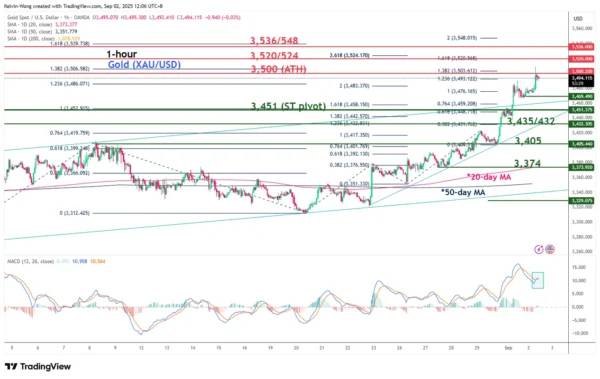
          Fig. 1: Gold (XAU/USD) minor trend as of 2 Sep 2025 (Source: TradingView)

          Gold (XAU/USD) Technical: Bullish Acceleration Supported Rising Implied Volatility_2

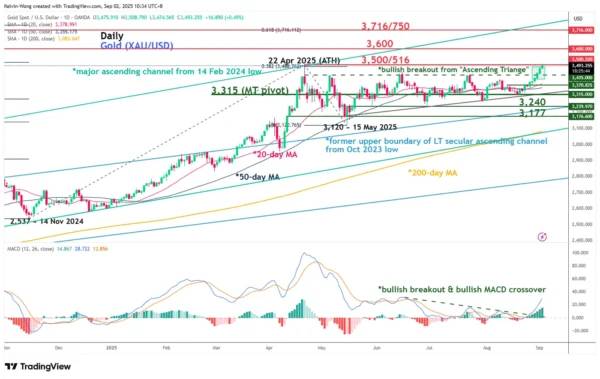
          Fig. 2: Gold (XAU/USD) medium-term trend as of 2 Sep 2025 (Source: TradingView)

          Gold (XAU/USD) Technical: Bullish Acceleration Supported Rising Implied Volatility_3

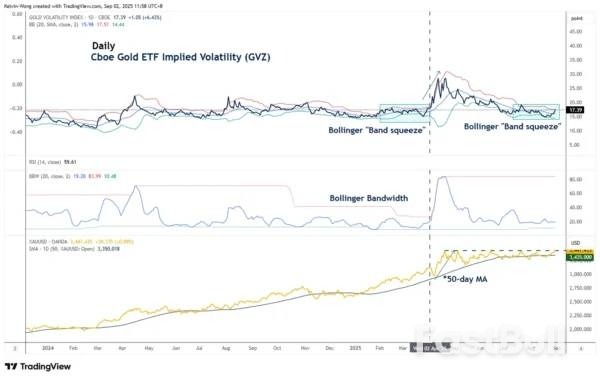
          Fig. 3: Gold (XAU/USD) with GVZ (implied volatility of Gold ETF) as of 2 Sep2025 (Source: TradingView)

          Preferred trend bias (1-3 days)

          Maintain bullish bias on Gold (XAU/USD) as the yellow metal kickstarts a potential bullish acceleration phase (see Fig. 1).Watch the US$3,451 key short-term pivotal support. A clearance above US$3,500 (the current all-time high) will see the next intermediate resistances coming in at US$3,520/3,524 and US$3,536/3,548 (Fibonacci extension clusters).

          Key elements

          ● The hourly MACD trend indicator of Gold (XAU/USD) has just flashed out an impending bullish crossover signal above its centreline, which suggests that short-term bullish momentum remains intact (see Fig. 1).
          ● The recent bullish breakout in the Gold (XAU/USD) above US$3,435 marks an exit from a bullish continuation range configuration, defined as a bullish “Ascending Triangle”. These observations increase the odds of a continuation of its prior impulsive up move sequence (see Fig. 2).
          ● The daily MACD trend indicator of Gold (XAU/USD) has continued to trend upwards above its centreline after its earlier bullish crossover on Monday, August 25, 2025, which supports a potential change in medium-term trend conditions from sideways to bullish (see Fig. 2).
          ● The Cboe Gold exchange-traded fund implied volatility (GVZ) has entered into a low volatility environment, as depicted by the narrowing of the Bollinger Bands, called the “Band Squeeze” since mid-July 2025. A “Band Squeeze” or a low “Bandwidth” reading is a prelude to a potential expansion in volatility. An increased implied volatility (GVZ) may trigger a significant up move in Gold (XAU/USD) (see Fig. 3).
          ● Recent observations between February and March 2025, when a Bollinger “Band Squeeze” in GVZ occurred, preceded a notable rally in Gold (XAU/USD) in April 2025 (see Fig. 3).

          Alternative trend bias (1 to 3 days)

          Failure to hold at the US$3,451 key short-term support on Gold (XAU/USD) negates the bullish tone for another round of minor corrective decline to retest US$3,435/3,432 pull-back support of the former medium-term “Ascending Triangle” range resistance.

          Source: OANDA

          To stay updated on all economic events of today, please check out our Economic calendar
          Risk Warnings and Disclaimers
          You understand and acknowledge that there is a high degree of risk involved in trading. Following any strategies or investment methods may lead to potential losses. The content on the site is provided by our contributors and analysts for information purposes only. You are solely responsible for determining whether any trading assets, securities, strategy, or any other product is suitable for investing based on your own investment objectives and financial situation.
          Add to Favorites
          Share

          U.S.–India $1B+ Deep Tech Alliance Signals a Turning Point for Indian Innovation

          Gerik

          Economic

          A Historic Coalition for Innovation

          The India Deep Tech Investment Alliance represents an unprecedented coordinated effort among investors, including Accel, Celesta Capital, Blume Ventures, and Premji Invest. Unlike the typical competitive nature of venture funding, this alliance unites members under binding commitments to invest in Indian-domiciled startups over a 5- to 10-year horizon. Together, they aim to foster innovation in foundational technologies such as artificial intelligence, semiconductors, space tech, quantum computing, robotics, biotech, energy, and climate solutions.
          This coordinated capital push aligns with the Indian government's new ₹1 trillion ($11 billion) Research, Development, and Innovation (RDI) scheme, which encourages local incorporation of deep tech ventures to qualify for regulatory support and incentives.

          Bridging the Capital Gap in Indian Deep Tech

          The alliance was partly born out of criticism from Indian Commerce Minister Piyush Goyal, who earlier accused domestic startups of prioritizing convenience services like food delivery over real technological innovation. Founders and investors pushed back, arguing that the ecosystem lacked sufficient capital and policy support for deep tech ventures. By pledging $1 billion and offering mentorship and market access, the alliance directly addresses these criticisms.
          Celesta Capital’s Arun Kumar, the inaugural chair of the alliance, and founding partner Sriram Vishwanathan emphasized that the alliance is not just about money, but about energizing an entire ecosystem linking private capital with public policy and creating a powerful, unified voice for shaping India’s tech landscape.

          Strategic Timing Amid Geopolitical Tensions

          The alliance also serves a strategic function. It follows the launch of the U.S.–India TRUST (Transforming the Relationship Utilizing Strategic Technology) initiative earlier this year. Although political tensions have flared including President Trump’s recent 50% tariff on Indian imports over oil trade with Russia the private sector remains bullish on India’s role in global tech.
          By pooling resources into early-stage ventures (seed to Series B), the alliance seeks to support innovation from the ground up while avoiding the overcrowded late-stage funding space. Notably, many successful Indian deep tech startups have historically incorporated in the U.S. to access funding a trend the alliance now aims to reverse.

          Beyond Capital: Mentorship, Market Entry, and Policy Influence

          Alongside capital deployment, the alliance will facilitate mentoring and international expansion for startups. The group will also coordinate on regulatory engagement, pipeline development, due diligence, and co-investment. An advisory committee, initially formed by Accel, Premji Invest, and Venture Catalysts, will guide shared objectives while allowing member funds to retain independent operations.
          The alliance opens its doors to new members, including other VC and PE firms, and potentially corporates with strong investment arms. Its long-term success will depend on how effectively it can balance collaboration with execution. If managed well, it could become a vital force in transforming India into a global hub for deep tech innovation.
          The alliance reflects a shift in both strategic thinking and investment behavior. By institutionalizing cooperation and focusing on “sunrise” sectors, the alliance has the potential to turn India into an exporter of cutting-edge technologies. With the convergence of ambition, talent, capital, and policy support, the foundation is now set for Indian startups to shape the future of global innovation.

          Source: TechCrunch

          To stay updated on all economic events of today, please check out our Economic calendar
          Risk Warnings and Disclaimers
          You understand and acknowledge that there is a high degree of risk involved in trading. Following any strategies or investment methods may lead to potential losses. The content on the site is provided by our contributors and analysts for information purposes only. You are solely responsible for determining whether any trading assets, securities, strategy, or any other product is suitable for investing based on your own investment objectives and financial situation.
          Add to Favorites
          Share

          Gold Hits Record High As US Rate-cut Hopes, Softer Dollar Boost Appeal

          James Whitman

          Commodity

          Economic

          Gold prices climbed to an all-time high on Tuesday, extending gains to a sixth session on the back of a weaker dollar and rising bets of a US interest rate cut this month.

          Spot gold was up 0.5% at US$3,493.99 (RM14,781) per ounce, as of 0348 GMT, after hitting a record high of US$3,508.50 earlier in the session. US gold futures for December delivery gained 1.4% to US$3,564.40.

          "A corollary of the weaker economic backdrop and expectations of US rate cuts is boosting precious metals," said Kyle Rodda, Capital.com's financial market analyst.

          "Another factor is the festering confidence crisis in dollar assets because of US President Donald Trump's attack on Fed independence."

          Trump has criticised the US Federal Reserve and its chair Jerome Powell for months for not lowering rates, and recently took aim at Powell over a costly renovation of the central bank's Washington headquarters.

          On Monday, US Treasury Secretary Scott Bessent said the Fed is and should be independent, but added that it had "made a lot of mistakes" and defended Trump's right to fire Fed governor Lisa Cook over allegations of mortgage fraud.

          Traders are currently pricing in a 90% chance of a 25-basis-point Fed rate cut on Sept 17, according to the CME FedWatch tool.

          Non-yielding gold typically performs well in a low-interest-rate environment.

          Rate-cut expectations and worries over the Fed's independence have weighed on the US dollar, which is languishing near a more than one-month low against its rivals, making gold less expensive for overseas buyers.

          Data on Friday showed that the US personal consumption expenditures price index rose 0.2% month-on-month, and 2.6% year-on-year, both in line with expectations.

          Investors are now looking forward to the US non-farm payrolls data due on Friday, to determine the size of an expected Fed rate cut later this month.

          Elsewhere, spot silver gained 0.1% to US$40.71 per ounce, after hitting its highest since September 2011 in the previous session.

          Platinum gained 1% to US$1,415.70, and palladium fell 0.7% to US$1,129.03.

          Source: Reuters

          To stay updated on all economic events of today, please check out our Economic calendar
          Risk Warnings and Disclaimers
          You understand and acknowledge that there is a high degree of risk involved in trading. Following any strategies or investment methods may lead to potential losses. The content on the site is provided by our contributors and analysts for information purposes only. You are solely responsible for determining whether any trading assets, securities, strategy, or any other product is suitable for investing based on your own investment objectives and financial situation.
          Add to Favorites
          Share

          Wall Street Caution Lingers: Hedge Funds Hold Back Amid Fragile September Outlook

          Gerik

          Economic

          Hedge Funds Retreat Despite Market Gains

          After a modest 2% gain in the S&P 500 for August, hedge funds appear unimpressed. Goldman Sachs data reveals they were net sellers throughout the month, with leverage levels the amount of borrowed capital used for trading continuing to decline. Morgan Stanley noted a 1% drop in leveraged trading activity across the U.S. and Europe toward the end of August, highlighting muted participation in the broader equity rally. This pullback indicates a deliberate move to reduce risk, despite upward momentum in both U.S. and global markets.
          Historical patterns show that U.S. equity markets have posted negative returns in September roughly half the time over the past two decades. Corporate stock buybacks are also restricted this month due to regulatory rules, removing a key source of demand. According to Erlen Capital’s Bruno Schneller, systematic hedge fund strategies are already fully positioned, leaving little room to absorb shocks. He notes that volatility typically increases heading into autumn, compounding the risk of sharper corrections.

          Market Fragility Beyond Equities

          Porchester Capital’s CIO Omar Sayed points to potential systemic risks emerging from the bond markets. Japanese and British 30-year government bond yields are hovering at multi-year highs, suggesting brewing instability. He warns that financial stress in one market such as the unexpected Bank of Japan rate hike that triggered a global equity selloff in August 2024 could spill over into others. High long-term yields are especially troubling for interest-rate sensitive sectors and could limit central banks’ flexibility.
          Retail investors now control over 40% of the U.S. equity market, with UBS estimating that direct equity holdings will reach 265% of U.S. disposable income in 2025 surpassing the previous peak in 2021. This heavy retail involvement may be supporting current valuations, but experts warn it could also amplify downside risk. If economic conditions weaken and retail investors begin pulling back from equity speculation, it could ignite a self-reinforcing cycle of selling.

          China Attracts Hedge Fund Attention

          While hedge funds remain cautious on Wall Street, they have turned aggressively toward Chinese markets. Goldman Sachs reported record net inflows into Chinese equities in August, with Morgan Stanley noting the highest monthly buying volume since February. This rotation suggests hedge funds are seeking relative value opportunities in regions perceived to offer better upside or less correlation to fragile Western markets.
          Despite strong recent performance in equity indices and anticipated policy easing, hedge funds' caution signals deeper concerns about structural vulnerabilities across global markets. Rising long-bond yields, overextended retail exposure, and reduced corporate buybacks make September a high-risk month. Until greater clarity emerges on inflation, growth, and monetary policy, institutional money is likely to remain on the sidelines or seek safer international bets especially in markets like China.

          Source: Reuters

          To stay updated on all economic events of today, please check out our Economic calendar
          Risk Warnings and Disclaimers
          You understand and acknowledge that there is a high degree of risk involved in trading. Following any strategies or investment methods may lead to potential losses. The content on the site is provided by our contributors and analysts for information purposes only. You are solely responsible for determining whether any trading assets, securities, strategy, or any other product is suitable for investing based on your own investment objectives and financial situation.
          Add to Favorites
          Share

          Westpac to Hire 350 Bankers in Bid to Regain Business Lending Ground

          Gerik

          Economic

          Strategic Hiring to Regain Momentum

          In a bold strategic move, Westpac announced plans to hire 350 new business bankers by 2027, with 135 already hired in 2025. The initiative, disclosed by Paul Fowler Westpac’s CEO of Business Banking and Wealth marks a clear shift in the bank’s focus back toward its business lending roots, after years of lagging behind competitors.
          Currently holding 16.1% of the business lending market as of July 2025, Westpac has improved from 15.3% in the previous year. Despite this growth, it still trails behind NAB (21.6%) and CBA (18.85%). Westpac’s latest strategy aims to close that gap significantly.

          Aggressive Competition in the Lending Space

          Analysts indicate that both Westpac and CBA are targeting NAB’s dominance by lowering lending rates, enticing business customers to switch. The timing may prove advantageous: NAB’s business banking head Andrew Auerbach, appointed in June, lacks direct experience leading a business banking division, which some analysts see as a potential vulnerability.
          This competitive pressure comes amid a broader reshaping of Australia’s business banking landscape, with all major players aggressively pursuing small and medium enterprises (SMEs) to secure higher-yielding loan portfolios.

          Business Division Performance and Vision

          Westpac’s renewed emphasis on business banking is already paying off. Its business and wealth division contributed A$1.1 billion in net profit in the first half of the current financial year making it the largest earnings contributor within the bank’s total A$3.3 billion profit.
          Paul Fowler acknowledged that while Westpac once led the market in business lending, it had “lost focus” over the past decade. This hiring wave, paired with a targeted market push, signals Westpac’s ambition to reassert itself as a dominant force in the segment.
          Westpac’s aggressive recruitment plan underscores its commitment to expanding business banking operations through relationship-driven service and competitive pricing. With NAB set to deliver a business banking update shortly, the battle for Australia’s commercial lending sector is intensifying, promising a dynamic shift in market dynamics over the coming years.

          Source: Reuters

          To stay updated on all economic events of today, please check out our Economic calendar
          Risk Warnings and Disclaimers
          You understand and acknowledge that there is a high degree of risk involved in trading. Following any strategies or investment methods may lead to potential losses. The content on the site is provided by our contributors and analysts for information purposes only. You are solely responsible for determining whether any trading assets, securities, strategy, or any other product is suitable for investing based on your own investment objectives and financial situation.
          Add to Favorites
          Share

          Europe’s Labor Market Paradox: High Unemployment Amid Worsening Skill Shortages

          Gerik

          Economic

          A Deepening Labor Paradox

          Europe is confronting a troubling paradox in its labor market: unemployment remains high while many industries struggle to find skilled workers. This imbalance between labor supply and demand is not only hampering business operations but also threatening the EU’s long-term strategic goals.
          As of Q2 2025, the EU reported more than 13 million unemployed people, yet key economies are facing severe labor shortages. Germany has over 1 million job vacancies, while France reports nearly half a million. The EU's overall job vacancy rate stands at 2.1%, with sharp differences across countries from 0.6% in Romania to 4.2% in the Netherlands.
          Even in countries like Germany, where the unemployment rate is relatively low (3%), more than 1.7 million jobs remain unfilled. In France, unemployment remains high but sectors like construction and engineering suffer from a lack of skilled labor.

          Skill Mismatch as a Primary Barrier

          At the core of this paradox is a widespread skills gap. According to recent surveys, more than 75% of businesses in 21 EU countries report difficulty finding suitable candidates. Small and medium-sized enterprises are particularly affected, with over half citing skill shortages as one of the top three recruitment challenges.
          Sectors most affected include IT, healthcare, construction, and renewable energy. Meanwhile, other fields such as administrative support, design, and manual labor are oversaturated. This imbalance is driving up recruitment costs, delaying project timelines, and making business expansion more difficult.

          Economic and Social Implications

          The skill mismatch has broad social and economic consequences. Youth and women are the most affected groups. In Spain, for example, youth unemployment remains stubbornly high at 24–25%, despite a recovery fueled by immigration.
          The lack of skilled labor is also slowing the EU’s clean energy transition and digital infrastructure rollout both of which are vital for the bloc’s competitiveness and sustainability goals. Governments are under pressure to increase unemployment benefits, even as high-value jobs remain vacant and tax revenues decline.

          The Urgent Need for Skills Investment

          Solving Europe’s labor paradox isn’t just about creating more jobs it’s about equipping the existing workforce with the right skills. Massive investments in reskilling and upskilling programs are essential. In Italy, some companies have resorted to launching in-house training programs due to the inability to hire qualified staff externally.
          Europe stands at a critical crossroads: either close the skills gap or risk falling behind in the global race for innovation, clean energy, and economic leadership. The labor shortage is no longer just a workforce issue it’s a structural threat to the continent’s future prosperity and strategic autonomy.
          To stay updated on all economic events of today, please check out our Economic calendar
          Risk Warnings and Disclaimers
          You understand and acknowledge that there is a high degree of risk involved in trading. Following any strategies or investment methods may lead to potential losses. The content on the site is provided by our contributors and analysts for information purposes only. You are solely responsible for determining whether any trading assets, securities, strategy, or any other product is suitable for investing based on your own investment objectives and financial situation.
          Add to Favorites
          Share
          FastBull
          Copyright © 2025 FastBull Ltd

          728 RM B 7/F GEE LOK IND BLDG NO 34 HUNG TO RD KWUN TONG KLN HONG KONG

          TelegramInstagramTwitterfacebooklinkedin
          App Store Google Play Google Play
          Products
          Charts

          Chats

          Q&A with Experts
          Screeners
          Economic Calendar
          Data
          Tools
          Membership
          Features
          Function
          Markets
          Copy Trading
          Latest Signals
          Contests
          News
          Analysis
          24/7
          Columns
          Education
          Company
          Careers
          About Us
          Contact Us
          Advertising
          Help Center
          Feedback
          User Agreement
          Privacy Policy
          Business

          White Label

          Data API

          Web Plug-ins

          Poster Maker

          Affiliate Program

          Risk Disclosure

          The risk of loss in trading financial instruments such as stocks, FX, commodities, futures, bonds, ETFs and crypto can be substantial. You may sustain a total loss of the funds that you deposit with your broker. Therefore, you should carefully consider whether such trading is suitable for you in light of your circumstances and financial resources.

          No decision to invest should be made without thoroughly conducting due diligence by yourself or consulting with your financial advisors. Our web content might not suit you since we don't know your financial conditions and investment needs. Our financial information might have latency or contain inaccuracy, so you should be fully responsible for any of your trading and investment decisions. The company will not be responsible for your capital loss.

          Without getting permission from the website, you are not allowed to copy the website's graphics, texts, or trademarks. Intellectual property rights in the content or data incorporated into this website belong to its providers and exchange merchants.

          Not Logged In

          Log in to access more features

          FastBull Membership

          Not yet

          Purchase

          Become a signal provider
          Help Center
          Customer Service
          Dark Mode
          Price Up/Down Colors

          Log In

          Sign Up

          Position
          Layout
          Fullscreen
          Default to Chart
          The chart page opens by default when you visit fastbull.com