
• Trade
  • Markets
  • Copy
  • Contests
  • News
  • 24/7
  • Calendar
  • Q&A
  • Chats
Screeners
SYMBOL
LAST
ASK
BID
HIGH
LOW
NET CHG.
%CHG.
SPREAD
SPX
S&P 500 Index
6798.39
6798.39
6798.39
6857.86
6780.45
-84.33
-1.23%
--
DJI
Dow Jones Industrial Average
48908.71
48908.71
48908.71
49340.90
48829.10
-592.58
-1.20%
--
IXIC
NASDAQ Composite Index
22540.58
22540.58
22540.58
22841.28
22461.14
-363.99
-1.59%
--
USDX
US Dollar Index
97.710
97.790
97.710
97.790
97.680
-0.110
-0.11%
--
EURUSD
Euro / US Dollar
1.17872
1.17882
1.17872
1.17913
1.17655
+0.00084
+ 0.07%
--
GBPUSD
Pound Sterling / US Dollar
1.35461
1.35470
1.35461
1.35500
1.35081
+0.00157
+ 0.12%
--
XAUUSD
Gold / US Dollar
4825.20
4825.65
4825.20
4846.30
4655.10
+47.31
+ 0.99%
--
WTI
Light Sweet Crude Oil
63.419
63.454
63.419
63.654
62.146
+0.485
+ 0.77%
--

Community Accounts

Signal Accounts
--
Profit Accounts
--
Loss Accounts
--
View More

Become a signal provider

Sell trading signals to earn additional income

View More

Guide to Copy Trading

Get started with ease and confidence

View More

Signal Accounts for Members

All Signal Accounts

Best Return
  • Best Return
  • Best P/L
  • Best MDD
Past 1W
  • Past 1W
  • Past 1M
  • Past 1Y

All Contests

  • All
  • Trump Updates
  • Recommend
  • Stocks
  • Cryptocurrencies
  • Central Banks
  • Featured News
Top News Only
Share

India's NIFTY IT Index Down 1.8%

Share

India's Nifty Bank Futures Down 0.19% In Pre-Open Trade

Share

India's Nifty 50 Index Down 0.14% In Pre-Open Trade

Share

Indian Rupee Opens 0.08% Higher At 90.2850 Per USA Dollar, Previous Close 90.3550

Share

The Thailand Futures Exchange (TFEX) Has Announced A Temporary Suspension Of Online Trading In Silver Futures

Share

Indonesian President: Signs Security Treaty With Australia

Share

Source: Trump Offered To Unfreeze Funding For Nyc Tunnel If Dulles Airport, Train Station Renamed For Him

Share

Indonesia's 2025 White Sugar Output At 2.67 Million Metric Tons - Agri Ministry

Share

Indonesia's Forex Reserves Drop To $154.6 Billion At End-January

Share

Former Japan Currency Chief Says Forex Intervention Should Be Backed By Rate Hikes

Share

Spot Silver Rises 3% To $73.41/Oz

Share

USA Military Says It Attacked An Alleged Drug Vessel In The Eastern Pacific On Thursday And Killed Two People

Share

Spot Gold Rises Over 1% To $4827.16/Oz

Share

Spot Silver Broke Through $72 Per Ounce, Up 1.71% On The Day

Share

Spot Gold Has Climbed Back Above $4,800 Per Ounce, Rebounding Nearly $150 From Its Daily Low, Up 0.43% On The Day

Share

Spot Silver Reverses Course, Last Up Nearly 1% At $71.95/Oz

Share

Spot Gold Reverses Course, Last Up 0.6% At $4797.29/Oz

Share

Spot Platinum Falls 5% To $1818.25/Oz

Share

Ether Rises 4.8%, Reversing Losses From Earlier In The Session

Share

U.S. Stock Index Futures Narrowed Their Losses, With S&P 500 Futures Down 0.2%

TIME
ACT
FCST
PREV
Germany Construction PMI (SA) (Jan)

A:--

F: --

P: --

Italy Retail Sales MoM (SA) (Dec)

A:--

F: --

P: --

U.K. Markit/CIPS Construction PMI (Jan)

A:--

F: --

P: --

France 10-Year OAT Auction Avg. Yield

A:--

F: --

P: --

Euro Zone Retail Sales YoY (Dec)

A:--

F: --

P: --
Euro Zone Retail Sales MoM (Dec)

A:--

F: --

P: --
U.K. BOE MPC Vote Cut (Feb)

A:--

F: --

P: --

U.K. BOE MPC Vote Hike (Feb)

A:--

F: --

P: --

U.K. BOE MPC Vote Unchanged (Feb)

A:--

F: --

P: --

U.K. Benchmark Interest Rate

A:--

F: --

P: --

MPC Rate Statement
U.S. Challenger Job Cuts (Jan)

A:--

F: --

P: --

U.S. Challenger Job Cuts MoM (Jan)

A:--

F: --

P: --

U.S. Challenger Job Cuts YoY (Jan)

A:--

F: --

P: --

Bank of England Governor Bailey held a press conference on monetary policy.
Euro Zone ECB Marginal Lending Rate

A:--

F: --

P: --

Euro Zone ECB Deposit Rate

A:--

F: --

P: --

Euro Zone ECB Main Refinancing Rate

A:--

F: --

P: --

ECB Monetary Policy Statement
U.S. Weekly Initial Jobless Claims (SA)

A:--

F: --

P: --

U.S. Initial Jobless Claims 4-Week Avg. (SA)

A:--

F: --

P: --

U.S. Weekly Continued Jobless Claims (SA)

A:--

F: --

P: --
ECB Press Conference
U.S. JOLTS Job Openings (SA) (Dec)

A:--

F: --

P: --
U.S. EIA Weekly Natural Gas Stocks Change

A:--

F: --

P: --

BOC Gov Macklem Speaks
Mexico Policy Interest Rate

A:--

F: --

P: --

U.S. Weekly Treasuries Held by Foreign Central Banks

A:--

F: --

P: --

Reserve Bank of Australia Governor Bullock testified before Parliament.
Japan Foreign Exchange Reserves (Jan)

A:--

F: --

P: --

India Benchmark Interest Rate

--

F: --

P: --

India Cash Reserve Ratio

--

F: --

P: --

India Repo Rate

--

F: --

P: --

India Reverse Repo Rate

--

F: --

P: --

Japan Leading Indicators Prelim (Dec)

--

F: --

P: --

Germany Industrial Output MoM (SA) (Dec)

--

F: --

P: --

Germany Exports MoM (SA) (Dec)

--

F: --

P: --

U.K. Halifax House Price Index YoY (SA) (Jan)

--

F: --

P: --

U.K. Halifax House Price Index MoM (SA) (Jan)

--

F: --

P: --

France Trade Balance (SA) (Dec)

--

F: --

P: --

Canada Leading Index MoM (Jan)

--

F: --

P: --

India Deposit Gowth YoY

--

F: --

P: --

Canada Employment (SA) (Jan)

--

F: --

P: --
Canada Full-time Employment (SA) (Jan)

--

F: --

P: --
Canada Part-Time Employment (SA) (Jan)

--

F: --

P: --
Canada Unemployment Rate (SA) (Jan)

--

F: --

P: --

Canada Labor Force Participation Rate (SA) (Jan)

--

F: --

P: --

Due to the previous government shutdown, the release date of the US January non-farm payroll report has been changed to February 11.
Canada Ivey PMI (Not SA) (Jan)

--

F: --

P: --

Canada Ivey PMI (SA) (Jan)

--

F: --

P: --

U.S. 5-10 Year-Ahead Inflation Expectations (Feb)

--

F: --

P: --

U.S. UMich Consumer Sentiment Index Prelim (Feb)

--

F: --

P: --

U.S. UMich 1-Year-Ahead Inflation Expectations Prelim (Feb)

--

F: --

P: --

U.S. UMich 5-Year-Ahead Inflation Expectations Prelim YoY (Feb)

--

F: --

P: --

U.S. UMich Current Economic Conditions Index Prelim (Feb)

--

F: --

P: --

U.S. UMich Consumer Expectations Index Prelim (Feb)

--

F: --

P: --

China, Mainland Foreign Exchange Reserves (Jan)

--

F: --

P: --

Russia Retail Sales YoY (Dec)

--

F: --

P: --

Russia Unemployment Rate (Dec)

--

F: --

P: --

Russia Quarterly GDP Prelim YoY (Q1)

--

F: --

P: --

U.S. Weekly Total Oil Rig Count

--

F: --

P: --

Q&A with Experts
    • All
    • Chatrooms
    • Groups
    • Friends
    Visxa Benfica flag
    @Lý Liêm How are you today?
    Kung Fu flag
    zenko
    @zenkoI love this.
    zenko flag
    if anyone asks eth. he will stop at 17
    Kung Fu flag
    Lý Liêm
    I come from Vietnam
    @Lý LiêmI love Vietnamese, Mate. I've not seen you here before
    Lý Liêm flag
    I'm looking for intraday XAUUSD trades.
    Lý Liêm flag
    Kung Fu
    I just downloaded the app.
    Kung Fu flag
    Lý Liêm
    I'm looking for intraday XAUUSD trades.
    @Lý LiêmI see. Don't be in a hurry. What's the time now in Vietnam
    Kung Fu flag
    Lý Liêm
    @Lý LiêmI figure. You're warmly welcome to this our community
    "Nawhdir Øt" recalled a message
    Nawhdir Øt flag
    "Nawhdir Øt" recalled a message
    Nawhdir Øt flag
    Nawhdir Øt
    @Kung Fu
    Kung Fu flag
    Nawhdir Øt
    @Nawhdir Øtyou are playing too much because nothing is happening this Asia 🤣🤣🤣
    Nawhdir Øt flag
    Kung Fu
    @Kung FuIf it were true, many would commit suicide, including Saylor's son?
    Visxa Benfica flag
    Lý Liêm
    I'm looking for intraday XAUUSD trades.
    @Lý LiêmFor intraday trading, I don't think things will be very easy, bro
    Kung Fu flag
    Lý Liêm
    @Lý Liêmlet's meet up here during London. How's that for a trading plan today
    Visxa Benfica flag
    In the short term, I lean more towards bearish than bullish
    Visxa Benfica flag
    Nawhdir Øt
    @Nawhdir ØtWhy did they commit suicide?
    Kung Fu flag
    Nawhdir Øt
    @Visxa Benfica@Nawhdir Øtyeah, that's certainly gonna be the case
    marsgents flag
    Nawhdir Øt
    @Nawhdir Øtmstr loss parah sob earing callnya
    Type here...
    Add Symbol or Code

      No matching data

      All
      Trump Updates
      Recommend
      Stocks
      Cryptocurrencies
      Central Banks
      Featured News
      • All
      • Russia-Ukraine Conflict
      • Middle East Flashpoint
      • All
      • Russia-Ukraine Conflict
      • Middle East Flashpoint
      Search
      Products

      Charts Free Forever

      Chats Q&A with Experts
      Screeners Economic Calendar Data Tools
      Membership Features
      Data Warehouse Market Trends Institutional Data Policy Rates Macro

      Market Trends

      Market Sentiment Order Book Forex Correlations

      Top Indicators

      Charts Free Forever
      Markets

      News

      News Analysis 24/7 Columns Education
      From Institutions From Analysts
      Topics Columnists

      Latest Views

      Latest Views

      Trending Topics

      Top Columnists

      Latest Update

      Signals

      Copy Rankings Latest Signals Become a signal provider AI Rating
      Contests
      Brokers

      Overview Brokers Assessment Rankings Regulators News Claims
      Broker listing Forex Brokers Comparison Tool Live Spread Comparison Scam
      Q&A Complaint Scam Alert Videos Tips to Detect Scam
      More

      Business
      Events
      Careers About Us Advertising Help Center

      White Label

      Broker API

      Data API

      Web Plug-ins

      Affiliate Program

      Awards Institution Evaluation IB Seminar Salon Event Exhibition
      Vietnam Thailand Singapore Dubai
      Fans Party Investment Sharing Session
      FastBull Summit BrokersView Expo
      Recent Searches
        Top Searches
          Markets
          News
          Analysis
          User
          24/7
          Economic Calendar
          Education
          Data
          • Names
          • Latest
          • Prev

          View All

          No data

          Scan to Download

          Faster Charts, Chat Faster!

          Download App
          English
          • English
          • Español
          • العربية
          • Bahasa Indonesia
          • Bahasa Melayu
          • Tiếng Việt
          • ภาษาไทย
          • Français
          • Italiano
          • Türkçe
          • Русский язык
          • 简中
          • 繁中
          Open Account
          Search
          Products
          Charts Free Forever
          Markets
          News
          Signals

          Copy Rankings Latest Signals Become a signal provider AI Rating
          Contests
          Brokers

          Overview Brokers Assessment Rankings Regulators News Claims
          Broker listing Forex Brokers Comparison Tool Live Spread Comparison Scam
          Q&A Complaint Scam Alert Videos Tips to Detect Scam
          More

          Business
          Events
          Careers About Us Advertising Help Center

          White Label

          Broker API

          Data API

          Web Plug-ins

          Affiliate Program

          Awards Institution Evaluation IB Seminar Salon Event Exhibition
          Vietnam Thailand Singapore Dubai
          Fans Party Investment Sharing Session
          FastBull Summit BrokersView Expo

          New START Treaty Dies, Leaving a Nuclear Void

          King Ten

          Political

          Remarks of Officials

          Summary:

          New START expired, ending formal US-Russia nuclear limits. Informal talks emerge amid demands for China's inclusion.

          The world entered a new era of geopolitical uncertainty on Thursday as the New START treaty, the last remaining nuclear arms control pact between the United States and Russia, officially expired. The treaty's final active day was February 4, leaving no formal limits on the nuclear arsenals of the world's two largest atomic powers.

          While hopes for a replacement agreement persist, there are currently no intensive, legally binding international arms control talks underway.

          The Clock Runs Out on a Landmark Arms Pact

          Russian state media confirmed the treaty's expiration on Thursday. According to a report from TASS, a proposal from Russian President Vladimir Putin in September 2025 to continue observing the treaty’s quantitative limits for another year went unanswered by Washington.

          With no provision for another formal extension like the one in 2021, the agreement regulating strategic stability between the US and Russia has now passed into history. As of February 5, both nations are technically free to expand their nuclear stockpiles without restriction.
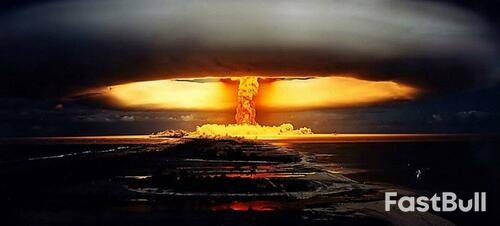
          A 1971 photo of the Licorne nuclear test in French Polynesia illustrates the destructive power at the heart of now-expired arms control treaties.

          Secret Talks Hint at an Informal Extension

          Despite the official expiration, last-ditch diplomatic efforts have been happening behind the scenes. An Axios report on Thursday revealed that the US and Russia are nearing a deal to continue observing the treaty's terms, citing three sources familiar with the discussions.

          A US official confirmed the effort, stating, "We agreed with Russia to operate in good faith and to start a discussion about ways it could be updated."

          The report noted that these negotiations took place in Abu Dhabi over the last 24 hours. However, sources cautioned that any draft plan would still require final approval from both presidents. For now, the two sides appear to have an informal understanding to abide by New START's terms for another six months, but this arrangement is not legally binding.

          Why Washington Let the Treaty Expire: The China Factor

          The White House's rationale for allowing New START to lapse was clarified in a Wednesday statement by Secretary of State Marco Rubio. He emphasized the need to include China in any future arms control framework.

          "Obviously, the president's been clear in the past that in order to have true arms control in the 21st century, it's impossible to do something that doesn't include China because of their vast and rapidly growing stockpile," Rubio stated.

          This position reflects a long-standing complaint from the Trump administration, which has consistently argued that existing arms control agreements are insufficient without China's participation.

          Risk Warnings and Disclaimers
          You understand and acknowledge that there is a high degree of risk involved in trading. Following any strategies or investment methods may lead to potential losses. The content on the site is provided by our contributors and analysts for information purposes only. You are solely responsible for determining whether any trading assets, securities, strategy, or any other product is suitable for investing based on your own investment objectives and financial situation.
          Add to Favorites
          Share

          Peak Coal? Why Asia's Demand Story Isn't Over Yet

          Catherine Richards

          Data Interpretation

          Commodity

          Economic

          Energy

          For years, speculation has swirled around the idea of "peak demand" for hydrocarbons as the world transitions its energy mix. The debate reignited this week with new data showing a 4.4% dip in Asian seaborne coal imports in 2025 from the previous year's all-time high.

          While this drop might seem significant, a closer look suggests that declaring "peak coal" is premature.

          Decoding Asia's 2025 Coal Import Dip

          Data from Kpler revealed that Asian buyers imported 1.09 billion metric tons of coal in 2025, down from 1.14 billion tons in the prior year. Reuters columnist Clyde Russell pointed to this as a potential signal that demand in the world's largest coal-importing region has peaked.

          However, focusing solely on imports misses the bigger picture. In the same year that imports fell, China’s domestic coal production soared to a record high of 4.83 billion tons. This surge in local supply was a major reason for its weaker import appetite, which stood at 490 million tons.

          Meanwhile, India’s coal production saw a modest 0.64% decline in the first three quarters of its current fiscal year. This wasn't due to flagging demand but was primarily the result of weather-related disruptions.

          China and India Double Down on Coal Power

          The actions of Asia's two largest economies signal continued reliance on coal. China, despite being a global leader in wind and solar power, plans to commission 85 new coal-fired power generation units this year. This move comes even after the country's coal-fired power generation declined in 2025, thanks to higher output from sources like hydropower.

          India is also reconsidering its long-term energy strategy. The government had previously planned to halt all coal capacity expansion after 2035. Now, officials are contemplating pushing that deadline to 2047. This reflects deep uncertainty about whether wind and solar can reliably replace coal, which currently generates over 70% of India's electricity, according to the International Energy Agency.

          Price Signals and Renewable Headwinds

          The economics of the coal market also played a role. Last year, thermal coal prices hit a four-year low in June before rebounding. Australian coal prices gained 16%, while Indonesian coal rose 12%. Higher prices naturally tend to curb import demand, which likely contributed to the overall decline in Asian imports.

          At the same time, the expansion of renewable energy is facing challenges. A recent report from Rystad Energy noted that the addition of new wind and solar capacity is slowing down. While the firm predicts that global electricity output from all renewables—including hydro and geothermal—could overtake coal for the first time this year, producing 11,900 TWh, this forecast comes with caveats.

          The prediction is based on the assumption that new demand will be met by renewables and that coal generation has "plateaued." Yet, the aggressive capacity expansion in both China and India suggests this plateau may not last. Building expensive new coal plants only makes sense if you expect to use them, indicating that both nations anticipate burning more coal in the coming years.

          Why Import Data Tells an Incomplete Story

          Ultimately, relying on import data alone to gauge total demand can create a misleading picture. Both China and India are actively working to reduce their reliance on foreign energy supplies.

          India, for instance, has announced a goal to attract $100 billion in investments for its domestic oil and gas production by 2030. This push for energy self-sufficiency means that domestic production trends are becoming just as critical—if not more so—than import volumes when analyzing the future of coal demand.

          To stay updated on all economic events of today, please check out our Economic calendar
          Risk Warnings and Disclaimers
          You understand and acknowledge that there is a high degree of risk involved in trading. Following any strategies or investment methods may lead to potential losses. The content on the site is provided by our contributors and analysts for information purposes only. You are solely responsible for determining whether any trading assets, securities, strategy, or any other product is suitable for investing based on your own investment objectives and financial situation.
          Add to Favorites
          Share

          New START Treaty Dies, Sparking Nuclear Arms Race Fears

          James Riley

          Political

          Remarks of Officials

          Russia-Ukraine Conflict

          The last major nuclear arms control treaty between the United States and Russia has expired, after US President Donald Trump rejected a Russian proposal to voluntarily extend its limits for another year. The move dismantles a cornerstone of post-Cold War security, fueling warnings from arms control advocates of an accelerated global arms race.

          On his Truth Social platform, Trump dismissed the idea of extending the New START treaty. "Rather than extend 'New START' ... we should have our Nuclear Experts work on a new, improved and modernized Treaty that can last long into the future," he wrote.

          Opponents of the pact in the U.S. argue it limited America's ability to counter nuclear threats from both Russia and China. However, the treaty's expiration now leaves the world's two largest nuclear powers without verifiable limits on their arsenals for the first time in decades.

          Russia's Last-Minute Offer Rejected

          The standoff came after Russian President Vladimir Putin proposed that both nations continue to adhere to the 2010 accord's cap of 1,550 warheads on 700 delivery systems—including missiles, aircraft, and submarines—for one year.

          New START was the final pillar in a series of arms control agreements dating back more than 50 years. It allowed for a single five-year extension, which Putin and former U.S. President Joe Biden agreed to in 2021.

          Trump labeled New START "a badly negotiated deal" and claimed it was "being grossly violated." This appears to reference Putin's 2023 decision to suspend on-site inspections, a key verification measure. Putin had cited U.S. support for Ukraine in its war against Russia as justification for the suspension.

          Despite the treaty's collapse, both sides have signaled a willingness to talk. Kremlin spokesman Dmitry Peskov stated Russia remains ready for dialogue if Washington responds constructively. Similarly, White House spokeswoman Karoline Leavitt confirmed that the U.S. would continue talks with Russia.

          Global Security Enters a New, Uncertain Era

          Security analysts warn that without a replacement for New START, the world is entering a more dangerous and unpredictable phase. The treaty’s inspection regimes provided a critical level of trust and transparency between the nuclear adversaries.

          Without these guardrails, both the U.S. and Russia may feel compelled to operate on worst-case assumptions, creating an incentive to expand their arsenals. Key concerns include:

          • A higher risk of miscalculation in a crisis.

          • A loss of transparency and predictability, which underpins strategic stability.

          • Increased pressure to build up nuclear forces.

          This dynamic is complicated by China's rapidly growing nuclear arsenal. Trump has insisted that any new treaty must include Beijing, but China has consistently refused to join negotiations with Washington and Moscow. It argues its arsenal is a fraction of theirs, with an estimated 600 warheads compared to around 4,000 each for Russia and the U.S. On Thursday, China called the treaty's expiration regrettable and urged the U.S. and Russia to resume dialogue.

          Diplomatic Channels Remain Open

          Negotiations were reportedly held in Abu Dhabi in the 24 hours leading up to the expiration, though they failed to produce an agreement. According to a report from Axios, it was unclear if any temporary adherence to the treaty's terms would have been formalized.

          However, the talks were not a total failure. The U.S. military's European Command announced on Thursday that the U.S. and Russia had agreed in Abu Dhabi to resume a high-level military-to-military dialogue. Separately, Ukrainian President Volodymyr Zelensky noted that U.S.-backed peace talks with Russia would also continue after a round of discussions in the city.

          In Moscow, the Russian Foreign Ministry declared the treaty no longer applied, freeing both sides to choose their next steps. While warning it was prepared to take "decisive military-technical countermeasures," the ministry affirmed it was also open to diplomacy. This warning seems directed at the possibility that the U.S. could now expand its own nuclear deployments by reversing steps taken to comply with New START.

          A bipartisan U.S. commission recommended in 2023 that the country prepare to fight simultaneous wars with Russia and China and consider reloading some or all of its reserve warheads.

          Ukraine, embroiled in war since Russia's 2022 invasion, condemned the treaty's demise. It described the event as a consequence of Russian efforts to "fragmentation of the global security architecture" and "another tool for nuclear blackmail."

          Strategic nuclear weapons are long-range systems designed to strike an opponent's homeland in a full-scale war. Without an agreement, experts estimate both Russia and the U.S. could deploy hundreds of additional warheads within just a few years. As Karim Haggag, director of the Stockholm International Peace Research Institute, noted, "Transparency and predictability are among the more intangible benefits of arms control and underpin deterrence and strategic stability."

          Risk Warnings and Disclaimers
          You understand and acknowledge that there is a high degree of risk involved in trading. Following any strategies or investment methods may lead to potential losses. The content on the site is provided by our contributors and analysts for information purposes only. You are solely responsible for determining whether any trading assets, securities, strategy, or any other product is suitable for investing based on your own investment objectives and financial situation.
          Add to Favorites
          Share

          Strategy Gets Caught in Bitcoin Crash, Amazon Stock Plunges, Roblox Surges

          Manuel

          Stocks

          The fourth quarter earnings season momentum continues this week, as results from Alphabet (GOOG, GOOGL), Amazon (AMZN), AMD (AMD), Qualcomm (QCOM), and Palantir (PLTR) highlighted the calendar.
          As of Jan. 30, 33% of S&P 500 (^GSPC) companies have reported fourth quarter results, according to FactSet data, and Wall Street analysts estimate an 11.9% increase in earnings per share for the fourth quarter. If that rate holds, it would represent the 10th consecutive quarter of annual earnings growth for the index and the fifth consecutive quarter of double-digit growth.Strategy Gets Caught in Bitcoin Crash, Amazon Stock Plunges, Roblox Surges_1
          Heading into the reporting period, analysts were expecting an 8.3% jump in earnings per share, down from the third quarter's 13.6% earnings growth rate. Wall Street has raised its earnings expectations in recent months, especially for tech companies, which have driven earnings growth in recent quarters.
          Massive Big Tech capital expenditures set the tone for the AI trade. Plus, the themes that drove the markets in 2025 — artificial intelligence, the Trump administration's tariff and economic policies, and a K-shaped consumer economy — continue to provide plenty for investors to parse.
          This week, investors heard updates from companies including Disney (DIS), Chipotle (CMG), PepsiCo (PEP), Uber (UBER), and Snap (SNAP).

          Source: Yahoo Finance

          Risk Warnings and Disclaimers
          You understand and acknowledge that there is a high degree of risk involved in trading. Following any strategies or investment methods may lead to potential losses. The content on the site is provided by our contributors and analysts for information purposes only. You are solely responsible for determining whether any trading assets, securities, strategy, or any other product is suitable for investing based on your own investment objectives and financial situation.
          Add to Favorites
          Share

          Japan's Election Hinges on Soaring Food Prices

          Michael Ross

          Central Bank

          Political

          Data Interpretation

          Remarks of Officials

          Forex

          Economic

          Skyrocketing food costs are dominating the conversation ahead of Japan's national election on February 8, putting Prime Minister Sanae Takaichi's government on the line. For many voters, the pressure on their household budgets has become the single most important political issue.

          Voter frustration over the rising cost of living has already delivered major setbacks to Takaichi's ruling Liberal Democratic Party in previous elections. While government subsidies have provided some relief on utility bills, relentless increases in food prices have largely canceled out those benefits.

          This economic pain is a critical challenge for Takaichi as she seeks a fresh mandate. Consumer inflation has remained above the Bank of Japan's 2% target for the last four years, driven significantly by the cost of groceries.

          Voter Pain at the Supermarket Shapes Political Stakes

          The financial strain is palpable for citizens across the country. Keiko Sato, an 81-year-old living in rural Akita, says she has stopped buying non-essential items like clothes because her budget no longer has any "real breathing room."

          "When I shop at regular supermarkets, things are so expensive that I just pull my hand back and don't buy anything," she explained.

          Kazue Iwata, 74, relies on a fixed pension and has been forced to cut back on leisure activities. "I really feel prices rising in everyday life—groceries, clothes, and especially rice," she said. "I'm living on a pension, so even if I want to travel, I just can't."

          Polls confirm these experiences are widespread. A Nikkei survey last week found that 54% of voters cited inflation as their biggest concern heading into the election.

          Takaichi's High-Stakes Bet: A Temporary Food Tax Cut

          In response to this pressure, Prime Minister Takaichi has proposed a two-year suspension of the 8% tax on food and non-alcoholic beverages if her party wins the election.

          The proposal has found support among consumers and retailers. The Japan Chain Stores Association is even pushing for the tax suspension to be extended to five years. However, the restaurant industry is worried that the move would encourage more people to eat at home, as dining out would still be subject to a 10% consumption tax.

          The Data: Why Japanese Households Feel the Squeeze

          Official data confirms the financial pressure on families. A key metric, the Engel coefficient, which measures the proportion of a household's spending that goes to food, hit 28.9% in November. This was the highest figure for that month since comparable data became available in 2000.

          Japanese households spend a significantly larger share of their income on food than those in other developed nations. For comparison, families in the United States allocated only 15% of their total spending to food in 2023, according to the OECD. While cultural norms can play a role, a higher Engel coefficient is often associated with lower average incomes.

          Opposition Parties Propose Bolder Tax Measures

          Opposition parties have seized on the cost-of-living crisis, offering more aggressive tax-cutting plans to appeal to voters.

          • Centrist Reform Alliance: The largest opposition group wants to permanently eliminate the sales tax on food.

          • Democratic Party for the People: This party proposes cutting the overall consumption tax to 5%.

          • Sanseito: This party has pledged to abolish the consumption tax entirely.

          Hikaru Sato, a senior economist at Daiwa Institute of Research Ltd., noted the political consensus forming around tax cuts. "Almost all parties are now calling for consumption tax cuts, and that has been cited as one factor behind the weaker yen," he said. However, he cautioned that a temporary cut is "unlikely to have much effect" on lowering the Engel coefficient over the long term.

          Will Inflation Cool Down in Time?

          There are signs that food price inflation may be moderating. In December, the rate of increase for food prices slowed to 5.1% from 6.1% the previous month. Gains in the price of rice also decelerated to 34.4% from 37.1%.

          However, these figures offer little comfort when real wage growth has been negative every month through November. Furthermore, Japan's major food companies implemented 20,609 price increases last year, a 60% jump from the year before, according to Teikoku Databank. While the number of expected price hikes for the first four months of 2026 is forecast to be 40% lower, the pressure remains intense.

          Bank of Japan Governor Kazuo Ueda has also stated that he expects inflation to cool in the coming months. But for households like Yoko Sasaki's, that forecast doesn't help now. The 51-year-old housewife described the share of food costs in her monthly budget as "frightful," even after her children have moved out. "I'm trying to find cheaper options," she said.

          Weak Yen and Food Imports Create Long-Term Pressure

          A significant underlying factor is Japan's reliance on imports and the weak yen. The country imported over 60% of its food last fiscal year. With the yen trading around 157 to the dollar—far weaker than its 20-year average of about 111.83—the cost of imported food remains high.

          "Japan's low food self-sufficiency rate has essentially remained unchanged for several decades," said Daiwa's Sato. "When currencies move sharply, as they have recently, it becomes easier for the Engel coefficient to rise" through import-driven inflation. This structural vulnerability ensures that the cost of food will likely remain a central issue for Japan's economy and its political future.

          To stay updated on all economic events of today, please check out our Economic calendar
          Risk Warnings and Disclaimers
          You understand and acknowledge that there is a high degree of risk involved in trading. Following any strategies or investment methods may lead to potential losses. The content on the site is provided by our contributors and analysts for information purposes only. You are solely responsible for determining whether any trading assets, securities, strategy, or any other product is suitable for investing based on your own investment objectives and financial situation.
          Add to Favorites
          Share

          Warsh as Fed Chair: A Test of Independence

          George Anderson

          Political

          Remarks of Officials

          Central Bank

          Economic

          Former Bank of Japan Deputy Governor Hiroshi Nakaso believes Kevin Warsh’s experience as a Federal Reserve governor makes him well-suited to lead the central bank and safeguard its independence. Drawing from his time as a senior BOJ official when Warsh served at the Fed, Nakaso offered his assessment of Warsh’s ability to navigate political pressure and build internal consensus.

          Hiroshi Nakaso, former Bank of Japan Deputy Governor, shares his perspective on Kevin Warsh's suitability for the Federal Reserve.

          A Crisis-Tested Communicator

          Nakaso, whose tenure at the BOJ overlapped with Warsh’s Fed term from 2006 to 2011, remembers him as an “excellent communicator” who was both logical and approachable. He expects these qualities would enable Warsh to build strong relationships within the Fed and with the presidential administration.

          Both men gained critical experience during the 2008 global financial crisis. Nakaso notes that this difficult period forced them to deeply consider the core mission and policies of a central bank. He recalls that Warsh held then-Fed Chair Ben Bernanke in high regard for his ability to listen to diverse opinions and forge consensus during the turmoil.

          According to Nakaso, Warsh’s five years absorbing the Fed’s organizational culture is a lasting asset. If appointed, he hopes Warsh will act as a chair who upholds the central bank's established values.

          Navigating Political Pressure on the Fed

          Concerns about political interference have become a significant issue for the Federal Reserve. Markets have worried that the Trump administration's open involvement in monetary policy could undermine confidence in the U.S. dollar.

          However, Nakaso suggests that the administration's choice of Warsh may signal a respect for the Fed's independence. He believes Warsh understands the importance of the central bank's role. Following the announcement, market reactions indicated a perception that Warsh would maintain a proper distance from the administration, which helped calm excessive speculation about interest rate cuts.

          Re-evaluating Past Views on Monetary Policy

          Warsh has previously criticized the Fed's quantitative easing (QE) and advocated for shrinking its balance sheet. He left his governor position during QE2, the second round of post-crisis asset purchases. While QE1 was an all-out effort to contain the crisis, QE2 was aimed at accelerating the economic recovery.

          Nakaso acknowledges the general view that large-scale asset purchases propped up asset prices. However, he also points out that at the time, few policymakers outside of central banks were capable of taking effective action.

          Regarding the risk of hasty quantitative tightening, Nakaso thinks it is unlikely Warsh would shrink the balance sheet immediately. The financial landscape has changed significantly since Warsh’s tenure. Financial institutions now earn interest on their central bank deposits, allowing for monetary policy to be conducted with a larger balance sheet.

          Furthermore, post-crisis financial regulations have fragmented the market, making it harder to gauge liquidity needs. The Fed already ended its quantitative tightening program last December after carefully reducing its liquidity supply, and it is currently providing liquidity through short-term government bond purchases.

          Given these changes, Nakaso believes Warsh would adapt. Citing his strong communication skills and ability to assess situations, he expects that if Warsh becomes chair, he will listen to internal Fed opinions and respond appropriately to the current environment.

          The Global Consensus on Central Bank Autonomy

          The principle of central bank independence is built on the historical lesson that price stability is best managed by experts, protecting economies from the damage of high inflation.

          Nakaso points to a statement signed by leaders of major central banks in solidarity with Fed Chair Jerome Powell as evidence of this shared conviction. The statement reflected a collective alarm that threats to Fed independence could ultimately harm global financial stability.

          While BOJ Governor Kazuo Ueda did not sign the statement, Nakaso emphasizes that price stability relies on a stable financial system—a shared responsibility among the world’s central banks. He argues that effective, coordinated action in emergencies depends on unwavering trust that each central bank is making its own independent judgments. This, he states, is the true meaning of solidarity, a principle he believes the BOJ fully supports.

          To stay updated on all economic events of today, please check out our Economic calendar
          Risk Warnings and Disclaimers
          You understand and acknowledge that there is a high degree of risk involved in trading. Following any strategies or investment methods may lead to potential losses. The content on the site is provided by our contributors and analysts for information purposes only. You are solely responsible for determining whether any trading assets, securities, strategy, or any other product is suitable for investing based on your own investment objectives and financial situation.
          Add to Favorites
          Share

          Trump-Xi Call Reveals Deep Divide on Taiwan

          King Ten

          Political

          Daily News

          Remarks of Officials

          Commodity

          Economic

          A lengthy two-hour phone call between President Trump and President Xi on Wednesday painted two starkly different pictures of the U.S.-China relationship. While Trump celebrated the conversation as "excellent" and "thorough," the official Chinese summary revealed a more contentious discussion centered on Beijing's core interests.

          Xi's "Red Line" on Taiwan

          According to Beijing's readout, Xi Jinping dedicated a significant portion of the call to Taiwan, which he described as "the most important issue in China-U.S. relations." He delivered a direct warning, declaring that China "will never allow Taiwan to be separated from China."

          Chinese President Xi Jinping's official portrait backdrop underscores the nationalistic tone of his warnings to the U.S. over Taiwan.

          Xi specifically targeted Washington's ongoing military support for the self-ruled island, stating, "The US must handle arms sales to Taiwan with extreme caution." This was a clear reference to the billions in arms packages approved by multiple U.S. administrations.

          Taipei's Defiant Response

          Taiwan responded quickly to the details of the call. President Lai Ching-te told reporters on Thursday that the bilateral relationship remains strong. "The Taiwan-US relationship is rock solid, and all cooperation projects will continue uninterrupted," he affirmed.

          Separately, Taiwan's foreign ministry highlighted that U.S. weapons sales are proceeding without interruption, despite Xi's warnings.

          An Olive Branch on Trade

          Despite the geopolitical friction, the call also contained a potential economic goodwill gesture. President Trump announced that China is considering a substantial increase in its purchases of U.S.-farmed soybeans, from 12 million tons to 20 million metric tons for the current season. The news prompted a rally in soybean futures.

          Trump's Optimism Clashes with Military Reality

          President Trump has consistently emphasized the importance of maintaining open communication with Beijing. Following the call, he posted on Truth Social, "The relationship with China, and my personal relationship with President Xi, is an extremely good one, and we both realize how important it is to keep it that way." He added, "I believe that there will be many positive results achieved over the next three years of my Presidency."

          However, this optimistic tone contrasts with recent actions. In December, the U.S. State Department announced its largest-ever arms sale package to Taiwan, valued at over $11.1 billion and including missiles, artillery systems, and drones. The package still requires approval from Congress.

          China's reaction to that proposal was swift and angry, culminating in two days of large-scale military drills involving air, navy, and missile units around Taiwan in late December.

          To stay updated on all economic events of today, please check out our Economic calendar
          Risk Warnings and Disclaimers
          You understand and acknowledge that there is a high degree of risk involved in trading. Following any strategies or investment methods may lead to potential losses. The content on the site is provided by our contributors and analysts for information purposes only. You are solely responsible for determining whether any trading assets, securities, strategy, or any other product is suitable for investing based on your own investment objectives and financial situation.
          Add to Favorites
          Share
          FastBull
          Copyright © 2026 FastBull Ltd

          728 RM B 7/F GEE LOK IND BLDG NO 34 HUNG TO RD KWUN TONG KLN HONG KONG

          TelegramInstagramTwitterfacebooklinkedin
          App Store Google Play Google Play
          Products
          Charts

          Chats

          Q&A with Experts
          Screeners
          Economic Calendar
          Data
          Tools
          Membership
          Features
          Function
          Markets
          Copy Trading
          Latest Signals
          Contests
          News
          Analysis
          24/7
          Columns
          Education
          Company
          Careers
          About Us
          Contact Us
          Advertising
          Help Center
          Feedback
          User Agreement
          Privacy Policy
          Personal Information Protection Statement
          Business

          White Label

          Broker API

          Data API

          Web Plug-ins

          Poster Maker

          Affiliate Program

          Risk Disclosure

          The risk of loss in trading financial instruments such as stocks, FX, commodities, futures, bonds, ETFs and crypto can be substantial. You may sustain a total loss of the funds that you deposit with your broker. Therefore, you should carefully consider whether such trading is suitable for you in light of your circumstances and financial resources.

          No decision to invest should be made without thoroughly conducting due diligence by yourself or consulting with your financial advisors. Our web content might not suit you since we don't know your financial conditions and investment needs. Our financial information might have latency or contain inaccuracy, so you should be fully responsible for any of your trading and investment decisions. The company will not be responsible for your capital loss.

          Without getting permission from the website, you are not allowed to copy the website's graphics, texts, or trademarks. Intellectual property rights in the content or data incorporated into this website belong to its providers and exchange merchants.

          Not Logged In

          Log in to access more features

          Connect Broker
          Become a signal provider
          Help Center
          Customer Service
          Dark Mode
          Price Up/Down Colors

          Log In

          Sign Up

          Position
          Layout
          Fullscreen
          Default to Chart
          The chart page opens by default when you visit fastbull.com