Markets
News
Analysis
User
24/7
Economic Calendar
Education
Data
- Names
- Latest
- Prev


Signal Accounts for Members
All Signal Accounts
All Contests


France Trade Balance (SA) (Oct)A:--
F: --
Euro Zone Employment YoY (SA) (Q3)A:--
F: --
Canada Part-Time Employment (SA) (Nov)A:--
F: --
P: --
Canada Unemployment Rate (SA) (Nov)A:--
F: --
P: --
Canada Full-time Employment (SA) (Nov)A:--
F: --
P: --
Canada Labor Force Participation Rate (SA) (Nov)A:--
F: --
P: --
Canada Employment (SA) (Nov)A:--
F: --
P: --
U.S. PCE Price Index MoM (Sept)A:--
F: --
P: --
U.S. Personal Income MoM (Sept)A:--
F: --
P: --
U.S. Core PCE Price Index MoM (Sept)A:--
F: --
P: --
U.S. PCE Price Index YoY (SA) (Sept)A:--
F: --
P: --
U.S. Core PCE Price Index YoY (Sept)A:--
F: --
P: --
U.S. Personal Outlays MoM (SA) (Sept)A:--
F: --
U.S. 5-10 Year-Ahead Inflation Expectations (Dec)A:--
F: --
P: --
U.S. Real Personal Consumption Expenditures MoM (Sept)A:--
F: --
U.S. Weekly Total Rig CountA:--
F: --
P: --
U.S. Weekly Total Oil Rig CountA:--
F: --
P: --
U.S. Consumer Credit (SA) (Oct)A:--
F: --
China, Mainland Foreign Exchange Reserves (Nov)A:--
F: --
P: --
Japan Trade Balance (Oct)A:--
F: --
P: --
Japan Nominal GDP Revised QoQ (Q3)A:--
F: --
P: --
China, Mainland Imports YoY (CNH) (Nov)A:--
F: --
P: --
China, Mainland Exports (Nov)A:--
F: --
P: --
China, Mainland Imports (CNH) (Nov)A:--
F: --
P: --
China, Mainland Trade Balance (CNH) (Nov)A:--
F: --
P: --
China, Mainland Exports YoY (USD) (Nov)A:--
F: --
P: --
China, Mainland Imports YoY (USD) (Nov)A:--
F: --
P: --
Germany Industrial Output MoM (SA) (Oct)A:--
F: --
Euro Zone Sentix Investor Confidence Index (Dec)A:--
F: --
P: --
Canada National Economic Confidence IndexA:--
F: --
P: --
U.K. BRC Like-For-Like Retail Sales YoY (Nov)--
F: --
P: --
U.K. BRC Overall Retail Sales YoY (Nov)--
F: --
P: --
Australia Overnight (Borrowing) Key Rate--
F: --
P: --
RBA Rate Statement
RBA Press Conference
Germany Exports MoM (SA) (Oct)--
F: --
P: --
U.S. NFIB Small Business Optimism Index (SA) (Nov)--
F: --
P: --
Mexico 12-Month Inflation (CPI) (Nov)--
F: --
P: --
Mexico Core CPI YoY (Nov)--
F: --
P: --
Mexico PPI YoY (Nov)--
F: --
P: --
U.S. Weekly Redbook Index YoY--
F: --
P: --
U.S. JOLTS Job Openings (SA) (Oct)--
F: --
P: --
China, Mainland M1 Money Supply YoY (Nov)--
F: --
P: --
China, Mainland M0 Money Supply YoY (Nov)--
F: --
P: --
China, Mainland M2 Money Supply YoY (Nov)--
F: --
P: --
U.S. EIA Short-Term Crude Production Forecast For The Year (Dec)--
F: --
P: --
U.S. EIA Natural Gas Production Forecast For The Next Year (Dec)--
F: --
P: --
U.S. EIA Short-Term Crude Production Forecast For The Next Year (Dec)--
F: --
P: --
EIA Monthly Short-Term Energy Outlook
U.S. API Weekly Gasoline Stocks--
F: --
P: --
U.S. API Weekly Cushing Crude Oil Stocks--
F: --
P: --
U.S. API Weekly Crude Oil Stocks--
F: --
P: --
U.S. API Weekly Refined Oil Stocks--
F: --
P: --
South Korea Unemployment Rate (SA) (Nov)--
F: --
P: --
Japan Reuters Tankan Non-Manufacturers Index (Dec)--
F: --
P: --
Japan Reuters Tankan Manufacturers Index (Dec)--
F: --
P: --
Japan Domestic Enterprise Commodity Price Index MoM (Nov)--
F: --
P: --
Japan Domestic Enterprise Commodity Price Index YoY (Nov)--
F: --
P: --
China, Mainland PPI YoY (Nov)--
F: --
P: --
China, Mainland CPI MoM (Nov)--
F: --
P: --


No matching data
Latest Views
Latest Views
Trending Topics
Top Columnists
Latest Update
White Label
Data API
Web Plug-ins
Affiliate Program
View All

No data
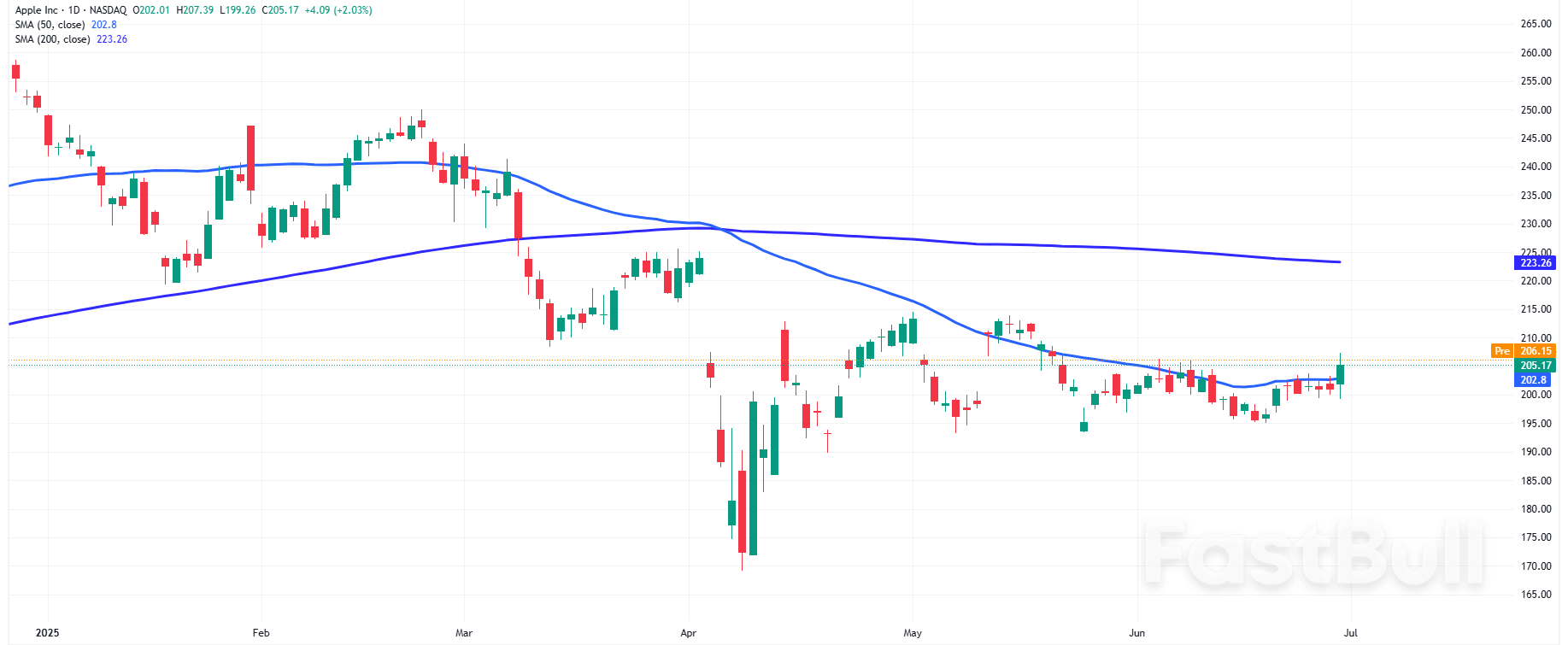
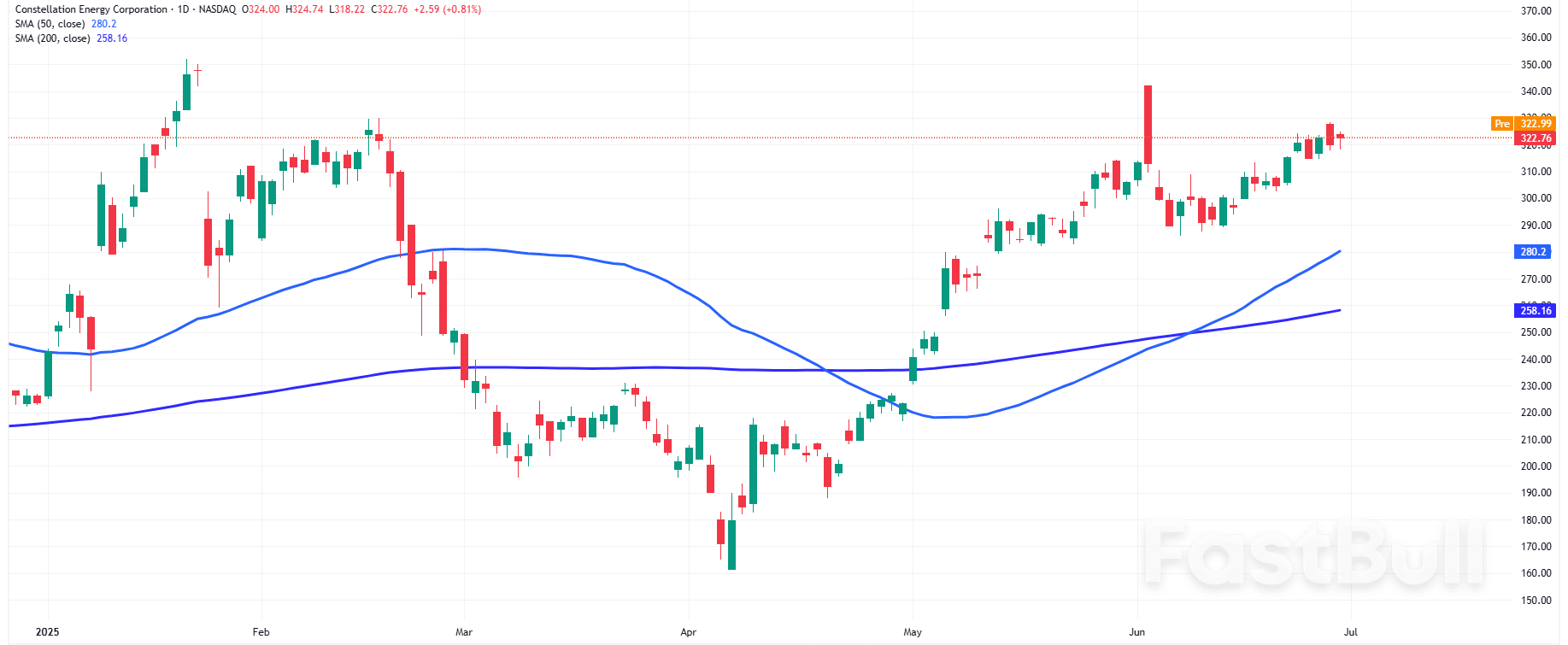
Markets are shifting from Apple and Tesla to AI and nuclear energy plays. Meta leads in AI growth, while Trump-era policies boost nuclear stocks. Traders should focus on sector rotation and policy-driven momentum.
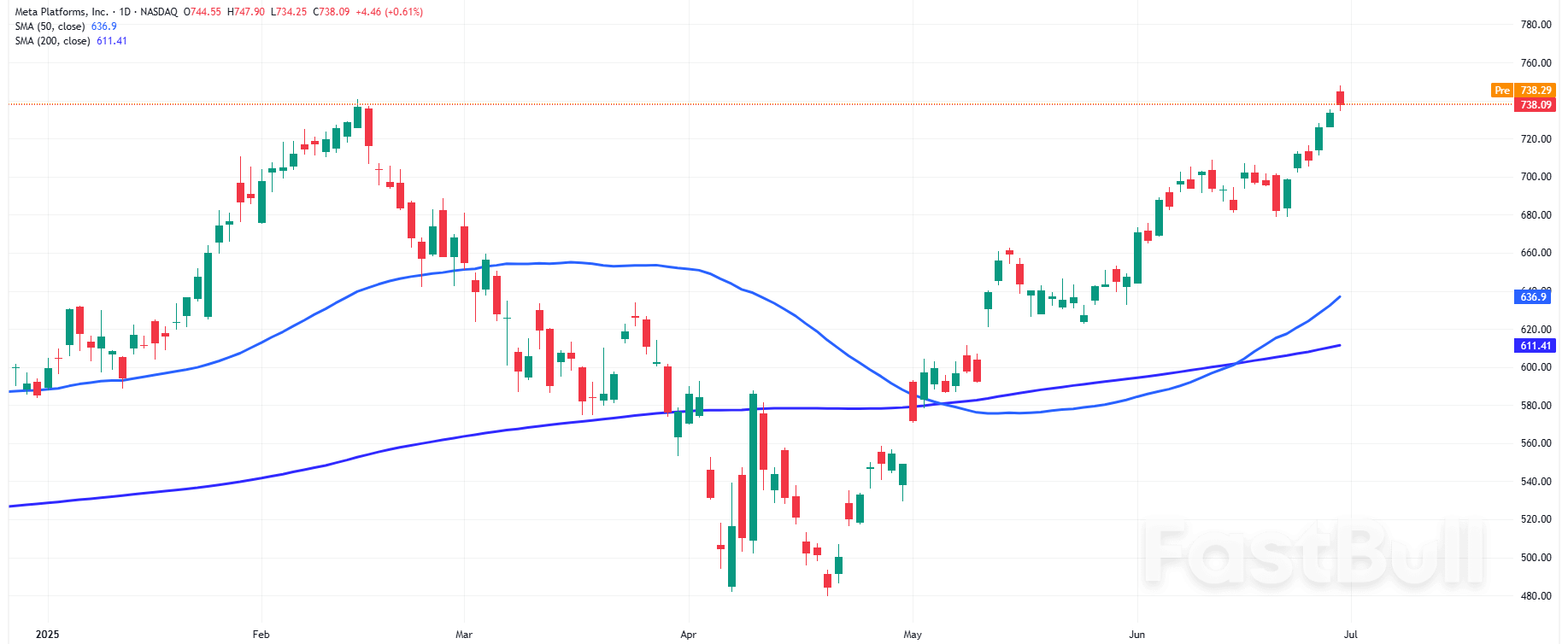
Daily Meta Platforms, Inc

Worries over future U.S. tariffs are clouding the outlook for factories across much of Asia and Europe, according to surveys released on Tuesday which nonetheless showed some were able to shrug off the uncertainty and keep growing.
Among the bright spots, Japan's manufacturing read-out showed growth for the first time in 13 months, South Korea's activity contracted at a milder pace and China's Caixin PMI index also expanded in June - confounding an official survey that showed activity shrinking for a third straight month.
In Europe, Ireland, Spain and the Netherlands were among the star performers even as the wider euro zone read-out was broadly flat and Britain continued to contract, albeit more slowly.
Analysts said the underlying softness in surveys highlights the challenges facing businesses and policymakers as they try to navigate U.S. President Donald Trump's moves to shake up the global trade order with sweeping tariffs.
"We must recognise that the external environment remains severe and complex, with increasing uncertainties," said Wang Zhe, economist at Caixin Insight Group. The Caixin/S&P Global survey showed Chinese manufacturing PMI rose to 50.4, surpassing expectations in a Reuters poll.
Japan's final au Jibun Bank PMI rose to 50.1 due to an upswing in output, but overall demand remained weak as new orders shrank on concern over U.S. tariffs.
Factory activity in South Korea contracted for the fifth straight month though the pace of decline eased on relief over a snap presidential election on June 3 that ended six months of uncertainty.
In manufacturing, India was a significant outlier in the region last month, as activity accelerated to a 14-month high, driven by a substantial rise in international sales that helped spark a record-breaking spurt in hiring.
Negotiators from major U.S. trading partners are rushing to reach deals with Trump's administration by a July 9 deadline to avoid import tariffs jumping to higher levels.
While China is continuing its negotiations for a broader trade deal with the U.S., Japan and South Korea have so far failed to win concessions on the tariffs imposed on their mainstay export items like automobiles. The 27-member European Union is embarking on new talks in Washington later this week.
The euro zone HCOB manufacturing Purchasing Managers' Index, compiled by S&P Global, edged up to 49.5 in June from 49.4 in May, its highest level since August 2022 - but still remaining below the 50 mark denoting growth in activity.
Moreover, national surveys revealed stark differences across the currency bloc. Ireland recorded the highest PMI at a 37-month peak of 53.7, while Greece, Spain, and the Netherlands also posted readings above 50.
"We seem to be in a sweet spot at the moment where it's domestic activity that's driving the index," John Fahey, senior economist at AIB, said of the Irish read-out.
"There may be some level of activity and investment that was postponed for two or three years, and you're just at the point now where that has to happen, even though there's a more uncertain global backdrop."
While Germany's manufacturing PMI reached its highest in nearly three years, it still indicated contraction. France, Italy and Austria on the other hand registered faster declines in manufacturing conditions.
In Britain, outside the European Union, the manufacturing sector showed some signs of turning a corner in its long slump.
"That said, any hoped for stabilisation remains fragile and subject to potential headwinds that could severely impact demand, supply chain reliability and future growth prospects," said Rob Dobson, director at S&P Global Market Intelligence.
Speaking at the start of a central bankers' annual get-together in Sintra, Portugal, European Central Bank President Christine Lagarde said the global environment had changed fundamentally since the inflation spurt of the pandemic years.
"The world ahead is more uncertain – and that uncertainty is likely to make inflation more volatile," Lagarde said.
Data on Tuesday showed euro zone inflation last month stood at the ECB's 2% target, confirming that the era of runaway prices is over.
European Central Bank Vice President Luis de Guindos has stated that a rise in the euro beyond $1.20 could create challenges for policymakers, though he sees current levels as no cause for concern.
In unusual comments from an ECB official on the exchange rate of the common currency, Guindos said the pace of the euro’s appreciation was a bigger concern than where it is now.
During the ECB’s yearly meeting in Sintra, Portugal, the Spanish official expressed that $1.17, or even $1.20, is not a big deal. According to Guindos, they can let it slide a bit. He added that $1.20 is fine, but anything above that would be much more complicated.
Luis de Guindos reveals impact of Trump’s tariff policies on the euro
The ECB typically avoids commenting on the euro’s value, maintaining that while the exchange rate factors into policy decisions, it doesn’t target any specific level — a stance Guindos reaffirmed.
Guindos said they focus on how the exchange rate changes and include its current level in their forecasts. The ECB’s vice president also clarified that they keep an eye on this, but their focus is not on a specific exchange rate.
Notably, the euro has benefited from a weakening dollar, driven by President Donald Trump’s tariff measures that have undermined market confidence, resulting in a nearly 14% rise this year. In response, Guindos emphasized the importance of preventing the euro from overshooting.
Meanwhile, reports on June 16 revealed that tariffs would weigh on eurozone economic growth and prices for years. However, Luis de Guindos noted there is little risk of inflation falling significantly, and the euro’s sharp rise against the dollar is not a major concern for now.
The ECB signaled a break in policy easing that month, even though it expects price growth to dip below its 2% target temporarily on the strong euro and low oil prices. This indicates that raising concerns about the ultra-low inflation marks that the pre-pandemic decade could return.
Nonetheless, Guindos dismissed those fears, saying that the ECB is finally close to reaching its goal after many years of missing it above and below.
In an interview, the ECB’s vice president speculated that the chance of falling short is quite small. Based on his argument, they believe the inflation risks are balanced.
The ECB signals a break in policy easing amid risks of inflation
One of the main reasons why inflation will rebound to target after falling to 1.4% in the first quarter of 2026 is that the labor market is tight and unions will continue to push for significant wage hikes, maintaining compensation growth at 3%, Guindos countered.
Although he did not directly call for a halt in easing policies, he mentioned that financial investors, who have bet on just one more interest rate cut, possibly towards the end of the year, correctly heard ECB President Christine Lagarde’s message.
Guindos elaborated by saying that markets clearly grasped what the President meant when referring to a strong stance. He added that he expects markets to believe and factor in that the ECB is very close to achieving its medium-term target of sustainable 2% inflation.
According to June reports, the euro is up 11% against the dollar in the past three months, reaching its highest level in nearly four years at $1.1632.
Interestingly, along with hitting exporters hard because of US tariffs, a stronger euro might also reduce the prices of imports even more.
However, Guindo, who was a former Spanish economy minister on the ECB board for the longest, said the exchange rate had not been volatile or appreciated quickly, which were two key measures in his estimation.
The European Union is demanding immediate relief from tariffs in some key sectors as part of a trade deal with the United States, Reuters has reported.
However, citing EU diplomats, the news agency said Brussels still anticipates potential unfavorable imbalances in an agreement with Washington.
Tuesday’s report comes as negotiators are facing the looming expiration to a pause to U.S. President Donald Trump’s sweeping "reciprocal" tariffs on July 9. It remains unclear what how Trump will approach the end of the delay to the punishing levies, with White House officials saying that any extensions to the deadline would only be decided by the president.
Against this backdrop, the European Commission, which is negotiating on behalf of the EU, is reportedly set to put forward a range of demands during meetings with the Trump administration this week.
Along with specifically lower tariffs on items like alcohol and medical technology, which currently face a 10% U.S. tariff, the EU is also looking for a deal to cover commercial aircraft, pharmaceuticals and semiconductors, Reuters said. The U.S. has launched a probe into these industries, but has yet to place additional tariffs on them.
Meanwhile, the EU is aiming for U.S. concessions on 25% tariffs slapped on autos and auto parts, as well as a cut to duties on steel and aluminum, Reuters reported. The car levies, in particular, are a "red line" for EU negotiators, the report said.
Finally, the EU would reportedly like to see tariff relief once an initial agreement is reached, rather than having to wait for weeks or months before a final deal is signed.
For its part, the Trump administration has presented a list of their own demands to the EU, but did not include any concessions of its own, Reuters reported, adding that both camps are working to first achieve an agreement in principle and will then clarify the details later.
The EU has become a major target of Trump’s trade-related ire since his return to power earlier this year, with the president arguing that it has ripped off the U.S. through perceived unfair trade practices. Brussels has rebuffed the claims, and vowed to react "firmly" to "unjustified barriers to free and fair trade."
White Label
Data API
Web Plug-ins
Poster Maker
Affiliate Program
The risk of loss in trading financial instruments such as stocks, FX, commodities, futures, bonds, ETFs and crypto can be substantial. You may sustain a total loss of the funds that you deposit with your broker. Therefore, you should carefully consider whether such trading is suitable for you in light of your circumstances and financial resources.
No decision to invest should be made without thoroughly conducting due diligence by yourself or consulting with your financial advisors. Our web content might not suit you since we don't know your financial conditions and investment needs. Our financial information might have latency or contain inaccuracy, so you should be fully responsible for any of your trading and investment decisions. The company will not be responsible for your capital loss.
Without getting permission from the website, you are not allowed to copy the website's graphics, texts, or trademarks. Intellectual property rights in the content or data incorporated into this website belong to its providers and exchange merchants.
Not Logged In
Log in to access more features

FastBull Membership
Not yet
Purchase
Log In
Sign Up