• Trade
  • Markets
  • Copy
  • Contests
  • News
  • 24/7
  • Calendar
  • Q&A
  • Chats
Trending
Screeners
SYMBOL
LAST
BID
ASK
HIGH
LOW
NET CHG.
%CHG.
SPREAD
SPX
S&P 500 Index
6870.39
6870.39
6870.39
6895.79
6858.28
+13.27
+ 0.19%
--
DJI
Dow Jones Industrial Average
47954.98
47954.98
47954.98
48133.54
47871.51
+104.05
+ 0.22%
--
IXIC
NASDAQ Composite Index
23578.12
23578.12
23578.12
23680.03
23506.00
+72.99
+ 0.31%
--
USDX
US Dollar Index
98.910
98.990
98.910
98.960
98.730
-0.040
-0.04%
--
EURUSD
Euro / US Dollar
1.16520
1.16527
1.16520
1.16717
1.16341
+0.00094
+ 0.08%
--
GBPUSD
Pound Sterling / US Dollar
1.33192
1.33201
1.33192
1.33462
1.33136
-0.00120
-0.09%
--
XAUUSD
Gold / US Dollar
4213.30
4213.64
4213.30
4218.85
4190.61
+15.39
+ 0.37%
--
WTI
Light Sweet Crude Oil
59.244
59.274
59.244
60.084
59.160
-0.565
-0.94%
--

Community Accounts

Signal Accounts
--
Profit Accounts
--
Loss Accounts
--
View More

Become a signal provider

Sell trading signals to earn additional income

View More

Guide to Copy Trading

Get started with ease and confidence

View More

Signal Accounts for Members

All Signal Accounts

Best Return
  • Best Return
  • Best P/L
  • Best MDD
Past 1W
  • Past 1W
  • Past 1M
  • Past 1Y

All Contests

  • All
  • Trump Updates
  • Recommend
  • Stocks
  • Cryptocurrencies
  • Central Banks
  • Featured News
Top News Only
Share

Temasek CEO Dilhan Pillay: We Are Taking A Conservative Stance On Allocating Capital

Share

Brazil Economists See Brazilian Real At 5.40 Per Dollar By Year-End 2025 Versus 5.40 In Previous Estimate - Central Bank Poll

Share

Brazil Economists See Year-End 2026 Interest Rate Selic At 12.25% Versus 12.00% In Previous Estimate - Central Bank Poll

Share

Brazil Economists See Year-End 2025 Interest Rate Selic At 15.00% Versus 15.00% In Previous Estimate - Central Bank Poll

Share

EU Commission Says Meta Has Committed To Give EU Users Choice On Personalised Ads

Share

Sources Revealed That The Bank Of England Has Invited Employees To Voluntarily Apply For Layoffs

Share

The Bank Of England Plans To Cut Staff Due To Budget Pressures

Share

Traders Believe There Is Less Than A 10% Chance That The European Central Bank Will Cut Interest Rates By 25 Basis Points In 2026

Share

Egypt, European Bank For Reconstruction And Development Sign $100 Million Financing Agreement

Share

Israel Budget Deficit 4.5% Of GDP In November Over Past 12 Months Versus 4.9% Deficit In October

Share

JPMorgan - Council Chaired By Jamie Dimon Includes Jeff Bezos

Share

UK Government: UK Health Security Agency Identified New Recombinant Mpox Virus In England In Individual Who Had Recently Travelled To Asia

Share

European Central Bank Governing Council Member Kazimir: I See No Reason To Change Rates In The Coming Months, Definitely No In December

Share

European Central Bank Governing Council Member Kazimir: Overengineering Policy Around Small Inflation Deviations Would Introduce Unnecessary Policy Uncertainty

Share

European Central Bank Governing Council Member Kazimir: European Central Bank Must Be Vigilant About Some Upside Risks To Inflation

Share

European Central Bank Governing Council Member Kazimir: Forex Pass Through To Prices May Not Be As Strong As Expected

Share

Document: EU Looking At Options For Boosting Lebanon's Internal Security Forces

Share

Thai Foreign Ministry: Military Action Will Continue Until Thai Sovereignty, Territorial Integrity Secure

Share

Ukraine President Zelenskiy: No Accord So Far On Eastern Ukraine In US Talks

Share

NATO: Ukrainian President Zelenskiy Will Meet NATO's Rutte And EU Commission Chief Von Der Leyen And Costa In Brussels On Monday

TIME
ACT
FCST
PREV
France Industrial Output MoM (SA) (Oct)

A:--

F: --

P: --
France Trade Balance (SA) (Oct)

A:--

F: --

P: --
Euro Zone Employment YoY (SA) (Q3)

A:--

F: --

P: --
Canada Part-Time Employment (SA) (Nov)

A:--

F: --

P: --

Canada Unemployment Rate (SA) (Nov)

A:--

F: --

P: --

Canada Full-time Employment (SA) (Nov)

A:--

F: --

P: --

Canada Labor Force Participation Rate (SA) (Nov)

A:--

F: --

P: --

Canada Employment (SA) (Nov)

A:--

F: --

P: --

U.S. PCE Price Index MoM (Sept)

A:--

F: --

P: --

U.S. Personal Income MoM (Sept)

A:--

F: --

P: --

U.S. Core PCE Price Index MoM (Sept)

A:--

F: --

P: --

U.S. PCE Price Index YoY (SA) (Sept)

A:--

F: --

P: --

U.S. Core PCE Price Index YoY (Sept)

A:--

F: --

P: --

U.S. Personal Outlays MoM (SA) (Sept)

A:--

F: --

P: --
U.S. 5-10 Year-Ahead Inflation Expectations (Dec)

A:--

F: --

P: --

U.S. Real Personal Consumption Expenditures MoM (Sept)

A:--

F: --

P: --
U.S. Weekly Total Rig Count

A:--

F: --

P: --

U.S. Weekly Total Oil Rig Count

A:--

F: --

P: --

U.S. Consumer Credit (SA) (Oct)

A:--

F: --

P: --
China, Mainland Foreign Exchange Reserves (Nov)

A:--

F: --

P: --

Japan Trade Balance (Oct)

A:--

F: --

P: --

Japan Nominal GDP Revised QoQ (Q3)

A:--

F: --

P: --

China, Mainland Imports YoY (CNH) (Nov)

A:--

F: --

P: --

China, Mainland Exports (Nov)

A:--

F: --

P: --

China, Mainland Imports (CNH) (Nov)

A:--

F: --

P: --

China, Mainland Trade Balance (CNH) (Nov)

A:--

F: --

P: --

China, Mainland Exports YoY (USD) (Nov)

A:--

F: --

P: --

China, Mainland Imports YoY (USD) (Nov)

A:--

F: --

P: --

Germany Industrial Output MoM (SA) (Oct)

A:--

F: --

P: --
Euro Zone Sentix Investor Confidence Index (Dec)

A:--

F: --

P: --

Canada National Economic Confidence Index

--

F: --

P: --

U.K. BRC Like-For-Like Retail Sales YoY (Nov)

--

F: --

P: --

U.K. BRC Overall Retail Sales YoY (Nov)

--

F: --

P: --

Australia Overnight (Borrowing) Key Rate

--

F: --

P: --

RBA Rate Statement
RBA Press Conference
Germany Exports MoM (SA) (Oct)

--

F: --

P: --

U.S. NFIB Small Business Optimism Index (SA) (Nov)

--

F: --

P: --

Mexico 12-Month Inflation (CPI) (Nov)

--

F: --

P: --

Mexico Core CPI YoY (Nov)

--

F: --

P: --

Mexico PPI YoY (Nov)

--

F: --

P: --

U.S. Weekly Redbook Index YoY

--

F: --

P: --

U.S. JOLTS Job Openings (SA) (Oct)

--

F: --

P: --

China, Mainland M1 Money Supply YoY (Nov)

--

F: --

P: --

China, Mainland M0 Money Supply YoY (Nov)

--

F: --

P: --

China, Mainland M2 Money Supply YoY (Nov)

--

F: --

P: --

U.S. EIA Short-Term Crude Production Forecast For The Year (Dec)

--

F: --

P: --

U.S. EIA Natural Gas Production Forecast For The Next Year (Dec)

--

F: --

P: --

U.S. EIA Short-Term Crude Production Forecast For The Next Year (Dec)

--

F: --

P: --

EIA Monthly Short-Term Energy Outlook
U.S. API Weekly Gasoline Stocks

--

F: --

P: --

U.S. API Weekly Cushing Crude Oil Stocks

--

F: --

P: --

U.S. API Weekly Crude Oil Stocks

--

F: --

P: --

U.S. API Weekly Refined Oil Stocks

--

F: --

P: --

South Korea Unemployment Rate (SA) (Nov)

--

F: --

P: --

Japan Reuters Tankan Non-Manufacturers Index (Dec)

--

F: --

P: --

Japan Reuters Tankan Manufacturers Index (Dec)

--

F: --

P: --

Japan Domestic Enterprise Commodity Price Index MoM (Nov)

--

F: --

P: --

Japan Domestic Enterprise Commodity Price Index YoY (Nov)

--

F: --

P: --

China, Mainland PPI YoY (Nov)

--

F: --

P: --

China, Mainland CPI MoM (Nov)

--

F: --

P: --

Q&A with Experts
    • All
    • Chatrooms
    • Groups
    • Friends
    Connecting
    .
    .
    .
    Type here...
    Add Symbol or Code

      No matching data

      All
      Trump Updates
      Recommend
      Stocks
      Cryptocurrencies
      Central Banks
      Featured News
      • All
      • Russia-Ukraine Conflict
      • Middle East Flashpoint
      • All
      • Russia-Ukraine Conflict
      • Middle East Flashpoint
      Search
      Products

      Charts Free Forever

      Chats Q&A with Experts
      Screeners Economic Calendar Data Tools
      Membership Features
      Data Warehouse Market Trends Institutional Data Policy Rates Macro

      Market Trends

      Market Sentiment Order Book Forex Correlations

      Top Indicators

      Charts Free Forever
      Markets

      News

      News Analysis 24/7 Columns Education
      From Institutions From Analysts
      Topics Columnists

      Latest Views

      Latest Views

      Trending Topics

      Top Columnists

      Latest Update

      Signals

      Copy Rankings Latest Signals Become a signal provider AI Rating
      Contests
      Brokers

      Overview Brokers Assessment Rankings Regulators News Claims
      Broker listing Forex Brokers Comparison Tool Live Spread Comparison Scam
      Q&A Complaint Scam Alert Videos Tips to Detect Scam
      More

      Business
      Events
      Careers About Us Advertising Help Center

      White Label

      Data API

      Web Plug-ins

      Affiliate Program

      Awards Institution Evaluation IB Seminar Salon Event Exhibition
      Vietnam Thailand Singapore Dubai
      Fans Party Investment Sharing Session
      FastBull Summit BrokersView Expo
      Recent Searches
        Top Searches
          Markets
          News
          Analysis
          User
          24/7
          Economic Calendar
          Education
          Data
          • Names
          • Latest
          • Prev

          View All

          No data

          Scan to Download

          Faster Charts, Chat Faster!

          Download App
          English
          • English
          • Español
          • العربية
          • Bahasa Indonesia
          • Bahasa Melayu
          • Tiếng Việt
          • ภาษาไทย
          • Français
          • Italiano
          • Türkçe
          • Русский язык
          • 简中
          • 繁中
          Open Account
          Search
          Products
          Charts Free Forever
          Markets
          News
          Signals

          Copy Rankings Latest Signals Become a signal provider AI Rating
          Contests
          Brokers

          Overview Brokers Assessment Rankings Regulators News Claims
          Broker listing Forex Brokers Comparison Tool Live Spread Comparison Scam
          Q&A Complaint Scam Alert Videos Tips to Detect Scam
          More

          Business
          Events
          Careers About Us Advertising Help Center

          White Label

          Data API

          Web Plug-ins

          Affiliate Program

          Awards Institution Evaluation IB Seminar Salon Event Exhibition
          Vietnam Thailand Singapore Dubai
          Fans Party Investment Sharing Session
          FastBull Summit BrokersView Expo

          Keep Bullish on global stocks in 2022 (一)

          Summary:

          To prevent the economy from recession as a whole, the Fed will still probably choose to raise interest rates, which may be late to cater for the market.
          Here is the related article Keep Bullish on global stocks in 2022 (二)
          According to the IMF's projections, 84% and 53% of the world's economies will have total GDP below the pre-pandemic level in 2020 and 2021, respectively, and global inflation is rising, with the risk of "stagflation" beginning to emerge; however, the global stock market is bucking the trend, with the MSCI Global Index rising 16.8% in 2021 and 16.8% in 2019-2020. The MSCI Global Index, MSCI Developed Markets Index and MSCI Emerging Markets Index soared by 65.7%, 71.5% and 27.5%, respectively, from 2019-2021.
          The divergence between the economy and the stock market profoundly reflects the complexity of the macroeconomy. The abundance of global liquidity, preferences for broad asset class allocation, the rise of new economies and investors’ optimism together constitute the causes of the short-term boom in capital markets, and changes in these factors will continue to have an important impact on future market operations.
          Keep Bullish on global stocks in 2022 (一)_1

          Ⅰ Abundant capital pushed up global stock markets

          At the beginning of the pandemic, the global supply chain was nearly broken due to the isolation and lockdown measures, and economic growth was once put on hold, with the global economy falling by 3.1% in 2020, according to IMF data.
          In response to the economic downturn, major economies have generally adopted a combination of accommodative monetary policy and stimulative fiscal policy in an attempt to boost the economy.

          1. The United States

          Since February 2020, the U.S has launched more than $9 trillion economic stimulus package, more than 40% of the total GDP of the United States in 2020 and nearly five times than what it paid to deal with the financial crisis in 2008, specifically, $19,000,000.

          2. The United Kingdom

          In 2020, the UK has launched fiscal stimulus measures of more than 280 billion pounds and the total fiscal support is more than 400 billion pounds in 2021.

          3. Japan

          In 2020 and 2021, Japan has launched economic stimulus packages of 108 trillion yen and 78.9 trillion yen, respectively.
          The large scale and frequent stimulus measures in countries around the world have significantly increased market liquidity, making asset prices rally and pushing up global stock markets.

          II Preferences for equity markets in assets allocation

          Along with the macroeconomic environment and rate changes, global capital from the fixed-income market withdrawal, and instead, significantly rush into the commodity market and equity markets.
          The bond market ended the overall strength of the past decade and the market trend slowed down, with the Bloomberg Berkley Global Bond Composite Index return falling 4.7% in 2021. The global institutional investor asset allocation structure has changed significantly, with more market liquidity injected into equity markets. According to the Bank of America report, more than $1 trillion will flow into global equity markets in 2021, more than the last 20 years combined.
          The rise of the new economy has enriched investment targets, and the spread of pandemic has accelerated the structural transformation of the economy.
          On the one hand, the pandemic hit the traditional economic model. For example, the offline service industry was hit hard by the quarantine blockade policy; on the other hand, the pandemic also brought opportunities for innovative business, for example, online service platforms such as remote collaboration and mobile platforms gained more new application scenarios.
          New economy companies are springing up, creating a large amount of demand for investment and financing, and injecting new vitality into the capital market. Sectors such as information technology, media and telecom, healthcare and life sciences and industrial markets are prominent performers, accounting for nearly 70% of the total IPO market capital raised in the U.S., Hong Kong and A-share in 2021.
          The U.S. SPAC listing mechanism also achieved breakthrough growth during the pandemic, with 248 listings in 2020, raising a total of US$83.3 billion, far more than the sum of the last three years; in 2021, it remains at the strong end, with more than 500 listings and more than US$140 billion in capital raised.
          The market value of new economy companies listed in Hong Kong in 2021 has reached HK$14 trillion, accounting for 27% of the market value of the entire Hong Kong market. The rapid growth of new economy companies nurtured by the capital market has renewed new dynamics of economic growth, optimized the structure of economic fundamentals, and consolidated the material foundation of stock market prosperity.
          Risk Warnings and Disclaimers
          You understand and acknowledge that there is a high degree of risk involved in trading. Following any strategies or investment methods may lead to potential losses. The content on the site is provided by our contributors and analysts for information purposes only. You are solely responsible for determining whether any trading assets, securities, strategy, or any other product is suitable for investing based on your own investment objectives and financial situation.
          Comments
          Add to Favorites
          Share

          China's Property Market Supply Seen Rising At the End Of 2021, Property Investment May Bottom Out In Q2 2022 (II)

          Related Article: China’s Property Market Supply Seen Rising At the End Of 2021, Property Investment May Bottom Out In Q2 2022 (I)

          2. The Continuation Of Low Tide State At The Beginning Of New Year

          2.1 The Overall Trend Shows "First Rise And Then Fall" Pattern, Real Estate Enterprises Continue to Differentiate

          Data from CREIS shows that the cumulative increase in new home prices in 100 cities in the first half of 2021 was 1.7%, an expansion of 0.43 percentage points over the same period in 2020, while the cumulative increase in second-hand house prices was 2.56%, a high level for the year. The scale of transactions also increased significantly, with the average monthly area of commercial house transactions in the key cities it monitored increasing by 45% year-on-year.
          But in the second half of the year, along with regulatory policies and the continued tightening of the credit environment, the traditional peak season "Golden Sept & Silver Oct" for housing sales has been missed, 100 new housing prices in the first half of the year narrowed 0.97 percentage points, the average monthly area of new commercial house transactions in key cities fell by more than 20% year-on-year, the volume of prices has turned bleak.
          In February last year, with the "Two Concentrations" policy being implemented, the first round of land auction transactions heated, in April 2021 300 cities’ land average premium rate reached 23.6%, a record high in the past two years, May-June land transactions amounted to more than 7 trillion. But since July, the land market had cooled off significantly, with the average premium rate dropping sharply and the average premium rate less than 3% since the fourth quarter.

          2.2 Intensive Real Estate Policies

          Influenced by the "two concentrations" of land supply overlaid with the "three red lines" and real estate loan concentration policies, the financing environment for real estate enterprises continues to tighten, and some enterprises have defaulted on their debts. In this context, the fourth quarter policy continues to release stabilization signals, on December 10, 2021, China's central economic work conference stressed the need to strengthen the guidance of real estate market expectations, explore new development models, and promote the benign cycle and healthy development of the real estate industry based on city policies.
          On the same day, the China Dealers Association also said at a symposium for representatives of real estate enterprises that it would focus on supporting enterprises that comply with real estate regulation and control policies to register and issue debt financing instruments with medium and long-term limits, with the funds raised being used preferentially for real estate projects or equity acquisitions of assets and other aspects.
          Previously, the China Banking and Insurance Regulatory Commission also said that under the premise of implementing prudent management of real estate finance, it would guide banks and insurance institutions to do a good job in financial services for the real estate and construction industry, and reasonably issue real estate development loans and M&A loans.

          2.3 The Low Tide State Still Needs Improvement

          During the New Year's Day period in 2022, the transaction area of new commercial house units in CREIS key monitored cities dropped 42% year-on-year, among which the transaction scale in first-tier cities decreased by more than 20%, and the representative cities of second, third and fourth tier decreased by more than 60%, with insufficient motivation to purchase houses in the market and strong wait-and-see sentiment.
          Although the financing situation of real estate enterprises has improved, the current institutional financing is still biased towards real estate enterprises with better financial status, and the financing volume in December is still low in the year. Annual gross financing volume in 2021 of the 100 typical real estate enterprises monitored by CRIC reached 130.38 billion yuan, a significant decline of 26% year-on-year, the first negative growth in financing volume in the past five years.
          "The current market rebound is moderate, fragile and fragmented, mainly due to marginal improvement brought by policy correction", said the chief market analyst of Beike Research Institute, "the current housing prices are still falling, market expectations are still at a low position, and despite the slight improvement in land acquisition, it is still state-owned enterprises, central enterprises and local urban investment that are holding the bottom, and the situation of the low tide has not improved yet."

          3. 2022 May be A New Start of New Cycle At a Stable Growth

          "Loosening the financing so that risks can be mitigated."
          Mortgage loans have now increased for 2 consecutive months, and mortgage rates have also fallen for 3 consecutive months. Development loans are expected to improve subsequently, especially in the low inventory phase. Considering the leading role of financing, the overall risk and operating conditions of real estate enterprises are expected to improve, and real estate investment is expected to bottom out in the second quarter and then rebound.
          The "darkest moment" for real estate financing has passed, and credit issuance will be gradually strengthened in the first half of next year, the market is now at the combination of "fundamental bottom" plus "policy bottom". 2022 is the new start of a new real estate cycle, the market will be characterized by reduced volatility, lengthening the time and urban differentiation.
          Sales recovery will take time and is expected to stabilize in the second quarter of next year; completion repair is certain and sustainable, but may be weaker than in 2021. The national house price index may face downward pressure, with a longer cycle.

          Conclusion

          The current demand side is expected to improve, and looking ahead to 2022, the general tone of "housing without speculation" and the goal of achieving "three stability" will remain unchanged, the real estate tax pilot will become a disturbing factor for market expectations in the short term. Some real estate enterprises are still stuck in a liquidity crisis at the current phase. Encouraging high-quality real estate enterprises to merge and acquire high-quality projects of difficult real estate enterprises will help to resolve the negative social effects caused by the difficulties encountered by difficult real estate enterprises; in addition, for high-quality real estate enterprises, mergers and acquisitions will increase their reserves of high-quality projects and expand their market share, and the differentiation of the real estate industry will continue.
          Risk Warnings and Disclaimers
          You understand and acknowledge that there is a high degree of risk involved in trading. Following any strategies or investment methods may lead to potential losses. The content on the site is provided by our contributors and analysts for information purposes only. You are solely responsible for determining whether any trading assets, securities, strategy, or any other product is suitable for investing based on your own investment objectives and financial situation.
          Comments
          Add to Favorites
          Share

          How is the impact of Fed interest rates hike?

          At present, the conditions for the Fed to raise interest rates are already in place, and theoretically it can start raising interest rates at any time.Next, the Fed's plan to normalize monetary policy is roughly as follow: Discussion and implementation of Taper, interest rate hike , and reduce balance sheet. Currently stand on the second phase. Taking into account the communication period with the market before raising interest rates and the development of the pandemic in the United States, it is estimated that the Fed's first interest rate hike is more likely in March. We believe that after the Fed interest rates hike for the first time in March, it is very likely that the Fed will discuss the reduction of the balance sheet and announce the schedule for it.

          First condition for interest rates hike, U.S. inflation has long reached the condition for raising interest rates

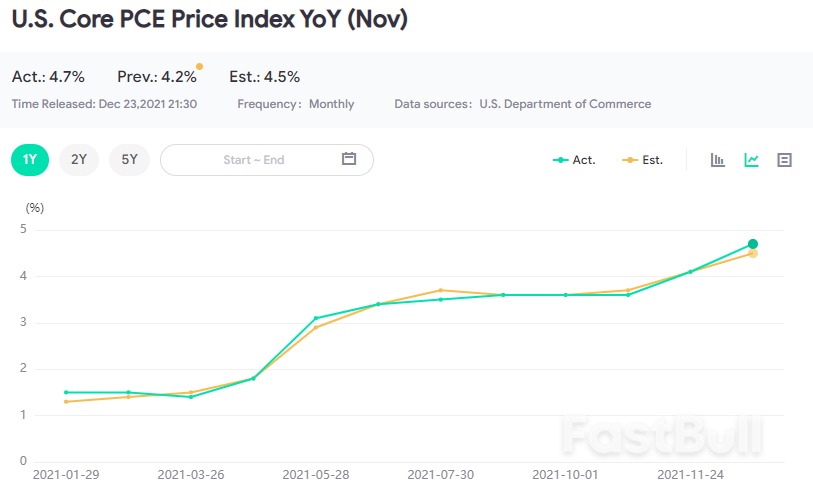
          Affected by factors such as the pandemic, the supply chains disruption and the service repair activities, U.S. inflation continued to be in a 'high temperature' state. In November 2021, the core PCE that the Fed is most concerned about has risen to 4.7% year-on-year, a new high since February 1989. It has remained above 4% for two consecutive months, far exceeding the Fed's 2% inflation target. In addition, even if the disruption factors such as the pandemic, supply chain and housing are excluded, the potential inflation pressure in the United States is still relatively high. For some time to come, there will be too much stimulus on the demand side. Even if U.S. inflation falls this year, it will remain in high level.How is the impact of Fed interest rates hike?_1

          Second condition for interest rates hike, the unemployment rate falls to a low level, and those who want to work are fully employed

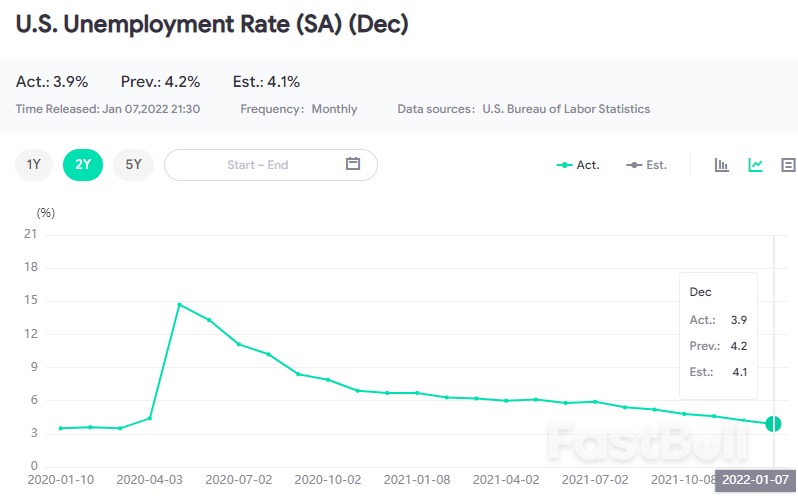
          As of December 2021, the U.S. unemployment rate has fallen to a low of 3.9%, the recovery much faster than in previous rounds of recession. Although the U.S. labor participation rate is still down 1.5% before the pandemic, it is a long-term variable after all. According to PIIE, 35% of the 1.5% gap in the labor participation rate as of November 2021 is related to aging. According to the forecast of Miguel Faria-e-Castro, as of August 2021, more than 2 million people in the United States have retired early due to the coronavirus, accounting for more than 50% of the total resignation population. This means that some jobs will never come back, and the Fed's monetary policy cannot keep stimulating and 'waiting' for the return of these jobs. Because short-term inflation and unemployment indicators are already back to normal, if the Fed continues to stimulate demand, it will bring sustained inflationary pressure. So the only thing the Fed needs to do is to tighten demand-side stimulus.How is the impact of Fed interest rates hike?_2

          Possible Ways to Normalization of Monetary Policy

          Step 1: Release the Taper signal to give the economy and the market sufficient time to accept; assess whether the Taper conditions are met; Taper implement, and gradually reduce the scale of economic stimulus until QE is completely withdrawn.
          Step 2: Discuss interest rate hike when QE is about to end; assess whether the conditions for interest rate hikes has been reached; implement interest rate hike, assess market reaction and economic impact, and adjust the rate and ways of interest rate hikes.
          Step 3: Discuss the reduction of the balance sheet during the interest rate hike period, and evaluate the market reaction and economic impact; implement the reduction of the balance sheet; the reduction of the balance sheet and the rate hike are carried out at the same time until a new round of easing period begins.

          First impact of interest rate hike, the dollar strengthened before interest rate hikes, and likely weaken after it, emerging currencies continue to under pressure

          Judging from the experience of the Fed's nearly four rate hike, the U.S. dollar index strengthened significantly before the rate hike due to the expectation effect, and weakened after the rate hike due to the expectation already fulfillment. The exchange rate is mainly affected by the relative real interest rate of short-term debt, and the real interest rate of short-term debt can be divided into short-term debt nominal interest rate and inflation expectations, of which the short-term debt nominal interest rate is mainly affected by policy interest rates and interest rate hike expectations, and inflation expectations are largely influenced by current inflation levels. Therefore, in the expansion stage of interest rate hike expectations, it is often the stage where the USD react the most strongly.
          At present, the world is affected by the pandemic, and owes to the Fed's substantial and rapid easing stimulus, the US economy has not fallen into 'debt deflation' in this round. The income and assets of US residents are relatively guaranteed, and the US economic recovery is relatively better than that of Europe and Japan. In addition, U.S. monetary policy was also normalize earlier than in Europe and Japan, so the U.S. dollar index is expected to continue its current upward trend.
          In addition, considering that the U.S. economy and monetary policy will still relatively ahead of Europe and Japan in the future, the U.S. dollar index may remain at a high level even if interest rate hike are implemented. Against the backdrop that the dollar is likely to remain strong, the exchange rates and markets of emerging and developing economies may still face some impact.

          Second impact of interest rate hikes, the trend of US bond yields is mixed

          In the first four rounds of interest rate hikes, the US 10-year Treasury bond yields rose after two rounds of interest rate hikes, in 1994 and 1999 respectively. After another two rounds of interest rate hikes, the yield on the 10-year U.S. Treasury bond fell, in 2004 and 2015, respectively. U.S. bond yields are likely to break above 2.0% this year. Nominal U.S. Treasury yields are influenced by real yields and inflation expectations. As of January 7, the nominal yield of 10-year U.S. Treasuries rose sharply to 1.76%, a new high since January 2020. Among them, the real yield of U.S. Treasuries rose sharply to -0.72%, a new high since April 2021. For some time to come, as the impact of the U.S. pandemic gradually subsides and the U.S. economy continues to recover, there will still have room for recovery in the real yields of U.S. bonds. Considering the high inflation pressure in the United States, even if the rate hike reduces inflation expectations, it will be very slow. If the real yield of U.S. bonds return to the pre-pandemic average level of -0.2%, the probability of U.S. bond yields breaking through 2.0% this year is high.
          Risk Warnings and Disclaimers
          You understand and acknowledge that there is a high degree of risk involved in trading. Following any strategies or investment methods may lead to potential losses. The content on the site is provided by our contributors and analysts for information purposes only. You are solely responsible for determining whether any trading assets, securities, strategy, or any other product is suitable for investing based on your own investment objectives and financial situation.
          Comments
          Add to Favorites
          Share

          Multiple Negative Factors Limit Crude Oil Price Increase

          Oil prices settled lower on Friday, as the market weighed supply concerns from the unrest in Kazakhstan and outages in Libya against a U.S. jobs report that missed expectations and its potential impact on Federal Reserve policy. In addition, it concerns the market that the Omicron variant strain could restrain demand.

          Negative factors affecting oil prices

          Weaker-than-expected U.S. nonfarm payrolls data
          Despite the weaker-than-expected nonfarm payroll growth, the U.S. unemployment rate fell below 4% in December 2021, and wages and salaries jumped, further evidence of a tight labor market that is expected to support the Fed's rate hike as early as March. Data released by the U.S. Bureau of Labor Statistics last Friday showed that the unemployment rate fell to 3.9% in December and wages accelerated to rise. A 199,000 increase in nonfarm payrolls followed upward revisions in the prior two months, and the labor force participation rate was unchanged.
          This latest data shows that despite the strong demand for workers, many factors that have prevented companies from hiring have continued through the end of last year, such as unattended children, fears of the pandemic, and increased savings available for spending. Omicron, which has led to record high new cases in recent days, also poses a risk to the employment growth rate in early 2022.
          Falling unemployment rate and accelerating wages against a backdrop of increasing inflation could constitute grounds for a more rapid tightening of monetary policy. Fed officials mentioned at the December meeting that there may be reasons to raise interest rates "earlier or sooner than participants originally expected”.
          Average hourly earnings rose 0.6% in December from the prior month, beating expectations and matching the largest advance since April, and were up 4.7% year over year. While the rapidly rising inflation is eroding purchasing power, the persistent wage growth indicates employers' willingness to attract and retain employees by increasing wages.
          S&P 500 posts the worst start to a year since 2016
          U.S. stocks fell, with the S&P 500 posting its worst start to a year since 2016, amid concerns that the Federal Reserve will be forced to make interest rate hikes faster than some investors had expected.
          After the S&P 500 closed at an all-time high last Monday, supercap stocks such as Tesla, Nvidia, and Alphabet Inc. dropped last Friday, dragging such benchmark index down a cumulative 1.9% in the first week of the new year. The Nasdaq 100 closed down more than 4% this week.
          The hawkish stance in minutes of the Fed's December meeting fueled the selloff and a mixed employment report did little to assuage concerns about a rate hike as early as March.
          Overall, this report had mixed messaging. But the combination of the decline in the unemployment rate to below the Fed’s long-term equilibrium level and acceleration in wage growth brings the Fed’s March meeting in play for the first-rate hike of this cycle.
          The jobs data for December 2021 showed employers added fewer staff than expected while wages rose more than forecast and unemployment dropped below 4%. While high-growth techs took the brunt of the selloff last week, value stocks have benefited as hedge funds load up on these stocks and dump expensive names, helping fuel the sharpest stock rotation since March.
          The U.S. oil rigs rose one to 481 last week, its highest since April 2020, energy services firm Baker Hughes Co said in its closely followed report on Friday. Libya's crude oil production increased to 900,000 barrels per day after a major crude pipeline was repaired, Libya's oil minister said.
          The situation in Kazakhstan is stabilizing
          Turgumbaev, the Acting Minister of Internal Affairs of Kazakhstan, said on January 9 that the situation in all parts of the country has stabilized. Law enforcement officers have recaptured all occupied government buildings. The operation of public facilities and life support systems is being restored.
          Kazakhstan's capital, Nur-Sultan, has Internet access for about four or five hours a day, during which people can communicate freely with the outside world. In addition, the government has included seven media outlets, including Kazaag News Agency, Tengrinews.kz, and Khabar 24, in the "white list", allowing free access at any time. According to the Kazaag News Agency, 38 flights were scheduled to take place in Kazakhstan on the 9th, involving the capital Nur-Sultan, the largest city of Almaty, where the riots were once serious, and Aktau.

          Positive factors affecting oil prices

          The U.S. created a record number of jobs last year, and Biden says his economic plan is working
          President Joe Biden said his economic plan is working after a report showed the U.S. economy added a record 6.4 million jobs in 2021, rebounding strongly from unprecedented losses in 2020 caused by the pandemic.
          "That’s the most jobs in any calendar year by any president in history. America is back to work," Biden said at the White House after the U.S. Bureau of Labor Statistics released the nonfarm payrolls data last Friday.
          Polls show voters are dissatisfied with the effectiveness of Biden's management of the economy, largely because of the soaring inflation. Biden pushed back against Republicans who said he did not take enough action to tackle inflation. He outlined steps the government is taking to ease the strain on global supply chains. "I would argue the Biden economic plan is working," Biden said.
          Biden again called on the congressmen to approve his roughly $2 trillion tax and social spending package, saying it would help address high gas prices. He also said the Fed would act to curb inflation.
          "I’m confident that the Federal Reserve will act to achieve their dual goals of full employment and stable prices and make sure that price increases do not become entrenched over a long term, with the independence that they need. But the best way that I as president and the Congress as a legislature can tackle high prices is by building a more productive economy with greater capacity to deliver for the American people," Biden said.
          Chevron, operator of Kazakhstan's largest oil field Tengiz, said the field cut production on Thursday as some contractors supported protests around the country by way of disrupting rail lines.
          Oil supply remains very tight in the market and oil prices seem to rise persistently. Energy traders are concerned that the pandemic control measures in Europe and Asia could threaten the short-term oil demand outlook.
          South African researchers said Omicron could mark the end of the global pandemic
          A study of patients with coronavirus disease at a major local hospital in the South African city where the Omicron variant strain was first recorded found that this wave of infection spread at an "unprecedented" rate while causing much less severe illness than the previous strain.
          This could indicate the end of the pandemic. Data from South Africa are being closely watched to see the potential spread of Omicron worldwide. Omicron first severely broke out in South Africa.
          If this pattern continues and plays out globally, it may see a complete decoupling of case numbers from mortality rates, suggesting that Omicron may herald the end of the global coronavirus pandemic and the entry of a regional pandemic.
          According to a statement on the website of the South African Medical Research Council, only 4.5% of hospitalized patients died in the current wave of the pandemic, compared with 21% in earlier waves. The number of intensive care admissions decreased and the length of stay was "significantly shorter. The study showed a rapid increase in hospitalization rates first, but they began to decline within 33 days after analysis of the first hospitalization case. A study of patients hospitalized on December 14 and 15, 2021, showed that nearly two-thirds of people with coronavirus infections were hospitalized for other reasons.
          Overall, the weaker-than-expected nonfarm payrolls data failed to provide momentum to increase the oil prices. Geopolitical tensions caused by Kazakhstan eased. The Omicron variant strain further spread and countries strengthened restrictions again, re-evoking concerns about the pandemic. These factors limited oil price increases in the short term.

          Source: fx678.com

          Risk Warnings and Disclaimers
          You understand and acknowledge that there is a high degree of risk involved in trading. Following any strategies or investment methods may lead to potential losses. The content on the site is provided by our contributors and analysts for information purposes only. You are solely responsible for determining whether any trading assets, securities, strategy, or any other product is suitable for investing based on your own investment objectives and financial situation.
          Comments
          Add to Favorites
          Share

          Consumer price index, bank earnings: What to know this week

          Inflation data will be in focus this week, with investors set to receive the Bureau of Labor Statistics' (BLS) latest Consumer Price Index (CPI) as the Federal Reserve's next monetary policy moves remain in focus. Quarterly earnings season also ramps up as some of the big banks report results.
          Market participants are bracing for another historically hot reading on inflation in the latest CPI data, due out on Wednesday. On a year-over-year basis, consumer prices likely surged by 7.1% in December, based on Bloomberg consensus data, accelerating even further from November's 6.8% year-over-year clip. This would mark the fastest rate since 1982, when CPI rose as much as 8.4% on a year-over-year basis.
          And on a month-over-month basis, consumer prices likely rose by 0.4% in December, slowing from November's 0.8% rise but still marking an eighteenth consecutive month of increases.
          "Recent months have seen consistent upside surprises as inflation has increasingly broadened out, and it's now the case that seven of the last nine CPI releases have seen the monthly headline increase come in above the consensus among economists on Bloomberg, which just demonstrates how this has taken a lot of people by surprise," Deutsche Bank economists Henry Allen and Jim Reid said in a note.
          "Our U.S. economists are projecting that year-on-year inflation will move higher once again, with an increase to +7.0%," they added. "Interestingly though, they think we could be at a turning point with December marking the peak in the year-on-year readings, which they then project will fall back over 2022 and be at +3.0% by this December ahead."
          Excluding more volatile food and energy prices, consumer prices likely rose at a 5.4% year-over-year rate in December, also speeding from November's 4.9% pace and coming in at the fastest since 1991.
          While price increases have been broad-based in the recovering economy, some economists said rising vehicle prices will likely be one of the main drivers of inflation at year-end.
          "The main story will be the increase in autos inflation, with used cars the primary driver," Bank of America economists led by Ethan Harris wrote in a note Friday. "Manheim data showed wholesale used car prices spiking 9.2% [month-over-month] in October, following a 5.3% increase in September. Given a roughly 2-month lag, this sends a signal of incredible strength for CPI used cars this month."
          Used car and truck prices had risen 2.5% month-on-month in November, matching the prior month's rise, based on BLS data.
          "Outside of autos, we expect further gains in household furnishings and supplies and apparel, reflecting tight supply chains and fewer discounts as the holiday shopping season draws to a close," Harris added.
          The December CPI will also be carefully parsed by investors as they gauge the next moves by the Federal Reserve, as some officials eye a quicker shift away from accommodative policies to rein in inflation.
          Last week, the Fed's December meeting minutes suggested some officials favored speeding the central bank's asset-purchase tapering and hastening the timing of an initial interest rate hike from current near-zero levels. And against a backdrop of a "stronger economic outlook [and] higher inflation," some officials also suggested they were contemplating the start of reducing the nearly $9 trillion in assets on the central bank's balance sheet. Hints that the Fed was considering tightening policy in the near-term sent equity markets into a tailspin last week.
          "The market does have to adjust to what is a surprise in terms of how aggressive the Federal Reserve may be in managing the economy around inflation," Rob Haworth, U.S. Bank Wealth Management senior investment strategist, told Yahoo Finance Live last week.
          Investors may also receive more commentary about how key members of the Federal Reserve expect to approach inflation with their monetary policy toolkit in two confirmation hearings before Congress this week. Federal Reserve Chair Jerome Powell's nomination hearing for a second term is set to take place before the Senate Banking Committee on Tuesday — or a day before the December CPI is released. However, Fed Governor Lael Brainard's nomination hearing to become vice chair of the Fed will take place on Thursday before the Senate Banking Committee, after the release of the latest inflation data.

          Bank earnings

          This week, investors will also see a pick-up in earnings reports, as some of the largest U.S. banks deliver their quarterly results at the end of the week. JPMorgan Chase (JPM), Citigroup (C) and Wells Fargo (WFC) are each slated to report Friday morning before the opening bell.
          The results come following a strong run for bank stocks, with financials currently the second-best performing sector in the S&P 500 in 2022, after energy. The XLF, or exchange-traded fund tracking the financials sector, hit a record high on Friday and logged its best week since February 2021.
          Expectations for higher interest rates this year have been one major factor lifting these shares, given that banks' core lending businesses benefit from rising rates. On Friday, the benchmark 10-year Treasury yield rose to approximately 1.8%, or its highest level since January 2020. And robust market activity over the past year likely also helped further lift banks' trading operations.
          "As far as the financials go, we think they're going to be pretty good. This last year has seen a lot of trading activity," Scott Ladner, Horizon Investments chief investment officer, told Yahoo Finance Live on Friday. "And as we've seen, what's going on right now with respect to yield curve, the yield curve steepened this week."
          As fourth-quarter earnings begin to ramp up, many analysts are expecting to see another solid reporting season. However, the estimates are also taking into account slowing momentum after soaring earnings growth rates from earlier last year, helped in large part by easy comparisons to 2020's pandemic-depressed levels.
          S&P 500 earnings in aggregate are expected to grow 21.7% for the fourth-quarter of 2021, according to data from FactSet's John Butters as of Friday. If earnings come in as expected, this would mark a fourth consecutive quarter that earnings growth tops 20%.

          Source: Emily McCormick, Consumer price index, bank earnings: What to know this week, Yahoo Finance

          Risk Warnings and Disclaimers
          You understand and acknowledge that there is a high degree of risk involved in trading. Following any strategies or investment methods may lead to potential losses. The content on the site is provided by our contributors and analysts for information purposes only. You are solely responsible for determining whether any trading assets, securities, strategy, or any other product is suitable for investing based on your own investment objectives and financial situation.
          Comments
          Add to Favorites
          Share

          China's Property Market Supply Seen Rising At the End Of 2021, Property Investment May Bottom Out In Q2 2022 (I)

          At the end of 2021, the overall environment of the real estate market had rebounded, but it is still far from being an optimistic situation. By collecting the latest data and related industry views, we estimate that real estate investment may bottom out in the second quarter of this year after the rebound when sales on commercial houses will also stabilize, real estate tax pilot work on short-term market expectations may bring a certain impact, while real estate companies continue to differentiate.
          China's Property Market Supply Seen Rising At the End Of 2021, Property Investment May Bottom Out In Q2 2022 (I)_1

          1. Unsteady Property Markets

          With the new house supply increasing, the housing transaction stopped falling and started rebounding. Many property markets see surging at the end of 2021. According to China Real Estate Information Corporation (CRIC), new supply area of 24.91 million square meters was estimated in key cities, an increase of 10%. Among them, Shenzhen has exceeded 1 million square meters of supply in a single month for 2 months in a row, Nanjing, Xi'an, Jinan and other second and third-tier cities with the same increase year-on-year, real estate enterprises are pushing enthusiasm on the market to rebound.
          In addition, the continuing downturn of the property market transactions tends to shift. The scale of commercial house transactions in 29 cities is expected to reach 21.23 million square meters, up 16% from the previous year, with annual transactions in first-tier cities hitting a nearly three-year high, and cumulative year-on-year growth continuing at 15%.

          1.1 The Gradual Thawing of Financing Side

          The total amount of debt issued by 100 typical real estate enterprises monitored by CRIC in December was 31.59 billion yuan, up 7.5% from the previous month. Earlier, in response to the concerns about the financing environment of the real estate industry triggered by the Evergrande risk incident, the central bank, the CBIRC, the SFC and other departments collectively responded on the evening of December 3 that the risk of individual real estate enterprises in the short term is a case-by-case risk and will not affect the normal financing function of the market in the medium and long term. Experts in this area believe that this might be an indication showing that the property financing policy turns positive.
          Since November 2021, the ABS financing environment for real estate enterprises has marginally improved, and the relevant asset securitization business has gradually broken the ice. According to CNABS (China Asset Securitization Analysis Network) statistics, in November last year, the scale of real estate asset securitization products accepted and fed back by the exchange in a single month was about 200 billion yuan, and the approval speed accelerated; in December, private real estate enterprises accelerated their pace entering into the situation. According to the previous Caixin report, private real estate enterprises such as Longguang, Country Garden and Vanke have made public their financing plans for CMBS, supply chain ABS and other asset-based securitization products, and in addition to the above three enterprises, the first batch of private real estate enterprises to be "released" also includes Xuhui, Xincheng and Hershey.
          The issuance of real estate ABS products will continue to accelerate in the future, while financing resources are currently more inclined to high-quality enterprises, and the underlying real estate enterprises are still facing greater financing pressure.

          1.2 Land Market Volume Increased and Price Stabilized, the Phenomenon of Abortive Auction Improved

          According to the CRIC’s statistics, key cities ushered in the third round of concentrated land auctions in December, with as many as 17 cities completing the third round of concentrated land auctions, while third- and fourth-tier cities also ushering in the year-end supply tide. As of December 28, the total floor area of Profit-making land transactions in China's 300 domestic cities was nearly 40,000,000 square meters, doubling from a year earlier, and the number of transactions reached 6,124, up 93% from a year earlier, and the rate of abortive land auctions in key cities fell to 15% in three batches.
          In terms of transaction prices, the total price in December jumped 102% y/y, and the unit price rose 7% y/y though it dropped slightly by 2% m/m. Especially in second-tier cities, Hangzhou's third batch of concentrated land auctions gained its heat, with 24 of the 35 lots hitting the highest price during the land auction, driving the third round of land auction premiums in second-tier cities up 0.8 percentage points.
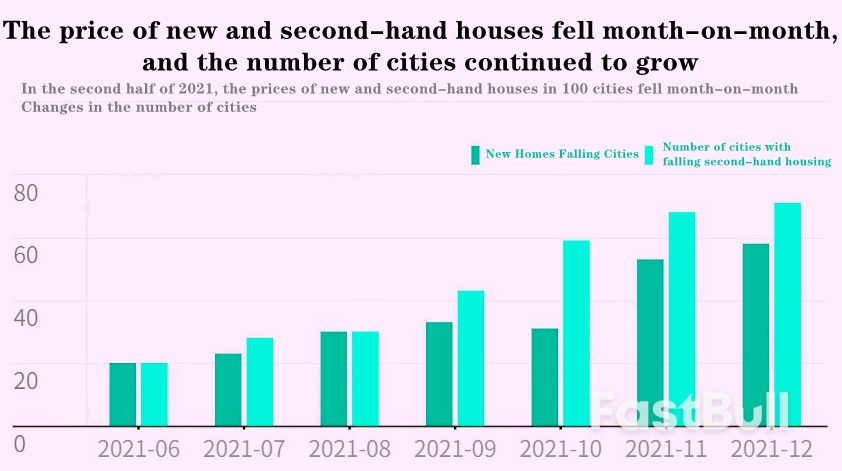
          In terms of the housing prices, the continuation of the double decline in new and second-hand housing shows that real estate enterprises performed poorly. Data from China Real Estate Index System (CREIS) show that in December, its monitoring of the 100 cities of new housing prices fell 0.02% month-on-month, 2.44% cumulative increase in 2021, at the lowest level of nearly seven years; second-hand housing prices fell 0.09% month-on-month, the decline expanded by 0.01 percentage points compared to the previous month. At the same time, rarely negative growth was shown among the scale housing enterprises, top 100 real estate enterprises equity sales amounted to 772.96 billion yuan in December, down 38.1% year-on-year, the cumulative equity sales amount as of the end of December compared to 2020 year-on-year decrease of 6%.
          Risk Warnings and Disclaimers
          You understand and acknowledge that there is a high degree of risk involved in trading. Following any strategies or investment methods may lead to potential losses. The content on the site is provided by our contributors and analysts for information purposes only. You are solely responsible for determining whether any trading assets, securities, strategy, or any other product is suitable for investing based on your own investment objectives and financial situation.
          Comments
          Add to Favorites
          Share

          Quarterly markets review - Q4 2021

          Global equities were stronger in the final quarter of 2021 as investors focused on economic resilience and corporate earnings.In bond markets, government bonds outperformed corporate bonds. Markets began to price a faster pace of interest rate rises in the US.Commodities saw a positive return as industrials metals gained.

          US

          US equities rose in Q4. Overall gains were robust despite a weaker November, during which fears over rising cases of the Omicron variant of Covid-19 and the speed of the Federal Reserve’s asset tapering had weighed. By year-end, these worries had largely subsided, while data continue to indicate that the economy overall remains stable and corporate earnings are robust.
          US economic growth slowed sharply in the third quarter amid a flare-up in Covid-19 infections, but with activity since picking up, the economy remains on track to record its best performance since 1984. GDP increased at a 2.3% (annualised), up from the 2.1% pace estimated. This was still the slowest quarter of growth since the second quarter of 2020, when the economy suffered an historic contraction in the wake of tough mandatory measures to contain the first wave. Unemployment fell to 4.2%, the lowest since February 2020, from 4.6% in October. The participation rate rose slightly but is still about 1.5 percentage points lower than the pre-pandemic level.
          Tech as a sub-sector was one of the strongest performers over the quarter, with chipmakers especially strong. Real estate also performed well, as investors expect e-commerce to continue to grow and drive further demand for industrial warehousing. Energy and financial names made more muted gains over the quarter.

          Eurozone

          Eurozone shares made gains in Q4, as a focus on strong corporate profits and economic resilience offset worries over the new Omicron variant. A number of countries did introduce restrictions on sectors such as travel and hospitality in order to try and reduce the spread of the new variant. The flash composite purchasing managers’ index hit a nine-month low of 53.4 for December, as the service sector was affected by rising Covid cases. However, equity markets drew support from early data indicating a lower risk of severe illness.
          Utilities were among the top performers with IT stocks also registering strong gains. Technology hardware and semiconductor stocks performed particularly well. The luxury goods sector also performed very strongly, recovering from the summer sell-off which was sparked by a focus on “common prosperity” in China. Meanwhile, the communication services and real estate sectors saw negative returns.
          The quarter was marked by volatile gas prices which contributed to higher inflation. The eurozone’s annual inflation rate reached 4.9% in November, compared to -0.3% a year earlier. The European Central Bank said it would scale back bond purchases but ruled out interest rate rises in 2022.
          Germany’s coalition talks reached a conclusion. In December, Olaf Scholz of the Social Democrats (SPD) succeeded Angela Merkel as chancellor. His party is in a coalition government with the Greens and Free Democrats (FDP).

          UK

          UK equities rose over the quarter. Encouraging news around Omicron during December saw a number of economically sensitive areas of the market largely recoup the sharp losses they had sustained in the initial sell-off in late November, such as the banks. Some areas reliant on economies reopening, however, such as the travel and leisure and the oil and gas sector were unable to make up November’s losses and ended the quarter lower.
          A number of defensive areas outperformed, including some of the large internationally diversified consumer staples groups. However, expectations China would maintain a zero tolerance approach to Omicron continued to impact sentiment towards a number of other globally exposed large cap companies. These consistently underperformed over the quarter, despite some uncertainties around increased regulatory oversight in China having abated.
          Some domestically focussed area were particularly volatile and not just the travel and leisure companies directly disrupted by the latest Omicron related restrictions. The share prices of UK consumer facing sectors such as retailers and housebuilders yo-yoed inline with expectations around the timing of a rise in UK base rates, which came in December. Many retailers grappled with supply chain disruptions, resulting in some high profile profit warnings, despite strong demand.

          Japan

          After declines in October and November, the Japanese stock market regained some ground in December to end the quarter with a total return of -1.7%. The yen was generally weaker in the quarter.
          Japan held a general election in October. Expectations for the ruling Liberal Democratic Party’s (LDP) election performance under Mr Kishida’s leadership were modest at best. However, in the event the LDP lost only 15 seats and retained a solid majority in its own right. With the election out of the way, the political focus shifted to a substantial fiscal stimulus package. This includes direct cash handouts to households in an effort to kick-start a consumption recovery in the first half of 2022.
          From late November, renewed short-term uncertainty over the new Covid variant temporarily obscured the increasingly positive outlook for Japan. Japan inevitably imported its first known case of Omicron in December, but overall infection rates remain remarkably low, as they had throughout 2021.
          The US Fed’s discussion of accelerated tapering led to some short-term weakness in stock prices in December, despite the fact that such a move is very unlikely to be followed by Japan in the foreseeable future. The Bank of Japan’s own Tankan survey, released in December, contained no real surprises, although the overall tone was reasonably upbeat. There was some evidence of a slight pick-up in corporate inflation expectations over the next two years. Meanwhile, the current inflation rate crept back into positive territory as several one-off factors begin to drop out, but there still seems little chance of Japan experiencing a short-term inflation spike as seen elsewhere.
          Among other economic data released in December, there was a genuine positive surprise in the strength of the rebound in industrial production as auto output began to recover from the temporary weakness caused by the global semiconductor shortage.

          Asia (ex Japan)

          Asia ex Japan equities recorded a modest decline in the fourth quarter. There was a broad market sell-off following the emergence of the Omicron variant of Covid-19 which investors feared could derail the global economic recovery.
          China was the worst-performing market in the index in the quarter, with share prices sharply lower, along with neighbouring Hong Kong, on investor fears that new lockdown restrictions would be instigated following the rapid spread of the new Covid-19 variant. Share prices in Singapore also ended the fourth quarter in negative territory as investors continued to track developments surrounding the new Omicron variant. There were also fears that the city-state’s government might have to scale back some recently relaxed curbs on activity. India and South Korea also ended the quarter in negative territory although the declines in share prices were more modest.
          Taiwan and Indonesia were the best-performing index markets in the fourth quarter and the only two index markets to achieve gains in excess of 5% in the period. In Taiwan, positive economic data and a rise in exports boosted investor confidence, with chipmakers performing well. Share prices in Thailand, the Philippines and Malaysia also ended the quarter in positive territory.

          Emerging markets

          The MSCI Emerging Markets Index lost value in Q4 and underperformed the MSCI World Index, with US dollar strength a headwind. Turkey was the weakest index market, amid extreme volatility in the currency. The central bank lowered its policy rate by a total of 400bps to 14%, despite ongoing above-target inflation which accelerated to 21.3% year-on-year in November. With the lira coming under significant pressure, President Erdogan announced an unorthodox scheme to compensate savers for lira weakness, in an effort to reduce the use of US dollars.
          Chile lagged the index as leftist Gabriel Boric was elected president. Brazil underperformed as the central bank continued to hike rates in response to rising inflation; the policy rate was increased by a total of 300bps during the quarter. Meanwhile, concerns over the fiscal outlook, and political uncertainty ahead of November 2022’s presidential election, also weighed on sentiment.
          Russia lagged as geopolitical tensions with the West ratcheted up, amid a build-up of Russian troops on its border with Ukraine. China also finished in negative territory as concerns over slowing growth persisted, exacerbated later in the quarter by uncertainty created by rising daily new cases of Covid-19.
          By contrast, Egypt finished in positive territory and was the best performing index market. Peru and the UAE also posted double digit gains in dollar terms. Taiwan, aided by strong performance from IT stocks, Indonesia and Mexico all recorded solid gains and outperformed.

          Global bonds

          Markets were buffeted over the quarter by persistent elevated inflation, hawkish central bank policy shifts and the emergence of the Omicron Covid-19 variant. In bond markets, 10-year government yields were largely unchanged. Yields followed a downward trajectory for most of the quarter before reversing in the final weeks of the year as sentiment improved. Yield curves flattened, with shorter-dated bonds hit as central banks turned more hawkish.
          Most notably, US Federal Reserve (Fed) rhetoric turned increasingly hawkish in November. Chair Jay Powell and other members of the policy committee suggested tapering could be accelerated, which it was in December, and that they may stop referring to inflation as “transitory”.
          The US 10-year Treasury yield was little changed for the quarter, from 1.49% to 1.51%. It reached 1.7% in October amid elevated inflation and expectations of policy tightening, then a low of 1.36% in early-December amid fears over the Omicron Covid-19 variant. The US 2-year yield increased from 0.28% to 0.73%.
          The UK 10-year yield fell from 1.02% to 0.97%, dropping sharply in early November as the Bank of England (BoE) unexpectedly elected not to raise rates. The BoE did, however, raise rates in December and with fears over the Omicron variant fading, yields rose. The 2-year yield sold-off, from 0.41% to 0.68%.
          Germany’s 10-year yield was little changed, from -0.17% to -0.19%, but this reflected a late sell-off with the yield having fallen below -0.40% in December. Italy’s 10-year yield increased from 0.86% to 1.18%. Eurozone inflation picked up considerably, rising to the highest level since 2008 and to a near 30-year high in Germany. European Central Bank President Christine Lagarde broadly affirmed dovish messages, but comments from other ECB officials were more hawkish.
          Corporate bonds lagged government bonds for the quarter. In investment grade, the US market saw modestly positive total returns (local currency), but Europe weakened. US high yield was the standout performer, with positive returns and narrowing spreads. Investment grade bonds are the highest quality bonds as determined by a credit rating agency; high yield bonds are more speculative, with a credit rating below investment grade.
          In emerging markets, local currency bond yields rose, particularly where central banks continued to raise interest rates amid elevated levels of inflation. Central and eastern Europe underperformed. EM currency performance was mixed, influenced by shifting risk sentiment, despite the prospect of higher interest rates.
          EM hard currency bonds declined, with high yield significantly weaker, though investment grade sovereign bonds saw positive returns.
          Global equities enjoyed a strong quarter with the MSCI World index up 6.8% but convertible bonds could not benefit from the equity market tailwind. The Refinitiv Global Focus index of balanced convertible bonds finished the last quarter of 2021 with a disappointing loss of -1.9%. Throughout the quarter, $25 billion of new paper hit the market bringing the total of new issuance to US$160 billion for 2021.

          Commodities

          The S&P GSCI Index recorded a moderately positive return in the fourth quarter despite a sharp decline in the price of natural gas. The industrial metals component was the best-performing segment in the quarter as the global economic recovery gathered pace. There were strong gains in the prices of zinc, nickel, lead and copper.
          The agriculture component also achieved a positive return in the quarter, with robust gains recorded for coffee, cotton, corn and Kansas Wheat. Precious metals also gained in the quarter, with modest price gains for siler and gold.
          The energy component recorded a modest decline in the quarter, with a sharp fall in the price of natural gas offset by modestly higher prices for unleaded gasoline, crude oil and Brent crude.

          Source:Schroders plc

          Risk Warnings and Disclaimers
          You understand and acknowledge that there is a high degree of risk involved in trading. Following any strategies or investment methods may lead to potential losses. The content on the site is provided by our contributors and analysts for information purposes only. You are solely responsible for determining whether any trading assets, securities, strategy, or any other product is suitable for investing based on your own investment objectives and financial situation.
          Comments
          Add to Favorites
          Share
          FastBull
          Copyright © 2025 FastBull Ltd

          728 RM B 7/F GEE LOK IND BLDG NO 34 HUNG TO RD KWUN TONG KLN HONG KONG

          TelegramInstagramTwitterfacebooklinkedin
          App Store Google Play Google Play
          Products
          Charts

          Chats

          Q&A with Experts
          Screeners
          Economic Calendar
          Data
          Tools
          Membership
          Features
          Function
          Markets
          Copy Trading
          Latest Signals
          Contests
          News
          Analysis
          24/7
          Columns
          Education
          Company
          Careers
          About Us
          Contact Us
          Advertising
          Help Center
          Feedback
          User Agreement
          Privacy Policy
          Business

          White Label

          Data API

          Web Plug-ins

          Poster Maker

          Affiliate Program

          Risk Disclosure

          The risk of loss in trading financial instruments such as stocks, FX, commodities, futures, bonds, ETFs and crypto can be substantial. You may sustain a total loss of the funds that you deposit with your broker. Therefore, you should carefully consider whether such trading is suitable for you in light of your circumstances and financial resources.

          No decision to invest should be made without thoroughly conducting due diligence by yourself or consulting with your financial advisors. Our web content might not suit you since we don't know your financial conditions and investment needs. Our financial information might have latency or contain inaccuracy, so you should be fully responsible for any of your trading and investment decisions. The company will not be responsible for your capital loss.

          Without getting permission from the website, you are not allowed to copy the website's graphics, texts, or trademarks. Intellectual property rights in the content or data incorporated into this website belong to its providers and exchange merchants.

          Not Logged In

          Log in to access more features

          FastBull Membership

          Not yet

          Purchase

          Become a signal provider
          Help Center
          Customer Service
          Dark Mode
          Price Up/Down Colors

          Log In

          Sign Up

          Position
          Layout
          Fullscreen
          Default to Chart
          The chart page opens by default when you visit fastbull.com