• Trade
  • Markets
  • Copy
  • Contests
  • News
  • 24/7
  • Calendar
  • Q&A
  • Chats
Trending
Screeners
SYMBOL
LAST
BID
ASK
HIGH
LOW
NET CHG.
%CHG.
SPREAD
SPX
S&P 500 Index
6827.42
6827.42
6827.42
6899.86
6801.80
-73.58
-1.07%
--
DJI
Dow Jones Industrial Average
48458.04
48458.04
48458.04
48886.86
48334.10
-245.98
-0.51%
--
IXIC
NASDAQ Composite Index
23195.16
23195.16
23195.16
23554.89
23094.51
-398.69
-1.69%
--
USDX
US Dollar Index
97.950
98.030
97.950
98.500
97.950
-0.370
-0.38%
--
EURUSD
Euro / US Dollar
1.17394
1.17409
1.17394
1.17496
1.17192
+0.00011
+ 0.01%
--
GBPUSD
Pound Sterling / US Dollar
1.33707
1.33732
1.33707
1.33997
1.33419
-0.00148
-0.11%
--
XAUUSD
Gold / US Dollar
4299.39
4299.39
4299.39
4353.41
4257.10
+20.10
+ 0.47%
--
WTI
Light Sweet Crude Oil
57.233
57.485
57.233
58.011
56.969
-0.408
-0.71%
--

Community Accounts

Signal Accounts
--
Profit Accounts
--
Loss Accounts
--
View More

Become a signal provider

Sell trading signals to earn additional income

View More

Guide to Copy Trading

Get started with ease and confidence

View More

Signal Accounts for Members

All Signal Accounts

Best Return
  • Best Return
  • Best P/L
  • Best MDD
Past 1W
  • Past 1W
  • Past 1M
  • Past 1Y

All Contests

  • All
  • Trump Updates
  • Recommend
  • Stocks
  • Cryptocurrencies
  • Central Banks
  • Featured News
Top News Only
Share

Ukraine Says It Received 114 Prisoners From Belarus

Share

USA Embassy In Lithuania: Maria Kalesnikava Is Not Going To Vilnius

Share

USA Embassy In Lithuania: Other Prisoners Are Being Sent From Belarus To Ukraine

Share

Ukraine President Zelenskiy: Five Ukrainians Released By Belarus In US-Brokered Deal

Share

USA Vilnius Embassy: USA Stands Ready For "Additional Engagement With Belarus That Advances USA Interests"

Share

USA Vilnius Embassy: Belarus, USA, Other Citizens Among The Prisoners Released Into Lithuania

Share

USA Vilnius Embassy: USA Will Continue Diplomatic Efforts To Free The Remaining Political Prisoners In Belarus

Share

USA Vilnius Embassy: Belarus Releases 123 Prisoners Following Meeting Of President Trump's Envoy Coale And Belarus President Lukashenko

Share

USA Vilnius Embassy: Masatoshi Nakanishi, Aliaksandr Syrytsa Are Among The Prisoners Released By Belarus

Share

USA Vilnius Embassy: Maria Kalesnikava And Viktor Babaryka Are Among The Prisoners Released By Belarus

Share

USA Vilnius Embassy: Nobel Peace Prize Laureate Ales Bialiatski Is Among The Prisoners Released By Belarus

Share

Belarusian Presidential Administration Telegram Channel: Lukashenko Has Pardoned 123 Prisoners As Part Of Deal With US

Share

Two Local Syrian Officials: Joint US-Syrian Military Patrol In Central Syria Came Under Fire From Unknown Assailants

Share

Israeli Military Says It Targeted 'Key Hamas Terrorist' In Gaza City

Share

Rwanda's Actions In Eastern Drc Are A Clear Violation Of Washington Accords Signed By President Trump - Secretary Of State Rubio

Share

Israeli Military Issues Evacuation Warning In Southern Lebanon Village Ahead Of Strike - Spokesperson On X

Share

Belarusian State Media Cites US Envoy Coale As Saying He Discussed Ukraine And Venezuela With Lukashenko

Share

Belarusian State Media Cites US Envoy Coale As Saying That US Removes Sanctions On Belarusian Potassium

Share

Thai Prime Minister: No Ceasefire Agreement With Cambodia

Share

US, Ukraine To Discuss Ceasefire In Berlin Ahead Of European Summit

TIME
ACT
FCST
PREV
U.K. Trade Balance Non-EU (SA) (Oct)

A:--

F: --

P: --

U.K. Trade Balance (Oct)

A:--

F: --

P: --

U.K. Services Index MoM

A:--

F: --

P: --

U.K. Construction Output MoM (SA) (Oct)

A:--

F: --

P: --

U.K. Industrial Output YoY (Oct)

A:--

F: --

P: --

U.K. Trade Balance (SA) (Oct)

A:--

F: --

P: --

U.K. Trade Balance EU (SA) (Oct)

A:--

F: --

P: --

U.K. Manufacturing Output YoY (Oct)

A:--

F: --

P: --

U.K. GDP MoM (Oct)

A:--

F: --

P: --

U.K. GDP YoY (SA) (Oct)

A:--

F: --

P: --

U.K. Industrial Output MoM (Oct)

A:--

F: --

P: --

U.K. Construction Output YoY (Oct)

A:--

F: --

P: --

France HICP Final MoM (Nov)

A:--

F: --

P: --

China, Mainland Outstanding Loans Growth YoY (Nov)

A:--

F: --

P: --

China, Mainland M2 Money Supply YoY (Nov)

A:--

F: --

P: --

China, Mainland M0 Money Supply YoY (Nov)

A:--

F: --

P: --

China, Mainland M1 Money Supply YoY (Nov)

A:--

F: --

P: --

India CPI YoY (Nov)

A:--

F: --

P: --

India Deposit Gowth YoY

A:--

F: --

P: --

Brazil Services Growth YoY (Oct)

A:--

F: --

P: --

Mexico Industrial Output YoY (Oct)

A:--

F: --

P: --

Russia Trade Balance (Oct)

A:--

F: --

P: --

Philadelphia Fed President Henry Paulson delivers a speech
Canada Building Permits MoM (SA) (Oct)

A:--

F: --

P: --

Canada Wholesale Sales YoY (Oct)

A:--

F: --

P: --

Canada Wholesale Inventory MoM (Oct)

A:--

F: --

P: --

Canada Wholesale Inventory YoY (Oct)

A:--

F: --

P: --

Canada Wholesale Sales MoM (SA) (Oct)

A:--

F: --

P: --

Germany Current Account (Not SA) (Oct)

A:--

F: --

P: --

U.S. Weekly Total Rig Count

A:--

F: --

P: --

U.S. Weekly Total Oil Rig Count

A:--

F: --

P: --

Japan Tankan Large Non-Manufacturing Diffusion Index (Q4)

--

F: --

P: --

Japan Tankan Small Manufacturing Outlook Index (Q4)

--

F: --

P: --

Japan Tankan Large Non-Manufacturing Outlook Index (Q4)

--

F: --

P: --

Japan Tankan Large Manufacturing Outlook Index (Q4)

--

F: --

P: --

Japan Tankan Small Manufacturing Diffusion Index (Q4)

--

F: --

P: --

Japan Tankan Large Manufacturing Diffusion Index (Q4)

--

F: --

P: --

Japan Tankan Large-Enterprise Capital Expenditure YoY (Q4)

--

F: --

P: --

U.K. Rightmove House Price Index YoY (Dec)

--

F: --

P: --

China, Mainland Industrial Output YoY (YTD) (Nov)

--

F: --

P: --

China, Mainland Urban Area Unemployment Rate (Nov)

--

F: --

P: --

Saudi Arabia CPI YoY (Nov)

--

F: --

P: --

Euro Zone Industrial Output YoY (Oct)

--

F: --

P: --

Euro Zone Industrial Output MoM (Oct)

--

F: --

P: --

Canada Existing Home Sales MoM (Nov)

--

F: --

P: --

Euro Zone Total Reserve Assets (Nov)

--

F: --

P: --

U.K. Inflation Rate Expectations

--

F: --

P: --

Canada National Economic Confidence Index

--

F: --

P: --

Canada New Housing Starts (Nov)

--

F: --

P: --

U.S. NY Fed Manufacturing Employment Index (Dec)

--

F: --

P: --

U.S. NY Fed Manufacturing Index (Dec)

--

F: --

P: --

Canada Core CPI YoY (Nov)

--

F: --

P: --

Canada Manufacturing Unfilled Orders MoM (Oct)

--

F: --

P: --

Canada Manufacturing New Orders MoM (Oct)

--

F: --

P: --

Canada Core CPI MoM (Nov)

--

F: --

P: --

Canada Manufacturing Inventory MoM (Oct)

--

F: --

P: --

Canada CPI YoY (Nov)

--

F: --

P: --

Canada CPI MoM (Nov)

--

F: --

P: --

Canada CPI YoY (SA) (Nov)

--

F: --

P: --

Canada Core CPI MoM (SA) (Nov)

--

F: --

P: --

Q&A with Experts
    • All
    • Chatrooms
    • Groups
    • Friends
    Connecting
    .
    .
    .
    Type here...
    Add Symbol or Code

      No matching data

      All
      Trump Updates
      Recommend
      Stocks
      Cryptocurrencies
      Central Banks
      Featured News
      • All
      • Russia-Ukraine Conflict
      • Middle East Flashpoint
      • All
      • Russia-Ukraine Conflict
      • Middle East Flashpoint
      Search
      Products

      Charts Free Forever

      Chats Q&A with Experts
      Screeners Economic Calendar Data Tools
      Membership Features
      Data Warehouse Market Trends Institutional Data Policy Rates Macro

      Market Trends

      Market Sentiment Order Book Forex Correlations

      Top Indicators

      Charts Free Forever
      Markets

      News

      News Analysis 24/7 Columns Education
      From Institutions From Analysts
      Topics Columnists

      Latest Views

      Latest Views

      Trending Topics

      Top Columnists

      Latest Update

      Signals

      Copy Rankings Latest Signals Become a signal provider AI Rating
      Contests
      Brokers

      Overview Brokers Assessment Rankings Regulators News Claims
      Broker listing Forex Brokers Comparison Tool Live Spread Comparison Scam
      Q&A Complaint Scam Alert Videos Tips to Detect Scam
      More

      Business
      Events
      Careers About Us Advertising Help Center

      White Label

      Data API

      Web Plug-ins

      Affiliate Program

      Awards Institution Evaluation IB Seminar Salon Event Exhibition
      Vietnam Thailand Singapore Dubai
      Fans Party Investment Sharing Session
      FastBull Summit BrokersView Expo
      Recent Searches
        Top Searches
          Markets
          News
          Analysis
          User
          24/7
          Economic Calendar
          Education
          Data
          • Names
          • Latest
          • Prev

          View All

          No data

          Scan to Download

          Faster Charts, Chat Faster!

          Download App
          English
          • English
          • Español
          • العربية
          • Bahasa Indonesia
          • Bahasa Melayu
          • Tiếng Việt
          • ภาษาไทย
          • Français
          • Italiano
          • Türkçe
          • Русский язык
          • 简中
          • 繁中
          Open Account
          Search
          Products
          Charts Free Forever
          Markets
          News
          Signals

          Copy Rankings Latest Signals Become a signal provider AI Rating
          Contests
          Brokers

          Overview Brokers Assessment Rankings Regulators News Claims
          Broker listing Forex Brokers Comparison Tool Live Spread Comparison Scam
          Q&A Complaint Scam Alert Videos Tips to Detect Scam
          More

          Business
          Events
          Careers About Us Advertising Help Center

          White Label

          Data API

          Web Plug-ins

          Affiliate Program

          Awards Institution Evaluation IB Seminar Salon Event Exhibition
          Vietnam Thailand Singapore Dubai
          Fans Party Investment Sharing Session
          FastBull Summit BrokersView Expo

          Japan Falls to Fourth Place Among Global ODA Donors Amid Yen Depreciation

          Gerik

          Economic

          Summary:

          Japan’s official development assistance dropped by over 10% in 2024, pushing it out of the top three ODA donors for the first time since 2021 due primarily to currency depreciation and post-pandemic normalization....

          A Shift in Global Aid Leadership

          In 2024, Japan relinquished its position among the top three official development assistance (ODA) donors, falling to fourth place among OECD Development Assistance Committee (DAC) members. The change comes after years of consistent performance, having overtaken the UK in 2021. However, according to preliminary OECD data released in April 2025, the UK reclaimed third place with $18.0 billion in aid, while Japan trailed slightly behind at $16.8 billion—a 10.3% year-over-year decline.
          The United States remained the largest ODA donor with $63.3 billion, despite a 4.4% decrease from 2023. Germany held second place with $32.4 billion, down 17.2%, while France followed Japan in fifth with $15.4 billion, virtually unchanged from the previous year.

          Currency Volatility and Aid Cycle Normalization

          Japan’s Ministry of Foreign Affairs attributed the aid decline mainly to the depreciation of the yen, which reduced the dollar-equivalent value of disbursed funds. A senior official also highlighted that this drop followed unusually high figures in 2022 and 2023, when many delayed development projects resumed after the COVID-19 pandemic. Thus, the 2024 reduction is partly the result of a cyclical normalization rather than a wholesale shift in policy direction.
          Despite the numerical setback, Japan continues to regard ODA as a vital diplomatic tool, particularly in advancing its Free and Open Indo-Pacific strategy. This positioning is especially important given the rising geopolitical influence of China in the region, where development aid serves not only humanitarian but strategic interests.

          Global Aid Trends Reflect Broader Retrenchment

          Japan’s aid contraction is part of a broader retreat in global development financing. According to the OECD, total ODA from DAC countries dropped by 7.1% in 2024 to $212.1 billion—the first decline after five consecutive years of growth. The reduction stems largely from lower contributions to international institutions and a significant decrease in aid to Ukraine.
          ODA directed to Ukraine fell by 16.7%, totaling $15.5 billion, and now accounts for just 7.4% of total assistance. This pullback suggests a shift in global donor focus, likely influenced by domestic budgetary pressures and changing geopolitical calculations.
          Japan’s fall from the top three does not signal a diminished commitment to global development but rather reflects macroeconomic and cyclical variables. The weakening yen reduced the effective value of aid, while the high baseline set in prior years amplified the year-on-year drop. With final figures expected later in 2025, Japan’s strategic use of ODA—particularly in Asia—remains a cornerstone of its international engagement, even if its headline figures have temporarily slipped.

          Source: Mainichi

          To stay updated on all economic events of today, please check out our Economic calendar
          Risk Warnings and Disclaimers
          You understand and acknowledge that there is a high degree of risk involved in trading. Following any strategies or investment methods may lead to potential losses. The content on the site is provided by our contributors and analysts for information purposes only. You are solely responsible for determining whether any trading assets, securities, strategy, or any other product is suitable for investing based on your own investment objectives and financial situation.
          Add to Favorites
          Share

          U.S. Congress Advances Project 2025 Crypto Bill

          Patricia Franklin

          Cryptocurrency

          What to Know:

          ● Congress is advancing the Project 2025 crypto bill.
          ● Aims to reduce influence and clarify regulations.
          ● Positive growth expected with increased institutional confidence.

          U.S. Congress Advances Project 2025 Crypto Bill

          U.S. Congress is pushing the Project 2025 crypto bill to curb large firm influence and clarify regulations, involving key financial regulators.

          The bill seeks to enhance regulatory clarity in the crypto sector, promoting growth and investor confidence.

          Congress Tackles Regulatory Gaps in Crypto Sector

          The U.S. Congress is advancing the bipartisan Project 2025 crypto bill. It aims to address regulatory gaps and reduce major firms' influence, involving the SEC and FCA oversight.

          Key players include U.S. Congress, the SEC, FCA, and the White House, which is active through the national digital asset framework. Changes role of central crypto firms.

          Impact on Stablecoins, DeFi, and Staking

          Legislation affects stablecoins, DeFi, and staking, inducing market volatility but expected to boost institutional confidence and participant growth. Immediate market adjustments anticipated.

          The bill could lead to financial shifts with clearer regulatory landscapes. Growth in U.S. market participation and investment is expected, fostering new industry standards.

          2022 Executive Order Sparks Current Legislative Moves

          Past events like the 2022 Executive Order on Digital Assets led to temporary market disruptions. Legislative clarity historically stabilizes long-term industry dynamics.

          Expected outcomes include increased institutional entry and improved security. Clear frameworks historically optimize industry alignment, promoting sustainable growth trends.

          "The United States Government currently holds a significant amount of BTC, but has not implemented a policy to maximize BTC's strategic position..."

          Source: CryptoSlate

          Risk Warnings and Disclaimers
          You understand and acknowledge that there is a high degree of risk involved in trading. Following any strategies or investment methods may lead to potential losses. The content on the site is provided by our contributors and analysts for information purposes only. You are solely responsible for determining whether any trading assets, securities, strategy, or any other product is suitable for investing based on your own investment objectives and financial situation.
          Add to Favorites
          Share

          Trump’s Tariffs: Dividing Winners and Losers in U.S. Manufacturing

          Gerik

          China–U.S. Trade War

          Economic

          Selective Manufacturing Growth Amid Tariff Revival

          The return of Trump-era tariffs has sparked a cautious wave of optimism across parts of the U.S. manufacturing sector. Some small and mid-sized American producers are experiencing an influx of orders as buyers turn away from foreign goods subject to higher import taxes. This includes manufacturers like Jergens Inc., whose factories in Chicago and Cleveland are now operating 24/7 to fulfill a spike in demand driven by two primary sources: customers avoiding import tariffs and increased defense sector procurement over the past 18 months.
          In Ohio, Grand River Rubber & Plastics has also benefited, securing returning clients who had previously shifted to Chinese suppliers. The company reports that three oil refining clients have sought to redirect their orders from China, with two deals already confirmed. If all deals proceed, Grand River could see an annual revenue boost of $5 million—around 10% of its current turnover—prompting plans for workforce expansion and new long-term contracts to guard against potential tariff reversals.

          Rising Costs Undermine Tariff Gains

          Despite these gains, many manufacturers are facing sharp increases in input costs, especially those reliant on imported raw materials. Grand River, for instance, continues to source safety glasses, earplugs, machinery tools, and small quantities of rubber from countries now facing 10% to 145% tariffs. While some of these costs can be absorbed, others must be passed onto customers through higher product prices, reducing the competitiveness that the tariffs were meant to enhance.
          SafeSource Direct in Louisiana, a PPE manufacturer that had scaled down post-pandemic, has now restarted two production lines—bringing its total to eight—to capitalize on rising prices of Chinese gloves. With a capacity of nearly 118 million gloves per month, SafeSource has been able to narrow the cost gap with Asian competitors. However, it still pays a 10% tariff on rubber chemicals imported from Brazil and Italy, revealing the persistent cost burden for even domestic manufacturers.

          Consumer Goods Giants Make Strategic Adjustments

          Multinational firms like Whirlpool are also recalibrating in response to the renewed tariff environment. With 80% of its U.S. products assembled domestically, Whirlpool contends that Asian competitors benefited unfairly when earlier tariffs expired in 2023, gaining a cost advantage of approximately $150 per washing machine. The reintroduction of tariffs on fully assembled imported appliances is expected to reduce this disparity. Yet, Whirlpool still anticipates an overall cost increase of 2.4% for 2025—equivalent to $400 million—which it plans to offset through cost-cutting and price adjustments.
          Despite isolated gains, broader industry sentiment remains cautious. The Federal Reserve Bank of Dallas reported in April that many firms are lowering their business outlooks due to tariff-related concerns. This includes companies like Husco International near Milwaukee, which manufactures automotive and agricultural parts. CEO Austin Ramirez notes that while the company has reduced its reliance on Chinese imports by 50% over the past decade, around 20% of its materials by value still originate from China. These imports are essential and cannot be easily replaced, forcing the company to absorb tariffs and pass the costs onto customers.
          The mixed outcomes from Trump’s tariff policy reflect an uneven industrial response. For some firms, the tariffs have enabled temporary market recapture and a modest revival of domestic manufacturing. However, for many others, global input reliance, rising costs, and a lack of structural investment—such as new factory openings—underscore the fragile nature of this recovery. Whether these shifts represent the early signs of long-term reshoring or merely short-lived market adjustments remains to be seen.

          Source: WSJ

          To stay updated on all economic events of today, please check out our Economic calendar
          Risk Warnings and Disclaimers
          You understand and acknowledge that there is a high degree of risk involved in trading. Following any strategies or investment methods may lead to potential losses. The content on the site is provided by our contributors and analysts for information purposes only. You are solely responsible for determining whether any trading assets, securities, strategy, or any other product is suitable for investing based on your own investment objectives and financial situation.
          Add to Favorites
          Share

          Dollar Gains After Two-day Drop, Stock Futures Dip

          Michelle Reid

          Economic

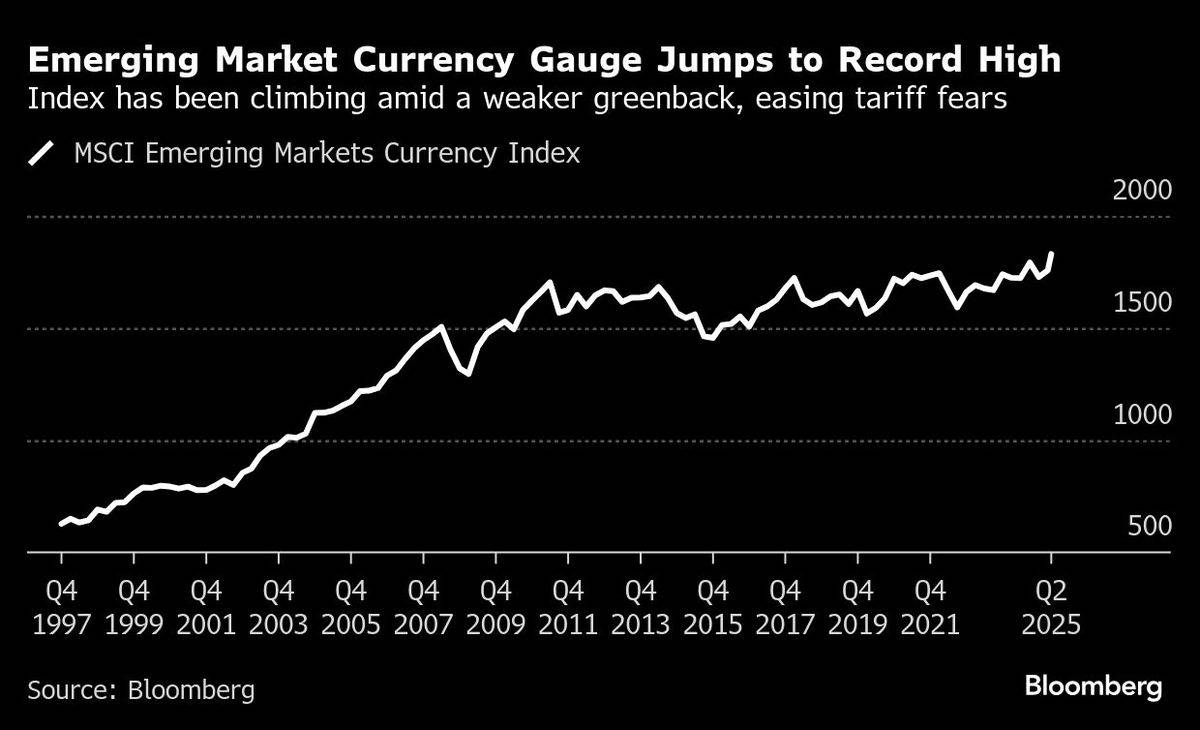
          The dollar gained in early Asian trade after a two-day slide as investors across Asia stayed focused on exacerbated currency appreciations from Taiwan to Malaysia.

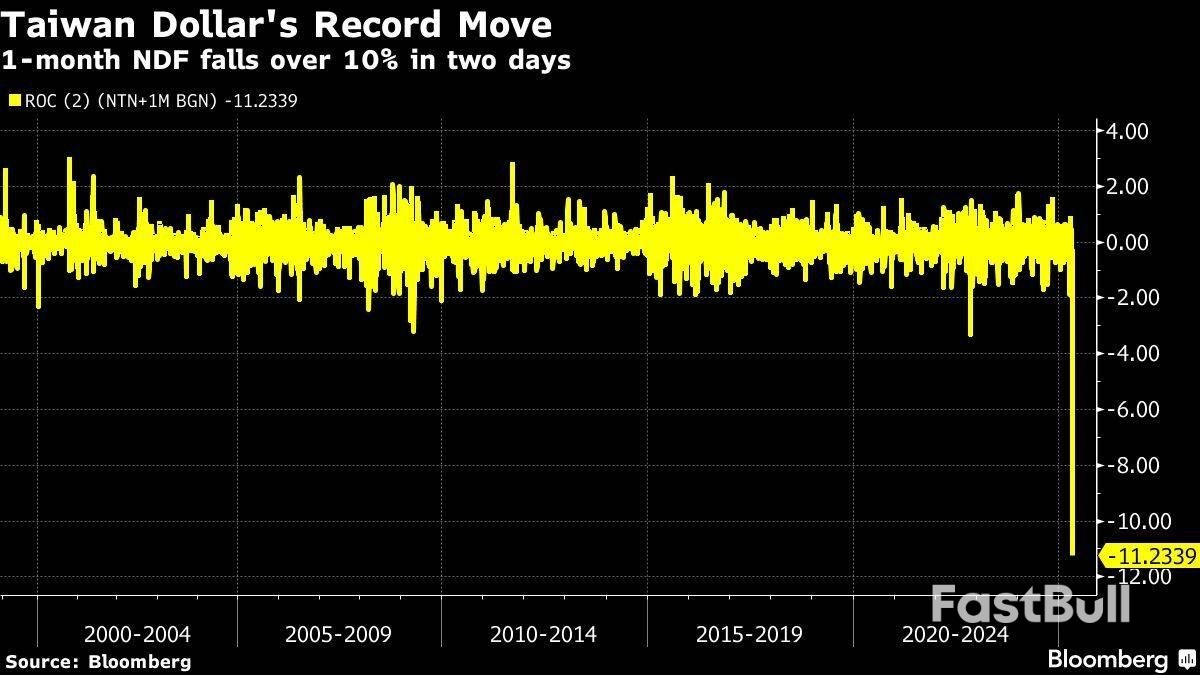
          A gauge of the dollar rose 0.3% after speculation around potential trade deals had pushed the currency lower. The Taiwanese dollar extended its rally after surging the most since the 1980s on Monday. China’s central bank kept its daily fix for the yuan steady as the market reopened. US stock futures edged lower after the S&P 500 halted its longest rally in about 20 years. There’s no cash trading in Treasuries during the Asian day as Japan is closed for a holiday.

          President Donald Trump’s aggressive trade talk has rattled markets since he took office in January, undermining the dollar’s traditional haven role in times of stress and leading investors to allocate away from US assets. Central bankers from Taiwan to Hong Kong are responding to the sharp appreciation in local currencies by intervening in the market.

          Currency revaluation across Asia “could be a significant development not just in driving the dollar lower but also in the trade negotiation process and accelerate the idea of trade deals”, Chris Weston, head of research at Pepperstone Group, wrote in a note.

          The deep inversion of a popular Taiwan-dollar derivative suggests selling pressure on the US currency has plenty of room to run. The spread between the Taiwan dollar spot rate and one-year non-deliverable forwards on the Taiwan dollar-US dollar currency pair swelled to around 3,000 pips on Monday, the widest level in at least two decades.

          The divergence is the latest sign of seemingly insatiable demand for Taiwan’s currency on speculation the island will reach a trade deal with the US.

          Meanwhile, Hong Kong authorities spent a record amount in an attempt to defend the foreign-exchange peg. The yen and the Malaysian ringgit both dropped Tuesday after gains on Monday.

          “I would be cautious about leaning in too much into this appreciation as central banks in Taiwan, Malaysia and especially Hong Kong have significant means to buy dollars if they need to,” said Leah Traub, a portfolio manager and head of the currency team at Lord Abbett & Co.

          Investor hopes that Trump may start to pull back from launching new fronts on his trade war were dashed when he announced plans to impose a 100% tariff on films produced overseas, sending shares of Netflix Inc and Warner Bros Discovery Inc lower. While Trump suggested some trade deals may come as soon as this week, there was no indication of an imminent accord with China.

          In late hours, Ford Motor Co pulled its financial guidance and said auto tariffs will take a toll on profit. Palantir Technologies Inc dropped more than 8% in late trading Monday after its results failed to live up to investors’ loftiest expectations for a company whose stock has led the S&P 500 in gains this year.

          Attention will soon shift to Wednesday’s Federal Reserve decision after bond traders dialled back rate-cut bets that had steadily mounted as Trump’s trade war unleashed havoc in financial markets.

          After piling into short-term Treasuries, anticipating the Fed would start easing policy soon to contain the fallout, traders reversed course. Two-year yields rose for a third consecutive session — the longest run since December — as traders bet policymakers will remain in wait-and-see mode until there’s more clarity on the impacts of tariffs.

          “Uncertainty rules amid a trade war and the ever-changing landscape of tariffs, but with the hard data on consumer spending and employment still hanging in there, the Fed will remain firmly planted on the sidelines,” said Greg McBride at Bankrate.

          Some of the main moves in markets:

          Stocks

          ● S&P 500 futures were little changed as of 10.21am Tokyo time (9.21am Malaysia)
          ● Australia’s S&P/ASX 200 was little changed
          ● Hong Kong’s Hang Seng rose 0.3%
          ● The Shanghai Composite fell 0.2%
          ● Euro Stoxx 50 futures fell 0.1%

          Currencies

          ● The Bloomberg Dollar Spot Index rose 0.3%
          ● The euro fell 0.3% to $1.1282
          ● The Japanese yen fell 0.3% to 144.20 per dollar
          ● The offshore yuan fell 0.4% to 7.2280 per dollar

          Cryptocurrencies

          ● Bitcoin rose 0.7% to US$94,878.14
          ● Ether rose 0.6% to US$1,819.48

          Bonds

          ● Australia’s 10-year yield advanced five basis points to 4.32%

          Commodities

          ● West Texas Intermediate crude rose 1.2% to US$57.83 a barrel
          ● Spot gold rose 0.7% to US$3,358.50 an ounce

          Source: Theedgemarkets

          To stay updated on all economic events of today, please check out our Economic calendar
          Risk Warnings and Disclaimers
          You understand and acknowledge that there is a high degree of risk involved in trading. Following any strategies or investment methods may lead to potential losses. The content on the site is provided by our contributors and analysts for information purposes only. You are solely responsible for determining whether any trading assets, securities, strategy, or any other product is suitable for investing based on your own investment objectives and financial situation.
          Add to Favorites
          Share

          Retailers Urge U.S. Shoppers to Stock Up Ahead of Potential Price Hikes

          Gerik

          Economic

          Retailers Signal Imminent Cost Increases

          As a wave of new duties looms, American retailers are advising customers to accelerate their purchasing plans. Labels such as Béis, Bare Necessities and Fashion Nova have told their audiences that additional import taxes could compel them to adjust price tags upward. Major manufacturers—including PepsiCo and Procter & Gamble—have conveyed similar messages to investors, highlighting the direct effect of tariffs on their profit margins.
          In a recent intervention, President Trump personally called Amazon’s founder, Jeff Bezos, after learning that the e-commerce giant intended to display tariff charges on incoming Chinese goods. The president then signaled his readiness to employ the same approach with other retail CEOs if they followed suit or if circumstances warranted. This high-profile outreach illustrates how political leadership can influence corporate communication strategies and underscores a direct connection between White House pressure and executive decision-making.

          Tariff Pass-Through and Consumer Invoicing

          Some online platforms headquartered in China, such as Temu, have already begun itemizing an “import fee” on customer bills. By listing tariff charges separately, these companies create transparency around cost pass-through, demonstrating a correlation between duty levels and final invoicing practices. For end users, that transparency may translate into more visible price shifts, potentially motivating shoppers to complete transactions before additional fees appear.
          When questioned about consumer impacts—such as whether higher duties would mean fewer toys for children—President Trump deflected by asserting that the primary goal is to incentivize manufacturers to establish facilities in the United States. According to his statement, the policy is intended to reshape supply chains rather than simply transfer costs to consumers. This reasoning outlines a causal rationale for tariffs: by increasing the expense of imported goods, domestic production becomes comparatively more attractive.

          Investor Warnings and Profit Pressure

          At recent shareholder meetings, companies like PepsiCo and Procter & Gamble have reported that import taxes are squeezing their financial results. Their disclosures reveal a causal link between tariff implementation and reduced earnings, compelling management teams to warn investors of margin compression. These admissions add weight to retailers’ consumer-facing advisories, suggesting that price adjustments are not merely speculative but are grounded in concrete profit pressures.
          As leading retailers lobby for early spending, shoppers face a choice between buying now at current prices or risking higher costs later. The interplay between retailer appeals and tariff schedules creates a dynamic where purchase timing becomes a strategic decision. While some consumers may respond by accelerating planned purchases, others may delay consumption in hopes of tariff rollbacks—reflecting a correlational relationship between policy uncertainty and buying behavior.
          With the prospect of expanded tariffs hanging over the holiday shopping season, both consumers and companies are navigating an environment of heightened price volatility. Retailers’ preemptive calls to action underscore their efforts to manage inventory and revenue expectations, while political leaders continue to use executive engagement as leverage. In this evolving landscape, early shopping may offer the only way to avoid the most immediate effects of rising import costs.

          Source: CNBC

          To stay updated on all economic events of today, please check out our Economic calendar
          Risk Warnings and Disclaimers
          You understand and acknowledge that there is a high degree of risk involved in trading. Following any strategies or investment methods may lead to potential losses. The content on the site is provided by our contributors and analysts for information purposes only. You are solely responsible for determining whether any trading assets, securities, strategy, or any other product is suitable for investing based on your own investment objectives and financial situation.
          Add to Favorites
          Share

          XRP Price Prediction For This Week (May 6 To May 12, 2025)

          Grace Montgomery

          Cryptocurrency

          XRP has seen some ups and downs recently, but analysts believe it may be getting ready for a bigger move soon. This week, XRP dropped slightly by about 0.3%. While some cryptocurrencies saw a bit of selling, this small dip in XRP isn’t a big concern for most investors. The price is still holding above key support levels.

          There’s still uncertainty about whether XRP has started its next big move up. On smaller timeframes, no clear breakout has formed yet, though the price is making higher highs and higher lows — a positive sign.

          Price Correction Could Be Ending

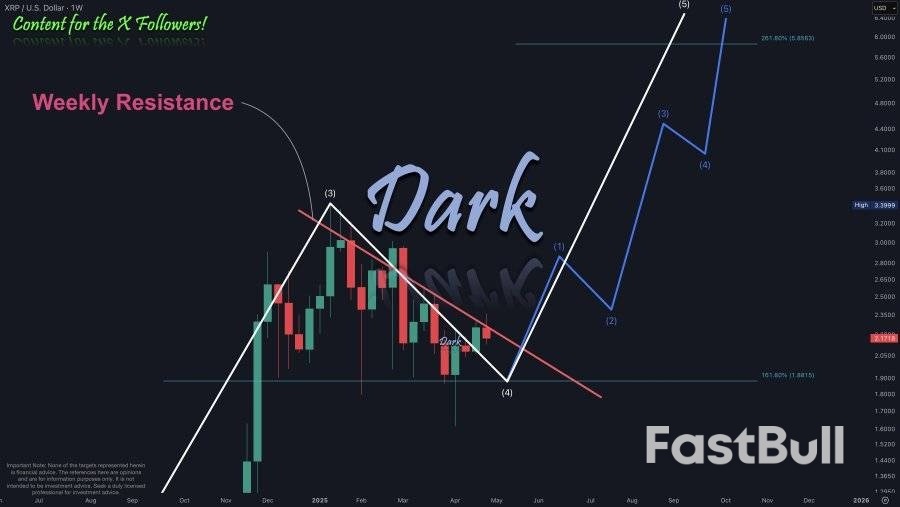
          Crypto analyst Dark Defender said that XRP recently faced resistance at $2.22 and $2.36, with the price pulling back to $2.13. He believes this pullback was expected and that the market is preparing for the next move up, as long as XRP holds above the $2.00 level.

          Dark Defender also shared his long-term outlook. He said XRP is in the final phase of a fifth wave structure and expects this to lead to higher prices. He predicts the first move toward $3, followed by further gains with targets of $4.40 and $6.30 if the pattern continues. The key support to watch in the short term is $1.88.

          However, some analysts warn that short-term trends are still unclear. The recent price movement has been choppy, and there is no strong sign of an upward impulse yet. A confirmed move above $2.25 would help signal that a new rally is underway.

          Source: CryptoSlate

          Risk Warnings and Disclaimers
          You understand and acknowledge that there is a high degree of risk involved in trading. Following any strategies or investment methods may lead to potential losses. The content on the site is provided by our contributors and analysts for information purposes only. You are solely responsible for determining whether any trading assets, securities, strategy, or any other product is suitable for investing based on your own investment objectives and financial situation.
          Add to Favorites
          Share

          Earnings Are Coming in Strong. Why Are Some Investors Antsy About It?

          Adam

          Economic

          Earnings have been strong. Not everyone’s happy about it.
          Nearly three-quarters of S&P 500 companies had turned in first-quarter results through Friday, according to FactSet, which in a note last week said that earnings for the index as a whole are on track—based on a “blended” number that reflects numbers already reported and Wall Street’s expectations for those that remain—to rise nearly 13% year-over-year.1
          Still, some investors are wary. Investors have so far bid up shares of companies that have reported guidance better than the Street expected, according to Bank of America research, but companies have been rewarded less than is typical for stronger-than-expected results, and misses have been more harshly punished than in recent years.2
          The percentage of companies beating earnings estimates, meanwhile, is higher than the historical average, but that of sales beats is lower, Bank of America said.
          Many companies are withdrawing forecasts entirely. One of the latest examples came today: engine maker Cummins (CMI), which cited uncertainty about the direction of Trump administration trade policy. (Other companies have taken another tack, offering up outlooks that take into account a range of economic scenarios.)
          “Companies are getting nervous about the future—so much so that they’re pulling earnings forecasts in droves,” wrote Callie Cox, chief market strategist at Ritholtz Wealth Management, in a Monday email.
          Even those that aren’t withdrawing forecasts are being cautious, Goldman Sachs analysts wrote last week, while observing that an above-average share of companies that have offered full-year guidance have kept previously issued numbers in place.3
          “We view this dynamic partly as a reflection of [companies’] hesitancy to shift guidance due to uncertainty around tariff policy,” they wrote. “For example, some companies noted in their earnings calls that their most recent guidance does not incorporate the impact of tariffs.”
          That could spell trouble in the months ahead, especially if companies are spending now to get ahead of the effects of tariffs later.
          “In our reading, a combination of pre-buying and inventory rundowns should give companies a buffer of about 1 to 2 months before the tariff impacts start to bite,” Deutsche Bank analysts wrote last week.4 "If sustained, we see the potential impact of the announced tariffs as large and likely to fall disproportionately on US companies.”

          Source: investopedia

          To stay updated on all economic events of today, please check out our Economic calendar
          Risk Warnings and Disclaimers
          You understand and acknowledge that there is a high degree of risk involved in trading. Following any strategies or investment methods may lead to potential losses. The content on the site is provided by our contributors and analysts for information purposes only. You are solely responsible for determining whether any trading assets, securities, strategy, or any other product is suitable for investing based on your own investment objectives and financial situation.
          Add to Favorites
          Share
          FastBull
          Copyright © 2025 FastBull Ltd

          728 RM B 7/F GEE LOK IND BLDG NO 34 HUNG TO RD KWUN TONG KLN HONG KONG

          TelegramInstagramTwitterfacebooklinkedin
          App Store Google Play Google Play
          Products
          Charts

          Chats

          Q&A with Experts
          Screeners
          Economic Calendar
          Data
          Tools
          Membership
          Features
          Function
          Markets
          Copy Trading
          Latest Signals
          Contests
          News
          Analysis
          24/7
          Columns
          Education
          Company
          Careers
          About Us
          Contact Us
          Advertising
          Help Center
          Feedback
          User Agreement
          Privacy Policy
          Business

          White Label

          Data API

          Web Plug-ins

          Poster Maker

          Affiliate Program

          Risk Disclosure

          The risk of loss in trading financial instruments such as stocks, FX, commodities, futures, bonds, ETFs and crypto can be substantial. You may sustain a total loss of the funds that you deposit with your broker. Therefore, you should carefully consider whether such trading is suitable for you in light of your circumstances and financial resources.

          No decision to invest should be made without thoroughly conducting due diligence by yourself or consulting with your financial advisors. Our web content might not suit you since we don't know your financial conditions and investment needs. Our financial information might have latency or contain inaccuracy, so you should be fully responsible for any of your trading and investment decisions. The company will not be responsible for your capital loss.

          Without getting permission from the website, you are not allowed to copy the website's graphics, texts, or trademarks. Intellectual property rights in the content or data incorporated into this website belong to its providers and exchange merchants.

          Not Logged In

          Log in to access more features

          FastBull Membership

          Not yet

          Purchase

          Become a signal provider
          Help Center
          Customer Service
          Dark Mode
          Price Up/Down Colors

          Log In

          Sign Up

          Position
          Layout
          Fullscreen
          Default to Chart
          The chart page opens by default when you visit fastbull.com