Markets
News
Analysis
User
24/7
Economic Calendar
Education
Data
- Names
- Latest
- Prev


Signal Accounts for Members
All Signal Accounts
All Contests


[Israeli Military Reportedly Closely Coordinating With US Military On Military Action Against Iran] According To Israeli Sources On The 30th, The Israel Defense Forces (IDF) And The US Military Are Closely Coordinating On Military Action Against Iran. A Senior US Official Stated That After The Relevant Military Deployments Are In Place, US President Trump May "make A Decision On Whether To Launch A Strike" In The Coming Days. Israeli Assessments Suggest That Even A Limited-scale US Strike Could Trigger A Significant Iranian Military Retaliation, In Which Case Israel Will Respond Forcefully. Israel Believes That The US Is More Likely To Focus Potential Strikes On Iranian Nuclear Facilities And Missile-related Infrastructure, Rather Than Seeking To Directly Overthrow The Iranian Regime Through Limited Military Action
Syrian Kurdish Forces Says It Agreed To Deployment Of Syria's Internal Security Forces In Cities Of Hasakeh, Qamishli
China's Ministry Of Finance Announced That A Provisional Import Tax Rate Of 5% Will Be Implemented On Whiskey Starting February 2, 2026
Syrian Kurdish Force Says It Has Agreed To Phased Integration Of Military Forces Into Syrian Government As Part Of Comprehensive Deal
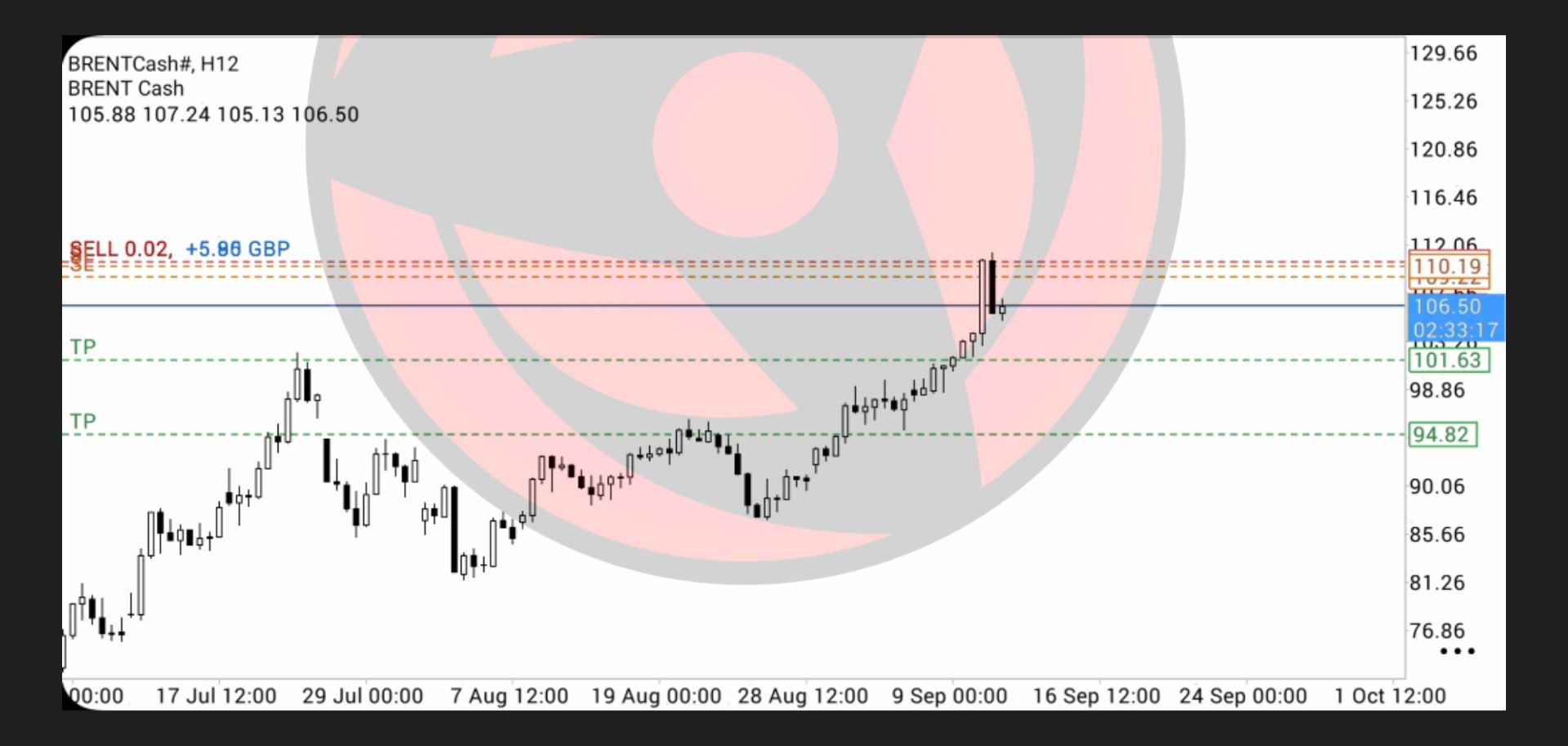
Both WTI And Brent Crude Oil Rose By $0.70 In The Short Term, Currently Trading At $64.46/barrel And $68.41/barrel Respectively
Ukrainian President Zelensky: During The Talks In Abu Dhabi, The United States Proposed That Neither Moscow Nor Kyiv Should Use Long-range Combat Capabilities
Ukrainian President Zelensky: (Regarding Stopping The Attacks On Energy Targets) This Is Our Initiative, And Also President Trump's Personal Initiative. We See It As An Opportunity, Not A Deal
Ukrainian President Zelensky: The Date Or Location Of The Next Meeting Between Ukrainian, Russian, And American Negotiators May Change
Ukrainian President Zelensky: Willing To Attend Any Form Of Leaders' Summit, But Not In Moscow Or Belarus
Ukrainian President Zelensky: There Is No Formal Ceasefire Agreement Between Ukraine And Russia Regarding Energy Targets
Ukrainian President Zelensky: (Regarding Russian President Putin) I Publicly Invited Him (to Kyiv), Of Course, If He Dares To
Ukrainian President Zelensky: Ukraine Will Be Technically Ready To Join The European Union By 2027
Ukrainian President Zelensky: If Russia Stops Attacking Ukraine's Energy Infrastructure, Ukraine Will Not Attack Russia's Energy Infrastructure

U.S. Factory Orders MoM (Excl. Defense) (Nov)A:--
F: --
P: --
U.S. Factory Orders MoM (Excl. Transport) (Nov)A:--
F: --
U.S. Non-Defense Capital Durable Goods Orders Revised MoM (Excl. Aircraft) (SA) (Nov)A:--
F: --
U.S. EIA Weekly Natural Gas Stocks ChangeA:--
F: --
P: --
Brazil CAGED Net Payroll Jobs (Dec)A:--
F: --
P: --
U.S. Weekly Treasuries Held by Foreign Central BanksA:--
F: --
P: --
South Korea Industrial Output MoM (SA) (Dec)A:--
F: --
P: --
South Korea Services Output MoM (Dec)A:--
F: --
P: --
South Korea Retail Sales MoM (Dec)A:--
F: --
P: --
Japan Tokyo CPI YoY (Excl. Food & Energy) (Jan)A:--
F: --
P: --
Japan Tokyo CPI MoM (Excl. Food & Energy) (Jan)A:--
F: --
P: --
Japan Unemployment Rate (Dec)A:--
F: --
P: --
Japan Tokyo CPI YoY (Jan)A:--
F: --
P: --
Japan Jobs to Applicants Ratio (Dec)A:--
F: --
P: --
Japan Tokyo CPI MoM (Jan)A:--
F: --
P: --
Japan Tokyo Core CPI YoY (Jan)A:--
F: --
P: --
Japan Retail Sales YoY (Dec)A:--
F: --
Japan Industrial Inventory MoM (Dec)A:--
F: --
P: --
Japan Retail Sales (Dec)A:--
F: --
P: --
Japan Retail Sales MoM (SA) (Dec)A:--
F: --
Japan Large-Scale Retail Sales YoY (Dec)A:--
F: --
P: --
Japan Industrial Output Prelim MoM (Dec)A:--
F: --
P: --
Japan Industrial Output Prelim YoY (Dec)A:--
F: --
P: --
Australia PPI YoY (Q4)A:--
F: --
P: --
Australia PPI QoQ (Q4)A:--
F: --
P: --
Japan Construction Orders YoY (Dec)A:--
F: --
P: --
Japan New Housing Starts YoY (Dec)A:--
F: --
P: --
France GDP Prelim YoY (SA) (Q4)A:--
F: --
P: --
Turkey Trade Balance (Dec)A:--
F: --
P: --
France PPI MoM (Dec)A:--
F: --
Germany Unemployment Rate (SA) (Jan)--
F: --
P: --
Germany GDP Prelim YoY (Not SA) (Q4)--
F: --
P: --
Germany GDP Prelim QoQ (SA) (Q4)--
F: --
P: --
Germany GDP Prelim YoY (Working-day Adjusted) (Q4)--
F: --
P: --
Italy GDP Prelim YoY (SA) (Q4)--
F: --
P: --
U.K. M4 Money Supply (SA) (Dec)--
F: --
P: --
U.K. M4 Money Supply YoY (Dec)--
F: --
P: --
U.K. M4 Money Supply MoM (Dec)--
F: --
P: --
U.K. Mortgage Lending (Dec)--
F: --
P: --
U.K. Mortgage Approvals (Dec)--
F: --
P: --
Italy Unemployment Rate (SA) (Dec)--
F: --
P: --
Euro Zone Unemployment Rate (Dec)--
F: --
P: --
Euro Zone GDP Prelim QoQ (SA) (Q4)--
F: --
P: --
Euro Zone GDP Prelim YoY (SA) (Q4)--
F: --
P: --
Italy PPI YoY (Dec)--
F: --
P: --
India Deposit Gowth YoY--
F: --
P: --
Mexico GDP Prelim YoY (Q4)--
F: --
P: --
Brazil Unemployment Rate (Dec)--
F: --
P: --
South Africa Trade Balance (Dec)--
F: --
P: --
Germany CPI Prelim YoY (Jan)--
F: --
P: --
Germany CPI Prelim MoM (Jan)--
F: --
P: --
Germany HICP Prelim YoY (Jan)--
F: --
P: --
Germany HICP Prelim MoM (Jan)--
F: --
P: --
U.S. Core PPI YoY (Dec)--
F: --
P: --
U.S. Core PPI MoM (SA) (Dec)--
F: --
P: --
U.S. PPI YoY (Dec)--
F: --
P: --
U.S. PPI MoM (SA) (Dec)--
F: --
P: --
Canada GDP MoM (SA) (Nov)--
F: --
P: --
Canada GDP YoY (Nov)--
F: --
P: --
U.S. PPI YoY (Excl. Food, Energy & Trade) (Dec)--
F: --
P: --


No matching data
Latest Views
Latest Views
Trending Topics
Top Columnists
Latest Update
White Label
Data API
Web Plug-ins
Affiliate Program
View All

No data

Palestinian-Israeli conflict

Remarks of Officials

Middle East Situation

Political

Latest news on the Israeli-Palestinian conflict
Israel plans a high-surveillance camp for Palestinians in Rafah, sparking displacement fears amid looming conflict over Hamas disarmament.

Israel has cleared land in southern Gaza to construct a large-scale camp for Palestinians that could be equipped with surveillance and facial recognition technology at its entrance, according to a retired Israeli general who advises the military.
Retired Brigadier-General Amir Avivi, founder of the Israel Defense and Security Forum, stated that the camp would be built in a part of Rafah that has been cleared of Hamas tunnels. He noted that Israeli personnel would track all entry and exit.
While Avivi's forum represents thousands of military reservists, he does not officially speak for the Israeli military, which declined to comment on the matter. The Israeli prime minister's office also did not provide immediate comment on any plans for a camp in Rafah.
According to Avivi, the facility would serve Palestinians who wish to leave Gaza for Egypt as well as those who choose to remain. These comments align with Israel's preparations for a "limited reopening" of the Rafah border crossing with Egypt, a central part of U.S. President Donald Trump’s plan to resolve the Gaza war. Sources have previously indicated that Israel aims to ensure more Palestinians leave Gaza than are permitted to enter.
Israeli officials have previously discussed encouraging Gazans to emigrate, though they deny any intention of forcibly transferring the population—a highly sensitive issue for Palestinians.
Avivi noted that Rafah is almost entirely empty of Gazans, as the area fell under Israeli military control after the October ceasefire, prompting most Palestinians to flee to Hamas-held territories.
"You need to build infrastructure in Rafah that can host them, and then they can choose if they want to go or not," Avivi explained. He described the potential structure as "a big, organized camp" with the capacity to hold hundreds of thousands of people, where ID checks, including facial recognition, could be enforced.
These plans echo earlier statements. In July, Israeli Defence Minister Israel Katz told local media that he had instructed troops to prepare a camp in Rafah for Gaza's population, although officials have not publicly discussed the plans since.
Ismail Al-Thawabta, head of the Hamas-run media office in Gaza, condemned the idea, stating it was a cover for "forced displacement."
The situation in Gaza remains tense. The enclave's 2 million residents, affected by two years of Israeli attacks, face severe restrictions on movement and are monitored by Israeli surveillance agencies. Following the ceasefire, most of the population has been confined to a coastal strip where Hamas maintains control.
The second phase of the Trump plan calls for Gaza's reconstruction to begin in Rafah, contingent on Hamas disarming in exchange for further Israeli troop withdrawals.
Avivi warned that Israel's military is preparing for a new offensive against Hamas if the group refuses to surrender its weapons. This could involve renewed attacks on Gaza City. He suggested the proposed camp could be used to house Palestinians fleeing a new Israeli assault.
"Plans are set. The army is ready to get the command from the government, from the cabinet to renew its maneuvers in Gaza," Avivi said.
Since the ceasefire, Israeli military operations have continued, which Israel describes as necessary to stop militant attacks and destroy Hamas's tunnel network. Health authorities in Gaza report that Israeli attacks have killed over 480 Palestinians since the ceasefire, while the Israeli military has reported four soldiers killed in militant attacks.
The issue of disarmament could push the region back into open conflict. Avi Dichter, a minister in Prime Minister Benjamin Netanyahu's cabinet and former head of Israel's domestic intelligence, said disputes over this issue could lead Israel back to war.
"We have to get prepared for the war in Gaza," Dichter stated, adding that the disarmament issue "will have to be solved by Israeli troops, the hard way."
Hamas has publicly rejected any demands to lay down its arms. Two Hamas officials confirmed this week that they have not received any detailed disarmament proposal from Washington or other mediators.
According to a White House document, the Trump administration wants heavy weapons decommissioned immediately, with personal arms registered and later decommissioned as an interim technocratic police force becomes capable of ensuring security. A U.S. official added on Tuesday that disarmament might be accompanied by some form of amnesty for Hamas members.
However, Prime Minister Netanyahu told Israel's parliament on Monday that reconstruction is not on the immediate agenda. "The next phase is demilitarization of the Strip and disarming Hamas," he declared.
The UK government is facing mounting pressure to reveal the full financial impact of a new pharmaceutical deal with the United States, an agreement critics are labeling a "Trump shakedown of the NHS."

Signed last month with the Trump administration, the deal has sparked significant concern among health experts and opposition parties. They argue it could saddle the NHS with billions in extra costs by 2035 and are demanding the government publish its internal impact assessment.
A coalition of MPs from the Labour, Liberal Democrat, Green, and Scottish Nationalist parties is set to meet to strategize on how to compel the government to release its analysis. The meeting, organized by former Labour shadow chancellor John McDonnell, aims to pressure Health Secretary Wes Streeting and Business and Trade Secretary Peter Kyle into full disclosure.
"There are real worries that the US/UK deal will result in significantly higher drug costs, which will in turn result in resources being drawn from the investment in NHS services," McDonnell stated. "The government has a responsibility to publish a full impact assessment of the deal on the NHS budget and services."
McDonnell is also pushing for a separate, "open and transparent independent" assessment to clarify the deal's potential consequences for the public. The cross-party group is also considering pushing for a Commons debate and vote on the agreement, as well as inquiries by the health, science, and business select committees.
The core of the deal establishes a trade-off:
• The UK agrees to pay more for new medicines.
• The NHS will increase its spending on life-extending drugs.
• In return, British pharmaceutical exports to the US will not face tariffs.
While ministers have praised the deal as a "landmark" agreement that safeguards patient access and boosts UK investment, critics are focused on the long-term financial burden.
The government has so far offered limited details on the financial implications. The Department of Health and Social Care (DHSC) and Science Secretary Liz Kendall have stated the deal will cost an extra £1 billion between the 2025/26 and 2028/29 financial years.
However, they admit costs will rise after 2028/29 but have refused to provide any estimates for this period, declining to answer parliamentary questions on the matter.
A key commitment within the agreement is to double the UK's expenditure on new drugs from 0.3% of GDP to 0.6% by 2035.
The government's secrecy has drawn further criticism. In response to a Freedom of Information request from the campaign group Global Justice Now, the DHSC refused to release information on long-term costs or its correspondence with other departments, claiming the information was exempt.
Tim Bierley, the group's policy and campaigns manager, questioned the lack of transparency. "The government is refusing to give the public or MPs any useful information about the true costs of this deal," he said. "With all this secrecy, you have to wonder: what have ministers got to hide?"
Ministers continue to stress that the deal will safeguard access to medicines for UK patients and keep British drug exports to the US tariff-free.
But this defense has not silenced critics. Liberal Democrat leader Ed Davey, who first called the agreement a "Trump shakedown of the NHS," sharply condemned the lack of disclosure.
"This is an act of surrender by Keir Starmer, who refuses to stand up to the most corrupt US president in history. His weakness means that NHS spending is being set by a foreign regime, not the British people," said Davey. "It's an insult to patients suffering on crammed hospital corridors who have been told time and time again there is no money for the improvements they need."
He concluded, "The government won't even tell us what the impact will be on health services, or on our economy. It is clearly just a desperate ploy to placate Trump."
Japan has become the first international partner in the Trump administration's "Genesis Mission," a high-stakes project designed to accelerate scientific discovery through artificial intelligence.
The partnership was formalized this week at a supercomputing conference in Osaka, where officials from Japan's Ministry of Education, Culture, Sports, Science and Technology and the U.S. Department of Energy signed a statement of intent.
Dario Gil, the U.S. Department of Energy's undersecretary for science, said at the event that by joining forces in critical fields, the United States and Japan can maintain their positions as world leaders in science and technology.

Launched by a U.S. presidential executive order in November 2025, the Genesis Mission aims to create a new AI platform to fast-track research and development in several key areas:
• Biotechnology
• Nuclear fusion energy
• Quantum computing
• Other cutting-edge fields
The project operates on the principle of sharing government resources, such as supercomputers and vast datasets. Around two dozen American technology companies, including Microsoft, Google, and Nvidia, are already participating.
For Japan, joining the project offers access to America's high-performance supercomputers and extensive scientific data—a crucial advantage in the escalating global competition over AI. "To compete globally in AI for science, we need to work with strong partners," a representative of the Japanese ministry stated.
While the specifics of Japan's contributions are still under discussion, the two governments have been developing frameworks for AI research cooperation since 2024. A memorandum of understanding has already been signed by Japan's Riken research institute, the U.S. Energy Department's Argonne National Laboratory, Japanese tech firm Fujitsu, and Nvidia. These partners are also collaborating to develop a successor to Japan's Fugaku supercomputer.
The initiative is being positioned as a landmark scientific endeavor. Michael Kratsios, head of the White House Office of Science and Technology Policy, recently compared it to a historic U.S. achievement.
"Genesis Mission is the largest marshaling of federal scientific resources since the Apollo mission towards a scientific endeavor," Kratsios said in an NBC News interview. To back this claim, the Department of Energy has announced over $320 million in related funding for national laboratories across the U.S.
The project's launch comes amid criticism that the second Trump administration has been withdrawing support for science and technology in other areas.
According to the journal Nature, the administration has canceled or frozen more than 7,800 research grants at the National Institutes of Health and the National Science Foundation in the past year. The journal also reported that roughly 25,000 scientists and other personnel have left federal research agencies, and nondefense budget cuts totaling $32 billion have been proposed.
Officials in the administration have also voiced skepticism about mainstream scientific consensus on topics like climate change and vaccines. The Genesis Mission notably does not include research in these areas. Instead, its focus is on strategic fields closely tied to national security and economic interests, squarely aimed at competing with China.
This aligns with Tokyo's priorities, as the Japanese government has also identified fusion and quantum computing as strategic technologies essential to its national security.
A high-stakes political battle over the aggressive tactics of U.S. Immigration and Customs Enforcement (ICE) is threatening to shut down parts of the federal government this week. Republicans and Democrats in Congress are at a standstill over a funding bill for the Department of Homeland Security (DHS), with the dispute centered on demands for greater oversight of the agency.

The controversy stems from the Trump administration's massive campaign to deport immigrants in the country illegally. This effort has led to a surge of ICE agents in several Democratic-led cities, including Los Angeles, Chicago, Charlotte, and most recently, Minneapolis and St. Paul.
This aggressive enforcement has resulted in a series of highly controversial incidents that have angered local residents and civil rights advocates. In Minneapolis alone, recent events include the killing of two U.S. citizens, the detention of another citizen taken from his home in his shorts, and the detention of school children, one as young as five.
Adding to the outcry, six deaths have reportedly occurred in ICE detention centers this month alone.
In response to these events, particularly the recent shooting of U.S. citizen Alex Pretti, Democrats are insisting that new reforms be attached to the legislation funding DHS through September.
The funding bill, which also covers agencies like the Defense Department and programs for medical research, housing, and education, passed the House of Representatives last week over the objections of most Democrats. Now, they are leveraging the Senate vote to push for significant changes.
Key demands from the Democratic party include:
• A ban on ICE detaining or deporting American citizens.
• A prohibition on ICE agents wearing masks during operations.
• A requirement for agents to wear body cameras.
• Explicit prohibitions on the use of excessive force.
• A ban on raids at sensitive locations like churches, mosques, synagogues, hospitals, and schools.
• The removal of absolute immunity from prosecution for agents who violate codes of conduct.
Other proposals include improved agent training and requiring court-issued warrants for all immigration searches and detentions. To avoid a broader government disruption, Democrats have also sought to separate the DHS spending bill from the larger package and have offered a temporary funding measure to allow more time for negotiations.
Republicans are resisting these changes, pushing to pass the funding bill in its current form before the January 30 deadline.
Senator Susan Collins of Maine, who chairs the Senate Appropriations Committee, argued on Monday that the existing legislation already contains sufficient "guardrails" on ICE's behavior. She noted that the bill provides:
• $20 million for body-worn cameras.
• Specific protections for pregnant women in DHS custody.
• A prohibition on destroying evidence related to deaths in custody.
Even if funding expires, immigration enforcement would likely continue without interruption. During the last government shutdown in October, DHS classified 258,000 of its 272,000 employees as "essential," meaning they remained on the job. The Trump administration also kept pay flowing for immigration agents and other federal law enforcement during that period.
Furthermore, DHS has access to another major funding stream. Last year's "One Big Beautiful Bill," opposed by most Democrats, provides an additional $75 billion for ICE. This funding, which is separate from the current bill, allows the agency to significantly increase its workforce and expand detention facilities as it works toward President Trump's goal of deporting one million people annually.
The timeline for a resolution is tight. A large winter storm has delayed the return of many lawmakers to Washington. Senators are expected back late Tuesday, with Republicans and Democrats scheduled to hold separate policy lunches on Wednesday. These meetings will be the next key opportunity for both parties to strategize and attempt to find a way forward in this escalating battle.
Prediction markets are signaling a major shift in the race to lead the Federal Reserve, with BlackRock’s chief bond investment manager, Rick Rieder, emerging as the clear front-runner to succeed Jerome Powell.
As of Tuesday, the Kalshi prediction market placed a 48% probability on Rieder becoming the next Fed leader. This puts him significantly ahead of other contenders just before the Federal Open Market Committee's latest interest rate decision.
Former Fed Governor Kevin Warsh now holds a 31% chance, while current Fed Governor Christopher Waller, a popular figure among market participants, is at 8%. These odds are comparable to those of former presidential economic advisor Kevin Hassett, once a leading candidate.

Rieder’s prospects have climbed sharply since the beginning of the year. His surge is widely seen as connected to his perceived alignment with President Trump's priorities for the central bank. Powell, who has chaired the Fed since 2018, will see his leadership term end in May, though he can remain a governor until 2028.
Analysts at Evercore ISI noted on Sunday that Rieder is expected to be dovish on interest rates. They anticipate he would "likely press for three cuts this year," citing his view that productivity dynamics are strong, tariff-related inflation is fading, and both cyclical and secular pressures are affecting labor and low-income consumers.
Michael Strain, director of economic policy studies at the American Enterprise Institute, suggests Rieder's rise also reflects Trump's dissatisfaction with other candidates. Strain noted that Treasury Secretary Scott Bessent was Trump's first choice, but his apparent lack of interest has opened the door for others. "The president seems to have his heart set on Secretary Bessent, but Bessent seems uninterested for some reason," Strain said. "I think the question is, how long can Bessent hold out."
Since returning to office, Trump has aggressively criticized the Fed and Powell for not cutting interest rates as quickly as he would like. This criticism has persisted even as inflation remains above the Fed's 2% target, a situation exacerbated by the president's own tariffs on imported goods.
Last year, the Fed reduced its target interest rate by three-quarters of a percentage point. While rates are expected to hold steady this week, further cuts remain possible this year as inflation is anticipated to ease. Trump has made a willingness to cut rates—which could boost short-term growth and lower government borrowing costs at the risk of higher inflation—a key requirement for the next Fed chair.
This intense political pressure, which has included threats to fire Powell and a criminal investigation into a central bank renovation project, has raised serious questions about the future independence of the Fed.
The "Poisoned Chalice"
The Federal Reserve is tasked by Congress with maintaining low, stable inflation and maximizing employment, free from political influence. Fed officials, market participants, and elected leaders widely agree that this independence is crucial for making decisions based on economic data rather than political calendars.
Many observers now believe Trump's approach has turned the Fed chair role into a "poisoned chalice." There are growing doubts that the next leader will be able to operate with the autonomy needed to fulfill the central bank's mission effectively.
However, the Fed's structure provides an important check on power. The new chair will still be just one vote on the FOMC. Minneapolis Fed leader Neel Kashkari highlighted this on January 14, stating that the next chair "will have to make their best arguments to the rest of the committee."
"That person gets one vote, and, you know, the best argument wins," Kashkari added. "I feel very...confident that the committee will continue to make the best decisions we can."
A significant part of the U.S. government is on track to shut down as soon as Saturday if Congress fails to resolve a standoff over immigration enforcement. Without a compromise, funding for several key agencies will expire at 12:01 a.m. ET on Saturday, January 31.
Each year, Congress is responsible for funding 438 government agencies. If lawmakers fail to pass the necessary legislation, these agencies must cease all operations not classified as "essential."
While funding has already been secured for dozens of agencies through September 30, a critical spending bill that includes the Department of Homeland Security (DHS) remains stalled.
The conflict stems from Senate Democrats' opposition to President Donald Trump's immigration policies. They have stated they will not approve funding for DHS without adding new oversight measures. The bill requires 60 votes to pass the Senate, and with Republicans holding only 53 seats, Democratic support is essential.
So far, Republicans have resisted altering the bill, which has already been approved by the House of Representatives.
The funding lapse would primarily impact the Department of Homeland Security, but the single spending bill also covers many other critical departments.
Key Departments Facing Shutdown
• Defense Department
• Health and Human Services
• Labor Department
• Education Department
• Transportation Department
• Housing and Urban Development
• Securities and Exchange Commission
• Treasury Department
• The federal court system
• State Department
The Department of Homeland Security itself oversees several critical functions, including Customs and Border Protection, Immigration and Customs Enforcement (ICE), the Coast Guard, the Secret Service, and agencies managing cybersecurity, airport security, and disaster response.
Potential Service Disruptions
A shutdown could have wide-ranging effects on public services:
• Federal Courts: The court system has warned it may not be able to sustain full operations beyond February 4, potentially disrupting hearings.
• Tax Refunds: The Internal Revenue Service (IRS) could see interruptions in tax processing and refunds.
• Economic Data: Key reports from the Bureau of Labor Statistics could be delayed, leaving investors without crucial information on the economy's health.
• Medical Research: Activities at the National Institutes of Health could be disrupted.
Democrats have urged Republicans to pass separate funding bills to avoid impacting other agencies, but Republicans have so far rejected this approach. Any changes made by the Senate would still require approval from the Republican-controlled House, which is scheduled to return on February 2.
Not all government functions would halt. President Trump has already signed legislation funding numerous agencies for the current fiscal year.
Agencies with Secured Funding
• Department of Justice and the FBI
• Department of Commerce and NASA
• Department of Energy and the Army Corps of Engineers
• Interior Department and Environmental Protection Agency
• Agriculture Department and Department of Veterans Affairs
• Smithsonian Institution and the National Science Foundation
This means popular destinations like the Grand Canyon and the National Zoo would remain open. The SNAP food assistance program would also continue without interruption.
Even within agencies that lose funding, hundreds of thousands of "essential" employees will remain on the job. This includes military personnel, air traffic controllers, and nearly all DHS employees, such as customs agents, airport security staff, Border Patrol, and ICE agents. These employees typically do not receive pay until Congress restores funding. However, during the October-November 2025 shutdown, President Trump ensured that troops and federal law enforcement continued to be paid.
Since 1981, there have been 16 government shutdowns, though many lasted only a day or two. The longest on record was a 43-day shutdown from October 1 to November 12, 2025. It was triggered by a Democratic effort to extend expiring healthcare subsidies.
That shutdown furloughed hundreds of thousands of federal workers and disrupted services from air travel to food assistance. According to the nonpartisan Congressional Budget Office, the economic cost was an estimated $11 billion.
White Label
Data API
Web Plug-ins
Poster Maker
Affiliate Program
The risk of loss in trading financial instruments such as stocks, FX, commodities, futures, bonds, ETFs and crypto can be substantial. You may sustain a total loss of the funds that you deposit with your broker. Therefore, you should carefully consider whether such trading is suitable for you in light of your circumstances and financial resources.
No decision to invest should be made without thoroughly conducting due diligence by yourself or consulting with your financial advisors. Our web content might not suit you since we don't know your financial conditions and investment needs. Our financial information might have latency or contain inaccuracy, so you should be fully responsible for any of your trading and investment decisions. The company will not be responsible for your capital loss.
Without getting permission from the website, you are not allowed to copy the website's graphics, texts, or trademarks. Intellectual property rights in the content or data incorporated into this website belong to its providers and exchange merchants.
Not Logged In
Log in to access more features
Log In
Sign Up