• Trade
  • Markets
  • Copy
  • Contests
  • News
  • 24/7
  • Calendar
  • Q&A
  • Chats
Trending
Screeners
SYMBOL
LAST
BID
ASK
HIGH
LOW
NET CHG.
%CHG.
SPREAD
SPX
S&P 500 Index
6774.75
6774.75
6774.75
6816.12
6758.51
+53.32
+ 0.79%
--
DJI
Dow Jones Industrial Average
47951.84
47951.84
47951.84
48365.93
47849.48
+65.88
+ 0.14%
--
IXIC
NASDAQ Composite Index
23006.35
23006.35
23006.35
23149.61
22906.23
+313.02
+ 1.38%
--
USDX
US Dollar Index
98.060
98.140
98.060
98.110
98.050
0.000
0.00%
--
EURUSD
Euro / US Dollar
1.17280
1.17287
1.17280
1.17285
1.17097
+0.00047
+ 0.04%
--
GBPUSD
Pound Sterling / US Dollar
1.33851
1.33860
1.33851
1.33865
1.33696
+0.00048
+ 0.04%
--
XAUUSD
Gold / US Dollar
4323.84
4324.29
4323.84
4336.82
4309.03
-8.82
-0.20%
--
WTI
Light Sweet Crude Oil
55.817
55.871
55.817
55.932
55.700
+0.049
+ 0.09%
--

Community Accounts

Signal Accounts
--
Profit Accounts
--
Loss Accounts
--
View More

Become a signal provider

Sell trading signals to earn additional income

View More

Guide to Copy Trading

Get started with ease and confidence

View More

Signal Accounts for Members

All Signal Accounts

Best Return
  • Best Return
  • Best P/L
  • Best MDD
Past 1W
  • Past 1W
  • Past 1M
  • Past 1Y

All Contests

  • All
  • Trump Updates
  • Recommend
  • Stocks
  • Cryptocurrencies
  • Central Banks
  • Featured News
Top News Only
Share

Merz: Europe Has Delivered A Demonstration Of Will, Financing For Ukraine Is Secured

Share

Japan Finance Minister Katayama: Communications With Bank Of Japan Ueda Have Been Very Positive, No Gap In Our Thinking

Share

Merz: This Was A Unanimous Decision

Share

Merz: We Expressly Reserve The Right To Use Russian Assets For Repayment If Russia Fails To Pay Compensation, In Full Compliance With International Law

Share

Merz: Ukraine Will Only Have To Repay This Loan Once It Has Paid Compensation

Share

Merz: EU Will Keep Russian Assets Frozen Until Russia Has Compensated Ukraine

Share

Malaysia's Ringgit Rises Marginally To 4.079 Per USA Dollar, Hovering Around Early March, 2021 Highs

Share

Merz: These Funds Are Sufficient To Cover Military And Budgetary Needs For The Next Two Years

Share

German Chancellor Merz: Ukraine Will Receive An Interest-Free Loan Of 90 Billion Euros

Share

Japan Finance Minister Katayama: MOF Previously Estimated Tax Revenue Drop Of 400 Billion Yen For Lifting Tax-Free Threshold For Income Tax Versus 650 Billion Yen Now Estimated

Share

Japan Finance Minister Katayama: Aim To Boost Market Confidence By Lowering Debt-To-GDP Ratio

Share

Euro Up 0.08% At 182.56 Yen , Near A Record High, Sterling Up 0.12% At 208.34 Yen

Share

Dollar/Yen Up 0.1% To 155.72 Ahead Of Bank Of Japan Decision

Share

Japan Finance Minister Katayama: Will Consider Fiscal Sustainability To Some Extent In Compiling Next Fiscal Year's Budget

Share

EU's Costa: Decision To Provide 90 Billion Euros Of Support To Ukraine For 2026-27 Approved

Share

EU's Costa: We Have A Deal To Finance Ukraine

Share

Japan's Nikkei Gains 1%, Japanese Government Bond Yields Edge Up Ahead Of Expected Bank Of Japan Rate Hike

Share

Malaysia's Benchmark Stock Index Rises As Much As 0.5% To 1654.54 Points, Highest Since Oct 3

Share

Shfe Most Active Nickel Contract Surges 3.22% To 117240 Yuan A Metric Ton

Share

Toyota Aims To Begin Selling 3 USA-Made Models In Japan From 2026

TIME
ACT
FCST
PREV
ECB Monetary Policy Statement
Canada Average Weekly Earnings YoY (Oct)

A:--

F: --

P: --
U.S. Core CPI YoY (Not SA) (Nov)

A:--

F: --

P: --

U.S. Weekly Initial Jobless Claims (SA)

A:--

F: --

P: --
U.S. Weekly Continued Jobless Claims (SA)

A:--

F: --

P: --
U.S. CPI YoY (Not SA) (Nov)

A:--

F: --

P: --

U.S. Initial Jobless Claims 4-Week Avg. (SA)

A:--

F: --

P: --
U.S. Philadelphia Fed Business Activity Index (SA) (Dec)

A:--

F: --

P: --

U.S. Philadelphia Fed Manufacturing Employment Index (Dec)

A:--

F: --

P: --

U.S. Core CPI (SA) (Nov)

A:--

F: --

P: --

ECB Press Conference
U.S. EIA Weekly Natural Gas Stocks Change

A:--

F: --

P: --

U.S. Kansas Fed Manufacturing Production Index (Dec)

A:--

F: --

P: --

U.S. Cleveland Fed CPI MoM (Nov)

A:--

F: --

P: --

U.S. Cleveland Fed CPI MoM (SA) (Nov)

A:--

F: --

P: --

U.S. Kansas Fed Manufacturing Composite Index (Dec)

A:--

F: --

P: --

Mexico Policy Interest Rate

A:--

F: --

P: --

Argentina Trade Balance (Nov)

A:--

F: --

P: --

Argentina Unemployment Rate (Q3)

A:--

F: --

P: --

South Korea PPI MoM (Nov)

A:--

F: --

P: --

U.S. Weekly Treasuries Held by Foreign Central Banks

A:--

F: --

P: --

Japan National CPI MoM (Not SA) (Nov)

A:--

F: --

P: --

Japan CPI MoM (Nov)

A:--

F: --

P: --

Japan National Core CPI YoY (Nov)

A:--

F: --

P: --

Japan CPI YoY (Excl. Fresh Food & Energy) (Nov)

A:--

F: --

P: --

Japan National CPI MoM (Excl. Food & Energy) (Nov)

A:--

F: --

P: --

Japan National CPI YoY (Excl. Food & Energy) (Nov)

A:--

F: --

P: --

Japan National CPI YoY (Nov)

A:--

F: --

P: --

Japan National CPI MoM (Nov)

A:--

F: --

P: --

U.K. GfK Consumer Confidence Index (Dec)

A:--

F: --

P: --

Japan Benchmark Interest Rate

--

F: --

P: --

BOJ Monetary Policy Statement
Australia Commodity Price YoY

--

F: --

P: --

BOJ Press Conference
Turkey Consumer Confidence Index (Dec)

--

F: --

P: --

U.K. Retail Sales YoY (SA) (Nov)

--

F: --

P: --

U.K. Core Retail Sales YoY (SA) (Nov)

--

F: --

P: --

Germany PPI YoY (Nov)

--

F: --

P: --

Germany PPI MoM (Nov)

--

F: --

P: --

Germany GfK Consumer Confidence Index (SA) (Jan)

--

F: --

P: --

U.K. Retail Sales MoM (SA) (Nov)

--

F: --

P: --

France PPI MoM (Nov)

--

F: --

P: --

Euro Zone Current Account (Not SA) (Oct)

--

F: --

P: --

Euro Zone Current Account (SA) (Oct)

--

F: --

P: --

Russia Key Rate

--

F: --

P: --

U.K. CBI Distributive Trades (Dec)

--

F: --

P: --

U.K. CBI Retail Sales Expectations Index (Dec)

--

F: --

P: --

Brazil Current Account (Nov)

--

F: --

P: --

Canada Retail Sales MoM (SA) (Oct)

--

F: --

P: --

Canada New Housing Price Index MoM (Nov)

--

F: --

P: --

Canada Core Retail Sales MoM (SA) (Oct)

--

F: --

P: --

U.S. Existing Home Sales Annualized MoM (Nov)

--

F: --

P: --

U.S. UMich Consumer Sentiment Index Final (Dec)

--

F: --

P: --

U.S. Dallas Fed PCE Price Index YoY (Oct)

--

F: --

P: --

U.S. Conference Board Employment Trends Index (SA) (Nov)

--

F: --

P: --

Euro Zone Consumer Confidence Index Prelim (Dec)

--

F: --

P: --

U.S. UMich 1-Year-Ahead Inflation Expectations Final (Dec)

--

F: --

P: --

U.S. UMich Consumer Expectations Index Final (Dec)

--

F: --

P: --

U.S. UMich Current Economic Conditions Index Final (Dec)

--

F: --

P: --

U.S. Existing Home Sales Annualized Total (Nov)

--

F: --

P: --

U.S. Weekly Total Rig Count

--

F: --

P: --

Q&A with Experts
    • All
    • Chatrooms
    • Groups
    • Friends
    Connecting
    .
    .
    .
    Type here...
    Add Symbol or Code

      No matching data

      All
      Trump Updates
      Recommend
      Stocks
      Cryptocurrencies
      Central Banks
      Featured News
      • All
      • Russia-Ukraine Conflict
      • Middle East Flashpoint
      • All
      • Russia-Ukraine Conflict
      • Middle East Flashpoint
      Search
      Products

      Charts Free Forever

      Chats Q&A with Experts
      Screeners Economic Calendar Data Tools
      Membership Features
      Data Warehouse Market Trends Institutional Data Policy Rates Macro

      Market Trends

      Market Sentiment Order Book Forex Correlations

      Top Indicators

      Charts Free Forever
      Markets

      News

      News Analysis 24/7 Columns Education
      From Institutions From Analysts
      Topics Columnists

      Latest Views

      Latest Views

      Trending Topics

      Top Columnists

      Latest Update

      Signals

      Copy Rankings Latest Signals Become a signal provider AI Rating
      Contests
      Brokers

      Overview Brokers Assessment Rankings Regulators News Claims
      Broker listing Forex Brokers Comparison Tool Live Spread Comparison Scam
      Q&A Complaint Scam Alert Videos Tips to Detect Scam
      More

      Business
      Events
      Careers About Us Advertising Help Center

      White Label

      Data API

      Web Plug-ins

      Affiliate Program

      Awards Institution Evaluation IB Seminar Salon Event Exhibition
      Vietnam Thailand Singapore Dubai
      Fans Party Investment Sharing Session
      FastBull Summit BrokersView Expo
      Recent Searches
        Top Searches
          Markets
          News
          Analysis
          User
          24/7
          Economic Calendar
          Education
          Data
          • Names
          • Latest
          • Prev

          View All

          No data

          Scan to Download

          Faster Charts, Chat Faster!

          Download App
          English
          • English
          • Español
          • العربية
          • Bahasa Indonesia
          • Bahasa Melayu
          • Tiếng Việt
          • ภาษาไทย
          • Français
          • Italiano
          • Türkçe
          • Русский язык
          • 简中
          • 繁中
          Open Account
          Search
          Products
          Charts Free Forever
          Markets
          News
          Signals

          Copy Rankings Latest Signals Become a signal provider AI Rating
          Contests
          Brokers

          Overview Brokers Assessment Rankings Regulators News Claims
          Broker listing Forex Brokers Comparison Tool Live Spread Comparison Scam
          Q&A Complaint Scam Alert Videos Tips to Detect Scam
          More

          Business
          Events
          Careers About Us Advertising Help Center

          White Label

          Data API

          Web Plug-ins

          Affiliate Program

          Awards Institution Evaluation IB Seminar Salon Event Exhibition
          Vietnam Thailand Singapore Dubai
          Fans Party Investment Sharing Session
          FastBull Summit BrokersView Expo

          Inflation expected to remain above Fed target in November as economic data schedule gets back on track

          Adam

          Economic

          Summary:

          U.S. CPI for November is expected near 3.1%, above the Fed’s target, marking data normalization after shutdown delays. Sticky inflation and mixed goods/services pressures likely keep the Fed on hold despite cooling demand.

          Inflation data set for release Thursday morning is expected to show price increases remain above the Federal Reserve's target in the final major piece of US economic data released on an altered schedule due to the government shutdown.
          The November Consumer Price Index (CPI) report is set for release at 8:30 a.m. ET on Thursday and is expected to show headline prices rose 3.1% over the prior year, according to data from Bloomberg.
          "Core CPI," which strips out the often-volatile food and energy categories, is expected to rise 3.1% from last year.
          In September, the last month for which there is inflation data, both the headline and core CPI measures rose 3% from a year ago.
          Thursday's report will mark the first official inflation read since September, after the BLS opted to cancel the October report in light of the US government shutdown. This means November's reading will not have month-on-month comparisons for the headline and core CPI figures.
          This should also mark the final time major economic data, notably the monthly jobs report and inflation data, is published on an altered schedule following the government shutdown that lasted 43 days earlier this year.
          The November jobs report was released on Tuesday, showing more jobs were created last month than expected, while the unemployment rate hit a four-year high. The December jobs report is set for release on Jan. 9, 2026, returning to its typical spot on a Friday morning.
          "Inflation is still above target ... but this should be temporary," said Jeffrey Roach, chief economist for LPL Financial. "As demand cools in the coming months, pricing pressures should ease, giving investors some breathing room."
          Economists at Bank of America wrote in a report ahead of the release that goods inflation should "remain sticky owing to tariffs," while services "should be softer driven in part by health insurance."
          This push-pull dynamic within the inflation data is likely to keep the Fed on the sidelines at the end of its January meeting, with traders currently pricing in a roughly 25% chance the central bank cuts rates next month.
          Last week, the Fed's forecasts suggested it would cut rates only one more time in 2026 after cutting rates by 0.25% at three straight meetings to end 2025.

          Source: finance.yahoo

          To stay updated on all economic events of today, please check out our Economic calendar
          Risk Warnings and Disclaimers
          You understand and acknowledge that there is a high degree of risk involved in trading. Following any strategies or investment methods may lead to potential losses. The content on the site is provided by our contributors and analysts for information purposes only. You are solely responsible for determining whether any trading assets, securities, strategy, or any other product is suitable for investing based on your own investment objectives and financial situation.
          Add to Favorites
          Share

          Treasury Yields Edge Lower as Investors Await Crucial U.S. Inflation Report

          Gerik

          Economic

          Treasury Market Cools Ahead of CPI Release

          U.S. government bond yields inched downward early Thursday, reflecting investor caution ahead of a closely watched inflation report. At 4:59 a.m. ET, the 10-year Treasury yield declined by 1 basis point to 4.135%, while the 2-year fell by 2 basis points to 3.464%. The 30-year bond saw a minimal dip, settling at 4.818%.
          These modest declines reflect the market’s defensive posture, as investors position themselves ahead of inflation data that could significantly influence Federal Reserve policy expectations for 2026. Given that bond yields move inversely to prices, the slight drop suggests cautious demand for safe-haven assets in anticipation of a pivotal macroeconomic release.

          Focus Turns to Annual CPI Amid Data Gaps

          The Bureau of Labor Statistics is scheduled to release the Consumer Price Index report at 8:30 a.m. ET. This CPI print is especially important as it is the first since the conclusion of the 43-day U.S. government shutdown. Due to data disruptions, the release will not include the usual month-over-month inflation figures. Instead, focus will shift entirely to annual trends.
          Economists surveyed by Dow Jones project headline CPI to come in at 3.1% on a year-over-year basis, while the core CPI which excludes food and energy is expected at 3.0%. These figures are significant because they straddle the psychological divide between the high-2% and low-3% range, a threshold that influences monetary policy direction.

          Implications for Federal Reserve Strategy

          If inflation data surprises to the downside and remains within the high-2% range, it could reinforce expectations for interest rate cuts next year. José Torres, senior economist at Interactive Brokers, emphasized that keeping inflation “in the twos” would strengthen the case for monetary easing in 2026. By contrast, any upward deviation may force the Fed to maintain a more hawkish stance, delaying cuts and keeping borrowing costs elevated.
          The anticipated inflation figures will serve as the final price benchmark of the year, effectively setting the tone for early 2026 policymaking. Given the Fed’s dual mandate of managing inflation and maximizing employment, any signal of persistent pricing pressure could complicate its path forward, especially with signs of labor market resilience.

          Labor and Housing Data Also in Play

          Beyond inflation, investors are also monitoring jobless claims and the state of the housing market. The Labor Department will release its weekly jobless claims data today, offering real-time insight into the labor market’s momentum. Additionally, existing home sales data for November is expected Friday, shedding light on consumer sentiment and credit conditions following a volatile year in real estate.
          These indicators, when viewed alongside inflation, will form a broader picture of economic health, which in turn will guide rate path expectations. Lower-than-expected jobless claims could temper enthusiasm for rate cuts, while weak home sales could amplify arguments for easing.

          Inflation Print Could Unlock Market Momentum

          Thursday’s muted bond yield movements illustrate the market’s suspense. While the CPI data alone may not trigger an immediate rate shift, its interpretation will be crucial for shaping forward guidance. A reading below 3% could trigger a rally in both bonds and equities, as it would validate dovish sentiment and increase confidence in Fed rate reductions next year.
          However, any deviation from these expectations could revive uncertainty, prolonging elevated yields and keeping downward pressure on rate-sensitive sectors. As such, the forthcoming inflation data despite lacking monthly granularity is likely to influence asset pricing well into the start of 2026.

          Source: CNBC

          To stay updated on all economic events of today, please check out our Economic calendar
          Risk Warnings and Disclaimers
          You understand and acknowledge that there is a high degree of risk involved in trading. Following any strategies or investment methods may lead to potential losses. The content on the site is provided by our contributors and analysts for information purposes only. You are solely responsible for determining whether any trading assets, securities, strategy, or any other product is suitable for investing based on your own investment objectives and financial situation.
          Add to Favorites
          Share

          Silver: Key Support Looks Intact Ahead of CPI — What Traders Are Watching Next

          Adam

          Commodity

          The long-standing gap between supply and demand for silver became clear in the second half of the year, especially in the current quarter. The price of the metal has stayed confidently above $60 an ounce and looks set to reach the next key level later this year.
          A major factor pushing buyers is the possibility of another interest rate cut by the Fed due to a weakening labor market. Falling yields on US bonds and a relatively weaker US dollar are also creating conditions that could keep silver prices moving higher.
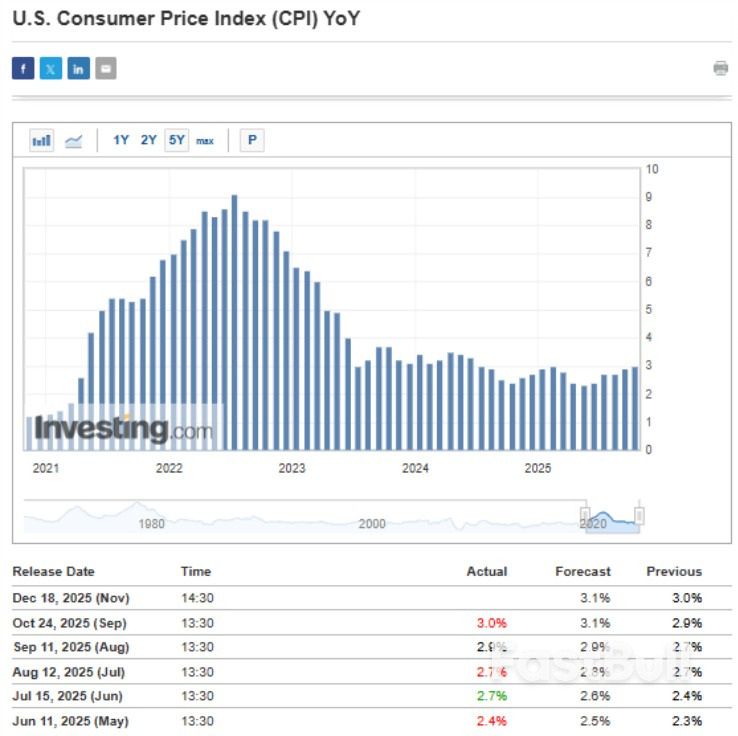
          Today, we will see new data on CPI, which suggests that year-on-year inflation may tick slightly above the 3% mark.

          Will the Fed Keep Rates Steady Next Year?

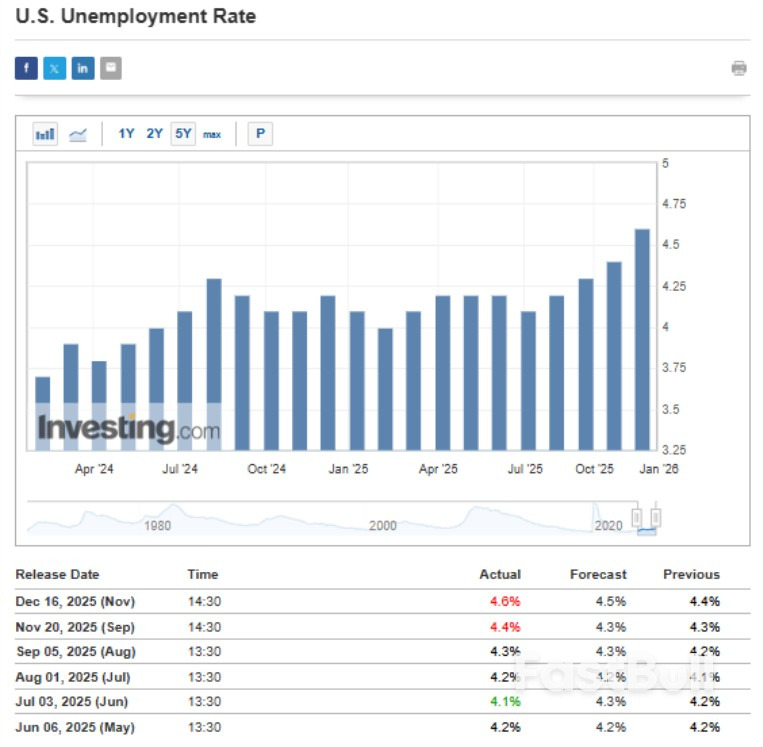
          Looking at the latest inflation data, which shows a steady rebound, one might question the case for interest rate cuts. However, the Federal Reserve has a dual mandate: it focuses not only on price stability but also on the health of the labor market. Recent data, including revisions to previous figures, make it clear that labor conditions are worsening, as reflected by the highest unemployment rate in several years.
          Silver: Key Support Looks Intact Ahead of CPI — What Traders Are Watching Next_1
          The current forecast is for two more 25-basis-point rate cuts next year, which may be seen as a minimum given the ongoing weakness in economic data. The market currently assigns less than a 73% probability to no change at the first Fed meeting next year.
          Today, new CPI data will be released. With the market consensus at 3.1% year-on-year, the actual figure will indicate whether the recent rebound in price growth continues.
          Silver: Key Support Looks Intact Ahead of CPI — What Traders Are Watching Next_2

          Are 2-Year Bonds on the Verge of a Support Break?

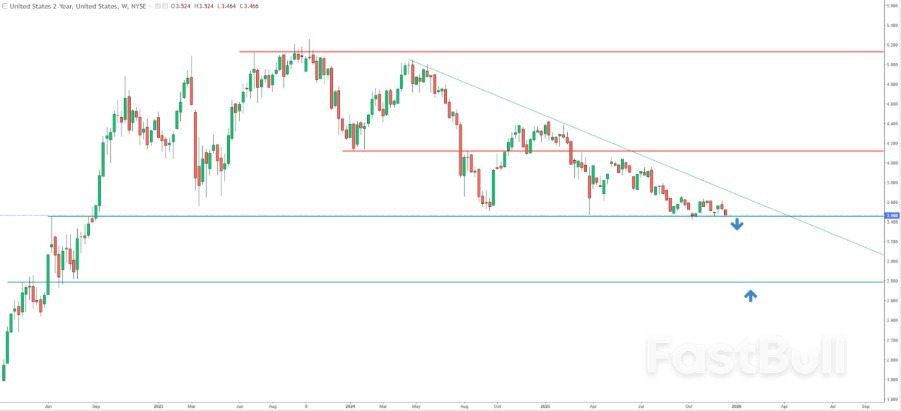
          Since September, US 2-year government bond yields have mostly moved within a consolidation range. However, the lower boundary, a key long-term support around 3.45%, is facing consistent downward pressure.
          Silver: Key Support Looks Intact Ahead of CPI — What Traders Are Watching Next_3
          If the anticipated breakout happens, the next technical targets drop below $3. If the breakout fails, a move above the main downward trend line could drive yields toward the 4.10 resistance level.

          Is the Silver Pullback a Buying Opportunity?

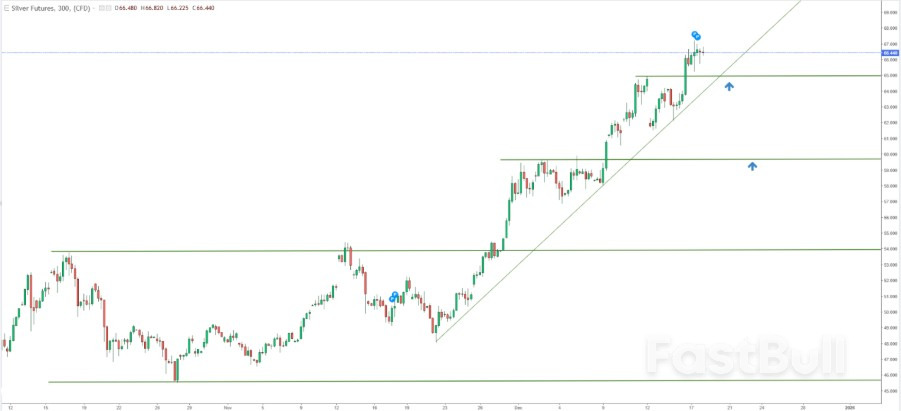
          Strong demand is preventing the market from retreating to more favorable prices, so any pullbacks are mostly sideways consolidations. If this momentum carries gold toward $70 an ounce, traders may look at the trend line and local support near $65 as potential entry points for long positions.
          Silver: Key Support Looks Intact Ahead of CPI — What Traders Are Watching Next_4
          A decline below current levels could set the stage for a wider rebound, with the next target near $60 an ounce.

          Investing: source

          Risk Warnings and Disclaimers
          You understand and acknowledge that there is a high degree of risk involved in trading. Following any strategies or investment methods may lead to potential losses. The content on the site is provided by our contributors and analysts for information purposes only. You are solely responsible for determining whether any trading assets, securities, strategy, or any other product is suitable for investing based on your own investment objectives and financial situation.
          Add to Favorites
          Share

          FACT FOCUS: Trump’s Glowing Account of Progress Is at Odds With His Government’s Own Stats

          Warren Takunda

          Economic

          President Donald Trump’s glowing account of progress under his watch Wednesday was out of tune with the experience of price-squeezed Americans and the story told by some of his government’s own statistics.
          In a speech from the White House, Trump assailed the record of his Democratic predecessor and boasted expansively about his record so far. Not all of those boasts were credible.
          Among them:

          On inflation

          TRUMP: He blamed Democrats for handing him an “inflation disaster,” “the worst in the history of our country,” and said that now, the prices of turkey and eggs have come down and “everything else is falling rapidly. And it’s not done yet. But boy, are we making progress.”
          THE FACTS: His claim that prices are falling rapidly is not seen in the inflation numbers, which are about where they were when he took office, after having fallen significantly before the end of Joe Biden’s presidency. Nor is it true that the Biden era gave the country its worst inflation ever.
          The consumer price index was 3% in September, the same rate as in January, a tick up from 2.9% in December, Biden’s last full month in office. In an AP-NORC poll this month, the vast majority of U.S. adults said they’ve noticed higher than usual prices for groceries, electricity and holiday gifts in recent months.
          Biden-era inflation peaked at 9.1% in June 2022, a consequence of supply chain interruptions, potentially excessive amounts of government aid and Russia’s invasion of Ukraine driving up food and energy costs. Americans have known even worse and more sustained inflation than that: higher than 13% in 1980 during an extended period of price pain. By some estimates, inflation approached 20% during World War I.
          Inflation had been falling during the first few months of Trump’s presidency, but it picked back up after the president announced his tariffs in April.

          On investment

          TRUMP: “I secured a record-breaking $18 trillion of investment into the United States.”
          THE FACTS: Trump has presented no evidence that he’s secured this much domestic or foreign investment for the United States. Based on statements from various companies, foreign countries and the White House’s own website, that figure appears to be exaggerated, highly speculative and far higher than the actual sum.
          Even the White House website offers a far lower number, $9.6 trillion, and that figure appears to include some investment commitments made during Biden’s presidency.
          Trump has routinely claimed rosy investment numbers, without offering the details to support them. Trump nailed down some of the investment terms in an October trip to Japan and South Korea, but they’re over multiple years and it remains to be seen how ironclad those commitments and others will be.

          A landslide?

          TRUMP: “I was elected in a landslide, winning the popular vote and all seven swing states and everything else, with a mandate to take on a sick and corrupt system.”
          THE FACTS: Trump won a decisive victory but hardly a landslide one, however you define a landslide. Trump, who became president with 312 electoral votes, won fewer than Democrats Barack Obama in 2008 (365) and 2012 (332) and Bill Clinton in 1992 (370) and 1996 (379).
          The electoral performance of those men pales in comparison with the sweeps by Franklin Roosevelt in 1936 (523), Lyndon Johnson in 1964 (486), Richard Nixon in 1972 (520) and Ronald Reagan (525) in 1984.
          Trump did win more popular votes than his Democratic opponent, Kamala Harris, but not quite a majority of them. His win in 2024 ranks among the more narrow.

          Source: AP

          To stay updated on all economic events of today, please check out our Economic calendar
          Risk Warnings and Disclaimers
          You understand and acknowledge that there is a high degree of risk involved in trading. Following any strategies or investment methods may lead to potential losses. The content on the site is provided by our contributors and analysts for information purposes only. You are solely responsible for determining whether any trading assets, securities, strategy, or any other product is suitable for investing based on your own investment objectives and financial situation.
          Add to Favorites
          Share

          US Core CPI Unexpectedly Eases to Slowest Pace Since 2021

          Glendon

          Forex

          Economic

          Underlying US inflation rose in November from a year earlier at the slowest pace since early 2021, marking a respite from months of stubborn price pressures, according to a report complicated by the federal government shutdown.

          The core consumer price index (CPI), which excludes the often-volatile food and energy categories, increased 2.6% in November, according to Bureau of Labor Statistics (BLS) data out Thursday. That compares with a 3% annual advance two months earlier. The overall CPI climbed 2.7% in November from a year ago.

          The BLS was unable to collect much of the October price data due to the government shutdown, limiting the agency's ability to determine month-over-month changes for the broader measures of inflation and many key categories in November.

          The BLS said the core CPI rose 0.2% over the two months ended in November, restrained by declines in costs of hotel stays, recreation and apparel. Prices of household furnishings and personal care products rose.

          Despite numerous caveats, the report offers hope that inflationary pressures are easing after remaining stuck in a narrow range since early this year.

          Stock-index futures extended gains, while Treasury yields and the dollar fell after the report.

          It's not clear whether the CPI report will sway Federal Reserve policymakers, who remain divided on the course of interest rates next year. Last week, the Fed lowered interest rates for a third straight meeting to guard against a more concerning deterioration in the labour market.

          Fed chair Jerome Powell said last week the CPI data "may be distorted" because of the record-long government shutdown that ended on Nov 12.

          Source: Theedgemarkets

          To stay updated on all economic events of today, please check out our Economic calendar
          Risk Warnings and Disclaimers
          You understand and acknowledge that there is a high degree of risk involved in trading. Following any strategies or investment methods may lead to potential losses. The content on the site is provided by our contributors and analysts for information purposes only. You are solely responsible for determining whether any trading assets, securities, strategy, or any other product is suitable for investing based on your own investment objectives and financial situation.
          Add to Favorites
          Share

          Oil News: Sanctions Risk Lifts Futures as Oil Demand and Supply Outlook Tighten

          Adam

          Commodity

          Light Crude Holds Firmer as Traders Assess Geopolitical Supply Threats

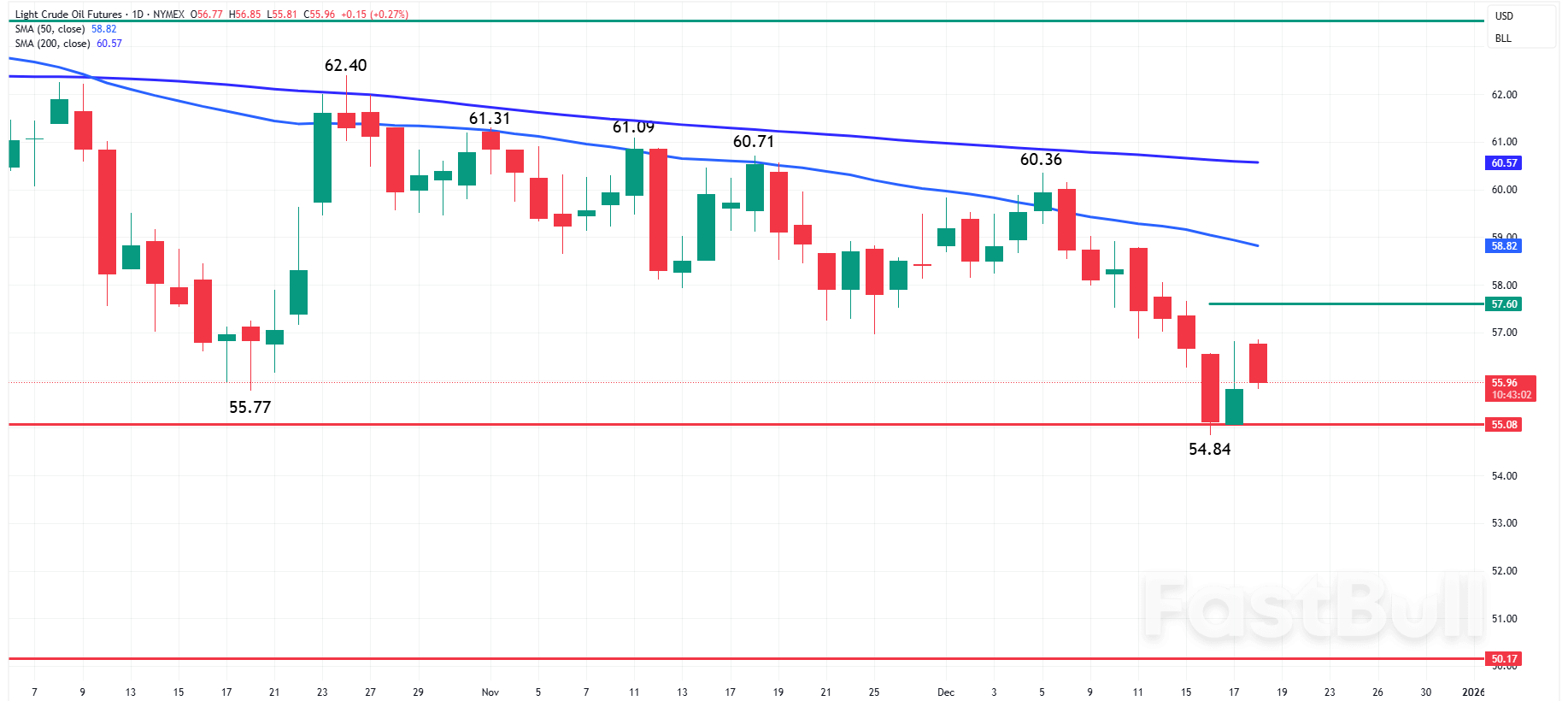
          Oil News: Sanctions Risk Lifts Futures as Oil Demand and Supply Outlook Tighten_1Daily Light Crude Oil Futures

          Light crude oil futures traded slightly higher on Thursday, stabilizing after surrendering earlier gains that lifted prices to an overnight high of $56.85. Futures are now leaning on the minor pivot at $55.845, a level that has taken on outsized importance after Tuesday’s drop to a five-year low at $54.84. The market’s response to this pivot is shaping short-term sentiment as traders gauge whether consolidation will hold or sellers will press for another test of the week’s lows.
          At 11:19 GMT, Light Crude Oil Futures are trading $55.92, up $0.11 or +0.20%.

          Geopolitical Pressure Builds: Are Sanctions the Next Catalyst for Oil Prices Forecast?

          Fresh headlines surrounding potential U.S. sanctions on Russia added a firm tone to crude early in the session. Bloomberg reported that Washington is preparing additional measures targeting Russia’s energy sector should Moscow refuse to move toward a peace agreement with Ukraine. While a White House official told Reuters that President Donald Trump has not made final decisions, traders treated the possibility as a credible risk that could tighten supplies. Analysts noted that expanded sanctions on Russian crude would likely carry more weight for the global market than the separate blockade threat tied to Venezuela.

          Venezuela Blockade Raises Supply Concerns but Enforcement Remains Unclear

          The proposed U.S. blockade of tankers carrying Venezuelan oil has introduced another layer of uncertainty. According to ING, as much as 600,000 barrels per day of Venezuelan exports—mostly destined for China—could be disrupted. About 160,000 bpd of flows to the United States would probably continue, supported by existing authorizations that allow Chevron vessels to depart. Most other Venezuelan shipments were halted on Wednesday, although PDVSA managed to restart loading after a cyberattack temporarily shut operations.

          Enforcement Questions Keep Traders Focused on Crude Oil News Today

          Uncertainty over implementation remains significant. The U.S. Coast Guard already seized a Venezuelan tanker last week, and sources indicated Washington may prepare for additional interdictions. Still, full details on how a blockade would function are unclear, keeping traders wary but not yet pricing in a severe supply shock. Venezuelan crude accounts for roughly 1% of global supply, meaning enforcement outcomes matter more than the headline volume alone.

          Market Levels and Oil Prices Projections Point to a Cautious Bullish Bias

          With futures consolidating between $54.84 and $56.85, holding the pivot at $55.845 is essential for any late-session rebound. A push higher would bring the short-term upside target of $57.60 into view, followed by resistance at $58.82 and the 200-day moving average at $60.57. Given the geopolitical backdrop and early buying interest, the near-term outlook leans cautiously bullish, provided the market maintains support above the pivot and avoids another test of the weekly low.

          Source: fxempire

          Risk Warnings and Disclaimers
          You understand and acknowledge that there is a high degree of risk involved in trading. Following any strategies or investment methods may lead to potential losses. The content on the site is provided by our contributors and analysts for information purposes only. You are solely responsible for determining whether any trading assets, securities, strategy, or any other product is suitable for investing based on your own investment objectives and financial situation.
          Add to Favorites
          Share

          Japan Nears 30-Year Rate High as BOJ Balances Inflation Control Against Economic Fragility

          Gerik

          Economic

          Forex

          BOJ Approaches Milestone Amid Economic Headwinds

          As 2025 draws to a close, the Bank of Japan is widely expected to raise its benchmark interest rate to 0.75%, marking a historic shift after decades of ultra-loose policy. Data from LSEG indicates an 86.4% market probability that this decision will be made at the year’s final monetary policy meeting, ending Friday. If confirmed, it would represent the highest policy rate since 1995, formally breaking away from Japan’s negative interest rate era that began in 2016.
          While the move is positioned as a necessary step toward monetary normalization, the decision comes at a time when Japan’s economic performance is showing significant weakness. The revised GDP data for Q3 2025 confirmed a sharper-than-expected contraction: a quarterly drop of 0.6% and an annualized fall of 2.3%. This downturn creates a fragile backdrop for a rate hike, suggesting the central bank is prioritizing structural monetary reforms over short-term growth support.

          Inflation and Currency Dynamics Drive Policy Decisions

          The principal motivation behind the BOJ’s rate hike is persistent inflation. Consumer prices have exceeded the BOJ’s 2% target for 43 consecutive months, weakening the credibility of its previous dovish stance. A higher interest rate is expected to help strengthen the yen against the U.S. dollar, potentially slowing imported inflation and relieving pressure on consumers. The yen has traded between 154 and 157 per dollar since November, reflecting ongoing depreciation that intensified after the October appointment of Prime Minister Sanae Takaichi, a known supporter of loose monetary policy.
          The relationship between rate increases and currency appreciation is based on the interest rate differential between Japan and its global counterparts, particularly the United States. As U.S. rates stabilize or decline, Japan’s upward adjustments reduce this differential, attracting capital inflows and bolstering the yen. However, the real impact will depend on the BOJ’s communication, especially any indication of a policy ceiling or “terminal rate.”

          Markets Focus on Neutral Rate Guidance

          Investors are increasingly focused not just on whether the BOJ will raise rates, but how far and how fast it intends to go. Governor Kazuo Ueda acknowledged earlier this month that estimating Japan’s neutral interest rate the rate at which monetary policy is neither expansionary nor contractionary remains challenging. The central bank currently estimates this rate to lie somewhere between 1% and 2.5%, a range too wide to guide investor expectations effectively.
          This vagueness complicates forward-looking assessments. If the BOJ signals confidence in a neutral rate closer to the lower end, markets may price in a shallower path of rate increases. Conversely, a higher estimate may fuel speculation about more aggressive tightening, which could further depress domestic economic activity already under pressure.

          Future Rate Trajectory: A Slow March or Sudden Turns?

          The pace of future hikes remains a matter of debate. According to ING, a follow-up rate hike may not occur until October 2026, while Bank of America projects June 2026, with a possibility of moving it forward to April if the yen experiences renewed depreciation. BofA expects the terminal rate to reach 1.5% by the end of 2027, assuming no disruptive external shocks.
          Nonetheless, analysts caution that several variables could derail this path. These include a sharp slowdown in the U.S. economy or heightened geopolitical tensions between China and Japan. In the absence of such shocks, the BOJ appears committed to a gradual, cautious tightening cycle. MFS Investment Management’s Carl Ang maintains that only a “material shock” would prompt a major deviation from the projected trajectory.

          Bond and Currency Markets Eye BOJ Signals

          The bond and currency markets will closely watch the tone and specifics of BOJ commentary. Allianz Global Investors' Gregor MA Hirt highlighted that any direct reference by Governor Ueda to the yen’s weakness could serve as a critical signal potentially a verbal intervention aimed at stabilizing currency expectations.
          Given that the BOJ has so far avoided making forex stability a central objective, any shift in language would suggest growing discomfort with the yen’s devaluation. Such a move could influence expectations not only around rates but also around other policy tools, including bond yield control mechanisms.

          Policy Normalization Meets Fragile Growth

          Japan's anticipated rate hike represents a bold step toward rebalancing decades of accommodative monetary policy. However, the timing is fraught with risk. On one hand, inflation control and yen stability support the case for higher rates. On the other, the recent economic contraction and unclear guidance on the terminal rate could amplify market volatility and investor uncertainty.
          The BOJ finds itself at a critical juncture: committed to reforming its monetary stance while navigating a sluggish economy and opaque global outlook. Whether this move marks the beginning of a stable normalization era or exacerbates Japan’s deflationary legacy depends heavily on future policy clarity, currency behavior, and the resilience of domestic demand. Investors and policymakers alike will be watching Friday’s decision and the language that follows with heightened scrutiny.

          Source: CNBC

          To stay updated on all economic events of today, please check out our Economic calendar
          Risk Warnings and Disclaimers
          You understand and acknowledge that there is a high degree of risk involved in trading. Following any strategies or investment methods may lead to potential losses. The content on the site is provided by our contributors and analysts for information purposes only. You are solely responsible for determining whether any trading assets, securities, strategy, or any other product is suitable for investing based on your own investment objectives and financial situation.
          Add to Favorites
          Share
          FastBull
          Copyright © 2025 FastBull Ltd

          728 RM B 7/F GEE LOK IND BLDG NO 34 HUNG TO RD KWUN TONG KLN HONG KONG

          TelegramInstagramTwitterfacebooklinkedin
          App Store Google Play Google Play
          Products
          Charts

          Chats

          Q&A with Experts
          Screeners
          Economic Calendar
          Data
          Tools
          Membership
          Features
          Function
          Markets
          Copy Trading
          Latest Signals
          Contests
          News
          Analysis
          24/7
          Columns
          Education
          Company
          Careers
          About Us
          Contact Us
          Advertising
          Help Center
          Feedback
          User Agreement
          Privacy Policy
          Personal Information Protection Statement
          Business

          White Label

          Data API

          Web Plug-ins

          Poster Maker

          Affiliate Program

          Risk Disclosure

          The risk of loss in trading financial instruments such as stocks, FX, commodities, futures, bonds, ETFs and crypto can be substantial. You may sustain a total loss of the funds that you deposit with your broker. Therefore, you should carefully consider whether such trading is suitable for you in light of your circumstances and financial resources.

          No decision to invest should be made without thoroughly conducting due diligence by yourself or consulting with your financial advisors. Our web content might not suit you since we don't know your financial conditions and investment needs. Our financial information might have latency or contain inaccuracy, so you should be fully responsible for any of your trading and investment decisions. The company will not be responsible for your capital loss.

          Without getting permission from the website, you are not allowed to copy the website's graphics, texts, or trademarks. Intellectual property rights in the content or data incorporated into this website belong to its providers and exchange merchants.

          Not Logged In

          Log in to access more features

          FastBull Membership

          Not yet

          Purchase

          Become a signal provider
          Help Center
          Customer Service
          Dark Mode
          Price Up/Down Colors

          Log In

          Sign Up

          Position
          Layout
          Fullscreen
          Default to Chart
          The chart page opens by default when you visit fastbull.com