• Trade
  • Markets
  • Copy
  • Contests
  • News
  • 24/7
  • Calendar
  • Q&A
  • Chats
Trending
Screeners
SYMBOL
LAST
BID
ASK
HIGH
LOW
NET CHG.
%CHG.
SPREAD
SPX
S&P 500 Index
6857.13
6857.13
6857.13
6865.94
6827.13
+7.41
+ 0.11%
--
DJI
Dow Jones Industrial Average
47850.93
47850.93
47850.93
48049.72
47692.96
-31.96
-0.07%
--
IXIC
NASDAQ Composite Index
23505.13
23505.13
23505.13
23528.53
23372.33
+51.04
+ 0.22%
--
USDX
US Dollar Index
98.930
99.010
98.930
99.000
98.740
-0.050
-0.05%
--
EURUSD
Euro / US Dollar
1.16499
1.16506
1.16499
1.16715
1.16408
+0.00054
+ 0.05%
--
GBPUSD
Pound Sterling / US Dollar
1.33433
1.33443
1.33433
1.33622
1.33165
+0.00162
+ 0.12%
--
XAUUSD
Gold / US Dollar
4226.32
4226.75
4226.32
4230.62
4194.54
+19.15
+ 0.46%
--
WTI
Light Sweet Crude Oil
59.242
59.272
59.242
59.543
59.187
-0.141
-0.24%
--

Community Accounts

Signal Accounts
--
Profit Accounts
--
Loss Accounts
--
View More

Become a signal provider

Sell trading signals to earn additional income

View More

Guide to Copy Trading

Get started with ease and confidence

View More

Signal Accounts for Members

All Signal Accounts

Best Return
  • Best Return
  • Best P/L
  • Best MDD
Past 1W
  • Past 1W
  • Past 1M
  • Past 1Y

All Contests

  • All
  • Trump Updates
  • Recommend
  • Stocks
  • Cryptocurrencies
  • Central Banks
  • Featured News
Top News Only
Share

Argentina Economy Ministry: Launches 6.50% National Treasury Bond In USA Dollars Maturing On November 30, 2029

Share

Czech Defence Group Csg: Framework Agreement For Period Of 7 Years, Includes Potential Use Of EU's Safe Program

Share

India Aviation Regulator: Committee Shall Submit Its Finding, Recommendation To Regulator Within 15 Days

Share

Brazil October PPI -0.48% From Previous Month

Share

Netflix To Acquire Warner Bros. Following The Separation Of Discovery Global For A Total Enterprise Value Of $82.7 Billion (Equity Value Of $72.0 Billion)

Share

Tass Cites Kremlin: Russia Will Continue Its Actions In Ukraine If Kyiv Refuses To Settle The Conflict

Share

India's Forex Reserves Fall To $686.23 Billion As Of Nov 28

Share

Reserve Bank Of India Says Federal Government Had No Outstanding Loans With It As On Nov 28

Share

Lebanon Says Ceasefire Talks Aim Mainly At Halting Israel's Hostilities

Share

Russia Plans To Boost Oil Exports From Western Ports By 27% In December From November -Sources And Reuters Calculations

Share

Sberbank: Estimated Investment Of $100 Million In Technology, Team Expansion, And New Offices In India

Share

Sberbank Says Sberbank Unveils Major Expansion Strategy For India, Plans Full-Scale Banking, Education, And Tech Transfer

Share

India Government: Expect That Flight Schedules Will Begin To Stabilise And Return To Normal By Dec 6

Share

EU: Tiktok Agrees To Changes To Advertising Repositories To Ensure Transparency, No Fine

Share

EU Tech Chief: Not EU's Intention To Impose Highest Fines, X Fine Is Proportionate, Based On Nature Of Infringement, Impact On EU Users

Share

EU Regulators: EU Investigation Into X's Dissemination Of Illegal Content, Measures To Counter Disinformation Continues

Share

Ukraine's Military Says It Hit Russian Port In Krasnodar Region

Share

Jumped The Gun, Says Morgan Stanley, Reverses Dec Fed Rate Call To 25Bps Cut

Share

Lebanese President Aoun:Lebanon Welcomes Any Country Keeping Its Forces In South Lebanon To Help Army After End Of Unifil's Mission

Share

China Cabinet Meeting: Will Firmly Prevent Major Fire Incidents

TIME
ACT
FCST
PREV
U.S. Initial Jobless Claims 4-Week Avg. (SA)

A:--

F: --

P: --

U.S. Weekly Continued Jobless Claims (SA)

A:--

F: --

P: --

Canada Ivey PMI (SA) (Nov)

A:--

F: --

P: --

Canada Ivey PMI (Not SA) (Nov)

A:--

F: --

P: --

U.S. Non-Defense Capital Durable Goods Orders Revised MoM (Excl. Aircraft) (SA) (Sept)

A:--

F: --

P: --
U.S. Factory Orders MoM (Excl. Transport) (Sept)

A:--

F: --

P: --

U.S. Factory Orders MoM (Sept)

A:--

F: --

P: --

U.S. Factory Orders MoM (Excl. Defense) (Sept)

A:--

F: --

P: --

U.S. EIA Weekly Natural Gas Stocks Change

A:--

F: --

P: --

Saudi Arabia Crude Oil Production

A:--

F: --

P: --

U.S. Weekly Treasuries Held by Foreign Central Banks

A:--

F: --

P: --

Japan Foreign Exchange Reserves (Nov)

A:--

F: --

P: --

India Repo Rate

A:--

F: --

P: --

India Benchmark Interest Rate

A:--

F: --

P: --

India Reverse Repo Rate

A:--

F: --

P: --

India Cash Reserve Ratio

A:--

F: --

P: --

Japan Leading Indicators Prelim (Oct)

A:--

F: --

P: --

U.K. Halifax House Price Index YoY (SA) (Nov)

A:--

F: --

P: --

U.K. Halifax House Price Index MoM (SA) (Nov)

A:--

F: --

P: --

France Current Account (Not SA) (Oct)

A:--

F: --

P: --

France Trade Balance (SA) (Oct)

A:--

F: --

P: --

France Industrial Output MoM (SA) (Oct)

A:--

F: --

P: --

Italy Retail Sales MoM (SA) (Oct)

A:--

F: --

P: --

Euro Zone Employment YoY (SA) (Q3)

A:--

F: --

P: --

Euro Zone GDP Final YoY (Q3)

A:--

F: --

P: --

Euro Zone GDP Final QoQ (Q3)

A:--

F: --

P: --

Euro Zone Employment Final QoQ (SA) (Q3)

A:--

F: --

P: --

Euro Zone Employment Final (SA) (Q3)

A:--

F: --

P: --
Brazil PPI MoM (Oct)

A:--

F: --

P: --

Mexico Consumer Confidence Index (Nov)

A:--

F: --

P: --

Canada Unemployment Rate (SA) (Nov)

--

F: --

P: --

Canada Labor Force Participation Rate (SA) (Nov)

--

F: --

P: --

Canada Employment (SA) (Nov)

--

F: --

P: --

Canada Part-Time Employment (SA) (Nov)

--

F: --

P: --

Canada Full-time Employment (SA) (Nov)

--

F: --

P: --

U.S. Personal Income MoM (Sept)

--

F: --

P: --

U.S. Dallas Fed PCE Price Index YoY (Sept)

--

F: --

P: --

U.S. PCE Price Index YoY (SA) (Sept)

--

F: --

P: --

U.S. PCE Price Index MoM (Sept)

--

F: --

P: --

U.S. Personal Outlays MoM (SA) (Sept)

--

F: --

P: --

U.S. Core PCE Price Index MoM (Sept)

--

F: --

P: --

U.S. UMich 5-Year-Ahead Inflation Expectations Prelim YoY (Dec)

--

F: --

P: --

U.S. Core PCE Price Index YoY (Sept)

--

F: --

P: --

U.S. Real Personal Consumption Expenditures MoM (Sept)

--

F: --

P: --

U.S. 5-10 Year-Ahead Inflation Expectations (Dec)

--

F: --

P: --

U.S. UMich Current Economic Conditions Index Prelim (Dec)

--

F: --

P: --

U.S. UMich Consumer Sentiment Index Prelim (Dec)

--

F: --

P: --

U.S. UMich 1-Year-Ahead Inflation Expectations Prelim (Dec)

--

F: --

P: --

U.S. UMich Consumer Expectations Index Prelim (Dec)

--

F: --

P: --

U.S. Weekly Total Rig Count

--

F: --

P: --

U.S. Weekly Total Oil Rig Count

--

F: --

P: --

U.S. Consumer Credit (SA) (Oct)

--

F: --

P: --

China, Mainland Foreign Exchange Reserves (Nov)

--

F: --

P: --

China, Mainland Exports YoY (USD) (Nov)

--

F: --

P: --

China, Mainland Imports YoY (CNH) (Nov)

--

F: --

P: --

China, Mainland Imports YoY (USD) (Nov)

--

F: --

P: --

China, Mainland Imports (CNH) (Nov)

--

F: --

P: --

China, Mainland Trade Balance (CNH) (Nov)

--

F: --

P: --

China, Mainland Exports (Nov)

--

F: --

P: --

Q&A with Experts
    • All
    • Chatrooms
    • Groups
    • Friends
    Connecting
    .
    .
    .
    Type here...
    Add Symbol or Code

      No matching data

      All
      Trump Updates
      Recommend
      Stocks
      Cryptocurrencies
      Central Banks
      Featured News
      • All
      • Russia-Ukraine Conflict
      • Middle East Flashpoint
      • All
      • Russia-Ukraine Conflict
      • Middle East Flashpoint
      Search
      Products

      Charts Free Forever

      Chats Q&A with Experts
      Screeners Economic Calendar Data Tools
      Membership Features
      Data Warehouse Market Trends Institutional Data Policy Rates Macro

      Market Trends

      Market Sentiment Order Book Forex Correlations

      Top Indicators

      Charts Free Forever
      Markets

      News

      News Analysis 24/7 Columns Education
      From Institutions From Analysts
      Topics Columnists

      Latest Views

      Latest Views

      Trending Topics

      Top Columnists

      Latest Update

      Signals

      Copy Rankings Latest Signals Become a signal provider AI Rating
      Contests
      Brokers

      Overview Brokers Assessment Rankings Regulators News Claims
      Broker listing Forex Brokers Comparison Tool Live Spread Comparison Scam
      Q&A Complaint Scam Alert Videos Tips to Detect Scam
      More

      Business
      Events
      Careers About Us Advertising Help Center

      White Label

      Data API

      Web Plug-ins

      Affiliate Program

      Awards Institution Evaluation IB Seminar Salon Event Exhibition
      Vietnam Thailand Singapore Dubai
      Fans Party Investment Sharing Session
      FastBull Summit BrokersView Expo
      Recent Searches
        Top Searches
          Markets
          News
          Analysis
          User
          24/7
          Economic Calendar
          Education
          Data
          • Names
          • Latest
          • Prev

          View All

          No data

          Scan to Download

          Faster Charts, Chat Faster!

          Download App
          English
          • English
          • Español
          • العربية
          • Bahasa Indonesia
          • Bahasa Melayu
          • Tiếng Việt
          • ภาษาไทย
          • Français
          • Italiano
          • Türkçe
          • Русский язык
          • 简中
          • 繁中
          Open Account
          Search
          Products
          Charts Free Forever
          Markets
          News
          Signals

          Copy Rankings Latest Signals Become a signal provider AI Rating
          Contests
          Brokers

          Overview Brokers Assessment Rankings Regulators News Claims
          Broker listing Forex Brokers Comparison Tool Live Spread Comparison Scam
          Q&A Complaint Scam Alert Videos Tips to Detect Scam
          More

          Business
          Events
          Careers About Us Advertising Help Center

          White Label

          Data API

          Web Plug-ins

          Affiliate Program

          Awards Institution Evaluation IB Seminar Salon Event Exhibition
          Vietnam Thailand Singapore Dubai
          Fans Party Investment Sharing Session
          FastBull Summit BrokersView Expo

          Goldman Raises S&P 500 Targets On Lower Tariff, Recession Risks

          Catherine Richards

          Stocks

          Economic

          Summary:

          Goldman Sachs Group Inc lifted its US stock targets, as the easing of trade tensions between the US and China fuels...

          Goldman Sachs Group Inc lifted its US stock targets, as the easing of trade tensions between the US and China fuels a comeback of the “Buy America” trade.

          Strategists including David Kostin now see the S&P 500 Index reaching 6,500 in the next 12 months, up from 6,200 previously. The new estimate implies about a gain of about 11% from Monday’s close.

          The upgrade follows Monday’s rally on Wall Street after negotiators from the world’s two largest economies agreed to temporarily lower tariffs, with traders betting that a US recession can be avoided. Goldman remains somewhat cautious, however.

          “Already-optimistic market pricing of the economic growth outlook as well as uncertainty surrounding the magnitude of impending slowdown in economic and earnings growth will likely keep a ceiling on equity multiples during the next few months,” the strategists wrote in a note.
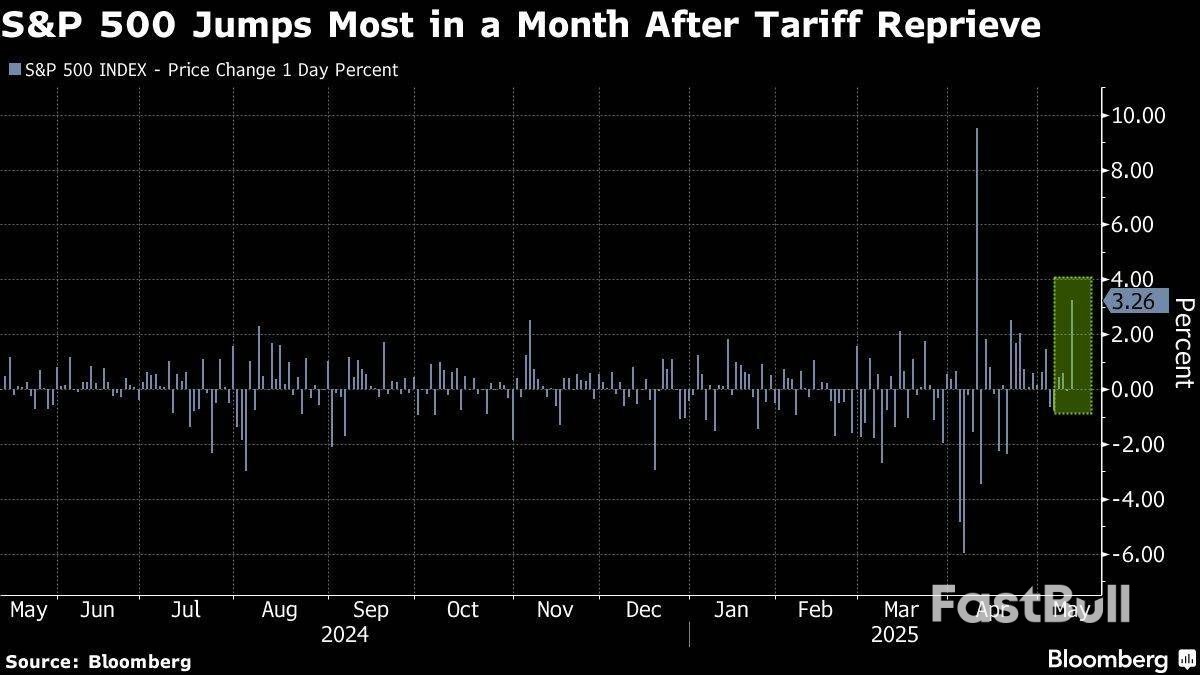
          Goldman had cut its S&P 500 forecasts twice in March, citing higher recession risk and tariff-related uncertainty. The strategists said that while such concerns have eased with the latest agreement, and Big Tech stocks should especially recover, the broader earnings outlook is uneven.

          “Despite the recent improvement in the growth outlook, tariff rates will likely be substantially higher in 2025 than they were in 2024, putting pressure on profit margins,” they wrote. Goldman recommends investors focus on shares of companies with high pricing power that can maintain margins in the face of elevated input costs.

          Source: Theedgemarkets

          To stay updated on all economic events of today, please check out our Economic calendar
          Risk Warnings and Disclaimers
          You understand and acknowledge that there is a high degree of risk involved in trading. Following any strategies or investment methods may lead to potential losses. The content on the site is provided by our contributors and analysts for information purposes only. You are solely responsible for determining whether any trading assets, securities, strategy, or any other product is suitable for investing based on your own investment objectives and financial situation.
          Add to Favorites
          Share

          U.S. Treasury Chief: Tariffs Resemble Economic Sanctions, Washington Rejects Decoupling from China

          Gerik

          Economic

          China–U.S. Trade War

          Washington Shifts Rhetoric, Signals Strategic Recalibration

          Speaking in Geneva on May 12 following a week-long round of trade negotiations, U.S. Treasury Secretary Scott Bessent made clear that Washington does not intend to sever economic ties with China. Labeling existing tariffs as "tantamount to economic sanctions," Bessent emphasized that neither side desires decoupling and that a "balanced trade relationship" remains the goal.
          His statement reflects a notable softening in tone, aligning with remarks he previously made on Fox News where he called for a "level playing field" rather than disengagement. The shift comes as part of a joint U.S.-China declaration announcing a 90-day agreement to halt tariff escalations and gradually reduce trade barriers.

          Tariff Reductions Signal Tactical De-Escalation

          Under the agreement, effective May 14, the U.S. will lower tariffs on Chinese goods from 145% to 30%, while China will cut retaliatory tariffs on U.S. imports from 125% to 10%. However, a 20% tariff on fentanyl-related products from China—enacted by the Trump administration earlier this year—will remain in place. This unresolved issue highlights ongoing friction points in the relationship.
          In addition to reducing tariffs, China has agreed to unwind non-tariff retaliatory measures implemented since April 2. These included export controls on rare earths and anti-dumping probes targeting major U.S. companies like DuPont. Under the new agreement, Chinese authorities will suspend the DuPont investigation and remove restrictions on firms affected after April 2. Measures implemented prior to that date, such as the anti-dumping investigation against Google announced in February, will remain active.

          China Hails Deal as "Important Step Forward"

          Chinese officials described the agreement as a “significant breakthrough” in efforts to cool tensions between the world’s two largest economies. Vice Premier He Lifeng, alongside senior finance and commerce officials, praised the joint declaration as a foundation for renewed cooperation. Beijing stated that high U.S. tariffs had disrupted bilateral trade flows and global economic stability, while welcoming the re-establishment of regular consultation mechanisms.
          Over the next 90 days, the two sides will operate under a temporary ceasefire while they set up a new dialogue framework. This reflects Beijing’s commitment to a diplomatic resolution through mutual respect and equal footing—principles China increasingly promotes in its international economic relations.

          Mixed Signals in Enforcement and Strategic Intent

          While the joint statement suggests a constructive shift, the exclusion of key enforcement rollbacks—such as the continued targeting of Google—demonstrates that deep mistrust persists. Analysts caution that the current détente may be tactical rather than transformative, aimed at reducing short-term market volatility rather than resolving systemic disputes.
          The decision to retain tariffs on fentanyl-related goods, a politically sensitive issue in the U.S., reflects domestic pressure on the Biden-Trump administration to maintain a hard line in areas linked to public health and national security.

          From Confrontation to Conditional Cooperation

          The Geneva declaration signals a pause—not an end—to the trade war. Both sides have recognized the unsustainability of maximum-pressure tariffs, which had begun to resemble economic embargoes. By framing the agreement as a move toward balance rather than capitulation, Washington and Beijing are attempting to create political space for further dialogue.
          Still, the coming months will test whether this ceasefire can evolve into a stable and mutually beneficial trade framework. With unresolved issues still on the table and an unpredictable global landscape, the current agreement is more of a reset than a resolution. For now, the world’s two largest economies have stepped back from the brink—but remain far from full reconciliation.

          Source: CNN

          To stay updated on all economic events of today, please check out our Economic calendar
          Risk Warnings and Disclaimers
          You understand and acknowledge that there is a high degree of risk involved in trading. Following any strategies or investment methods may lead to potential losses. The content on the site is provided by our contributors and analysts for information purposes only. You are solely responsible for determining whether any trading assets, securities, strategy, or any other product is suitable for investing based on your own investment objectives and financial situation.
          Add to Favorites
          Share

          US Tariff Revenue Surges to $16 Billion in April, Averaging $500 Million Per Day Amid Short-Term Trade Windfall

          Gerik

          China–U.S. Trade War

          Economic

          April Tariff Boom Fuels Budget Surplus but Signals Temporary Windfall

          According to the latest data from the US Department of Commerce, tariff revenues surged to $16.3 billion in April 2025, an 86% increase from the previous month and more than double the figure recorded in April 2024. This spike pushed cumulative tariff collections for the year to $63.3 billion, up 18% year-on-year. The dramatic increase in April contributed significantly to a monthly budget surplus of $258.4 billion, up 23% from a year earlier.
          The short-term revenue explosion was attributed primarily to President Donald Trump’s April 2 retaliatory tariff policy, which imposed a broad 10% levy on nearly all imported goods, supplementing existing duties on steel, autos, and electronics. As businesses rushed to front-load imports before tariffs took full effect, customs receipts ballooned.

          Temporary Truce with China Begins to Cool Revenue Momentum

          Despite April’s windfall, the trend may not hold. On May 1, the US and China reached a 90-day agreement to pause further tariff escalations. Under this truce, the US reduced its maximum tariffs on Chinese goods from 145% to 30%, while China lowered its retaliatory tariffs from 125% to 10%. While this brought immediate relief to global markets and businesses, it also introduced uncertainty about the long-term durability of the tariff-driven revenue surge.
          Analysts warn that the halt may soon reflect in revenue trends. Research from the Peterson Institute for International Economics (PIIE) suggests that pausing tariffs—particularly on key categories like electronics and machinery—could start to erode tax income as trade flows stabilize and stockpiling fades.

          The $500 Million Daily Windfall: Exceptional but Not Enduring

          According to Reuters, the US government collected an average of $500 million in tariffs per day during April. This influx contributed to a broader boost in April’s total federal revenue, which rose 10% year-over-year to reach $850 billion, while federal spending declined 4%. However, while April’s surplus was impressive, the fiscal outlook remains strained.
          Data from Politico reveals that as of May 8, total tariff collections had reached $46.6 billion for 2025, representing a 46.3% increase over the same period last year. But this has done little to reverse the broader fiscal imbalance: the cumulative budget deficit since the beginning of the fiscal year has reached $1.05 trillion—13% higher than the same period in 2024.

          Rising Debt Servicing Costs Undermine Revenue Gains

          A major driver of the growing deficit remains the cost of servicing public debt. The US public debt has reached $36.2 trillion, and in April alone, interest payments totaled $89 billion—second only to Social Security outlays. Year-to-date, interest payments have reached $579 billion, making them the second-largest expenditure in the federal budget.
          The Peterson Foundation estimates that if current debt and interest rate trends persist, interest payments could consume 18.4% of total federal revenue by the end of 2025, crowding out other priorities and limiting fiscal flexibility.

          Long-Term Outlook: Tax Windfall May Fade as Trade Volatility Subsides

          While some economists project that a globally implemented 10% tariff regime could generate $3.9 trillion in revenue for the US over the next decade, this comes with caveats. Higher trade taxes may suppress GDP growth, weaken corporate profits, and reduce income tax collections—diminishing net fiscal benefits. Moreover, unpredictable trade policy changes can undermine business investment and long-term supply chain planning, further tempering revenue expectations.
          April 2025 may go down as a historic high-water mark for US tariff revenues, temporarily boosting fiscal performance and helping offset structural deficits. Yet beneath the surface, surging debt service costs and reliance on politically fragile tariff policies pose significant long-term risks.
          As the 90-day tariff ceasefire with China unfolds, policymakers will need to consider whether the short-term fiscal advantages of trade taxes justify their broader economic costs—and how to navigate revenue sustainability without compromising growth or financial stability.

          Source: CNBC

          To stay updated on all economic events of today, please check out our Economic calendar
          Risk Warnings and Disclaimers
          You understand and acknowledge that there is a high degree of risk involved in trading. Following any strategies or investment methods may lead to potential losses. The content on the site is provided by our contributors and analysts for information purposes only. You are solely responsible for determining whether any trading assets, securities, strategy, or any other product is suitable for investing based on your own investment objectives and financial situation.
          Add to Favorites
          Share

          China Pledges Nearly $10 Billion in Yuan-Based Credit to Latin America in Strategic Push for Closer Ties

          Gerik

          Economic

          China Deepens Economic Partnership with Latin America Through Yuan-Based Lending

          Speaking at the opening of the China-CELAC Forum ministerial meeting in Beijing on May 13, President Xi Jinping pledged nearly 70 billion yuan (just under $10 billion) in credit to Latin American and Caribbean nations. This financial commitment underscores China’s intent to boost regional development while promoting the international use of its currency, the renminbi (RMB), as an alternative to the US dollar.
          This latest move builds on previous efforts—such as the 2015 China-CELAC Forum where Beijing offered $20 billion in infrastructure-related credit—and signals a strategic shift in how China provides financial support abroad. Unlike earlier loans commonly denominated in dollars, this initiative emphasizes yuan liquidity and currency swap agreements that facilitate transactions in RMB rather than USD.

          Currency Internationalization and Global Influence in the South

          Analysts interpret the yuan-denominated credit lines as a deliberate attempt to advance China’s goal of challenging dollar dominance in international finance, particularly in the Global South. Eric Orlander of the China-Global South Project noted that Beijing is increasingly using currency swap agreements to cement long-term financial relationships with partner countries, giving them access to Chinese capital without needing to hold dollar reserves.
          These credit lines may offer both development capital and a pathway for Latin American countries to diversify their foreign exchange dependencies, especially amid global concerns about dollar-driven interest rate volatility and trade exposure.

          Trade Surges Past $500 Billion Milestone

          President Xi also announced that bilateral trade between China and Latin America exceeded $500 billion in 2024, up from $450 billion the previous year, and a dramatic leap from just $12 billion in 2000. This trade surge reflects China’s expanding demand for Latin American commodities—such as copper, lithium, soybeans, and oil—and Latin America’s increasing reliance on Chinese imports and investments in infrastructure, energy, and telecommunications.
          The China-CELAC Forum, part of Beijing’s broader Belt and Road Initiative (BRI), continues to serve as the primary platform for institutionalizing these relationships. Through it, China has promoted projects aligned with its global infrastructure ambitions while allowing partner countries to gain funding without the stringent conditions often attached to loans from Western institutions.

          Visa-Free Travel: A Symbolic Gesture of Soft Power

          In addition to the financial announcement, President Xi revealed that China will implement a visa-free policy for five Latin American and Caribbean countries—though he did not name them. He added that the policy would be expanded in due course. While largely symbolic, visa liberalization aligns with China's broader diplomatic strategy of fostering goodwill, people-to-people exchanges, and increased tourism or business travel with emerging economies.
          Xi reiterated China’s political support for Latin America and the Caribbean in gaining a stronger voice in multilateral institutions. This aligns with Beijing’s consistent messaging that the Global South should have a greater say in international governance—messaging that resonates in regions historically marginalized in global decision-making structures dominated by Western powers.
          By positioning itself as a cooperative partner in economic development and diplomatic recognition, China is offering Latin America an alternative strategic alignment at a time when US-Latin American relations remain ambivalent, particularly on trade, migration, and environmental issues.

          Strategic Finance Meets Diplomatic Outreach

          China’s latest commitment of yuan-based credit to Latin America reflects a sophisticated dual strategy—one that combines economic pragmatism with geopolitical influence. By tying development finance to currency internationalization and backing it with trade expansion and symbolic diplomatic gestures, Beijing is reinforcing its position as a long-term partner in the region.
          Whether this soft-power approach translates into long-term alignment will depend on Latin American countries’ ability to balance Chinese capital with sovereignty concerns, and how Beijing navigates local political, environmental, and debt-related sensitivities. Nevertheless, the China-CELAC platform has become a pivotal forum in the evolving architecture of South-South cooperation—and a clear indicator of China’s expanding global economic reach.

          Source: Reuters

          To stay updated on all economic events of today, please check out our Economic calendar
          Risk Warnings and Disclaimers
          You understand and acknowledge that there is a high degree of risk involved in trading. Following any strategies or investment methods may lead to potential losses. The content on the site is provided by our contributors and analysts for information purposes only. You are solely responsible for determining whether any trading assets, securities, strategy, or any other product is suitable for investing based on your own investment objectives and financial situation.
          Add to Favorites
          Share

          Mixed Signals from Japan’s Economy: Record Current Account Surplus Amid Wage Weakness and Structural Reforms

          Gerik

          Economic

          Record Current Account Surplus Boosted by Foreign Income

          Japan recorded a current account surplus of 30.38 trillion yen (approximately USD 208 billion) in fiscal year 2024, the highest since comparable data became available in 1985, according to the Ministry of Finance. This 16.1% increase year-on-year marks the second consecutive year of record-high surplus. The primary driver was a sharp rise in foreign investment income, which totaled 41.71 trillion yen—up 11.7%—as a weaker yen amplified overseas earnings and dividends.
          While this headline figure suggests strong macroeconomic positioning, particularly in terms of external competitiveness and global investment returns, underlying trade dynamics were less positive. Japan’s merchandise trade balance posted a deficit of 4.05 trillion yen, widened by 9.8% as imports rose slightly faster than exports. Although outbound shipments of semiconductors, electronics, and automobiles grew 4.1%, imports rose 4.3% due to strong demand for personal computers and smartphones.
          Tourism Recovery Helps Offset Services Deficit
          The services balance also improved, with the overall deficit narrowing by 20.2% to 2.58 trillion yen. A major contributor was a record travel surplus of 6.69 trillion yen. This surge came from robust inbound tourism—Japan welcomed 38.85 million foreign visitors in FY2024, up 34.7% from the prior year—whose spending exceeded that of Japanese tourists abroad. This shift helped cushion Japan’s services sector from ongoing trade and inflation pressures.

          Real Wages Decline Despite Nominal Increases

          Despite robust external performance and tourism gains, household income indicators remain weak. Real wages—adjusted for inflation—fell for the third consecutive month in March 2025, dropping 2.1% from a year earlier. This followed declines of 1.5% and 2.8% in February and January, respectively. While basic wages rose 1.3%, overtime pay decreased by 1.1%, marking the sharpest drop since April 2024 and raising concerns about softening corporate activity.
          Nominal total cash earnings rose 2.1% year-on-year to 308,572 yen (around USD 2,132), but this was slower than February’s 2.7% gain. Although large corporations have pledged wage hikes above 5% during the spring labor negotiations, these gains are expected to appear in government data from April onwards.

          Household Spending Surprises on the Upside

          In contrast to falling real wages, household consumption showed signs of resilience. Household spending in March rose 2.1% year-on-year, well above the 0.2% market expectation. Month-on-month, it increased by 0.4%. Officials attributed this rise to greater spending on utilities and recreational activities, suggesting that consumption habits are recovering despite higher living costs. Nonetheless, spending on food remains restrained as consumers adjust to rising prices.

          Corporate Restructuring Accelerates Amid Uncertainty

          Against this backdrop, Japanese companies are increasingly pursuing corporate restructuring. A growing number are divesting subsidiaries and non-core units to streamline operations and improve focus. Analysts attribute this shift partly to trade-related uncertainty and evolving shareholder expectations.
          Japan’s 2015 Corporate Governance Code and recent reforms by the Tokyo Stock Exchange have pushed firms to address cross-shareholding, add more outside directors, and commit to transparency. Structural analysis by Jefferies strategist Shrikant Kale suggests that many Japanese firms remain overly diversified and inefficiently managed. Only one in three Japanese firms operates in a single business line, compared to two in three in the US and Europe.
          This diversification, once seen as a strength, is now considered a liability. In a competitive, margin-sensitive global economy, profitability increasingly depends on operational clarity and efficient capital use—conditions not met by Japan’s traditionally sprawling corporate structures.

          External Resilience Meets Domestic Constraints

          Japan’s current economic narrative is marked by duality. On the one hand, strong foreign investment income and recovering inbound tourism reinforce its external strength. On the other, declining real wages, inflation-driven pressure on households, and structural inefficiencies at the corporate level continue to weigh on domestic growth.
          The path forward will require balancing short-term stimulus to support consumption with long-term reforms aimed at increasing productivity and profitability. With trade policy uncertainty and demographic headwinds looming, Japan’s ability to reconcile these opposing forces will shape its economic trajectory over the coming decade.

          Source: The Japan News

          To stay updated on all economic events of today, please check out our Economic calendar
          Risk Warnings and Disclaimers
          You understand and acknowledge that there is a high degree of risk involved in trading. Following any strategies or investment methods may lead to potential losses. The content on the site is provided by our contributors and analysts for information purposes only. You are solely responsible for determining whether any trading assets, securities, strategy, or any other product is suitable for investing based on your own investment objectives and financial situation.
          Add to Favorites
          Share

          Asian Markets Rally as US-China Tariff Truce Sparks Risk Appetite, Cools Fed Rate Cut Expectations

          Gerik

          Stocks

          Forex

          China–U.S. Trade War

          Markets Rebound Sharply Following US-China Tariff Pause

          Asian markets climbed on Tuesday, joining a global equity rally driven by the easing of trade tensions between the United States and China. The agreement to cut tariffs for at least 90 days improved investor sentiment, reducing fears of a global recession. Japan’s Nikkei index jumped 2%, reaching a near three-month high, while Taiwan’s tech-heavy index matched the same gain. Chinese equities also opened higher, though gains were more modest.
          The MSCI Asia-Pacific ex-Japan index rose to its highest level in six months, echoing Monday’s strong rally in US equities, where the S&P 500 surged over 3% and the Nasdaq spiked 4.3%. The bullish momentum followed the announcement that the US would lower tariffs on Chinese imports from 145% to 30%, and China would reduce its duties on US goods from 125% to 10%.

          Shift in Tone Boosts Market Optimism

          More than the numerical tariff adjustments, analysts highlighted the change in diplomatic tone between Washington and Beijing. Charu Chanana of Saxo Singapore noted that phrases like “mutual respect” and “dignity” signaled a move away from recent combative rhetoric, restoring investor confidence in geopolitical stability. This language shift contributed significantly to the rally, as markets interpreted it as a sign of willingness to compromise.
          In the aftermath of the tariff truce, the US dollar strengthened sharply against traditional safe havens such as the yen, euro, and Swiss franc, though it later gave up some gains. Despite that, the dollar remains firm, supported by easing recession fears and reduced expectations of aggressive Fed rate cuts.
          However, analysts remain cautious. Christopher Hodge from Natixis emphasized that the broader tariff framework still leaves duties at historically high levels. According to Fitch Ratings, the effective US tariff rate has declined to 13.1% from 22.8%, yet it remains well above the 2.3% level recorded at the end of 2024 and is comparable to rates last seen in 1941. As such, the drag on US growth is expected to persist.

          Fed Policy Outlook Adjusts as Traders Reduce Rate Cut Bets

          The trade de-escalation has reshaped expectations around US monetary policy. Market participants have scaled back the expected number of Fed rate cuts in 2025, with current pricing reflecting only 57 basis points of easing—down from over 100 basis points in April. This change suggests that traders now see less urgency for the Fed to intervene, assuming global trade flows stabilize and recession risks diminish.
          Attention now turns to US inflation data set to be released later Tuesday. A softer-than-expected CPI reading could revive speculation of rate cuts and temper the dollar's rally. Matt Simpson of City Index noted that inflation outcomes will be critical in determining whether monetary policy can pivot toward easing without reigniting inflation concerns.

          Treasury Yields and Commodities React to Risk-On Mood

          US Treasury yields rose in anticipation of reduced Fed rate pressure, with the 10-year yield hovering near 4.45% and the 2-year yield around 3.99%. These levels are the highest in a month, reflecting improved market confidence and reduced demand for bonds as a safe haven.
          In commodities, oil prices pulled back slightly after hitting a two-week high, supported earlier by the optimism surrounding the trade deal. Gold remained flat after falling 2% on Monday, as investors shifted from safe havens into riskier assets. Bitcoin also dipped 0.5% but stayed above the critical $100,000 level it crossed last week, reflecting broader investor confidence across asset classes.

          Temporary Truce Spurs Relief, But Structural Uncertainty Remains

          The pause in US-China trade tensions has clearly boosted short-term market sentiment, fueling strong rallies in equities and reducing demand for defensive assets. However, the underlying risks remain unresolved. The 90-day window offers breathing space, but it does not dismantle the broader tariff regime or guarantee future de-escalation.
          Investors will closely monitor both policy developments and economic data—especially US inflation figures—for signals on whether this rally can be sustained. While markets are currently celebrating the ceasefire, the path forward will depend on whether temporary cooperation evolves into durable reform or reverts back into confrontation.

          Source: Reuters

          Risk Warnings and Disclaimers
          You understand and acknowledge that there is a high degree of risk involved in trading. Following any strategies or investment methods may lead to potential losses. The content on the site is provided by our contributors and analysts for information purposes only. You are solely responsible for determining whether any trading assets, securities, strategy, or any other product is suitable for investing based on your own investment objectives and financial situation.
          Add to Favorites
          Share

          A New Era for Germany and Renewed Expectations from the EU Under Chancellor Merz

          Gerik

          Economic

          Germany’s Political Landscape Reshaped: From Scholz to Merz

          Germany has entered a new political chapter following early federal elections on February 23. Voters delivered a decisive message, rejecting the previous coalition government led by SPD’s Olaf Scholz and the Greens. The CDU/CSU bloc emerged as the largest force in the Bundestag, ahead of the far-right AfD, while SPD and the Greens were relegated to third and fourth place, respectively.
          Despite this lead, the CDU/CSU failed to secure an outright majority, forcing it into a governing coalition. Having ruled out any alliance with the AfD or The Left Party, CDU/CSU struck a reluctant yet strategic agreement with the SPD. This paved the way for Friedrich Merz—head of the CDU—to be elected as Germany’s new Chancellor, though only after a second round of parliamentary voting, reflecting internal divisions and a lack of consensus rarely seen in post-war German politics.

          Historic Rise of the Far-Right Alters Power Dynamics

          For the first time since the founding of the Federal Republic in 1949, a far-right, nationalist-populist party—the AfD—has become the strongest opposition bloc, nearly matching CDU/CSU in vote share. This unprecedented rise places AfD in a powerful oppositional role, while being politically isolated by both CDU and SPD.
          The CDU-SPD coalition, though historically stable, now governs under far more tenuous circumstances. Merz’s leadership faces resistance from within his own party and coalition partner, complicating the legislative process and signaling an uphill struggle for effective governance. Yet historical precedent suggests that once formed, CDU-SPD coalitions tend to hold together for full four-year terms—offering a glimmer of stability in an otherwise fragmented Bundestag.

          Domestic Agenda: Economic Revival, Tax Cuts, and Migration Controls

          Chancellor Merz has set out an ambitious agenda to differentiate himself from his predecessor. His domestic priorities include revitalizing Germany’s economic growth, enhancing international competitiveness, lowering taxes, and tightening immigration and asylum policies. These measures are designed not only to address voter concerns but also to restore public confidence in Germany’s political center amid growing populist sentiment.
          Merz’s approach signals a return to supply-side economic thinking, paired with assertive national governance. The coalition agreement with the SPD reflects compromises, but Merz is expected to steer policy toward market-oriented reforms and security-focused social integration strategies.

          Foreign Policy Reset: Reclaiming Germany’s EU Leadership Role

          On the European stage, the expectations placed on Merz are immense. EU leaders hope that his administration will provide stronger, more consistent leadership in navigating both internal integration challenges and external threats. Specifically, Brussels anticipates a more proactive German role in defending Ukraine, counterbalancing rising geopolitical tension with the US, and reinforcing the bloc’s cohesion.
          Merz has signaled a willingness to meet these expectations. His early diplomatic engagements underscore a shift toward direct, assertive foreign policy, aligning Germany’s economic might with a more visible strategic presence. The new Chancellor advocates for strengthening Europe’s collective defense capabilities and restoring Berlin’s influence in EU decision-making—both politically and militarily.

          A Delicate Balancing Act with Washington and Trump’s Return

          One of Merz’s key foreign policy tests will be managing Germany’s relationship with the United States under Donald Trump’s renewed presidency. While seeking to maintain strong transatlantic ties, Merz is also emphasizing European strategic autonomy, preparing to confront potential divergences in US-EU policy alignment, particularly on security, trade, and climate.
          This requires careful maneuvering: supporting Ukraine in its war effort, bolstering NATO readiness, and sustaining Germany’s diplomatic leverage—while avoiding friction with a more unpredictable Washington. Merz’s vision is to recalibrate this relationship from dependence toward partnership, asserting Germany’s own agency within the transatlantic alliance.

          Opportunity and Risk in Germany’s Political Transition

          The election of Friedrich Merz marks a pivotal turning point in both German and European politics. Domestically, his coalition faces the dual challenge of stabilizing governance and confronting far-right momentum. Internationally, Merz is tasked with revitalizing Germany’s leadership role in the EU and fortifying its strategic relevance on the global stage.
          EU optimism toward Merz reflects a hope for renewal—but that hope is conditional on his ability to deliver internally. Without a firm domestic mandate, Germany cannot credibly lead abroad. The next four years will test whether Merz can translate political compromise into actionable reform, reclaim Germany’s central role in Europe, and contain the rise of nationalist populism threatening liberal democracies across the continent.

          Source: DW

          To stay updated on all economic events of today, please check out our Economic calendar
          Risk Warnings and Disclaimers
          You understand and acknowledge that there is a high degree of risk involved in trading. Following any strategies or investment methods may lead to potential losses. The content on the site is provided by our contributors and analysts for information purposes only. You are solely responsible for determining whether any trading assets, securities, strategy, or any other product is suitable for investing based on your own investment objectives and financial situation.
          Add to Favorites
          Share
          FastBull
          Copyright © 2025 FastBull Ltd

          728 RM B 7/F GEE LOK IND BLDG NO 34 HUNG TO RD KWUN TONG KLN HONG KONG

          TelegramInstagramTwitterfacebooklinkedin
          App Store Google Play Google Play
          Products
          Charts

          Chats

          Q&A with Experts
          Screeners
          Economic Calendar
          Data
          Tools
          Membership
          Features
          Function
          Markets
          Copy Trading
          Latest Signals
          Contests
          News
          Analysis
          24/7
          Columns
          Education
          Company
          Careers
          About Us
          Contact Us
          Advertising
          Help Center
          Feedback
          User Agreement
          Privacy Policy
          Business

          White Label

          Data API

          Web Plug-ins

          Poster Maker

          Affiliate Program

          Risk Disclosure

          The risk of loss in trading financial instruments such as stocks, FX, commodities, futures, bonds, ETFs and crypto can be substantial. You may sustain a total loss of the funds that you deposit with your broker. Therefore, you should carefully consider whether such trading is suitable for you in light of your circumstances and financial resources.

          No decision to invest should be made without thoroughly conducting due diligence by yourself or consulting with your financial advisors. Our web content might not suit you since we don't know your financial conditions and investment needs. Our financial information might have latency or contain inaccuracy, so you should be fully responsible for any of your trading and investment decisions. The company will not be responsible for your capital loss.

          Without getting permission from the website, you are not allowed to copy the website's graphics, texts, or trademarks. Intellectual property rights in the content or data incorporated into this website belong to its providers and exchange merchants.

          Not Logged In

          Log in to access more features

          FastBull Membership

          Not yet

          Purchase

          Become a signal provider
          Help Center
          Customer Service
          Dark Mode
          Price Up/Down Colors

          Log In

          Sign Up

          Position
          Layout
          Fullscreen
          Default to Chart
          The chart page opens by default when you visit fastbull.com
