Markets
News
Analysis
User
24/7
Economic Calendar
Education
Data
- Names
- Latest
- Prev


Signal Accounts for Members
All Signal Accounts
All Contests


France Industrial Output MoM (SA) (Oct)A:--
F: --
France Trade Balance (SA) (Oct)A:--
F: --
Euro Zone Employment YoY (SA) (Q3)A:--
F: --
Canada Part-Time Employment (SA) (Nov)A:--
F: --
P: --
Canada Unemployment Rate (SA) (Nov)A:--
F: --
P: --
Canada Full-time Employment (SA) (Nov)A:--
F: --
P: --
Canada Labor Force Participation Rate (SA) (Nov)A:--
F: --
P: --
Canada Employment (SA) (Nov)A:--
F: --
P: --
U.S. PCE Price Index MoM (Sept)A:--
F: --
P: --
U.S. Personal Income MoM (Sept)A:--
F: --
P: --
U.S. Core PCE Price Index MoM (Sept)A:--
F: --
P: --
U.S. PCE Price Index YoY (SA) (Sept)A:--
F: --
P: --
U.S. Core PCE Price Index YoY (Sept)A:--
F: --
P: --
U.S. Personal Outlays MoM (SA) (Sept)A:--
F: --
U.S. 5-10 Year-Ahead Inflation Expectations (Dec)A:--
F: --
P: --
U.S. Real Personal Consumption Expenditures MoM (Sept)A:--
F: --
U.S. Weekly Total Rig CountA:--
F: --
P: --
U.S. Weekly Total Oil Rig CountA:--
F: --
P: --
U.S. Consumer Credit (SA) (Oct)A:--
F: --
China, Mainland Foreign Exchange Reserves (Nov)A:--
F: --
P: --
Japan Trade Balance (Oct)A:--
F: --
P: --
Japan Nominal GDP Revised QoQ (Q3)A:--
F: --
P: --
China, Mainland Imports YoY (CNH) (Nov)A:--
F: --
P: --
China, Mainland Exports (Nov)A:--
F: --
P: --
China, Mainland Imports (CNH) (Nov)A:--
F: --
P: --
China, Mainland Trade Balance (CNH) (Nov)A:--
F: --
P: --
China, Mainland Exports YoY (USD) (Nov)A:--
F: --
P: --
China, Mainland Imports YoY (USD) (Nov)A:--
F: --
P: --
Germany Industrial Output MoM (SA) (Oct)A:--
F: --
Euro Zone Sentix Investor Confidence Index (Dec)A:--
F: --
P: --
Canada National Economic Confidence Index--
F: --
P: --
U.K. BRC Like-For-Like Retail Sales YoY (Nov)--
F: --
P: --
U.K. BRC Overall Retail Sales YoY (Nov)--
F: --
P: --
Australia Overnight (Borrowing) Key Rate--
F: --
P: --
RBA Rate Statement
RBA Press Conference
Germany Exports MoM (SA) (Oct)--
F: --
P: --
U.S. NFIB Small Business Optimism Index (SA) (Nov)--
F: --
P: --
Mexico 12-Month Inflation (CPI) (Nov)--
F: --
P: --
Mexico Core CPI YoY (Nov)--
F: --
P: --
Mexico PPI YoY (Nov)--
F: --
P: --
U.S. Weekly Redbook Index YoY--
F: --
P: --
U.S. JOLTS Job Openings (SA) (Oct)--
F: --
P: --
China, Mainland M1 Money Supply YoY (Nov)--
F: --
P: --
China, Mainland M0 Money Supply YoY (Nov)--
F: --
P: --
China, Mainland M2 Money Supply YoY (Nov)--
F: --
P: --
U.S. EIA Short-Term Crude Production Forecast For The Year (Dec)--
F: --
P: --
U.S. EIA Natural Gas Production Forecast For The Next Year (Dec)--
F: --
P: --
U.S. EIA Short-Term Crude Production Forecast For The Next Year (Dec)--
F: --
P: --
EIA Monthly Short-Term Energy Outlook
U.S. API Weekly Gasoline Stocks--
F: --
P: --
U.S. API Weekly Cushing Crude Oil Stocks--
F: --
P: --
U.S. API Weekly Crude Oil Stocks--
F: --
P: --
U.S. API Weekly Refined Oil Stocks--
F: --
P: --
South Korea Unemployment Rate (SA) (Nov)--
F: --
P: --
Japan Reuters Tankan Non-Manufacturers Index (Dec)--
F: --
P: --
Japan Reuters Tankan Manufacturers Index (Dec)--
F: --
P: --
Japan Domestic Enterprise Commodity Price Index MoM (Nov)--
F: --
P: --
Japan Domestic Enterprise Commodity Price Index YoY (Nov)--
F: --
P: --
China, Mainland PPI YoY (Nov)--
F: --
P: --
China, Mainland CPI MoM (Nov)--
F: --
P: --


No matching data
Latest Views
Latest Views
Trending Topics
Top Columnists
Latest Update
White Label
Data API
Web Plug-ins
Affiliate Program
View All

No data
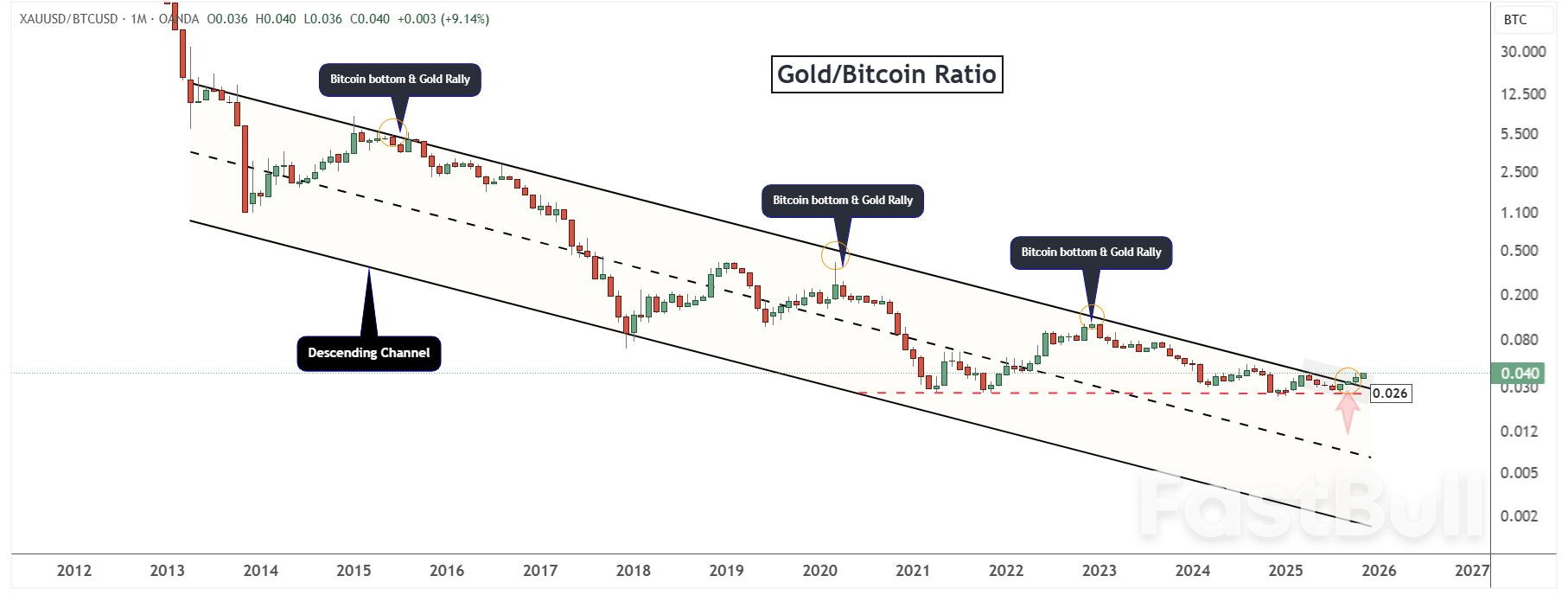
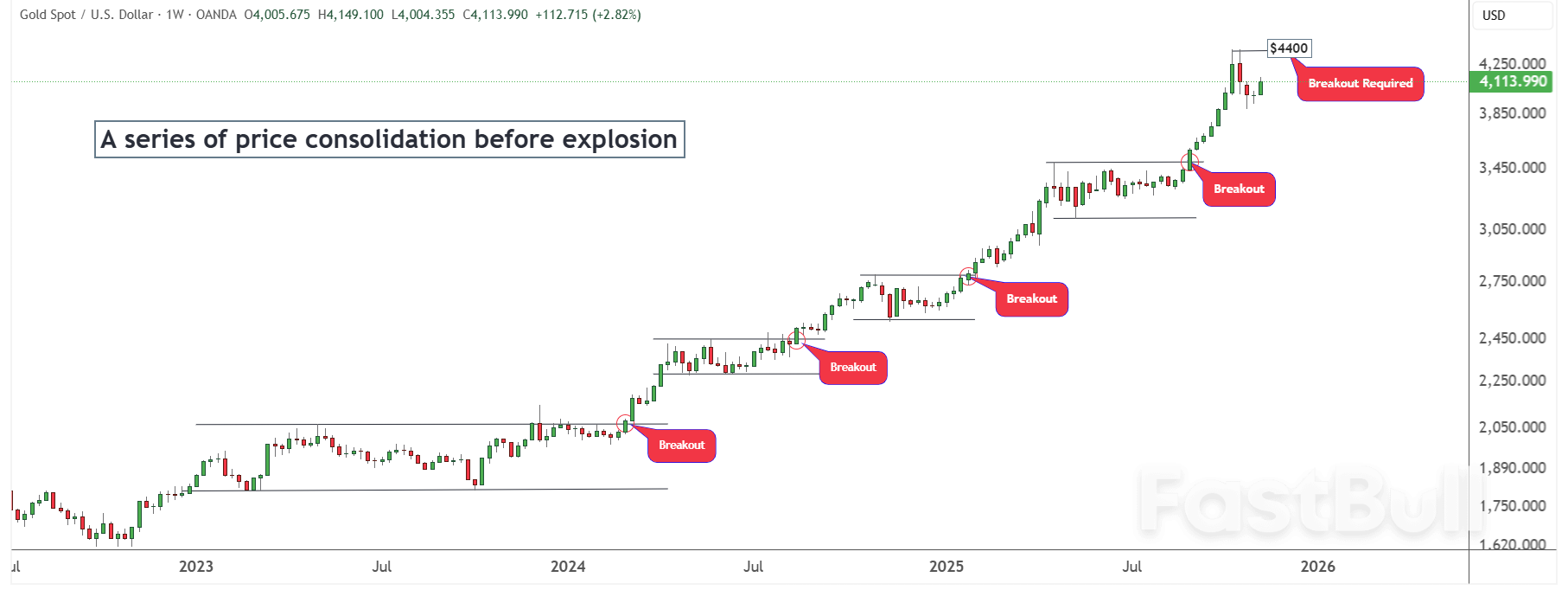
Gold broke above $4,050, gaining on safe-haven demand and Fed cut expectations, while Bitcoin held near $107K. Analysts see a shift favoring gold, with potential toward $5,000 if momentum continues.

A prominent Wall Street analyst has declared this the "best time ever" for asset owners as monetary policy shifts, massive technology spending, and potential fiscal stimulus converge.
Adam Kobeissi, founder of The Kobeissi Letter, made the bold assessment during an interview with investor Anthony Pompliano, arguing that rate cuts into stagflation, combined with unprecedented corporate spending, create ideal conditions for nominal asset appreciation.
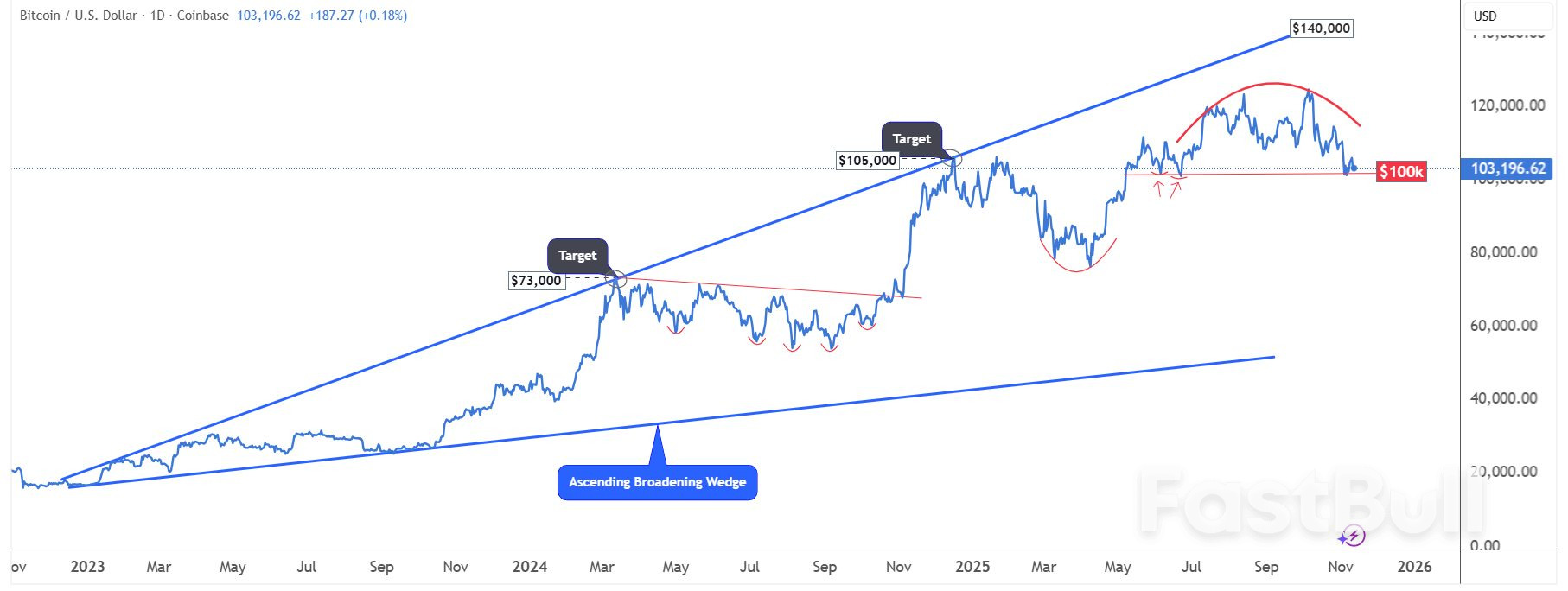
His outlook extends across equities, real estate, and digital assets, including Bitcoin, which he projects could reach $200,000 within 12 to 24 months.
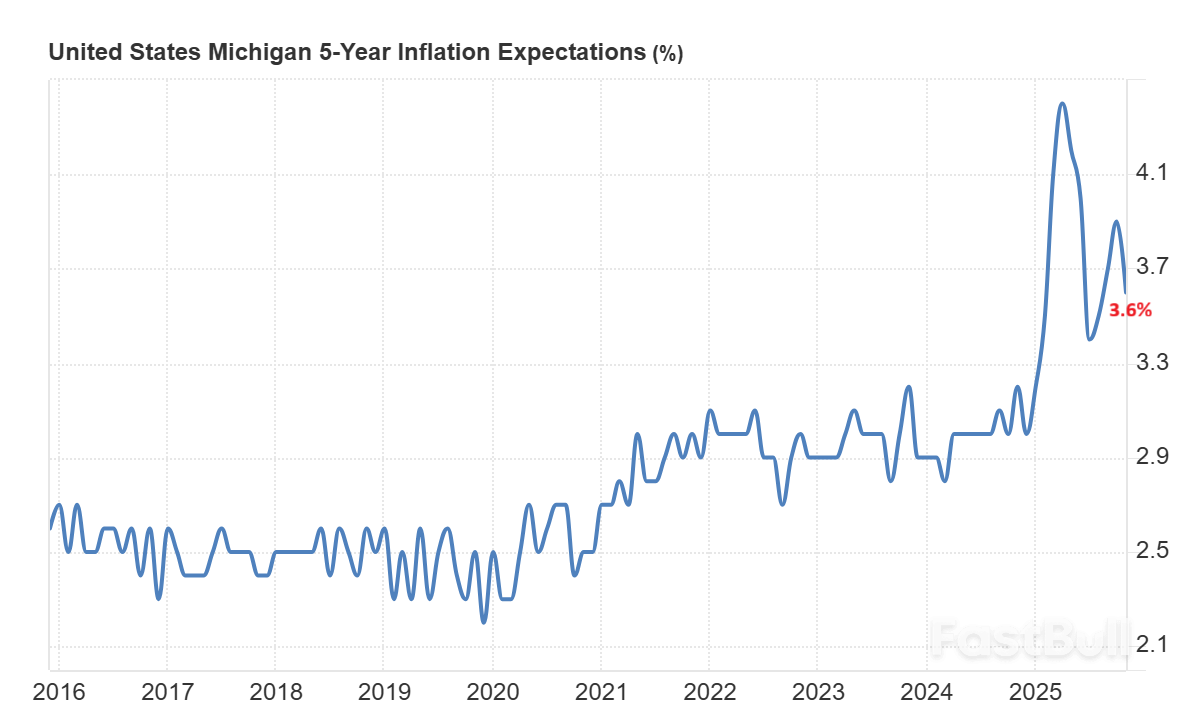
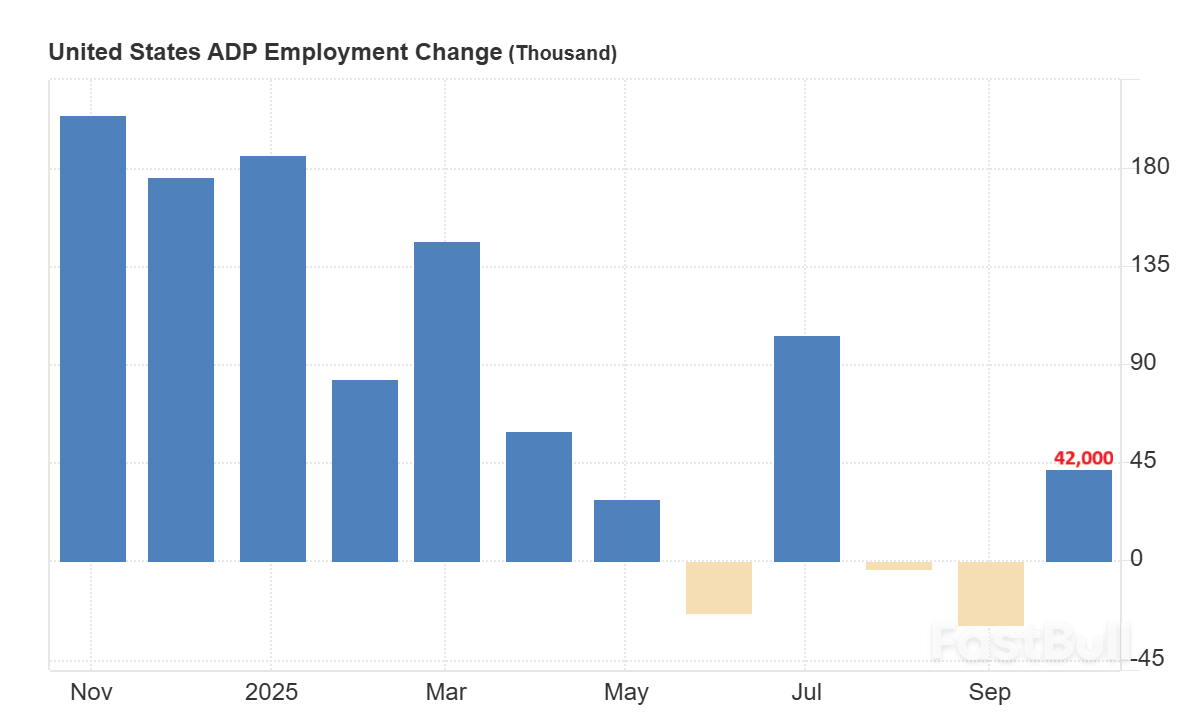
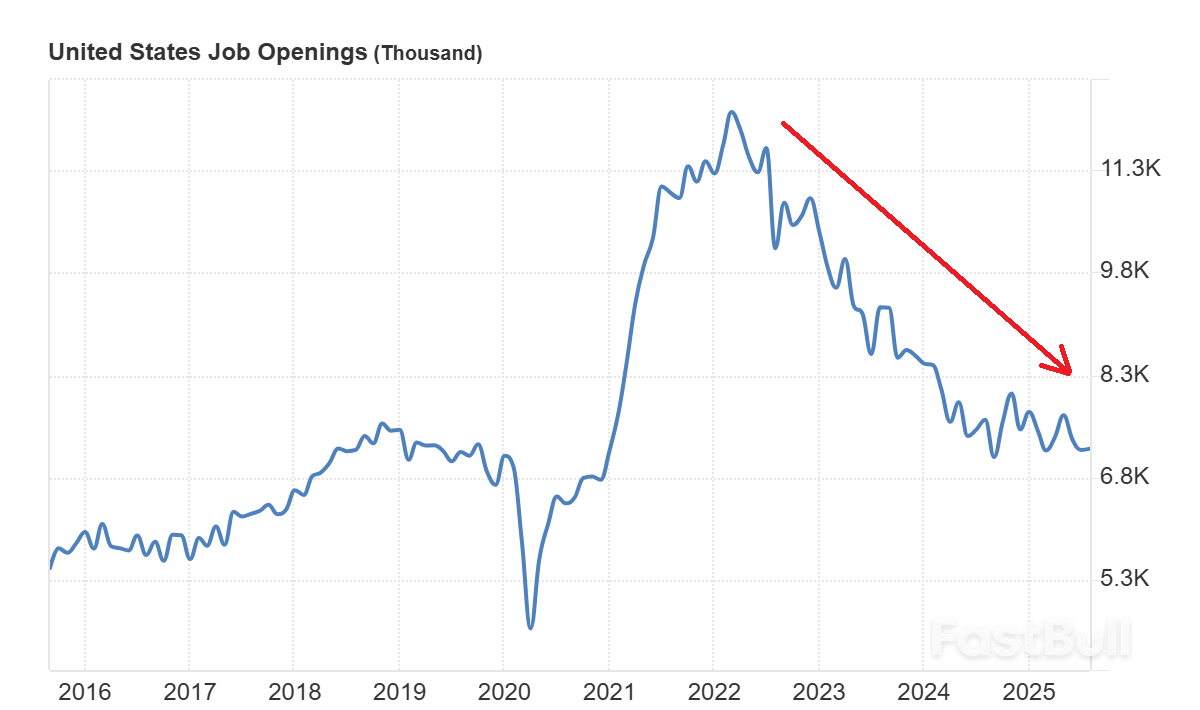
The analysis comes as the Federal Reserve navigates a massive split over monetary policy direction, with officials divided between addressing persistent inflation that exceeds 3% and supporting a weakening labor market where unemployment approaches 5%.
This internal division has complicated what initially appeared as a straightforward path toward continued rate cuts through year-end.
The Federal Reserve faces its most significant internal divide during Jerome Powell's nearly eight-year tenure as chair.
Officials are divided over which threat poses the greater risk, persistent inflation or labor market deterioration, creating uncertainty surrounding the December rate decision.
While 10 of 19 officials initially penciled in cuts for both October and December when they agreed to a quarter-point reduction in September, hawkish resistance hardened after the late October cut, leaving the current range at 3.75%-4%.
The divide intensified during the recent government shutdown, which suspended the release of employment and inflation reports that typically help reconcile policy disagreements.
Hawks seized this data void to argue for a pause, citing steady consumer spending and business preparations for tariff-related price increases.
Meanwhile, doves worried about labor market softness lacked fresh evidence to maintain a strong case for continued cuts.
According to Wall Street Journal Fed reporter Nick Timiraos, the rupture stems from three unresolved questions:
Whether tariff-driven price increases prove temporary.
Whether falling payroll growth reflects weak labor demand or reduced immigration-related supply.
Whether current interest rates remain restrictive enough to warrant further cuts.
"People just have different risk tolerances," Powell said after the October meeting, explaining the disparate views within the committee.
Kobeissi's bullish thesis centers on what he describes as an unprecedented convergence of favorable conditions.
"This is the best economy all time for asset owners if you own stocks, real estate, gold, and bitcoin, these hard assets, this is the best economy for you. Look at S&P 100 up almost 40% since April," he said during the interview.
"On the flip side, ask a random person walking around New York City. Are we in recession? There's 50% of people who would say yes. So I think what's happening is the wealth gap in the U.S broad."
He emphasized the mathematical simplicity of his investment case, stating that "Rate Cuts Into Stagflation + $600B/yr in Mag 7 CapEx + $2,000 Tariff Stimulus Checks. Own assets or be left behind."
Notably, Kobeissi also highlights the Magnificent Seven tech companies that now spend over $100 billion per quarter on capital expenditures, representing approximately $600 billion annually.
"These seven companies are now around 40% of the S&P 500, I mean, in my view, you're taking a losing bet," he said.
Specifically, regarding Bitcoin, Kobeissi expressed confidence in the asset's trajectory despite recent volatility.
"I think if you're a bitcoin investor, which obviously you are, and anyone who has been at least watching this asset class, not even investing in it, you know that 20 to 30% downswing is almost like normal every single you know this could happen on any given month type of thing," he said.
"I still think all-time highs for bitcoin will probably see $200,000 bitcoin within the next 12 to 24 months. It's just going to be like I said that the best period of all time doesn't exist, and bitcoin is definitely one of the assets at the forefront of that push."
Bitcoin's value witnessed a sharp drop during recent treasury bond discussions led by Bessent. Simultaneously, SEC Chairman Paul Atkins addressed which altcoins might be classified as securities. Despite this year's supportive crypto regulations, macroeconomic shifts have caused significant disruptions.
Under former SEC Chairman Gensler, all altcoins were deemed securities. However, with the new administration, this perspective shifted. Paul Atkins, the current SEC Chairman, is seen as favorable to crypto, suggesting many digital assets don't fall within SEC regulation. He has clarified that network tokens and meme coins aren't considered securities.
Atkins stressed that only those assets with explicit managerial commitments qualify as securities. He underscored that cryptocurrencies serving functional roles, such as tickets or memberships, don't fall under this classification.
Atkins proposed a token taxonomy based on the Howey investment contract analysis, acknowledging limitations within existing laws. This assessment is expected soon from the Commission.
According to Atkins, most crypto tokens in current circulation aren't securities. On occasion, a token can be part of a securities offering via an investment contract. This application aligns with established securities laws.
Existing securities regulations list instruments like stocks, notes, and bonds, with a broader category known as "investment contracts." This term refers to the relationship between parties, not a fixed label on a token.
Investment contracts are not perpetual and may expire despite the continued trading of the token on the blockchain. Some argue that if a token is linked to an investment contract, it remains a security indefinitely.
This misconception suggests all succeeding transactions are securities-related. Atkins finds this difficult to align with legal texts, Supreme Court rulings, or even practical reasoning.
"Not every transaction involving these tokens should be considered a securities transaction," Atkins reflected, highlighting a logical flaw in such interpretation.
Atkins' remarks underline a nuanced approach to crypto regulation, distinguishing between types of tokens and their inherent nature rather than applying a sweeping categorization. This underscores a broader regulatory shift, seeking to reconcile legal boundaries with the rapid innovation in cryptocurrency markets.


President Donald Trump said the US needed skilled workers from abroad even as his administration has taken steps to make it harder for businesses to use the visa system to attract such employees.
In an interview with Fox News that aired Tuesday, Trump was pressed by host Laura Ingraham about H-1B visas for skilled foreign workers and whether his administration would make them less of a priority. Ingraham argued that visas would make it harder for Trump to achieve his goal of raising wages for US workers.
"You also do have to bring in talent," Trump countered.
When Ingraham said the US already had "plenty of talented people here," Trump responded "no."
"You don't have certain talents. And you have to, people have to learn. You can't take people off, like an unemployment line, and say, 'I'm going to put you into a factory. We're going to make missiles,'" he said.
Trump's comments arguing that some level of skilled workers are needed come after the administration earlier this year slapped a $100,000 application fee on the H-1B visa, which is widely used by some of the country's largest companies, especially tech industry giants, to bring in workers from other countries.
That policy change drew a lawsuit from the US Chamber of Commerce, highlighting the clash between corporate America and Trump's immigration crackdown. Trump in his second term has ramped up deportations of undocumented migrants, including through the deployment of troops to major cities to assist immigration officers, spurring worries about the impact on the labor supply for businesses.
Employers have also become less eager to sponsor international students' work visas, targeting a pathway that saw many graduate from US universities and land positions with companies.
The immigration crackdown has also roiled ties between Washington and allies, including South Korea, and complicated efforts by Trump to convince foreign companies to invest more in the US. A September raid on a Hyundai Motor Co. and LG Energy Solution Ltd. electric battery plant in Georgia saw more than 300 South Korean workers detained amid allegations they were in the US illegally, sparking a rift with Seoul.
"In Georgia, they raided because they wanted illegal immigrants," Trump said, citing that incident in the Fox News interview. "They had people from South Korea that make batteries all their lives. You know, making batteries are very complicated. It's not an easy thing, and very dangerous. A lot of explosions, lot of problems."
"You can't just say a country is coming in, going to invest $10 billion to build a plant and going to take people off an unemployment line who haven't worked in five years, and they're going to start making missiles. It doesn't work that way," he added.
Secretary of State Marco Rubio, after the incident, sought to assure South Korean officials that the US still welcomed investment from the country. Trump has previously said that he would work on a "whole new plan" to ensure that highly skilled workers could come to the US to help establish manufacturing plants.
White Label
Data API
Web Plug-ins
Poster Maker
Affiliate Program
The risk of loss in trading financial instruments such as stocks, FX, commodities, futures, bonds, ETFs and crypto can be substantial. You may sustain a total loss of the funds that you deposit with your broker. Therefore, you should carefully consider whether such trading is suitable for you in light of your circumstances and financial resources.
No decision to invest should be made without thoroughly conducting due diligence by yourself or consulting with your financial advisors. Our web content might not suit you since we don't know your financial conditions and investment needs. Our financial information might have latency or contain inaccuracy, so you should be fully responsible for any of your trading and investment decisions. The company will not be responsible for your capital loss.
Without getting permission from the website, you are not allowed to copy the website's graphics, texts, or trademarks. Intellectual property rights in the content or data incorporated into this website belong to its providers and exchange merchants.
Not Logged In
Log in to access more features

FastBull Membership
Not yet
Purchase
Log In
Sign Up