


- WTI
- XAUUSD
- XAGUSD
- USDX


Markets
Analysis
User
24/7
Economic Calendar
Education
Data
- Names
- Latest
- Prev














Key takeaways: Developers command high salaries even for junior positions. On average, a North American blockchain developer can earn over $150,000. The crypto job market extends beyond technical positions, with product managers, CTOs and compliance officers all commanding well-compensated roles. Crypto CEOs generate massive wealth primarily through equity stakes and token allocations rather than just base salaries. Top figures like Changpeng Zhao have reached billions in net worth. The crypto job market follows the cyclical market patterns with more opportunities during bull runs and shrinking employment rates during bear markets. The overall cryptocurrency market cap reached $4 trillion for the first time in August 2025. This isn’t just a lucrative market for investors; the boom has also created a rapidly growing and highly rewarding job market. Developers are earning six-figure salaries, and many crypto CEOs have built fortunes worth billions. It’s an industry that now spans a comprehensive professional ecosystem, from coding smart contracts and managing communities to launching the next unicorn startup.
How much do crypto developers earn?
In many ways, the foundation of crypto’s growth and wealth begins with the developers: the people building the infrastructure that makes everything else possible.
According to Web3 Careers, as of September 2025, the average yearly salary of a blockchain developer is $150,000, with salaries ranging between $78,000 and $262,000. Ethereum developers earn between $80,000 and $260,000, while smart contract developers average around $125,000 annually.
It’s important to note that geographical and experience differences play a major role in salary ranges. Developers in North America tend to earn some of the highest salaries — many US blockchain and Web3 roles average well above $140,000, especially at mid- to senior-level positions.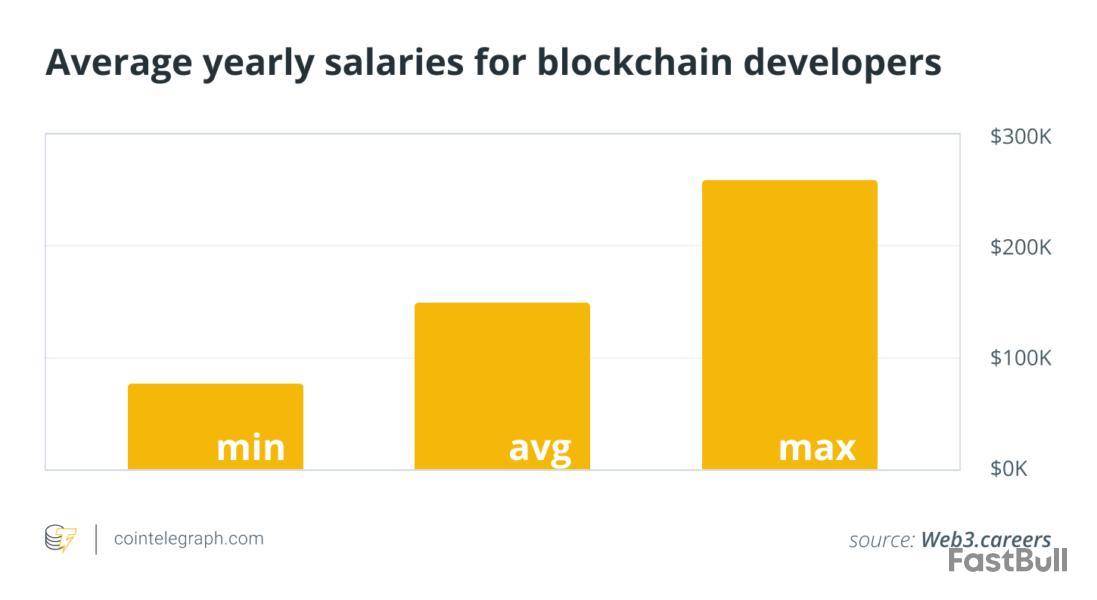
An interesting area of extra earning potential for developers is the ability to supplement their traditional salary with freelance and decentralized autonomous organization (DAO) work. Contributing to DAO projects can add several thousand dollars monthly and offer the ability to obtain token rewards that can appreciate during crypto market booms.
High-paying Web3 careers outside development
While developers are the ones building these ecosystems, there’s a lot more that goes into creating a successful Web3 project or blockchain component.
Product and management roles also command premium salaries due to crypto’s complex mix of technology, economics and user experience, which needs a steady hand at the wheel.
Data from Web3.Career shows that product managers in the industry average about $171,000, while project managers earn around $122,000. At the top of the career ladder, a chief technical officer can make over $300,000 per year.
Regulatory complexity is another maze for crypto organizations to navigate. There’s strong demand for crypto-specific legal expertise, as most traditional law firms and accounting practices aren’t equipped to handle digital tokens.
This puts a premium on legal services. In Web3, legal professionals earn an average of around $170,000, with base salaries ranging from $120,000 to $275,000. Compliance officers, meanwhile, see a wide spread — from roughly $75,000 at junior levels to well over $150,000 in senior positions, depending on jurisdiction and company size.
Equity and token allocations for founders
The top earners in crypto are usually the CEOs and founders. While startup CEO pay can be tricky to pin down, many have been drawing a base salary of around $150,000 in 2025, with additional upside coming from equity or tokens. That’s higher than what many traditional tech startup founders typically take home.
However, this is just a base salary and often represents only a fraction of total compensation. The real wealth for these founders and executives usually comes from their equity stakes and token allocations.
In some crypto startups, successful founders might hold 5%-15% of equity even after early dilution, plus founder token allocations ranging from 5% to 25% of the total token supply — though actual percentages vary widely by project, stage and structure.
Crypto’s richest power players
Unsurprisingly, such a lucrative industry is dominated by headline billionaire names.
The top crypto success stories have generated unprecedented wealth. Here are the top crypto individuals by wealth:
Changpeng “CZ” Zhao: The Binance founder and ex-CEO with an estimated net worth of $82.6 billion in 2025. Bloomberg’s wealth index attributes around 90% of Binance’s value to him, along with a large personal holding of BNB (BNB) tokens.
Giancarlo Devasini: He is the chief financial officer of Bitfinex and a founding member of Tether, which is the issuer of the largest stablecoin by market capitalization and among the most traded crypto assets globally. He is estimated to hold about 47% of Tether, giving him a net worth of roughly $22.4 billion.
Brian Armstrong: CEO of Coinbase, he owns a significant stake (reported around 19%) in the company, giving him a net worth of $13 billion.
Michael Saylor: Not originally a crypto native, he is now executive chairman of Strategy (formerly MicroStrategy). He has publicly stated he holds about 17,732 Bitcoin (BTC), while Strategy’s corporate holdings have grown to roughly 639,835 BTC.
Chris Larsen: As the co-founder and longtime executive chairman, he holds large onchain holdings of 2.5 billion XRP (XRP) and a notable equity stake in Ripple Labs. Following XRP’s rebound (above $3 in 2025) and the US Securities and Exchange Commission’s withdrawal of further appeals, his net worth is estimated in the $9 billion-$11 billion range by industry sources.
How market cycles shape crypto careers
The crypto world has shown a cyclical pattern in its first 15 years. Often, the job market is directly correlated with market performance.
During bull markets, you might see hundreds of new jobs created monthly as company valuations and profits grow quickly, and so too does demand for products and services. Trading on exchanges grows, customer demand surges, and companies hire aggressively to support operations.
During bear markets, jobs are cut dramatically. Companies need to downsize and become more efficient as margins get squeezed and operations become less profitable due to lower customer demand and downward token prices.
This article does not contain investment advice or recommendations. Every investment and trading move involves risk, and readers should conduct their own research when making a decision.

728 RM B 7/F GEE LOK IND BLDG NO 34 HUNG TO RD KWUN TONG KLN HONG KONG





The risk of loss in trading financial instruments such as stocks, FX, commodities, futures, bonds, ETFs and crypto can be substantial. You may sustain a total loss of the funds that you deposit with your broker. Therefore, you should carefully consider whether such trading is suitable for you in light of your circumstances and financial resources.
No decision to invest should be made without thoroughly conducting due diligence by yourself or consulting with your financial advisors. Our web content might not suit you since we don't know your financial conditions and investment needs. Our financial information might have latency or contain inaccuracy, so you should be fully responsible for any of your trading and investment decisions. The company will not be responsible for your capital loss.
Without getting permission from the website, you are not allowed to copy the website's graphics, texts, or trademarks. Intellectual property rights in the content or data incorporated into this website belong to its providers and exchange merchants.
Not Logged In
Log in to access more features


Log In
Sign Up


