Markets
News
Analysis
User
24/7
Economic Calendar
Education
Data
- Names
- Latest
- Prev


Signal Accounts for Members
All Signal Accounts
All Contests


U.K. Trade Balance Non-EU (SA) (Oct)A:--
F: --
P: --
U.K. Trade Balance (Oct)A:--
F: --
P: --
U.K. Services Index MoMA:--
F: --
P: --
U.K. Construction Output MoM (SA) (Oct)A:--
F: --
P: --
U.K. Industrial Output YoY (Oct)A:--
F: --
P: --
U.K. Trade Balance (SA) (Oct)A:--
F: --
P: --
U.K. Trade Balance EU (SA) (Oct)A:--
F: --
P: --
U.K. Manufacturing Output YoY (Oct)A:--
F: --
P: --
U.K. GDP MoM (Oct)A:--
F: --
P: --
U.K. GDP YoY (SA) (Oct)A:--
F: --
P: --
U.K. Industrial Output MoM (Oct)A:--
F: --
P: --
U.K. Construction Output YoY (Oct)A:--
F: --
P: --
France HICP Final MoM (Nov)A:--
F: --
P: --
China, Mainland Outstanding Loans Growth YoY (Nov)A:--
F: --
P: --
China, Mainland M2 Money Supply YoY (Nov)A:--
F: --
P: --
China, Mainland M0 Money Supply YoY (Nov)A:--
F: --
P: --
China, Mainland M1 Money Supply YoY (Nov)A:--
F: --
P: --
India CPI YoY (Nov)A:--
F: --
P: --
India Deposit Gowth YoYA:--
F: --
P: --
Brazil Services Growth YoY (Oct)A:--
F: --
P: --
Mexico Industrial Output YoY (Oct)A:--
F: --
P: --
Russia Trade Balance (Oct)A:--
F: --
P: --
Philadelphia Fed President Henry Paulson delivers a speech
Canada Building Permits MoM (SA) (Oct)A:--
F: --
P: --
Canada Wholesale Sales YoY (Oct)A:--
F: --
P: --
Canada Wholesale Inventory MoM (Oct)A:--
F: --
P: --
Canada Wholesale Inventory YoY (Oct)A:--
F: --
P: --
Canada Wholesale Sales MoM (SA) (Oct)A:--
F: --
P: --
Germany Current Account (Not SA) (Oct)A:--
F: --
P: --
U.S. Weekly Total Rig CountA:--
F: --
P: --
U.S. Weekly Total Oil Rig CountA:--
F: --
P: --
Japan Tankan Large Non-Manufacturing Diffusion Index (Q4)--
F: --
P: --
Japan Tankan Small Manufacturing Outlook Index (Q4)--
F: --
P: --
Japan Tankan Large Non-Manufacturing Outlook Index (Q4)--
F: --
P: --
Japan Tankan Large Manufacturing Outlook Index (Q4)--
F: --
P: --
Japan Tankan Small Manufacturing Diffusion Index (Q4)--
F: --
P: --
Japan Tankan Large Manufacturing Diffusion Index (Q4)--
F: --
P: --
Japan Tankan Large-Enterprise Capital Expenditure YoY (Q4)--
F: --
P: --
U.K. Rightmove House Price Index YoY (Dec)--
F: --
P: --
China, Mainland Industrial Output YoY (YTD) (Nov)--
F: --
P: --
China, Mainland Urban Area Unemployment Rate (Nov)--
F: --
P: --
Saudi Arabia CPI YoY (Nov)--
F: --
P: --
Euro Zone Industrial Output YoY (Oct)--
F: --
P: --
Euro Zone Industrial Output MoM (Oct)--
F: --
P: --
Canada Existing Home Sales MoM (Nov)--
F: --
P: --
Euro Zone Total Reserve Assets (Nov)--
F: --
P: --
U.K. Inflation Rate Expectations--
F: --
P: --
Canada National Economic Confidence Index--
F: --
P: --
Canada New Housing Starts (Nov)--
F: --
P: --
U.S. NY Fed Manufacturing Employment Index (Dec)--
F: --
P: --
U.S. NY Fed Manufacturing Index (Dec)--
F: --
P: --
Canada Core CPI YoY (Nov)--
F: --
P: --
Canada Manufacturing Unfilled Orders MoM (Oct)--
F: --
P: --
Canada Manufacturing New Orders MoM (Oct)--
F: --
P: --
Canada Core CPI MoM (Nov)--
F: --
P: --
Canada Manufacturing Inventory MoM (Oct)--
F: --
P: --
Canada CPI YoY (Nov)--
F: --
P: --
Canada CPI MoM (Nov)--
F: --
P: --
Canada CPI YoY (SA) (Nov)--
F: --
P: --
Canada Core CPI MoM (SA) (Nov)--
F: --
P: --


No matching data
Latest Views
Latest Views
Trending Topics
Top Columnists
Latest Update
White Label
Data API
Web Plug-ins
Affiliate Program
View All

No data
Federal Reserve officials on Monday downplayed immediate concerns from Moody’s credit downgrade of the U.S., but acknowledged rising borrowing costs, policy unpredictability...
Federal Reserve Bank of Atlanta President Raphael Bostic repeated that he sees the central bank delivering one interest-rate cut this year amid tariff-induced uncertainty.
But, he added, a faster-than-expected resolution to some of the Trump administration’s ongoing trade negotiations could mean the Fed can act earlier.
“If it takes negotiations a long time to settle things out — we have another 90 days on China, for example — that starts to push much further into the summer, in which case we won’t actually know what the true effects are going to be for several months after that,” Bostic said Monday in an interview with Bloomberg Television on the sidelines of his bank’s 2025 Financial Markets Conference in Fernandina Beach, Florida.
But there’s also the possibility that trade discussions are resolved more quickly and tariff rates come in lower than forecast, he said.
“In that case we may be able to pull forward some of our actions, because there may not be as much that we need to do in terms of managing the price level,” he said.
Bostic said the Fed can’t act in the current environment in which consumers and businesses have halted big spending decisions as they wait to see how tariff negotiations play out.
Most Fed officials have said interest rates are well positioned for the central bank to wait and see how the economy reacts to new levies. Bostic called the current policy setting “mildly restrictive,” meaning it’s weighing a bit on economic activity. Fed officials have kept rates on hold this year after cutting them by a full percentage point in the last three months of 2024 as they try to further cool inflation.
Federal Reserve Vice Chair Philip Jefferson addressed the 2025 Financial Markets Conference, sponsored by the Federal Reserve Bank of Atlanta, on the topic of "Liquidity Facilities: Purposes and Functions". The conference was centered around developments in financial intermediation and their potential implications for monetary policy.
Jefferson shed light on the role of central banks in providing liquidity, a fundamental element of financial intermediation. He emphasized that the main forms of liquidity offered by central banks, such as currency and bank reserves, are the backbone of the economy’s safe liquidity. The Vice Chair also highlighted the need for central banks to be prepared to provide liquidity in times of financial stress and to take steps to minimize moral hazard.
In his speech, Jefferson focused on two types of liquidity provision that aim to reduce frictions associated with the basic operations of banks: intraday credit and overnight credit. He also drew attention to the design features of similar liquidity facilities in the U.K., Japan, and the euro area, noting the importance of learning from other central banks’ experiences.
Jefferson explained how liquidity provisions operate in the U.S. Banks maintain deposit accounts at the Federal Reserve (Fed), and these reserves are used to meet payment flows. To manage mismatches in the timing of payment inflows and outflows, the Fed extends intraday credit, also known as daylight overdrafts. These intraday credit facilities provide temporary credit to depository institutions such as commercial banks and credit unions to support the smooth functioning of the payment system.
The Fed also provides overnight credit through the discount window to approved counterparties against a broad range of collateral to mitigate short-term misallocations of liquidity. All discount window loans are collateralized, and a wide range of bank assets, including a variety of loans and securities, are eligible to serve as collateral. The Fed operates three separate facilities under the discount window: primary credit, secondary credit, and seasonal credit.
Jefferson also compared the design features of some foreign central bank liquidity facilities that are similar to the Fed’s discount window. He noted that the Bank of England (BOE) operates two such short-term facilities: an operational standing facility and a discount window. The Bank of Japan (BOJ) has two facilities: one that provides overnight loans and another that provides somewhat longer-term funding up to three months. The European Central Bank (ECB) operates a marginal lending facility quite similar to the Fed’s discount window.
In conclusion, Jefferson highlighted the Fed’s ongoing efforts to improve the operational aspects of the discount window and intraday credit. He pointed to several advancements, including the launch of a convenient online portal called "Discount Window Direct" for requesting and prepaying discount window loans. The Fed also issued a public request for information (RFI) last year seeking to identify operational frictions in these facilities, and those comments are currently under review.
This article was generated with the support of AI and reviewed by an editor. For more information see our T&C.
New York Federal Reserve president John Williams acknowledged on Monday that investors are taking a look at how they invest in US assets while noting he's seen no large-scale move away from the nation, adding that the US central bank can take its time before deciding its next interest rate move.
"We have heard over the last few months, there are some rumors or concerns about, well, do investors want to be so heavily invested" in Treasuries and other dollar assets given big government policy changes and large levels of uncertainty, Williams told a Mortgage Bankers Association conference in New York.
Amid this debate, "we're not seeing major changes" in how investors deploy their cash in US markets, although in the Treasury bond market, "we have seen some price effects," Williams said.
Investors "have viewed and continue to view" the US as "a great place to invest, including Treasuries, fixed income assets, so I think that narrative is still there," Williams said. But he added that with all the volatility and uncertainty, investors are reflecting on "how they want to invest their portfolios."
Williams, who leads the Fed bank closest to markets, also said when it comes to "core" fixed income markets like the Treasury market, the sector has been "functioning very well."
The New York Fed chief also said "the economy is doing very well" at the moment amid lots of uncertainty and some signs in recent data that there could be trouble ahead. Fed interest rate policy is slightly restrictive of growth and is "well positioned" for what lies ahead, he said.
"It's going to take some time to get a clear view" on how the economy is faring given all the government policy shifts and "we can take our time" to figure out where interest rate policy stands. He said clarity on the impact of things like the surge in import tariffs implemented by the Trump administration will not come quickly.
Williams cautioned against expecting imminent clarity on the economy and said some certainty is "not going to be in June" or July.
Uploaded by Magessan Varatharaja
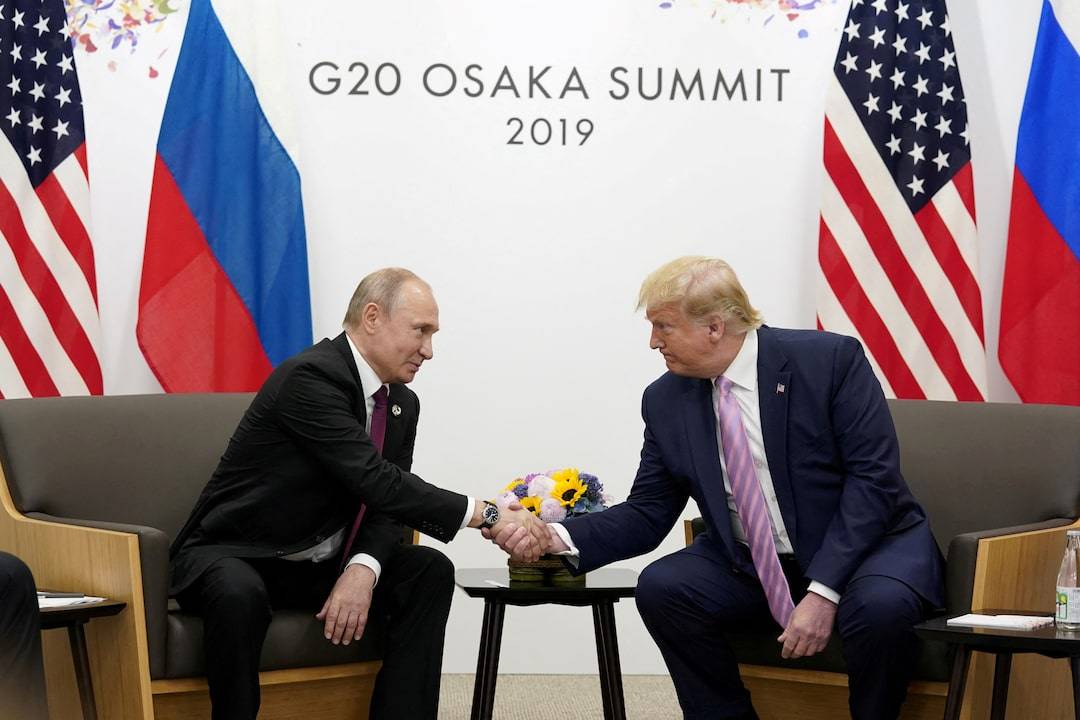
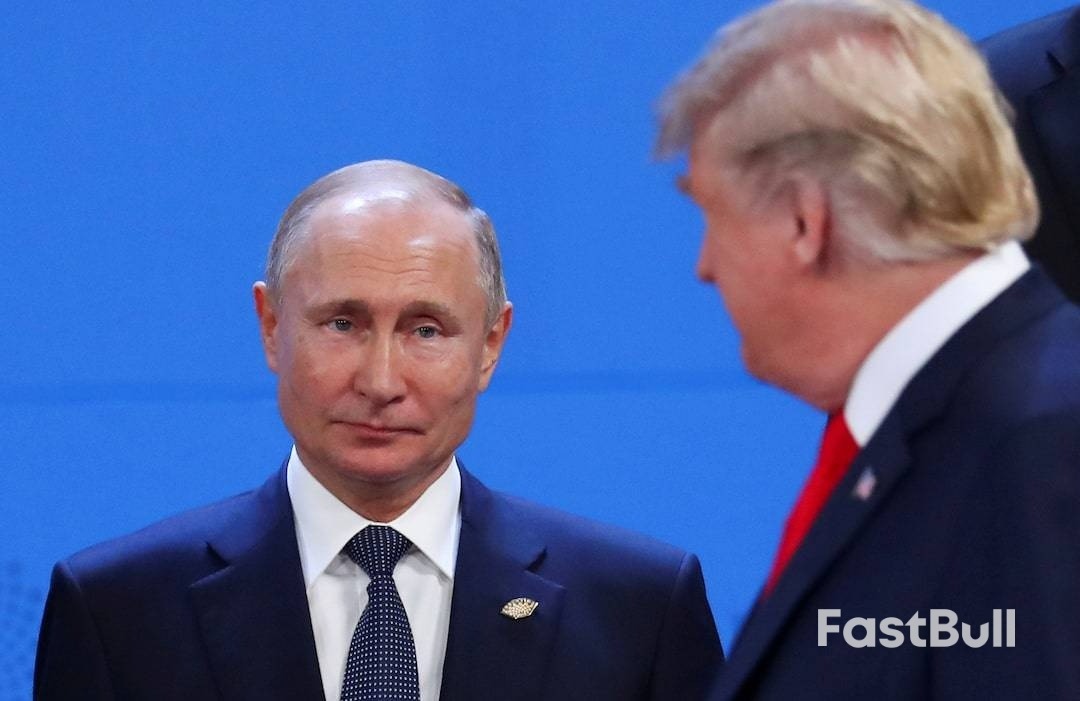
President Donald Trump spoke with President Vladimir Putin on Monday and said Russia and Ukraine will immediately start negotiations toward a ceasefire, but the Kremlin said reaching an agreement would take time and Trump indicated he was not ready to join Europe with fresh sanctions to pressure Moscow.
In a social media post, Trump said he relayed the plan to Ukraine's President Volodymyr Zelenskiy as well as the leaders of the European Union, France, Italy, Germany and Finland in a group call following his session with the Russian leader.
"Russia and Ukraine will immediately start negotiations toward a Ceasefire and, more importantly, an END to the War," Trump said, adding later at the White House that he thought "some progress is being made."
European leaders decided to increase pressure on Russia through sanctions after Trump briefed them on his call with Putin, German Chancellor Friedrich Merz said in an X post late on Monday.
Trump did not appear ready to follow that move. Asked why he had not imposed fresh sanctions to push Moscow into a peace deal as he has threatened, Trump told reporters:
"Well because I think there's a chance of getting something done, and if you do that, you can also make it much worse. But there could be a time where that's going to happen."
Trump said there were "some big egos involved." Without progress, "I'm just going to back away," he said, repeating a warning that he could abandon the process. "This is not my war."
After speaking to Trump, Putin said efforts to end the war were "generally on the right track" and that Moscow was ready to work with Ukraine on a potential peace deal.
"We have agreed with the president of the United States that Russia will propose and is ready to work with the Ukrainian side on a memorandum on a possible future peace accord," he told reporters near the Black Sea resort of Sochi.
European leaders and Ukraine have demanded Russia agree to a ceasefire immediately, and Trump has focused on getting Putin to commit to a 30-day truce. Putin has resisted this, insisting that conditions be met first.
Kremlin aide Yuri Ushakov said Trump and Putin did not discuss a timeline for a ceasefire but did discuss trading nine Russians for nine Americans in a prisoner swap. He said the U.S. leader called prospects for ties between Moscow and Washington "impressive."
Russian state news agencies cited Kremlin spokesperson Dmitry Peskov as saying that Moscow and Kyiv faced "complex contacts" to develop a unified text of a peace and ceasefire memorandum.
"There are no deadlines and there cannot be any. It is clear that everyone wants to do this as quickly as possible, but, of course, the devil is in the details," the RIA agency quoted him as saying.


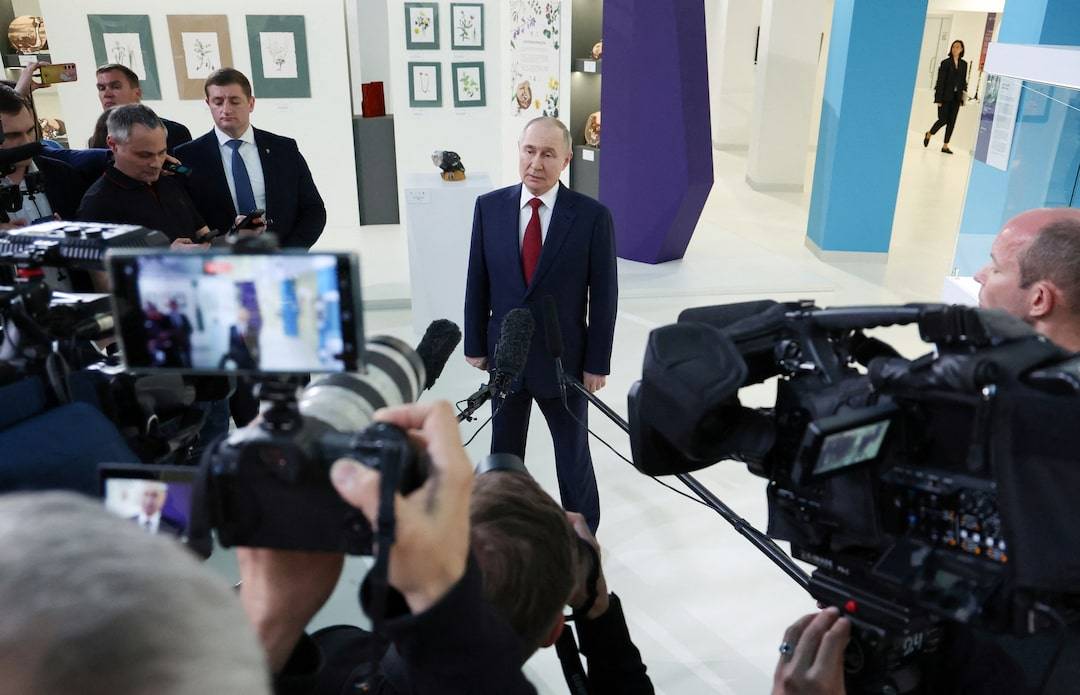
Item 1 of 6 Russian President Vladimir Putin meets with journalists following a phone call with U.S. President Donald Trump at the Sirius educational centre for gifted children near Sochi in the Krasnodar region, Russia, May 19, 2025. Sputnik/Vyacheslav Prokofyev/Pool via REUTERS
[1/6]Russian President Vladimir Putin meets with journalists following a phone call with U.S. President Donald Trump at the Sirius educational centre for gifted children near Sochi in the Krasnodar region, Russia, May 19, 2025. Sputnik/Vyacheslav Prokofyev/Pool via REUTERS Purchase Licensing Rights, opens new tab
Former Swedish Prime Minister Carl Bildt said on X the call with Trump was "undoubtedly a win for Putin." The Russian leader "deflected the call for an … immediate ceasefire and instead can continue military operations at the same time as he puts pressure on at the negotiating table."
After speaking with Trump, Zelenskiy said Kyiv and its partners might seek a high-level meeting among Ukraine, Russia, the United States, European Union countries and Britain as part of a push to end the war.
He said he hoped this could happen soon and be hosted by Turkey, the Vatican or Switzerland. It was not immediately clear if this would be part of the negotiations Trump said would start immediately.
Trump said the Pope Leo had expressed interest in hosting the negotiations at the Vatican. The Vatican did not immediately respond to a request for comment.
One person familiar with Trump's call with the Ukrainian and European leaders said participants were "shocked" that Trump did not want to push Putin with sanctions.
In a post on X, European Commission President Ursula von der Leyen said only that the conversation with Trump was "good" and it was "important that the U.S. stays engaged."
Ukraine and its supporters have accused Russia of failing to negotiate in good faith, doing the minimum needed to keep Trump from applying new pressure on its economy.
If Trump were to impose new sanctions, it would be a milestone moment given that he has appeared sympathetic towards Russia and torn up the pro-Ukraine policies of his predecessor, Joe Biden.
Prodded by Trump, delegates from the warring countries met last week in Istanbul for the first time since 2022, in the early months of Russia's invasion of Ukraine, but those talks failed to produce a truce.
Prospects for progress dimmed after Putin spurned Zelenskiy's proposal they meet face to face in Istanbul, and Trump said there would be no movement unless he and Putin met.
Putin, whose forces control a fifth of Ukraine and are advancing, has stood firm on his conditions for ending the war.
He said the memorandum Russia and Ukraine would work on about a future peace accord would define "a number of positions, such as, for example, the principles of settlement, the timing of a possible peace agreement."
"The main thing for us is to eliminate the root causes of this crisis," Putin said. "We just need to determine the most effective ways to move towards peace."
Reporting by Guy Faulconbridge and Vladimir Soldatkin in Moscow, Max Hunder and Tom Balmforth in Kyiv, Maxim Rodionov in London and Steve Holland, Susan Heavey, Rami Ayyub and David Brunnstrom in Washington; Editing by Clarence Fernandez, Gareth Jones and Cynthia Osterman
On 4 April 2025, the Supreme Court of Korea unanimously upheld the National Assembly’s impeachment of former South Korean president Yoon Suk-yeol, ending a dramatic saga that began with Yoon’s botched declaration of martial law in December 2024. Yet the outcome of this impeachment process, combined with South Korea’s status as an economically advanced democratic nation, has obscured the concerning and persistent influence of far-right elements in its political landscape.
While a majority of citizens turned out in massive protests against Yoon’s actions, vocal members of the conservative People Power Party and fervent far right groups have organised persistent counter rallies in his defence, even storming a district court in an attempt to delay legal proceedings. A February 2025 survey found that nearly four in ten South Koreans were against Yoon being impeached, suggesting that his support base may not be as marginal as it appears.
Far-right politics in South Korea stems from a deeply rooted tradition of extreme ideological polarisation. Since gaining independence in 1948, Korea’s conservative political leadership has often harnessed the fear of communism to consolidate their fragile hold on power. The Korean War, along with the enduring threat of attacks from North Korea, entrenched anti-communism as a powerful ideological barrier to left-wing mobilisation.
Within this dynamic, any form of progressive opposition could easily be framed as a threat to societal stability. And political democratisation in the late-1980s — initiated under a conservative establishment — did little to significantly weaken these dynamics or the far-right’s influence in politics.
In response to successive transfers of power to moderate liberals in the early-2000s, the so-called ‘New Right’ emerged. Aiming to replicate the success of pro-democracy activists and their grassroots mobilisation tactics, conservatives established powerful networks of far-right civic and religious groups and publishers to drive popular engagement. Yoon tapped into this latent force, elevating New Right forces who whitewashed South Korea’s authoritarian past and framed the progressive opposition as ideological enemies, anti-state actors and North Korean sympathisers.
With a background as a prosecutor, Yoon approached national governance with a similar black and white worldview. Yoon viewed his critics across civil society, the National Assembly and the media not as democratic interlocutors but as guilty criminal forces to be punished. As his policy agenda stalled in parliament, Yoon accused the opposition of secretly working on behalf of North Korean interests to bring him down.
A consistent throughline in support for Yoon’s politics has been the unusual intersection of two demographic groups — young male voters and elderly citizens. Young men have been at the forefront of protests and violent clashes in support of Yoon, starkly contrasting with younger women who overwhelmingly lean liberal and have been at the heart of protests calling for Yoon’s impeachment. Those over the age of 60 have also become an important voting base for the conservative party and key consumers of far-right online content and conspiracy theories.
This phenomenon can be largely attributed to a shared sense of economic disillusionment. In a job market dominated by irregular work, an overwhelming majority of young people are striving to secure stable employment in large corporations or the civil sector — a path that demands exceptional resumes. The lack of safety nets has intensified competition to a near life-or-death struggle for many young jobseekers. The rise of feminism and the #MeToo movement has further fuelled perceptions among young men that they are being unfairly disadvantaged in this ultracompetitive environment, particularly due to their mandatory two years of military conscription.
South Korea’s underdeveloped social welfare system has left it woefully unprepared to support its rapidly aging population. The country has consistently ranked highest in elderly poverty among OECD nations, with government statistics showing that over 38 per cent of seniors live in relative poverty. This demographic not only faces economic precarity but also carries vivid memories of the intense political polarisation that followed the Korean War, making them particularly susceptible to political rhetoric that stokes ideological paranoia against the left.
Yoon skilfully exploited this shared sense of deprivation felt by both groups, with his strongman governing style and imposition of martial law resonating with disillusioned men drawn to the patriarchal promise of order and control. To appeal to young men, Yoon framed feminism as an insidious force, even attempting to dismantle the Ministry of Gender Equality and Family. For the elderly, Yoon stoked red scare anxieties, reviving Cold War-era fears and conspiracies of North Korean aggression that had once defined their reality.
Despite the Supreme Court upholding Yoon’s impeachment, the former president and his supporters remain defiant. South Korea finds itself in a precarious situation, where those who attempted to dismantle democracy claim to be fighting to ‘save the country’. This psychological warfare is likely to persist, especially as Yoon will remain in the limelight with further legal proceedings not only for his insurrection attempt, but also for obstructing arrest and corruption scandals.
Yoon’s impeachment has done more than test South Korea’s political institutions — it has plunged an already disillusioned public into a deeper state of disorientation and polarisation. History shows that each time South Korean democracy has been pushed to the brink, the people have mobilised to claw it back. But with an increasingly divided citizenry, South Korea’s current trajectory points towards intensified partisan conflict, threatening to erode national cohesion for many years to come.
Christopher Khatouki is Research Fellow at the University of New South Wales.
White Label
Data API
Web Plug-ins
Poster Maker
Affiliate Program
The risk of loss in trading financial instruments such as stocks, FX, commodities, futures, bonds, ETFs and crypto can be substantial. You may sustain a total loss of the funds that you deposit with your broker. Therefore, you should carefully consider whether such trading is suitable for you in light of your circumstances and financial resources.
No decision to invest should be made without thoroughly conducting due diligence by yourself or consulting with your financial advisors. Our web content might not suit you since we don't know your financial conditions and investment needs. Our financial information might have latency or contain inaccuracy, so you should be fully responsible for any of your trading and investment decisions. The company will not be responsible for your capital loss.
Without getting permission from the website, you are not allowed to copy the website's graphics, texts, or trademarks. Intellectual property rights in the content or data incorporated into this website belong to its providers and exchange merchants.
Not Logged In
Log in to access more features

FastBull Membership
Not yet
Purchase
Log In
Sign Up