

Markets
News
Analysis
User
24/7
Economic Calendar
Education
Data
- Names
- Latest
- Prev



Signal Accounts for Members
All Signal Accounts
All Contests
 Euro Zone IHS Markit Construction PMI (Nov)
A:--
F: --
P: --
 Italy IHS Markit Construction PMI (Nov)
A:--
F: --
P: --
 U.K. Markit/CIPS Construction PMI (Nov)
A:--
F: --
P: --
 France 10-Year OAT Auction Avg. Yield
A:--
F: --
P: --
Euro Zone Retail Sales MoM (Oct)A:--
F: --
P: --
Euro Zone Retail Sales YoY (Oct)A:--
F: --
P: --
 Brazil GDP YoY (Q3)
A:--
F: --
P: --
 U.S. Challenger Job Cuts (Nov)
A:--
F: --
P: --
U.S. Challenger Job Cuts MoM (Nov)A:--
F: --
P: --
U.S. Challenger Job Cuts YoY (Nov)A:--
F: --
P: --
U.S. Initial Jobless Claims 4-Week Avg. (SA)A:--
F: --
P: --
U.S. Weekly Initial Jobless Claims (SA)A:--
F: --
P: --
U.S. Weekly Continued Jobless Claims (SA)A:--
F: --
P: --
 Canada Ivey PMI (SA) (Nov)
A:--
F: --
P: --
Canada Ivey PMI (Not SA) (Nov)A:--
F: --
P: --
U.S. Non-Defense Capital Durable Goods Orders Revised MoM (Excl. Aircraft) (SA) (Sept)A:--
F: --
U.S. Factory Orders MoM (Excl. Transport) (Sept)A:--
F: --
P: --
U.S. Factory Orders MoM (Sept)A:--
F: --
P: --
U.S. Factory Orders MoM (Excl. Defense) (Sept)A:--
F: --
P: --
U.S. EIA Weekly Natural Gas Stocks ChangeA:--
F: --
P: --
Saudi Arabia Crude Oil ProductionA:--
F: --
P: --
U.S. Weekly Treasuries Held by Foreign Central BanksA:--
F: --
P: --
 Japan Foreign Exchange Reserves (Nov)
A:--
F: --
P: --
 India Repo Rate
A:--
F: --
P: --
India Benchmark Interest RateA:--
F: --
P: --
India Reverse Repo RateA:--
F: --
P: --
India Cash Reserve RatioA:--
F: --
P: --
Japan Leading Indicators Prelim (Oct)A:--
F: --
P: --
U.K. Halifax House Price Index YoY (SA) (Nov)A:--
F: --
P: --
U.K. Halifax House Price Index MoM (SA) (Nov)A:--
F: --
P: --
France Current Account (Not SA) (Oct)--
F: --
P: --
France Trade Balance (SA) (Oct)--
F: --
P: --
France Industrial Output MoM (SA) (Oct)--
F: --
P: --
Italy Retail Sales MoM (SA) (Oct)--
F: --
P: --
Euro Zone Employment YoY (SA) (Q3)--
F: --
P: --
Euro Zone GDP Final YoY (Q3)--
F: --
P: --
Euro Zone GDP Final QoQ (Q3)--
F: --
P: --
Euro Zone Employment Final QoQ (SA) (Q3)--
F: --
P: --
Euro Zone Employment Final (SA) (Q3)--
F: --
Brazil PPI MoM (Oct)--
F: --
P: --
 Mexico Consumer Confidence Index (Nov)
--
F: --
P: --
Canada Unemployment Rate (SA) (Nov)--
F: --
P: --
Canada Labor Force Participation Rate (SA) (Nov)--
F: --
P: --
Canada Employment (SA) (Nov)--
F: --
P: --
Canada Part-Time Employment (SA) (Nov)--
F: --
P: --
Canada Full-time Employment (SA) (Nov)--
F: --
P: --
U.S. Personal Income MoM (Sept)--
F: --
P: --
U.S. Dallas Fed PCE Price Index YoY (Sept)--
F: --
P: --
U.S. PCE Price Index YoY (SA) (Sept)--
F: --
P: --
U.S. PCE Price Index MoM (Sept)--
F: --
P: --
U.S. Personal Outlays MoM (SA) (Sept)--
F: --
P: --
U.S. Core PCE Price Index MoM (Sept)--
F: --
P: --
U.S. UMich 5-Year-Ahead Inflation Expectations Prelim YoY (Dec)--
F: --
P: --
U.S. Core PCE Price Index YoY (Sept)--
F: --
P: --
U.S. Real Personal Consumption Expenditures MoM (Sept)--
F: --
P: --
U.S. 5-10 Year-Ahead Inflation Expectations (Dec)--
F: --
P: --
U.S. UMich Current Economic Conditions Index Prelim (Dec)--
F: --
P: --
U.S. UMich Consumer Sentiment Index Prelim (Dec)--
F: --
P: --
U.S. UMich 1-Year-Ahead Inflation Expectations Prelim (Dec)--
F: --
P: --
U.S. UMich Consumer Expectations Index Prelim (Dec)--
F: --
P: --


No matching data

Latest Views
Latest Views
Trending Topics
Top Columnists
Latest Update
White Label
Data API
Web Plug-ins
Affiliate Program
View All
No data
Bank of Japan policymakers saw a growing case to raise interest rates in the near term, with some calling for the need to ensure companies' wage-hike momentum will be sustained, a summary of opinions at the October meeting showed on Monday.
Bank of Japan policymakers saw a growing case to raise interest rates in the near term, with some calling for the need to ensure companies' wage-hike momentum will be sustained, a summary of opinions at the October meeting showed on Monday.
Of the 13 opinions on monetary policy from the nine-member board, eight called for the need to raise interest rates soon or laid out specific conditions to hike borrowing costs in the near-term horizon, the summary showed.
"While the current situation may not require immediate action, the Bank should not miss the timing to raise the policy interest rate," one member was quoted as saying in the summary.
The BOJ is likely to raise rates if there is "no negative news" regarding the global economy or markets, and if it can confirm that firms' active wage-setting behaviour will be maintained, another opinion showed.
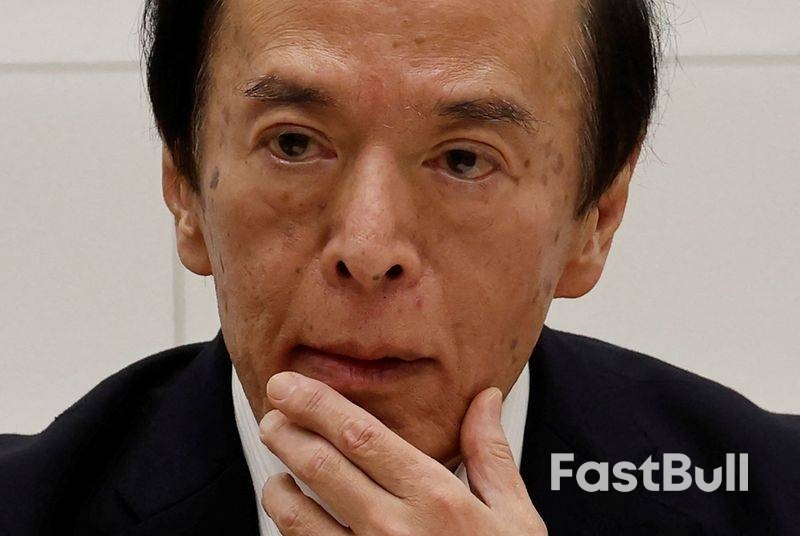
At the two-day meeting through October 30, the BOJ kept interest rates steady at 0.5%. Two board members dissented to the decision and instead proposed hiking rates to 0.75%.
In a news briefing after the meeting, BOJ Governor Kazuo Ueda said he wanted to await "a bit more data" to confirm whether companies will keep raising wages despite pressure from higher U.S. tariffs.
The record-breaking US government shutdown is nearing an end after a group of moderate Senate Democrats agreed to support a deal to reopen the government and fund some departments and agencies for the next year, people familiar with the talks said.
Under the agreement, Congress would pass full-year funding for the departments of Agriculture, Veterans Affairs and Congress itself, while funding other agencies through Jan. 30. The bill would provide pay for furloughed government workers, resume withheld federal payments to states and localities and recall agency employees who were laid off during the shutdown.
The chamber is set to hold a procedural test vote on Sunday. If that vote succeeds, the Senate will need the consent of all members to end the shutdown quickly. Any one senator can force days of delay and votes. The House would then need to pass the bill for the government to reopen and Speaker Mike Johnson has said he will give lawmakers two days notice to return.
"It looks like we're getting closer to the shutdown ending," President Donald Trump told reporters Sunday evening as he returned to the White House.
House passage is not guaranteed. Democratic leaders have spoken out against any deal that doesn't include extending expiring Obamacare subsidies, which this bill does not do. Conservative Republican members want a bill that would fund the entire government until next Sept. 30.
The face-saving accord also falls far short of the goals of House and Senate Democratic leaders, who had demanded an extension of expiring Obamacare premium subsidies and a repeal of Medicaid cuts passed by Republicans earlier this year.
"We will fight the GOP bill in the House of Representatives," House Democratic leader Hakeem Jeffries said in a statement Sunday night.
Instead, the group of Democratic senators accepted the promise of a Senate vote this year on an extension of the Affordable Care Act subsidies — a pledge that was extended weeks ago by Senate Majority Leader John Thune.
Earlier: US to Send Some SNAP Funds Despite Trump Post, White House Says
The approaching resolution of the 40-day shutdown mirrors that of past showdowns where the party attempting to leverage a government closure for policy victories ends up without a victory. Trump failed to secure border wall funding through the 2018-2019 shutdown and Republicans failed to repeal Obamacare during the 2013 closure.
Democrats this year voted 14 times to block a no-strings stopgap measure passed by the House on Sept. 19 that would have kept departments and agencies open through Nov. 21. On Wednesday, the shutdown became the longest in US history, exceeding the 35-day closure in 2018 and 2019 under the first Trump administration.
On Friday, Senate Democratic leader Chuck Schumer said Democrats would allow the government to reopen in exchange for a one-year extension of the expiring Obamacare tax credits.
That offer was swiftly rejected by Republicans, many of whom are demanding a wholesale replacement of Obamacare with a yet-to-be unveiled GOP alternative.
Republicans decided to stonewall Democrats on their demands for $1.5 trillion in new spending by keeping the House out of session since Sept. 19. The White House escalated the pressure by firing government employees en masse, threatening not to pay more than 600,000 furloughed federal workers, and working to defy court orders to pay food stamp benefits.
As the busy Thanksgiving travel season neared, Transportation Secretary Sean Duffy ordered airlines to cancel flights, causing major headaches for travelers. On Sunday, he said it would only get worse in the holiday season.
The tactics largely worked in getting enough Senate Democrats to fold under pressure. Republicans, despite controlling both houses of Congress, needed eight Democrats to go along with a stopgap spending bill to shut off debate in the Senate.
Talks among a group of bipartisan senators accelerated after Democratic sweeps in the off-year elections in New York City, New Jersey, Virginia, California and elsewhere. Republicans said that Democrats appeared concerned that backing off their shutdown demands before voters went to the polls would depress turnout.
It's unclear whether Congress will come to a deal on extending the Obamacare subsidies before they expire at the end of December. House Republican leaders say they are opposed to the extension and instead have floated a series of conservative priorities that include expanding short-term health insurance plans to compete with the Obamacare exchange plans and imposing abortion-related restrictions.
Senate Republicans have said any extension would have to include major changes, such as income caps on who can receive subsidies and a requirement that recipients pay at least some premium. Some, however, are demanding a wholesale rewrite of the Affordable Care Act before agreeing to anything.
The shutdown consequences are costing the US economy about $15 billion a week. And the Congressional Budget Office estimates that the shutdown will reduce annualized quarterly growth rate of real GDP by 1.5 percentage points by mid-November. Consumer sentiment hit a three-year low on Friday amid heightened anxiety about the shutdown, prices and the job market.
It has led to a suspension of most government economic data, causing the Federal Reserve to fly blind as it navigates stubbornly high inflation and rising unemployment.
The U.S. Senate on Sunday moved toward a vote on reopening the federal government amid optimism that an end to the historic shutdown, now in its 40th day, is within reach.
Senators plan to vote on advancing a House-passed stopgap funding bill as early as Sunday evening, with the understanding that it would be amended to combine a short-term funding measure with a package of three full-year appropriations bills, Senate Majority Leader John Thune said.
The amended package would still have to be passed by the House of Representatives and sent to President Donald Trump for his signature, a process that could take several days.
Senate Democrats so far have resisted efforts to pass a funding measure, aiming to pressure Republicans to agree to healthcare fixes that would include extending expiring subsidies under the Affordable Care Act. Under the deal being discussed, the Senate would agree to hold a separate vote later on the subsidies.
U.S. Senator Richard Blumenthal, a Democrat, told reporters that he would vote against the funding measure but suggested there could be enough Democratic support to pass it.
"I am unwilling to accept a vague promise of a vote at some indeterminate time, on some undefined measure that extends the healthcare tax credits," Blumenthal said.
Sunday marked the 40th day of the shutdown, which has sidelined federal workers and affected food aid, parks and travel, while air traffic control staffing shortages threaten to derail travel during the busy Thanksgiving holiday season late this month.
Senator Thom Tillis, a Republican from North Carolina, said the mounting effects of the shutdown have pushed the chamber toward an agreement. He said the final piece, a new resolution that would fund government operations into late January, would also reverse at least some of the Trump administration's mass layoffs of federal workers.
"Temperatures cool, the atmospheric pressure increases outside and all of a sudden it looks like things will come together," Tillis told reporters.
Should the government remain closed for much longer, economic growth could turn negative in the fourth quarter, especially if air travel does not return to normal levels by Thanksgiving, White House economic adviser Kevin Hassett warned on the CBS "Face the Nation" show. Thanksgiving falls on November 27 this year.
The wrangling on Capitol Hill came as Trump on Sunday again pushed to replace subsidies for the Affordable Care Act's health insurance marketplaces with direct payments to individuals.
The subsidies, which helped double ACA enrollment to 24 million since they were put in place in 2021, are at the heart of the shutdown. Republicans have maintained they are open to addressing the issue only after government funding is restored.
Trump took to his Truth Social platform on Sunday to blast the subsidies as a "windfall for Health Insurance Companies, and a DISASTER for the American people," while demanding the funds be sent directly to individuals to buy coverage on their own. "I stand ready to work with both Parties to solve this problem once the Government is open," Trump wrote.
U.S. Treasury Secretary Scott Bessent and Senator Lindsey Graham, a staunch Trump ally, said in separate TV interviews that Trump's healthcare idea would not be introduced before lawmakers pass a federal funding measure.
"We're not proposing it to the Senate right now," Bessent said in an interview with ABC's "This Week" program. "We are not going to negotiate with the Democrats until they reopen the government."
Americans shopping for 2026 Obamacare health insurance plans are facing a more than doubling of monthly premiums on average, health experts estimate, with the pandemic-era subsidies due to expire at the end of the year.
Republicans rejected a proposal on Friday by Senate Minority Leader Chuck Schumer, a Democrat from New York, to vote to reopen the government in exchange for a one-year extension of tax credits that lower costs for plans under the Affordable Care Act, often referred to as Obamacare.
Democratic Senator Adam Schiff said on Sunday he believed Trump's healthcare proposal was aimed at gutting the ACA and allowing insurance companies to deny coverage to people with pre-existing conditions.
"So the same insurance companies he's railing against in those tweets, he is saying: 'I'm going to give you more power to cancel people's policies and not cover them if they have a pre-existing condition,'" Schiff said on ABC's "This Week" program.
US investors are increasingly buying Japanese stocks focused on tech and artificial intelligence, lured by the country's outsized returns compared with US stocks, according to Goldman Sachs Group Inc.
"The increase in US flows is now moving at the fastest pace we've seen since Abenomics," said Bruce Kirk, the bank's chief Japan equity strategist. US investor active participation in Japanese equities is at the highest level since October 2022, Kirk said, adding that he gets frequent requests for meetings.
The inflow of US funds reflects the strong performance of Japanese equities in dollar terms this year. They have been helped by a 2.5% gain in the yen and renewed optimism driven by the pro-stimulus policies of prime minister Sanae Takaichi. The benchmark Nikkei 225 index has climbed about 30% in dollar terms this year, far outpacing the S&P 500 index's 14% gain.
Rising participation from US funds could mark a turning point for Japan's equity market, signaling a potential shift in drivers to growth-oriented shares from value stocks. Driven by pro-investor initiatives from the Tokyo Stock Exchange and the government, value stocks have outperformed growth stocks for four consecutive years since 2021.
"It's very significant that you've got more US participation coming and they tend to gravitate toward tech and AI-related themes," Kirk said in an interview on Nov. 6.
Kirk sees further upside in foreign fund inflows as global investors' net positions in Japanese equities remain light compared to the peak of Abenomics, leaving room for further buying. Global investors' continued diversification needs will likely sustain that trend, he said.
Foreign investors bought a net 384 billion yen ($2.5 billion) of Japanese equities in cash and futures in the last two weeks of October, according to data released by Japan Exchange Group.
Even so, given that the Nikkei entered overbought territory in late October, Kirk said he would not be surprised to see the market consolidate.
728 RM B 7/F GEE LOK IND BLDG NO 34 HUNG TO RD KWUN TONG KLN HONG KONG


White Label
Data API
Web Plug-ins
Poster Maker
Affiliate Program
The risk of loss in trading financial instruments such as stocks, FX, commodities, futures, bonds, ETFs and crypto can be substantial. You may sustain a total loss of the funds that you deposit with your broker. Therefore, you should carefully consider whether such trading is suitable for you in light of your circumstances and financial resources.
No decision to invest should be made without thoroughly conducting due diligence by yourself or consulting with your financial advisors. Our web content might not suit you since we don't know your financial conditions and investment needs. Our financial information might have latency or contain inaccuracy, so you should be fully responsible for any of your trading and investment decisions. The company will not be responsible for your capital loss.
Without getting permission from the website, you are not allowed to copy the website's graphics, texts, or trademarks. Intellectual property rights in the content or data incorporated into this website belong to its providers and exchange merchants.
Not Logged In
Log in to access more features

FastBull Membership
Not yet
Purchase


Log In
Sign Up


