Markets
News
Analysis
User
24/7
Economic Calendar
Education
Data
- Names
- Latest
- Prev


Signal Accounts for Members
All Signal Accounts
All Contests


France 10-Year OAT Auction Avg. YieldA:--
F: --
P: --
Euro Zone Retail Sales MoM (Oct)A:--
F: --
P: --
Euro Zone Retail Sales YoY (Oct)A:--
F: --
P: --
Brazil GDP YoY (Q3)A:--
F: --
P: --
U.S. Challenger Job Cuts (Nov)A:--
F: --
P: --
U.S. Challenger Job Cuts MoM (Nov)A:--
F: --
P: --
U.S. Challenger Job Cuts YoY (Nov)A:--
F: --
P: --
U.S. Initial Jobless Claims 4-Week Avg. (SA)A:--
F: --
P: --
U.S. Weekly Initial Jobless Claims (SA)A:--
F: --
P: --
U.S. Weekly Continued Jobless Claims (SA)A:--
F: --
P: --
Canada Ivey PMI (SA) (Nov)A:--
F: --
P: --
Canada Ivey PMI (Not SA) (Nov)A:--
F: --
P: --
U.S. Non-Defense Capital Durable Goods Orders Revised MoM (Excl. Aircraft) (SA) (Sept)A:--
F: --
U.S. Factory Orders MoM (Excl. Transport) (Sept)A:--
F: --
P: --
U.S. Factory Orders MoM (Sept)A:--
F: --
P: --
U.S. Factory Orders MoM (Excl. Defense) (Sept)A:--
F: --
P: --
U.S. EIA Weekly Natural Gas Stocks ChangeA:--
F: --
P: --
Saudi Arabia Crude Oil ProductionA:--
F: --
P: --
U.S. Weekly Treasuries Held by Foreign Central BanksA:--
F: --
P: --
Japan Foreign Exchange Reserves (Nov)A:--
F: --
P: --
India Repo RateA:--
F: --
P: --
India Benchmark Interest RateA:--
F: --
P: --
India Reverse Repo RateA:--
F: --
P: --
India Cash Reserve RatioA:--
F: --
P: --
Japan Leading Indicators Prelim (Oct)A:--
F: --
P: --
U.K. Halifax House Price Index YoY (SA) (Nov)A:--
F: --
P: --
U.K. Halifax House Price Index MoM (SA) (Nov)A:--
F: --
P: --
France Current Account (Not SA) (Oct)A:--
F: --
P: --
France Trade Balance (SA) (Oct)A:--
F: --
P: --
France Industrial Output MoM (SA) (Oct)A:--
F: --
P: --
Italy Retail Sales MoM (SA) (Oct)--
F: --
P: --
Euro Zone Employment YoY (SA) (Q3)--
F: --
P: --
Euro Zone GDP Final YoY (Q3)--
F: --
P: --
Euro Zone GDP Final QoQ (Q3)--
F: --
P: --
Euro Zone Employment Final QoQ (SA) (Q3)--
F: --
P: --
Euro Zone Employment Final (SA) (Q3)--
F: --
Brazil PPI MoM (Oct)--
F: --
P: --
Mexico Consumer Confidence Index (Nov)--
F: --
P: --
Canada Unemployment Rate (SA) (Nov)--
F: --
P: --
Canada Labor Force Participation Rate (SA) (Nov)--
F: --
P: --
Canada Employment (SA) (Nov)--
F: --
P: --
Canada Part-Time Employment (SA) (Nov)--
F: --
P: --
Canada Full-time Employment (SA) (Nov)--
F: --
P: --
U.S. Personal Income MoM (Sept)--
F: --
P: --
U.S. Dallas Fed PCE Price Index YoY (Sept)--
F: --
P: --
U.S. PCE Price Index YoY (SA) (Sept)--
F: --
P: --
U.S. PCE Price Index MoM (Sept)--
F: --
P: --
U.S. Personal Outlays MoM (SA) (Sept)--
F: --
P: --
U.S. Core PCE Price Index MoM (Sept)--
F: --
P: --
U.S. UMich 5-Year-Ahead Inflation Expectations Prelim YoY (Dec)--
F: --
P: --
U.S. Core PCE Price Index YoY (Sept)--
F: --
P: --
U.S. Real Personal Consumption Expenditures MoM (Sept)--
F: --
P: --
U.S. 5-10 Year-Ahead Inflation Expectations (Dec)--
F: --
P: --
U.S. UMich Current Economic Conditions Index Prelim (Dec)--
F: --
P: --
U.S. UMich Consumer Sentiment Index Prelim (Dec)--
F: --
P: --
U.S. UMich 1-Year-Ahead Inflation Expectations Prelim (Dec)--
F: --
P: --
U.S. UMich Consumer Expectations Index Prelim (Dec)--
F: --
P: --
U.S. Weekly Total Rig Count--
F: --
P: --
U.S. Weekly Total Oil Rig Count--
F: --
P: --
U.S. Consumer Credit (SA) (Oct)--
F: --
P: --


No matching data
Latest Views
Latest Views
Trending Topics
Top Columnists
Latest Update
White Label
Data API
Web Plug-ins
Affiliate Program
View All

No data
Tim Draper publicly supports Donald Trump’s recent tariffs, and he states that these actions are good for the US economy and Bitcoin investors.
The tariffs remedy decades-old trade inequities in which other nations have exploited U.S. economic leniency, Draper said. Such steps could reinvigorate domestic industries and promote technological progress, he argues. Draper also argues that an environment like this makes Bitcoin an increasingly attractive hedge against inflation and bad monetary policy.
The veteran free trader Tim Draper has been uncharacteristically loud about what the Trump administration did to tariffs on U.S. imports. Draper said he generally favored open markets but recognized the necessity of time-sensitive action given that trade imbalances persist.
“Normally, I’m for free trade all the time, but I get it completely. President Trump is making the only move available. The other countries have been taking advantage of the decades of goodwill shown by the U.S.—and they must understand that it is a two-way street.”
he said. Draper also took aim at China’s leadership, saying that “weak leaders like socialist Xi” will allow their egos to cloud their nations’ successes.
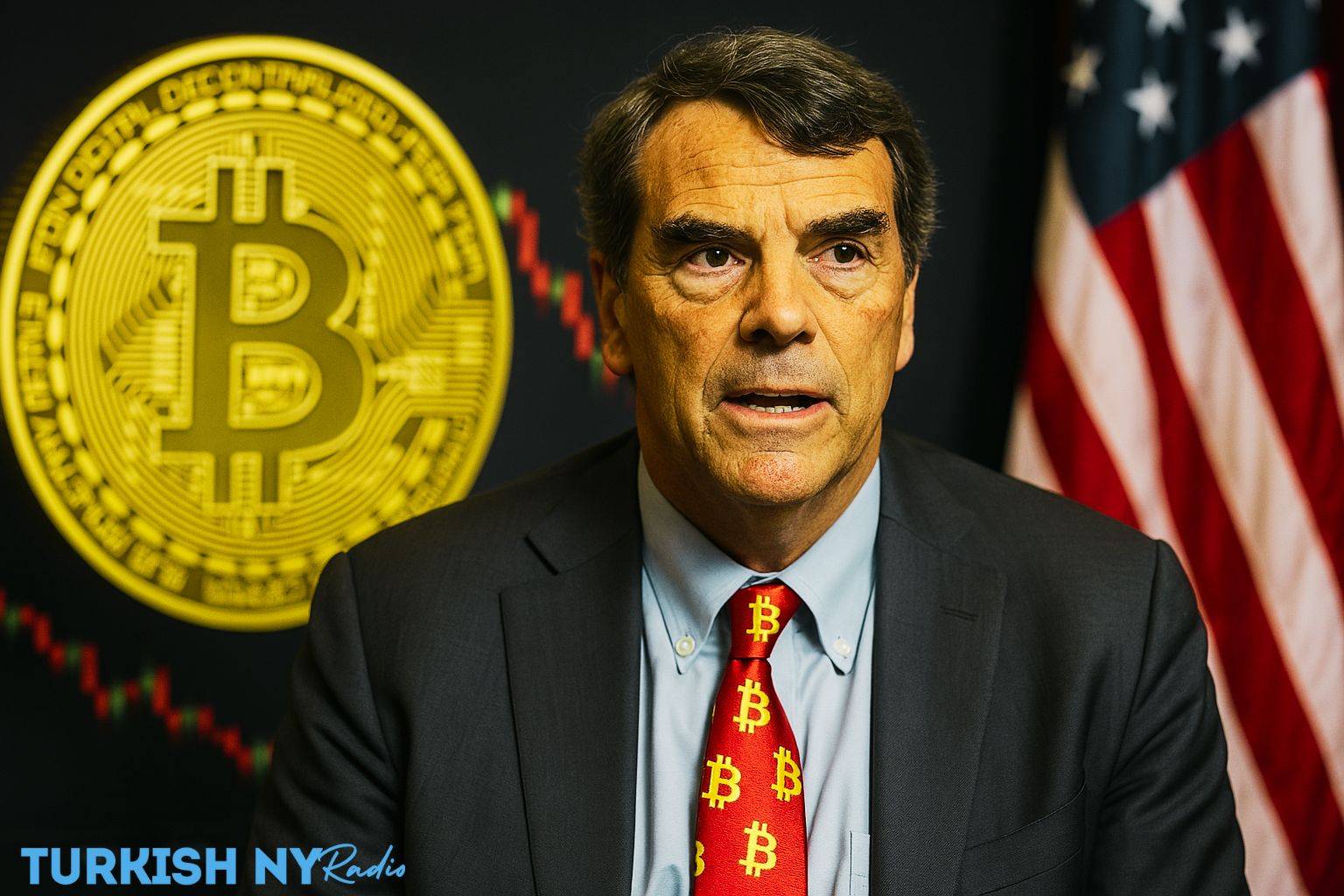
Bitcoin to $150K? Draper Says Trade War Will Fuel Crypto SurgeImplications for Bitcoin
“U.S. tariffs are setting the stage for bitcoin.”
Tim Draper: All of those scenarios are favorable for Bitcoin buyers, he added. It is inflation-proof and innovation-forward. With inflationary pressures and policy uncertainty on the rise, Draper believes Bitcoin will continue to fester under these conditions.
He also took the Federal Reserve to task, saying it should be looking ahead to what new jobs might be coming rather than worrying about fears of stagflation. Reducing interest rates would favor innovation and reinforce the arguments for decentralized assets such as Bitcoin.
Bitcoin is trading at $77,267 by the exchange’s closing on April 9, 2025, down 2.6% from yesterday’s close. The cryptocurrency was highly volatile during the day, hitting an intraday low of $74,772 and an intraday high of $80,138.
This plunge demonstrates the volatility of the market, as investors closely monitor global economic events like trade tensions and interest rate decisions. Analysts monitor These fluctuations closely as investors weigh Bitcoin’s role as a hedge against inflation and macroeconomic uncertainty.
The current trade tensions and the ongoing tariff impositions have resulted in different predictions at the moment concerning Bitcoin’s future performance:
Short-Term Readings: According to analyst Tracy Jin, Bitcoin will likely see a drop to between $76,000 and $78,000 by late April 2025, with a possible drop to the $52,000–$56,000 range by the summer as the tariff disputes put economic pressure on the industry.
Long-Haul Predictions: On the other hand, a number of analysts have a more bullish view. For example, MarketVector Indexes’ Martin Leinweber asserts, based on the historical trend, that Bitcoin might form a cycle top of $150,000 in 2025.
Such forecasts highlight the uncertainty and volatility existent in the cryptocurrency market, driven by macroeconomic policy and geopolitical changes.
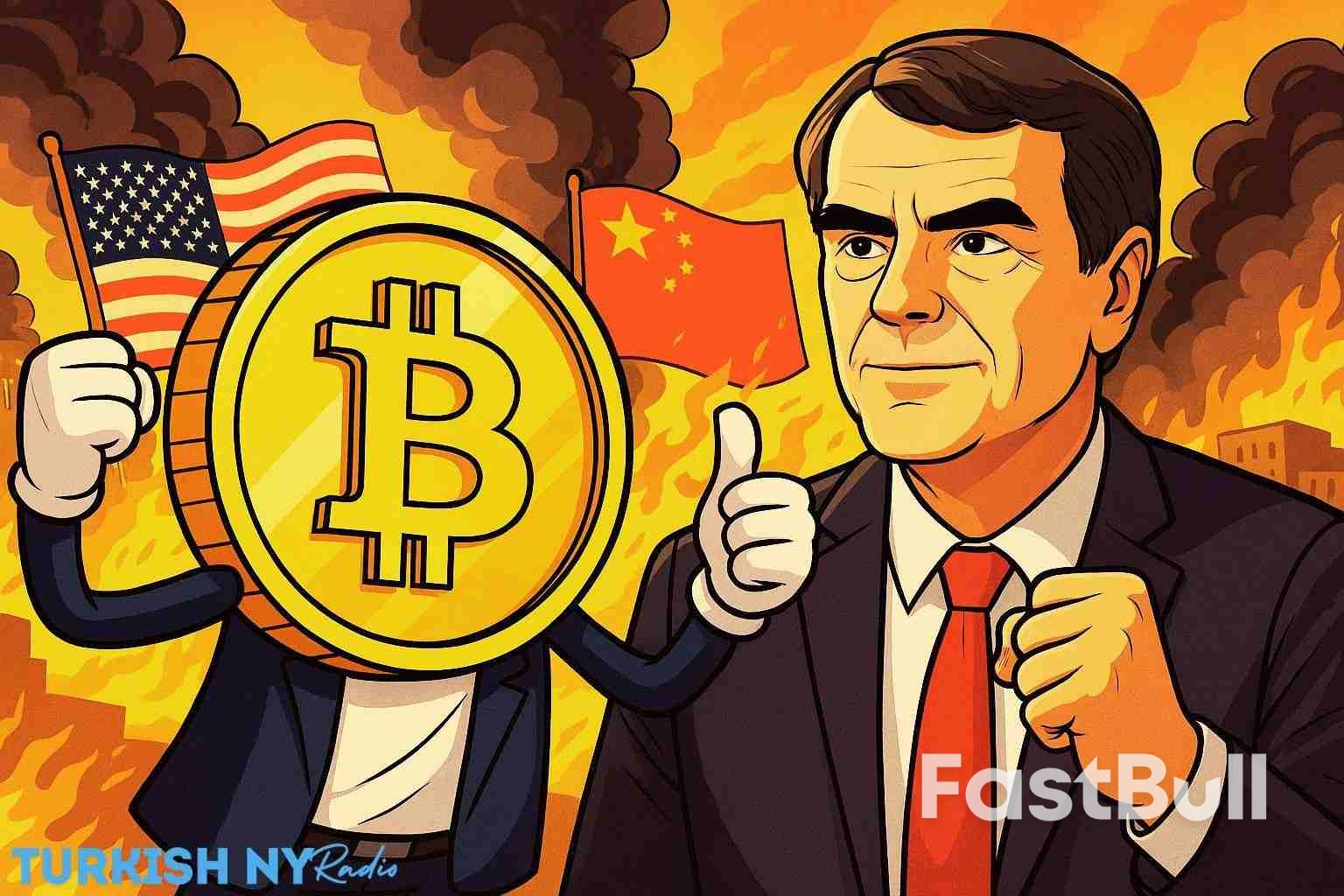
Bitcoin to $150K? Draper Says Trade War Will Fuel Crypto SurgeData through October 2023 On the economic policy side of the picture, President Trump has issued tariffs that have galvanized support for aggressive economic intervention from investors like Tim Draper, who think it further strengthens the case for Bitcoin.
The cryptocurrency market remains extremely unpredictable, though. Bitcoin’s next direction is the subject of both bullish and bearish analyses as global trade tensions move markets. Some consider these conditions to be supportive of Bitcoin’s store of value role, though others warn that increased volatility could still dominate in the shorter term.
Despite the prediction of a slowdown, Musalem does not foresee a recession. His outlook is based on a combination of factors including slipping confidence, higher prices, and a hit to household wealth.
Musalem noted that financial conditions have tightened, but he does not see any market dysfunction in the recent volatility. He indicated that markets are responding to reassessments of global growth. There is a growing tension between the Federal Reserve’s dual mandate goals as the risks of slower growth and higher inflation start to materialize.
While inflation expectations remain anchored, Musalem stressed the importance of the Federal Reserve’s role in keeping them that way. He warned that it would be risky to assume the Federal Reserve can overlook higher prices resulting from tariffs, suggesting that some effects could persist.
He emphasized the need for a balanced approach to monetary policy as long as inflation expectations remain anchored. Musalem also mentioned that businesses are not resorting to layoffs, but are instead adopting a wait-and-see approach to hiring and capital spending plans.
In the event of higher-than-anticipated tariffs, companies and households may need to adjust to increased prices, potentially leading to a rise in the unemployment rate. Musalem’s stance on monetary policy response will depend on the evolution of inflation and unemployment in the coming months, the persistence of the price shock, and the consistency of inflation expectations with the Federal Reserve’s 2% inflation target.
Musalem, who has a vote on interest rate policy this year, referred to anchored expectations as a necessary but not sufficient condition for the Federal Reserve to reach its 2% inflation target. He stressed vigilance regarding the risks associated with keeping unemployment low and inflation stable, and committed to maintaining a balanced approach as long as inflation expectations do not threaten to rise.
This decision highlights the increasing regulatory scrutiny and potential market volatility. The move could impact cryptocurrency exchanges and investors, prompting careful attention to the evolving policy landscape.
The European Union's decision to impose tariffs is linked to ongoing disputes in digital currency regulations. Recent regulatory challenges have accelerated the decision-making process, prompting a swift policy response to the growing market.
The policy shift involves several EU countries. Financial ministers and regulatory bodies spearheaded these actions to align cryptocurrency operations with regional standards. This marks a shift towards stricter oversight of digital currency exchanges and their international dealings.
Market participants have expressed concern over potential trade barriers hampering cryptocurrency circulation. Investors are assessing how the tariffs might affect exchange operations and trading volumes, possibly redirecting activities to more favorable jurisdictions.
These tariffs could usher in regulatory challenges and alter technological frameworks. Historical trends suggest traders might explore alternative pathways like decentralized platforms, adjusting strategies to circumvent policy constraints.
Past regulatory moves have seen shifts in market dynamics, such as when the EU adjusted commodity tariffs. Cryptocurrency stakeholders might compare current tariffs' effects to earlier policies, evaluating structural impacts and responses.
Experts, including those from Kanalcoin, predict tariffs may drive regional innovations within legal bounds. Historical data underscores the tendency for adaptive strategies to emerge, mitigating potential setbacks to traders and investors.
China announced plans to increase tariffs on all American goods to 84% after President Donald Trump raised duties on Chinese imports to 104%. During a smaller trade fight with Beijing during Trump’s first term, his administration used the Commodity Credit Corporation to offer US$28 billion to bail out US farmers. The government-owned and operated entity was created to boost farm income and prices.
“We are looking at that again,” Rollins told Bloomberg News Wednesday at the White House. “Obviously everything is on the table, but we’re in such a period of uncertainty in terms of what this looks like.”
The Agriculture secretary said, however, that no decisions have been made on whether to extend financial assistance to farmers.
“The goal is we won’t need to do it at all, that these changes and the realignment of the economy will result in an unprecedented air of prosperity for all Americans, but especially for our farmers and our ranchers,” Rollins said.
The discussions around a farm bailout indicate the Trump administration is concerned about the potential fallout of the trade war on farmers, a key political constituency for the president and his Republican Party.
The tit-for-tat responses from Washington and Beijing mark a rapid escalation that has unnerved global financial markets and sparked fears of an economic downturn.
The retaliatory tariffs are hitting farmers as other administration policies curb their ability to sell products. The Trump administration has dismantled the US Agency for International Development, whose programs purchased commodities from American producers. Trump has also threatened to scale back nutrition assistance programs that buy US agricultural products.
The risk of an escalated trade war comes as American farmers are struggling to regain their position as the leading exporters of staples from corn to wheat, after Brazil’s successes in seizing market share.
Trump’s tariffs have sent foreign governments racing to cut deals with the administration to avert or ease the levies. Rollins last week announced she would travel to Vietnam, which is looking to secure an agreement with the US, and on Wednesday she said she would visit the UK and Japan “in the next six weeks.”
The White House is also weighing the possibility of creating a tax credit for exporters, who could be hard hit by other nations’ moves to retaliate against Trump’s levies with their own trade barriers.
Business executives are warning of a potential recession caused by his policies, some of the top U.S. trading partners are retaliating with their own import taxes and the stock market is quivering after days of decline.
Trump's tariffs kicked in shortly after midnight, including 104% on products from China, 20% on the European Union, 24% on Japan and 25% on South Korea. Administration officials have tried to reassure voters, Republican lawmakers and CEOs that the rates are negotiable, but by their own admission that process could take months.
When a downturn appears on the horizon, investors typically crowd into U.S. Treasury notes as a safe haven, viewing the federal government as a source of stability. Not this time. Government bond prices are down, pushing up the interest rate on the 10-year U.S. Treasury note to 4.39% in a sign that the world is increasingly leery of Trump's moves.
The Republican president was publicly defiant as the stock market recovered slightly and then sold off in morning trading.
“THIS IS A GREAT TIME TO BUY!!!” he posted on Truth Social, his social media site. “BE COOL! Everything is going to work out well. The USA will be bigger and better than ever before!”
Presidents often receive undue credit or blame for the state of the U.S. economy as their time in the White House is subject to financial and geopolitical forces beyond their direct control. But by unilaterally imposing tariffs, Trump is exerting extraordinary influence over the flow of commerce, creating political risks that could prove difficult to avoid if his plans do not pan out. After early success in exerting control over American institutions, from law firms and universities to federal agencies and cultural organizations, he is now facing off with global markets that will not simply bend to his will.
JPMorgan Chase CEO and Chairman Jamie Dimon said there would “probably” be a recession, although he also deferred to his economists.
“I do think fixing these tariff issues and trade issues would be a good thing to do,” he said in an interview with Fox Business Network's “Mornings with Maria.”
On CNBC, Delta Air Lines CEO Ed Bastian said the administration was being less strategic than it was during Trump's first term.
“Trying to do it all at the same time has created chaos in terms of being able to make plans,” he said, noting that demand for air travel has weakened.
Economic forecasters say Trump's return to the White House has had a series of negative and cascading impacts that could put the country into a downturn.
Amid U.S. President Donald Trump’s global tariff offensive, China and the United States are locked in a cycle of trade retaliation, with both sides unwilling to be viewed as ceding ground.
On April 2, which he dubbed “Liberation Day,” Trump announced sweeping tariff hikes on most countries around the world, supposedly designed to bring U.S. trade barriers to “reciprocal” levels (although, as critics have pointed out, the simplistic formula being used seems to actually reflect the U.S. trade deficit with various countries instead). For China specifically, the April 2 announcement called for adding a 34 percent tariff – on top of two separate 10 percent tariff hikes in February, which Trump had linked to China’s role in the U.S. fentanyl crisis.
China responded to each of these escalations with a mirroring response: increasing its own tariffs on U.S. imports, adding U.S. firms to its Unreliable Entity List, and restricting exports of critical minerals. In response to the April 2 hike, China ramped up its response by slapping a 34 percent tariff on all U.S. exports to China – no longer limiting the damage to targeted sectors.
Trump was irate about China’s response and immediately threatened to levy an additional 50 percent tariff on Chinese goods. It wasn’t clear at first if this was a serious policy decision or Trump-esque bluster, but on April 8 – the day before the “reciprocal tariffs” took effect – the White House confirmed the new hike was happening.
“It was a mistake for China to retaliate,” White House Press Secretary Karoline Leavitt told reporters. “The president, when America is punched, he punches back harder. That’s why there will be 104 percent tariffs going into effect on China tonight at midnight.” (The 104 percent number comes from the total of all Trump’s separate tariff hikes: 10 percent, 10 percent, 34 percent, and 50 percent.)
Treasury Secretary Scott Bessent also told CNBC that it was a “big mistake” for China to retaliate against Trump’s tariffs.
The Trump administration was unlikely to be pleased, then, when China responded with yet another tariff hike of its own on April 9. China’s State Council announced that it was raising tariffs on all U.S. imports to 84 percent, matching Trump’s 50 percent escalation. Unintentionally echoing the Trump administration’s language, a statement from the Commerce Ministry said, “The U.S. threat to escalate tariffs on China is a mistake on top of a mistake.”
That gets at the root of the issue: both Washington and Beijing believe the other side is making a “mistake” by retaliating (instead of, presumably, folding and coming to the table for negotiations to end the trade war). That assumption is underpinned by each side’s confidence that their country is better positioned to weather the inevitable pain that will follow the tariff hikes.
“What do we lose by the Chinese raising tariffs on us?” Bessent said dismissively to CNBC. “We export one-fifth to them of what they export to us, so that is a losing hand for them.”
China’s policymakers, however, disagree. They are betting that the American public will refuse to tolerate sharp price hikes from tariffs – a logical assumption, considering Trump was elected largely based on dissatisfaction with inflation – as well as the U.S. stock market’s ongoing crash. Some CEOs have already dubbed the economic damage “the Trump recession.” Beijing seems willing to gamble that rising internal pressure will force Trump to back down without China having to make concessions.
There’s also the fact that Trump has essentially declared a trade war against the entire world, severely limiting U.S. alternatives to Chinese imports. China, which is fighting on a single front, has more options for diversifying its markets for both imports and exports – a possess that Beijing had already begun in earnest during the first Trump administration. But, experts warn, the rest of the world is unlikely to be willing to absorb the massive excess capacity that would be caused by a sharp dropoff on Chinese exports to the United States. Attempts to export more to the rest of the world could cause a domino effect of discontent in China’s other trade relationships.
Beyond the economics, there’s also a psychological dimension to the trade war that is fueling the escalation cycle. Unlike other countries that have shown a willingness to negotiate with Trump – like Vietnam, Japan, and India – China is locked in a global rivalry with the United States. Each side views the other with extreme suspicion, and that makes any compromise unlikely. Instead, both the United States and China have accused each other of bullying behavior, adding a emotive component to the trade war that will make it exceedingly difficult for either Trump or Xi Jinping to back down.
“China firmly rejects and will never accept such hegemonic and bullying move,” said Lin Jian, China’s Foreign Ministry spokesperson, in a regular press conference on April 9. “…If the U.S. decides not to care about the interests of the U.S. itself, China and the rest of the world, and is determined to fight a tariff and trade war, China’s response will continue to the end.”
Bessent called China “the worst offenders in the international trading system.”
Already, both Beijing and Washington have indicated that they will wait for the other side to come begging to start negotiations.
“If the U.S. really seeks to resolve the issue through dialogue and negotiation, it should demonstrate an attitude of equality, respect and reciprocity,” Lin said.
Meanwhile, Leavitt had told reporters on April 8 that China would have to be the one to start talks to end the tariffs. “The president also wanted me to tell all of you that if China reaches out to make a deal, he’ll be incredibly gracious, but he’s going to do what’s best for the American people,” she said, adding, “China has to call first.”
For now, instead of trying to negotiate, China is taking steps to bolster its economy internally. According to Reuters, top Chinese policymakers – including senior officials from the State Council, the People’s Bank of China, and the banking and securities regulators – were expected to hold an urgent meeting this week “to hammer out measures to boost the economy and stabilize capital markets.”
(April 9): Before he stepped down as Canadian prime minister, Justin Trudeau called Donald Trump’s tariff policies “very dumb”. This might be an accurate description of many Trump administration policies — but the more objectively correct word is “stupid”.
In fact, Québec’s largest newspaper, Le Journal de Montréal, published a front-page photo of Trump in early February with the word “stupid” in 350-point type. Some may call this an opinion, but the science of stupidity tells us that it’s more of a definition.
Recent research has produced a succinct label for the poorly calculated actions of decision-makers: stupidity.
This is not simple name-calling, but a phenomenon that comprises loss and features a set of actions that are either outright recognizably dysfunctional, or appear so at odds with any sensible course of action that it seems a hidden agenda could be involved.
According to the seminal and transactional view of human stupidity by Carlo Cipolla, the late Italian economic historian, interactions fall into four categories:
Free trade is based on an intelligent positive-sum interaction. Trump’s transactional zero-sum view is that for every winner there is a loser.
He apparently doesn’t understand that tariffs are only successful if other countries don’t retaliate. But other countries do retaliate, and as the world is now witnessing, the resulting trade war can decimate the global economy.
Trump’s protectionist measures aimed at boosting the US economy can therefore be considered “stupid” interactions that deepen and lengthen economic depression.
Modern-day researchers have also identified three recognizable sets of actions embodying stupidity:
Confident ignorance that involves people taking risks without having the necessary skills to deal with them. It’s not just being ignorant of one’s ignorance — explained by the Dunning-Kruger effect — but being self-assured despite contrary evidence.
Trump may know what he does not know, so he delegated many tasks to Tesla founder Elon Musk and trade tariff architect Pete Navarro, both of whom seem to possess no such awareness.
Absent-minded failure means people knew the right thing to do but were not paying sufficient attention to avoid doing something stupid. Organizations create agendas, but if issues don’t reach a point where they seriously impact the organization’s objectives, they are ignored.
An example is the recent US strikes against Yemeni Houthis. US officials ignored critical security components by sharing information about their plans over unsecure connections and with a member of the media.
Lack of control means that autocratic decision-makers compromise their organizations by failing to accept objections from those charged with implementing the leader’s preconceived plans.
Such autocratic decision-makers may select biased information to support their proposals. Those working under these leaders either buy into efforts to selectively use information, limit alternatives and execute these preconceived plans or they leave the organization (either voluntarily or not).
In the US, witness the firing of Justice Department pardon attorney Elizabeth Oyer. She failed to support restoring gun rights to actor Mel Gibson, who had been convicted of domestic violence in 2011. Gibson’s pardon was reportedly based on his personal relationship with the president.
Organizational researchers have used the term functional stupidity to describe those who refuse to use their intellectual capacities when making decisions and then avoid justification for their actions. This allows group members to quickly execute routine functions without much thought.
Dysfunctional stupidity is a lack of organizationally supported reflection, reasoning and justification. Organizations fail to use intellectual resources to process knowledge or question norms or claims of knowledge when confronted with new or non-routine decisions. By blocking communications, muffling criticism and squelching doubts, organizations ensure adherence to superiors’ edicts.
One Trump administration example is the unquestioning permission given to allow the Department of Government Efficiency (DOGE), headed by Musk, to access to a wide array of government data.
It can take the combined efforts of organizational officials on multiple levels to maintain stupidity.
Individually, stupidity is reinforced by ignoring crucial information because of a need for a rapid response.
Consequently, quick decisions and shortcuts made by individuals result in negative outcomes. An example would be the Trump administration’s apparent need to appear to find cost savings quickly to allow for tax cuts, overriding a more logical approach to find ways to achieve those savings without gutting legally mandated services.
Organizationally, stupidity is reinforced because organizations limit acceptable alternative behaviours when they cannot process all available information. Data is restricted, controls are tightened and organization officials fall back to using previously well-learned responses in their comfort zones. Inexperienced decision-makers fall back on uninformed assumptions, or no assumptions at all.
Witness Trump’s “reciprocal” trade tariffs currently decimating financial markets worldwide. No tariffs were calculated using current tariff rates, while others were based on American trade deficits with other countries. Other tariffs seem to be based on no rationale at all.
Some actions that appear stupid may simply hide a hidden agenda. When the Trump administration erroneously detains and deports anyone under the Alien Enemies Act, is it an accident or a way to instil fear in everyone that authorities can detain, mistreat and deport them without due process at any point?
Many of the actions being taken by the Trump administration appear stupid.
Tariffs, for example, represent a loss — a transactionally negative sum game.
Trump’s decisions exhibit confident ignorance, absent-minded failure and lack of control. They also show dysfunctional stupidity as Trump officials seemingly refuse to use their full intellectual resources. Stupidity is also being reinforced through unfounded assumptions. Is this all hiding a secret agenda?
“You can’t fix stupid,” so the saying goes. But having capable administrators in place while other branches of government exercise their constitutionally mandated oversight role might dampen some of the Trump administration’s stupidity.
White Label
Data API
Web Plug-ins
Poster Maker
Affiliate Program
The risk of loss in trading financial instruments such as stocks, FX, commodities, futures, bonds, ETFs and crypto can be substantial. You may sustain a total loss of the funds that you deposit with your broker. Therefore, you should carefully consider whether such trading is suitable for you in light of your circumstances and financial resources.
No decision to invest should be made without thoroughly conducting due diligence by yourself or consulting with your financial advisors. Our web content might not suit you since we don't know your financial conditions and investment needs. Our financial information might have latency or contain inaccuracy, so you should be fully responsible for any of your trading and investment decisions. The company will not be responsible for your capital loss.
Without getting permission from the website, you are not allowed to copy the website's graphics, texts, or trademarks. Intellectual property rights in the content or data incorporated into this website belong to its providers and exchange merchants.
Not Logged In
Log in to access more features

FastBull Membership
Not yet
Purchase
Log In
Sign Up