


- EURUSD
- XAUUSD
- XAGUSD
- WTI
- USDX


Markets
Analysis
User
24/7
Economic Calendar
Education
Data
- Names
- Latest
- Prev














Last week, gold showed resilience amid heightened volatility. Persistent dollar weakness, ongoing central bank purchases, and safe-haven demand driven by geopolitical uncertainty all supported the rally.
Last week, gold showed resilience amid heightened volatility. Persistent dollar weakness, ongoing central bank purchases, and safe-haven demand driven by geopolitical uncertainty all supported the rally. At the same time, hawkish comments from Fed officials put some pressure on prices at elevated levels.
This week, markets face several key risk events, including the US November nonfarm payrolls and CPI data, as well as rate decisions from the Bank of England and the Bank of Japan. The outcomes of these events could influence interest rate expectations and risk sentiment, significantly shaping gold's trajectory into year-end.
On the XAUUSD daily chart, gold's bullish momentum picked up sharply last week, with four consecutive daily gains, shifting the trend from consolidation to an active uptrend. On Thursday, prices broke above the key $4,250 resistance, and on Friday, intraday highs reached $4,353, marking a seven-week peak.
Although there was a rapid pullback of nearly $100 during the US session on Friday, with a long upper shadow highlighting high-level selling pressure, gold ultimately held above $4,300, posting a weekly gain of nearly 2.5%, signaling that bulls remained firmly in control.
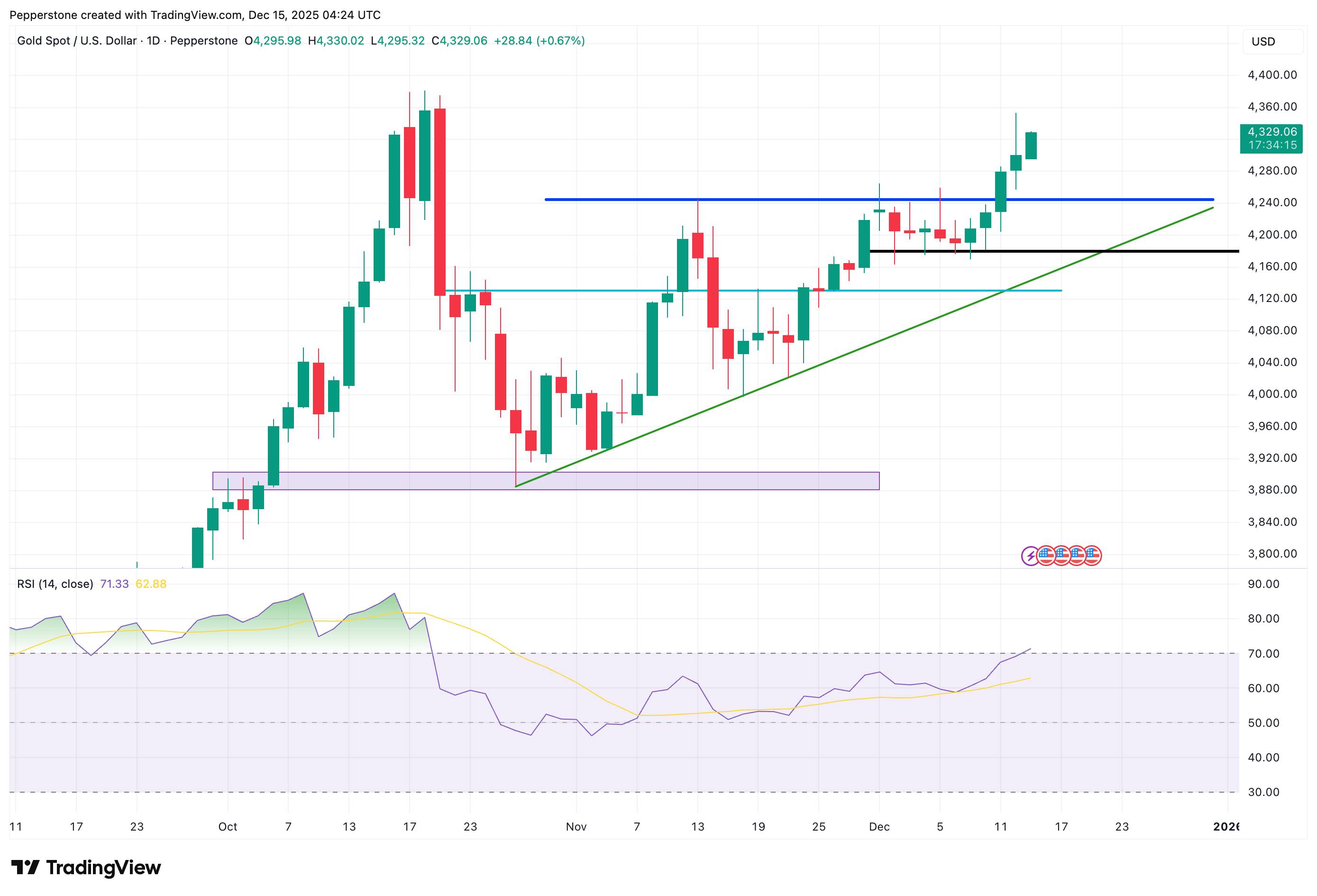
Entering Monday, gold continued its upward push, with RSI re-entering the overbought zone above 70, indicating sustained short-term momentum. If the daily candle closes above $4,300, market confidence in the uptrend will strengthen, with prices likely to test the previous high at $4,381.
However, considering the short-term strength, a dip below $4,300 could see support emerge around the $4,180 consolidation low and the uptrend line extending from late October, potentially attracting dip buyers.
Gold's ability to hold gains at high levels remains supported by three key factors: the weaker dollar trend, continued central bank purchases, and hedging demand amid geopolitical uncertainty. Together, these elements provide the underlying framework for gold's price support.
On the policy front, December saw a Fed rate cut alongside the resumption of short-term Treasury purchases to ease liquidity pressure, which helped short-term US yields ease. The dollar index fell for the third consecutive week, briefly testing near-term lows around 98.
Dollar weakness lowers the opportunity cost of holding gold and diminishes the relative appeal of higher-yielding assets, redirecting capital flows back into gold.
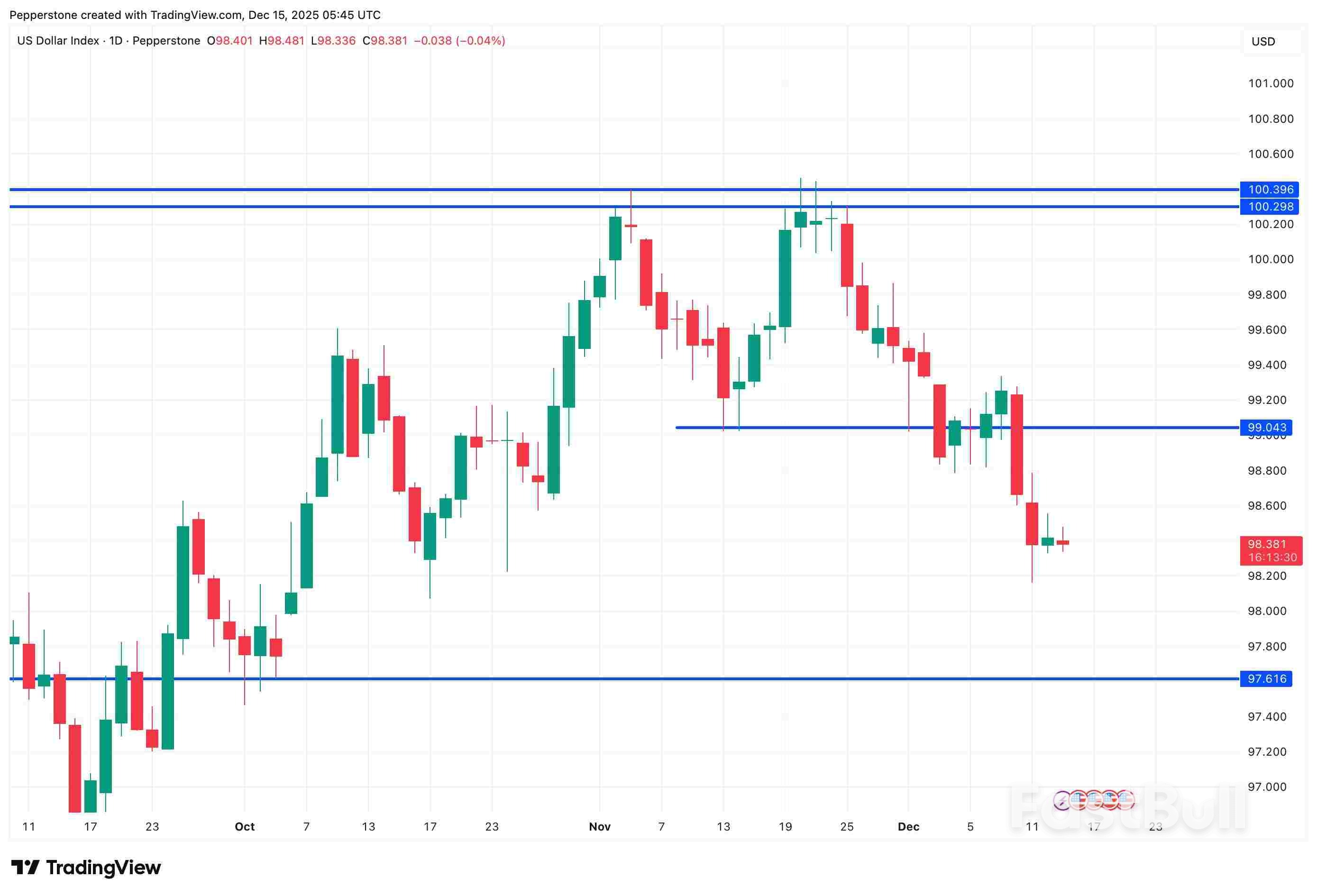
Meanwhile, central bank buying continues to act as a long-term "anchor" for gold. According to the World Gold Council, global central banks added a net 53 tonnes of gold in October, a significant month-on-month increase and the highest single-month total this year. Consistent official purchases provide a solid base for gold at high levels and support market acceptance of current price ranges.
Geopolitical uncertainty also remains a factor. From US interception of Venezuelan oil shipments, the ongoing Russia-Ukraine stalemate, to tensions in Southeast Asia, these events continually reinforce demand for hedging. While each may have limited immediate impact, collectively they offer marginal support to gold amid broader uncertainty.
Although Fed Chair Powell has clearly signaled that rate hikes are not being considered in the near term, hawkish voices persist within the Fed.
Last Friday, Cleveland Fed President Harker (2026 voting member), Chicago Fed President Goolsby, and Kansas City Fed President George highlighted persistent inflation concerns, favoring a more restrictive stance. These comments pushed down market expectations for 2026 rate cuts, naturally weighing on short-term demand for non-yielding gold.
In my view, this is more of a sentiment recalibration at high levels than the start of a trend reversal. As long as the dollar remains relatively weak, coupled with ongoing central bank purchases and geopolitical hedging demand, the medium-term bullish structure for gold remains intact.
Overall, the bullish structure for gold remains intact, but short-term volatility has increased. With the holiday season approaching, active capital is winding down and market liquidity is thinner. Any deviation from expectations in major risk events is more likely to trigger trend moves rather than just intraday noise. In this environment, risk management is more important than directional calls.
In the US, key focus this week is on November nonfarm payrolls (Thursday AEDT) and CPI (Friday AEDT). Markets expect around 50k new jobs, a slight rise in the unemployment rate to 4.5%, and core inflation near 3%.
If labor data comes in slightly stronger, say 60–70k new jobs with unemployment at 4.4–4.5% and inflation broadly as expected, it would suggest the economy is not slowing sharply and that rate cuts still have room, potentially putting modest pressure on gold bulls.
Conversely, if the labor market shows a clear weakness—negative job growth, unemployment rising to 4.6% or higher, and core inflation falling to 2.8–2.9%—markets may price in a "recession trade," which would clearly benefit gold.
Additionally, several Fed officials, including Williams and Bostic, are scheduled to speak this week. Their comments on economic prospects and policy direction could further influence expectations for future easing, amplifying short-term price swings.
Globally, central bank policy divergence is also significant. The market widely expects the Bank of England to cut rates by 25bps, while the Bank of Japan has over a 90% chance of a rate hike. Diverging paths among major central banks could, via currency and rate channels, further intensify short-term gold volatility.

728 RM B 7/F GEE LOK IND BLDG NO 34 HUNG TO RD KWUN TONG KLN HONG KONG





The risk of loss in trading financial instruments such as stocks, FX, commodities, futures, bonds, ETFs and crypto can be substantial. You may sustain a total loss of the funds that you deposit with your broker. Therefore, you should carefully consider whether such trading is suitable for you in light of your circumstances and financial resources.
No decision to invest should be made without thoroughly conducting due diligence by yourself or consulting with your financial advisors. Our web content might not suit you since we don't know your financial conditions and investment needs. Our financial information might have latency or contain inaccuracy, so you should be fully responsible for any of your trading and investment decisions. The company will not be responsible for your capital loss.
Without getting permission from the website, you are not allowed to copy the website's graphics, texts, or trademarks. Intellectual property rights in the content or data incorporated into this website belong to its providers and exchange merchants.
Not Logged In
Log in to access more features


Log In
Sign Up


