Markets
News
Analysis
User
24/7
Economic Calendar
Education
Data
- Names
- Latest
- Prev


Signal Accounts for Members
All Signal Accounts
All Contests


U.K. Trade Balance Non-EU (SA) (Oct)A:--
F: --
P: --
France HICP Final MoM (Nov)A:--
F: --
P: --
China, Mainland Outstanding Loans Growth YoY (Nov)A:--
F: --
P: --
China, Mainland M2 Money Supply YoY (Nov)A:--
F: --
P: --
China, Mainland M0 Money Supply YoY (Nov)A:--
F: --
P: --
China, Mainland M1 Money Supply YoY (Nov)A:--
F: --
P: --
India CPI YoY (Nov)A:--
F: --
P: --
India Deposit Gowth YoYA:--
F: --
P: --
Brazil Services Growth YoY (Oct)A:--
F: --
P: --
Mexico Industrial Output YoY (Oct)A:--
F: --
P: --
Russia Trade Balance (Oct)A:--
F: --
P: --
Philadelphia Fed President Henry Paulson delivers a speech
Canada Building Permits MoM (SA) (Oct)A:--
F: --
P: --
Canada Wholesale Sales YoY (Oct)A:--
F: --
P: --
Canada Wholesale Inventory MoM (Oct)A:--
F: --
P: --
Canada Wholesale Inventory YoY (Oct)A:--
F: --
P: --
Canada Wholesale Sales MoM (SA) (Oct)A:--
F: --
P: --
Germany Current Account (Not SA) (Oct)A:--
F: --
P: --
U.S. Weekly Total Rig CountA:--
F: --
P: --
U.S. Weekly Total Oil Rig CountA:--
F: --
P: --
Japan Tankan Small Manufacturing Outlook Index (Q4)A:--
F: --
P: --
Japan Tankan Large Non-Manufacturing Diffusion Index (Q4)A:--
F: --
P: --
Japan Tankan Large Non-Manufacturing Outlook Index (Q4)A:--
F: --
P: --
Japan Tankan Large Manufacturing Outlook Index (Q4)A:--
F: --
P: --
Japan Tankan Small Manufacturing Diffusion Index (Q4)A:--
F: --
P: --
Japan Tankan Large Manufacturing Diffusion Index (Q4)A:--
F: --
P: --
Japan Tankan Large-Enterprise Capital Expenditure YoY (Q4)A:--
F: --
P: --
U.K. Rightmove House Price Index YoY (Dec)A:--
F: --
P: --
China, Mainland Industrial Output YoY (YTD) (Nov)A:--
F: --
P: --
China, Mainland Urban Area Unemployment Rate (Nov)A:--
F: --
P: --
Saudi Arabia CPI YoY (Nov)A:--
F: --
P: --
Euro Zone Industrial Output YoY (Oct)--
F: --
P: --
Euro Zone Industrial Output MoM (Oct)--
F: --
P: --
Canada Existing Home Sales MoM (Nov)--
F: --
P: --
Euro Zone Total Reserve Assets (Nov)--
F: --
P: --
U.K. Inflation Rate Expectations--
F: --
P: --
Canada National Economic Confidence Index--
F: --
P: --
Canada New Housing Starts (Nov)--
F: --
P: --
U.S. NY Fed Manufacturing Employment Index (Dec)--
F: --
P: --
U.S. NY Fed Manufacturing Index (Dec)--
F: --
P: --
Canada Core CPI YoY (Nov)--
F: --
P: --
Canada Manufacturing Unfilled Orders MoM (Oct)--
F: --
P: --
U.S. NY Fed Manufacturing Prices Received Index (Dec)--
F: --
P: --
U.S. NY Fed Manufacturing New Orders Index (Dec)--
F: --
P: --
Canada Manufacturing New Orders MoM (Oct)--
F: --
P: --
Canada Core CPI MoM (Nov)--
F: --
P: --
Canada Trimmed CPI YoY (SA) (Nov)--
F: --
P: --
Canada Manufacturing Inventory MoM (Oct)--
F: --
P: --
Canada CPI YoY (Nov)--
F: --
P: --
Canada CPI MoM (Nov)--
F: --
P: --
Canada CPI YoY (SA) (Nov)--
F: --
P: --
Canada Core CPI MoM (SA) (Nov)--
F: --
P: --
Canada CPI MoM (SA) (Nov)--
F: --
P: --
Federal Reserve Board Governor Milan delivered a speech
U.S. NAHB Housing Market Index (Dec)--
F: --
P: --
Australia Composite PMI Prelim (Dec)--
F: --
P: --
Australia Services PMI Prelim (Dec)--
F: --
P: --
Australia Manufacturing PMI Prelim (Dec)--
F: --
P: --
Japan Manufacturing PMI Prelim (SA) (Dec)--
F: --
P: --
U.K. Unemployment Claimant Count (Nov)--
F: --
P: --
U.K. Unemployment Rate (Nov)--
F: --
P: --


No matching data
Latest Views
Latest Views
Trending Topics
Top Columnists
Latest Update
White Label
Data API
Web Plug-ins
Affiliate Program
View All

No data
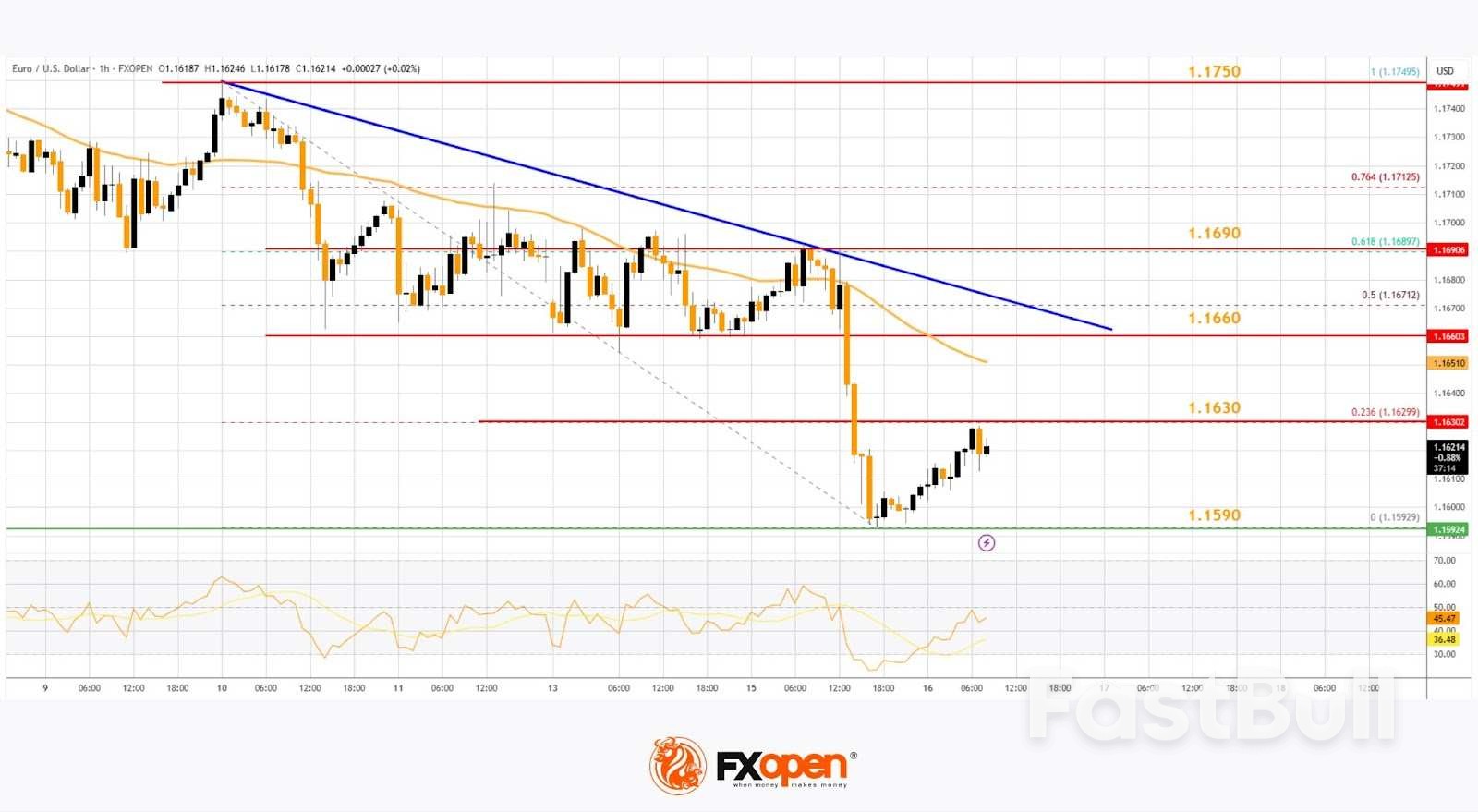
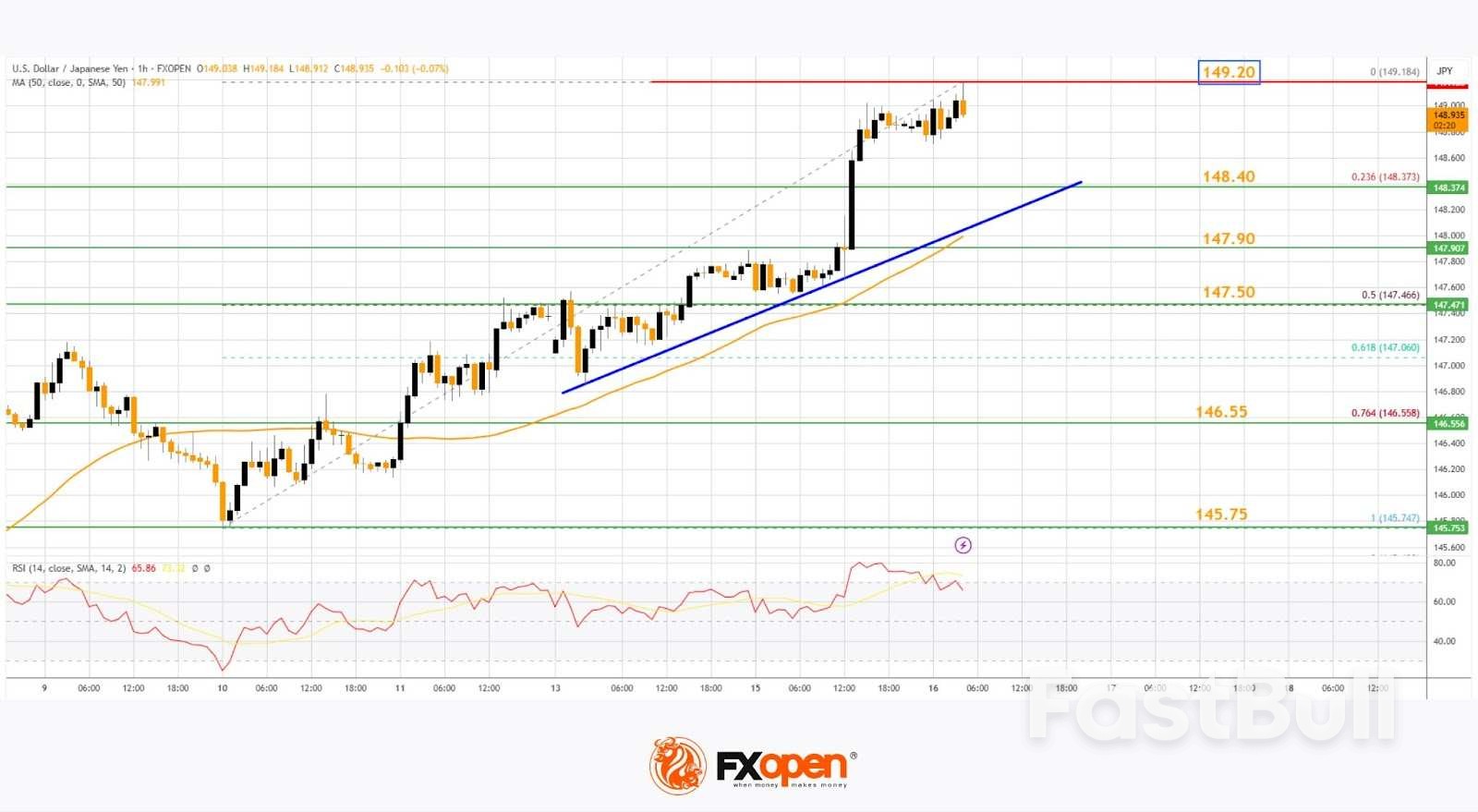
The Euro started a fresh decline after a strong surge above the 1.1720 zone.There is a connecting bearish trend line forming with resistance at 1.1660 on the hourly chart of EUR/USD at FXOpen.USD/JPY climbed higher above the 147.50 and 148.40 levels.There is a key bullish trend line forming with support at 148.40 on the hourly chart at FXOpen.


President Donald Trump said on Wednesday the US will probably "live by the letter" on tariffs with Japan and may have another trade deal coming up with India, following his announcement of an accord with Indonesia on Tuesday.
"We have some pretty good deals to announce," Trump told reporters at the start of a meeting with Bahrain's Crown Prince Salman bin Hamad Al Khalifa at the White House. He said he would also discuss trade issues with the Bahraini leader.
"The big one really is going to be on the 150 countries that we're really not negotiating with, and they're smaller — we don't do much business with."
On July 7, Trump announced 25% tariffs on imports from Japan and South Korea, effective Aug 1. He also announced separate rates for a number of other countries. On Tuesday, he said letters would be going out soon to dozens of smaller countries notifying them their goods would face a tariff rate of over 10%.
He said those smaller countries would receive a "notice of payment" with a uniform tariff rates for the whole group.
The deal with Indonesia is among the handful struck so far by the Trump administration ahead of an Aug 1 deadline when duties on most US imports are due to rise again. The European Union and Canada, meanwhile, are readying countermeasures if their talks with the US fail to produce a deal.
Trump has said he does not expect to reach a broader deal with Japan.
Trump's trade moves have upended decades of negotiated reductions in global trade barriers. They have unsettled international financial markets and stoked worries about a new wave of inflation.
Kevin Hassett, Trump's top economic adviser, told Fox News that "a whole bunch" of additional trade deals would be announced very soon, but gave no details.
He said Trump's strict Aug 1 deadline had spurred a flurry of new activity, including talks with countries that had not previously been in touch.
Trump on Wednesday repeated his prediction of a deal with India, which faces a 26% tariff rate, but gave no details. An Indian trade delegation arrived in Washington on Monday for fresh talks, with more officials expected to arrive Wednesday.
European Union trade chief Maros Sefcovic also headed to Washington on Wednesday for tariff talks, an EU spokesperson told Reuters. He plans to meet US Commerce Secretary Howard Lutnick and Trade Representative Jamieson Greer.
Trump has threatened a 30% tariff on imports from the EU from Aug 1, a level Europe says is unacceptable and would end normal trade between two of the world's largest markets.
Greer, Trump's top trade negotiator, told business executives in Detroit, that he was focused on shrinking the US$1.2 trillion (RM5.09 trillion) US trade deficit and stemming the loss of US advanced manufacturing capacity.
Trump's tariff policies called for a universal tariff rate of 10% on all countries, with higher rates for the most "problematic" ones, including China, which has the highest tariff rate of 55%, Greer said, adding the president was willing to negotiate if countries want to invest.
President Donald Trump said he would send letters to more than 150 countries notifying them of tariff rates and that the levies imposed could be 10% or 15% as he forges ahead with his trade agenda.
“We’ll have well, over 150 countries that we’re just going to send a notice of payment out, and the notice of payment is going to say what the tariff” rate will be, Trump told reporters on Wednesday at the White House.
“It’s all going to be the same for everyone, for that group,” Trump added, saying that the trading partners that would receive those letters were “not big countries, and they don’t do that much business.”
In an interview with Real America’s Voice broadcast later on Wednesday, Trump said the rate would “be probably 10 or 15%, we haven’t decided yet.”
Trump in recent days has unleashed a barrage of tariff demands, informing other economies of new duties that will kick in on Aug. 1 if they cannot negotiate better terms with the US. The letters extended what was initially a July 9 deadline for another three weeks, setting off a frantic dash for trading partners looking to avoid higher levies.
While Trump and his advisers initially expressed hopes of securing multiple deals, the president has been touting the tariff letters themselves as “deals” and suggesting that he is uninterested in back-and-forth negotiations. Still, he has left the door open for countries to make agreements that could lower those rates.
The rates imposed so far are largely similar to those Trump threatened in April and then quickly paused after market volatility, but the letters have injected further uncertainty into financial markets and surprised partners such as the European Union, which had been hoping to conclude tentative deals with the US.
“We could make a deal possibly with Europe. You know, it’s, I’m very indifferent to it,” Trump said in the Real America’s Voice interview, suggesting he saw the letter he sent the EU as a deal.
Asked in the interview what he believed would happen with Canada, which is facing a 35% tariff on some goods in August, the president said it was “too soon to say.”
The United States is very close to a trade deal with India, while an agreement could possibly be reached with Europe as well, but it is too soon to say whether a deal can be agreed with Canada, President Donald Trump said in an interview aired on Real America's Voice on Wednesday.
To press for what Trump views as better terms with trading partners and ways to shrink a huge U.S. trade deficit, his administration has been negotiating trade deals ahead of an August 1 deadline, when duties on most U.S. imports are due to rise again.
"We're very close to India, and ... we could possibly make a deal with (the) EU," Trump said, when asked which trade deals were on the horizon.
Trump's comments come as EU trade chief Maros Sefcovic was headed to Washington on Wednesday for tariff discussions, while an Indian trade delegation arrived in Washington on Monday for fresh talks.
"(The) European Union has been brutal, and now they're being very nice. They want to make a deal, and it'll be a lot different than the deal that we've had for years," he added.
Asked about the prospects of a deal with Canada, which like the EU, is readying countermeasures if talks with the U.S. fail to produce a deal, Trump said: "Too soon to say."
His comment was in line with the assessment of Canadian Prime Minister Mark Carney, who said earlier on Wednesday that a deal that works for Canadian workers was not yet on the table.
Trump also said he would probably put a blanket 10% or 15% tariff on smaller countries.
Japan's exports fell for a second straight month in June, data showed on Thursday, underscoring the mounting strain that sweeping U.S. tariffs are placing on the country's fragile economy.
Japan failed to clinch a deal with the U.S. before the July 9 expiration of the temporary pause on the country-specific tariffs after it focused on eliminating the existing sectoral 25% tariffs on automobiles, a mainstay of the export-reliant economy.
Washington now plans to impose tariffs of 25% on Japanese imports, unless a trade deal is struck by August 1.
Total exports by value dropped 0.5% year-on-year in June, data showed, compared with a median market forecast for a 0.5% increase and a 1.7% decrease in May, the first drop in eight months.
Exports to the United States fell 11.4% in June from a year earlier, while those to China were down 4.7%, the data showed.
Total imports grew 0.2% in June from a year earlier, compared with market forecasts for a 1.6% drop.
As a result, the trade balance stood at a surplus of 153.1 billion yen ($1.03 billion), compared with a forecast for a surplus of 353.9 billion yen.
U.S. tariffs are adding to pressure on the Japanese economy which is struggling due to lacklustre domestic consumption. Japan's economy shrank in the first quarter as rising living costs hurt demand.
So far, Japanese automakers have avoided major price hikes in the U.S. by cutting prices on exported cars and absorbing tariff costs to stay competitive while sacrificing profits.
Japan exported 21 trillion yen worth of goods to the United States last year, with automobiles representing roughly 28% of the total.
Prolonged uncertainties over the impact of the tariffs and the course of trade negotiations will likely force the Bank of Japan to keep focusing on downside risks to the economy and to put rate hikes on hold for the time being, analysts say.
Key points:
Federal Reserve Bank of New York President John Williams said Wednesday that monetary policy is in the right place to allow central bankers to monitor the economy before taking their next steps, while warning that the impact of trade tariffs is only just starting to hit the economy.
“Maintaining this modestly restrictive stance of monetary policy is entirely appropriate to achieve our maximum employment and price stability goals,” Williams said in a speech given before a gathering of the New York Association for Business Economics. Holding at current levels “allows for time to closely analyze incoming data, assess the evolving outlook, and evaluate the balance of risks to achieving our dual mandate goals.”
Williams said that the current state of the economy is good and labor markets are solid, although he expects both of those to moderate as the year advances. The bank president pointed to ongoing uncertainty and warned against complacency over the impact of President Donald Trump’s import tax surge.
“It's important to note that it’s still early days for the effects of tariffs, which take time to come into full force,” Williams said. “Although we are only seeing relatively modest effects of tariffs in the hard aggregate data so far, I expect those effects to increase in coming months.”
“I expect tariffs to boost inflation by about 1 percentage point over the second half of this year and the first part of next year,” he added.
Williams said that he expects the economy to slow to around a 1% growth rate this year, and for the unemployment rate, now at 4.1%, to rise to 4.5% by year’s end.
On the inflation front, Williams said he sees inflation coming in between 3% and 3.5% this year, before ebbing back to “about” 2.5% next year. Williams sees inflation at the 2% target in 2027. He also said that he expects inflation in June to stand at 2.5% and core prices at 2.75%.
Williams weighed in on what had proved to be a tumultuous day for the central bank, as markets were buffeted by reports that Trump was moving closer to firing Fed Chairman Jerome Powell, a notion which the president later knocked down.
“I can't comment” on what the president said and how markets reacted, Williams told reporters after his speech. Responding to a question about what he would do as vice-chairman of the rate setting Federal Open Market Committee if Powell were removed, Williams said independent central banks deliver better results and noted that in his experience Fed officials and staff maintain a “laser-like” focus on the central bank’s overall mission and its work to keep inflation contained and the job market strong.
Trump has repeatedly blasted the Fed for not cutting rates, arguing the central bank needs to move the cost of short-term credit down to crisis levels. Meanwhile, most Fed officials say they are in a wait-and-see mode regarding rate cuts, as they look to see how the president’s tariffs will affect inflation, which even now is at levels that stand above the Fed’s 2% target level.
At the Fed’s June policy meeting, officials penciled in two rate cuts for later this year and markets believe the easings could start at the September FOMC meeting. That said, a small minority of Fed officials have suggested an openness to cutting rates at the July 29-30 meeting, believing that any tariff-driven inflation will be a one-off that officials can ignore.
Williams also told reporters that amid a drop in the dollar its status as the preeminent reserve currency remains unchanged. “There are a lot of fundamental factors that support the role of the dollar … in global trade and in global financial markets, and that I see is unchanged now.”
White Label
Data API
Web Plug-ins
Poster Maker
Affiliate Program
The risk of loss in trading financial instruments such as stocks, FX, commodities, futures, bonds, ETFs and crypto can be substantial. You may sustain a total loss of the funds that you deposit with your broker. Therefore, you should carefully consider whether such trading is suitable for you in light of your circumstances and financial resources.
No decision to invest should be made without thoroughly conducting due diligence by yourself or consulting with your financial advisors. Our web content might not suit you since we don't know your financial conditions and investment needs. Our financial information might have latency or contain inaccuracy, so you should be fully responsible for any of your trading and investment decisions. The company will not be responsible for your capital loss.
Without getting permission from the website, you are not allowed to copy the website's graphics, texts, or trademarks. Intellectual property rights in the content or data incorporated into this website belong to its providers and exchange merchants.
Not Logged In
Log in to access more features

FastBull Membership
Not yet
Purchase
Log In
Sign Up