• Trade
  • Markets
  • Copy
  • Contests
  • News
  • 24/7
  • Calendar
  • Q&A
  • Chats
Trending
Screeners
SYMBOL
LAST
BID
ASK
HIGH
LOW
NET CHG.
%CHG.
SPREAD
SPX
S&P 500 Index
6827.42
6827.42
6827.42
6899.86
6801.80
-73.58
-1.07%
--
DJI
Dow Jones Industrial Average
48458.04
48458.04
48458.04
48886.86
48334.10
-245.98
-0.51%
--
IXIC
NASDAQ Composite Index
23195.16
23195.16
23195.16
23554.89
23094.51
-398.69
-1.69%
--
USDX
US Dollar Index
97.950
98.030
97.950
98.500
97.950
-0.370
-0.38%
--
EURUSD
Euro / US Dollar
1.17394
1.17409
1.17394
1.17496
1.17192
+0.00011
+ 0.01%
--
GBPUSD
Pound Sterling / US Dollar
1.33707
1.33732
1.33707
1.33997
1.33419
-0.00148
-0.11%
--
XAUUSD
Gold / US Dollar
4299.39
4299.39
4299.39
4353.41
4257.10
+20.10
+ 0.47%
--
WTI
Light Sweet Crude Oil
57.233
57.485
57.233
58.011
56.969
-0.408
-0.71%
--

Community Accounts

Signal Accounts
--
Profit Accounts
--
Loss Accounts
--
View More

Become a signal provider

Sell trading signals to earn additional income

View More

Guide to Copy Trading

Get started with ease and confidence

View More

Signal Accounts for Members

All Signal Accounts

Best Return
  • Best Return
  • Best P/L
  • Best MDD
Past 1W
  • Past 1W
  • Past 1M
  • Past 1Y

All Contests

  • All
  • Trump Updates
  • Recommend
  • Stocks
  • Cryptocurrencies
  • Central Banks
  • Featured News
Top News Only
Share

Norwegian Nobel Committee: Calls On The Belarusian Authorities To Release All Political Prisoners

Share

Norwegian Nobel Committee: His Freedom Is A Deeply Welcome And Long-Awaited Moment

Share

Ukraine Says It Received 114 Prisoners From Belarus

Share

USA Embassy In Lithuania: Maria Kalesnikava Is Not Going To Vilnius

Share

USA Embassy In Lithuania: Other Prisoners Are Being Sent From Belarus To Ukraine

Share

Ukraine President Zelenskiy: Five Ukrainians Released By Belarus In US-Brokered Deal

Share

USA Vilnius Embassy: USA Stands Ready For "Additional Engagement With Belarus That Advances USA Interests"

Share

USA Vilnius Embassy: Belarus, USA, Other Citizens Among The Prisoners Released Into Lithuania

Share

USA Vilnius Embassy: USA Will Continue Diplomatic Efforts To Free The Remaining Political Prisoners In Belarus

Share

USA Vilnius Embassy: Belarus Releases 123 Prisoners Following Meeting Of President Trump's Envoy Coale And Belarus President Lukashenko

Share

USA Vilnius Embassy: Masatoshi Nakanishi, Aliaksandr Syrytsa Are Among The Prisoners Released By Belarus

Share

USA Vilnius Embassy: Maria Kalesnikava And Viktor Babaryka Are Among The Prisoners Released By Belarus

Share

USA Vilnius Embassy: Nobel Peace Prize Laureate Ales Bialiatski Is Among The Prisoners Released By Belarus

Share

Belarusian Presidential Administration Telegram Channel: Lukashenko Has Pardoned 123 Prisoners As Part Of Deal With US

Share

Two Local Syrian Officials: Joint US-Syrian Military Patrol In Central Syria Came Under Fire From Unknown Assailants

Share

Israeli Military Says It Targeted 'Key Hamas Terrorist' In Gaza City

Share

Rwanda's Actions In Eastern Drc Are A Clear Violation Of Washington Accords Signed By President Trump - Secretary Of State Rubio

Share

Israeli Military Issues Evacuation Warning In Southern Lebanon Village Ahead Of Strike - Spokesperson On X

Share

Belarusian State Media Cites US Envoy Coale As Saying He Discussed Ukraine And Venezuela With Lukashenko

Share

Belarusian State Media Cites US Envoy Coale As Saying That US Removes Sanctions On Belarusian Potassium

TIME
ACT
FCST
PREV
U.K. Trade Balance Non-EU (SA) (Oct)

A:--

F: --

P: --

U.K. Trade Balance (Oct)

A:--

F: --

P: --

U.K. Services Index MoM

A:--

F: --

P: --

U.K. Construction Output MoM (SA) (Oct)

A:--

F: --

P: --

U.K. Industrial Output YoY (Oct)

A:--

F: --

P: --

U.K. Trade Balance (SA) (Oct)

A:--

F: --

P: --

U.K. Trade Balance EU (SA) (Oct)

A:--

F: --

P: --

U.K. Manufacturing Output YoY (Oct)

A:--

F: --

P: --

U.K. GDP MoM (Oct)

A:--

F: --

P: --

U.K. GDP YoY (SA) (Oct)

A:--

F: --

P: --

U.K. Industrial Output MoM (Oct)

A:--

F: --

P: --

U.K. Construction Output YoY (Oct)

A:--

F: --

P: --

France HICP Final MoM (Nov)

A:--

F: --

P: --

China, Mainland Outstanding Loans Growth YoY (Nov)

A:--

F: --

P: --

China, Mainland M2 Money Supply YoY (Nov)

A:--

F: --

P: --

China, Mainland M0 Money Supply YoY (Nov)

A:--

F: --

P: --

China, Mainland M1 Money Supply YoY (Nov)

A:--

F: --

P: --

India CPI YoY (Nov)

A:--

F: --

P: --

India Deposit Gowth YoY

A:--

F: --

P: --

Brazil Services Growth YoY (Oct)

A:--

F: --

P: --

Mexico Industrial Output YoY (Oct)

A:--

F: --

P: --

Russia Trade Balance (Oct)

A:--

F: --

P: --

Philadelphia Fed President Henry Paulson delivers a speech
Canada Building Permits MoM (SA) (Oct)

A:--

F: --

P: --

Canada Wholesale Sales YoY (Oct)

A:--

F: --

P: --

Canada Wholesale Inventory MoM (Oct)

A:--

F: --

P: --

Canada Wholesale Inventory YoY (Oct)

A:--

F: --

P: --

Canada Wholesale Sales MoM (SA) (Oct)

A:--

F: --

P: --

Germany Current Account (Not SA) (Oct)

A:--

F: --

P: --

U.S. Weekly Total Rig Count

A:--

F: --

P: --

U.S. Weekly Total Oil Rig Count

A:--

F: --

P: --

Japan Tankan Large Non-Manufacturing Diffusion Index (Q4)

--

F: --

P: --

Japan Tankan Small Manufacturing Outlook Index (Q4)

--

F: --

P: --

Japan Tankan Large Non-Manufacturing Outlook Index (Q4)

--

F: --

P: --

Japan Tankan Large Manufacturing Outlook Index (Q4)

--

F: --

P: --

Japan Tankan Small Manufacturing Diffusion Index (Q4)

--

F: --

P: --

Japan Tankan Large Manufacturing Diffusion Index (Q4)

--

F: --

P: --

Japan Tankan Large-Enterprise Capital Expenditure YoY (Q4)

--

F: --

P: --

U.K. Rightmove House Price Index YoY (Dec)

--

F: --

P: --

China, Mainland Industrial Output YoY (YTD) (Nov)

--

F: --

P: --

China, Mainland Urban Area Unemployment Rate (Nov)

--

F: --

P: --

Saudi Arabia CPI YoY (Nov)

--

F: --

P: --

Euro Zone Industrial Output YoY (Oct)

--

F: --

P: --

Euro Zone Industrial Output MoM (Oct)

--

F: --

P: --

Canada Existing Home Sales MoM (Nov)

--

F: --

P: --

Euro Zone Total Reserve Assets (Nov)

--

F: --

P: --

U.K. Inflation Rate Expectations

--

F: --

P: --

Canada National Economic Confidence Index

--

F: --

P: --

Canada New Housing Starts (Nov)

--

F: --

P: --

U.S. NY Fed Manufacturing Employment Index (Dec)

--

F: --

P: --

U.S. NY Fed Manufacturing Index (Dec)

--

F: --

P: --

Canada Core CPI YoY (Nov)

--

F: --

P: --

Canada Manufacturing Unfilled Orders MoM (Oct)

--

F: --

P: --

Canada Manufacturing New Orders MoM (Oct)

--

F: --

P: --

Canada Core CPI MoM (Nov)

--

F: --

P: --

Canada Manufacturing Inventory MoM (Oct)

--

F: --

P: --

Canada CPI YoY (Nov)

--

F: --

P: --

Canada CPI MoM (Nov)

--

F: --

P: --

Canada CPI YoY (SA) (Nov)

--

F: --

P: --

Canada Core CPI MoM (SA) (Nov)

--

F: --

P: --

Q&A with Experts
    • All
    • Chatrooms
    • Groups
    • Friends
    Connecting
    .
    .
    .
    Type here...
    Add Symbol or Code

      No matching data

      All
      Trump Updates
      Recommend
      Stocks
      Cryptocurrencies
      Central Banks
      Featured News
      • All
      • Russia-Ukraine Conflict
      • Middle East Flashpoint
      • All
      • Russia-Ukraine Conflict
      • Middle East Flashpoint
      Search
      Products

      Charts Free Forever

      Chats Q&A with Experts
      Screeners Economic Calendar Data Tools
      Membership Features
      Data Warehouse Market Trends Institutional Data Policy Rates Macro

      Market Trends

      Market Sentiment Order Book Forex Correlations

      Top Indicators

      Charts Free Forever
      Markets

      News

      News Analysis 24/7 Columns Education
      From Institutions From Analysts
      Topics Columnists

      Latest Views

      Latest Views

      Trending Topics

      Top Columnists

      Latest Update

      Signals

      Copy Rankings Latest Signals Become a signal provider AI Rating
      Contests
      Brokers

      Overview Brokers Assessment Rankings Regulators News Claims
      Broker listing Forex Brokers Comparison Tool Live Spread Comparison Scam
      Q&A Complaint Scam Alert Videos Tips to Detect Scam
      More

      Business
      Events
      Careers About Us Advertising Help Center

      White Label

      Data API

      Web Plug-ins

      Affiliate Program

      Awards Institution Evaluation IB Seminar Salon Event Exhibition
      Vietnam Thailand Singapore Dubai
      Fans Party Investment Sharing Session
      FastBull Summit BrokersView Expo
      Recent Searches
        Top Searches
          Markets
          News
          Analysis
          User
          24/7
          Economic Calendar
          Education
          Data
          • Names
          • Latest
          • Prev

          View All

          No data

          Scan to Download

          Faster Charts, Chat Faster!

          Download App
          English
          • English
          • Español
          • العربية
          • Bahasa Indonesia
          • Bahasa Melayu
          • Tiếng Việt
          • ภาษาไทย
          • Français
          • Italiano
          • Türkçe
          • Русский язык
          • 简中
          • 繁中
          Open Account
          Search
          Products
          Charts Free Forever
          Markets
          News
          Signals

          Copy Rankings Latest Signals Become a signal provider AI Rating
          Contests
          Brokers

          Overview Brokers Assessment Rankings Regulators News Claims
          Broker listing Forex Brokers Comparison Tool Live Spread Comparison Scam
          Q&A Complaint Scam Alert Videos Tips to Detect Scam
          More

          Business
          Events
          Careers About Us Advertising Help Center

          White Label

          Data API

          Web Plug-ins

          Affiliate Program

          Awards Institution Evaluation IB Seminar Salon Event Exhibition
          Vietnam Thailand Singapore Dubai
          Fans Party Investment Sharing Session
          FastBull Summit BrokersView Expo

          Key Factors Facing U.S. T-Bonds Yields After Breaking Last Year’s Highs (2)

          Summary:

          U.S. T-Bonds yields are rising with continued inflation increases and declining unemployment, while real GDP has exceeded its pre-pandemic highs. What does this mean for the trend of U.S. T-Bonds yields in 2022? What is the key to understanding how the yield curve might change in the year ahead?
          Related Article: Key Factors Facing U.S. T-Bonds Yields After Breaking Last Year's Highs (1)

          Key Factors Facing U.S. T-Bonds Yields After Breaking Last Year’s Highs (2)_1

          Inflation risk premium

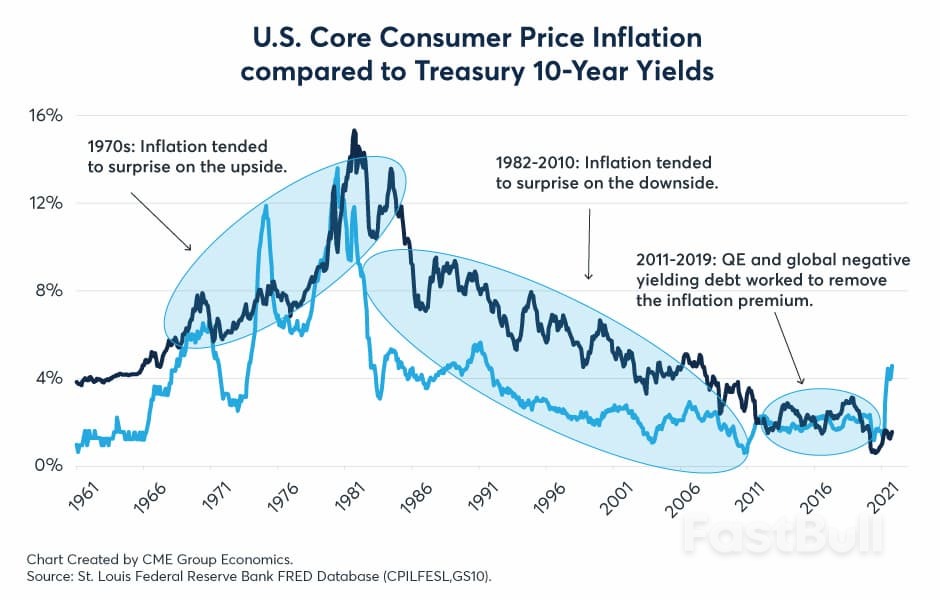
          What have been the drivers of the inflation risk premium in U.S. 10-year T-bonds yields in the past? The relationship between U.S. 10-year T-Bonds yields and observed inflation depends entirely on its background and expectations.
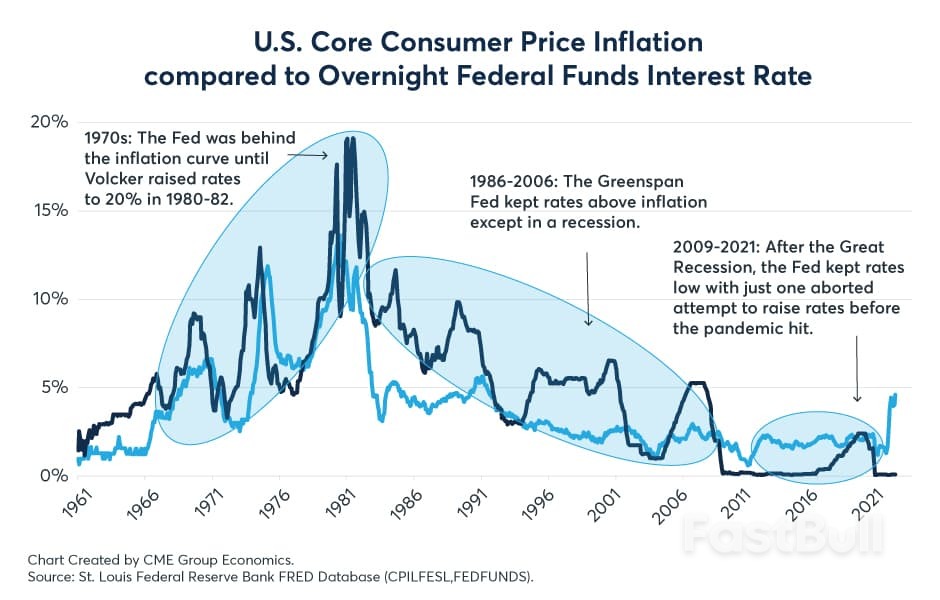
          In the 1970s, under the hyperinflation, loose monetary policy, and the fluctuation of OPEC oil prices led to actual inflation exceeding market expectations. This means that the inflation premium in the yield of 10-year T-Bonds was impacted, as the rise of the yield of T-Bonds lags behind the unexpected rise of the inflation rate. During 1980 - 1982, the ultra-high short-term interest rate led to economic recession, which broke the remedies for inflation. In the next 30 years, the observed inflation will slow down, but it will take time (decades) for inflation concerns to subside and inflation premium to shrink. In the 1980s, 1990s, and early 2000s, inflation has been surprisingly declining with yields taking decades to catch up with the new reality of continuing low inflation.
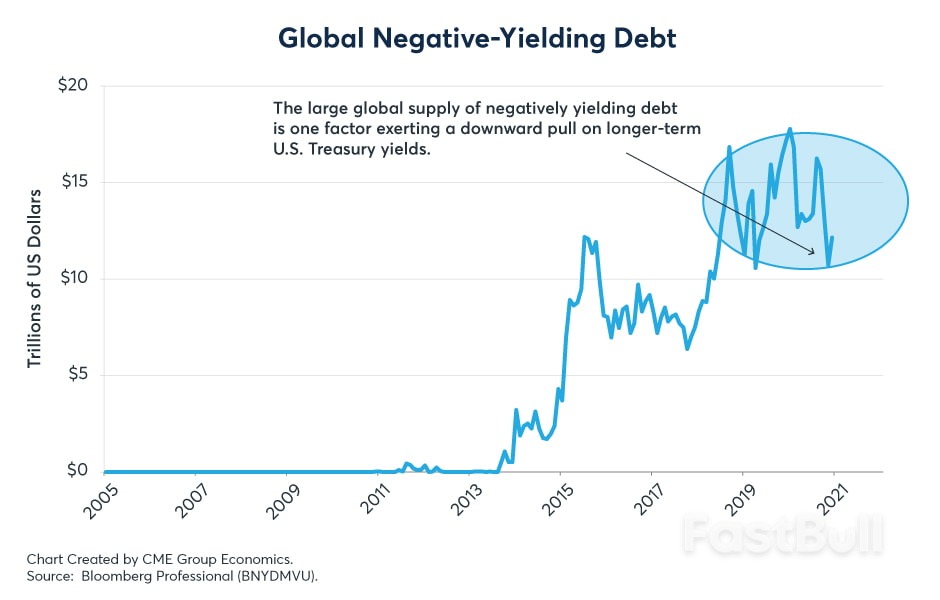
          The emergence of the Fed’s quantitative easing policy and the era of low short-term interest rates after the Great Recession of 2008 - 2009 changed the background of the times. There is a market saying, “Don’t fight against the Fed”. With the Fed’s purchase of U.S. T-Bonds, the ECB pushed the yield to a negative range, and the short-term interest rates of all major countries remained low. The inflation premium actually went nowhere.Key Factors Facing U.S. T-Bonds Yields After Breaking Last Year’s Highs (2)_2Key Factors Facing U.S. T-Bonds Yields After Breaking Last Year’s Highs (2)_3
          The year 2022 involves a new reality. In the post-pandemic economy, inflation soared at the end of 2021, and supply was interrupted. The new variant virus may cause more supply chain problems. The Fed announced that it would put an end to asset purchases in mid-2022 or earlier, and then consider raising short-term interest rates. ECB’s response is relatively slow, so with the beginning of 2022, the global surplus of negative yield debt will still lower the yield of US T-Bonds to some extent. USD remains robust, historically, this helps to curb inflation.
          Will the 10-year T-Bonds rise again to infiltrate the inflation premium? That’s the big question the bond market will have to answer in 2022.

          What is the neutral Fed policy?

          One explanation is that a neutral Fed policy would put the target range for the federal funds rate above the Fed’s 2% inflation target.
          In the past, the understanding of neutrality was different. Under the leadership of former Fed Chairman Alan Greenspan in the 1990s, neutrality meant that the federal funds rate was about 1% or 2% higher than the current inflation rate. However, since the Great Recession in 2008, it seems that the neutral view of the Fed no longer provides overnight rate with an inflation premium but assumes (rightly or wrongly) that inflation will return to the mean value and eventually meet Fed’s 2% inflation target. Key Factors Facing U.S. T-Bonds Yields After Breaking Last Year’s Highs (2)_4
          At the end of 2021, the reasons why the Fed withdrew from its asset purchase plan and eventually raised short-term interest rates were supported by the following factors: the rising trend of the stock market, the full recovery of real GDP in the United States from the impact of the pandemic, and the soundness of the labor market. All these are carried out against the background that the overall consumer price inflation rate exceeds 6% and the core inflation rate (excluding food and energy) exceeds 4%. The debate within FOMC may revolve around the idea in 2022, that is, when the overall economic demand is not a problem and the inflation of supply interruption is expected to continue, a possible route that the Fed may choose is to keep “natural” inflation in the future for better understanding.

          Interest rate increases and asset purchases

          Can the Fed start raising short-term interest rates before terminating the asset purchase program? Technically, if that’s what Fed wants, it can raise interest rates and purchase assets at the same time. However, the Fed led by Powell made it clear that it believed that it was inconsistent to purchase assets and raise interest rates at the same time. Therefore, only after the end of the asset purchase plan will interest rates be raised in or before the summer of 2022. Key Factors Facing U.S. T-Bonds Yields After Breaking Last Year’s Highs (2)_5
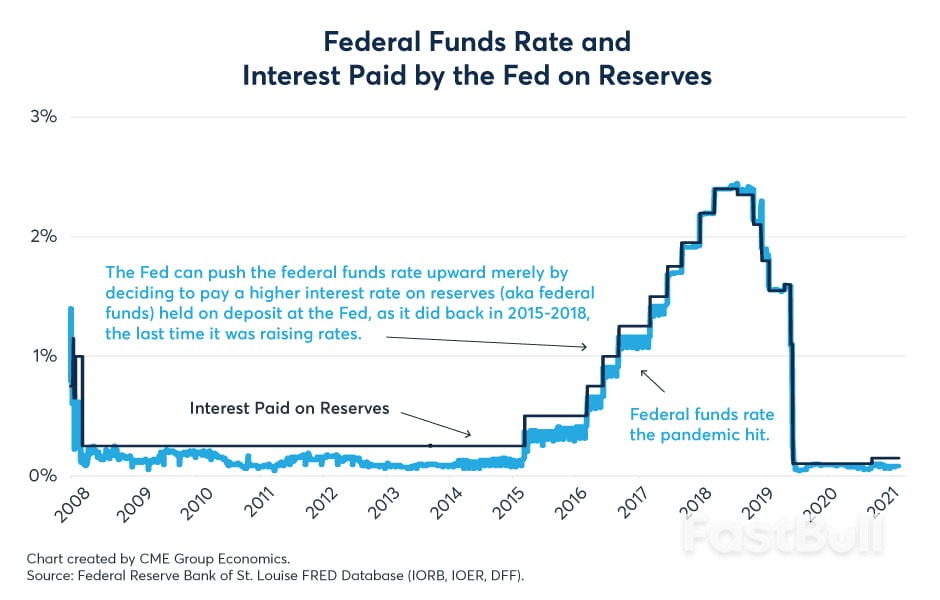
          The technical aspects of how to implement short-term interest rate rises are to be explored. The interest rate paid by the Fed for the deposits or reserves held by financial institutions in the Fed through the policy has effectively affected the overnight money market. If the Fed wants to raise interest rates, it only needs to pay more interest on the reserves held by the Fed, and it can do so at any time whether the Fed purchases assets or not. However, there is a price. When the Fed raises the reserve interest rate, the Fed interest expense will be increased. In turn, this will reduce the net profit contributed by the Fed to the U.S. Bonds.
          Risk Warnings and Disclaimers
          You understand and acknowledge that there is a high degree of risk involved in trading. Following any strategies or investment methods may lead to potential losses. The content on the site is provided by our contributors and analysts for information purposes only. You are solely responsible for determining whether any trading assets, securities, strategy, or any other product is suitable for investing based on your own investment objectives and financial situation.
          Comments
          Add to Favorites
          Share

          Key Factors Facing U.S. T-Bonds Yields After Breaking Last Year's Highs (1)

          Related Article: Key Factors Facing U.S. T-Bonds Yields After Breaking Last Year’s Highs (2)

          Key Factors Facing U.S. T-Bonds Yields After Breaking Last Year's Highs (1)_1The Driver Behind High Inflation Is "Supply Or Demand"

          The Fed is exiting its asset purchase program and could end net asset purchases in the first half of 2022. After QE ends, the Fed will consider raising the target range speed for federal funds. Meanwhile, new variants of the virus complicate the situation. However, are the factors behind high inflation driven by supply or demand?
          Should be both. There is a seller (supply) and a buyer (demand) for every product or service that changes hands, so analyzing the reasons for price changes always involves supply and demand. In the context of the pandemic, supply and demand have been affected in very unusual and atypical ways.
          The two main changes on the demand side are the U.S. federal government making direct payments to individuals to cushion the blow from the partial shutdown of the services sector, and the shift in consumption patterns from services to goods.
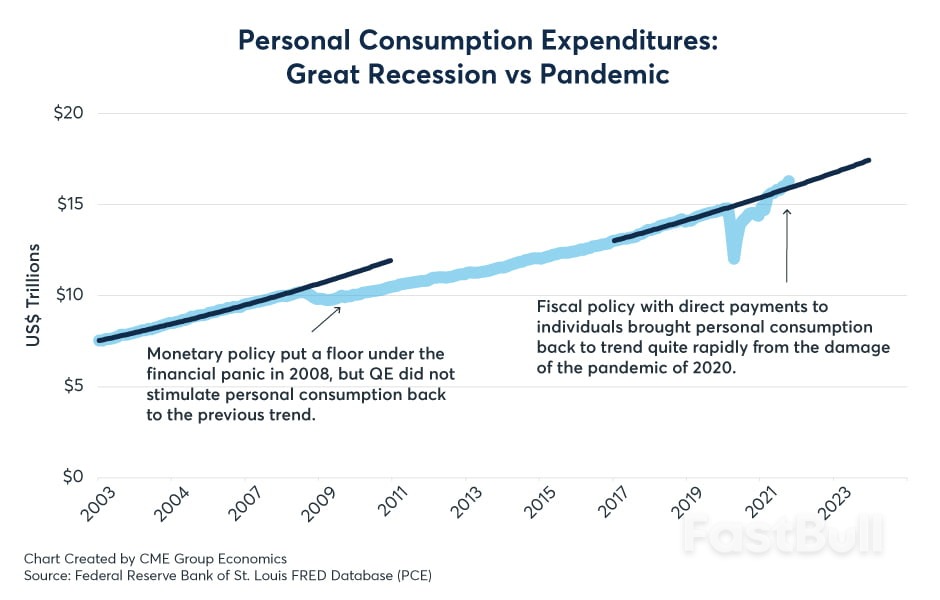
          First, government-issued relief funds are paid directly to individuals, allowing individual consumption to return to pre-pandemic levels more quickly. By the end of 2021, real GDP was about 3.5% higher than its peak in the pre-pandemic fourth quarter (2019). The two-year growth of 3.5% indicated a surprisingly quick recovery from the shock of the pandemic but was well below the average demand growth over the two years. Therefore, in terms of impacting the high inflation rate observed in 2021, we would not give too much credit to the general demand side of fiscal policy, even if it would contribute to a faster recovery from the shock.
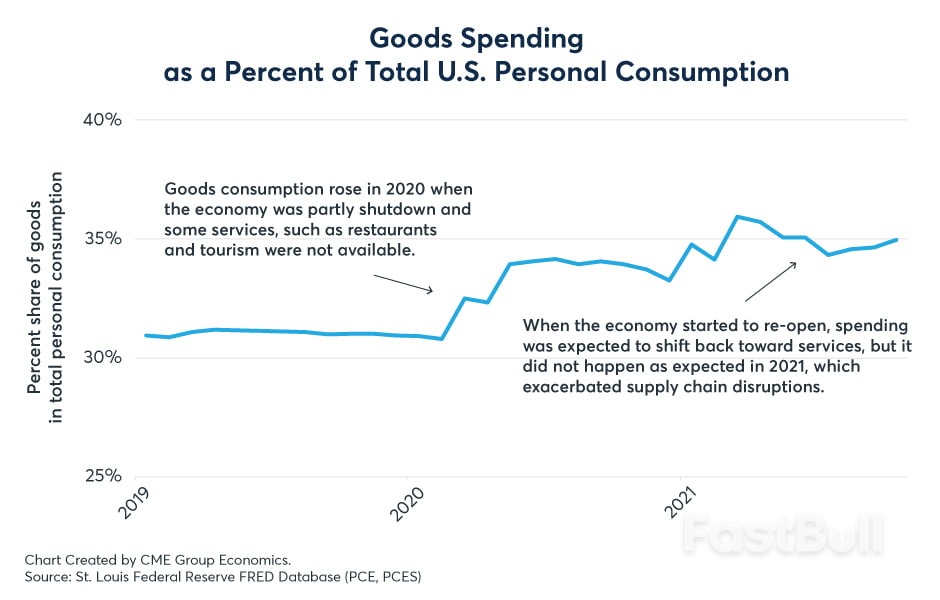
          Second, the relative shift from spending on services to spending on goods poses a significant shock to demand goods, exacerbating supply chain challenges and affecting cargo inflation in 2021. That is, the demand effects that are important to inflation come from the relative shift in demand from services to cargo, rather than a sustained increase in overall demand.
          On the supply side, there are many challenges. In some cases, ports have been affected by the outbreak, resulting in disruptions to container handling. Container production slowed in the spring of 2020 due to a relative shift in consumption of manufactured cargo, before it took a while to pick up to meet increased Chinese merchandise exports to the U.S. and Europe. The diversion of goods has also led to shortages of computer chips, slowed car production, and pushed used-car prices to record highs. These are just a few of the many supply chain disruptions caused by the pandemic.Key Factors Facing U.S. T-Bonds Yields After Breaking Last Year's Highs (1)_2
          Key Factors Facing U.S. T-Bonds Yields After Breaking Last Year's Highs (1)_3
          All in all, supply chain disruptions and relative changes in commodity consumption caused by the pandemic are largely due to higher inflation in 2021. This analysis is instructive because typical demand-side policy responses, such as raising interest rates, do not address supply disruptions, especially those supply failure caused by the COVID-19 that disrupt international shipping and other aspects of supply chains.
          Nonetheless, at the end of 2021, with real GDP fully recovered, a strong labor market, and rising inflation, the mix of supply and demand influences expectations that the Fed may eventually return to a neutral monetary policy: that is, no asset purchases and short-term deposit rate close to the Fed 2% inflation target. Sooner rather than later.

          Yield Curve Scenario

          How will the T-Bonds yield curve respond to higher short-term rates? Not sure, there are at least three possible scenarios in dispute: flattening, steepening, parallel rising. Let's analyze each scenario from the perspective of two-year and 10-year T-Bonds yields.
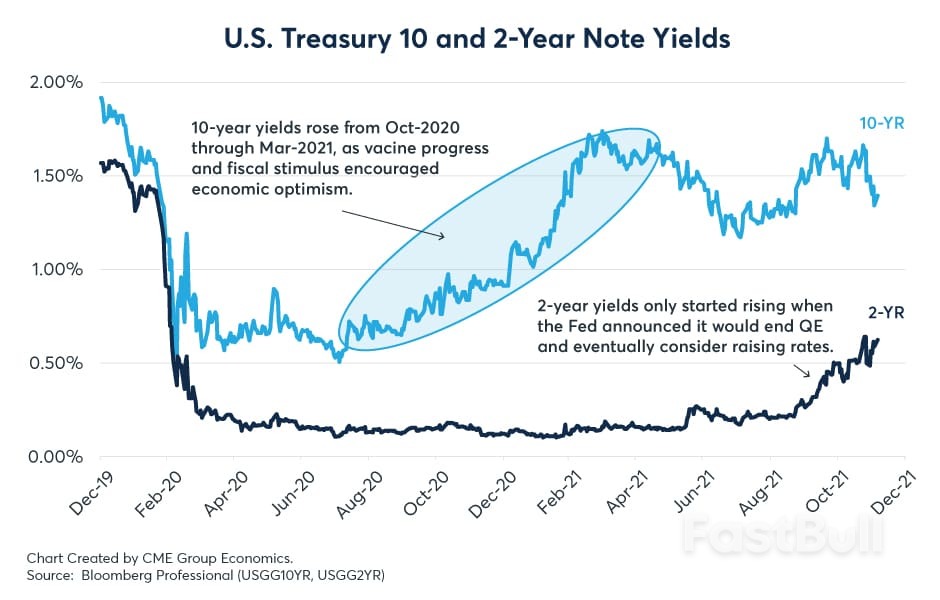
          First, context is vital. At the end of 2021, the CPI was above 6%, well above the Fed's 2% target. Real GDP has fully recovered from the pandemic shock, the labor market is strong, unemployment has fallen, job vacancies have reached record levels, and voluntary layoffs have increased. In response, the Fed decided to begin ending its asset-purchase program, and market participants began discussing when the Fed would start raising short-term interest rates and how high they might eventually rise.Key Factors Facing U.S. T-Bonds Yields After Breaking Last Year's Highs (1)_4
          Key Factors Facing U.S. T-Bonds Yields After Breaking Last Year's Highs (1)_5
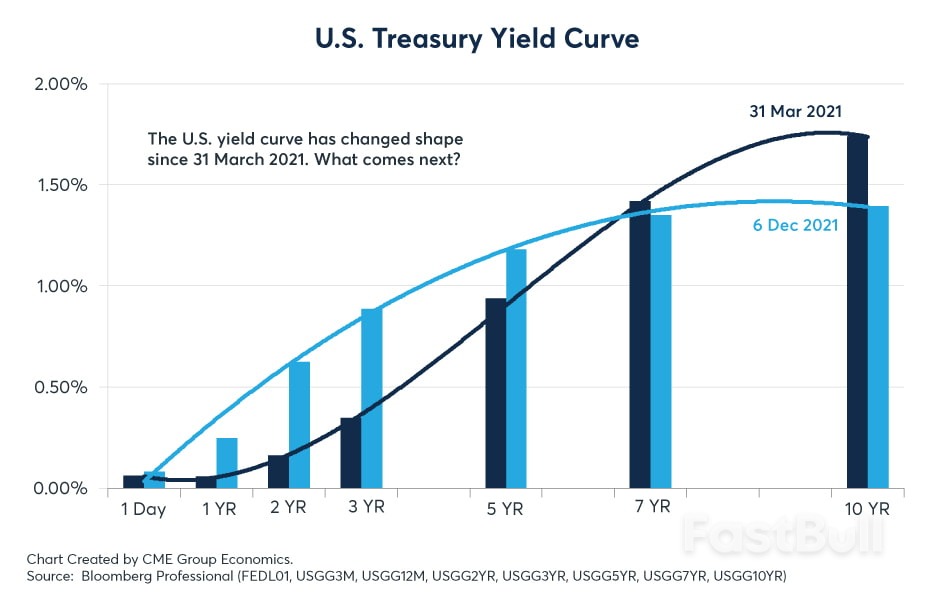
          As shown in Figure 3, the flattening of the T-Bonds yield curve means that the two-year T-Bonds yield will rise relative to the 10-year T-Bonds yield. As shown in Figure 4, the steepening of the T-Bonds yield curve implies that the 10-year T-Bonds yield will rise relative to the 2-year T-Bonds yield. 2-year and 10-year T-Bonds yields rise (or fall) at the same time as the entire curve shifts in parallel.

          Key Drivers For Each Scenario

          The U.S. economy could see a flattening if inflation begins to quickly fall back to the Fed's 2% target in 2022, or if the stock market slumps and investors flock to high-quality T-Bonds.
          Conversely, things could get worse if inflation, especially core inflation (excluding food and energy), remains above 3% and doesn't appear to have fallen to the Fed's 2% target.
          This parallel rise suggests that with inflation stubbornly high, the Fed is likely to raise short-term interest rates regularly at once every other FOMC meeting. Crucially, the Fed was seen as "too little, too late," making the endpoint of rate hikes highly uncertain.
          This is a fascinating market debate, and only time will tell which scenario will eventually materialize. In fact, at different times, all three cases work fine.
          Risk Warnings and Disclaimers
          You understand and acknowledge that there is a high degree of risk involved in trading. Following any strategies or investment methods may lead to potential losses. The content on the site is provided by our contributors and analysts for information purposes only. You are solely responsible for determining whether any trading assets, securities, strategy, or any other product is suitable for investing based on your own investment objectives and financial situation.
          Comments
          Add to Favorites
          Share

          Shiba Inu Price Forecast: Eyeing a 41% Rally Amid Market Fluctuations

          Glendon
          Shiba Inu's Current Market Position: Despite a recent 13.57% decline, SHIB maintains a double-bottom bullish reversal pattern.
          Potential for Recovery: A 5% increase from its current price could signal a bullish reversal.
          Rally Prospects: Investors could witness a 41% rally if the bearish thesis is invalidated.
          Introduction: The Volatile World of Shiba Inu (SHIB)
          Shiba Inu (SHIB), a cryptocurrency that emerged as a meme coin, has captured the attention of the crypto market with its volatile yet intriguing price movements. Despite facing a recent 13.57% downturn, the resilience of this digital asset is evident in its adherence to a double-bottom bullish reversal pattern, providing a beacon of hope for investors.
          Current Market Analysis: Understanding SHIB's Position
          SHIB's market trajectory in recent weeks paints a complex picture. After the sharp decline, it managed to stay above a crucial stop-loss threshold of $0.0000094. This level is more than just a number; it's a battleground where bullish and bearish sentiments clash. The double bottom pattern, a traditional indicator of potential bullish momentum, remains intact, suggesting that SHIB may not have exhausted its upward potential.
          Unpacking the Double Bottom Pattern
          The double bottom pattern in technical analysis is a significant indicator. It typically resembles the letter 'W' and indicates that an asset has hit a low price point twice but has rebounded each time, suggesting underlying strength. For SHIB, this pattern has been a subject of keen interest among crypto analysts, hinting that the tide could turn in favor of the bulls.
          Potential for a Bullish Reversal: A Closer Look
          A bullish reversal for SHIB hinges on a seemingly modest 5% increase from its current price. This increment would effectively dismantle the bearish thesis that has been hovering over SHIB, potentially triggering a change in market sentiment. Such a reversal could pave the way for a significant price rally.
          Forecasting a 41% Rally: Insights and Speculations
          The prospect of a 41% rally is not just a random speculation but a calculated forecast based on SHIB's historical performance and market dynamics. This rally, while ambitious, aligns with the coin's history of dramatic price swings. However, it's crucial for investors to note that the crypto market is unpredictable, and past performance is not always indicative of future results.
          External Factors Influencing SHIB's Price
          Several external factors play a pivotal role in shaping SHIB's market value. These include broader market trends in the cryptocurrency space, global economic conditions, regulatory news, and technological advancements within the blockchain sector. Investors must stay attuned to these factors, as they can dramatically sway SHIB's price in either direction.
          Navigating the Risks: A Word of Caution
          Investing in cryptocurrencies, especially in a coin as volatile as SHIB, carries inherent risks. The market's unpredictable nature, coupled with external economic and regulatory influences, can lead to sudden and significant price changes. Investors should approach SHIB with a strategy that accommodates these risks, potentially leveraging tools like stop-loss orders to manage their exposure.
          Investment Strategies for SHIB Enthusiasts
          For those looking to invest in SHIB, a balanced approach is key. Diversifying investments, staying informed about market trends, and setting realistic expectations are crucial. Investors should also consider the long-term potential of their investments, evaluating SHIB's position within the broader crypto ecosystem and its potential for integration into
          mainstream financial and technological systems.
          The Role of Community and Social Media in SHIB's Popularity
          One cannot overlook the role of community support and social media in driving SHIB's popularity. The cryptocurrency has a robust online community, often rallying around the coin on various social media platforms. This community support can significantly influence investor sentiment and, consequently, SHIB's price.
          Long-Term Prospects: SHIB Beyond Price Speculation
          Looking beyond the immediate price speculation, SHIB's long-term value may also be influenced by its utility and adoption. As the cryptocurrency market matures, the potential integration of SHIB into real-world applications, such as payments or decentralized finance (DeFi) platforms, could play a critical role in its valuation.
          Conclusion: Navigating SHIB's Future with Informed Optimism
          While the possibility of a 41% rally for Shiba Inu presents an exciting prospect, it comes with its share of uncertainties and risks. The cryptocurrency market is known for its volatility, and SHIB is no exception. Investors interested in SHIB should approach with cautious optimism, armed with thorough research and a well-planned investment strategy. As the market continues to evolve, keeping a close eye on market trends, community sentiment, and external factors will be key to navigating SHIB's future.
          Risk Warnings and Disclaimers
          You understand and acknowledge that there is a high degree of risk involved in trading. Following any strategies or investment methods may lead to potential losses. The content on the site is provided by our contributors and analysts for information purposes only. You are solely responsible for determining whether any trading assets, securities, strategy, or any other product is suitable for investing based on your own investment objectives and financial situation.
          Comments
          Add to Favorites
          Share

          Fauci : it’s still an ‘open question’ whether omicron spells Covid endgame

          White House chief medical advisor Dr. Anthony Fauci said Monday it is still too soon to predict whether the omicron Covid-19 variant will mark the final wave of the coronavirus pandemic.
          “It is an open question whether it will be the live virus vaccination that everyone is hoping for,” Fauci said via videoconference at The Davos Agenda virtual event.
          The omicron variant, while highly transmissible, has been found to be less severe than previous variants, sparking hope that it could hasten the end of the pandemic. Yet, Fauci said there is still no guarantee.
          “I would hope that that’s the case. But that would only be the case if we don’t get another variant that eludes the immune response of the prior variant,” he said.
          Still, even if omicron does emerge as the final variant of Covid-19, it is unlikely that it would mean endgame for the virus entirely, Fauci said. Rather, it will remain present in society at an endemic level.
          “Control means you have it present but it is present at a level that does not disrupt society,” Fauci said. “That’s my definition of what endemicity would mean.”
          At that stage, public health measures such as mask-wearing would no longer be required, and society could return to some level of pre-Covid normality, he said.
          “It’s not going to be that you’ll eliminate this disease completely. But hopefully, it will be at such a low level that it doesn’t disrupt our normal social, economic and other interactions with each other. To me, that’s what the new normal is.”
          ‘Too early’ to call Covid endemic
          Fauci was speaking alongside a panel of public health experts who agreed that omicron will likely become the dominant strain of Covid-19 globally in 2022. However, they were divided on whether it would be the final strain.
          “It is indeed too early really to call it endemic. There is a high probability that we will have a new variant,” said Annelies Wilder-Smith, professor of emerging infectious diseases at the London School of Hygiene and Tropical Medicine.
          A new variant is likely to be less severe, looking at previous versions, but it remains important to prepare for the worst, she said.
          Richard Hatchett, chief executive officer of the Coalition for Epidemic Preparedness and Innovations, was more optimistic, however.
          “Omicron will sweep the world. It may hopefully sweep out other variants,” he said, adding that the virus will likely reach a point of equilibrium, where it becomes an annual epidemic, much like the seasonal flu.”

          Source: CNBC.

          Risk Warnings and Disclaimers
          You understand and acknowledge that there is a high degree of risk involved in trading. Following any strategies or investment methods may lead to potential losses. The content on the site is provided by our contributors and analysts for information purposes only. You are solely responsible for determining whether any trading assets, securities, strategy, or any other product is suitable for investing based on your own investment objectives and financial situation.
          Comments
          Add to Favorites
          Share

          Senate Panel Approves Antitrust Bill Restricting Big Tech Platforms

          A Senate panel approved antitrust legislation forbidding the largest tech platforms from favoring their own products and services over competitors’, scoring a win for backers of stricter Big Tech regulation against fierce industry opposition.
          The American Innovation and Choice Online Act moves next to the Senate floor, where several senators said they wanted to see additional changes before backing the measure. Thursday’s 16-6 vote in the Senate Judiciary Committee showed the bill had bipartisan support but also raised bipartisan concerns.
          The legislation “is specifically designed to target a small number of specific companies, most of which are headquartered in my home state,” said Sen. Dianne Feinstein, who criticized elements of the bill along with fellow California Democratic Sen. Alex Padilla. “It’s difficult to see the justification for a bill that regulates the behavior of only a handful of companies while allowing everyone else to continue engaging in that exact same behavior.”
          Despite their reservations, both California senators voted “yes” to advance the bill.
          Clearing the Senate panel was a big win for the measure’s backers in the face of heavy tech-industry lobbying. Sen. Amy Klobuchar (D., Minn.), a primary sponsor, called the vote “the first time that a major tech bill on competition has advanced to the Senate floor since the dawn of the internet.”
          But Ms. Feinstein’s concerns foreshadowed hurdles ahead. Another California Democrat, House Speaker Nancy Pelosi, hasn’t brought similar antitrust legislation up for a vote amid divisions within her caucus, and lawmakers have limited time to resolve differences before midterms campaigns accelerate later this year.
          The bill targets dominant tech platform, including Amazon.com Inc.’s e-commerce site, Alphabet Inc.’s Google search engine, Apple Inc.’s App Store and Meta Platforms Inc.’s Facebook. Those companies have been working for months to stop or alter the bill, deploying teams of lobbyists and top executives to Washington. Some have funded advocacy groups that oppose the measure and publicly warned that the bill could disrupt popular services.
          Supporters, including smaller tech companies such as Yelp Inc. and Sonos Inc., say the legislation would benefit consumers by boosting competition on platforms that are abusing their market power. Senators in favor of the bill say it makes exceptions that protect features consumers like.
          “This bill is not meant to break up Big Tech or destroy the products and services they offer,” said Sen. Chuck Grassley of Iowa, the top Republican on the judiciary panel. “The goal of the bill is to prevent conduct that stifles competition.”
          Nevertheless, lawmakers amended the bill Thursday to address industry concerns. One new provision is designed to include large, foreign-owned tech platforms such as the popular TikTok app owned by China’s ByteDance Ltd., said Mr. Grassley.
          The top Republican on the judiciary panel’s antitrust subcommittee, Sen. Mike Lee of Utah, said he shared concerns about monopoly power in the tech industry but worried the bill was written too broadly and could cause “collateral damage.”
          “It may actually entrench the very four companies at which it is aimed by creating a strong incentive to simply cease doing any business with third parties,” Mr. Lee said. “This could crush thousands of small businesses, and it could actually worsen the state of competition in online markets.”
          Similar legislation passed the House Judiciary Committee last June but has stalled in the lower chamber since then, partly over skepticism among Democratic members from California.
          The bill that advanced in the Senate Thursday would make it illegal for the largest internet platforms to unfairly favor their own products and services over those of other businesses that use the platform. It lists several categories of outlawed conduct, including a platform preferencing itself in search results or using another business’s nonpublic data to compete with that same business.
          Ms. Klobuchar said the provisions reflect testimony by Sonos and Tile Inc., both tech equipment makers, about how tech giants made it difficult for their products to work on large platforms. She also pointed to a Wall Street Journal article about Amazon accessing data to copy products created by sellers on its online marketplace.
          “Time and time again, we heard about how these companies abuse their power,” Ms. Klobuchar said. “At some point we have to have rules of the road to make things fair.”
          Opponents of the legislation say that companies aren’t wrong to profit from platforms they created and that discouraging them from doing so would hamper future innovation.
          The companies say the legislative language is so broad that it could outlaw services consumers and businesses like. Amazon has said it might not be able to let other businesses sell on its marketplace. Google says it might not be able to feature Google Maps in search results. Apple says the bill could undermine its ability to force third-party apps to get permission before collecting data on iPhone users—a concern Sen. Ted Cruz (R., Texas) said he heard personally from Apple Chief Executive Officer Tim Cook.
          The companies had no further comment Thursday. The Computer and Communications Industry Association, a trade group representing the companies, said the bill “endangers U.S. digital leadership and puts consumers’ security and privacy at risk.”
          Senators backing the bill note that it includes exceptions for platform features that improve functionality or users’ privacy.
          Proton Technologies AG, whose ProtonMail email service competes with Google’s Gmail, called the vote a step to revitalize American tech innovation.
          “The problem with Big Tech is not necessarily that it has gotten so large, but instead how it got so large and what it does with its power. On both counts, the answer is cartel-style behavior,” said Proton CEO Andy Yen.
          The bills’ supporters added more exceptions Thursday. One new provision appears to respond to Apple’s concern by stating that platforms wouldn’t be liable for requiring consent before allowing access to user data. Another exempt’s fee-for-service subscriptions, such as Amazon Prime.
          Lawmakers also broadened the scope of platforms covered by the bill to include large, foreign-owned internet platforms—an apparent response to concerns that the original bill appeared to put U.S. tech giants at a disadvantage.
          In general, the legislation applies to companies with a market cap greater than $550 billion and more than 50 million monthly active users that are considered “critical trading partners” for other businesses to access customers.
          The Federal Trade Commission and the Justice Department would decide which tech platforms meet that definition—a provision that concerned some Republicans. The list is expected to be short and include the largest U.S. tech companies, such as Google, Amazon, Apple, Facebook, and Microsoft Corp.
          Several senators said that further hearings on the bill should have been held before Thursday’s vote and that the measure would require changes to secure their support on the Senate floor.
          Supporters of the bill met with White House officials Wednesday in an effort to secure their backing. The Biden administration hasn’t taken a position on the matter yet.

          Source: The Wall Street Journal.

          Risk Warnings and Disclaimers
          You understand and acknowledge that there is a high degree of risk involved in trading. Following any strategies or investment methods may lead to potential losses. The content on the site is provided by our contributors and analysts for information purposes only. You are solely responsible for determining whether any trading assets, securities, strategy, or any other product is suitable for investing based on your own investment objectives and financial situation.
          Comments
          Add to Favorites
          Share

          USA & CHN Monetary Policy Differentiation

          Since the second half of 2021, with the gradual recovery of the global economy, inflation has continued to rise in many countries, and the monetary policies of major central banks have begun to diverge significantly, especially the world's top two economies, the CHN & USA.

          Monetary Policy Of The CHN & USA "One Loose And One Tight"

          As is known to all, the central bank's monetary policy is often closely related to the economic fundamentals, and the change of monetary policy is also the result of changes in the economic cycle. At present, the CHN & USA economies are showing completely different development trends.
          Due to the continued high level of inflation in the U.S. and the gradual recovery of the job market, the Fed's monetary policy has undergone a dramatic change, gradually shifting from loose to tight. The market went from doubting three rate hikes in 22 years and the first hike in June at the end of last year to moving the timing of the first hike forward to March, with plans to start shrinking the balance sheet 2022, followed by at least four hikes in 2022. Even the recent view of a one-off 50bp rate hike in March: dollar real interest rates have gradually risen from negative.
          As CHN's economy faces the triple downward pressure of shrinking demand, supply shocks, and weakening expectations, its monetary policy has begun to tilt towards easing. Since December 2021, the reserve requirement ratio and interest rate have been cut successively to replenish bank liquidity and stimulate credit demand to stabilize economic growth.
          Under The Divergence Of Monetary Policy, The Interest Rate Gap Between The CHN & USA Coarctation
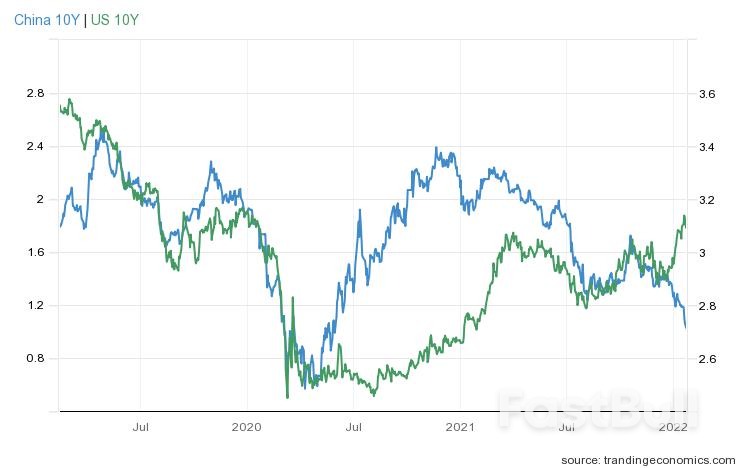
          Yields on 10-year CHN government bonds fell further to around 2.7% after the PBOC cut policy and LPR rates in succession. The fed's tightening has pushed us long-term T-Bonds yields above 1.9%, back to pre-pandemic levels, while the gap between the CHN & USA interest rates is back below 100 basis points.USA & CHN Monetary Policy Differentiation_1
          With CHN's economy facing considerable downward pressure in the future, it is understandable that long-term bond yields will fall. However, fed rate increases usually only reduce dollar liquidity and trigger a rise in short-term yields. Raising rates or expectations too quickly could also have the side effect of rapidly narrowing T-Bonds maturity spreads and even affecting future growth prospects, with long-end yields potentially falling instead. The B.S. contraction is the main reason for the rise in long-term bond yields, which means that the fed will not only cancel "bonds due to investment", but may also actively sell long-term debt, increasing the supply of T-Bonds, adding to T-Bonds yields rise.

          The Impact Of The Differentiate Of The CHN & USA Monetary Policies

          From the perspective of the exchange rate, the narrowing of the interest rate gap between the CHN & USA may to some extent restrain the inflow of foreign capital into CHN, especially the relaxation and tightening of monetary policies between the CHN & USA, However, the actual situation is that foreign capital is attracted not only by interest rate differences but also by investment security and exchange rate stability. Although the Fed is expected to raise interest rates and narrow the CHN & USA interest rate spread, the RMB exchange rate remains stable and appreciated slightly this year, indicating that the influence of the CHN & USA interest rate spread and the adjustment of monetary policy of the Fed on the RMB exchange rate is weakened. With the PBOC increasingly focusing on the role of an "automatic stabilizer" for the exchange rate, monetary policy is "self-centered". We believe that the RMB exchange rate will remain independent of the market price.
          T-Bonds are among the most hotly bought in the world because of the dollar's privileged international status and its safety. CHN is the second-largest holder of T-Bonds. CHN has taken a cautious approach to its T-Bonds purchases and reduced its holdings because deteriorating relations with T-Bonds may yield rate higher.
          Long-term T-Bonds yields remain the benchmark for global asset pricing. Financial markets will take a hit as T yields soar, and risk assets such as stocks and commodities, in particular, are likely to adjust.

          Conclusion

          It is expected that when CHN accelerates interest rate cuts in the first half of 2022, based on CHN's current economic conditions, credit conditions, and monetary policy strength, exports will hopefully continue to support the strengthening of the RMB exchange rate, and the narrowing of the CHN & USA interest rate differential caused by the CHN & USA monetary policy divergence will have a limited impact on monetary policy.
          CHN export growth may slow down in the second half of the year, the CHN & USA interest rate gap will narrow again, and the demand for exchange settlement decline, These circumstances put pressure on the devaluation of the RMB, the adjustment of CHN's monetary policy will be affected by the performance of economic data after the rate cut.
          Risk Warnings and Disclaimers
          You understand and acknowledge that there is a high degree of risk involved in trading. Following any strategies or investment methods may lead to potential losses. The content on the site is provided by our contributors and analysts for information purposes only. You are solely responsible for determining whether any trading assets, securities, strategy, or any other product is suitable for investing based on your own investment objectives and financial situation.
          Comments
          Add to Favorites
          Share

          What the Metaverse Has to Do with Microsoft’s Deal for Activision Blizzard

          When Microsoft Corp. disclosed plans to buy videogame giant Activision Blizzard Inc. the company described the $75 billion deal as a pathway to the metaverse, tapping into a trendy topic.
          During a roughly 15-minute investor and media call shortly after the Tuesday announcement, executives from Microsoft and Activision mentioned the term “metaverse” more than 10 times.
          “When we think about our vision for what a metaverse can be, we believe there won’t be a single centralized metaverse,” Microsoft Chief Executive Officer Satya Nadella said on the call. “We need to support many metaverse platforms.”
          It was, analysts who follow the company said, Microsoft’s way of positioning its booming game business as the on-ramp to the metaverse, a future vision of the internet that has been the subject of growing hype—especially since Facebook announced a new focus and the new name Meta Platforms Inc. in October.
          In the metaverse, so the tech industry thinking goes, people will come together in digital form to work, play, shop and socialize in immersive virtual worlds where they see each other as characters called avatars.
          Videogames are an example of how such a world might look and function, with many players enveloped for hours in virtual worlds where they spend money on digital goods and get their avatars together to interact.
          Shares of some companies making early bets on metaverse-related technologies have risen, and several metaverse-themed exchange-traded funds have launched recently. And while Apple Inc. has said little about its future plans, investor excitement about how it may benefit from the rise of the metaverse helped the company this month become the first to reach a valuation of $3 trillion in intraday trading.
          Videogame software was already a more than $100 billion global industry before the Covid-19 pandemic, during which games became even more popular with moviegoing and other forms of public entertainment curtailed. Yet gamers are a minority world-wide and most spend only some of their free time playing. They make up a small part of what metaverse advocates hope will one day be a much more expansive world.
          The technology and infrastructure needed for a metaverse future are still being developed. Modern virtual-reality headsets, for example, are still relatively clunky and costly.
          Meanwhile, Microsoft still has plenty of reasons to acquire Activision. It is one of the world’s biggest videogame companies with some of the most popular franchises, and Microsoft was able to pay below what Activision was valued at less than a year ago.
          “What Microsoft is picking up is a large community of engaged gamers, but what that means for the metaverse down the road, who knows?” said Stifel analyst Brad Reback. “There is still a lot that needs to be sorted out around what the metaverse will ultimately become.”
          Microsoft, which already has a sizable videogame business, is positioning itself for the metaverse future not only against fellow tech giants such as Meta, but also against other videogame companies.
          What the Metaverse Has to Do with Microsoft’s Deal for Activision Blizzard_1
          On Roblox Corp.’s self-named platform, users can teleport between millions of games, dedicated social spaces and concert venues, and they can purchase virtual goods to enhance their experience. Epic Games Inc.’s “Fortnite” and Linden Research Inc.’s “Second Life” also encompass extensive virtual worlds.
          In buying Activision Blizzard, which still requires regulatory approval, Microsoft would gain several online games with metaverse characteristics. For example, several million people play and socialize in Activision’s “World of Warcraft.” They appear as avatars in a fantasy virtual landscape and buy virtual goods such as pets. The company’s games overall have nearly 400 million monthly players.
          But for Microsoft and others to make an impact in the metaverse, they will need the support of gamers, said Adrian Montgomery, CEO of Enthusiast Gaming Holdings Inc., which hosts online communities for game enthusiasts. “The success of what the metaverse becomes is really dependent upon them.”
          As the metaverse comes to life, tech forecasters say there will be countless virtual realms for people to gather in besides games, including virtual offices, schools, sports arenas and shopping malls. Still, it is likely that many of the basic tools and technologies for the metaverse will first come out of games, they say. The tech for tracking a person’s movement in the real world so their gaming avatar can match it in the metaverse, for example, could improve virtual office meeting experiences.
          “Virtual meetings will be so much more immersive and interactive than they are today,” said Derek Belch, founder and CEO of Strivr Labs Inc., a Palo Alto, Calif., -startup that provides virtual-reality-training software for the workplace.
          Videogames already influence technology including graphics, cloud-computing, artificial intelligence and virtual marketplaces. Microsoft could apply the tools and knowledge of Activision to its other game studios and even products aimed at companies, analysts say.
          Even without the metaverse’s arrival, the videogame industry has been riding a wave of growth and consolidation in recent years, driven in part by the pandemic’s social-distancing restrictions.
          Consumer spending on game software jumped about 23% in 2020 from the year before, according to estimates from Newzoo BV. Though that growth shrank to about 1.4% last year, total spending still reached about $180 billion, the analytics firm said. Meanwhile, mergers-and-acquisitions deals within the game industry nearly tripled to $26.2 billion in 2021 from $8.9 billion in 2020, data from PitchBook show.

          Source: The Wall Street Journal.

          Risk Warnings and Disclaimers
          You understand and acknowledge that there is a high degree of risk involved in trading. Following any strategies or investment methods may lead to potential losses. The content on the site is provided by our contributors and analysts for information purposes only. You are solely responsible for determining whether any trading assets, securities, strategy, or any other product is suitable for investing based on your own investment objectives and financial situation.
          Comments
          Add to Favorites
          Share
          FastBull
          Copyright © 2025 FastBull Ltd

          728 RM B 7/F GEE LOK IND BLDG NO 34 HUNG TO RD KWUN TONG KLN HONG KONG

          TelegramInstagramTwitterfacebooklinkedin
          App Store Google Play Google Play
          Products
          Charts

          Chats

          Q&A with Experts
          Screeners
          Economic Calendar
          Data
          Tools
          Membership
          Features
          Function
          Markets
          Copy Trading
          Latest Signals
          Contests
          News
          Analysis
          24/7
          Columns
          Education
          Company
          Careers
          About Us
          Contact Us
          Advertising
          Help Center
          Feedback
          User Agreement
          Privacy Policy
          Business

          White Label

          Data API

          Web Plug-ins

          Poster Maker

          Affiliate Program

          Risk Disclosure

          The risk of loss in trading financial instruments such as stocks, FX, commodities, futures, bonds, ETFs and crypto can be substantial. You may sustain a total loss of the funds that you deposit with your broker. Therefore, you should carefully consider whether such trading is suitable for you in light of your circumstances and financial resources.

          No decision to invest should be made without thoroughly conducting due diligence by yourself or consulting with your financial advisors. Our web content might not suit you since we don't know your financial conditions and investment needs. Our financial information might have latency or contain inaccuracy, so you should be fully responsible for any of your trading and investment decisions. The company will not be responsible for your capital loss.

          Without getting permission from the website, you are not allowed to copy the website's graphics, texts, or trademarks. Intellectual property rights in the content or data incorporated into this website belong to its providers and exchange merchants.

          Not Logged In

          Log in to access more features

          FastBull Membership

          Not yet

          Purchase

          Become a signal provider
          Help Center
          Customer Service
          Dark Mode
          Price Up/Down Colors

          Log In

          Sign Up

          Position
          Layout
          Fullscreen
          Default to Chart
          The chart page opens by default when you visit fastbull.com