• Trade
  • Markets
  • Copy
  • Contests
  • News
  • 24/7
  • Calendar
  • Q&A
  • Chats
Trending
Screeners
SYMBOL
LAST
BID
ASK
HIGH
LOW
NET CHG.
%CHG.
SPREAD
SPX
S&P 500 Index
6857.13
6857.13
6857.13
6865.94
6827.13
+7.41
+ 0.11%
--
DJI
Dow Jones Industrial Average
47850.93
47850.93
47850.93
48049.72
47692.96
-31.96
-0.07%
--
IXIC
NASDAQ Composite Index
23505.13
23505.13
23505.13
23528.53
23372.33
+51.04
+ 0.22%
--
USDX
US Dollar Index
98.820
98.900
98.820
98.980
98.810
-0.160
-0.16%
--
EURUSD
Euro / US Dollar
1.16602
1.16610
1.16602
1.16605
1.16408
+0.00157
+ 0.13%
--
GBPUSD
Pound Sterling / US Dollar
1.33505
1.33514
1.33505
1.33507
1.33165
+0.00234
+ 0.18%
--
XAUUSD
Gold / US Dollar
4226.74
4227.08
4226.74
4229.22
4194.54
+19.57
+ 0.47%
--
WTI
Light Sweet Crude Oil
59.296
59.333
59.296
59.469
59.187
-0.087
-0.15%
--

Community Accounts

Signal Accounts
--
Profit Accounts
--
Loss Accounts
--
View More

Become a signal provider

Sell trading signals to earn additional income

View More

Guide to Copy Trading

Get started with ease and confidence

View More

Signal Accounts for Members

All Signal Accounts

Best Return
  • Best Return
  • Best P/L
  • Best MDD
Past 1W
  • Past 1W
  • Past 1M
  • Past 1Y

All Contests

  • All
  • Trump Updates
  • Recommend
  • Stocks
  • Cryptocurrencies
  • Central Banks
  • Featured News
Top News Only
Share

Reserve Bank Of India Chief Malhotra On Rupee: Fluctuations Can Happen, Effort Is To Reduce Undue Volatility

Share

Reserve Bank Of India Chief Malhotra On Rupee: Allow Markets To Determine Levels On Currency

Share

Sri Lanka's CSE All Share Index Down 1.2%

Share

Iw Institute: German Economy Faces Tepid Growth In 2026 Due To Global Trade Slowdown

Share

Stats Office - Seychelles November Inflation At 0.02% Year-On-Year

Share

[Market Update] Spot Silver Prices Rose 2.00% Intraday, Currently Trading At $58.27 Per Ounce

Share

S.Africa's Gross Reserves At $72.068 Billion At End November - Central Bank

Share

[Market Update] Spot Silver Broke Through $58/ounce, Up 1.56% On The Day

Share

Dollar/Yen Down 0.33% To 154.61

Share

Kremlin Says No Plans For Putin-Trump Call For Now

Share

Kremlin Says Moscow Is Waiting For USA Reaction After Putin-Witkoff Meeting

Share

Cctv - China, France: Say Both Sides Support All Efforts For A Ceasefire, Restore Peace According To Intl Law

Share

[Chinese Ambassador To The US Xie Feng Hopes Chinese And American Business Communities Will Focus On Three Lists] On December 4, Chinese Ambassador To The US Xie Feng Delivered A Speech At The China-US Economic And Trade Cooperation Forum Jointly Hosted By The China Council For The Promotion Of International Trade And The Meridian International Center. Xie Feng Said That In November 2026, China Will Host The APEC Leaders' Informal Meeting For The Third Time In Shenzhen, Guangdong Province. In December 2026, The United States Will Also Host The G20 Meeting. Regarding How Chinese And American Business Communities Can Seize These Opportunities, He Suggested Focusing On Three Lists: First, Continue To Expand The Dialogue List; Second, Continuously Lengthen The Cooperation List; And Third, Constantly Reduce The Problem List

Share

India's Nifty Financial Services Index Extends Gains, Last Up 0.75%

Share

Eni : Jp Morgan Cuts To Underweight From Overweight

Share

Cctv - China, France: Signed Protocol On Sanitary, Phytosanitary Requirements For Export Of French Alfalfa Grass

Share

India's NIFTY IT Index Last Up 1.3%

Share

India's Nifty 50 Index Rises 0.35%

Share

Israel Sets 2026 Defence Budget At $34 Billion

Share

Russia Says Azov Sea's Port Of Temryuk Damaged In Ukrainian Attack

TIME
ACT
FCST
PREV
Turkey Trade Balance

A:--

F: --

P: --

Germany Construction PMI (SA) (Nov)

A:--

F: --

P: --

Euro Zone IHS Markit Construction PMI (Nov)

A:--

F: --

P: --

Italy IHS Markit Construction PMI (Nov)

A:--

F: --

P: --

U.K. Markit/CIPS Construction PMI (Nov)

A:--

F: --

P: --

France 10-Year OAT Auction Avg. Yield

A:--

F: --

P: --

Euro Zone Retail Sales MoM (Oct)

A:--

F: --

P: --

Euro Zone Retail Sales YoY (Oct)

A:--

F: --

P: --

Brazil GDP YoY (Q3)

A:--

F: --

P: --

U.S. Challenger Job Cuts (Nov)

A:--

F: --

P: --

U.S. Challenger Job Cuts MoM (Nov)

A:--

F: --

P: --

U.S. Challenger Job Cuts YoY (Nov)

A:--

F: --

P: --

U.S. Initial Jobless Claims 4-Week Avg. (SA)

A:--

F: --

P: --

U.S. Weekly Initial Jobless Claims (SA)

A:--

F: --

P: --

U.S. Weekly Continued Jobless Claims (SA)

A:--

F: --

P: --

Canada Ivey PMI (SA) (Nov)

A:--

F: --

P: --

Canada Ivey PMI (Not SA) (Nov)

A:--

F: --

P: --

U.S. Non-Defense Capital Durable Goods Orders Revised MoM (Excl. Aircraft) (SA) (Sept)

A:--

F: --

P: --
U.S. Factory Orders MoM (Excl. Transport) (Sept)

A:--

F: --

P: --

U.S. Factory Orders MoM (Sept)

A:--

F: --

P: --

U.S. Factory Orders MoM (Excl. Defense) (Sept)

A:--

F: --

P: --

U.S. EIA Weekly Natural Gas Stocks Change

A:--

F: --

P: --

Saudi Arabia Crude Oil Production

A:--

F: --

P: --

U.S. Weekly Treasuries Held by Foreign Central Banks

A:--

F: --

P: --

Japan Foreign Exchange Reserves (Nov)

A:--

F: --

P: --

India Repo Rate

A:--

F: --

P: --

India Benchmark Interest Rate

A:--

F: --

P: --

India Reverse Repo Rate

A:--

F: --

P: --

India Cash Reserve Ratio

A:--

F: --

P: --

Japan Leading Indicators Prelim (Oct)

A:--

F: --

P: --

U.K. Halifax House Price Index YoY (SA) (Nov)

--

F: --

P: --

U.K. Halifax House Price Index MoM (SA) (Nov)

--

F: --

P: --

France Current Account (Not SA) (Oct)

--

F: --

P: --

France Trade Balance (SA) (Oct)

--

F: --

P: --

France Industrial Output MoM (SA) (Oct)

--

F: --

P: --

Italy Retail Sales MoM (SA) (Oct)

--

F: --

P: --

Euro Zone Employment YoY (SA) (Q3)

--

F: --

P: --

Euro Zone GDP Final YoY (Q3)

--

F: --

P: --

Euro Zone GDP Final QoQ (Q3)

--

F: --

P: --

Euro Zone Employment Final QoQ (SA) (Q3)

--

F: --

P: --

Euro Zone Employment Final (SA) (Q3)

--

F: --

P: --
Brazil PPI MoM (Oct)

--

F: --

P: --

Mexico Consumer Confidence Index (Nov)

--

F: --

P: --

Canada Unemployment Rate (SA) (Nov)

--

F: --

P: --

Canada Labor Force Participation Rate (SA) (Nov)

--

F: --

P: --

Canada Employment (SA) (Nov)

--

F: --

P: --

Canada Part-Time Employment (SA) (Nov)

--

F: --

P: --

Canada Full-time Employment (SA) (Nov)

--

F: --

P: --

U.S. Dallas Fed PCE Price Index YoY (Sept)

--

F: --

P: --

U.S. PCE Price Index YoY (SA) (Sept)

--

F: --

P: --

U.S. PCE Price Index MoM (Sept)

--

F: --

P: --

U.S. Personal Outlays MoM (SA) (Sept)

--

F: --

P: --

U.S. Core PCE Price Index MoM (Sept)

--

F: --

P: --

U.S. UMich 5-Year-Ahead Inflation Expectations Prelim YoY (Dec)

--

F: --

P: --

U.S. Core PCE Price Index YoY (Sept)

--

F: --

P: --

U.S. 5-10 Year-Ahead Inflation Expectations (Dec)

--

F: --

P: --

U.S. UMich Current Economic Conditions Index Prelim (Dec)

--

F: --

P: --

U.S. UMich Consumer Sentiment Index Prelim (Dec)

--

F: --

P: --

U.S. UMich 1-Year-Ahead Inflation Expectations Prelim (Dec)

--

F: --

P: --

U.S. UMich Consumer Expectations Index Prelim (Dec)

--

F: --

P: --

Q&A with Experts
    • All
    • Chatrooms
    • Groups
    • Friends
    Connecting
    .
    .
    .
    Type here...
    Add Symbol or Code

      No matching data

      All
      Trump Updates
      Recommend
      Stocks
      Cryptocurrencies
      Central Banks
      Featured News
      • All
      • Russia-Ukraine Conflict
      • Middle East Flashpoint
      • All
      • Russia-Ukraine Conflict
      • Middle East Flashpoint
      Search
      Products

      Charts Free Forever

      Chats Q&A with Experts
      Screeners Economic Calendar Data Tools
      Membership Features
      Data Warehouse Market Trends Institutional Data Policy Rates Macro

      Market Trends

      Market Sentiment Order Book Forex Correlations

      Top Indicators

      Charts Free Forever
      Markets

      News

      News Analysis 24/7 Columns Education
      From Institutions From Analysts
      Topics Columnists

      Latest Views

      Latest Views

      Trending Topics

      Top Columnists

      Latest Update

      Signals

      Copy Rankings Latest Signals Become a signal provider AI Rating
      Contests
      Brokers

      Overview Brokers Assessment Rankings Regulators News Claims
      Broker listing Forex Brokers Comparison Tool Live Spread Comparison Scam
      Q&A Complaint Scam Alert Videos Tips to Detect Scam
      More

      Business
      Events
      Careers About Us Advertising Help Center

      White Label

      Data API

      Web Plug-ins

      Affiliate Program

      Awards Institution Evaluation IB Seminar Salon Event Exhibition
      Vietnam Thailand Singapore Dubai
      Fans Party Investment Sharing Session
      FastBull Summit BrokersView Expo
      Recent Searches
        Top Searches
          Markets
          News
          Analysis
          User
          24/7
          Economic Calendar
          Education
          Data
          • Names
          • Latest
          • Prev

          View All

          No data

          Scan to Download

          Faster Charts, Chat Faster!

          Download App
          English
          • English
          • Español
          • العربية
          • Bahasa Indonesia
          • Bahasa Melayu
          • Tiếng Việt
          • ภาษาไทย
          • Français
          • Italiano
          • Türkçe
          • Русский язык
          • 简中
          • 繁中
          Open Account
          Search
          Products
          Charts Free Forever
          Markets
          News
          Signals

          Copy Rankings Latest Signals Become a signal provider AI Rating
          Contests
          Brokers

          Overview Brokers Assessment Rankings Regulators News Claims
          Broker listing Forex Brokers Comparison Tool Live Spread Comparison Scam
          Q&A Complaint Scam Alert Videos Tips to Detect Scam
          More

          Business
          Events
          Careers About Us Advertising Help Center

          White Label

          Data API

          Web Plug-ins

          Affiliate Program

          Awards Institution Evaluation IB Seminar Salon Event Exhibition
          Vietnam Thailand Singapore Dubai
          Fans Party Investment Sharing Session
          FastBull Summit BrokersView Expo

          Is the BLS Definition Flawed? A Professional Reading of the July U.S. Non-farm Payroll Report

          Eva Chen

          Economic

          Summary:

          How should markets interpret the July us non-farm payrolls? Why have rising rate-cut expectations depressed risk assets? Rewind to the same juncture last year: a deceleration in labour-market indicators triggered the "Sahm Rule", prompting investors to price in a simultaneous recession-and-stagflation scenario. Today, a comparable capitulation is unfolding. Does this suggest the current draw-down is only beginning?
          Is the BLS Definition Flawed? A Professional Reading of the July U.S. Non-farm Payroll Report_1
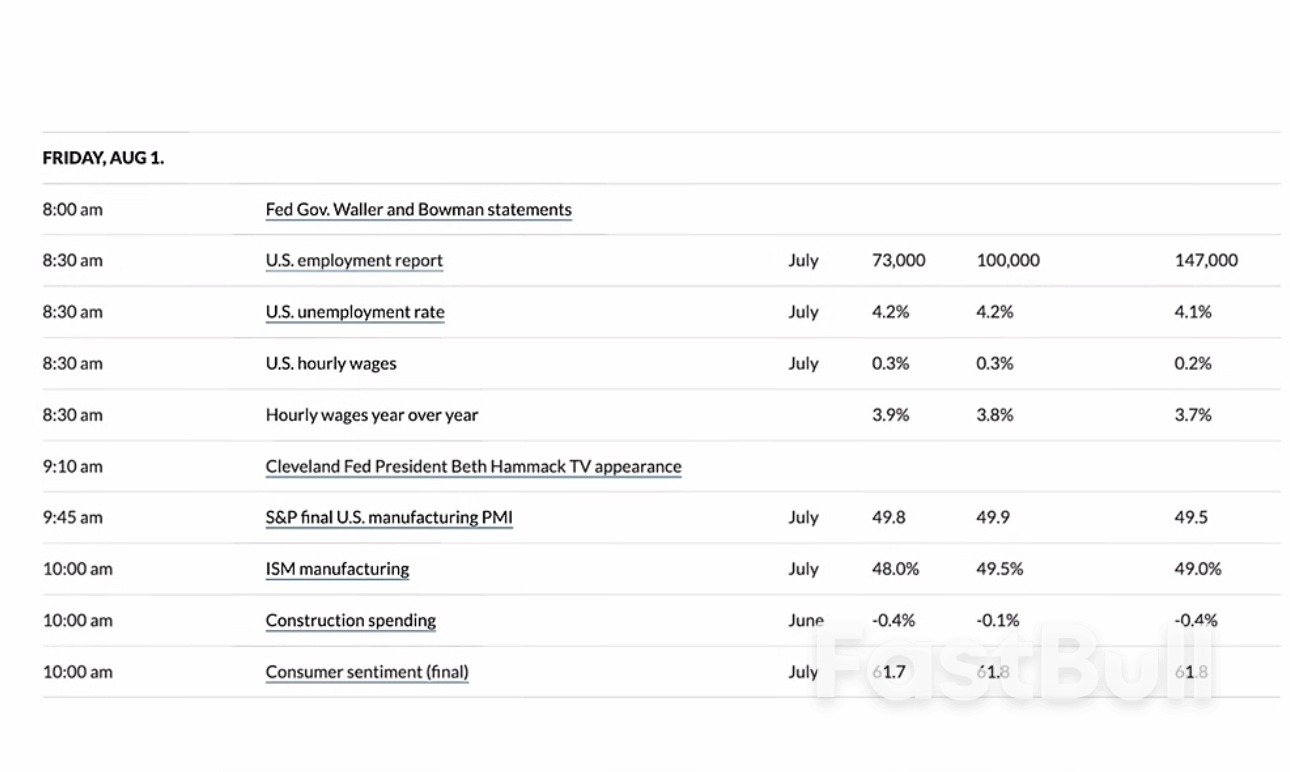
          US Labor Department data released on 1 August showed the economy added just 73,000 non-farm jobs in July, well below the 100,000 consensus and nudging the unemployment rate up to 4.2% from 4.1%. Markets immediately gapped lower and a chorus of skepticism erupted.
          Is the BLS Definition Flawed? A Professional Reading of the July U.S. Non-farm Payroll Report_2
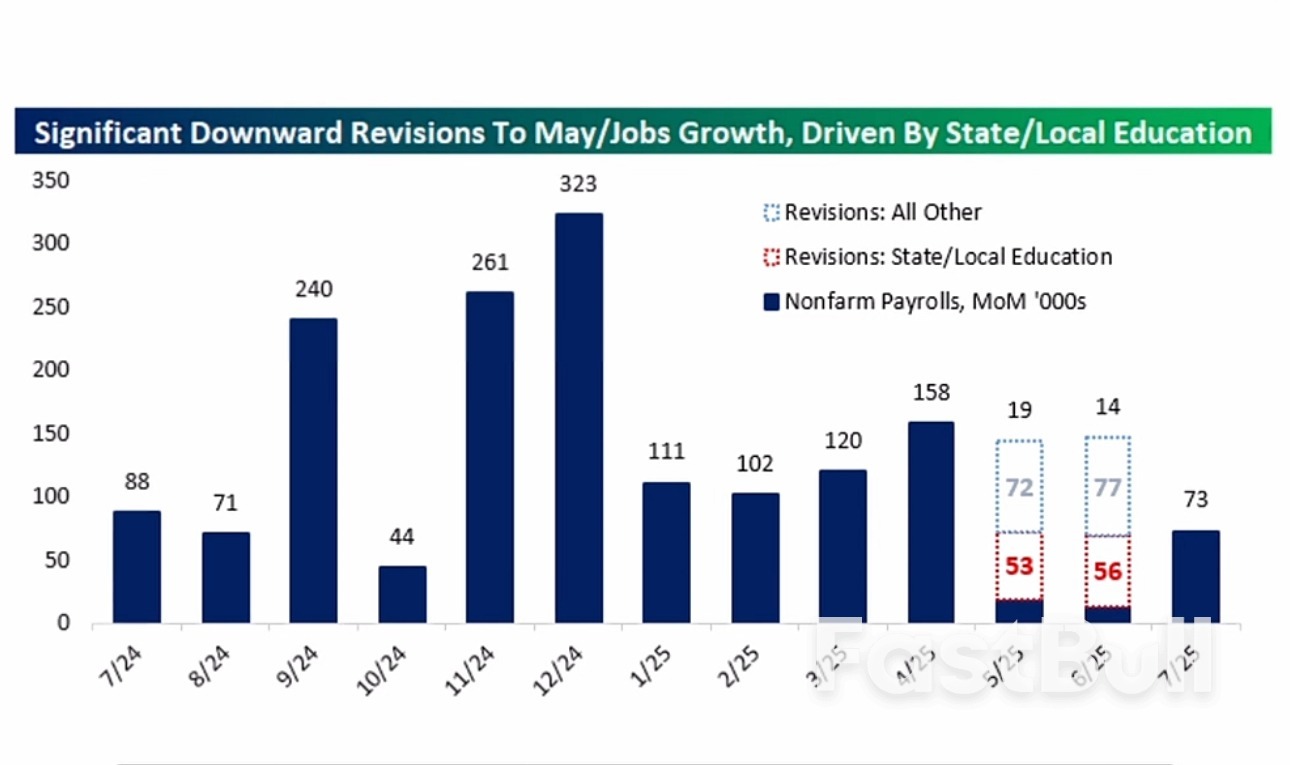
          The true source of panic is not July's headline figure but the Labor Department's massive downward revisions to May and June: May payrolls were slashed from 125,000 to 19,000, and June from 133,000 to 14,000. Strip out government hiring and the combined 258,000 private-sector gain for the two months is effectively erased—an adjustment so extreme it borders on statistical fabrication and has left some policymakers stunned.
          A routine revision would have been priced in; an adjustment of this magnitude was not. The reaction was swift: equities, Treasuries and the dollar suffered a simultaneous "triple-witching" sell-off. President Trump took to social media, calling for the Labor Secretary to be "fired immediately."
          Nevertheless, the very methodology behind the non-farm payrolls release all but guarantees statistical noise—especially when set against a comparatively stable unemployment rate. Compiled by the Bureau of Labor Statistics (BLS), the payroll survey relies on questionnaires dispatched to a sample of employers; inevitably, a material share of firms miss the filing deadline. To fill the gap, the BLS imputes preliminary estimates that are later revised as late responses arrive. This month’s report, published on the first trading day of August, was particularly susceptible to incomplete data, making an eventual revision not only likely but methodologically routine.
          Another narrative largely overlooked by the market is the perennial "summer effect" in the U.S. labour market. Between June and August, seasonal factors—hotter weather fuelling travel, leisure and family visits while simultaneously dampening job-search intensity—have historically produced softer headline prints. Although not an official term, this seasonal pattern is routinely flagged by economists and strategists when parsing monthly employment figures.
          Consequently, the July non-farm payroll print is subject to both statistical noise and a high probability of revision. Response rates from surveyed firms are typically lower in July than in May or June, amplifying survey-error risk. Investors should therefore price in the likelihood that the current 73,000 headline could be materially revised next month, and markets may well seize on that revision to re-price momentum.
          Is the BLS Definition Flawed? A Professional Reading of the July U.S. Non-farm Payroll Report_3
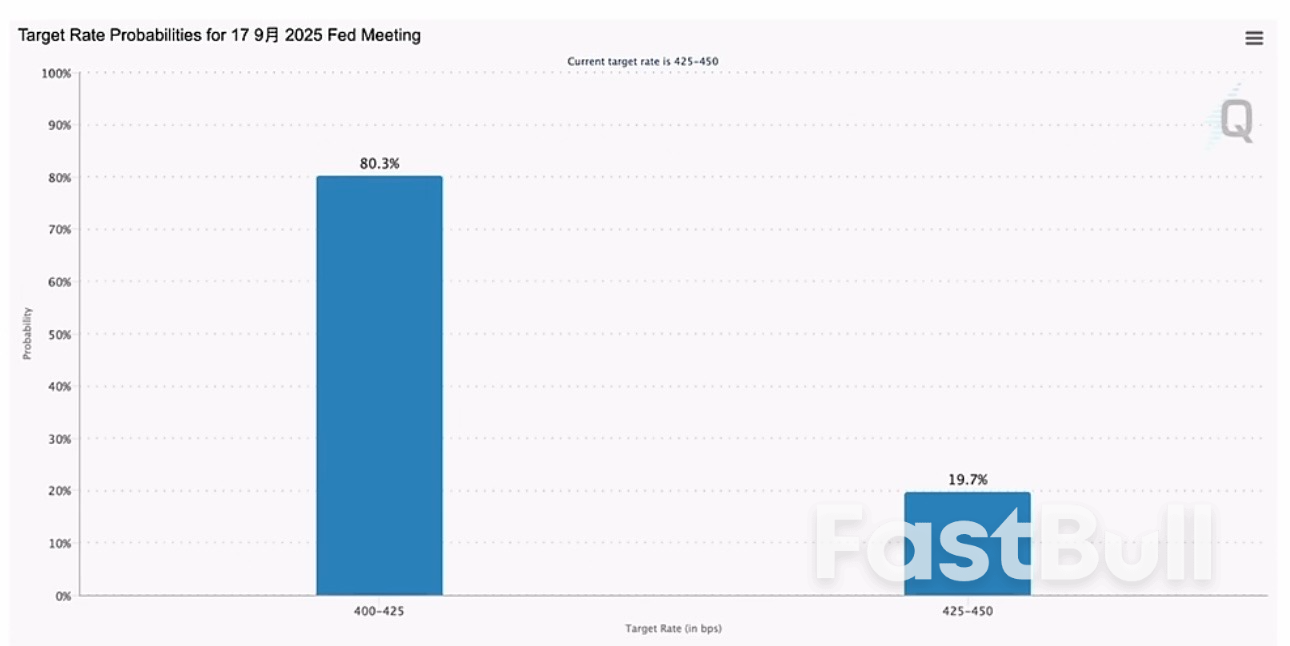
          The second focal point for markets ahead of the release was inflation data. Ultimately, investors hoped that a further deceleration in CPI would raise the probability of a Fed rate cut, thereby providing a tail-wind for broad asset prices—in effect, equating "rate cuts" with "risk-on." Yet even as the latest labour-market data pushed the implied probability of a September cut above 80%, risk assets sold off sharply. The distinction lies in the two distinct triggers for monetary easing:
          The first is an "active" easing cycle: inflation moderates and the central bank reduces the policy rate to bring it closer to the neutral rate. This scenario is historically supportive for risk assets.
          The second is a "reactive" easing cycle: either a sharp disinflation shock or a recessionary signal forces the Fed to cut rates in a crisis-response mode. Such a move is typically preceded by widening credit spreads, falling earnings expectations and de-risking flows—an environment that is, by definition, negative for asset prices.
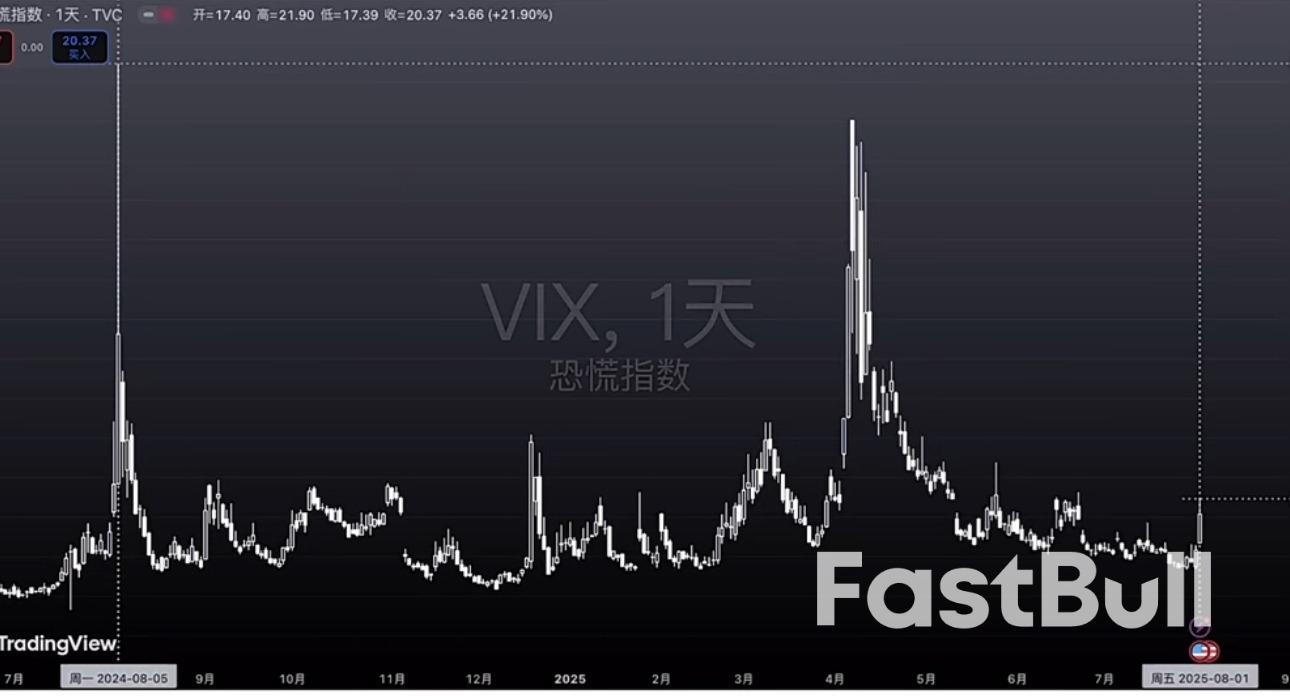
          Looking back at the last broad-based selloff triggered by labor-market deterioration—late July to early August last year—the unwind of yen carry trades, compounded by a steady rise in unemployment, ultimately activated the Sahm Rule and ushered in a simultaneous "recession-and-stagflation" trade. By contrast, the current decline stems solely from a downward revision to non-farm payrolls and reflects little more than a sentiment shock; systemic recession signals remain absent. Consequently, the pullback appears to be a transitory bout of risk-off rather than the opening salvo of a new down-trend.
          Is the BLS Definition Flawed? A Professional Reading of the July U.S. Non-farm Payroll Report_4
          As the chart illustrates, the current level of market panic pales in comparison with the same period last year. More importantly, second-quarter earnings season has seen management teams across the board raise full-year guidance and expand capital-expenditure plans, while AI-driven technological advances are accelerating into commercial deployment—fundamental signals that do not support a recession narrative.
          In addition, the S&P 500 has rallied 34% from its April low. The Nasdaq has surged 45%. Both moves have occurred without a meaningful correction. Against a backdrop of fully-restored valuations, any negative headline is magnified, prompting natural profit-taking.
          Extending the time horizon, expectations of rate cuts, fiscal expansion, tax reductions, deregulation, President Trump 's tactical reversals, and the Fed's implicit put option have collectively lowered macro uncertainty well below last year's levels. Consequently, the sell-off triggered by this week's non-farm payroll print should be viewed as a short-term dislocation rather than the start of a deeper decline. Investors need not overreact.
          The above represents a conditional, personal assessment and is not investment advice.

          Source:Eva chen

          To stay updated on all economic events of today, please check out our Economic calendar
          Risk Warnings and Disclaimers
          You understand and acknowledge that there is a high degree of risk involved in trading. Following any strategies or investment methods may lead to potential losses. The content on the site is provided by our contributors and analysts for information purposes only. You are solely responsible for determining whether any trading assets, securities, strategy, or any other product is suitable for investing based on your own investment objectives and financial situation.
          Add to Favorites
          Share

          Japan’s Strategic Blind Spot in Central Europe: A Missed Opportunity Amid Rising Asian Competition

          Gerik

          Economic

          Fading Japanese Presence Amid a Flourishing Asian Trade Hub

          In Budapest’s bustling Monori Center, where Chinese electronics and Korean cosmetics dominate alongside electric BYD vehicles and K-pop cafés, Japan’s lack of visibility is striking. According to Professor Stephen R. Nagy, this is not merely a commercial void it represents a deeper strategic failure. As South Korea and China solidify economic and cultural ties with Central Europe, Japan’s absence reflects an outdated diplomatic mindset and a reluctance to seize viable alternatives beyond the Washington–Beijing binary.
          Japan’s longstanding foreign policy of seikei bunri the separation of economics from politics has allowed it to engage in robust trade with China while maintaining tight security ties with the United States. Yet, this balancing act is becoming increasingly unsustainable. The transactional foreign policy of Trump’s second administration has placed economic demands on allies, while China exploits interdependence to apply pressure during political disputes.
          In this climate, Central Europe offers a third path: a space for economic diversification, technological partnerships, and diplomatic leverage without heavy geopolitical strings. However, Tokyo’s inertia has led to missed opportunities in a region eager for Asian investment.

          China and South Korea Fill the Void

          Central Europe’s openness has attracted more than €10 billion in Chinese investment, including CATL’s €7.3 billion battery plant in Hungary. Korea’s presence is similarly strong, led by Samsung’s battery facilities, Hyundai’s factories, and a soft power surge via K-pop. In contrast, Japan’s involvement is limited to scattered sushi restaurants and legacy automotive investments.
          Despite being eligible for generous incentives 10-year tax exemptions, infrastructure support, and fast-track licensing Japanese firms remain hesitant. The strategic logic of Central Europe is compelling: access to the EU market, skilled labor, lower costs than Western Europe, and political neutrality in East-West tensions. Countries like Hungary explicitly promote “economic connectivity without taking sides” an ideal fit for Japan’s non-confrontational stance.

          Consequences of Strategic Neglect

          Japan’s absence from Central Europe not only forfeits economic potential but also erodes its leverage with both Washington and Beijing. A stronger integration into European supply chains would make Tokyo less vulnerable to Chinese coercion or American unpredictability. It would also strengthen Japan’s voice in global governance by cultivating European stakeholders aligned with its success.
          Yet cultural distance and corporate risk aversion keep Japanese firms tied to familiar markets like Southeast Asia and North America. Government support for trade expansion lacks the strategic cohesion seen in China’s Belt and Road Initiative or Korea’s New Southern Policy. Moreover, Japan’s foreign policy remains heavily bilateral, undervaluing how multilateral engagement can reinforce not weaken its alliances.

          A Five-Step Plan to Reassert Influence

          To overcome this inertia, Professor Nagy outlines a concrete strategy:
          Establish a €5 billion Central Europe Investment Fund to provide risk insurance, market research, and co-investment opportunities for Japanese companies, targeting key sectors such as green technology and semiconductors.
          Create three Innovation Hubs in Poland, Hungary, and the Czech Republic, combining co-working spaces, tech labs, and networking services to connect Japanese technology with regional talent.
          Launch an Annual High-Level Strategic Dialogue between Tokyo and Central European nations, bringing together ministers, CEOs, and scholars to shape collaborative agendas.
          Develop integrated supply chain partnerships, beginning with electric vehicle batteries and expanding into semiconductors and medical equipment, linking Japanese innovation with Central European production capabilities.
          Fund a €50 million Japan–Central Europe Strategic Institute focused on resilience, connectivity, and scholarship programs to foster long-term bilateral understanding.
          Nagy concludes that these initiatives would not only enhance Japan’s presence in Central Europe but also elevate its role in global affairs. A deeply engaged Japan would transform from a reactive ally to a proactive global power, capable of making independent strategic choices. Central Europe, he argues, represents a rare opportunity for Tokyo to redefine its autonomy beyond the shadow of Washington or the pressure of Beijing.
          To stay updated on all economic events of today, please check out our Economic calendar
          Risk Warnings and Disclaimers
          You understand and acknowledge that there is a high degree of risk involved in trading. Following any strategies or investment methods may lead to potential losses. The content on the site is provided by our contributors and analysts for information purposes only. You are solely responsible for determining whether any trading assets, securities, strategy, or any other product is suitable for investing based on your own investment objectives and financial situation.
          Add to Favorites
          Share

          U.S. Tariff Surge Sparks Alarm Among American Businesses Amid Global Supply Chain Risks

          Gerik

          Economic

          Tariff Expansion Raises Strategic Concerns

          On August 1, the White House unveiled a sweeping escalation of its “reciprocal trade” policy, introducing new tariffs ranging from 10% to over 50% on imports from countries such as Brazil, China, and key Asian manufacturing hubs. While the administration positioned this move as a clarification of its trade stance, many firms warn that the policy could exacerbate inflationary pressures and destabilize global supply networks.
          Particularly troubling is the lack of clarity on how tariffs will be applied to goods transiting through third countries, a common practice in multinational logistics. This ambiguity leaves U.S. businesses especially those deeply embedded in global supply chains without a clear path for cost planning or inventory adjustments.

          Industry Groups Voice Mounting Frustration

          Several U.S. trade associations expressed dismay over the potential economic fallout. The American Apparel & Footwear Association (AAFA) emphasized that the new tariffs, especially those impacting major consumer goods suppliers, would sharply raise costs. President Stephen Lamar warned that the lack of forward guidance on tariff structure hampers pricing decisions even for the upcoming retail season.
          Similarly, the Business Roundtable, representing over 200 top U.S. CEOs, issued a statement urging the administration to engage in sustained dialogue with key partners like Canada, Mexico, and the EU. The group stressed that prolonged high tariffs will damage manufacturing competitiveness and reduce long-term investment.
          Meanwhile, Mohamed El-Erian, Chief Economic Advisor at Allianz, cautioned that companies are now navigating a highly fragmented trade environment. With many countries still in talks and others tied to informal agreements, El-Erian noted that “planning for long-term investment becomes nearly impossible.”

          White House Downplays Risks, Highlights Opportunities

          Despite the pushback, the Trump administration remains optimistic. Spokesperson Kush Desai defended the tariffs as part of a broader strategy that includes deregulation and domestic tax cuts, predicting that this combination will foster a “better future” for businesses and workers. He cited access to “$32 trillion worth of market opportunities” and 1.2 billion consumers under new trade agreements as proof of success.
          Yet, questions remain regarding whether these benefits can offset the immediate pain of higher import duties, particularly in consumer-facing sectors like toys, apparel, and electronics.

          Early Signs of Strain: Rising Prices and Weak Jobs Data

          Economic data may already be reflecting the costs of policy tightening. Greg Ahearn, President of the Toy Association, pointed to a weak July jobs report only 73,000 new jobs were added and downward revisions for May and June as possible early signs of policy-induced slowdown.
          Additionally, prices for products such as furniture, clothing, and toys began climbing in June, suggesting that suppliers were already adjusting in anticipation of the tariff wave. Ahearn warned that as the year-end shopping season approaches, higher prices could be compounded by supply shortages and potential job cuts.
          With businesses facing steep tariff hikes and limited strategic clarity, the short-term impact may include higher consumer prices, constrained supply, and softer labor market data. While the White House argues that the long-term payoff is worth the disruption, many industries fear that persistent trade uncertainty could erode competitiveness and stall economic momentum just as global growth faces mounting headwinds.
          To stay updated on all economic events of today, please check out our Economic calendar
          Risk Warnings and Disclaimers
          You understand and acknowledge that there is a high degree of risk involved in trading. Following any strategies or investment methods may lead to potential losses. The content on the site is provided by our contributors and analysts for information purposes only. You are solely responsible for determining whether any trading assets, securities, strategy, or any other product is suitable for investing based on your own investment objectives and financial situation.
          Add to Favorites
          Share

          Did the Fed Just Make a Major Policy Error? Early Data Suggests It Might Have

          Gerik

          Economic

          Powell’s Confidence Undermined by Weak Jobs Report

          On Wednesday, Federal Reserve Chair Jerome Powell confidently announced that the U.S. job market remained “solid,” giving the Fed room to continue monitoring inflation risks from Trump-era tariffs before resuming interest rate cuts. But only two days later, a disappointing July employment report sharply contradicted that optimism.
          According to the latest data from the U.S. Labor Department, only 73,000 new jobs were added in July, well below the level needed to keep pace with population growth. Worse, the unemployment rate ticked up from 4.1% to 4.2%, and earlier job figures for May and June were revised downward by a significant margin.
          This brings the three-month average job creation to its weakest level since 2009, excluding the pandemic period a clear sign of labor market deceleration.

          Internal Fracture at the Fed: First Dual Dissent in 30 Years

          While Powell projected patience, two high-ranking Fed officials Christopher Waller and Michelle Bowman publicly disagreed, marking the first time since 1993 that more than one Fed Governor dissented in a single vote.
          Both warned that the labor market is showing fragility beneath the surface. Bowman noted that just a few industries are driving job gains, and this narrow growth pattern repeated again in July. She emphasized that the labor market is becoming “less flexible,” signaling deeper structural risks.
          Waller, for his part, believes the Fed is keeping interest rates too high and argued that inflation pressures from tariffs are temporary, not structural. He pushed for a shift toward a more neutral policy stance, suggesting a target rate closer to 3%, compared to the current 4.25–4.50% range.

          Market Voices: Regret May Come Quickly

          Jamie Cox, Managing Partner at Harris Financial Group, bluntly predicted on Friday: “Powell will regret not cutting rates this week.” This sentiment reflects growing market unease that the Fed might have misread the economic inflection point once again erring on the side of caution as conditions worsen.
          Still, Fed leadership remains cautious in its tone. Beth Hammack, President of the Cleveland Fed, said in an interview with Bloomberg, “Yes, this jobs report is disappointing, but we avoid drawing broad conclusions from a single month of data.” She emphasized confidence in the decision taken earlier in the week, citing the need to assess trends, not outliers.

          A Pattern Repeating? Lessons from Last Year’s Mistake

          This is not the first time the Fed has faced such a dilemma. A similar scenario unfolded in 2024, when a sudden spike in unemployment prompted calls for a rate cut. The Fed eventually acted cutting rates by 50 basis points which helped reverse the negative trend. By December 2024, job creation rebounded sharply, with 323,000 jobs added and unemployment falling back to 4.1%.
          Whether or not this week’s decision proves to be a policy error will depend on data in the weeks ahead. But early signs point to a labor market cooling faster than the Fed anticipated and internal dissent has exposed growing discomfort within the central bank. If Powell delays too long in adjusting rates, the risk is that the Fed may once again be reacting too late to a downturn already in motion.
          To stay updated on all economic events of today, please check out our Economic calendar
          Risk Warnings and Disclaimers
          You understand and acknowledge that there is a high degree of risk involved in trading. Following any strategies or investment methods may lead to potential losses. The content on the site is provided by our contributors and analysts for information purposes only. You are solely responsible for determining whether any trading assets, securities, strategy, or any other product is suitable for investing based on your own investment objectives and financial situation.
          Add to Favorites
          Share

          Two Fed Governors Challenge Powell, Call for Immediate Rate Cuts Amid Labor Market Concerns

          Gerik

          Economic

          Historic Dissent Signals Rising Internal Division

          The Federal Open Market Committee (FOMC), led by Jerome Powell, voted last week to maintain the federal funds rate at 4.25–4.50%, marking a continued pause that has lasted since January 2025. However, in a rare move not seen since 1993, two governors cast dissenting votes highlighting a growing rift within the central bank over how to respond to mixed economic signals.
          Waller and Bowman issued public statements on Friday that directly contradicted Powell’s post-meeting press conference, in which he claimed that the U.S. economy remained in "good shape" and that it was prudent to wait before adjusting policy amid uncertainties stemming from President Donald Trump’s new tariffs.

          Waller: Rates Are Too High for Current Conditions

          Christopher Waller, considered by some as a potential successor to Powell, delivered a strong critique of the decision to stand pat on rates. He offered three main arguments for cutting rates:
          Tariffs introduced by the Trump administration have caused only a one-time price increase, with limited lasting inflationary pressure.
          Key macroeconomic indicators including real GDP growth, unemployment, and core inflation support a less restrictive stance.
          Despite surface-level strength in the job market, underlying data point to increasing downside risks.
          Waller argued that the appropriate policy rate should be closer to 3%, which he views as the “neutral” level a full 125 to 150 basis points lower than current rates.

          Bowman: U.S. Labor Market Is Becoming Fragile

          Michelle Bowman, the Fed’s Vice Chair for Supervision, also called for an immediate 25-basis-point cut, stating that gradual policy easing is warranted in the face of softening U.S. economic activity and a labor market losing momentum.
          She warned that although the headline unemployment rate remains low, the quality and breadth of job creation are weakening. July’s payroll report showed only 73,000 new jobs added, and prior months were revised downward by a total of 258,000 jobs, marking the weakest trend since 2009 outside of the COVID-19 crisis.
          Bowman added that if economic conditions fail to improve, layoffs could rise, with early signs already appearing. She stressed that shifting toward a more neutral policy stance could help keep the labor market close to full employment.

          Powell: Majority Still Supports Patience

          In contrast, Powell reiterated that inflation remains above the 2% target, justifying caution on further rate cuts. He maintained that the overall economy remains resilient and that the Fed must navigate "two-sided risks" balancing inflation control with job preservation.
          The Fed last cut rates in December 2024 by 25 basis points, and Powell has since maintained a cautious tone, citing potential inflationary pressures from Trump's tariffs as a key concern.
          The public split between Powell and his own board members marks a critical turning point in Fed policymaking. With economic data weakening but inflation still elevated, the path forward remains unclear. The unusual dissent underscores that internal pressure for rate cuts is growing and unless upcoming data strongly support Powell’s view, monetary easing may arrive sooner than markets expect.
          To stay updated on all economic events of today, please check out our Economic calendar
          Risk Warnings and Disclaimers
          You understand and acknowledge that there is a high degree of risk involved in trading. Following any strategies or investment methods may lead to potential losses. The content on the site is provided by our contributors and analysts for information purposes only. You are solely responsible for determining whether any trading assets, securities, strategy, or any other product is suitable for investing based on your own investment objectives and financial situation.
          Add to Favorites
          Share

          New Zealand Raises Concerns Over U.S. Tariff Hike Amid Trade Imbalance Dispute

          Gerik

          Economic

          Tariff Increase Sparks Business Alarm

          On August 1, U.S. President Donald Trump unveiled a revised tariff schedule targeting dozens of trade partners. While some countries saw lower duties than those announced in April 2025, others including New Zealand were subjected to increases. The tariff on New Zealand’s exports rose from 10% to 15%, prompting strong concern from government and industry leaders.
          New Zealand Trade Minister Todd McClay called the new rate “unfair”, particularly given that the country’s trade deficit with the U.S. stands at just $500 million USD a modest figure in the context of the American economy.

          Impact on New Zealand Exporters

          The original 10% tariff announced in April was seen as manageable by many New Zealand exporters. However, the sudden jump to 15% has sparked fears of serious disruption to business operations, especially for firms that depend heavily on the U.S. market.
          With New Zealand’s total exports to the U.S. valued at 9 billion NZD, the increased tariff is expected to significantly dent profit margins, reduce competitiveness, and possibly lead to a scaling back of exports to one of the country's key trading partners.

          Diplomatic Pushback Underway

          Minister McClay stated that Wellington will push for a resolution through both trade and diplomatic channels. New Zealand hopes to highlight its relatively minor trade imbalance and its history of cooperative bilateral relations as a case for exemption or at least reconsideration.
          The response is part of a broader wave of diplomatic activity from U.S. trade partners. Other nations affected by tariff increases include Canada (from 25% to 35%) and Switzerland (from 31% to 39%). In contrast, a few countries including Cambodia, Sri Lanka, Laos, and Myanmar saw their tariffs reduced compared to April levels.
          The tariff adjustment has fueled concerns about the consistency and fairness of the U.S. trade policy under Trump’s latest executive order. For New Zealand, the path forward will depend on its ability to negotiate effectively and maintain access to one of its most valuable export markets without being unfairly penalized for a minimal trade imbalance. The outcome may set an important precedent for other small economies navigating an increasingly protectionist global trade environment.
          To stay updated on all economic events of today, please check out our Economic calendar
          Risk Warnings and Disclaimers
          You understand and acknowledge that there is a high degree of risk involved in trading. Following any strategies or investment methods may lead to potential losses. The content on the site is provided by our contributors and analysts for information purposes only. You are solely responsible for determining whether any trading assets, securities, strategy, or any other product is suitable for investing based on your own investment objectives and financial situation.
          Add to Favorites
          Share

          Africa’s $3 Trillion Climate Finance Gap Demands Urgent Global Action

          Gerik

          Economic

          The Call for Global Support Ahead of ACS2

          Speaking at a press briefing on August 1, AU Commissioner Moses Vilakati stressed the urgent need to close Africa’s climate finance gap. Scheduled to be held in Addis Ababa, Ethiopia, ACS2 is themed “Accelerating Global Climate Solutions and Financing Africa’s Green and Sustainable Development.” Its main goal is to shift climate discourse from promises to tangible, scalable action.
          Vilakati underscored that Africa needs $3 trillion in climate finance to meet its goals but had only received $30 billion during 2021–2022, illustrating the severity of the funding shortfall.

          High Exposure, Low Responsibility

          Despite being responsible for only a minimal share of global greenhouse gas emissions, Africa is disproportionately affected by climate change. Geographical exposure, weak infrastructure, and socio-economic vulnerability make the continent particularly at risk from adverse climate effects such as droughts, floods, and crop failures.
          Vilakati highlighted Africa’s solar energy potential, noting that many regions receive over 2,000 kWh/m² per year, making renewable energy a core pillar of the continent’s green transformation agenda.

          Public vs Private Sector Contributions

          Only 18% of Africa’s annual mitigation needs and 20% of its adaptation needs are currently funded. Private sector climate financing accounts for just 18% of the total far below the global average. The ACS2 summit aims to push for increased financial participation from both public and private sectors worldwide.
          Vilakati emphasized that narrowing the climate finance gap is not just about supporting Africa it is essential for global climate resilience and equity.

          Toward Institutional Climate Governance

          Another key ACS2 objective is to institutionalize inclusive climate governance, integrate climate risk into national development planning, and secure a fairer role for Africa in the global green transition. Ethiopia, in cooperation with the AU and international partners, will host the summit.
          Since ACS1, the African Union has strengthened its partnerships with regional climate centers, the African Climate Policy Center (ACPC), and the Global Framework for Climate Services. These collaborations have enhanced early warning systems, seasonal forecasting, and climate-informed data services for sectors such as agriculture, health, and water.
          Despite some progress, Vilakati acknowledged that Africa still faces a long road ahead in addressing climate threats. The upcoming ACS2 is expected to be a pivotal moment turning political will into investment and transitioning the continent from a climate dialogue participant to a solutions leader. The world’s commitment to climate justice will be measured not just in words, but in financial action.
          To stay updated on all economic events of today, please check out our Economic calendar
          Risk Warnings and Disclaimers
          You understand and acknowledge that there is a high degree of risk involved in trading. Following any strategies or investment methods may lead to potential losses. The content on the site is provided by our contributors and analysts for information purposes only. You are solely responsible for determining whether any trading assets, securities, strategy, or any other product is suitable for investing based on your own investment objectives and financial situation.
          Add to Favorites
          Share
          FastBull
          Copyright © 2025 FastBull Ltd

          728 RM B 7/F GEE LOK IND BLDG NO 34 HUNG TO RD KWUN TONG KLN HONG KONG

          TelegramInstagramTwitterfacebooklinkedin
          App Store Google Play Google Play
          Products
          Charts

          Chats

          Q&A with Experts
          Screeners
          Economic Calendar
          Data
          Tools
          Membership
          Features
          Function
          Markets
          Copy Trading
          Latest Signals
          Contests
          News
          Analysis
          24/7
          Columns
          Education
          Company
          Careers
          About Us
          Contact Us
          Advertising
          Help Center
          Feedback
          User Agreement
          Privacy Policy
          Business

          White Label

          Data API

          Web Plug-ins

          Poster Maker

          Affiliate Program

          Risk Disclosure

          The risk of loss in trading financial instruments such as stocks, FX, commodities, futures, bonds, ETFs and crypto can be substantial. You may sustain a total loss of the funds that you deposit with your broker. Therefore, you should carefully consider whether such trading is suitable for you in light of your circumstances and financial resources.

          No decision to invest should be made without thoroughly conducting due diligence by yourself or consulting with your financial advisors. Our web content might not suit you since we don't know your financial conditions and investment needs. Our financial information might have latency or contain inaccuracy, so you should be fully responsible for any of your trading and investment decisions. The company will not be responsible for your capital loss.

          Without getting permission from the website, you are not allowed to copy the website's graphics, texts, or trademarks. Intellectual property rights in the content or data incorporated into this website belong to its providers and exchange merchants.

          Not Logged In

          Log in to access more features

          FastBull Membership

          Not yet

          Purchase

          Become a signal provider
          Help Center
          Customer Service
          Dark Mode
          Price Up/Down Colors

          Log In

          Sign Up

          Position
          Layout
          Fullscreen
          Default to Chart
          The chart page opens by default when you visit fastbull.com