• Trade
  • Markets
  • Copy
  • Contests
  • News
  • 24/7
  • Calendar
  • Q&A
  • Chats
Trending
Screeners
SYMBOL
LAST
BID
ASK
HIGH
LOW
NET CHG.
%CHG.
SPREAD
SPX
S&P 500 Index
6857.13
6857.13
6857.13
6865.94
6827.13
+7.41
+ 0.11%
--
DJI
Dow Jones Industrial Average
47850.93
47850.93
47850.93
48049.72
47692.96
-31.96
-0.07%
--
IXIC
NASDAQ Composite Index
23505.13
23505.13
23505.13
23528.53
23372.33
+51.04
+ 0.22%
--
USDX
US Dollar Index
98.820
98.900
98.820
98.980
98.810
-0.160
-0.16%
--
EURUSD
Euro / US Dollar
1.16602
1.16610
1.16602
1.16605
1.16408
+0.00157
+ 0.13%
--
GBPUSD
Pound Sterling / US Dollar
1.33505
1.33514
1.33505
1.33507
1.33165
+0.00234
+ 0.18%
--
XAUUSD
Gold / US Dollar
4226.95
4227.36
4226.95
4229.22
4194.54
+19.78
+ 0.47%
--
WTI
Light Sweet Crude Oil
59.296
59.333
59.296
59.469
59.187
-0.087
-0.15%
--

Community Accounts

Signal Accounts
--
Profit Accounts
--
Loss Accounts
--
View More

Become a signal provider

Sell trading signals to earn additional income

View More

Guide to Copy Trading

Get started with ease and confidence

View More

Signal Accounts for Members

All Signal Accounts

Best Return
  • Best Return
  • Best P/L
  • Best MDD
Past 1W
  • Past 1W
  • Past 1M
  • Past 1Y

All Contests

  • All
  • Trump Updates
  • Recommend
  • Stocks
  • Cryptocurrencies
  • Central Banks
  • Featured News
Top News Only
Share

Reserve Bank Of India Chief Malhotra On Rupee: Fluctuations Can Happen, Effort Is To Reduce Undue Volatility

Share

Reserve Bank Of India Chief Malhotra On Rupee: Allow Markets To Determine Levels On Currency

Share

Sri Lanka's CSE All Share Index Down 1.2%

Share

Iw Institute: German Economy Faces Tepid Growth In 2026 Due To Global Trade Slowdown

Share

Stats Office - Seychelles November Inflation At 0.02% Year-On-Year

Share

[Market Update] Spot Silver Prices Rose 2.00% Intraday, Currently Trading At $58.27 Per Ounce

Share

S.Africa's Gross Reserves At $72.068 Billion At End November - Central Bank

Share

[Market Update] Spot Silver Broke Through $58/ounce, Up 1.56% On The Day

Share

Dollar/Yen Down 0.33% To 154.61

Share

Kremlin Says No Plans For Putin-Trump Call For Now

Share

Kremlin Says Moscow Is Waiting For USA Reaction After Putin-Witkoff Meeting

Share

Cctv - China, France: Say Both Sides Support All Efforts For A Ceasefire, Restore Peace According To Intl Law

Share

[Chinese Ambassador To The US Xie Feng Hopes Chinese And American Business Communities Will Focus On Three Lists] On December 4, Chinese Ambassador To The US Xie Feng Delivered A Speech At The China-US Economic And Trade Cooperation Forum Jointly Hosted By The China Council For The Promotion Of International Trade And The Meridian International Center. Xie Feng Said That In November 2026, China Will Host The APEC Leaders' Informal Meeting For The Third Time In Shenzhen, Guangdong Province. In December 2026, The United States Will Also Host The G20 Meeting. Regarding How Chinese And American Business Communities Can Seize These Opportunities, He Suggested Focusing On Three Lists: First, Continue To Expand The Dialogue List; Second, Continuously Lengthen The Cooperation List; And Third, Constantly Reduce The Problem List

Share

India's Nifty Financial Services Index Extends Gains, Last Up 0.75%

Share

Eni : Jp Morgan Cuts To Underweight From Overweight

Share

Cctv - China, France: Signed Protocol On Sanitary, Phytosanitary Requirements For Export Of French Alfalfa Grass

Share

India's NIFTY IT Index Last Up 1.3%

Share

India's Nifty 50 Index Rises 0.35%

Share

Israel Sets 2026 Defence Budget At $34 Billion

Share

Russia Says Azov Sea's Port Of Temryuk Damaged In Ukrainian Attack

TIME
ACT
FCST
PREV
Turkey Trade Balance

A:--

F: --

P: --

Germany Construction PMI (SA) (Nov)

A:--

F: --

P: --

Euro Zone IHS Markit Construction PMI (Nov)

A:--

F: --

P: --

Italy IHS Markit Construction PMI (Nov)

A:--

F: --

P: --

U.K. Markit/CIPS Construction PMI (Nov)

A:--

F: --

P: --

France 10-Year OAT Auction Avg. Yield

A:--

F: --

P: --

Euro Zone Retail Sales MoM (Oct)

A:--

F: --

P: --

Euro Zone Retail Sales YoY (Oct)

A:--

F: --

P: --

Brazil GDP YoY (Q3)

A:--

F: --

P: --

U.S. Challenger Job Cuts (Nov)

A:--

F: --

P: --

U.S. Challenger Job Cuts MoM (Nov)

A:--

F: --

P: --

U.S. Challenger Job Cuts YoY (Nov)

A:--

F: --

P: --

U.S. Initial Jobless Claims 4-Week Avg. (SA)

A:--

F: --

P: --

U.S. Weekly Initial Jobless Claims (SA)

A:--

F: --

P: --

U.S. Weekly Continued Jobless Claims (SA)

A:--

F: --

P: --

Canada Ivey PMI (SA) (Nov)

A:--

F: --

P: --

Canada Ivey PMI (Not SA) (Nov)

A:--

F: --

P: --

U.S. Non-Defense Capital Durable Goods Orders Revised MoM (Excl. Aircraft) (SA) (Sept)

A:--

F: --

P: --
U.S. Factory Orders MoM (Excl. Transport) (Sept)

A:--

F: --

P: --

U.S. Factory Orders MoM (Sept)

A:--

F: --

P: --

U.S. Factory Orders MoM (Excl. Defense) (Sept)

A:--

F: --

P: --

U.S. EIA Weekly Natural Gas Stocks Change

A:--

F: --

P: --

Saudi Arabia Crude Oil Production

A:--

F: --

P: --

U.S. Weekly Treasuries Held by Foreign Central Banks

A:--

F: --

P: --

Japan Foreign Exchange Reserves (Nov)

A:--

F: --

P: --

India Repo Rate

A:--

F: --

P: --

India Benchmark Interest Rate

A:--

F: --

P: --

India Reverse Repo Rate

A:--

F: --

P: --

India Cash Reserve Ratio

A:--

F: --

P: --

Japan Leading Indicators Prelim (Oct)

A:--

F: --

P: --

U.K. Halifax House Price Index YoY (SA) (Nov)

--

F: --

P: --

U.K. Halifax House Price Index MoM (SA) (Nov)

--

F: --

P: --

France Current Account (Not SA) (Oct)

--

F: --

P: --

France Trade Balance (SA) (Oct)

--

F: --

P: --

France Industrial Output MoM (SA) (Oct)

--

F: --

P: --

Italy Retail Sales MoM (SA) (Oct)

--

F: --

P: --

Euro Zone Employment YoY (SA) (Q3)

--

F: --

P: --

Euro Zone GDP Final YoY (Q3)

--

F: --

P: --

Euro Zone GDP Final QoQ (Q3)

--

F: --

P: --

Euro Zone Employment Final QoQ (SA) (Q3)

--

F: --

P: --

Euro Zone Employment Final (SA) (Q3)

--

F: --

P: --
Brazil PPI MoM (Oct)

--

F: --

P: --

Mexico Consumer Confidence Index (Nov)

--

F: --

P: --

Canada Unemployment Rate (SA) (Nov)

--

F: --

P: --

Canada Labor Force Participation Rate (SA) (Nov)

--

F: --

P: --

Canada Employment (SA) (Nov)

--

F: --

P: --

Canada Part-Time Employment (SA) (Nov)

--

F: --

P: --

Canada Full-time Employment (SA) (Nov)

--

F: --

P: --

U.S. Dallas Fed PCE Price Index YoY (Sept)

--

F: --

P: --

U.S. PCE Price Index YoY (SA) (Sept)

--

F: --

P: --

U.S. PCE Price Index MoM (Sept)

--

F: --

P: --

U.S. Personal Outlays MoM (SA) (Sept)

--

F: --

P: --

U.S. Core PCE Price Index MoM (Sept)

--

F: --

P: --

U.S. UMich 5-Year-Ahead Inflation Expectations Prelim YoY (Dec)

--

F: --

P: --

U.S. Core PCE Price Index YoY (Sept)

--

F: --

P: --

U.S. 5-10 Year-Ahead Inflation Expectations (Dec)

--

F: --

P: --

U.S. UMich Current Economic Conditions Index Prelim (Dec)

--

F: --

P: --

U.S. UMich Consumer Sentiment Index Prelim (Dec)

--

F: --

P: --

U.S. UMich 1-Year-Ahead Inflation Expectations Prelim (Dec)

--

F: --

P: --

U.S. UMich Consumer Expectations Index Prelim (Dec)

--

F: --

P: --

Q&A with Experts
    • All
    • Chatrooms
    • Groups
    • Friends
    Connecting
    .
    .
    .
    Type here...
    Add Symbol or Code

      No matching data

      All
      Trump Updates
      Recommend
      Stocks
      Cryptocurrencies
      Central Banks
      Featured News
      • All
      • Russia-Ukraine Conflict
      • Middle East Flashpoint
      • All
      • Russia-Ukraine Conflict
      • Middle East Flashpoint
      Search
      Products

      Charts Free Forever

      Chats Q&A with Experts
      Screeners Economic Calendar Data Tools
      Membership Features
      Data Warehouse Market Trends Institutional Data Policy Rates Macro

      Market Trends

      Market Sentiment Order Book Forex Correlations

      Top Indicators

      Charts Free Forever
      Markets

      News

      News Analysis 24/7 Columns Education
      From Institutions From Analysts
      Topics Columnists

      Latest Views

      Latest Views

      Trending Topics

      Top Columnists

      Latest Update

      Signals

      Copy Rankings Latest Signals Become a signal provider AI Rating
      Contests
      Brokers

      Overview Brokers Assessment Rankings Regulators News Claims
      Broker listing Forex Brokers Comparison Tool Live Spread Comparison Scam
      Q&A Complaint Scam Alert Videos Tips to Detect Scam
      More

      Business
      Events
      Careers About Us Advertising Help Center

      White Label

      Data API

      Web Plug-ins

      Affiliate Program

      Awards Institution Evaluation IB Seminar Salon Event Exhibition
      Vietnam Thailand Singapore Dubai
      Fans Party Investment Sharing Session
      FastBull Summit BrokersView Expo
      Recent Searches
        Top Searches
          Markets
          News
          Analysis
          User
          24/7
          Economic Calendar
          Education
          Data
          • Names
          • Latest
          • Prev

          View All

          No data

          Scan to Download

          Faster Charts, Chat Faster!

          Download App
          English
          • English
          • Español
          • العربية
          • Bahasa Indonesia
          • Bahasa Melayu
          • Tiếng Việt
          • ภาษาไทย
          • Français
          • Italiano
          • Türkçe
          • Русский язык
          • 简中
          • 繁中
          Open Account
          Search
          Products
          Charts Free Forever
          Markets
          News
          Signals

          Copy Rankings Latest Signals Become a signal provider AI Rating
          Contests
          Brokers

          Overview Brokers Assessment Rankings Regulators News Claims
          Broker listing Forex Brokers Comparison Tool Live Spread Comparison Scam
          Q&A Complaint Scam Alert Videos Tips to Detect Scam
          More

          Business
          Events
          Careers About Us Advertising Help Center

          White Label

          Data API

          Web Plug-ins

          Affiliate Program

          Awards Institution Evaluation IB Seminar Salon Event Exhibition
          Vietnam Thailand Singapore Dubai
          Fans Party Investment Sharing Session
          FastBull Summit BrokersView Expo

          How to Read Forex Charts: 3 Essential Chart Types for Smarter Investing

          Eva Chen

          Stocks

          Forex

          Summary:

          Learn how to read forex charts with this easy guide. Discover 3 essential chart types—line, bar, and candlestick—to improve your investing strategy and market analysis skills.

          How to Read Forex Charts: 3 Essential Chart Types for Investors in 2025

          Understanding how to read forex charts is the foundation of every successful trading and investing decision. Forex charts visually show how currency prices move over time, helping investors identify market trends, spot entry and exit points, and measure volatility. Whether you’re analyzing short-term movements or long-term trends, learning to interpret chart patterns builds confidence and turns raw market data into actionable insight.

          Part 1: What Is a Forex Chart

          A forex chart is a visual record of a currency pair’s price over time. Along the x-axis you see time (e.g., 1 minute, 1 hour, 1 day), and along the y-axis you see price. Each plotted point or bar summarizes what happened to price during that period—at minimum the close, and often the open, high, and low. By compressing thousands of trades into a compact picture, charts let investors grasp trend, momentum, volatility, and key levels at a glance.

          Why Forex Chart matters to investors (not just traders)

          • See the big picture: Charts reveal whether a pair is in an uptrend, downtrend, or range so you don’t fight the prevailing move.
          • Time entries and exits: Visual cues (trendlines, breakouts, candlestick signals) help refine when to act around economic releases or portfolio rebalancing.
          • Quantify risk: Prior swing highs/lows and support/resistance zones help place stops and targets with logic, not guesswork.
          • Compare horizons: Multi-timeframe views (Daily → 4H → 1H) align long-term thesis with short-term execution.
          • Blend with fundamentals: Charts translate macro forces (rates, inflation, policy) into observable price behavior—confirming or challenging your narrative.

          Prices move because expectations change. Charts show those changing expectations in real time, letting investors respond with discipline rather than headlines alone.

          Part 2: The 3 Essential Forex Chart Types

          Understanding how to read forex charts starts with knowing the main chart styles used in trading. Each type displays price data differently, helping investors interpret market direction, momentum, and volatility.
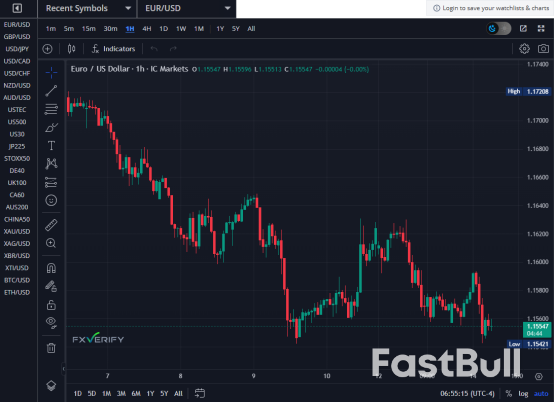
          1. Line Chart

          How to Read Forex Charts: 3 Essential Chart Types for Smarter Investing_1

          A line chart connects closing prices over a specific period with a continuous line. It gives a clear, simplified view of the overall market trend—ideal for spotting long-term direction without distractions from intraday noise.

          Use line chart for:

          • Tracking general trend direction: Identify whether the market is in an uptrend, downtrend, or moving sideways.
          • Comparing multiple currency pairs: Quickly spot differences in performance or correlation between pairs.
          • Getting a quick visual of market sentiment: See how traders are reacting to economic data or major news events.

          Limitations:

          • It hides price fluctuations within each period (no open, high, or low).

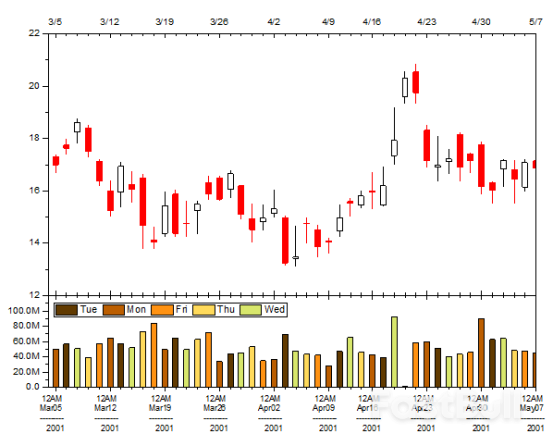
          2. Bar Chart (OHLC Chart)

          How to Read Forex Charts: 3 Essential Chart Types for Smarter Investing_2

          A bar chart (Open-High-Low-Close, or OHLC) adds more detail than a line chart. Each vertical bar shows the highest and lowest prices for the period, while small horizontal ticks indicate the opening (left) and closing (right) prices.

          Use A bar chart for:

          • Measuring volatility and intraperiod price ranges: Understand how wide prices moved within each trading period.
          • Seeing how buyers and sellers shifted: Observe the balance between buying and selling pressure during the session.
          • Identifying market strength: Use bar size and position to judge whether momentum favors bulls or bears.

          Limitations:

          • Harder to read at a glance compared to candlesticks.

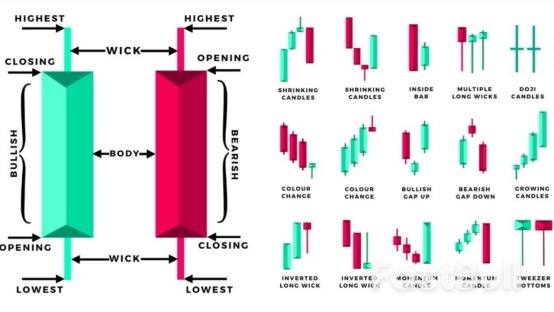
          3. Candlestick Chart

          How to Read Forex Charts: 3 Essential Chart Types for Smarter Investing_3

          A candlestick chart conveys the same data as a bar chart but in a more visual way. Each candle shows the open, high, low, and close, but the body color (usually green for bullish and red for bearish) makes it easier to spot momentum and reversal signals.

          Use A candlestick chart for:

          • Reading market psychology quickly: Spot the balance between buying and selling pressure at a glance.
          • Detecting candlestick patterns: Identify formations like “hammer,” “doji,” or “engulfing” that signal potential reversals or continuations.
          • Timing entries and exits: Use clear visual cues from candlesticks to plan more precise trade entries and exits.

          Limitations:

          • Easy to overinterpret—avoid trading based on one candle alone.

          Tip:

          Most traders start with candlestick charts for their clarity but combine them with line charts for long-term trends and bar charts for volatility analysis.

          Part 3: How to Read Forex Charts Step-by-Step

          Learning how to read forex charts helps investors transform price data into meaningful insights. The process combines technical observation, time analysis, and confirmation using reliable tools. Follow these five steps to understand how to read chart in forex trading and make better investment decisions.

          Step 1. Choose the Right Chart Type and Timeframe

          Start by selecting your chart format—line, bar, or candlestick—based on your trading objective.

          A line chart highlights long-term trends, a bar chart shows volatility and price range, and a candlestick chart reveals market psychology.

          Next, set your timeframe: shorter charts (1m–1h) reveal intraday movement, while longer ones (1D–1W) show broader direction.

          Choosing the right view is the foundation of how to read forex trading charts effectively.

          Step 2. Identify Trend Direction and Market Structure

          Look for higher highs and higher lows in an uptrend, or lower highs and lower lows in a downtrend. Draw trendlines or use moving averages to confirm direction. Understanding structure prevents you from trading against momentum and helps you spot early reversals. This step trains your eye to read the rhythm of the market, not just isolated candles.

          Step 3. Analyze Momentum, Volatility, and Key Levels

          Pay attention to candle length and bar height—large ranges mean strong market activity. Watch how price reacts around support and resistance zones to gauge buying or selling pressure. When reading forex charts, always link price action with market sentiment—calm markets compress, volatile ones expand. This helps you detect strength, weakness, or potential breakout conditions.

          Step 4. Confirm Patterns and Combine with Fundamentals

          Use chart formations like breakouts, double tops/bottoms, or reversal candles to time entries and exits. But don’t rely on visuals alone—combine technical patterns with macroeconomic context, such as inflation data, policy changes, or geopolitical events. Charts show market expectations; fundamentals explain why they change.

          Step 5. Practice in Real Time with FastBull

          To apply these concepts, use FastBull’s live forex charting tools. You can compare chart types instantly, analyze multiple timeframes, and overlay indicators like RSI or Moving Averages for confirmation.

          FastBull also integrates economic calendars and news updates—so you can read forex charts, follow market events, and react confidently in real time. This hands-on approach makes learning how to read a forex chart more practical and data-driven.

          FAQs About How to Read Forex Charts

          1. What is the 5-3-1 rule in forex?

          It’s a trading discipline method: focus on 5 currency pairs, 3 trading strategies, and 1 specific trading time each day. It helps traders stay consistent and avoid overtrading.

          2. What does buy 0.01 mean in forex?

          It refers to a micro lot, equal to 1,000 units of a currency. This allows beginners to trade smaller positions and control risk while learning how to read forex charts effectively.

          3.How to turn $100 into $1000 in forex?

          Through leverage, consistent strategy, and risk control. Use small lot sizes, follow clear chart signals, and manage stop-losses—never rely on luck or over-leverage.

          Risk Warnings and Disclaimers
          You understand and acknowledge that there is a high degree of risk involved in trading. Following any strategies or investment methods may lead to potential losses. The content on the site is provided by our contributors and analysts for information purposes only. You are solely responsible for determining whether any trading assets, securities, strategy, or any other product is suitable for investing based on your own investment objectives and financial situation.
          Add to Favorites
          Share

          Netanyahu’s Concepts Collapsed, One By One, As Trump Piled On Pressure: What Next for His Government?

          Michelle

          Political

          Middle East Situation

          It took nearly two years of war, relentless protests demanding the release of hostages, and one energetic and determined American president to achieve what had seemed unachievable. President Donald Trump secured support from key Arab and Muslim countries, including Qatar and Turkey, and then forced an end to the war on both Israel and Hamas. Within days, the IDF withdrew most of its forces from Gaza and all 20 living Israeli hostages were released from captivity. International leaders then headed to a peace summit in Sharm al-Sheikh.

          Netanyahu hadn’t been invited to the Sharm summit until he spoke with Egyptian President Abdel Fattah al-Sisi in Trump’s presence. For a second, Netanyahu actually considered sitting at the same table with Palestinian President Mahmoud Abbas to discuss peace, Gaza’s reconstruction, and what now appears to be the inevitable participation of the Palestinian Authority (PA) in this process (though he ultimately decided against attending). Watching these fast-paced events unfold was as surreal as witnessing Netanyahu’s public apology to Qatari leadership last month – with Trump watching carefully.

          The prime minister’s position has changed dramatically. But how likely is it that he loses his grip on power?

          The end of ‘total victory’

          Just weeks ago, Netanyahu angrily dismissed anyone who suggested the war should end with a deal, insisting instead on ‘total victory’ – the promise he’d made from the first days of the Gaza war. He rejected the idea that Hamas’s disarmament should be deferred to the future, to allow the release of the hostages. He said ‘no’ to any PA involvement in Gaza’s reconstruction. And he insisted on providing only limited humanitarian aid through the Israeli-backed GHF, a failed project that has since been dismantled.

          Those positions helped sustain the support of his far-right coalition partners, including Bezalel Smotrich and Itamar Ben-Gvir. But they have threatened to quit over Trump’s peace deal and voted against the first stage. The second stage – which includes Hamas disarmament, Gaza reconstruction, the PA’s return to Gaza, and a path toward Palestinian sovereignty – has not even been voted on yet.

          In his recent speech, Netanyahu defended and even praised the deal, claiming Israel had received everything it wanted. That may well be true, but this deal also contradicts everything Netanyahu has preached for many years. Within days, the Rafah crossing between Gaza and Egypt will reopen, secured by Palestinian policemen trained in Egypt, according to Palestinian sources. This represents a de facto return of the PA to Gaza and marks the beginning of reunification between Gaza and the West Bank.

          The uncertain future for Netanyahu

          Since the early 2010s, Netanyahu’s strategy has been ‘divide and rule’ – preventing any opportunity for negotiations and any prospect of Palestinian statehood. This included weakening the PA in the West Bank while keeping Hamas alive in Gaza. Every single move – the pro-settlement policy in the West Bank and the Qatari suitcases of US dollars delivered to Hamas with Israel’s approval – served this goal.

          For some time, Netanyahu genuinely believed he could have it all: lucrative peace deals with Arab states while ‘managing the conflict’ with Palestinians. This strategy disintegrated during the 7 October massacres, when 1,200 Israelis, mostly civilians, were slaughtered by Hamas.

          The prolonged war that followed and the acute humanitarian crisis and human tragedy it created in Gaza caused the world to turn away from Netanyahu. Indeed, Saudi officials interviewed by Israeli media in recent days made clear that Saudi Arabia will not join the Abraham Accords as long as Netanyahu remains in power.

          Ultimately, Netanyahu decided not to participate in the Sharm al-Sheikh peace summit. Nonetheless, the decisions made there will bind him and his government. His coalition members currently prefer to emphasize only the part of the agreement that returned the hostages. But there is clearly much more at stake, as detailed in Trump’s 21-point plan.

          The state of the coalition

          It remains to be seen how Netanyahu’s coalition partners will react to unfolding events in Gaza. The PA’s influence looks set to grow. The timeline for Hamas disarmament is delayed and indefinite. And the path to Palestinian statehood is now clearly backed by a decisive majority of the international community.

          If Bezalel Smotrich and Itamar Ben-Gvir do not resign over these issues, Netanyahu’s government could still survive for several months: elections are scheduled by law for late 2026. However, demands for a committee to investigate the security failures that led to 7 October will loom over the government, especially since the prime minister confirmed such a committee can only be formed after the war ends. Advancing a conscription bill, in order to ensure that the Ultraorthodox men will not serve in the army, will also pose problems in a country that has just lost 915 soldiers – men and women – in combat.

          The chances of early elections are significant, though not certain. According to polls, Netanyahu’s Likud party would be unable to form a coalition, even accounting for its recent slight growth in support.

          This means the prime minister may try to delay elections until he believes his chances of winning have improved. Prior to Trump’s visit to Israel, Netanyahu had threatened that Israel would return to fighting to eliminate Hamas, if any terms of the deal were violated. It seems now that even his far right wing partners understand that will be impossible for the time being, in light of Trump’s determination to end the war.

          Netanyahu’s policies have collapsed, one by one. But the camp of those who still support them remains significant. Also, there is a lot of uncertainty about what will happen next in the West Bank. It is unclear whether the far-right wing partners of Netanyahu will get a free hand there to expand settlements and build new ones.

          It is also unclear whether the Israeli opposition – weak and fragmented – will find the courage to call the prime minister’s bluff and offer the nation a different path: one of peace and reconciliation. Only then will the course of Israeli politics, and Israel’s fate, change dramatically – away from endless wars and illusions of ‘total victory’, to dialogue, cooperation and peace.

          Source: Chatham House

          Risk Warnings and Disclaimers
          You understand and acknowledge that there is a high degree of risk involved in trading. Following any strategies or investment methods may lead to potential losses. The content on the site is provided by our contributors and analysts for information purposes only. You are solely responsible for determining whether any trading assets, securities, strategy, or any other product is suitable for investing based on your own investment objectives and financial situation.
          Add to Favorites
          Share

          Gold and Crypto Diverge as U.S.-China Trade Tensions Ease

          Gerik

          Economic

          On October 14, 2025, gold continued its rally, fueled by political instability, the "debasement" of fiat currencies, and rising global debt. While the U.S. stock market and cryptocurrencies recovered from a recent downturn, gold’s performance stood out as a clear safe haven amid ongoing trade tensions between the U.S. and China. The divergence in performance between gold and digital assets, especially Bitcoin, highlights key differences in their role as hedges during times of market stress.

          The Role of Gold as a Safe Haven

          Gold has had a historic rally this year, driven by concerns over economic instability and inflation, which have made it a go-to asset for investors seeking stability. The precious metal’s steady rise during periods of market volatility reinforces its status as a traditional store of value. This was evident during the recent market turmoil triggered by U.S.-China trade tensions. When President Trump announced plans for additional tariffs on China, global markets reacted swiftly. However, after Trump dialed back his rhetoric, both stocks and cryptocurrencies made a comeback. Gold, in contrast, remained a steady performer, continuing to benefit from investor appetite for safer assets.

          Cryptocurrency Volatility and Divergence from Gold

          Cryptocurrencies, particularly Bitcoin, have demonstrated greater volatility during market sell-offs. While Bitcoin surged to new highs prior to the U.S.-China trade tensions, it faced a sharp decline in the aftermath, falling by roughly 10% from $122,000 to as low as $109,000. This sell-off, along with significant drops in other altcoins, led to a contraction in the overall cryptocurrency market by hundreds of billions of dollars, according to CoinMarketCap data. The rapid price swings and intense volatility highlight the differences between crypto and gold as financial refuges.
          The cryptocurrency market’s 24/7 trading window allows traders to react immediately to market events. However, during times of distress, such as the recent geopolitical uncertainty, crypto traders sold off their positions quickly, reflecting the asset's inherent instability. This stands in contrast to gold, which, despite the market's fluctuations, maintained its reputation as a stable, long-term store of value.

          Bitcoin and the Stock Market Correlation

          While cryptocurrencies like Bitcoin have been lauded for their potential to challenge traditional financial systems and act as a hedge against fiat currency debasement, they often move in correlation with the broader stock market. During moments of distress, when stock prices fall, cryptocurrencies tend to follow suit, amplifying both the potential gains and losses. This behavior contrasts with gold, which tends to act independently from stock market fluctuations, making it a more reliable safe haven in times of geopolitical or economic uncertainty.
          The divergence between gold and cryptocurrencies highlights the distinct roles each asset plays in global markets. While gold continues to shine as a stable store of value amid economic uncertainty, cryptocurrencies like Bitcoin remain highly volatile, subject to rapid price swings driven by market sentiment. As trade tensions and global economic instability continue to shape investor behavior, gold’s status as a safe haven is reinforced, while cryptocurrencies may face more challenges in solidifying their position as a reliable alternative. For now, gold remains the go-to asset during times of distress, while cryptocurrencies continue to wrestle with their role in a broader financial ecosystem.

          Source: Yahoo Finance

          To stay updated on all economic events of today, please check out our Economic calendar
          Risk Warnings and Disclaimers
          You understand and acknowledge that there is a high degree of risk involved in trading. Following any strategies or investment methods may lead to potential losses. The content on the site is provided by our contributors and analysts for information purposes only. You are solely responsible for determining whether any trading assets, securities, strategy, or any other product is suitable for investing based on your own investment objectives and financial situation.
          Add to Favorites
          Share

          Ships Hauling Goods Hit With Fees in US-China Trade War

          Glendon

          Economic

          Forex

          US customs authorities began collecting fees from Chinese-built and -operated merchant ships bringing goods into American ports on Tuesday, one more move in a series aimed at curbing China’s economic dominance.

          The Trump administration has said the revenue collected would be used to support US shipbuilding resurgence, though there’s no mechanism in place yet for funding the industrial policy. The plan had become one of several points of contention in the US-China trade war, and at the end of last week Beijing announced its own retaliatory proposal to charge vessels with more than 25% US-ownership or control a hefty fee upon entry to Chinese ports.

          That announcement — along with China’s threat of further curbs on critical mineral exports among other provocations — saw President Donald Trump kick off the weekend with a threat to slap an additional 100% import duty on goods from China as well as export controls on “any and all critical software” beginning Nov. 1.

          The shock announcements sent markets into turmoil, as maritime analysts and commodities traders attempted to parse the implications for the flow of global raw materials and the shipping industry.

          While there aren’t many US-headquartered shipping companies left, “there’s a substantial amount of American capital embedded throughout the industry,” said James Lightbourn, founder of Cavalier Shipping.

          Beijing’s Response

          China’s proposal had the potential to raise prices much more so than the US plan is expected to because most companies have already redeployed any Chinese-made vessels in their fleets to avoid the US — and the fees, said Lightbourn.

          “China, on the other hand, is such a major destination for bulk commodity exports — such as crude oil and iron ore — that this type of geographical reshuffling would have been much less of a realistic tactic for US-linked shipping companies,” Lightbourn said in an email to Bloomberg.

          The Ministry of Transport has since exempted US-owned ships that were built in China, which Lightbourn called a “clever touch,” he said.

          The ship fees are latest in the tit-for-tat, unpredictable trade war of Trump’s second term. And while it’s still early to see the fallout from the highest US tariffs in nearly a century and supply chain uncertainty abounds, data show so far that global trade has held up better than many expected.

          A new edition of DHL’s Global Connectedness Tracker, released Tuesday with New York University’s Stern School of Business, shows international flows of trade and capital investment has remained surprisingly resilient despite the quickly changing policy coming out of Trump’s second term.

          Trade Resilience

          Among the takeaways: In the first half of the year, global goods trade grew faster than any other half-year since 2010, with the exception of the volatile pandemic period. U.S. imports surged earlier in the year as cargo owners frontloaded purchases ahead of tariff hikes. At the same time, China’s export growth remained positive despite steep declines in shipments to the US.

          “A key factor behind the expected resilience of trade growth is the relatively modest role the US plays in global trade — accounting for just 13% of global goods imports and 9% of exports in 2024 — and the fact that other countries have not followed the US on its current path of across-the-board tariff increases,” wrote the DHL-NYU study authors.

          The tariff impact on consumer prices has also been relatively muted so far, though according to a new analysis from Goldman Sachs, that may be about to change.

          US consumers will likely shoulder 55% of tariff costs by the end of the year, with American companies taking on 22%, Goldman Sachs analysts wrote in a note to clients this week. Foreign exporters would absorb 18% by cutting prices for goods, while 5% would be evaded, they wrote. (See Katia Dmitrieva’s full story here.)

          Goldman’s latest report doesn’t include Trump’s most recent threats. “We are not assuming any changes to tariff rates on imports from China, but events in recent days suggest large risks,” the analysts wrote.

          Indeed, US tariffs on imported timber, lumber, kitchen cabinets, bathroom vanities and upholstered furniture also kicked in on Tuesday, and USTR investigations expected to result in duties on sectors ranging from industrial robots, to semiconductors to medical devices are underway.

          Just minutes after the ship fees took effect, Beijing announced curbs on five US units of Hanwha Ocean — one of South Korea’s biggest shipbuilders —in response to the probes of Chinese maritime industries. Meanwhile, the Ministry of Transport also said it was probing the USTR’s investigation into China’s maritime sector and may implement retaliatory measures.

          Source: Bloomberg Europe

          To stay updated on all economic events of today, please check out our Economic calendar
          Risk Warnings and Disclaimers
          You understand and acknowledge that there is a high degree of risk involved in trading. Following any strategies or investment methods may lead to potential losses. The content on the site is provided by our contributors and analysts for information purposes only. You are solely responsible for determining whether any trading assets, securities, strategy, or any other product is suitable for investing based on your own investment objectives and financial situation.
          Add to Favorites
          Share

          U.S. Dollar Reaches Highest Level Since August Amid Trade Tensions and Risk-Off Sentiment

          Gerik

          Economic

          Forex

          The U.S. dollar strengthened on October 14, 2025, hitting its highest point since August 1. The rally came as fresh trade frictions between the U.S. and China unnerved investors, driving them towards safe-haven assets. The Bloomberg Dollar Spot Index rose by 0.3%, reflecting the greenback's renewed appeal in times of heightened geopolitical risk. This shift was accompanied by a decline in global stock markets, with government bonds also benefiting from the risk-off sentiment.

          Impact of U.S.-China Trade Tensions

          The escalation of trade tensions between the U.S. and China played a key role in the dollar’s advance. As markets digested the latest developments, including sanctions and retaliatory actions between the two nations, risk assets took a hit, and investors sought refuge in safer currencies. The Australian dollar, often viewed as a barometer of global risk sentiment, was one of the hardest hit, falling 1% to its lowest level in nearly two months. Similarly, the British pound also struggled, reaching a two-month low following weaker-than-expected labor data from the U.K.
          The renewed status of the U.S. dollar as a safe-haven asset has provided the currency with a "few extra bits of bullish momentum," according to analysts at ING, suggesting that the dollar could continue to benefit in the near term. The options markets reflect this growing demand for bullish dollar exposure, particularly against the Australian dollar, British pound, and Canadian dollar. As investors seek to hedge against potential further declines in risk assets, the dollar has emerged as a preferred choice.

          The Yen and Political Uncertainty in Japan

          While the U.S. dollar strengthened, the Japanese yen experienced a mixed performance. The yen was the only G-10 currency to show strength on Tuesday, supported by its safe-haven status. However, ING analysts noted that the yen remains undervalued, and any easing of political uncertainty in Japan could provide the yen with further upward momentum. This is especially relevant as traders assess the ongoing Japanese political situation, which could influence the currency's future movements.
          Market participants are also closely watching a keynote speech by Federal Reserve Chair Jerome Powell later on Tuesday, with traders eager for insights into whether recent market pricing on the central bank's outlook might be too dovish. Powell’s comments could provide further direction for the U.S. dollar, particularly if they signal any shifts in the Fed's policy stance amid rising concerns about global trade dynamics.
          In conclusion, the U.S. dollar’s rally amid rising trade tensions with China underscores its role as a safe-haven asset in uncertain times. With options markets signaling strong demand for dollar exposure, especially against risk-sensitive currencies like the Australian dollar and the British pound, the dollar may continue to strengthen. However, developments in Japan’s political landscape and potential clues from Federal Reserve Chair Jerome Powell’s speech will be key factors in determining the dollar’s trajectory in the coming weeks.

          Source: Bloomberg

          To stay updated on all economic events of today, please check out our Economic calendar
          Risk Warnings and Disclaimers
          You understand and acknowledge that there is a high degree of risk involved in trading. Following any strategies or investment methods may lead to potential losses. The content on the site is provided by our contributors and analysts for information purposes only. You are solely responsible for determining whether any trading assets, securities, strategy, or any other product is suitable for investing based on your own investment objectives and financial situation.
          Add to Favorites
          Share

          Why Silver Price Has Been Surging Even More Than Gold

          Samantha Luan

          Economic

          Commodity

          Forex

          Political

          Gold has staged a dramatic rally this year as Russia’s war in Ukraine and the US Trump administration’s unorthodox economic policies sent investors and central banks reaching for safe-haven assets. Right now, however, it’s silver that’s stealing the spotlight.A squeeze in supply of the precious metal has catapulted it to a 70% gain on the London market this year, compared with a 55% increase for gold as of mid-October. Both have been experiencing a surge in demand from investors, who value their price stability through periods of political instability, inflation and currency weakness.

          Unlike gold, silver isn’t just scarce and beautiful: It also has useful real-world properties that make it a valuable component in a range of products. With inventories at their lowest in years and investors still scrambling for more, there’s a risk of supply shortages that could impact multiple industries.Political and fiscal uncertainty this year in major economies including the US, France and Japan is putting pressure on their currencies, and investors have been hedging their exposure to US dollars, euros and yen by acquiring assets like gold and silver in what’s been termed the “debasement trade.”

          Silver is an excellent electrical conductor that’s used in circuit boards and switches, electric vehicles, batteries and solar panels. It’s also used in coatings for medical devices. And like gold, it’s still a popular ingredient for making jewelry and coins. As a tradable asset, it’s cheaper than gold per ounce, making it more accessible to retail investors, and its price tends to move more sharply during precious metal rallies.China and India remain the top buyers of silver, thanks to their vast industrial bases, large populations and the important role that silver jewelry continues to play as a store of value passed down the generations.

          Governments and mints also consume large quantities of silver to produce bullion coins and other products.

          Silver’s varied uses mean its market price is influenced by a wide array of events including shifts in manufacturing cycles and interest rates and even renewable energy policy. When the global economy accelerates, industrial demand tends to push silver higher. When recessions loom, investors often step in as alternative buyers.The market is thinner than with gold. Daily turnover is smaller, inventories are tighter and liquidity can evaporate quickly. That isn’t because there is less silver than gold available for trading. In fact, it’s the opposite: There are about 790 million ounces of silver in vaults overseen by the London Bullion Market Association, compared with 284 million ounces of gold. But silver is far less valuable per weight. The silver stored in London is worth about $40 billion, while the gold is worth $1.1 trillion.

          LBMA data show silver inventories in London — the backbone of the global trade — have dropped by roughly a third since mid-2021, leaving less metal available for lending or delivery. Global demand for silver has outpaced the output from mines for four consecutive years, eroding the supply buffer once held in London. Meanwhile, silver-backed exchange-traded funds have drawn in new investment, forcing custodians to secure physical bars just as available supply was dwindling.

          A proposed US tariff on certain imported metals earlier this year added fuel to the fire, spurring speculative buying and depleting inventories even further. Spot prices in London are trading at multi-year premiums to futures in New York.

          The result has been strained liquidity and a scramble to secure silver bars.

          The country’s festive season, culminating in Diwali on Oct. 20, is traditionally a peak period for precious metal buying. Silver imports have nearly doubled from last year as jewelers rushed to restock amid soaring bullion prices.Indian buyers are now paying premiums of 10% or more over global benchmark prices, underscoring how tight physical supply has become. That demand has siphoned off even more metal from Western vaults, worsening the squeeze.

          Some traders have been booking space on transatlantic cargo flights for bulky silver bars — an expensive transport method typically reserved for gold — to capture price differentials between London and New York.For sectors like solar panel manufacturing, in which silver paste is a critical ingredient, sustained high prices could begin to erode profitability and spur efforts to substitute silver components for other metals.

          Global mine production has been constrained by declining ore grades and limited new project development. Mexico, Peru, and China — the top three producers — have all faced setbacks ranging from regulatory hurdles to environmental restrictions. Reshuffling inventory from New York to London might solve the immediate crisis, but it won’t fix persistent supply deficits.

          Whether the market finds a balance — or faces another bout of panic buying — will depend on how quickly new supply can reach the vaults.

          Source: Bloomberg Europe

          To stay updated on all economic events of today, please check out our Economic calendar
          Risk Warnings and Disclaimers
          You understand and acknowledge that there is a high degree of risk involved in trading. Following any strategies or investment methods may lead to potential losses. The content on the site is provided by our contributors and analysts for information purposes only. You are solely responsible for determining whether any trading assets, securities, strategy, or any other product is suitable for investing based on your own investment objectives and financial situation.
          Add to Favorites
          Share

          Investors Warn of AI Stock Bubble Amid Record Rally, Bank of America Survey Finds

          Gerik

          Economic

          Stocks

          According to a recent survey by Bank of America (BofA), 54% of global fund managers now believe that artificial intelligence (AI) stocks are in a bubble, a stark shift from last month’s survey when concerns about tech stock valuations were more muted. The latest findings reflect growing unease about the rapid surge in AI-related stocks, which have driven U.S. equity markets to multiple record highs this year. This surge has pushed the tech-heavy Nasdaq 100 index up by 18%, raising questions about whether the rally has overshot the earnings outlook for the sector.

          AI Stocks and Market Valuations

          The recent surge in AI stocks has led to a significant increase in the forward price-to-earnings ratio of the Nasdaq 100, now nearing 28, which is above the historical average of 23 over the past decade. The BofA survey reveals that concerns about the overvaluation of tech stocks have intensified, with more than half of fund managers now seeing AI stocks as overpriced. Despite this, some analysts, including strategists at Goldman Sachs, caution that it may still be too early to label the market as a bubble.
          The overwhelming optimism surrounding AI spending and the productivity benefits it promises has driven the tech sector’s impressive performance, but many investors are now questioning whether the market’s valuation reflects its actual earnings potential. This has led to fears that the rapid rise in AI stocks may be unsustainable in the long term.

          Shifts in Fund Managers’ Sentiment

          The BofA survey also highlights a shift in fund managers' equity allocations, with exposure to U.S. stocks rising to its highest level in eight months, reflecting increased confidence in the U.S. market. However, this optimism is tempered by concerns about AI stocks and the private credit market. While fears of a U.S. recession have eased, the recent rise in global geopolitical tensions, particularly between the U.S. and China, has added uncertainty to the outlook.
          The survey found that AI-related risks are now considered the biggest tail risk for the global market, followed closely by concerns about rising inflation and the potential erosion of the Federal Reserve's independence. These worries reflect a broader unease about the long-term stability of the market, despite current optimism.

          Geopolitical Tensions and Market Impact

          Amid the growing concerns over AI valuations, the mood in the market has been further dampened by renewed fears of a U.S.-China trade war. These concerns have weighed on the performance of U.S. stocks, with the Nasdaq 100 leading the declines. Futures for the benchmark index were down about 1% on Tuesday, reflecting broader investor caution.
          The latest Bank of America survey underscores growing concerns about the sustainability of the AI stock rally and the broader market's valuation. While the U.S. equity market remains an attractive destination for many investors, especially in the tech sector, fears of an AI bubble and geopolitical risks, particularly the ongoing U.S.-China tensions, have begun to temper sentiment. As market participants weigh these risks, the future trajectory of AI stocks remains uncertain, and cautious optimism may be the prevailing sentiment in the months ahead.

          Source: Yahoo Finance

          To stay updated on all economic events of today, please check out our Economic calendar
          Risk Warnings and Disclaimers
          You understand and acknowledge that there is a high degree of risk involved in trading. Following any strategies or investment methods may lead to potential losses. The content on the site is provided by our contributors and analysts for information purposes only. You are solely responsible for determining whether any trading assets, securities, strategy, or any other product is suitable for investing based on your own investment objectives and financial situation.
          Add to Favorites
          Share
          FastBull
          Copyright © 2025 FastBull Ltd

          728 RM B 7/F GEE LOK IND BLDG NO 34 HUNG TO RD KWUN TONG KLN HONG KONG

          TelegramInstagramTwitterfacebooklinkedin
          App Store Google Play Google Play
          Products
          Charts

          Chats

          Q&A with Experts
          Screeners
          Economic Calendar
          Data
          Tools
          Membership
          Features
          Function
          Markets
          Copy Trading
          Latest Signals
          Contests
          News
          Analysis
          24/7
          Columns
          Education
          Company
          Careers
          About Us
          Contact Us
          Advertising
          Help Center
          Feedback
          User Agreement
          Privacy Policy
          Business

          White Label

          Data API

          Web Plug-ins

          Poster Maker

          Affiliate Program

          Risk Disclosure

          The risk of loss in trading financial instruments such as stocks, FX, commodities, futures, bonds, ETFs and crypto can be substantial. You may sustain a total loss of the funds that you deposit with your broker. Therefore, you should carefully consider whether such trading is suitable for you in light of your circumstances and financial resources.

          No decision to invest should be made without thoroughly conducting due diligence by yourself or consulting with your financial advisors. Our web content might not suit you since we don't know your financial conditions and investment needs. Our financial information might have latency or contain inaccuracy, so you should be fully responsible for any of your trading and investment decisions. The company will not be responsible for your capital loss.

          Without getting permission from the website, you are not allowed to copy the website's graphics, texts, or trademarks. Intellectual property rights in the content or data incorporated into this website belong to its providers and exchange merchants.

          Not Logged In

          Log in to access more features

          FastBull Membership

          Not yet

          Purchase

          Become a signal provider
          Help Center
          Customer Service
          Dark Mode
          Price Up/Down Colors

          Log In

          Sign Up

          Position
          Layout
          Fullscreen
          Default to Chart
          The chart page opens by default when you visit fastbull.com