Markets
News
Analysis
User
24/7
Economic Calendar
Education
Data
- Names
- Latest
- Prev


Signal Accounts for Members
All Signal Accounts
All Contests


Brazil Retail Sales MoM (Nov)A:--
F: --
P: --
U.S. NY Fed Manufacturing Prices Received Index (Jan)A:--
F: --
P: --
U.S. NY Fed Manufacturing New Orders Index (Jan)A:--
F: --
P: --
U.S. NY Fed Manufacturing Employment Index (Jan)A:--
F: --
P: --
U.S. Export Price Index YoY (Nov)A:--
F: --
P: --
U.S. NY Fed Manufacturing Index (Jan)A:--
F: --
U.S. Initial Jobless Claims 4-Week Avg. (SA)A:--
F: --
U.S. Export Price Index MoM (Nov)A:--
F: --
P: --
Canada Manufacturing Unfilled Orders MoM (Nov)A:--
F: --
P: --
Canada Manufacturing New Orders MoM (Nov)A:--
F: --
P: --
U.S. Philadelphia Fed Manufacturing Employment Index (Jan)A:--
F: --
P: --
Canada Wholesale Inventory YoY (Nov)A:--
F: --
P: --
Canada Manufacturing Inventory MoM (Nov)A:--
F: --
P: --
Canada Wholesale Sales YoY (Nov)A:--
F: --
P: --
Canada Wholesale Inventory MoM (Nov)A:--
F: --
P: --
U.S. Import Price Index YoY (Nov)A:--
F: --
U.S. Import Price Index MoM (Nov)A:--
F: --
P: --
U.S. Weekly Continued Jobless Claims (SA)A:--
F: --
Canada Wholesale Sales MoM (SA) (Nov)A:--
F: --
P: --
U.S. Weekly Initial Jobless Claims (SA)A:--
F: --
U.S. Philadelphia Fed Business Activity Index (SA) (Jan)A:--
F: --
P: --
U.S. EIA Weekly Natural Gas Stocks ChangeA:--
F: --
P: --
Richmond Federal Reserve President Barkin delivered a speech.
U.S. Weekly Treasuries Held by Foreign Central BanksA:--
F: --
P: --
Germany CPI Final MoM (Dec)A:--
F: --
P: --
Germany CPI Final YoY (Dec)A:--
F: --
P: --
Germany HICP Final MoM (Dec)A:--
F: --
P: --
Germany HICP Final YoY (Dec)A:--
F: --
P: --
Brazil PPI MoM (Nov)A:--
F: --
P: --
Canada New Housing Starts (Dec)A:--
F: --
U.S. Capacity Utilization MoM (SA) (Dec)--
F: --
P: --
U.S. Industrial Output YoY (Dec)--
F: --
P: --
U.S. Manufacturing Capacity Utilization (Dec)--
F: --
P: --
U.S. Manufacturing Output MoM (SA) (Dec)--
F: --
P: --
U.S. Industrial Output MoM (SA) (Dec)--
F: --
P: --
U.S. NAHB Housing Market Index (Jan)--
F: --
P: --
Russia CPI YoY (Dec)--
F: --
P: --
U.S. Weekly Total Rig Count--
F: --
P: --
U.S. Weekly Total Oil Rig Count--
F: --
P: --
Japan Core Machinery Orders YoY (Nov)--
F: --
P: --
Japan Core Machinery Orders MoM (Nov)--
F: --
P: --
U.K. Rightmove House Price Index YoY (Jan)--
F: --
P: --
China, Mainland GDP YoY (YTD) (Q4)--
F: --
P: --
China, Mainland Industrial Output YoY (YTD) (Dec)--
F: --
P: --
Japan Industrial Output Final MoM (Nov)--
F: --
P: --
Japan Industrial Output Final YoY (Nov)--
F: --
P: --
Euro Zone Core HICP Final MoM (Dec)--
F: --
P: --
Euro Zone HICP Final MoM (Dec)--
F: --
P: --
Euro Zone HICP Final YoY (Dec)--
F: --
P: --
Euro Zone HICP MoM (Excl. Food & Energy) (Dec)--
F: --
P: --
Euro Zone Core CPI Final YoY (Dec)--
F: --
P: --
Euro Zone Core HICP Final YoY (Dec)--
F: --
P: --
Euro Zone CPI YoY (Excl. Tobacco) (Dec)--
F: --
P: --
Euro Zone Core CPI Final MoM (Dec)--
F: --
P: --
Canada National Economic Confidence Index--
F: --
P: --
Canada Trimmed CPI YoY (SA) (Dec)--
F: --
P: --
Canada CPI YoY (Dec)--
F: --
P: --
Canada CPI MoM (Dec)--
F: --
P: --
Canada Core CPI YoY (Dec)--
F: --
P: --
Canada Core CPI MoM (Dec)--
F: --
P: --


No matching data
Latest Views
Latest Views
Trending Topics
Top Columnists
Latest Update
White Label
Data API
Web Plug-ins
Affiliate Program
View All

No data
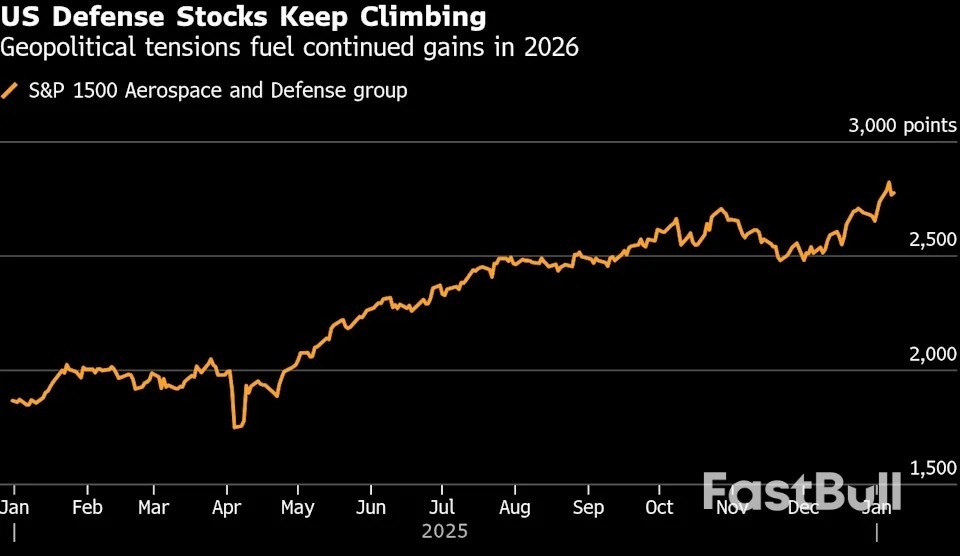
Many stocks fell Wednesday after President Donald Trump laid out plans to limit dividends and buybacks in the sector, the cohort rebounded Thursday on his demand for a $1.5 trillion in security spending next year.
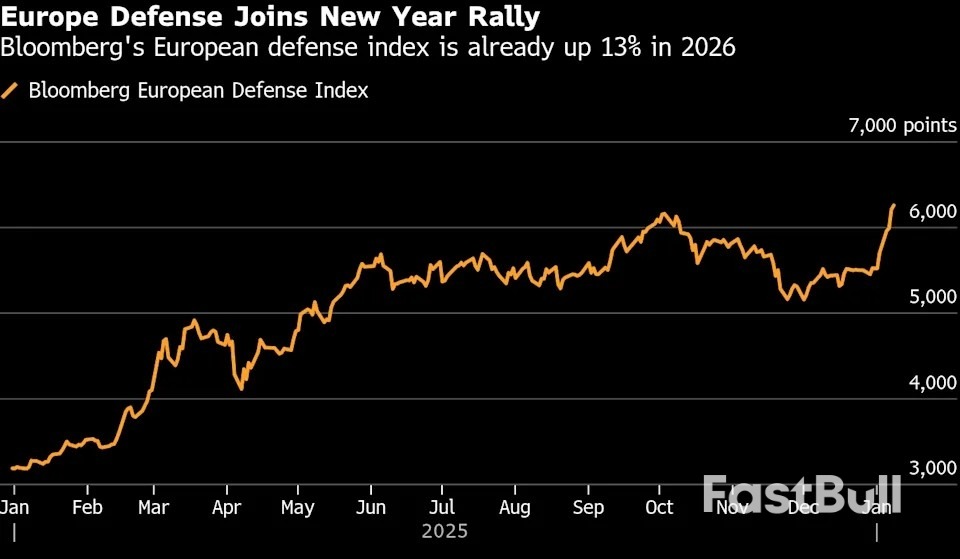
The UK's Ministry of Defence is confronting a £28 billion ($38 billion) funding shortfall over the next four years, a stark warning delivered directly to Prime Minister Keir Starmer by the nation's most senior military chief.
According to a ministry assessment from last year, military leaders are preparing for spending cuts even as geopolitical tensions with Russia continue to mount. The assessment was presented to Starmer before Christmas by Air Chief Marshal Richard Knighton, the Chief of the Defence Staff.
This financial pressure emerges at a critical time. Starmer recently committed to deploying British troops to Ukraine if a peace deal is brokered, while military figures across Europe are cautioning their governments to prepare for a potential future conflict with Russia.
The budget forecast directly challenges the Prime Minister's public commitments to bolster the military. Last year, Starmer pledged to increase defence spending from 2.3% to 2.5% of gross domestic product by April 2027, an initiative estimated to cost around £5 billion annually. He also stated an ambition to reach 3% of GDP within the next parliament.
Later, at a NATO summit, Starmer and other allies announced a new target of raising defence spending to 3.5% of GDP by 2035.
However, by December, Bloomberg reported that significant doubts were already circulating within the defence industry and the armed forces about whether these spending plans were viable or sufficient to cover existing shortfalls.
Like other European nations, Britain has been under pressure from US President Donald Trump to increase its financial contributions to collective defence. Trump has been critical of what he views as Europe's over-reliance on American military protection, adding to transatlantic tensions with recent comments about potentially taking Greenland from Denmark by force.
In response to the budget assessment, Starmer has ordered officials to rework the Defence Investment Plan, the mechanism designed to implement the government's Strategic Defence Review. Originally scheduled for publication before Christmas, the plan's release could now be delayed until March, according to sources familiar with the matter.
One government official pushed back against suggestions of cuts to existing programs, stating that the Strategic Defence Review and Defence Investment Plan are focused on establishing new initiatives.
In an emailed statement, a Ministry of Defence spokesperson asserted that the UK's defence budget "is rising to record levels as this government delivers the biggest boost to defense spending since the Cold War, totaling £270 billion this parliament alone."
The statement acknowledged that "demands on defense are rising, with growing Russian aggression, increasing operational requirements and preparations for a Ukraine deployment." The spokesperson added, "We are working flat out on the Defence Investment Plan, which will fix the outdated, overcommitted, and underfunded defense program we inherited."
After extensive official rhetoric about boosting household spending, China's latest consumption subsidies have landed with a thud. The scaled-down package announced last week signals a clear strategic choice: propping up industrial giants continues to take precedence over empowering consumers.
This lopsided approach means that growth across China's $7 trillion retail market will be highly uneven this year. The era of uniform expansion is over. Instead, the new normal will be selective spending by individuals targeting specific niche areas.
Since 2024, Beijing has run a national trade-in program designed to stimulate the purchases of cars, home appliances, and electronics. The policy was a response to persistently low consumer confidence that never fully recovered after the pandemic.
On the surface, the program looked like a success, driving the sale of over 16 million vehicles—roughly one-third of the total. However, its core function is to pull future purchases into the present. These are not repeat buys, and the policy has a limited ability to generate new, organic demand. Consequently, its impact on consumption is fleeting unless the subsidies are consistently renewed or expanded.
The program's funding history reveals a troubling trend. In 2025, the government provided 300 billion yuan ($43 billion) in subsidies. Yet, even as financial support dwindled and retail sales declined sharply in the second half of the year, funding for 2026 was slashed.
Policymakers last week allocated just 62.5 billion yuan for the first quarter of the new year. If this level is maintained, the total annual subsidy will amount to only 250 billion yuan.
According to Bloomberg Economics, this 50 billion yuan reduction from the previous year could slash consumer spending by as much as 330 billion yuan, equivalent to about 0.2% of China's total economic activity.
The modest size of the subsidy is only part of the problem. Billed as a multi-year effort to strengthen domestic demand, the scheme is fundamentally an industrial policy in disguise.
For decades, experts have urged Beijing to rebalance its economy by increasing consumption's share of GDP. At around 40%, China's ratio is far below the 60% average seen in developed OECD nations. While leaders have promised reforms, a true consumption-driven economy requires costly overhauls to the welfare system and public services. A stronger social safety net would encourage people to spend more, but funding it would require higher taxes or more debt—two options President Xi Jinping finds unattractive.
Instead, the government is focusing on strengthening its industrial champions. The strategy is to help these companies dominate the global market with high-end products, securing healthy profit margins that can support well-paying jobs for a shrinking population. This is the real goal of the trade-in scheme: it functions as a subsidy for vehicle and tech firms locked in debilitating price wars. Even with these discounts, the Chinese car industry is projected to shrink by 3% to 5% this year.
A genuine consumer-focused stimulus would look very different. It would be more inclusive, giving shoppers the freedom to choose where they spend. For example, China could issue vouchers that subsidize services like restaurant meals or salon visits.
This approach would align with current trends, as people increasingly value experiences like travel and outdoor sports over physical goods. Last year, while retail sales fell, the consumption of services remained surprisingly resilient.
Despite the retail malaise, it would be a mistake to write off Chinese shoppers. They are famously frugal, but the country was still likely the single largest contributor to incremental global growth last year. With the right incentives, the Chinese consumer will continue to be a formidable spending force.
European NATO members are offering Ukraine significant security guarantees designed to prevent a future Russian invasion. While Kyiv’s partners, with support from the United States, are building a framework for long-term safety, any potential peace deal ultimately depends on terms from the Kremlin, which have not been formally presented.
Following a high-level meeting in Paris, European leaders issued a joint statement outlining a robust plan to safeguard Ukraine. The proposal centers on providing critical, long-term security assistance and weaponry to the Ukrainian military. It also includes the formation of a multinational military force to help rebuild Ukraine’s armed forces and bolster deterrence against future aggression.
In the event of another Russian attack, the agreement commits European partners to provide a range of defense measures, which could include:
• Military capabilities
• Intelligence and logistical support
• Diplomatic initiatives
• Additional economic sanctions
Steve Witkoff, the U.S. envoy to Ukraine, described the proposed protocols as exceptionally strong. "Those security protocols are meant to deter any attacks, any further attacks in Ukraine, and if there are any attacks, they're meant to defend, and they will do both," Witkoff stated at a joint press conference in Paris. "They are as strong as anyone has ever seen."
Despite this progress, complex technical and political issues remain. A Ukrainian delegation is scheduled to meet with U.S. representatives for the third time in several days to address the most challenging parts of any potential agreement. Key topics on the agenda include the future status of the Zaporizhzhia Nuclear Power Plant and the sensitive issue of territorial concessions in exchange for peace.
The Zaporizhzhia plant, under Russian occupation since the early stages of the war, has been fortified and used by Russian forces to station troops and artillery. Fighting near the facility has repeatedly sparked international concern over a potential nuclear disaster.
Ukrainian President Zelenskyy affirmed his country's commitment to finding a resolution but stressed that the terms must be fair. "Ukraine does not shy away from the most difficult issues and will never be an obstacle to peace," he said. "Peace must be worthy. And this depends on the partners – whether they will ensure Russia's real readiness to end the war."
Ultimately, the war will not end until Russia agrees to a settlement. U.S. officials acknowledge this reality. Jared Kushner, a second U.S. envoy present at the meeting, noted that if Ukrainians secure a final agreement with the Kremlin, the proposed guarantees would offer "a robust deterrence" and "real backstops to make sure that this will not happen again."
So far, Moscow has shown little interest in ending the conflict on any terms other than its own. While the Kremlin has not made all its demands explicit—a strategy to maintain leverage in negotiations—it is widely expected to demand major territorial concessions.
These demands will almost certainly include control over the unconquered parts of Ukraine's Donetsk, Luhansk, Zaporizhzhia, and Kherson oblasts. Furthermore, Russia will likely seek formal Ukrainian recognition of its annexation of the Crimean Peninsula, which Kyiv considers illegal.
Given that these territorial demands would be an extremely difficult concession for Ukraine, Kyiv is unlikely to accept them in their current form. As a result, peace talks are expected to continue for the foreseeable future.
The U.S. trade deficit fell dramatically in October, shrinking by nearly 40% to its lowest level since 2009. The gap narrowed to just $29.4 billion, a figure that defied economists' expectations of an increase.
However, a closer look at the data reveals that this sharp improvement was not driven by broad economic shifts but by unusual movements in two specific sectors: precious metals and pharmaceuticals. Understanding these drivers is critical for anyone tracking GDP, the dollar, or corporate earnings, as they suggest the change may be a one-off event rather than a durable trend.
While total exports rose by 2.6%, the increase was dominated by a single category. Exports of non-monetary gold and other precious metals surged by over $10 billion in October, more than accounting for the total $7.1 billion rise in exports for the month. This spike coincided with gold prices hitting a record high on October 20 as investors sought safe-haven assets.

"Ultimately this sharp narrowing in the October trade deficit is almost entirely due to the movement of gold," wrote Wells Fargo economists Shannon Grein and Tim Quinlan.
A similar story unfolded on the import side. Total imports fell by over 3%, or $12.1 billion. Yet, the decline in just one segment—imports of pharmaceutical preparation chemicals—was even larger, at $14.3 billion, according to the Bureau of Economic Analysis.
While a shrinking trade deficit typically provides a boost to economic growth, analysts caution against overstating the impact of the October figures. Net exports are a key component of Gross Domestic Product (GDP), but the headline number can be misleading.
Wells Fargo economists noted that the Bureau of Economic Analysis (BEA) adjusts its GDP calculations to discount metal transfers made for investment purposes. "The rub is, this overstates the true narrowing in the trade deficit," they explained. "This surge in exports will not translate to a massive boost to Q4 GDP growth of this magnitude."
This trade data, delayed by a government shutdown, follows the introduction of new reciprocal tariffs by President Donald Trump in August. These measures raised the cost of certain imported goods and remain under a court challenge, creating uncertainty for businesses.
Although the tariffs are having an effect, economists suggest they may not be the primary driver of the October shift. Wells Fargo analysts believe some trade is being rerouted through countries with which the U.S. has trade agreements, such as Mexico and Canada.
"We still believe trade flows are somewhat normalizing from tariff-influenced decision-making early last year," they wrote, suggesting the market is adjusting to the new policy landscape.

The U.S. House of Representatives is set to pass legislation backed by Democrats that would restore expired healthcare subsidies, a critical move as millions of Americans face rising insurance costs.
While the bill's passage in the House marks a significant step, its future is uncertain. The Republican-controlled Senate has already turned down a similar proposal, pushing lawmakers toward a potential compromise.
With the November elections on the horizon and opinion polls showing "affordability" as a primary voter concern, the pressure is on Congress to act. Senate negotiators are now considering several compromise options to extend the subsidies.
Key proposals on the table include:
• Extending the subsidies for a shorter term, less than three years.
• Capping eligibility to individuals below a specific income threshold.
• Softening abortion restrictions that conservatives have pushed for.
The outcome of these negotiations will directly impact household budgets and could influence which party controls Congress next year. "Democrats are going to make healthcare and the high cost of living the number one issue for all of 2026," Senate Democratic Leader Chuck Schumer stated at a recent press conference.
At the end of 2025, Congress allowed tax breaks to expire that benefited 24 million Americans who purchase insurance through the Affordable Care Act (ACA). The ACA, often called "Obamacare," was enacted in 2010, while the subsidies were introduced in 2021 as a response to the COVID pandemic.
According to the nonpartisan Congressional Budget Office, reinstating these subsidies would have a major impact:
• Enrollment: An additional 6.2 million people would enroll in ACA plans.
• Cost: The move would cost the federal government an estimated $80.6 billion over ten years.
The House vote represents a tactical win for Democrats, who previously initiated a record 43-day government shutdown in a failed attempt to extend the subsidies last fall.
The debate highlights a deep partisan divide over the role and cost of government-supported healthcare.
Democratic Representative Jim McGovern of Massachusetts emphasized the direct impact on his constituents, noting that some are facing monthly cost increases of thousands of dollars because Washington has not yet provided a solution.
Republicans, however, argue that the program is inefficient and needs reform. "We should start by stop throwing good money after bad," Republican Representative Jodey Arrington of Texas said on CNBC, arguing the program is plagued by fraud and waste.
As the political battle continues, Americans have until January 15 to enroll in ACA coverage for the current year, though the Trump administration could potentially extend this deadline.
White Label
Data API
Web Plug-ins
Poster Maker
Affiliate Program
The risk of loss in trading financial instruments such as stocks, FX, commodities, futures, bonds, ETFs and crypto can be substantial. You may sustain a total loss of the funds that you deposit with your broker. Therefore, you should carefully consider whether such trading is suitable for you in light of your circumstances and financial resources.
No decision to invest should be made without thoroughly conducting due diligence by yourself or consulting with your financial advisors. Our web content might not suit you since we don't know your financial conditions and investment needs. Our financial information might have latency or contain inaccuracy, so you should be fully responsible for any of your trading and investment decisions. The company will not be responsible for your capital loss.
Without getting permission from the website, you are not allowed to copy the website's graphics, texts, or trademarks. Intellectual property rights in the content or data incorporated into this website belong to its providers and exchange merchants.
Not Logged In
Log in to access more features

FastBull Membership
Not yet
Purchase
Log In
Sign Up